Are Marigolds Perennials? Annual vs. Perennial Types
Most garden marigolds are annuals, but some *Tagetes* are perennial shrubs. Identify yours, plan around frost, and keep blooms coming all season.
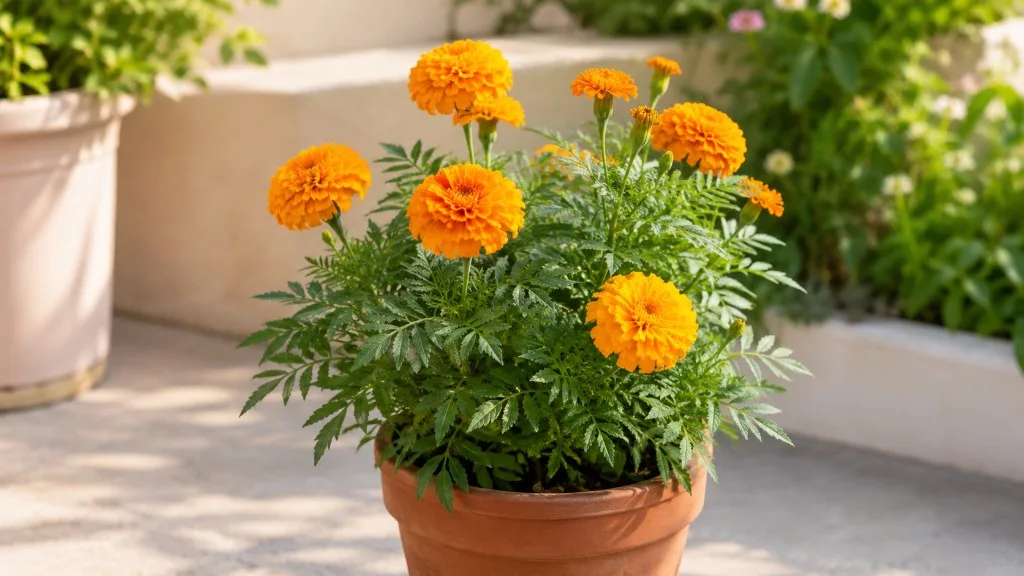
If your marigold is the compact, orange-edged bedding plant sold in a spring six-pack, plan on one growing season. Most French, African, and signet marigolds are grown as annuals: they germinate, flower, set seed, and die when frost or age ends the cycle. They may return because they dropped seed, but that is a new generation—not the same plant waking up.
Some plants in the genus Tagetes are genuinely perennial. Mexican mint marigold (Tagetes lucida) is the clearest example for home gardeners: in warm regions it grows back from the same root system, while NC State Extension says it is grown as an annual in zones colder than 8. The name on the plant tag matters more than the word “marigold” on the flower tray.
The answer depends on both species and winter
The useful answer to “are marigolds perennials?” is usually no for common bedding marigolds, sometimes yes for particular species in mild climates. A plant’s life cycle is a botanical trait, but whether it behaves as a perennial in your garden is also a weather question. A true perennial exposed to a winter colder than its roots can tolerate is still capable of dying; a tender annual can look perennial if it reseeds in the same spot.
That distinction prevents two common disappointments. A gardener in a cold-winter climate may wait for an African marigold to regrow from a stem that has already been killed below ground. Meanwhile, a gardener in a mild climate may pull up a living Tagetes lucida because its top growth looks tired, losing a plant that would have resumed growth from the base.
NC State’s profiles make the contrast clear. Its French marigold profile identifies Tagetes patula as a compact annual, while its Mexican mint marigold profile describes a perennial in its native warm range and an annual where winters are colder than zone 8. That is a more reliable starting point than judging by flower color.
Know what “annual” and “perennial” mean in practice
An annual completes its life cycle in one growing season. The plant grows from seed, flowers, produces seed, and declines. It might live for several months rather than exactly one calendar year, but it does not need a winter-surviving root system to continue the line.
A perennial survives a dormant season through roots, a crown, woody stems, rhizomes, or another persistent structure, then sends up new growth. Perennial does not mean evergreen, frost-proof, or guaranteed to live forever. It means the same plant has the capacity to return when conditions are within its tolerance.
This matters when you inspect a spring volunteer. A seedling that appears where last year’s marigold stood is usually an annual that reproduced by seed. It may look almost identical, but it has a new root system and a new age. A perennial marigold, by contrast, will often show a persistent crown or woody base and will begin pushing new growth from that established structure.
Identify your marigold before planning for next year
Start with the label, seed packet, or cultivar name. If it says Tagetes patula, T. erecta, or T. tenuifolia, treat the plant as an annual for winter planning unless you live in a nearly frost-free microclimate and are willing to accept uncertain survival. If it says T. lucida, read the hardiness information and protect it according to the climate rather than removing it automatically after flowering.
If the label is missing, use the plant’s shape as a clue, not proof. Compact plants with many small or medium flower heads are often French marigolds. Very tall plants with large, rounded pompon flowers are often African marigolds. Fine, ferny foliage and many small single flowers point toward signet marigolds. A branching, aromatic plant with small yellow flowers and a more herb-like or shrubby habit may be Mexican mint marigold.
| Type | Botanical name | Typical garden role | Winter expectation |
|---|---|---|---|
| French marigold | Tagetes patula | Edging, containers, beds | Annual in ordinary garden use |
| African marigold | Tagetes erecta | Tall borders, cut flowers, large displays | Annual and especially vulnerable to frost |
| Signet marigold | Tagetes tenuifolia | Edging, containers, edible-flower gardens | Usually grown as an annual |
| Mexican mint marigold | Tagetes lucida | Herb garden, warm border, pollinator planting | Perennial in warm regions; annual in colder zones |
French marigold: compact, colorful, and usually annual
French marigold is the familiar low mound used to edge a vegetable bed or fill a container. NC State Extension describes T. patula as a 6- to 12-inch annual with a 6- to 18-inch spread. It tolerates full sun to partial shade, prefers well-drained soil kept evenly moist, and can bloom from spring into fall when fading flowers are removed.
Its compact habit makes it forgiving in small spaces, but it does not make it winter-hardy. In a region with freezing temperatures, the plant’s stems and roots usually decline with the first serious frost. A mild winter can produce a volunteer from dropped seed, which may be mistaken for the old plant, especially when it appears in the same border.
African marigold: tall, large-flowered, and frost-sensitive
African marigolds, Tagetes erecta, are taller and more architectural. They make the large, rounded gold, yellow, orange, or cream flowers many gardeners associate with marigolds, but those heavy heads can also catch rain and wind. Give them a sheltered sunny spot and enough space that wet foliage can dry.
The label “African” describes a garden group, not a promise that the plant can handle African-like heat everywhere. It is still a tender seasonal bedding plant in frost-prone gardens. In a warm, frost-free climate, a specimen may last longer, but the most dependable way to plan a display is to treat it as an annual unless the cultivar and local conditions say otherwise.
Signet marigold: fine foliage and small flowers
Signet marigolds, Tagetes tenuifolia, look different from the densely petaled French and African types. Their foliage is delicate and finely divided, and they carry many small, usually single flowers. They are useful along a path, around vegetables, or in a container where a lighter texture is more valuable than a large flower head.
For winter purposes, assume signets are annuals. In a long, warm season they may flower heavily and shed seed, and in a frost-free area they can behave as short-lived perennials. That is a climate effect, not a reason to count on the same plant returning in a cold-winter garden.
The perennial marigold worth seeking out
Mexican mint marigold, also called Mexican tarragon, is a different proposition from the bedding marigolds sold in most garden centers. Tagetes lucida is a branching herbaceous perennial in warm regions, with aromatic leaves, small yellow composite flowers, and a mature size of roughly 6 inches to 2.5 feet according to NC State Extension. It is suited to full sun and light, well-drained soil and can be grown in an herb bed, border, or along a path.
The plant’s zone guidance is the practical dividing line: NC State lists it for USDA zones 8a through 11b and notes that it is grown as an annual in zones colder than 8. In a borderline climate, the microclimate matters. A south-facing wall, excellent drainage, and protection from cold wind may improve survival, but they cannot guarantee it through a severe freeze.
Other shrubby Tagetes are also sold under names such as Mexican or mountain marigold. Common names overlap, and a plant’s mature size, flower form, and hardiness can differ sharply from a seed packet labeled simply “marigold.” If perennial survival is the goal, buy by botanical name and confirm the listed hardiness before planting rather than trusting a color photo.
Mexican mint marigold has culinary and tea uses, but “edible” is not the same as “safe in unlimited amounts.” NC State notes that large amounts can be harmful and that plant sap can irritate skin. Follow the plant’s own reference and local food-safety guidance, and do not assume every marigold cultivar is suitable for eating because one species has edible leaves or flowers.
Why annual marigolds sometimes seem to return
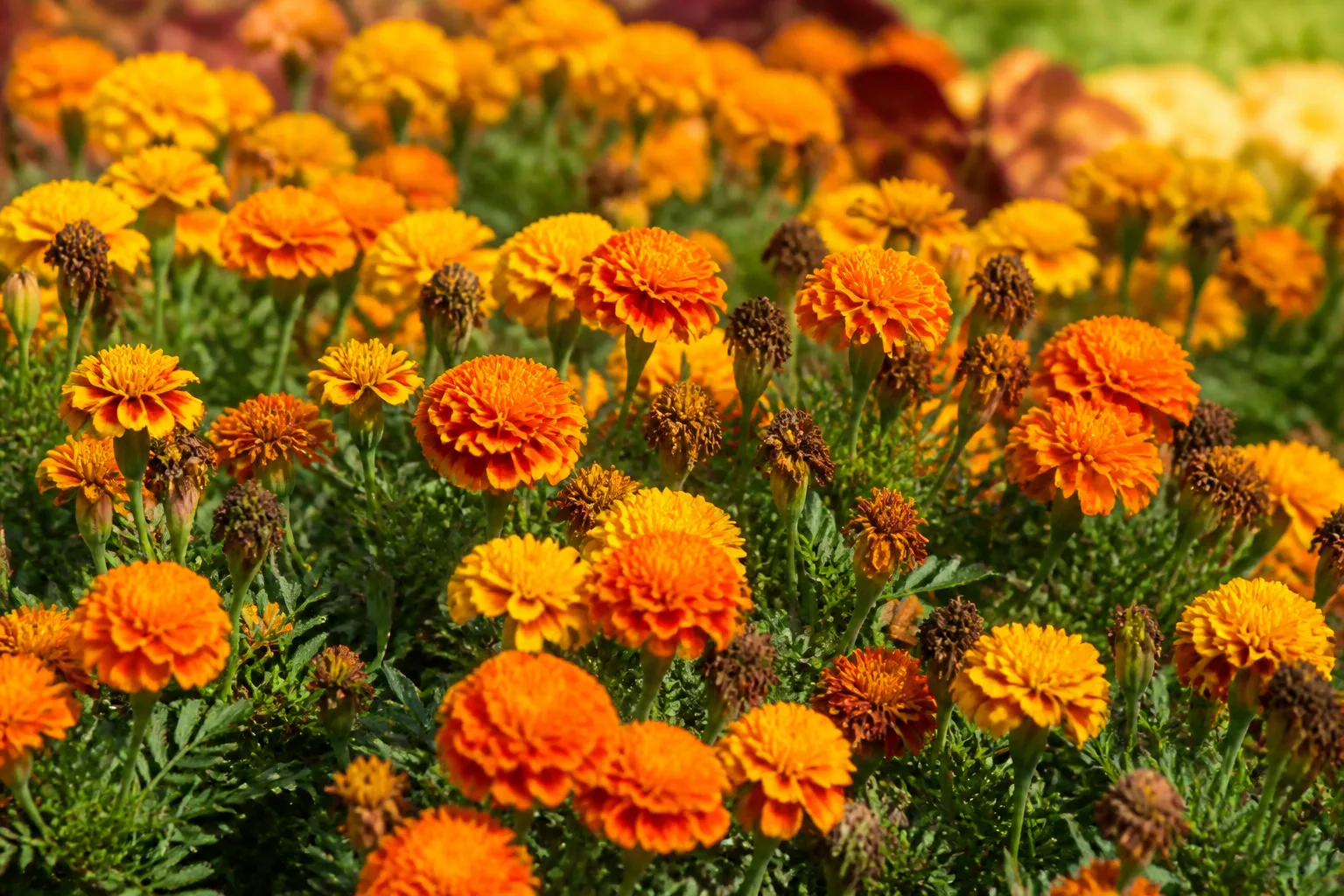
The most common explanation is self-seeding. A flower is left on the plant, its petals dry, and the developing seed head eventually releases seed onto the soil. Some seeds survive winter, then germinate when spring warmth and moisture arrive. The new seedlings may emerge close enough to the original planting spot to look like a perennial clump.
Self-sowing is useful, but it is not the same as perennial growth. Epic Gardening’s comparison of annual and perennial marigolds makes the same practical distinction: a seed that replants itself can mimic a perennial without preserving the original plant. Germination depends on winter moisture, soil disturbance, temperature, birds, mulch, and whether the cultivar makes viable seed. Dense mulch or a thorough fall cleanup can prevent volunteers. Hybrid plants may also produce seedlings with different flower colors, heights, or petal forms from the parent.
There is an easy field test: look at the base before assuming the old plant survived. A true returning perennial shows persistent stems or a crown with new shoots emerging from the established plant. A seedling looks like a separate young plant, often with two initial seed leaves followed by fresh, finely divided foliage. If several tiny plants appear in a scattered line, you are probably seeing new seedlings.
Use a climate-first decision rule
Use this four-question rule when deciding what to do in fall:
- What is the botanical name? If the tag identifies a common bedding annual, plan to replace it or save seed.
- Does your winter include hard frost? If yes, outdoor annual marigolds are unlikely to survive as plants, no matter how healthy they looked in October.
- Is the plant actually perennial in your zone? A warm-climate species can still fail in a cold pocket, wet bed, exposed container, or unusually cold winter.
- What outcome do you want? Remove spent flowers for a tidy border and repeat bloom, or allow selected heads to mature if volunteer seedlings and genetic variation are welcome.
This rule is intentionally conservative. It is better to collect seed from a common annual than to promise yourself the old plant will return. It is also better to leave a clearly identified warm-climate perennial in place with a protective plan than to pull it out simply because the top growth has slowed.
How to plant annual marigolds for one strong season
Marigolds reward timing more than elaborate soil recipes. Choose a site with full sun—about six or more hours of direct light is a useful target—and soil that drains after rain. Work compost into poor ground if needed, but avoid turning a sunny bed into a permanently wet, rich pocket. Too much lush growth and too little light can produce floppy plants with fewer useful flowers.
Direct sow outdoors after the danger of frost has passed and the soil is warming. Sow shallowly, cover seed lightly or press it into the surface according to the packet, and keep the seed zone evenly moist until seedlings are established. Thin crowded seedlings early; a little space improves airflow and gives each root system enough room to grow without constant competition.
Start indoors for an earlier display
For an earlier show, sow seed indoors several weeks before your local last frost date. Use a clean seed-starting mix, bright light, and gentle watering so the young plants do not stretch or remain saturated. Move seedlings outdoors only after frost risk has passed, and harden them off by increasing outdoor exposure gradually rather than placing tender plants in full sun and wind on their first day.
BBC Gardeners’ World’s marigold guide recommends early indoor sowing for early-summer flowers, late-spring outdoor sowing for later blooms, and thinning direct-sown seedlings according to variety size. The exact calendar shifts with region, but the principle is stable: the seed packet and local frost dates are more useful than a universal “plant in April” rule.
Care that keeps marigolds blooming
Marigolds are low-maintenance once established, but low maintenance does not mean indestructible. They bloom best when light, moisture, airflow, and flower load are kept in balance. A plant that is stressed by shade or waterlogged soil will not be rescued by more fertilizer or more frequent watering.
Match light, soil, and water to the weather
Full sun supports the strongest flowering for most marigolds. In very hot climates, afternoon shade can prevent heat stress, especially in containers, but too much shade encourages weak stems and fewer flowers. Tall African types need shelter from strong wind because large flower heads can act like sails and bend stems.
Water new transplants regularly while roots settle. After that, water thoroughly during extended dry spells rather than following a rigid daily schedule. French marigold is described by NC State as drought-tolerant once established, but it still performs better with even moisture than with repeated severe dry-downs. Container plants dry faster than plants in the ground and need more frequent checks.
Always water at the soil line when possible. Wet flower heads and crowded foliage dry slowly, and BBC Gardeners’ World notes that heavy African marigold blooms can hold moisture and rot during wet summers. If a plant wilts in damp soil, check drainage and roots before adding more water; thirst and root stress can look similar above ground.
Fertilizer is optional in reasonably fertile soil. If plants are pale or growth is weak after light, water, and drainage are corrected, a balanced liquid feed used according to its label can help. Avoid pushing a small marigold into excessive leafy growth when the real problem is inadequate sun or a cramped container.
Deadhead, pinch, and stake with a purpose
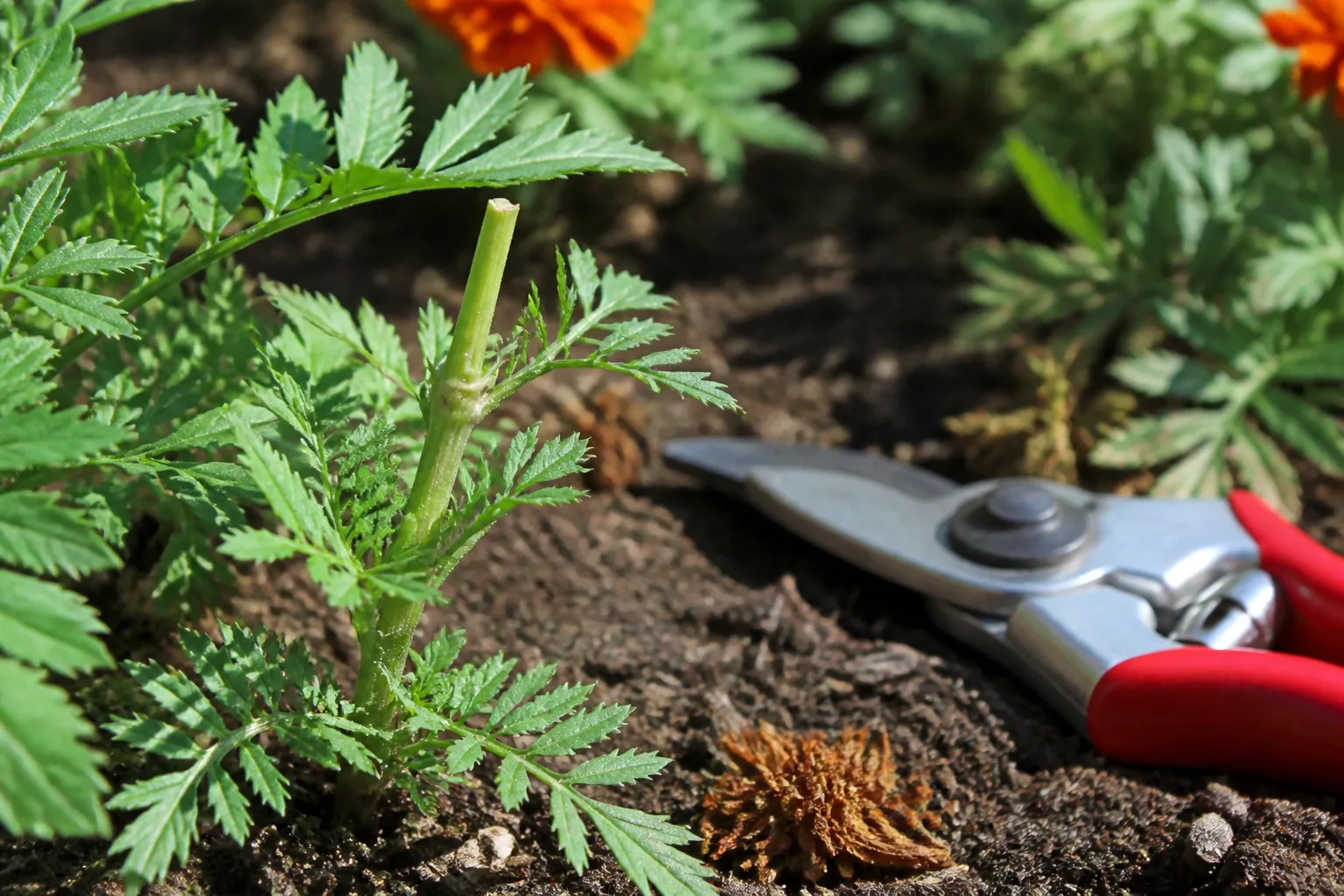
Remove faded flowers when your goal is a longer, tidier display. Cut the spent head and its short stem back to a healthy leaf joint or branching point. This redirects the plant toward new buds and keeps brown seed heads from dominating the border.
Do not deadhead every flower if you want to save seed or encourage volunteers. Mark a few healthy plants, allow selected heads to dry fully, and remove the rest. That compromise gives you both late-season color and enough mature seed for next year without turning the whole bed into a seed bank.
Pinch the tip of a young, leggy plant to encourage branching, but do not repeatedly shear a stressed or newly transplanted plant. Stake tall African marigolds before they lean, using a discreet support that does not trap wet foliage against the stem. These small interventions work best when they solve a specific problem rather than becoming a routine performed without looking at the plant.
End-of-season choices: seed, cleanup, or protection
Frost is the point where the annual-versus-perennial distinction becomes visible. In a frost-prone garden, a common bedding marigold is usually finished when a hard freeze blackens the stems. You can pull it, compost healthy material, or leave a selected plant long enough for seed heads to mature before cleanup.
If the season ends with disease, avoid spreading infected debris through home compost unless your compost system reaches and maintains temperatures that destroy the pathogen. Remove visibly diseased plant material, clear fallen leaves from the bed, and rotate the location if recurring soil or foliar problems have been an issue. The goal is not to preserve every plant; it is to preserve a clean growing space for the next season.
Save seed from mature flower heads
Choose flowers from plants that performed well, especially if you like their height, color, and flower form. Let the heads dry on the plant until the petals and base are papery. Cut them on a dry day, place them in a paper bag or envelope, and finish drying indoors in a cool, airy place.
When the head is fully dry, rub it gently to release the long, dark seeds. Remove loose debris, label the packet with the species or cultivar and year, and store it cool and dry. Do not seal damp material in plastic; trapped moisture is more likely to cause mold than to improve germination.
Saved seed is most predictable from open-pollinated varieties. If the parent was a hybrid, the seedlings may not match the original plant. That is not a failure—it is simply a reason to label expectations honestly. If you need identical height and flower form, buy fresh seed of the named cultivar or use nursery plants.
Overwinter only the right perennial
If you have Tagetes lucida or another verified perennial type in a warm zone, keep the root system in the ground and protect the plant from the conditions most likely to cause failure. Good drainage is critical in winter because cold, saturated soil can damage roots even where temperatures are technically within the plant’s hardiness range.
In a borderline climate, a container can be moved to a bright, protected space before severe cold, but do not bring an outdoor plant into a dim, warm room and continue summer watering. Reduce watering as growth slows, inspect for pests before moving it indoors, and return it outdoors gradually once nights are reliably mild. If the plant is an ordinary annual marigold, this effort is usually less reliable than saving seed and starting again.
Common mistakes that waste a season
The most expensive marigold mistakes are usually small decisions made at the wrong time:
- Treating every marigold as one species. Check Tagetes and the species name before planning winter care.
- Calling seedlings “regrowth.” Look for a new seedling root system instead of assuming the old plant survived.
- Watering on a calendar. Check the soil and the weather; daily watering is not a universal requirement for established plants.
- Putting tall plants in an exposed bed. African marigolds can need shelter or staking when wind and wet flower heads combine.
- Letting every flower set seed. Seed production can reduce the steady succession of fresh blooms; save only selected heads if bloom is the priority.
- Deadheading every flower when seed is the goal. Leave a few healthy, disease-free heads until fully dry.
- Saving seed from diseased plants. Clean up disease first and do not use questionable heads for next year’s planting.
- Relying on a common name. “Mountain,” “Mexican,” “French,” and “African” can be used inconsistently in retail descriptions, so botanical names are the safer basis for a perennial decision.
Conclusion
Most marigolds grown in beds, borders, and containers are annuals, especially French, African, and signet types. They finish their life cycle with frost or age, but they can appear again when seed dropped by the parent germinates in spring. That return is a new plant, not proof that the original marigold survived.
True perennial Tagetes exist, including Mexican mint marigold (Tagetes lucida), but they need a suitable warm climate and well-drained conditions. Identify the botanical name, compare it with your winter temperatures, then choose the right ending: deadhead for more flowers, save a few mature heads for seed, or protect a verified perennial. That simple sequence turns a vague “will it come back?” question into a plan you can trust.