French Tarragon Care: Sun, Water, Soil & Winter Protection
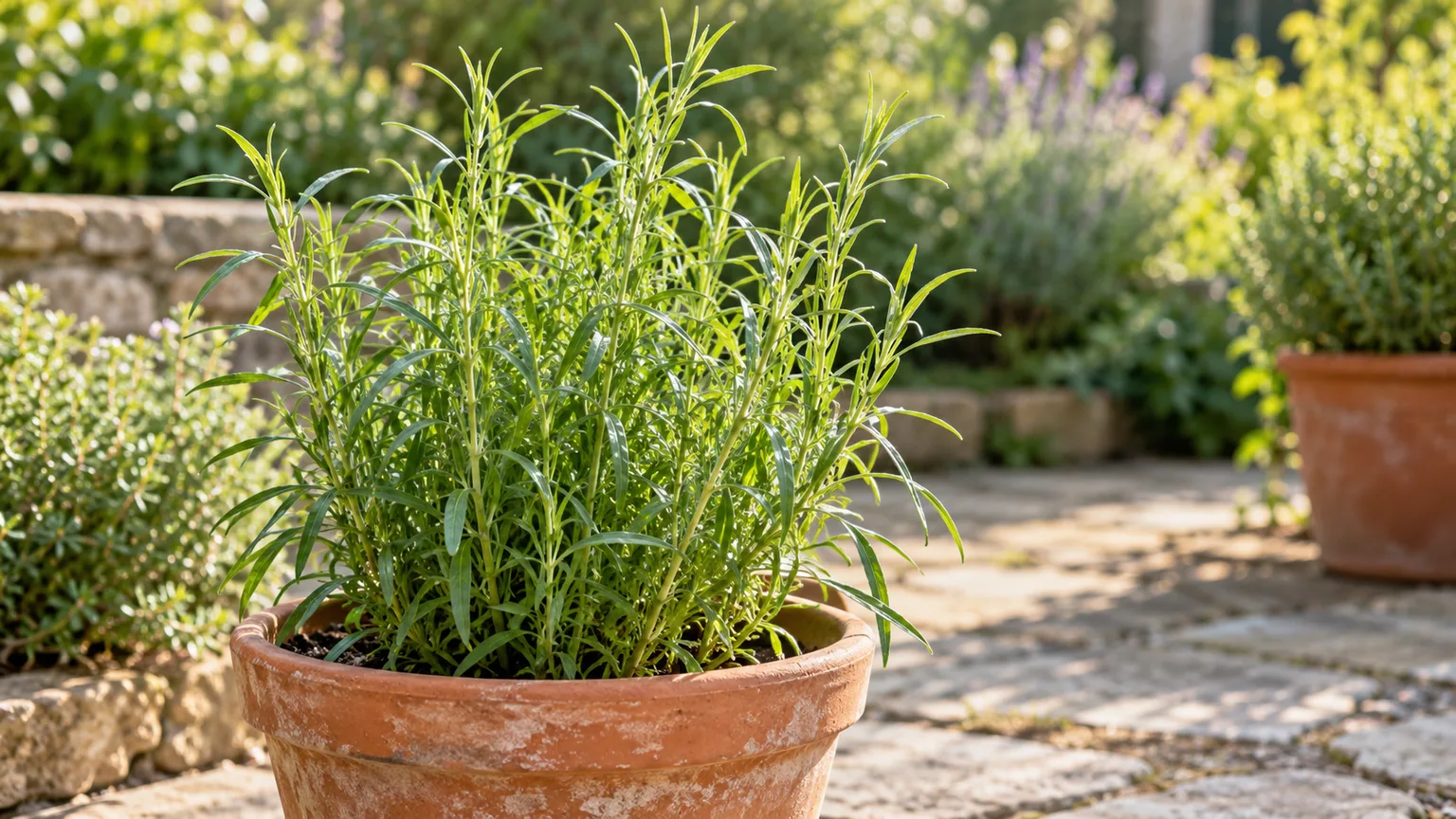
Artemisia dracunculus 'Sativa' (French tarragon)
Grow aromatic French tarragon in full sun and free-draining soil. Learn how to water it, shelter it from cold wet winters, divide clumps, harvest shoots, and keep it away from pets.
French Tarragon Care Guide (Artemisia dracunculus 'Sativa')
Start with wateringThe most common care mistake for TarragonWatering guide →Tarragon care essentials
Light
Water
Water newly planted tarragon during dry spells in its first year. Established plants in the ground are drought tolerant and usually need little extra water; check container compost regularly in summer and water when it starts to dry. Avoid overwatering, especially in cool weather.
Soil
Moderately fertile, loam-based soil or compost that drains freely. French tarragon prefers sun and shelter, dislikes heavy or wet conditions, and does best in neutral to slightly alkaline soil.
Humidity
Temperature
Fertilizer
About Tarragon
Tarragon is native to Cultivated French culinary form of Artemisia dracunculus; the wild species occurs across temperate Europe and Asia and central-western North America, typically reaches Typically 50–75 cm tall and about 30 cm wide; some plant profiles list heights up to 1 m indoors, with moderate to fast in warm, sunny, well-drained conditions growth. Tarragon has a upright, clump forming herbaceous perennial herb growth habit and part of the Asteraceae family. It is also known as French tarragon, Estragon, and Artemisia dracunculus 'French'.
| Detail | Information |
|---|---|
| Also known as | French tarragon, Estragon, Artemisia dracunculus 'French' |
| Native region | Cultivated French culinary form of Artemisia dracunculus; the wild species occurs across temperate Europe and Asia and central-western North America |
| Mature size | Typically 50–75 cm tall and about 30 cm wide; some plant profiles list heights up to 1 m |
| Growth rate | Moderate to fast in warm, sunny, well-drained conditions |
| Growth habit | Upright, Clump Forming Herbaceous Perennial Herb |
| Scientific name | Artemisia dracunculus 'Sativa' (French tarragon) |
| Family | Asteraceae |
How to care for Tarragon?
When should you water Tarragon?
Water newly planted tarragon during dry spells in its first year. Established plants in the ground are drought tolerant and usually need little extra water; check container compost regularly in summer and water when it starts to dry. Avoid overwatering, especially in cool weather.
- Feel the compost rather than following a fixed calendar - Established plants in the ground are drought tolerant and usually need little extra water; check container compost regularly in summer and water when it starts to dry.
- water as it starts to dry and let excess drain freely - Established plants in the ground are drought tolerant and usually need little extra water; check container compost regularly in summer and water when it starts to dry.
- Drain excess water - Water newly planted tarragon during dry spells in its first year.
What soil works best for Tarragon?
Moderately fertile, loam-based soil or compost that drains freely. French tarragon prefers sun and shelter, dislikes heavy or wet conditions, and does best in neutral to slightly alkaline soil.
- Loam-based, soil-based container compost - Moderately fertile, loam-based soil or compost that drains freely.
- Mix in up to 25% horticultural grit to improve drainage - Moderately fertile, loam-based soil or compost that drains freely.
Grower notes for Tarragon
Choose French tarragon deliberately
This hub covers French tarragon, the aromatic culinary form commonly identified as Artemisia dracunculus 'Sativa'. It is usually smaller and more delicate than Russian tarragon, with a peppery, anise or liquorice note. Russian tarragon is more vigorous but its flavor is generally weaker, grassier, and sometimes bitter, so check the plant label and leaf aroma when buying.
Give it sun and fast drainage
Place French tarragon in full sun in a warm, sheltered spot. Use free-draining ground or a container with open drainage holes and loam-based compost mixed with horticultural grit. Heavy, acidic, or persistently wet soil makes the plant a poor fit; a pot also makes it easier to shelter the plant in winter.
Water according to where it grows
Water a new plant during dry spells in its first year. Once established in the ground, tarragon is drought tolerant and usually needs little extra water. Pots dry faster, so check them regularly through warm weather and water only when the compost begins to dry; do not keep the roots wet in cool conditions.
Protect French tarragon from cold, wet winters
French tarragon can struggle where winter is both cold and wet. In those climates, grow it in a container and move it to a dry, sheltered porch or greenhouse; otherwise use a sheltered rain-shadow position and protect it during frost. The top growth can die back in autumn and return from the base in spring.
Harvest and renew the clump
Pick young shoot tips from spring into autumn to encourage fresh growth, and use the leaves fresh for their strongest flavor. French tarragon rarely produces viable seed, so start with a named plant and propagate by dividing an established clump in spring every few years; summer softwood cuttings are another option.
Keep the plant away from pets
The ASPCA lists tarragon as toxic to cats, dogs, and horses, with mild vomiting and diarrhea among the clinical signs. Keep the pot, harvested sprigs, and trimmings away from pets; this listing does not establish a safety classification for other animals.
Is French tarragon safe for pets?
ASPCA lists tarragon (Artemisia dracunculus), also called French tarragon, as toxic to cats, dogs, and horses. Ingestion may cause mild vomiting and diarrhea; keep plants and cuttings out of reach.
ASPCA identifies tarragon (Artemisia dracunculus) as toxic to cats, dogs, and horses. Its listed toxic principle is essential oils, and reported clinical signs include mild vomiting and diarrhea. The listing does not establish safety for other pets.
Watering Tarragon
For Tarragon, feel the compost rather than following a fixed calendar; water as it starts to dry and let excess drain freely and water in-ground plants need extra water mainly during establishment and prolonged dry spells; check pots every few days in hot weather and water when the compost begins to dry. Newly planted tarragon needs water during first-year dry spells. Established in-ground plants rarely need supplemental water; reduce watering as growth dies back in cool weather and keep containers from staying wet.
| Detail | Information |
|---|---|
| How often | In-ground plants need extra water mainly during establishment and prolonged dry spells; check pots every few days in hot weather and water when the compost begins to dry |
| How to check | Feel the compost rather than following a fixed calendar; water as it starts to dry and let excess drain freely |
| Seasonal changes | Newly planted tarragon needs water during first-year dry spells. Established in-ground plants rarely need supplemental water; reduce watering as growth dies back in cool weather and keep containers from staying wet. |
Signs of overwatering
- Compost remains wet for long periods
- Declining growth in damp conditions
- Root or crown rot in poorly drained soil
Soil & potting for Tarragon
Use a mix of Loam-based, soil-based container compost, Mix in up to 25% horticultural grit to improve drainage for Tarragon. Free drainage is essential; avoid heavy soil and waterlogging, especially during cool or wet weather. Target soil pH around Neutral to slightly alkaline; avoid acidic soil (about pH 6–8). Repot divide established clumps every 2–4 years to maintain vigor; refresh container compost during division if needed, ideally in spring, as fresh growth begins.
| Detail | Information |
|---|---|
| Recommended mix | Loam-based, soil-based container compost, Mix in up to 25% horticultural grit to improve drainage |
| Drainage | Free drainage is essential; avoid heavy soil and waterlogging, especially during cool or wet weather |
| Soil pH | Neutral to slightly alkaline; avoid acidic soil (about pH 6–8) |
| Repotting frequency | Divide established clumps every 2–4 years to maintain vigor; refresh container compost during division if needed |
| Best season to repot | Spring, as fresh growth begins |
Signs it needs repotting
- The clump loses vigor
- The plant has outgrown its container or needs dividing