14 Herbs That Grow Beautifully in the Shade
Discover 14 herbs that grow in shade, plus light levels, soil, containers, harvest timing, and the shade-garden mistakes that make herbs leggy.
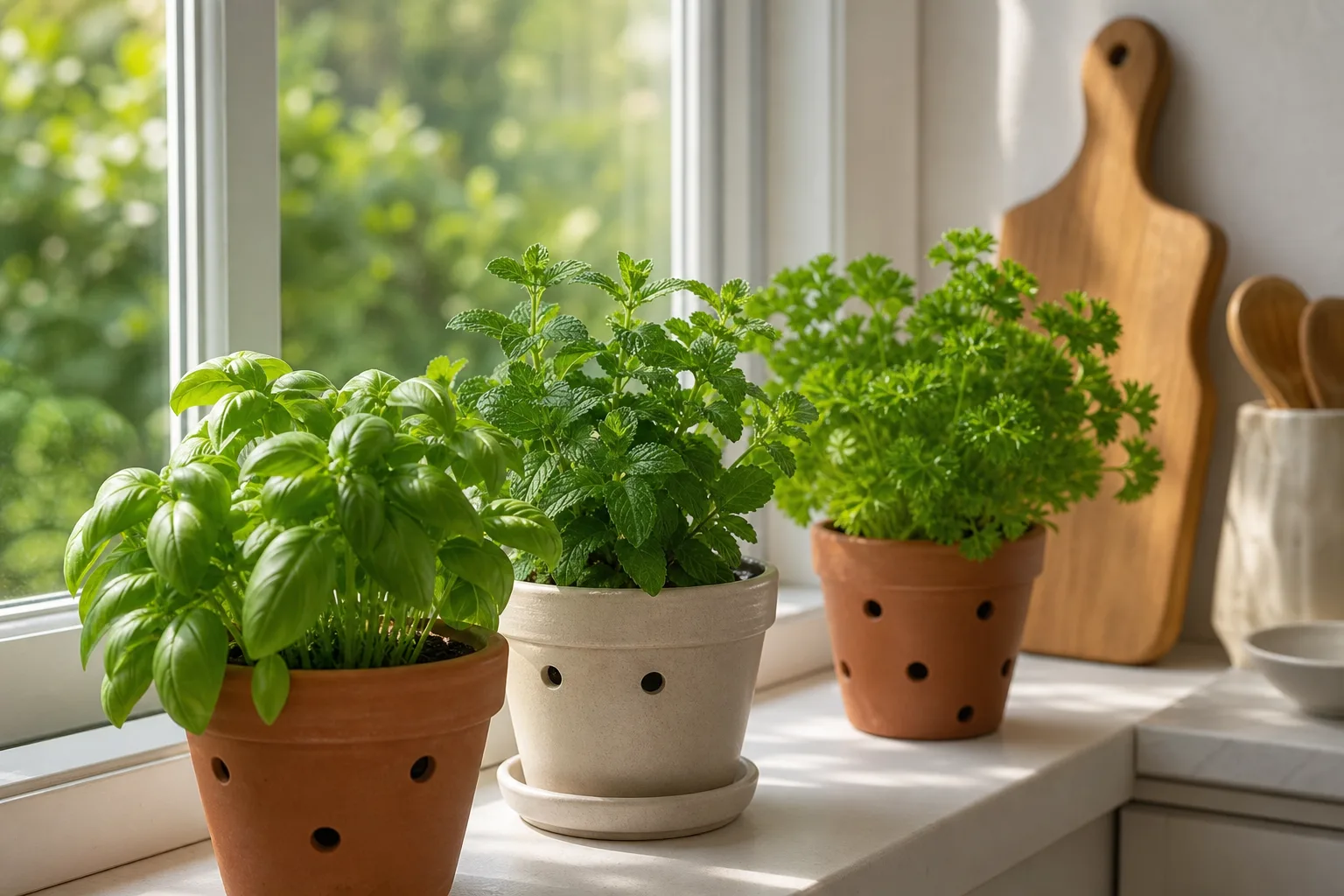
Most herb advice starts with “give it full sun.” That is sensible for rosemary, thyme, oregano, and basil, but it leaves a lot of garden space unused. A north-facing border, a bright spot under a high-canopy tree, or a patio that receives morning light can still produce a useful harvest if you choose herbs that value cooler conditions.
The important distinction is between partial shade and deep shade. Partial shade usually means roughly two to six hours of direct sun, bright dappled light, or protection from the hottest afternoon rays. Deep shade is a site with little direct sun and weak reflected light. Most edible herbs can survive the second situation; far fewer will grow compactly and flavorful there.
What “shade” means for an herb garden
Shade is not a single growing condition. Morning sun is cooler and often enough for leafy herbs, while a bed that receives only late-afternoon sun may be hotter but provide fewer total hours. Dappled light beneath a thin tree canopy can be surprisingly productive. A roof overhang that keeps the soil permanently dim is a much harder site.
Use your phone’s light meter as a rough guide, or simply watch the bed on a clear day. Mark when direct light first reaches the soil and when it disappears. Also check the season: a deciduous tree may give you spring sun and midsummer shade, while an evergreen creates the same filter all year. The goal is not a perfect number; it is to avoid labeling every dark corner “partial shade.”
Measure usable light before choosing plants
If the bed receives four or more hours of direct sun, start with parsley, chives, cilantro, chervil, lemon balm, mint, and catnip. Two to four hours favors leafy harvests and cool-season herbs, especially when the light is bright. Under two hours, use a container that can be moved or treat the site as a trial rather than promising a heavy harvest. This light-first approach is consistent with University of Minnesota Extension guidance on growing herbs and RHS herb guidance, which distinguish sun-loving herbs from leafy herbs that accept partial shade.
Shade also changes moisture. Soil under trees may look damp after rain but be dry a few inches down because roots intercept water. Soil beside a wall may stay wet because it receives little evaporation. Feel the root zone before watering, and do not compensate for low light by keeping the bed constantly soggy.
The quickest way to match an herb to your site
Choose by three filters: light, moisture, and spread. Light determines whether the plant can make enough leafy growth. Moisture determines whether roots stay healthy. Spread determines whether a productive herb becomes the reason you cannot grow anything else.
For a moderately shaded bed with average soil, parsley and chives are the safest first choices. For a cool, moist corner, mint, lemon balm, sweet woodruff, and sweet cicely can work, but only if you are comfortable containing vigorous plants. For a spot that is shaded in summer but bright in spring, cilantro and chervil offer quick cool-season harvests. For a patio, bay laurel and French tarragon are easier to manage in pots than in a marginal garden bed.
Parsley gives you a dependable first harvest
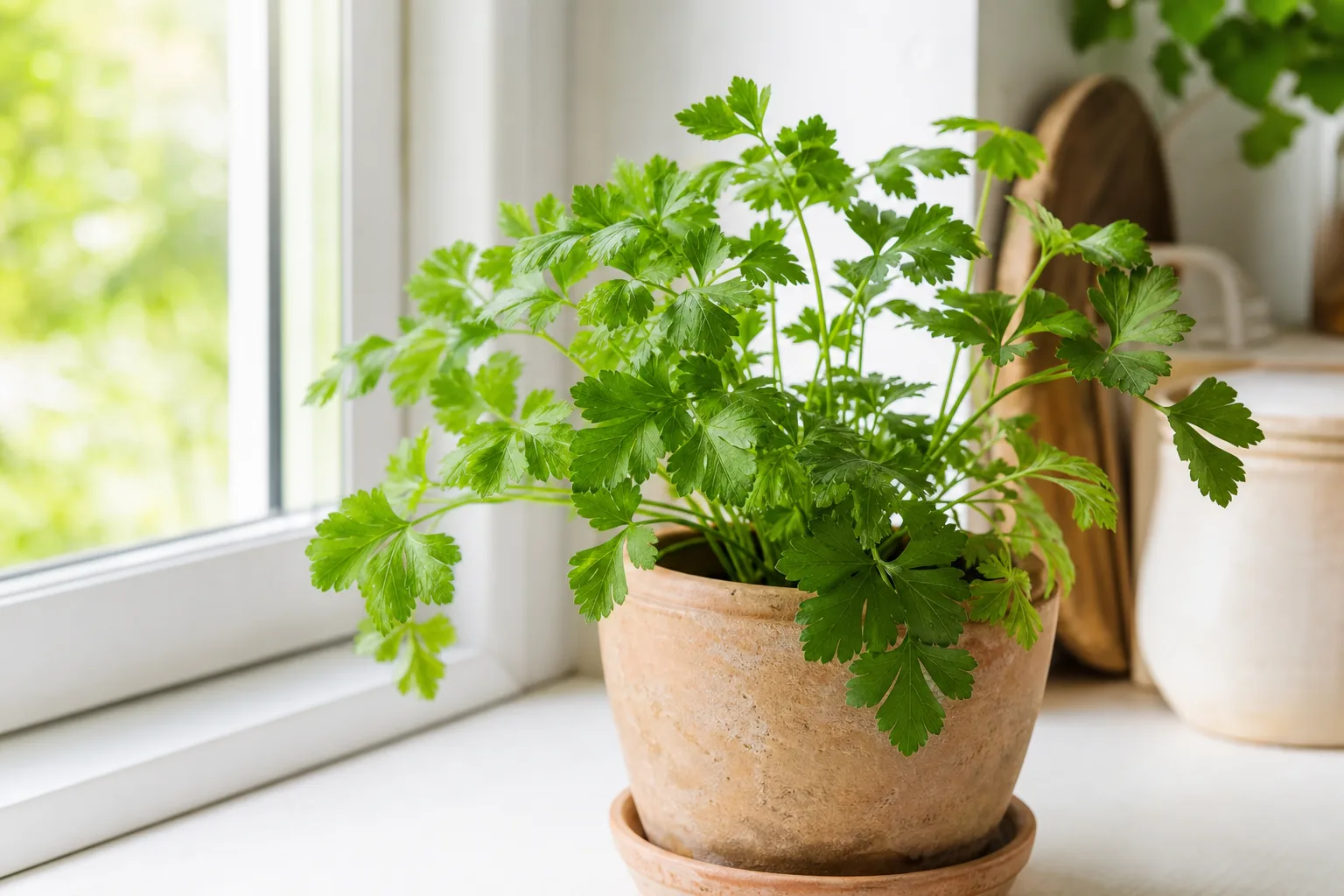
Curly parsley and Italian flat-leaf parsley can both tolerate light shade. They grow best in rich, well-drained soil that stays evenly moist, and they often appreciate afternoon protection in hot climates. Parsley is a biennial: the first year is mainly for leaves, and the second year brings a flowering stalk and seed.
The practical challenge is germination. Seed can take several weeks, so a transplant is the better choice when the season is short or the site is hot. Set plants where they receive morning sun or bright open shade, then harvest outer stems at the base rather than shearing only the tips. That keeps the crown productive and prevents a tall, sparse plant.
Chives return every spring
Chives are one of the most forgiving perennial herbs for partial shade. Their hollow leaves are useful in eggs, potatoes, soups, and soft cheeses, and their pink-purple flowers feed pollinators. They will make a denser clump with more sun, but a bright shaded border can still provide regular cuts.
Plant chives in ordinary soil that drains after rain. Cut leaves close to the base when you harvest, and remove spent flower heads if you do not want seedlings scattered through nearby cracks. Divide an overcrowded clump in spring or early fall. In shade, the leaves may be softer and less upright; that is usually a light limitation, not a watering emergency.
Mint thrives in shade—but belongs in a pot
Mint likes moisture and generally handles partial shade better than many Mediterranean herbs. Spearmint, peppermint, and other mints can provide abundant leaves for drinks and cooking in a cool bed. They also spread through underground stems, root from pieces that break off, and can escape beneath edging.
Use a container with drainage, or sink a container into the ground while keeping its rim above soil level. A pot makes it easier to divide the plant and replace exhausted soil. Harvest young stems frequently, and cut flower stalks if you want to keep the plant focused on tender leaves. Do not plant mint in a small mixed herb bed simply because the corner is shady; vigorous growth is still vigorous growth.
Lemon balm is productive and enthusiastic
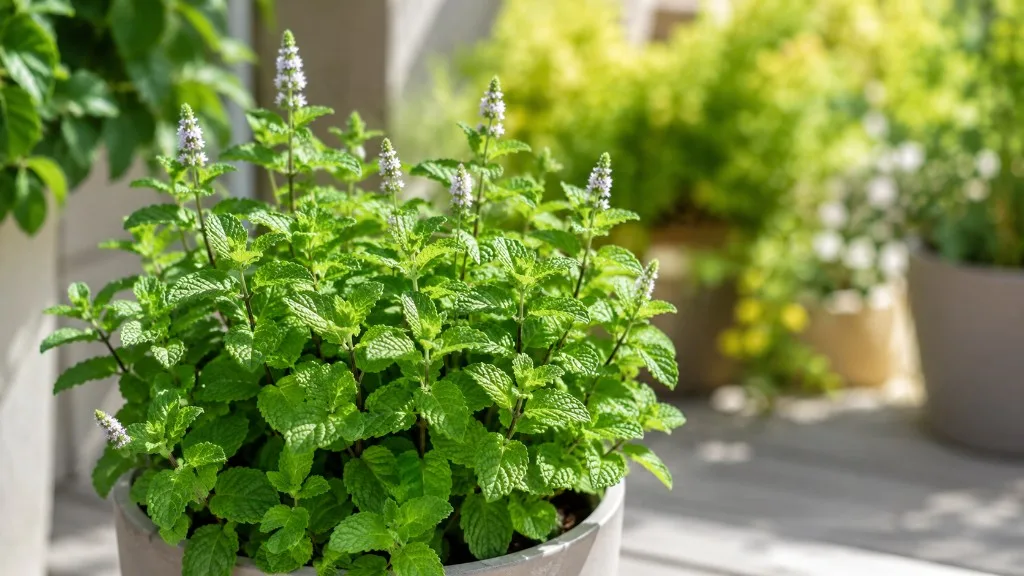
Lemon balm produces strongly scented leaves in sun or partial shade and is useful for tea, fruit dishes, and summer drinks. It usually prefers evenly moist soil, but it does not want a stagnant wet pocket. Pinching the growing tips keeps the plant bushier and gives you the most aromatic young leaves.
Like mint, lemon balm can spread by seed and underground growth. Deadhead before seeds mature if you want a tidier planting, or grow it in a pot near the kitchen. In a hot climate, afternoon shade can preserve leaf quality; in a cool, very dark site, expect fewer stems and a looser habit.
Cilantro uses shade to delay bolting
Cilantro is a cool-season annual that often benefits from afternoon shade. Heat, rather than a lack of fertilizer, is the usual reason it races to flower. Once it bolts, leaf production and flavor change, though the developing seeds can be harvested as coriander.
Sow small batches every two to three weeks during the cool part of the season rather than planting one large row. Direct sowing is usually preferable because cilantro develops a taproot and dislikes being disturbed. Give it morning light, consistent moisture, and enough air movement that dense foliage dries after watering.
Shade will slow bolting, not prevent it. If the plant is tall, pale, and flowering early despite a cool site, check whether it is overcrowded or root-bound, and move the next sowing to a brighter location with better airflow.
Chervil prefers cool, gentle light
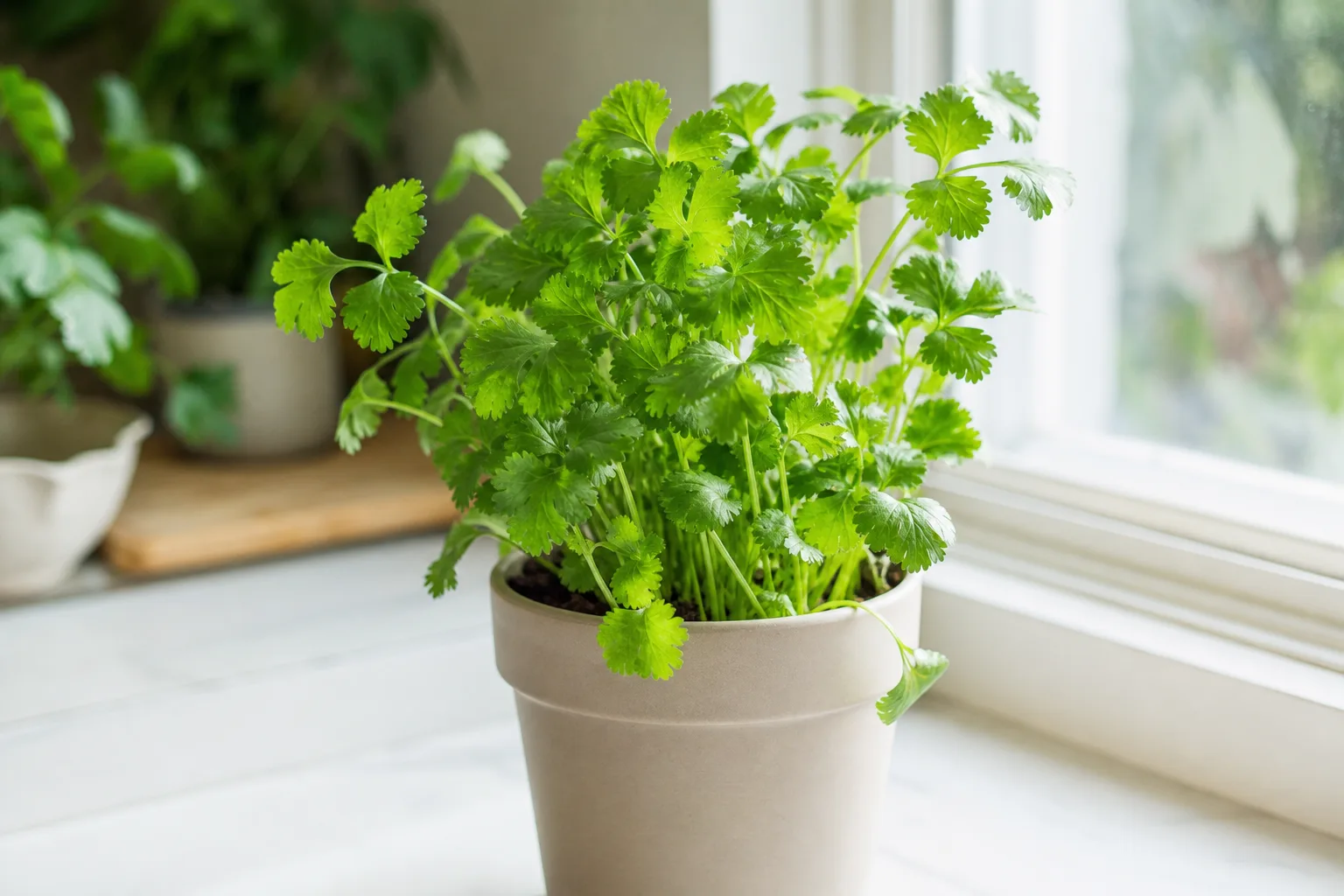
Chervil has delicate foliage and a mild parsley-and-anise flavor. It is better suited to cool spring and fall conditions than hot midsummer weather, and light shade helps keep the leaves tender. Sow it where it will remain undisturbed because transplanting can set it back.
Keep the seedbed evenly moist until emergence, then thin seedlings so air can move between plants. Harvest the outer leaves first. Chervil can flower quickly as temperatures rise, so a succession sowing is more reliable than trying to maintain one planting all summer.
Catnip handles light shade and dry spells
Catnip is a hardy perennial with gray-green foliage and small flowers. It can grow in light shade and tolerates periods of dry soil once established, making it useful where tree roots compete for moisture. It is not a good choice for a bed where neighborhood cats can reach it without protection; rolling and chewing can flatten a young plant.
Pinch the stems to encourage branching, and cut the plant back after flowering if it becomes floppy. Catnip prefers drainage over constant irrigation. In dense shade, it may stretch toward the light, so a pot that can be moved seasonally is useful.
Tarragon appreciates protection from hot afternoon sun
French tarragon is the culinary type most gardeners want for its refined anise flavor. It is usually purchased as a plant or propagated from a cutting because true French tarragon rarely produces useful seed. It needs well-drained soil and enough light to remain compact, but afternoon shade can prevent heat stress in warm regions.
Do not confuse French tarragon with Russian tarragon, which is easier to start from seed but generally has a harsher flavor. Harvest a few stems at a time rather than stripping the plant. In colder climates, grow it in a container that can be protected or expect seasonal dieback.
Bay laurel works best as a movable container herb
Bay laurel is an evergreen shrub rather than a small annual herb. It tolerates partial shade, especially in hot climates, but it needs more light than a deeply shaded corner can provide for strong, dense growth. A container is often the most useful arrangement because bay can be moved to a brighter spot, protected from hard freezes, and kept at a harvestable size.
Use a heavy pot with a drainage hole and a coarse, well-drained mix. Let the surface dry slightly between waterings, then soak thoroughly. Clip individual leaves or small stems; avoid repeatedly removing the growing tip from a young plant. Bay is slow compared with mint, so patience matters more than frequent feeding.
Chamomile needs more light for flowers than for leaves
German chamomile can grow in full sun or partial shade, but shade changes the harvest. You may get foliage in a dim site without getting the abundance of daisy-like flowers needed for tea. Plant it where the canopy is thin or where it receives morning sun, and provide excellent drainage.
Direct sowing is usually easiest because chamomile dislikes root disturbance. Pick flowers when the centers are still fresh and the petals are open, then dry them in a warm, airy place. If your main goal is flowers, move the crop toward the brightest edge of the shade rather than trying to fix low light with fertilizer.
Comfrey, costmary, and sweet cicely need boundaries
Comfrey tolerates sun to partial shade and produces substantial leaves and bell-shaped flowers. It is valuable in a wildlife-friendly garden, but do not treat it as a kitchen herb: some comfrey species contain pyrrolizidine alkaloids, and internal consumption is not considered safe. North Carolina State Extension documents the plant’s characteristics and cautions around its use. Site it where its size and spreading crown are acceptable, and wear gloves if its rough leaves irritate your skin.
Costmary, sometimes called Bible leaf, is an aromatic perennial that can grow in partial shade. It may produce leaves without many flowers in deeper shade, and it can crowd neighboring plants. Sweet cicely prefers rich soil and light to full shade, with fernlike leaves and sweet anise notes. It can be an interesting cool-climate perennial, but it is less universally useful than parsley or chervil.
These three belong in a deliberate planting plan. Give each enough room, label unfamiliar plants, and check local invasive-plant guidance before introducing a vigorous perennial.
Sweet woodruff is a shade groundcover, not a kitchen staple
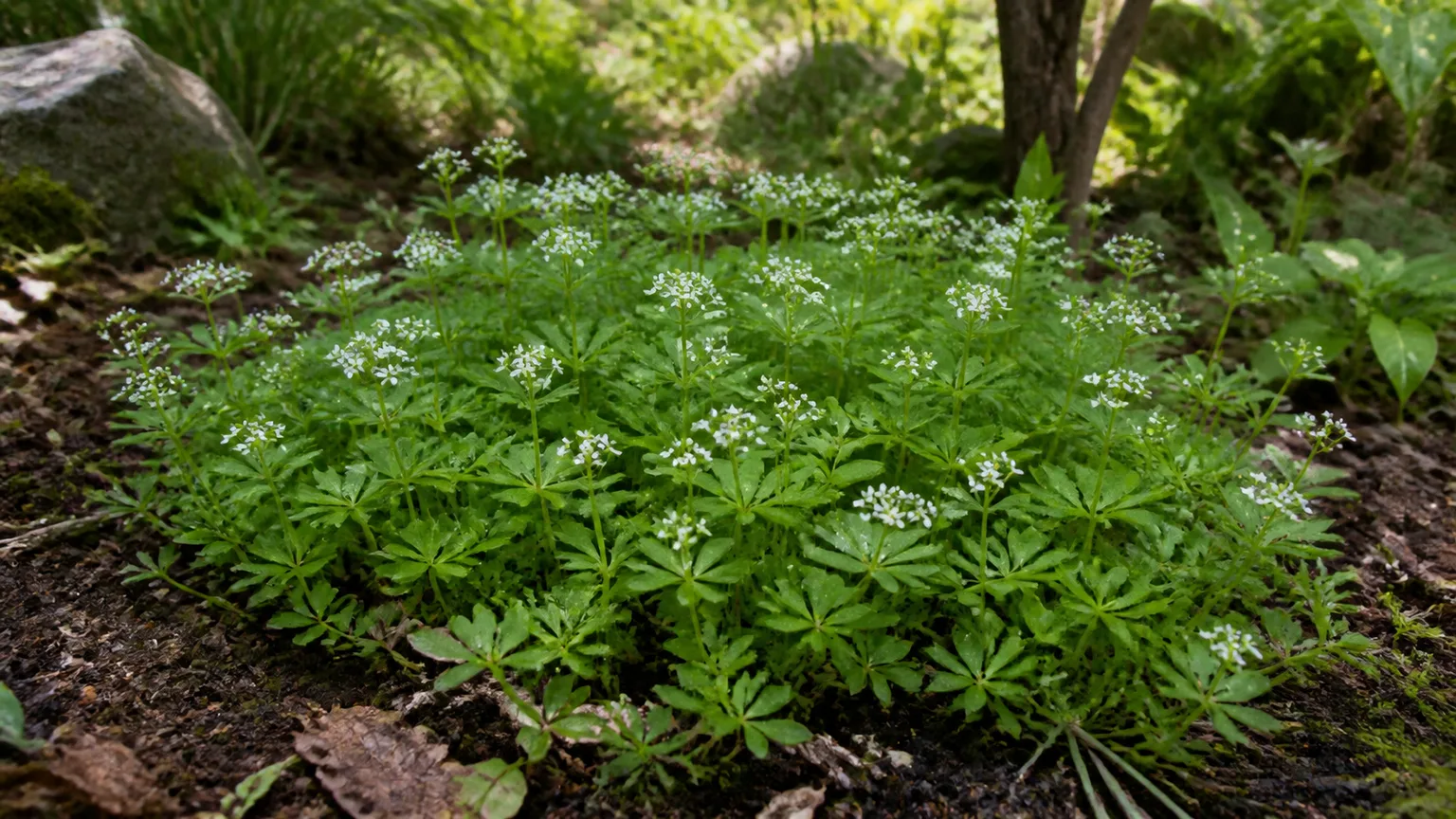
Sweet woodruff is one of the best visual fillers for a cool, shady garden. Its creeping stems form a mat, and its small white flowers appear in spring. Dried foliage has a haylike, vanilla scent and is traditionally used in sachets and potpourri; the plant is better understood as an aromatic groundcover than as a daily culinary herb.
It prefers evenly moist soil and can spread quickly in favorable conditions. Use it under shrubs or along a path where a low mat is useful, not in a small vegetable bed where it will compete with annual herbs. Cut it back after flowering if the foliage becomes untidy.
How to grow shade herbs without weak, wet growth
Improve soil and drainage
Shade is not a reason to create a swamp. Before planting, loosen compacted soil and mix in finished compost for structure, but do not fill a heavy clay bed with a thick layer of rich material that holds water above a dense subsoil. Herbs need oxygen around their roots. If water remains on the surface after a normal rain, use a raised bed or containers instead of watering more carefully and hoping for the best.
Space plants farther apart than you would in a sunny, fast-drying bed. Lower light slows evaporation, and crowded leaves stay wet longer. Mulch can stabilize moisture, but keep it a little away from crowns and stems. Organic mulch also hides slugs, which often become more active in cool shaded beds.
Water around tree roots and containers.
Check moisture at root depth rather than judging by the soil surface. Under a tree, water slowly and deeply near the herb’s root zone, then check again before repeating. Do not sever major tree roots to make a planting pocket; choose containers or a raised bed if the roots dominate the space.
Containers need a different rhythm. A shaded pot may dry more slowly than one in full sun, but it can still become hydrophobic or waterlogged. Use a drainage hole, empty saucers after rain, and lift the pot occasionally to learn how its weight changes between watering days.
Harvesting and pruning in lower light
Harvest is also a light-management tool. Pinch or cut leggy stems just above a leaf node, but never remove more than about one-third of a plant at once. Frequent light harvest encourages branching on mint, lemon balm, catnip, parsley, and tarragon. If a plant is pale and stretched, move it toward brighter light before cutting it back hard.
Leafy herbs generally give the best return in shade. Harvest flowers when they are fresh if you grow chives or chamomile for blooms, and accept that deep shade may produce more foliage than flowers. If flavor seems weak, compare a shaded cutting with one grown in brighter light before adding fertilizer; light and plant age often explain the difference better than nutrition.
When a container is better than the ground
Use containers for herbs that spread, herbs that need winter protection, and herbs whose light needs change with the season. Mint and lemon balm are the obvious containment cases. Bay laurel and French tarragon benefit from mobility. Cilantro and chervil can be moved away from rising heat, while a pot of parsley can follow the brightest edge of a patio.
Choose a pot large enough for the mature root system but not vastly oversized. A huge volume of wet mix around a small root ball stays wet too long. Group pots by water needs: mint with lemon balm, parsley with cilantro, and bay with tarragon only if the containers can dry between thorough waterings. Avoid combining aggressive spreaders with slow perennials.
Conclusion: choose the light you actually have
The best shade herb is not the one that survives the darkest corner; it is the one that matches the light, moisture, temperature, and amount of maintenance you can provide. Start with parsley and chives for dependable leafy harvests, use cilantro and chervil in cool seasons, and reserve mint, lemon balm, sweet woodruff, and similar spreaders for containers or clearly bounded spaces.
If a site receives only a thin glow for an hour or two, move the herb rather than forcing it. A brighter pot at the edge of the shade, better drainage, and small repeated sowings will usually produce more food than a crowded bed planted with herbs that were chosen from a generic list.