How to Harvest Lettuce: Leaves, Heads, and Regrowth
Harvest lettuce leaf by leaf or as a full head with clear readiness cues, realistic regrowth expectations, bolting signs, succession timing, and storage advice.
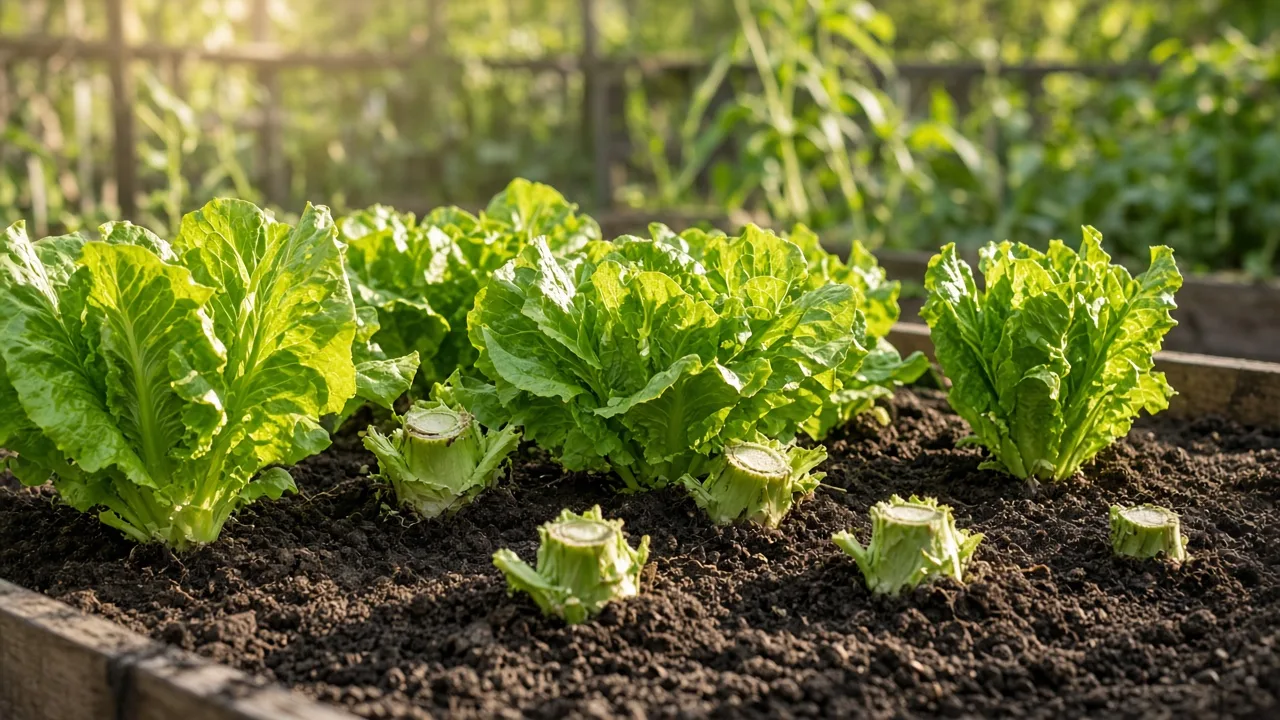
The most reliable way to get more than one picking from lettuce is to match the cut to the plant: take outer leaves from a leafy rosette, leave a firm crisphead to mature, and treat a cut stump as a chance of a smaller flush—not a promise of another full head. The living center, or crown, is the part you protect when you want regrowth.
Lettuce is a cool-season annual, so even careful harvesting cannot keep one planting productive through every heat wave. A longer harvest comes from two things working together: taking leaves without stripping the plant bare and sowing small replacement batches before the current crop bolts or runs out of steam.
Choose your harvest goal before you cut
First decide whether tonight’s salad matters more than a larger harvest later. If you need a handful now, remove a few sound outer leaves. If you want a full head, wait for the variety’s head to form and harvest the entire plant. If you planted a dense row for baby greens, a single cut across the row can be more practical than picking every leaf separately.
| Lettuce type | Best first choice | What may grow again |
|---|---|---|
| Loose-leaf | Pick mature outer leaves; for baby greens, cut above the crown | New leaves from a healthy, uncut center; a whole-plant cut may give a smaller second flush |
| Romaine or butterhead | Pick outer leaves while young, or wait for an early, usable head | Outer leaves may continue to form; a head cut can sometimes produce smaller leaves, but not a dependable second head |
| Crisphead or iceberg | Wait until the head is firm and cut once | A few small leaves may emerge from a sound stump; plan on replacing the plant |
These are tendencies, not guarantees. Utah State University Extension distinguishes leaf lettuce picked before a seed stalk forms from crisphead harvested when firm and butterhead or Cos harvested as heading begins; the Utah State lettuce guide also notes that older leaves can be removed first so younger leaves keep growing.
Know the lettuce type, because it changes the cut
Seed packets use several overlapping names, and a salad mix may contain more than one growth habit. Look at the plant itself: does it spread into a loose rosette, make upright overlapping leaves, or close into a compact, dense head? That shape tells you whether to pick individual leaves or wait for a single harvest.
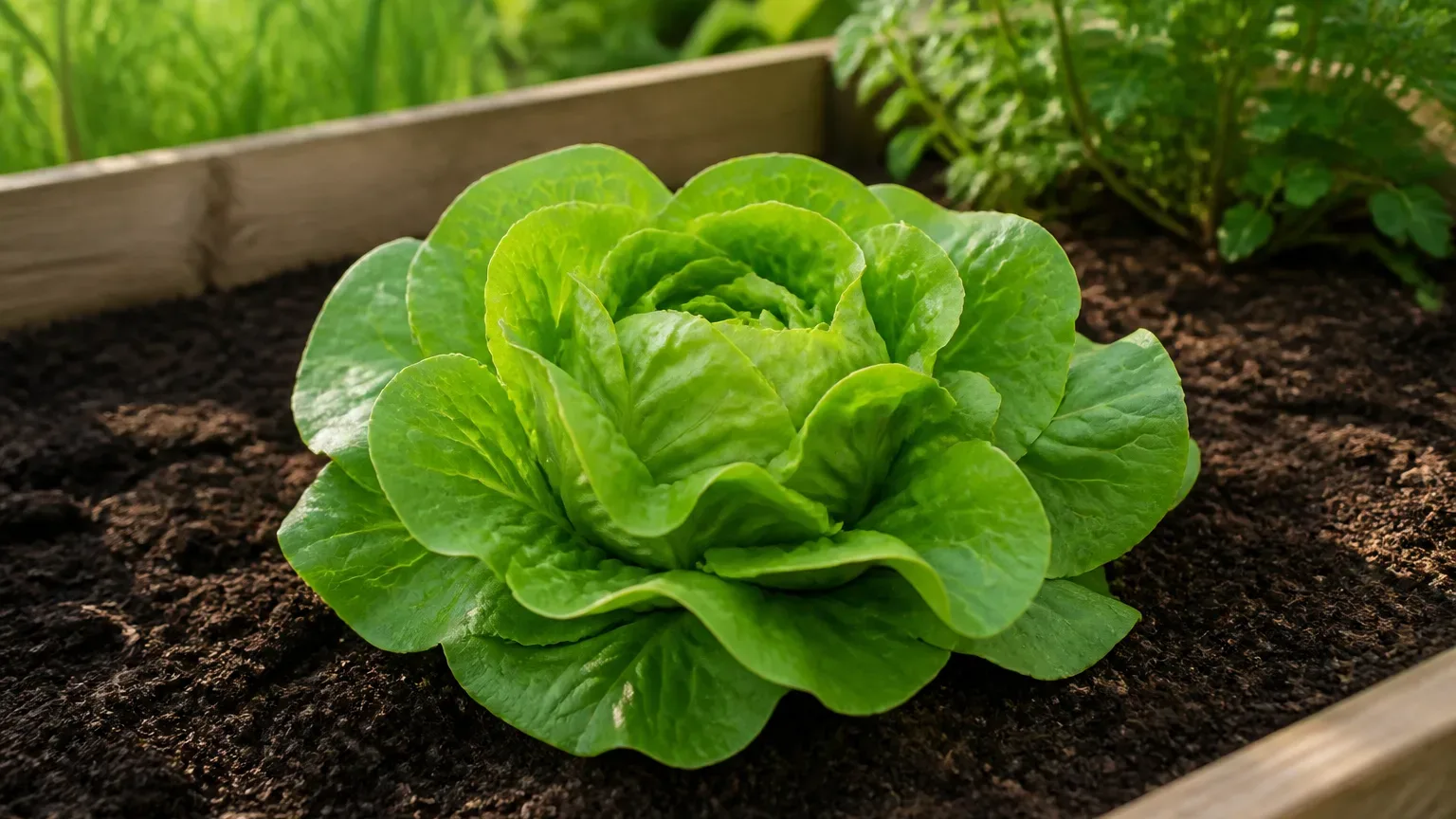
Leaf lettuce: built for repeated picking
Loose-leaf varieties form open or loosely packed rosettes rather than a tight, solid head. Oakleaf, Salad Bowl, and many red- or green-leaf mixes are common examples. They are the easiest type for picking a few leaves at a time because removing mature outside leaves leaves the smaller center leaves in place.
For a repeat harvest, keep the center intact and do not strip every usable leaf at once. A plant needs leaf area to keep growing; if you remove nearly the whole rosette, the next flush will be slower or may not come. A separate baby-leaf planting can be cut more heavily, but that is a crop-management choice, not the same as asking one mature plant to keep producing indefinitely.
Romaine and butterhead: leaf harvest or head harvest
Romaine, also called Cos, grows upright leaves that gather into a tall, relatively open head. Butterhead makes a softer, rounded head with tender outer leaves around a pale center. You can pick outer leaves from either type while the plant is still forming, but decide early whether you want a full head: repeated picking reduces the material left to build one.
If you prefer a head, use the cultivar’s expected size and the plant’s shape as cues. A butterhead can be ready while it still feels springy rather than rock-hard; a romaine should have a recognizable upright heart with full-length leaves. Cultivars vary, so the packet’s days-to-maturity estimate is a guide to a crop stage, not a deadline that overrides weather or the actual plant.
Crisphead: wait for a firm head
Crisphead lettuce such as iceberg is grown for a compact, crisp center. Outer leaves can be eaten, but repeatedly stripping them may slow or distort the head you are waiting for. If a full crisphead is your goal, leave the wrapper leaves attached and let the center close.
Test readiness with gentle pressure on the sides of the head. A mature head feels firm and filled in; a loose head still compresses easily. This quick touch is more useful than harvesting all plants on the same calendar day, especially when they were planted at different times or have grown through different weather.
When to begin harvesting
For baby greens, harvest when the leaves are the size and tenderness you want to eat; you do not have to wait for the plant’s listed days to maturity. For full-size leaf lettuce, let the rosette produce enough leaves that removing a few outer ones will not expose or damage the center. A practical test is whether you can take a small meal-sized handful while leaving a healthy-looking plant behind.
There is no universal leaf length that applies to every cultivar. A small, fast-growing leaf mix can be worth cutting earlier than a large, upright variety, and heat or drought can make a plant mature poorly even when the packet’s number has passed. The University of Delaware Cooperative Extension’s leaf-lettuce fact sheet describes harvesting before maturity and cutting above the soil for repeated regrowth; that guidance applies to leaf lettuce, not to an iceberg head that has not closed.
Harvest in the cool part of the day, often morning, when leaves are crisp and less stressed by afternoon heat; Harvest to Table also recommends morning picking for the best texture. If the foliage is wet with dew or rain and you plan to store it, wait until it dries if practical. Wet leaves are not automatically unusable, but they are harder to handle and easier to pack with excess moisture.
Pick outer leaves without injuring the crown
This is the gentlest method for leaf lettuce and for romaine or butterhead plants you still want to size up. Bring a clean basket or bowl to the bed so you do not leave cut leaves warming in the sun. A small pair of sharp scissors is useful for thick petioles; clean fingers also work when a leaf releases easily.
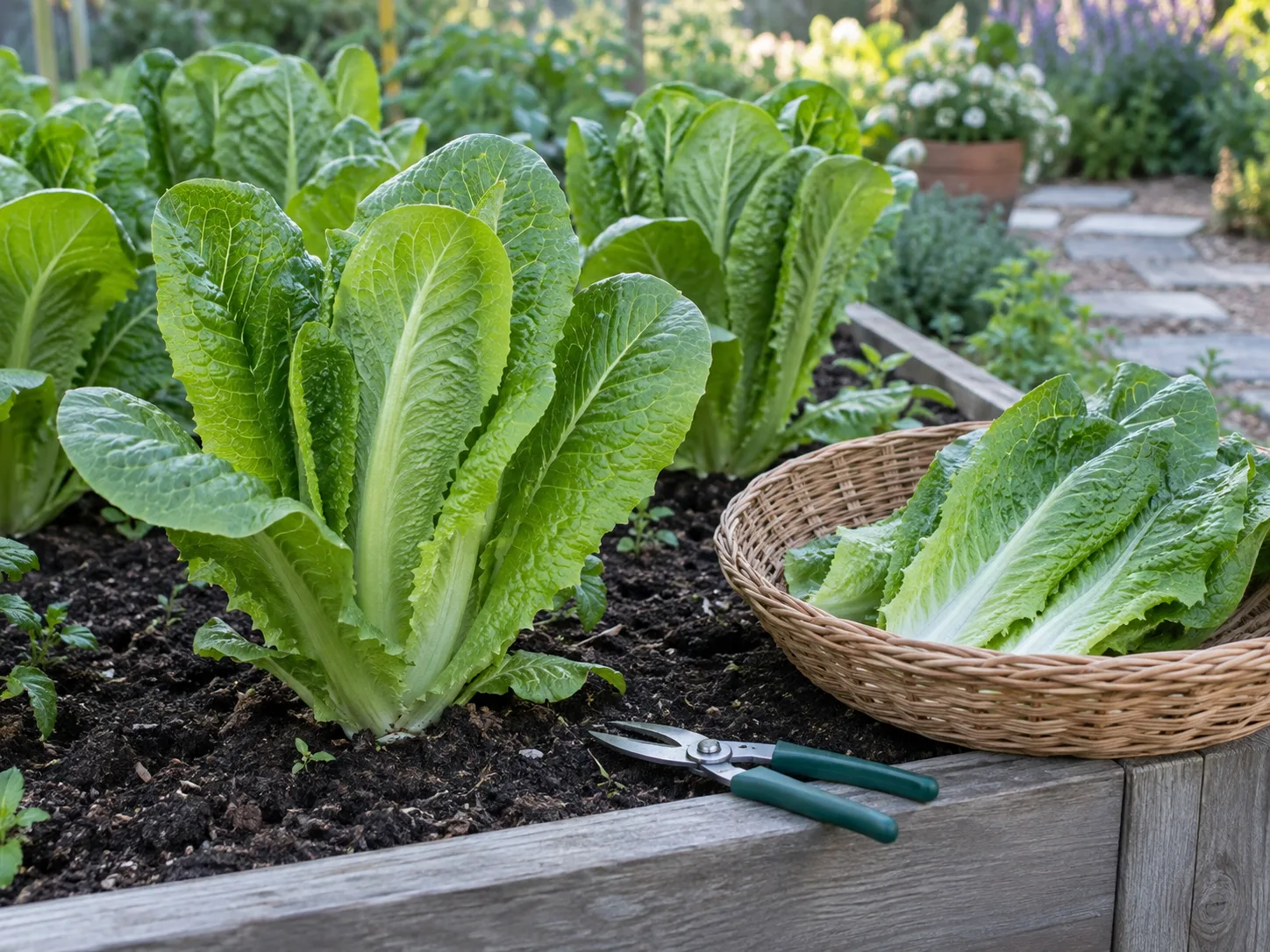
- Find the center of the plant before you touch it. The youngest leaves emerge from the crown; the largest, oldest leaves sit around the outside.
- Choose firm, healthy outer leaves that are large enough to use. Leave tiny center leaves and enough mature foliage to keep the plant growing.
- Support the leaf near its base and cut or snap it off close to where it joins the plant. Do not slice through the crown or pull hard enough to loosen the plant in the soil.
- Work around the outside, then stop. If you are unsure how much to take, harvest fewer leaves this time and return when the plant has made visible new growth.
The goal is not to make the plant look freshly shorn. A tidy, intact center with several layers of leaves is a better sign than a perfectly even outline. The horticulture team at Epic Gardening’s lettuce guide likewise recommends taking outer leaves for a continuing harvest and distinguishes that approach from harvesting a mature head.
Remove leaves that are slimy, badly chewed, or diseased separately rather than mixing them with the clean harvest. If a plant has a soft or rotting crown, do not keep cutting it in hopes that it will recover; remove it and check nearby plants. A clean, sharp tool reduces tearing, but it cannot compensate for harvesting a plant that is already failing.
Use a whole-plant cut for baby leaves
If you planted lettuce densely for young leaves, cutting the whole patch can be faster than picking one leaf at a time. When the leaves reach the size you want, use scissors or a clean knife to cut above the soil surface, leaving the short crown and growing point in place. The University of Delaware fact sheet uses a cut about two inches above the soil for leaf lettuce and describes repeated cuts; treat that as a starting method for a healthy leaf crop, not a universal height for every variety or bed.
This cut-and-come-again approach can produce a new flush, but the second harvest is usually smaller and depends on the crown surviving, the plant retaining enough energy, and conditions remaining cool enough for growth. If the first cut is too low, takes nearly every green leaf, or lands during hot weather, recovery may be weak. Let the plant show fresh leaves before cutting it again instead of scheduling the next cut by the calendar.
For a small home bed, you can also cut only one portion of a dense row and leave the rest to mature. That gives you a mixed harvest: tender baby greens now and larger leaves later. Mark the cut section so you can tell whether it is regrowing or whether another part of the bed is simply maturing.
Harvest a mature head cleanly
When the head reaches the size and firmness expected for its type, harvest it before heat or a flower stalk spoils the quality. Use a clean, sharp knife and cut through the stem just above the soil line. Lift the head by its base rather than squeezing the leaves, and remove damaged outer leaves after it is out of the bed.
You can pull a whole plant with its roots if you want to clear the spot immediately for a new sowing. Cutting at the crown leaves the root system in place and may allow a few small leaves to emerge, but those leaves are a bonus, not a substitute for another sowing. The Harvest to Table lettuce guide describes whole-head harvest at firmness and notes that smaller leaves can follow a crown cut; in a home garden, cultivar, heat, and the condition of the remaining crown decide whether that happens.
If your priority is another head of similar size, do not count on the stump. Remove the plant, refresh the bed as needed, and transplant or sow a replacement suited to the current season. This is especially important for crisphead lettuce, which needs time and favorable temperatures to form a dense center.
Plant in waves to extend the season
Harvesting changes what you take from a plant; succession sowing changes how long your garden supplies lettuce. Instead of sowing one large row on one day, start smaller batches at intervals. As the first batch becomes ready, a younger one is still filling in, so the supply does not disappear all at once when an older planting bolts.
Adjust sowing by temperature and crop speed
Published intervals differ because varieties, climates, and harvest goals differ. University of Minnesota Extension’s head-lettuce guide suggests a new succession roughly every ten days for season-long production; Harvest to Table discusses sowing about every three weeks, while Epic Gardening gives a two-to-three-week rhythm. These are planning ranges, not a universal timer.
For a home garden, try a small sowing every one to two weeks during a cool, active growth window, then widen or pause the interval when germination and growth slow. Use fewer seeds than you think you need: lettuce matures quickly, and several small rows are easier to eat than a single glut. Keep a note of sowing date and cultivar so next season’s schedule reflects your own garden rather than a generic days-to-harvest number.
As the season shifts, change the cultivar as well as the sowing date. Choose fast-maturing types for a short spring window, heat- and bolt-tolerant varieties for warmer periods, and cold-tolerant types for fall. The NC State Extension leaf-lettuce profile describes different growth habits and cultivar traits, while Minnesota Extension highlights Batavia and summer-crisp types as options bred for warmer conditions and slower bolting.
Slow heat stress before it pushes a flower stalk
Lettuce handles cool weather better than sustained heat. Hot days, warm nights, long days, and dry soil can combine to push a plant toward a flower stalk; Utah State Extension notes that high summer temperatures reduce growth and can bring bitter or off flavors. A bolt-resistant label can buy time, but it does not make lettuce immune to summer conditions.
Give summer lettuce afternoon shade or use shade cloth over a frame that still allows air to move. Keep soil moisture steady with regular watering and mulch, but do not keep roots waterlogged. Avoid harvesting so heavily that a plant loses most of its leaf area just as heat is slowing new growth; at that point, use the crop while it is still good and start a fresh planting when the season becomes suitable again.
Recognize bolting and make the final pick
Bolting is the transition from leaf production to flowering and seed. The center of the plant begins to stretch upward, the leaves may become narrower or less tender, and a central stalk becomes obvious. A taller plant is not automatically bolting—some romaine grows upright—so look for a rapidly elongating central stem rather than judging by height alone.
Once the stalk is underway, cutting it off will not return the plant to its earlier leafy stage. Make a final pick of leaves that still taste acceptable, then remove the plant or leave it only if you deliberately want seed. Bolted leaves are not necessarily unsafe, but heat-stressed lettuce often tastes bitter or feels tougher; taste a small piece before adding it to a large salad.
If bitterness appears without a clear flower stalk, check the growing conditions before blaming the harvest cut. Dry soil, prolonged heat, and overmature leaves can all reduce quality. A new sowing in cooler weather is more reliable than trying to force a tired plant back into tender growth.
Cool and handle leaves promptly
Lettuce loses crispness quickly when it sits warm after cutting. Put the harvest in a clean container out of direct sun, then bring it indoors and refrigerate it as soon as practical. If you harvest a large head, keep it shaded while you finish the bed rather than leaving it on a hot path or table.
Use clean scissors, a knife, and a basket; remove soil or visibly damaged leaves at the bed. If the leaves are dusty or gritty, rinse them with potable water and handle them gently so you do not bruise the edges. Minnesota Extension’s postharvest discussion emphasizes clean water, prompt cooling, and cold storage for lettuce; commercial handling can be more elaborate than a home garden needs, so do not improvise a produce-sanitizer mixture.
Wash, dry, and store lettuce
Shake off loose soil outdoors, then separate leaves only as much as needed to remove grit. Rinse with potable water and spin or drain them gently. For a whole head, keep the wrapper leaves on until you are ready to use it; they protect the inner leaves from drying and handling damage.
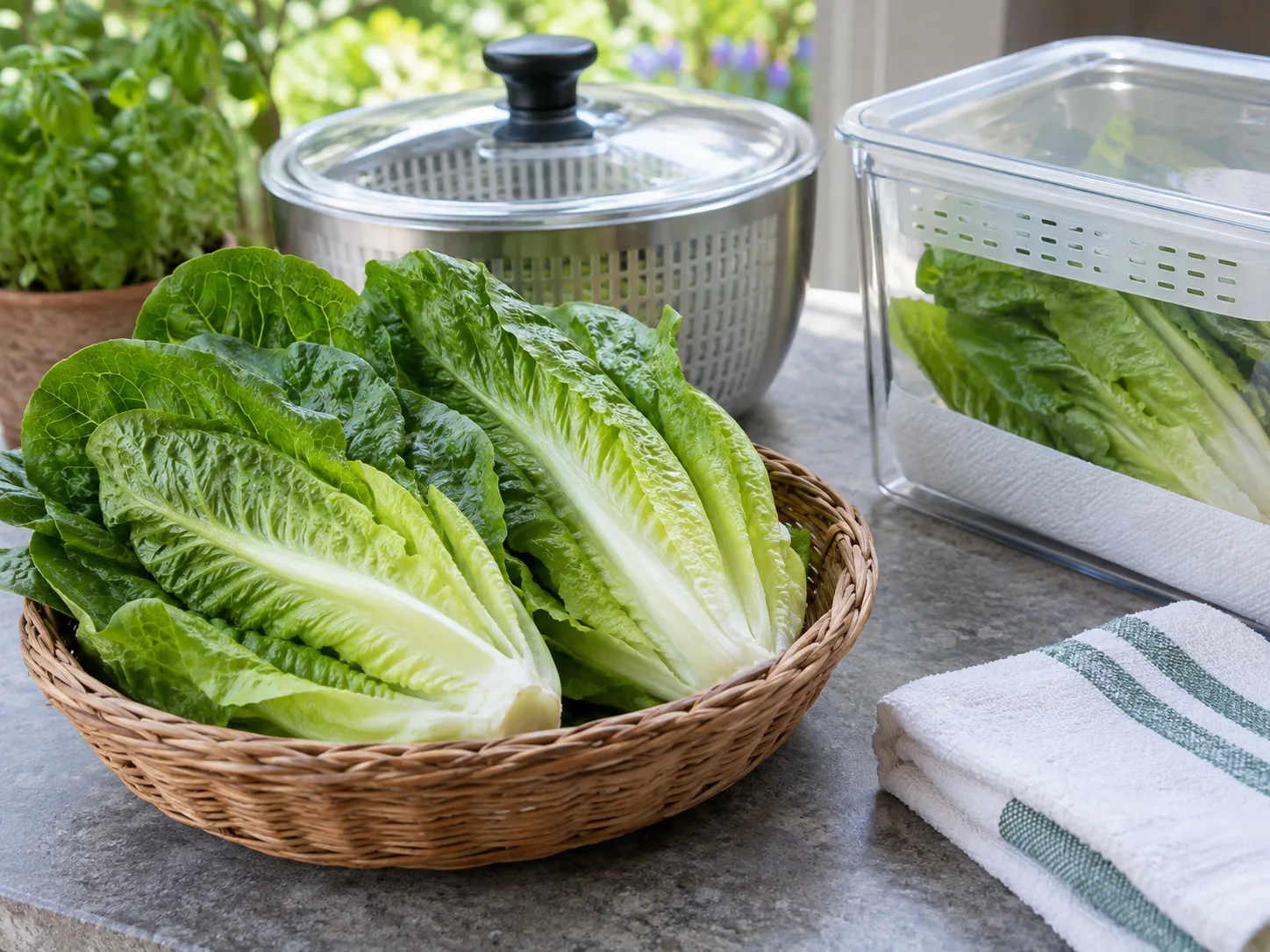
Storage advice often sounds contradictory: some postharvest guidance favors high humidity and slightly moist leaves, while home-garden instructions commonly recommend drying washed leaves well before bagging. The practical difference is between humidity around the leaves and free water trapped in a closed bag. For a home refrigerator, do not pack lettuce while it is dripping; dry the surface, line a clean container or bag with a paper towel, and replace the towel if it becomes wet.
Store lettuce in the refrigerator’s crisper or another consistently cold area, away from spots where leaves can freeze. Keep it separate from produce that releases a lot of ethylene if you have room, as Minnesota Extension’s postharvest guide advises for apples and tomatoes. Utah State Extension gives roughly one to two weeks of refrigerated storage as a general range, while head types and handling can change that; treat texture, smell, and visible decay as your decision signals rather than assuming every harvest will last the same number of days.
If leaves have wilted but are still sound, a short soak in cold water may restore some crispness before a meal. It will not reverse decay, sliminess, or damage from freezing. Use the freshest loose leaves first and save intact heads for later in the week.
Avoid mistakes that shorten the harvest
- Cutting through the center: Find the crown first; a damaged growing point is less likely to support a repeat pick.
- Taking too much at once: Remove a modest amount and leave healthy leaves. A plant stripped bare has little capacity to recover.
- Using the same harvest rule for every type: Loose-leaf is suited to repeated picking; crisphead is usually grown for one firm head.
- Expecting the stump to replace a new planting: A few replacement leaves may appear, but repeat sowing is the dependable way to extend the season.
- Waiting for the packet’s day count while the plant bolts: Use the calendar as an estimate and the plant’s growth as the final cue.
- Harvesting into heat and storing wet: Shade the cut leaves, cool them promptly, and avoid sealing dripping foliage in a bag.
- Trying to stop an active flower stalk by pruning: Bolting is a developmental change, not a stem that can be trimmed away to restart the rosette.
Small adjustments make a bigger difference than elaborate tools: identify the type, decide whether you want leaves or a head, take the cut above the crown, and keep a younger sowing in reserve. If the plant is already stretching into a stalk, harvest what still tastes good and move on to a better-timed crop.
Conclusion
To harvest lettuce and keep it growing, choose the method that fits the variety. Pick mature outer leaves from loose-leaf plants, take only a few from a forming romaine or butterhead, and let crisphead lettuce close before cutting the whole head. A healthy crown can send up more leaves, but no harvest trick can make one planting last forever.
Harvest during cool weather, leave enough foliage to support growth, and use succession sowing to replace plants before heat or bolting ends the crop. Bring the leaves into shade, cool and store them promptly, and let the plant—not a rigid day count—tell you when the next cut is ready.