Can You Use Garden Soil for Indoor Plants?
Can you use garden soil for indoor plants? Learn why it often fails, what potting mix to choose, and how to repot a plant already in heavy soil.
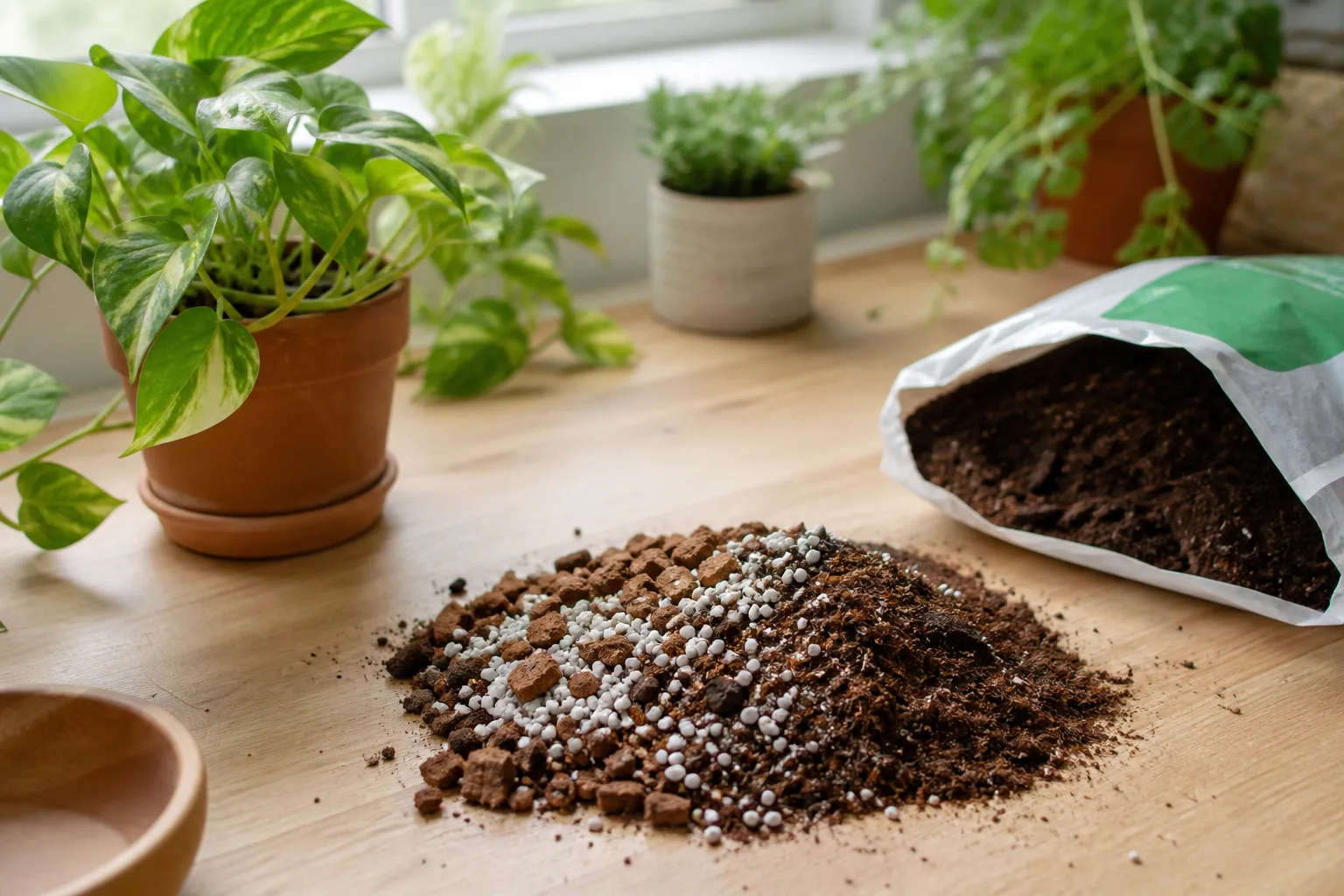
The short answer: usually no, and here is why
You can physically put garden soil in a houseplant pot, but it is usually the wrong starting material for indoor plants. In a container, ordinary outdoor soil is more likely to compact, hold water around the root ball, and introduce weed seeds or organisms you would rather not manage inside your home.
The better default is a potting mix labeled for containers or indoor plants. It is designed to stay open enough for roots to receive oxygen while still holding some water and nutrients. That does not mean every bagged mix is perfect, or that every houseplant wants the same recipe. It means the root zone has been engineered for a pot instead of a garden bed.
If you have already used garden soil, do not panic or automatically strip every root bare. A healthy plant in a small amount of suitable, well-draining soil may not need an emergency move. The useful question is whether the mix stays wet for too long, collapses into a dense mass, smells sour, attracts pests, or is paired with a pot that cannot drain.
Garden soil and potting mix solve different problems
Garden soil belongs in an open planting bed, where its texture is buffered by a large volume of surrounding earth, rainfall, soil organisms, and broad root space. A pot is a much smaller, enclosed environment. Once the same soil is confined by plastic or ceramic walls, there is less room for water to move away and fewer pathways for roots to find air.
| Material | Intended setting | Typical strength | Indoor-container risk |
|---|---|---|---|
| Garden soil or topsoil | In-ground beds and outdoor planting | Holds minerals and moisture in a larger soil system | Heavy, compacting, variable, and may contain weed seeds or pathogens |
| Garden compost | Soil improvement and outdoor amendment | Adds organic matter and fertility | Can stay wet or bring small organisms indoors when used alone |
| Potting mix | Containers, houseplants, and nursery pots | Lightweight structure, porosity, and predictable drainage | Still needs to match the plant and watering habits |
| Soilless mix | Containers and propagation | Clean, light, and adjustable | May need regular feeding because it holds fewer nutrients |
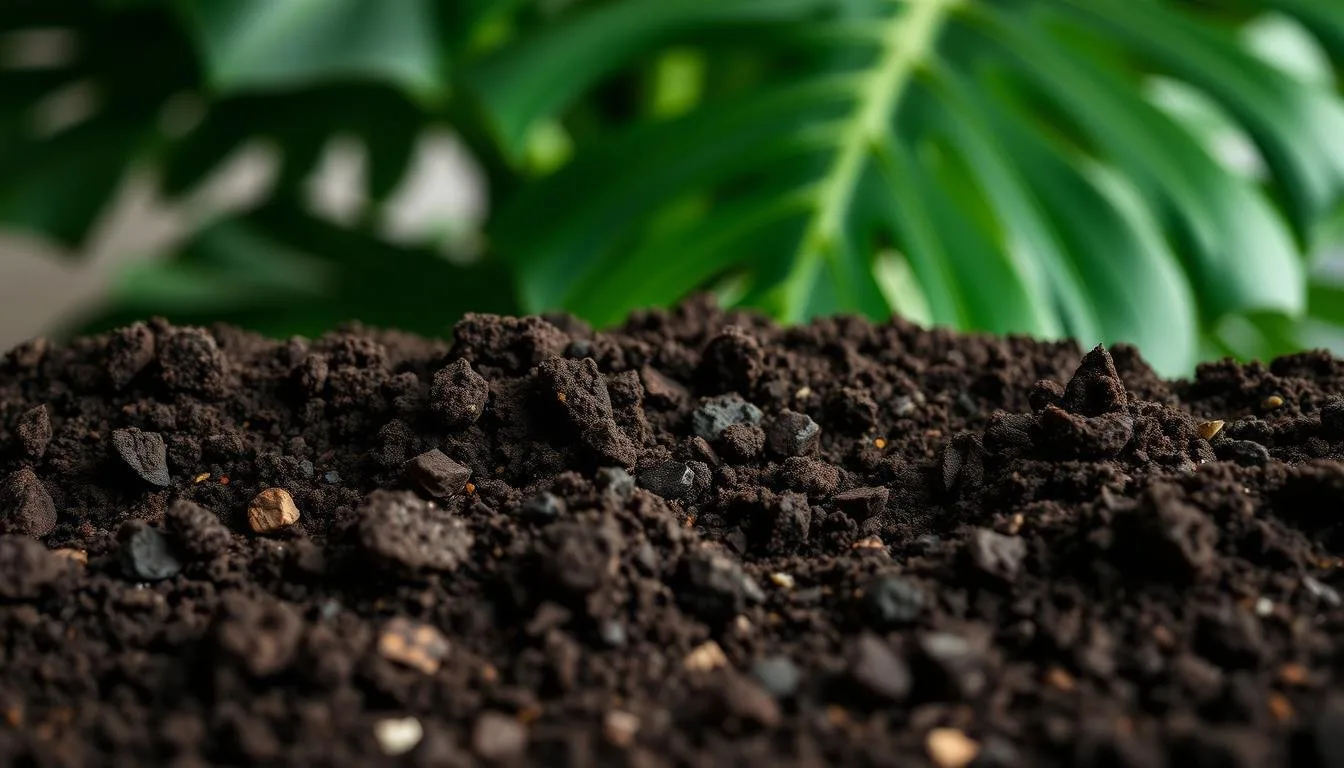
The University of Illinois Extension explains the practical distinction clearly: garden soil in containers commonly contains weed seeds and disease organisms and drains poorly, while soilless mixes are lightweight and provide better drainage. Its guidance also notes the trade-off: mixes with little or no mineral soil may need regular fertilizing because nutrients are not held as well. (University of Illinois Extension)
Why container roots need air as well as water
Roots need water, but they also need oxygen in the spaces between particles. A heavy soil that remains saturated replaces those air spaces with water. The plant may look thirsty because damaged roots cannot function normally, even though the pot is wet.
This is why adding more water is often the wrong response to a drooping houseplant in dense soil. The first check should be the root-zone condition: push a finger or wooden chopstick into the mix, lift the pot to judge its weight, and see whether the lower half remains wet days after watering. If the top looks dry while the center is cold and heavy, the pot may be drying unevenly rather than needing another drink.
Container water behavior is not identical to garden-bed water behavior. A recent PLOS One study describes a saturated zone that can remain above a drainage hole after irrigation, and it found that results depend on the growing medium and container geometry. That is another reason to use a suitable mix rather than assuming a hole will make any soil drain well. (PLOS One study on drainage layers and container media)
What garden soil can bring indoors
Outdoor soil is not automatically dirty or harmful. Its problem is that it is a living, variable material collected from a particular place, while an indoor pot needs a controlled root environment. A scoop from a flower bed may contain weed seeds, insect eggs, fungal spores, bacteria, or residues from past amendments; you may never see a problem, but the risk is unnecessary when clean container media is available.
The same concern applies to garden compost. Finished compost is valuable outdoors, but compost is not a complete substitute for potting mix. Used alone, it can settle, stay wet, and lack the coarse structure needed to keep oxygen moving through a small pot. If you use compost indoors, treat it as one ingredient in a plant-appropriate mix, not the whole root zone.
When garden soil is not automatically wrong
The rule is about unamended garden soil as the main fill in a small indoor pot, not about banning every mineral particle from every container mix. Some long-term outdoor container recipes intentionally include loam or garden soil because a large pot, a hardy plant, and a carefully balanced formula can behave differently from a six-inch houseplant pot.
The Royal Horticultural Society distinguishes garden compost from seed and potting compost and notes that soil-based, peat-free composts can be appropriate for longer-term container plantings. It also gives a garden-soil-and-compost recipe in an outdoor container context. That exception does not make a bucket of backyard soil a good mix for a pothos or peace lily on a living-room shelf. (Royal Horticultural Society container guide)
Garden soil can make sense indoors in unusual cases such as a large, permanent planter designed as a contained garden bed, a bonsai or specialty collection using a tested mineral substrate, or a recipe tailored to a specific plant and verified for drainage. Those are deliberate systems, not shortcuts.
There is also a difference between garden soil and a commercial product with “garden” in its name. Read the bag. “Garden soil” or “topsoil” usually signals a heavy outdoor product. “Container mix,” “potting mix,” “houseplant mix,” or a clearly stated soil-based compost tells you the material was formulated for pots. Marketing names vary by country, so the ingredient list and intended use matter more than the front-of-bag photograph.
Choose a potting mix by the plant, not the color
Dark, fluffy material is not proof of a good mix, and a bag full of perlite is not automatically suitable for every plant. Choose for the plant’s root system, the pot’s drainage, the light level, and how often you can check moisture.
What to look for on the bag
For a general indoor foliage plant, look for a mix with a light base plus visible structure. Common useful ingredients include coco coir or peat, composted bark, perlite, pumice, or another coarse aeration material. You do not need every ingredient, and there is no universal percentage that suits every houseplant.
When you open a bag, the mix should be moist or evenly conditioned, not sour-smelling, slimy, or compressed into a brick. Squeeze a handful: it should hold together lightly when damp but break apart when nudged. If it forms a dense ball, sheds water at the surface, or contains a large amount of fine dust, expect compaction or uneven wetting.
Fertilizer in a mix is a convenience, not a guarantee of long-term nutrition. Check how long it is intended to feed, then follow the plant’s care needs rather than adding extra fertilizer immediately. A heavily fertilized mix can create salt buildup, especially in a small pot with frequent watering and little runoff.
Match texture to the root system
Use a chunkier, faster-draining mix for cacti, many succulents, and plants that are damaged by repeated wetness. Perlite, pumice, coarse sand, or mineral grit can increase air space, but amendments work only when thoroughly blended through the root zone. A thin layer of grit on top or at the bottom is not the same as a porous mix.
Use a more moisture-retentive but still open mix for tropical foliage plants, ferns, and plants with fine roots that dislike drying completely. These plants still need drainage holes and a watering routine based on the mix’s moisture, not on a fixed weekly schedule.
Orchids are their own category. Most epiphytic orchids need a bark-based orchid medium rather than ordinary houseplant mix because their roots require unusually high air movement. A cactus mix, a tropical mix, and an orchid medium are not interchangeable just because all three are sold as potting products.
Fine Gardening’s practical potting-soil guidance treats a mix like a balanced diet: ingredients contribute different jobs, including moisture holding, drainage, fertility, and air space. That is a more useful way to shop than choosing the darkest bag or the one with the biggest promise on the label. (Fine Gardening potting-soil guide)
The best mix for common indoor plant groups
Tropical foliage plants
For pothos, philodendrons, monsteras, rubber plants, peace lilies, and many common foliage plants, start with a quality indoor or all-purpose potting mix. If it feels dense, blend in a moderate amount of perlite or fine-to-medium bark rather than adding a handful of sand at the bottom.
The right texture should absorb water without becoming muddy. After watering, excess water should leave the drainage holes within a reasonable time, and the mix should gradually become lighter as it dries. If the pot remains heavy and wet for more than a week in bright, warm conditions, the issue may be a dense mix, an oversized pot, low light, cool temperatures, or some combination of these.
Cacti, succulents, and other dry-side plants
Cacti, haworthias, jade plants, ponytail palms, and similar dry-side plants need a mix that dries more evenly and quickly than a tropical foliage blend. A commercial cactus mix can be a starting point, but inspect its texture because some products contain enough peat or fine compost to stay wet in a cool indoor room.
The container matters just as much as the recipe. Choose a pot only slightly larger than the root ball, use a real drainage hole, and water thoroughly only when the mix has reached the plant’s appropriate dry threshold. A gritty mix cannot compensate for a pot with no drainage or a saucer that stays full of water.
If you already used garden soil, triage before repotting
Inspect the pot, soil, and roots
Start with the simplest facts. Is there a drainage hole? Does water run out, or does it pool on top? Is the soil crumbly and open, or dense and sticky? Are there crawling insects, tiny flies, weeds, mold, a sour odor, or roots circling a pot that is much too large?
If the plant is upright, growing, and the mix dries at a reasonable pace, you can often wait for a suitable repotting window instead of disturbing it today. Reduce risk by watering only when the root zone needs it, emptying the saucer, and quarantining the plant from a valuable collection for a couple of weeks while you watch for pests.
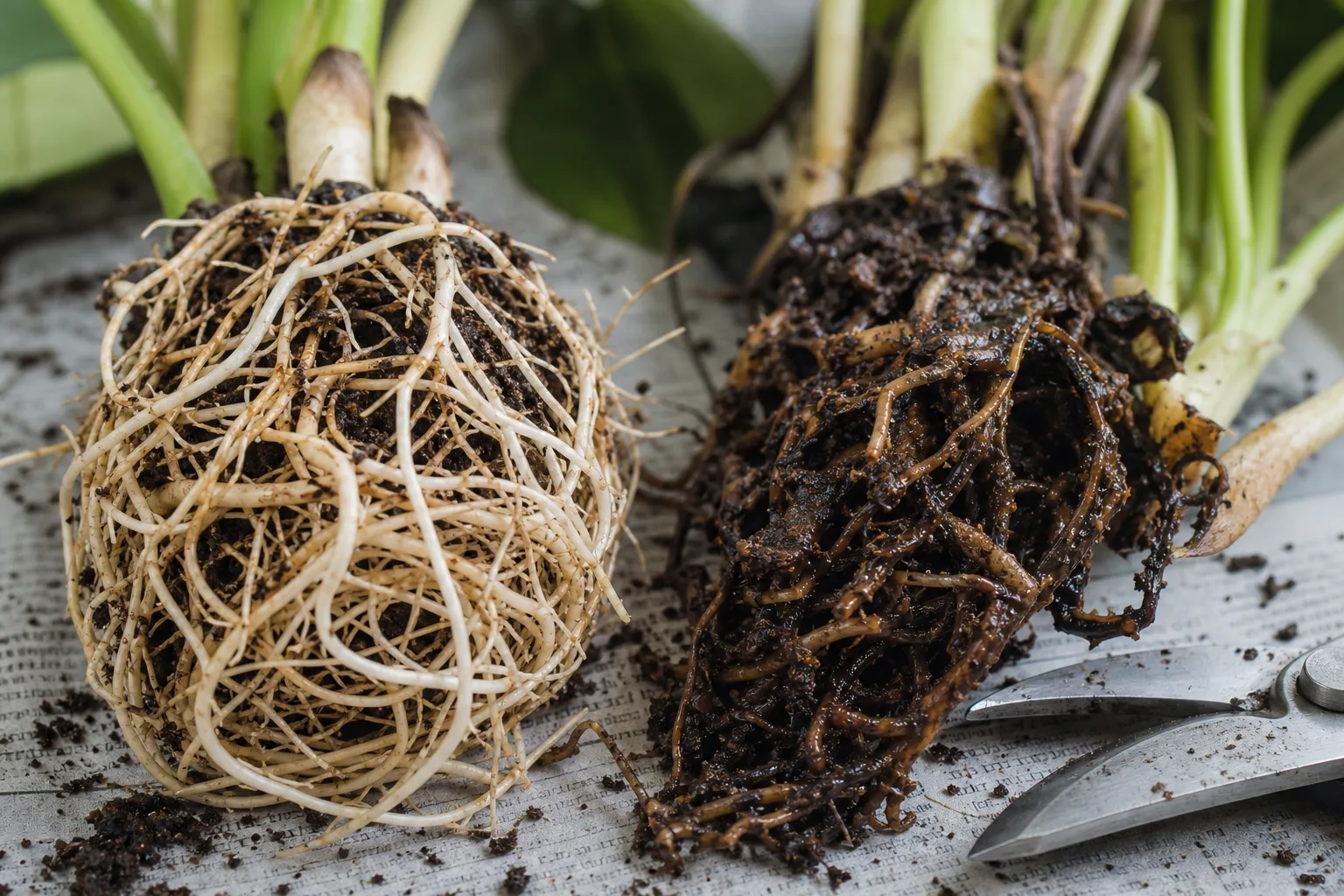
Repot sooner when water stays stagnant, the plant declines despite suitable light, the soil smells rotten, fungus gnats multiply, or the stem and roots show signs of rot. A plant in heavy soil is not doomed, but persistent saturation is a condition worth correcting rather than hoping away.
Repot with the least shock possible
Choose a pot with a drainage hole that is only one size larger than the current root ball. Prepare the new mix before removing the plant, and pre-moisten it so dry ingredients do not pull water away from delicate roots after planting.
Slide the plant out gently and inspect the outer roots. Remove loose, foul-smelling, or visibly mushy material, but do not aggressively bare-root a plant that has healthy roots simply because every crumb of garden soil is not ideal. If the old soil is tightly bonded to the roots, remove what comes away easily and prioritize giving the root ball a more open perimeter and a draining container.
Set the plant at the same depth it was growing before. Fill around the root ball without packing the mix down hard, leave a small gap below the rim for watering, and water once until the mix is evenly settled and excess exits the hole. Keep the plant in stable light and avoid fertilizer until it shows signs of recovering, unless the product label or a specific plant protocol says otherwise.
What not to do to rescue heavy soil
Do not keep adding water because the top looks dry. Do not pour a layer of gravel into the bottom and assume it has transformed garden soil into potting mix. Do not add large amounts of compost, fertilizer, sand, or perlite to a pot while the plant remains rooted in a dense, wet core; scattered amendments do not reliably rebuild the root zone around established roots.
Do not move a stressed plant into a dramatically larger pot. More unused mix around a small root ball can stay wet longer, which compounds the original problem. When in doubt, a modestly sized draining pot and a genuinely open mix are safer than a large decorative container filled with heavy material.
Why a layer of rocks will not rescue heavy soil
Rocks at the bottom of a pot are a popular attempted fix because they look like a drainage zone. They do not remove the water held in the soil above them, and the interface between fine soil and coarse material can leave a saturated band higher in the pot before water moves through.
The current evidence is more nuanced than a simple “rocks always make drainage worse” slogan: effects vary with the medium, layer depth, and container. The practical takeaway is steadier—use a drainage hole, choose the root-zone mix for the plant, and keep the pot off a surface that blocks the hole. Use stones for weight or appearance only when they serve that separate purpose.
Water and feed after the switch
After repotting, water based on the new mix rather than the calendar. Check below the surface with a finger or wooden skewer, compare the pot’s weight with its freshly watered weight, and learn how quickly the container dries in its actual light and temperature. A plant in a new airy mix may need water sooner than it did in garden soil, but that is a reason to monitor—not to water automatically.
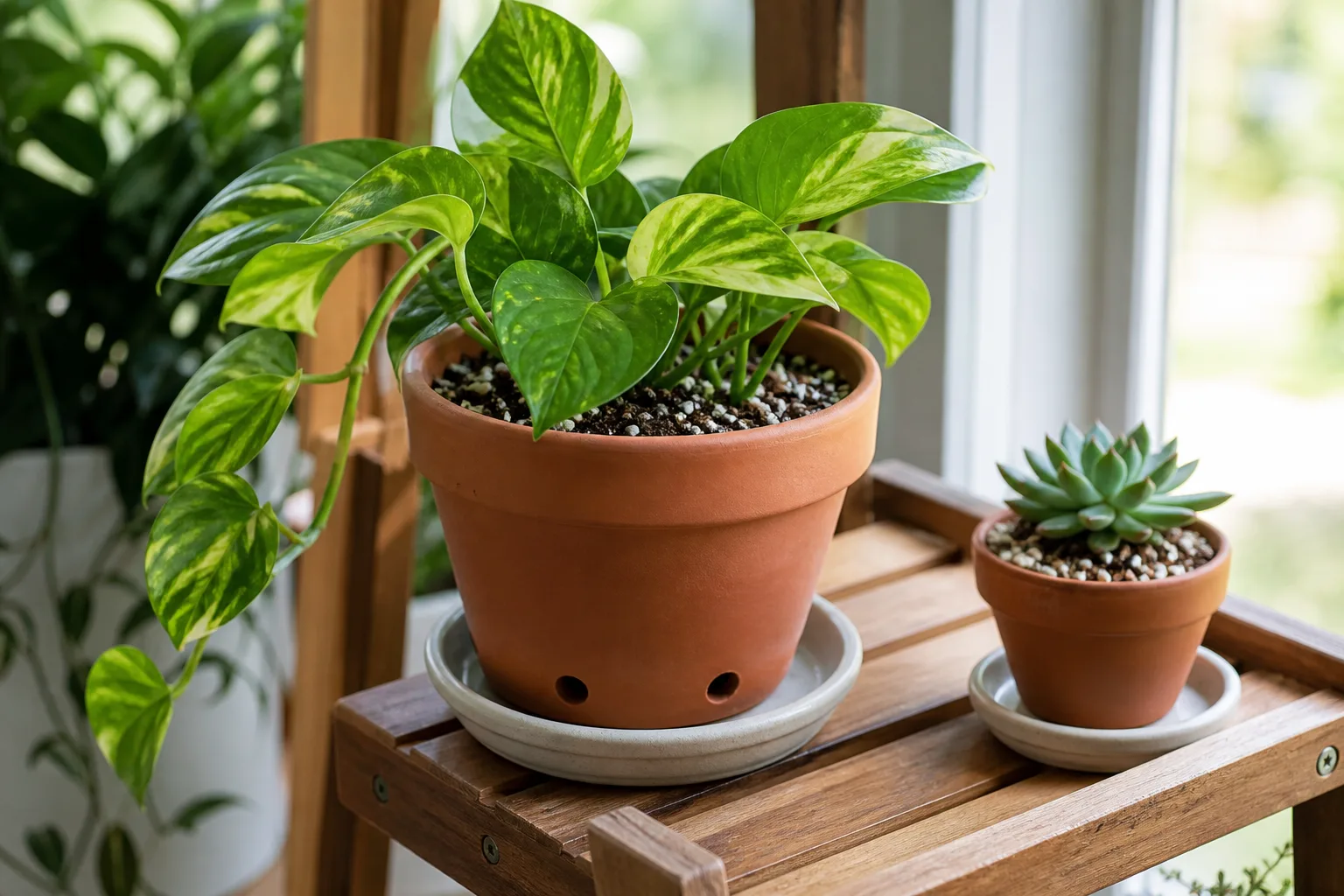
Water slowly across the surface until the root zone is moistened and some water exits the drainage hole. Empty the saucer after the pot finishes draining. If water runs straight down the sides or beads on top, the mix may be hydrophobic from drying too far; water in two passes or soak the pot briefly, then let it drain fully.
Feeding depends on the mix and the plant. A fresh mix with controlled-release fertilizer may need no immediate feed, while a soilless mix with little fertility will need a diluted, complete fertilizer during active growth. Follow the label and the plant’s season rather than copying a fixed every-three-weeks schedule.
Mistakes that keep indoor soil too wet
The soil may not be the only cause. Low light slows water use, cool rooms reduce evaporation, oversized pots hold more unused moisture, and a decorative cachepot can hide standing water. A blocked drainage hole or a saucer that never gets emptied can defeat a good potting mix.
Another common mistake is choosing a mix for the plant’s name but ignoring the room. A moisture-loving fern in a dry, bright room may need a different balance from the same fern in a cool bathroom. Likewise, a succulent in a humid, low-light room should not be watered according to a sunny outdoor schedule.
Use a small decision loop: check the plant’s light, verify the pot drains, assess moisture below the surface, then adjust watering before adding products. If the mix repeatedly collapses or the pot stays wet, replace the root-zone material; if the mix is appropriate but the room is dark, improve light or move the plant before blaming the soil.
Conclusion
Garden soil is valuable where it was designed to work: in an open outdoor soil system. In a typical indoor pot, it is usually too heavy, too variable, and too vulnerable to compaction and unwanted hitchhikers to be the best choice.
Choose a clean potting mix with enough air space for the plant, use a pot with a drainage hole, and size the container to the root ball. If garden soil is already in place, judge the plant and the moisture pattern first, then repot when persistent wetness, pests, odor, or root decline show that the mix is working against the roots. That simple sequence will protect more houseplants than any single ingredient or drainage trick.