How to Identify 8 Insects That Eat Holes in Clothes
Eight insects can put holes in clothes—from carpet beetles and clothes moths to silverfish and crickets. ID the culprit, treat infested items, and prevent repeat damage.
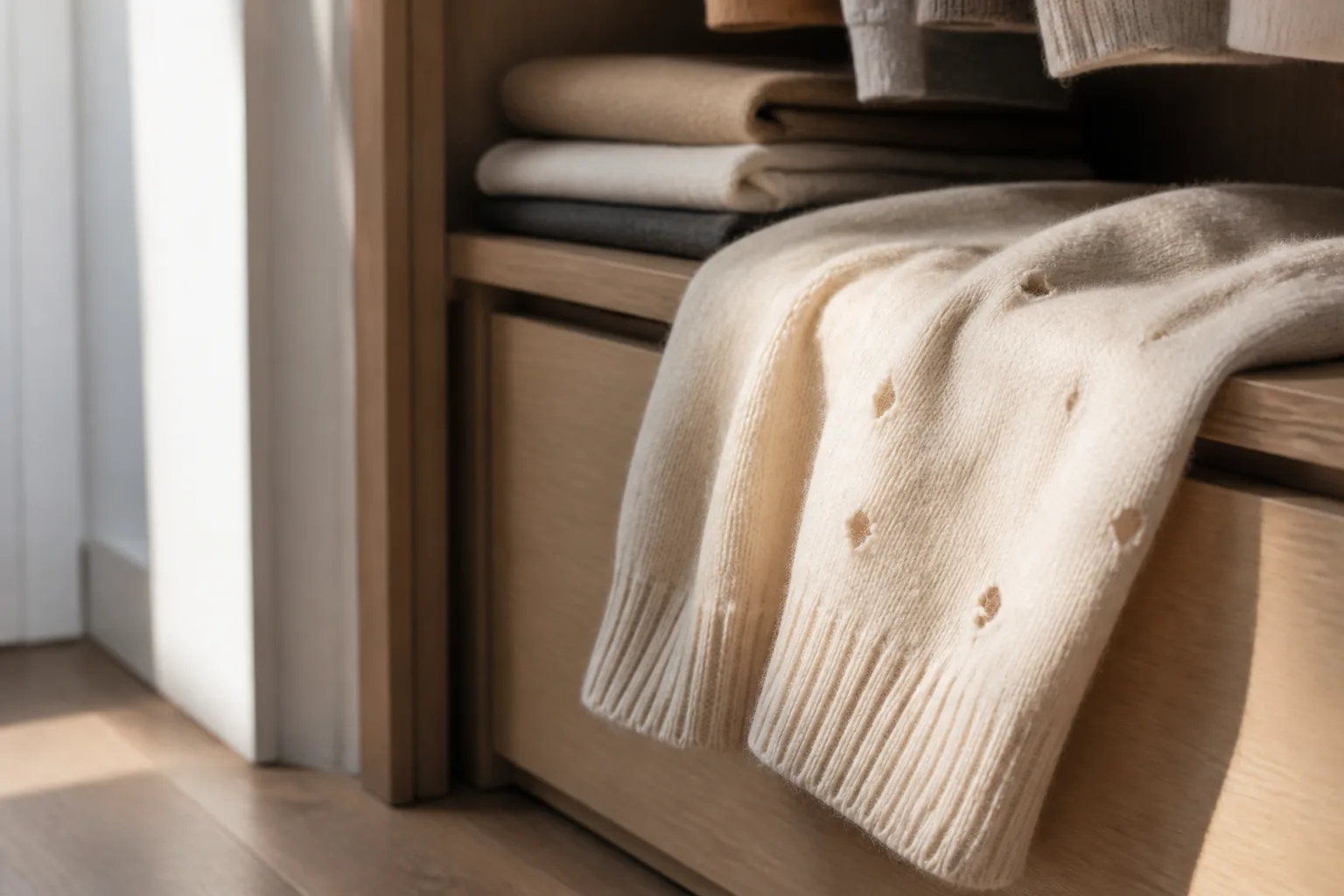
You pull a wool sweater from the back of the closet and find a scatter of pinholes—or worse, a thumb-sized bare patch where fibers vanished. No bug in sight. That silence is normal. The insects that eat holes in clothes are small, nocturnal, and often feeding on fabric you have not touched in months. Before you toss the garment or fog the whole house, you need to know which of eight common pests is responsible, because the wrong treatment wastes time while larvae keep working.
The Short Answer: Match the Damage to the Pest
Eight household insects routinely damage clothing: carpet beetles, webbing clothes moths, case-bearing clothes moths, silverfish, firebrats, cockroaches, crickets, and termites. Only the first five are true fabric specialists. The last three usually damage clothes indirectly by chewing organic stains—sweat, food, body soil, or starch—rather than digesting the fiber itself.
In practice, carpet beetles and clothes moths cause most unexplained holes in wool, silk, cashmere, and fur. Silverfish and firebrats target cotton, linen, rayon, and starched items. Crickets, cockroaches, and termites leave holes near food or perspiration stains and are more common in basements, garages, and laundry rooms than in a clean upstairs closet. Match the fabric, the stain pattern, and any larvae you find; treatment follows from that ID.
Keratin Feeders vs. Stain Feeders: Two Different Mechanisms
Fabric pests split into two camps, and the split determines both where you search and how you clean.
Keratin feeders digest keratin—the tough protein in wool, hair, fur, feathers, and horn. Carpet beetles and clothes moths belong here. They can attack clean animal-fiber garments because the fiber itself is food. Illinois Department of Public Health notes that clothes moths and carpet beetles are among the very few organisms capable of breaking down keratin, though moths still prefer items contaminated with body oils, spilled food, or pollen (Illinois DPH).
Stain feeders cannot digest pure fiber. Silverfish can process cellulose in cotton and linen, but cockroaches, crickets, and termites are attracted to organic residue on fabric—perspiration rings, food spills, urine, skin flakes, and laundry starch. As they rasp at the stain, thread bundles break and holes appear. Clean, freshly laundered synthetics and plant-only fabrics are far less vulnerable to this group.
Why Larvae—Not Adults—Do the Damage
For every pest on this list except perhaps adult silverfish and firebrats actively grazing starch, the chewing stage is the immature form. Carpet beetle larvae are hairy grubs; clothes moth larvae are pale caterpillars; case-bearing larvae drag portable silk cases. Adult carpet beetles and clothes moths often eat little or nothing—adult carpet beetles may feed on pollen near windows in spring, while adult clothes moths live just long enough to mate and lay eggs in dark closets.
That matters because killing the moth you swatted near a lamp does not stop an infestation. You must find larvae, eggs, cast skins, or the hidden food source—pet hair under a dresser, a forgotten wool scarf in a storage bin, dead insects in an attic—that is sustaining the population.
Decode Fabric Damage Before You Blame the Wrong Bug
Holes alone rarely ID the pest. Look at fiber type, hole shape, location, and debris.
Wool, cashmere, silk, fur, or vintage felt with irregular grazing or bare patches points to carpet beetles or clothes moths. Carpet beetle larvae often leave surface grazing and scattered cast skins—tiny hairy shed exoskeletons—nearby. Clothes moth larvae leave silk webbing tunnels on the fabric surface or, in case-bearing species, a flattened portable case made of fiber and frass.
Cotton, linen, or rayon with holes tracing a stain outline suggests silverfish, firebrats, or stain-feeding crickets and roaches. Damage often follows the edge of a food or sweat mark rather than random grazing across clean cloth.
Holes appearing only after washing or wearing a garment that looked fine in storage frequently implicates crickets. They feed on dried residue; agitation breaks weakened threads and the hole suddenly shows.
Synthetic blends can still be damaged if wool or silk content provides keratin, or if stains attract stain feeders. A polyester coat with a greasy collar is not immune.
Webbing, Cases, Cast Skins, and Frass
| Clue | Likely pest |
|---|---|
| Silk webbing on wool | Webbing clothes moth |
| Larva inside a fiber case it drags along | Case-bearing clothes moth |
| Hairy larvae + bristly cast skins, no webbing | Carpet beetle |
| Irregular holes following a stain shape | Silverfish, firebrat, cricket, roach |
| Fine powder near taxidermy or insect collections | Carpet beetle on keratin debris |
One critical mis-ID trap: small tan moths flying toward kitchen lights are usually Indianmeal moths (Plodia interpunctella), a pantry pest—not clothes moths. Illinois DPH notes that clothes moths avoid light; if you see moths at lamps during the day, inspect cereal and pet food before treating wool (Illinois DPH).
Carpet Beetles: The Most Overlooked Closet Pest
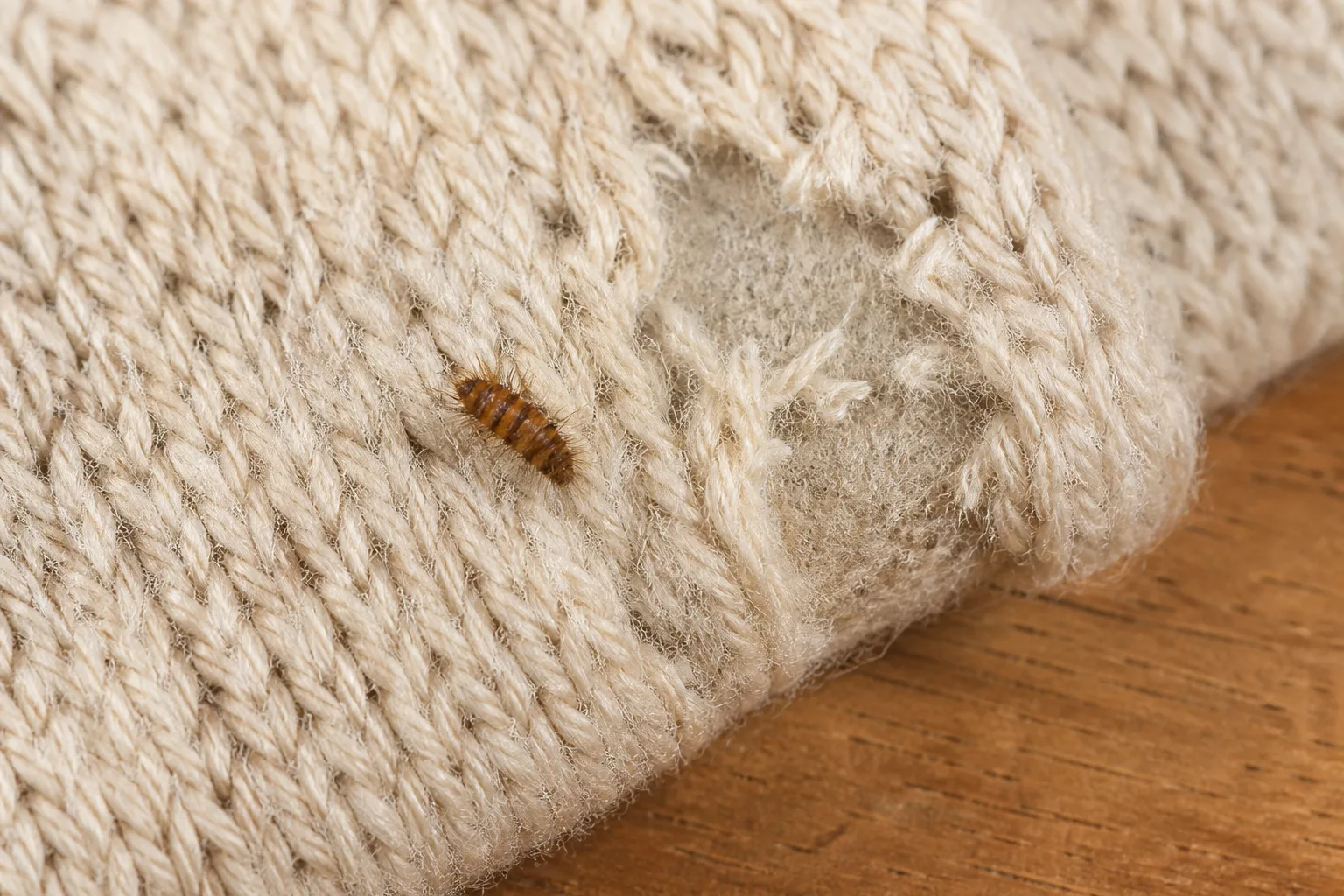
Carpet beetles may be the most common fabric pest in modern homes and the easiest to miss. Adults are tiny oval beetles—often noticed on walls in spring—while larvae do all the fabric damage from hidden harbourage sites: under beds, along carpet edges, in HVAC dust, inside wool rugs, and in boxes of stored clothing.
Larvae are one-quarter inch or less, wormlike, and covered in bristles that can irritate skin or airways on contact (Illinois DPH). Unlike clothes moth larvae, they wander—you may find them far from the damaged sweater, which is why treating only the closet fails. A dead mouse in a wall void, pet hair under a sofa, or an old wool rug can seed an infestation that surfaces months later in upstairs wardrobes.
Damage looks like irregular areas of missing pile or thread, sometimes with fine sawdust-like frass when larvae feed on harder keratin sources such as horn or dried insects. Several generations per year are possible in warm homes, so populations build quickly once established.
Varied, Common, and Black Carpet Beetle ID
Three Anthrenus species—varied, common, and furniture carpet beetles—share scalloped color patterns of white, brown, yellow, and orange scales on adults. Larvae are oval, hairy, and raise dark tufts when disturbed.
The black carpet beetle (Attagenus unicolor) is solid dark brown to black as an adult with a carrot-shaped larva up to one-quarter inch long and a fan of hairs at the tail. It feeds on both animal and plant materials and is a frequent stored-product pest in grain as well as woolens.
If you find hairy larvae and cast skins but no silk webbing, suspect carpet beetles first—especially when damage also appears on carpets, upholstery, or taxidermy.
Webbing Clothes Moth (Tineola bisselliella)
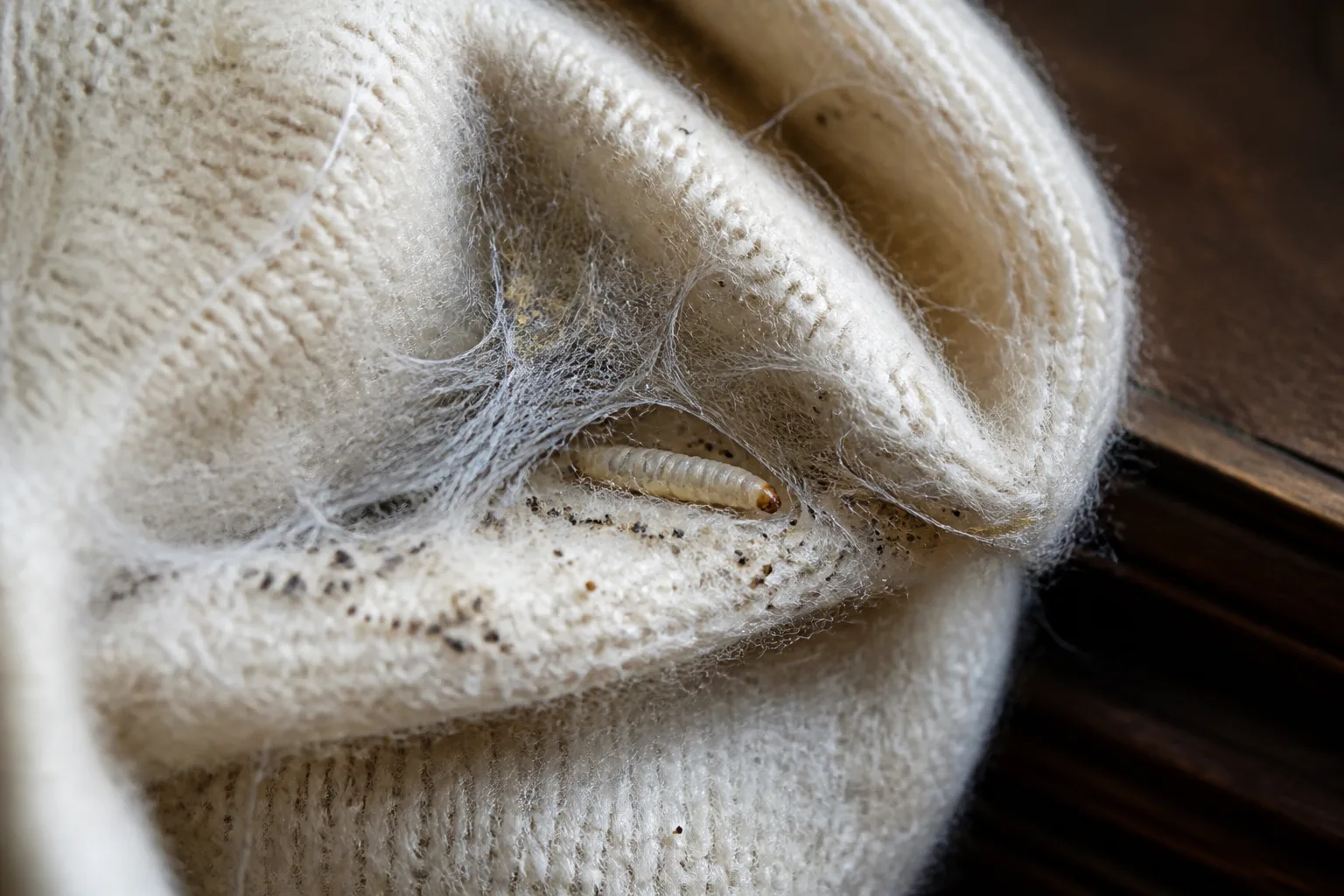
The webbing clothes moth is the classic wool pest: a weak flier, about one-quarter inch wingspan, pale gold, rarely seen because it stays in dark closets. Larvae are white caterpillars with dark brown heads that spin silken tubes across fabric and leave granular, bun-shaped fecal pellets matching the food color.
They prefer wool, hair, fur, and soiled natural blends but can consume milk or meat residues on fabric. Development from egg to adult typically takes two to three months in humid, warm conditions but can stretch to years in cool, dry storage—meaning a coat in an unheated attic can harbor larvae across multiple seasons (Illinois DPH).
Fully grown larvae may crawl ten feet or more to pupate on walls and ceilings, so cocoons away from the wardrobe still belong to the same infestation. Pheromone traps catch adult males and help monitor activity; they do not stop larvae already eating your sweaters.
Case-Bearing Clothes Moth (Tinea pellionella)
The case-bearing clothes moth larva is the worm-like insect inside a flattened silk case about one-quarter to one-half inch long, camouflaged with fiber and frass. Disturbed, it retreats into the case. Adults are rarely seen.
This species is more common in southern climates but appears nationwide in heated homes. It favors feathers, fur, wool, and felt, and the dark brown plate behind the larva’s head distinguishes it from webbing moth caterpillars. Damage is localized hole-cutting rather than broad surface grazing—often one case working one spot until threads fail.
Silverfish and Firebrats: The Cellulose Specialists
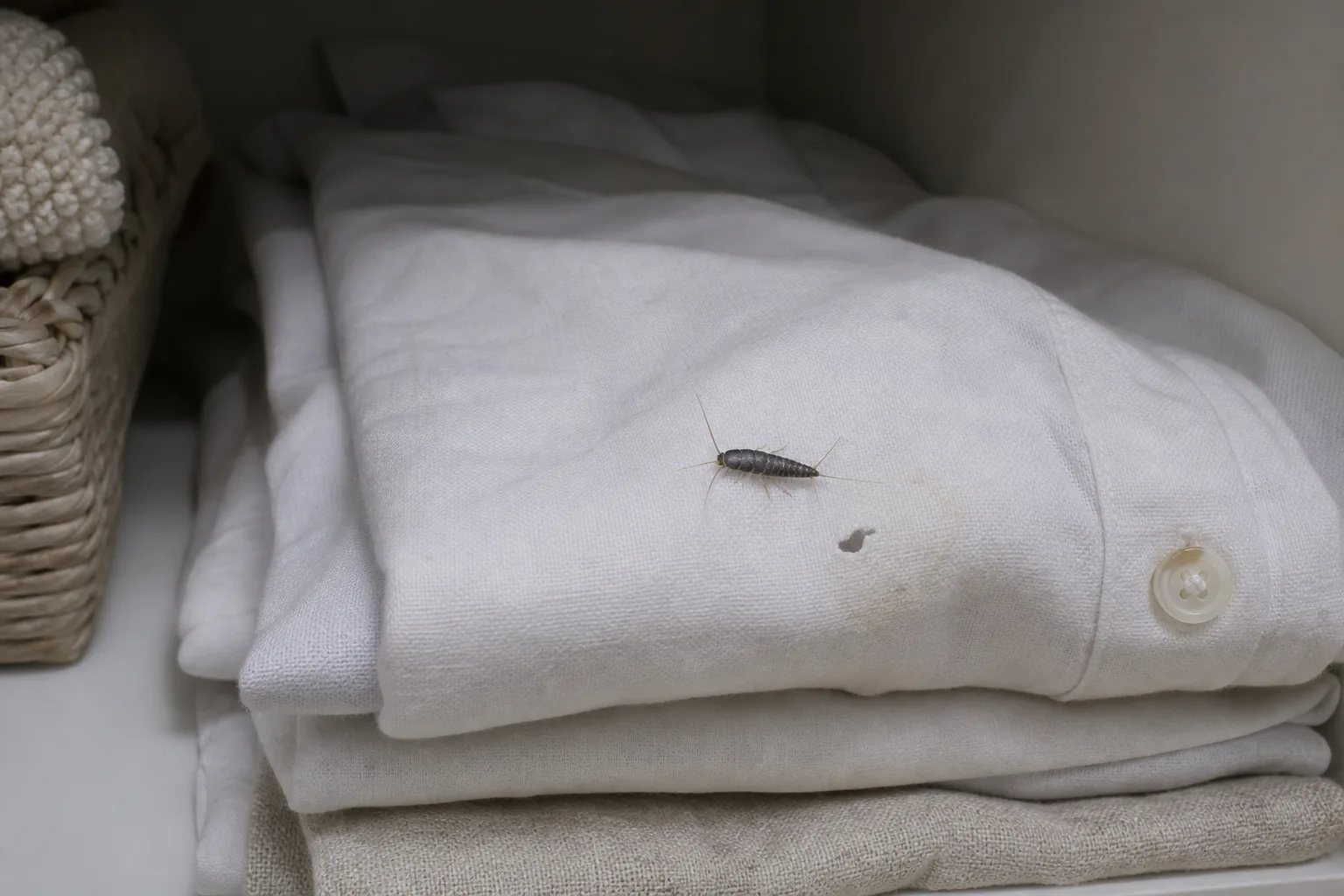
Silverfish (Lepisma saccharina) are wingless, silvery, carrot-shaped insects about one-half to three-quarters inch long with three tail filaments. They prefer dark areas near 70°F—bathrooms, basements, and quiet closets—and feed at night on starch, cellulose, glue in bookbindings, and plant fabrics including cotton and linen.
Firebrats (Thermobia domestica) look similar but wear a mottled silver-brown coat and seek heat above 90°F—attics, boiler rooms, and areas near hot pipes. Both cut irregular holes, often tracing beverage or sugar stains on starched shirts or table linens.
PestXpert notes silverfish target starchy plant materials and paper as well as cotton and linen, while young silverfish resemble small adults and all life stages can cause damage (PestXpert). Neither digests keratin the way carpet beetles do; a hole in pure wool with no stain is unlikely to be silverfish alone.
Heat-Loving Firebrats vs. Cool-Dwelling Silverfish
If holes appear on linen or cotton stored in a hot attic near a furnace room, inspect for firebrats. If damage shows up on bathroom towels or basement-stored seasonal clothing in a cool, humid zone, silverfish are more likely. Both stay close to food once they find it, so repeated damage in the same drawer corner is typical.
Cockroaches, Crickets, and Termites: Stain Feeders in Stored Clothes
These three surprise people because they are not “clothes moths”—yet they appear on lists of fabric-damaging insects for good reason.
Cockroaches are attracted to perspiration, food spills, and starch on laundry. They stain fabric with droppings that can carry pathogens; the World Health Organization classifies cockroaches as important carriers of intestinal diseases and household allergens (WHO). Holes form where mouthparts weakened threads while feeding on residue—not from eating the cotton itself.
Crickets behave similarly. They are drawn to body soil and beverage stains on otherwise clean-looking clothes in garages, mudrooms, and basements. Damage may go unnoticed until washing or wearing exposes cut threads. Cricket droppings also stain fabric; rewash affected items before wearing if crickets shared the storage space.
Termites are rare clothing pests but will rasp stained areas on fabric stored in damp basements or near mud tubes. They are not digesting wool; they are harvesting organic contamination. Termite fabric damage almost always signals a wider moisture or structural issue that needs professional inspection—not just a closet cleanout.
A Step-by-Step Identification Checklist
Work through this sequence before buying treatments:
- Note the fiber. Animal fibers (wool, silk, fur) → carpet beetle or clothes moth first. Cotton, linen, rayon → silverfish, firebrat, or stain feeders.
- Inspect for larvae. Hairy grub without case → carpet beetle. Caterpillar in silk webbing → webbing moth. Larva in portable case → case-bearing moth. Silver, fast insect → silverfish or firebrat.
- Look for secondary signs. Cast skins (beetles), webbing (moths), pepper-like droppings, or stain-shaped hole outlines.
- Check beyond the wardrobe. Vacuum edges under beds, along baseboards, and behind furniture. Carpet beetle larvae often live meters from the damaged item.
- Rule out pantry moths. Flying moths at lights → inspect kitchen dry goods.
- Photograph and compare. If larvae are ambiguous, your local extension office or a pest professional can ID species from a clear photo—species ID determines where to search next (NC State Extension).
How to Treat Infested Clothing Safely
Treat the fabric and the room together. Isolating one sweater while larvae remain under the carpet only buys time.
For keratin pests and most life stages, Illinois DPH recommends:
- Hot washing and high-heat drying for washable items labeled safe at high temperatures.
- Dry cleaning for structured wool, silk, or garments that shrink in water.
- Steam cleaning rugs and upholstery when labels allow.
- Freezing: seal items in plastic with air removed. A home freezer at about 0°F may take weeks to kill all stages; a deep freezer near −20°F can work in two to seven days depending on item size (Illinois DPH). Andermatt Garden suggests at least −18°C (0°F) for two weeks as a practical home target for delicates (Andermatt Garden).
Mothballs (naphthalene or paradichlorobenzene) kill pests only inside tightly sealed containers at label rates for extended periods—they do not repel insects walking into an open closet. Cedar chests lose potency after a few years and rarely seal tightly enough to kill larvae (Illinois DPH). Treat cedar and lavender as mild deterrents at best, not cures.
Avoid relying on total-release foggers for fabric pests. Aerosol mist does not penetrate thick wool piles, rolled rugs, or wall voids where larvae hide. Targeted vacuuming, disposal of heavily infested items, and professional treatment of harbourage beat fogging for established carpet beetle problems.
Clear the Closet—and Search the Whole Room
Vacuum thoroughly: closet floors, shelf corners, carpet edges, and the underside of wool rugs. Empty the vacuum outdoors immediately so live larvae are not redeposited. Wash or freeze all animal-fiber items touching infested pieces—not just the one with visible holes.
Search attics, crawlspaces, and false ceilings for bird nests, dead rodents, cached pet hair, and insect collections. Carpet beetles thrive on these alternate protein sources. Remove nest material and seal entry points where possible.
Pheromone traps for clothes moths and carpet beetles help locate activity peaks and confirm species; sticky traps without pheromones rarely catch these pests (Illinois DPH). Replace traps per label timing and note whether catches decline after cleaning.
Call a licensed pest professional when damage continues after thorough textile treatment, when larvae appear in multiple rooms, or when you cannot find the harbourage source. Misidentifying carpet beetles as clothes moths—and treating only the wardrobe—is one of the most common reasons DIY efforts fail.
Prevention Habits That Actually Stop Repeat Damage
Clean before you store. Body oils and food spots attract both keratin and stain feeders. Dry-clean or launder wool and silk before long-term storage; do not pack worn sweaters straight into plastic bins.
Seal tightly. Newly hatched larvae slip through gaps under one-sixteenth inch. Use zip bags or bins with gasket lids for seasonal wool; add a slip of acid-free paper between folds to prevent crease damage.
Disturb stored fabric. Moths and beetles favor quiet, dark, undisturbed piles. Shake out stored coats monthly; refold along different lines to expose hidden larvae early.
Reduce alternate food sources. Vacuum pet hair along baseboards, wash pet bedding, and remove dead insects from light fixtures and window sills. Store taxidermy and wool rugs with the same vigilance as clothing.
Control humidity. Clothes moths develop faster in humid closets. A dehumidifier or silica packets in sealed storage help slow larval growth in damp basements.
Do not assume mothballs equal prevention. They are a treatment in sealed containers, not an open-closet shield—and they do nothing reliable against wandering carpet beetle larvae under the bed.
Conclusion
Holes in clothes are a symptom, not a diagnosis. Carpet beetles and clothes moths remain the top suspects on animal fibers; silverfish and firebrats lead on starched cotton and linen; crickets, cockroaches, and termites usually follow stains rather than fabric. Match larvae, webbing, cast skins, and fibre type before you treat, then clean or freeze textiles while vacuuming and inspecting the whole room for hidden protein and starch sources. Get the ID right once, and you stop paying for repeat damage with your wardrobe and your time.