How to Kill Ivy on the Ground, Trees, and Walls
Learn how to kill ivy on soil, trees, and walls, with identification, manual removal, herbicide limits, poison ivy safety, and regrowth control.
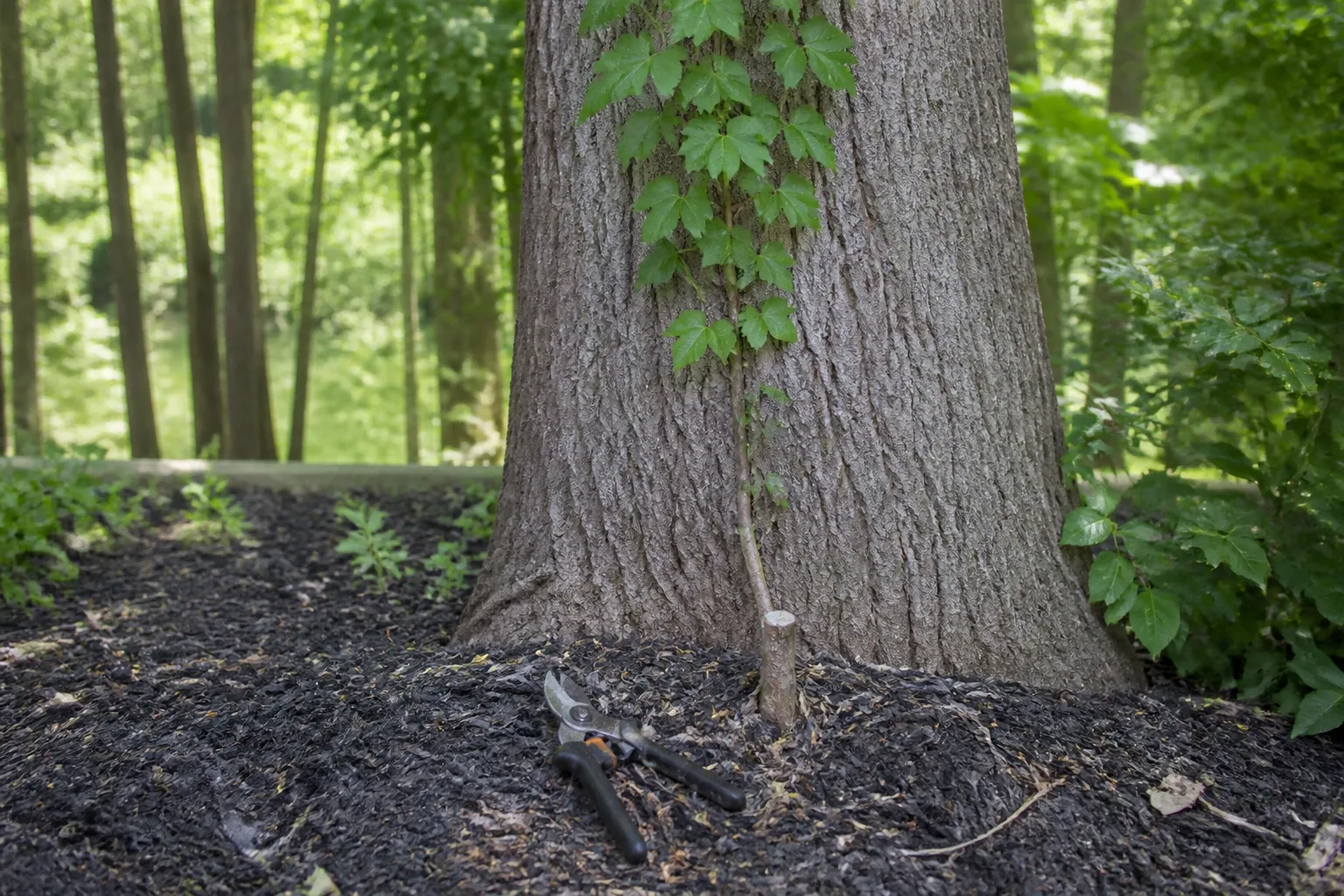
The right way to kill ivy depends on two things most quick tips skip: which plant you have and where it is growing. English ivy on a ground bed can be dug or smothered. A mature vine on a tree should be cut so the upper growth dies in place. Poison ivy needs a separate safety plan because its oily urushiol can cause a rash even after the plant turns brown.
Start with identification, then match the method to the site. The goal is not simply to make leaves look dead; it is to stop the crown, roots, runners, or seed-producing growth while protecting the tree, wall, nearby plants, soil, pets, and yourself.
Identify the Ivy Before Choosing a Method
“Ivy” is a common name shared by plants with very different biology. English ivy (Hedera helix) is an evergreen woody vine that can spread as a groundcover and climb with small adventitious rootlets. Poison ivy (Toxicodendron radicans) is a rash-causing native plant. Boston ivy, ground ivy, and Swedish ivy are different again, so do not select a pesticide or handling routine from a name alone.
English Ivy (Hedera helix)
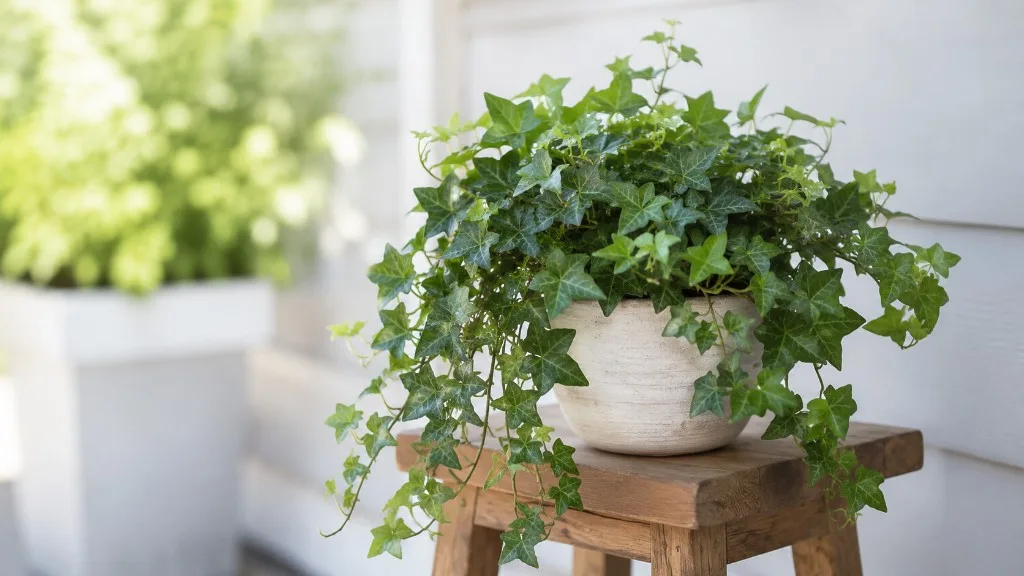
Juvenile English ivy usually has glossy, lobed leaves and flexible stems that creep across soil or climb a vertical surface. Where conditions are favorable, the vine can grow many feet up a tree and spread broadly across the ground. NC State Extension describes mature landscape growth reaching 20 to 80 feet high and 3 to 50 feet wide, which makes the plant’s eventual scale easy to underestimate. (NC State Extension plant database)
The same plant can change form as it climbs. Adult growth is less lobed, more shrubby, and capable of producing flowers and blue-black berries. Birds can spread the seeds, while cut stems and rooted runners can spread the plant locally. Penn State Extension also notes that dense English ivy can shelter rodents, add weight to trees, and attach so firmly to structures that pulling it free causes damage. (Penn State Extension)
If you are growing English ivy indoors in a pot, killing it is not the question; containment is. Keep it in a controlled container, prevent stems from rooting outdoors, and use the English ivy care guide for pruning and watering decisions.
Poison Ivy (Toxicodendron radicans)
Poison ivy may grow as a trailing groundcover, climbing vine, or shrub. Its leaflets are arranged in groups of three, but leaf shape and edge texture vary, and spring or autumn color can make identification harder. Virginia creeper is a common look-alike; its leaves have five leaflets, while poison ivy has three, but never rely on a rhyme alone when the cost of a mistake is a rash.
The important distinction is urushiol, an oily resin present throughout poison ivy. Penn State Extension’s poison ivy guidance warns that green, dormant, and dead plant material can retain urushiol, and that mowing or string-trimming can spread contaminated fragments. If you are not completely certain what you have, or if the patch is large and tangled, use the safe poison ivy removal guide or hire someone equipped to handle it.
Treat every part of an uncertain vine as contaminated until you have identified it. Do not touch it barehanded to check the leaf, do not burn it, and do not invite children or pets into the work area while you decide what to do.
Boston Ivy, Ground Ivy, and Swedish Ivy
Boston ivy (Parthenocissus tricuspidata) is a deciduous woody vine that attaches with adhesive discs rather than English ivy’s rootlets. It can still damage paint, mortar, or wood when pulled aggressively, but its leaves and growth pattern are not proof that you have English ivy. Ground ivy, also called creeping Charlie (Glechoma hederacea), is a low lawn and bed weed with mint-family characteristics, not a true Hedera ivy.
Swedish ivy (Plectranthus verticillatus) is generally grown as a tender houseplant. It can be pruned, potted, or discarded like a normal container plant; it does not justify a brush-killer application outdoors. If the plant has a nursery label, compare it with a reputable plant database before you begin, and check local invasive-plant guidance because rules and risk vary by region.
Choose the Method by Site and Risk
Use this quick decision rule before cutting anything:
- Small, isolated ground patch: dig the crown and runners while the soil is workable, then inspect for shoots.
- Large ground patch with no valued plants underneath: remove the thickest growth, cover the soil completely, and keep the cover in place through a full growing season or longer.
- Ivy on a tree: cut every stem near the soil, make a second cut a short distance higher, remove only the detached window, and let the high vines die naturally.
- Ivy on a wall or fence: allow the vine to die before peeling; work in small sections and stop wherever the surface begins to lift.
- Poison ivy: use full skin coverage and careful bagging; mowing and burning are especially poor choices.
- Mixed with wanted plants or close to water: favor selective digging or professional advice over a broadcast spray.
The larger the infestation, the more important the boundary becomes. Mark the edge, identify nearby trees and plants, and decide where the debris will go before you start. A job that looks like “just pull it out” often becomes a second infestation when runners are dragged across clean soil or thrown into an open compost pile.
Prepare a Clean, Controlled Work Area
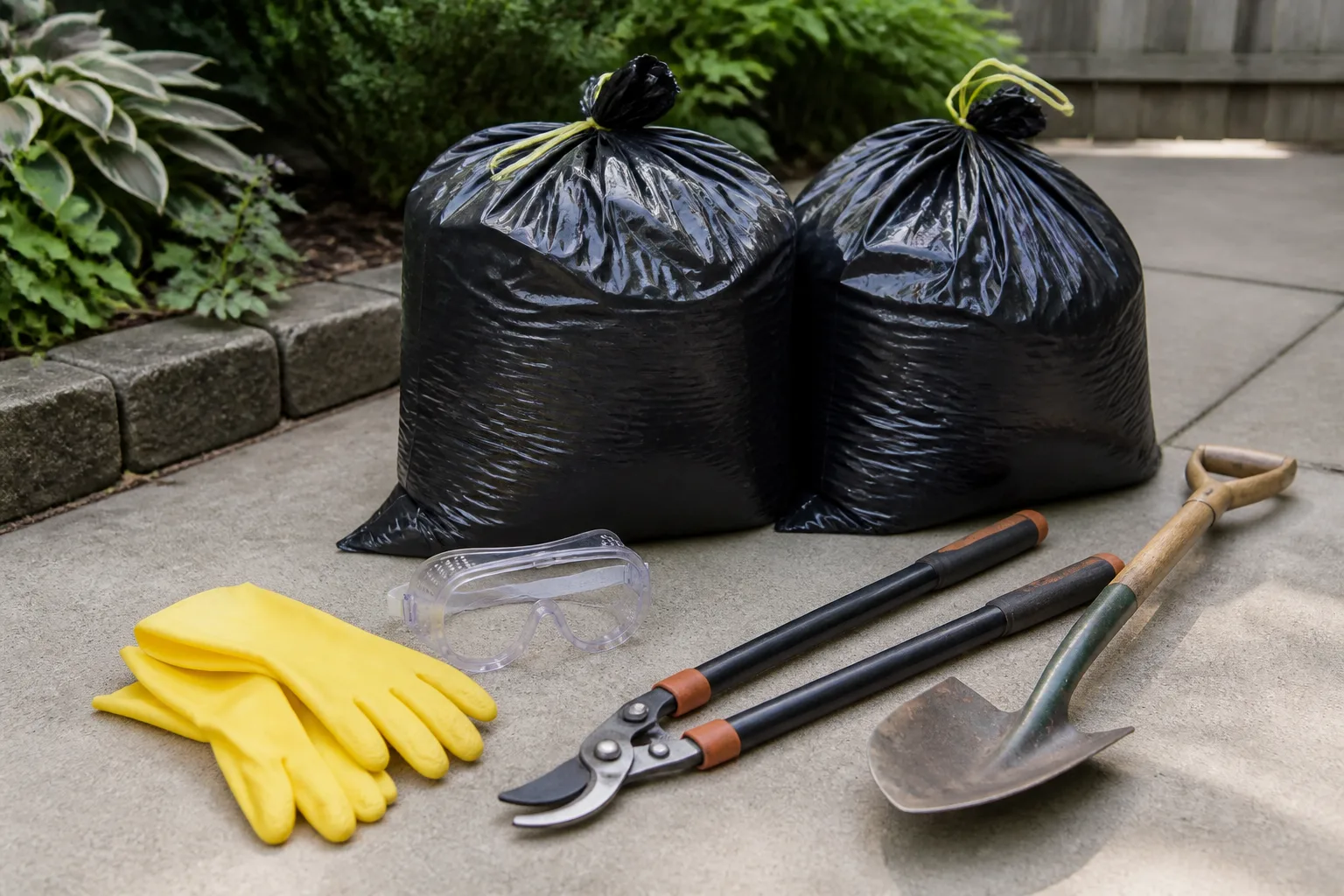
For ordinary English ivy, wear sturdy gloves, long sleeves, long pants, and closed shoes. Add eye protection when cutting thick stems, working overhead, or using any pesticide. For suspected poison ivy, use intact waterproof or chemical-resistant gloves, sleeves that cover the wrists, socks, closed shoes, and eye protection; keep a trash bag within reach so you do not carry loose vines through the yard.
Use the smallest tool that will finish the cut cleanly: hand pruners for thin stems, loppers for thicker vines, a hand saw for woody stems, and a digging fork or sharp spade for roots. A tarp can help keep pulled vines off the soil, but it is not a substitute for removing every rooted piece. Keep a separate bucket or bag for debris and do not set contaminated tools on a porch rail, car seat, or outdoor table.
Choose a calm, dry period if you are using a labeled herbicide. Never spray in wind, before rain, or where drift could reach foliage you want to keep. Read the full label for the exact product, target, site, personal protective equipment, weather limits, and disposal instructions; the active ingredient name alone does not tell you how to mix or apply a product.
Remove Ivy from the Ground by Hand
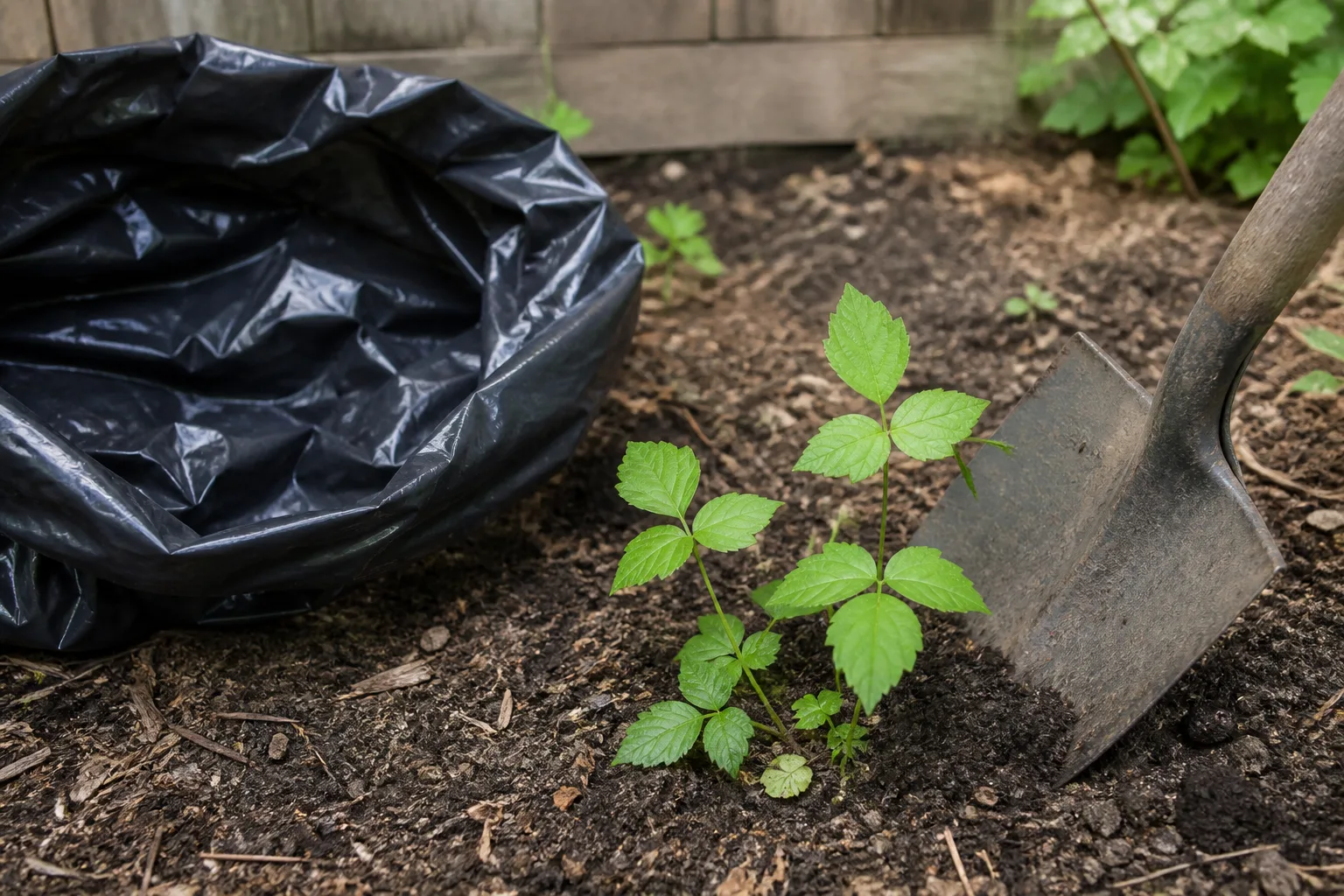
Manual removal is the most selective option when ivy is growing through a flower bed, under a valued shrub, or beside a young tree. Work after rain or irrigation has softened the soil, but not while the bed is muddy enough to smear roots into new cracks. Start at the outer edge and loosen a manageable section rather than yanking the top of the mat.
Roll or fold the vines inward as you work. This keeps runners from dragging across untouched soil and helps you see where stems have rooted. Pulling the green canopy alone is not enough: the crown, nodes that have rooted along runners, and woody root pieces are the parts that produce the next flush of growth. Fine Gardening’s practical account of removing invasive groundcovers makes the same useful distinction between lifting the whole runner and merely stripping the surface.
Dig Out Roots and Runners
Slide a fork under the crown and lift rather than chopping through it repeatedly. Follow each thick runner until it ends, and inspect the soil for pale root fragments or stem joints that have rooted. If a root breaks, stop and find both ends; leaving a small piece behind is one of the main reasons a “finished” patch returns.
Do not turn the soil deeply just to bury the ivy. Burial can fragment the plant, move roots into a wider zone, and make later inspection harder. Shake soil from the roots over the original patch, place the vines directly into the disposal bag, and rake the area lightly when you are done.
For English ivy, return to the patch every week or two during active growth for the first season. Pull seedlings while they are small and dig new shoots before they form a dense mat. For poison ivy, use the same inspection logic but keep the protective clothing and cleanup routine in place for every visit.
Smother What You Cannot Safely Dig
Smothering works best on an isolated patch where you can cover the entire root zone. Cut or pull the surface growth, remove the largest crowns you can locate, then overlap heavy cardboard or another site-appropriate opaque cover well beyond the visible edge. Finish with roughly 3 to 6 inches of mulch so wind cannot lift the cover and light cannot reach gaps.
The edges are the failure point. Overlap seams generously, pin or weight them, and check the perimeter for shoots escaping into the lawn or bed. Leave the cover in place for at least one full growing season; established ivy may require longer. This follows the sheet-mulching approach described by Fine Gardening, but do not cover the trunks of desirable trees, bury shrub crowns, or trap a damp layer against siding.
Smothering is a control method, not a quick visual reset. If you uncover the site after a few weeks because the top looks brown, surviving crowns can rebound. Wait until the cover has done the slow work, then replant with a locally appropriate, non-invasive groundcover only after you have verified that new ivy shoots are not emerging.
Kill Ivy Climbing a Tree Without Stripping Bark
Never solve a tree-vine problem by pulling a long live vine downward. English ivy rootlets and other climbing structures can grip bark, and a hard pull can remove bark, tear the cambium, or create wounds that the tree must seal. Heavy dead vines can also fall unexpectedly, so do not stand beneath a large canopy of them.
Make the window cut instead. Cut each stem at ground level, then make a second cut several inches to a foot above the first, depending on the stem and the room you need to remove a short section. Take out that detached section if it comes free without scraping the trunk. The remaining upper vine is disconnected from its root system and will lose water; leave it alone to dry, loosen, and fall naturally. NC State Extension’s English ivy control guidance recommends the same basic tree sequence: cut the stems at the ground and remove only what you can reach without harming the tree.
This works for English ivy and for poison ivy, but poison ivy adds the urushiol hazard. Penn State Extension specifically advises against pulling large poison ivy vines from tree trunks because bark damage and resin exposure happen together. For a high, thick, or heavily tangled vine, stay on the ground and call an arborist or qualified vegetation-control professional.
Cutting the trunk vines does not clear the soil. Dig or treat the basal crowns according to the species and site, then keep a 3- to 4-foot no-climbing zone around the trunk by removing new shoots promptly. Do not wrap the tree with plastic, paint the bark, or pour herbicide into a wound on the tree itself.
Remove Ivy from a Wall or Fence
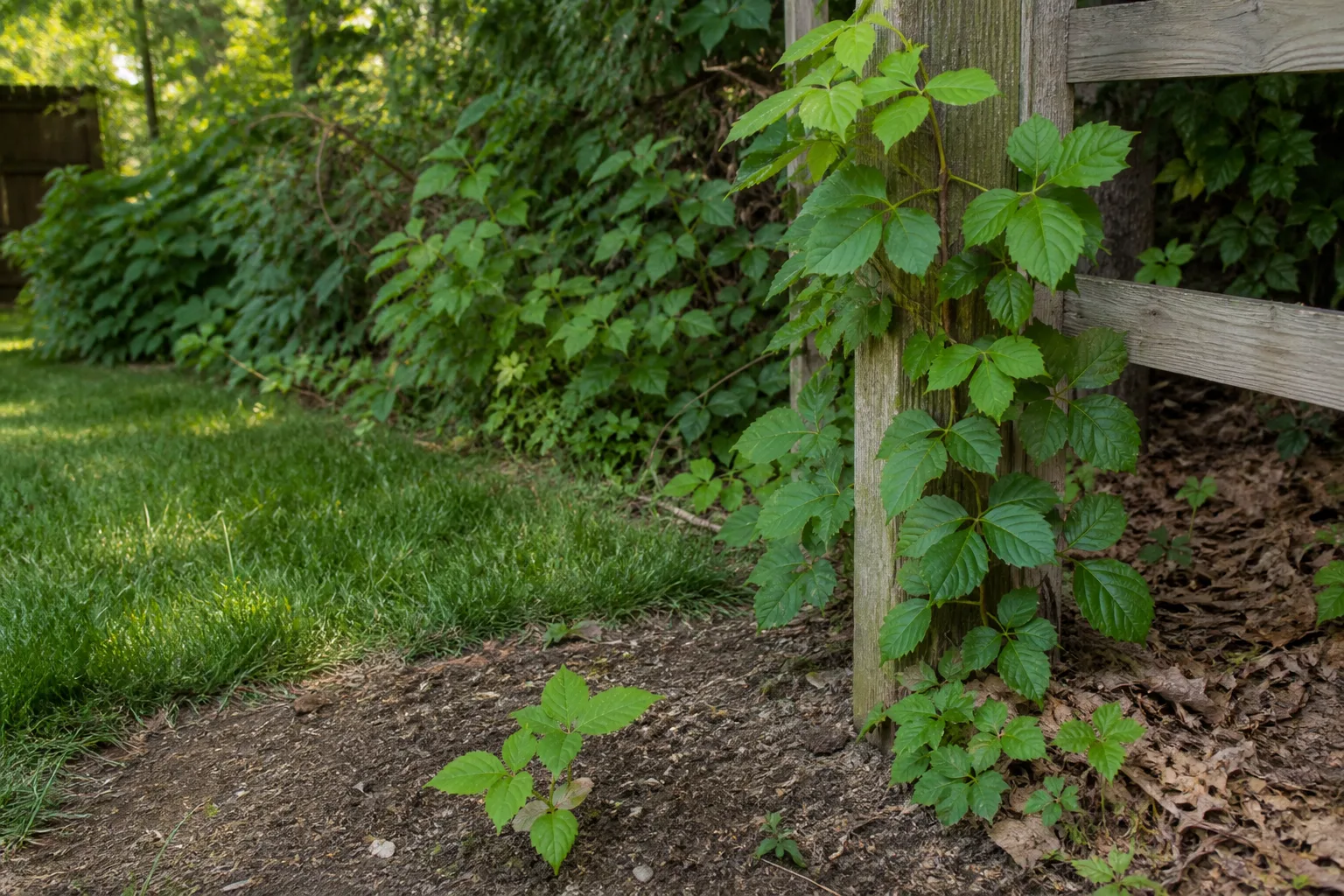
Walls and fences need a slower approach than open soil. First cut the stems at ground level and, if the vine is thick, make another cut a short distance above the first. Wait for the climbing growth to yellow, brown, and lose its grip. Live vines are flexible and strongly attached; dead vines are easier to remove with less force.
Start at an edge or a loose section and peel only a few inches at a time. If siding, paint, mortar, or a fence board begins to lift, cut the vine flush and leave that piece until it dries further. Gardening Know How’s removal guidance also cautions against ripping attached vines from a tree or structure. Avoid ladders for large, high growth unless you have stable access and a second person; a falling vine can hit you, and a wall attachment can pull you off balance.
Holdfasts and adhesive discs may remain after the vine is gone. Let them dry, brush away loose material, and use a plastic scraper or a surface-safe stiff brush on a small test area. On painted siding, old brick, or soft mortar, aggressive scraping can do more damage than the ivy. Warm water and a small amount of ordinary detergent can help soften residue, but do not improvise a bleach-and-soap weed killer or saturate the wall and its foundation.
The ground line still matters. Dig out the roots along the base, inspect gaps under the lowest board or siding edge, and monitor the wall after rain when new shoots are easiest to spot. A clean wall with an unmanaged root crown is only a temporary victory.
Use Herbicide Only When the Site and Label Fit
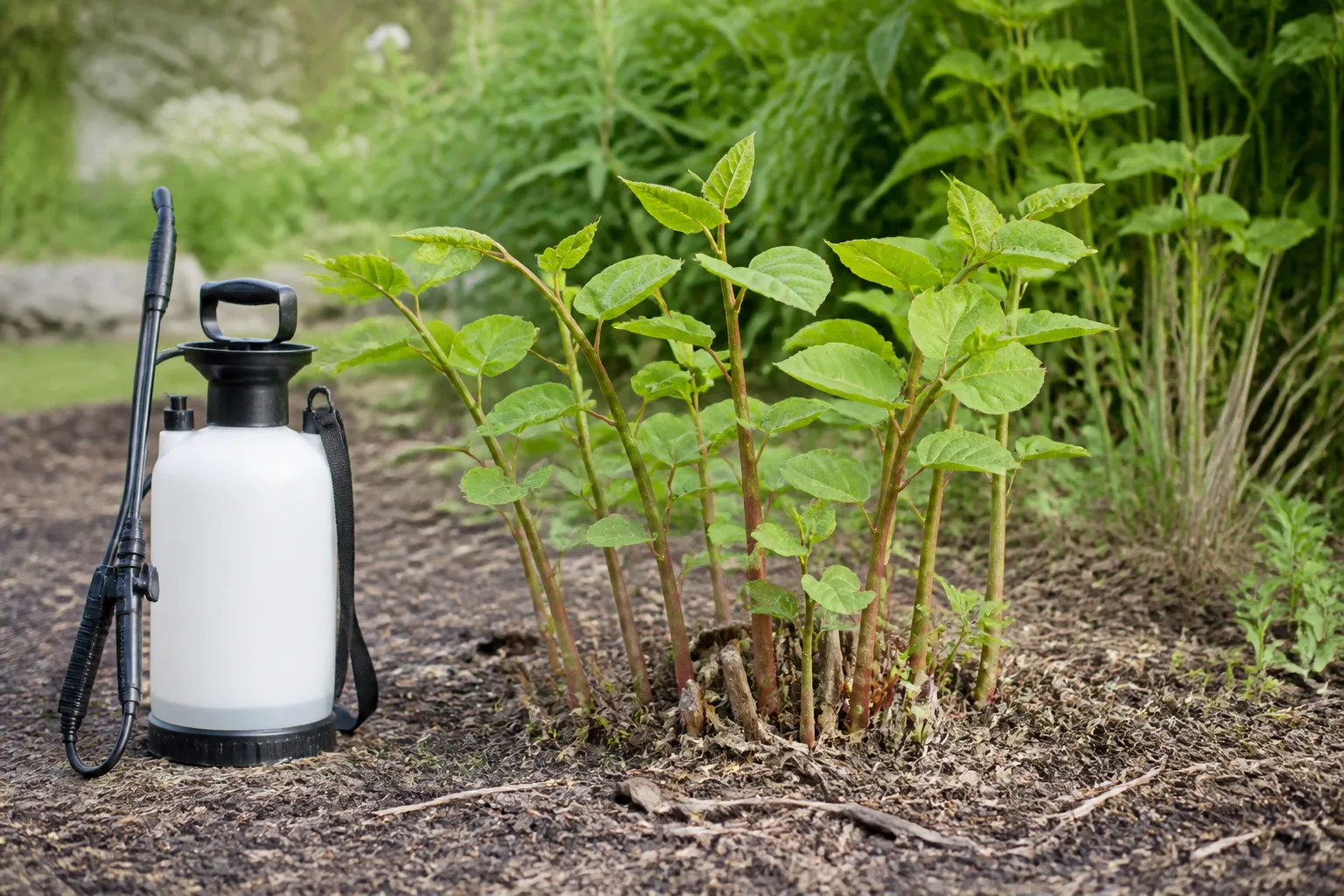
Herbicide can be useful when a mature English ivy patch is too extensive to dig, when the ground is isolated from desirable plants, or when repeated mechanical work is impractical. It is a poor fit in a mixed flower bed, beside a pond, on a windy day, or where you cannot identify the target. A non-selective product can injure grass, shrubs, flowers, and seedlings just as readily as ivy.
NC State Extension’s published English ivy control work found glyphosate most consistently effective among the treatments it compared, with timing and dose affecting results. That is research context, not a universal recipe: retail formulations, labels, registered sites, and local rules vary. Penn State’s landscape guidance also warns that product branding is not a reliable shortcut because formulations change; read the current label and confirm that your exact product lists the target and use site.
Time English Ivy Treatment for Young Growth
English ivy leaves become tougher and waxier as the season advances. NC State recommends treating in spring when the plant has about two to four new leaves and retreating around six weeks later only if regrowth appears. If summer is your first opportunity, mowing or cutting can expose fresh regrowth, but let that regrowth produce healthy leaves before applying a product whose label allows the use.
Do not combine a fast-burn contact ingredient with a systemic product on your own. Rapid browning can damage the leaf surface before a systemic active ingredient moves into stems and roots. Do not spray drought-stressed ivy, wet foliage, or a patch with desirable leaves tangled through it. For isolated ground ivy, spot treatment and a shielded sprayer are safer than coating the entire bed.
Use a Cut-Stump Approach for Selected Woody Vines
The cut-stump method can reduce drift when a labeled systemic herbicide is appropriate for a woody vine. Cut the vine close to the ground without cutting the tree, then apply the product to the freshly cut living tissue exactly as the label directs and within the label’s stated window. Penn State’s poison ivy control guidance describes this approach for selected woody vines and notes that late summer through autumn can favor downward movement toward roots, while spring sap flow can reduce the result.
This is not permission to paint concentrated herbicide on every stump or to use a foliar product as a stump treatment. The label must permit the method, target, concentration, and site. If the stump is touching tree bark, a drainage ditch, edible crops, or valued roots, skip improvisation and get local extension or professional guidance.
Why Vinegar, Salt, and Bleach Are Poor Ivy Killers
Household vinegar can scorch young leaves but usually does not kill the established crown and root system of a perennial vine. Salt can dehydrate foliage while accumulating in soil and injuring the plants you want to grow later. Bleach is not a vegetation-management shortcut; it can damage soil organisms, burn skin and eyes, and create hazardous gases when mixed with vinegar or other cleaners.
“Natural” does not mean harmless or selective. Penn State’s poison ivy guidance explains that horticultural vinegar and other organic contact herbicides can injure contacted tissue while leaving mature roots alive, and concentrated acetic acid can cause serious eye and skin injury. If you want a non-chemical plan, dig, cover, and monitor; do not substitute a kitchen mixture that spreads damage beyond the ivy.
Dispose of Vines and Clean Tools Safely
English ivy can root from pieces left on damp soil, so bag pulled vines rather than leaving them in a hedge or open compost pile. Poison ivy is more restrictive: bag the plant material for disposal, never compost or burn it, and keep the smoke and ash away from people and pets. Penn State notes that burning poison ivy can put urushiol particles into the air and injure the lungs.
Wash ordinary garden tools with warm water and detergent before storing them. If poison ivy may have touched the handles, wear fresh gloves while cleaning, wipe pruners with rubbing alcohol when appropriate for the tool, rinse, and dry. Keep contaminated clothing separate from household laundry, wash it with detergent, and clean shoes or pet fur that may have brushed the plant.
Penn State’s cleanup recommendations are especially important when poison ivy may be involved: wash tools with detergent, keep contaminated clothing separate, and clean any pet fur that may have brushed the plant.
If you suspect poison ivy exposure, stop touching doors, phones, and car seats. Wash skin promptly with soap and cool or lukewarm water, change clothes carefully, and seek medical care for breathing difficulty, eye or facial involvement, swallowing trouble, or a severe reaction. The poison ivy safety guide has the full cleanup sequence.
Monitor for Regrowth and Prevent a Repeat Invasion
Visible dieback is not the same as eradication. Walk the site every one to two weeks during active growth, then check again after rain. Look under mulch, along wall edges, around tree bases, beneath fence boards, and wherever a stem could have touched soil. Mark the locations of crowns you removed so a new shoot is not mistaken for a new plant.
For English ivy, remove young shoots before they climb. Keep outdoor containers on a hard surface and trim any stem that reaches soil. Remove adult flowering growth before berries mature where local guidance identifies English ivy as invasive. Do not carry cuttings to another part of the property, and clean mower decks or trimmer heads before moving from an infested patch to clean turf.
Replanting is part of prevention. A dense, healthy lawn or a chosen, non-invasive groundcover leaves fewer open sites for seedlings, but do not fill the area until you have verified that ivy is no longer emerging. Use the natural invasive-plant removal guide to compare solarization, digging, and smothering, and use the best weeding tools guide if the problem is primarily small crowns and runners.
Conclusion
To kill ivy successfully, match the response to the plant and the place: dig small ground patches, smother isolated areas that are too broad to excavate, cut tree vines at the base and leave high growth to die, and let wall vines loosen before you peel them. Use a labeled herbicide only when the target is identified, the site is isolated, and the product directions fit the method.
Treat poison ivy as a separate safety problem, not as ordinary English ivy. Bag the debris, clean tools and clothing, avoid bleach, salt, vinegar shortcuts, and return to the site until no new shoots appear. Persistent, careful follow-up is what turns a brown patch into a genuinely reclaimed space.