How to Safely Remove Poison Ivy
Remove poison ivy without spreading urushiol: identify it, choose a safe method, bag the debris, clean tools and clothes, and monitor new shoots.
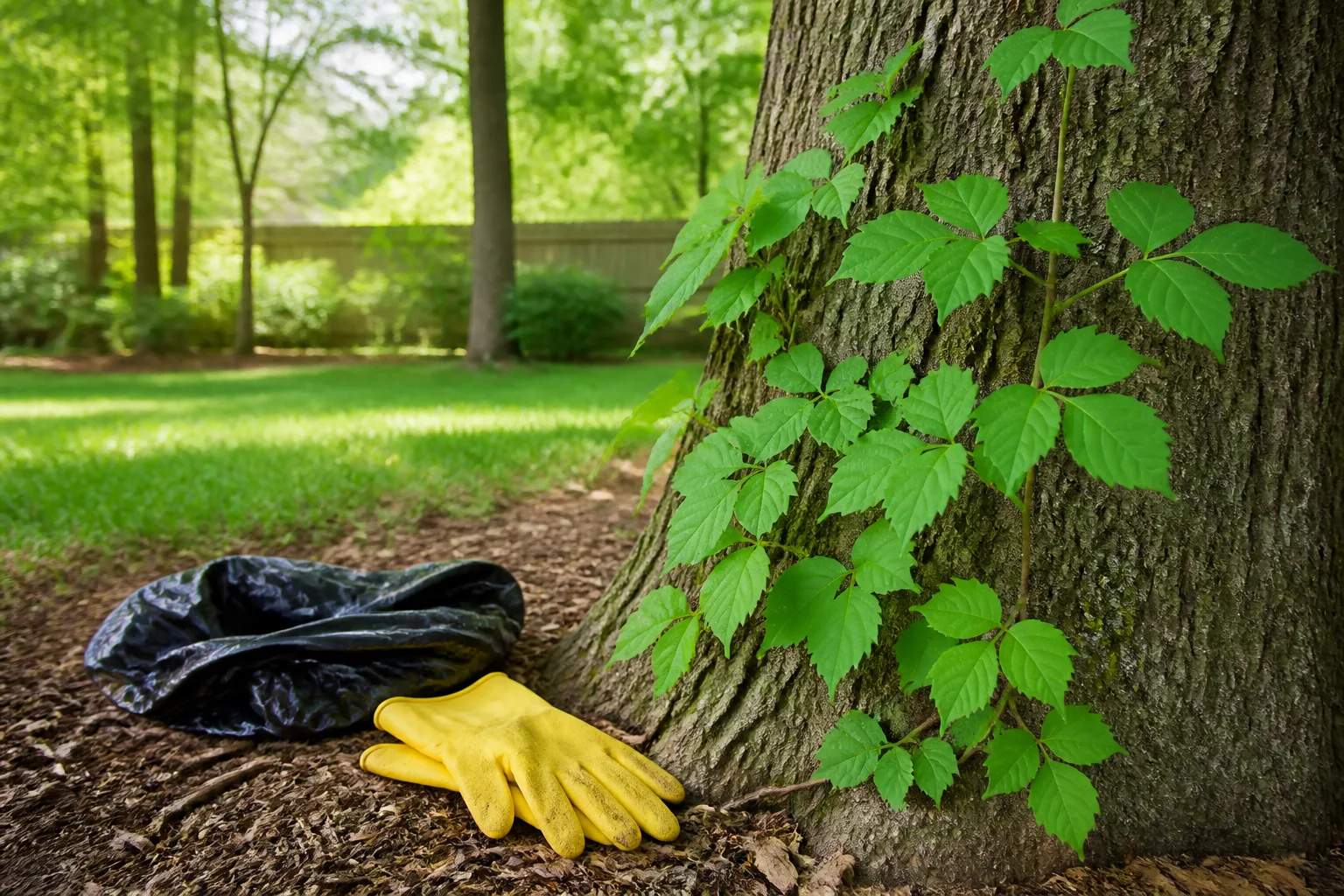
The safest poison ivy removal plan is built around containment: identify the plant without touching it, cover your skin, keep the oily resin off your tools and clothing, and remove or treat the crown instead of only stripping away leaves. A small patch may be dug out carefully; a vine climbing a tree usually should be cut and left in place; a large or tangled infestation may be safer for a licensed applicator.
Poison ivy (Toxicodendron radicans) contains urushiol, an oily resin that causes allergic contact dermatitis. The resin is not limited to fresh leaves, so a dormant vine, root fragment, or tool handle can still create an exposure. The CDC/NIOSH guidance on poisonous plants is a useful safety baseline for outdoor workers and homeowners alike. (CDC/NIOSH)
Start with a no-touch identification check
Do not begin by pulling the plant that “looks like ivy.” Stand back, photograph it, and look at the whole growth habit: how the leaves are arranged, whether the stem climbs or grows upright, whether the vine has a fuzzy appearance from aerial rootlets, and whether the plant is threaded through something you want to keep. If you cannot make a confident identification, leave it alone until you can get local extension or professional help.
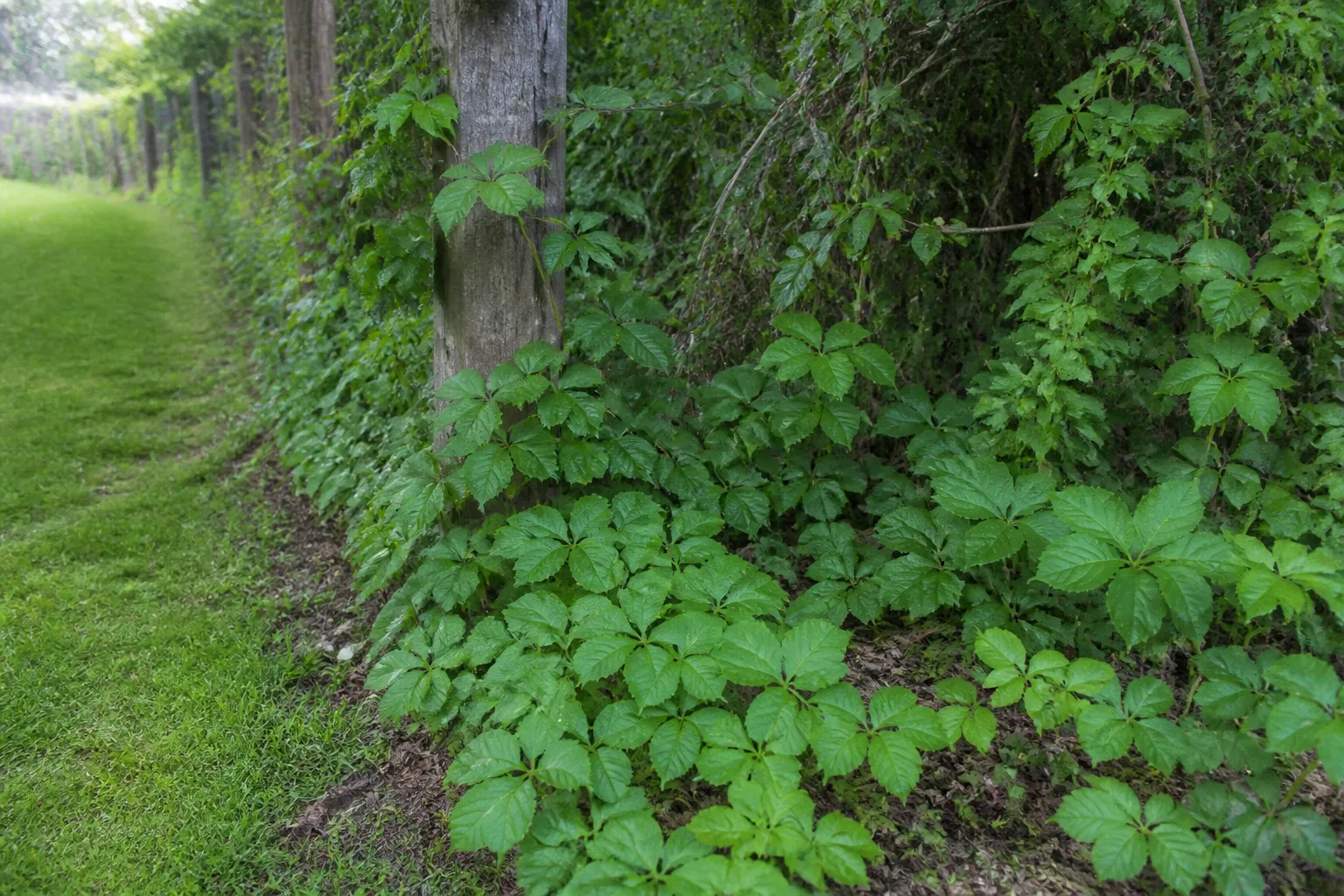
The familiar warning “leaves of three, let it be” is a good first filter, not a complete identification. Poison ivy can grow as a groundcover, shrub, or climbing vine, and its leaflets may be green, red, orange, or bronze depending on age and season. The University of Florida IFAS identification guide is a stronger reference for distinguishing poison ivy from related plants and look-alikes. (University of Florida IFAS Extension)
Distinguish poison ivy from look-alikes
Look for three leaflets on one leaf stalk, with the center leaflet often held on a longer stalk than the two side leaflets. The leaf edges can be smooth, lobed, or irregular, and the stem may become woody; the vine form often looks hairy where it grips bark because of fine aerial rootlets. These clues help, but no single feature is reliable in every season.
Virginia creeper is a common harmless look-alike with five leaflets, while young box elder seedlings have opposite leaves rather than poison ivy’s alternate arrangement. A mistaken identification can lead to unnecessary spraying or a missed toxic plant, so do not use the three-leaflet rule as permission to handle an uncertain vine. (University of Florida IFAS Extension)
Why dead vines still pose a risk
Urushiol is the reason “it looks dead” is not a safety test. Leaves, stems, roots, berries, and dormant vines may still carry the resin, and oil can move from a plant onto gloves, pruning shears, boots, clothing, pet fur, or a shovel handle. The FDA’s guidance on poisonous plants explains why avoiding contact and washing promptly are more dependable than judging the plant by its color or condition. (U.S. Food and Drug Administration)
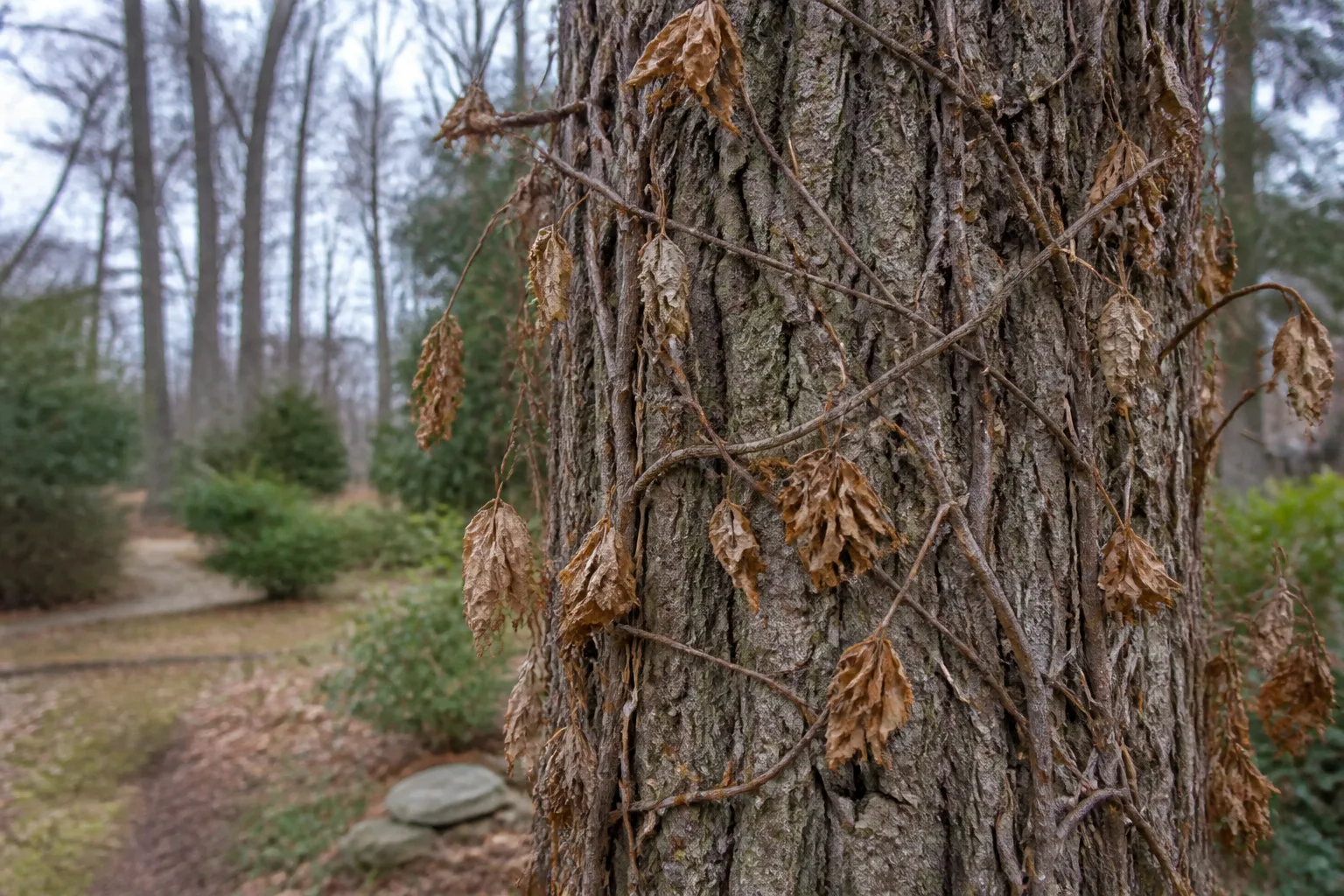
Urushiol dermatitis is a delayed allergic reaction, so a clear afternoon does not prove that your method worked safely. The CDC notes that most people who are sensitive can react to a very small amount, and that the resin can remain active on objects for years if it is not removed. Never burn poison ivy: smoke can carry the resin into the lungs and create a much more serious exposure than a rash on the skin. (CDC/NIOSH)
If someone develops a widespread rash, facial or eye involvement, breathing trouble, or difficulty swallowing after possible exposure, seek medical care promptly. A poison ivy rash is not spread by blister fluid once the resin has been removed, but contaminated hands, clothing, tools, and pets can continue to transfer oil. The American Academy of Dermatology’s poison ivy guidance can help with general rash timing and when to seek care. (American Academy of Dermatology)
Choose the least risky removal method
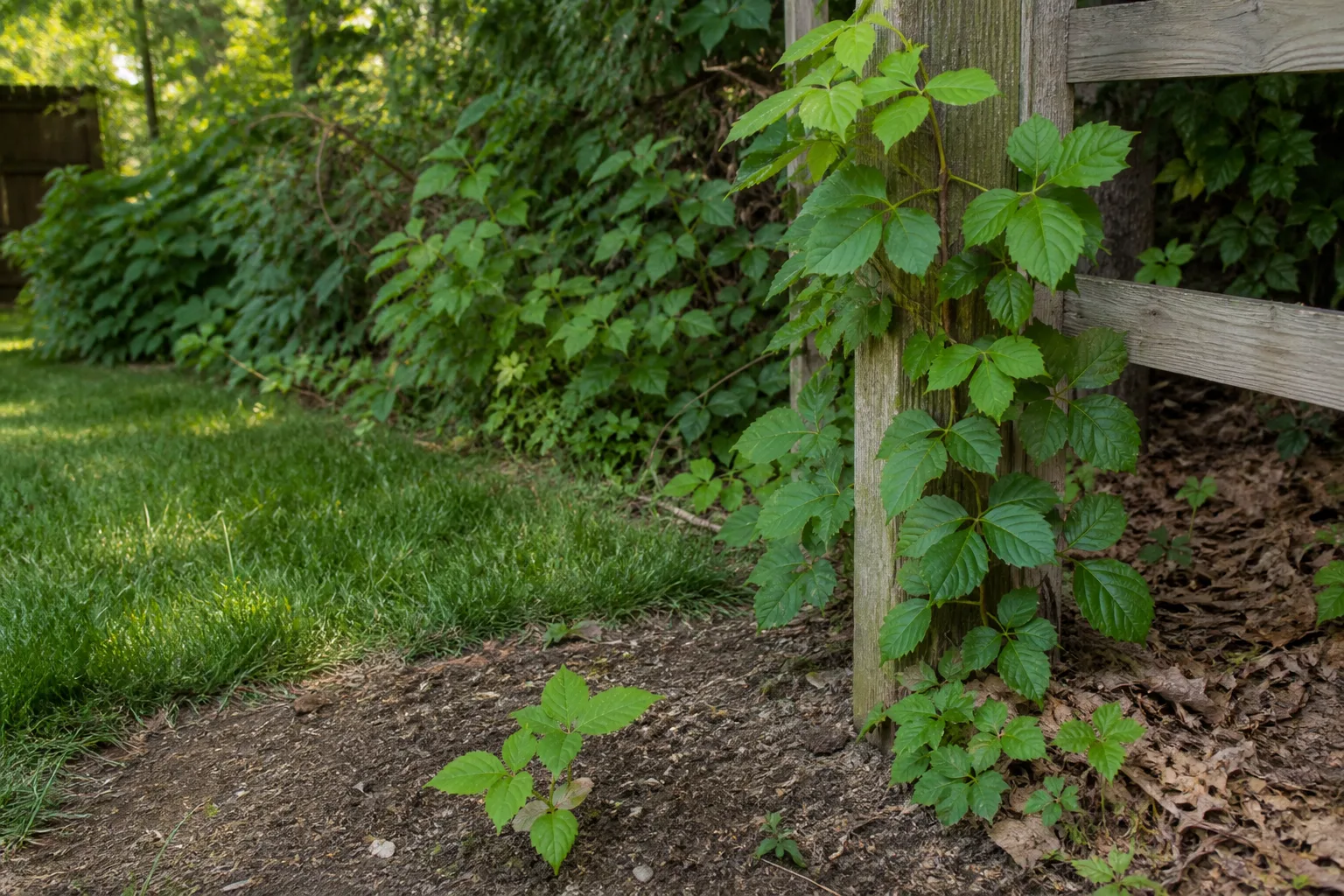
The right method depends less on what kills a leaf fastest and more on where the plant is growing, how much root is present, and what you might damage while working. Use this decision rule before you put on gloves:
| Situation | First-choice approach | Main limitation |
|---|---|---|
| A few young plants in open, workable soil | Dig below the crown and bag the roots | Root fragments can resprout; repeat inspection is required |
| A vine climbing a tree or fence | Cut the stem near the base and leave the upper vine alone | Pulling can damage bark and spread resin over your clothing |
| A dense patch away from wanted plants | Label-approved herbicide or a planned cover-and-monitor approach | Spray can drift, and a cover does not prove the roots are dead |
| Poison ivy intertwined with flowers or shrubs | Cut new growth repeatedly or get professional help | Complete digging or spraying may injure the plants you want |
| Severe personal sensitivity, large patch, or hard-to-reach growth | Licensed professional assessment | Cost and scheduling are the trade-offs for lower personal exposure |
The goal is not to win the first afternoon. It is to reduce the living root system while keeping the resin contained. If the method requires you to crawl through a mature patch, pull vines over your head, or spray across desirable plants, it is probably the wrong method for that site.
Small patch: dig out the crown and roots
Manual removal makes sense when you can clearly see a few plants and work around them without brushing against a larger hidden patch. Digging is more dependable than yanking because the crown—the short, thick transition between stems and roots—is the point from which new shoots can replace the foliage you removed.
Work when the soil is slightly moist and crumbly, not waterlogged. Moist soil can release roots with less force; saturated soil collapses and smears onto gloves and tools, while dry clay makes a shovel slip and increases the chance of a sudden tug. Dig a narrow circle around the crown, lift the root mass slowly, and stop widening the hole if roots are wrapped through a desirable plant.
Large vine or fence line: cut and treat
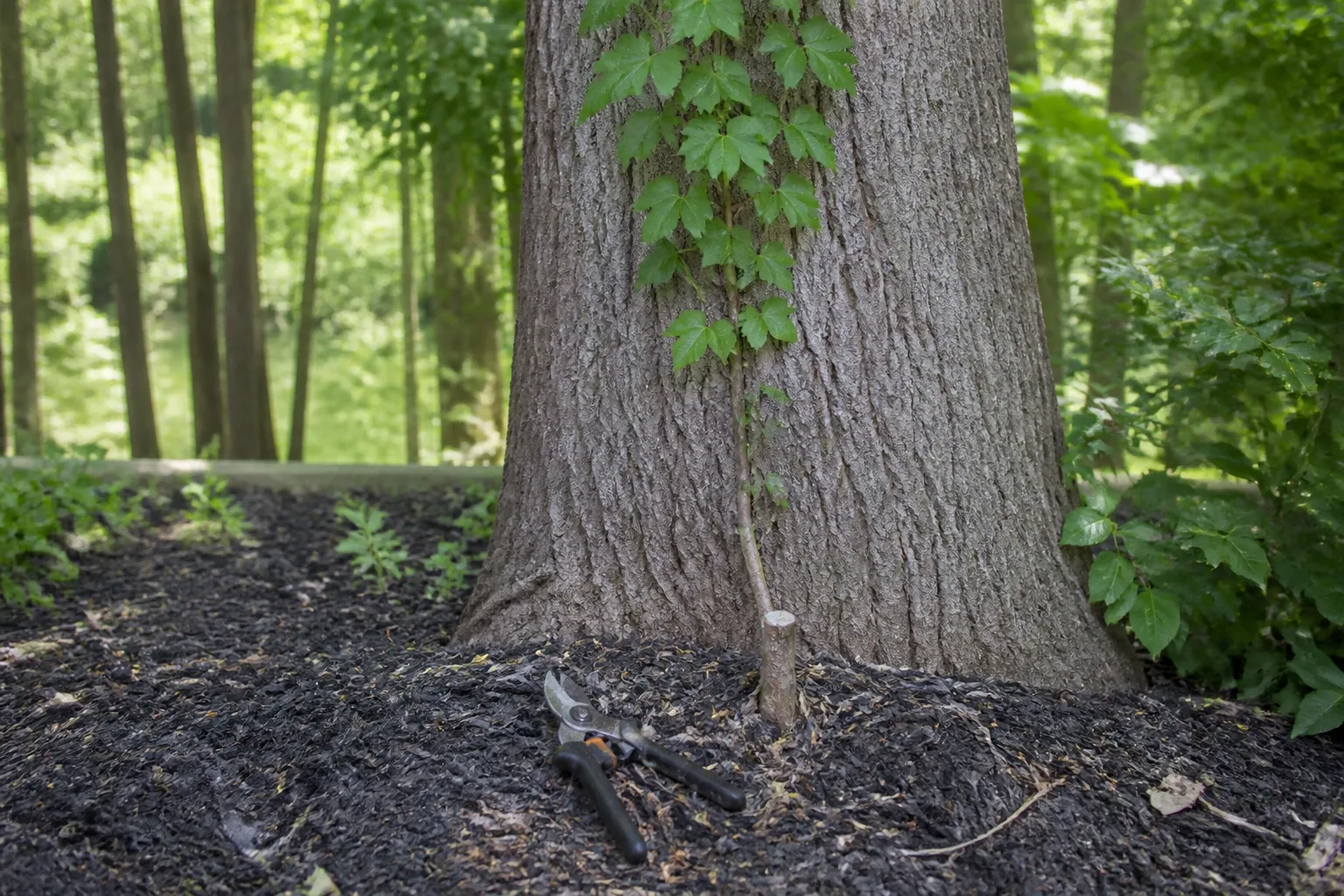
For a mature vine on a tree, the safest first move is usually to sever the vine near the ground rather than pull it down. If the upper vine is high, leave it on the tree to die and fall naturally; do not stand underneath it trying to peel it from bark. A dead vine is still contaminated, and tugging it down turns a contained stem into a moving rope of resin.
If you choose a cut-stump treatment, make a fresh low cut and apply only a product whose label allows that target, site, and application method. The point is to put a label-approved treatment onto a small cut surface, not to splash herbicide across the tree, soil, or nearby plants. Penn State Extension’s local poison ivy guidance is useful for the general safety principle: match the method to the site and avoid handling contaminated plant material unnecessarily. (Penn State Extension)
Dense patch: use a label-approved foliar treatment
Foliar spraying can be practical when the poison ivy is a broad, isolated patch with no wanted plants downwind or beneath it. It is a poor choice beside a vegetable bed, a young tree, a pond, or a neighbor’s planting because many products used for poison ivy are non-selective or can injure broadleaf plants they contact.
Wait for green, actively growing foliage and weather that meets the label requirements. Use low pressure and a targeted spray or shield so droplets stay on the poison ivy; never spray in wind, before rain, or across a surface where runoff could reach water. Brown leaves are a progress signal, not proof that the roots are finished, so keep the area marked and inspect it for new shoots.
Gather gear and set up a disposal station
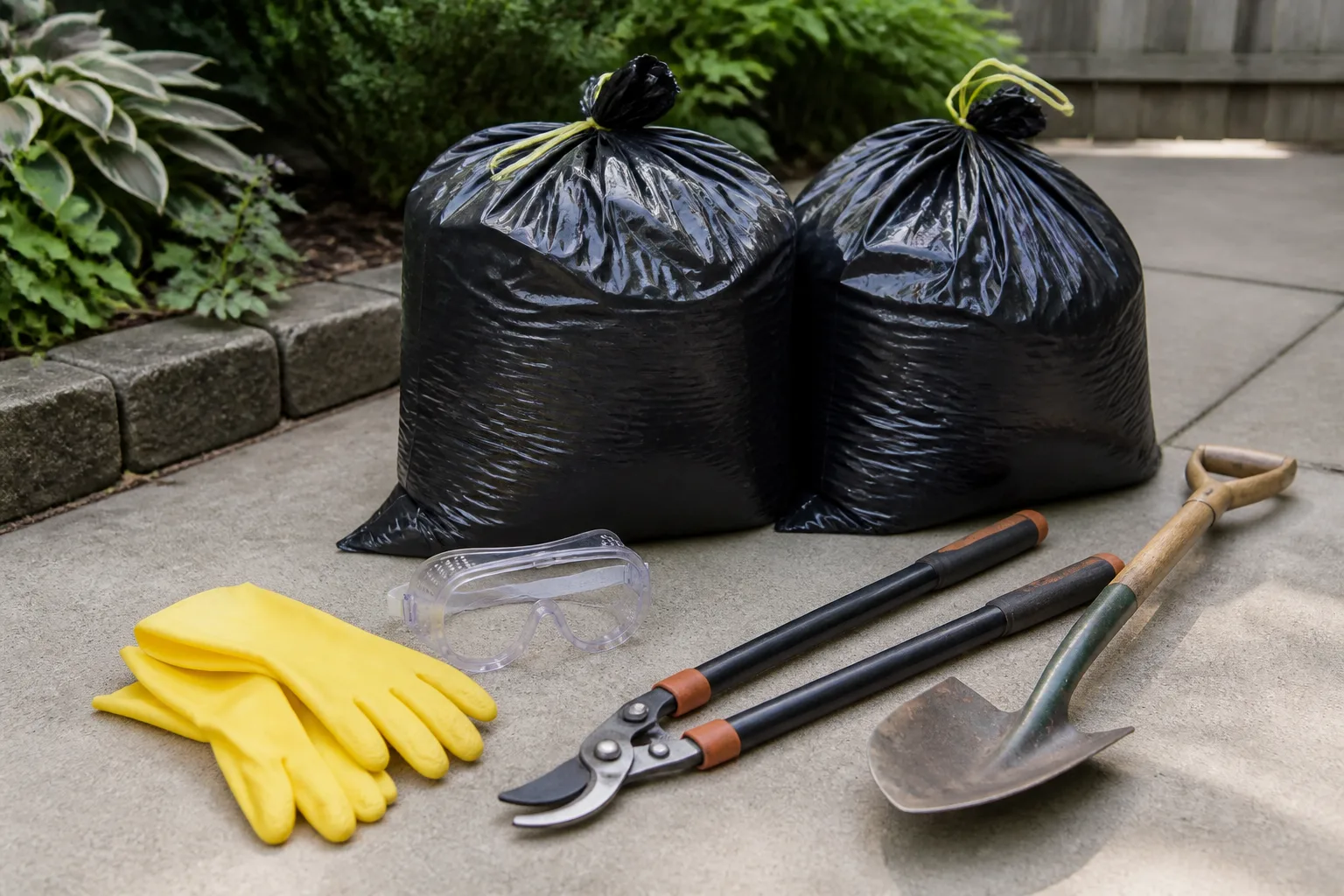
Put the disposal plan in place before you touch the plant. Have thick, intact waterproof or chemical-resistant gloves, a long-sleeved shirt, long pants, socks, washable closed shoes, eye protection, sharp pruners, a shovel, sturdy bags, and ties ready at the work area. Choose clothing you can wash immediately and keep children and pets away from the route between the patch and the bags.
Do not wear a favorite pair of canvas sneakers or carry a loose tote that you will later bring into the house. A dedicated pair of washable shoes and a clean plastic bin or bag for tools makes the end of the job much easier. If the patch is tall, dry, or likely to shed debris, an appropriate mask may reduce dust; it does not make burning safe and does not replace eye and skin protection.
Inspect gloves before starting. A torn glove is an exposure point, and a glove that has touched the plant should not be used to open a gate, answer a phone, or touch your face. Keep a clean pair of gloves available for bag handling and cleanup, or plan to remove contaminated outer gloves before you leave the work area.
Remove a small patch by hand
Use this sequence for a small, accessible patch. Move slowly enough that the plant, tool, and bag stay in front of you rather than brushing against your legs or sleeves.
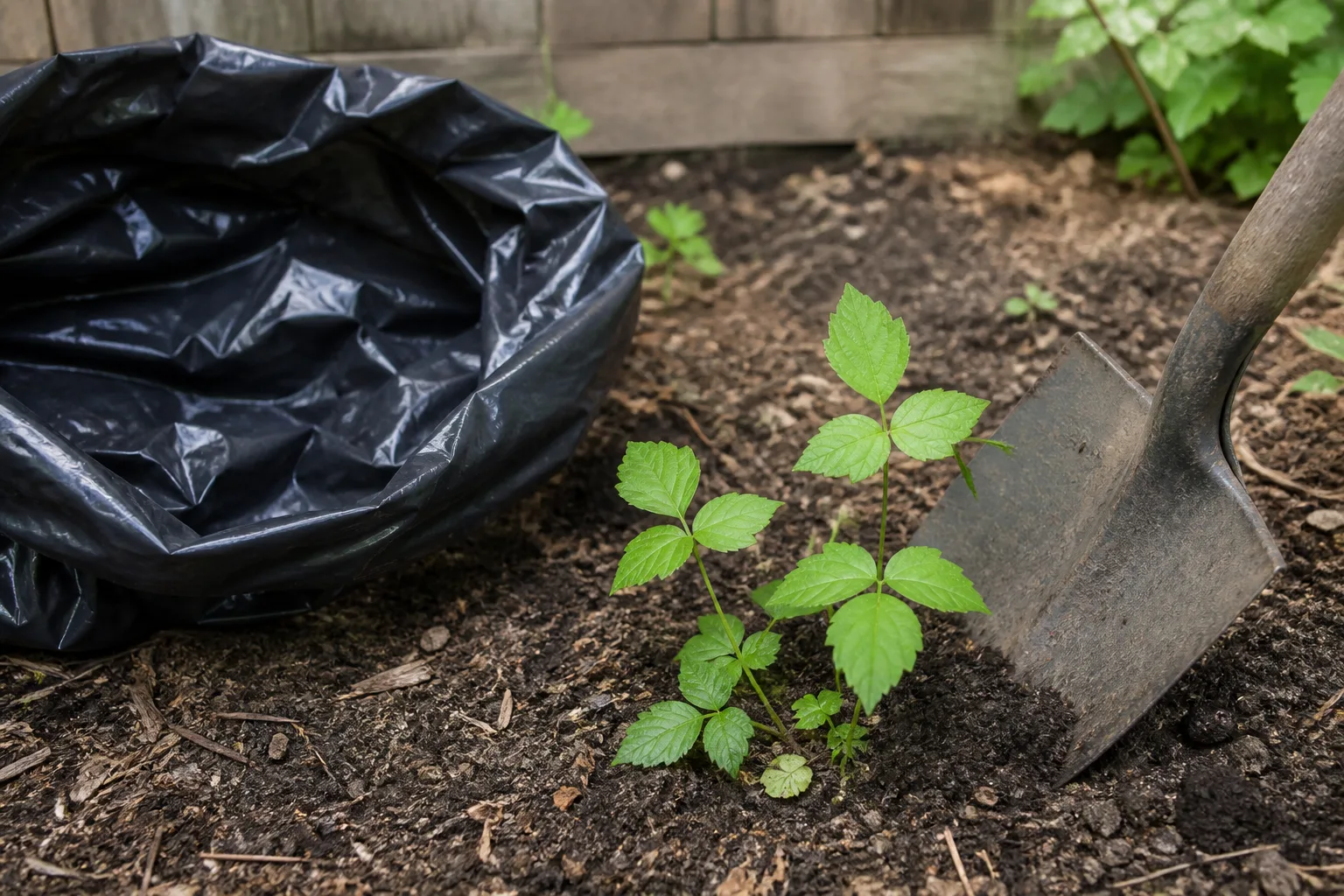
- Expose only the base. Move loose leaves or mulch with a shovel or disposable tool so you can locate the crown. Do not rake broadly through the patch.
- Cut or gather the stems without shaking them. If stems are long, cut them into manageable sections over the open bag. Do not rip or whip a vine through surrounding vegetation.
- Dig under the crown. Place the shovel a few inches away from the stem and work around it, keeping the blade pointed away from your body and any wanted roots.
- Lift the root mass. Raise the plant slowly. If the root breaks, do not dig aggressively through a nearby plant’s root ball; bag the piece you have and plan follow-up removal of new shoots.
- Bag immediately. Put roots, stems, leaves, and loose pieces directly into a heavy bag. Tie it before moving on to the next patch.
- Close the soil. Press the disturbed soil back into the hole so it does not become a new bare-soil germination pocket, then leave a marker so you know where to check for regrowth.
The common failure is mistaking a clean-looking top for a complete removal. A stem that snaps above the crown can look finished while the crown and roots remain alive. Check again during the growing season, and repeat the small-shoot removal before the plant becomes large enough to contact you.
Treat a woody vine without pulling the tree
Vines on trees create two hazards at once: urushiol exposure and a tempting but unsafe urge to pull. Cutting the stem near ground level separates the plant’s upper growth from its roots while leaving the contaminated section where it is. If a second stem is easy to reach without contacting the vine, cut it too, but do not climb, yank, or pull overhead growth down.
For a small, reachable stump, a label-approved cut-stump application can limit the amount of herbicide used and reduce the chance of drift compared with spraying a whole tree. Apply immediately only if the product label specifically permits the target and method; never improvise a concentrate, inject herbicide into the tree, or paint a product onto bark that the label does not cover.
If the vine is wrapped through a shrub, fence, or tree canopy, stop trying to free every strand in one session. Cut what you can reach, bag loose sections, mark the area, and allow the upper growth to dry before deciding whether professional help is needed. The safest result is a live tree with a controlled poison ivy root system, not a clean-looking trunk purchased with a rash or damaged bark.
Use herbicides only as the label allows
Products sold for poison ivy may contain active ingredients such as glyphosate or triclopyr, but the ingredient name alone does not tell you whether a product is appropriate for your property. The label controls the target plant, application site, dilution, protective equipment, weather limits, re-entry interval, water restrictions, and disposal instructions. Read the entire label before mixing or spraying, and keep the original container.
Systemic herbicides move within a living plant and may reach below-ground tissue; contact products injure the foliage they cover and are more likely to leave a perennial crown able to resprout. Neither description is a promise of permanent eradication. A mature root system, incomplete coverage, poor timing, rain, drought stress, or an application that misses the crown can all produce new growth.
Protect wanted plants with physical shields rather than trusting a careful aim alone. Spray on a calm day, keep the nozzle low, avoid fine mist, and never increase the concentration because the first treatment did not work. Do not spray near water, edible crops, children, or pets unless the product label expressly allows the use and gives the required precautions.
Clean the sprayer according to its label and do not reuse it for a vegetable garden unless the instructions and equipment permit that use. Store the product in its original labeled container, away from children, pets, heat, and drains. If you are not comfortable interpreting a pesticide label or preventing drift, a licensed applicator is the safer choice.
Why salt, vinegar, boiling water, and smothering fall short
“Natural” is not the same as harmless, selective, or permanent. Household mixtures can injure the leaves they touch, but they can also damage the plants and soil you want to keep, and they rarely solve a mature poison ivy root system in one pass.
| Method | What it can do | Why it often fails |
|---|---|---|
| Salt solution | Dehydrates contacted foliage | Salt can accumulate in soil and injure nearby plants; roots may survive |
| Vinegar | Burns exposed foliage on contact | It is non-selective and usually does not eliminate an established crown |
| Boiling water | Scalds tissue in a very small open patch | It is a burn hazard, hard to direct around wanted roots, and not a reliable deep-root treatment |
| Opaque cover | Blocks light from an isolated patch | Edges can escape, roots can persist, and the cover must stay secure for weeks rather than days |
| Repeated cutting | Gradually reduces new leaf growth | It requires monitoring and patience, and the plant remains hazardous during every visit |
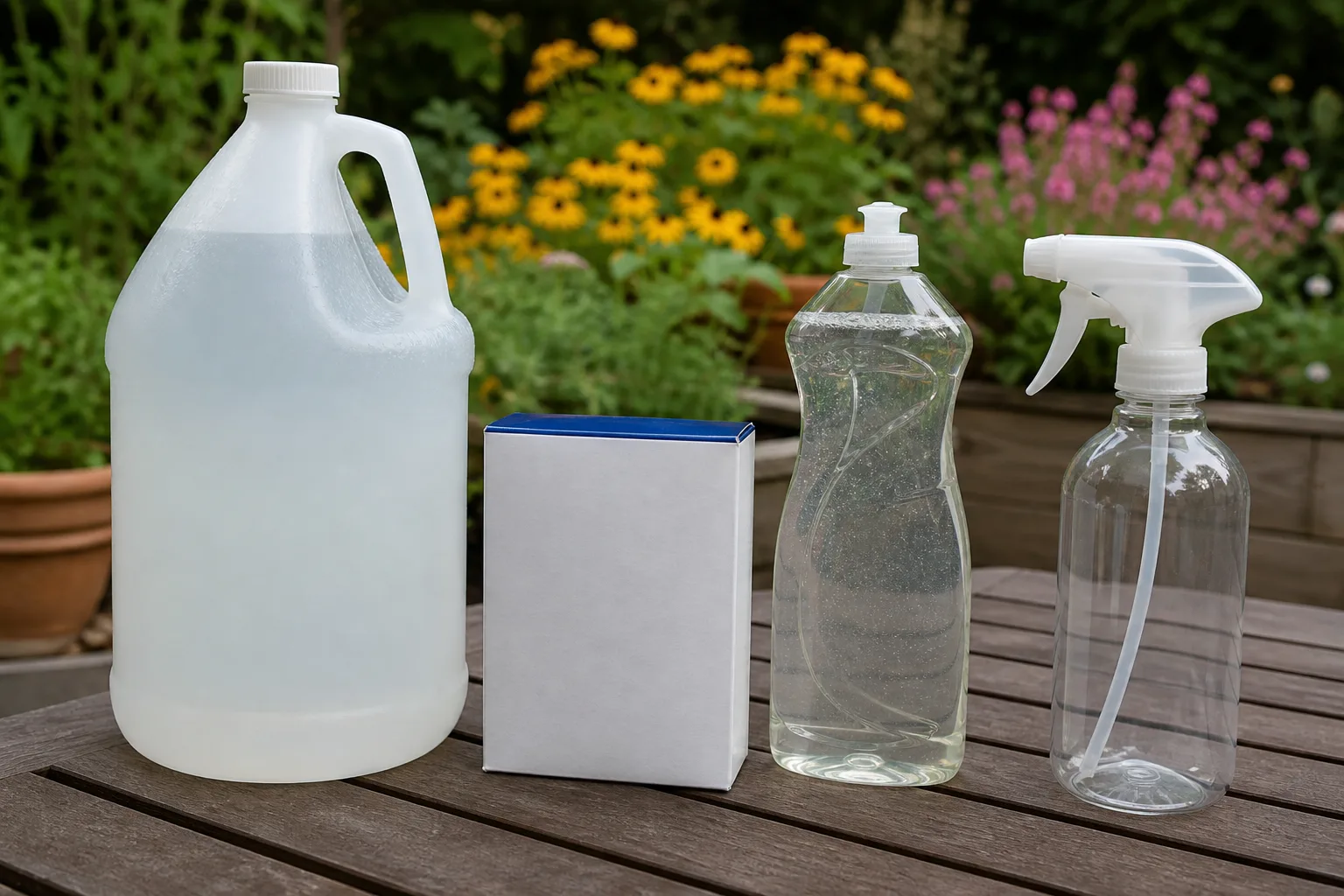
University of Maryland Extension’s discussion of vinegar as an alternative to glyphosate explains the key trade-off: a vinegar product can burn foliage while still being a poor substitute for a root-killing plan. For poison ivy, a cautious non-chemical approach is usually repeated cutting or carefully planned digging, not adding more salt or acid to the soil. (University of Maryland Extension)
Smothering can be useful for a small, isolated patch where a securely anchored opaque cover will not endanger a tree, drainage route, or desirable plant. Leave the cover in place for a sustained period, inspect the perimeter, and treat any new growth as contaminated. Wear protective gear when removing the cover or dead material because the resin does not disappear when the leaves turn brown.
Bag and dispose of every plant part
Poison ivy does not belong in a home compost pile, brush pile, or burn barrel. Compost heat is not a reliable safety guarantee for every backyard pile, and smoke from burning can carry urushiol into the air. Put plant material in thick bags, tie them securely, and use the disposal route your municipality allows; some areas want household trash, while others have specific restrictions for yard waste.
Carry the bag by its tied top without dragging it through the yard. Do not shake soil from roots, leave pulled vines in a damp corner, or put contaminated material beside a path where a child or pet could find it. If a bag tears, place it inside a second bag rather than trying to repack the contents with bare or lightly protected hands.
Keep the pile of removed material separate from clean garden waste. A bag of poison ivy should not share a wheelbarrow with vegetables, prunings, or mulch that will be spread elsewhere. If your local waste program will not accept it, call for instructions before the work begins so you are not forced to improvise at the end.
Decontaminate clothes, shoes, tools, and pets
Cleanup is part of removal, not an optional final polish. Before entering the house, remove gloves and clothing carefully, turning contaminated surfaces inward and keeping your hands away from your face. Wash exposed skin promptly with soap and cool or lukewarm water; do not rely on hand sanitizer, a quick rinse, or a hot shower to dissolve the oil.
Wash work clothes separately with regular laundry detergent, following the garment’s care label and using the warmest appropriate setting. Do not shake the clothes over the laundry room or toss them into a shared hamper. If a jacket, shoe, or tool cannot go in a washer, scrub the surface with detergent and water while wearing clean protective gloves, then rinse and let it dry away from high-traffic areas.
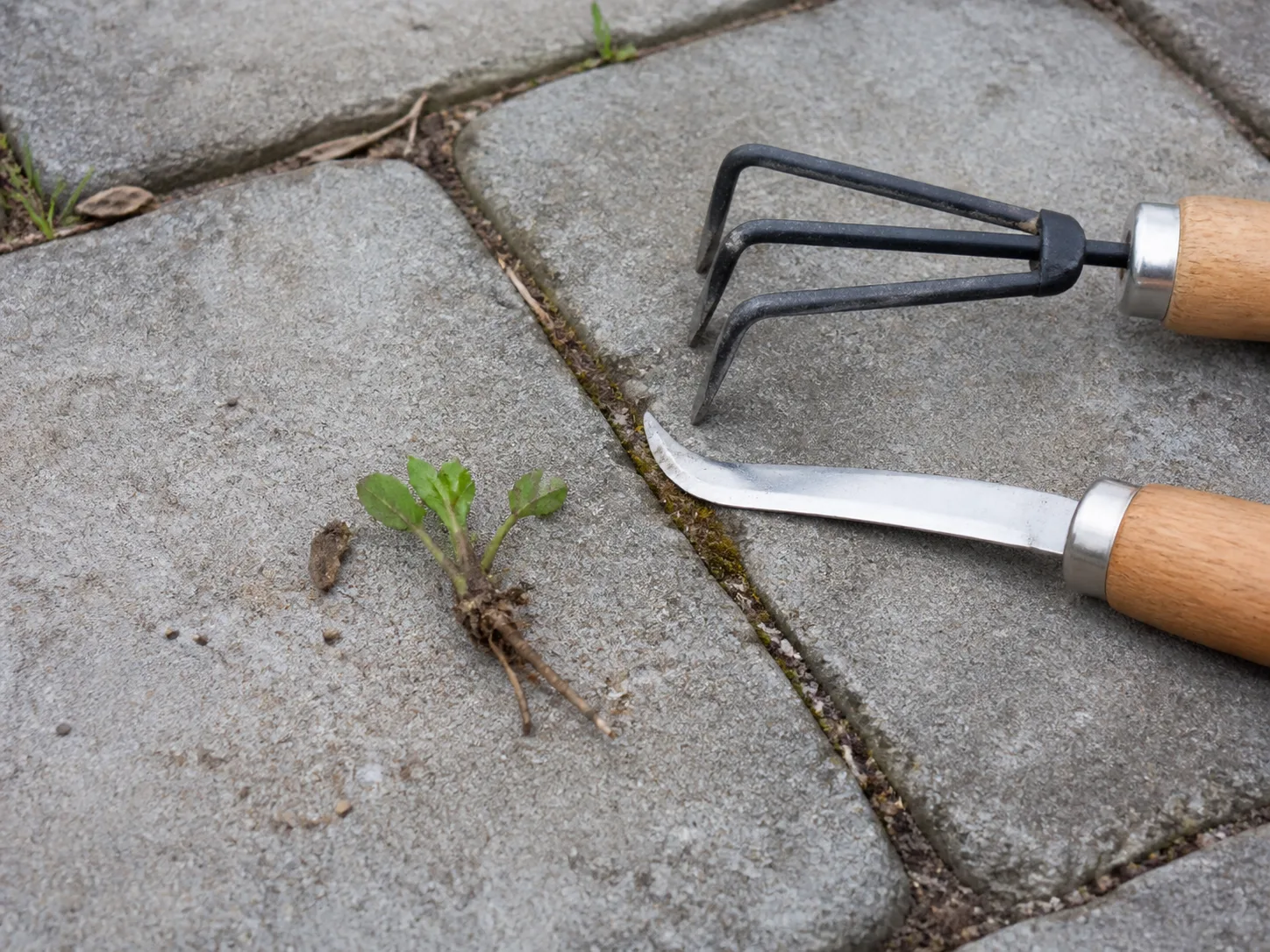
Clean pruning shears, shovel blades, handles, boot soles, eyewear, and gate latches that you touched during the job. Detergent and water can remove oily residue from many hard surfaces; isopropyl alcohol may help dissolve resin on compatible tool surfaces, but follow the tool manufacturer’s care instructions and keep solvents away from flame. Finish by washing your hands after the gloves come off.
Keep pets out of the area during removal. If a dog or cat may have brushed against poison ivy, do not pet it with bare hands; ask a veterinarian or professional groomer for the safest washing approach, especially if the animal has eye, skin, or respiratory symptoms. Pet fur can move plant oil farther than the original patch, even though the animal itself may not develop the same rash pattern as a person.
Monitor regrowth and prevent a repeat infestation
Poison ivy removal is a monitoring project because new leaves can emerge from a surviving crown, root fragment, or runner. Mark the cleared area and inspect it regularly during the growing season, particularly after rain or warm weather. Pulling one new shoot while it is small is usually a smaller exposure opportunity than waiting for a vine to weave through a shrub or climb a tree again.
Use a fixed route for inspections so you do not wander into an unexamined patch. Look around tree bases, fence bottoms, compost-area edges, brush piles, and places where birds may have dropped seeds. Wear protection for every follow-up visit until you are confident the area is clear; a young plant can still contain urushiol.
Once the living plants are gone, reduce the open niches that invite a new infestation. Replant suitable groundcover, keep mulch at a useful depth without burying tree trunks, and repair gaps at fence lines where vines can enter. Physical coverage suppresses seedlings but is not a reason to cover a living tree’s trunk or to bury a patch you have not first identified.
Do not till a poison ivy patch to “break up” the roots. Turning contaminated root pieces through the soil makes the cleanup harder and may spread viable pieces into a larger area. If the site needs major grading, construction, or brush clearing, get advice before soil is moved.
Know when to call a professional
Hire a licensed applicator or experienced vegetation-removal professional when the infestation is large, the vines are overhead, the patch is on a steep bank, or poison ivy is interwoven with plants and trees you cannot afford to damage. Professional help is also wise when you have reacted strongly before, have a respiratory condition, or cannot guarantee that children and pets will stay away from the work zone.
Ask what the proposed method is, which product label supports it, how drift and runoff will be managed, how the debris will be handled, and what follow-up visits are included. A good plan should explain what will happen if new shoots appear, not just promise that the first spray or cut will finish the job.
Pause the project if you cannot identify the plant, if weather is windy or wet, if your protective clothing is damaged, or if the only available disposal route is burning or casual composting. Delaying a day to fix those conditions is a safety decision, not a failure to garden.
Conclusion
To safely remove poison ivy, protect yourself before you touch the plant, choose the method that fits the location, keep every cutting contained, and treat cleanup as part of the job. Dig small open patches carefully, cut vines near their base instead of pulling them from trees, and use herbicide only when the label and site make the application appropriate.
Expect follow-up. Poison ivy can return from surviving roots, and urushiol can remain on objects long after the plant is gone. Never burn or compost the debris, wash clothing and tools thoroughly, and call a professional when the patch is large, tangled, elevated, near water, or beyond the level of protection you can manage safely.



