How to Identify Tiny White Bugs in Houseplant Soil
Identify tiny white bugs in houseplant soil — fungus gnat larvae, mealybugs, springtails, and more — then treat only what actually needs it.
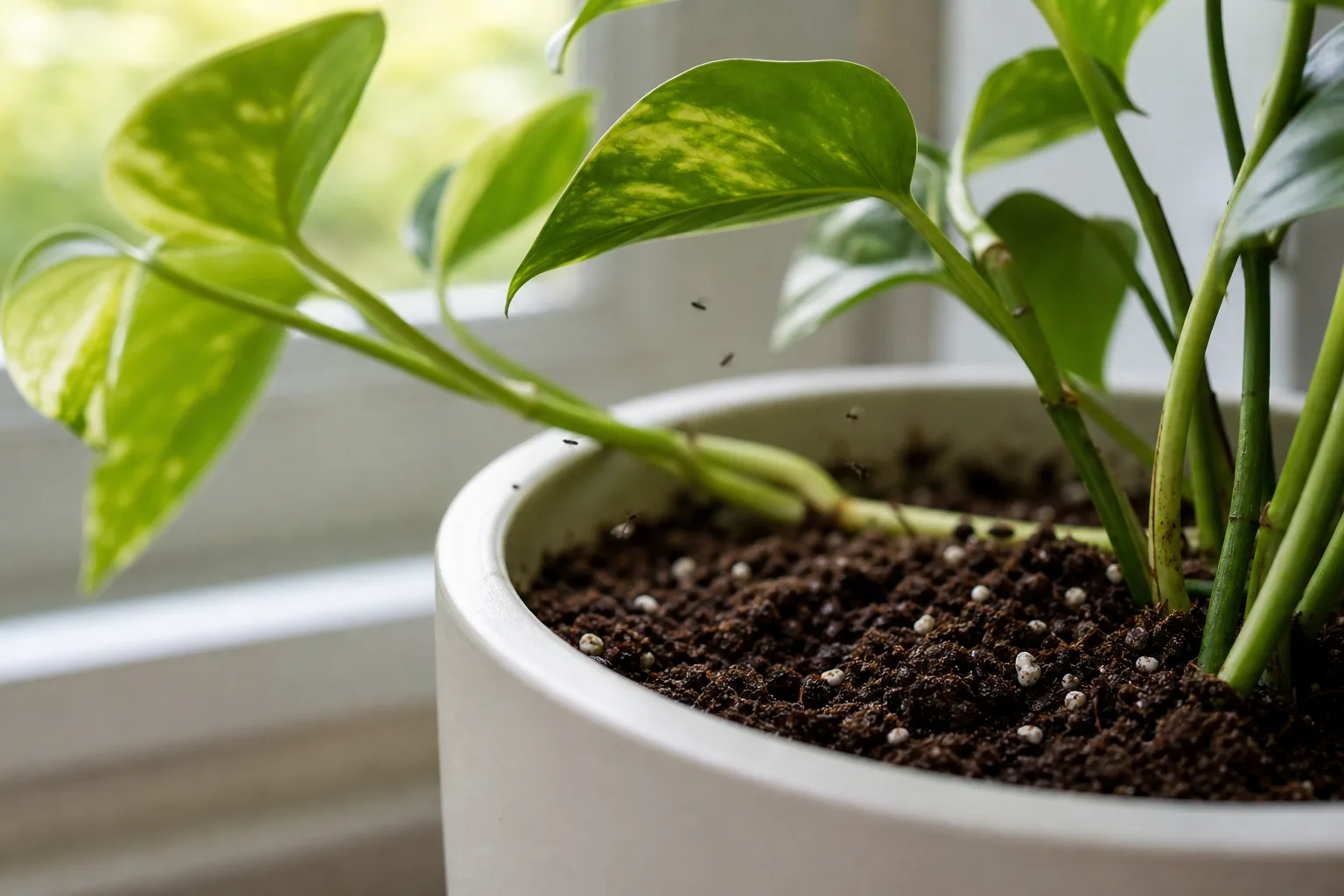
You water a pothos, lean in, and the soil surface looks alive with pinprick white dots. Some articles jump straight to insecticide. That is how you end up killing beneficial soil mites while the real pest — fungus gnat larvae, root mealybugs, or root aphids — keeps breeding underground. The job is identify first, treat second, and match the fix to the organism actually in your pot.
This guide walks through a fast field ID, the harmless bugs you should not touch, the pests that deserve action, and a treatment ladder that escalates only when simpler steps fail. For fungus gnat specifics, see our houseplant fungus gnat guide. For mealybugs and scale on foliage and roots, see mealybugs on houseplants and scale on houseplants.
Start Here: The 60-Second Soil Bug Check
Before you buy sprays, run three quick tests on the pot that worried you. You need a movement answer, a location answer, and a magnifier look if the specks are still ambiguous.
Movement and Location Tests
Scrape the top quarter-inch of soil with a spoon and watch on white paper under bright light. Soil mites and springtails move on their own — mites amble slowly; springtails hop when disturbed. Fungus gnat larvae are legless white maggots with shiny black heads; they wriggle but do not jump. Root mealybugs look like tiny cottony ovals clustered on roots or the inside of the pot wall; they barely move.
Note where the specks live. Larvae and root pests concentrate in moist organic matter at the soil line and on roots. Specks that appear only after watering on the surface may be perlite, vermiculite, or mineral salts — not animals at all. Flies that lift off when you disturb the pot are adult fungus gnats; they are dark gray, not white, and signal larvae below (UC IPM).
Rule Out Non-Living White Specks
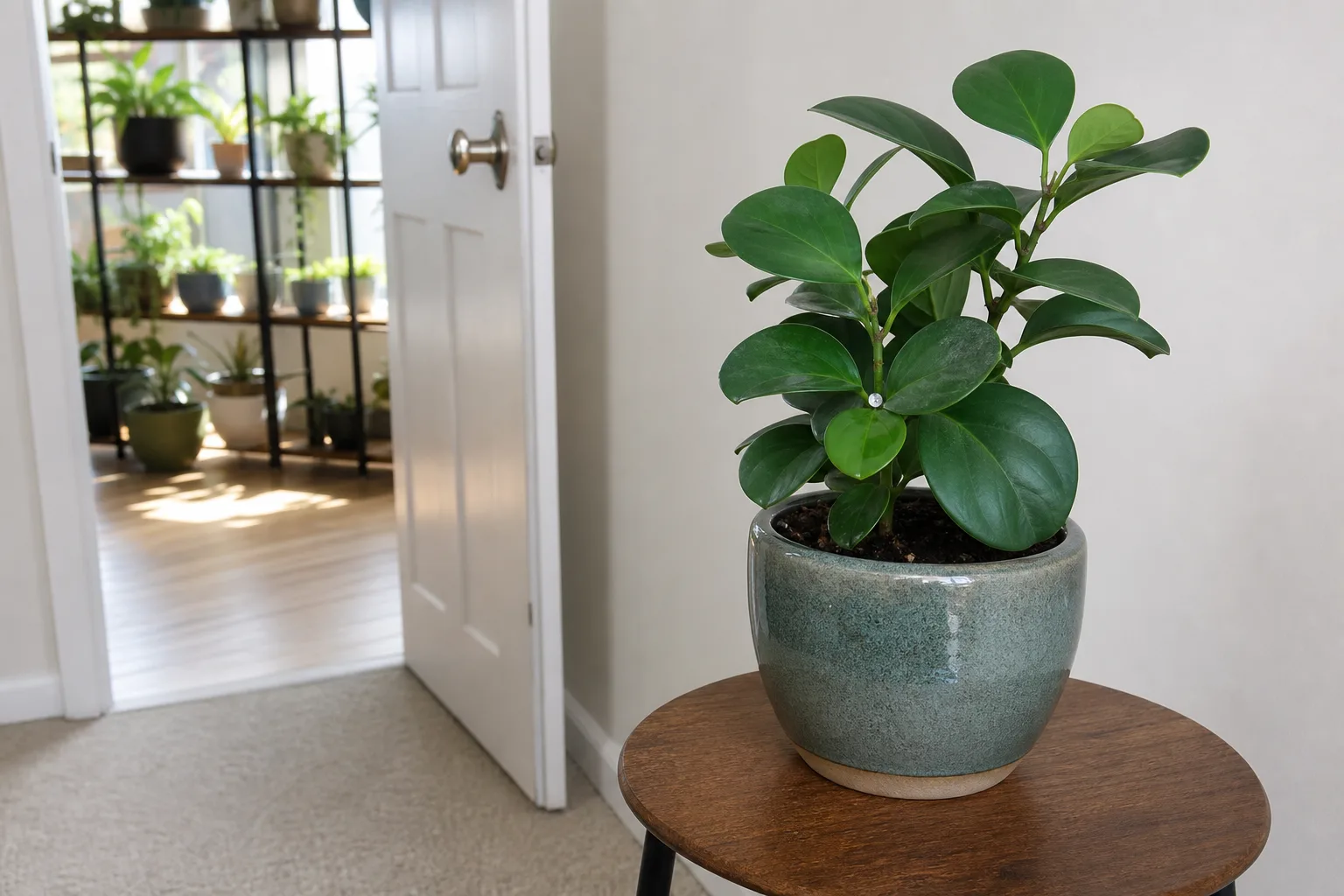
New bagged potting mix often contains perlite — hard, angular white grains that never move. Slow-release fertilizer prills and water spots can look like bugs on camera. Press a speck with a fingernail: perlite crunches; a live mite smears. If nothing moves after two minutes on white paper, you likely do not have an active infestation — just mix components or dried salts.
Vermiculite flakes are gold-tan and flat, not round like mite bodies. Mycorrhizal inoculant and diatomaceous earth dust can leave pale residue after watering that photographs like a swarm. When in doubt, take a close photo, wait 24 hours without watering, and scrape the same spot again — living populations persist; mineral specks do not relocate.
Good Bugs You Should Leave Alone
Not every white dot is a crisis. Two common groups are allies in decomposition and rarely warrant treatment on healthy houseplants.
Soil Mites
Soil mites are tiny white or tan arachnids, often smaller than a pinhead. They feed on fungi, algae, and decaying organic matter in potting mix and help break debris into plant-available nutrients. Populations surge in rich, moist compost-heavy media — exactly the conditions many tropical houseplants prefer. They do not chew healthy roots and some species prey on other soil invertebrates (Missouri Botanical Garden).
If the plant looks fine and mites are the only finding, do nothing. Drenching neem or broad insecticides to “clean” soil kills decomposers and does not improve plant health. The exception is production settings where mite numbers are monitored for biocontrol balance — not typical home collections.
Springtails
Springtails are minute white or gray hexapods named for their jumping furcula — flick them with a toothpick and they vault off the paper. They eat decaying plant material, mold, and algae in damp potting mix. University of Minnesota Extension notes they are generally harmless to living plants and indicate moist, organic-rich conditions.
Large springtail numbers mean the pot stays wet too long. Fix watering and drainage rather than reaching for poison. Repot into fresh mix in a clean pot only if springtails spill onto counters and you want them gone for aesthetic reasons — not because the plant is in danger.
Springtails need moisture to survive; they die quickly on dry counters. That is why a dryer top layer shrinks their numbers even when you do not repot. They are not insects — they belong to the order Collembola — and their jumping organ is the clearest field mark when you are deciding between springtails and stationary mealybugs.
Harmful Pests That Look Like White Specks
When specks are tied to yellowing leaves, wilting on wet soil, stunted new growth, or limp roots, shift from observation to targeted control. These four groups cause most houseplant soil pest damage.
Fungus Gnat Larvae
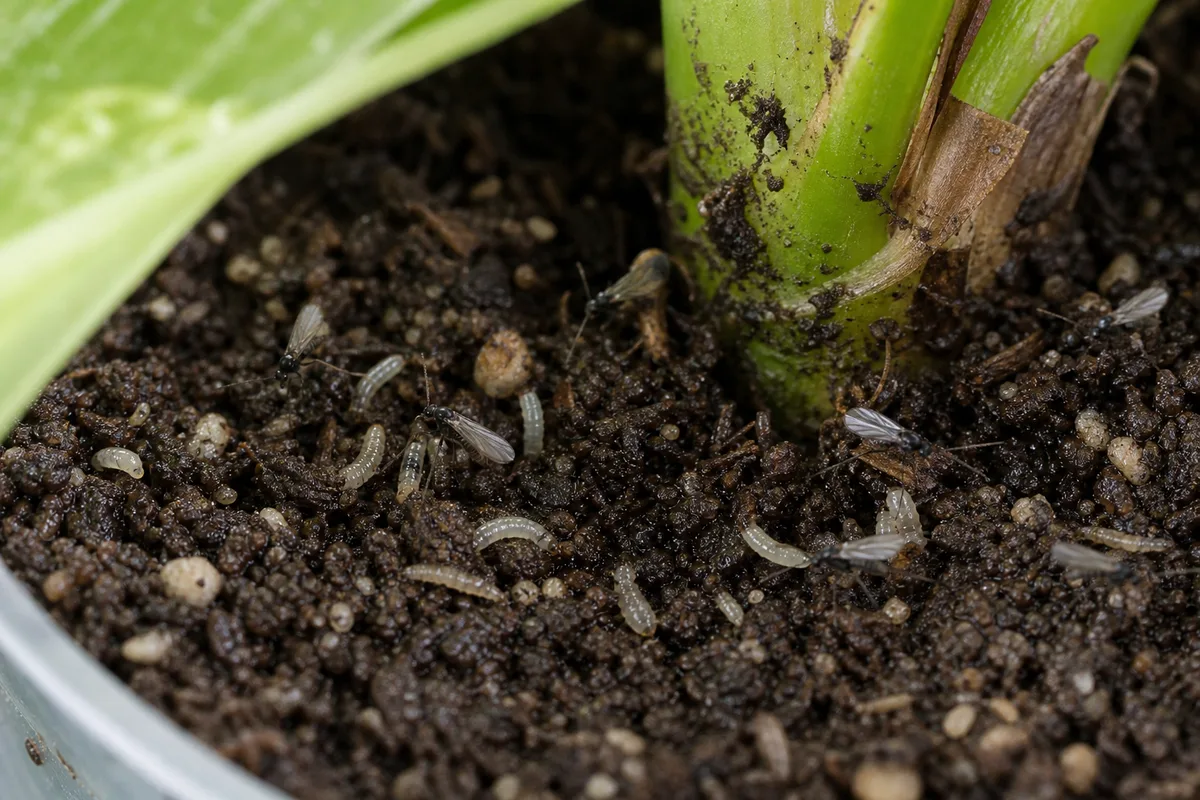
Fungus gnats are the most common soil pest indoors. Adults are small dark flies — about 1/16 to 1/8 inch — that weakly hover near pots and windows (Colorado State Extension). The white “worms” people photograph are larvae: translucent bodies, shiny black head capsule, no legs. They live in the top 1 to 3 inches of damp mix, eating fungi and organic matter, then root hairs when crowded.
Heavy larval pressure causes yellow leaves, leaf drop, and poor growth, especially on seedlings and cuttings. Larvae can leave slime trails on the soil surface that resemble tiny slug tracks (UC IPM). Confirm with a potato slice test: press a raw wedge cut-side down into moist soil for 48 hours; larvae gathering on the potato underside mean active breeding. Yellow sticky traps at the soil line catch adults and track whether your treatment is working — details in our natural fungus gnat control guide.
Root Mealybugs
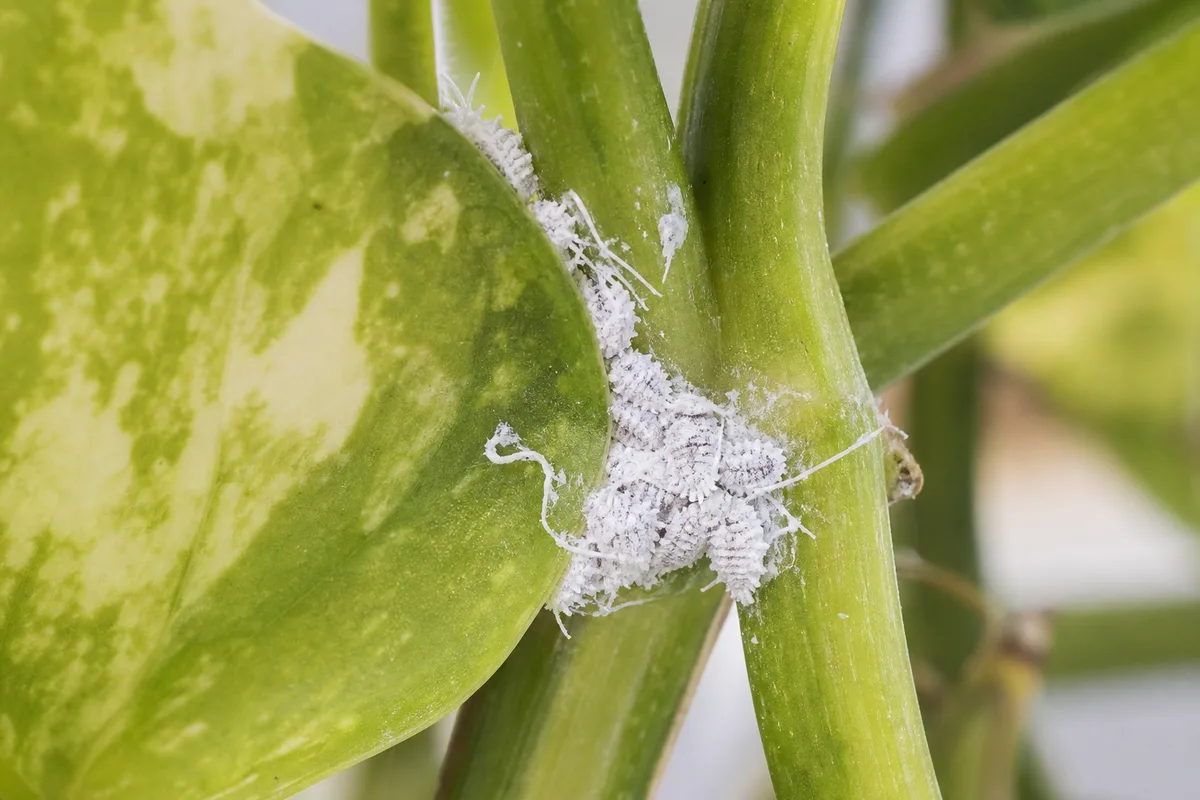
Root mealybugs are sap-sucking insects that live on roots, pot walls, and drainage holes. They look like flat or slightly raised white cottony ovals, roughly 1/16 to 1/8 inch, coated in waxy filaments. Unlike fungus gnat larvae, they do not have a distinct black head and often cluster in groups. Pull the plant from its pot and inspect the root ball and inner rim — mealybugs hide where soil meets plastic.
Feeding cuts nutrient flow to shoots. Expect yellow leaf edges, overall droop, and limp roots even when soil feels moist. Root mealybugs spread on tools, benches, and new plants. Treat as a quarantine pest from the first sighting. Our mealybug guide covers alcohol swabs and repeat drenches for foliar cousins; root populations need soil-focused follow-through below.
Root Aphids and Soil-Dwelling Scale
Root aphids resemble mealybugs but are often more uniformly woolly-white and oval, staying near roots and stem bases in greenhouse-origin plants. They cause leaf curl, yellowing, and stunted growth similar to foliar aphids but out of sight. A hand lens helps — aphids have pear-shaped bodies under the wax.
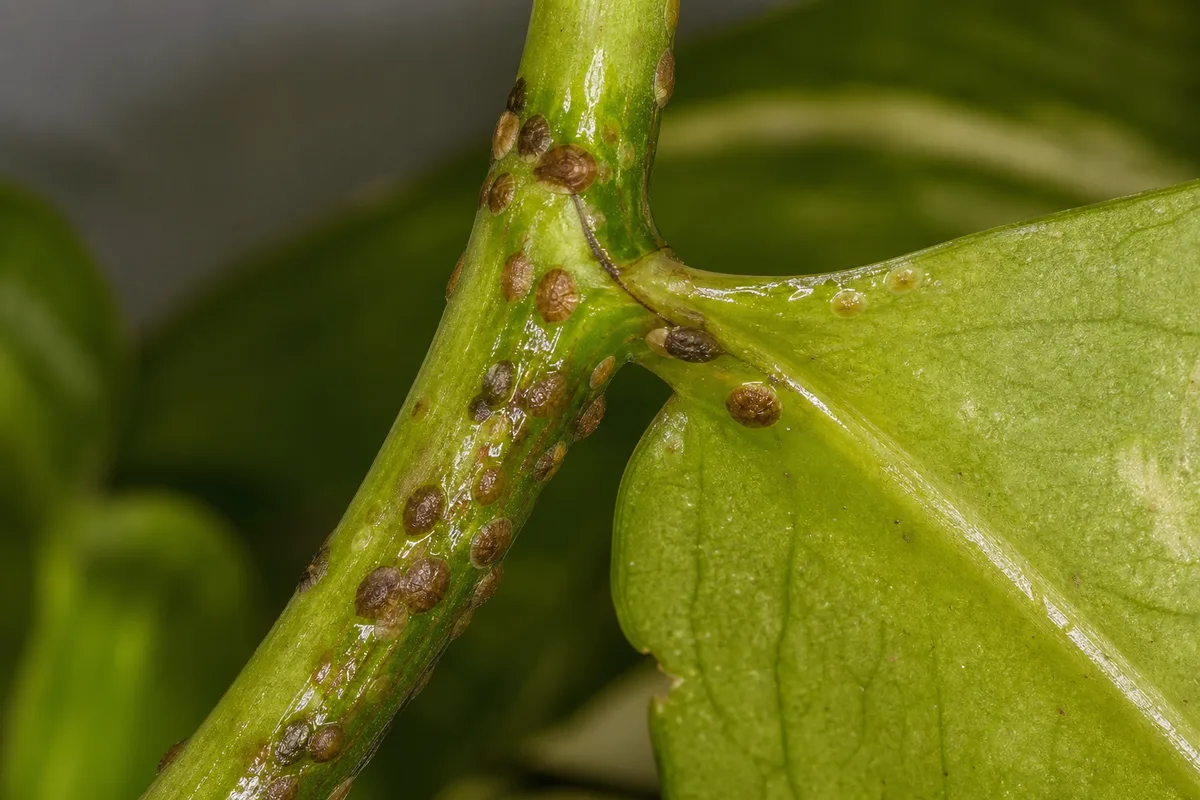
Scale insects in soil usually arrive on contaminated mix or reused outdoor soil. Immature scales look like flat white or tan bumps clustered on roots or the pot interior, not like jumping springtails. Mature infestations show puncture marks on leaves under magnification and progressive defoliation. See scale on houseplants for alcohol and horticultural oil timing on above-ground stages; soil-borne scale often needs bare-root work.
How to Tell These Pests Apart
Use this comparison when your phone macro photo is not enough. A 10x hand lens or jeweler’s loupe costs little and ends most ID arguments.
| What you see | Movement | Best clue | Plant risk | Action |
|---|---|---|---|---|
| Pinhead white dots, slow crawl | Slow walk | No cottony wax; plant healthy | Low (soil mites) | Leave alone; dry surface if excessive |
| White jumpers on wet soil | Hops when poked | Springtail shape; moldy mix | Very low | Fix watering; repot only if nuisance |
| White worms, black heads | Wriggle, no jump | Slime trails; dark flies nearby | Moderate to high on seedlings | Dry top inch; BTI drench; sticky traps |
| Cottony ovals on roots/pot wall | Barely moves | Waxy clusters; limp roots | High | Isolate; root drench; bare-root if severe |
| White bumps on roots | Stationary | Hard scale shell when mature | High | Bare-root repot; systemic or repeat oil per label |
If adults fly when you water, read fungus gnats, not “white flying bugs” — the white stage is larval. If nothing moves and the plant thrives, you are probably looking at perlite or mites, not an emergency.
Keep a simple pest log on the quarantine shelf: date, trap count, potato-test result, and which treatment you applied. That record prevents repeating a failed drench and tells you when two clean weeks have actually passed before you merge a plant back into the main collection.
When to Treat — and When to Wait
Wait when the only finding is soil mites or springtails on an otherwise healthy plant. Adjust watering so the top inch dries between drinks; that alone reduces harmless fauna and prevents real pests from gaining ground.
Treat soon when you confirm fungus gnat larvae on seedlings, cuttings, or any plant in chronic decline. Larval root feeding plus soggy media compound each other — check overwatering symptoms if leaves yellow while soil stays wet.
Treat immediately and isolate for root mealybugs, root aphids, or scale on roots. These spread on saucers, shelves, and shared watering cans. Move the pot away from clean plants before you investigate further.
Consider discarding rarely watered, low-value starts when root pests coat most of the root ball and the plant already wilts daily. Saving a $3 propagation is not worth risking a mature collection. For treasured plants, the bare-root protocol below is the last rescue step.
Your Treatment Ladder by Pest Type
Match the rung to the pest — not every white speck gets neem. Escalate only when the previous step fails after a fair trial (usually one to two weeks for gnats, two to three weeks for root mealybugs).
Step 1: Isolate and Monitor
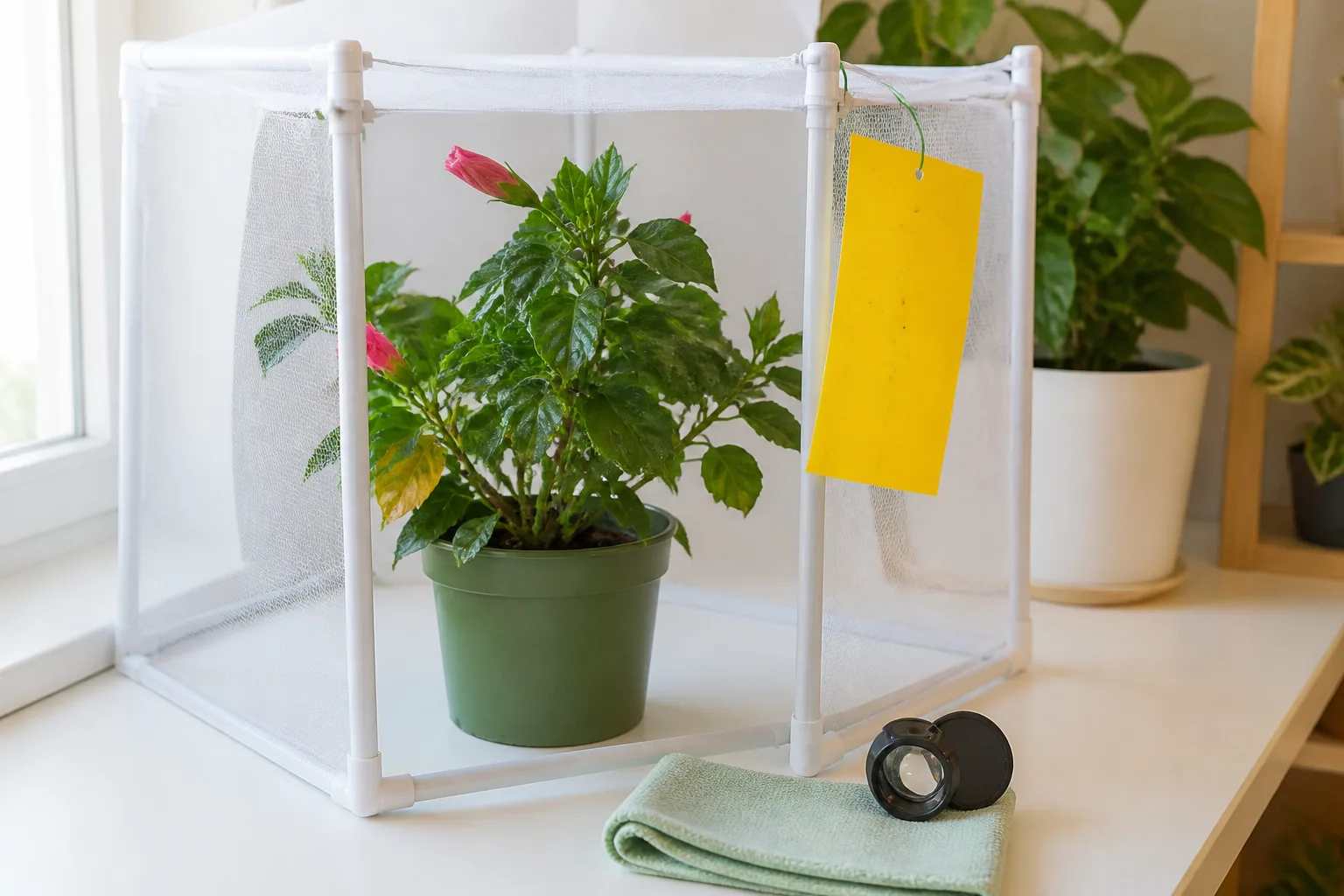
Move affected pots to a quarantine zone — a spare room, bath with a closed door, or a tray away from the main shelf. Slide yellow sticky traps into each infested pot with the card just above the soil line. For fungus gnats, add potato slice checks every few days to see if larval numbers fall (UC IPM).
Label pots with the date you started. Monitoring tells you whether the next step is working instead of guessing from fewer flies on a windowsill.
Step 2: Physical Removal and Dry-Surface Culture
Scrape the top half-inch of soil into the trash if larvae or mealybugs concentrate there — wear gloves and seal the bag. Rinse foliage and stems in lukewarm shower water to knock down crawlers that migrated upward. Scrub the pot rim and outer walls where eggs and crawlers hide.
For fungus gnats, let the top 1 to 2 inches dry between waterings without desert-drying moisture-loving ferns or calatheas. Empty saucers and cachepots so standing water does not extend the wet window (Colorado State Extension). This cultural step alone collapses many gnat populations.
Step 3: Targeted Drenches and Sprays
Fungus gnats: Apply BTI (Bacillus thuringiensis israelensis) as a soil drench per label — products like Mosquito Bits soaked and poured through the pot kill larvae in the top media layers. Repeat roughly every five days because BTI does not persist indoors (Missouri Botanical Garden). Keep sticky traps up for three to four weeks while overlapping generations clear. Full schedules live in how I finally got rid of fungus gnats.
Root mealybugs and root aphids: Use a neem oil soil drench mixed per label, soaking until runoff. Follow with a light foliar neem pass even if leaves look clean — crawlers travel. Reapply at label intervals for at least three cycles. Insecticidal soap drenches help on soft-bodied root aphids but struggle against waxy mealybugs without physical root cleaning.
Scale on roots: Horticultural oil or neem drenches can work on crawlers; mature waxy shells need mechanical removal during repot. Never use the same product on edible herbs without a label that explicitly allows food crops.
Broad indoor aerosols are a poor fit — they miss soil larvae and stress beneficial room air. If you must use pyrethrin sprays for adult fungus gnats, target the soil surface and pot rim only, and move plants outdoors for application when the label allows (UC IPM).
The Bare-Root Repot Protocol When Nothing Else Works
When drenches fail or root pests cover the ball, bare-root repotting is the reset button. Plan an hour per plant and keep trash bags ready.
Water lightly the day before so soil releases without snapping roots. Unpot over a garbage bag, not an open drain — soil clogs plumbing fast.
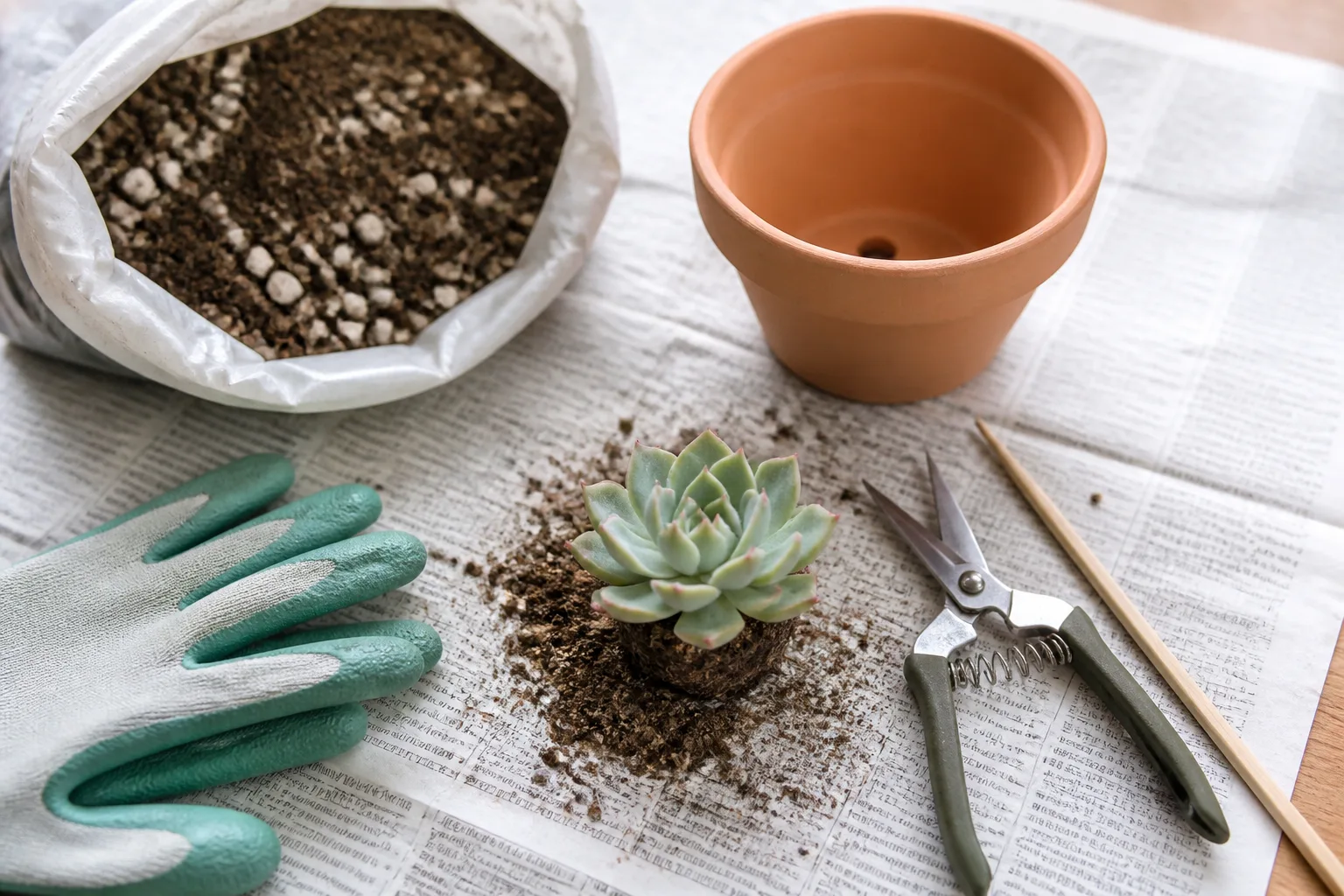 Gently shake off old mix, then work through roots with fingers to remove every visible cottony cluster or scale bump. Rinse roots in a plastic tub of lukewarm water, disposing of rinse water in the trash, not the sink if pest load is heavy.
Let roots air-dry on newspaper for 30 to 60 minutes. Spray with neem drench solution per label, including the stem base. Repot into fresh sterile potting mix — not reused outdoor soil; see can you reuse potting soil for when refresh is safe. Use a new or bleach-sanitized pot (10% bleach solution, rinsed and dried).
Hold fertilizer for two weeks while roots recover. Keep the plant isolated until two clean weeks of sticky-trap and visual checks pass. One missed egg case on an old pot rim restarts the cycle — scrub hardware thoroughly.
Inspect drainage holes and saucer lips after repot; mealybugs and scale crawlers hide in those seams even when roots look clean. Wipe benches and trays with soapy water before setting quarantined pots back on shared surfaces. If you propagate from the rescued plant, take cuttings only after the parent passes monitoring — soil pests ride on stem bases and shared tools.
Conclusion
Tiny white bugs in houseplant soil split into three buckets: beneficial decomposers you ignore, fungus gnat larvae you dry and drench, and root sap-feeders you isolate and either repeat-treat or bare-root. The expensive mistake is spraying first and identifying never — that kills soil mites while mealybugs hide on the pot wall.
Run the movement test, confirm with a lens or potato slice, then climb the treatment ladder one rung at a time. Most fungus gnat problems clear with dry surface culture, sticky traps, and BTI within a month. Root mealybugs demand more patience and often a full repot. When in doubt, quarantine, monitor, and match the fix to the bug you actually have — not the generic “white speck” panic search that brought you here.