How to Get Rid of Fungus Gnats on Houseplants (What Works)
Bottom watering, sand, and peroxide didn't stop my fungus gnats. Sticky traps plus BTI drenches did. Here's the full timeline and what to skip.
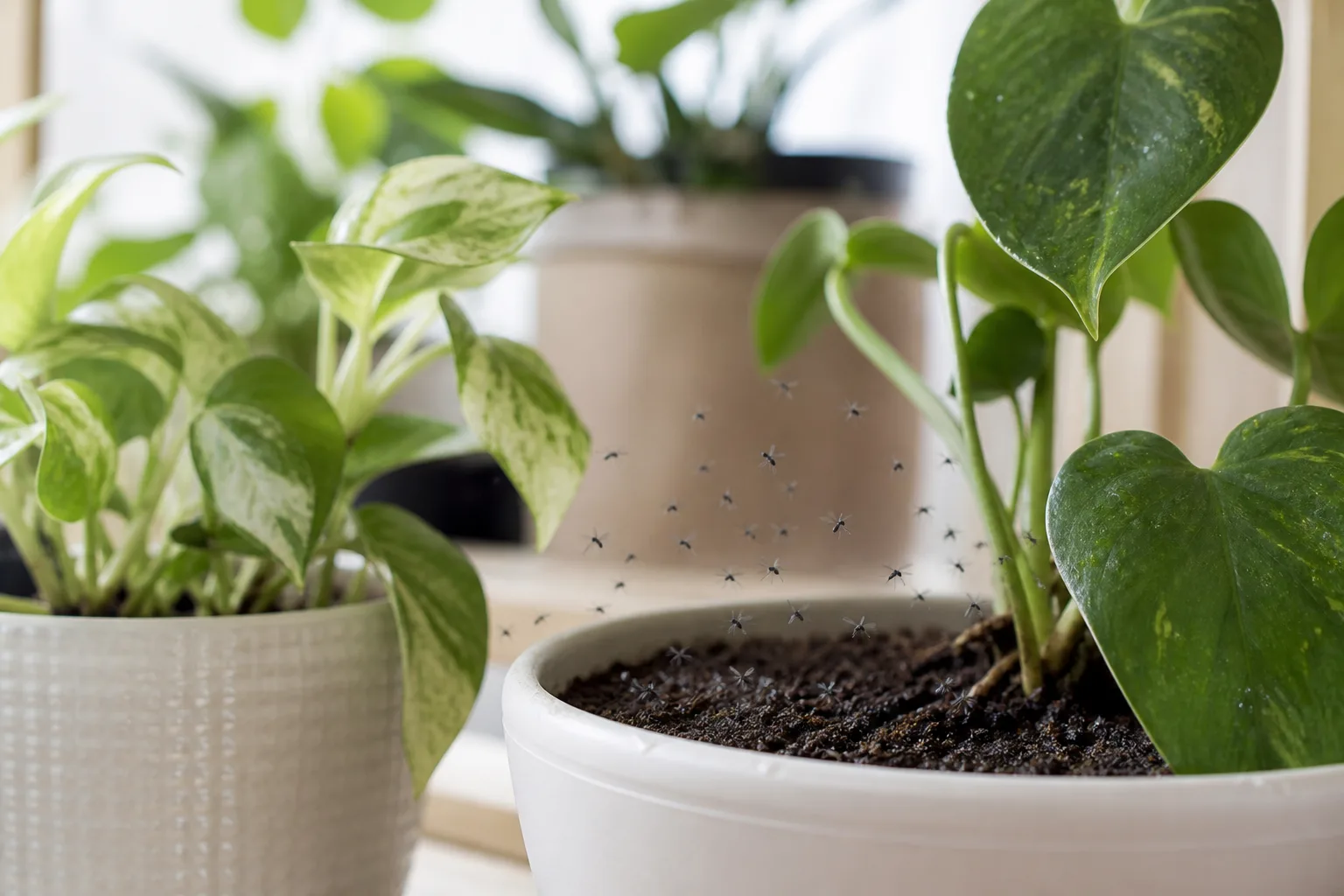
I did not set out to become an expert on fungus gnats. I set out to keep a philodendron alive. Within two weeks of a big repotting session, tiny dark flies were lifting off half my collection every time I watered. I tried the advice that circulates fastest online — dry the soil, bottom water, sprinkle sand, drench with hydrogen peroxide, mail-order nematodes — and the gnats kept winning. What finally worked was less glamorous and more methodical: yellow sticky traps to track adults, BTI drenches to kill larvae, and a four-week schedule I could actually stick to. If you have already thrown money at quick fixes, this is the honest map of what failed for me, what cleared the infestation, and what I changed so it does not come back.
For species ID, larval biology, and a full treatment matrix, see our houseplant fungus gnat guide. This page is the field report — what I tried, in what order, and why some popular shortcuts do not finish the job.
How I Knew It Was Fungus Gnats — Not Fruit Flies or Drain Flies
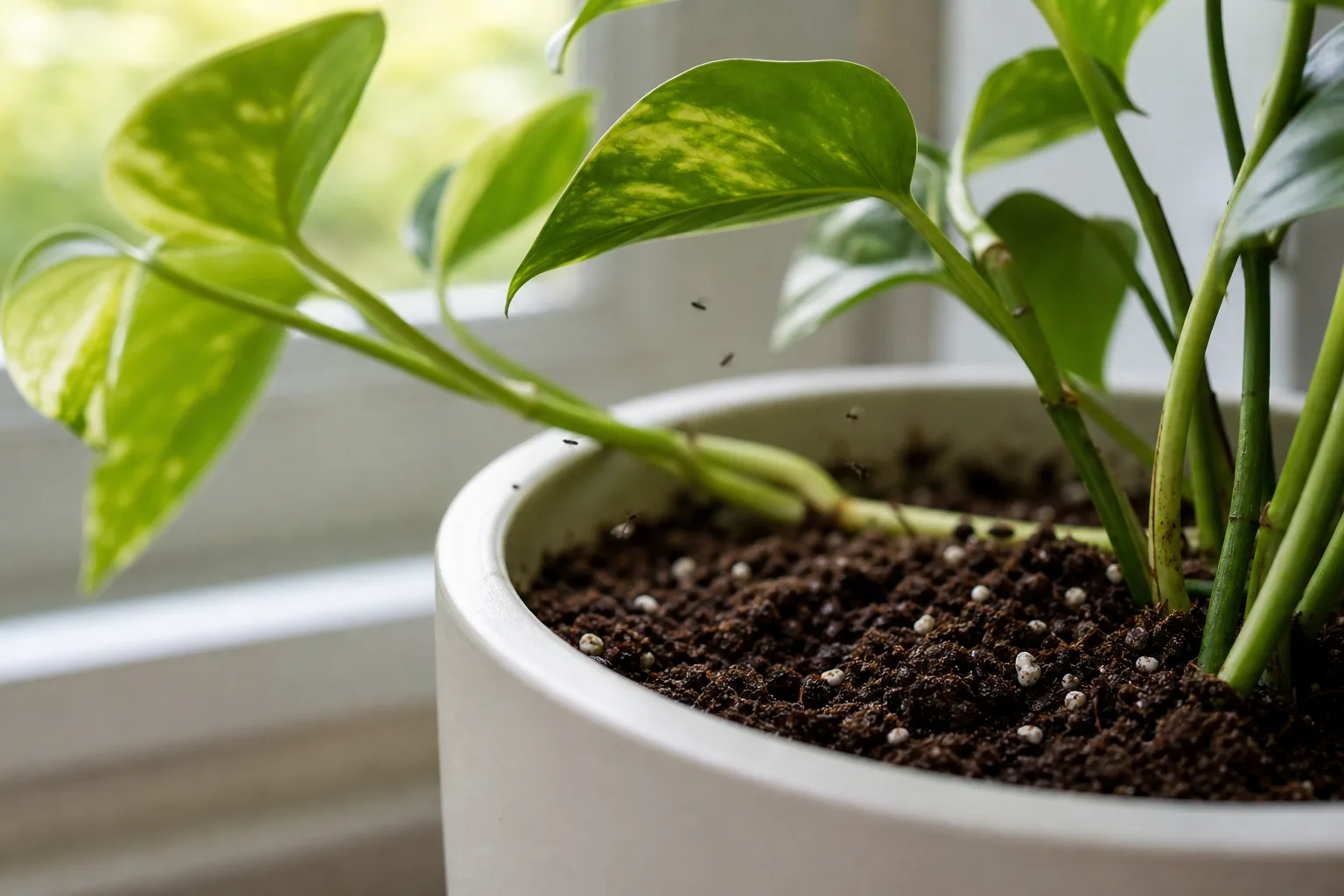
The first mistake people make is treating every tiny fly the same. Fungus gnats are soil breeders. Adults are dark, delicate, and mosquito-like — about 1/16 to 1/8 inch long — with long legs and antennae longer than the head (UC IPM). They are weak fliers. You see them resting on damp potting mix, pot rims, and nearby window glass, not orbiting a fruit bowl.
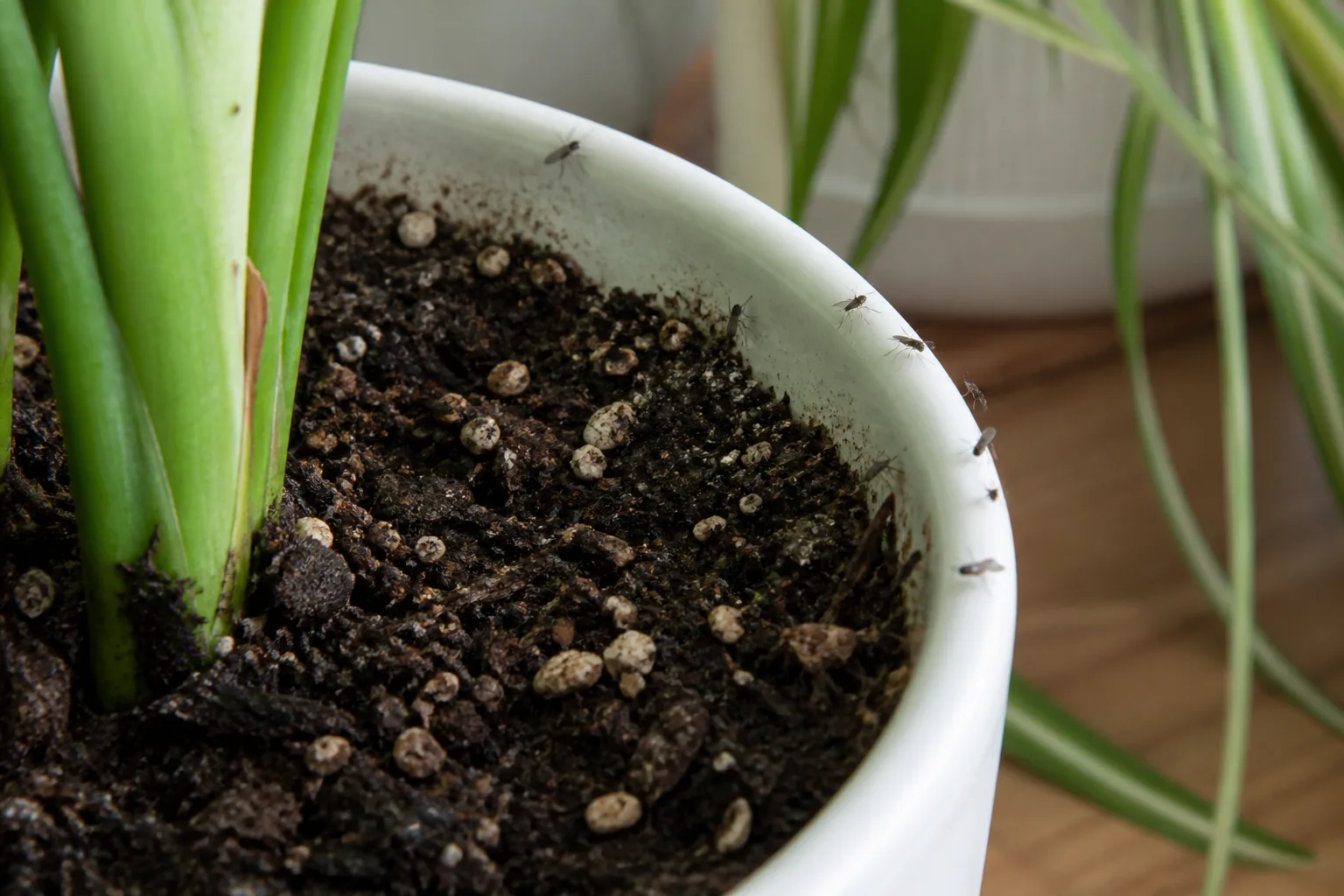
Fruit flies are smoother, often tan or reddish-eyed, and they hover around fermenting produce, trash, and recycling. Drain flies are fuzzy and moth-like; they breed in sink biofilm, not plant soil. If your flies rise from a pot when you disturb the surface, you are in fungus gnat territory. If they orbit the kitchen compost bin, start elsewhere. Our drain fly guide covers that separate problem.
The Telltale Signs Around My Pots
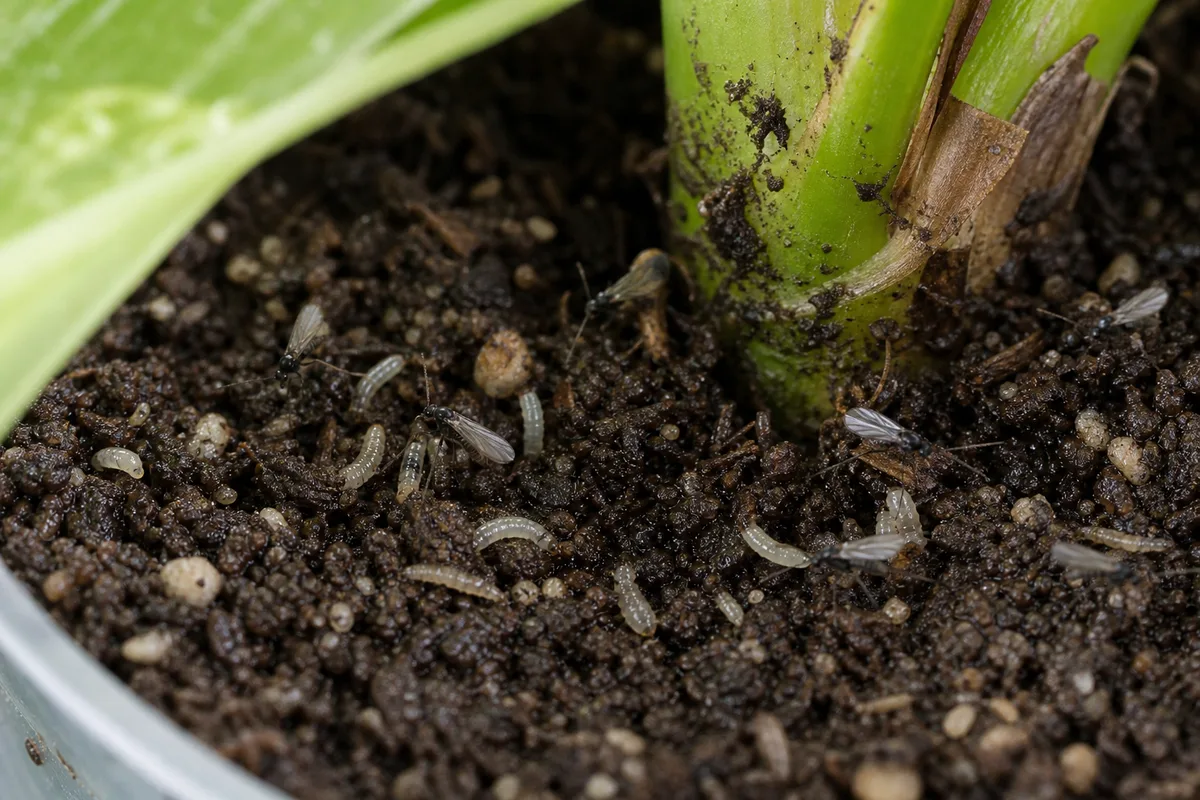
Three patterns confirmed fungus gnats for me. First, flies appeared in a burst when I watered — adults hiding in the top layer scatter upward. Second, they stayed near plants instead of roaming the whole apartment. Third, when I pressed a raw potato chunk cut-side down into the soil for 48 hours and lifted it, I found tiny translucent larvae with shiny black heads clinging to the cut surface. UC IPM recommends that potato test as a simple larval monitor; it told me the population was still active underground even on days when I saw few adults flying.
Adults do not bite people or pets. The plant risk is larval: when numbers climb, larvae chew fine root hairs and organic matter in moist media, which can stunt seedlings and young plants. A wilting plant with wet soil is not always underwatering — it can be root damage plus the chronic overwatering that invited gnats in the first place.
Where My Infestation Probably Started
Fungus gnats usually arrive on damp organic matter — bagged potting soil, unfinished compost mixed into pots, or a new plant that already carried eggs. In my case, two suspects lined up with the timing: a grocery-store philodendron and a batch of compost from a kitchen-scrap collection service I blended into a dozen repots in one afternoon.
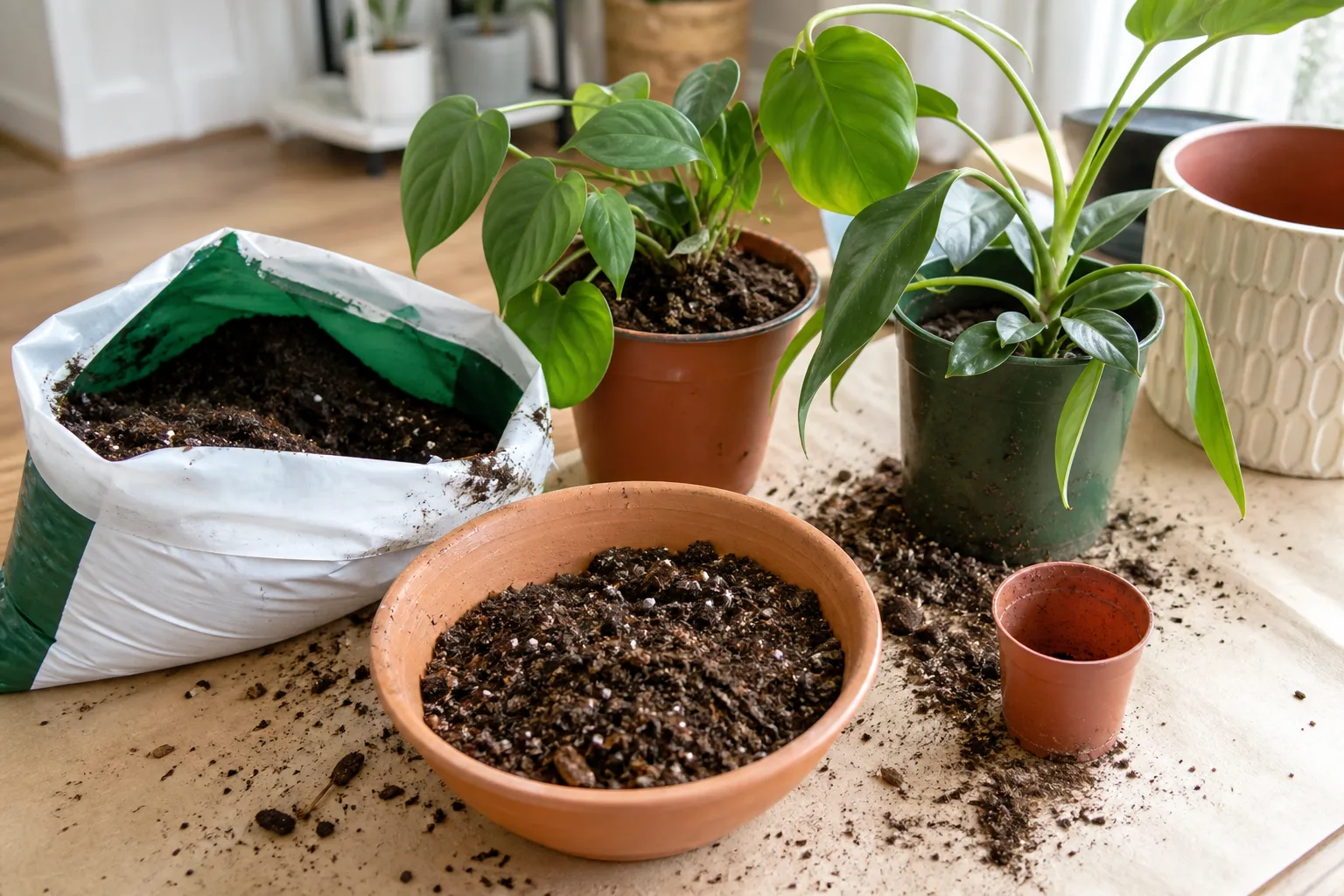
Commercial greenhouses and nurseries often run a low baseline of fungus gnats; a stressed bargain plant can harbor eggs you never see until you water at home. Compost that is not fully finished or pasteurized is classic fungus gnat habitat — fungi, algae, and decaying organics in a consistently moist top layer. UC IPM warns that incompletely composted organic matter in potting media often arrives already infested unless it has been heat-treated first.
New Plants vs. Contaminated Potting Mix
You rarely get a definitive origin story. What matters operationally is assume either source until proven clean. I now treat every new plant and every opened bag of mix as potentially contaminated. That single mindset shift explains more prevention success than any spray I bought.
If one pot is heavily infested and the rest are moderate, isolate the worst offender. Moving plants around while adults are flying spreads the problem. In severe cases, discarding a cheap starter plant is cheaper than months of retreatment across a collection.
Why Most Quick Fixes Fail (The Lifecycle Nobody Mentions)
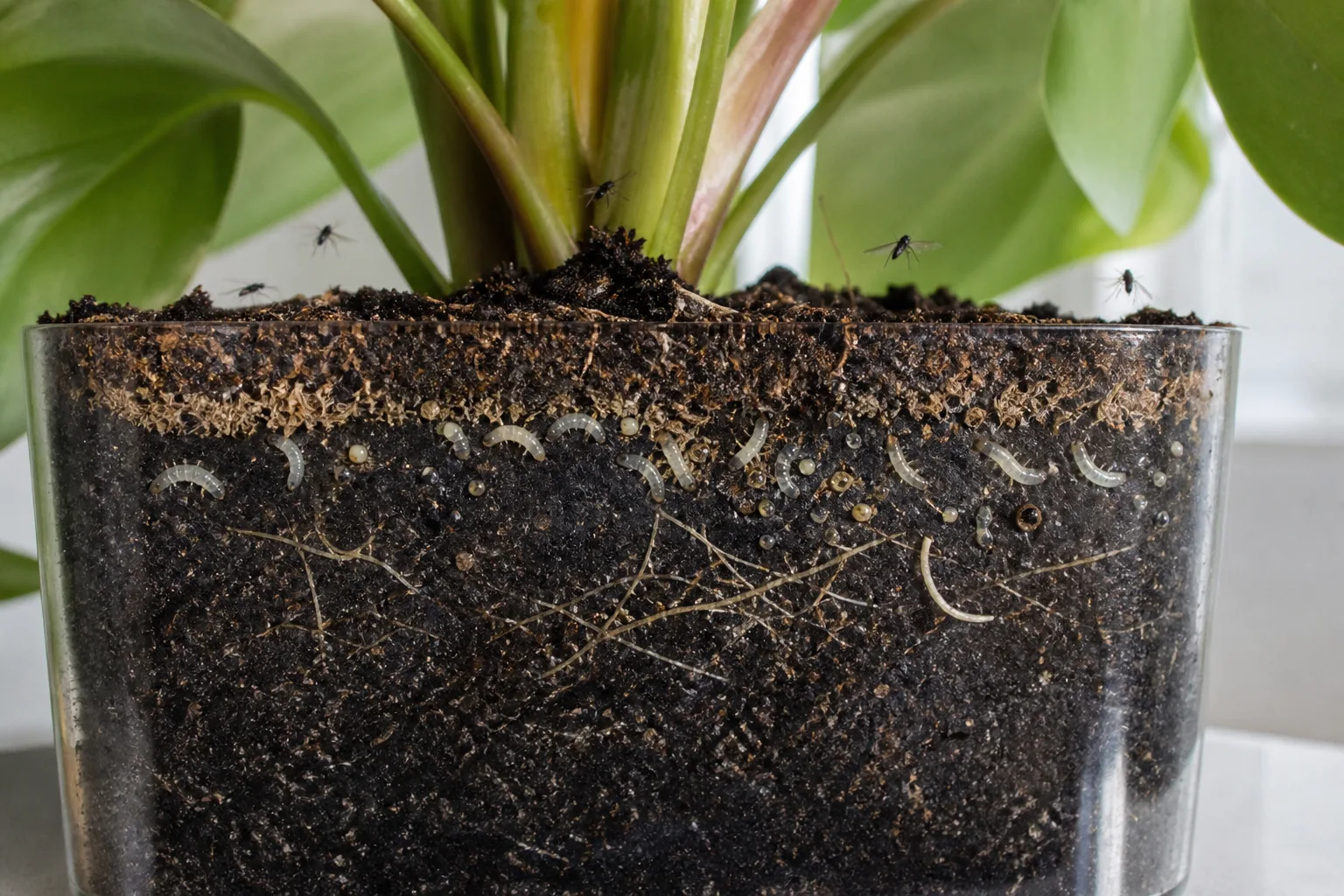
Most online advice targets adults because adults are what you see. The infestation lives in the soil as eggs, larvae, and pupae. Adults are short-lived; larvae do the long work of feeding in the top few inches of moist mix. Kill adults today and new ones emerge from pupae later this week.
Eggs, Larvae, and Adults in Overlapping Waves
At about 75°F, UC IPM notes a generation can complete in roughly 17 days — egg to egg-laying female. In a heated apartment, overlapping generations mean you always have immature stages developing even when sticky traps look quieter. That is why a one-time drench or one week of dry soil rarely clears a established infestation.
The life cycle runs egg → larva (four instars) → pupa → adult. Females lay in moist organic debris. Larvae feed on fungi, algae, and root hairs. Pupae wait in the media until adults emerge. Effective control hits larvae in the soil and prevents new eggs while you knock down adults. Cultural changes — drying the surface, better drainage — shrink habitat. Biological tools — BTI or, in the right conditions, nematodes — kill larvae directly. Traps catch adults and tell you whether the underground population is still producing flyers.
What I Tried First — And Why It Didn’t Work
I went through the greatest hits in roughly the order they appear in social media threads. Each method has a kernel of truth. None finished the job alone for me.
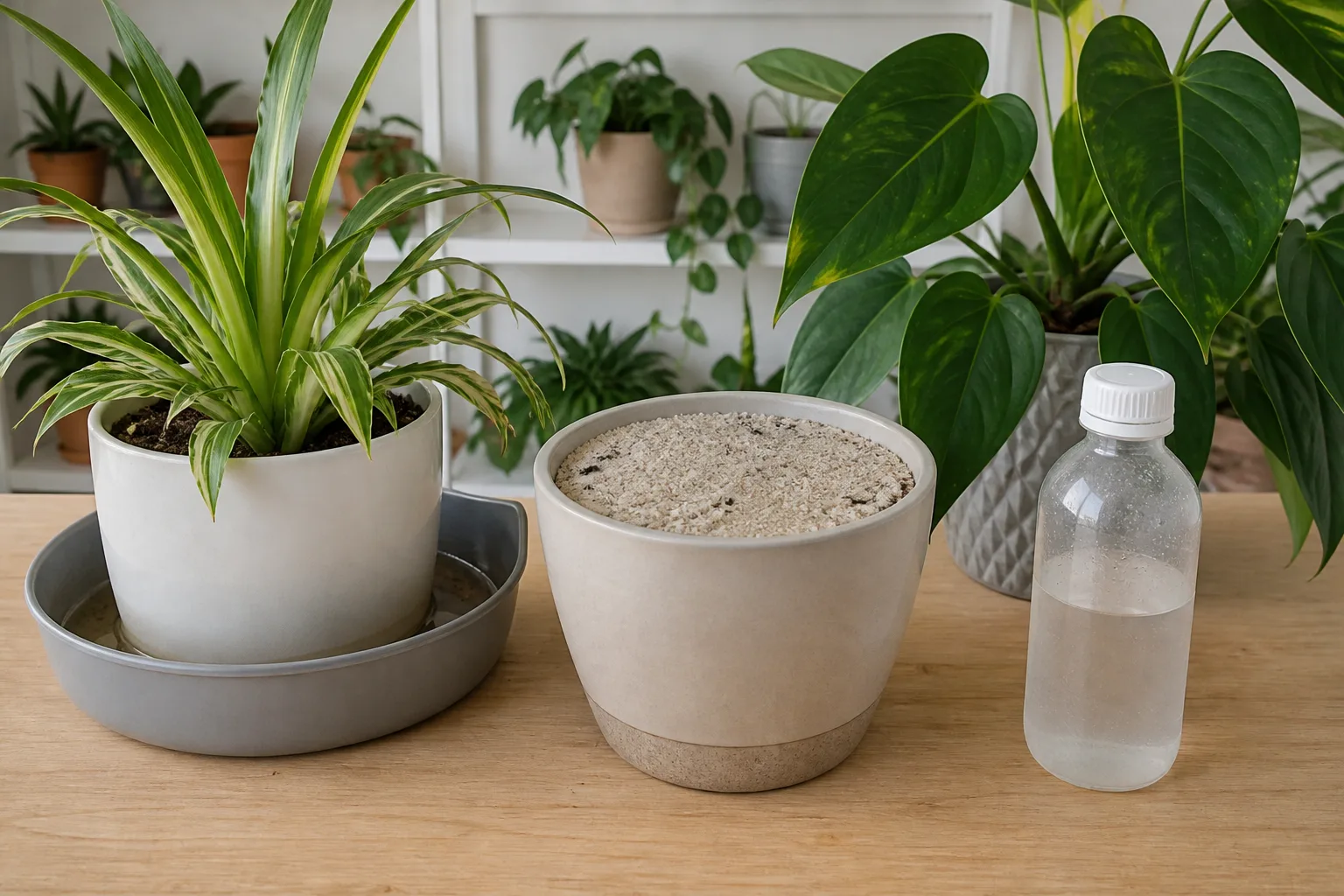
Bottom Watering Alone
Fungus gnats prefer a wet top layer where females lay eggs. Bottom watering — setting pots in a tray so roots pull moisture up while the surface stays drier — is sound cultural advice. Oklahoma State University Extension recommends it alongside letting the top inch dry between waterings.
I switched my tolerant plants to bottom watering and let the surface dry on my philodendrons. Adult counts dipped slightly. Two weeks later, potato tests still showed larvae. Bottom watering reduced new egg laying; it did not kill larvae already in the mix. For ferns and other moisture-loving plants that cannot tolerate a dry surface for long, bottom watering alone was even less decisive.
Hydrogen Peroxide Drenches
The 3% hydrogen peroxide drench is everywhere: one part peroxide to four parts water, soak the soil, kill larvae on contact. I tried it on the worst philodendron. The plant looked fine. The gnats looked fine too.
Peroxide can kill some larvae near the surface and may damage beneficial soil biology with repeated use — the trade-off that made me nervous about treating my whole collection. Extension sources treat peroxide as a occasional tool, not a complete program. Without repeats timed to the life cycle and without adult knockdown, peroxide left pupae and deeper larvae to restart the cycle. I shelved it after one round.
Sand Barriers on the Soil Surface
A shallow layer of coarse sand is supposed to turn the top of the pot into a fast-draining desert with no organic matter for egg laying. I tried it on three plants. Gnats persisted. Sand slid into the saucer every time I watered. Aesthetically, my plants looked like beach souvenirs.
Sand can slow surface moisture briefly. It does not eliminate larvae already below, and determined females sometimes lay at stem crevices or pot edges. For me, sand was mess without metrics — no way to know if it was working until flies returned.
Beneficial Nematodes
I was genuinely hopeful about Steinernema feltiae, the nematode species UC IPM identifies as most effective against fungus gnat larvae. Nematodes enter larvae and release bacteria that kill them. Mail-order tubes arrive live; you mix with water and drench immediately.
I applied to every pot per label directions. Flies continued. Looking back, several factors probably undermined results: media too dry on application day on some pots, temperature below the 60–90°F window nematodes need, and no follow-up applications to establish reproducing populations. Nematodes can work well in greenhouses with consistent moisture; in a home collection with mixed watering habits, they are less forgiving than BTI for beginners. I do not count nematodes as useless — I count my execution as incomplete.
The Combination That Finally Broke the Cycle
Success came when I stopped searching for one magic bullet and ran a two-part program: traps to monitor and reduce adults, BTI to kill larvae, plus the cultural changes I should have started with — drier surface, no raw compost top-dressing, quarantine for new plants.
Yellow Sticky Traps as My Progress Dashboard
Yellow sticky traps do not cure an infestation. They do three jobs well: catch adults, reduce egg laying, and show whether your larval treatment is working. UC IPM recommends cutting traps into smaller squares, mounting them on skewers, and placing them at soil level in each pot.
I used two small yellow squares per shelf — roughly one per affected pot cluster. During week one, traps filled fast — dozens of adults daily. By week three, I counted single digits per trap per week. That downward slope was the proof BTI and drying were hitting larvae, not just recycling adults.
Treat trap counts like a chart, not a scoreboard. A spike after watering is normal. A flat line near zero for two consecutive weeks is clearance criteria.
BTI Drenches for Larvae in the Soil
Bacillus thuringiensis israelensis (BTI) is a naturally occurring soil bacterium that kills fly larvae — fungus gnats, mosquitoes, and black flies — without harming people, birds, mammals, fish, or most beneficial insects when used as labeled (Maryland Department of Agriculture BTI fact sheet). Retail products include Mosquito Bits and Gnatrol. BTI is EPA-registered; follow package directions.
Critical detail most guides bury: BTI does not reproduce or persist long indoors. UC IPM notes infested potting media may need repeat applications at about five-day intervals. One drench is a start, not a finish. Also, caterpillar Bt (different subspecies) will not work on fly larvae — check the label for Bacillus thuringiensis israelensis.
I soaked Mosquito Bits in warm water per label rate, let them sit until the water took on a brown tint, then drenched each pot until liquid ran from drainage holes. Three application rounds, spaced five to seven days apart, across four weeks. After the second round, potato tests showed fewer larvae. After the third, adults were rare.
Some growers mix bits into the top layer of soil instead of drenching. That works if you replace or refresh bits as they lose activity. I preferred drenches because I could see saturation and repeat on a calendar.
My Four-Week Treatment Schedule (Copy This)
This is the schedule I would run again on a typical home collection of 10–20 pots. Adjust plant-by-plant for drought tolerance; do not desert-dry moisture lovers.
Week 1 — Setup and first strike. Isolate the worst pots. Insert yellow sticky traps at soil level on every affected shelf. Let the top 1–2 inches of mix dry on each plant that can tolerate it. Apply first BTI drench to all infested pots. Run potato slice tests on three representative pots; photograph results so you can compare later.
Week 2 — Repeat and read traps. Second BTI drench on day 5–7. Replace traps when they are coated or every 7–10 days. Log adult counts per trap. Continue surface-dry watering cycles; bottom water thirsty plants. Re-test potato slices on the same pots.
Week 3 — Third drench and confirmation. Third BTI application. Trap catches should be noticeably lower. If potato tests still show many larvae, add a fourth drench in week 4 — do not quit early because adults look scarce. Pupae already in soil keep hatching for days.
Week 4 — Clearance and prevention. Fourth BTI drench only if monitoring warrants it. Clearance standard: near-zero trap catches and clean potato tests for 14 days. Remove traps or leave one per shelf as an early-warning monitor. Start quarantine protocol for any new plant. Switch to pasteurized potting mix; stop mixing unfininished compost into indoor pots.
Total calendar time: three to four weeks minimum for most homes. Heated rooms with constant moisture can run longer. Patience is cheaper than replacing plants.
Prevention Habits I Changed After the Infestation
Clearing gnats taught me the infestation was a moisture and media problem wearing a fly costume. Prevention is mostly habitat denial.
Quarantine Rules for New Plants
Every new plant spends three weeks in quarantine — separate room or rolling cart away from the main collection — with its own yellow sticky trap at soil level. I inspect leaves and soil surface on arrival, avoid repotting immediately unless drainage is clearly broken, and only merge the plant after two clean weeks of trap and potato monitoring. Grocery-store and big-box plants get the same protocol as rare cuttings. Price does not correlate with pest-free.
Potting Mix and Watering Choices That Reduced Repeat Outbreaks
I stopped amending indoor pots with raw compost. I use commercial potting mix labeled pasteurized or treated, stored sealed off the floor. Some mixes now include biofungicide and beneficial mycorrhizae — they support healthy roots without the wet decomposition layer unfinished compost creates.
Watering changed from calendar-based to finger-test-based, especially in fall and winter when evaporation drops. Saucers do not hold standing water overnight. Cachepots without drainage are gone from my high-risk shelves. Overwatering is the habit fungus gnats reward most; see our things killing houseplants guide for the seasonal watering traps that make soil stay wet too long.
I keep a small bottle of pre-soaked BTI solution in the cabinet during winter and drench any pot that shows a trap spike — one preventive round beats a full-collection outbreak.
Conclusion
Fungus gnats are not a moral failing. They are a predictable outcome of damp organic soil, overlapping life stages, and advice that targets flying adults while larvae keep developing underground. Bottom watering, peroxide, sand, and a single nematode application did not clear my collection. Yellow sticky traps plus repeated BTI drenches, timed to a five-to-seven-day larval cycle, with a drier soil surface and strict quarantine for new plants, did.
If you are mid-infestation, start today: traps in every affected pot, first BTI drench, top inch dry on what your plants can handle, potato test for baseline. Run the four-week schedule before you declare defeat or reach for broad indoor sprays. For full ID photos, shore-fly confusion, and product-rate details, keep our fungus gnats on houseplants guide bookmarked — and change the watering and mix habits that invited the flies in the first place.