Houseplants to Never Move Outdoors in Summer
Moving houseplants outside in summer helps many tropicals grow—but five categories do better indoors. Learn which plants to keep inside and why.
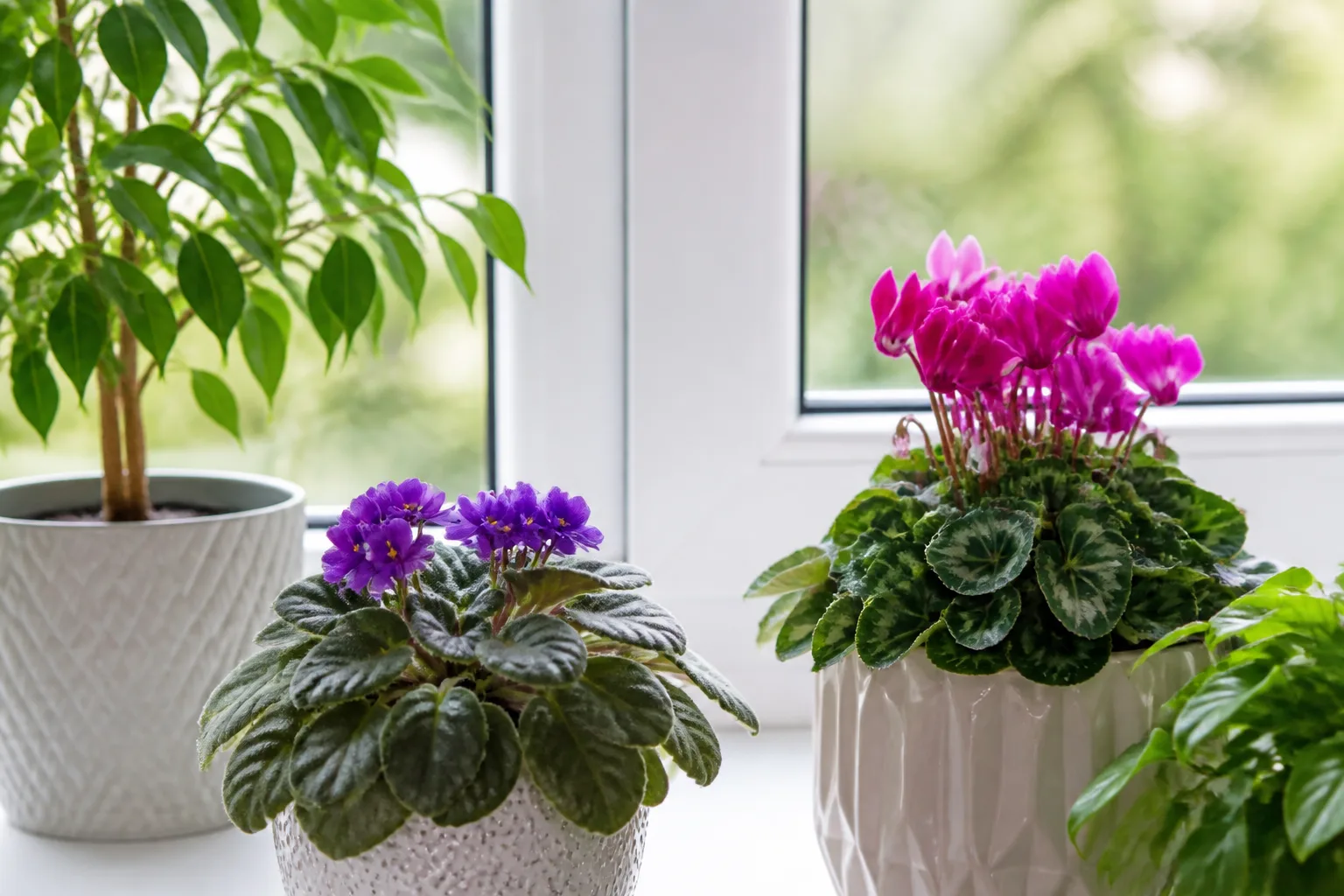
Your monstera might love a humid porch. Your pothos may double in length by Labor Day. But the glossy African violet on your kitchen windowsill? That one earns more from stability than from a summer “vacation.” Moving houseplants outdoors is one of the best growth tricks in indoor gardening—when the plant, the pot, and the forecast align. When they do not, you trade a tidy windowsill for sun-scorched leaves, a crown-rot mess, or a tree that no longer fits through the door.
Professional growers and extension educators agree on the broad pattern: tropical foliage often thrives with brighter outdoor light, stronger air movement, and summer humidity (Gardening Know How). They also agree on the guardrails—wait until night temperatures stay reliably above 55–60°F (12.8–15.5°C), acclimate gradually, and match each species to shade or sun. This guide focuses on the other side of that coin: five houseplant categories that usually lose more than they gain outdoors, even if you harden them off patiently.
When Summer Outdoors Helps—and When It Backfires
Outdoor summer conditions turbocharge many houseplants. Brighter light (even in dappled shade) drives photosynthesis. Gentle breeze thickens stems and reduces stagnant-air fungal issues. Natural humidity can knock back spider mites that plague dry indoor winters. Flowering plants often push buds they withheld indoors.
The backfire happens when you treat “outdoors” as a generic upgrade. Outdoor light is not brighter indoor light—it is a different spectrum and intensity. A spot that feels like “bright shade” on your patio can still exceed what a ficus tolerated six feet from a west window. Rain is not a gentle watering can—it is repeated saturation. Wind is not a fan on low—it snaps fuzzy leaves and topples top-heavy pots. And temperature swings between a hot afternoon and a cool night stress plants that spent months in stable indoor air.
The honest split: move the tough tropicals that acclimate well and stay manageable—many philodendrons, pothos, bromeliads, and ferns after hardening off (Epic Gardening). Keep inside the specialists whose leaves, roots, or life cycle depend on tight environmental control. The five categories below are the repeat offenders.
The 60-Second Decision: Should This Plant Stay Inside?
Before you haul pots to the porch, run this filter. If you answer “yes” to any line in the stay-inside column, pause.
| Question | If yes → lean outdoors (with acclimation) | If yes → lean stay inside |
|---|---|---|
| Night lows consistently above 55–60°F for two weeks? | Proceed with hardening off | Wait—cold shock risk |
| Pot has drainage holes and fast-draining mix? | Rain risk is manageable | Fix pot first—or keep inside |
| Leaves are thick, waxy, or sun-adapted? | Easier outdoor transition | Thin, fuzzy, or shade-adapted foliage |
| Plant is compact and will fit indoors again in fall? | Space OK | Already fills the corner ceiling |
| Species is in active cool-season growth? | Summer often helps | Heat triggers dormancy or decline |
| You can check water daily outdoors? | Outdoor drying is OK | Needs precise, stable moisture |
Night Temperatures and the Outdoor Window
The most common early mistake is moving plants out during the first warm weekend, not the first warm pattern. Gardeners who track forecasts hold pots inside until overnight lows stay above 55–60°F and cold snaps are unlikely (Gardening Know How). A single 45°F night will not kill every tropical, but it will shock African violets, cyclamen, and thin-leaf ficus—exactly the plants this article protects.
Drainage, Leaf Type, and Size Checklist
Drainage matters more outdoors because you cannot control volume or timing of rain. Leaf type predicts sun and wet-leaf tolerance: fuzzy African violet foliage hates extended wetness; thin ficus leaves transpire fast and scorch easily. Size is a logistics problem—outdoor summer often triggers a growth spurt you cannot undo before frost.
Five Houseplants That Usually Do Better Indoors All Summer
These are not “never outdoors under any circumstances on Earth.” They are default stay-inside choices for typical U.S. and U.K. summer patios—the cases where the risk/reward math favors the windowsill.
African Violets
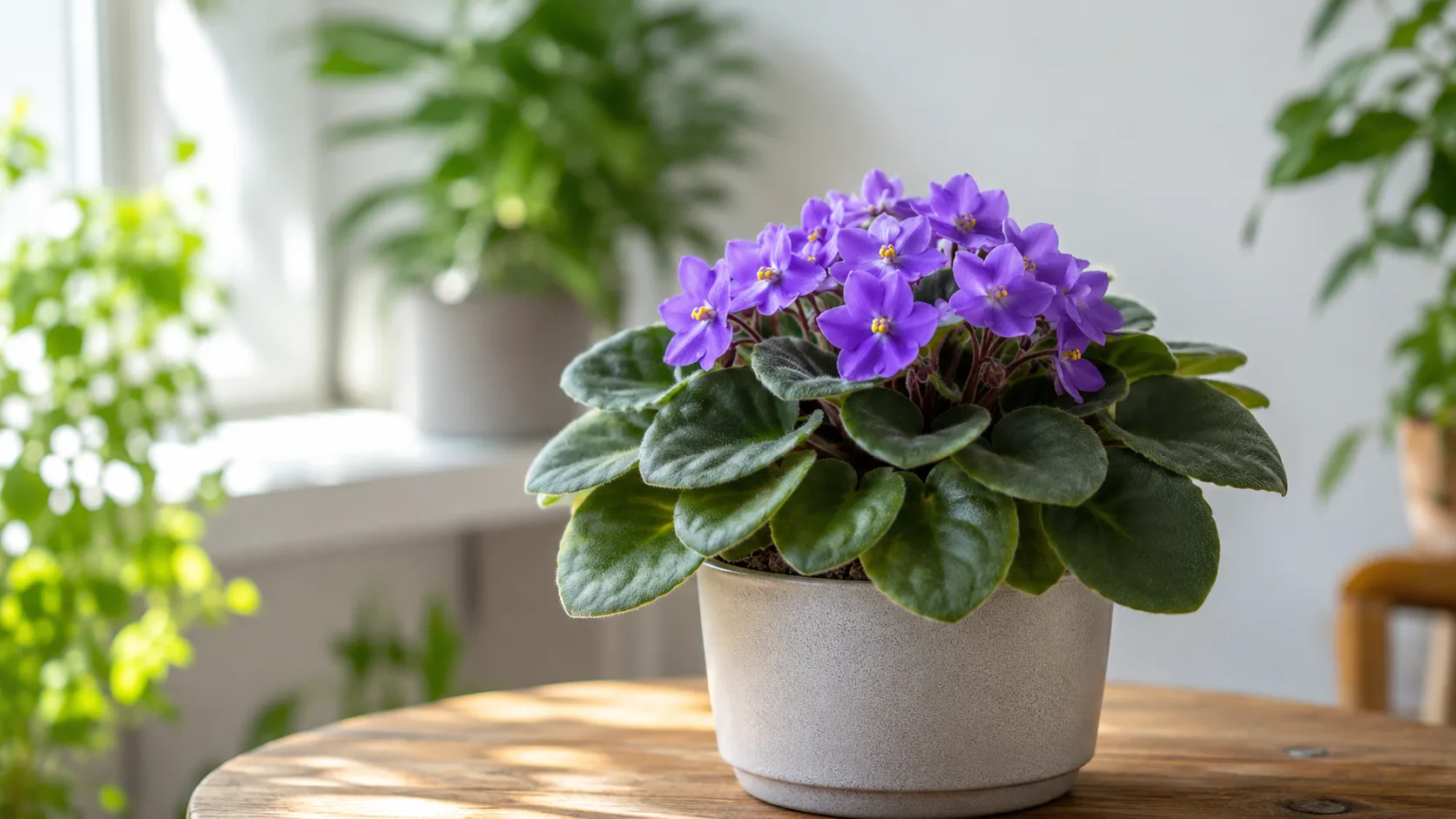
African violets (Streptocarpus ionanthus, still sold under the old Saintpaulia name) are engineered for interior culture. NC State Extension notes they are rarely grown outdoors, preferring bright filtered light, steady moisture, and high humidity without wet crowns (NC State Extension). Their pubescent leaves hold water like tiny sponges—fine indoors if you water from the bottom and keep foliage dry, problematic outdoors where overnight dew, summer storms, and overhead watering invite crown rot, botrytis, and water-spot rings.
Heat is the second strike. African violets want moderate, stable temperatures—not the baking dry air of a south-facing patio or the oven-like microclimate beside a brick wall. Outdoors they dry faster, need constant monitoring, and still get damaged by wind that shreds small crowns. Epic Gardening’s outdoor houseplant list explicitly excludes African violets because conditions are “so specific that any slight change can wreak havoc” (Epic Gardening).
Better summer plan indoors: an east or filtered west window, bottom watering when the top inch is dry, a pebble tray or humidifier if AC runs cold and dry, and quarter-strength fertilizer only while actively blooming. For species-specific care, see our African violet overview.
Thin-Leaf Ficus Varieties
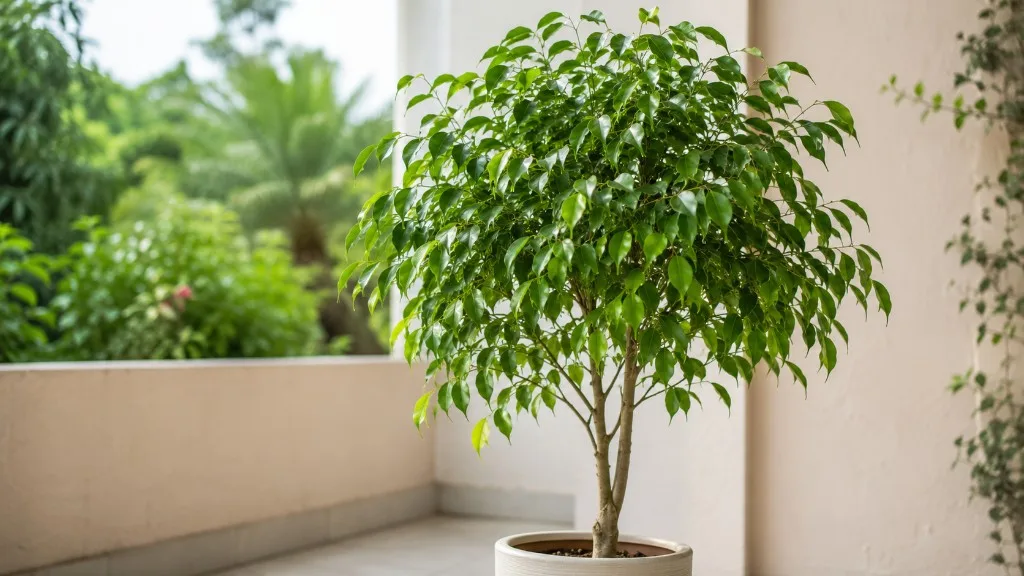
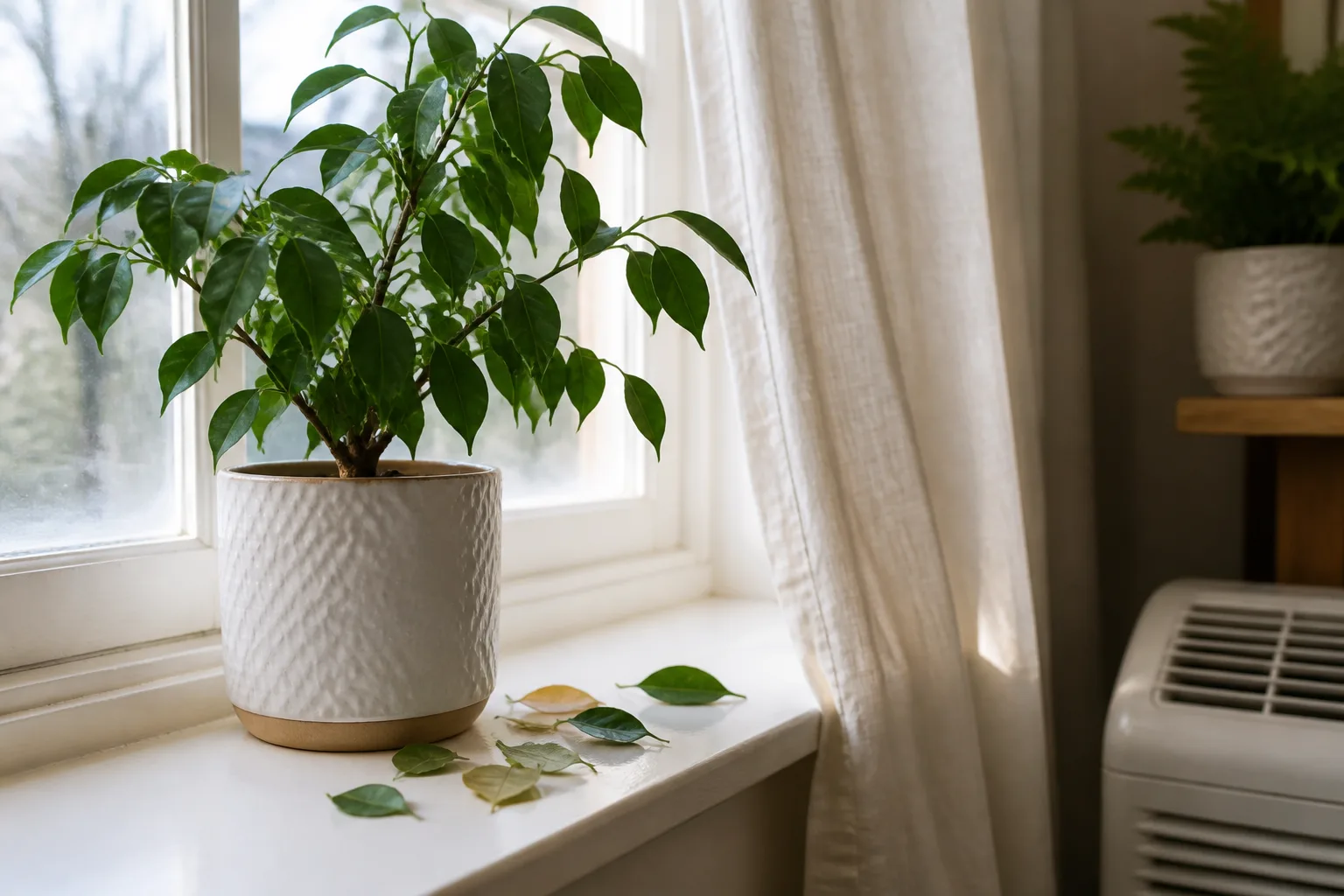
Weeping fig (Ficus benjamina), fiddle-leaf fig (F. lyrata), and other thin-leaf ficus houseplants are famous for one outdoor outcome: leaf drop. Indoors they tolerate a narrow band of light and humidity. Outdoors—even in shade—the jump in light intensity, wind, and temperature swing reads as an emergency. The plant sheds leaves to reduce water loss while it rebalances.
Slow acclimation helps some ficus species some of the time: start in deep shade for days, add an hour of morning light at a time, avoid wind, and expect partial defoliation anyway. You must repeat the process in reverse before frost—another shock event. For a ficus that already looks good indoors, the aesthetic cost often exceeds the growth benefit.
If your ficus is struggling indoors, fix the indoor constraint first—usually light or erratic watering—not patio relocation. Our ficus benjamina care hub covers stable placement (ficus hate being moved even within a room). Reserve outdoor experiments for tough, well-drained specimens you can afford to look ugly for a month—not your living-room showpiece.
Gift Cyclamen Still in Active Growth
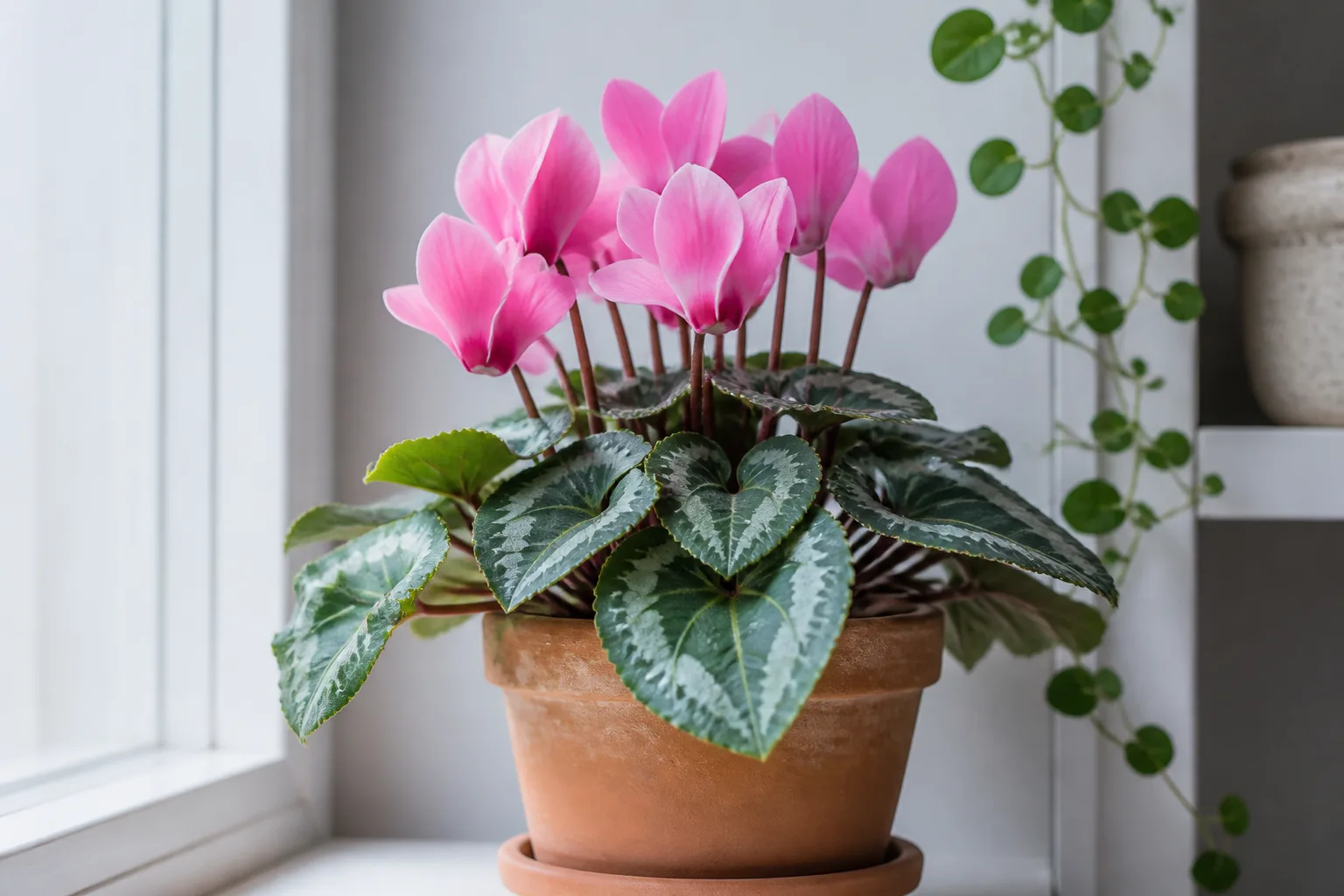
Florist cyclamen (Cyclamen persicum) is a cool-season plant sold in winter holidays, not a summer patio annual. While actively growing and blooming, it wants cool, bright, stable conditions—think 55–68°F (13–20°C) with good air flow and evenly moist (not soggy) soil. Summer heat tells cyclamen dormancy time: foliage yellows, the tuber rests, and watering mistakes during that transition cause tubers to rot.
Moving cyclamen outdoors in July combines every trigger at once: heat stress, rain splash on leaves, stronger light, and irregular drying cycles. Even a shaded porch often exceeds cyclamen’s heat ceiling on hot afternoons. If your gift cyclamen is still handsome in June, keep it in the coolest bright room you have—north or east window, away from AC vents that blast dry air directly on leaves. Water when the top quarter of the mix feels dry; when growth slows, taper water and keep the pot slightly dry through dormancy, then resume as new leaves emerge in fall.
There is no cyclamen hub on LeafyPixels yet; treat this as a seasonal indoor plant, not a summer relocation candidate.
Already-Oversized Statement Plants
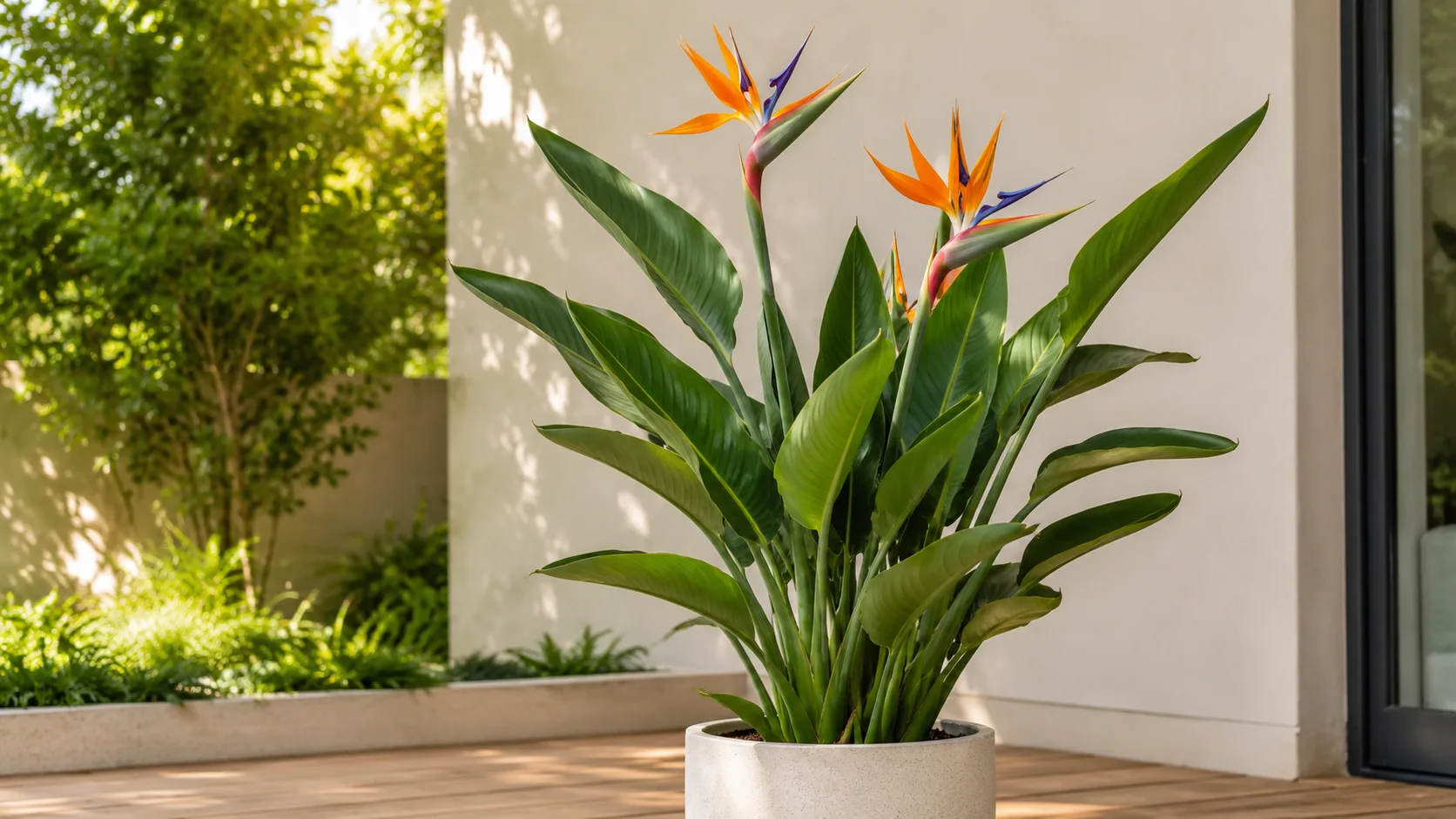
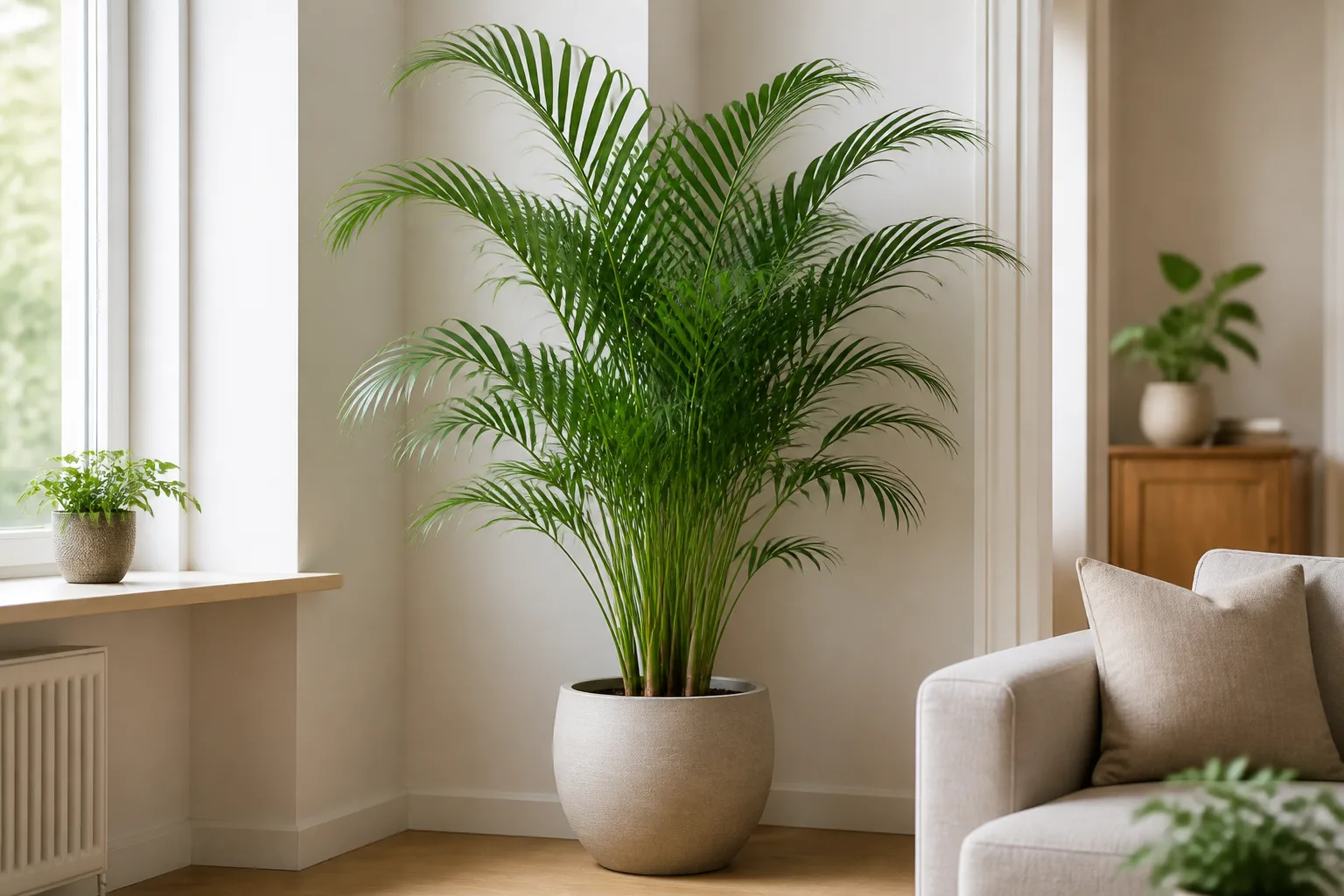
Extra-large houseplants—bird of paradise (Strelitzia spp.), mature ficus, big palms, and ceiling-height monstera—can grow ** explosively** outdoors in summer. That sounds like a win until you measure the doorway in October. Bird of paradise in particular does not respond well to hard pruning; you cannot easily shrink it back to last year’s footprint. A plant that barely cleared the ceiling in May may require two people and a tilt to re-enter in September.
Outdoor growth also shifts root mass and leaf span simultaneously. Re-potting a 6-foot specimen in fall is a project most indoor growers underestimate. If the plant already performs its job—filling a corner, framing a window, anchoring a room—leave it there and improve light or rotation indoors instead. For bird of paradise specifics, see our bird of paradise care guide.
Exception: If you have permanent outdoor frost-free space and a plan for the mature size, large tropicals can live outside year-round in zones 10–11. This article targets the summer vacation crowd in temperate climates.
Anything in a Pot Without Drainage
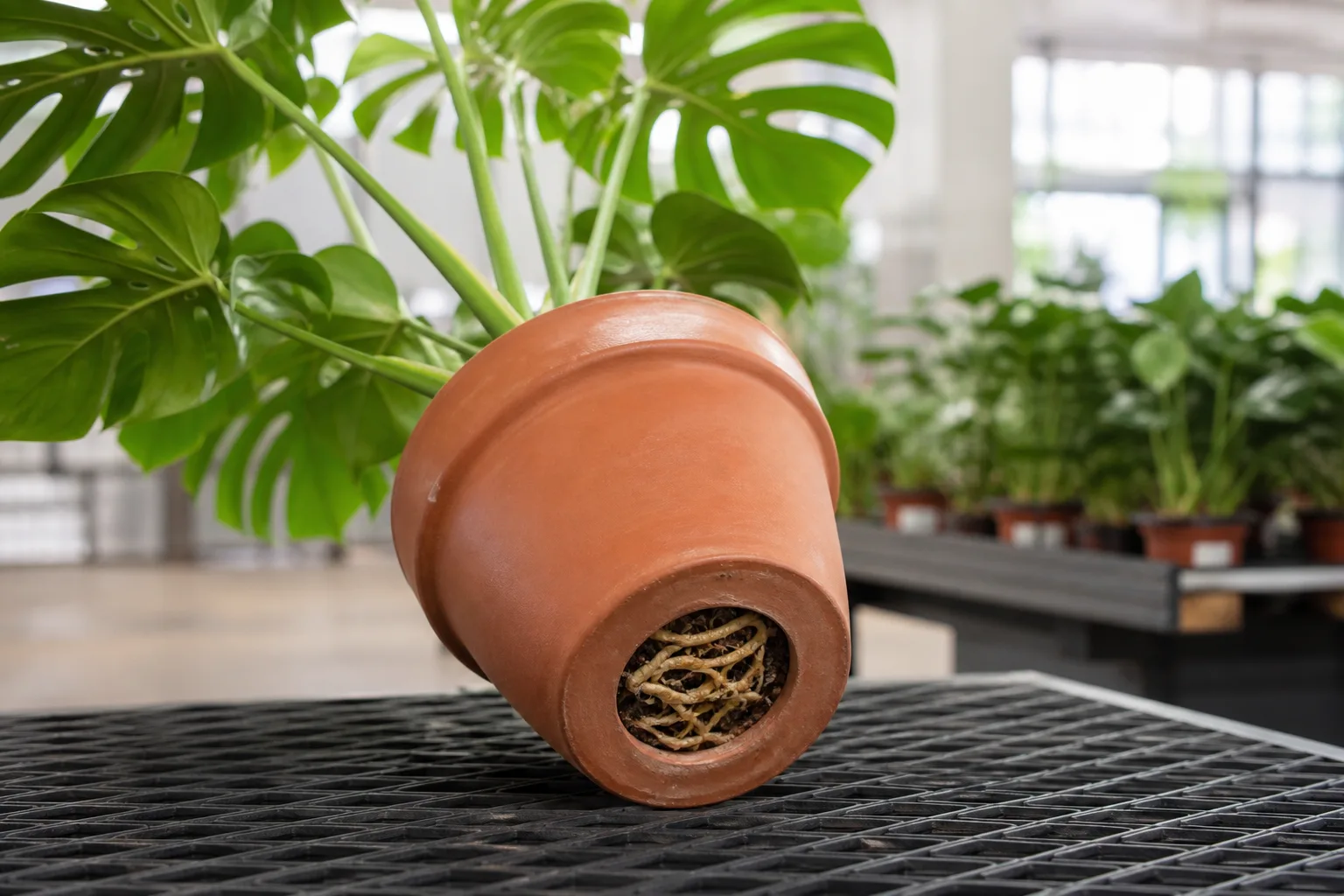
Decorative pots without holes—cachepots, sealed ceramic bowls, “self-watering” gimmicks with blocked exits—are risky indoors and dangerous outdoors. Indoors you control volume and timing. Outdoors, a single thunderstorm can fill a sealed container, drowning roots and anaerobic soil within hours. Extension educators and production growers treat drainage as non-negotiable for container culture; outdoors it becomes an insurance policy against unpredictable rain (Gardening Know How).
If you love the outer pot, use nursery pot + cachepot indoors and never let the inner pot sit in collected water. Before any outdoor season, drill holes or repot into porous terracotta with saucers emptied after rain. No drainage fix? The plant stays inside—and you water on a schedule you control.
What Actually Goes Wrong Outdoors
Knowing the failure modes clarifies why the five categories above stay indoors.
Sun Shock and Leaf Scorch
Sun scorch shows up as bleached white or tan patches, crispy margins, or leaves that look fine at noon and collapse by evening. It hits shade-adapted houseplants moved to “only morning sun” that is still stronger than their winter window. Scorch can occur in 48 hours—before acclimation finishes. Thin-leaf ficus and African violets scorch fast; recovery is slow and sometimes cosmetic only.
Rain, Wind, and Physical Damage
Rain saturates mixes repeatedly, splashes soil-borne pathogens onto fuzzy leaves, and breaks delicate flower stems. Wind tears cyclamen petals, knocks over tall narrow pots, and desiccates thin leaves even when soil is wet. Hail and debris punch holes you cannot un-grow. Indoors, none of that runs on autopilot.
The Acclimation Myth: Why “Slow” Still Stresses Some Plants
Hardening off—shade first, short outdoor visits, gradual light increases—is essential for plants you do move out (Gardening Know How). It is not a cure-all. Acclimation reduces shock; it does not rewrite biology. African violets still hate wet crowns. Cyclamen still enter dormancy in heat. Ficus still drop leaves when night lows swing. Drainage-free pots still flood.
Treat acclimation as risk reduction for suitable species, not permission to move unsuitable ones. If a plant fails the decision table in the stay-inside column, do not spend two weeks hardening it off “just to see.” You will see leaf drop.
If Your Large Plant Must Go Out: Space and Return Planning
Sometimes you must move an oversized plant—construction, renovation, or a desperate light crisis. If so, plan both directions before the first move:
Measure door height and width, stair turns, and ceiling clearance for the fall return, assuming 10–30% more leaf span after summer. Choose a wind-sheltered, partly shaded spot—not open west patio. Stage on a plant dolly. Accept leaf loss on ficus-types. Schedule re-entry before nights dip toward 60°F, not after the first cold warning. Inspect for pests before crossing the threshold—outdoor aphids, slugs, and spider mites ride indoors on the underside of one leaf.
If the math does not work in May, it will not work in October. Keep the plant inside and add a grow light instead.
Fixing Drainage Before You Even Consider the Patio
Sequence matters: (1) Confirm holes or drill them. (2) Repot if mix is peat-heavy and water-retentive. (3) Elevate pots on feet so saucers drain. (4) Then talk about outdoor shade placement. Skipping straight to step four is how good indoor plants die in August thunderstorms.
For cachepot lovers, summer outdoors is simple: inner pot only on the patio, decorative shell stays inside.
Better Summer Upgrades for Plants That Stay Inside
Plants that skip the patio still deserve a summer growth bump:
Light: Rotate pots weekly; add a full-spectrum grow light if windows are obstructed by awnings or neighboring trees. Humidity: pebble trays, grouped plants, or a humidifier for violets and cyclamen—see our houseplant humidity guide. Water: warmer rooms and AC dry soil faster; check with a finger, not a calendar. Feed: dilute fertilizer at half label strength during active growth only. Air flow: a gentle fan prevents stagnant corners without hurricane ficus trauma.
These upgrades mimic parts of what outdoors gives—light, humidity, air—without the parts that hurt specialists.
Conclusion
Most houseplants can summer outdoors after careful acclimation—but African violets, thin-leaf ficus, active gift cyclamen, already-oversized statement plants, and anything in a pot without drainage usually do better staying inside. The patio is not a universal upgrade; it is a microclimate contract. When stable indoor conditions already meet a plant’s biology, breaking that contract for “more sun” often buys leaf drop, rot, or a tree that cannot come home.
Keep the specialists on the windowsill, fix drainage before you fantasize about porch photos, and send the tough tropicals outside with a thermometer, a shade plan, and a September re-entry date on your calendar. Your future self—and your door frames—will thank you.