How Much Light Poinsettias Need to Stay Blooming
Poinsettias need 6–8 hours of bright indirect light daily to keep bracts colorful. Learn window placement, darkness rules, and fixes when leaves yellow or drop.
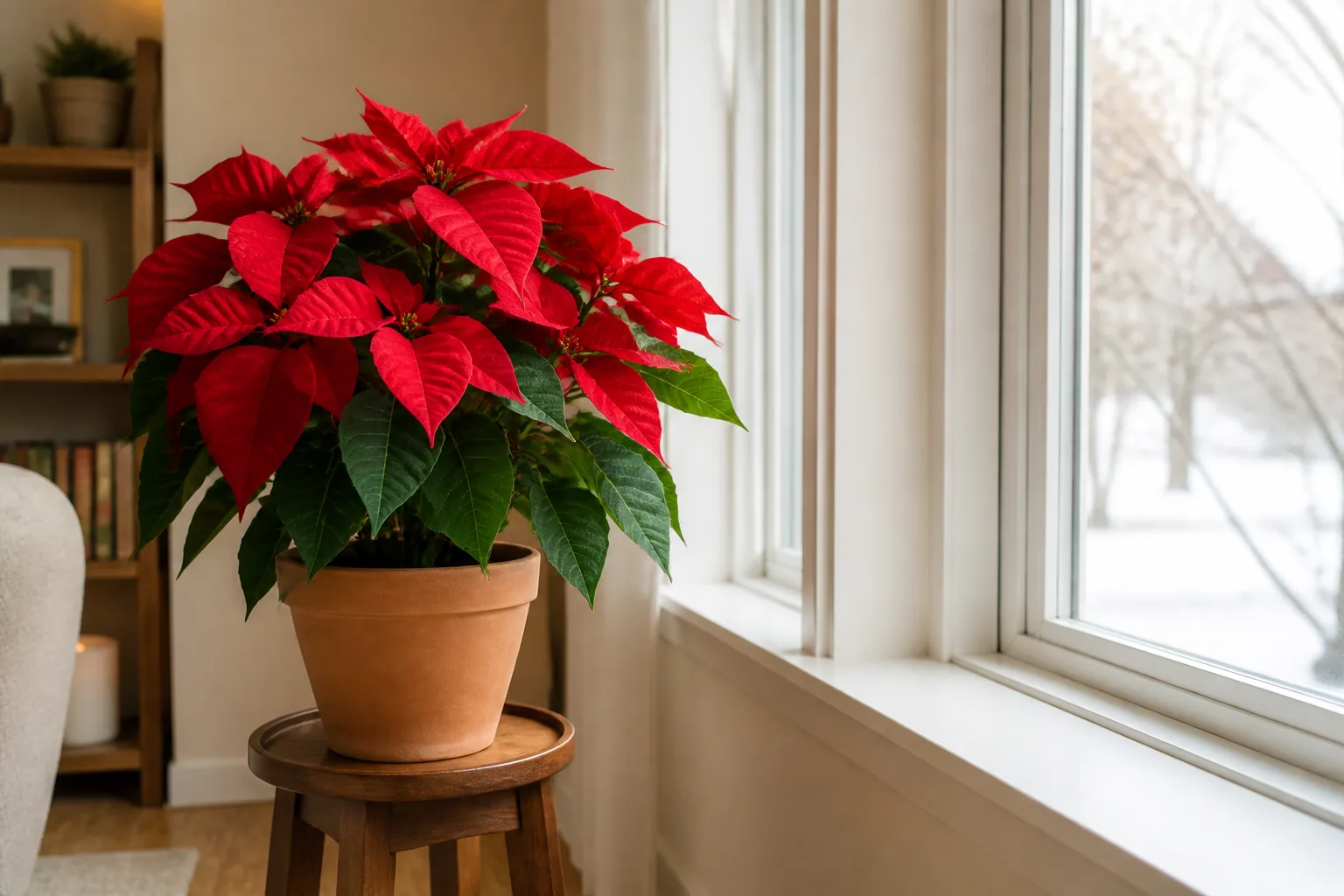
A poinsettia that looked perfect on the store shelf can look tired by mid-January — and light is usually the first thing people get wrong. Not because the plant is fussy, but because display-phase poinsettias (Euphorbia pulcherrima) need a specific daily dose of bright, filtered light while bracts are showy, plus stable temperatures and honest drainage. Park it in a dim hallway or blast it through unfiltered south glass and color fades fast, leaves yellow, and you assume the plant is “done” when it was only underfed photons.
This guide answers the practical question: how much light does a poinsettia need while it is in color, where to put it in your home, how to tell too much sun from too little, and what changes after the holidays if you keep the plant. For year-round survival and rebloom timing, pair this with our poinsettia perennial care guide.
Why Light Is the Hidden Reason Poinsettias Fade Early
Holiday poinsettias are greenhouse-forced on a strict schedule. Growers manipulate day length and temperature so bracts color in November and December. By the time you buy one, the plant has already completed the hard part of photoperiod programming. Your job is simpler — keep daily light steady so the display does not crash — but most homes work against that goal.
Three light-related killers show up repeatedly. Dim corners starve leaves of the energy needed to hold bracts. Unfiltered south windows scorch modified leaves that evolved for filtered tropical forest light. Uneven exposure from decorative foil sleeves, crowded mantels, or one-sided window placement causes partial decline that looks like random “leaf drop.” Utah State University Extension notes that poinsettias will temporarily tolerate a range of light levels but eventually decline without bright light — tolerance is not the same as thriving.
Temperature and watering still matter, yet light is the variable people misread most. A plant near a heat vent may look water-stressed when it is actually desiccating in hot, bright air against glass. A plant in a pretty but dark dining room may be overwatered because low light slowed water use while roots sat wet. Fix the light first and many “mystery” fade problems simplify.
Bracts, Cyathia, and What “Blooming” Really Means
Before adjusting windows, know what you are trying to preserve. The red, pink, white, or marbled “petals” are bracts — modified leaves surrounding the true flowers. The actual blooms are tiny yellow cyathia at the bract centers. NC State Extension describes the show as cup-shaped yellow flowers clustered above colorful bracts.
At purchase, choose plants with tight, unopened cyathia and little or no yellow pollen visible. Open flowers mean the display is further along and often shorter-lived. Bract color is a short-day response triggered by long autumn nights in nature; commercial growers replicate that in controlled greenhouses. Once bracts are fully colored, they are not permanent. Even with ideal light, the show naturally winds down over several weeks to a few months depending on genetics, pre-purchase stress, and home conditions. Light does not make bracts immortal — it keeps them looking good for as long as biology allows.
How Much Light a Poinsettia Needs While It Is in Color
While bracts are showy, aim for roughly six to eight hours of bright indirect light each day. Missouri Botanical Garden recommends placing potted plants in a bright area away from cold drafts. RHS specifies bright light away from direct sunshine, with temperatures around 65–70°F (16–21°C). NC State Extension lists partial shade — direct sun only part of the day, roughly two to six hours — as the outdoor equivalent, which indoors translates to filtered, not blazing, exposure.
The Six-to-Eight-Hour Bright Indirect Rule
Think in usable photons at leaf height, not “is there a window nearby.” Six to eight hours means the plant receives enough light during the brightest part of the day that leaves stay firm and horizontal, not reaching. In winter, when the sun sits lower, many homes actually deliver more window light than in summer — but only if the pot sits within one to three feet of the glass and nothing blocks the pane.
Pair light with temperature stability. RHS warns against window sills with drying radiator heat or cold night temperatures behind curtains, unheated porches, and drafty hearths. The best-lit spot in the house is worthless if the plant freezes against glass at night or cooks by day.
What Bright Indirect Light Actually Looks Like Indoors
Bright indirect light is a room that reads well lit without a sunbeam sitting on the foliage for hours. At midday, hold your hand between the window and the plant. A soft, fuzzy shadow means bright indirect — good. A sharp, dark shadow means direct sun is hitting leaves — move the pot back or add a sheer curtain.
Roughly 200 to 500 foot-candles at the top of the plant is a useful target during the display phase. You do not need a meter to succeed; watch the plant. Healthy poinsettias in adequate light hold dark green foliage with stiff stems. If new growth looks pale or internodes stretch, the plant is asking for more light or a closer position. For a deeper primer on measuring indoor light, see our low-light houseplants guide — poinsettias are not low-light plants, but the foot-candle framing helps.
Best Window Placements for Holiday Poinsettias
Distance from glass matters as much as compass direction. Light intensity drops quickly as you move into the room — a shelf six feet from a window may receive less than one-tenth the light of the sill. For holiday display, keep the pot within one to three feet of the pane unless a deep overhang or tree shade already softens exposure.
East, West, North, and South Windows Compared
An east-facing window is the easiest win for poinsettias. Morning sun is cool and brief; by the time intensity rises, the angle shifts away. You get bright indirect light through much of the day with low scorch risk. This matches RHS guidance to sit the plant a little away from the window in a living room — not jammed against hot glass.
A west window works with caution. Afternoon sun can intensify even in winter. Place the pot two to four feet back or behind a sheer curtain so bracts do not bleach. West exposure can shine in late fall and winter when the lower sun angle adds brightness without summer heat.
A large north window can work if unobstructed and you are in a bright climate, but many north rooms fall short of six usable hours in December. Watch for leggy stems within two weeks — that is your signal to add a grow light or move closer to a brighter exposure.
A south window demands filtering. Direct south sun through clear glass scorches bracts and fades color unevenly. Set the plant three to five feet back, use a sheer curtain, or place it beside the window rather than on the sill. If bract edges look crisp or bleached, south exposure is too strong even in winter.
Rotate the Pot and Manage Decorative Foil
Poinsettias grow toward light. Quarter-turn the pot every few days so all sides receive even exposure — especially important when one face presses against a wall or bookshelf. Uneven light causes one-sided leaf drop that looks like disease.
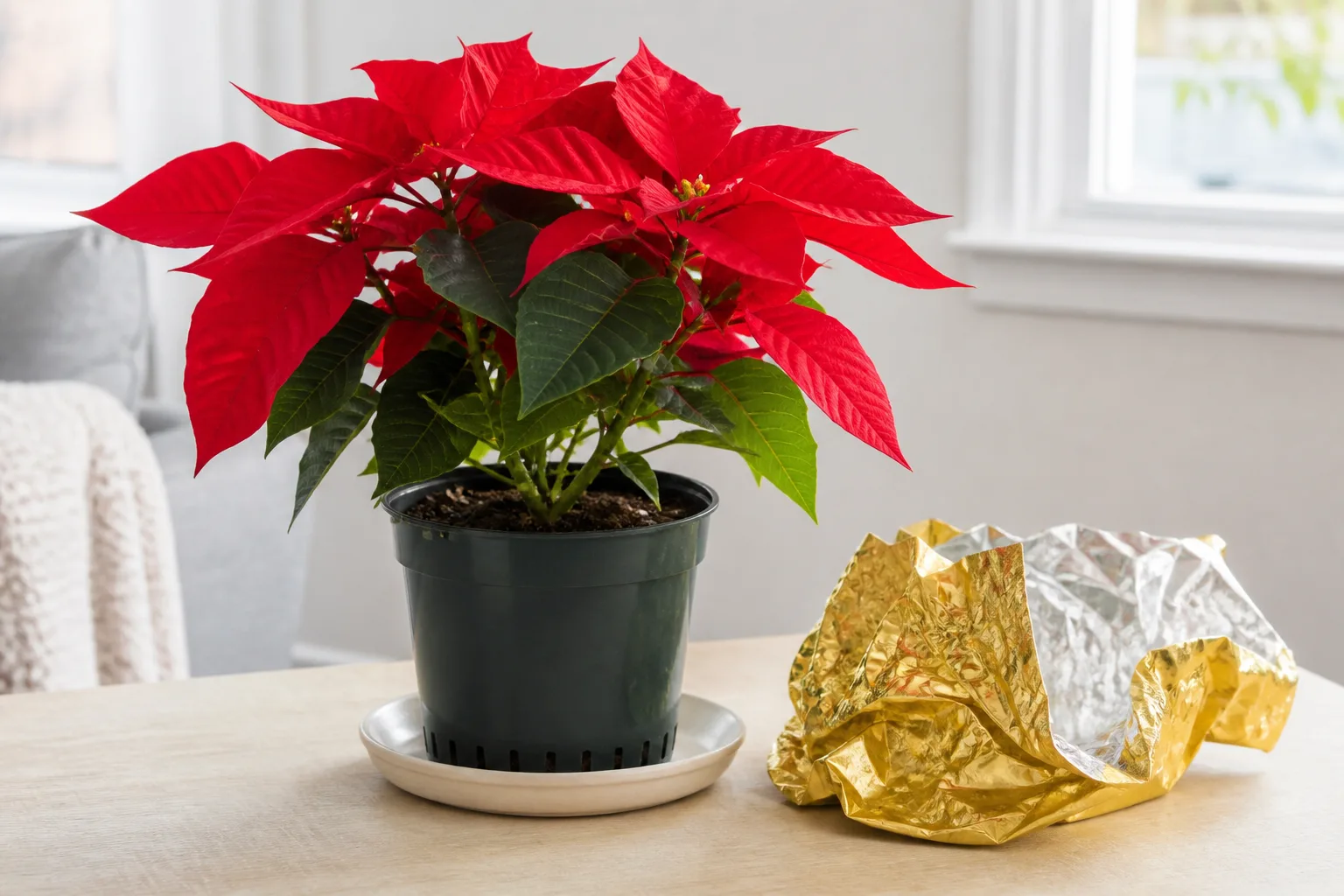
Decorative foil pot sleeves cause two light problems. They shade the lower canopy, and they trap water — a double hit to roots. NC State Extension and UF/IFAS both stress removing foil or punching drainage holes and emptying saucers. For light purposes, peel the foil down to the soil line or remove it entirely so lower leaves photosynthesize normally. If you keep foil for aesthetics, slide the inner nursery pot out for watering and rotate it for even sun.
Too Much Sun vs Too Little Light
Poinsettias evolved in seasonally dry tropical forests of western Mexico — bright but filtered. Indoor extremes at either end of the spectrum shorten the display.
Signs Your Poinsettia Is Getting Burned
Sunburn shows up as bleached, tan, or crispy bract edges, wilted leaves despite moist soil, and brown patches on the side facing glass. Direct midday sun through south or west windows is the usual cause. Fix it by moving the plant back, adding a sheer curtain, or shifting to an east exposure. Do not compensate with extra water — scorched tissue will not green up, but new growth will stay clean once light softens.
Signs Your Poinsettia Needs More Light
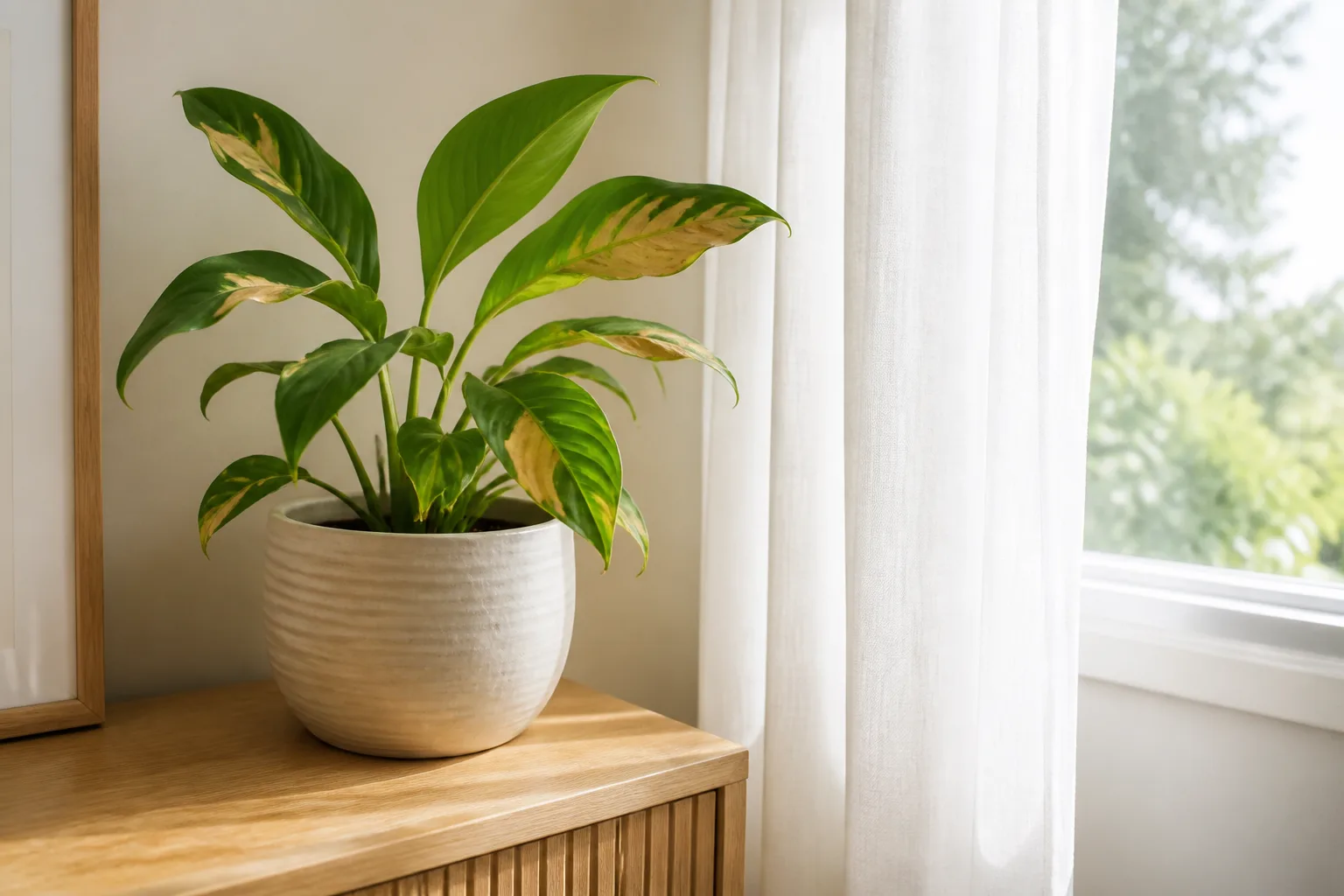
Low light triggers yellowing lower leaves, premature leaf and bract drop, faded or greenish bract color, and stretched, weak stems reaching toward the window. Utah State University Extension is clear: poinsettias may limp along in dim rooms for a while, then decline. Move the plant one to two feet closer to the brightest window, clear obstacles blocking the pane, or add supplemental lighting. If the plant was purchased from a chilled outdoor display, light fixes alone may not help — cold damage often appears as progressive drop over two weeks regardless of placement.
Short-Day Biology: Why Growers Control Darkness
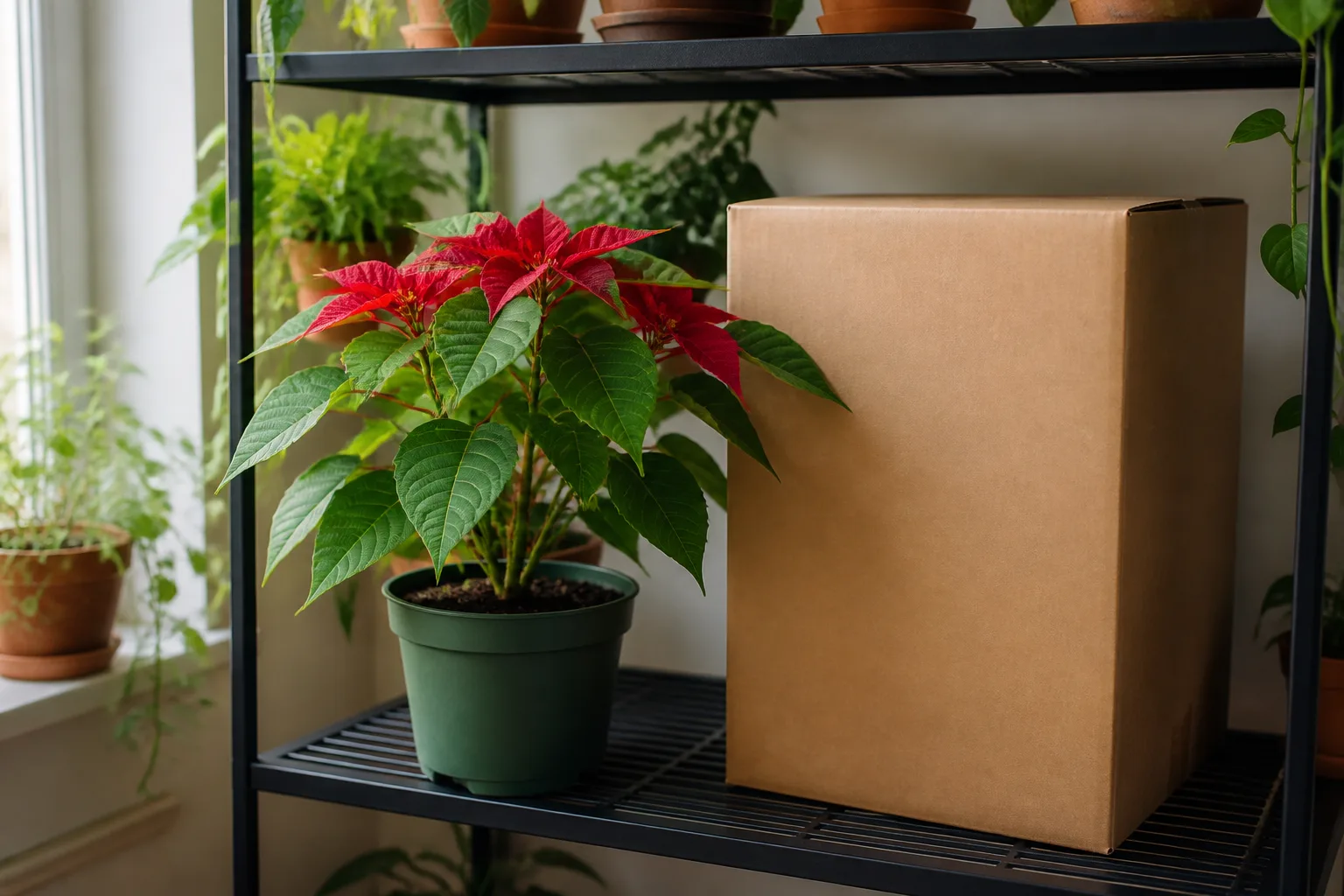
The poinsettias you buy in December already received the long-night treatment that triggered bract color. Growers provide roughly 12 to 14 hours of complete darkness nightly for eight to ten weeks starting around mid-September, with bright days during the forcing period. Missouri Botanical Garden instructs home rebloomers to shield plants from any light from 5:00 p.m. until morning starting late September, with maximum bright light during the day. NC State Extension specifies 16 hours of uninterrupted darkness and eight hours of bright light daily plus night temperatures in the low 60s°F for Christmas color the following year.
You do not need to run darkness therapy while the plant is in holiday display — that phase is finished. Understanding the biology still helps troubleshooting: even small amounts of overnight light from lamps, streetlights, or appliance LEDs can disrupt rebloom programming if you keep the plant. The same short-day mechanics apply to Christmas cactus, though timing and hour counts differ slightly. If your goal is only to keep this year’s color through January, focus on daytime bright indirect light, not fall darkness routines.
After the Holidays: Light Needs Change but Do Not Disappear
When bracts fade, the plant is not necessarily finished. It enters a post-display green phase where light remains important but expectations shift. Missouri Botanical Garden suggests reducing water after bloom, allowing a cooler rest above 50°F, then resuming fertilizer in spring. RHS recommends repotting in early May, growing in a light, cool place over summer, and starting the artificial short-day routine from late September.
From February through August, treat the poinsettia like a sun-loving foliage houseplant. After last frost, outdoor eastern sun or light shade accelerates growth — Missouri Botanical Garden advises placing pots outdoors in eastern sun or general shade once nights stay above 60°F. Pinch stems through summer for bushiness. Bring plants indoors to a bright location before temperatures threaten to drop below 60°F in fall. Light quality in September and October sets up next year’s color show; a dim spare room all summer yields a weak rebloom attempt even if you run darkness correctly.
Grow Lights When Your Brightest Window Still Is Not Enough
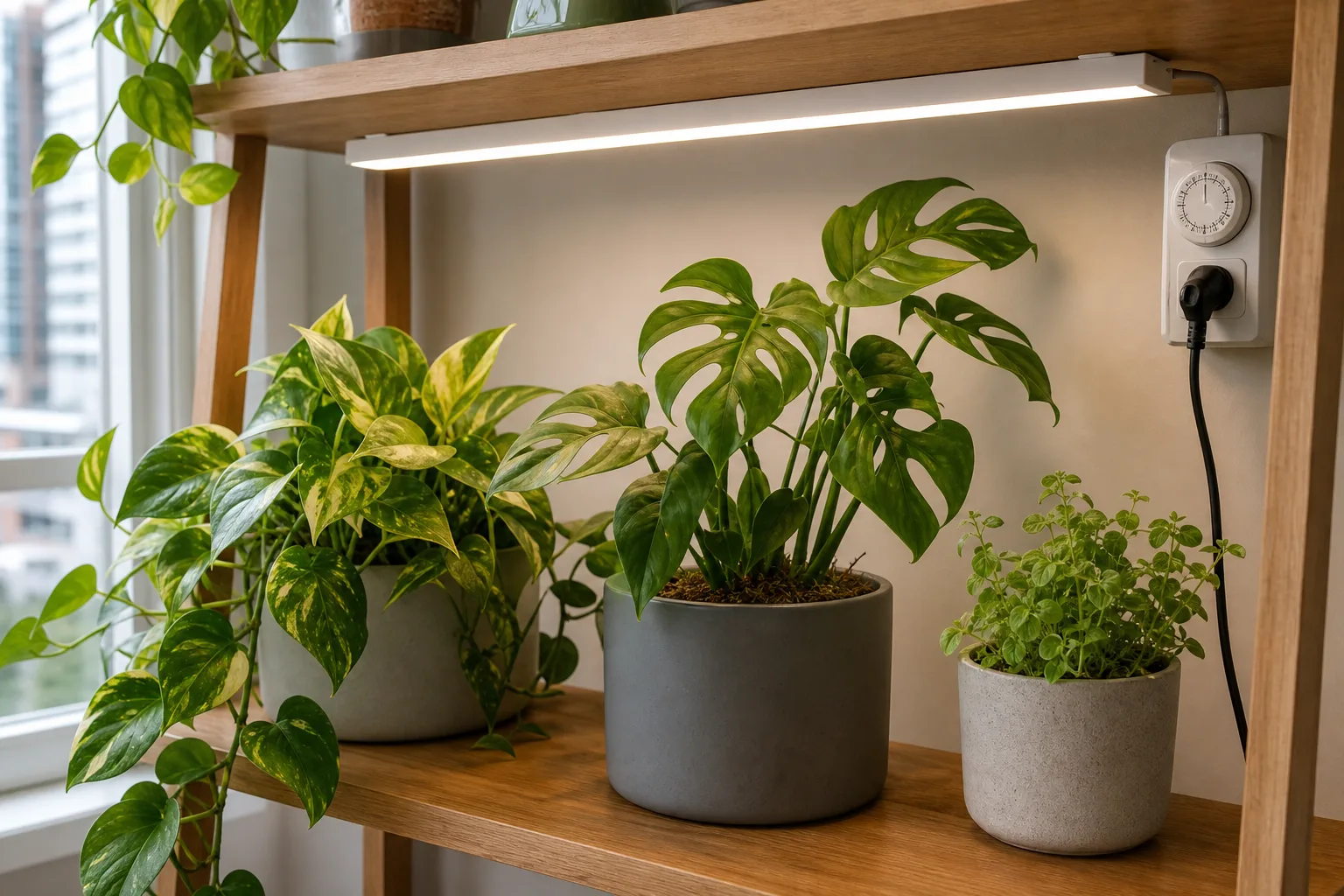
Deep floor plans, north-only exposures, and office cubicles may not deliver six hours of usable light in winter. A full-spectrum LED grow light on a timer solves that without scorching bracts. Position the fixture 12 to 18 inches above the top of the plant and run it 10 to 12 hours daily during the display phase, overlapping with whatever natural window light you have. Aim for moderate intensity — roughly the same visual brightness as a well-lit office, not a blazing reptile lamp.
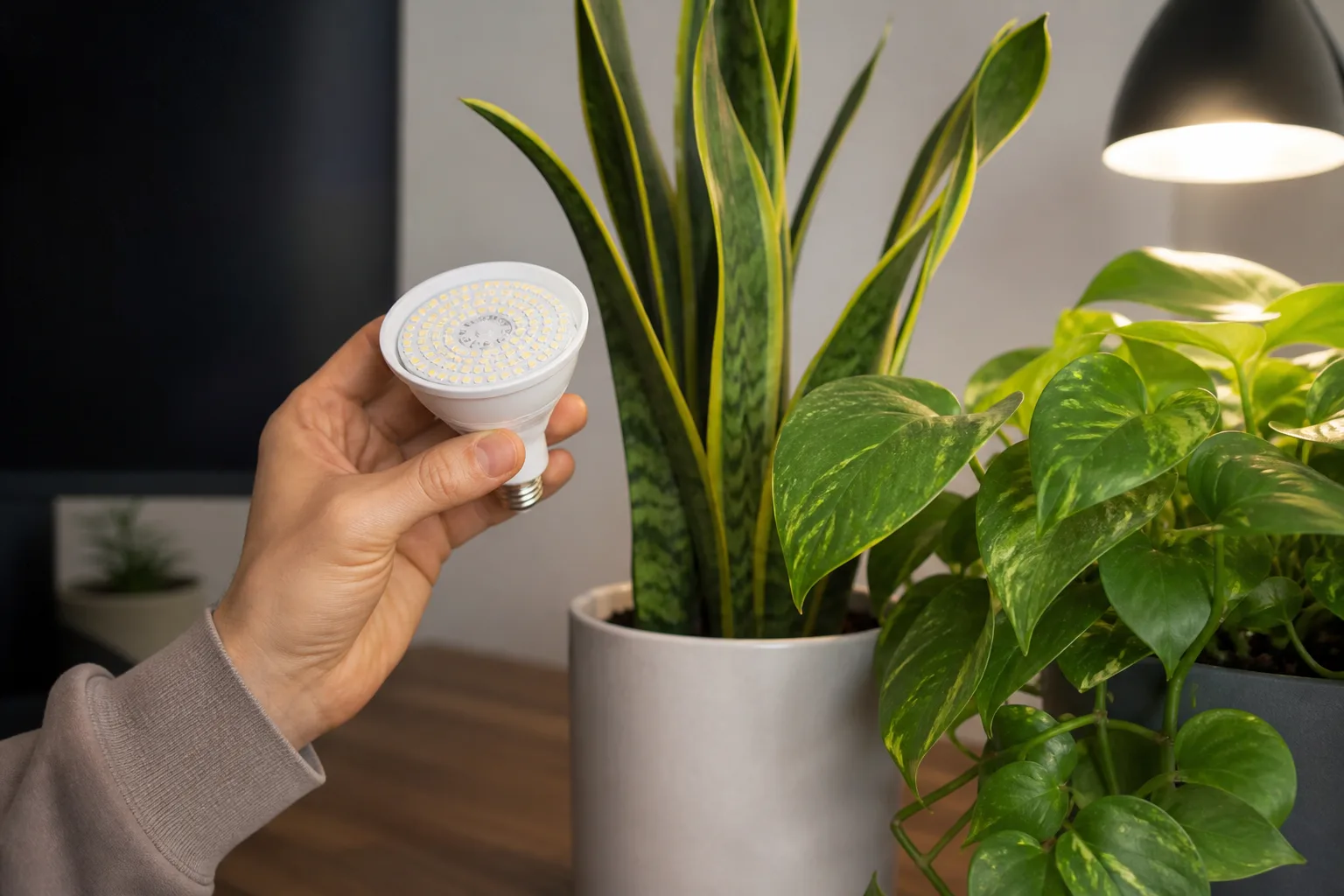
Choose fixtures labeled for seedlings or houseplants rather than high-intensity bloom boards designed for cannabis. Watch leaf temperature; if foliage feels hot to the touch after an hour, raise the light. Once bracts fade and the plant enters summer growth, you can increase duration to 14 to 16 hours to mimic long days. In late September, switch to the rebloom protocol: shorten the timer so the plant receives long nights, or move the pot to a closet — grow lights and street leakage can both break darkness.
Light Mistakes That Cut Bloom Short
Buying from a cold lot. Plants sold on pavement or near automatic doors suffer chilling injury that appears as progressive drop even in a perfect window. Choose stock from a heated greenhouse bench inside the store when possible.
Setting on a south sill with no filter. Winter sun is lower but still strong through clear glass. Bracts bleach within days.
Treating it like a low-light survivor. Poinsettias are not snake plants. Dim rooms produce yellow leaves and early bract loss.
Leaving foil on and forgetting rotation. Lower leaves yellow from shade; waterlogged roots from trapped drainage compound the stress.
Moving the pot repeatedly once buds or bracts are set. Poinsettias are brittle and light-sensitive during display. Pick a good spot and stay there unless symptoms demand change.
Confusing display care with rebloom care. You do not need nightly darkness in December to “keep it blooming.” You need consistent daytime bright indirect light and stable warmth. Darkness routines are for next year’s color, not this week’s bracts.
Quick Light Troubleshooting Checklist
Run through this list before repotting, fertilizing, or throwing the plant out.
Bracts fading unevenly, one side worse: Rotate pot; remove or lower foil; check for obstruction blocking half the window.
Crispy tan edges on bracts facing glass: Move back from south or west window; add sheer curtain.
Yellow lower leaves, no pests visible: Increase light — move closer to window or add grow light; verify you are not overwatering a slow-growing dim-room plant.
Sudden leaf drop within two weeks of purchase: Suspect cold damage from display conditions, not fixable with light alone.
Green healthy leaves but you want rebloom next year: Plan September darkness plus bright summer growth — see poinsettia perennial care.
Plant reaches toward window: Light is marginally low; move one to two feet closer or supplement.
Conclusion
A holiday poinsettia stays colorful longest when it gets six to eight hours of bright indirect light daily, sits within a few feet of an east or filtered window, avoids direct scorching sun and cold drafts, and receives even exposure after you remove or adjust decorative foil. Light will not freeze bracts in place forever — commercial plants are bred for a seasonal show — but the right photons buy you weeks of extra color and keep foliage green instead of yellow and dropping.
Measure with the plant, not the calendar: stiff green leaves and stable bracts mean your window choice is working. If not, move closer, filter harsh sun, or add a modest grow light before you change anything else. When the display ends, shift to summer bright light and plan a September darkness routine only if you want next year’s red bracts. For the full year-round picture — watering, temperature, rebloom timing, and pet safety — our poinsettia care guide picks up where light leaves off.