Christmas Cactus Light Needs: Year-Round Guide
Christmas cactus light needs change by season. Learn daily placement, the 13–14 hour fall darkness rule, window picks, and fixes when a bright room still won't bloom.
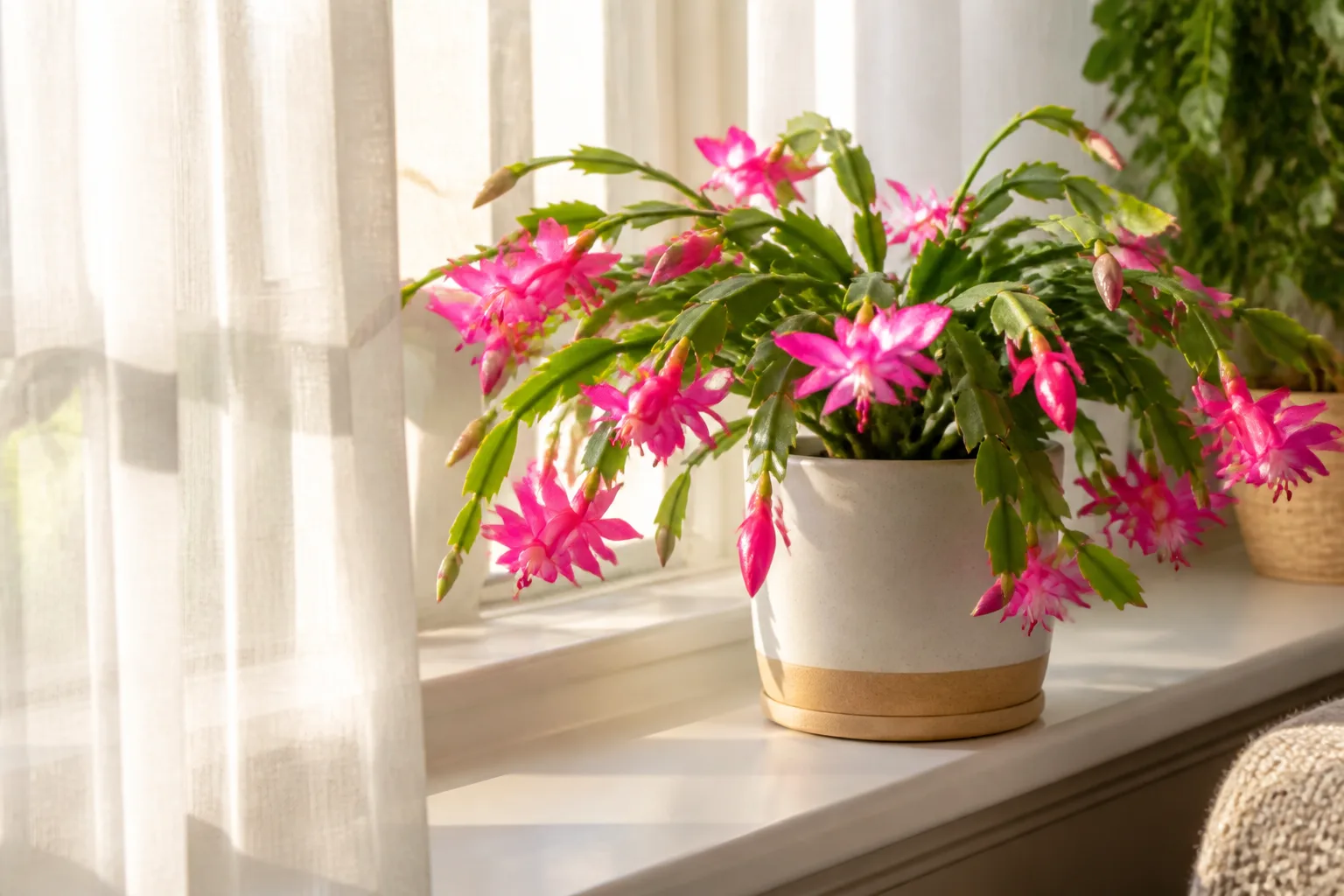
A Christmas cactus (Schlumbergera × buckleyi) does not want one light setting forever. It wants bright, filtered daylight while it builds stems from spring through summer, then a strict long-night routine starting around mid-September to switch hormones toward flower buds. Give it only the first half and you get a pale, stretched plant that never blooms. Give it only the second half in a dim corner and you get weak growth that drops buds the moment you move it. This guide maps both jobs across the calendar so you know exactly how much light the plant needs today—and what to change when bloom season arrives.
For full care beyond light, see the Christmas cactus care hub and our Christmas cactus care guide. For a deep dive on the fall darkness protocol alone, the Christmas cactus light topic page walks the same photoperiod rules with extra troubleshooting.
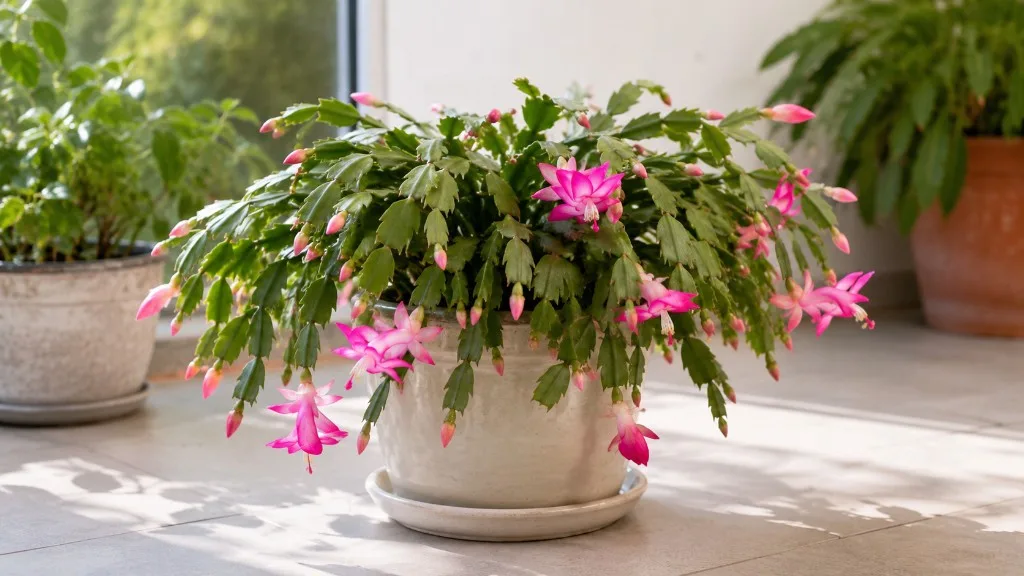
Why Christmas Cactus Light Changes Four Times a Year
Holiday cacti are short-day plants from Brazilian rainforest margins. In nature, lengthening autumn nights tell the plant to set buds; shortening spring days tell it to grow. Indoor life scrambles that signal when ceiling fixtures run until midnight, streetlights leak through blinds, or a south window blasts summer sun that would never reach an epiphyte on a tree branch.
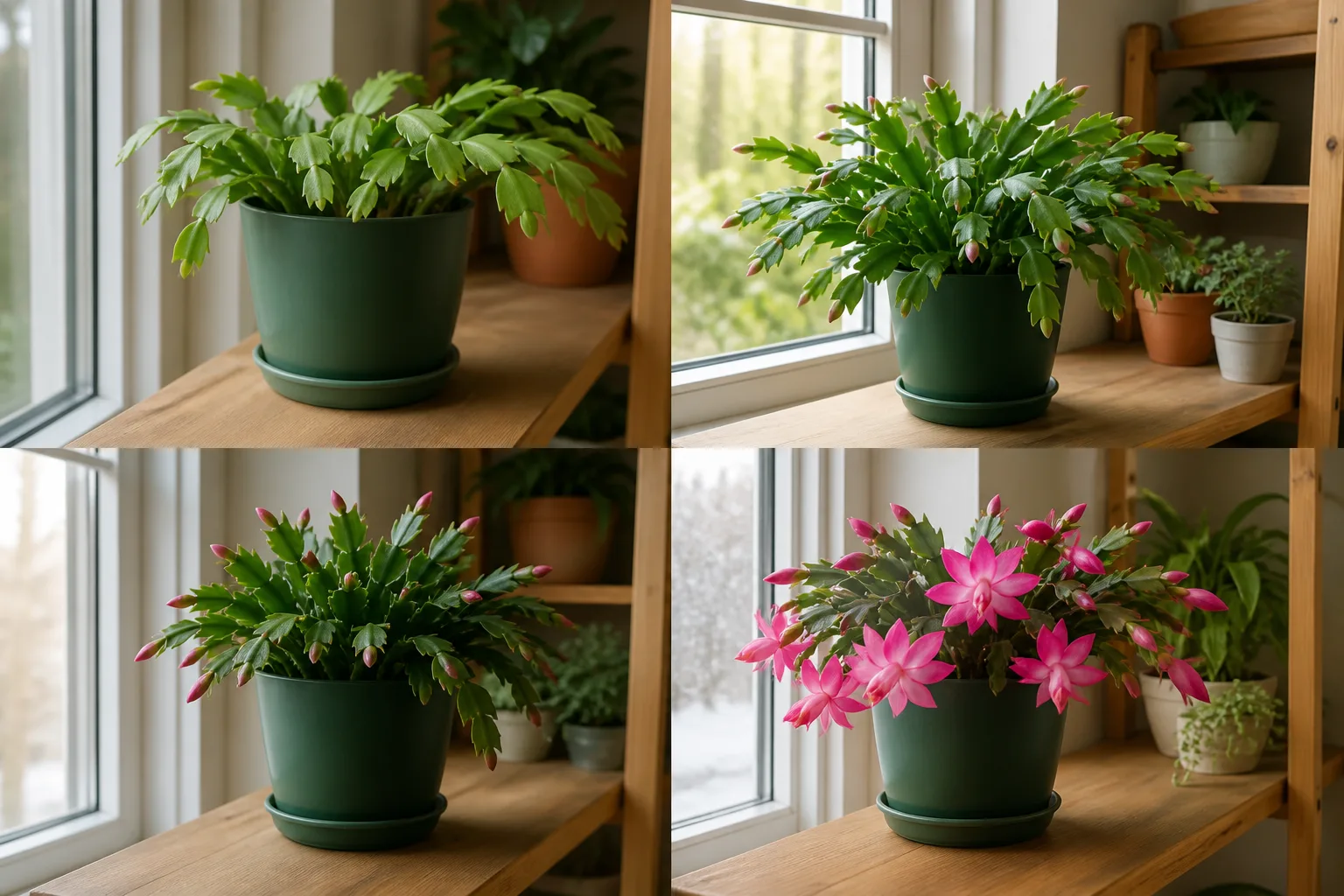
Think in four phases. Late winter through early spring (roughly February–April): recovery after bloom, moderate bright light, stable indoor temps. Spring and summer active growth (April–September): strongest bright indirect light of the year—plus protection from harsh midday sun. Fall bud initiation (mid-September through October): long uninterrupted nights plus cool evenings; daytime light still matters but darkness length is the boss. Winter bloom (November–January): keep bright days, avoid heat spikes above 90 °F once buds form, and stop moving the pot. Missouri Botanical Garden notes that continuous warm temperatures after buds set can cause them to drop—light stability matters here too.
Daily Light vs Bloom Darkness: Two Different Jobs
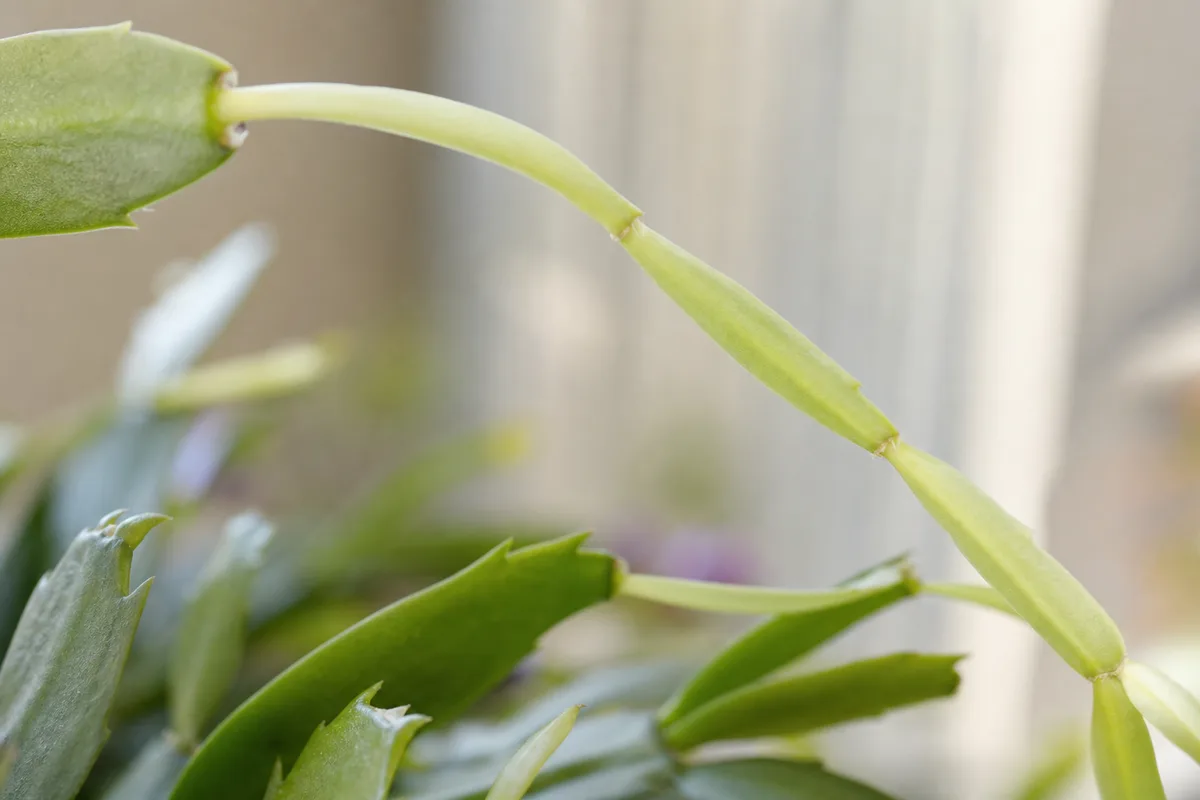
Daily light fuels photosynthesis in the green phylloclades (flattened stem segments). Without enough daytime photons, segments grow thin and spaced far apart—classic leggy growth on Christmas cactus. Fall darkness is a separate hormonal trigger. Schlumbergera measures uninterrupted night length, not how bright your living room feels at noon. UGA Cooperative Extension is blunt: as little as two hours of light during the dark period can inhibit bud set. A plant in a sunny window that never gets 13–14 hours of total darkness each autumn will stay vegetative no matter how green it looks.
That split explains the most common frustration: “My cactus gets plenty of light but never flowers.” Plenty of day light is not the same as enough night dark.
What Bright Indirect Light Looks Like on Schlumbergera
Bright indirect light means the room reads well lit, but the sun’s beam does not sit on the segments for hours. Hold your hand between the window and the plant at midday. A soft, fuzzy shadow is about right. A sharp, dark shadow means direct sun is hitting the plant—filter it or move the pot back. NC State Extension recommends bright indirect light during the growing season and warns that full sun can bleach stems.
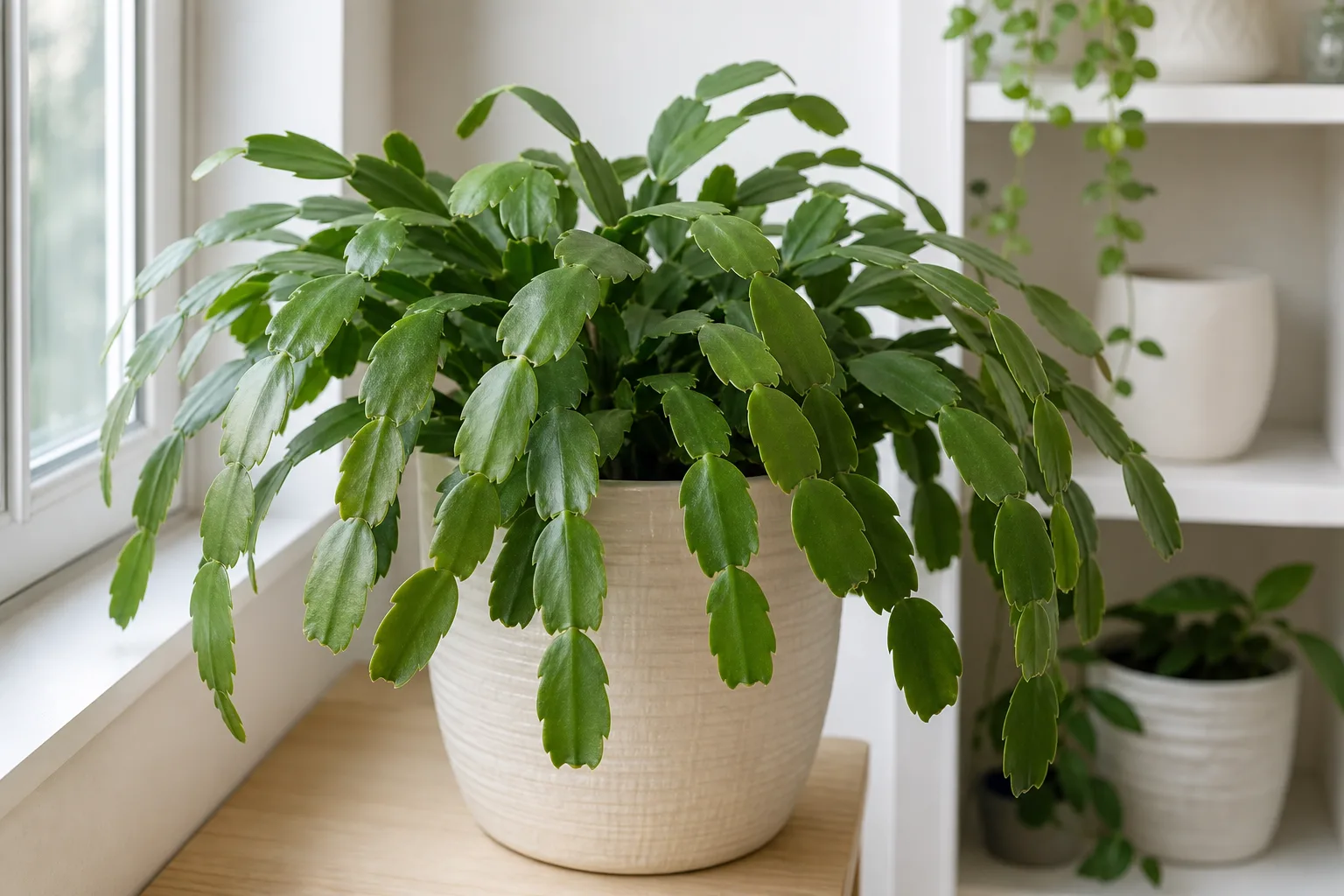
Most homes deliver this with 6 to 8 hours of usable light daily—often from an east window, a filtered west window, or a spot one to three feet inside a large south window behind a sheer curtain. Gardening Know How suggests the same range and notes that stretching toward the glass is the plant’s way of asking for more. If new segment tips stay plump and internodes stay short, your daily light is working even if the plant has not bloomed yet.
Best Window Placements for Year-Round Growth
Distance from glass matters as much as compass direction. Light intensity drops fast as you move into the room. For daily health, keep the pot within one to three feet of the window unless sheer curtains or a deep overhang already soften exposure. Hanging baskets often perform well because stems hang below the hottest zone directly on the sill.
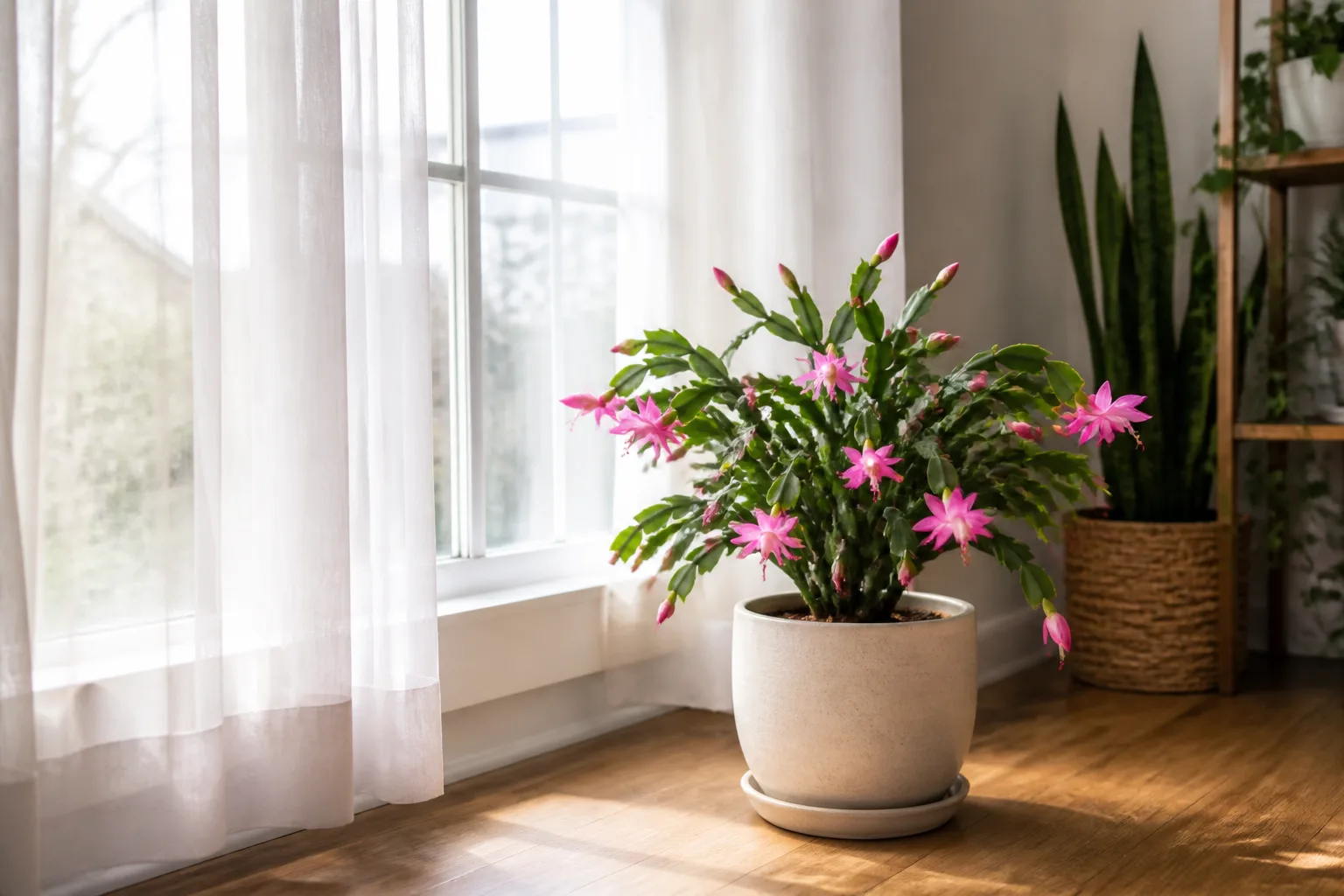
During fall bud set, placement gains a second requirement: the spot must allow complete darkness at night. A kitchen with under-cabinet LEDs, a home office with a monitor glow, or a hallway with a motion sensor can all break the dark period even when the overhead light is off.
East, West, North, and South Exposures Compared
An east window is the easiest win. Morning sun is cool and brief; by the time intensity rises, the angle shifts away. East exposure delivers bright indirect light through spring and summer with minimal scorch risk. RHS lists an east-facing sill as usually ideal for this genus.
A north window works when the pane is large and unobstructed. Light stays gentle all day. Growth may be slightly slower than on east, but segment color usually stays clean. Very dark north rooms in winter may need a grow light supplement.
West windows need filtering from late spring through early fall when afternoon sun intensifies. A sheer curtain or a position set back from the glass prevents bleaching. West exposure can shine in late fall and winter when the lower sun angle adds brightness without summer heat.
South windows are high maintenance. Direct south sun from June through August frequently causes pale, stressed foliage on holiday cacti. Missouri Botanical Garden states that bright sun during summer months can make plants look pale and yellow, while full sunlight is beneficial in midwinter. Filter heavily in summer; allow closer placement in winter once buds are set.
Spring and Summer: Active Growth Light Rules
From April through early September, Christmas cactus is in vegetative mode. New phylloclades form at stem tips, roots expand, and the plant stores energy for flowering. Light should be steady and moderately bright—not the dim corner treatment people give “cacti” out of fear, and not the blazing sill borrowed from desert species.
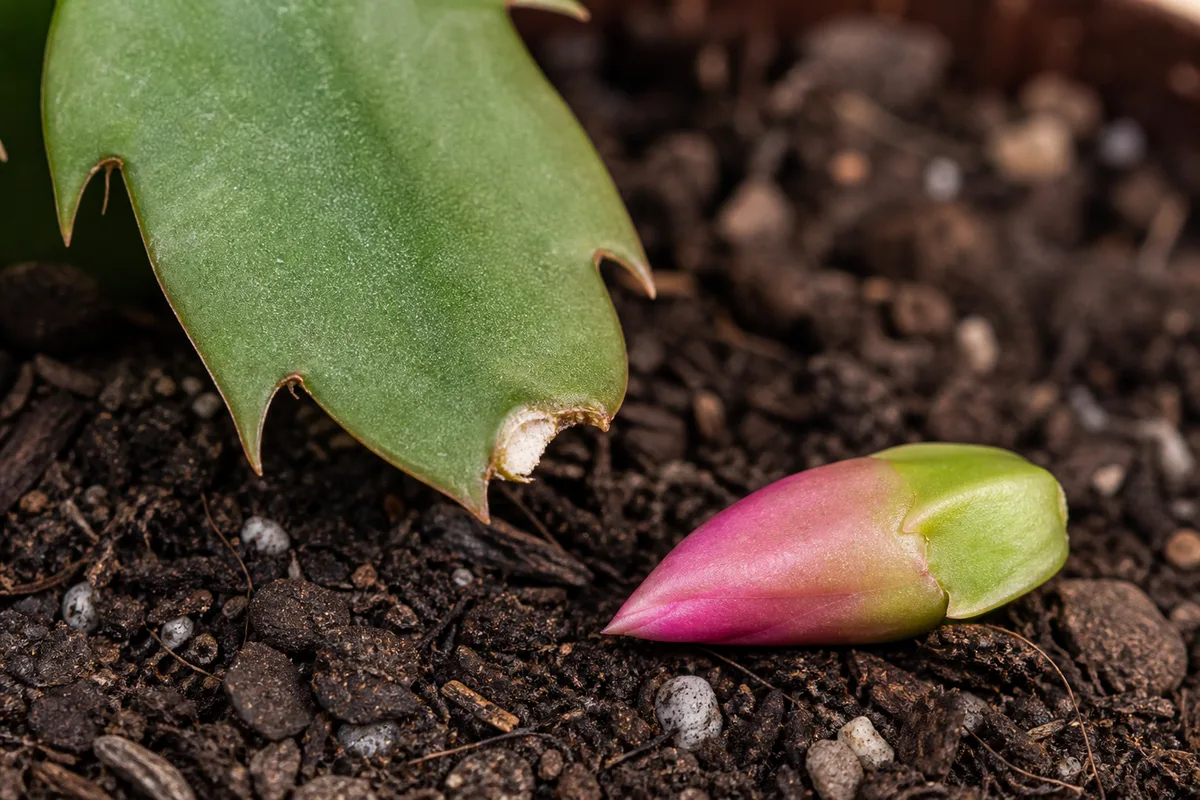
Keep daytime temperatures roughly 70 to 80 °F (21 to 27 °C) with good air movement. Do not let pots sit in stagnant hot air against south glass; heat plus weak roots invites bud drop later even if light looks fine on paper. Fertilize monthly at half strength through this window, then stop by late August so the plant can transition to bloom cues.
Moving Outdoors Without Sunburn
Many growers summer plants outside in dappled shade—under a tree, on a covered porch, or on the east side of a building. Outdoor shade is often brighter than it appears because open sky still delivers diffuse light from every angle. UGA Cooperative Extension recommends keeping tropical houseplants outdoors as long as possible in fall, then bringing them in just before freezing—around late October in the Atlanta area—so natural shortening days begin bud programming before indoor night lights interfere.
Bring plants back inside before nights drop below 50 °F (10 °C). Acclimate gradually when moving between outdoor shade and indoor windows; sudden light jumps cause stress spots on segments. If you see yellow or bronze patches on the window-facing side, you have sunburn on Christmas cactus—move to softer light and remove only fully crisp segments.
Fall Bud Initiation: The Long-Night Requirement
Starting around mid-September, Schlumbergera switches from growth to flower bud initiation. This is photoperiod-driven. The plant needs roughly 8 to 10 hours of light and 13 to 14 or more hours of continuous darkness each day for about six to eight consecutive weeks to set buds reliably. NC State Extension specifies at least 13 hours of uninterrupted darkness every night in mid-September, paired with night temperatures of 55 to 65 °F. Missouri Botanical Garden aligns on 13 or more hours of continuous darkness starting mid-September for eight weeks, with night temps between 55 and 65 °F and bright days.
Buds typically show within three to four weeks once the routine is consistent. After buds are established, photoperiod no longer controls flowering—the developmental path is set. Do not restart darkness treatments mid-bloom; focus on stable light, even moisture, and avoiding heat spikes above 90 °F, which Missouri Botanical Garden lists as a bud-drop trigger.
The 13–14 Hour Darkness Home Rule
Extension sources vary slightly on hours because room temperature changes how strictly the plant reads night length. Use this practical home rule:
| Night room temperature | Target uninterrupted darkness | Notes |
|---|---|---|
| 55–65 °F (13–18 °C) | 13+ hours | Matches NC State and Missouri guidance |
| 65–70 °F (18–21 °C) | 14 hours | Safer margin per UGA Extension |
| Above 70 °F (21 °C) | 14–15 hours | Warm nights often need longer dark periods |
If your plant lives in a heated living room that stays above 70 °F at night, lean toward 14 to 15 hours of total darkness rather than the bare minimum. Cool spare bedrooms and porch transitions often succeed at 13 to 14 hours. The goal is one consistent schedule you can hold for six weeks—not perfect astronomy.
Pair darkness with cool nights. Bud quality improves when evenings drop toward 55 to 65 °F. A plant that gets long nights but sits above a radiator may still refuse buds or drop them early.
Night-Light Leak Audit Checklist
Run this audit the first week of your fall routine:
- Stand in the plant’s spot at 10 p.m. with other room lights off. Can you read a label on the pot? Any visible glow means the dark period is broken.
- Check streetlights and car headlights through blinds. Blackout curtains or cardboard panels fix most leaks.
- Scan for appliance LEDs—TV standby lights, router blinkers, microwave clocks in adjacent kitchens.
- Track hallway spill from bathrooms or stairwells left lit at night.
- Note motion-sensor lights that trigger when a pet walks past at 2 a.m.—two hours of interruption is enough to reset bud set per UGA Extension.
UF/IFAS Gardening Solutions lists interrupted night lighting among the top reasons holiday cacti fail to flower indoors. Fixing leaks beats buying another plant.
Three Ways to Create Uninterrupted Fall Darkness
Option 1 — Natural room darkness. Place the plant in a room you do not use at night. Leave overhead and lamp fixtures off from roughly 6 p.m. to 8 a.m. Block external light with blackout curtains. This mimics what Missouri Botanical Garden describes as total darkness from about 6 p.m. to 7 a.m. daily for six to eight weeks.
Option 2 — Cover the plant each evening. Drape a thick black cloth or set the pot inside an opaque box at the same time every night. Remove the cover each morning so bright daytime light reaches the phylloclades. This works when the plant must live in a lit room by day but needs true dark by night. Ensure the cover breathes slightly so condensation does not rot segments.
Option 3 — Spare-room or outdoor transition. Move the plant to a guest room with no night lighting for six weeks, or keep it outdoors in fall until just before frost so natural shortening days do the work—as UGA Extension describes for porch-hung plants brought inside before the first freeze.
Whichever method you choose, consistency beats perfection. Start mid-September (not late October if you want December blooms). Maintain the same cover-on and cover-off times daily. Avoid moving the pot once pinhead buds appear; relocation plus light change causes bud drop.
Winter Bloom Season: Light After Buds Form
Once buds are visible, return to bright indirect days without repeating the cover routine unless night leaks remain severe. Missouri Botanical Garden notes full sunlight is beneficial in midwinter when the sun is low—many plants color up and hold buds better with brighter exposure from November through January. Keep nights stable and relatively cool, and avoid blasting heat from registers once flowers open.
Do not fertilize while buds develop and bloom; the plant is not in active vegetative growth. Resume dilute feeding only after flowering finishes and new spring growth appears. If blooms fade early, low humidity or dry soil—not daytime light—is often the culprit; see Christmas cactus watering for the bloom-season moisture shift.
Grow Lights When Natural Windows Fall Short
North rooms, basement apartments, and winter shade from neighboring buildings can leave segments pale and stretched even when care otherwise looks fine. A full-spectrum LED grow light placed 12 to 18 inches above the plant for 10 to 12 hours daily during the growing season can supplement weak windows. Keep intensity moderate—holiday cacti burn under high-output panels meant for succulents.
During fall bud set, a grow light complicates darkness unless you turn it off completely during the long-night window. Timers help: lights on at 7 a.m., off at 5 p.m., then zero light until morning. Never run a grow light on a 16-hour schedule through autumn and expect blooms. For measuring ambient levels before you buy hardware, a hand-held light meter and the using a light meter for houseplants guide translate foot-candle readings into placement decisions.
Light Problems That Block Blooms (Even in a Bright Room)
Leggy Growth, Sun Scorch, and Bud Drop
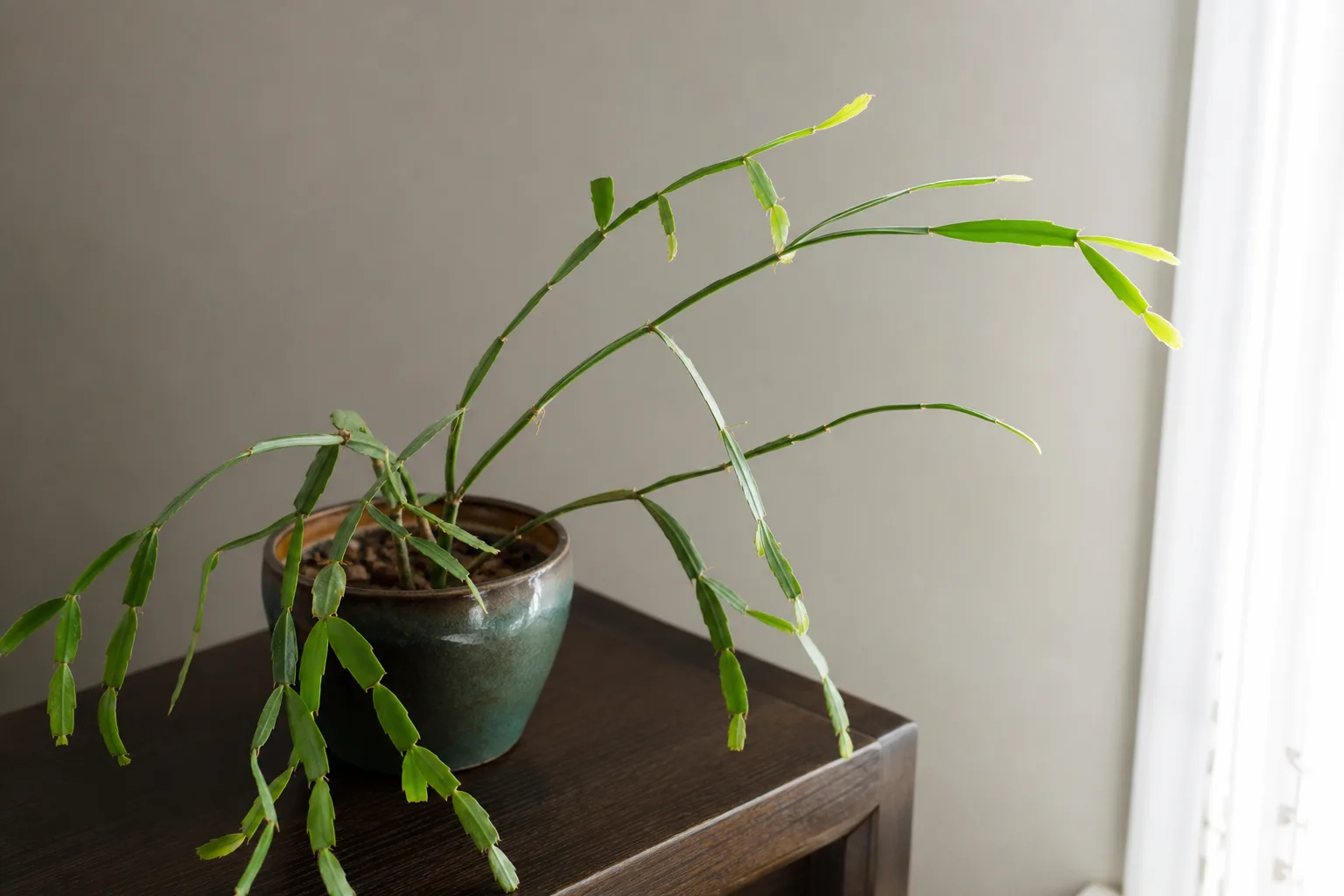
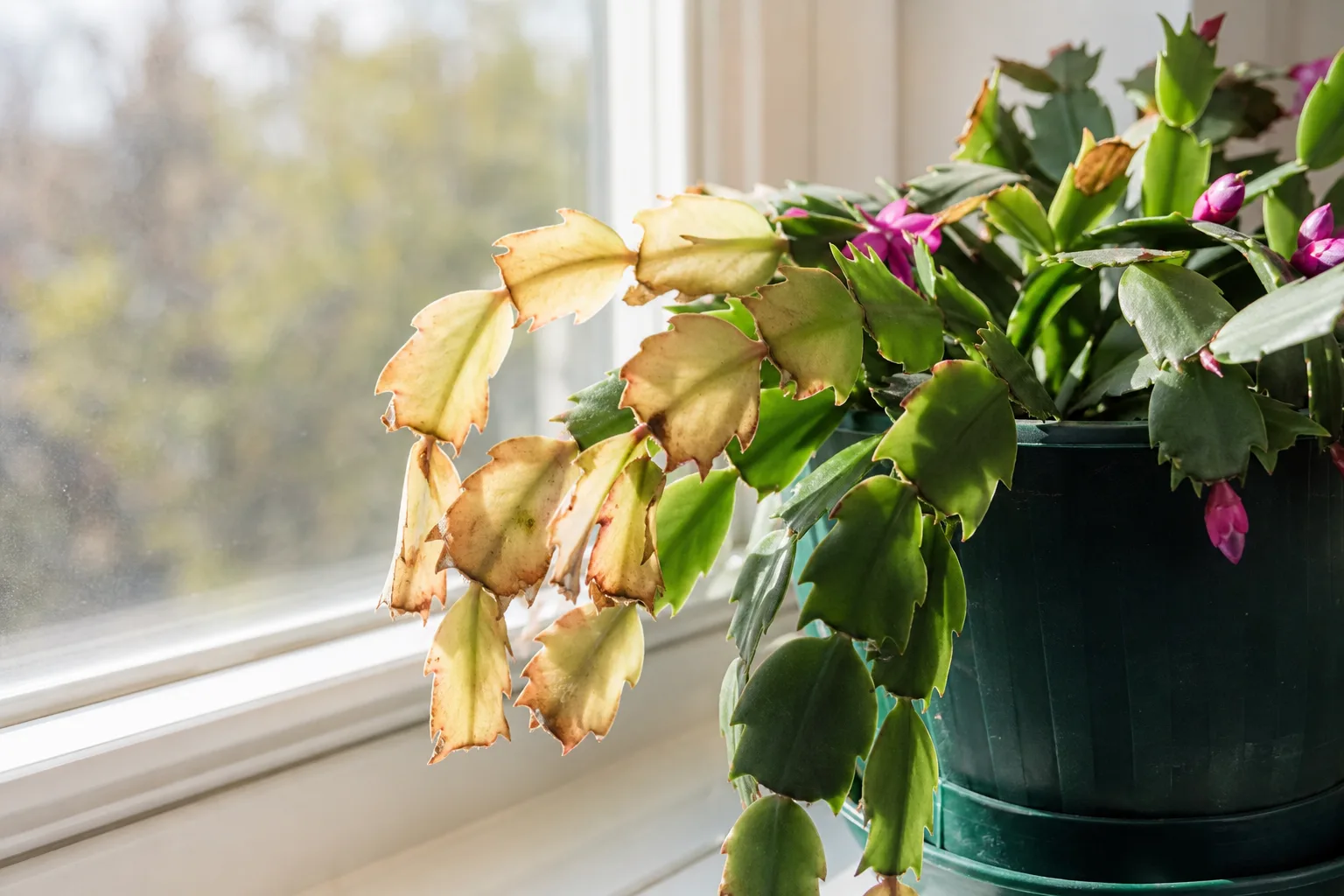
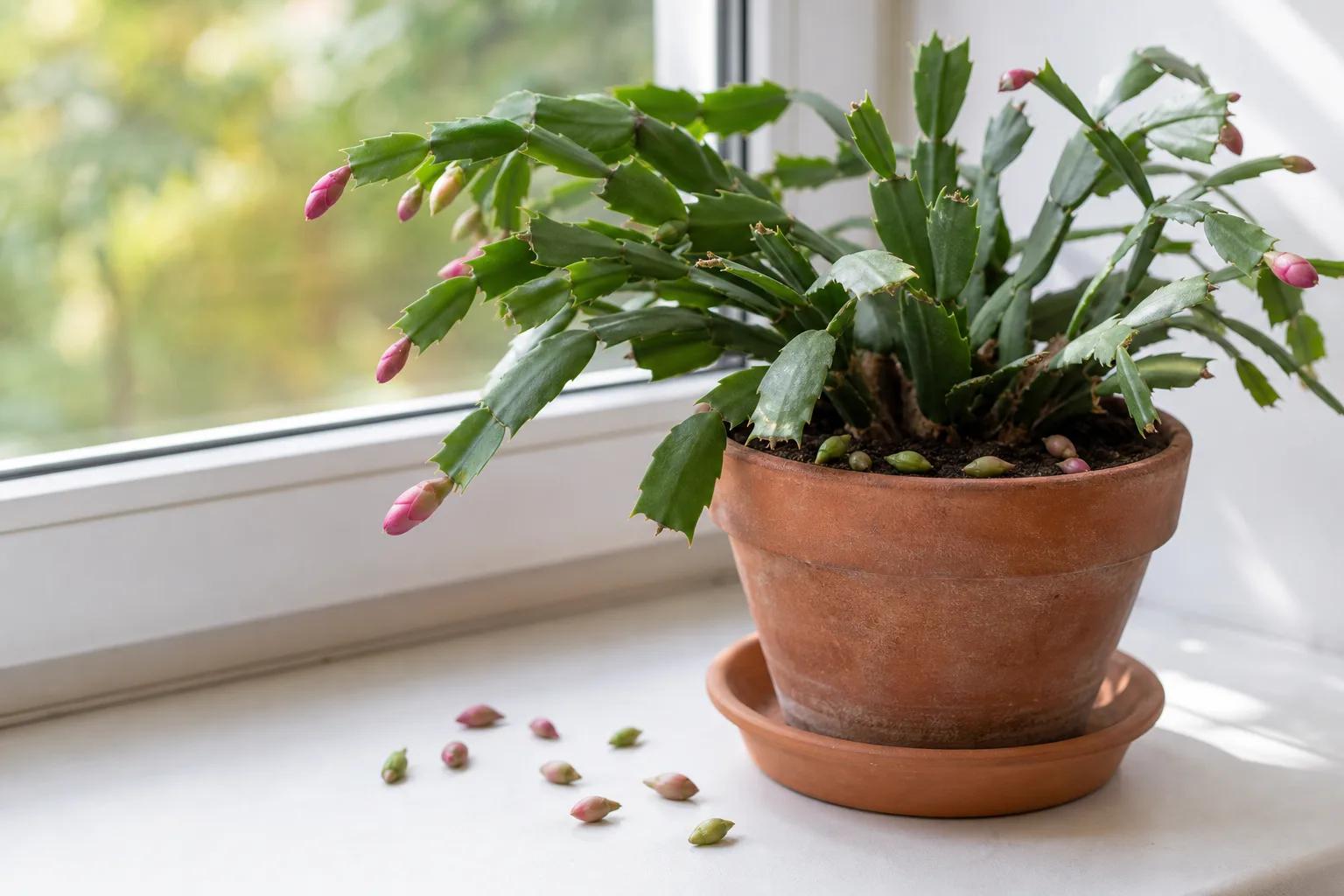
Leggy, pale stems mean daily light is too weak. The plant reaches for photons; internodes lengthen; flower count drops next season because the plant lacked energy. Fix placement first—move closer to a brighter filtered window or add a grow light during spring and summer. See not enough light on Christmas cactus for symptom photos and recovery timing.
Sun scorch shows as yellow, bronze, or purple-red patches on the window-facing side, sometimes followed by segment loss. It is too much direct sun, not too much light in general. Filter south and west windows in summer; remember this genus is not a desert cactus. Recovery means softer light for several weeks—new growth tells you the fix worked.
No buds despite a bright room almost always traces to fall night interruption, not daytime brightness. Healthy green plants that never flower strongly suggest artificial light after dusk. Run the night-light audit, extend darkness toward 14 hours if nights are warm, and start on time in mid-September. If buds form then vanish, heat, drafts, or moving the pot—not photoperiod—are the usual suspects; see no flowers on Christmas cactus.
Year-Round Light Calendar at a Glance
| Season | Approximate months | Daytime light target | Night / darkness | Temperature note |
|---|---|---|---|---|
| Post-bloom recovery | Jan–Mar | Bright indirect | Normal indoor nights | Avoid cold glass contact |
| Active growth | Apr–Aug | Bright indirect; filter harsh sun | Normal nights | 70–80 °F days; summer outdoors in dappled shade OK |
| Bud initiation | Mid-Sep–Oct | Bright days continue | 13–14+ hrs uninterrupted dark, 6–8 weeks | Cool nights 55–65 °F ideal |
| Bloom display | Nov–Jan | Bright indirect to mild direct | Stable; no night-light leaks | Keep below 90 °F once buds set |
Mark mid-September on your calendar every year. Set a phone reminder to start cover-or-dark-room routine the same week you stop fertilizing. Plants that bloomed reliably outdoors on a porch often fail the year you bring them inside early without adjusting night light.
Conclusion
Christmas cactus light is really two schedules: bright, filtered daytime exposure for healthy phylloclades from spring through summer, and long, uninterrupted autumn nights with cool evenings to trigger buds. East or filtered west windows handle daily light for most homes; south glass needs summer filtering and can help in winter. Start darkness around mid-September, hold 13 to 14 or more hours of total night dark for six to eight weeks, and eliminate every light leak that resets the clock. Once buds show, keep days bright and stable, protect the plant from heat spikes, and stop moving the pot. Nail both halves and a mature Schlumbergera rewards you with tubular holiday color year after year—without guessing whether “enough light” meant noon brightness or midnight darkness.



