Poinsettia Care: Keep Color Through Winter
Poinsettias are perennials in warm zones and long-lived houseplants elsewhere. Learn winter care, watering, and how to rebloom them next year.
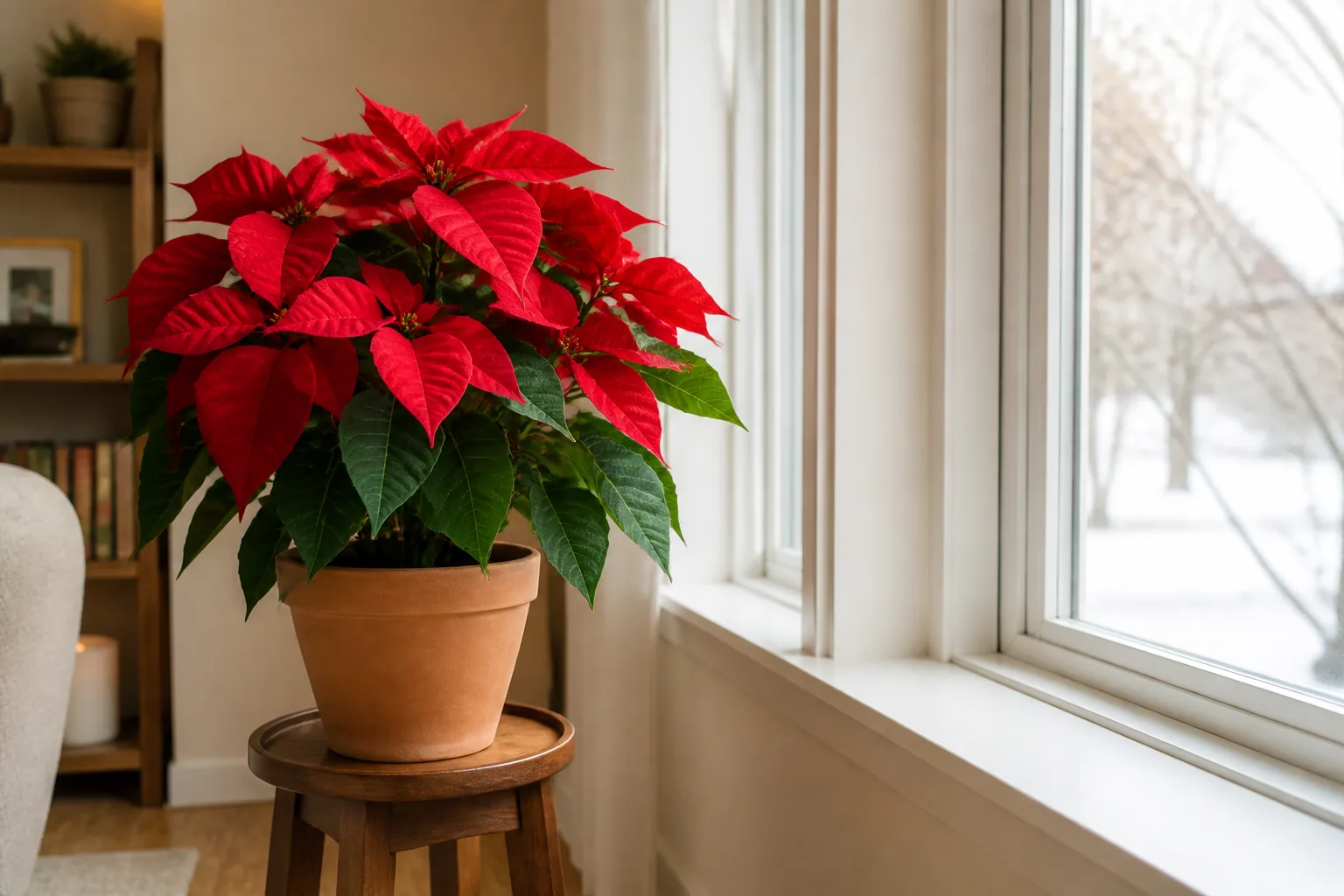
Roughly 70 million poinsettias are sold in the United States each holiday season, yet most end up in the trash by January. That is a waste of a plant that can live for many years. Poinsettias are perennials in their native range and in warm gardens, and they can behave like long-lived houseplants everywhere else if you treat them like living shrubs instead of disposable décor.
The trick through winter is not magic fertilizer. It is stable light, honest drainage, and temperatures that never dip into the injury zone. Get those three right and the showy bracts—the modified leaves most people call the flowers—can stay attractive for weeks. Get them wrong and even a “perennial” plant will look finished by New Year’s.
Are Poinsettias Perennials?
Yes. Euphorbia pulcherrima is a woody-based tropical shrub native to Mexico and Central America. In USDA Zones 9 through 11, poinsettias can grow outdoors year-round as landscape shrubs that reach 10 feet or more with good drainage and sun. UF/IFAS and the NC State Extension Gardener Plant Toolbox both describe it as a perennial in suitable climates.
Where poinsettias grow as outdoor perennials
In frost-free regions, poinsettias behave like the shrubs they are. They want four to five hours of sun daily, moist but well-drained soil, and protection from artificial night lighting if you want predictable winter color. Established outdoor plants are pruned after the bract show finishes, pinched through summer for bushiness, and fertilized during the warm growing season. UF/IFAS recommends stopping pruning around early September so flower buds can form on schedule.
What perennial means for cold-climate growers
If you live where winters freeze, the perennial label still applies—it just moves indoors. A poinsettia cannot survive temperatures below about 50°F (10°C) without damage. Cold-climate growers keep the same plant in a pot, bring it inside before frost, and optionally set it outdoors again once nights stay reliably above the mid-50s°F. You are not forcing an annual to live longer. You are giving a frost-tender perennial the winter shelter it evolved without.
That distinction matters for expectations. A greenhouse-grown gift plant may look perfect in December and stressed by February even with good care, because it was pushed hard for sale color. A healthy specimen, by contrast, can stay with you for 10 to 20 years or more with seasonal pruning and a proper rebloom routine.
Bracts, Cyathia, and Why Color Fades
Before you troubleshoot leaf drop, it helps to know what you are looking at. The red, pink, or white “petals” are bracts—modified leaves that surround the true flowers. The actual blooms are tiny yellow structures called cyathia in the center of each bract cluster. UF/IFAS notes that tight, unopened cyathia at purchase usually mean the display will last longer than plants already shedding pollen.
Color is a short-day response. Poinsettias initiate bract coloring when nights grow long in fall. Commercial growers manipulate light and temperature precisely; your living room is less cooperative. Once bracts are fully colored, they are not permanent paint. The plant is in a reproductive display phase that naturally winds down over several weeks to a few months, depending on genetics, light, and how stressed the plant was before you bought it.
When bracts fade, the plant is not necessarily dying. It is finishing one cycle. Green leaves should remain if roots are healthy. That is the handoff from “holiday decoration” to “houseplant you keep through spring.”
Set Up Your Poinsettia Correctly on Day One
Most poinsettia problems start in the parking lot, not on your windowsill. Big-box displays near automatic doors, chilled loading docks, and foil-wrapped pots set up rot before you get home.
Remove foil and fix drainage first
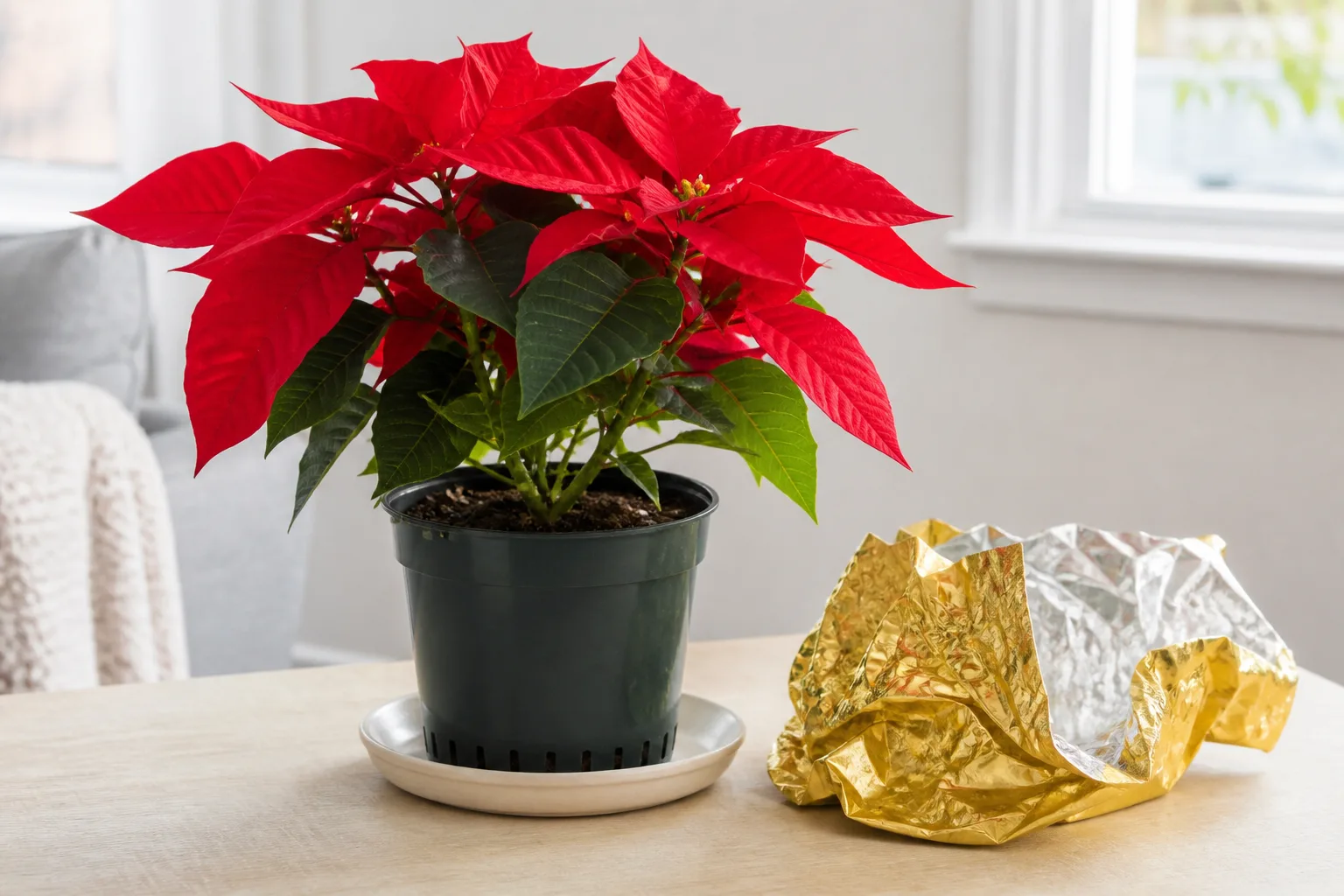
Decorative foil pot sleeves are the fastest route to root rot. They hide water pooling at the bottom and keep roots cold and soggy. Either remove the foil entirely or punch drainage holes and set the pot on a saucer you empty after every watering. UF/IFAS is explicit: water only when the soil surface is dry, and never let excess water sit in the sleeve or saucer.
If the pot has no drainage hole—a common problem on gift plants—repot promptly into a container with holes, using a loose indoor potting mix. Do not jump three sizes up; one inch wider is enough.
Choose a bright, draft-free location
Indoors, poinsettias want bright, indirect light for roughly six hours a day—an east, west, or filtered south window works. Avoid blasting heat vents, fireplaces, frequently opened doors, and cold window glass at night. NC State Extension recommends 65 to 70°F as the sweet spot and warns against heat sources that desiccate leaves.
On the ride home, treat the plant like a tropical pet: bag or sleeve it so leaves never hit sub-50°F air for even a few minutes. A healthy-looking plant that was refrigerated in the store can collapse a week later.
Do not fertilize while bracts are showy. The plant is not in active growth mode, and salts in fertilizer can stress roots in a small pot.
Winter Care That Keeps Bracts Colorful Longer
Once the plant is home, winter care is mostly about consistency. Poinsettias hate swings—wet then dry, warm then cold, bright then dim.
Water when the surface dries—never let pots sit wet
Stick a finger into the top inch of mix. If it feels dry, water until a little runs from the drainage holes, then discard the saucer water. If the pot feels light and leaves start to wilt, you waited too long—but a single wilt is recoverable if you soak and drain once, not if you leave it wet for days afterward.
In a heated home near 50% relative humidity, many pots need water about once a week, but calendar watering is unreliable. A sunny window dries faster than a dim corner. Weight the pot in your hand: light means dry; heavy means wait.
Yellow lower leaves on an otherwise firm plant often mean alternating drought and flood. Mushy stems at the soil line mean rot—reduce water, improve drainage, and hope green tissue remains.
Temperature and humidity rules that prevent leaf drop
Keep daytime temperatures near 65 to 70°F (18 to 21°C) and avoid anything under 50°F (10°C). Brief exposure to cold air—like setting the pot on a porch while unloading groceries—can cause sudden leaf drop that looks like disease but is environmental shock.
Dry indoor air can crisp leaf edges. A humidity tray (pebbles and water below pot level) or a nearby humidifier helps, but do not mist as a substitute; wet foliage in cool rooms invites fungal spots. Stable conditions beat heroic interventions.
After the Holidays: Keep, Compost, or Move On?
Not every poinsettia deserves a year-long commitment. Save the plant if stems are firm, roots are white when you slip the pot, and plenty of green leaves remain after the first post-holiday shed. Compost or discard if stems are black and mushy, the plant was left in standing water for weeks, or it was bought ice-cold and never recovered.
Also skip long-term plans for dyed, glittered, or painted novelty plants. They are treated for one-season display, not shrub culture.
If you keep it, expect some leaf drop in late winter as the plant transitions out of greenhouse conditions. That is normal if new growth appears by spring. If everything collapses at once, the issue was usually cold or waterlogging weeks earlier.
Year-Round Care for a Perennial Poinsettia
Think of the calendar in three phases: rest and recovery (late winter–spring), active growth (late spring–summer), and color initiation (fall). Skipping the growth phase is why rebloom attempts fail—you cannot shortcut the energy stored in green leaves.
Spring pruning and repotting timing
When bracts fade and look tired—often by March or April—prune stems back to about 4 to 6 inches, cutting just above a leaf node. Wear gloves: stems bleed a milky latex sap that irritates skin and eyes. UF/IFAS advises leaving as many healthy green leaves as possible when moving plants outdoors later.
Repot in spring only if roots circle the pot or water runs straight through. Use well-drained mix with peat, perlite, and loam. Begin monthly diluted fertilizer from late spring through early fall, not during the short-day treatment.
Summer outdoors vs staying inside
Once nights stay above about 55°F (12–13°C), you can place the pot outdoors in bright shade or morning sun. Acclimate gradually; direct midday sun on a plant grown in a greenhouse will burn leaves. Continue watering when the surface dries and pinch leggy shoots through July to keep a bushy shape.
UF/IFAS says outdoor landscape plants need regular pinching until early September, then pruning stops so buds can form. Container plants follow the same cutoff: stop pruning by early September in most climates.
Bring plants back inside before nights dip toward 50°F. Inspect for pests—whiteflies and mealybugs love poinsettias—so you do not infest other houseplants.
How to Rebloom a Poinsettia Next Winter
Reblooming is doable and often fussy. You are re-creating a tropical short-day fall indoors, where streetlights, TV glow, and hallway lamps all count as “light.”
The short-day darkness schedule explained
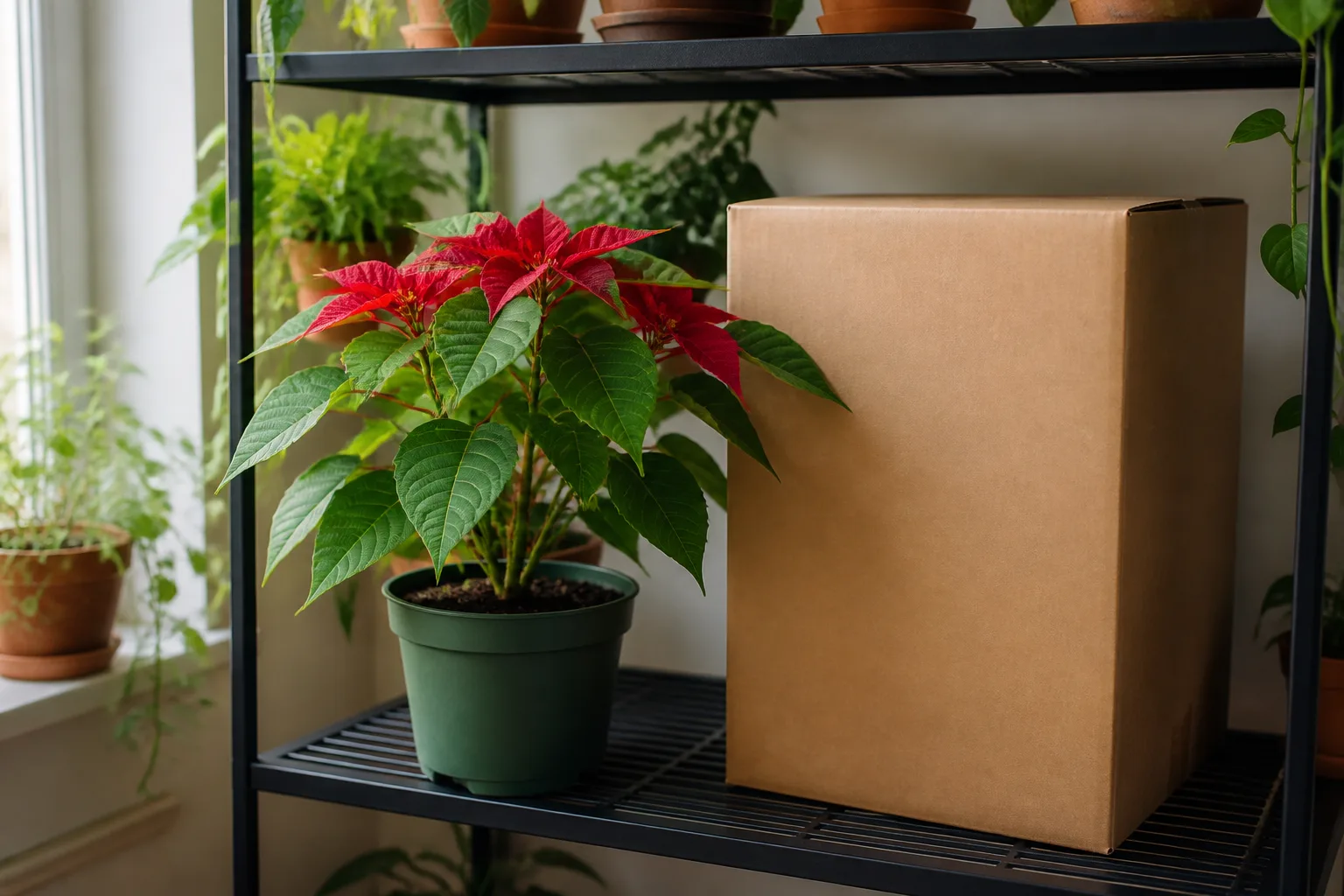
Starting around late September or early October, give the plant 14 to 16 hours of uninterrupted darkness every night and 8 to 10 hours of bright light each day for 8 to 10 weeks. NC State Extension specifies 16 hours dark and 8 hours bright with night temperatures in the low 60s°F for holiday color.
Practical methods:
- Move the pot into a closet or unused room with no windows, OR
- Cover the plant with a cardboard box that seals out all light from dusk to morning, OR
- Place it in a basement with no grow lights on overnight.
Even a night-light or cracked door can delay or prevent coloring. UF/IFAS warns that interrupting darkness after October 1 delays flowering—streetlamps matter for outdoor plantings too.
During the day, return the plant to your brightest window. Continue normal watering and light feeding until color shows, then treat it like a fresh holiday plant again.
What to do if color comes back weak or uneven
Some plants rebloom brilliantly; others return pale or patchy, especially if they were stressed as gift plants or missed weeks of darkness. Leggy stems are normal as greenhouse growth regulators wear off—pinching in summer helps, but cannot fully recreate nursery density.
If bracts are disappointing after an honest attempt, you can still keep a green foliage plant or compost without guilt. Rebloom is optional horticulture, not a moral test.
Troubleshooting Dropped Leaves and Crispy Bracts
Use symptoms to separate environment from disease:
- Sudden total leaf drop after purchase: cold exposure or draft shock. Stabilize temperature; do not overwater in panic.
- Gradual yellowing lower leaves with wet soil: overwatering or poor drainage. Fix the pot before fertilizing.
- Wilting with dry soil: underwatering. Soak once, drain fully, then adjust schedule.
- Crispy leaf margins only: low humidity or heat vent blast. Move the pot and add humidity.
- White cottony clusters under leaves: mealybugs. Isolate and treat with insecticidal soap; severe infestations on one gift plant may not be worth saving.
- Brittle broken stems: normal—handle carefully when moving and pruning.
Magnesium deficiency on older outdoor plants shows as yellowing between veins with scorched edges; UF/IFAS suggests Epsom salts applications in spring and summer for landscape specimens. Indoor gift plants rarely need this the first year.
Pests, Sap Irritation, and Pet Safety
Poinsettias attract aphids, mealybugs, whiteflies, spider mites, and scale indoors and out. Outdoor plantings in humid climates can also see fungal leaf spots when airflow is poor. Prevention beats cure: do not crowd plants, and quarantine new purchases.
The white sap is a latex irritant. Wear gloves when pruning, keep sap out of eyes, and wash skin after handling. People with latex allergy may react more strongly than the general population.
Pet owners should know the plant is listed as toxic to dogs and cats by the ASPCA because of irritant sap. Ingestion can cause mouth and stomach irritation and vomiting, though severe poisoning is uncommon and the danger is often overstated. Still, keep plants off floor-level shelves if pets chew foliage, and call your veterinarian or poison control if ingestion occurs.
Conclusion
Poinsettias are perennials, whether they spend their life in a Zone 10 garden or a pot that shuttles between a sunny window and a summer patio. Keeping them colorful through winter comes down to removing foil, watering only when the surface dries, and holding temperatures steady above the cold-injury line.
If you want the plant back next December, give it a real growing season first—prune in spring, feed through summer, then commit to nightly darkness starting in late September. Not every supermarket poinsettia will perform like a nursery specimen, but the ones that do earn their place as a living holiday tradition instead of a single-use decoration.