7 Reasons Your Houseplants Are Dying
Houseplants decline fast when light drops and heat runs. Learn the seven reasons pros diagnose first and the exact checks to save your collection.
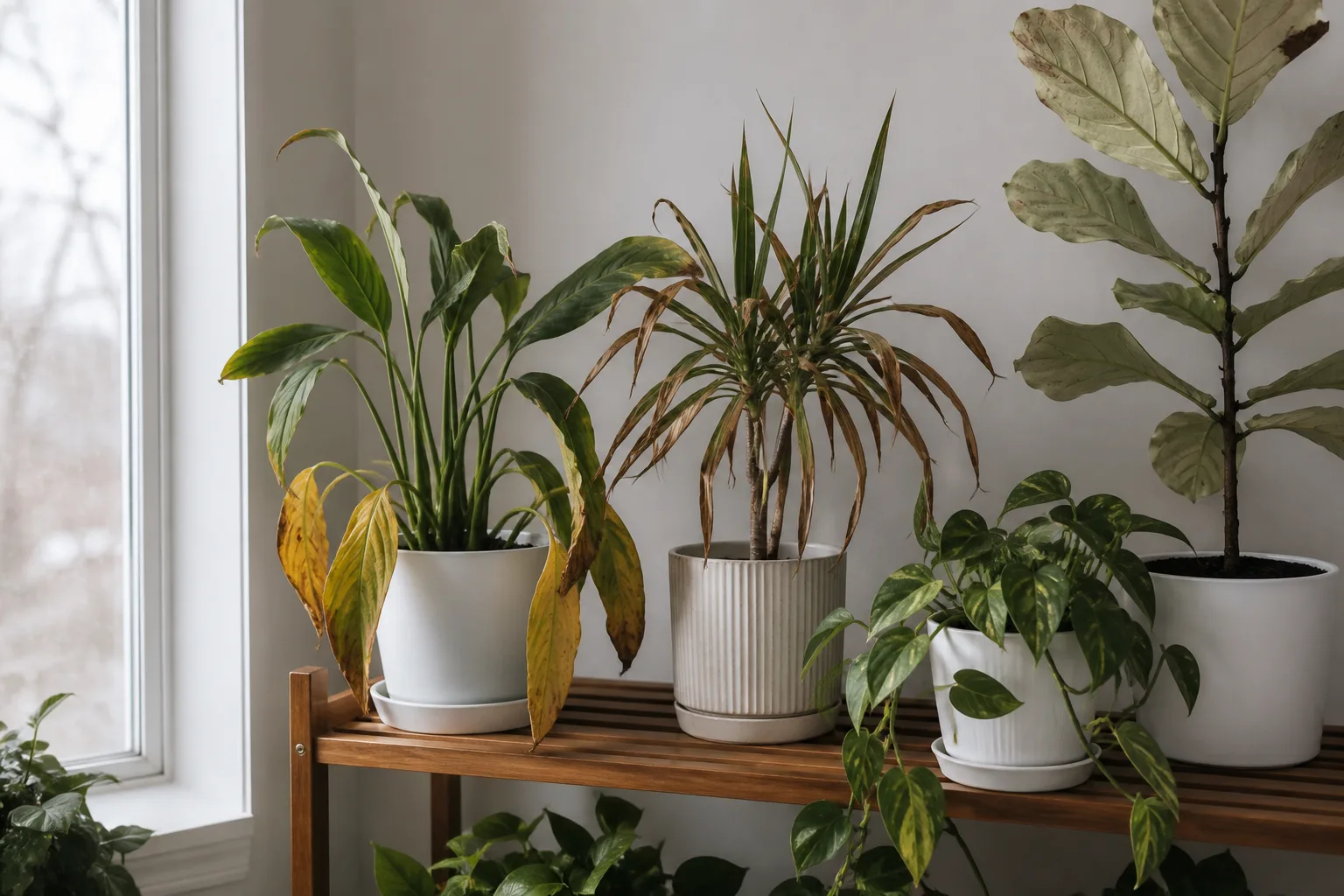
Your fiddle-leaf fig looked fine in October. By January the lower leaves are yellow, the tips are brown, and you have watered twice because wilting feels like thirst. That spiral — symptoms that mimic each other — is why houseplant shops and nursery managers start with inspection, not impulse watering. Slow winter growth is normal. A plant sliding toward death is not.
Plant pros working with thousands of indoor specimens through fall and winter converge on the same seven stressors: too little light, too much water, temperature swings, dry air, excess fertilizer, pests, and neglected leaves. This guide walks through each reason in the order that saves the most plants, with extension-backed checks so you fix the real problem instead of the loudest symptom. For habit-level winter swaps, see things killing houseplants in winter. For the full seasonal calendar, start with winter houseplant care.
Start With a Five-Minute Triage Before You Change Anything
The fastest way to kill a salvageable plant is to change light, water, and fertilizer on the same weekend. Each adjustment takes two weeks to show results. Pros isolate variables: look, touch, smell, then act on one lever.
Symptoms That Point to Roots Versus Environment
Root and watering problems usually show up with soil that stays damp for days, a musty smell from the pot, fungus gnats hovering over the surface, yellow leaves that drop easily, and wilting while soil is still wet. That wet-soil wilt pattern means roots cannot absorb water — not that the plant needs more.
Environment problems — light, humidity, drafts — tend to produce crispy brown tips or margins, one-sided damage on the leaf facing a heater or window, leggy new growth reaching toward light, or pale, washed-out foliage without mushy stems. Soil moisture may be normal.
If both sets appear, start with moisture and roots. Saturated cold soil in winter kills faster than a dim corner.
The Inspection Order Plant Shops Use
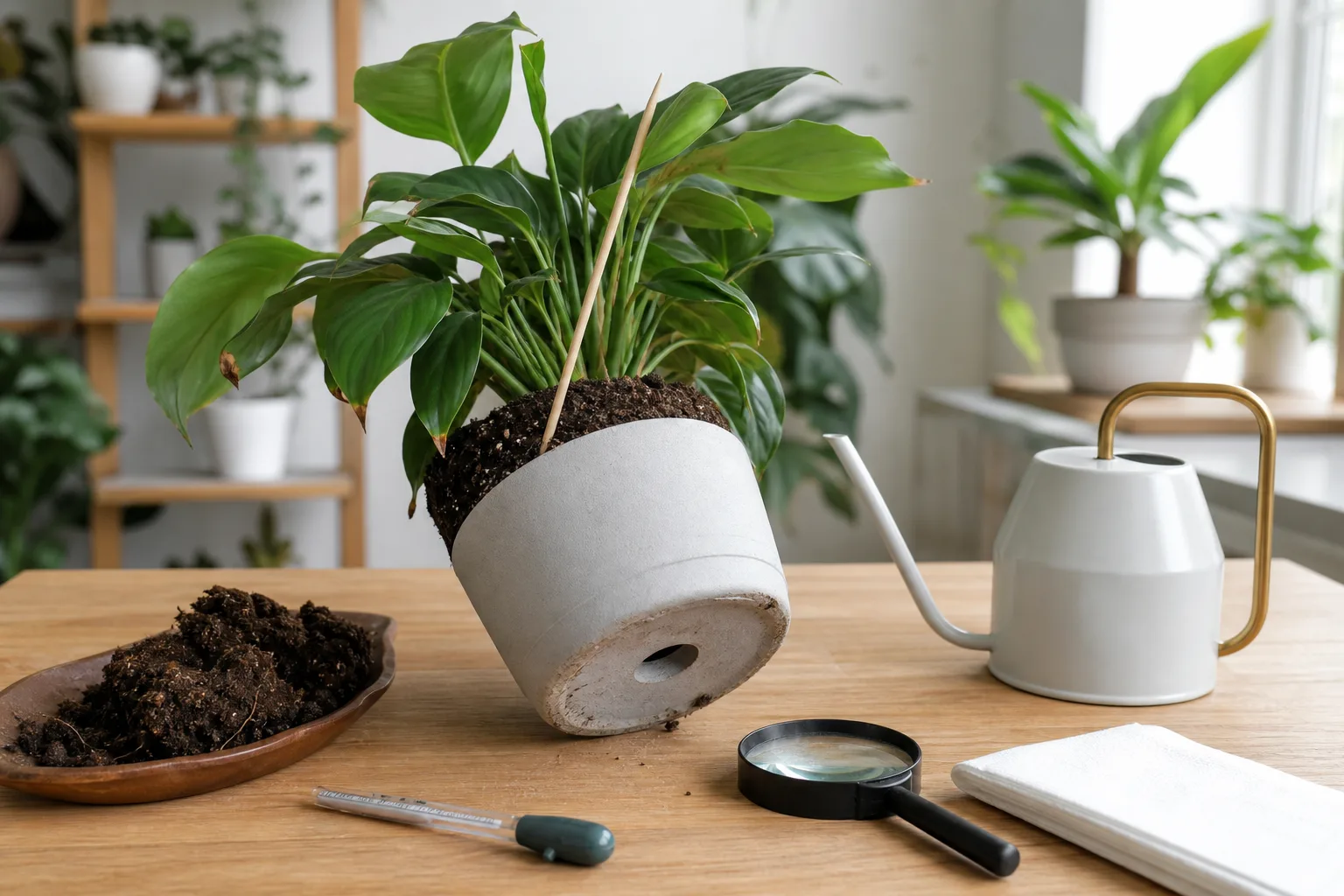
Work top to bottom in five minutes:
- Light at leaf height — is the plant leaning or producing small new leaves?
- Soil moisture — finger or skewer to two inches; lift the pot for weight.
- Leaf undersides and stem joints — stippling, webbing, cottony patches, scale bumps.
- Placement — contact with cold glass, open register, space heater, leaky door.
- Leaf surface — dust film, residue, sticky honeydew from pests.
- Drainage — standing water in saucer, clogged holes, pot too large for root mass.
Write down what you find before you move anything. Our houseplant symptom checker expands this triage when multiple plants fail at once.
Reason 1: Too Little Light Slows Everything Down
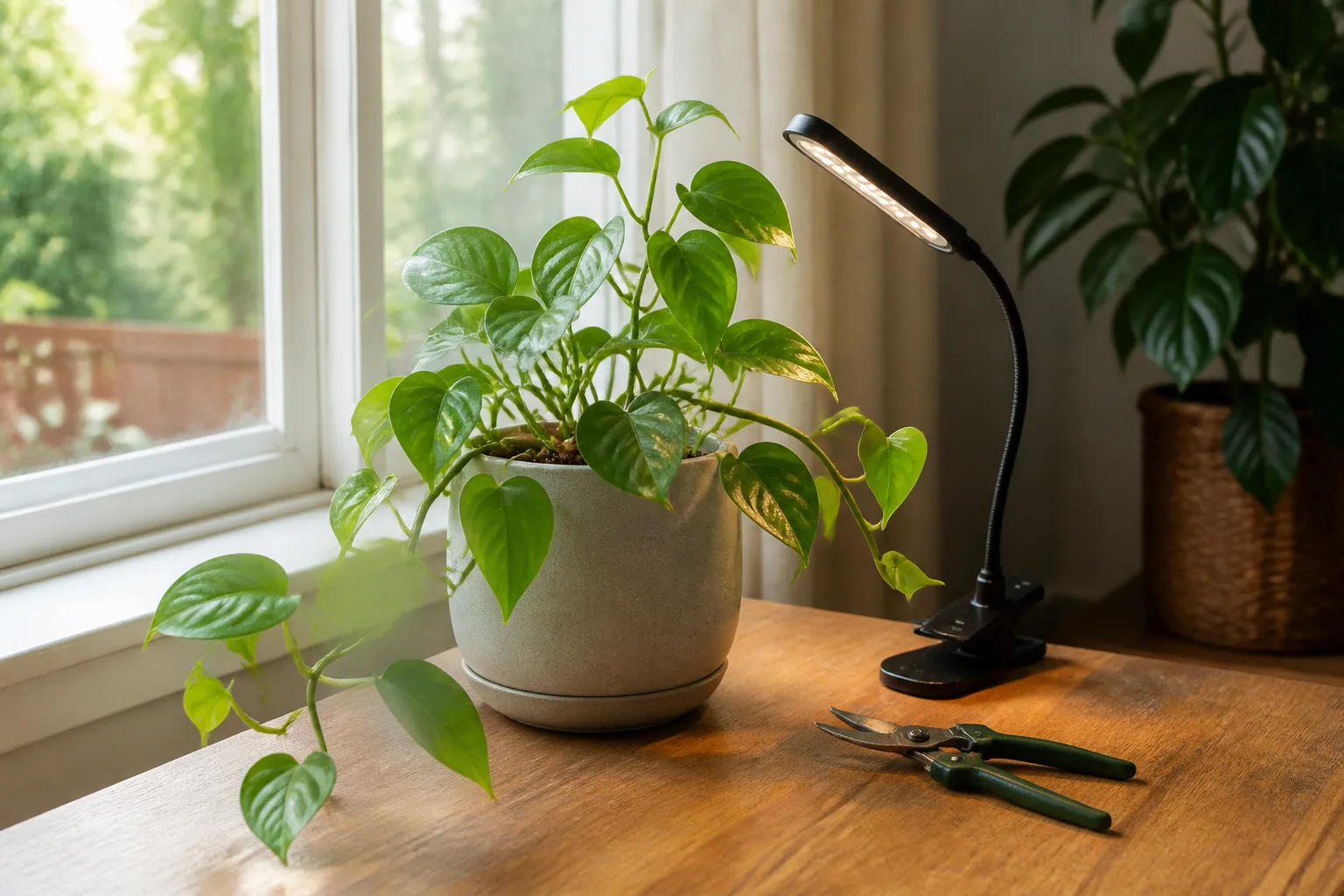
As days shorten in fall, photoperiod drops and sun angle lowers. Light at a winter window can fall 40 to 50 percent below summer levels. Plants photosynthesize less, pull less water, and grow slowly — but they still need enough light to maintain leaves.
University of Wisconsin-Madison Extension lists classic low-light signs: faded leaves, stunted growth, and lack of flowers on blooming species (UW-Madison Extension). Leggy stems with long gaps between leaves mean the plant is stretching toward the brightest source. Soil that stays wet for weeks without drying often pairs with low light because the plant is not transpiring.
N.C. Cooperative Extension notes that north and east windows that worked in summer can become too shady in winter; this is the season to relocate plants or add grow lights (N.C. Cooperative Extension).
How Short Winter Days Change Water and Pest Risk
Low light is not only a growth problem — it raises overwatering and pest risk. A plant that cannot use water sits in damp soil longer. Weak, stressed tissue attracts spider mites, which thrive in bright, dry microclimates near heaters. Dim light plus dry heat is a double hit many collections see in February.
Fix Order — Move, Supplement, Then Prune
Move first. Shift toward the brightest exposure the species tolerates — usually an unobstructed east or south window with the plant six to twelve inches back from cold glass at night. Rotate monthly if light comes from one side.
Supplement if needed. Full-spectrum LED grow lights four to twelve inches above the canopy, timed for ten to twelve hours, rescue collections in dark rooms. Measure if you are unsure; see using a light meter for choosing houseplants and not enough light houseplants for symptom depth.
Prune last. Cut leggy growth only after light improves; new leaves will be tighter. Pruning in dim conditions does not fix the cause.
Reason 2: Overwatering Is the Silent Killer
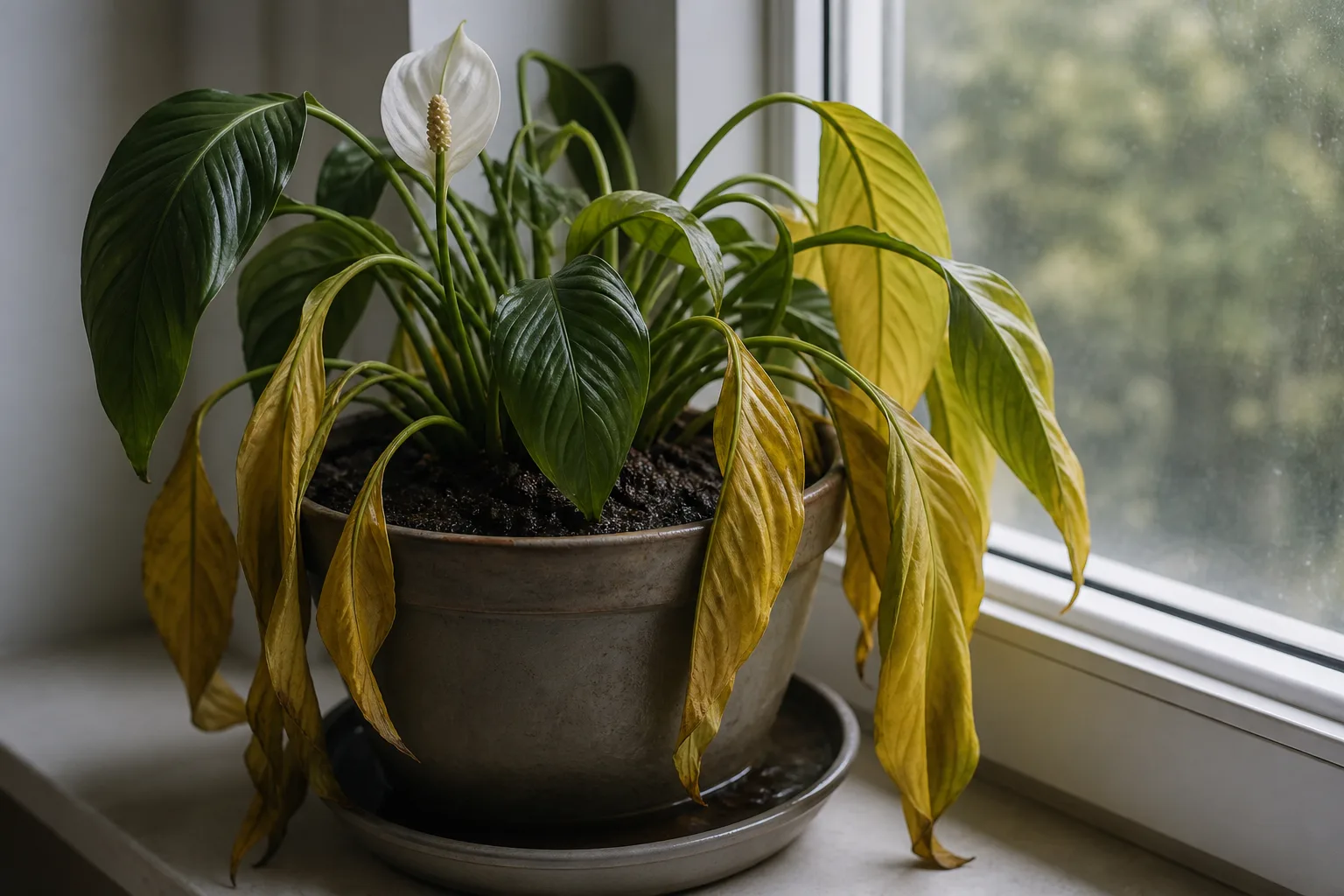
Improper watering is a primary cause of plant death, according to UW-Madison Extension: too little water wilts plants, but excess water suffocates roots and contributes to root rots that yellow foliage and eventually kill the plant (UW-Madison Extension). In fall and winter, that failure mode accelerates.
Why Wet Soil Lingers Longer in Fall and Winter
Growth slows when light and temperature drop. Roots take up less water. Cooler soil evaporates slower. A pothos that drank every seven days in August may need water every fourteen to twenty-one days in January — experienced growers often cut frequency and volume by roughly 25 percent through winter (Joy Us Garden).
The RHS winter guidance is direct: with lower light and temperatures, plants grow less and need less water — and pots sitting in saucers of excess are a common failure point (RHS).
Continuing a summer pour schedule on a resting plant keeps roots in cold, airless soil. Oxygen leaves the root zone. Fungi colonize. The plant wilts — and many owners water again.
Moisture Checks That Beat a Calendar Schedule
Break the calendar habit. N.C. Cooperative Extension recommends three checks before every winter watering:
- Finger test — feel the upper two inches of soil; water only when dry to that depth for most foliage plants.
- Pot weight — a light container after a known good watering baseline means roots have used available moisture.
- Wooden skewer — push deep, wait a minute, pull out; damp media clinging mid-pot means the center is still wet even if the surface looks dry.
When you water, soak until a little drains, then empty the saucer within twenty minutes. Never let roots stand in water unless the species requires it (UW-Madison Extension). For the full year-round method, read how to water indoor plants the right way and winter houseplant watering mistakes.
Reason 3: Hot and Cold Drafts Stress Leaves Fast
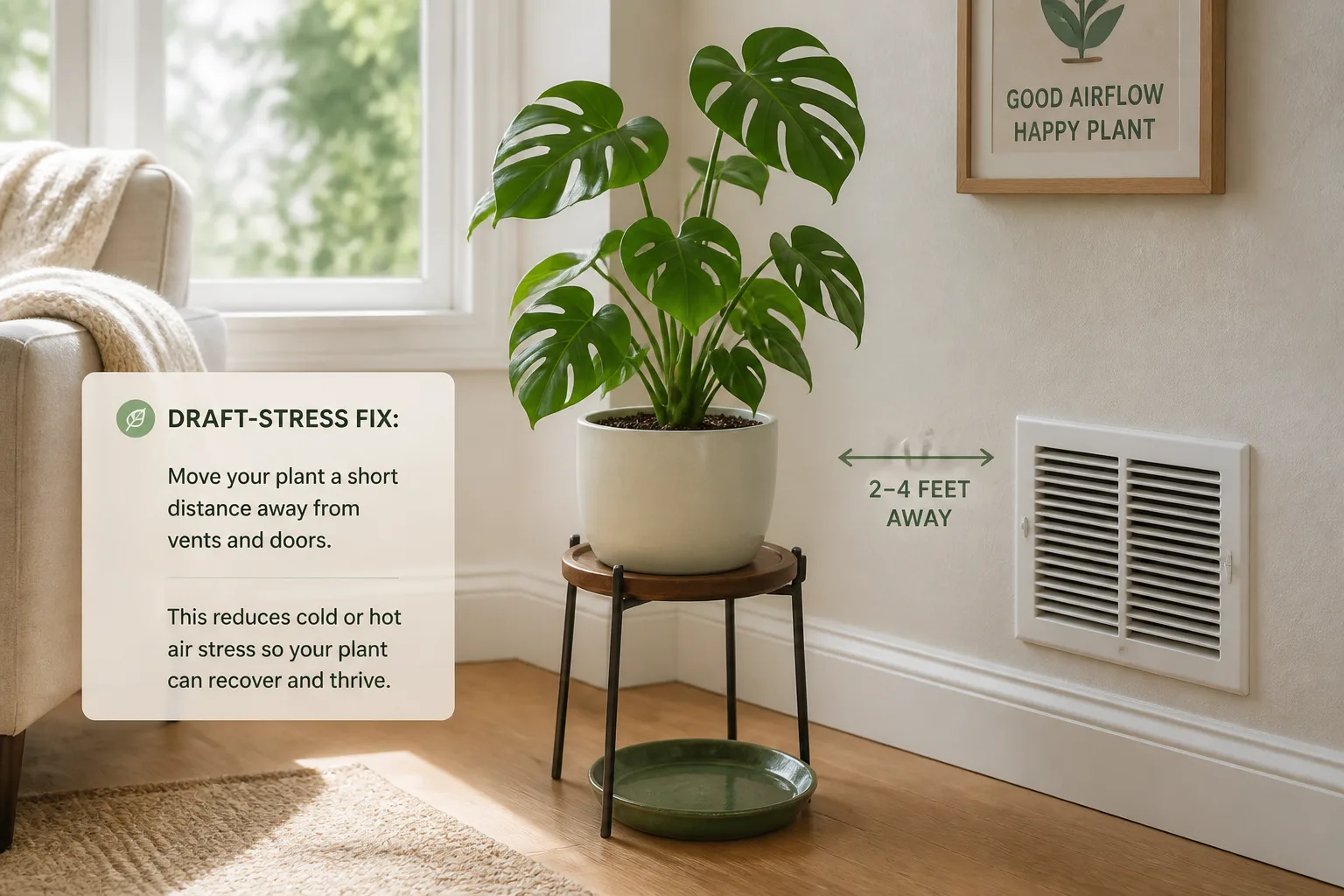
Most houseplants evolved in tropical forests with stable warmth. Indoor winter swings — hot air from registers, cold leakage at windows, fireplace blasts — create localized stress faster than a few degrees on the thermostat.
N.C. Cooperative Extension advises watching drafty windows and dry hot air from vents; most plants prefer 65° to 75°F by day with about a 10° drop at night (N.C. Cooperative Extension). The RHS warns that radiators and fires can crisp delicate leaves while cold windowsills damage plants left behind curtains (RHS).
Windows, Vents, and Fireplaces Create Microclimates
A thermometer at leaf height tells the truth your thermostat hides. A pot on a windowsill can sit at 45°F against glass while the room reads 70°F. A fern three feet from a forced-air register may bake at 85°F whenever heat cycles. Damage often appears on one side of the plant — the face toward the blast.
Placement Rules That Stop One-Sided Damage
Pull pots six to twelve inches back from single-pane glass at night. Close curtains on the room side of the plant, not between foliage and glass. Keep at least three feet between foliage and space heaters or open registers. If a plant sat outdoors in summer, inspect before bringing it in — outdoor shock plus indoor drafts compound quickly.
For heater-specific damage patterns, see is your heater killing your houseplants and draft stress on houseplants.
Reason 4: Low Humidity Crisps Leaves Even When Soil Is Wet
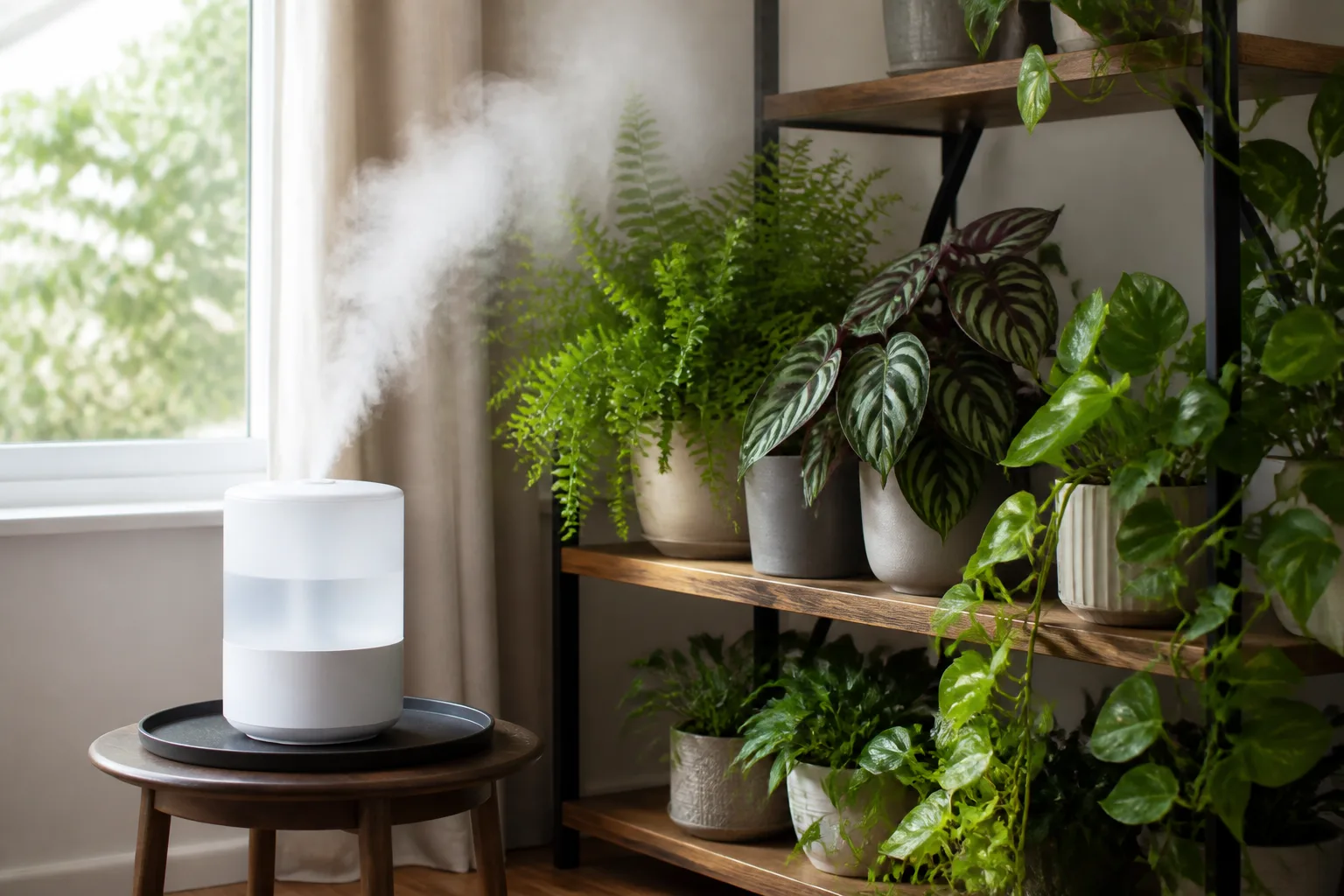
Brown, crispy leaf tips and margins in heated homes often get misread as underwatering. The soil is still moist. Roots are fine. Dry air pulled moisture from leaf edges faster than the plant replaced it.
Indoor relative humidity can crash below 20 percent when furnaces run; most tropical houseplants prefer 40 to 50 percent (N.C. Cooperative Extension). Ferns, calatheas, orchids, and thin-leaved tropicals show damage first. Snake plants and ZZ plants tolerate average home air.
Central heating dries air that was already moderate in fall (RHS). Forced-air paths in front of vents compound the problem — the same leaves hit by hot dry blasts lose moisture twice.
What 20 Percent Indoor Air Does to Tropicals
Low humidity does not usually kill a healthy plant overnight. It weakens leaf tissue, slows photosynthesis when pores close to conserve water, and pairs with mite outbreaks on plants already stressed by low light. Crispy tips on moist soil are the classic humidity signature — not thirst.
Humidifier, Tray, or Grouping — What Actually Works
Room humidifier set to hold 40 to 50 percent RH near the collection is the most reliable fix. Grouping plants raises local humidity slightly as they transpire together (N.C. Cooperative Extension). Pebble trays — pot on stones, water below stone tops — help a little; they do not replace a humidifier in a dry room.
Misting adds minutes of moisture and can leave foliage wet long enough to invite fungal spots; extension educators increasingly treat it as cosmetic, not a humidity plan (N.C. Cooperative Extension). Move plants away from direct vent paths before you buy hardware. Deeper targets and tool comparisons live in signs your houseplants need more humidity and houseplant humidity guide.
Reason 5: Overfertilizing Burns Roots in Slow-Growth Months
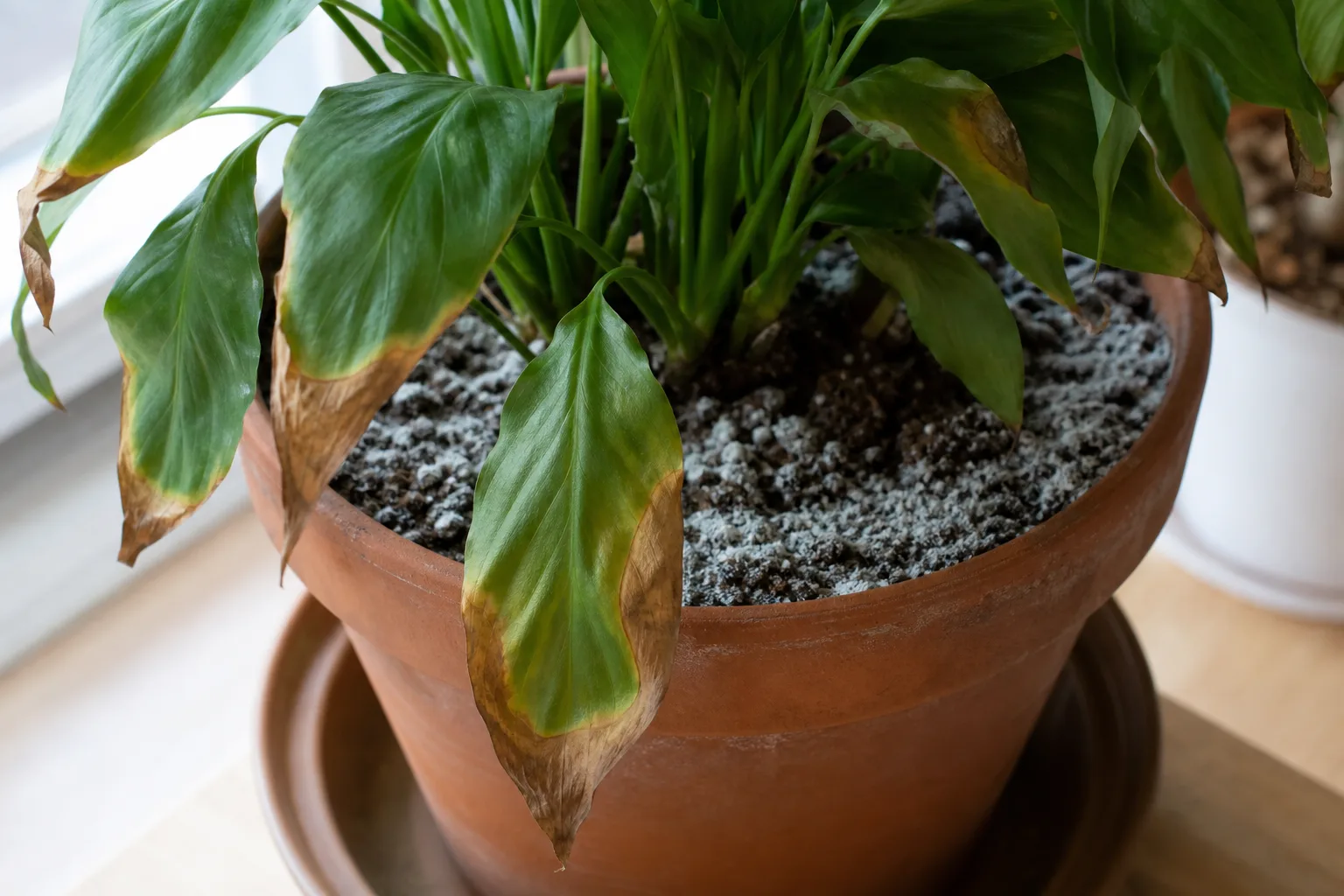
Fertilizer is not plant food in the sense of calories — it is mineral salts roots absorb when actively growing. In winter, most houseplants rest. Roots take up little nutrition. Salts from continued feeding accumulate in the pot and burn leaf margins, deform new growth, or damage root tips.
UW-Madison Extension recommends fertilizing only during active growth — for most plants between spring and fall — and warns that overfertilization can cause leaf burn and kill plants (UW-Madison Extension). N.C. Cooperative Extension advises holding feed through winter and resuming in March or April as conditions improve (N.C. Cooperative Extension).
The exception: specimens under grow lights still pushing new leaves may need diluted, half-strength liquid feed monthly — not the summer full dose.
Salt Buildup Versus Genuine Hunger
Overfertilized: crusty white salts on soil surface, brown tips on otherwise green leaves, stunted new growth, wilting despite moist soil after a recent feed.
Underfertilized: pale overall color on an actively growing spring plant, older leaves yellowing while new leaves stay small — rare in winter when growth is slow.
If you fed through fall on autopilot, suspect salts before hunger.
When to Pause Feed and How to Flush Salts
Pause routine fertilizer from late fall through winter for most of the collection. Resume at half strength when sustained new growth returns — not on a calendar date alone.
To flush accumulated salts, run lukewarm water through the pot in a slow trickle for several minutes, let drain fully, and repeat once. UW-Madison Extension notes that periodic shower rinses can leach excess salts while cleaning foliage (UW-Madison Extension). Full feeding calendars and burn recovery sit in how often to fertilize indoor plants.
Reason 6: Hidden Pests Exploit Weak, Dry Winter Plants
Pests rarely announce themselves on healthy, vigorous plants first. Spider mites, mealybugs, scale, and thrips hitch indoors on plants summered outside or on new purchases, then explode when indoor air dries and plants weaken.
UW-Madison Extension notes that spider mites thrive in hot, dry conditions and can often be reduced by adjusting environment — increasing humidity and rinsing foliage — before pesticides (UW-Madison Extension). Winter dryness near heaters is mite habitat. Stippled yellow leaves, fine webbing on undersides, and sticky honeydew are warning signs.
Inspect new plants one to two weeks in isolation before placing them in the collection (UW-Madison Extension). Summer patio plants need the same quarantine in fall.
Spider Mites, Scale, and Hitchhikers From Summer Outdoors
Spider mites: tiny stipples, bronzing, webbing — worst on calatheas, alocasias, and English ivy in dry heat.
Mealybugs: white cottony clusters in stem joints and soil line.
Scale: hard brown bumps on stems and leaf undersides; do not wipe off easily.
Fungus gnats: adults on damp soil surface — often a overwatering signal, not the primary killer, but larvae damage roots in wet mix.
Treatment Order That Protects the Rest of Your Collection
- Isolate the affected plant immediately.
- Rinse foliage in lukewarm water — shower or sink — to knock off mites and aphids.
- Wipe mealybugs and soft scale with alcohol on a cotton swab.
- Improve culture — humidity, airflow, correct watering — before repeat chemical sprays.
- Treat with insecticidal soap or horticultural oil on a weekly cycle for two weeks if populations persist; follow label directions indoors.
Isolate until you see clean new growth for two weeks. Species-specific treatment order: spider mites on houseplants, mealybugs on houseplants, and integrated pest management indoors.
Reason 7: Dusty Leaves Block Light and Invite Problems
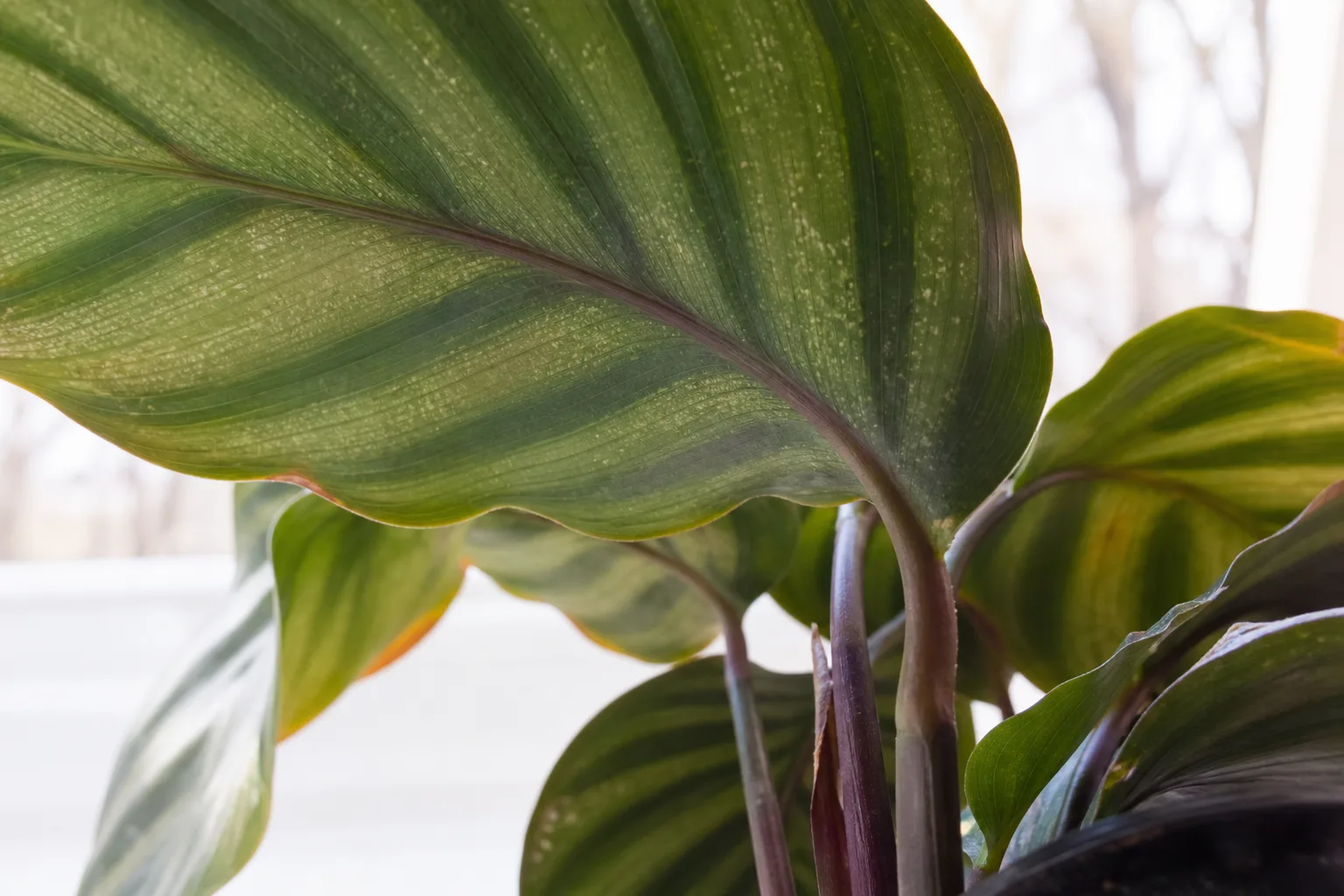
Dusty leaves rarely kill a plant alone, but they reduce photosynthesis exactly when winter light is already scarce. A grime layer blocks wavelengths leaves need. Dust also harbors mite and fungal spores and makes pest inspection harder.
N.C. Cooperative Extension recommends wiping leaves with a mild soap solution on a cloth — or giving plants a lukewarm shower — while avoiding water hot enough to scald foliage (N.C. Cooperative Extension). UW-Madison Extension adds that periodic lukewarm rinses clean dust and insects while leaching salts (UW-Madison Extension).
Safe Cleaning Methods by Leaf Type
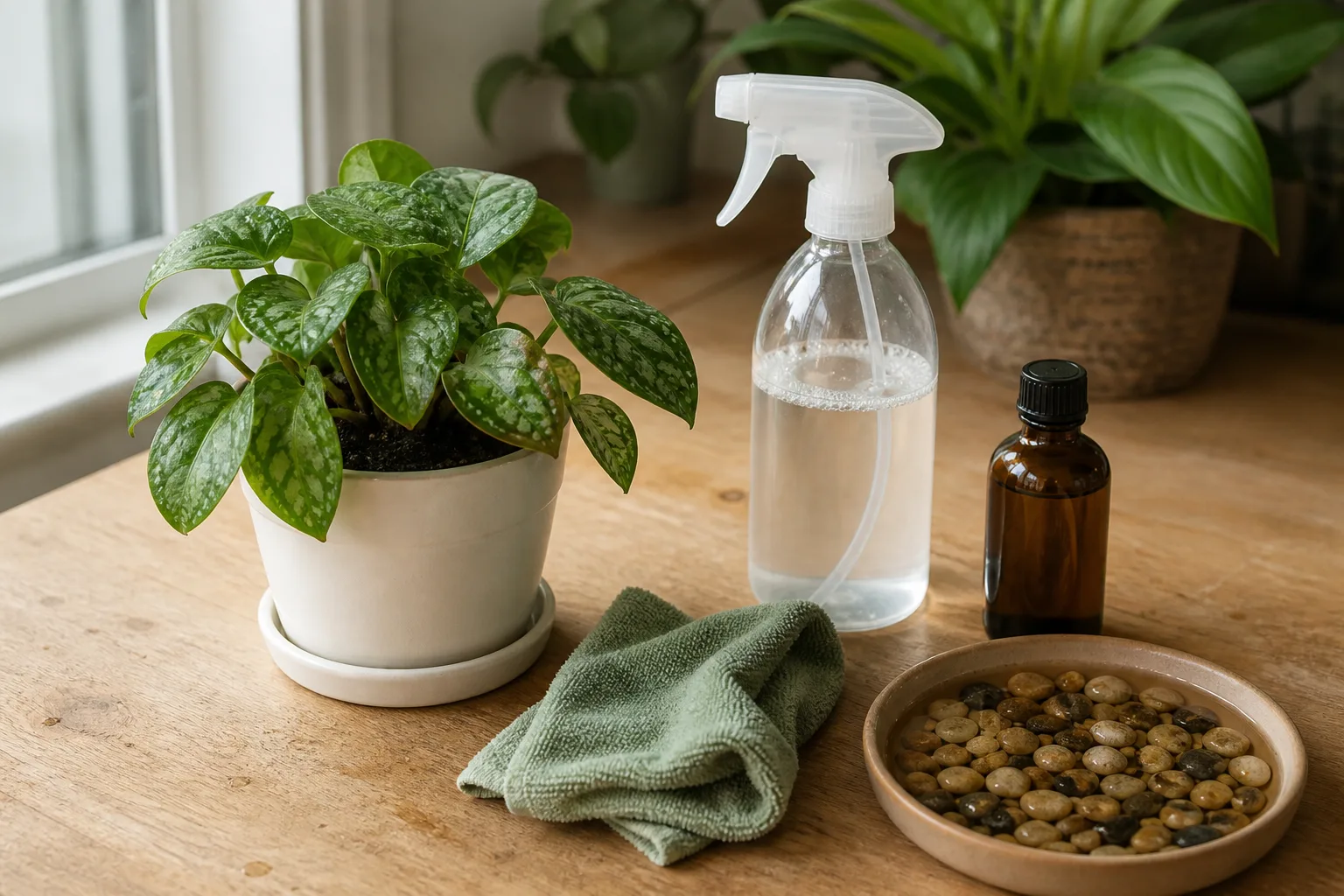
Smooth, waxy leaves — pothos, monstera, rubber plant: damp microfiber cloth, support the leaf from underneath, wipe both sides.
Shower rinse — sturdy foliage; use lukewarm water, let drain fully, keep out of direct sun until dry.
Fuzzy leaves — African violets, some begonias: dry brush only with a soft cosmetic or artist brush; water on hairy surfaces causes spotting.
Succulents — brush or dry cloth; avoid soaking rosettes.
Turn Leaf Wipes Into a Monthly Pest Check
Schedule leaf cleaning monthly in winter when light is precious. Each wipe is a chance to flip leaves and inspect joints — the same pass pros use in retail greenhouses. Pair cleaning with rotation toward light and a soil moisture check so maintenance stays bundled.
For why winter light and dust compound, see why houseplants struggle in winter.
Conclusion
Houseplants rarely die from one dramatic mistake. They die from seasonal drift — the same watering Tuesday, the same dim corner, the same fertilizer bottle, while light, humidity, and root demand all changed. Plant pros beat that drift with inspection before intervention.
Use the five-minute triage: moisture and roots first, then light, drafts, humidity, feed history, pests, and leaf surface. Fix one variable, wait two weeks, reassess. Overwatering on a summer schedule remains the fastest killer when days are short; low light and dry heat set the stage. Move plants to stable, bright, humid-adjacent spots, check soil before every pour, pause fertilizer, rinse leaves monthly, and isolate anything suspicious.
Most declining plants recover if roots are still firm and white. When soil smells musty, stems mush at the base, or roots are black and soft, repot rescue may be the last option — but catching the seven reasons early keeps that surgery rare. Your collection does not need perfect conditions. It needs seasonal attention matched to what winter actually does indoors.



