Houseplant Draft Stress: Causes, Diagnosis and Fixes
One-sided curl, tip burn, or bud abort near a vent? Confirm draft stress with leaf-height tests, then fix placement without drowning the plant.
One side of a plant curls, browns, or sheds leaves while the rest of the canopy looks fine. Buds abort after you leave the AC on. A ficus dumps leaves the week you start the furnace. That pattern is often houseplant draft stress: localized moving air carrying the wrong temperature or dryness for that plant — not a fungus you spray away.
Draft stress is a microclimate problem. The thermostat in the middle of the room can read comfortable while foliage near a vent, radiator plume, exterior door, or leaky window lives in a different climate. Fix the exposure first, then stabilize watering and wait for new growth to prove recovery.
Written by Sai Ananth (B.Pharmacy; pharmacognosy background; LeafyPixels lead writer) and reviewed by Dr. Priya Menon (botanist and indoor plant specialist) on the LeafyPixels Review Board. The measured cases below come from editorial plants in a north-central Ohio apartment (USDA zone 6a). Your rooms will differ — treat the °F/RH gaps as lived benchmarks, not universal rules.
For a short symptom overview, start at the draft stress symptom hub. When leaves are falling broadly, pair this page with houseplant leaf drop. When unopened flowers abort, use houseplant bud drop.
Do this first (next 10 minutes):
- Do not rotate the pot yet — the damaged face is your evidence.
- Note whether the furnace, AC, exterior door, or radiator has been active in the last week.
- Feel for moving air at leaf height with the back of your hand while that system runs.
- Finger-check soil 5 cm / 2 in deep before you change watering.
What Draft Stress Actually Means
“Draft stress” is a practical label, not a disease name. It means the plant is reacting to moving air plus the heat, chill, or dryness that air carries. A gentle breeze in a warm, reasonably humid room can help circulation. A focused stream from an HVAC register can desiccate margins, chill tropical tissue, or abort buds even when the hallway feels fine.
Missouri Botanical Garden’s guidance on environmental problems of indoor plants warns that hot air from a furnace vent, cold air from a door or window, or frigid store-to-home exposure can trigger leaf and flower drop. Freezing exposure can collapse or blacken foliage. That is the frame for this guide: match symptoms to a real air path, then change placement or airflow — not five care variables at once.
Exact “safe distances” do not transfer between homes. Vent force, register angle, plant species, pot size, and how long the system runs all change the outcome. Measure at leaf height during the actual event instead of copying a rule of thumb from a blog.
First-Hand Cases From Our Apartment Collection
These three editorial cases show how draft stress presents when you actually measure the microclimate. They are not lab trials; they are what we logged while troubleshooting our own plants.
Case 1 — Furnace week, webbing ficus (Nov 2025). A 5-ft Ficus benjamina sat 18 inches from a floor register. Wall thermostat read 70°F. At leaf height facing the vent during a heat cycle: 78°F / 22% RH. Sofa height across the room: 70°F / 31% RH. Within four days of first furnace runs, 40+ mostly green leaves dropped from the vent-facing side. A tissue strip at mid-canopy blew straight toward the hallway. Fix: redirected the vane and moved the pot 14 inches laterally (still on the same bright wall). Fresh falls fell from ~12/day to 2/day by day 10; first fully clean new leaf at week 5. Watering interval lengthened once the hot plume stopped drying the near side of the pot.
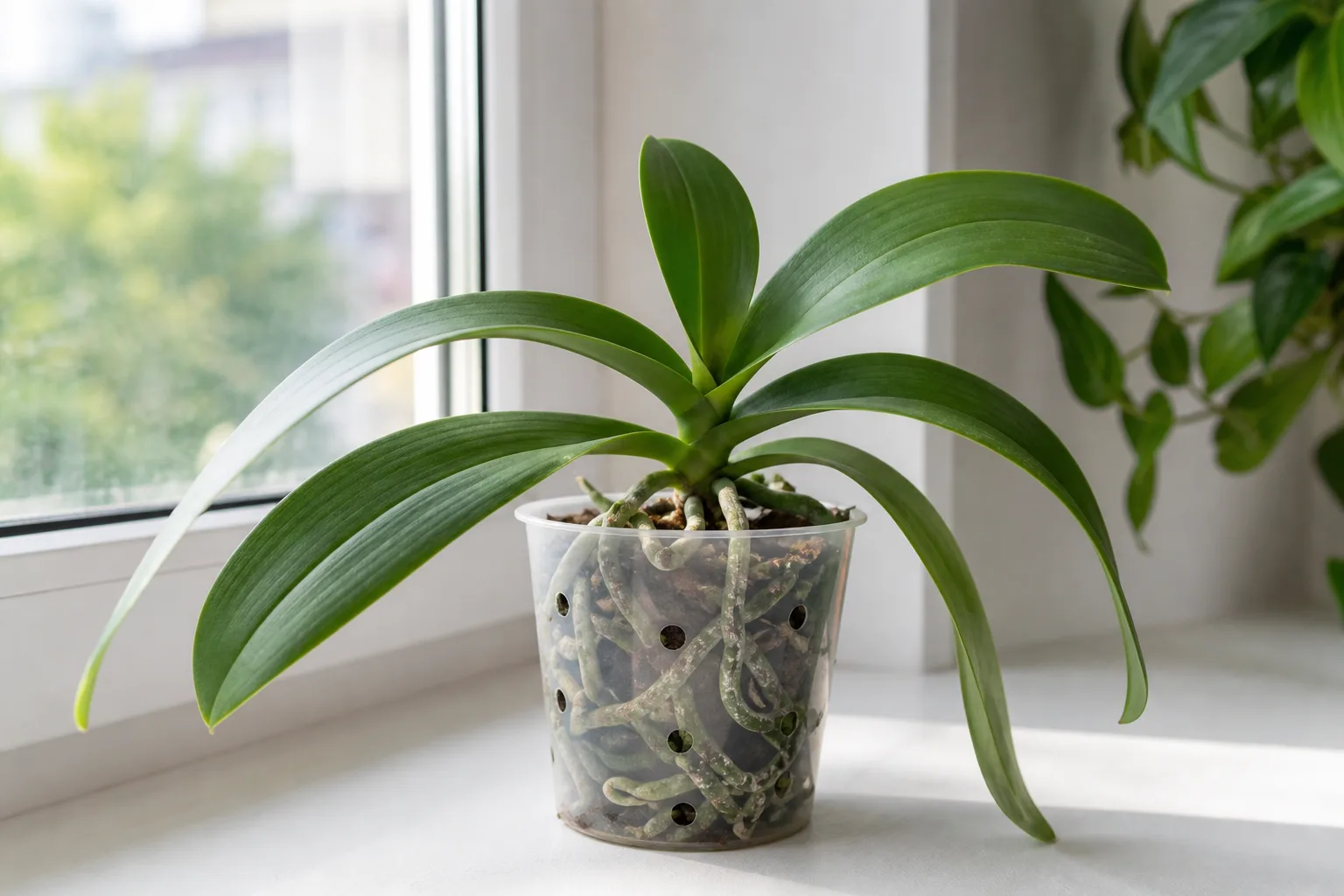
Case 2 — AC jet aborting orchid buds (Jul 2025). A Phalaenopsis on a bookshelf edge sat in a focused AC stream. Thermostat: 72°F. Leaf-height in the jet: 64°F with continuous flutter; 3 feet left of the jet: 71°F. Three unopened buds yellowed and aborted over one weekend; mature leaves only showed mild dullness on the exposed face. Fix: lowered the plant below the jet and closed the nearest vane halfway (not sealed). Next spike held five buds to open. Lesson: buds can fail before leaves look dramatic.
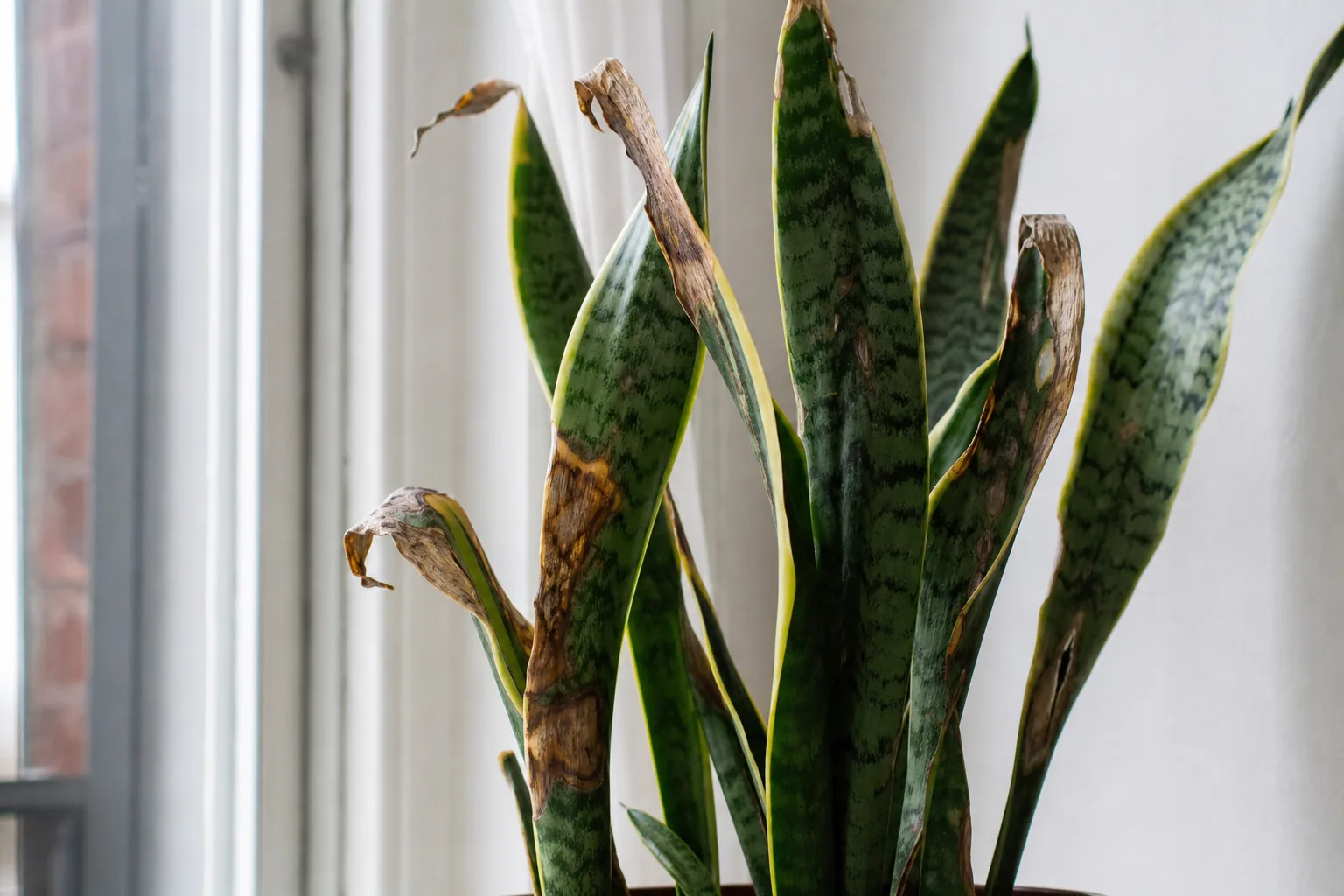
Case 3 — Radiator plume tip burn on snake plant (Jan 2026). A Sansevieria / snake plant on a radiator cover felt warm to the touch on the near leaves. Leaf-height above the cover during an evening heat cycle: 84°F / 19% RH; room center: 69°F / 28% RH. Crispy tips appeared first on leaves leaning over the heat. Fix: moved the pot to the floor 12 inches beside the radiator (not on it) and kept a 3-inch air gap from the cover. New leaves unfurled with intact tips over the next six weeks. Do not use a space heater as “recovery heat” beside a stressed plant — that recreates the same dry plume.
| Case | Trigger | Leaf-height reading | Room-center reading | Outcome after fix |
|---|---|---|---|---|
| Ficus | Furnace register | 78°F / 22% RH | 70°F / 31% RH | Drop slowed in ~10 days |
| Orchid | AC jet | 64°F in stream | 71°F beside stream | Next buds held |
| Snake plant | Radiator cover | 84°F / 19% RH | 69°F / 28% RH | Clean new tips in ~6 weeks |
Cold Drafts, Hot Dry Air, and Ordinary Circulation
| Air type | Common sources | What you often see first | First fix |
|---|---|---|---|
| Cold draft | Exterior door, leaky window, AC discharge, unheated hallway | One-sided curl, dull/limp face, leaf or bud drop after door cycles | Pull out of the path; seal gaps if safe; stop glass contact |
| Hot dry plume | Forced-air register, radiator, space heater, fireplace path | Tip burn, crisp margins, faster drying on the near pot side, bud abort | Redirect vane or move laterally; never block vents unsafely |
| Ordinary circulation | Ceiling fan on low, open room airflow | Mild leaf tremor, little damage if temp/humidity are stable | Keep gentle movement; avoid continuous focused jets on foliage |
A cold draft usually comes from an exterior door, poorly sealed window, air-conditioner discharge, unheated hallway, or cold return path. Tender foliage on the exposed side may curl, look dull or limp, discolor, or shed after repeated cycles. UConn’s ailing-houseplants fact sheet notes that bud and leaf drop can come from drafts and advises keeping plants away from outside doors and loose-fitting windows in winter.
A hot draft comes from a forced-air register, radiator plume, space heater, or fireplace path. It often pairs warm air with very low humidity, drying leaf edges, crisping tips, and aborting buds nearest the stream. The pot may also dry unevenly on the airflow side while the shaded side stays wetter.
Ordinary circulation is not the enemy. Fans that gently move air through a room can reduce stagnant pockets that favor some foliar diseases. Problems start when air is continuous, focused, too hot or cold, or mismatched with the plant’s water supply. Leaves that tremble occasionally are different from foliage bent all afternoon in a jet of AC or furnace air.
Leaves sit in a thin boundary layer of relatively still air. Moving air thins that layer and can raise evaporative demand. When roots keep up, moderate airflow may leave no mark. When the mix is dry, roots are compromised, humidity is already low, or buds are forming, the same stream can outrun supply and trigger curl, crisp margins, wilt, or abscission. Do not answer every draft with more water — cold drafts and winter low light often slow water use, so a wilted look can sit on a still-wet root ball, while hot dry airflow shortens drying intervals. Always check moisture at root depth before changing the schedule.
Symptoms That Point to Draft Stress
Draft stress becomes likely when symptoms show a directional or location-based pattern timed to HVAC, weather, or door use:
- leaves facing a vent curl or brown at the edges first
- foliage nearest an exterior door drops after repeated cold openings
- one side against cold window air goes limp or dull before the rest
- buds or flowers nearest a heater or AC stream abort first
- the pot dries faster on the airflow side
- problems start the week heating or cooling season begins
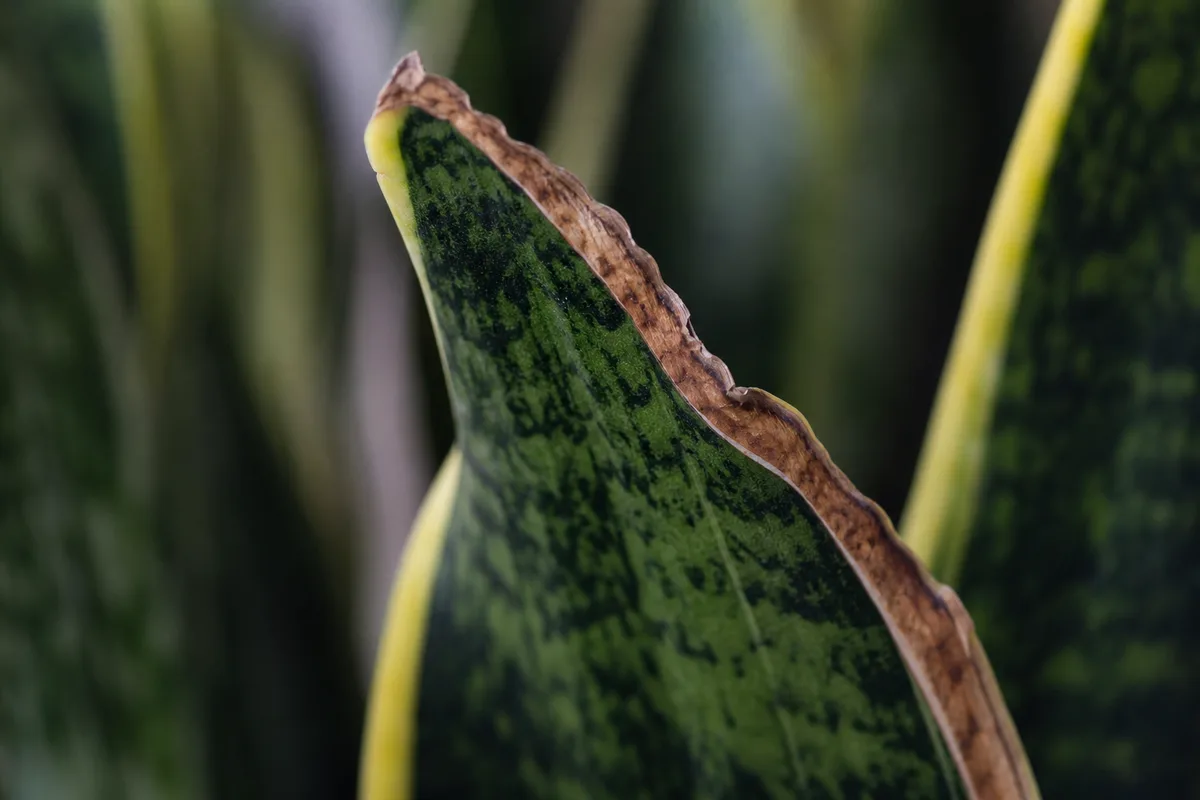
UC IPM’s houseplant problems overview lists brown tips or margins among issues that can come from a drafty setting, excess sun or heat through a window, or low humidity — and notes yellowing and dropping leaves can follow exposure to low temperatures. Use those cues as clues, then confirm with placement and timing rather than treating every brown tip as a draft.
Event timing checklist (confirm while the system runs):
- HVAC heat or cool cycle starts → symptoms face the register
- Exterior door traffic / windy day → damage on the door-facing side
- Night setback or curtain close → sill plants trapped against cold glass
- Afternoon AC surge → buds or thin leaves nearest the jet suffer first
Leaf Drop and Bud Drop From Drafts
Sudden leaf shed after a move, a new vent schedule, or a cold snap is classic draft-related shock. Clemson HGIC notes that significant environment changes can cause leaf drop that often settles within about three weeks, and that chilling can also drop leaves. If the canopy is thinning across the plant rather than on one exposed face, open the full leaf drop diagnosis guide so you do not miss watering, light, roots, or pests.
Buds are often more sensitive than mature leaves. Dry heat, cold door blasts, and abrupt temperature swings can abort flowers before they open. UConn links winter humidity problems and drafts to leaf and bud drop. For bloomers that empty a spike or tip, follow bud drop causes and fixes after you stop the draft itself — dropped buds will not reopen.
Map the Airflow Before You Move the Plant
Stand at plant height while the suspected system runs. Feel for moving air with the back of your hand without touching hot equipment. Sketch vents, radiators, doors, windows, fans, and which tissues are damaged. Do not rotate or relocate the plant until you have captured that original pattern — once you spin the pot, the “one-sided” evidence disappears.
Compare the exposed side, the protected side, and a spot a short step away from the stream. Note whether symptoms track the HVAC cycle, windy door openings, or night setbacks. A calm afternoon reading can miss an overnight furnace blast or a 6 a.m. AC surge.
Simple Tests and Thermometer Protocol
Use a lightweight tissue strip or thread near the canopy to show direction. Skip candles, incense, powders, and aerosols around foliage, pets, smoke alarms, and intakes. Place a min/max thermometer at leaf height for several days and, if you can, a hygrometer for comparative humidity — not false precision.
Example protocol we use:
- Put sensor A at the damaged leaf face.
- Put sensor B at sofa / room-center height away from vents.
- Log both during one full heat or cool cycle (and once with the system off).
- A several-degree temperature gap or a large RH gap between A and B supports a microclimate diagnosis even when the wall thermostat looks perfect.
Repeat the reading during the actual event: furnace start, door open, AC cycle. Record device placement and time so you can retest after you redirect a vane or move the pot. Treat consumer sensors as comparative tools: a several-degree gap between leaf height and sofa height matters more than the exact brand of thermometer.
| Observation | What it suggests |
|---|---|
| Symptoms face one operating vent | Direct airflow is plausible |
| Whole plant wilts with wet mix | Check roots; draft alone is incomplete |
| Drop started when heat came on | Hot dry air and/or winter light shift |
| Dark water-soaked patches on glass contact | Treat as cold injury path |
| Fine stippling / webbing | Inspect for spider mites |
| Pot light and dry at depth | Underwatering may lead, draft may amplify |
Draft Stress Look-Alikes
Proximity to a vent is not proof. The same curl, tip burn, or drop can come from underwatering, low humidity, salts, root rot, mites, low light after a panicked move, or normal aging of lower leaves. RHS guidance on helping a poorly houseplant notes that plants near radiators often suffer scorched leaves, while draughts can yellow leaves and dry edges — and that curtains trapping plants against cold glass overnight can chill windowsill plants.
Work a short differential before you commit to the draft label: moisture at root depth, both leaf surfaces for pests, recent moves or repots, light level in the new spot, and fertilizer or hard-water history. Fix the air path when the pattern is directional, but keep the other checks open if the whole plant declines evenly.
Draft Stress vs Cold Damage
Cold damage is tissue injury from temperatures below what that plant tolerates. A cold draft is one delivery method. Not all draft stress is cold — hot dry air is still draft stress without freezing physiology. Cold injury more often shows water-soaked, translucent, dark, or rapidly collapsing tissue after a distinct chill event; routine draft stress more often looks like repeated one-sided curl, edge browning, or leaf/bud drop tied to HVAC cycles.
If leaves blacken, go mushy, or show glass “kiss marks” after a freeze or severe chill, switch to the cold damage guide for triage, prune timing, and discard criteria. Measuring the overnight minimum at the sill still matters either way.
Draft Stress vs Heat Stress and Low Humidity
Heat stress from stagnant hot rooms, conservatory spikes, or radiant bake through glass can wilt, bleach, or crisp foliage without a focused jet of air. Draft-driven heat is more directional and often paired with a register or radiator plume. For broad high-temperature patterns, use the heat stress symptom hub alongside this page.
Low humidity and moving air interact but are not identical. Penn State Extension notes that winter indoor relative humidity can fall below 30%, while ASHRAE’s comfort band is roughly 30–60%, and that misting only raises humidity until droplets evaporate. A vent can deliver hot dry air into an already dry room; fixing humidity alone will not help if the same leaf faces a furnace blast all afternoon.
AC Vents, Heaters, Radiators, and Door Drafts
Air-conditioning vents push cold, often dry air in a focused stream. Tropical foliage in the path may curl, dull, or drop; buds on orchids and holiday cacti can abort. Redirect the vane, raise or lower the plant out of the jet, or move laterally — do not seal the register in a way that stresses the HVAC system or creates moisture problems in ducts.
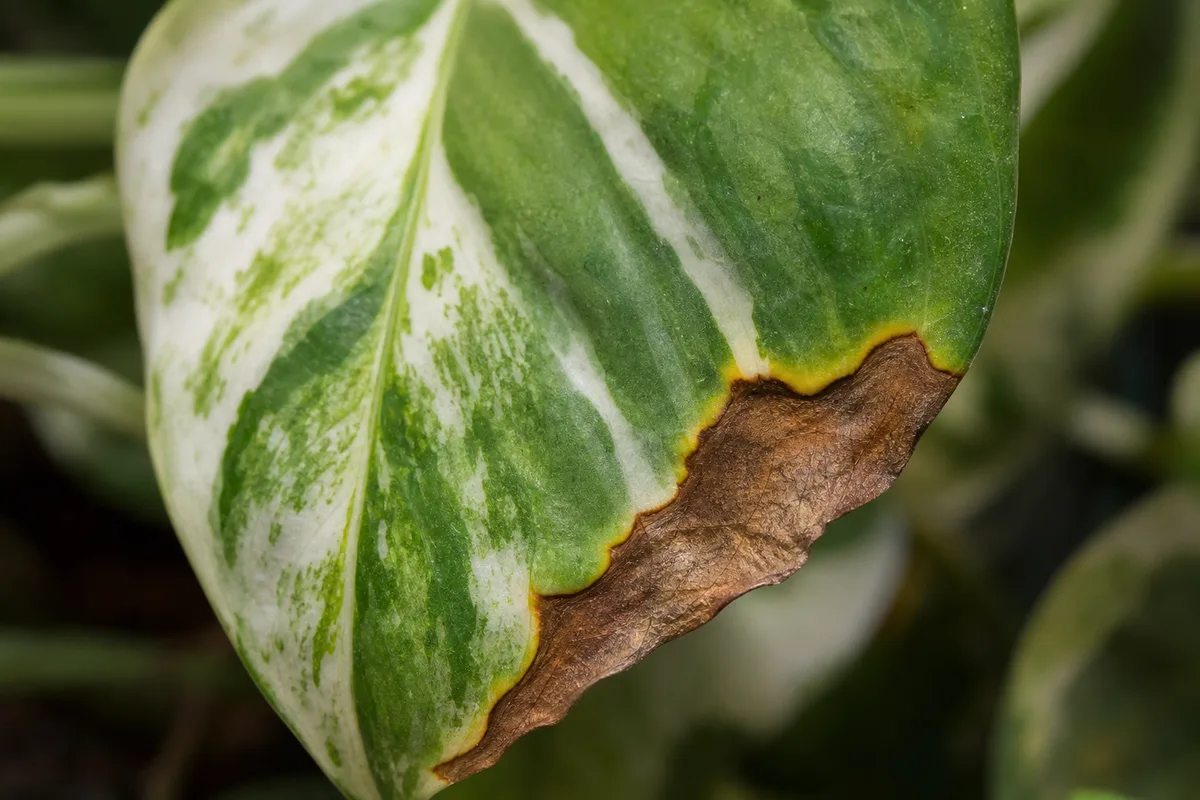
Forced-air heaters combine warmth with dryness. Tip burn and faster pot drying are common. Keep foliage out of the direct plume and reassess watering intervals after you move the plant, because the old schedule may overshoot once the stream is gone.
Radiators and baseboards create rising hot plumes even without a strong fan. Scorched edges and crisp tips show up on the near side first. Give clearance above and beside the heat source; do not set pots on radiator covers that get hot to the touch.
Exterior doors and drafty windows deliver intermittent cold shocks. NC State Extension winter houseplant notes flag drafty windows and dry hot vent air, and suggest daytime temperatures roughly in the 65–75°F range with about a 10° night drop for many plants, tracked with a digital thermometer. Pull plants out of the door swing and off cold glass contact.
Safety note: Never block a supply or return vent with cardboard, plastic, or a dense plant wall in a way that risks fire, moisture, or equipment strain. Redirect vanes or move the plant. Do not park a space heater against foliage as a winter “fix.”
A Practical Fix Plan
1. Stop the direct stream. Redirect the vent, change fan angle or speed, repair a seal, or move the plant just outside the focused path. Never block equipment in a way that creates a fire, moisture, or system hazard.
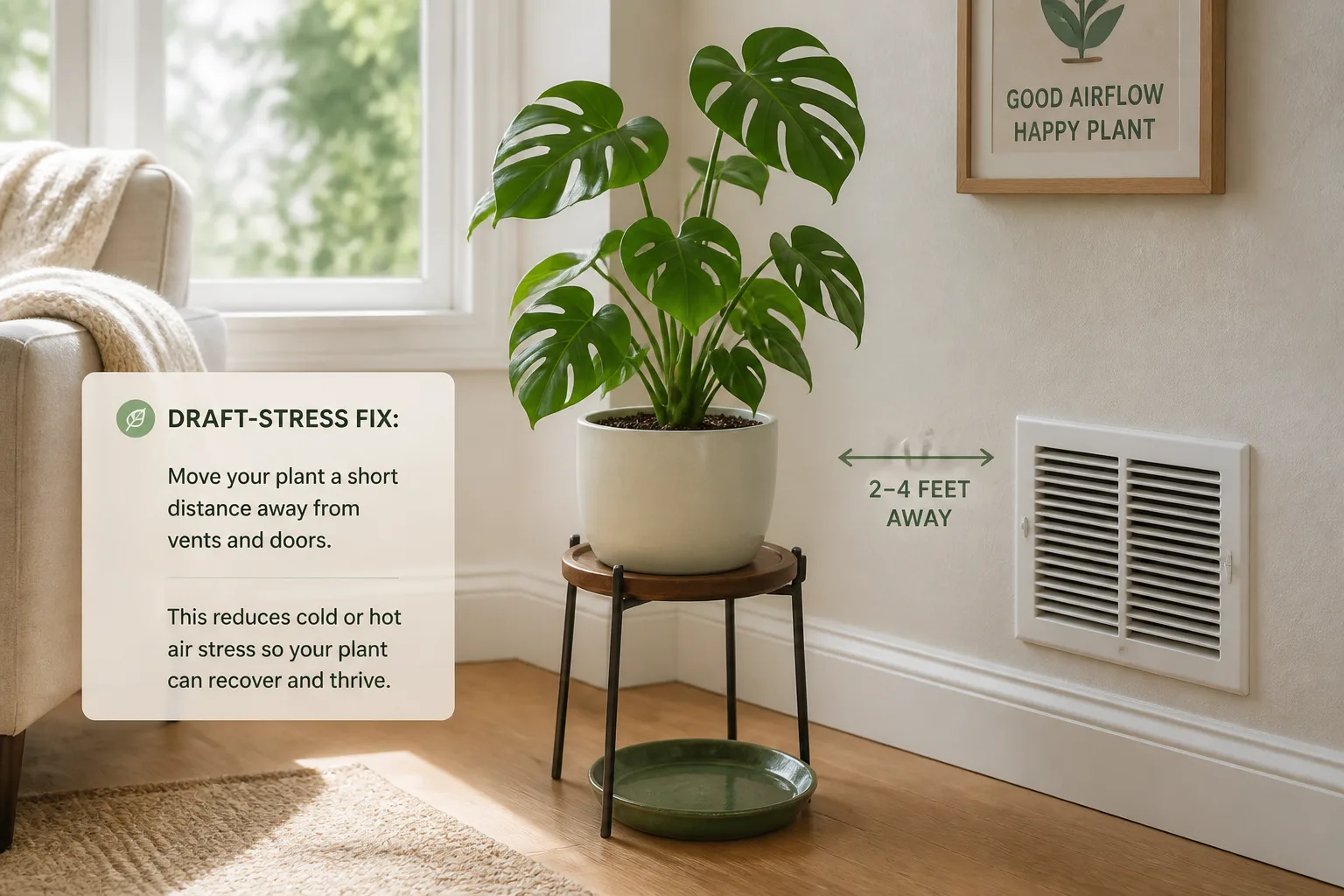
2. Keep usable light. A dark hallway may end the draft and start etiolation or chronic wet soil. Prefer a lateral move along the same window wall, a short step back, or a sheer that does not trap the plant against cold glass.
3. Check the root ball. Water only when moisture and species needs say so. Empty saucers. If the mix is hydrophobic or compacted, fix structure rather than drowning the plant.
4. Stabilize care. Hold fertilizer, repotting, and discretionary sprays until new injury stops for a couple of weeks.
5. Monitor new growth. Photograph weekly. Success is fewer new damaged leaves and normal later growth — not resurrecting tissue that already browned.
Change one major variable at a time. A before-and-after test — document the damaged face, redirect only that stream, keep watering logic otherwise steady — tells you whether the draft hypothesis was right.
Watering After You Fix the Draft
Check moisture more often in draft-prone spots, but do not automatically water more. Hot dry airflow shortens intervals; cold airflow and winter shade lengthen them. Clemson’s indoor watering guidance stresses that both over- and underwatering damage roots and can look similar aboveground — so use the root zone, not the calendar.
After heavy leaf drop, water use often falls because there is less canopy. Reweigh the pot and retest depth moisture rather than keeping the old rhythm. Overwatering a half-defoliated plant is a common second failure.
Choosing a Better Spot Without Losing Light
The goal is suitable light plus stable temperature and air that moves without blasting. Often a shift of a foot or two, or a change in height, clears the jet. Treat any distance as an experiment for your room, not a universal rule.
Avoid foliage kissing cold glass. Keep pots out of door arcs and off hot radiator surfaces. After you move the plant, recheck the new spot during the same conditions that caused the problem — night setback, windy door traffic, or peak AC — because a pleasant noon location can still chill before sunrise.
Plants That Show Draft Stress Fast
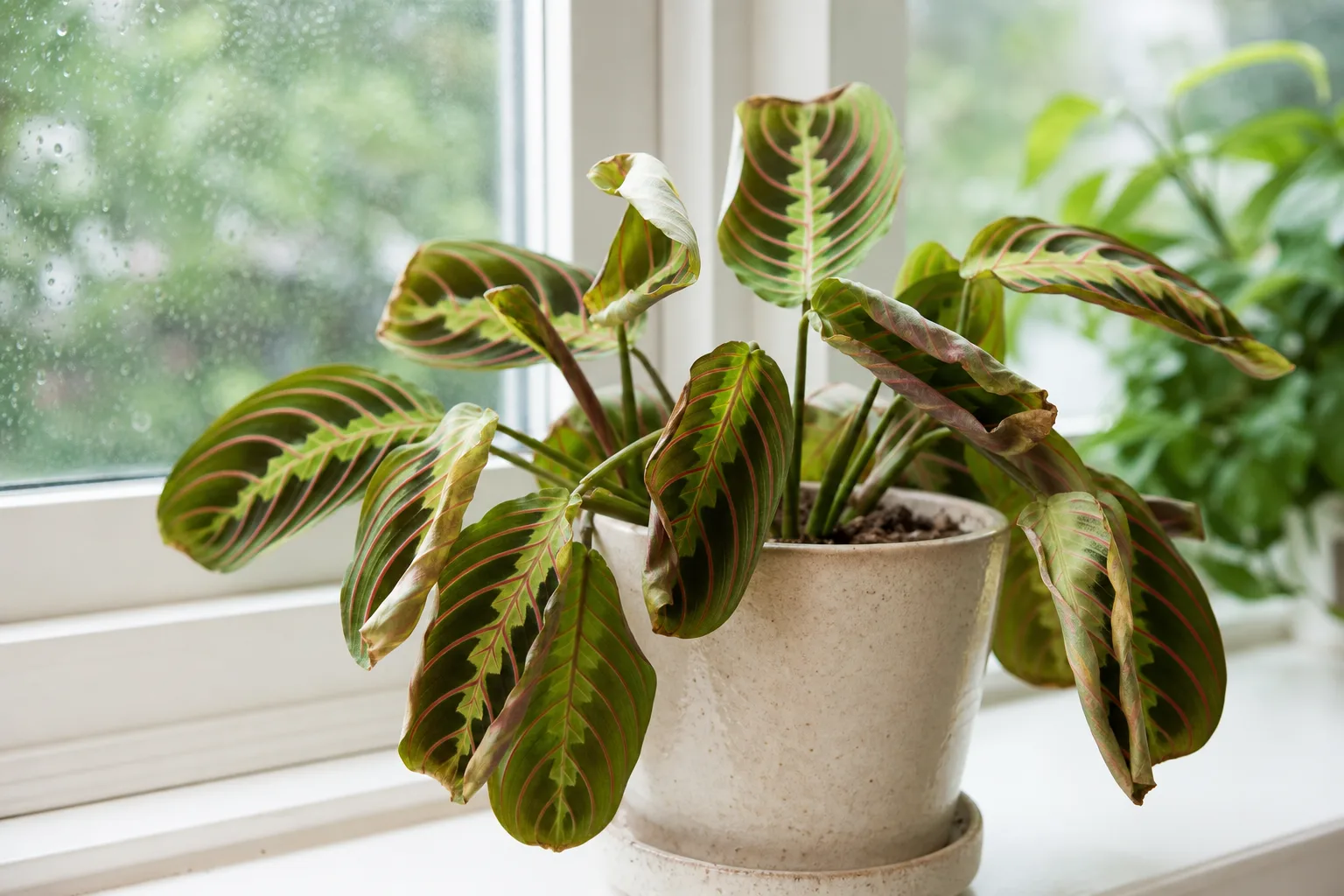
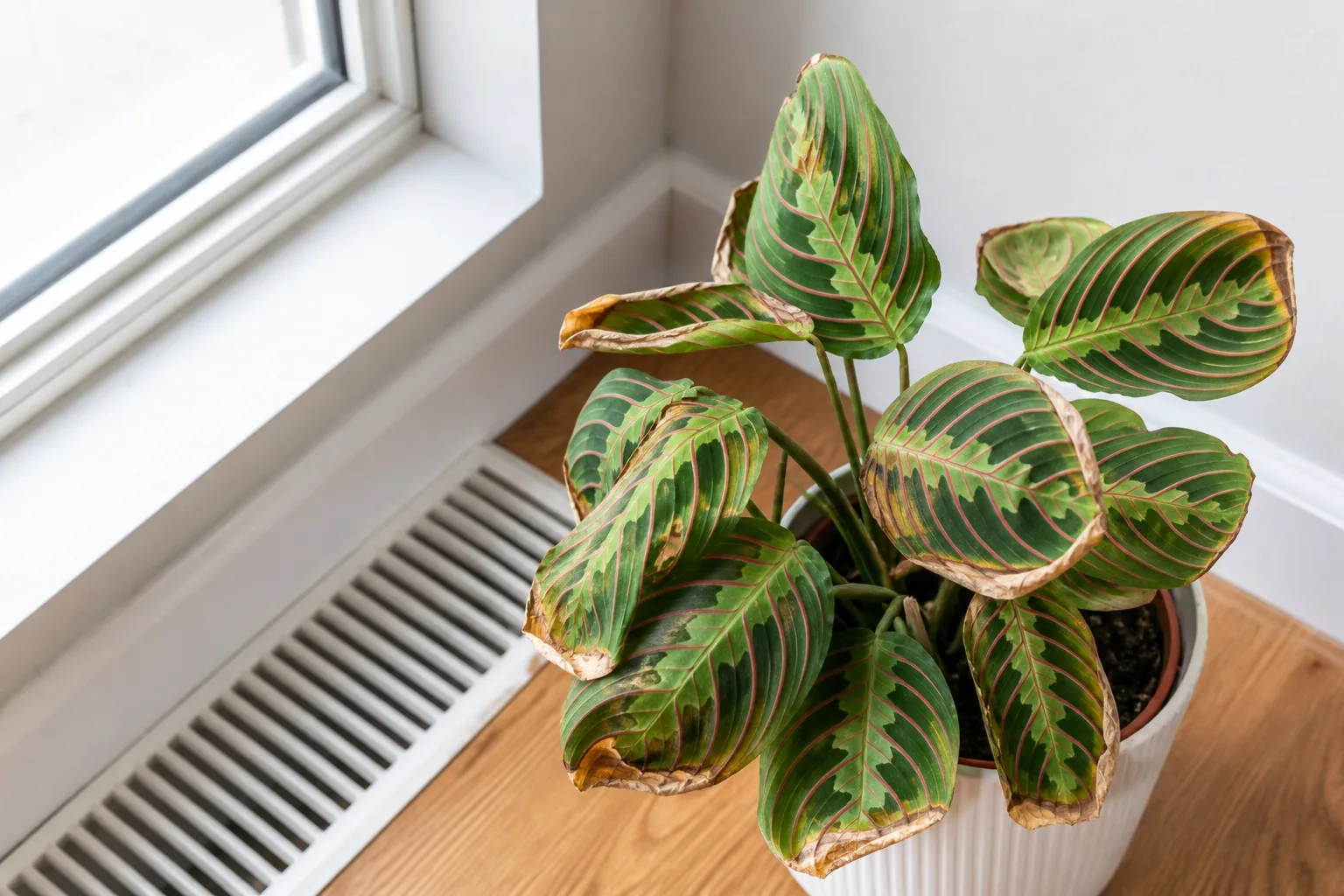
Thin-leaved tropicals and prayer plants often advertise drafts early. Maranta and related foliage plants curl and crisp when dry heat or cold streams hit. Philodendron Brasil and Manjula pothos may show one-sided edge stress before the whole vine declines. Ficus species are famous for shedding after placement shocks that include vents and moves.
Bloomers such as holiday cacti, African violets, and orchids may keep foliage while aborting buds in a draft. Tough plants like snake plant or yucca tolerate more, but even they can show tip burn or soft collapse when cold glass or heater plumes are extreme.
Once triage points to draft stress and you know the species, continue on the plant-specific pages — for example Maranta draft stress, Manjula pothos draft stress, or Snake plant draft stress. This guide stays the multi-species diagnosis hub.
How to Track Recovery
Dropped leaves and aborted buds will not return on the same petiole or tip. Recovery means the remaining canopy stabilizes and new growth looks normal for the species. Give the plant one to three weeks of steady placement before judging, matching Clemson’s rough acclimation window for environment-change leaf drop.
Keep a short log: date you redirected the vent or moved the pot, moisture checks, and whether new leaves show clean margins. If damage keeps appearing on a new “front” after you rotate the plant toward the window, you may have traded a draft for a light or glass-contact problem — remap rather than chase the plant around the apartment weekly.
First-week checklist after a fix:
- Damaged face documented (photo) before any rotation
- Stream redirected or plant moved just out of the jet
- Soil checked at depth; schedule not blindly increased
- No fertilizer / emergency repot
- Leaf-height sensor rechecked once during the same HVAC event
Preventing Seasonal Draft Stress
Before heating season, walk the room at plant height with vents on and note plumes. Before cooling season, do the same with AC. Pull tropicals off single-pane glass contact for winter, and leave space so curtains do not trap pots in a cold sandwich overnight, as RHS poorly-houseplant checks describe.
Raise ambient humidity with a room humidifier when winter RH crashes, remembering Penn State’s humidity guidance that misting and pebble trays are weak room-level fixes. Group plants if it helps your layout, but do not cluster them into a moldy, stagnant pocket. For the wider winter care picture — light, watering slowdown, and humidity — see winter houseplant care.
When Another Cause Is More Likely
Reopen the diagnosis if symptoms are uniform on every side, the root ball is soggy or foul, pests are visible, or damage continues after the air path is truly cleared for a week or more. Penn State’s diagnosing poor plant health overview treats cold among leaf-drop causes and reminds you to read limp, water-soaked tissue carefully — another reason not to force every dark leaf into the draft bucket.
RHS leaf-damage guidance also lists draughts and sudden temperature drops among triggers for mass yellowing, alongside watering mistakes and overpotting. Use that humility: draft stress is common near vents and doors, but it shares a symptom set with half of indoor plant care. If decline stays uniform after the stream is gone, ask a local extension office or Master Gardener help desk before assuming a pathogen and spraying.
Conclusion
Houseplant draft stress is a placement and microclimate problem: moving air that is too cold, too hot, too dry, or too focused for the plant in its path. Map the stream at leaf height, match one-sided leaf or bud loss to AC, heaters, radiators, or door drafts, then make one clear correction without sacrificing light or drowning a plant that has already shed leaves.
Use leaf drop, bud drop, cold damage, and heat stress when the pattern fits those siblings better. Stabilize conditions, track new growth, and treat consumer thermometers as comparative tools — not as a promise that every room shares one safe distance from every vent.
Related guides
- Short symptom overview → Draft stress symptom hub
- Leaves falling across the plant → Houseplant leaf drop
- Unopened flowers aborting → Houseplant bud drop
- Black, water-soaked, or glass-kiss injury after chill → Houseplant cold damage
- Broad high-temperature wilt or crisp without a focused jet → Heat stress symptom hub
- Crispy tips with mixed cultural causes → Brown tips on houseplants
- Winter light, humidity, and watering shifts → Winter houseplant care
- Not sure which symptom path to open → Houseplant symptom checker
- Species follow-ups → Maranta draft stress, Manjula pothos draft stress, Snake plant draft stress