Houseplant Cold Damage: Causes, Diagnosis and Fixes
Spot houseplant cold damage from drafts, window glass, or shipping chill. Diagnose, first-aid, prune timing, and when to discard.
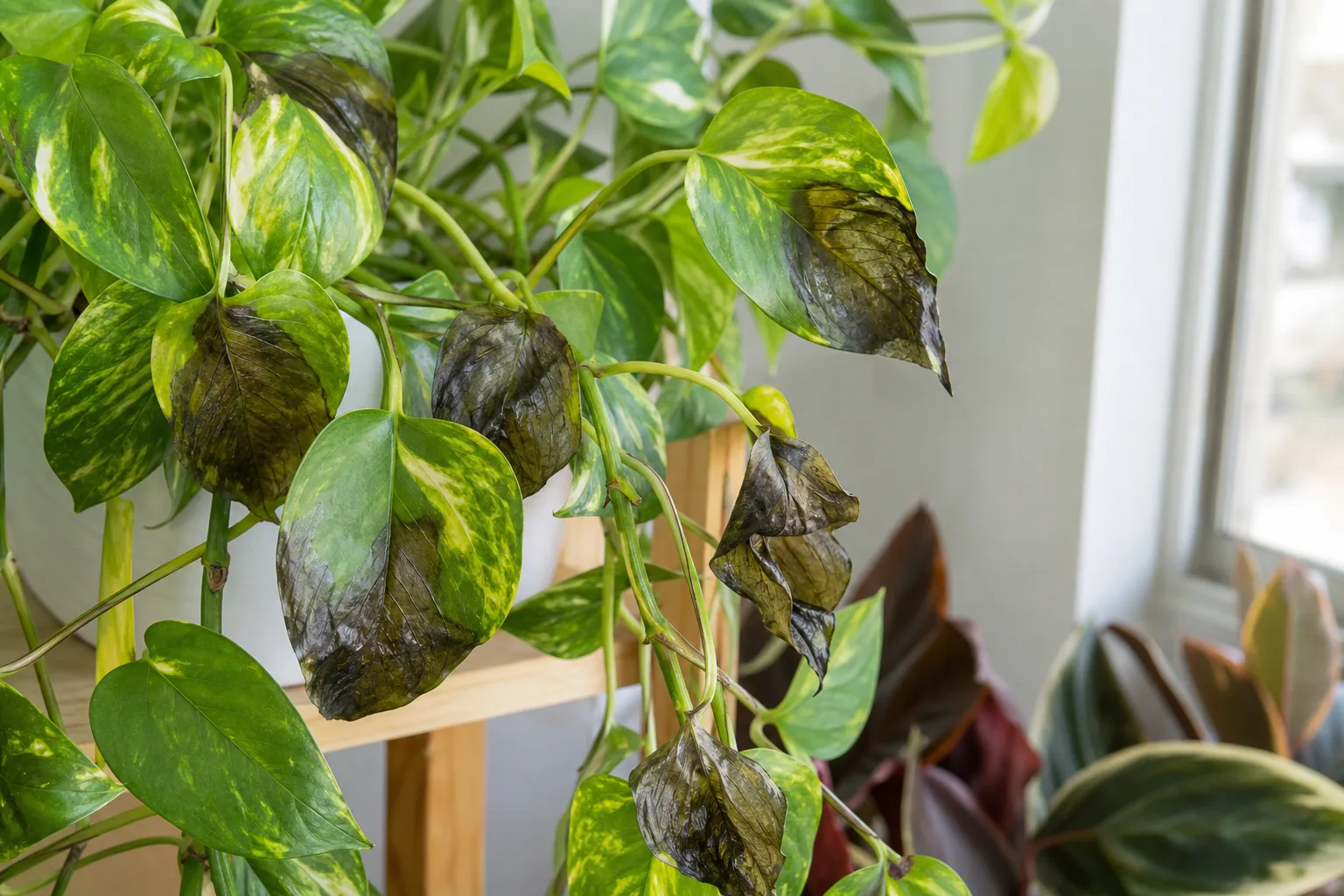
You unbox a winter delivery and the outer leaves look fine. By Wednesday they are limp, translucent, then black. Or one side of a sill plant collapses after a cold snap while the room thermostat still reads 68°F. That mismatch — comfortable air in the middle of the room, ruined tissue where glass or moving air got cold — is classic houseplant cold damage.
Cold injury is environmental, not a fungus you spray away. Damaged cells do not heal back to green. What you can do is stop the exposure, stabilize the plant, wait until living tissue declares itself, then decide whether to prune, propagate, or discard.
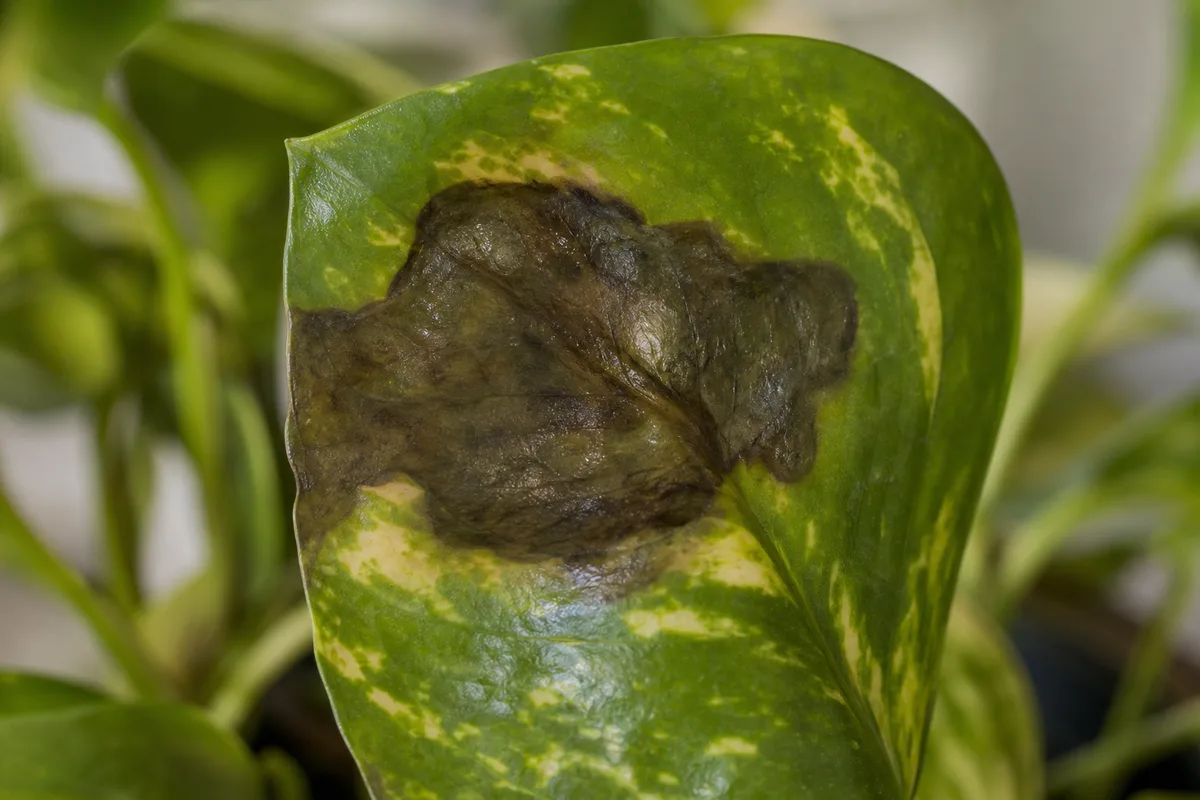
Bench note (glass kiss-mark, January 2026): On a single-pane east sill in a forced-air apartment, a min/max thermometer taped at leaf height overnight logged 41°F (5°C) against the glass while a second sensor at sofa height in the same room held 67–69°F. A Golden pothos leaf pressed to the pane developed a crisp black contact patch within 36 hours; foliage two inches off the glass stayed firm. Pulling the vine off the glass stopped new lesions; we pruned the ruined leaf on day 10 after the live/dead line was clear. That is the practical lesson behind this guide: leaf temperature is not thermostat temperature.
For a symptom-first overview across many species, start at the cold damage symptom hub. For seasonal context around light, humidity, and watering shifts, pair this with winter houseplant care. Written by Sai Ananth; horticulture review by Dr. Priya Menon (botanist and indoor plant specialist).
What Cold Damage Actually Is
Cold damage is tissue injury caused by temperatures below what that plant can tolerate in its current state. Duration, how fast the temperature dropped, whether foliage was wet, whether leaves touched a cold surface, and how recently the plant was watered or shipped all change the outcome. Two plants in the same room can respond differently if one is tropical and tender and the other is a tough succulent.
There is no single “too cold” number for every houseplant. Many tropical foliage plants struggle well above freezing. As a rough transport warning rather than a universal threshold, cool exposures in the mid-40s°F (~7°C) range can injure sensitive species during winter moves, while other plants tolerate cooler nights if they stay dry and out of drafts. Always prefer species-specific guidance over a one-size chart, and remember leaf temperature at a window can differ from the thermostat reading across the room.
Outdoor frost rules that transfer indoors: ice formation still ruptures cells; patience before hard pruning still applies; watering will not revive dead tissue. Houseplant-only twists: container roots chill faster than in-ground roots, cold glass contact creates directional “kiss marks,” shipping boxes create outer-leaf injury patterns, and HVAC drafts can chill foliage without ever changing the hallway thermostat.
Chilling Injury vs Frost and Freeze
Chilling injury is damage from cold temperatures above freezing. UC IPM defines chilling injury as damage from cold above 32°F and notes that tropical and subtropical plants are most susceptible — African violets are a textbook indoor example of leaf necrosis from chilling or refrigerated cold. Leaves and shoots may wilt, discolor (sometimes purplish or reddish), or later collapse even though ice never formed.
Frost injury involves ice forming near or on plant surfaces when temperatures drop to freezing. Freeze injury is the broader tissue damage when water inside or between cells freezes and expands. UC IPM’s freezing and frost overview covers freeze/frost symptom patterns and delayed appearance of injury outdoors; the same physiology applies to houseplant tissue that actually freezes against glass or in transit. Clemson HGIC explains that freezing ruptures plant cells as ice crystals form and temperatures swing, and that chilling injury can still hit tropical plants even when readings stay above 32°F. Missouri Botanical Garden notes that below-freezing events form ice crystals that rupture cell walls — tissue then collapses much like a punctured water balloon.
Indoors you often get mixed patterns. A leaf pressed to icy glass may freeze while the crown stays above freezing. A tropical plant near an open door may take nonfreezing chilling injury in the same hour. That is why one height or one side of the plant can look ruined while the rest still feels firm.
What Cold Damage Looks Like on Houseplants
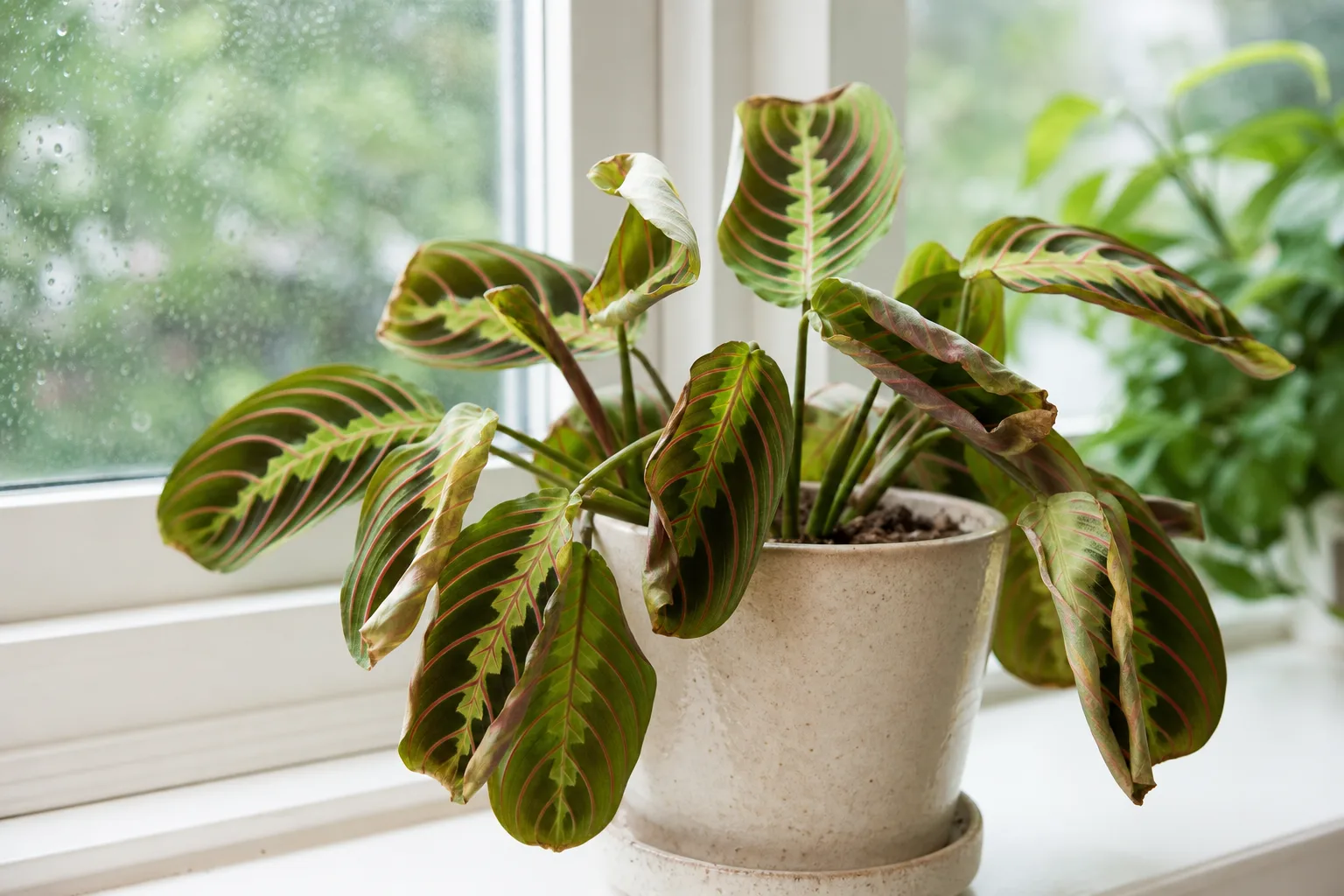
Early cold injury often looks limp, dull, translucent, or water-soaked. Penn State’s diagnostic key lists leaves that are very dark green with a water-soaked, limp appearance as consistent with cold injury (also mechanical crushing or bacterial infection), and lists cold damage among causes of leaf drop. After the plant warms, injured patches commonly darken to brown or black and later dry crisp. Tender new leaves and flowers fail first in many cases, but mature leaves that touched glass or faced a draft can be the first casualties.
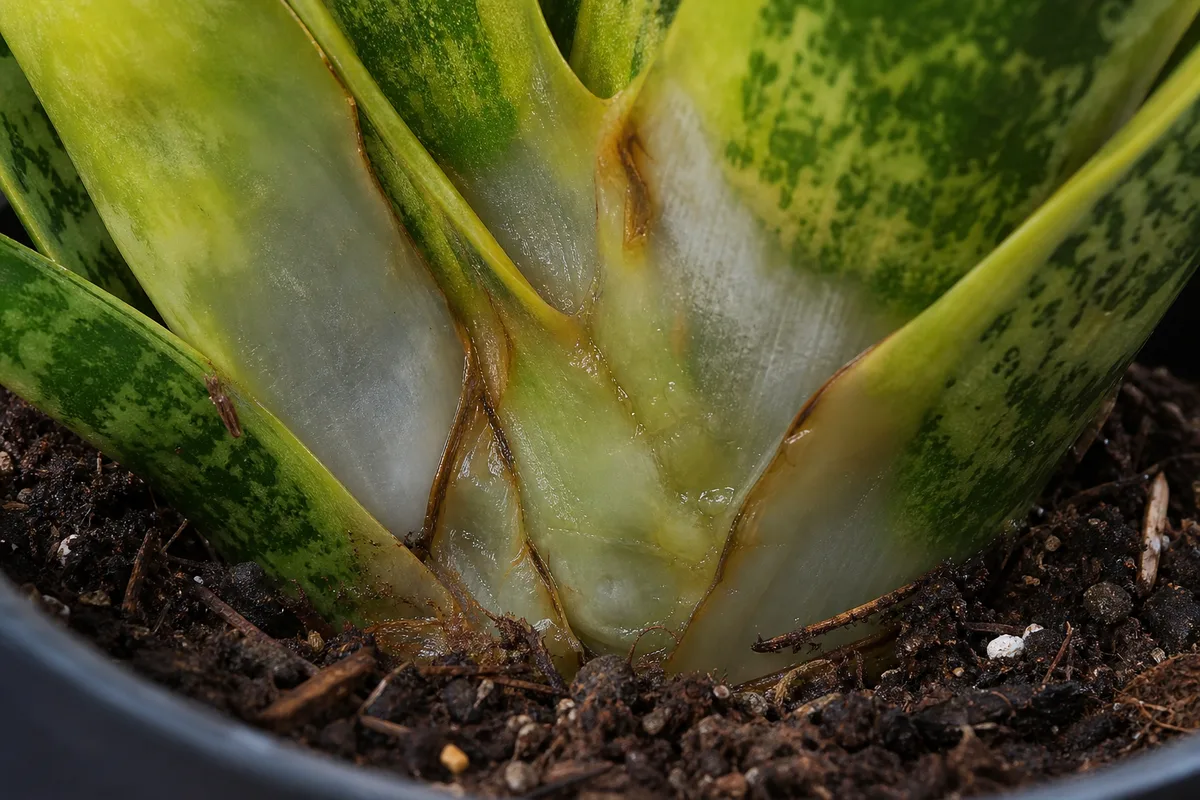
Severe cases soften petioles, stems, or the crown. Succulent tissue may look glassy or mushy. Woody stems can hide discolored cambium under bark. Container roots chill faster than in-ground roots because a small pot has little thermal mass — especially during shipping, porch drop-offs, or nights on an unheated windowsill. Missouri Botanical Garden’s indoor plant guidance is blunt: freezing exposure can make foliage collapse and turn black, and cold drafts or bringing a plant home from a cold store can trigger leaf and flower drop even without a hard freeze.
If the damage maps to the window-facing side, the outer leaves in a shipping box, or the foliage nearest a vent, treat cold as the working diagnosis until the timeline says otherwise. For broader browning patterns that are not clearly cold-linked, use the indoor plant brown leaves guide before you assume freeze injury.
Why Symptoms Can Appear Days Later
Cold-damaged cells may keep their shape at first. As membranes fail and contents leak, tissue becomes water-soaked, then dark and collapsed. NC State Extension notes that cold injury after frost or freeze may not be fully apparent at once and advises patience before assuming the final extent. Clemson similarly warns that some damage is confusing because it may not show for months on woody outdoor plants; on houseplants, soft foliage usually declares within hours to a few days, while stems and crowns can take longer.
That delay creates false confidence. A plant that looks acceptable Monday night can show black patches by Wednesday. Photograph the exposed side daily for a week. Do not interpret every later symptom as continuing cold: if new lesions keep spreading weeks after temperatures stabilized, consider secondary soft rot, root decline, pests, or unrelated watering problems.
Bench note (shipping chill, February 2026): A mail-order maidenhair fern arrived Monday looking only slightly dull on the outer fronds. By Wednesday those outer fronds were water-soaked and blackening while inner growth still felt springy. The crown stayed firm. We removed collapsed fronds on day 8, kept the mix barely moist (not wet), and saw the first new frond push around day 24. Outer-leaf pattern + delayed reveal + firm crown is the classic shipping-chill triad.
Common Indoor Causes: Drafts, Window Glass, and Shipping Chill
Outdoor frost guides emphasize gardens and fruit buds. Indoors, three triggers dominate: cold glass contact, moving cold air, and transport chill. Missouri Botanical Garden documents chilling damage on plants grown in a cold, drafty winter window and warns specifically about furnace vents, door drafts, and frigid air when a new plant comes indoors from the store in winter.
NC State Extension’s winter houseplant guidance adds the day-to-day pattern most growers miss: drafty windows and dry hot air from vents create stressful swings, and most plants prefer daytime temperatures around 65–75°F with about a 10° drop at night. Digital thermometers at plant height beat trusting a hallway thermostat.
Cold Window Glass and Winter Sills
Leaves that rest against single-pane or poorly insulated glass can be far colder than room air. Overnight, that contact zone can dip into chilling or even freezing territory while the rest of the plant sits in a comfortable room. Damage often appears as a crisp or blackened “kiss mark” exactly where tissue touched glass, or as a band of injury on the window-facing side.
Pull foliage an inch or more off the glass. On bitter nights, move sensitive plants back from the sill or place a thin insulating barrier between pot and glass. Bright winter light is still valuable — you do not have to abandon the window — but contact and stagnant cold air pockets against the pane are the problem. Pair placement changes with seasonal light and humidity habits so you are not fixing cold while creating a dark, dry corner. If dry heat is the co-factor, see houseplant humidity.
Thermometer protocol we use on problem sills: place one min/max sensor at leaf height within 1 inch of the glass, and one at the same height 3–4 feet into the room. Log overnight lows for 2–3 cold nights. If the glass-side low is more than about 10–15°F colder than the room sensor, treat that sill as a risk zone for tropical foliage — even when the thermostat looks fine.
AC Vents, Open Doors, and Delivery Chill
A brief blast of outdoor air when the front door opens, a leaky patio slider, or an AC supply aimed at a shelf can chill foliage without ever changing the thermostat. The damage pattern is directional: only plants in the airflow path, often on the side facing the draft.
Shipping chill is the other frequent culprit. Mail-order plants, porch deliveries, and car trunks in winter expose foliage and small root balls to cold for minutes to hours. Outer leaves and tips take the hit first. The plant may look passable at unboxing, then decline as cellular damage declares. If multiple plants from the same shipment share outer-leaf injury while interior leaves look better, transport cold is stronger evidence than a mystery disease.
After you finish triage below, use species pages for tailored follow-through — for example pothos cold damage, African violet cold damage, or snake plant cold damage. The triage steps themselves apply across most tropical houseplants.
How to Confirm Cold Damage (Not Overwatering or Sunburn)
Cold symptoms overlap with other problems. Soft limp leaves also appear with overwatering and root rot. Crispy collapse can look like underwatering or brown tips. Bleached patches after a move can be sunburn. Use the exposure story and the moisture check together.
| Evidence | More consistent with |
|---|---|
| Damage after winter delivery; outer leaves worst | Shipping chill |
| Lesions exactly where leaves touched glass | Contact chilling or freezing |
| Injury only on the vent- or door-facing side | Draft exposure |
| Entire root ball wet for weeks; soft dark roots | Root dysfunction / overwatering |
| Bleached patches on the bright side after a sudden move | Sun injury |
| Limp leaves with a bone-dry, lightweight pot | Underwatering |
| New foul, expanding soft decay days after warming | Secondary microbial problem |
Reconstruct the event: lowest temperature, duration, wet foliage or wrapping, pot temperature, which tissues faced the source, and recent stress (shipping, repotting, heavy watering). If only cold-sensitive species on a shared shelf failed, chilling is plausible. If every plant on one shelf shares the same-side injury, localized exposure wins over a collection-wide pathogen.
Plant drooping and plants dropping leaves in winter cover adjacent patterns when cold is not the main driver. Use the houseplant symptom checker when you are still matching symptoms across several failure modes. For broader winter decline without a single chill event, see why houseplants struggle in winter.
Immediate First Aid After Cold Exposure
Move the plant out of the cold source into a stable indoor spot suited to the species. Ordinary room conditions beat a dramatic “rescue” next to a radiator, fireplace, space heater, heat lamp, or intense grow light. Rapid drying and hot air can worsen water loss from already injured tissue — do not use heat lamps as rescue tools.
Remove wet decorative wrapping and empty saucers. Give gentle air movement without blasting the foliage. Isolate from other stressed or valuable plants until you have ruled out pests hitchhiking in the same shipment and soft rot spreading from collapsed tissue. Do not fertilize. Do not repot unless the pot is waterlogged, broken, contaminated, or roots clearly need intervention — every extra change muddies recovery signals.
Watering, Heat, and Fertilizer Mistakes to Avoid
Check moisture at root depth before you water. Cold, low-light plants use water slowly, so a calendar watering after a chill often creates a soggy root ball on top of injured tissue. If the mix is already appropriately moist, wait. If it is dry through the root ball and roots are not frozen, water with room-temperature water and drain fully. Never pour hot water on a cold pot.
Clemson’s post-freeze guidance for outdoor plants notes that watering wilted cold-damaged plants will not revive killed tissue — the same logic applies indoors when limp leaves are dead cells, not drought. Fertilizer does not repair membranes; salts can burn damaged roots. Hold feeding until you see sustained new growth under stable temperatures. If the plant later declines into classic wet-soil wilt, switch frameworks to overwatering and root-rot playbooks rather than adding more “cold treatments.”
Cold plus chronically wet soil is a dual failure mode: chilled roots already struggle, and low-oxygen wet mix invites collapse. University of Minnesota Extension’s houseplant root-rot guidance is a useful next stop when soft, dark roots appear after a chill on a wet pot. Bag and trash foul soft tissue rather than composting it near other plants — secondary soft rot can move through a crowded shelf faster than cold injury alone.
Assess Leaves, Stems, Crown, and Roots
Judge the plant by tissues, not by the ugliest leaf.
Leaves may be limp but green, translucent, dark, crisp, or foul. Fully black, collapsed blades will not recover color; they are candidates for later removal. Partially damaged leaves can stay until the boundary between live and dead tissue is clear if the plant still needs the remaining green area for photosynthesis.
Petioles and stems should feel firm. Soft, collapsing stems are a worse sign than ugly leaves. On canes or woody stems, a gentle bark scrape that shows green tissue underneath is encouraging; brown, dry, or mushy cambium is not. If cambium assessment on a woody houseplant feels ambiguous, ask a local extension office or Master Gardener volunteer before cutting the main trunk.
Crown and growing points matter most for recovery. A firm central growth point with live buds can push new leaves even after heavy foliage loss. A mushy crown usually means the plant is not worth heroic measures unless you can salvage clean cuttings above the damage.
Roots deserve a quick check if the pot was exposed or the plant keeps declining after foliage stabilizes. Firm, species-normal roots support recovery. Soft, dark, odorous roots suggest cold plus wet-soil collapse — treat as a dual problem. Small pots shipped in freezing weather can lose more root function than the leaves initially show.
When to Prune — and When to Wait
Dead cells do not come back, but early hard pruning is still a common mistake. Clemson advises not hurrying to prune or remove damaged plants after a freeze — wait until the full extent of damage is clear, then remove dead wood. NC State gives the same patience rule after frost or freeze: corrective pruning after you can tell live from dead. Soft foliage may declare in days; stems can take longer.
Practical indoor timing: stabilize temperature first, then wait at least several days — often one to two weeks for foliage boundaries, longer if stems are borderline — before major cuts. Remove tissue that is fully collapsed, foul, or clearly dead once the line is obvious. Leave marginal leaves that still have substantial green area if the plant is sparse. Sterilize blades between plants if soft rot is present. For technique and timing beyond cold injury, see pruning indoor plants.
Do not strip a plant to bare stems on day one “to help it focus.” That removes photosynthetic area while roots and buds are still deciding whether to push. Wait, then cut cleanly to firm tissue.
Recovery vs Discard: A Practical Decision Framework
Not every cold-damaged plant is a salvage project. Use this decision frame after first aid and a short observation window.
Recover in place when the crown is firm, stems are mostly firm, roots smell and feel normal, and enough green tissue remains to support new growth. Ugly outer leaves alone are not a death sentence — especially after shipping chill that hit the exterior of the plant.
Propagate what is healthy when the top is ruined but clean stem sections or firm cuttings remain above the damage. This is often smarter than nursing a half-dead specimen for months. Take cuttings from undamaged tissue only.
Discard when the crown is soft, stems collapse at the base, roots are largely rotten, or the plant is mostly necrotic with no viable cuttings. A plant that threatens a collection with spreading soft rot should leave sooner, not later. Bag foul tissue, wipe the shelf, and wash tools before they touch the next plant.
Bench note (discard call, December 2025): A compact adenium sat overnight on a closed porch during an unexpected freeze. At unboxing into warmth the caudex still looked firm, but by day 4 the crown softened and smelled sour while side branches collapsed at the base. No clean cutting nodes remained above the soft zone. We discarded and bagged the plant rather than risk soft rot near other succulents. Firm leaves on day one did not predict a salvageable plant once the crown failed.
If you are mid-collapse and need a broader triage workflow, use save a dying houseplant alongside this cold-specific frame. Species pages such as adenium cold damage or maidenhair fern cold damage help when the plant’s growth habit changes what “firm crown” looks like.
How Long Recovery Takes (With Example Timelines)
Cosmetic leaf scars never turn green again. Recovery means new growth, not repaired old blades. Mild chilling with a firm crown can show stabilizing tissue within days and new leaves within a few weeks under good light. Severe foliage loss with intact roots may take a month or more before growth looks normal again — longer in midwinter when light and growth rates are low.
| Scenario (editorial cases) | Conditions | Outcome |
|---|---|---|
| Mild glass contact on pothos | Sill low 41°F at glass; crown firm | Lesion declared ~36 hours; pruned day 10; new leaf ~3 weeks |
| Shipping chill on maidenhair | Outer fronds delayed blackening Mon→Wed; crown firm | Pruned day 8; first new frond ~day 24 |
| Freeze + soft crown on adenium | Porch overnight freeze; crown mush by day 4 | Discarded; no safe cuttings |
Watch for these positive signs: firm remaining stems, buds swelling, new leaves of normal color and thickness, and no expanding soft rot. Watch for negative signs: progressive stem collapse, foul odor, mushy crown, or continued leaf drop after temperatures have been stable for two weeks. Winter leaf drop from low light and dry air can overlap with cold recovery — sort those with plants dropping leaves in winter if the timeline no longer matches a single cold event.
Cold-Sensitive Plants and Relative Toughness
Use the table as a relative margin guide, not a hardiness map. A hard freeze against glass or an overnight porch delivery still wins over “tough” labels. Wet soil plus cold collapses many plants that would shrug off a dry cool night.
| Relative group | Typical indoor examples | Rough margin note (not a guarantee) |
|---|---|---|
| Highly sensitive | African violets, calatheas/marantas, many ferns, thin-leaved tropicals | Often injured by short shipping chill or leaf-on-glass contact well above freezing |
| Moderately sensitive | Pothos, philodendrons, Monsteras, most aroids | Usually tolerate normal room nights; fail with drafts, glass kiss, or wet+cold roots |
| Tougher (still freeze-vulnerable) | Snake plants, ZZ-type plants, many succulents/jade | Better cool-night margin when dry; freeze, wet cold soil, or prolonged drafts still injure |
When one shelf mixes sensitive and tough plants, use the sensitive ones as early-warning indicators — if the fern crisped and the snake plant only pouted, you still had a real cold event. After triage, open the matching species cold-damage page for the plant on your bench (for example manjula pothos cold damage or string of hearts cold damage) rather than treating this hub as a full species encyclopedia.
Prevention for Winter Homes and Shipments
Prevention is placement and logistics more than products. Keep tropical plants out of direct HVAC blasts and away from doors that open to winter air. Hold fertilizer in deep winter for plants that have slowed, matching NC State’s seasonal advice, so you are not pushing soft growth into a cold snap. Increase usable light and humidity thoughtfully so plants are not already stressed when a draft hits.
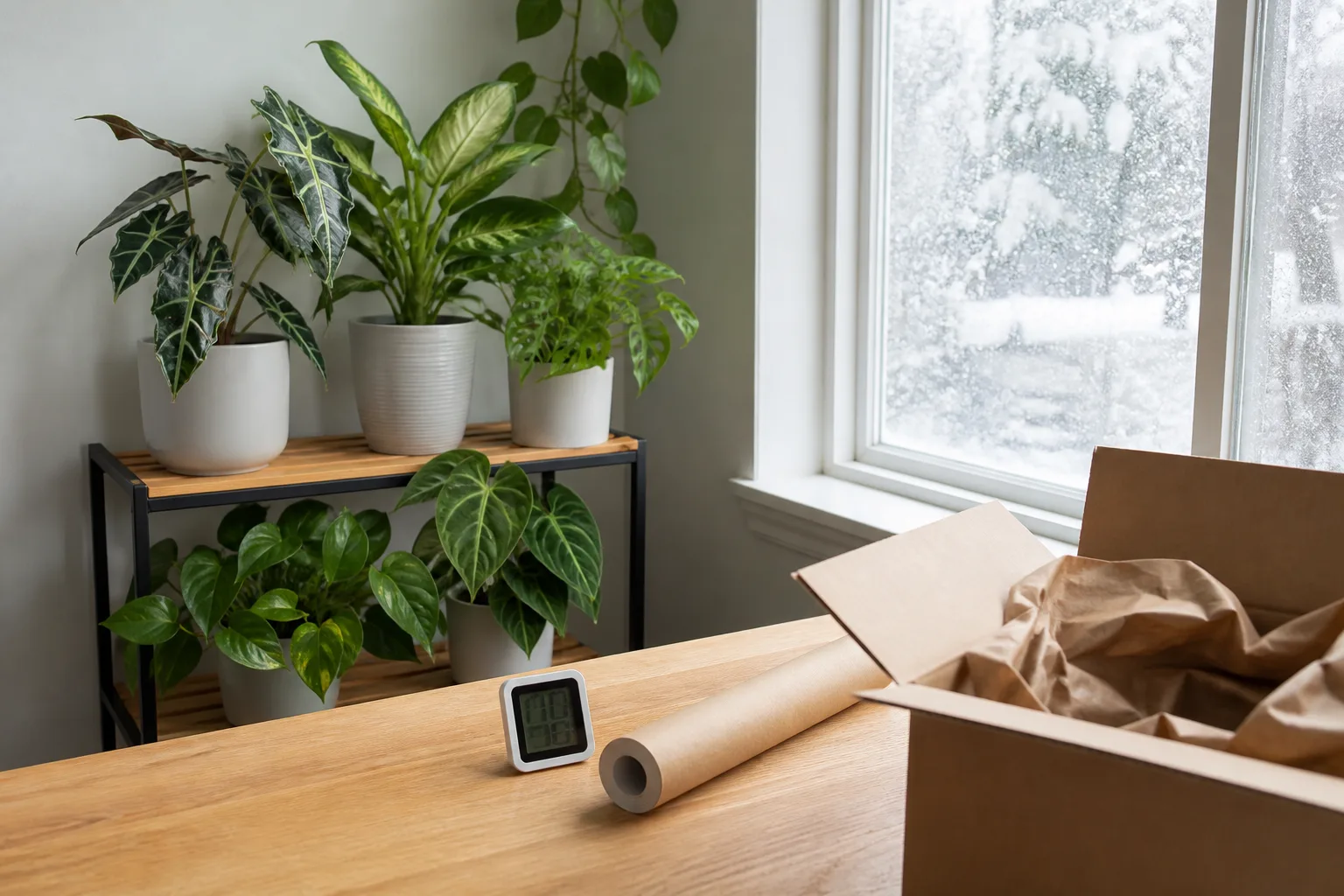
For deliveries, avoid porch freeze: request hold-for-pickup, time shipments for milder days, open boxes indoors away from cold garages, and inspect outer leaves immediately. For store runs, wrap plants before walking the parking lot and never leave them in a cold car “just for a few errands.”
Placement Rules That Prevent Repeat Injury
- Keep foliage off cold glass — even a small air gap matters.
- Pull plants out of AC and heater airstreams; redirect vents if needed.
- Use a min/max thermometer at plant height near problem windows (glass-side vs room-center pair).
- Cluster cold-sensitive tropicals deeper into the room on forecast bitter nights.
- Acclimate outdoor summer plants indoors before the first cold night — do not wait for a freeze warning.
- After any chill event, change only what you must (location and moisture check) for the first week so you can read the plant’s response.
Repeat injury on the same sill is usually a placement problem, not bad luck. Move the plant or insulate the microclimate before you invest in recovery again.
When to Use This Guide vs Nearby Pages
Use this guide when you have a clear cold exposure — draft, glass contact, shipping chill, open door, or a cold car — and need diagnosis, first aid, pruning timing, and a keep-or-discard call. Use the cold damage symptom hub when you are still matching dark or limp leaves across many plants and want species links. Use winter houseplant care when the issue is seasonal watering, light, and humidity rather than a single cold event. Use overwatered plant or root rot when the soil has been wet for weeks and roots are soft, even if cold made the decline worse. Use indoor plant brown leaves when browning has no cold timeline. Use save a dying houseplant when multiple stresses stack and you need a full triage order. For broader winter decline without a single chill event, see why houseplants struggle in winter.
Related problem-diagnostics guides: plant drooping, brown tips on houseplants, houseplant symptom checker, and pruning indoor plants after live tissue is clear.
Conclusion
Houseplant cold damage is a placement and exposure problem with a delayed reveal. Drafts, window glass, and shipping chill injure cells that later turn limp, translucent, or black — often hours or days after the event. Your job is not to reverse dead tissue. End the cold source, keep temperatures stable without baking the plant, water only when the root ball needs it, wait for live-versus-dead boundaries, then prune, propagate, or discard with clear criteria.
First-week checklist: move off glass/drafts; log plant-height temps if the sill is a repeat offender; check moisture before watering; photograph the injured side daily; do not fertilize, heat-blast, or strip-prune on day one; decide recover / propagate / discard only after the crown and stem firmness are clear. Prevent the next round by keeping foliage off cold glass, out of HVAC streams, and out of freezing porches and car trunks.