Houseplant Curling Leaves: Diagnose Before You Treat
Curling leaves are a stress signal. Diagnose dry vs wet soil, heat, humidity, and pests before you water or spray.
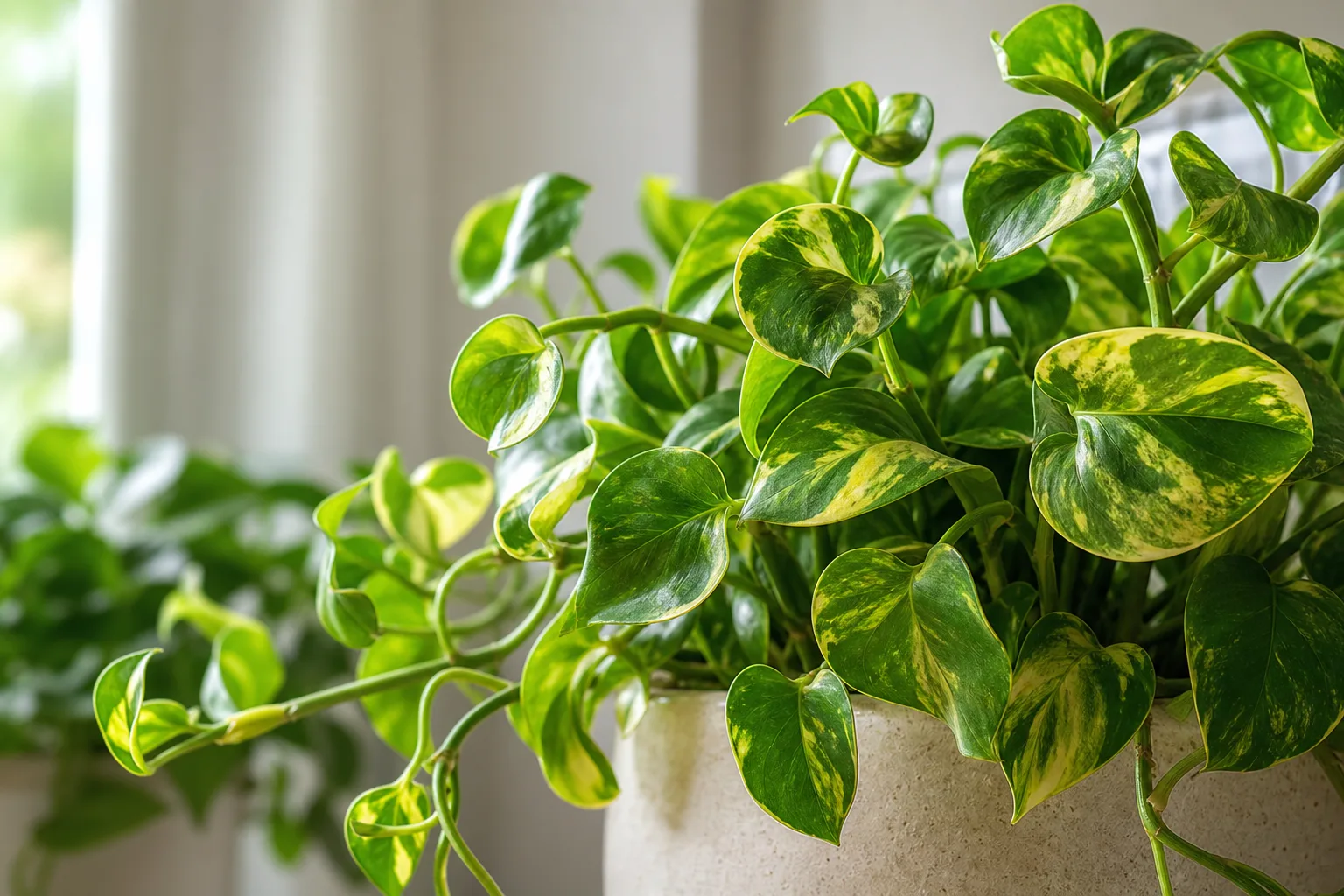
Curling leaves are not a diagnosis. They are a stress response — the plant reducing exposed leaf surface, protecting expanding tissue, or showing damage that happened while a leaf was still soft. Indoors, the same cupped or rolled look can come from dry soil, soggy roots, heat at a window, dry heated air, or pests feeding on new growth. Treat the wrong cause and you make the next flush worse.
If you only remember one rule, remember this: check moisture at depth, then scan heat and airflow, then inspect leaf undersides before you water, fertilize, or spray. Clemson HGIC lists chronic underwatering among cultural problems that produce wilting, leaf curling, and plant death, while overwatering cuts root oxygen and invites root disease. (Clemson HGIC) The Royal Horticultural Society separately notes that irregular watering during leaf expansion often leaves crinkled, creased tissue, and that bright light in a dry atmosphere can make plants such as Maranta curl leaves inward. (RHS)
LeafyPixels editorial order: moisture at depth → heat and airflow → leaf undersides → one matched fix. Do not stack water, fertilizer, and pesticide in the same afternoon. New leaves are the scoreboard; old rolled leaves are often permanent.
What Leaf Curl Actually Means
A leaf curls when cells on one side of the blade expand unevenly, when tissue loses water faster than roots can replace it, or when pests and mechanical damage scar cells while the leaf is still unfolding. Curl is therefore a shape change under stress, not a single disease. Older leaves may roll along the midrib or cup at the margins. Newest leaves may emerge twisted, cupped, or permanently misshapen because the damage happened before the leaf hardened.
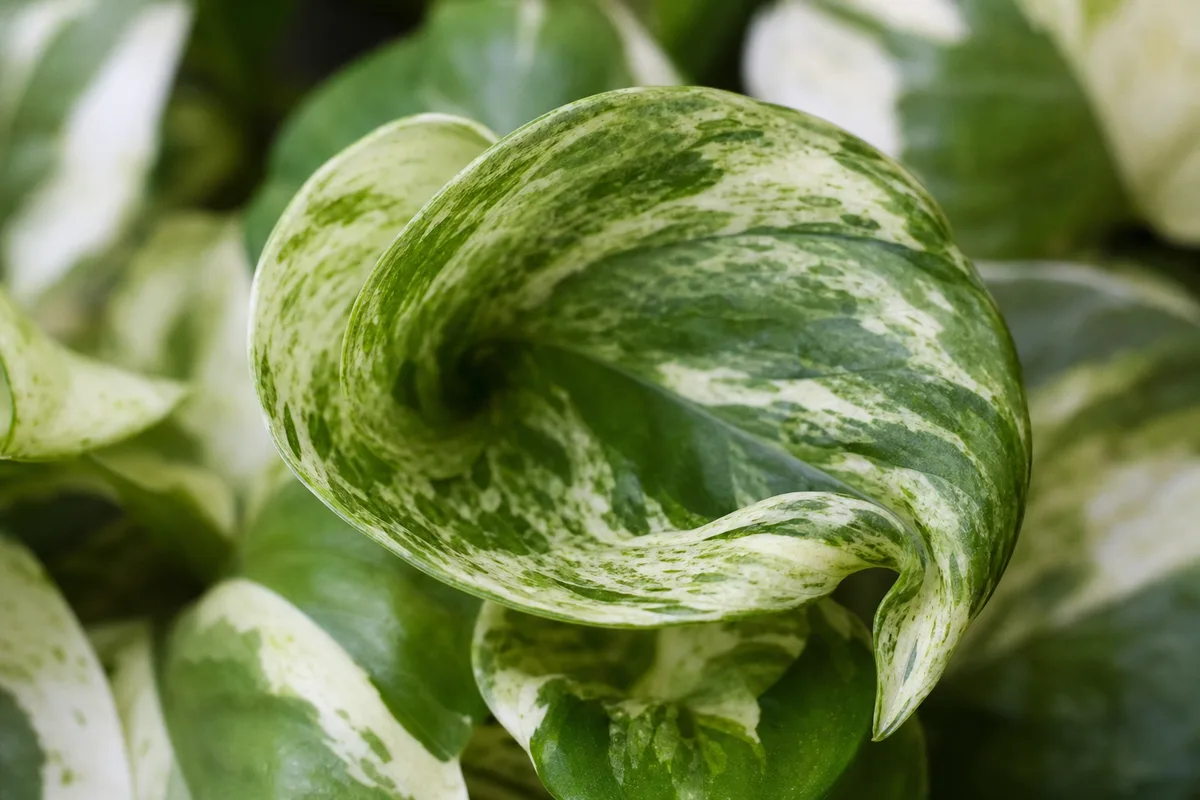
That is why “curling leaves” sits next to wilting, drooping, and distorted growth rather than replacing them. Wilt is mostly about lost turgor — soft collapse. Curl can happen with or without full collapse. Distorted new growth often points to pests or stop/start expansion. Stay on this page when the main complaint is rolling, cupping, or twisted blades. Switch to wilting houseplants when the plant goes floppy, and plant drooping when posture sags without a clear roll pattern.
Inward Curl vs Outward Cup vs Twisted New Growth
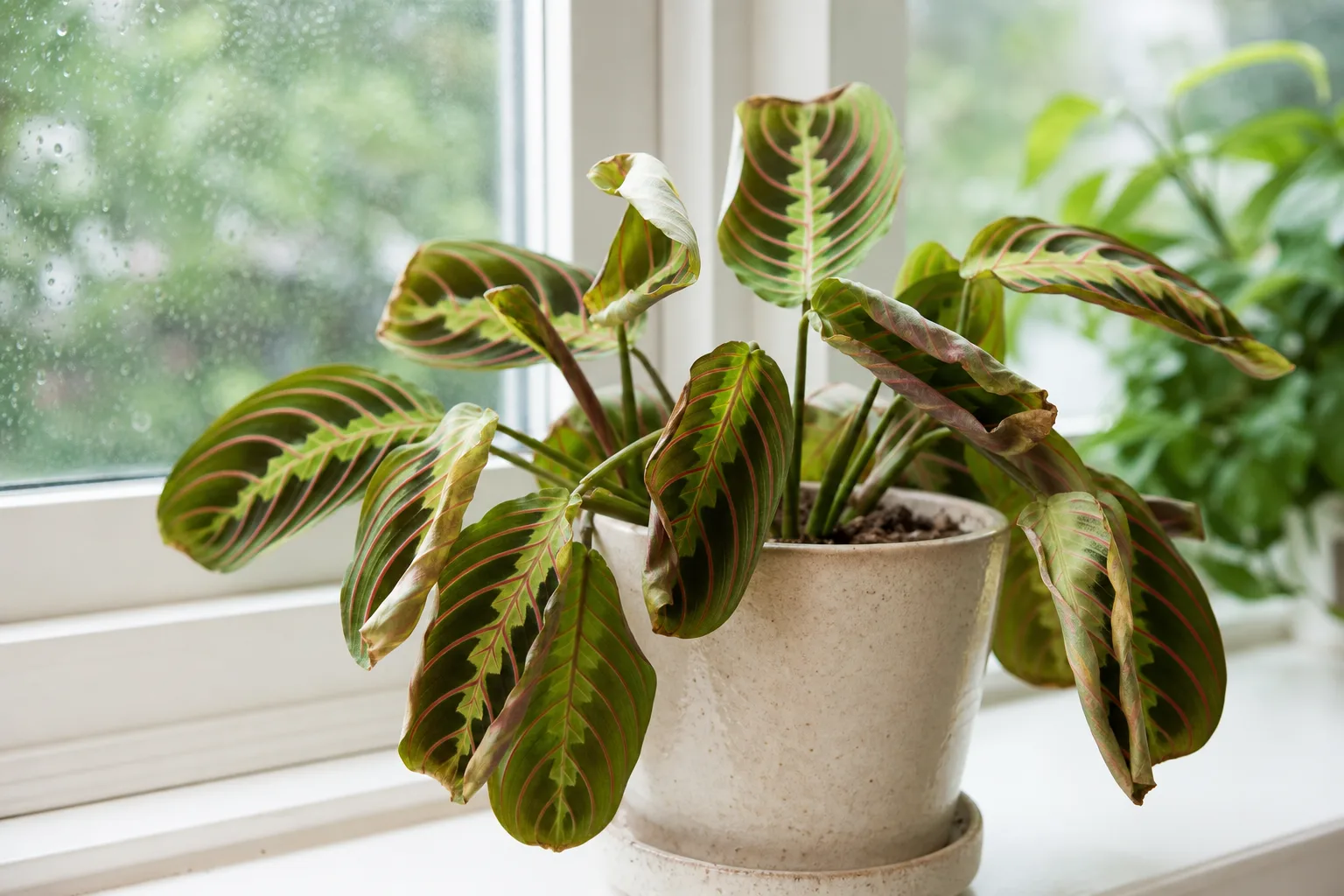
Three patterns narrow the shortlist fast. Inward (concave) curl — edges roll toward the upper surface — often tracks with dry air, heat load, or thirst as the plant reduces evaporating surface. RHS guidance calls out inward curl on plants such as prayer-plant relatives kept in bright light and a dry atmosphere. (RHS) Outward (convex) cupping — margins curl under — can appear with cold drafts and dry conditions on plants such as African violets, and with some mite injuries that thicken and cup new leaf margins. (RHS) (UC IPM)
Twisted, scarred, or permanently deformed new tips deserve a pest-first look even when soil moisture looks fine. Aphids can curl and distort leaves while they feed on soft tissue. Thrips scar and distort expanding leaves and leave shiny black frass flecks. Broad mites and cyclamen mites are nearly invisible and show up as thickened, brittle, downward-cupped new growth that is easy to misread as chemical injury. (UC IPM) Match the pattern before you pick a bottle.
Curl Pattern to Cause at a Glance
| Pattern | Likely causes | First check |
|---|---|---|
| Inward roll, papery edges | Dry mix, dry heated air, heat at glass | Finger 2–5 cm deep; pot weight; window-side heat |
| Soft limp cupping on a heavy pot | Overwatering, low root oxygen, early root rot | Saucer/cachepot water; smell; root color/feel |
| Window-side afternoon roll, moist soil | Heat / excess light demand | Touch hottest leaf; pull plant back one step |
| Tight tropical roll with OK watering | Low winter RH | Room RH; humidifier vs misting habit |
| Twisted new tips, stippling, webbing, frass | Spider mites, thrips, aphids, broad/cyclamen mites | Magnify undersides; isolate before treating |
Temporary vs permanent: mild dehydration or dry-air roll sometimes relaxes. Severe creasing, pest scarring, and heat damage usually stay put. Judge recovery on the next flush.
The 60-Second Diagnosis Before You Treat
Skip the calendar. Run the same short sequence every time leaves start rolling. It prevents the two expensive mistakes in curl care: watering a plant whose roots are already drowning, and spraying “bugs” when the plant is only fighting dry heat.
When you want the compact pattern cards without the full decision tree, use the shorter curling leaves symptom hub. This guide is the longer path: fork-by-fork diagnosis, fix order, recovery honesty, and prevention.
Soil Moisture and Pot Weight Checks
Push a finger 2–5 cm into the mix, not just the crust. Lift the pot. A dry pot feels light; a wet pot feels dense. Check the saucer and any decorative cachepot for perched water you cannot see from above. Clemson HGIC watering guidance is blunt about wilt and related stress: dryness often means water, but root injury from excess water also looks like thirst, and watering then makes the problem worse. (Clemson HGIC) Missouri Botanical Garden groups overwatering and underwatering with other environmental stresses that weaken plants before pests pile on. (Missouri Botanical Garden)
If the mix is bone-dry and pulling from the pot wall, treat as dry-soil curl first. If the mix is soggy, sour, or the pot is heavy with standing runoff, stop watering and inspect roots before you “fix” curl with another drink. Full moisture method detail lives in indoor plant watering basics and how to water indoor plants the right way. Companion symptom pages: underwatering and overwatering.
Heat, Light, and Airflow Scan
Stand where the plant sits at the hottest hour. Touch the leaf facing the glass. Feel for heat vents, AC blasts, or cold drafts. Leaves that curl hardest on the window side, bleach, or crisp at edges while deeper soil is still moist point to heat or light stress more than a watering schedule problem. UC IPM notes that wilting can come from excessive light as well as underwatering or root decay — the same intensity extremes that drive protective curling and cupping. (UC IPM)
Move the plant one step back from hot glass before you change water volume. If stretch, pale new leaves, and wet soil linger after curl improves, switch to the not enough light hub. If scorched patches appear, use sunburn and scorched leaves and the heat-stress symptom page at heat stress.
Underside Pest Inspection
Flip several leaves, including the newest soft tips. Look for fine webbing, stippling, sticky honeydew, white cast skins, cottony masses, or tiny moving dots. Use a phone magnifier or white-paper tap test if nothing is obvious. Colorado State Extension and UC IPM both treat leaf undersides as the primary inspection zone for mites and many soft-bodied pests. (Colorado State University Extension) (UC IPM)
Isolate anything suspicious before you treat the whole shelf. Pest curl rarely fixes with one spray because eggs and sheltered stages survive the first pass. Species pages such as pothos curling leaves, prayer plant curling leaves, and stromanthe triostar curling leaves show how the same stress looks on different foliage once the general fork is clear.
Underwatering and Dry-Air Curl
Chronic dryness is one of the cleanest curl stories. The mix goes pale and hydrophobic. The pot is light. Leaves roll inward, edges feel papery, and older foliage may yellow or crisp while new leaves stay smaller. Clemson HGIC states directly that chronic underwatering results in wilting, leaf curling, and death. (Clemson HGIC) Dry heated winter rooms amplify the same pattern because leaves lose water faster even when you water on a “normal” schedule.
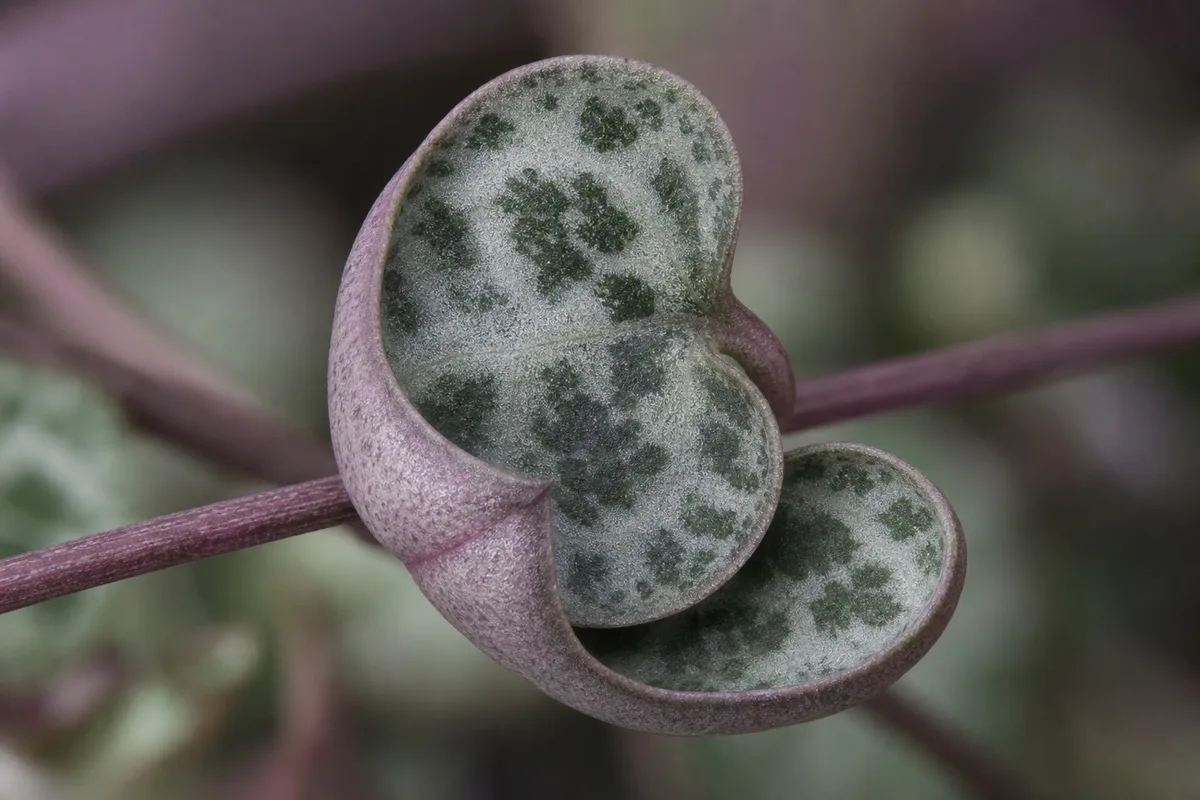
Fix order for dry-soil curl: water thoroughly until runoff appears, empty the saucer, and recheck moisture at depth before the next watering. If peat has gone hydrophobic, bottom-water or water in stages so the core rewets. Do not fertilize a freshly rescued dry plant. Thin-leaved tropicals such as prayer plant and maranta advertise thirst and dry air quickly; thicker pothos may curl more subtly before edges brown. Pair this section with the underwatering symptom hub when dryness is the only clear finding.
Overwatering and Wet-Soil Curl
Wet-soil curl confuses people because the plant looks thirsty while the pot is heavy. Roots deprived of oxygen cannot take water up efficiently, so leaves lose turgor, cup, or droop even though the mix is wet. Missouri Botanical Garden and Clemson both warn that overwatering reduces oxygen at the roots and favors root disease. (Missouri Botanical Garden) (Clemson HGIC) University of Minnesota Extension explains the progression into root rot when mixes stay wet — soft, dark roots and decline that watering cannot reverse. (University of Minnesota Extension)
Signs that curl is wet-driven: soft limp tissue rather than crispy edges, yellowing that moves through old and new leaves, fungus gnats, a sour smell, or mushy roots when you unpot. Empty standing water, improve airflow around the pot, and pause watering until the top several centimeters dry to the plant’s preference. If roots are brown and smearing, move to the root rot houseplants and overwatered plant guides instead of waiting for curled leaves to “perk up.” Wet curl plus collapse also overlaps wilting and drooping leaves.
Heat Stress and Excess Light Curl
Leaves facing a west or south window often curl first on sunny afternoons. The plant is shading itself and slowing water loss while leaf temperature climbs. Soil can still feel moist at depth because the problem is demand, not empty media. RHS poorly-houseplant guidance flags heat, dry air, and harsh placements among stresses that make foliage struggle indoors. (RHS) UC IPM lists excessive light among causes of wilt-like stress that can accompany cupping and leaf damage. (UC IPM)
Pull the plant back from hot glass, add a sheer curtain, or shift to bright filtered light. Do not answer afternoon curl with a second watering if the pot is already heavy — that path turns temporary heat curl into wet-soil failure. Cold drafts create a different margin curl; keep foliage off icy windowpanes and away from exterior doors in winter, and see cold damage houseplants when blackened, water-soaked patches appear after a chill.
Low Humidity Curl on Tropical Foliage
Many homes drop below 30% relative humidity in heating season. Penn State Extension notes that cold outdoor air holds less moisture and heating removes more, and that ASHRAE’s comfort band of roughly 30–60% RH still leaves many tropical houseplants wanting higher humidity than a dry heated room provides. (Penn State Extension) Prayer plants, calathea relatives, ferns, and thin tropical foliage often roll leaves tightly in that dry air even when watering is otherwise reasonable. RHS links bright light plus dry atmosphere to inward curl on Maranta. (RHS)
Misting is a weak fix for room humidity. Penn State reports that the humidity bump after misting can vanish in minutes, and that pebble trays usually change whole-room humidity very little because vapor diffuses away. (Penn State Extension) Better levers: group plants, use a room humidifier near the collection, or choose a naturally more humid room with enough light. For deeper humidity tactics, use the houseplant humidity guide and the low humidity symptom hub. Species that curl fast in dry rooms include stromanthe triostar and prayer plant.
Note the difference between normal nyctinasty (prayer plants folding upward overnight and opening again by morning) and stress curl that stays tight through the day with papery edges or dry-air patterns. Overnight movement alone is not a crisis.
Pest-Driven Curl: Mites, Thrips, and Aphids
If new leaves keep emerging twisted after moisture and placement look right, treat curl as a pest problem until you prove otherwise. Sap feeders damage cells while tissue is soft, so the leaf hardens into a permanent wrong shape. UC IPM documents aphids curling and distorting leaves, thrips scarring and distorting growth with black frass flecks, and broad or cyclamen mites causing thickened, brittle, downward-cupped new margins that are easy to misread as chemical injury. (UC IPM) Colorado State Extension emphasizes isolation, washing, and repeated contact treatments for common houseplant pests. (Colorado State University Extension)
Spider Mites and Stippling
Spider mites thrive in warm, dry indoor air. Early signs are dusty stippling, dull color, and fine silk on undersides and petiole junctions — often before heavy webbing. Leaves may cup or look rough as cells collapse. UC IPM Quick Tips and Colorado State mite guidance both push rinse-plus-repeat contact sprays and humidity support rather than a single application. (UC IPM) (Colorado State University Extension) Full indoor protocol: spider mites on houseplants. Symptom companion: spider mites.
Thrips, Aphids, and Distorted Tips
Aphids cluster on soft tips and undersides, leave sticky honeydew and white cast skins, and curl leaves as they feed. (UC IPM) Thrips hide in crevices, silver or scar tissue, and distort expanding leaves. Use the aphids houseplants guide for honeydew pests and the thrips and distorted leaves hubs when new growth is the damaged zone. Isolate, rinse, then use insecticidal soap or a labeled horticultural oil on a hatch schedule until inspections stay clean. Discard heavily deformed, continuously reinfecting plants when the rest of the collection is at risk.
When to use this guide vs related pages
Use this curling-leaves decision tree when the shape change is the loudest complaint — inward roll, outward cup, or twisted new blades — and you need cause matching before treatment.
Use the compact curling leaves symptom hub when you want short dry/heat/humidity/pest pattern cards without the full fix-order walkthrough.
Use wilting houseplants when tissue collapses — floppy leaves and stems that have lost turgor — especially for temporary versus permanent wilt and root-rot confirmation.
Use plant drooping when the plant hangs or sags in posture and you need broader triage that may include light and placement, not only roll shape.
Curl can travel with yellowing, brown tips, wilt, or holes. If yellowing is loudest, start at indoor plant yellow leaves. Crispy margins with salt crust may be more about water quality and fertilizer salts — see brown tips on houseplants. If you only know “something looks wrong,” use the houseplant symptom checker before treating. Do not fertilize to “force” flat leaves; Clemson lists fertilizer and mineral buildup among causes of root damage and wilt-like stress. (Clemson HGIC)
How to Fix Curling Leaves by Cause
Match the fix to the fork you completed. Do not stack water, fertilizer, and pesticide in one afternoon.
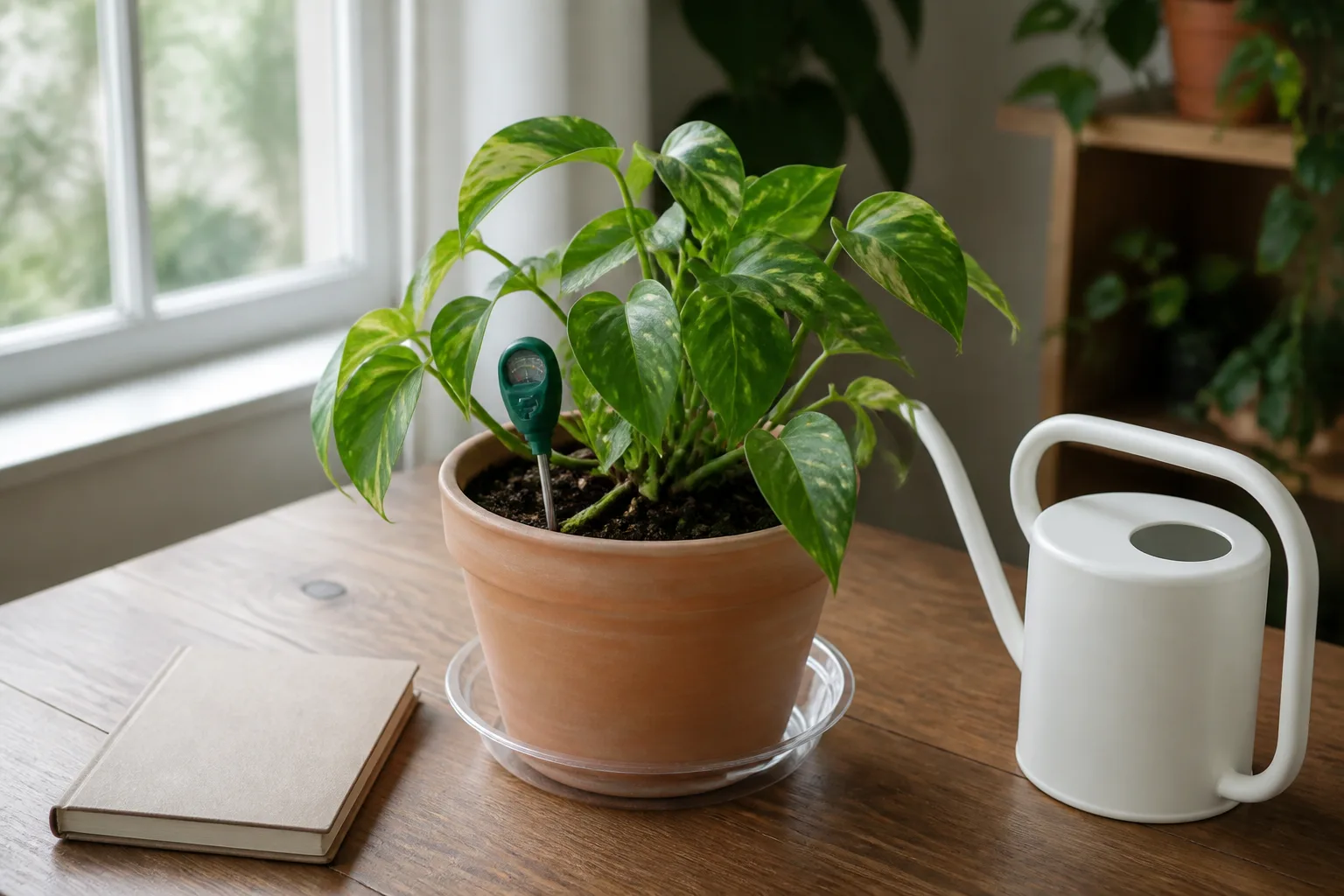
- Dry soil / underwatering: Water thoroughly, drain, rewet hydrophobic mix in stages, then water by depth checks.
- Wet soil / early root stress: Empty saucers, increase drying intervals, improve drainage, unpot if roots are mushy. See overwatered plant and root rot.
- Heat or harsh light: Move back from hot glass, filter midday sun, avoid watering on afternoon heat alone. See heat stress.
- Low humidity: Raise room humidity with a humidifier or grouping; do not rely on misting. See houseplant humidity guide.
- Pests: Isolate, rinse undersides, repeat soap or oil on a schedule, continue until two clean inspections. See spider mites and aphids.
- Rootbound uneven uptake: If roots circle tightly and the mix dries in hours, repot one size up. See repotting houseplants.
Judge success on the next two or three new leaves, not on whether an old rolled leaf flattens overnight.
Prevention that actually works: water by depth, not weekday; keep tropical foliage off hot glass and vents; raise winter humidity with a humidifier for thin-leaved plants; quarantine new purchases; rotate pots so one side does not bake; repot before the root ball becomes a dense coil. RHS advice for deformed leaves is the same core message: avoid draughts and wild temperature swings, and keep media moist rather than cycling between soggy and bone-dry. (RHS)
Highest-intent next reads when another symptom takes over: fungus gnats on houseplants, not enough light, save a dying houseplant, plus species drill-downs for pothos, prayer plant, maranta, and stromanthe triostar.
Will Curled Leaves Uncurl?
Mild environmental curl sometimes relaxes after moisture and humidity stabilize, especially when the leaf was only temporarily dehydrated. Severe creasing from stop/start expansion, pest scarring, and heat damage usually stay put because the leaf cell layout is already set. RHS leaf-deformation notes treat crinkled tissue from irregular watering and temperature swings as a development problem during expansion — the leaf does not “reset” once hardened. (RHS)
Remove only leaves that are mostly dead, diseased, or so damaged they block light to healthy tissue. Slightly curled leaves still photosynthesize. Expect improved new growth within a few weeks on fast growers and longer on slow ones once the cause is corrected. If new tips stay twisted, return to the pest inspection instead of waiting longer.
First-Hand Notes From Diagnosing Curling Leaves
These are LeafyPixels editorial observations from plants we diagnosed in heated indoor rooms — not lab trials. They show how the same “curl” word hides different forks.
-
Prayer plant, winter dry-air roll (January 2026). A Maranta in a terracotta 12 cm pot sat about 1.5 m from a heat vent. Daytime room RH hovered near 28% on a cheap hygrometer. Leaves rolled tightly inward by afternoon even though the mix was still lightly moist at 3 cm. We did not water. A small cool-mist humidifier raised the corner toward the mid-40s% RH over three days; within about ten days new leaves opened flatter while older rolled blades stayed creased. Lesson: dry-air curl can look like thirst on prayer-plant relatives; watering a still-moist pot would have stacked a second stress.
-
Pothos, window-side heat curl (March 2026). Golden pothos on a west sill cupped hardest on the glass-facing leaves after a bright afternoon. Pot weight was still heavy and the top 4 cm of mix were damp. Pulling the pot one step back and adding a sheer curtain eased the afternoon cup within 48 hours — no watering change. Lesson: heat curl is a placement problem first; answering it with a second drink risks wet-soil failure.
-
Stromanthe tip twist that stayed permanent (February 2026). New growth kept emerging thickened and downward-cupped with dusty stippling on undersides. Isolation, rinses, and repeated insecticidal soap cleaned live mites over roughly three weeks, but the scarred tips never flattened. The next flush after clean inspections looked normal. Lesson: pest curl is judged on new leaves; permanently twisted tips are not a reason to keep spraying forever if inspections stay clean — or to keep a heavily reinfecting plant next to a clean shelf.
Conclusion
Do this in the next 10 minutes:
- Finger-test 2–5 cm deep and lift the pot — dry-light vs wet-heavy decides the moisture fork.
- Empty any saucer or cachepot water you find.
- Touch the hottest leaf and scan vents; move one step if heat is the story.
- Flip newest leaves for stippling, webbing, honeydew, cast skins, or frass; isolate if you see pests.
- Apply one matched fix — rehydrate, dry down, relocate, raise real humidity, or start a rinse/soap schedule.
- Mark today’s date and judge recovery on the next two new leaves, not on whether old rolls flatten tonight.
Curling leaves ask for a diagnosis, not a reflex. Dry-soil curl needs thorough rehydration. Wet-soil curl needs drainage and sometimes root rescue. Heat needs placement. Thin tropicals often need real humidity support. Twisted new growth needs a pest hunt. Old rolled leaves may never flatten; healthy new leaves are the scoreboard.