Aphids on Houseplants: ID, Treatment, Prevention
Learn cornicle ID, lookalikes, and a multi-cycle indoor treatment plan that matches aphid life cycles—not one spray.
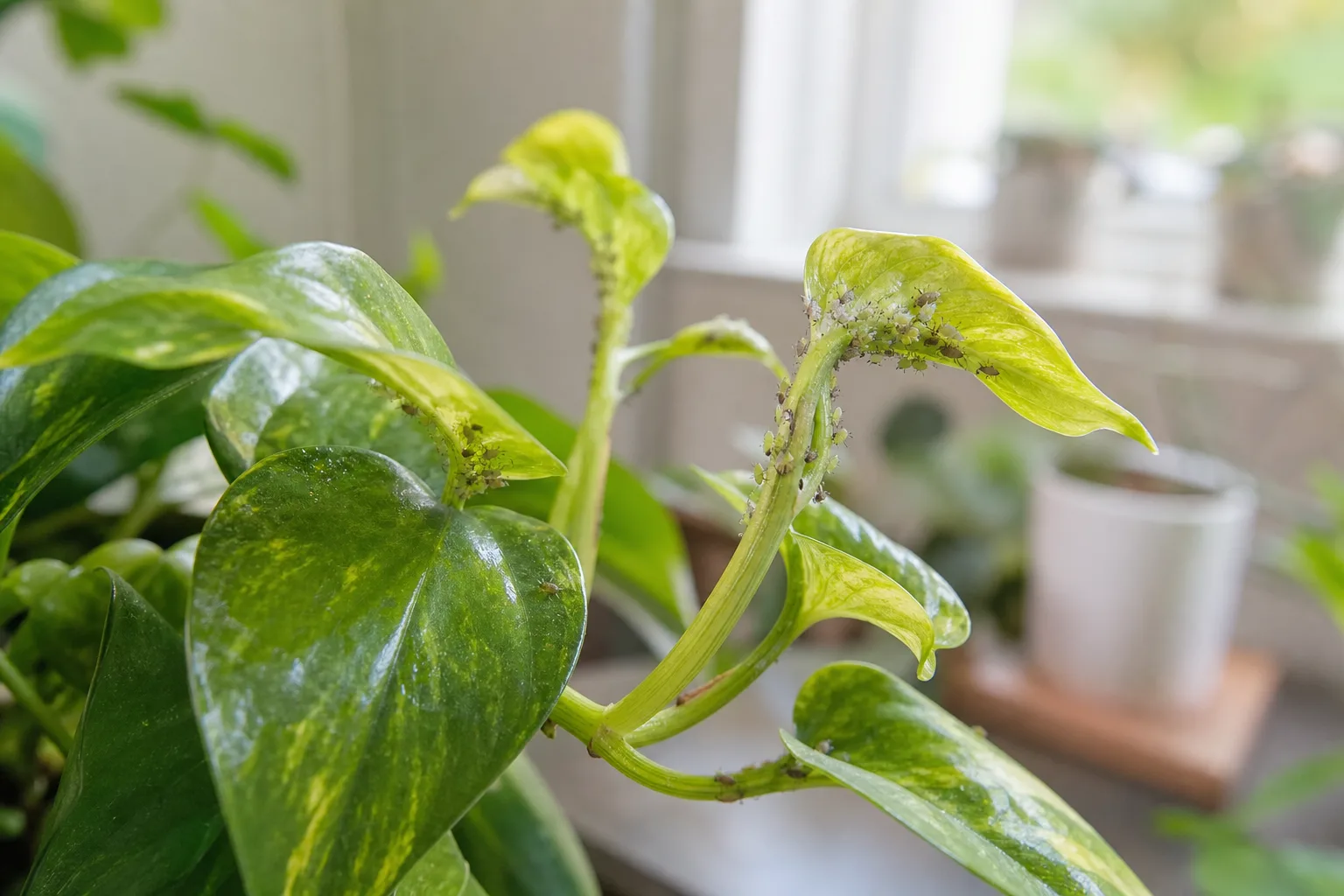
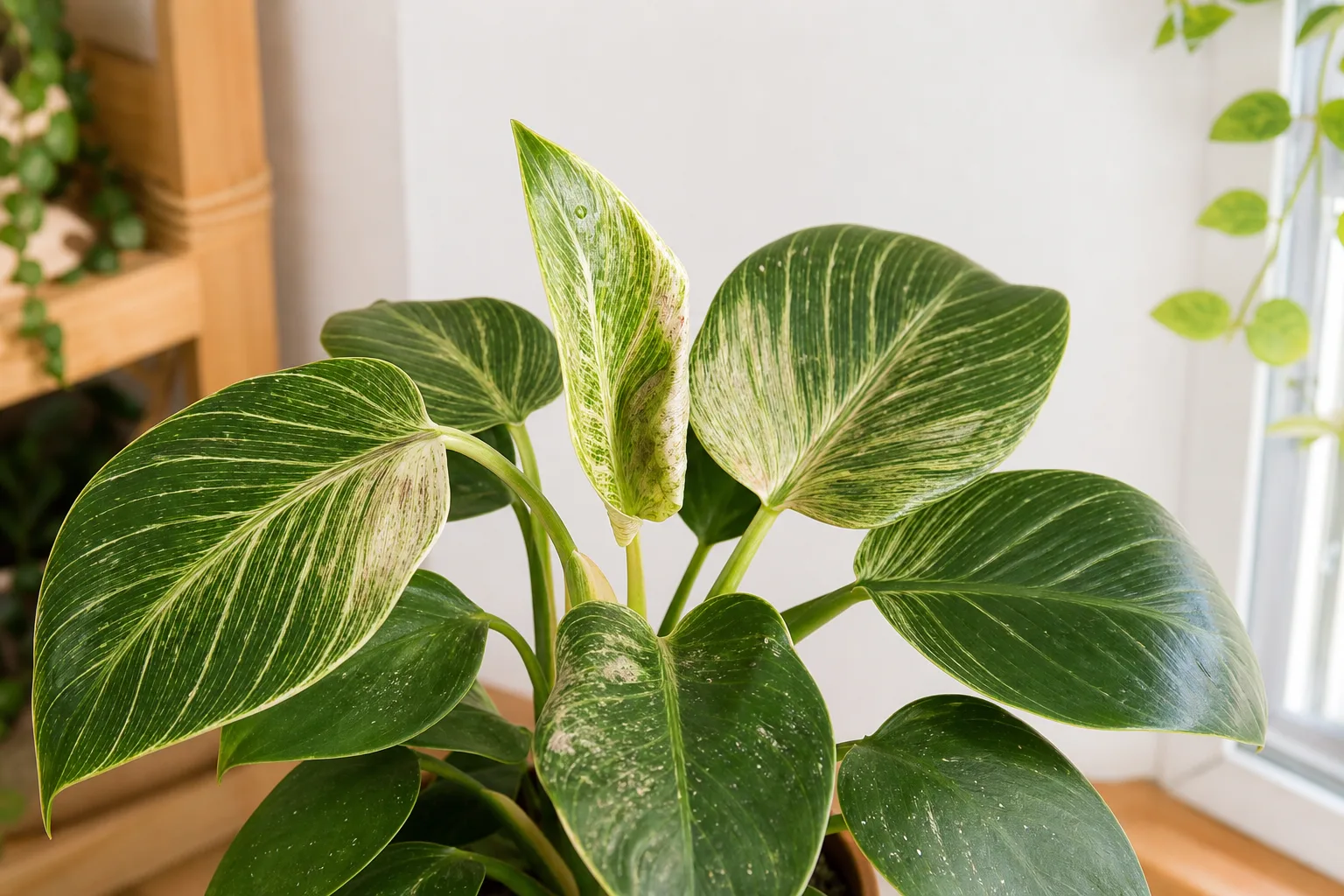
Sticky leaves, curled new tips, and tiny pear-shaped insects on soft growth are classic signs of aphids on houseplants. Aphids are soft-bodied sap feeders that prefer tender shoots, flower buds, and leaf undersides. Outdoors, predators and weather often keep colonies in check. Indoors, those checks disappear, so a hitchhiking colony can become a sticky, spreading problem in days.
Lifecycle callout (why one spray fails): In warm conditions many aphids mature from newborn to reproducing adult in about seven to eight days, and females can produce young at roughly 3–6 per day. Contact soaps and oils kill what they wet that day, then leave little residual—so plan repeat coverage every 5–7 days for at least 2–3 cycles, not a single “emergency” spray.
This guide is the houseplant-wide aphids hub: confirm the pest, distinguish lookalikes, run a least-toxic treatment campaign, then prevent rebound. For collection-wide pest triage, use the indoor plant pest guide. For sticky-leaf triage across species, open the aphids symptom hub.
Quick Visual Checklist: Insects, Honeydew, Cast Skins, Sooty Mold
Aphids are small enough that many growers notice residue or distorted tips before they notice the insect. With good light and a close look at new growth, confirmation is usually fast.
Color, Size, and Cornicles
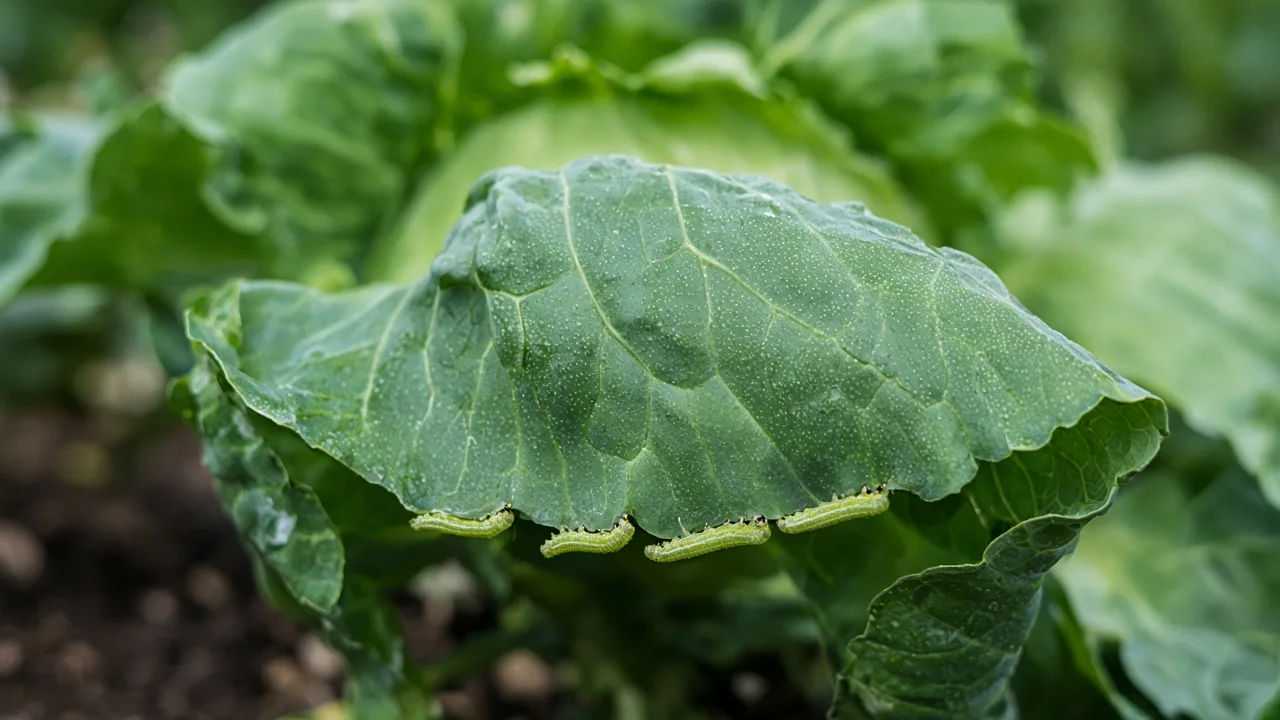
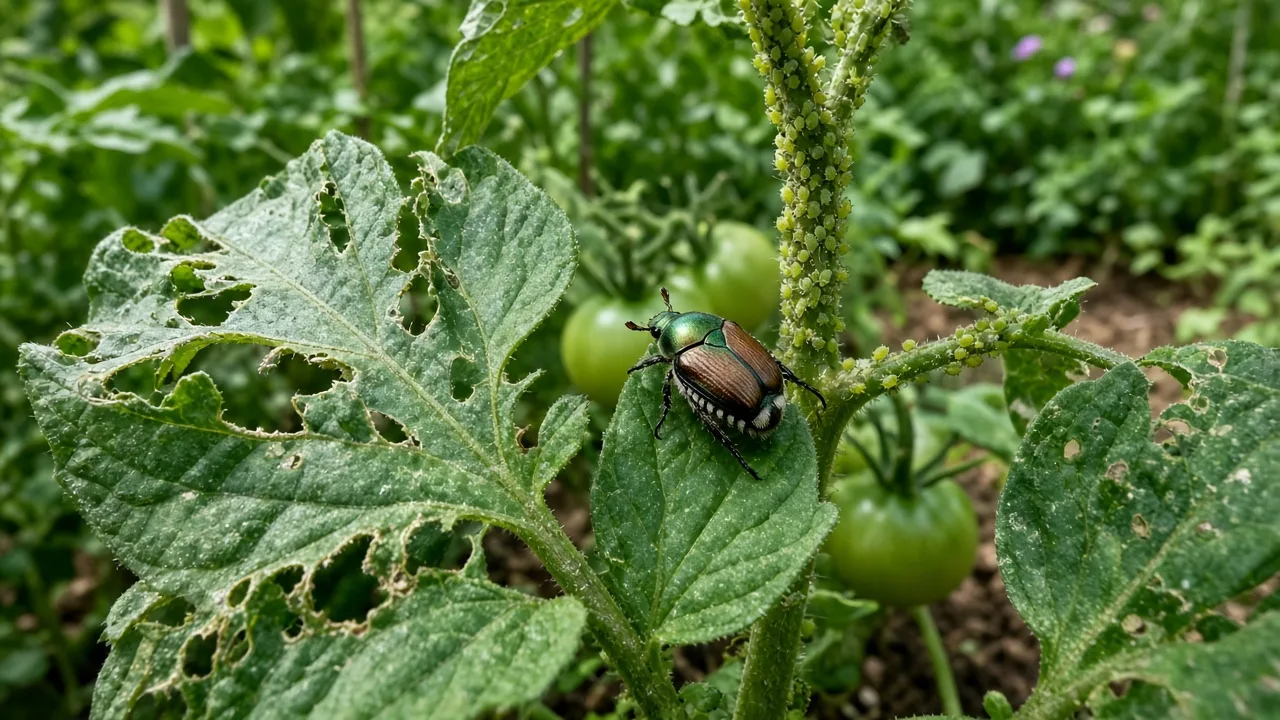
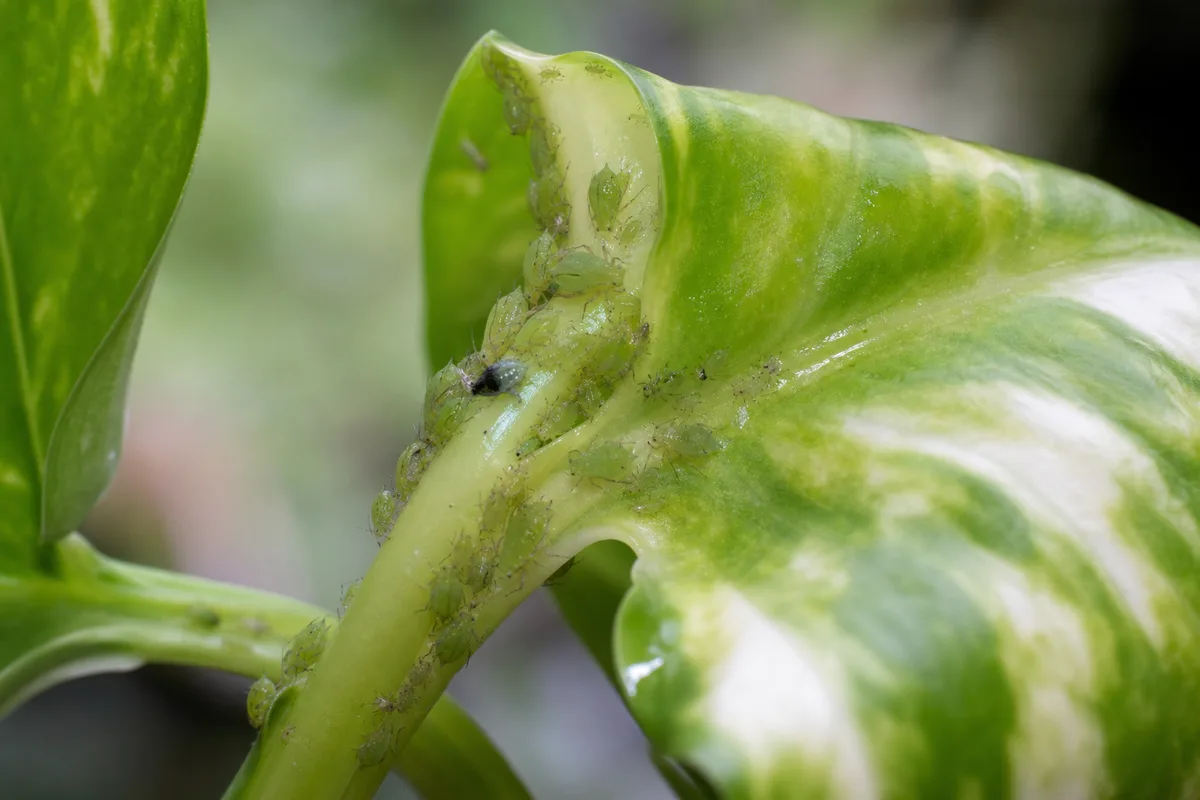
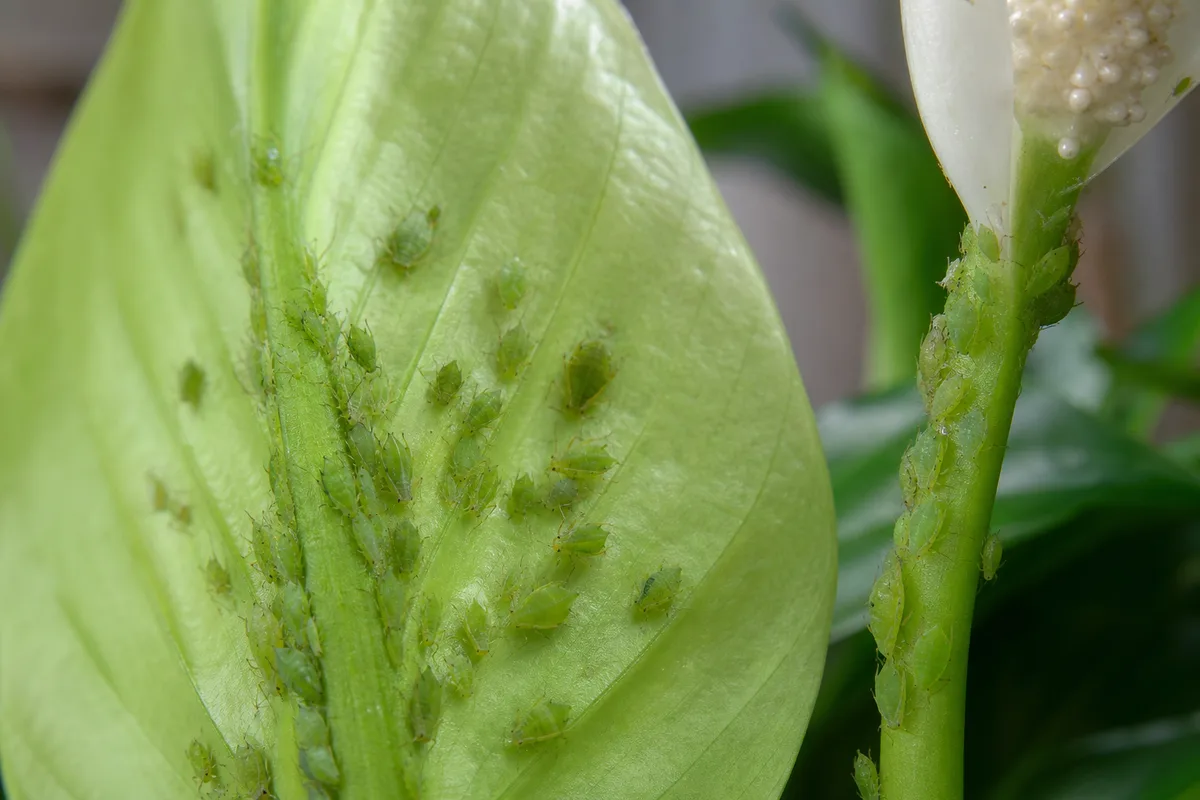
Adult aphids on indoor plants are typically about 1/16 to 1/8 inch long, soft-bodied, and pear-shaped. Clemson Extension describes them as usually green, though they may also be pink, brown, black, or yellow, and some species look woolly or powdery from a waxy coat. Adults may or may not have wings.
The hard ID feature is a pair of tubelike structures called cornicles projecting from the rear of the abdomen. University of California IPM notes that the presence of cornicles distinguishes aphids from all other insects. Soft pear-shaped bugs with two tiny “tailpipes” are aphids—not fungus gnats, thrips, or leafhoppers.
Aphids often feed in dense groups and usually do not dart away instantly when disturbed. That slower movement helps separate them from many plant bugs that flee at a touch.
Honeydew, Cast Skins, and Sooty Mold
As aphids feed, they excrete sticky honeydew. Missouri Botanical Garden notes that sticky leaves are often the first indoor symptom gardeners notice. Honeydew makes foliage shiny, drips onto leaves below, and can coat nearby furniture or windowsills.
In moist indoor air, black sooty mold can grow on honeydew. Wisconsin Horticulture notes that honeydew and sooty mold commonly mark an aphid outbreak. Sooty mold does not infect leaf tissue itself, but a thick layer shades leaves and makes a stressed plant look worse. White cast skins from molting aphids often accumulate on upper leaf surfaces below feeding colonies—another reliable clue when live insects are sparse.
When sticky leaves are not aphids: Soft scale, mealybugs, and whiteflies also produce honeydew. If you find hard bumps that scrape off as shells, cottony wax clumps in axils, or tiny white moth-like insects that flutter when disturbed, treat for those pests instead—see the lookalike table below and the scale on houseplants or mealybugs on houseplants guides.
Confirm Aphids vs Mealybugs, Scale, Whiteflies, and Mites
Wrong ID wastes cycles and can delay the right treatment. Soft-bodied tip colonies plus honeydew and cast skins point strongly to aphids; cottony wax, hard immobile bumps, or fluttering white adults point elsewhere.
| Clue | Aphids | Mealybugs | Soft scale | Whiteflies |
|---|---|---|---|---|
| Appearance | Soft, pear-shaped; often clustered | Cottony white wax, oval bodies | Brown/tan bumps that stay put | Tiny white moth-like adults |
| Movement | Slow; nymphs and adults feed together | Slow; hide in axils | Immobile once settled | Adults flutter when disturbed |
| Honeydew | Common | Common | Common | Common |
| Best first check | New tips and leaf undersides | Leaf axils and sheaths | Stems and midribs | Undersides; tap plant |
If you see fine webbing and stippling, think spider mites on houseplants instead. Silvery scarring with black frass flecks points to thrips on houseplants. Flying adults that rise from wet soil when you water are usually fungus gnats, not aphids.
Why Indoor Colonies Explode So Fast
Warm rooms, soft nitrogen-fed growth, and zero predators create ideal indoor conditions. Understanding reproduction explains why one rinse or one spray almost never ends the problem.
Live Birth, 7–8 Day Maturity, and Winged Spread
Indoors, most aphids do not pause for a winter egg stage the way outdoor populations often do. Missouri Botanical Garden explains that adult females can give birth without mating, and a female can produce young at about 3–6 per day for several weeks. The young look like miniature adults, begin feeding immediately, and molt about four times before maturity. Shed skins remain as evidence even after you wipe live insects away.
UC IPM reports that in warm conditions many species can develop from newborn nymph to reproducing adult in seven to eight days, and each adult can produce up to about 80 offspring in a week. That math is why a colony that looked “almost gone” after one treatment is back within days—and why a 5–7 day spray cadence for 2–3+ cycles matches biology instead of hope.
Winged forms appear when colonies get crowded or food quality drops. Winged aphids can move to nearby houseplants, which is why isolation matters even when only one plant looks bad. Yellow sticky traps can catch some winged adults for monitoring, but they do not control the wingless majority still feeding on the plant.
Where They Hide and How They Arrive Indoors
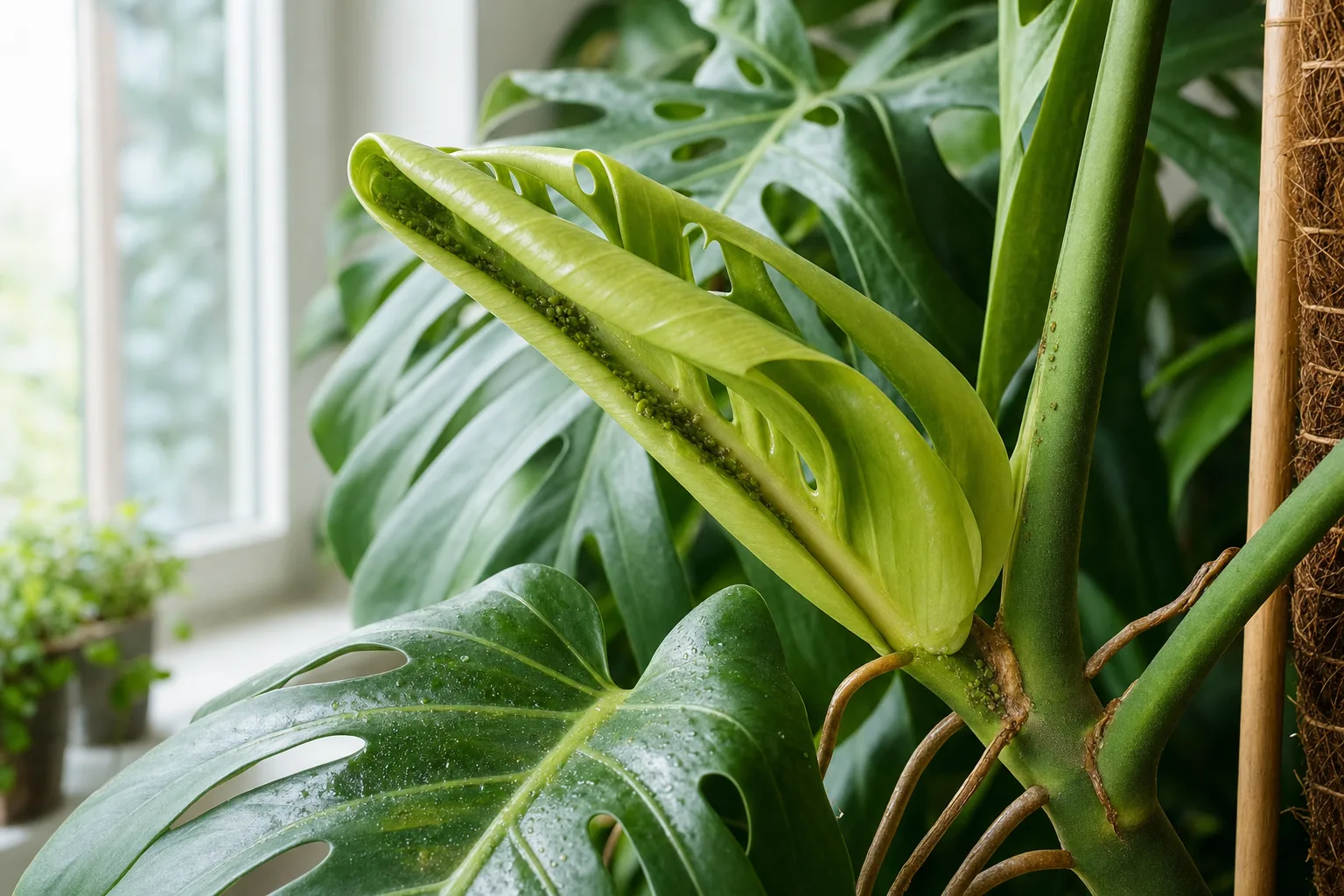
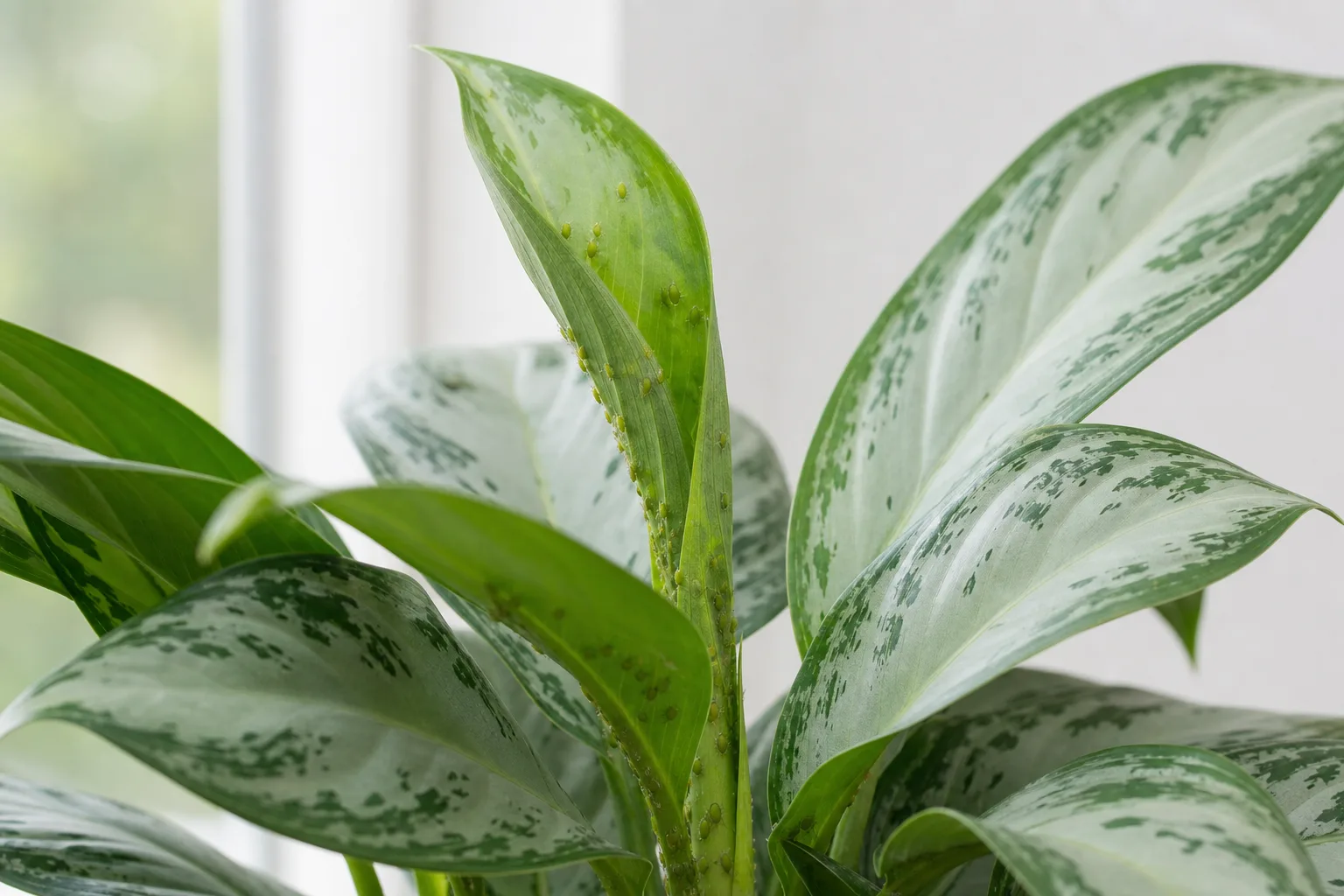
Aphids prefer soft new growth, shoot tips, flower buds, and the undersides of younger leaves. Check leaf axils, the centers of new shoots, and any curled leaves that shelter colonies from sprays. RHS notes that white cast skins often accumulate on upper leaf surfaces below feeding sites, and sap-feeding insects including aphids can stay active all year round indoors.
They almost never appear from nowhere. Common introduction routes:
- New plants already carrying a few nymphs or adults from the nursery
- Outdoor summering plants brought back inside in fall
- Open windows or shared air near heavily infested plants
- Cut flowers or produce temporarily placed near the collection
- Clothing or tools after handling an infested plant
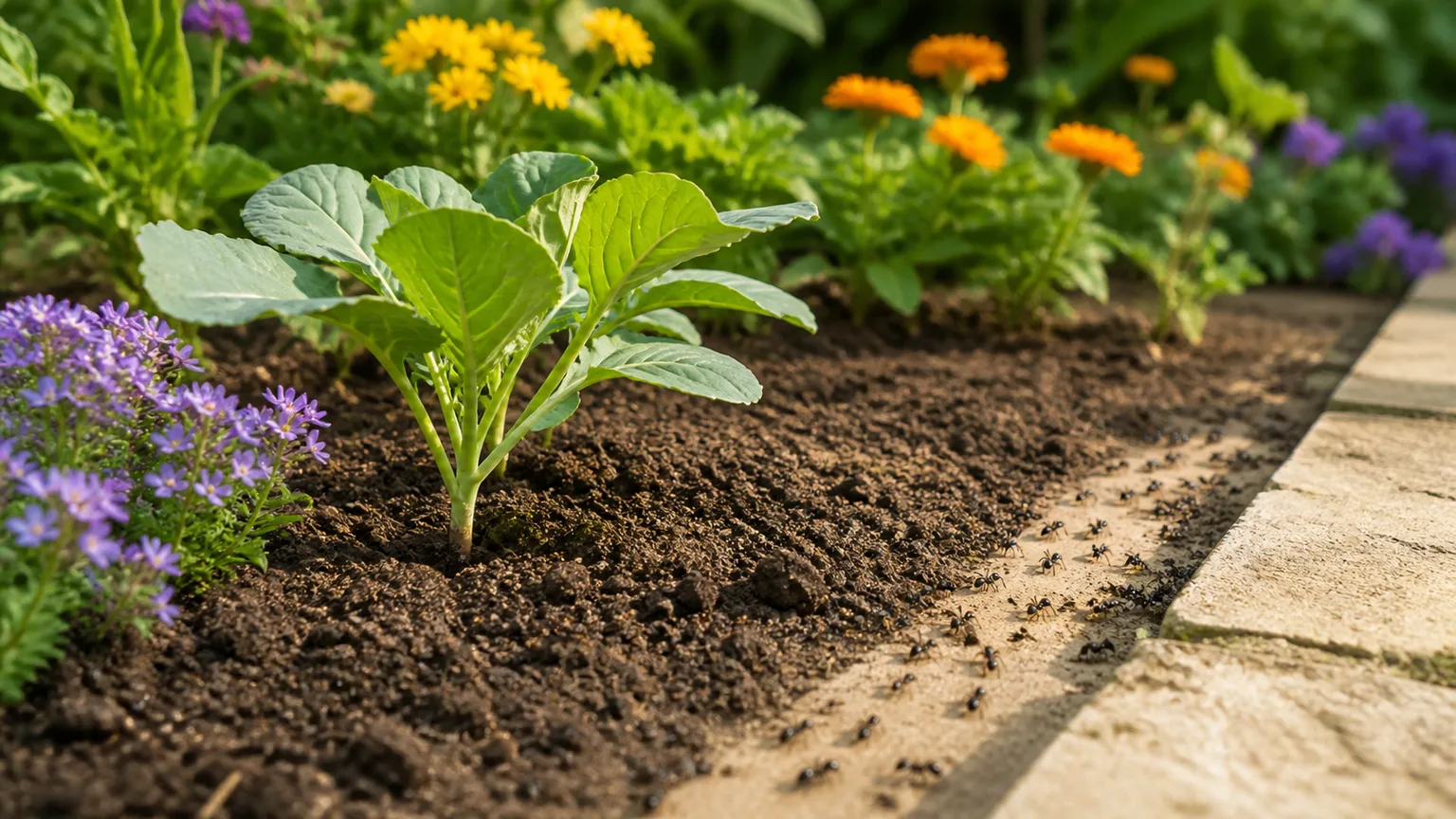
Missouri Botanical Garden recommends isolating newly acquired plants for 2–3 weeks before placing them near the rest of a collection (sourced quarantine window). Ants on patio plants often protect outdoor aphid colonies for honeydew—if you see ants farming sticky tips outdoors, rinse thoroughly and break the ant–aphid partnership before fall move-in; indoors, ants plus sticky leaves should send you looking for aphids or other honeydew pests (see ants on houseplants).
Treatment Campaign: Isolate, Rinse, and Prune
Treat aphids as a short campaign, not a one-day event. The goal is to remove what you can physically, kill exposed soft-bodied stages with contact products, then repeat until no new nymphs appear on fresh growth.
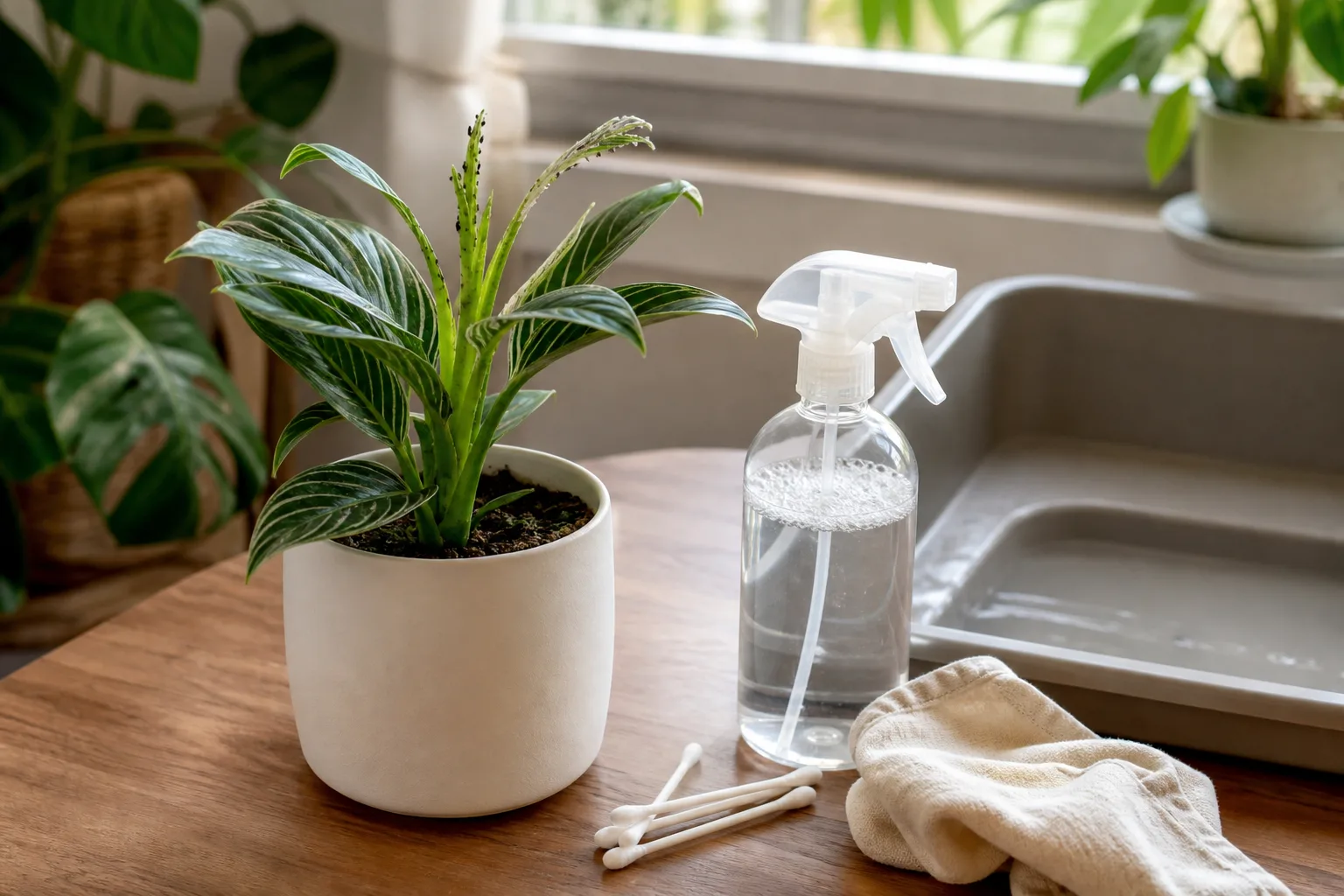
Day 0 workflow:
- Move the plant away from others immediately. Bag trash for heavily infested tips—do not compost them indoors.
- For sturdy plants, take the pot to a sink or shower and rinse all surfaces with a strong stream of water, especially leaf undersides and shoot tips. Clemson Extension and Missouri Botanical Garden both list rinsing or washing as first-line control for exposed aphids.
- Prune out the worst curled tips and dispose of them. Contact sprays cannot reach aphids sealed inside tightly curled leaves.
- Crush remaining visible colonies with a gloved finger or wipe them with a cotton swab. For tiny starter colonies, rubbing alcohol on a swab can work—test a leaf first and avoid soaking thin or fuzzy foliage.
Insecticidal Soap, Horticultural Oil, and Safe Repeat Cycles
After physical cleanup, apply a product labeled for houseplants and aphids. Insecticidal soap and horticultural oils (including many neem oil products labeled for soft-bodied pests) work primarily by contact smothering, so coverage matters more than mixing a stronger dose. UC IPM recommends soaps and oils as the best insecticide choices for most aphid situations and stresses thorough coverage of leaf undersides.
Key application rules:
- Use a product labeled for indoor plants, or move the plant outdoors/garage to spray, then return it after leaves dry
- Cover tops and undersides of leaves, stems, and shoot tips until wet but not dripping endlessly into the crown
- Repeat every 5–7 days for at least 2–3 cycles, because soaps and oils kill aphids present that day and leave little residual
- Do not spray drought-stressed plants or during extreme heat; UC IPM warns against soaps/oils on water-stressed plants or when temperatures exceed about 90°F
- Spot-test sensitive plants and avoid harsh household dish detergents, which can burn leaves
For oil coverage details, see the neem oil indoor plants guide. For a weekly monitoring schedule across a collection, use integrated pest management indoors.
Soap vs Oil vs Alcohol Swabs
| Tool | Best when | Limitation |
|---|---|---|
| Insecticidal soap (labeled) | Open colonies on sturdy foliage; first-line contact kill | Must wet insects; little residual; may burn sensitive leaves |
| Horticultural / neem oil (labeled) | Soft-bodied pests plus some eggs/crawlers on hardier leaves; good when soap alone rebound | Same contact rules; avoid heat/drought stress; spot-test |
| Alcohol swab | Tiny starter colonies, leaf axils, or a few tips you can reach | Labor-intensive; risky on thin/fuzzy leaves; no residual |
Prefer soap when you need a quick knockdown on glossy, sturdy leaves. Prefer oil when the label covers aphids on your plant and you want slightly better smothering coverage after a rinse. Prefer swabs when the infestation is still a handful of insects and sprays feel disproportionate.
Soft-Leaf and Fuzzy-Leaf Sensitivity
Labeled insecticidal soaps are formulated and tested for plant use; household dish detergents are not. Colorado State University Extension notes that homemade dish-soap mixes are inconsistent, can injure plants, and are not recommended for insect control. Even commercial soaps can be phytotoxic on some plants—always check the label’s sensitive-plant list and spot-test a day or two ahead.
Treat with extra caution (spot-test, lighter coverage, or alcohol swabs instead of a full drench) on:
- Fuzzy or hairy leaves (African violets, some begonias)
- Thin, soft tropical foliage that marks easily
- Plants already drought-stressed or sitting in hot direct sun after spraying
If a leaf shows spotting or edge burn within a few days, stop that product, rinse the plant, and switch to physical removal plus a different labeled product after another spot-test.
When Stronger Products Make Sense Indoors
If colonies rebound after careful soap or oil cycles, escalate carefully and stay label-bound. Clemson Extension lists outdoor spray options such as pyrethrins and, for some situations, soil-applied imidacloprid granules labeled for aphids on houseplants taken outdoors. Colorado State University Extension notes that green peach aphids adapted to greenhouse culture are often highly resistant to insecticides—another reason thorough cultural control and repeat contact sprays matter before stronger chemistry.
National Pesticide Information Center emphasizes that indoor pesticide use carries higher exposure risk because homes are less ventilated and people and pets share the air. Prefer treating outdoors or in a garage when possible, protect floors and furniture from overspray, keep pets from chewing treated foliage, and always follow the label. Broad-spectrum indoor bombs and leftover garden concentrates not labeled for houseplants are poor choices.
Imidacloprid / outdoor caveat: Systemic products can affect pollinators if treated plants later bloom outdoors. UC IPM advises avoiding imidacloprid applications to plants in bloom or prior to bloom when pollinators are a concern. Use only products labeled for your plant and setting, and do not improvise outdoor garden concentrates indoors.
On viruses: some aphids transmit plant viruses on crops and certain ornamentals. For typical foliage houseplants, the practical indoor damage is usually distortion, honeydew, and sooty mold—not a virus epidemic. Treat for the colony you can see; do not assume every curled tip is viral.
Plants Aphids Hit Most Often Indoors
Almost any soft-growing houseplant can host aphids, but some species show up again and again. Soft tips and frequent flush growth make them magnets.
High-traffic examples with dedicated plant pages:
- Pothos aphids — soft trailing tips and petiole joints
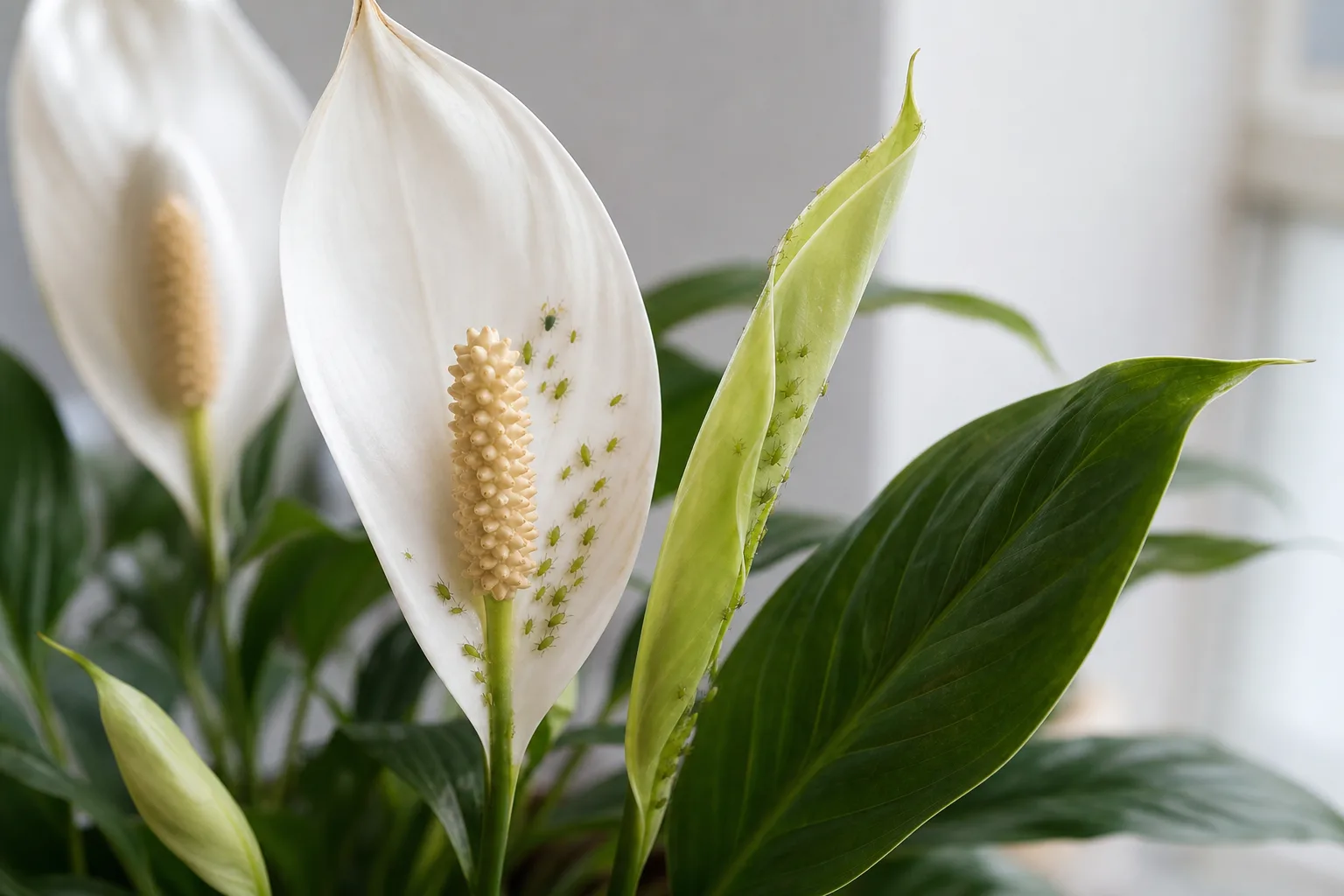
- Peace lily aphids — new leaves and flower stalks
- Monstera aphids — unfurling leaves and petiole bases
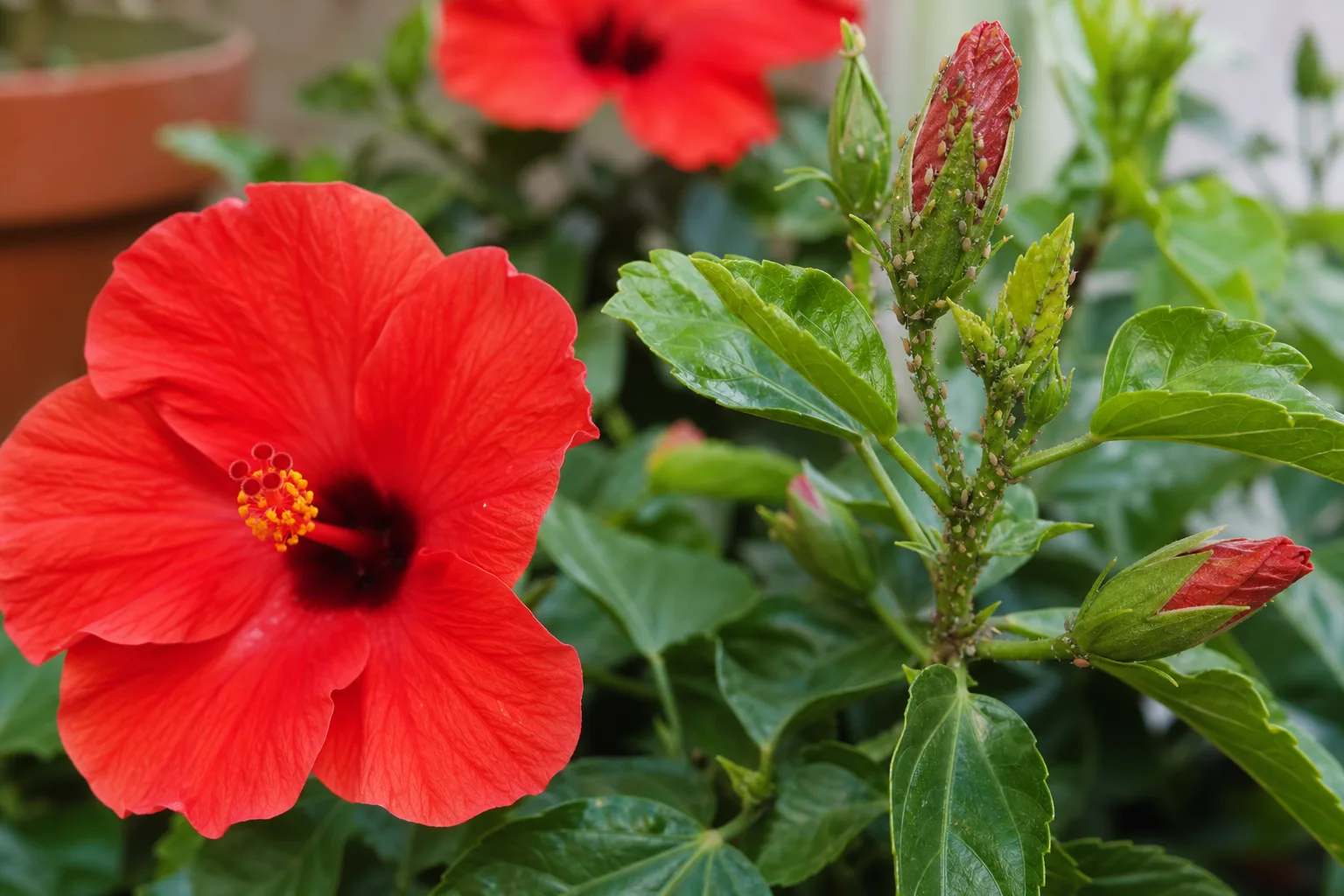
- Hibiscus aphids — buds and tender shoots
- Rose aphids — flower buds and soft canes
- Aglaonema aphids — new spears and leaf undersides
Colorado State University Extension also flags ornamental peppers, chrysanthemums, and many indoor herbs. If one plant on a crowded shelf has aphids, inspect every neighbor with soft new growth before you declare the outbreak contained.
Prevention, Rebound Mistakes, and When to Discard
Prevention is mostly inspection and restraint, not a special product.
- Quarantine every new plant for 2–3 weeks (MOBOT-sourced) and check tips twice a week
- Inspect undersides and shoot tips during watering, not only when leaves look wrong
- Avoid heavy soluble nitrogen that pushes soft, aphid-preferred flush; UC IPM links high nitrogen to faster aphid reproduction
- Rinse outdoor-summered plants thoroughly before fall move-in; manage ants if they are farming honeydew outdoors
- Give plants space and airflow so sticky honeydew and sooty mold are easier to spot early
- Keep a simple treatment log — date found, product used, next spray due — so you do not stop one cycle too early
Common rebound mistakes: spraying only leaf tops; treating once; using dish soap that burns foliage; re-shelving after a few clean-looking days; overfertilizing during recovery; ignoring ants on patio plants before move-in.
When to discard: Bag and trash (not compost) when more than roughly half the canopy is coated, new growth is continuously destroyed, the plant is inexpensive and easily replaced, or three full treatment cycles show no reduction. Saving a $10 annual while risking a shelf of permanent houseplants is a poor trade. Before you toss a favorite, confirm you actually have aphids and not scale or mealybugs. If soggy mix and foul roots dominate alongside pests, address watering separately via the root rot houseplants guide.
Recovery Timeline and Re-Shelving Rules
Judge success by new growth, not by whether old sticky leaves look perfect. After the first thorough rinse and soap/oil spray, live adults should drop sharply within a day. Check again on days 5–7 for newborn nymphs. A second and third spray catch generations that were immature or hidden during the first pass.
Editorial practice (not a sourced quarantine rule): Expect 2–4 weeks of monitoring after the last clean tip check before returning the plant to a crowded shelf. Distorted leaves already formed will not uncurl; wait for clean new tips. Wash remaining honeydew and sooty mold gently once insects are gone so leaves can photosynthesize again.
Stop spraying when: you complete at least two consecutive tip/underside inspections (about a week apart) with no live aphids and no new cast skins on fresh growth—then keep watching, but do not keep soaking the plant “just in case.”
First-Hand Notes From Clearing Aphids Indoors
These are LeafyPixels grow-room notes from multi-cycle campaigns—not lab trials. Conditions and outcomes vary by plant, light, and product label.
Case 1 — Hibiscus on an east shelf (cleared): In early summer, a potted hibiscus showed sticky windowsill drips and green colonies packed into buds. Day 0: isolated to the bathroom, pruned two tightly curled tips into a sealed bag, rinsed undersides in the shower, then applied labeled insecticidal soap until tips and undersides were wet. Day 6 and Day 12: repeated soap after finding sparse newborn nymphs on one bud. Honeydew stopped by Day 8. Outcome: no live aphids after the third cycle; plant stayed isolated for 18 more days of clean tip checks before returning to the shelf. One early mistake in a prior hibiscus outbreak—re-shelving after a single “clean” day—brought a small return within a week; finishing all three cycles prevented that this time.
Case 2 — Golden pothos on a bright north wall (slow clear): Trailing tips had pear-shaped aphids at petiole joints with cast skins on leaves below. Physical wipe + soap on Day 0 knocked adults hard, but Day 5 showed new nymphs tucked under a curled tip we had not pruned. After pruning that tip and completing cycles on Day 5 and Day 11, tips stayed clean. Outcome: cleared in three contact cycles; remaining sticky sheen washed off after insects were gone. Lesson: curled tips act as spray shields—prune them rather than hoping mist reaches inside.
Case 3 — Soft-leaf caution (product swap): On a fuzzy-leaved African violet with a few aphids at the crown, a full soap mist left faint spotting on one leaf after a hot afternoon. We switched to alcohol swabs on visible insects plus a gentler labeled product on a spot-tested leaf for the next cycle. Outcome: aphids gone without further burn. Soft/fuzzy foliage deserves a smaller first pass.
Keep your own log: plant, date found, product, cycle number, next due date, and whether new growth is clean. That notebook is what turns lifecycle math into a finished campaign.
Pet and Indoor Spray Safety
Homes are less ventilated than outdoor air, so pesticide vapors and residues linger longer. NPIC flags higher indoor exposure risk for people and pets, overspray on floors and furniture, and pets that may chew treated foliage.
Scannable rules after any spray:
- Prefer spraying outdoors, on a balcony, or in a garage; return the plant after leaves dry
- Keep children and pets away from wet foliage; do not let pets lick or chew treated leaves
- Protect floors, aquariums, and furniture from overspray
- Use only products labeled for houseplants/aphids at the labeled rate—never “a little more”
- Wash hands and tools after treatment; bag pruned tips in trash
- If a pet may have ingested plant material or pesticide, contact a veterinarian or animal poison-control service promptly
Least-toxic contact products still deserve label discipline. Escalation chemistry (pyrethrins, imidacloprid) raises the bar further—outdoor application when the label requires it, and no improvising with unlabeled concentrates.
Related Pest and Species Guides
- How to tackle indoor plant pests at home — collection-wide pest ID when you are not sure it is aphids
- Integrated pest management indoors — weekly monitoring and treatment logging
- Neem oil for indoor plants — oil coverage after physical removal
- Thrips on houseplants, scale on houseplants, mealybugs on houseplants, spider mites on houseplants — lookalike and sibling pest hubs
- Aphids symptom hub — cross-plant sticky-leaf triage
- Species follow-through: pothos aphids, peace lily aphids, monstera aphids, hibiscus aphids
Conclusion: Day 0–14 Aphid Clearance Checklist
Use this one-screen campaign instead of re-reading the whole guide mid-outbreak:
| Day | Action | Pass criteria |
|---|---|---|
| 0 | Isolate; bag heavily infested tips; rinse undersides; prune curled tips; apply labeled soap or oil to all surfaces | Live adults sharply reduced; plant away from the shelf |
| 5–7 | Inspect tips/undersides for nymphs and new cast skins; spray again with full coverage | Any survivors get wet; no “tops only” pass |
| 12–14 | Third cycle if nymphs appeared earlier; otherwise confirm two clean tip checks about a week apart | No live aphids on new growth |
| After last clean check | Wash residual honeydew/sooty mold; keep isolated while monitoring (editorial 2–4 weeks before crowded re-shelving) | Clean new tips, not perfect old leaves |
Confirm pear-shaped insects with cornicles before you spray. Match contact products to soft vs fuzzy foliage. Escalate only with labeled chemistry and outdoor/exposure caution. With early ID and repeat coverage that respects the 7–8 day maturity window, most indoor collections clear aphids without harsh indoor bombs.