Ants on Plants: Causes, Checks, and Control
'Houseplant pests are common indoors because conditions lack natural predators. Ants on Plant often arrives on new plants, open windows, or stressed specimens. When you notice Ants crawling around plant, often farming aphids or scale, act quickly: confirm the pest, isolate the plant, and treat before the population explodes. Track weekly progress after you change care, and note watering, light, and repotting dates so you can tell whether the symptom is improving or returning.'. Compare upper versus lower leaves, new versus old growth, and soil moisture at root depth before you treat, because the same visible symptom can come from watering, light, pests, or normal aging on different plants.
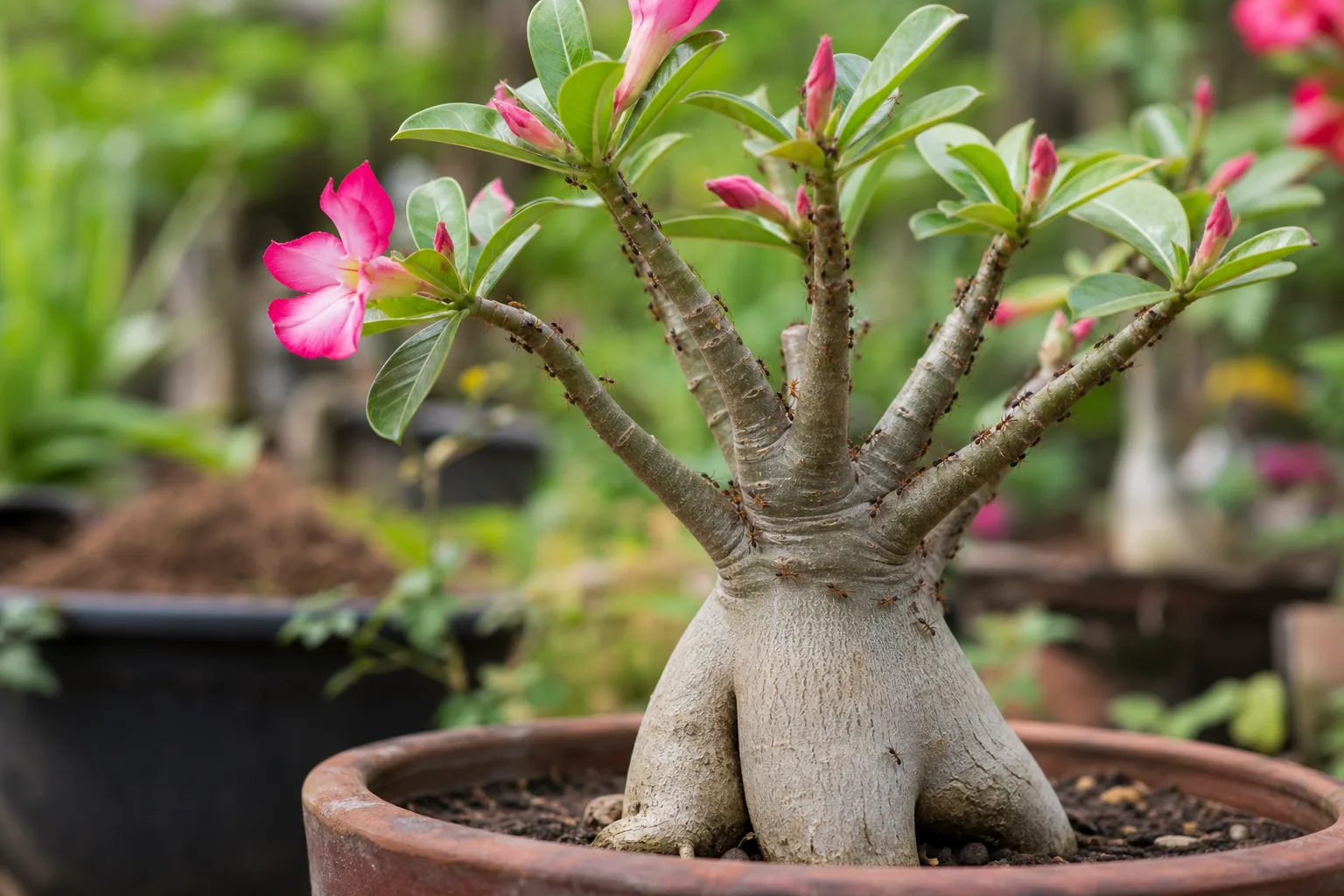
Ants on Plant on Houseplants
Still unsure?Match your symptoms to the most likely problems in under a minute.Run diagnosis →Understand and fix ants on plant
'Houseplant pests are common indoors because conditions lack natural predators. Ants on Plant often arrives on new plants, open windows, or stressed specimens. When you notice Ants crawling around plant, often farming aphids or scale, act quickly: confirm the pest, isolate the plant, and treat before the population explodes. Track weekly progress after you change care, and note watering, light, and repotting dates so you can tell whether the symptom is improving or returning.'. Compare upper versus lower leaves, new versus old growth, and soil moisture at root depth before you treat, because the same visible symptom can come from watering, light, pests, or normal aging on different plants.
Overview
'Houseplant pests are common indoors because conditions lack natural predators. Ants on Plant often arrives on new plants, open windows, or stressed specimens. When you notice Ants crawling around plant, often farming aphids or scale, act quickly: confirm the pest, isolate the plant, and treat before the population explodes. Track weekly progress after you change care, and note watering, light, and repotting dates so you can tell whether the symptom is improving or returning.'. Compare upper versus lower leaves, new versus old growth, and soil moisture at root depth before you treat, because the same visible symptom can come from watering, light, pests, or normal aging on different plants.
How to identify it
- Inspect leaf undersides, stem joints, and soil surface with a magnifying glass
- Look for movement, webbing, sticky honeydew, or cottony clusters
- Check nearby plants-even if only one looks bad initially
- Note whether symptoms match pest damage vs fungal or water issues
- Review recent plant purchases or outdoor time for introduction routes
When to worry
Heavy webbing, visible colonies on multiple plants, or larvae in soggy soil affecting seedlings need immediate treatment across your collection.
Common causes
New plant without quarantine
Pests hitchhike on nursery plants. Skipping a 2-week isolation period is the top way Ants on Plant enters a collection.
Dry air and heat stress
Spider mites thrive when humidity is low and plants are stressed. Heat vents and winter heating make infestations worse.
Overwatered soil
Consistently moist organic soil breeds fungus gnat larvae that feed on fine roots and spread annoyance indoors.
Dusty leaves and poor airflow
Dust blocks light and weakens plants, making them easier targets for scale, mealybugs, and aphids.
Step-by-step fix
Isolate the affected plant
Move it away from others until you see no new pest activity for at least two weeks after treatment.
Identify the pest correctly
Compare symptoms to photos or use a pest identifier tool. Treatment differs for mites, gnats, scale, and mealybugs.
Remove what you can manually
Wipe leaves, shower the plant, pick off visible bugs, and scrape scale with a cotton swab dipped in alcohol.
Apply appropriate treatment
Use insecticidal soap or horticultural oil for most soft-bodied pests. Repeat every 5–7 days for two to three cycles to catch hatchlings.
Fix conditions pests love
Let soil dry for fungus gnats, raise humidity for mite-prone plants, and dust leaves regularly.
Prevention tips
- Quarantine new plants for 2 weeks before placing near others
- Inspect leaf undersides during weekly care
- Avoid overwatering and improve airflow between plants
- Keep plants healthy-stressed plants attract pests faster
Common mistakes
- Treating once and assuming pests are gone
- Using the wrong product for the pest type
- Returning an isolated plant too soon
Ants marching across a stem are easy to mistake for the main pest. Often, they are messengers. Many ants seek the sugar-rich honeydew produced by aphids, soft scale, mealybugs, and whiteflies. Others simply use a moist pot as shelter or cross a plant while traveling between a nest and food.
The useful question is not “What kills ants fastest?” It is “What are these ants doing here?” Treating the plant before answering that question can miss the real infestation, expose foliage to an unnecessary product, and leave the colony untouched.
First, Decide Whether the Ants Are Visitors or Residents
Watch the plant for two minutes without disturbing it. A steady two-way trail climbing to tender shoots suggests a food source. Ants repeatedly entering drainage holes or gaps at the pot rim may be using the container as a nest site. A few ants crossing one leaf may be incidental.
Also note where the plant lives. An outdoor container beside a wall, paving joint, or overhanging branch is easy for foragers to reach. Indoors, a trail continuing across a sill or floor points beyond the pot. Winged ants emerging repeatedly inside deserve more attention because indoor swarmers can indicate an indoor nest.
Why Ants Gather on Plants
Ants have varied diets, but sweets are important to many common species. Honeydew is especially attractive. University of Minnesota Extension notes that many ants feed on the honeydew produced by aphids and scale insects. That makes a busy ant trail a practical scouting signal.
Honeydew Is the Most Useful Clue
Run a clean finger over a leaf beneath the ants. A shiny, sticky film suggests honeydew. Look for black, soot-like growth as well. Sooty mold grows on sugary deposits; it does not invade healthy plant tissue, though a heavy coating can reduce light reaching the leaf. The correct response is to find and reduce the sap-feeding insect responsible, not merely scrub the black coating. Maryland Extension’s honeydew guidance makes that sequence explicit.
Honeydew can drip from a higher plant or branch, so inspect above the affected leaves too. If only the upper surface is sticky, the producer may be feeding overhead.
A Pot Can Also Become a Nest Site
Loose, protected potting mix can suit soil-nesting ants, especially outdoors. Repeated traffic into one opening, particles of mix being carried out, or ants appearing immediately after watering strengthens the nest diagnosis. This does not mean the ants are eating the roots. Many nuisance ants nest in soil without feeding on plant tissue.
Do not confuse ants with pale, soft-bodied root aphids. If the root ball is being examined during a necessary repot, look for clusters of plant-feeding insects on roots rather than assuming every small moving body is an ant.
Inspect the Plant Before Treating Anything
Use bright light and, if possible, a hand lens. Photograph suspicious areas so you can compare them after treatment. Diagnosis should be based on insects or characteristic residue, not ants alone.
Check New Growth, Leaf Backs, and Stem Joints
Inspect unopened buds, tender stems, the undersides of young leaves, leaf axils, and the line where petioles meet stems. Aphids cluster on succulent growth. Mealybugs resemble waxy or cottony tufts. Soft scales look like fixed bumps and can blend with stems. Whiteflies flutter when foliage is disturbed.
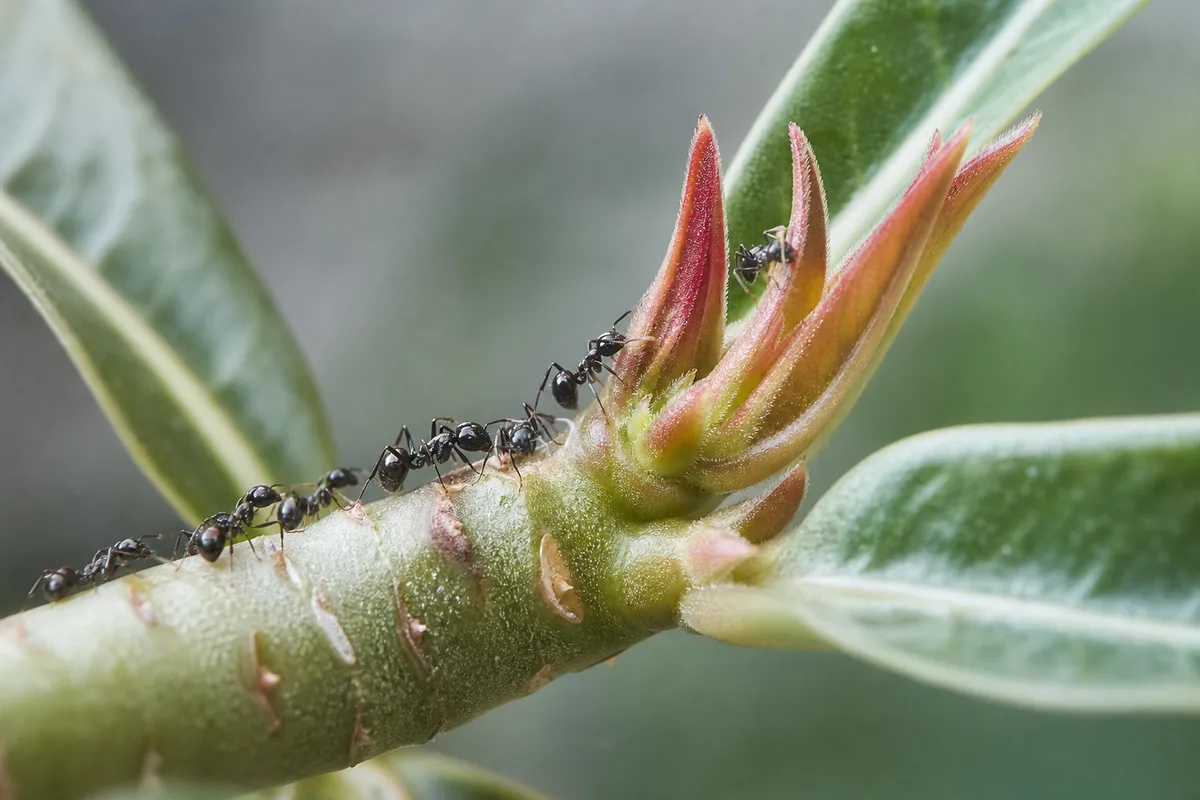
Read the Ant Trail
Follow workers in both directions. If they stop repeatedly at small insects, you have direct evidence of a honeydew relationship. Ants may protect aphids from predators in exchange for food; Maryland Extension describes ants tending and defending aphid colonies. Reducing only the ants can help natural enemies outdoors, but the plant still needs inspection and monitoring.
If the trail leads away from the plant to crumbs, pet food, a leaking pipe, or another source, the plant may be a bridge rather than the attraction.
Repeat the observation after dark and shortly after watering. A route that appears only after irrigation may lead to disturbed nest chambers or a new water source, while a route that remains fixed on the same shoot is more consistent with honeydew foraging. Do not use one quiet inspection to declare the problem gone: ant activity changes with temperature, food demand, and time of day.
Use a simple evidence hierarchy. Seeing an ant beside an aphid is suggestive; seeing workers pause repeatedly at an aphid colony, then return along the same route, is much stronger. Sticky leaves without visible sap feeders justify another inspection, especially inside folded leaves and beneath scale covers. Ants entering a drainage hole are not proof of a nest unless traffic repeatedly begins or ends there.
Ants, Aphids, Scale, and Mealybugs
Use the residue and insect shape to narrow the cause:
| Evidence | Likely explanation | Best next check |
|---|---|---|
| Pear-shaped insects on new growth | Aphids | Look for shed white skins and curled leaves |
| Brown or tan fixed bumps | Soft scale | Check for fresh honeydew, which indicates feeding |
| White waxy tufts in joints | Mealybugs | Inspect hidden crevices and the pot rim |
| Tiny white adults flutter up | Whiteflies | Check leaf undersides for immatures |
| Ants enter mix, no sticky leaves | Possible soil nest | Trace traffic and inspect drainage openings |
Aphids can cause distorted new growth, yellowing, and reduced vigor when abundant, while small populations may cause little injury. They also excrete honeydew that attracts ants. Those relationships are documented in current University of Maryland Extension guidance.
Do Ants Harm Plants?
Most ants seen foraging on houseplants are not chewing healthy foliage. Their indirect effect can still matter: ants may protect honeydew producers from lady beetles, lacewings, and parasitoid wasps outdoors. A nest in a container can also displace mix or make watering unpleasant.
There are exceptions across the enormous diversity of ants, and identification matters. Carpenter ants, for example, excavate damaged wood but do not eat it. Fire ants can sting. Leafcutter ants remove plant material in regions where they occur. A generic houseplant article cannot identify every species from color alone.
Separate plant injury from nuisance and safety risk. A healthy plant with ants crossing its leaves may need no plant treatment, yet stinging ants near a doorway require household-pest advice. Conversely, a plant with few ants can still have a serious scale infestation hidden under leaves. The number of ants is therefore not a reliable measure of plant damage.
Check roots only when other evidence warrants disturbing them. Unpotting a stable plant solely because ants crossed the rim can tear fine roots and reset the plant’s recovery. If the mix collapses, drains poorly, smells sour, or already needs replacement, a controlled root inspection can answer both questions at once. Otherwise, trace the route and treat above-ground sap feeders first.
A Practical Control Plan
Work from cause to consequence: contain the plant, reduce the sap feeder, remove residue, then address persistent ant traffic. This avoids treating foliage when a bait placed along a trail—or treatment of aphids—would solve the real problem.
Remove the Honeydew Producer
For a light aphid infestation, isolate the plant and rinse insects from stems and leaf undersides with plain water. University of Minnesota Extension lists washing and forceful water removal among indoor aphid controls. Support delicate stems and keep excess water out of the pot.
Prune a badly curled shoot only if removal will not harm the plant’s structure. For scale or mealybugs, use species-appropriate physical removal and follow-up rather than assuming one wash is enough.
If a pesticide is warranted, select a product labeled for the exact plant and indoor or outdoor site. Insecticidal soap and horticultural oil work by contact, so coverage matters and repeats may be needed. Homemade detergent mixtures are not equivalent to registered insecticidal soap and can burn foliage. Test a small area first and follow the label.
Build a treatment sequence around what you confirmed. On day one, photograph the colony, isolate the plant, and remove exposed sap feeders. When foliage has dried, count live insects on the same two shoots. Recheck after the interval stated on any product label. This makes repeat treatment evidence-based and reduces the temptation to combine soaps, oils, and household remedies.
Scale and mealybugs need special patience because wax and fixed covers can hide living tissue. A dry scale cover may remain attached after death. Test a few gently and watch for new honeydew or mobile crawlers rather than scraping every stem. If a valuable plant has dense scale in crevices, an extension diagnostician can help confirm the species and whether a systemic option is lawful for that plant and site.
Clean the Plant and Break the Trail
After controlling the producer, rinse honeydew from durable leaves with lukewarm water and a soft cloth. Do not scrub fuzzy or fragile foliage. Clean the saucer, shelf, and nearby hard surfaces. Remove fallen plant debris.
Wipe the ant trail on hard surfaces with ordinary soapy water to remove food residue and trail cues. This can reduce visible traffic, but it does not eliminate a colony. Keep food sealed, repair leaks, and close safe access gaps.
Use Bait Carefully When the Colony Persists
Ant baits are designed for workers to carry toxicant back to the colony, so they act more slowly than contact sprays. Place a labeled indoor bait on the ant route but away from children and pets, following every label direction. Do not place unlabelled borax mixtures in potting soil. Colorado State University warns that boron-containing baits should not be applied directly to plant soil.
Avoid spraying repellent insecticide around a bait station; it can prevent workers from feeding on the bait. If ants ignore one bait, their current food preference may differ, or the trail may lead elsewhere.
What Not to Pour Into Potting Mix
Skip boiling water, bleach, vinegar, essential oils, fuel, and concentrated detergent. A pot is a root environment, not a pavement crack. Products that kill exposed ants can also injure roots, alter mix chemistry, create fumes, or leave residues.
Flooding a pot repeatedly is also risky. One thorough watering may disturb ants, but keeping mix saturated can deprive roots of oxygen and invite a separate root problem. Repot only when a confirmed nest is substantial or the mix already needs replacement. If you repot, do it outdoors or over a contained work surface, remove loose infested mix without tearing healthy roots, and use a clean container.
A repot is not a pesticide application. Place removed mix in a sealed bag when it contains an active colony, wash the container if it will be reused, and examine the root system for unrelated rot or root-feeding insects. Replant at the original depth in a mix appropriate to the species. Water according to the plant’s needs, not repeatedly to flush remaining workers.
Avoid improvised sticky bands directly on tender stems. Adhesives can damage bark and trap beneficial insects, lizards, or birds outdoors. If a physical barrier is appropriate, place it on a stable pot stand or other surface where it can be inspected and shielded, and ensure no leaf or stake bridges the barrier.
Indoor and Outdoor Situations Need Different Tactics
Outdoors, beneficial insects may suppress aphids once ants are discouraged. Broad-spectrum sprays can kill those natural enemies and worsen long-term balance. Indoors, predators are usually scarce, so physical removal and repeated monitoring matter more.
Edible plants require extra care: a product labeled for ornamental houseplants may not be permitted on herbs or fruit. Flowering plants moved outdoors can expose pollinators to residues. The pesticide label determines approved plant, site, rate, re-entry precautions, and harvest interval.
Monitor for Recurrence
Check the plant twice weekly at first. Look for live pests and new honeydew rather than expecting damaged leaves to become perfect. Old sooty mold or curled foliage can remain after control. Fresh sticky droplets, new distorted growth, or a restored ant trail indicate activity.
Inspect nearby plants because winged aphids and mobile crawlers can spread. Keep new acquisitions apart long enough to examine new growth and leaf undersides several times.
A simple log prevents guesswork. Record the date, where ants entered, whether honeydew was present, which sap feeder was found, and what action you took. Place a small removable marker near the busiest stem. If traffic falls but fresh honeydew continues, ant control may be working while the plant pest remains. If honeydew stops but ants still cross the pot, look for another food or water source along the route.
The direction of change matters more than a single count. Five workers during a ten-minute watch after treatment may be an improvement from a continuous trail, but it is not proof the colony is gone. Conversely, one scouting ant does not justify drenching a recovering plant. Compare observations under similar conditions because ants may forage more at certain times or after watering.
When sap feeders are involved, inspect the most recent leaves. Existing curled leaves and scale covers can persist after insects die. Aphids should move or crush when touched; dead soft scale may remain attached. With scale, continued honeydew production is a better activity clue than the mere presence of bumps.
Ant barriers sometimes help on outdoor container stands, but they must not trap moisture against stems, injure bark, or expose wildlife and children to sticky material. Keep foliage from touching walls and neighboring plants, since a leaf bridge bypasses a barrier. Prune only when appropriate for the plant rather than cutting healthy growth solely to break a route.
Think collection-wide. Inspect plants on the same shelf, especially those with tender growth. Clean shared tools and saucers, and avoid moving the infested pot over other plants. Ants themselves may not establish a plant pest on every specimen, but winged aphids, scale crawlers, and mealybugs can move independently.
If no honeydew pest appears after several careful checks, place attention back on the room. Condensation, pet bowls, food residue, and gaps around windows can sustain ants. Treating healthy foliage in that situation adds risk without addressing the attraction.
When to Escalate
Seek a qualified pest-management professional if trails emerge from wall voids, large numbers of winged ants appear indoors, stinging ants are suspected, or baiting and sanitation do not reduce activity. An extension diagnostic service can help identify unusual insects.
Prepare useful evidence before asking for help. Photograph the entire plant, both sides of affected leaves, the ant trail, and any insects beside a ruler or coin. Note whether the plant is indoors, outdoors, edible, flowering, or accessible to children and pets. Record recent products and the dates they were used. These details help an adviser separate a plant-pest question from a structural ant problem and avoid recommending an incompatible treatment.
Escalate sooner when the plant is part of a greenhouse, nursery, school, or food-production setting. Tolerance for a few ants may be reasonable on a patio ornamental but inappropriate where sanitation rules, regulated pests, or crop labels apply. Local extension and licensed pest professionals can interpret those constraints.
Discarding a plant can be reasonable when a low-value specimen is heavily infested, damaged, and threatening a valuable collection. University of Minnesota Extension includes disposal as an economical option for a heavily infested, badly damaged houseplant. Bag it before carrying it past other plants.
Escalation is also appropriate when the proposed remedy conflicts with how the plant is used. A fruiting citrus, culinary herb, child-care setting, pet-accessible shelf, or pollinator plant moved outdoors imposes different constraints from a purely ornamental plant in a closed room. Bring the pesticide label and clear photos when asking for advice.
For identification, collect a few workers safely in a sealed container if local guidance recommends it. Photograph them beside a ruler and include the trail, pot, and nearby structure. Color alone is unreliable. Species-level identification can change the choice between tolerance, baiting, exclusion, or professional nest treatment.
Avoid turning a minor plant clue into a major indoor pesticide application. A few foragers on a patio hibiscus usually call for inspection. Repeated swarmers from a wall, biting or stinging ants, or structural moisture signs are household pest questions beyond plant care.
Conclusion
Ants on plants are usually evidence, not a complete diagnosis. Trace their route, check for sticky honeydew, inspect tender growth for aphids and other sap feeders, and decide whether the pot is truly a nest. Remove the food source first, clean residue and trails, and use a labeled bait only when colony control is needed. That measured sequence protects the plant and solves more than the ants you can see.
Plants commonly affected
These houseplants often struggle with ants on plant. Open a care guide or plant-specific troubleshooting page for tailored fixes.
 Medium
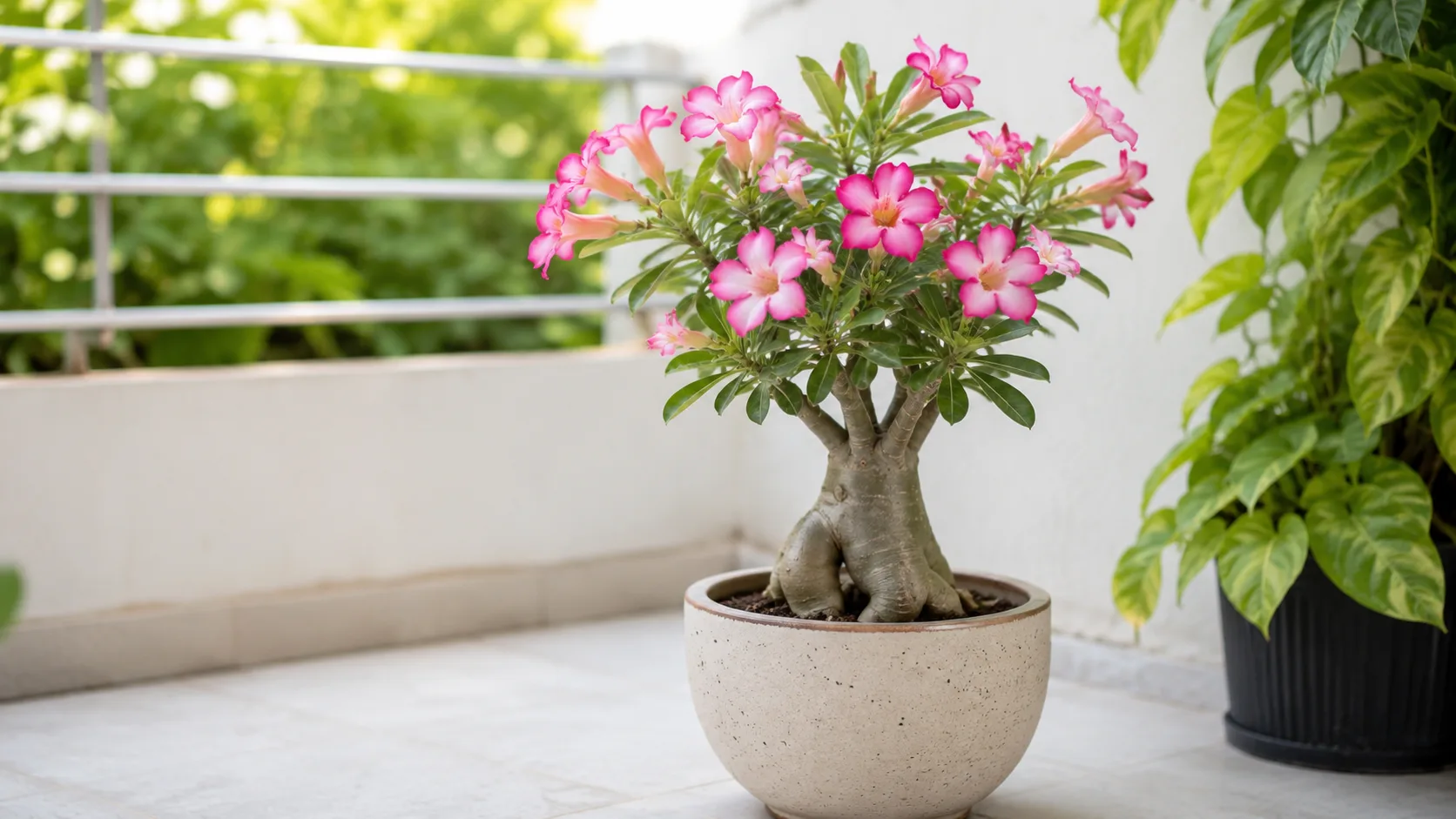
Adenium
Likely causeAnts farming honeydew from aphid or mealybug infestations on tender Adenium shoots and buds.
Quick fixTreat the underlying sap-sucking pests first; wipe honeydew and monitor stems until ants leave.
 Medium
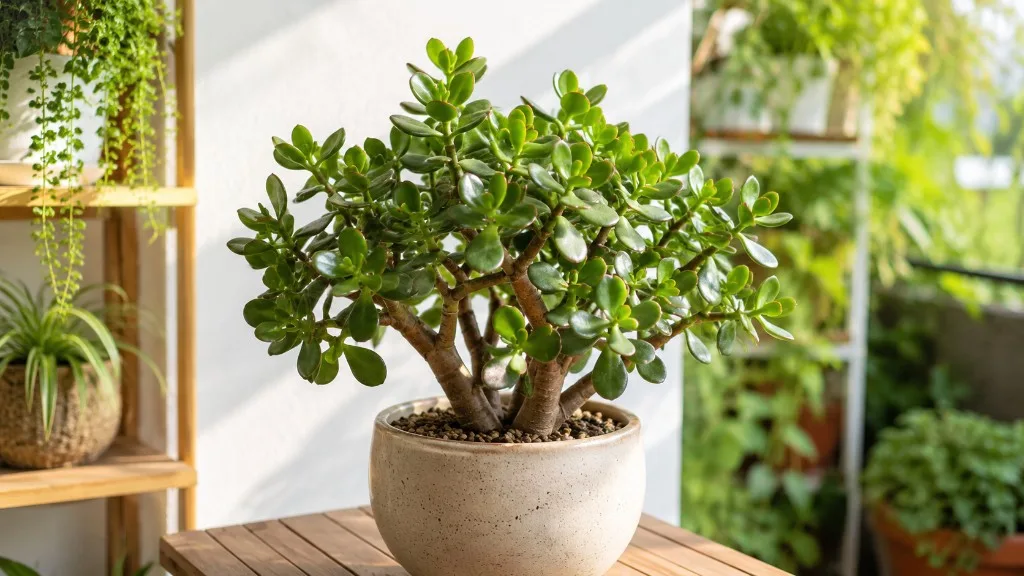
Jade Plant
Likely causeSome scale insects (soft scales or no shells) produce a substance called honeydew by feeding on the nutritious Jade Plant sap.
Quick fixConfirm diagnosis on your Jade Plant, then address the most likely care or pest factor described in current extension guidance.
 Medium
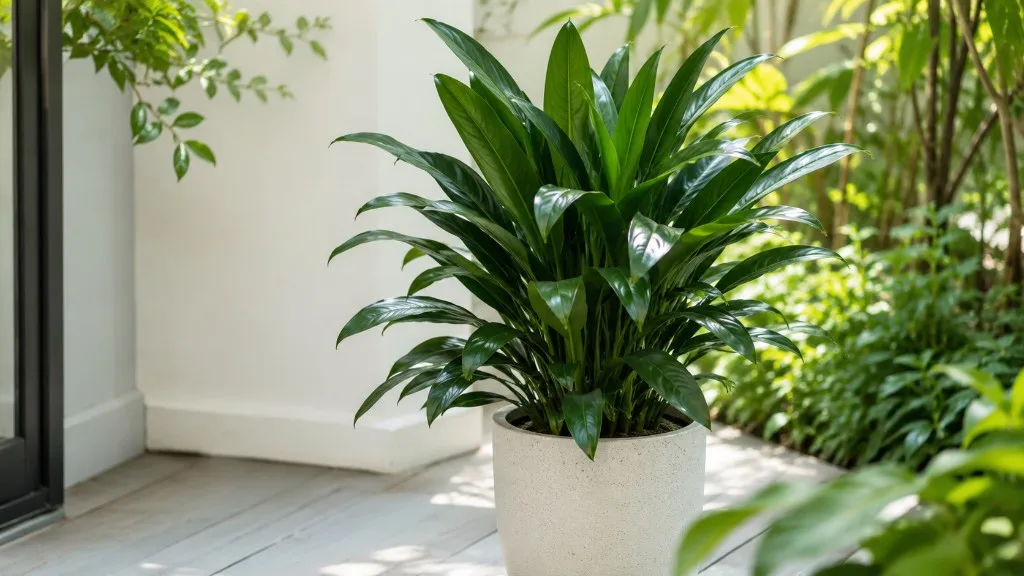
Janet Craig Dracaena
Likely causePlantas Dracaena como ‘ Janet Craig ’ são plantas de piso ideais para dar destaque vertical ou altura aos cantos sombreados.
Quick fixConfirm diagnosis on your Janet Craig Dracaena, then address the most likely care or pest factor described in current extension guidance.
 Medium
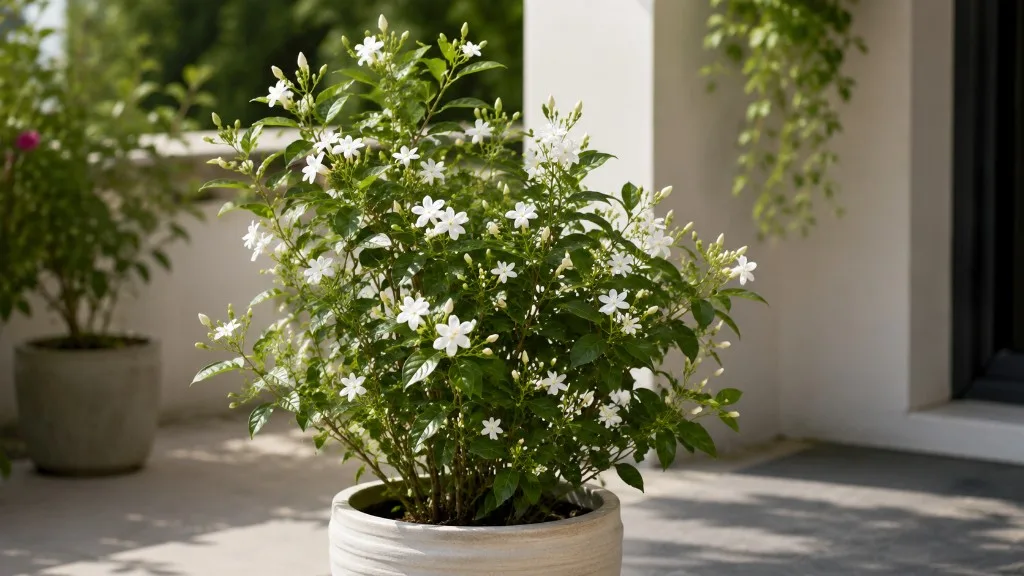
Jasmine
Likely causeMay 9, 2026 · Jasmine first flowers in the spring, and subsequent blooms cover the plant until late fall, as long as the plant receives sufficient water and bright light. However, each flower lasts for only a …
Quick fixConfirm diagnosis on your Jasmine, then address the most likely care or pest factor described in current extension guidance.
 Medium
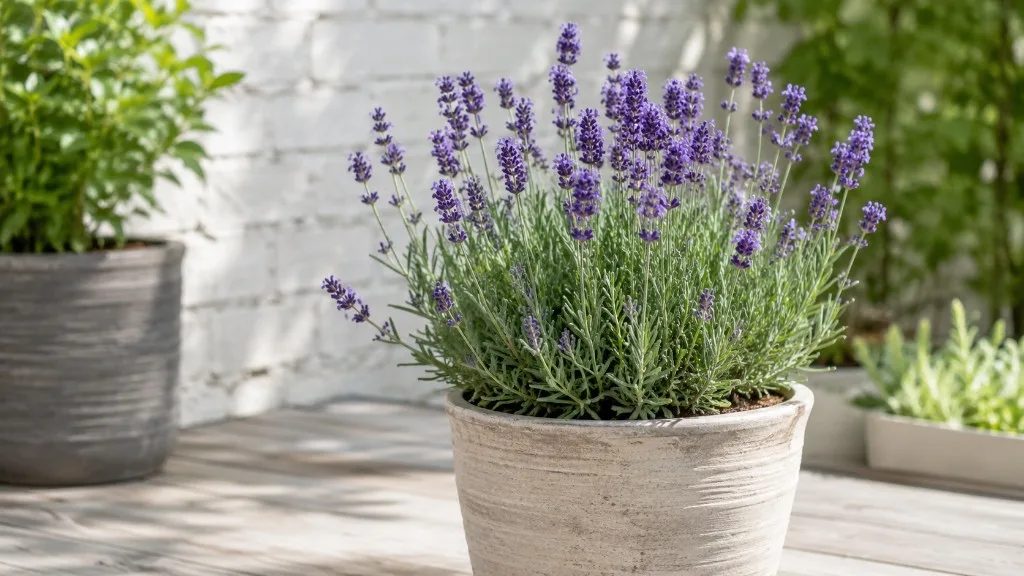
Lavender
Likely causeLavandula (common name lavender) is a genus of 47 known species of perennial flowering plants in the sage family, Lamiaceae. [1] It is native to the Old World, primarily found across the drier, warmer …
Quick fixConfirm diagnosis on your Lavender, then address the most likely care or pest factor described in current extension guidance.
 Medium
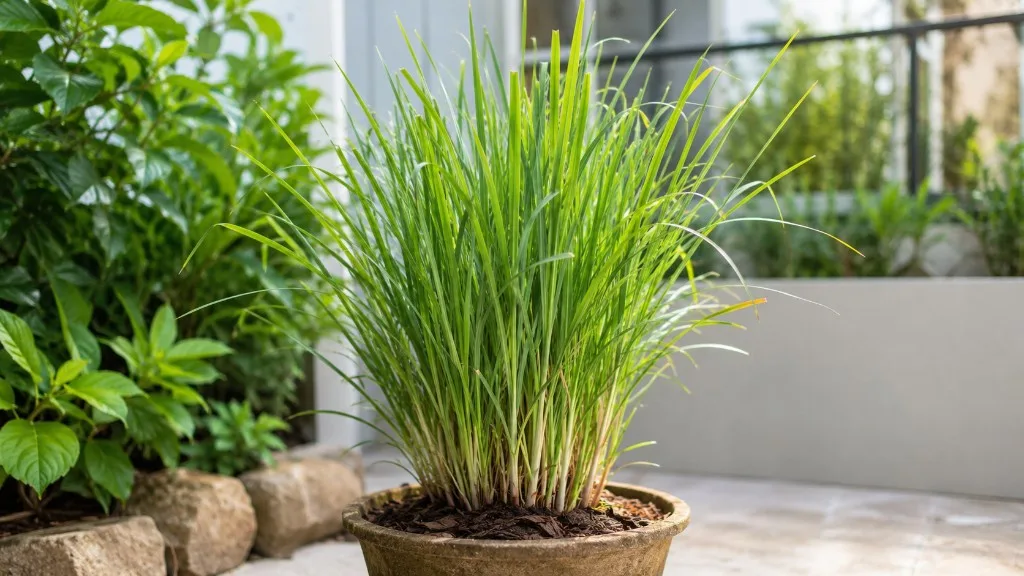
Lemongrass
Likely causeAug 4, 2023 · Ants can cause damage to the plant by feeding on the leaves and stems, as well as protecting other pests like aphids or scale insects. In this article, we will discuss effective methods to get rid of ants on lemongrass plants
Quick fixConfirm diagnosis on your Lemongrass, then address the most likely care or pest factor described in current extension guidance.
 Medium
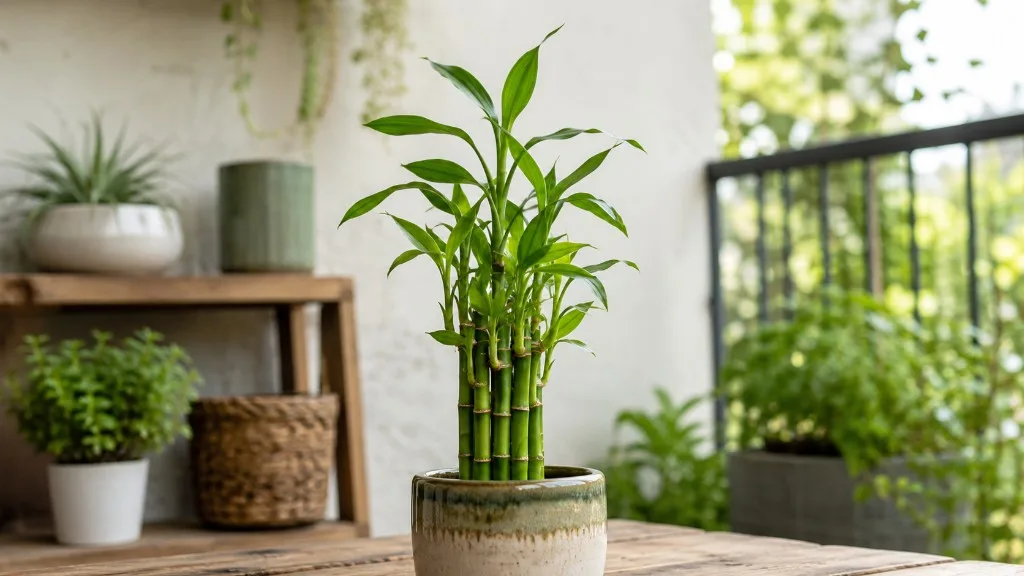
Lucky Bamboo
Likely causeJul 12, 2023 · However, when ants start crawling all over your plant , it can be concerning and may even affect the health of your lucky bamboo . In this article, we will discuss effective methods to get rid of ants on your lucky bamboo pla
Quick fixConfirm diagnosis on your Lucky Bamboo, then address the most likely care or pest factor described in current extension guidance.
 Medium
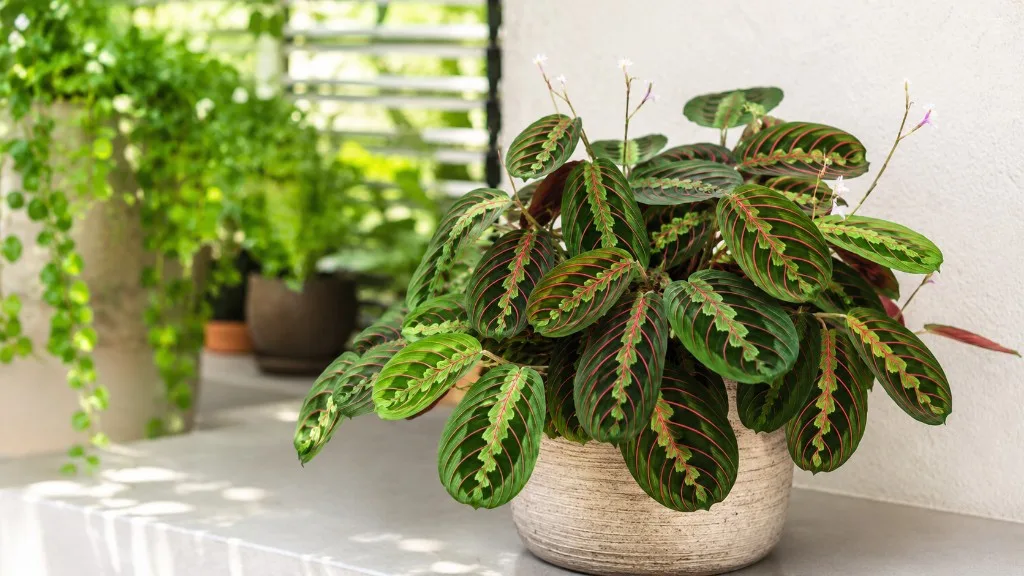
Maranta Leuconeura
Likely causeJul 24, 2023 · Ants are one of the most common pests that can infest indoor plants , including the vibrant and beautiful Red Prayer Plant (Maranta leuconeura ). Not only can ants be a nuisance, but they can also cause damage to the plant by
Quick fixConfirm diagnosis on your Maranta Leuconeura, then address the most likely care or pest factor described in current extension guidance.
 Medium
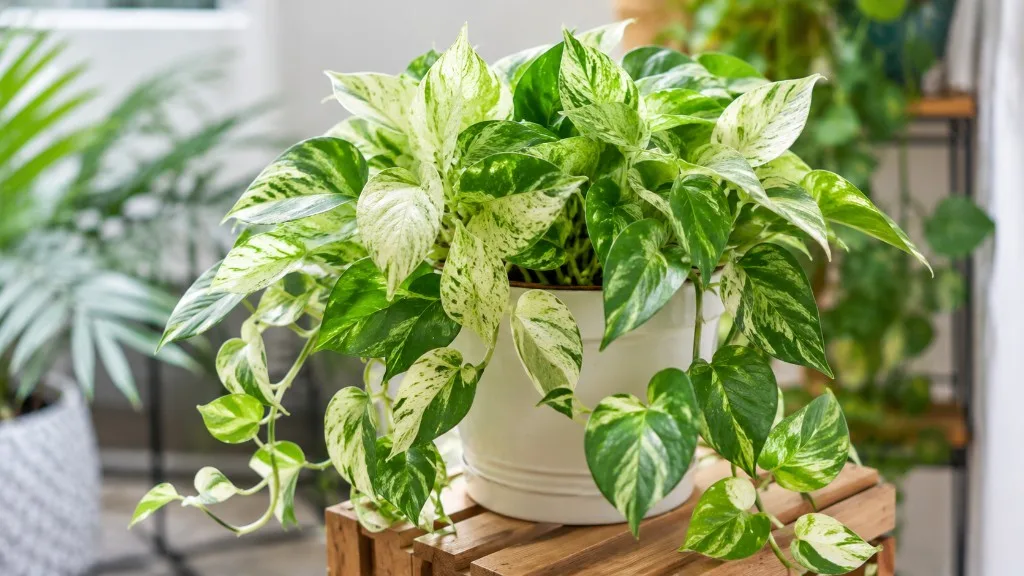
Marble Queen Pothos
Likely causeNov 27, 2025 · In this guide, you’ll learn how to make Marble Queen pothos plant care truly super simple—no stress, no guesswork, and no complicated routines. You’ll discover the best lighting for strong variegation, how to water it without
Quick fixConfirm diagnosis on your Marble Queen Pothos, then address the most likely care or pest factor described in current extension guidance.
 Medium
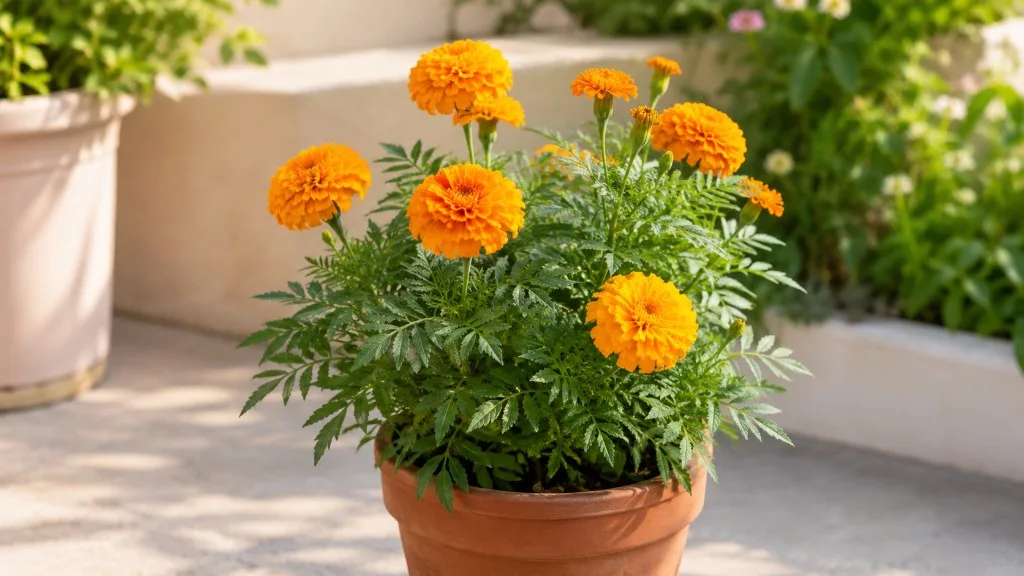
Marigold
Likely causeJul 23, 2023 · If you’re wondering how to get rid of ants on your marigold plant , you’ve come to the right place. In this article, we will explore various methods to keep ants away from your marigolds and ensure their healthy growth.
Quick fixConfirm diagnosis on your Marigold, then address the most likely care or pest factor described in current extension guidance.
 Medium
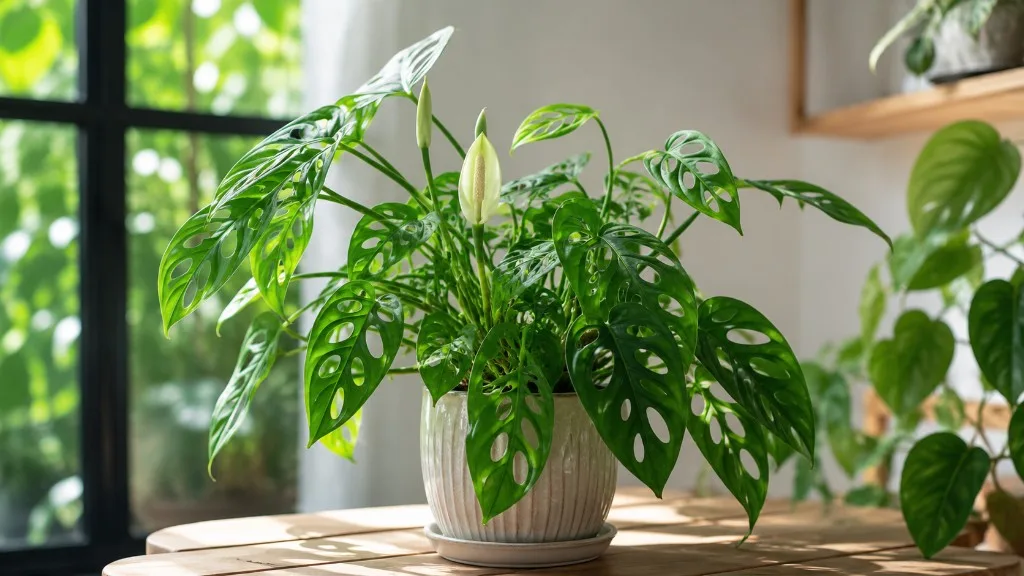
Monstera Adansonii
Likely causeMonstera adansonii Monsteras are widely cultivated as ornamental houseplants around the world for their large, decorative foliage …
Quick fixConfirm diagnosis on your Monstera Adansonii, then address the most likely care or pest factor described in current extension guidance.
 Medium
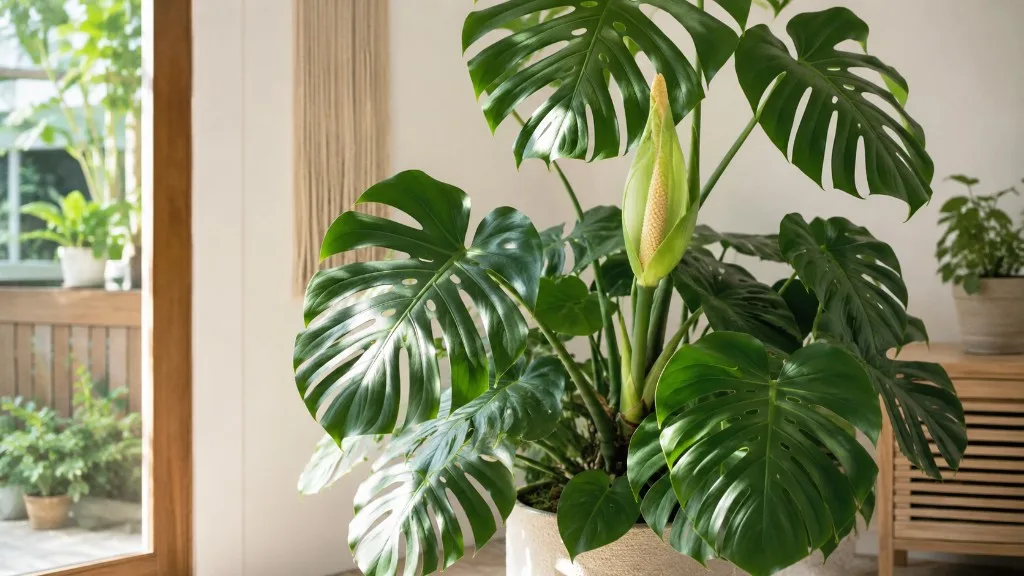
Monstera Deliciosa
Likely causeMonstera adansonii Monsteras are widely cultivated as ornamental houseplants around the world for their large, decorative foliage and tolerance of indoor conditions.
Quick fixConfirm diagnosis on your Monstera Deliciosa, then address the most likely care or pest factor described in current extension guidance.