Sticky Leaves on Houseplants: Honeydew and Pests
Glossy sticky leaves and ants? Confirm honeydew, find the pest, wipe sooty mold, and run a repeat contact plan.
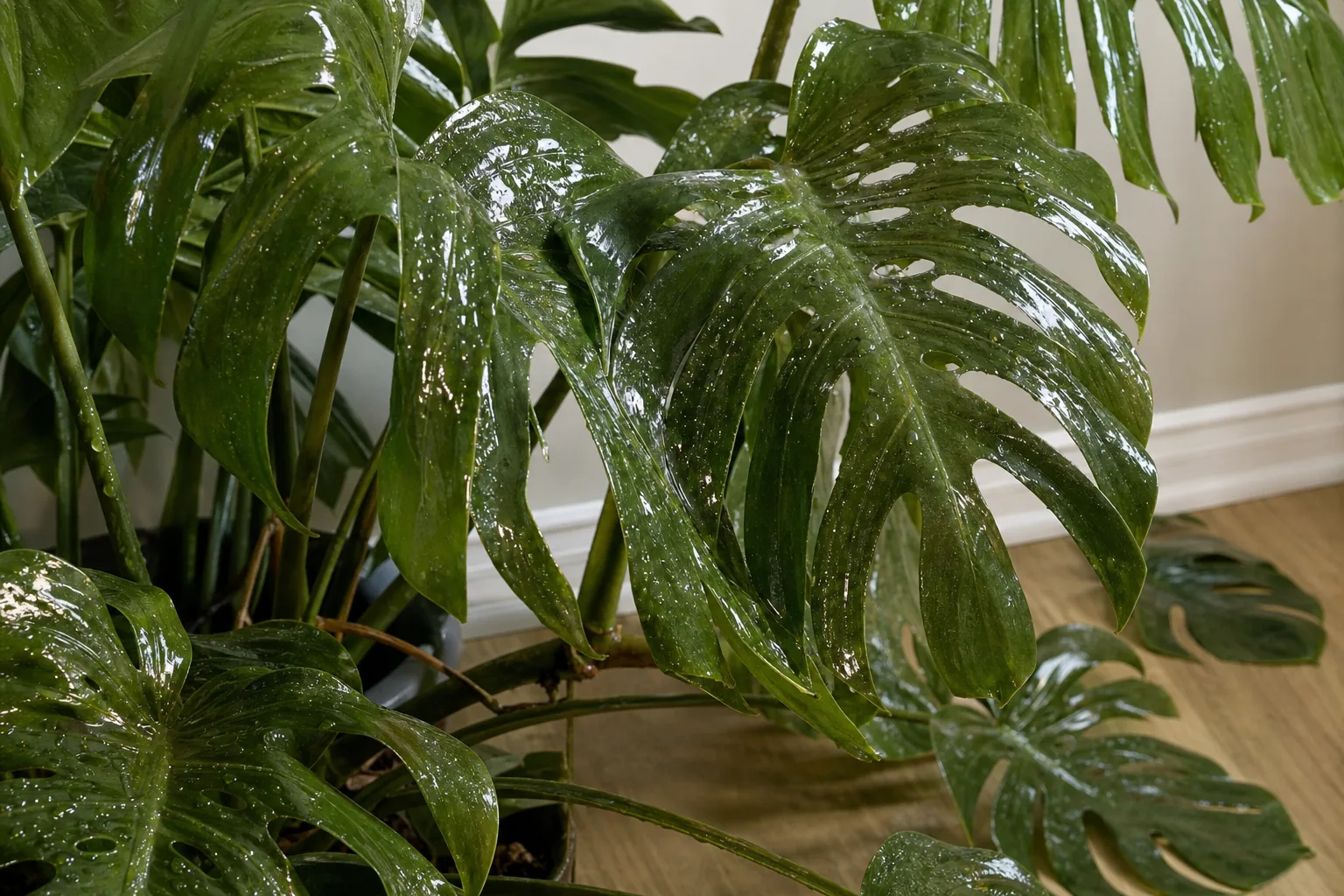
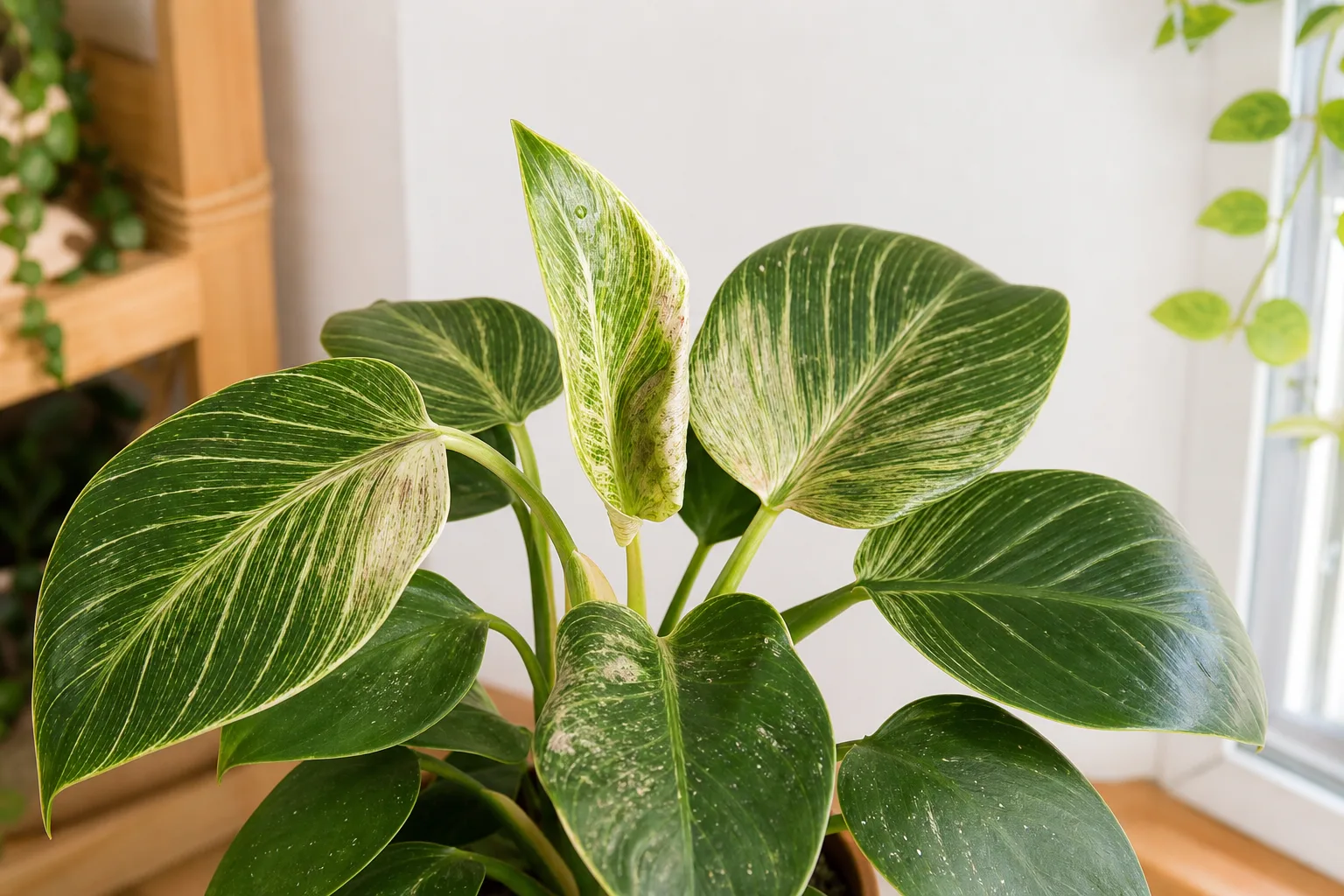
You brush a leaf and your fingers come away glossy. The pot rim feels tacky. Sometimes the floor under a hanging plant picks up a shiny film. That sticky coating on houseplants is rarely “plant sap leaking.” In most indoor cases it is honeydew — sugary waste from sap-sucking insects — and it is your earliest clue that aphids, soft scale, mealybugs, or whiteflies are feeding.
UC IPM’s houseplant diagnostic table pairs sticky substance, sooty mold, small objects on leaves or branch crotches, leaf drop or dieback, and ants with scale, mealybug, or aphid infestation. Confirm honeydew first, identify the producer, clean the film, treat on a repeat cycle, then stop the conditions that invited ants and sooty mold.
Quick callout: Soft scale makes sticky drip; armored scale usually does not. Follow any drip path or ant trail upward to the densest sticky zone — that is where the colony lives, not where the film landed.
What Sticky Leaves Usually Mean
Sticky leaves mean a sugar-rich film is coating foliage, stems, or surfaces below the plant. Honeydew is excreted as phloem-feeding insects push excess sugar out while they suck sap. The film starts clear and shiny, attracts dust, drips onto lower leaves and furniture, and can host black sooty mold that looks like soot brushed onto the leaf.
Colorado State University Extension notes that aphids, soft scales, mealybugs, and whiteflies leave honeydew that can support sooty mold and recruit ants. Sticky residue without webbing is a different problem than spider mites, which cause stippling and fine silk but do not coat leaves in honeydew.
Honeydew vs Sap, Fertilizer Splash, and Leaf Shine
Rule out non-pest stickiness before you start a spray campaign. Fresh wound sap from a cut stem is usually localized at the injury and dries quickly. Fertilizer or hard-water splash leaves mineral crust or irregular spots, not a continuous glossy film under feeding sites. Commercial leaf-shine products leave an even polish you applied on purpose.
| Residue | Feel / look | Clue it is not honeydew |
|---|---|---|
| Honeydew | Tacky, shiny, often drips below colonies | Ants trail to same zone; film returns after wiping |
| Wound sap | Localized at cut/break | No colony above; dries fast |
| Fertilizer / hard water | Chalky crust or irregular spots | Not sticky-sweet; no ants farming it |
| Leaf shine | Even polish you applied | Stays where you wiped product |
Honeydew concentrates under or below feeding colonies, feels tacky when dry, and often reappears after you wipe it if the insects are still active. If ants trail to the same sticky zone, treat that as strong evidence of a living honeydew source.
The Honeydew Culprits: Aphids, Soft Scale, Mealybugs, and Whiteflies
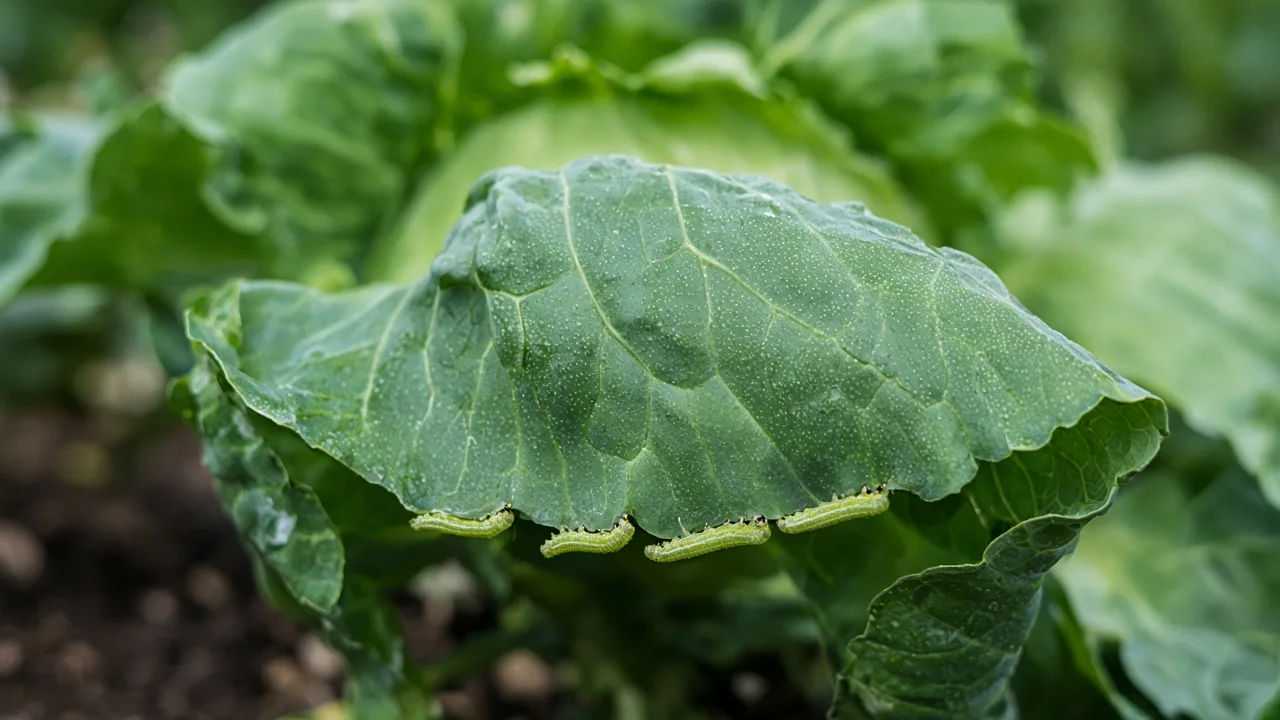
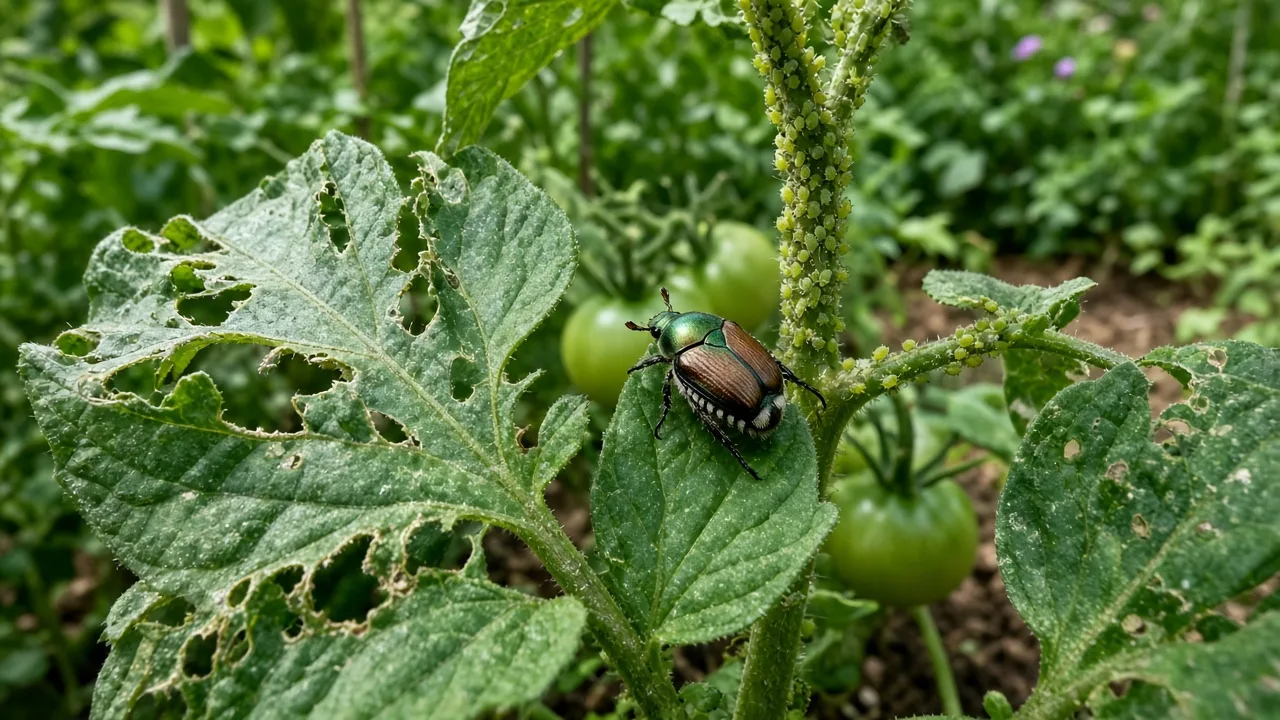
Four pest groups explain most sticky-leaf cases on houseplants. They look different, prefer different plant parts, and need slightly different mechanical removal — but they share the same honeydew → sooty mold → ant pathway.
| Pest | What you see | Where to look first | Honeydew signal |
|---|---|---|---|
| Aphids | Soft, pear-shaped clusters; cast white skins | New tips, buds, leaf undersides | Shiny film under colonies; ants common |
| Soft scale | Immobile bumps that scrape off; often brown/tan | Stems, midribs, leaf bases | Sticky drip below bumps; sooty mold |
| Mealybugs | White cottony wax in joints | Leaf axils, stem nodes, tight crevices | Sticky leaves + ants; wax obvious |
| Whiteflies | Tiny white adults that flutter when shaken; flat nymphs underneath | Leaf undersides | Honeydew and sooty mold; yellow traps catch adults |
Clemson HGIC describes aphids sucking sap and leaving shiny, sticky honeydew that can support sooty mold. Missouri Botanical Garden notes sticky leaves are often the first indoor aphid symptom gardeners notice.
Soft Scale vs Armored Scale
Scale insects look like bumps glued to stems and leaves. The honeydew split matters: soft scales excrete honeydew; armored scales generally do not. Clemson HGIC and UC IPM both emphasize that soft scales are the sticky-leaf partners, while armored scales hide under a separate cover and usually leave dry foliage.
UC IPM’s houseplant guidance flags soft scale species such as brown soft scale as common indoors, with shiny sticky leaves as an early cue before growth stalls. If you see immobile bumps plus sticky drip below them, assume soft scale until proven otherwise. Scrape a few gently — if they lift as a soft mass, you are in soft-scale territory. Full treatment detail lives in the scale on houseplants guide.
Where to Look First by Host Habit
Match the residue pattern to plant habit before you spray the whole collection:
- Soft new tips and buds → start with aphids (aphids guide); common on hibiscus, soft tropicals, and tender cuttings.
- Leaf axils and trailing joints → mealybugs (mealybugs guide); classic on golden pothos and other vines.
- Stems and midribs with drip below → soft scale (scale guide; often on Monstera deliciosa and other broad-leaved aroids.
- Undersides plus a white cloud when shaken → whiteflies (whiteflies guide; frequent on poinsettias and soft greenhouse ornamentals.
Why Ants Appear When Leaves Turn Sticky
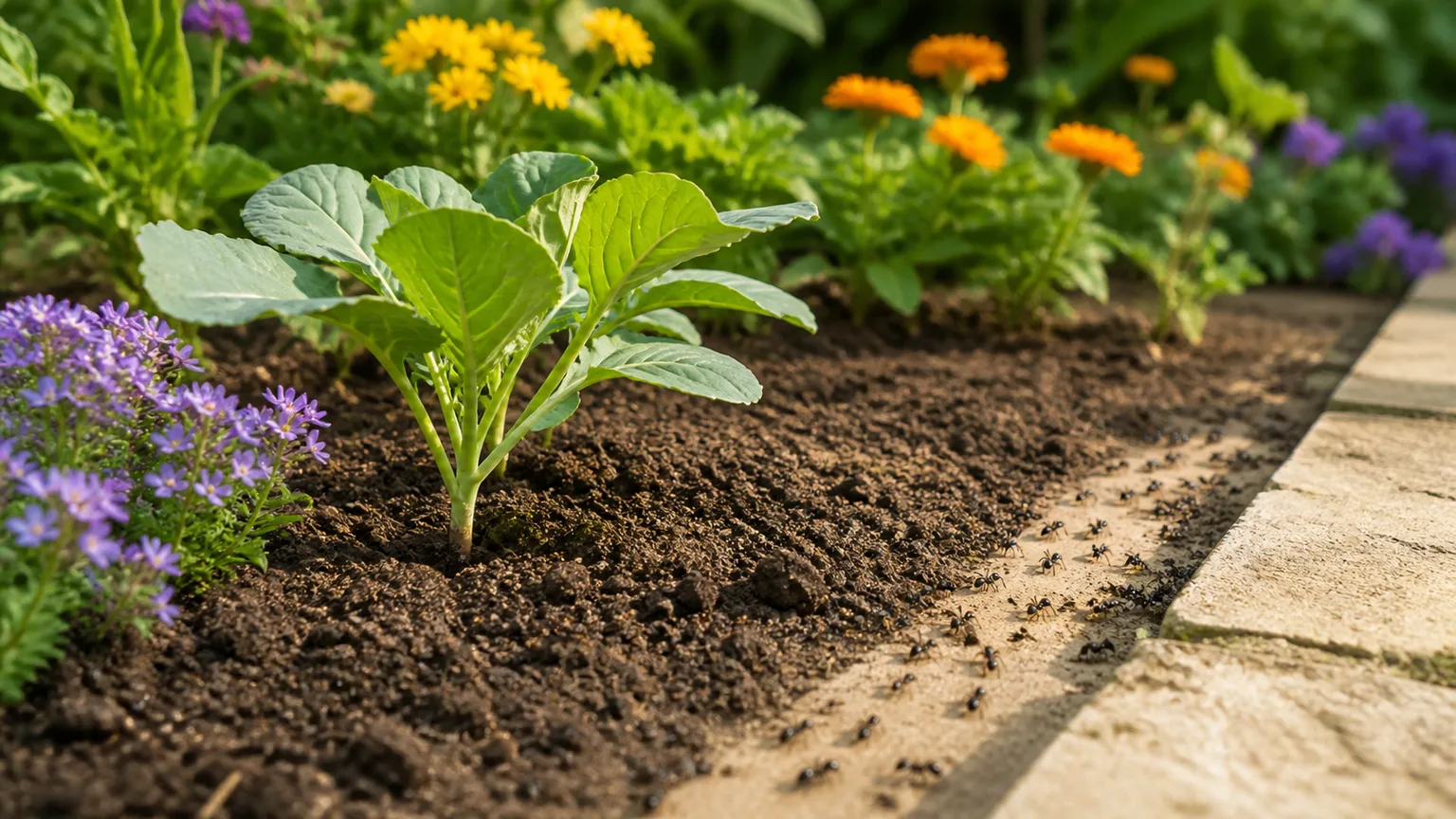
Ants on a sticky houseplant are usually harvesting honeydew, not chewing the leaves. UC Statewide IPM explains that ants protect and care for honeydew-producing insects such as aphids, soft scales, whiteflies, and mealybugs, which can increase plant damage because ants shield those pests from predators. RHS likewise notes ants climbing plants with aphid colonies to obtain honeydew.
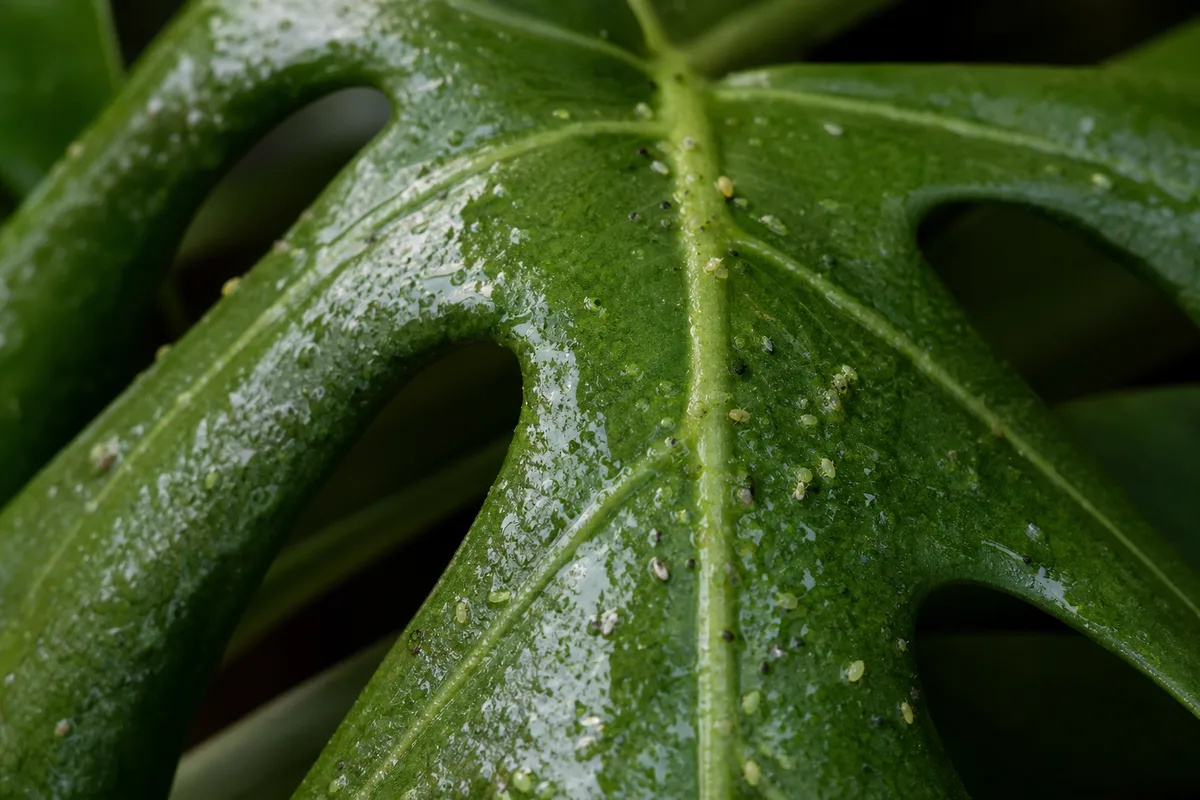
Treat ants as a diagnostic signal and a secondary management problem. Wipe honeydew, identify and treat the sap feeder at the end of the trail, then manage ants with sanitation and, when needed, slow-acting baits so workers carry toxicant back to the nest. Killing only the visible ants while honeydew keeps flowing invites the next shift of foragers. For trail-versus-nest checks and bait preference, open the ants on plant houseplants guide.
How to Diagnose Sticky Leaves Step by Step
Diagnosis before products saves weeks. Your goal is to confirm honeydew, find the producer, and rule out look-alikes that need a different framework.
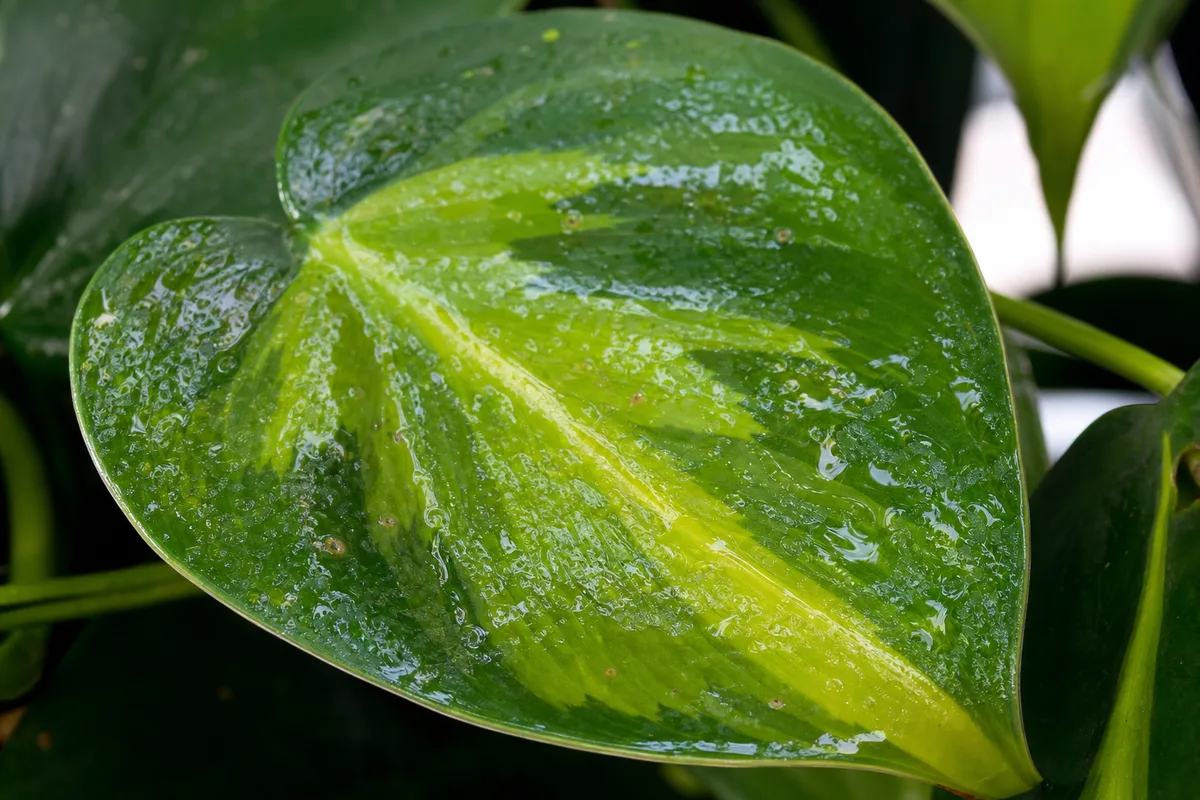
- Isolate the plant the day you notice sticky residue so crawlers and ants do not recruit neighbors.
- Wipe a leaf with a damp white cloth — honeydew leaves a sticky or sugary feel; mineral crust feels chalky.
- Follow any ant trail or drip path upward to the densest sticky zone.
- Inspect that zone with bright side light: tips for aphids, bumps for soft scale, cotton for mealybugs, fluttering adults for whiteflies.
- Check leaf undersides, axils, stem nodes, and overlapping vines in hanging baskets.
- Note sooty mold as a secondary film on honeydew, not a primary leaf-spot infection.
- Only then choose a treatment matched to the pest you found.
UC IPM recommends isolating any plant with insect problems immediately and washing hands after handling infested plants so you do not move pests onto clean neighbors.
Inspection Checklist and Look-Alikes
Use this quick split when the residue is obvious but the insect is not. Pear-shaped soft insects that move slowly when disturbed point to aphids. Immobile bumps with sticky drip below point to soft scale. Cottony wax in joints points to mealybugs. A white cloud when you shake the plant points to whiteflies.
Spider mites do not belong in the honeydew club. They cause stippling, bronzing, and fine webbing without a sugary film that recruits ants. If you see webbing without stickiness, switch to the spider mites houseplants guide. Fungus gnats are delicate flies over wet soil, not sticky-leaf producers — see fungus gnats on houseplants if the complaint is flies, not tacky foliage. Overwatering alone does not create a honeydew film; wet soil may invite gnats or root issues, but sticky leaves still need a sap-feeder check.
Treatment Plan: Isolate, Clean, Then Target the Pest
Order of operations matters. Isolate first, remove honeydew and accessible insects second, apply a labeled contact product third, then repeat on a schedule that catches newly hatched crawlers. Cleaning without treating leaves the factory running. Spraying without cleaning leaves sooty mold blocking light and hiding pests.
Mechanical Cleanup of Honeydew and Sooty Mold
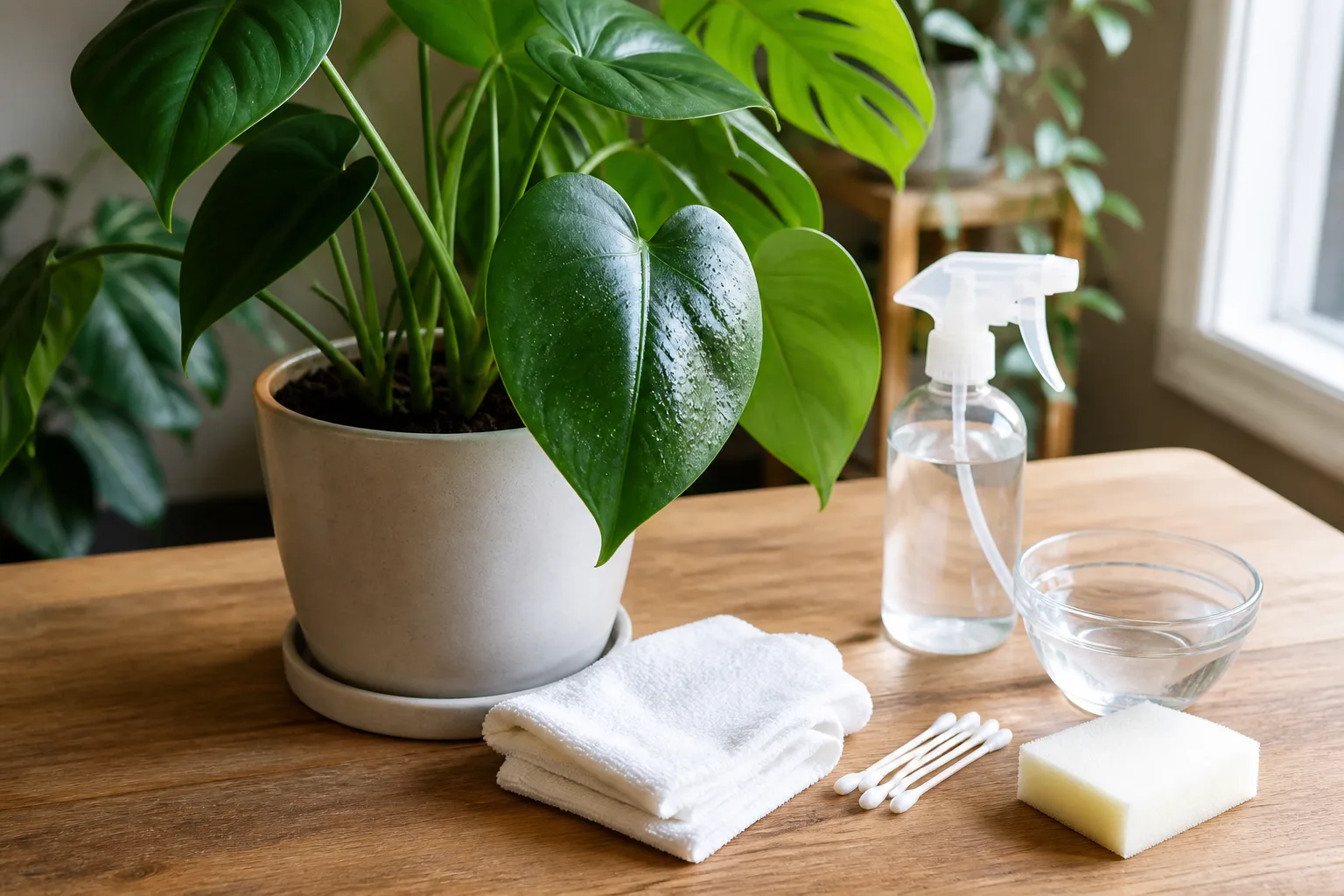
Start with water and cloths. Rinse sturdy plants in a lukewarm shower or sink sprayer, supporting the root ball so soil does not wash out. Wipe upper and lower leaf surfaces with a soft damp cloth. For mealybugs and soft scale, follow with careful swabbing or gentle scraping of visible insects. Clemson HGIC recommends washing smooth-leaved plants every two to three weeks as prevention and notes that insecticidal soap and alcohol swabs work best when you can reach the pests.
Sooty mold grows on honeydew; it is not infecting the leaf the way a classic leaf-spot fungus does. Once honeydew production stops and you wipe the film, new growth should emerge clean. Old soot-stained leaves may stay cosmetically dark until you wipe them or they age off — judge recovery by new leaves and live pest counts, not by one permanently stained older leaf.
Contact Treatments for Soft-Bodied Sap Feeders
Labeled insecticidal soap and horticultural oils are first-line contact tools for aphids, whitefly nymphs, mealybug crawlers, and soft-scale crawlers. Colorado State Extension’s insecticidal soap guide advises using commercial insecticidal soaps formulated for plants rather than household dish detergents, which are not tested as pesticides and can injure foliage. Soap kills soft-bodied insects it wets; once dry, residual activity is essentially gone, so coverage and repeats matter more than a single heavy dose.
Apply in moderate temperatures, not on drought-stressed plants, and cover leaf undersides thoroughly. Spot-test sensitive or fuzzy foliage. For product comparisons and when neem fits, see neem oil vs insecticidal soap and neem oil for indoor plants. Alcohol swabs remain useful for sparse mealybugs after a leaf test, as UC IPM describes for home use on small infestations (70% or less isopropyl alcohol on a cotton swab).
Repeat Cycles, Whitefly Cadence, and Escalation
One spray rarely ends a honeydew outbreak. Eggs and hidden crawlers hatch after the first cleanup. Plan at least two to three contact cycles on roughly a 5–7 day schedule for aphids and similar soft-bodied pests, then keep the plant isolated until new growth stays clean. Soft scale and mealybugs often need longer campaigns because wax and tight crevices protect survivors.
Whitefly mini cadence (while treating undersides): Adults flutter and are easy to notice; nymphs do most of the feeding and stay flat on leaf undersides. UC IPM lists sticky honeydew, sooty mold, and yellowing with nymphs as core signs, and notes soap or oil must wet the insects — so cover undersides thoroughly and repeat. Yellow sticky cards help monitor adults but do not replace nymph coverage. Deep whitefly protocol lives in the whiteflies on houseplants guide.
Escalate only after accurate ID and failed least-toxic cycles. Systemic options and stronger insecticides carry higher indoor exposure costs; UC IPM frames them as last resorts for houseplants and notes that heavy whitefly or mealybug infestations may be best solved by discarding the plant. If ants persist after honeydew drops, add baiting per the ants guide rather than fogging the room. Collection-wide workflow: how to tackle indoor plant pests at home and integrated pest management indoors.
Pet and Child Safety Around Sprays and Baits
Indoor pesticide use concentrates vapors more than outdoor spraying. NPIC’s houseplant IPM page notes that homes are less ventilated, so pesticide vapors linger and are more likely to be inhaled. Move treated plants to a well-ventilated spot, keep pets and children off wet foliage until sprays dry fully, and store concentrates out of reach.
Do not leave alcohol swabs or open alcohol where pets can lick them — isopropyl alcohol is flammable and not a registered pesticide for professionals. If you use ant baits, place them where pets and kids cannot access the stations, and still treat the honeydew insects first so baits are not fighting a sugar buffet. Prefer mechanical cleanup and labeled insecticidal soap before stronger indoor chemistry.
First-Hand Notes From Sticky-Leaf Cases Indoors
These LeafyPixels grow notes match the sticky-film → pest-at-drip-end pattern this hub teaches. Timelines are editorial observations, not controlled trials.
Case 1 — Hanging golden pothos, mealybugs (cleared): Sticky drips hit the floor before we saw insects. Day 0: isolated the basket, followed drip upward into leaf axils packed with cottony wax, swabbed with 70% isopropyl after a spot test, rinsed vines in the shower, then applied labeled insecticidal soap to undersides and joints. Day 6 and Day 12: repeated soap after finding crawlers in two remaining axils. Honeydew drip stopped by Day 9. Outcome: no live mealybugs after three cycles; plant stayed isolated ~3 weeks of clean axil checks before returning over the shelf.
Case 2 — Monstera deliciosa, soft scale + sooty mold (slow clear): Glossy midrib drip and black film on a lower leaf pointed to immobile brown bumps on petioles. Day 0: scraped reachable soft scale, wiped sooty mold with a damp cloth, rinsed, then oil spray on stems and undersides. Day 7 and Day 14: repeated oil after finding crawlers near older leaf bases. New leaves emerged clean by week three even though one old soot-stained leaf stayed cosmetically dark until wiped again. Outcome: cleared after a longer soft-scale campaign; lesson — judge by new growth and live bumps, not one stained older leaf. Species-level sticky-leaf notes: Monstera sticky leaves.
Case 3 — Poinsettia hitchhiker, whiteflies (discarded): A gift plant shed a white cloud when shaken; honeydew coated the windowsill. After two soap cycles with heavy underside nymphs still present and neighbors at risk, we bagged and trashed the plant and soil. Outcome: collection protected; cheaper than chasing an advanced infestation.
Prevention: Quarantine, Inspection, and Collection Hygiene
Prevention is cheaper than a multi-week sticky-leaf campaign. Clemson HGIC recommends isolating new plants for about six weeks, inspecting weekly with attention to leaf undersides, checking root balls of plants that spent summer outdoors, and using commercial potting mix rather than garden soil. Colorado State Extension similarly advises quarantining new plants for at least three weeks. Wipe or rinse foliage periodically on smooth-leaved species so early honeydew does not go unnoticed.
Keep trailing plants from leaf-to-leaf contact with clean neighbors. Wash hands and tools after handling an infested pot. Avoid parking sticky plants over sofas or wood floors where honeydew drip becomes the first household clue. A monthly underside check with a phone flashlight catches aphids and whiteflies before the floor gets sticky.
Common Mistakes That Keep Sticky Leaves Coming Back
Wiping leaves without finding the pest is the most common reset loop. The film returns because the colony is still feeding above the drip zone — overnight return is a live-colony signal; slower return over days can mean survivors hatching. Treating only ants is the second trap — workers return as long as honeydew pays. A third mistake is using dish detergent as “soap,” which can burn leaves without reliable pest kill. A fourth is spraying once and re-shelving into a crowded collection while crawlers are still hatching.
Missing leaf undersides and axils is how whiteflies and mealybugs survive “thorough” sprays. Skipping isolation spreads the problem faster than the original plant declines. If you correct those habits and still see sticky new growth after several cycles, re-identify the pest — soft scale and mealybugs in crevices often need more mechanical removal than aphids on open tips.
When Sticky Leaves Mean You Should Discard the Plant
Not every sticky plant is worth indefinite treatment. Discard when the plant is densely coated in pests and sooty mold, when valuable neighbors are at risk, or when weeks of correct contact treatment leave live insects on every new flush. UC IPM and Clemson HGIC both support discarding heavily infested or unresponsive houseplants rather than chasing endless sprays.
Bag and trash the plant and soil. Do not compost infested mix into media you will reuse indoors. Clean the shelf, saucer, and nearby plant rims before you return clean plants to that spot. Losing one inexpensive plant is often how you keep a collection.
Related Guides
- Aphids on houseplants — cornicle ID and multi-cycle soap/oil plans
- Mealybugs on houseplants — alcohol swabs, wax challenges, discard thresholds
- Scale on houseplants — soft vs armored split and crawler timing
- Whiteflies on houseplants — underside nymphs and repeat coverage
- Ants on plant houseplants — honeydew farming, baits, soil nests
- Sticky leaves symptom hub — short sign-based router
- How to tackle indoor plant pests at home — collection-wide IPM workflow
- Integrated pest management indoors — prevention and monitoring mindset
- Neem oil vs insecticidal soap — choosing a contact product
Conclusion: Day 0–14 Sticky-Leaf Checklist
Sticky leaves on houseplants are usually honeydew from aphids, soft scale, mealybugs, or whiteflies — not a mysterious leaf disease. Use this checklist instead of another thesis restatement:
Day 0: Isolate. Confirm honeydew vs mineral crust. Follow drip/ant trail upward. ID producer. Wipe honeydew and sooty mold. Remove visible insects. Apply labeled soap or oil with full underside coverage. Keep pets/kids off wet foliage.
Day 5–7: Re-inspect axils, undersides, and stems. Repeat contact treatment for survivors and new crawlers. Re-wipe any fresh film.
Day 12–14: Third cycle if any live insects remain. Judge success by clean new growth and stopped drip — not by one old stained leaf. Keep isolated until tips stay clean, then re-shelve only after monitoring.
Escalate or discard if weeks of correct treatment leave live pests on every flush. Prevent the next outbreak with quarantine, weekly underside checks, and less leaf-to-leaf crowding.