How to Grow and Care for Spineless Yucca
Spineless yucca (Yucca elephantipes) needs bright light and dry soil. Learn watering, propagation, outdoor zones, and pet toxicity.
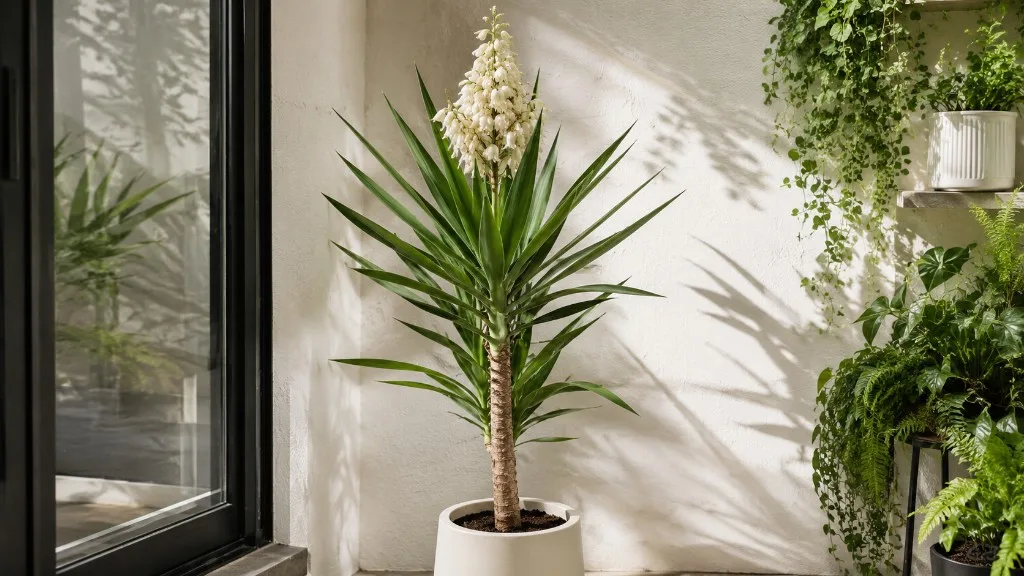
Spineless yucca looks indestructible until it is not. The cane stays stiff while roots suffocate in wet mix, and by the time lower leaves yellow, the damage is often already in the trunk. Spineless yucca — sold as stick yucca, giant yucca, or soft-tip yucca — is usually Yucca elephantipes, now widely treated as Yucca gigantea. It is a woody, drought-tolerant succulent shrub from Mexico and Central America, not a thirsty tropical foliage plant. Good care is bright light, fast-draining soil, dry-down watering, and honest expectations about size, cold, and pet safety.
This guide covers identity mix-ups, indoor and outdoor placement, light, soil, water, climate, feeding, pruning, propagation, repotting, pests, troubleshooting, and toxicity. For symptom-specific fixes on your plant, see the Yucca Plant care hub after you run the checks below.
Care at a Glance
| Factor | Indoor target | Outdoor (warm climates) |
|---|---|---|
| Light | Bright direct to strong indirect; south or west window | Full sun |
| Soil | Gritty, fast-draining; 1 part potting mix : 3 parts perlite or coarse sand | Sandy, well-drained loam |
| Water | When top 2–3 inches of mix are dry; less in winter | Deep, infrequent; allow dry periods |
| Temperature | Roughly 60–80°F (15–27°C); protect below ~50°F (10°C) | 70–90°F ideal; hardy USDA 9–11 (10–12 per NC State) |
| Size | Often 4–6 ft in pots over years | 15–30 ft tall, 15–25 ft wide at maturity |
| Pets | Toxic to cats, dogs, and horses (saponins) | Same |
If you remember one rule: check soil depth and trunk firmness before every watering. A heavy, wet pot with a soft base is a rescue job, not a thirst signal.
What Spineless Yucca Actually Is
Missouri Botanical Garden describes Yucca elephantipes as spineless yucca or giant yucca, native from Mexico to Guatemala, grown as a container plant north of its outdoor hardiness and capable of reaching 15 to 30 feet outdoors. Indoors it stays much smaller, often in the 4 to 6 foot range in a bright room over many years. Unlike desert yuccas with razor leaf margins, spineless yucca has smooth, soft-tipped, leathery leaves in rosettes atop one or more woody canes — the feature that makes it workable as a houseplant near walkways.
NC State Extension notes rapid growth, multi-stemmed habit, creamy-white bell flowers in late spring or summer on mature outdoor plants, and low insect pressure when drainage is good. Flowers are technically edible in some cultures, but that is irrelevant to typical indoor pots and does not change pet toxicity below.
Elephantipes, Gigantea, and the Yucca vs Yuca Confusion
Retail tags still say Yucca elephantipes. Botanists and many extension pages now prefer Yucca gigantea, with Yucca guatemalensis as another synonym. The RHS plant profile lists those names for the same tender, architectural, drought-resistant houseplant with stiff leathery leaves and a multi-trunk habit from near ground level. For care purposes, the names point to the same soft-tipped cane yucca.
Do not confuse yucca (two c’s, ornamental cane) with yuca (one c), which is cassava (Manihot esculenta), an edible root crop. Pet Poison Helpline warns against mixing the names because care advice and toxicity information are not interchangeable.
Nursery pots often contain two or three cut canes planted at staggered heights. Bare woody trunk under a leaf tuft is normal commercial form, not disease by itself. Lower leaves shed naturally as canes age. Bare trunk plus soft, foul-smelling tissue or sudden limp yellowing is a moisture or rot problem — inspect the root zone before assuming the plant needs more water.
Indoor vs Outdoor Placement
Spineless yucca works as a statement floor plant indoors and as a structural shrub or small tree outdoors in frost-free climates. Indoors, give it the brightest spot you have without trapping it in a dark corner “because it is low maintenance.” Outdoors, site it where it will not outgrow the space: NC State warns against planting near foundations because the flared base becomes massive and difficult to remove.
Summer patio placement is one of the best upgrades for a struggling indoor yucca — if you harden it off. Move the pot to a sunny patio after frost risk, increasing outdoor hours over 7 to 14 days. Reverse the process before nights near 50°F (10°C). Expect faster dry-down and stronger sun outdoors; adjust watering and watch for sun scorch on leaves that lived in dim rooms all winter. The yucca plant care guide covers acclimation timing in more detail for multi-cane pots.
Light Requirements
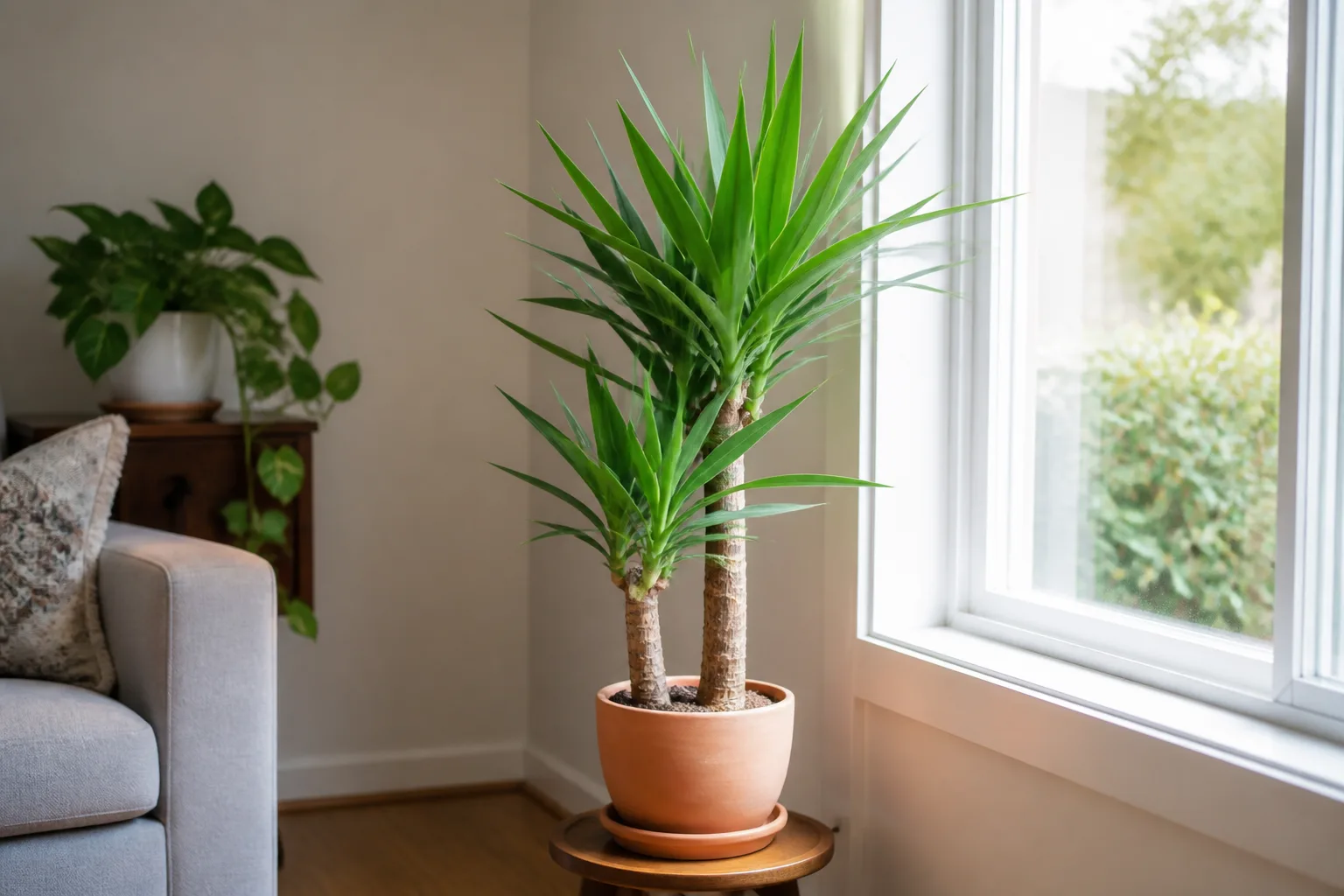
Spineless yucca wants as much light as you can give it indoors — bright direct sun through a south or west window, or strong indirect light within a few feet of that window. UF/IFAS lists full sun to partial shade for Yucca gigantea outdoors; indoors, interpret “partial shade” as still bright, not a north-facing desk.
Too little light produces leggy, pale growth with leaves spreading wider and trunks stretching. Too much light after a dim winter can scorch leaf tips — acclimate gradually. Rotate the pot a quarter turn monthly so canes do not lean hard toward the glass. If the only available spot is moderate light, reduce watering frequency accordingly; low light and wet soil is the most common indoor kill combo.
Soil, Pots, and Drainage
Spineless yucca is native to loose, sandy, well-drained conditions. NC State recommends one part potting mix to three parts perlite or coarse sand for houseplants. The goal is a mix that drains in seconds and dries through the root ball within a week in a typical bright room — not a moisture-retentive peat-heavy blend.
Use a pot with a drainage hole and empty the saucer after watering. Terra cotta dries faster than glazed ceramic; either works if you adjust watering to weight and soil depth. Avoid oversized pots “to give it room”; extra wet soil around a small root system invites rot.
Some guides push straight cactus mix. That can work if it is truly gritty, but many commercial succulent mixes are still too fine. Amending with perlite, pumice, or coarse sand until the mix feels visibly chunky is safer than assuming a bag label guarantees drainage.
Watering Without Root Rot
Spineless yucca is drought tolerant; overwatering is the primary failure mode. Water when the top 2 to 3 inches of mix are dry, or when most of a deep root ball has dried — often every 10 to 14 days in bright warm rooms, and every 3 to 4 weeks in winter. Confirm with a finger, skewer, or pot weight before soaking.
When you water, soak until excess runs from the drainage hole, then discard standing water. Never let the pot sit in a full saucer for days. In winter, when growth slows and light drops, stretch intervals even if the top looks dusty — the trunk stores moisture.
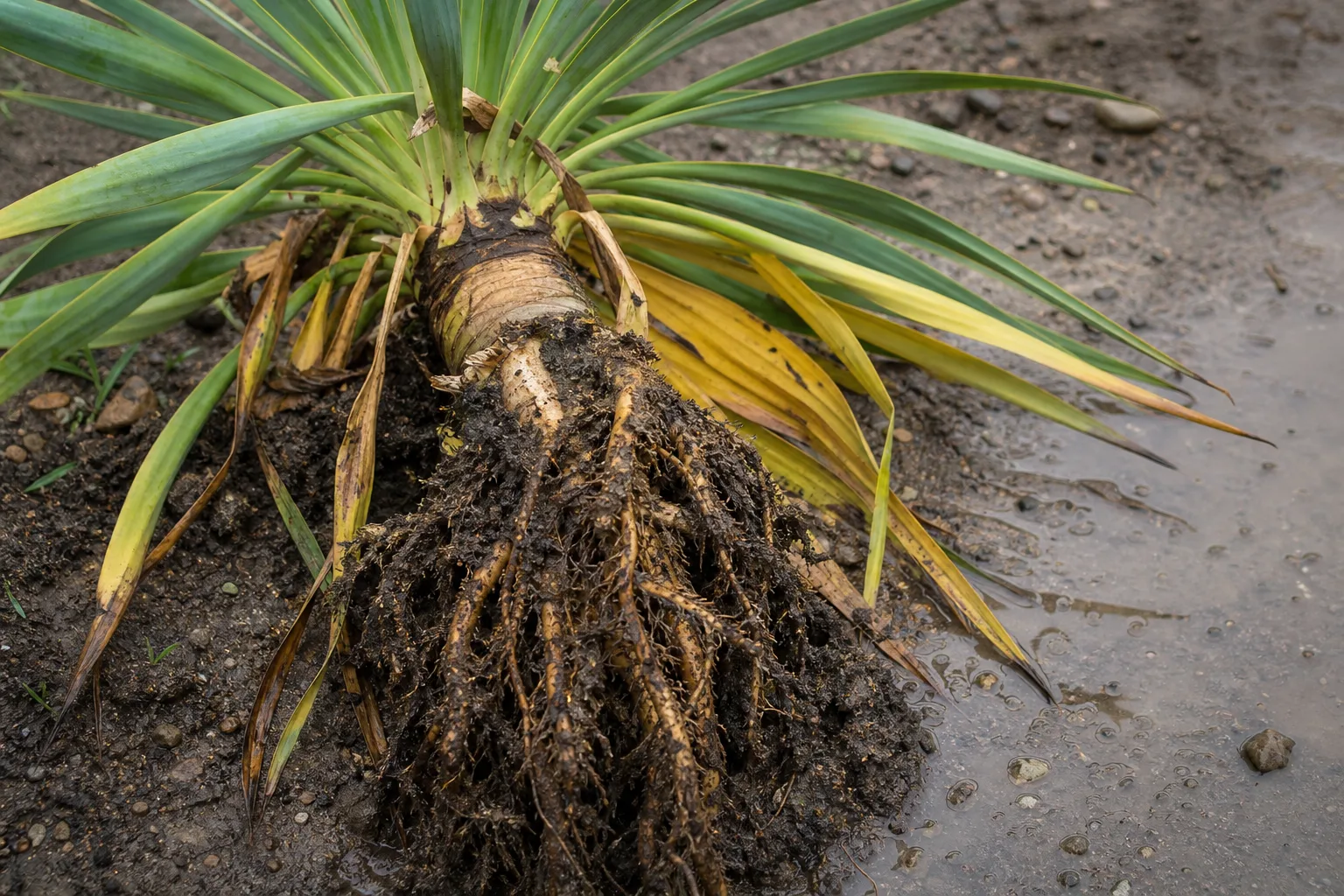
Root rot develops when soil stays wet while roots die. Early signs include yellow lower leaves, soft base tissue, and a sour smell from the mix. Late signs are a wobbly cane and black mushy roots. If rot is localized to one cane in a multi-cane pot, you may save the others by unpottng, trimming dead roots, and repotting into dry gritty mix — but a fully soft trunk rarely recovers. See yucca root rot for inspection steps.
Temperature, Humidity, and Seasonal Shifts
Indoor temperatures between 60 and 80°F (15–27°C) suit spineless yucca well. NC State notes outdoor preference for 70 to 90°F in warm climates. The plant tolerates average indoor humidity; misting is unnecessary and can encourage foliar issues if leaves stay wet in cool corners.
Protect from cold drafts, blasting heat registers, and sudden drops below about 50°F (10°C). Prolonged cold causes leaf damage and dieback. If you move pots for seasonal sun, avoid shuttleing between hot afternoon concrete and cold night air without acclimation.
Fertilizer and Feeding
Spineless yucca grows in low-nutrient conditions in the wild and does not need heavy feeding. A half-strength balanced or low-nitrogen fertilizer once in late spring and once in midsummer is enough for most indoor plants. Skip feeding in winter and on newly repotted or freshly propagated cuttings until you see new growth.
Overfertilizing causes brown leaf tips and salt buildup in the mix. If white crust appears on the soil surface, flush the pot with water in the sink (letting it drain fully) or repot into fresh mix rather than doubling fertilizer “to green it up.”
Pruning, Grooming, and Shape Control
Pruning is mostly grooming, not shaping into a hedge. Pull or cut spent lower leaves at the base when they brown and detach easily. Do not rip green leaves; cut cleanly with sharp snips. If a cane grows too tall for the ceiling, you can cut the trunk — spineless yucca responds by sprouting new heads or side shoots on the remaining stump, which is also how commercial growers produce multi-cane pots.
Wear gloves; leaf tips are soft but still pointy, and sap may irritate sensitive skin. Wipe dust from leaves occasionally with a damp cloth so the plant photosynthesizes efficiently in lower winter light.
Propagation by Cuttings and Offsets
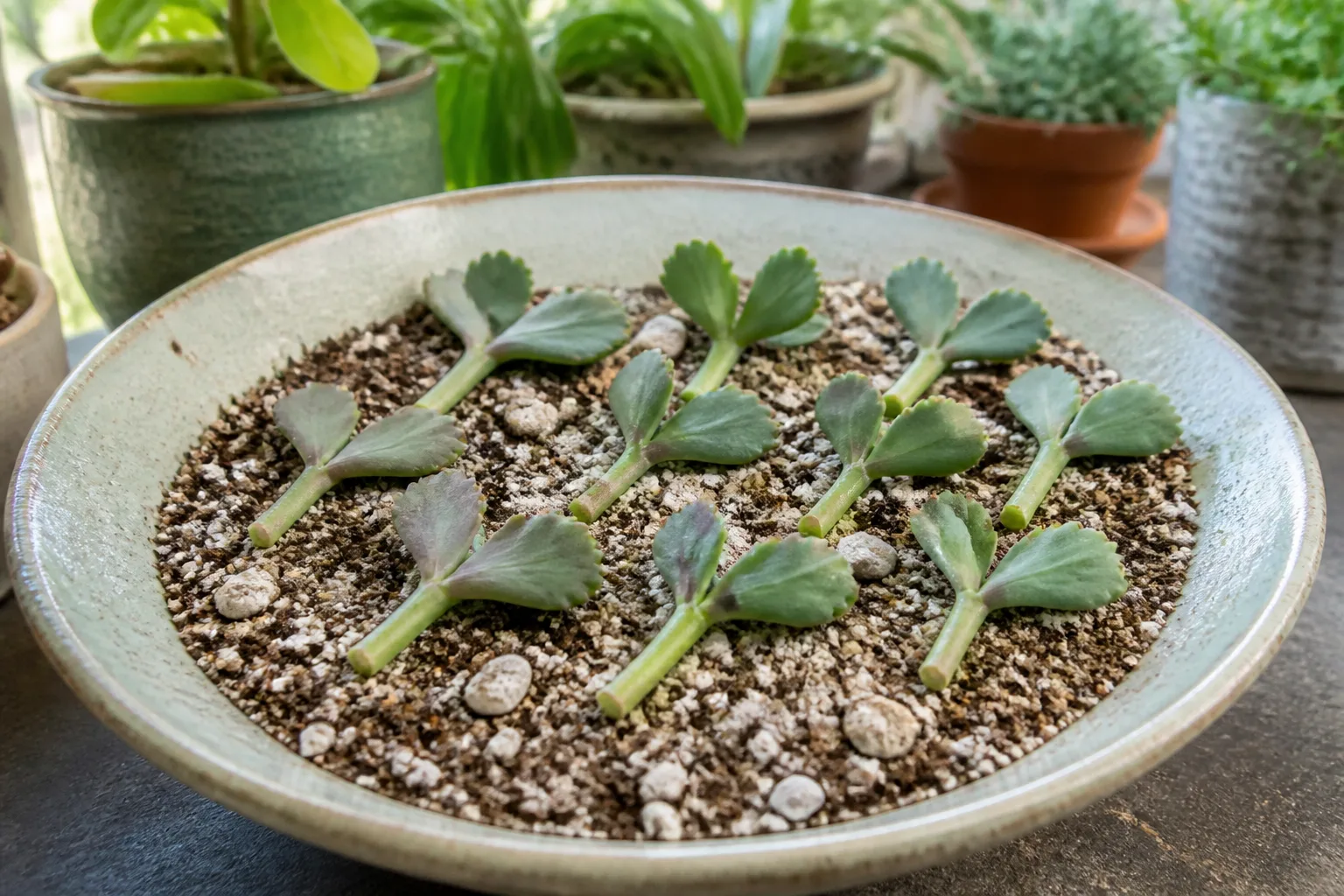
Propagation is how you turn one leggy cane into several plants — and how nurseries build those staggered multi-cane containers.
Stem cuttings
- Choose a healthy cane section with foliage or a dormant bud zone. Using a clean saw or sharp knife, cut at least 4 inches below the leaf rosette (or remove a top section and a bare trunk segment that still has latent buds).
- Set cuttings in a dry, shaded spot for 3 to 7 days until the cut surface calluses — skipping this step is the most common propagation failure.
- Plant callused ends in dry gritty mix, burying the base just enough to stand upright. Press large sections firmly so they do not wobble.
- Place in bright indirect light. Mist the soil surface lightly only when it is fully dry; do not soak.
- Roots typically form in 3 to 6 weeks. Tug gently for resistance before moving to normal dry-down watering.
Offsets (suckers) at the base can be severed when they have their own small root zone or after callusing if mostly stem.
Top-heavy cuttings may need a stake for the first month. If a cutting rots at the base, it was planted too wet or not callused long enough — trim back to firm tissue and try again.
Repotting When the Pot Tips Over
Spineless yucca tolerates being slightly rootbound and does not need annual repotting. Repot when roots circle heavily, water runs straight through dry mix, or the pot tips from top weight — common with tall canes.
Repot in spring into a container only 1 to 2 inches wider. Loosen outer roots gently, remove old loose soil without bare-rooting a healthy plant, and backfill with fresh gritty mix. Wait one week before resuming normal watering so cut roots are not sitting in wet soil. Hold fertilizer for 4 to 6 weeks after repotting.
Growing Spineless Yucca Outdoors
In USDA zones 9 through 11 (NC State lists 10–12 for Y. gigantea), spineless yucca can grow as a landscape shrub or small tree in full sun and well-drained soil. Coastal and tropical-style beds benefit from its vertical structure and deer resistance noted by NC State. Expect 15 to 30 foot height and 15 to 25 foot spread over many years — plan spacing accordingly and keep it away from foundations you may need to access later.
Outdoor plants need infrequent deep watering while establishing, then rely on rainfall in many climates. Container specimens on patios dry faster and still need drainage discipline. Flowering on outdoor mature plants produces creamy-white bells on tall stalks; indoor pots rarely bloom.
Overwintering and Frost Protection
Treat 50°F (10°C) as the practical indoor threshold for potted spineless yucca. Below that, bring containers inside or into a frost-free greenhouse. In marginal zones, mulch the base of in-ground plants and accept that foliage may die back while the trunk survives brief dips — but repeated freeze-thaw cycles damage vascular tissue.
Winter indoors means less water, not more humidity. Cold, wet soil together is worse than either alone. Keep the plant away from single-pane windows that radiate cold at night unless you insulate the gap.
Pests, Diseases, and What Usually Fails First
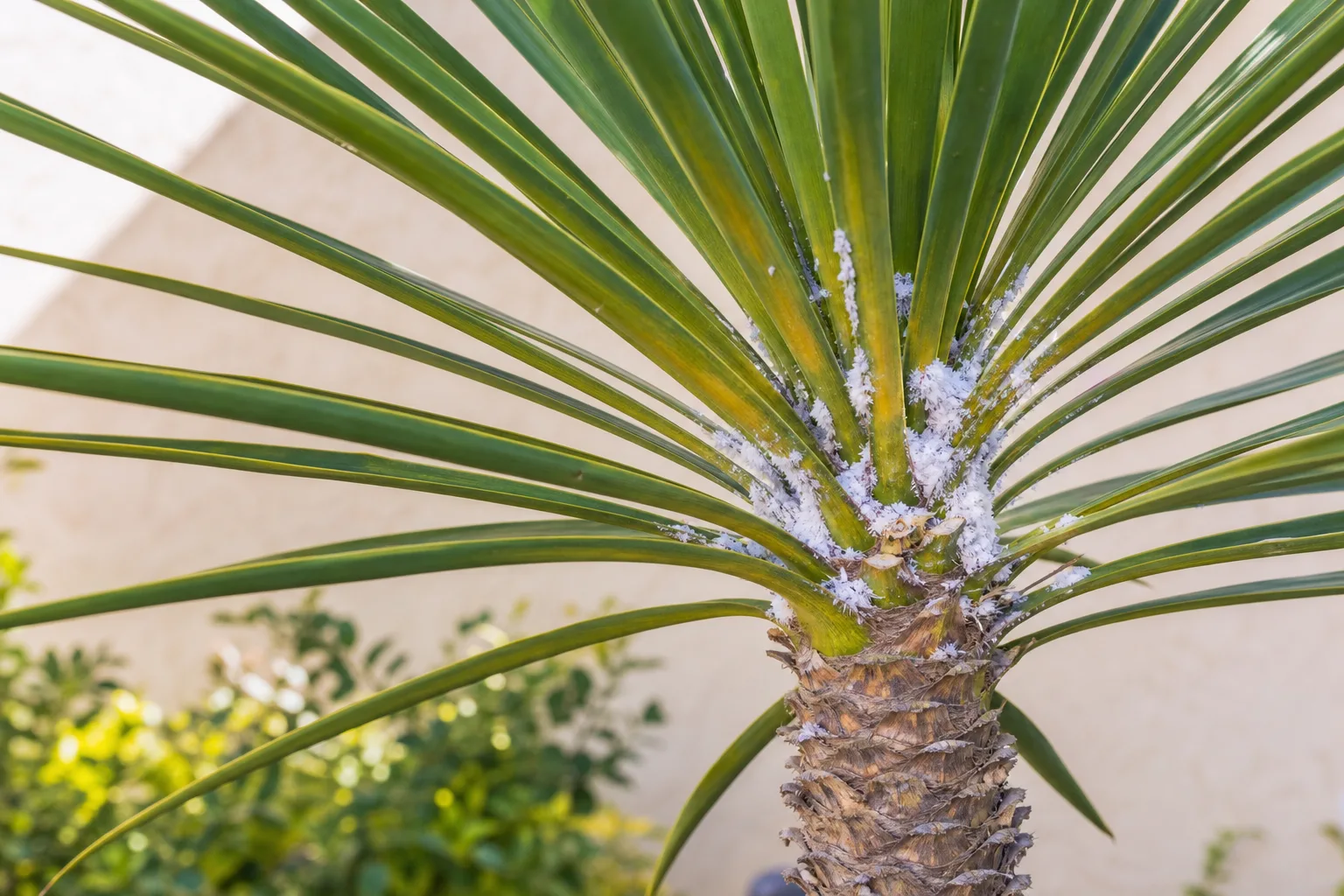
Spineless yucca is generally pest-resistant when healthy. The usual indoor issues are mealybugs, scale, and aphids at leaf bases and cane joints — especially on plants stressed by low light or overwatering. Inspect crevices monthly; dab pests with alcohol on a cotton swab or use insecticidal soap on a test leaf first.
Disease is almost always root rot from overwatering, not mysterious fungus on healthy dry plants. Fungus gnats indicate soil staying moist too long; let the mix dry further between waterings and address drainage before reaching for pesticides.
Troubleshooting Yellow Leaves and Drooping Foliage
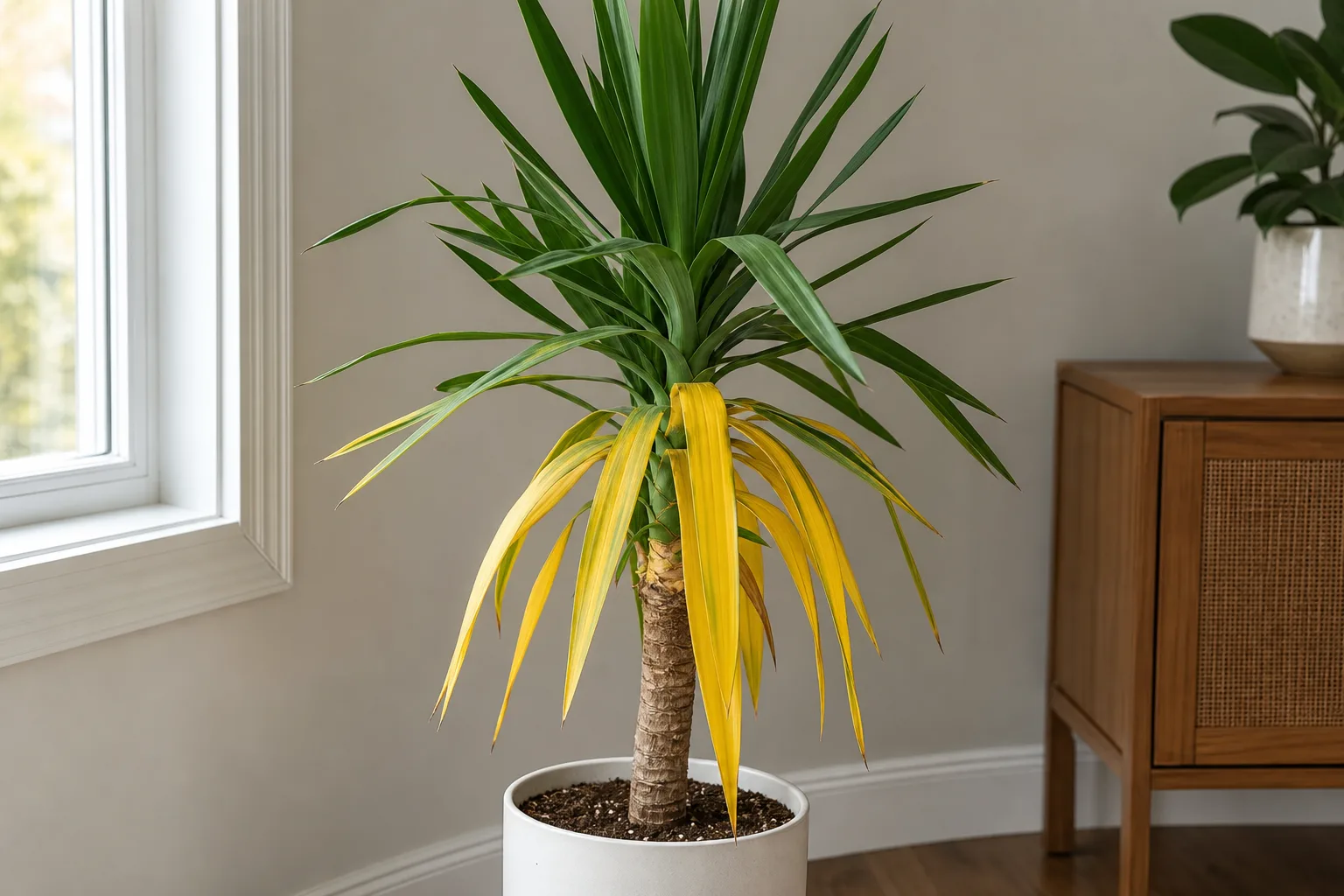
Yellow leaves most often mean too much water or poor drainage, not nutrient deficiency. Check trunk firmness and soil moisture deep in the pot before adding fertilizer. If only the lowest leaves yellow and detach, that can be normal aging on a tall cane.
Drooping leaves point to underwatering, root loss from past overwatering, low light, or temperature shock. Run this sequence: confirm roots are firm and white-tan, verify the pot is not waterlogged, then assess light. A plant that droops in a dark hall but perks up near a window needs placement change, not more water.
Leggy, stretched canes need more light and optionally a hard prune to reset height. Brown tips alone often trace to fluoride/salt buildup, low humidity plus heat blasting, or fertilizer excess — flush or repot before escalating care.
Pet Safety and Toxicity
The ASPCA lists Yucca spp. as toxic to cats, dogs, and horses because of saponins. Dogs and cats may vomit after chewing foliage; horses can develop more serious effects including liver disease. NC State also notes toxicity to humans if ingested.
Keep spineless yucca out of reach of chewing pets, especially puppies and kittens attracted to strappy leaves. If ingestion is suspected, contact your veterinarian or ASPCA Animal Poison Control at (888) 426-4435. Pet-safe alternatives for bright rooms include true palms like parlor palm — not a yucca lookalike, but non-toxic.
Conclusion
Spineless yucca rewards a simple contract: bright light, gritty soil, and watering only when the mix has actually dried. It is not a set-and-forget plant if your home runs cool, dim, or generous with the watering can — but it is one of the few large indoor structures that can live for decades when drainage and light are right. Learn the names (elephantipes / gigantea), respect the 50°F line, propagate with callused cuttings, and keep pets away from the foliage. When a symptom does not match the quick checks here, use the Yucca Plant hub for targeted fixes instead of guessing.