Smells Mice Hate: 15 Scents to Try (and Skip)
Use mouse-deterring scents as a short-term tool, not a cure. Get a safe placement plan, pet cautions, cleanup steps, and signs it is time to call a pro.

Strong odors can make a narrow route less appealing to a mouse, which is why peppermint oil, cloves, garlic, and other pungent scents appear in so many home remedies. But a smell is a temporary deterrent at best. It does not close the pencil-width gap, remove a nest behind an appliance, or stop a mouse that has already found dependable food.
The most useful way to try a scent is as one small part of a larger sequence: confirm that mice are active, place a controlled odor near the route, seal the entry point, remove food and shelter, and monitor for fresh signs. The list below includes 15 commonly suggested smells, but it also tells you which ones are reasonable to test, which are weak or unpredictable, and which should stay out of your home.
The quick answer: scents may deter mice, but exclusion keeps them out
If you want to try one scent first, choose a small amount of peppermint oil on a carrier near a suspected route, provided children and pets cannot reach it. Refresh it when the smell fades, and treat the trial as a way to make one route less inviting while you work on the actual entry point. Do not pour oil into a wall, spray it on food-contact surfaces, or assume that a stronger dose is safer or more effective.
There is no dependable “most hated” scent that works in every house. Mice have a highly developed sense of smell, but they also have strong incentives to reach warmth, food, water, and shelter. A hungry mouse may cross an unpleasant-smelling area, learn that the odor is harmless, or simply use a different path. The odor can buy you time; it cannot make an occupied building mouse-proof.
What a smell can and cannot do
Odor deterrents work, when they work at all, by making a small area feel unfamiliar or irritating. They are most plausible at a fresh entry route, behind a cabinet, or near a gap that has not yet become a regular nest site. A cotton pad that smells strongly today may have almost no effect after it dries, and an outdoor breeze, humidity, dust, and competing household smells shorten that window.
The evidence behind the 15 household choices is uneven. Many recommendations come from traditional gardening and home-remedy practice rather than controlled tests in occupied homes. Gardening Know How makes a useful distinction in its discussion of mint: pungent mint may have value against some insects, but claims that planting it keeps larger animals away are much harder to establish. That is a good rule here too—a fragrant plant or pantry ingredient is not automatically a tested rodent-control product.
Think of scent as a low-commitment experiment with a stop condition. If activity disappears after you place a scent and close the gap, the whole combination may have worked. If fresh droppings, gnawing, or scratching continue, the mouse has already given you the answer: the odor is not controlling the problem, so move to exclusion and population reduction.
Are mice actually present?
Before scattering powders or oils, look for evidence. House mice commonly leave small, dark droppings in cabinets, drawers, behind appliances, along baseboards, and near food storage. Gnaw marks on cardboard, plastic, insulation, soap, or wiring are also important. Shredded paper or fabric in a warm, sheltered spot points to nesting, while scratching in a wall or ceiling suggests that scent placed in the living room may be far from the real problem.
You can use cleanup as a simple activity check, but do it safely. The CDC explains that fresh droppings and gnaw marks are signs of rodent presence, and droppings that reappear after proper cleaning indicate activity rather than an old, inactive mess. Do not use a bare hand to inspect waste, and do not sweep or vacuum it dry.
15 smells mice may avoid
These are best read as possible short-term deterrents, not guarantees. Start with one scent at one clearly identified route so you can tell whether it changes activity. Combining five strong odors throughout a home makes the air unpleasant for people and pets, stains surfaces, and tells you nothing about which measure helped.
Peppermint, eucalyptus, and clove oils
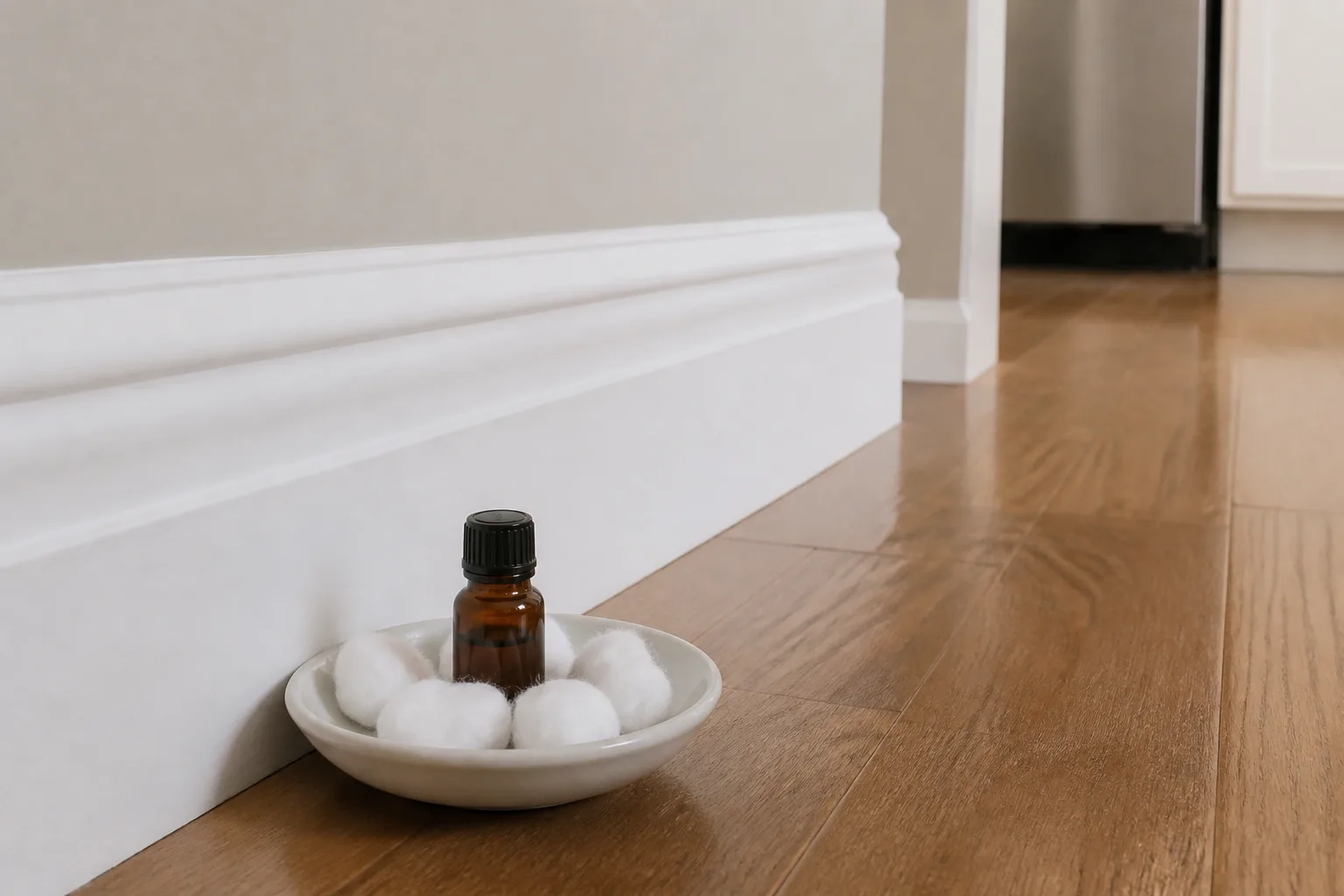
1. Peppermint oil. The sharp menthol aroma is the most practical first trial because it is easy to find and easy to confine to a cotton pad, felt square, or small dish. Put a lightly scented carrier beside—not inside—a suspected gap, then replace it when the aroma is no longer noticeable; the oil is a route deterrent, not a population-control method.
2. Eucalyptus oil. Eucalyptus has a penetrating, camphor-like smell that may make a cupboard edge or utility route less inviting for a short time. Use the same small-carrier approach as peppermint, keep it away from food and finished wood, and do not turn a strong scent into an all-room diffuser cloud.
3. Clove oil. Clove’s warm, spicy aroma is potent enough that a little goes a long way. A tiny amount on a disposable carrier may be worth trying near a dry, inaccessible route, but concentrated oil can irritate skin and is not a reason to leave an open bottle where a child or pet can knock it over.
Cinnamon, cayenne, chili, garlic, and onions
4. Cinnamon. Ground cinnamon or cinnamon sticks are often used around suspected entry points because the smell is strong and familiar in the kitchen. Use a shallow, contained amount rather than a loose line across a floor; powder can spread, be inhaled, or end up in a pet’s paws, and the scent fades faster than a sealed gap can be repaired.
5. Cayenne pepper. Cayenne brings both a sharp odor and capsaicin, which can irritate eyes, skin, noses, and paws. If you test it, keep it in a closed sachet or a location inaccessible to children and pets, and avoid creating airborne dust by shaking or blowing powder into cracks.
6. Chili oil. Chili oil is sometimes suggested as a stronger version of pepper, but the oil can stain flooring, spread onto paws, and leave an irritating residue. It is a poor choice near food preparation, pet bowls, or any route that a child might touch; a sealed exclusion repair gives you more reliable value.
7. Garlic. Fresh garlic cloves, skins, or a small amount of powder produce a sulfurous odor that may discourage a mouse from lingering nearby. Garlic also dries, molds, or becomes attractive to other animals, so use it only as a short trial in a contained, dry spot and remove it promptly if it spoils.
8. Onions. Onion pieces and skins have a similarly pungent smell, but they deteriorate quickly in warm, damp corners. Keep them away from pets and food surfaces, never push them into a wall cavity, and do not mistake the smell of a decomposing onion for proof that mice have left.
Vinegar, ammonia, lavender, bergamot, cedarwood, Epsom salt, and mothballs
9. White vinegar. Vinegar is more useful as a cleaning step than as a proven mouse barrier. Wiping a hard surface can remove food residue and some lingering household odors, but it will not block an opening, and it should never be mixed with bleach or other cleaners.
10. Ammonia. Ammonia is often listed because its harsh smell resembles urine, but that does not make it a sensible home repellent. It can irritate the eyes and airways, its effectiveness is uncertain, and mixing it with bleach can create dangerous fumes; choose exclusion and cleaning instead.
11. Lavender. Lavender smells pleasant to many people and is easy to use as a dried sachet, but a mild floral scent is a weaker and less predictable mouse deterrent than a concentrated spicy or minty odor. Use it for fragrance if you like it, not as your only response to droppings or gnaw marks.
12. Bergamot. Bergamot oil has a bright citrus-floral aroma, but there is no good reason to treat it as a guaranteed household mouse solution. If you try it, use a small contained carrier, follow the product label, and avoid applying oil to skin, food surfaces, or areas where a pet can lick it.
13. Cedarwood oil. A woody odor may make a closet, shed, or storage edge less attractive for a while, especially where the mouse has not established a nest. Cedarwood oil is not the same thing as sealing a structure, and scent blocks or wood pieces lose their aroma; inspect the building even if the cedar smell seems to help.
14. Epsom salt. Epsom salt is frequently recommended as a bitter or unpleasant-smelling perimeter treatment, but it is a low-confidence option. Do not scatter it where pets can ingest it or where runoff can reach garden soil, and do not use a bowl of salt as a substitute for removing food or closing a gap.
15. Mothballs. Do not use mothballs to repel mice. The National Pesticide Information Center identifies mothballs as insecticides, not wildlife repellents, and explains that they are intended for labeled use in airtight containers. In an open room, the vapor exposes people, pets, and wildlife; the fact that you can smell it means you are inhaling the pesticide.
How to use scent deterrents without creating a new problem
The safest home trial is small, localized, and easy to remove. You are trying to influence a mouse route, not perfume the entire house. If you have asthma, migraines, a baby, birds, rabbits, guinea pigs, or a pet with respiratory disease, skip the scent experiment and focus on sealing, sanitation, monitoring, and professional advice.
Put the odor on a controlled carrier
Use a cotton ball, felt scrap, or absorbent pad inside a small dish or mesh sachet. A carrier prevents liquid from pooling on flooring and makes it possible to discard the material after the scent fades. Do not soak a surface, spray an unknown homemade mixture around a kitchen, or combine oils simply because several strong smells sound more powerful.
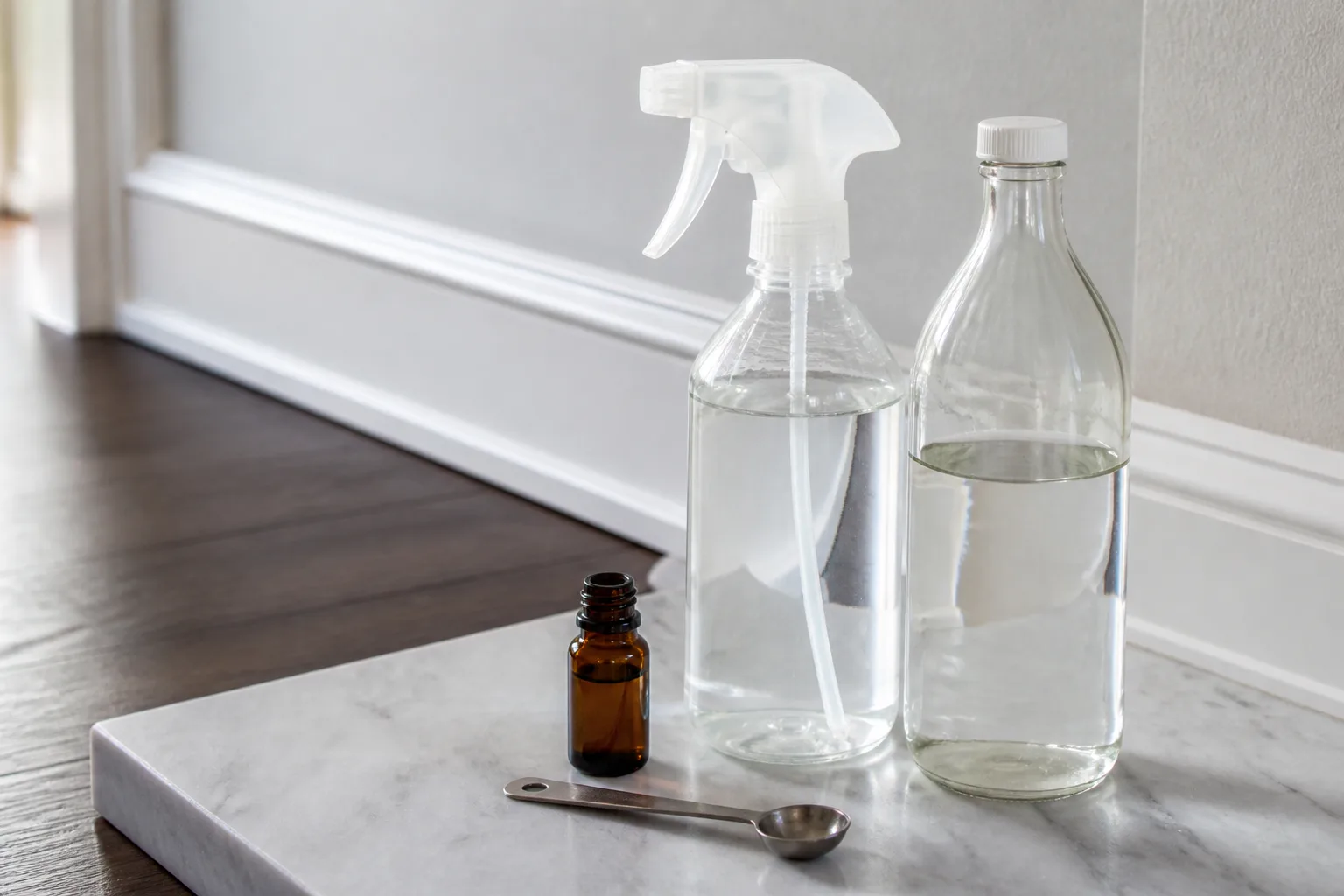
Keep every oil bottle and scented carrier in a closed cabinet when you are not placing it. The ASPCA warns that concentrated essential oils can harm dogs and cats through contact or ingestion. Its guidance also notes that short diffuser use in a secured area may not be an issue for every pet, but birds are especially sensitive and pets with breathing problems may be better off without a diffuser. A cotton pad in an inaccessible location is easier to control than a diffuser that disperses oil through a room.
Place it on the mouse route, not everywhere
Good trial locations include beside a visible baseboard gap, near a pipe penetration under a sink, behind a refrigerator where droppings are present, or at the edge of a garage door where light shows through. Do not place scent directly on a food-contact surface, inside an electrical outlet, in a heating or cooling duct, or in a hole that you plan to seal immediately.
Take a quick photo or note before you place anything. Check the same route after 24 to 48 hours for new droppings, disturbed material, or fresh gnawing, then remove the carrier and make the repair. This turns a vague home remedy into a limited observation instead of an endless cycle of adding more oil whenever you hear a noise.
Safety: what not to use casually
“Natural” describes an origin, not a dose or a safety profile. Essential oils are concentrated plant chemicals; peppers are irritants; vinegar and ammonia can damage materials or create hazardous mixtures; and mothballs are pesticides. Keep all scent materials out of reach, label any container you make, and never place a deterrent where a child, pet, or non-target wildlife can eat, touch, or inhale a concentrated amount.
Mothballs are pesticides, not mouse repellents
Mothballs deserve their own warning because they are often treated like a harmless pantry ingredient. NPIC explains that the active ingredient may be naphthalene or paradichlorobenzene and that mothballs slowly release toxic vapor. Children and pets may mistake the solids for food, and open-air placement defeats the labeled use while increasing exposure.
Never put mothballs under a bed, in a wall, near a crawl-space opening, inside a garage, or around a garden to chase mice away. If someone or a pet may have swallowed one, contact Poison Control, a veterinarian, or the appropriate emergency service immediately rather than waiting for symptoms. Use a labeled product only for its labeled purpose, and choose physical exclusion for rodents.
Essential oils need pet- and people-safe handling
Do not put essential oil on a cat, dog, child, bird, rabbit, hamster, or guinea pig, and do not leave a saturated pad where an animal can rub against it or chew it. Keep the room ventilated, stop if anyone develops headache, coughing, eye irritation, nausea, or breathing trouble, and wash skin promptly if concentrated oil spills.
If an oil is accidentally ingested or gets onto a pet’s coat or paws, do not guess at a home treatment. Call a veterinarian or animal poison-control service. The same caution applies to pepper powders and chili oil: a mouse deterrent that causes a pet injury is not a humane or sensible solution.
The prevention plan that makes scent worth trying
Permanent mouse prevention is a building-and-housekeeping job. Start outside and inside with a flashlight, look for light or airflow, and check places where pipes, cables, vents, doors, and foundations meet. The CDC notes that mice can fit through a hole about the width of a pencil—1/4 inch or 6 millimeters. Treat every gap that size or larger as a real entry point.
Seal gaps and remove food and shelter
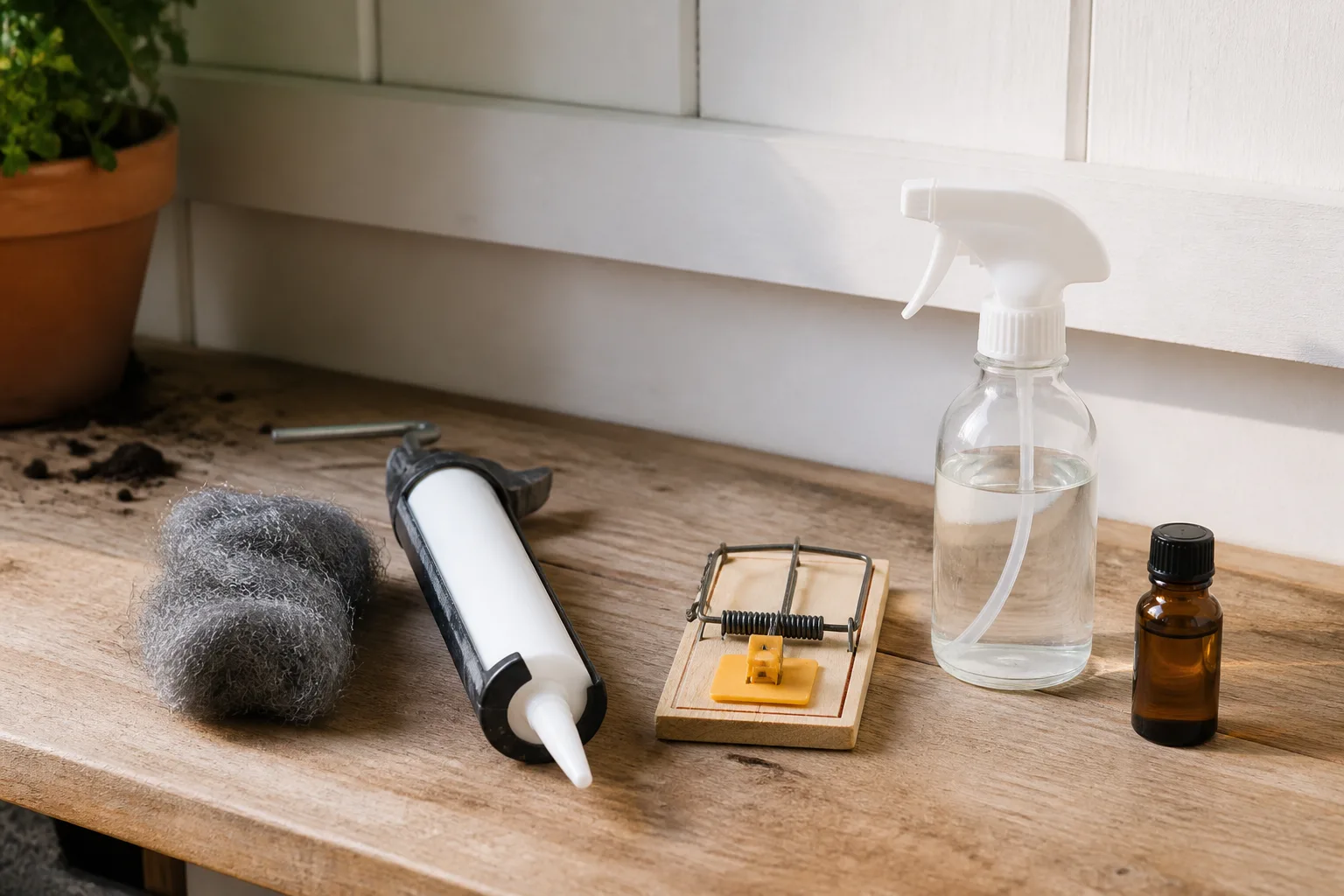
For small openings, the CDC recommends packing steel wool into the gap and securing it with caulk or spray foam. Larger openings need a chew-resistant material such as hardware cloth, metal screen, metal sheeting, or cement, fitted around pipes and then sealed. Soft filler alone can become a chewing project, so inspect the repair after a few days and again after severe weather.
Inside, store grains, pet food, birdseed, and snacks in thick plastic, metal, or glass containers with tight lids. Clean spills quickly, wash dishes, put pet food and water away overnight when practical, and use a lidded garbage container. Outside, move brush and woodpiles away from the home, reduce clutter, keep compost and feed secure, and avoid placing bird feeders directly beside the foundation.
The sequence matters. If you seal only the most obvious indoor hole while leaving a gap behind the stove or under the garage door, the mouse may simply change routes. If you remove food but leave a warm nest in insulation, the problem may persist. Use scent after you identify the route, not before; otherwise the smell can make the inspection harder without changing the cause.
Clean droppings and nests safely
Do not sweep or vacuum dry droppings, urine, or nesting material. The CDC cleanup guidance says to ventilate a closed space, wear rubber or plastic gloves, soak the waste with household disinfectant or a fresh bleach solution, let it stand for the label’s contact time, and wipe it up with paper towels. Wash gloved hands before removing gloves, then wash bare hands with soap and water.
For a small area, double-bag contaminated waste and put it in a covered garbage can according to local rules. Heavy infestations, contaminated insulation, air ducts, inaccessible wall voids, or illness after exposure justify a health-department or professional call. The goal is not only to remove the smell that attracts a mouse; it is to reduce contact with potentially contaminated material without putting waste particles into the air.
When smells are not enough
Stop adding scent and escalate when new droppings appear after cleanup, gnaw marks continue, you hear activity in a wall or ceiling, food packaging is damaged, or more than one room shows signs. A daytime sighting can happen for many reasons, but repeated sightings or a mouse that ignores several deterrents should be treated as an active problem. A smell that seemed to work for one night is not proof that the population is gone.
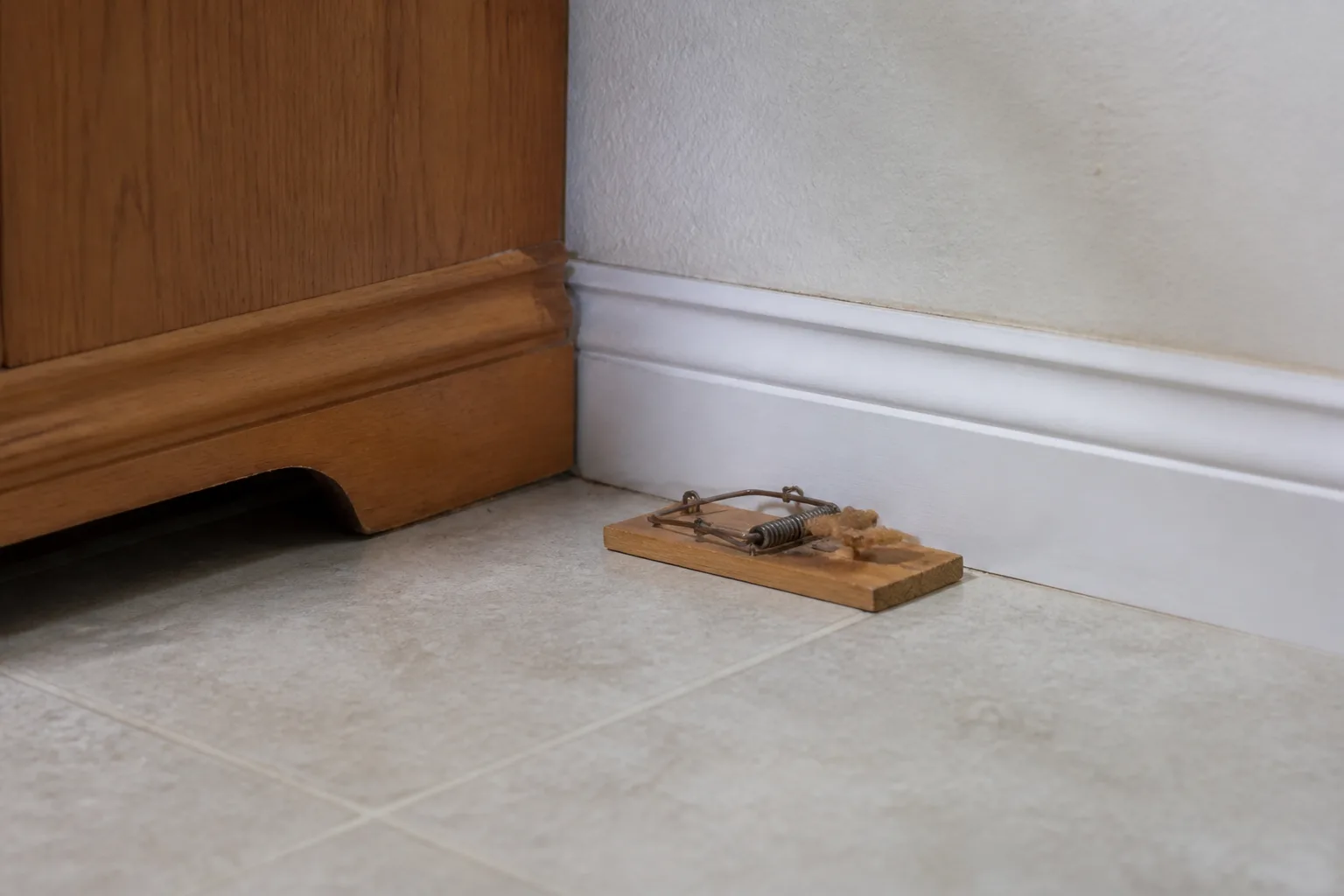
For mice already inside, combine exclusion with appropriately placed traps. The CDC recommends traditional snap traps around the home, with the baited end against a wall so the trap forms a “T” with the mouse’s travel route. Place them where you have found signs, keep them away from children and pets, and check them regularly. Avoid improvising with exposed poison or assuming that a live-capture release solves the problem; local regulations, species, animal welfare, and disease risk all matter.
Continue monitoring after the last capture. If fresh droppings, urine spots, or gnawing continue, the entry route or population has not been handled. If activity is in ductwork, a sealed wall void, a crawl space you cannot safely access, or an area with extensive contamination, bring in a qualified pest professional rather than flooding the space with stronger fumes.
How to choose the next step
Use the evidence in your house to choose the response, not the intensity of the odor.
| What you find | Best next action |
|---|---|
| No signs, but a visible gap or food source | Seal the gap, secure food, and use a scent only as an optional short-term extra. |
| One fresh dropping trail or a single gnaw mark | Clean safely, inspect the route, close nearby gaps, and monitor for new signs. |
| Fresh signs in several places | Set correctly placed snap traps while completing exclusion and sanitation; do not rely on scent alone. |
| Activity in walls, ducts, insulation, or inaccessible voids | Contact a qualified pest professional or local health department for a safe plan. |
| Children, pets, birds, asthma, or sensitive occupants | Skip concentrated scents and all open pesticides; prioritize physical exclusion and expert advice. |
This decision rule also explains why a tidy home can still have mice. Sanitation reduces the reward for staying, but even a small amount of food and a warm cavity can support a mouse. Exclusion closes the route; traps address the mouse that is already inside; scent is optional support around a known path.
Conclusion
Peppermint, eucalyptus, clove, cinnamon, cayenne, chili, garlic, onion, vinegar, lavender, bergamot, cedarwood, and similar strong odors may make a small area less inviting for a short time. Their effect varies with concentration, airflow, competing smells, mouse behavior, and whether the animal already has access to food and shelter. Ammonia is a poor household choice, Epsom salt is weak and potentially messy, and mothballs should not be used as mouse repellents at all.
For a lasting result, inspect for pencil-width gaps, seal them with chew-resistant materials, secure food and pet supplies, clean waste without sweeping it into the air, and monitor for fresh signs. If the evidence continues, use properly placed traps or call a professional. The smell may be the first small step, but the repaired entry point is what keeps mice from coming back.



