Neem Oil for Indoor Plants: When It Helps and When It Hurts
Learn which indoor plant pests neem oil actually controls, how to mix and apply it without burning leaves, and when to reach for an alternative instead.
What Neem Oil Actually Is
Neem oil is pressed from the seeds of the neem tree (Azadirachta indica), a broadleaf evergreen native to the Indian subcontinent. For centuries, neem preparations have been used in traditional agriculture across South Asia as a crop protectant, and the EPA classifies cold-pressed neem oil as a biopesticide with reduced-risk status for indoor use.
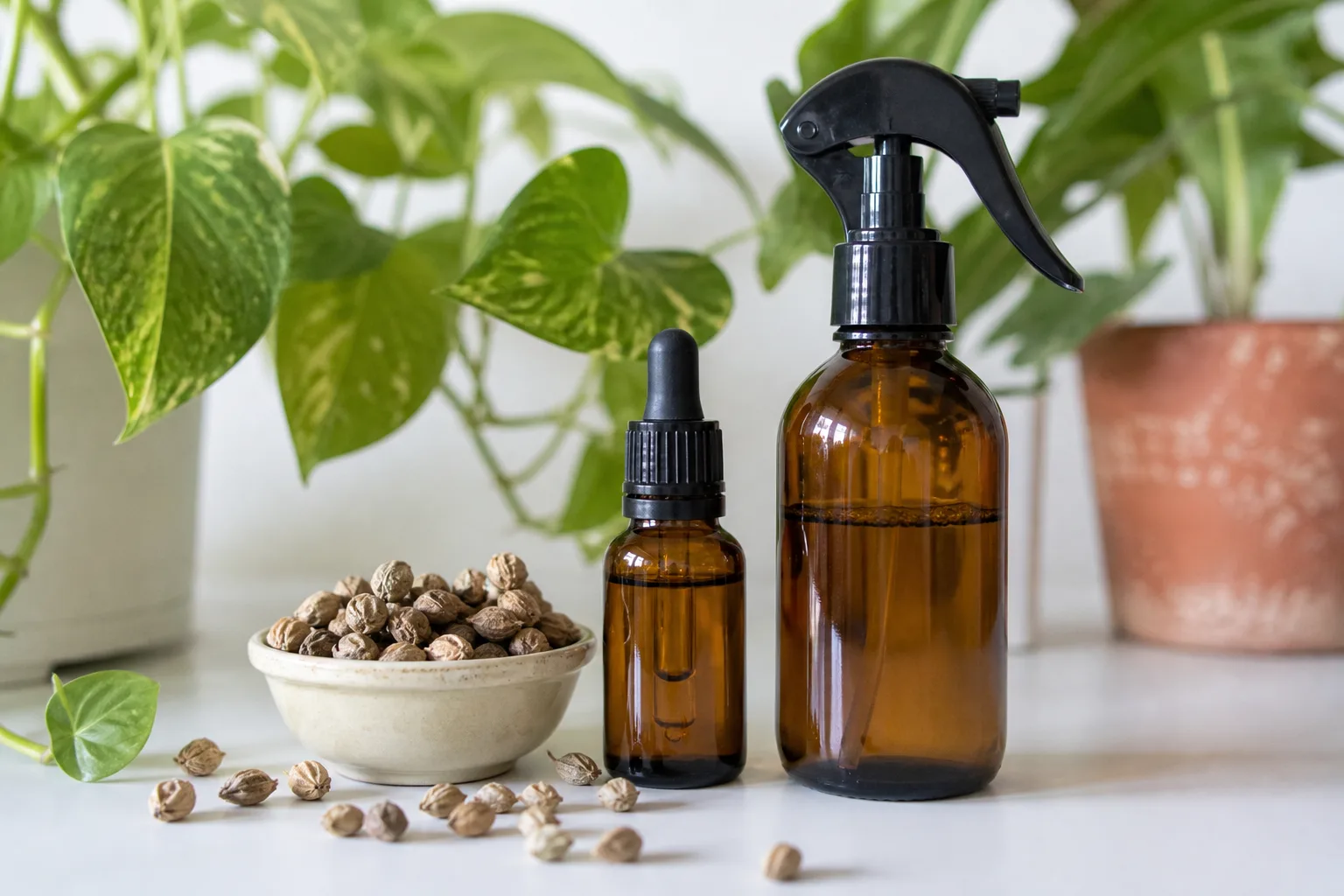
What matters for houseplant care is the distinction between the two common forms you will find on the shelf. Cold-pressed neem oil is the raw pressed oil containing the full spectrum of neem compounds, including azadirachtin — the tetranorterpenoid responsible for most of neem’s insecticidal activity. Clarified hydrophobic extract of neem oil (sometimes labeled simply as “neem oil” on commercial products) has had the azadirachtin fraction removed, leaving behind the fatty acids and glycerides that work primarily as a contact suffocant. Both forms are registered active ingredients with the EPA, but they work differently, and knowing which one you have determines how you should use it.
Most ready-to-use neem sprays sold at garden centers are the clarified version. Pure cold-pressed neem oil — what you want for serious pest treatment — is thicker, smells sharply of garlic and sulfur, and requires you to mix your own spray. The concentration of azadirachtin in cold-pressed oil typically ranges from 300 to 3,000 parts per million depending on the source and extraction method. That range alone explains why two growers can follow the same recipe and get dramatically different results.
How Neem Oil Works Against Pests
Neem oil does not work like a standard contact insecticide. There is no instant knockdown. Instead, it operates through multiple pathways that together make it unusually difficult for pests to develop resistance.
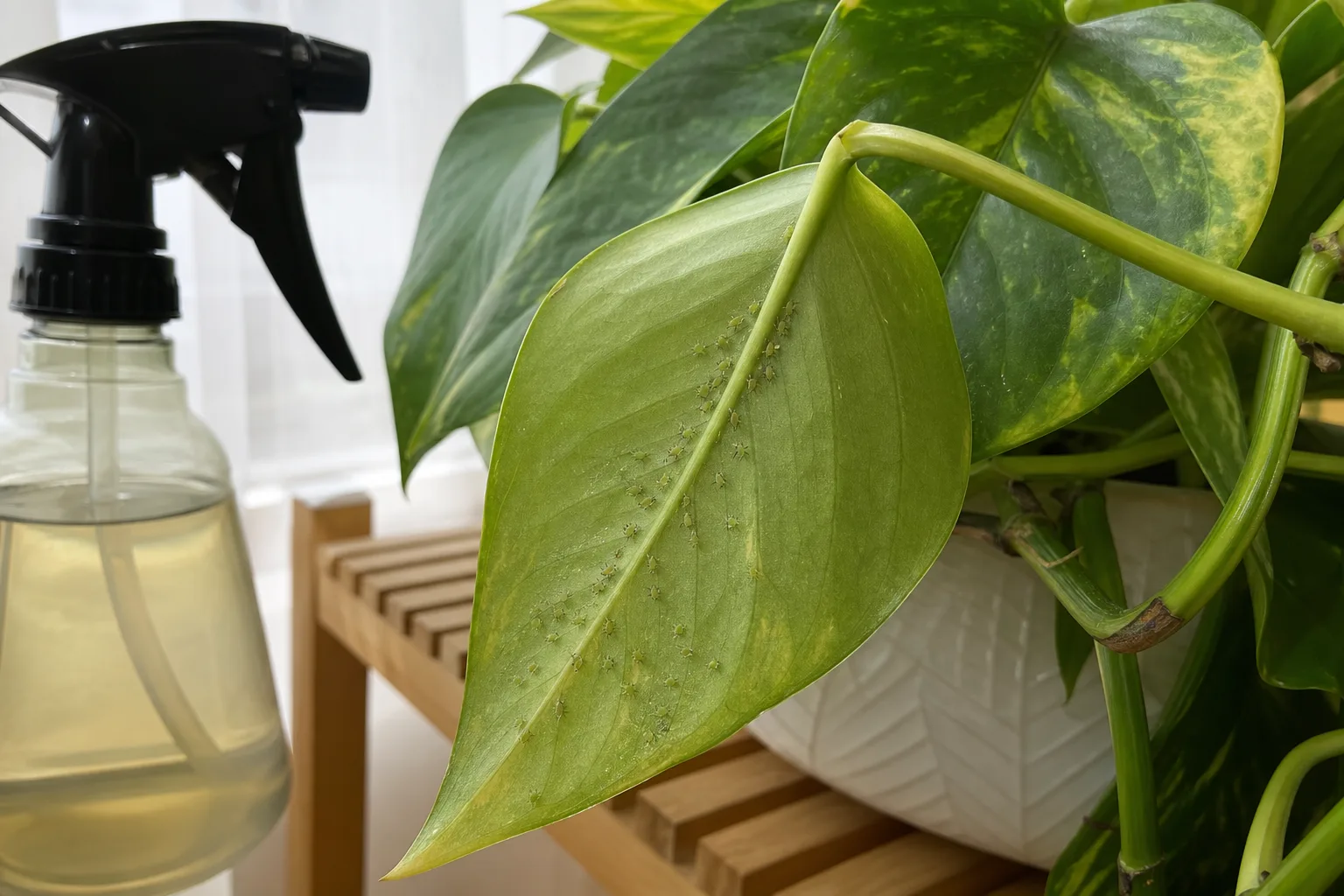
The first pathway is physical. When you spray diluted neem oil onto a plant, the oil coats soft-bodied insects and their eggs, blocking their spiracles — the tiny openings insects use to breathe. Spider mites, aphid nymphs, and mealybug crawlers suffocate on contact. This is the quickest effect, and it works regardless of whether your neem oil contains azadirachtin.
The second pathway is biochemical and depends on azadirachtin. When a feeding insect ingests even trace amounts of the compound, azadirachtin acts as an ecdysone antagonist — it blocks the hormone that triggers molting and metamorphosis. An aphid that ingests azadirachtin stops feeding, cannot shed its exoskeleton to grow, and fails to reproduce. Larvae that consume treated foliage never reach adulthood. Studies published in the Journal of Agricultural and Food Chemistry confirm that azadirachtin at concentrations as low as 10 parts per million is lethal to larval-stage insects. This is why neem oil takes days to show results rather than hours.
The third pathway is antifeedant activity. Azadirachtin stimulates deterrent cells on insect mouthparts, making treated leaves taste repellent. A spider mite that samples a neem-treated leaf will stop feeding and eventually starve even if it survives the contact exposure. This triple mechanism — suffocation, growth disruption, and feeding deterrence — is why properly applied neem oil often resolves infestations that single-mechanism products fail to control.
The Pests Neem Oil Controls Best
Neem oil is effective against a broad range of soft-bodied indoor plant pests, but it is not a universal solution. Its strengths and weaknesses are worth understanding before you reach for the spray bottle.
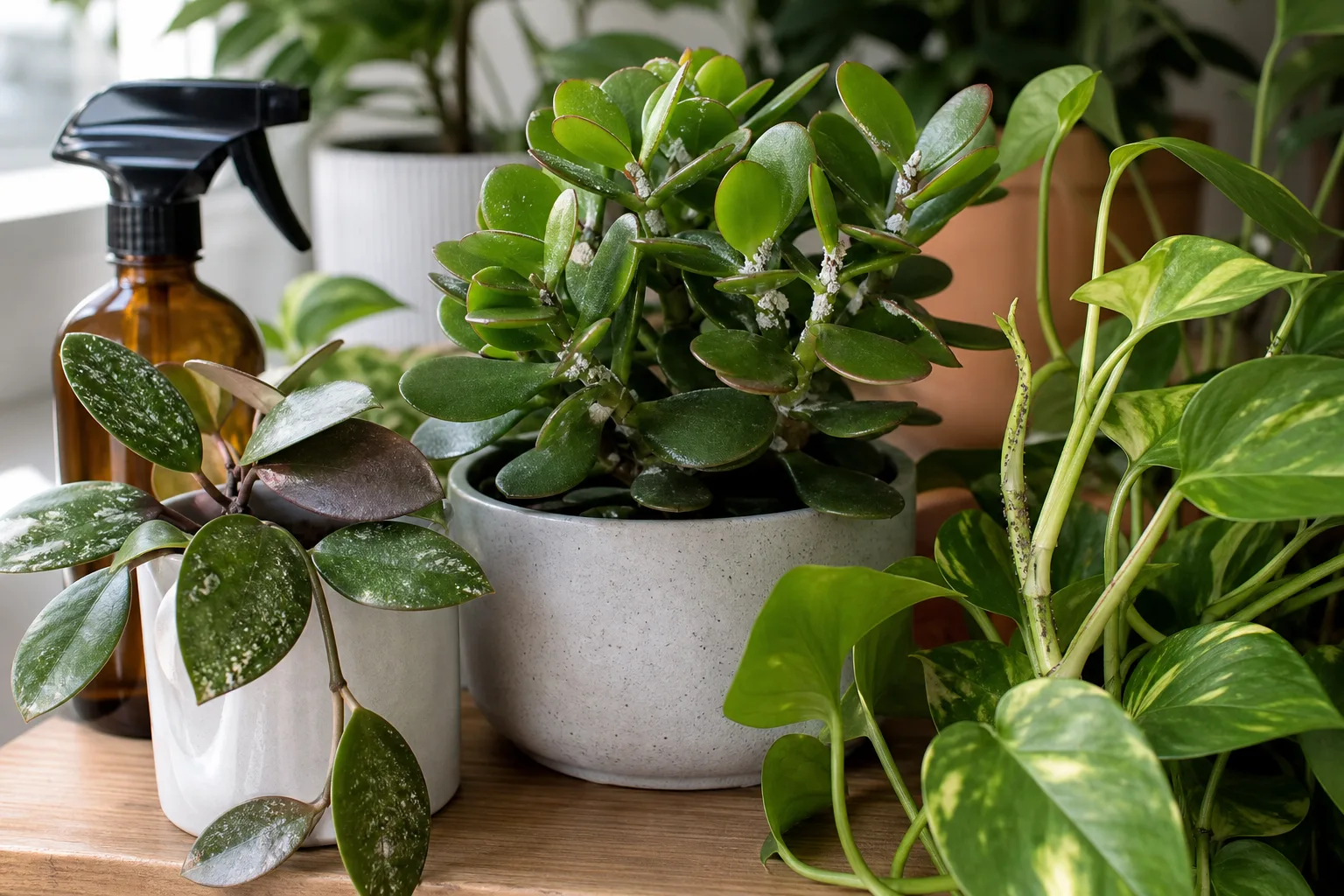
Aphids are among neem’s most susceptible targets. Because aphids are soft-bodied and feed by sucking phloem sap, they ingest azadirachtin with every feeding session. A single properly timed application can collapse a colony over the course of a week. Spider mites respond well to the physical suffocation effect, but they reproduce fast enough that a single spray will not eliminate them — you need follow-up applications to catch the next hatch. Mealybugs are vulnerable in their crawler stage but become increasingly resistant as they develop their waxy coating. Neem oil works best against mealybugs when applied at the first sign of the cottony clusters, before the waxy armor thickens.
Whiteflies are moderately susceptible. The adults are mobile and can escape a spray, but neem applied as a soil drench provides systemic protection against the nymphs feeding on leaf undersides. Fungus gnats are best addressed through a soil drench rather than a foliar spray; the azadirachtin targets the larvae feeding on root hairs in the potting mix. Thrips are a more difficult case. Neem oil can suppress thrips populations, but serious infestations often require rotation with other treatments because thrips lay eggs inside leaf tissue where sprays cannot reach.
Neem oil also has secondary fungicidal activity against powdery mildew and certain leaf-spot pathogens. This effect is weaker than its insecticidal action — neem will not cure an established fungal infection — but it can suppress spore germination when applied preventatively. The National Pesticide Information Center notes that neem’s fungistatic properties come from the same fatty-acid fraction that provides the physical suffocation effect, meaning both the clarified and cold-pressed forms offer some disease suppression.
How to Mix Neem Oil for Indoor Plants
Mixing neem oil correctly is the difference between an effective treatment and a plant-damaging mess. The two most common reasons neem oil burns leaves are using too high a concentration and failing to emulsify the oil properly so it disperses evenly in water.
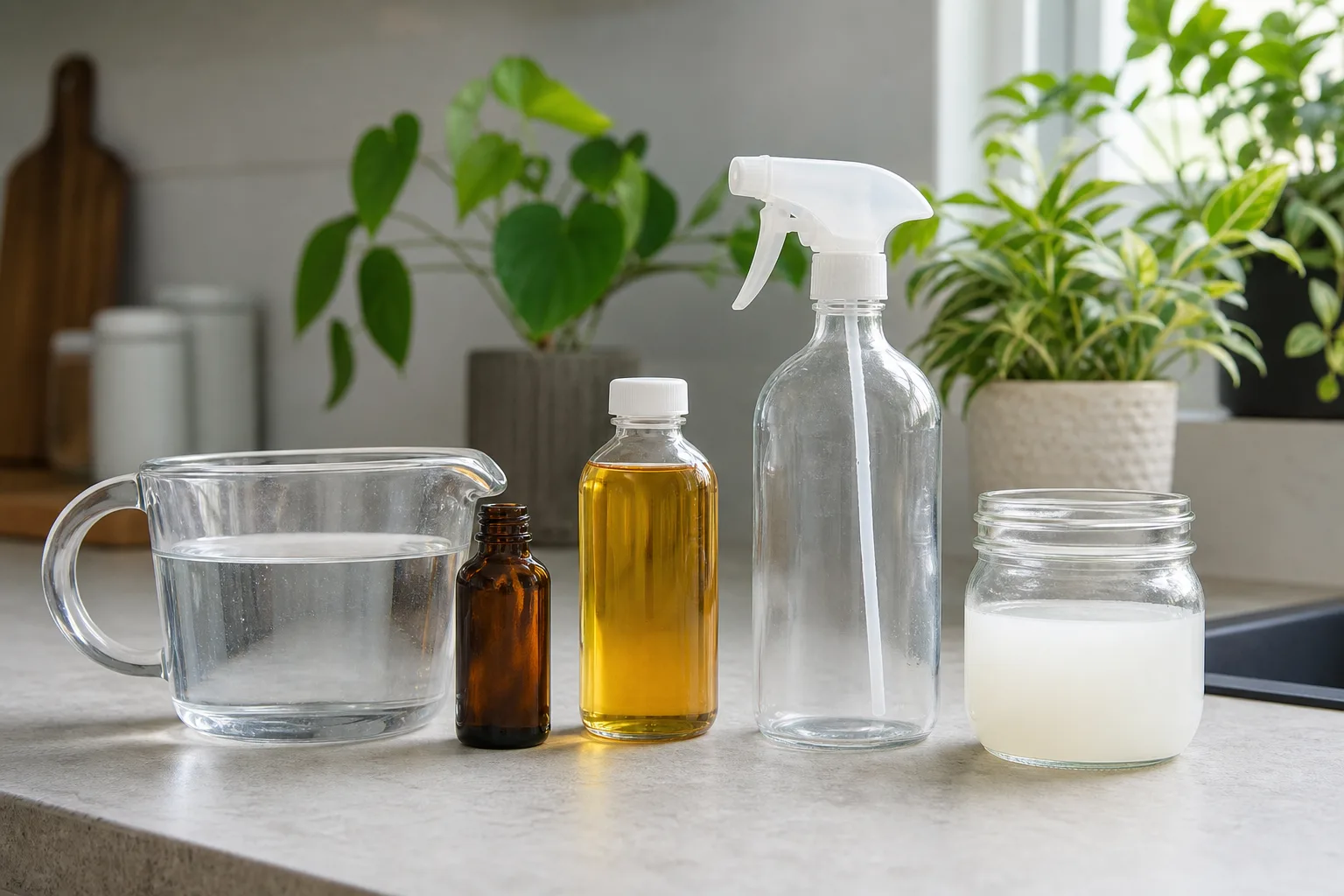
Start with cold-pressed neem oil that lists azadirachtin content on the label — usually between 300 and 3,000 ppm. The higher the azadirachtin concentration, the less oil you need. For general-purpose indoor use, the standard dilution is one teaspoon of neem oil per quart of warm water, which produces approximately a 0.5% solution. For heavy infestations, you can increase to 1.5 teaspoons per quart (roughly 0.75%), but do not exceed this concentration on indoor plants where there is no rain or wind to degrade the residue.
Water and oil do not mix on their own. You need an emulsifier. Add half a teaspoon of mild liquid soap — castile soap or fragrance-free dish soap — per quart of water. Add the soap to the warm water first and stir, then add the neem oil and shake or stir vigorously until the mixture turns milky. Warm water is critical because neem oil solidifies below roughly 70 degrees Fahrenheit, and trying to emulsify congealed oil produces a lumpy, ineffective solution.
Mix only what you will use within a few hours. Once neem oil is emulsified in water, the azadirachtin begins to degrade. After about 24 hours, the mixture loses most of its insecticidal potency. Leftover spray should be discarded — pouring it down the sink is fine since neem oil is biodegradable.
For soil drenches, use the same dilution ratio but double the volume to ensure thorough saturation of the root zone. A typical six-inch pot needs about one cup of diluted solution poured slowly around the base of the plant until water drips from the drainage holes. Soil drenches work because neem compounds are absorbed by roots and translocated through the plant’s vascular system, providing short-term systemic protection against sap-feeding insects for roughly one to two weeks after application.
How to Apply Neem Oil Correctly
Application technique matters as much as the mixture itself. Thorough coverage is non-negotiable. Pests hide on leaf undersides, in leaf axils, along stems, and at the soil line. If you only spray the tops of leaves, you are treating maybe a third of the problem.
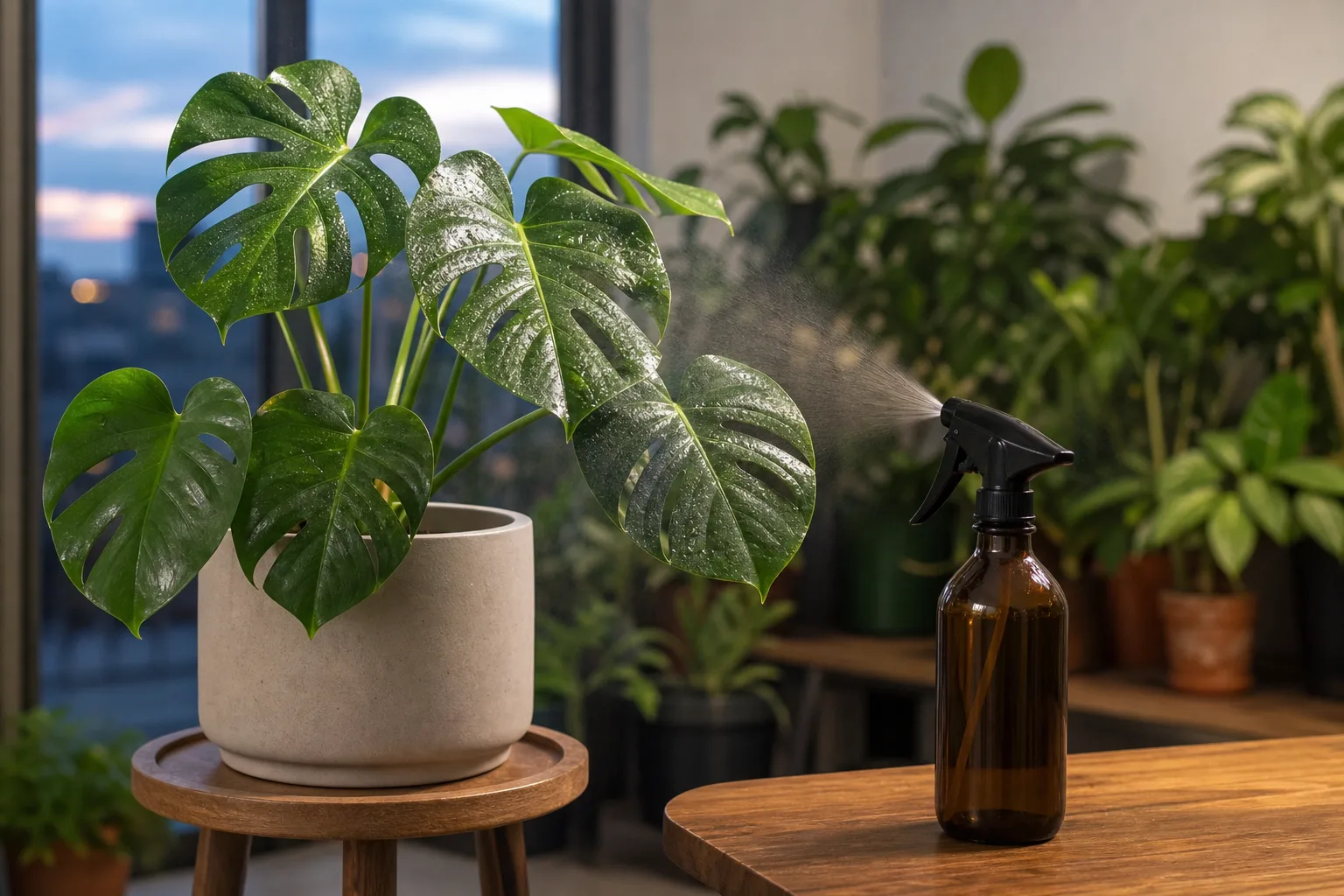
Use a fine-mist sprayer rather than a trigger-spray bottle. The finer the droplet size, the more evenly the oil coats leaf surfaces without pooling. Start at the top of the plant and work downward, spraying leaf tops first, then lifting each leaf to coat the undersides. The goal is a light, even sheen — not dripping. If the solution is running off the leaves onto the floor, you are applying too much. Work in a well-ventilated area, ideally outside or in a bathroom with an exhaust fan. The neem smell is potent and lingers indoors for a day or two.
Timing is critical to prevent leaf burn. Apply only in the early evening or at a time when the plant will not receive direct light for at least eight to twelve hours afterward. Neem oil sitting on foliage in bright light heats up and essentially cooks the tissue beneath it. For plants near south-facing or west-facing windows, either move them into shade for the day after application or cover the window temporarily. Do not apply neem oil to plants that are already wilted, dehydrated, or showing signs of heat stress.
After spraying, do not water overhead for at least 24 hours. Watering from above washes the oil off before it can dry and adhere to leaf surfaces. Bottom-watering is ideal during treatment periods. Avoid misting or spraying anything else on the leaves between neem applications — let the oil do its work without interference.
Soil Drench vs. Foliar Spray: When to Use Each
Choosing between a soil drench and a foliar spray depends on which pest you are fighting and where it lives.
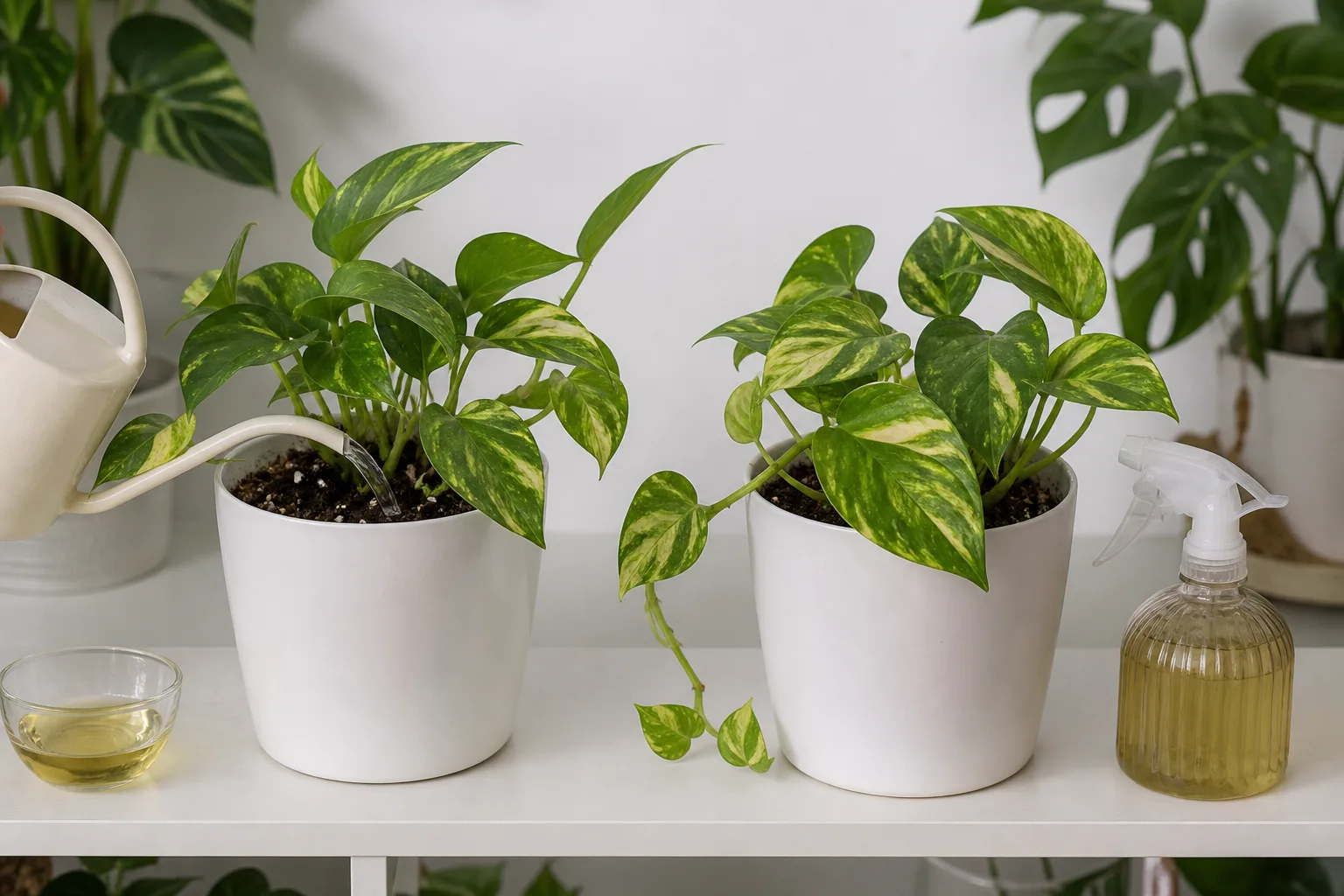
Use a foliar spray when pests are visible on leaves and stems — aphids, spider mites, mealybugs, whiteflies, and thrips all respond to direct contact treatment. The spray must physically coat the pests and affected tissue to work. Foliar sprays are also the right choice for powdery mildew prevention, since the fungistatic action requires leaf-surface contact.
Use a soil drench for fungus gnat larvae, root aphids, and as a supplemental treatment for pests that have a soil-dwelling life stage. Thrips pupate in soil, so a soil drench combined with foliar sprays hits both the adults on leaves and the pupae below the surface. Fungus gnats are best treated exclusively through soil drenches — spraying the foliage does nothing for larvae feeding on root hairs, which is where the real damage occurs.
Soil drenching also provides systemic protection. Once azadirachtin is absorbed through the roots and distributed through the vascular system, any insect that feeds on the plant’s sap or tissues ingests the compound. This systemic effect lasts one to two weeks, making soil drenches more convenient for ongoing prevention. The trade-off is that systemic absorption is slower than contact action — a soil drench will not provide immediate relief for a visible infestation on leaves.
The two methods work best together. During an active infestation, combine a foliar spray to knock down the visible population with a soil drench to address the life stages you cannot see and to provide systemic backup. For routine prevention, a soil drench once every three to four weeks during the growing season is usually sufficient.
Plants That Handle Neem Oil Well
Most common indoor plants with thicker, waxy leaves tolerate properly diluted neem oil without issues. If you grow any of the following, you can spray with reasonable confidence after a spot-test.
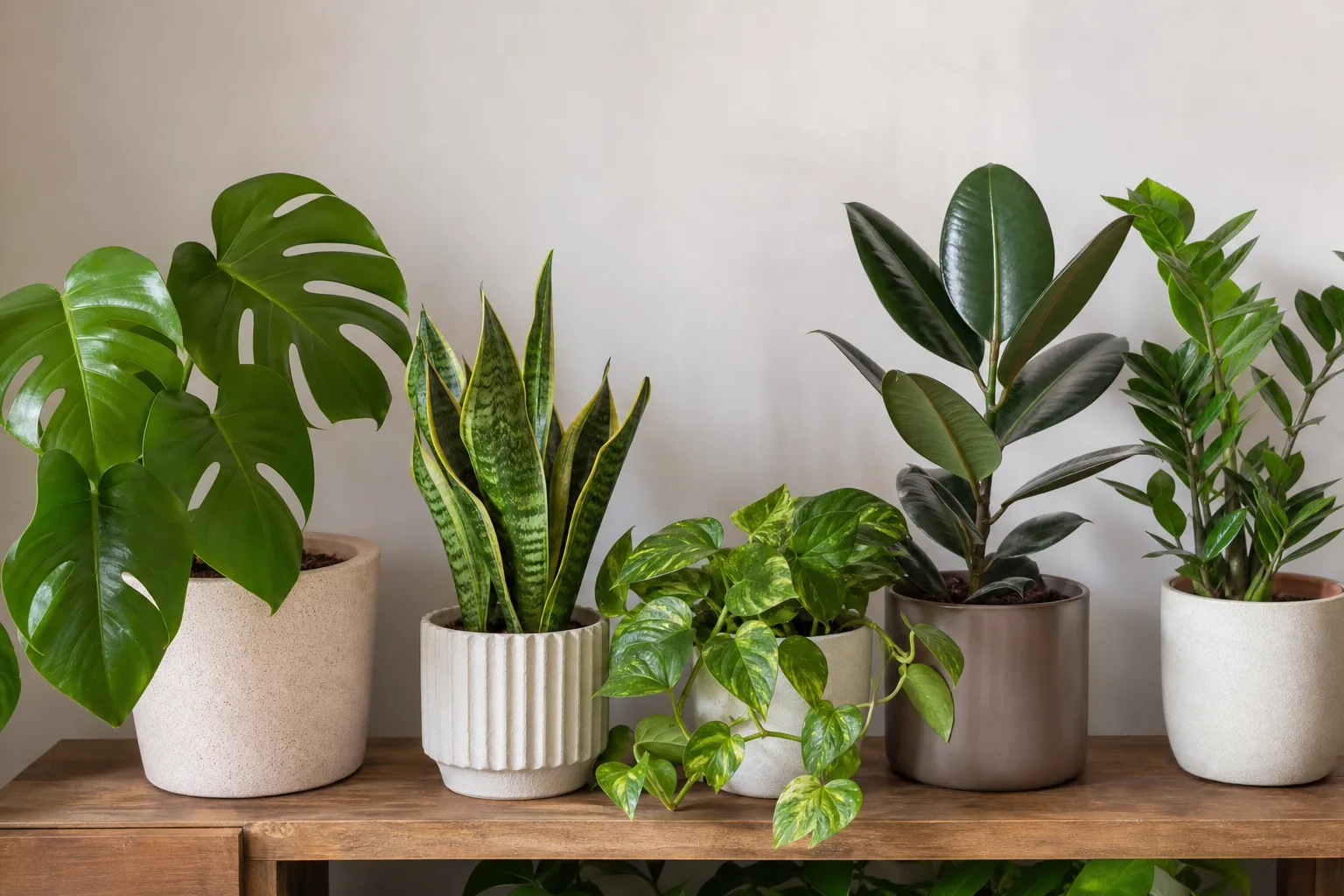
Monsteras, pothos, philodendrons, snake plants, ZZ plants, rubber plants, hoyas, and most peperomias handle neem oil well. These plants have either thick cuticles, waxy leaf surfaces, or both — physical characteristics that provide a natural buffer against the oil’s potential to clog stomata or cause phototoxicity. Peace lilies and Chinese evergreens also tolerate neem oil, though their softer leaves mean you should be more conservative with concentration.
Even on tolerant plants, always test first. Spray two or three leaves and wait 48 hours. If the treated leaves show no spotting, yellowing, or curling, the plant can handle a full application. Skip this step and you are gambling with a specimen you may have grown for years. The five minutes a spot-test takes is the cheapest insurance you can buy.
Plants You Should Never Spray with Neem Oil
Some houseplants react to neem oil the way a fair-skinned person reacts to cooking oil on a sunny beach — with immediate, visible damage. Knowing which plants to avoid saves you from learning this lesson the hard way.
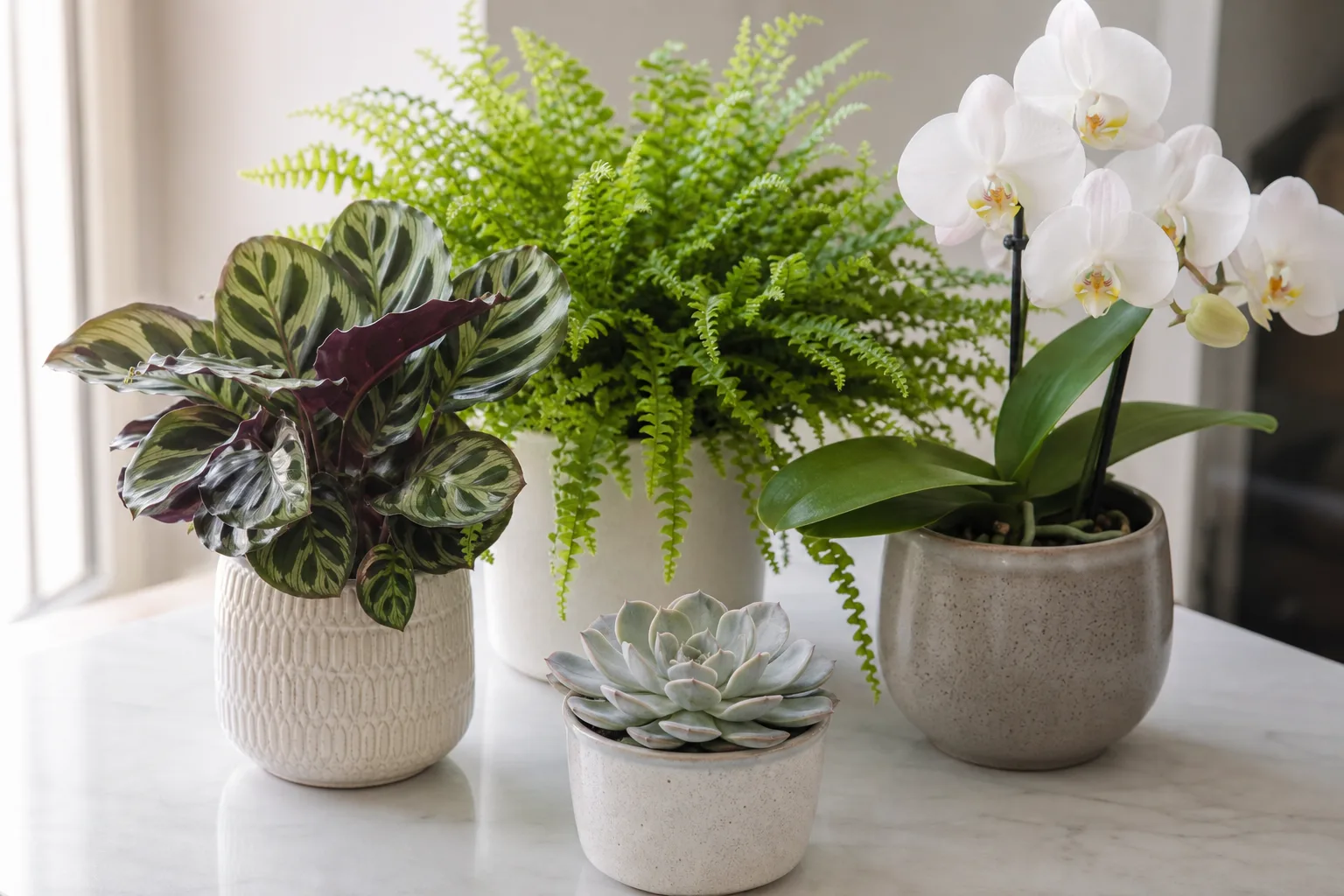
Ferns are the most sensitive group. Their thin, divided fronds have minimal cuticle protection, and the oil sits on the delicate tissue far longer than tougher leaves would allow. The result is often widespread browning, frond dieback, and in severe cases, plant death. Boston ferns, maidenhair ferns, and staghorn ferns are particularly vulnerable. If your fern has pests, use insecticidal soap instead.
Calatheas, marantas, and most prayer plants have thin leaves with a papery texture that does not tolerate any petroleum or oil-based spray well. The oil blocks stomata that these understory plants rely on for the gas exchange they need in low-light indoor environments. Leaf curling, edge browning, and a general “melted” appearance follow within days.
Succulents with farina — the powdery, silvery coating on echeveria, graptopetalum, and some pachyphytum species — lose that protective layer permanently when neem oil touches it. Farina acts as a natural sunscreen and water-repellent for the plant. Once it is gone, the underlying tissue is exposed to light stress and pathogens. The leaf does not grow the coating back. Spot-treat specific pests with a cotton swab dipped in diluted neem rather than spraying the whole plant.
Herbs with tender culinary leaves — basil, cilantro, dill, parsley — burn easily from neem oil even at low concentrations. The oil also leaves a residue and flavor on leaves you may plan to harvest. For herb pests, insecticidal soap or a sharp spray of water is safer.
Orchids, particularly phalaenopsis with thin, broad leaves, are also sensitive. The oil can pool in the leaf axils where it promotes rot. Young seedlings regardless of species lack the cuticle development to tolerate any oil-based product; wait until plants have at least four to six mature leaves before introducing neem oil.
The Biggest Neem Oil Mistakes That Hurt Plants
Neem oil has a reputation as a gentle, natural product, but that gentleness disappears fast when it is misapplied. These are the errors most likely to turn a helpful tool into a plant-damaging one.
Mistake one: using too high a concentration. More is not better. Concentrations above 1% dramatically increase the risk of phototoxicity without meaningfully improving pest control. The instructions on the bottle are not a starting point for negotiation.
Mistake two: applying too frequently. The oily residue from neem spray takes several days to break down fully, even under indoor conditions. If you reapply before the previous coating degrades, the layers build up until they physically block stomata — the microscopic pores plants use for gas exchange and transpiration. A plant with blocked stomata cannot photosynthesize efficiently, cannot cool itself through transpiration, and enters a slow decline that looks a lot like overwatering or nutrient deficiency. For most pests, once every seven days is the maximum effective frequency.
Mistake three: spraying in direct light. Neem oil heats up under intense light the same way cooking oil does in a pan. When that heated oil is sitting on leaf tissue, it burns the cells beneath. The damage shows up as brown patches, scorched leaf margins, or bleached spots — damage that is permanent and cannot be reversed. Early evening applications with overnight drying time avoid this entirely.
Mistake four: skipping the emulsifier. Pouring neem oil directly into water and shaking produces a suspension that separates within minutes. You end up spraying uneven concentrations — some leaves get pure oil and burn, while others get mostly water and stay unprotected. The half-teaspoon of soap per quart is not optional.
Mistake five: treating stressed plants. A plant already fighting drought, root damage, recent repotting shock, or disease does not need an oily coating on its leaves. Neem oil adds physiological stress. Address the underlying health problem first, let the plant stabilize, then treat pests once the plant is in better condition.
How Often to Apply (and When to Stop)
Neem oil is not a maintenance product for healthy plants. It is a treatment tool, and treatment should end when the problem is gone.
For active infestations: apply once every five to seven days for a minimum of three consecutive weeks. The five-day minimum matters because neem’s effects on insect development are strongest when multiple life stages encounter the compound. If you spray weekly, you are catching adults this week, freshly hatched nymphs next week, and any stragglers the week after. This is why a single spray almost never solves the problem — even neem oil’s strongest advocates will tell you that one application is wishful thinking dressed up as pest control.
Monitor between applications. After the third spray, do a thorough inspection with a magnifying glass or a phone macro lens. Look at leaf undersides, stem nodes, and the soil surface. If you find no live pests anywhere, stop treatment. If you still see activity, continue weekly applications for one to two more rounds, then reassess.
For prevention in a pest-free collection: apply once every three to four weeks during the growing season only. There is no benefit to year-round preventive spraying, and it trains you to reach for a product instead of developing the observational habits that catch problems early. During winter months when most houseplants slow down, stop preventive treatments entirely — the plants are not producing enough new growth to justify the chemical exposure, and indoor heating already stresses foliage.
When to stop entirely: the moment you notice leaf damage that you suspect is neem-related — spotting, edge browning, or dull-looking foliage that was glossy before treatment began. Wash the leaves gently with room-temperature water and a soft cloth to remove residual oil, then give the plant at least two weeks to recover before you consider any further treatment.
Preventing Leaf Burn: Timing, Dilution, and Aftercare
Leaf burn from neem oil is preventable in nearly every case. The three variables you control are dilution, timing, and aftercare.
Dilution: never exceed one teaspoon of pure neem oil per quart of water for indoor plants. If your neem oil lists a particularly high azadirachtin concentration — 2,000 ppm or above — start at half a teaspoon per quart and test first. Commercial ready-to-use sprays are pre-diluted, but they often sit on shelves for months, and degraded neem oil can be more irritating to foliage than fresh.
Timing: apply only in the evening or when you can guarantee at least eight hours of darkness or shade afterward. If you cannot move the plant away from a bright window, wrap a lightweight fabric or paper bag around the foliage for the first day — this diffuses light enough to prevent burn while allowing the oil to dry.
Aftercare: do not mist, overhead-water, or wipe leaves for 24 hours after application. Let the plant stay dry. After 48 hours, it is safe to gently rinse leaves with plain water if you notice any residue buildup, especially on smooth-leaved plants like rubber trees or peace lilies where the oily sheen is more visible.
Temperature compounds the burn risk. Indoor plants sitting near heating vents, on radiator covers, or in rooms that regularly exceed 80 degrees Fahrenheit should not be treated with neem oil during those conditions. Heat accelerates both oil degradation into irritating byproducts and the rate at which the oil blocks stomatal function. If your indoor growing space runs hot, either use a lower concentration or switch to insecticidal soap.
Neem Oil and Pets: What Indoor Growers Need to Know
If you share your home with cats or dogs, the safety question deserves a straight answer. The ASPCA does not list neem oil as a toxic plant product for cats or dogs, and the EPA classifies cold-pressed neem oil as a reduced-risk biopesticide suitable for indoor use. That said, “reduced-risk” is not the same as “zero-risk,” and sensible precautions matter.
Concentrated neem oil is a different substance from diluted spray residue. A pet that drinks from a bottle of undiluted neem oil faces a serious toxicity risk. A pet that licks a leaf that was sprayed with a 0.5% solution two days ago faces negligible risk. Keep concentrated neem oil stored where pets cannot reach it, the same way you would store any household chemical.
The National Pesticide Information Center cautions that neem oil can be mildly irritating to skin and eyes in concentrated form. For pets, this means keeping them out of the room during spraying and away from treated plants until the foliage is fully dry — typically two to four hours with normal indoor airflow. Cats that habitually chew leaves present the biggest concern. If your cat is a determined plant-eater, either treat those specific plants with a non-oil alternative, quarantine the plant in a closed room during treatment, or place a temporary barrier around it.
The smell of neem oil — often described as garlicky, sulfurous, or nutty — can also deter pets from approaching treated plants, which is a useful side effect for some households.
Neem Oil vs. Insecticidal Soap vs. Horticultural Oil
Neem oil is not the only organic pest control tool available, and it is not always the best one for the job. Understanding the trade-offs between the three main options helps you match the treatment to the problem.
Neem oil provides the broadest mechanism of action — contact suffocation plus growth disruption plus antifeedant activity — but it works slowly, smells strong, and carries a higher risk of leaf burn if misapplied. It is the best choice for multi-pest infestations where you are dealing with aphids, mites, and early-stage fungal issues simultaneously. It is also the only option of the three that offers systemic protection through soil drenching.
Insecticidal soap (potassium salts of fatty acids) kills only on contact and only soft-bodied insects. It has no residual activity — once it dries, it stops working. This makes it less effective for pests with overlapping generations unless you spray every two to three days. However, insecticidal soap is gentler on sensitive plants, dries clear, has almost no odor, and is the safer choice for herbs, ferns, and seedlings. Clemson University’s Home and Garden Information Center recommends insecticidal soap as the first-line treatment for indoor aphids and mealybugs because of its favorable safety profile.
Horticultural oil (highly refined petroleum or mineral oil) works similarly to neem oil’s physical suffocation mechanism but with superior penetrating ability, especially against pests with waxy protective coatings. Mature scale insects with hardened shells and persistent mealybug colonies respond better to horticultural oil than to neem. The downside is that horticultural oils are more likely to cause phytotoxicity on sensitive plants and must be applied during cooler conditions — a constraint that matters more outdoors than indoors.
The simplest decision framework: start with insecticidal soap for light infestations on sensitive plants. Use neem oil for moderate multi-pest problems where you want growth-disruption effects. Reach for horticultural oil when neem has failed against hard-shelled pests. And always rotate products between pest generations to avoid breeding resistant populations.
When Neem Oil Is Not the Right Tool
Neem oil gets recommended so widely that it is easy to forget it has clear limitations. Knowing when to set the bottle down is as important as knowing how to use it.
Skip neem oil entirely if you are dealing with mature scale insects. Once scale has developed its hardened outer shell, neither neem oil nor insecticidal soap can penetrate effectively. Horticultural oil is the appropriate tool because it suffocates the insect under the shell. If you have tried neem on scale for two weeks with no progress, you are not doing anything wrong — you are using the wrong product.
Neem oil is a poor choice for plants already in physical decline from other causes. If your plant has root rot, severe underwatering stress, or transplant shock, it does not have the metabolic reserves to handle an oil coating on its foliage. A plant that is wilting from dehydration will react to neem oil with leaf drop, not recovery. Stabilize the plant first, treat pests second.
Severe thrips infestations often outpace neem oil’s slow action. Thrips reproduce fast and cause visible damage quickly — silvery stippling that spreads across leaves within days. Neem oil can suppress a mild thrips population, but if you are seeing widespread damage, rotate to a product with faster knockdown such as spinosad or a pyrethrin-based spray (applied with extreme care indoors and strict adherence to label directions). Once the population is under control, neem oil can maintain suppression.
Indoor spaces with poor ventilation also argue against neem oil. The odor is strong and persistent; in a closed room, it can linger for 48 hours or more. If you cannot open a window or run an exhaust fan, use an odorless alternative.
Preventing Pest Problems Without Neem Oil
The best pest treatment is the one you never need. Neem oil is a reactive tool, and while it is useful in a crisis, a collection that relies on regular neem sprays to stay pest-free has an upstream problem that spraying will not fix.
Inspect new plants before they enter your home. Every new plant is a potential vector for pests that spread to your entire collection. Unpot the plant, examine roots, check leaf undersides with a magnifying glass or phone macro lens, and isolate the newcomer in a separate room for at least two weeks before it joins your main display. The University of Minnesota Extension recommends a minimum quarantine period of two to three weeks for all new houseplants, during which you should inspect the plant thoroughly at least twice.
Manage the environment pests prefer. Spider mites thrive in hot, dry, still air. Maintaining humidity above 40 percent in your growing space and providing gentle air circulation with a small fan makes your collection dramatically less hospitable to mites. Fungus gnats breed in consistently wet soil — letting the top inch of potting mix dry between waterings eliminates their breeding habitat. Thrips are drawn to stressed plants, which means a well-cared-for collection is inherently more resistant.
Physically remove pests as soon as you see them. A cotton swab dipped in rubbing alcohol kills individual mealybugs and scale on contact. A sharp spray of water from a sink sprayer or shower head dislodges aphids and spider mites from leaves without any chemical residue. Doing this the moment you spot a problem — before it spreads — often eliminates the need for any product at all.
Use sticky traps for early detection. Yellow sticky traps placed near the soil surface catch adult fungus gnats and thrips, alerting you to a problem before visible plant damage appears. If you see more than a handful of insects on the trap, you know it is time to investigate and act.
Related Guides
- Houseplant IPM: Weekly Pest Inspection and Treatment Schedule
- Thrips on Houseplants: Damage, Treatment, and Prevention
- How to Tackle Indoor Plant Pests at Home
- Houseplant Diseases: Identification and Treatment
- Indoor Plant Watering Basics
- Fertilizing Indoor Plants: Complete Care Guide
Conclusion
Neem oil earns its place on the houseplant shelf, but it earns it through precise use, not through the universal “spray and forget” application it sometimes gets online. When mixed at the correct dilution, applied in the evening on a well-hydrated plant, and repeated on a disciplined schedule, neem oil controls aphids, spider mites, mealybugs, whiteflies, and fungus gnats with a safety profile that synthetic insecticides cannot match. When used on the wrong plant, at the wrong concentration, or at the wrong time of day, it causes damage that looks a lot like the pest problem you were trying to solve.
The dividing line is simple: test first, follow the dilution, spray in the evening, repeat weekly during active infestations, and stop when the pests are gone. If you treat neem oil as a measured intervention rather than a routine ritual, it will be one of the most cost-effective tools in your plant-care kit.