Caterpillars on Houseplants: ID, Treatment, Prevention
Identify caterpillar chewing vs leaf miners, run a night flashlight check, handpick first, and use Bt-k indoors only with the right strain and label.
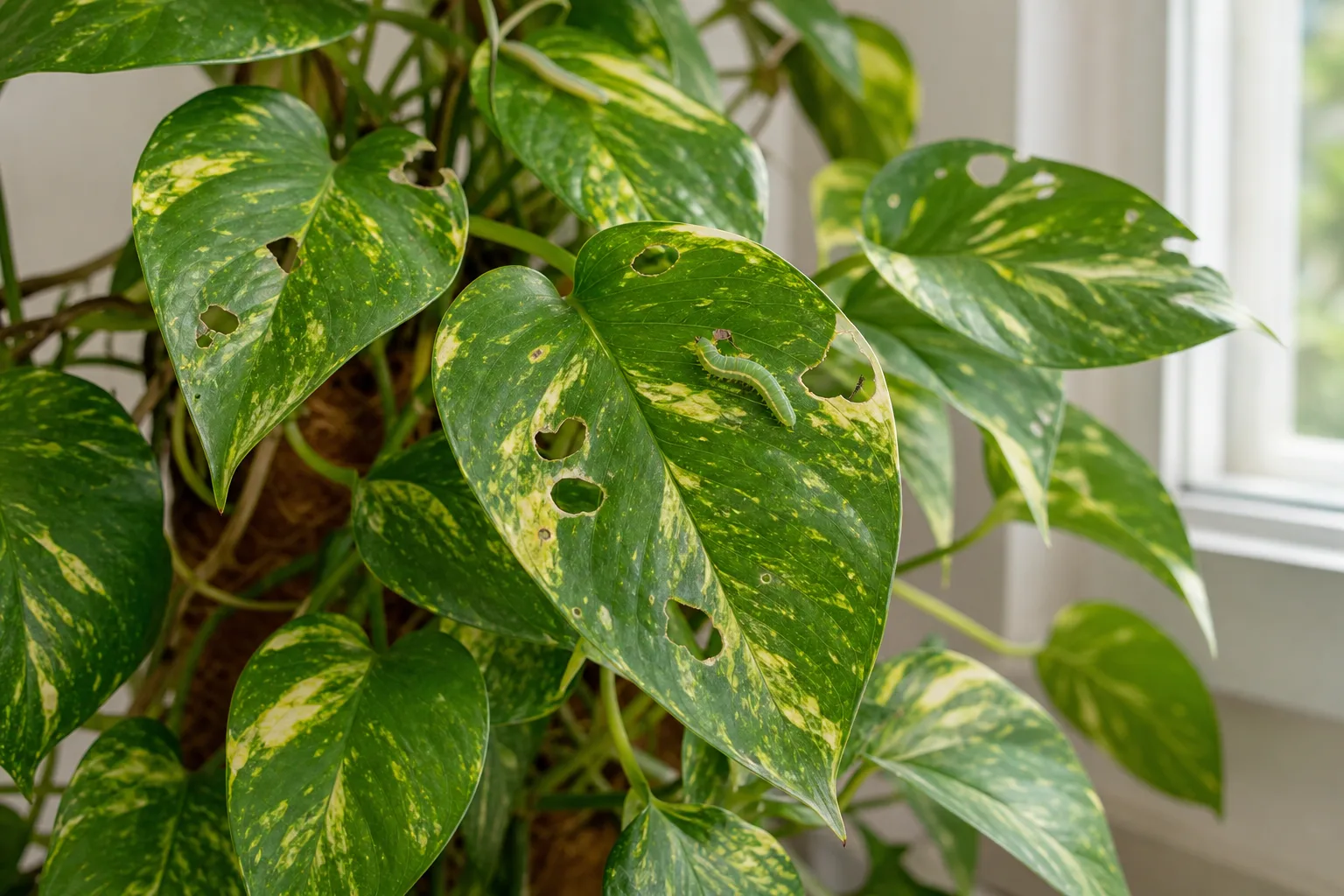
You check a plant that looked fine yesterday and find ragged holes, missing leaf tips, or whole sections chewed away. That pattern is chewing damage, and on houseplants the usual culprit is a caterpillar — the larval stage of a moth or butterfly — not spider mites, thrips, or fungus gnats.
Judge success by no new frass, not by finding every carcass. Fresh irregular holes plus dark or greenish pellets on leaves or under the pot are stronger clues than a daytime empty canopy, and they are also the metric that tells you the outbreak is over.
Caterpillars are uncommon in sealed indoor collections compared with sap feeders, but they are dramatic when they arrive. One larva can erase a week of new growth overnight. This guide covers how to confirm caterpillar chewing, separate it from leaf miners and other lookalikes, remove larvae by hand, and use Bacillus thuringiensis (Bt) only when the strain, timing, and label actually fit an indoor ornamental.
For collection-wide pest triage, use the indoor plant pest guide and integrated pest management indoors. For hole-shape diagnosis across species, start at the holes in leaves guide and the caterpillars symptom hub. Highest-relevance host follow-through when chewing is plant-specific: maranta caterpillars, mint caterpillars, or Monstera holes in leaves.
Written by Sai Ananth (B.Pharmacy / pharmacognosy background; lead indoor-gardening writer and pest-scouting editor at LeafyPixels) and reviewed by Dr. Ananya Rao (Ph.D. Horticulture; Plant Scientist on the LeafyPixels Editorial Review Board). Recommendations below translate extension IPM into apartment-scale night checks, handpicking, and label-disciplined Bt use.
What Caterpillars Are Doing to Your Houseplants
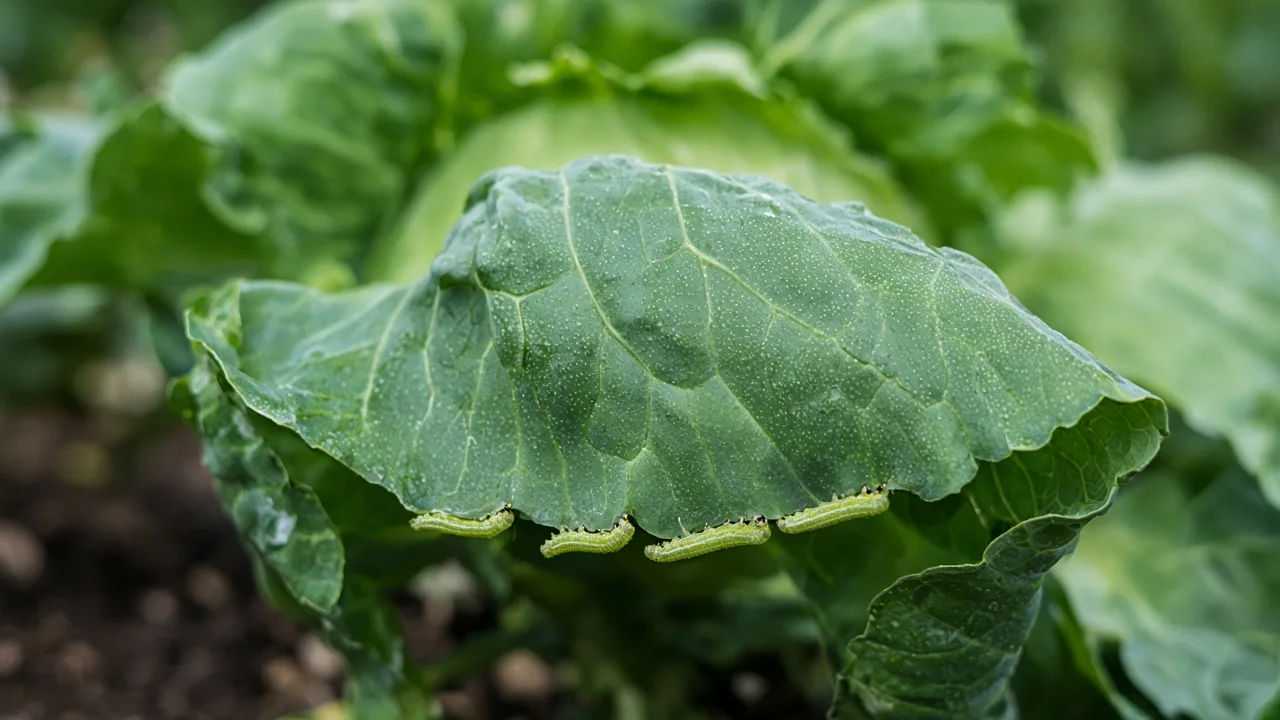
Caterpillars are the soft-bodied larvae of moths and butterflies (order Lepidoptera). Clemson Cooperative Extension describes them as roughly ⅛ inch to 2 or more inches long, colored gray, brown, green, mottled, or striped, and either smooth or covered with spines, hairs, or bumps. They have chewing mouthparts. Some feed openly on leaves, buds, and flowers and can remove large portions of tissue quickly. Others bore into stems.
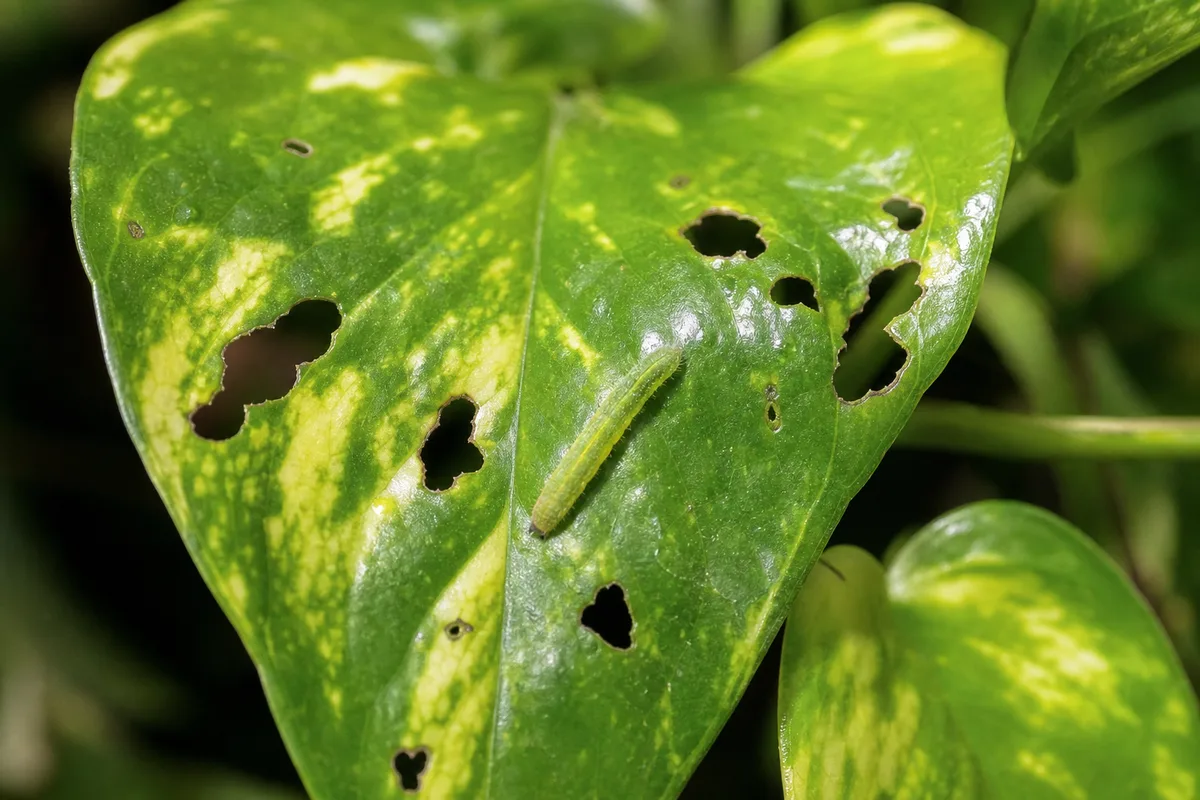
That biology is the opposite of aphids, mealybugs, scale, whiteflies, and spider mites, which pierce or rasp cells and leave stippling, honeydew, or webbing. Caterpillars leave open wounds: notches, ragged holes, skeletonized patches, or missing sections. Damage often looks worse than the insect because many species feed at night and hide by day under leaves, along stems, or at the soil line.
How Caterpillars Differ From Sap-Sucking Indoor Pests
Sap feeders usually leave sticky residue, fine webbing, cottony wax, or silvery streaks. Caterpillars leave dry chewed edges and often frass — dark or greenish fecal pellets — on leaves and under the pot. Clemson notes that frass on leaves and under the plant is a strong clue that caterpillars are causing the damage. If the foliage is sticky without holes, route to aphids, whiteflies, or scale instead of reaching for Bt.
Caterpillars also differ from fungus gnats. Gnat larvae live in moist potting mix and rarely chew large holes in mature leaves. Tiny dark flies rising from wet soil point to gnats. Overnight leaf holes with pellets on the saucer point to a chewing larva.
How to Identify Caterpillar Damage
Confirm caterpillars when several of these line up:
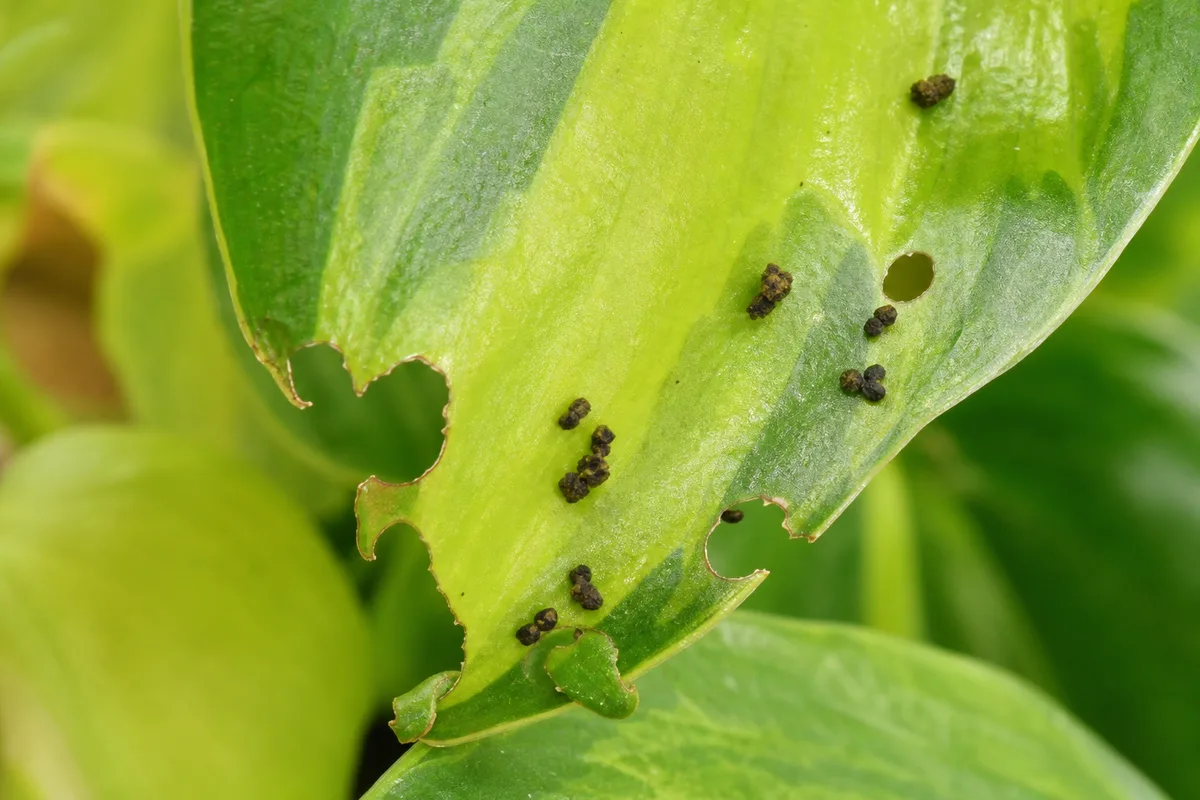
- Irregular holes or notched margins on leaves that were intact the day before
- Skeletonized patches where soft tissue is eaten between veins
- Frass pellets on leaves, the pot rim, or the shelf below
- A soft larva found under a leaf, in a folded tip, or at the soil surface
- Tiny eggs on leaf undersides after a plant spent time outdoors
- New damage that appears overnight after a warm spell
Chewing Patterns, Frass, and Night Feeding
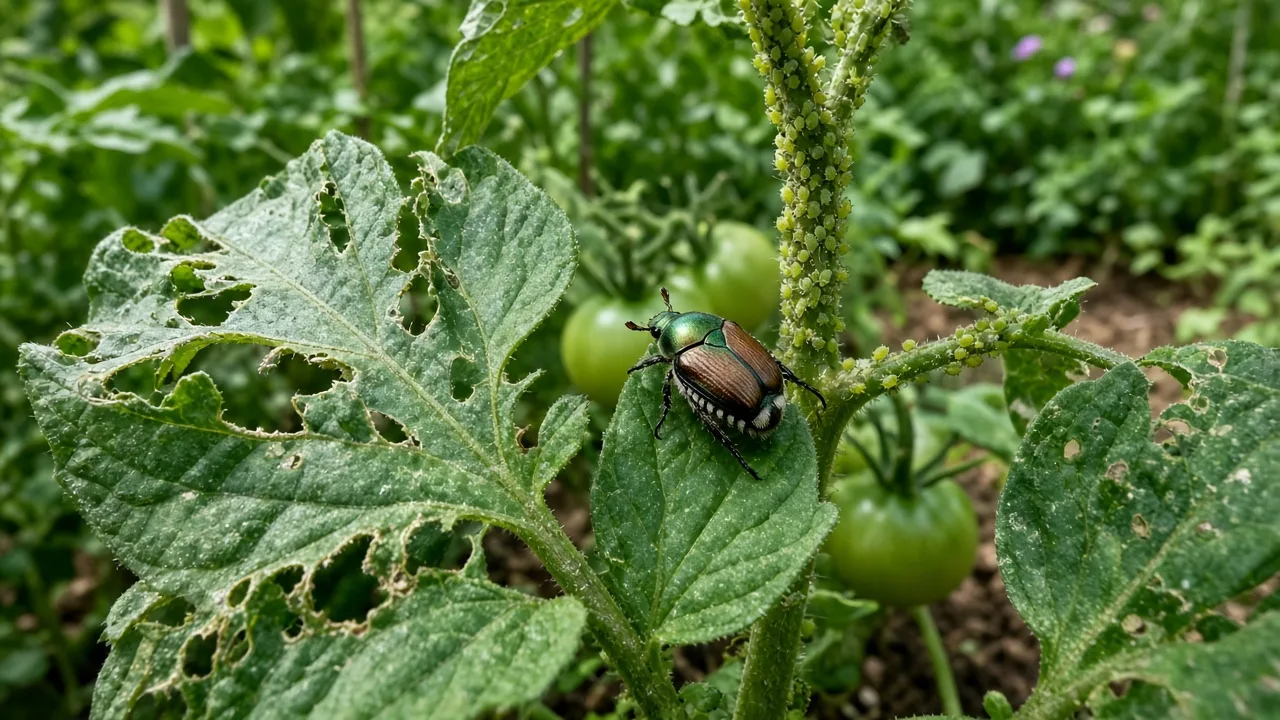
Chewing damage has hard edges. A hole punched through both leaf surfaces, with torn or scalloped margins, is surface feeding. Fresh damage may still show moist edges; older holes dry brown. Heavy feeding can leave only veins. Clemson Cooperative Extension treats open feeding on leaves, buds, and flowers — sometimes removing large portions quickly — as the hallmark of caterpillar chewing, distinct from sap-feeding mites and thrips.
Many moth larvae feed at night. Inspect at dawn or after dark with a flashlight. Tip the plant, check undersides, leaf folds, and the crown. Look under the rim of the pot and on the soil surface for larvae that drop when disturbed. Finding even one larva plus matching frass is enough to treat as caterpillars — you do not need a species name to start handpicking.
Eggs, Larvae, and Where They Hide Indoors
Clemson notes that butterflies and moths lay eggs on the undersides of plants that have been outdoors, and that stray moths that enter a home can also lay eggs on houseplants. Eggs are usually tiny, round or oval, and clustered or scattered on leaf backs. Hatchlings start small and grow with each molt, so early damage can look like pinholes before becoming ragged bites.
Indoors, the hiding pattern matters more than taxonomy. Check soft new growth first — it is easier to chew. Also check trailing stems that touch other pots, because a larva can walk between plants that sit close together on a shelf.
Large larva vs many hatchlings: One fat, nearly mature caterpillar is usually a handpick-and-done job. An egg mass that hatches into dozens of tiny larvae is when labeled Bt-k can earn its keep — if larvae are still small, free-feeding, and the product fits an indoor ornamental. Do not spray Bt for a single large larva you can remove in ten seconds.
Caterpillars vs Leaf Miners and Other Lookalikes
Wrong ID wastes product and time. Caterpillars chew from the outside. Leaf miners feed inside the leaf between the upper and lower surfaces.
UC IPM describes leafminer larvae as feeding between leaf surfaces and creating a winding, discolored trail or irregular blotch within the leaf. Clemson’s houseplant pest sheet makes the same distinction: leafminer damage appears as a winding, discolored trail or blotch inside the leaf, and although unsightly it is rarely serious compared with wholesale chewing.
Hold a suspect leaf to a bright window. A true mine stays translucent with bordered edges; the leaf surfaces remain intact until late collapse. Caterpillar damage is an open hole you can see through, often with frass on the surface. For mine-specific treatment (prune-first, limited spray reach), use the leaf miners on houseplants guide — do not spray Bt-k expecting it to fix sealed internal mines the way it knocks down free-feeding caterpillars.
| What you see | Likely cause | First move |
|---|---|---|
| Open ragged holes, notched edges, skeletonizing; pellets on leaves | Caterpillar (or beetle) | Night check + handpick |
| Pale winding or blotchy tunnel inside leaf; surfaces intact | Leaf miner | Backlight confirm + prune mined leaves |
| Silvery streaks + black specks; no open chewing | Thrips | Underside inspect + rinse/soap cycle |
| Fine stippling + webbing | Spider mites | Raise humidity + treat mites |
| Holes only on fenestrating Monstera/Swiss cheese patterns from unfurling | Natural fenestration | See holes in leaves |
Quick Diagnostic Checklist
- Backlight the leaf — internal tunnel = miner; open hole = chewing.
- Look for frass — pellets favor caterpillars or other chewers.
- Night flashlight check — find the larva before buying a spray.
- Ask about outdoor time — patio season and nursery stock are the usual introduction routes.
- Rule out pets and traffic — torn leaves without frass or a larva may be mechanical damage (RHS leaf damage guidance notes bruising from pets and people as a common houseplant issue).
Beetles also chew. If you find hard-shelled adults instead of soft larvae, handpick them too; Bt-k will not control adult beetles. Clemson lists beetles separately and recommends physical removal for houseplants brought indoors.
How Caterpillars Get Into Indoor Collections
True year-round breeding of outdoor moths inside a sealed apartment is uncommon. Most indoor cases are introductions. Colorado State University Extension stresses that many houseplant insect problems start on purchased or gifted plants and recommends quarantining new plants in a separate area for at least three weeks. Clemson’s caterpillar notes add the outdoor-egg pathway: plants that spent summer outside often bring eggs that hatch after the plant comes inside for winter.
Open windows on warm nights can also admit moths. A single egg mass on a hibiscus, citrus, rose, or herb such as mint can become several larvae on a windowsill collection. Patio plants that sit under trees or near vegetable gardens pick up loopers and other foliage feeders more often than a pothos that never left the shelf.
First-Hand Indoor Outbreak Notes from LeafyPixels
These are editorial observations from LeafyPixels indoor pest-scouting sessions, not controlled trials. Your room temperature, plant density, and entry route will change timing.
Case 1 — Patio mint returnee (east sill, ~70–74°F). A pot of culinary mint spent June–August on a balcony near tomatoes, then came indoors for autumn. Day 0 (noon): three upper leaves showed ragged overnight holes; no larva visible in daylight. Day 0 (9:30 p.m.): flashlight check found two green larvae under mid-canopy leaves and dark frass on the saucer. Isolated to the bathroom; handpicked both into soapy water; wiped frass so new pellets would be obvious. Days 1–3: nightly checks found one additional larva on night 2 and none after. No Bt used. Outcome: no new frass for 12 consecutive days; returned to the herb shelf on day 16. Recovery metric: clean new tips with zero pellets for two weeks, not perfect-looking chewed leaves.
Case 2 — Nursery hibiscus egg hatch after quarantine miss. A flowering hibiscus was shelved with other plants the night it arrived. By day 4, pinholes appeared on soft tips; night check revealed a cluster of tiny hatchlings on one leaf underside plus an unhatched egg patch nearby. Isolated immediately; scraped eggs; handpicked hatchlings; applied labeled Bt-k once because the cohort was many and small. Feeding slowed within a day; no new frass after day 6. Outcome: quarantined 14 days after the last new pellet; no second hatch. Lesson: three-week quarantine would have caught this before the shelf — CSU’s “at least three weeks” guidance exists for exactly this pattern.
Case 3 — Maranta “holes” that were miners, not chewers. A prayer plant showed pale trails that a first pass called caterpillar damage. Backlight revealed bordered internal tunnels with intact surfaces and no external pellets — classic leaf miner mines. We pruned mined leaves instead of spraying Bt-k. Outcome: corrected diagnosis in one evening; saved a useless Bt application.
Treatment That Works Indoors
Start with physical removal. Escalate only if larvae keep appearing after thorough nightly checks.
| Situation | Best first move | Escalate? |
|---|---|---|
| 1–3 large free-feeding larvae + frass | Night check + handpick; wipe frass | No — watch 10–14 days |
| Many tiny hatchlings after egg find | Handpick + scrape eggs; consider labeled Bt-k | Bt-k if they keep appearing |
| Confirmed leaf mines (no open holes) | Switch to miner protocol | Do not use Bt-k for sealed mines |
| Plant nearly defoliated; larvae return nightly | Isolate; consider discard | Rare — prefer isolation over shelf-wide spray |
Handpicking and Sanitation First
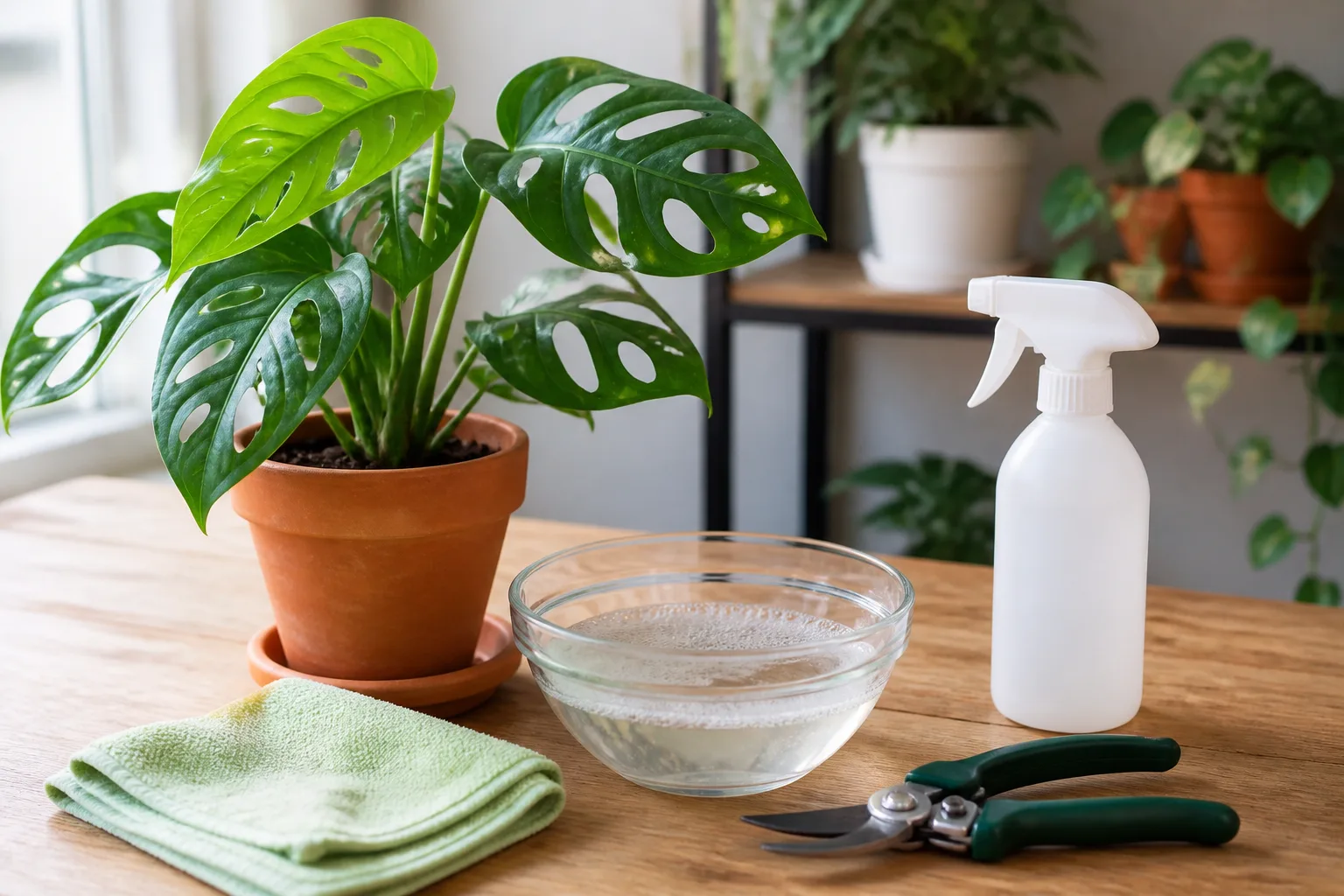
Colorado State University Extension lists handpicking as an effective control for larger houseplant insects. Clemson’s caterpillar control line is the same priority for indoor plants: remove and destroy caterpillars and eggs. Use gloves or a tool for unknown hairy or spiny larvae. Drop larvae into soapy water. Wipe or rinse frass so you can see whether new pellets appear. Prune heavily chewed leaves that no longer photosynthesize well if the plant still has enough healthy foliage.
Isolate the plant until you have seen no new chewing and no frass for at least 10–14 days after the last larva or pellet. Check neighbors that were touching it. Bag pruned material for trash rather than compost if you live in an apartment with shared waste systems — you want those larvae gone, not relocating.
Night checks for three consecutive evenings catch most free-feeding larvae before you need a microbial spray. If you find eggs on leaf undersides, scrape or remove that leaf section.
LeafyPixels apartment hatch-window rule: After you find eggs or a fresh hatch in a warm room (~68–75°F / 20–24°C), keep watching for about 7–10 more days for a second wave before you trust the shelf again. Cooler rooms stretch that window; a hot sunroom shortens it.
When Bt Makes Sense — Strain, Timing, and Label Caveats
Bacillus thuringiensis is a soil bacterium used as a microbial insecticide. National Pesticide Information Center explains that Bt spores contain proteins that become toxic only after insect larvae eat them; the insect gut must be alkaline enough to activate the toxin, then the gut lining breaks down and the larva dies of infection and starvation, usually within 1–5 days. Young larvae are most affected. Different strains target different insect groups: Bt kurstaki (Bt-k) and Bt aizawai for moth and butterfly caterpillars; Bt israelensis (Bti) for mosquito, black fly, and fungus gnat larvae; other strains for some beetle larvae.
Colorado State University Extension makes the houseplant-relevant split explicit: the kurstaki strain is sold for caterpillars on vegetables and ornamentals, while the israelensis / H-14 strain (products such as Gnatrol) targets fungus gnat larvae in potting mix. Using a gnat drench for leaf-chewing caterpillars is a common indoor mix-up — and it will not work.
UF/IFAS notes that Bt-k is effective against many caterpillars (loopers, bagworms, hornworms, and others) but is not very effective against some groups such as corn earworm, squash vine borer, or cutworms, and that sunlight (UV) breaks Bt down quickly outdoors so repeats may be needed. Indoors, UV breakdown is less intense than full sun, but residue still must land on foliage the larva will eat. Bt does not kill adult moths, and it does not work as a contact spray that kills whatever it touches the way soap can for soft-bodied sap feeders.
Retail label / PPE checklist before any indoor Bt spray:
- Active ingredient lists Bt kurstaki (or aizawai for labeled caterpillar targets) — not Bti alone.
- Label allows indoor ornamentals or the exact site you will treat.
- You have confirmed free-feeding caterpillars (or eggs about to hatch), not leaf miners, beetles, or mites.
- You can coat the leaf surfaces larvae actually eat, including undersides.
- You will keep pets from licking wet foliage and prefer treating outdoors, on a balcony, or in a garage when the label and layout allow (NPIC houseplant IPM flags higher indoor exposure risk because homes are less ventilated and pets share the space).
- You treat while larvae are still small. Large, nearly mature caterpillars are better handpicked.
Bt is a stomach poison, not a knock-down fog. Larvae often stop feeding soon after a lethal dose, then die over hours to days. Judge success by no new holes and no new frass, not by finding every carcass.
Spinosad and Other Escalation Options
If handpicking fails and labeled Bt-k is a poor fit (for example, repeated reintroduction from an outdoor patio plant), Clemson lists spinosad, neem oil extract, and certain pyrethroid sprays among options for outdoor spraying when caterpillars return — with the usual caution to spray late in the day to reduce pollinator impact and to prefer less-toxic alternatives first. Spinosad products on Clemson’s houseplant table are noted for thrips, caterpillars, and leafminers. UF/IFAS describes spinosad as broader than Bt, with feeding stoppage within minutes and death within about two days, and high toxicity to bees when spray is wet.
Indoors, stay on products labeled for indoor ornamentals. Broad-spectrum indoor bombs are a poor choice for a few chewing larvae. Clemson also notes that imidacloprid will not control caterpillars — useful to know if you already use a systemic for sap feeders and wonder why chewing continues.
Discard a plant only when larvae keep reappearing after thorough removal, the plant is nearly defoliated, or you cannot isolate it from a large collection. One chewed specimen is rarely worth a shelf-wide insecticide campaign.
Prevention and Quarantine Habits
Prevention is mostly about not importing eggs.
- Quarantine new plants and gifts for at least two to three weeks in a separate room or far shelf (CSU recommends three weeks).
- Inspect leaf undersides before outdoor plants come back inside in autumn.
- Shake and night-check patio plants before they rejoin the indoor group.
- Keep soft herbs and flowering plants slightly separated from your aroid shelf during peak moth season if they go outdoors.
- Screen open windows near plant shelves when moths are flying.
- Clean fallen leaves and frass so you notice new pellets quickly.
- After the last new frass, keep the plant isolated 10–14 days (longer if eggs were found — add the hatch window above).
Healthy cultural care does not make plants “caterpillar-proof,” but stressed, soft, overly lush growth is easier to chew through quickly. Avoid fertilizing heavily right before a plant spends weeks outdoors unsupervised.
Safety Notes for People, Pets, and Stinging Species
Most indoor hitchhiker caterpillars are not stinging species, but some moth larvae have urticating hairs or spines that irritate skin. UF/IFAS Gardening Solutions describes several southeastern stinging caterpillars (saddleback, puss caterpillar, Io moth, and others) that can cause burning, welts, or more severe reactions. Use gloves or a tool to remove unknown hairy or spiny larvae. Do not crush them bare-handed. Seek medical advice for severe reactions, especially if spines enter an eye.
Bt products are generally low risk to people and pets when used as directed because mammalian guts do not activate the toxins the way caterpillar guts do (NPIC). Still follow PPE and re-entry directions on the label. Keep cats and dogs from licking wet spray. Store concentrates away from children. Never apply a product to a plant or indoor site the label does not allow.
Recovery Timeline After an Outbreak
Chewed leaves do not heal closed. Judge recovery by clean new growth and an absence of fresh frass for two weeks after the last larva. Mild cases often stabilize within a few night checks — our patio mint case cleared on handpicking alone with twelve frass-free days before re-shelving. If eggs were present, watch one more hatch window before returning the plant to a crowded shelf.
After control, trim only the worst damaged leaves if the plant still has enough foliage to support growth. Resume normal watering and light. A plant that lost most of its canopy may stall until new leaves form; that is recovery, not a new pest.
Common Mistakes That Prolong Damage
- Spraying Bti gnat products for leaf chewing — wrong strain for caterpillars.
- Assuming every pale trail is a caterpillar — backlight for leaf miners first.
- One daytime glance — nocturnal feeders are easy to miss at noon.
- Soap-only cycles for large larvae — contact soaps are poor primary tools for big chewing caterpillars compared with handpicking and Bt-k.
- Expecting imidacloprid to stop chewing — Clemson notes it will not control caterpillars.
- Skipping quarantine after patio season — eggs hatch after the plant is already back on the shelf.
- Composting live larvae in a building compost stream that returns to plant areas.
- Buying Bt for one large larva you could have removed by hand in seconds.
Related Guides
- Symptom hubs: caterpillars, holes in leaves
- Leaf miners on houseplants — internal mines vs open chewing
- Fungus gnats on houseplants — Bti soil products that do not stop leaf chewing
- Mealybugs on houseplants — cottony sap feeders that do not chew open holes
- Scale on houseplants — sticky honeydew without ragged chewing
- Neem oil for indoor plants — oil timing after handpicking
- How to tackle indoor plant pests at home and integrated pest management indoors
- Species pages (highest-relevance hosts): maranta caterpillars, mint caterpillars, adenium caterpillars
Conclusion
Caterpillars on houseplants are a chewing problem, not a sap-feeder problem. Confirm open holes and frass, run a night flashlight check, and remove larvae and eggs by hand before you reach for a bottle. Use Bt only when the product is the kurstaki (or labeled aizawai) strain, the label fits your indoor ornamental, and larvae are still free-feeding on coated leaves — and do not confuse it with Bti products meant for fungus gnats. Separate true chewing from internal leaf-miner tunnels so you prune and monitor instead of spraying the wrong life stage. Quarantine outdoor returns and new purchases for two to three weeks, keep isolating 10–14 days after the last new frass, and you will rarely need more than a careful hand and a few nights of inspection to stop the damage.