9 Best Artificial Christmas Trees for 2026
Find the best artificial Christmas tree for your room, budget, decorating style, and storage space, with clear trade-offs for pre-lit and unlit picks.
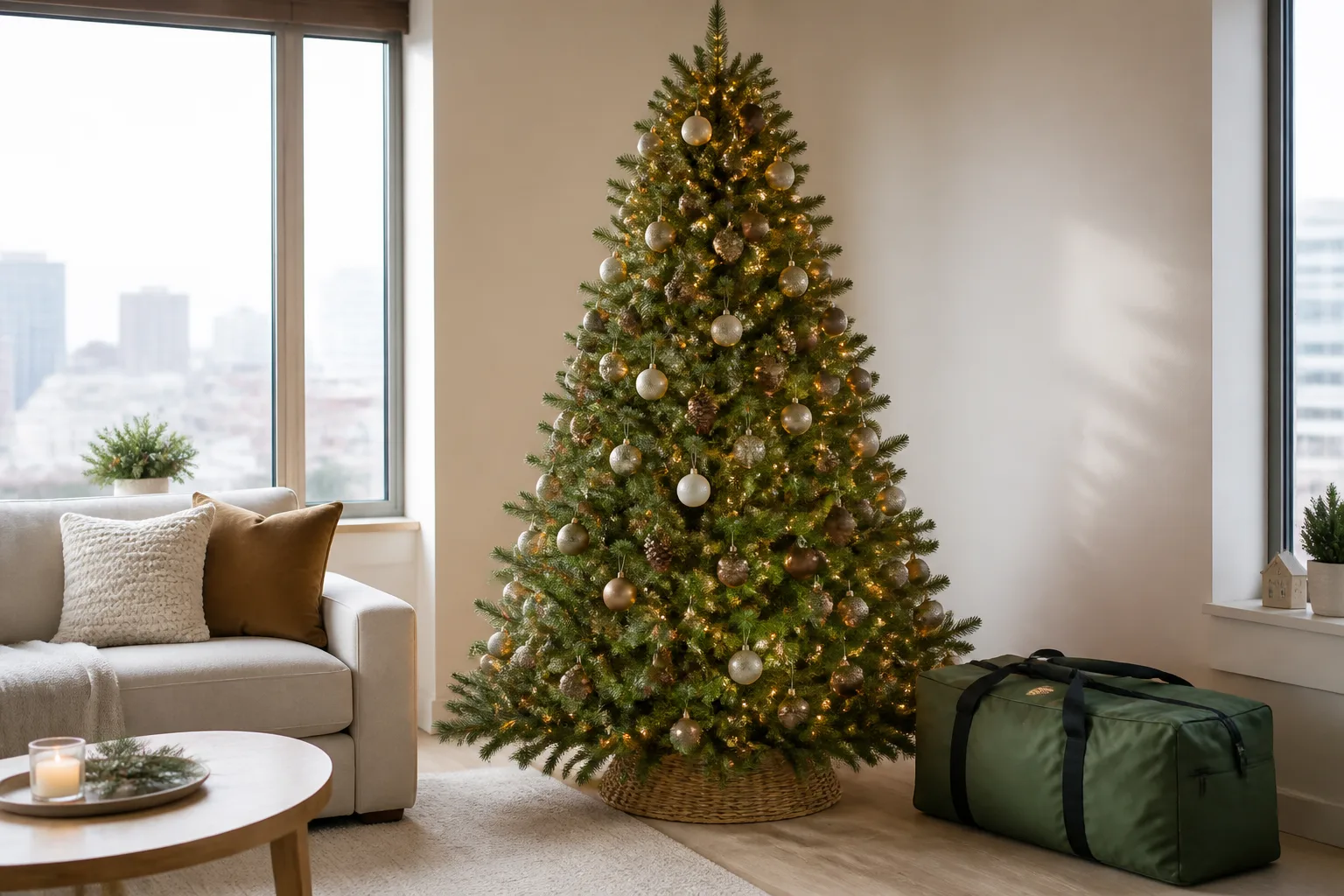
The best artificial Christmas tree fits your room before it fits your decorating mood. A tree can look full online and still overwhelm a living room, complicate the outlet plan, or become a yearly nuisance if its sections are too heavy to move.
This guide narrows the field to nine strong options for different priorities: realistic needles, a blank unlit canvas, smart lighting, flocking, a pencil silhouette, quick assembly, or a deliberately sparse look. Product configurations, prices, and included accessories can change by height and retailer, so use the dimensions and decision rules here as your filter before you order.
Quick Picks at a Glance
| Best for | Tree | Why it stands out | Watch for |
|---|---|---|---|
| Best overall | Puleo International 7.5-Foot Pre-Lit Teton Pine | Full shape, soft branches, fast setup | Clear lights only; lower trunk area may be less evenly lit |
| Most realistic | Balsam Hill Vermont White Spruce | PE-style needle detail and color variation | Heavy, wide, and easier with two or more people |
| Best unlit | Puleo International 7-Foot Unlit Fraser Fir | Traditional blank canvas at a moderate price | Needs patient fluffing; branches are less lifelike up close |
| Best smart | Home Decorators Collection Grand Duchess Twinkling Balsam Fir | App, remote, multiple effects, memory wire | Flexible branches are not ideal for the heaviest ornaments |
| Best pencil | Puleo International Flocked Portland Pine | Narrow footprint with snowy finish | Flocking can shed; section lights need connections |
| Best twinkling lights | Home Decorators Collection Elegant Twinkling Grand Fir | Fast setup, rotating base, strong branches | No color-changing light option |
| Best slim | Grandin Road Classic Slim Christmas Tree | Tall profile for corners and narrow rooms | Can look sparse until shaped and decorated |
| Easiest assembly | Balsam Hill Flip Up Fir | Wheeled flip-up base and automatic light connection | Bulky and more expensive than conventional sections |
| Best minimalist | Grandin Road Un-Lit Noblis Fir | Open branches that spotlight ornaments | Sparse appearance is intentional, not a flaw to hide |
How We Chose the Trees
I treated a good artificial tree as a small system rather than a green cone. The meaningful questions are how convincing the foliage looks at the distance guests will see it, how much floor space the widest branch tips use, how the base behaves under decorations, and whether the setup still feels manageable when the tree has to come down.
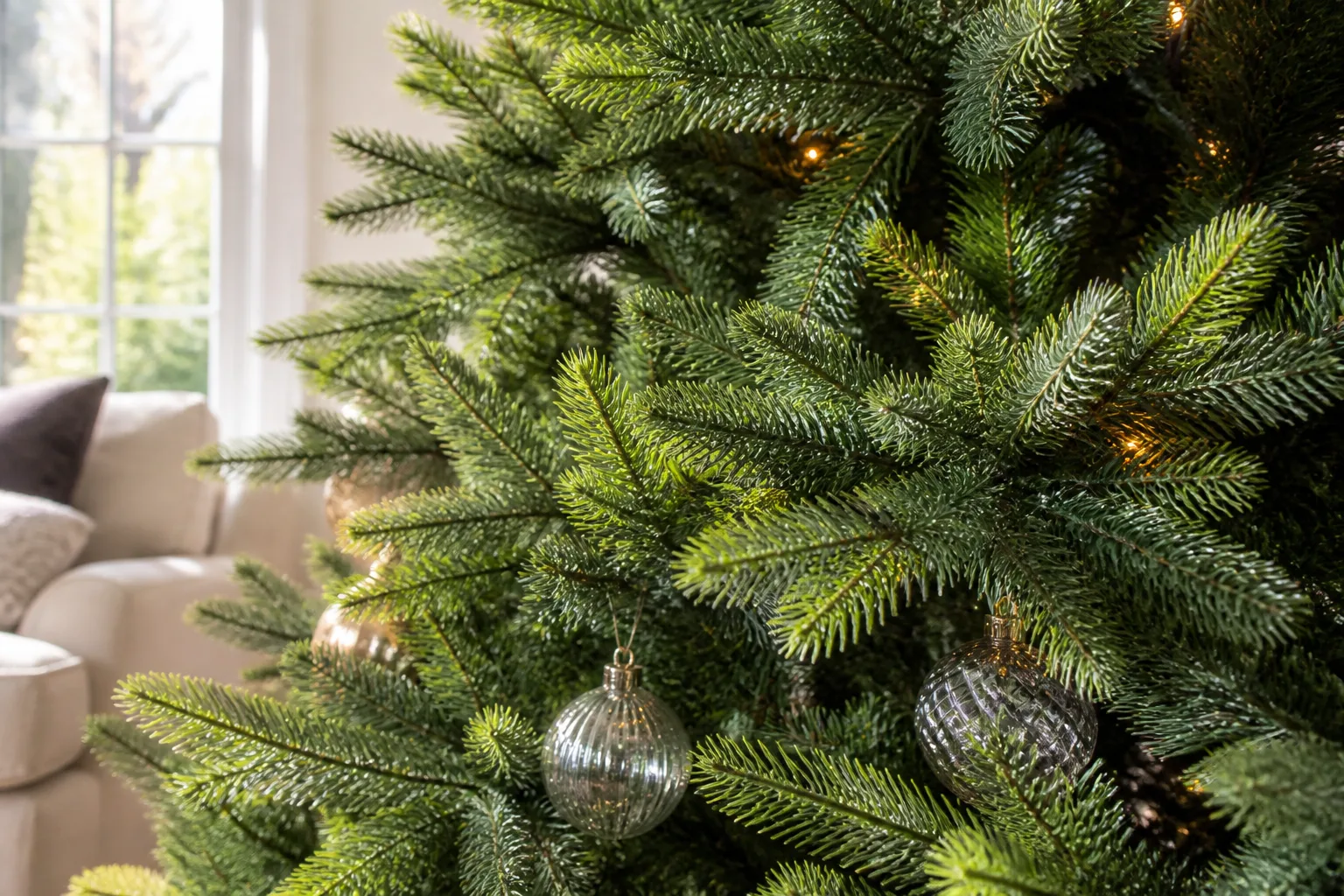
The selections reflect current product specifications and published editorial testing across setup, disassembly, storage, appearance, stability, lighting, and value. Better Homes & Gardens timed assembly and fluffing, checked realism and bare spots, tried light settings, tested a bulb failure, hung ornaments and a topper, and timed takedown. Real Homes adds a useful construction lens: PE foliage generally reads more naturally, while hinged branches are easier to assemble than hook-in branches.
That evidence also points to an important limitation: no single roundup can predict how a tree will feel in your home. A 9-foot tree that is excellent in a tall room may be absurd in a standard apartment, and a realistic PE-heavy tree may be the wrong choice if you would rather change colors and light placement every year. The category labels below are therefore recommendations with conditions, not universal scores.
Best Overall: Puleo International 7.5-Foot Pre-Lit Teton Pine
The Puleo International Teton Pine is the strongest all-around choice for a household that wants a traditional, full tree without turning setup into an afternoon project. Its varied needle sizes and colors create more depth than a uniform PVC-only silhouette, while the soft branches are easier to shape without the scratchy, waxy feel some budget trees leave behind.
The 7.5-foot version has a roughly 52-inch base diameter and comes pre-lit with clear lights. That is a useful middle ground: tall enough to anchor a living room without automatically claiming an entire corner. The stand feels secure enough for a normal load of ornaments and garland.
The catch is light coverage. The pre-strung lights do not reach every area near the trunk and lower branches, so do not assume that “pre-lit” means perfectly illuminated from every angle. If you like colored lights or dramatic seasonal changes, treat its clear-light setup as a base and add a separate strand rather than buying this tree for lighting flexibility.
Choose it if you want a traditional green tree that is full, pre-lit, and reasonably quick to assemble. Skip it if you need a very narrow footprint, app-controlled effects, or a fully custom unlit tree.
Most Realistic: Balsam Hill Vermont White Spruce
The Balsam Hill Vermont White Spruce is the pick for shoppers who notice foliage before they notice price. Its molded PE-style needles are designed to mimic the shape and texture of real evergreen growth, and the mix of green tones keeps the tree from looking like one flat block of plastic when viewed close to the sofa.
Realism comes with physical costs. The commonly tested 7.5-foot version is about 63 inches across at the base, which is more than five feet of floor width before you add a skirt, presents, or clearance for walking. Its sections are also heavy and bulky, so assembly and takedown are better as a two-person job. Measure doors, stair turns, and storage access, not just the final display spot.
Lighting configurations vary, including versions with multiple light styles and optional smart-light integration. That variety is useful, but it also makes comparisons tricky: confirm the exact height, width, foliage line, light type, and included stand before treating one listing as representative of every Vermont White Spruce option.
This is the right splurge when you want convincing foliage before the ornaments go on. It is not the economical choice for a tight rental, frequent moves, or a small storage closet.
Best Unlit: Puleo International 7-Foot Unlit Fraser Fir
The Puleo International Unlit Fraser Fir gives decorators the freedom that pre-lit trees take away. You decide whether the tree gets warm white micro-lights, old-fashioned multicolor bulbs, a sparse single strand, or a completely different scheme next year. Replacing a light strand is also simpler than diagnosing an integrated system buried inside a branch structure.
Its screw-in stand is simple to understand, and the seven-foot height works for rooms where a 7.5-foot tree leaves little clearance for a topper. The branches become much fuller after roughly 15 minutes of shaping, but the foliage is more convincing from across the room than at fingertip distance.
Plan for gloves if the branches leave residue while you fluff them, and do the shaping before adding fragile ornaments. Work from the trunk outward, opening each hinged branch and turning the tips toward empty pockets instead of only spreading the outermost ends. This makes an unlit, budget-friendly tree look intentional rather than unfinished.
Buy it if lighting control and replaceability matter more than molded-needle realism. It is less suitable if you want to plug in one cord and be finished.
Best Smart: Home Decorators Collection Grand Duchess Twinkling Balsam Fir
The Home Decorators Collection Grand Duchess Twinkling Balsam Fir is for the household that treats lighting as the tree’s main feature. Its trunk-connected light system reduces the tangle of separate plugs, while a remote and compatible app give you control over brightness, color, timers, and animated effects. Memory-wire branches also reduce the amount of manual shaping required after the sections are connected.
The 9-foot height and approximately 62-inch diameter create a real statement piece, so check the room rather than trusting the screen. It works best away from traffic, with an outlet close enough that the cord does not cross a walkway.
The branches are more flexible than those on the strongest traditional trees, which means very heavy or fragile ornaments can pull the tips down. Hang weighty pieces closer to the trunk, reserve the branch ends for lighter ornaments, and use a topper that the top stem can actually support. Also remember that app control does not automatically make a product part of every smart-home platform; verify compatibility with the specific system you use.
Choose it when one-touch lighting variety is worth a taller, wider tree. Choose an unlit tree if you enjoy rebuilding the lighting design every year.
Best Pencil: Puleo International Flocked Portland Pine
The Puleo International Flocked Portland Pine solves two problems at once: it occupies very little floor space and arrives with a snowy finish that can look decorated before you hang a single ornament. The 6.5-foot version is about 24 inches in diameter, making it a practical choice for an apartment corner, entry room, bedroom, or a narrow space beside a media console.
Its pencil silhouette makes fluffing easier because there are fewer branch layers to open. That does not mean it is maintenance-free. Flocking can shed when you pull the sections from the box or slide ornaments over the branches, and the light connections may need to be joined at each section.
The snowy coating changes the decorating math. Dark green ornaments, natural wood, red ribbon, and warm lights stand out well, while too much silver or white can disappear into the flocking. Put a washable mat beneath the tree for setup, vacuum after shaping, and handle the branches by their wire cores when possible to reduce unnecessary rubbing.
Pick it for a narrow room and a winter-white look. Avoid it if you want a low-mess tree, a bare green canvas, or branches that can carry oversized ornaments far from the trunk.
Best Twinkling Lights: Home Decorators Collection Elegant Twinkling Grand Fir
The Home Decorators Collection Elegant Twinkling Grand Fir earns this category through the balance between a light show and a usable tree. It offers multiple twinkling modes, a remote or foot pedal, memory-wire branches, and a swiveling base that lets you rotate the tree while decorating instead of squeezing behind it.
The nine-foot version assembles quickly for its size, but quick section connection is not the same as instant room readiness. Check the top branch, straighten the silhouette from several angles, and confirm that the rotating base sits level before adding glass ornaments. A swivel can make decorating easier, but it also adds another moving component to inspect during setup.
Its branches are sturdier than those on the Grand Duchess, so it is a better match for a household with a substantial ornament collection or a topper that needs support. The trade-off is that the lights are not color-changing, so you get effect variation rather than a completely different lighting palette.
This tree suits someone who wants sparkle without an app. If you need warm-white versus multicolor control, verify the exact lighting configuration instead of assuming “twinkling” includes both.
Best Slim: Grandin Road Classic Slim Christmas Tree
The Grandin Road Classic Slim Christmas Tree is for small rooms that still want height. The tested 9-foot option has an approximately 26-inch diameter, so it can use vertical space in a narrow living-room corner without taking the floor area of a full tree.
Slim trees can look underfilled when they come out of the carton because the branch tips are compressed for shipping. Stand back several feet before deciding the tree is sparse; open the hinged branches in layers and turn a few tips toward the camera-facing side. Ornaments and ribbon also add visual weight, but they should finish the silhouette rather than disguise a missing branch structure.
The integrated lights use one main cord, which keeps setup tidy, and the soft white glow is easy to live with. There is less lighting customization than on a smart tree, and the included storage situation may require a separate bag. Measure the storage location before choosing a tall slim model: narrow at display does not always mean short when packed.
Choose it when width is the hard constraint and height still matters. A full tree is better if you have the floor area and want dense branches for many ornaments.
Easiest Assembly: Balsam Hill Flip Up Fir
The Balsam Hill Flip Up Fir changes the setup sequence. Instead of lifting a wide bottom section into a stand and opening every hinged branch from scratch, you roll out the wheeled base, lock it, press the foot pedal, and let the lower portion flip upright before connecting the upper section. The lights connect automatically when the sections join.
That design helps if you dread carrying a conventional tree or want to move the base a short distance on a hard floor. The stored branches still need fluffing, the upper section may be easier with two people, and the base and bags take more room than a compact three-section tree.
The tested setup time was about 30 minutes when shaping was included, which is a useful reminder that assembly minutes and presentation minutes are different measurements. A tree can stand upright quickly and still need patient work at the tips to remove shipping gaps. Gloves help if the foliage leaves residue, and a slow first-year setup usually pays off in faster future shaping.
Buy it when easy lifting matters more than price or storage footprint. Choose a standard hinged tree if the smallest carton is the priority.
Best Minimalist: Grandin Road Un-Lit Noblis Fir
The Grandin Road Un-Lit Noblis Fir takes the opposite approach from a dense, showroom-style tree. Its open branch pattern leaves glimpses of the trunk and generous space between tiers, creating a woodland look that makes individual ornaments, candle-shaped bulbs, and handmade decorations feel like the point of the display.
The setup is straightforward, but shaping still takes time because the sparse style relies on deliberate spacing. Do not keep adding branches to chase the fullness of a traditional fir; the visible gaps are the design. Instead, rotate the tree until the most open face is the one that best frames your ornaments, then keep larger pieces near the trunk and lighter pieces near the ends.
Because it is unlit, you can choose lights that support the look: a single fine strand for a quiet glow, larger vintage bulbs for a graphic silhouette, or no lights for a naturalist display. The open branch structure also makes cords easier to see, so route them along the trunk and secure slack near the base.
This is the right pick for rustic, Scandinavian, and ornament-forward rooms. It is a poor choice if you want dense foliage with no visible trunk.
Which Artificial Tree Shape Fits Your Room?
Start with floor width, not the height you wish you had. A full tree commonly uses about four to five feet of diameter at seven to eight feet tall, while slim and pencil trees can preserve a tall holiday presence in a fraction of that footprint. Remember that the listed diameter is usually the widest branch span, not the space needed for a tree skirt, gifts, a chair, or a path around it.
Use a full silhouette when the tree is a living-room anchor and people can walk around it. Choose slim when one side sits near a wall or furniture. Choose pencil when width is the hard limit; roughly two feet can be the difference between a natural fit and a blocked door or heating register.
Sparse trees need a different expectation. They can be easier to decorate because ornaments do not disappear into dense foliage, but they will not produce the layered look of a full fir. Decide whether the tree is meant to look like a forest tree, an ornament display, or a vertical accent before comparing tip counts.
PE vs. PVC: What Realism Actually Means
Artificial trees typically combine two plastics. PE, or polyethylene, is molded into three-dimensional needle shapes that better reproduce the volume and contours of natural branch tips. PVC, or polyvinyl chloride, is commonly cut into flatter strips attached along wire branches; it costs less and can still look attractive when the tree is viewed from across the room.
| Feature | PE-heavy foliage | PVC-heavy foliage |
|---|---|---|
| Close-up look | More three-dimensional and needle-like | Flatter, sometimes shinier or more uniform |
| Touch | Often firmer and more textured | Often softer or ribbon-like, depending on construction |
| Price | Usually higher | Usually more budget-friendly |
| Best buyer | Wants realism and plans to keep the tree for years | Wants value, a second tree, or heavy decoration |
Material is only one part of realism. Varied colors, branch spacing, a visible brown inner stem, molded tips, and enough depth to hide the central pole can matter more than a high tip-count number. A dense tree with identical green strips can look less convincing than a slightly open tree with varied needle shapes.
Better Homes & Gardens recommends checking both material and branch sturdiness, while its buying guide notes that PE needles are formed to resemble real branches and PVC options are generally more affordable. Use that as a shopping shortcut, not a guarantee. Look at close-up photographs, request a branch sample when a manufacturer offers one, and read the dimensions for the exact size you plan to buy.
Pre-Lit vs. Unlit: Which Is Better?
Pre-lit trees save the yearly work of wrapping and removing lights, and trunk-connected systems can make section assembly nearly plug-and-play. They are appealing when setup time is the main pain point, when the tree will use the same light color every year, or when you want a polished look with less visible wire.
Unlit trees take longer to decorate but keep the lighting system replaceable and flexible. You can change from warm white to multicolor, use different bulb sizes, shift the strand pattern, or add only the amount of light the room needs. That flexibility is valuable if your decorating style changes, and it can be less frustrating if a strand eventually fails.
LED lights are generally the better default for long seasonal display because they use less electricity and produce less heat than incandescent lights, according to Better Homes & Gardens. That does not eliminate risk: inspect every cord, do not exceed the product’s connection limits, and turn lights off when you leave or go to sleep.
Before buying pre-lit, check four details: whether lights are warm white, clear, multicolor, or changeable; whether a failed bulb leaves the remaining section lit; whether parts connect through the trunk; and whether replacement bulbs or fuses are included. A tree can be convenient on day one and difficult to repair later if those details are missing.
How to Measure for the Right Fit and Stability
Measure the ceiling height from the floor where the stand will sit, then subtract the height of your topper and leave breathing room above it. A practical rule is to choose a tree about one to two feet shorter than the ceiling, but exact clearance depends on whether the top is flat, pointed, or decorated. Better Homes & Gardens also recommends leaving at least six inches for ceiling and wall clearance when planning for a topper.
Next, measure the full branch diameter and add real-life clearance. If the product is 52 inches wide, do not place it in a 52-inch gap and expect to decorate comfortably. Add room for a skirt, cords, gifts, and the person who needs to reach the back branches. Mark the floor with painter’s tape before ordering; the outline is more honest than a product photo.
Stability comes from the base, the pole connection, and how weight is distributed. Tighten every stand screw, confirm the center pole is fully seated, and test the tree before decorating by giving the trunk a gentle push from two directions. Hang heavier ornaments near the inner branch, spread weight around the tree, and do not use the topper to compensate for a weak upper stem.
If you have toddlers, pets, or a tree that sits in a high-traffic path, add a discreet wall anchor or tether. That is not a sign that the tree is defective; it is a sensible response to a tall, top-heavy seasonal object in a busy room.
Safety, Setup, and Storage Rules
An artificial tree does not need watering, but it is not fireproof furniture. NFPA estimates an average of 160 home structure fires per year began with Christmas trees during 2016–2020, with an average of two civilian deaths, 11 injuries, and $12 million in direct property damage. Electrical distribution or lighting equipment was involved in 44% of those fires, and heat sources placed too close to trees were another major factor.
Keep the tree at least three feet from fireplaces, radiators, space heaters, candles, and other heat sources. Inspect pre-lit cords before assembly and do not use a strand with cracked insulation, exposed wire, loose plugs, or heat damage. Avoid daisy-chaining power strips and extension cords; UL Standards & Engagement specifically warns that this practice can cause an electrical fire.
For a pre-lit tree, look for a recognizable certification mark and documentation rather than relying only on “flame-retardant” wording. UL 588 covers seasonal and holiday decorative products, and its standard listing says artificial trees over 30 inches and up to 12 feet are additionally investigated under UL 2358 fire-test requirements. IAEI Magazine explains why this matters: artificial foliage can add significant fuel if ignited, so a safety claim is not permission to place a tree near an open flame.
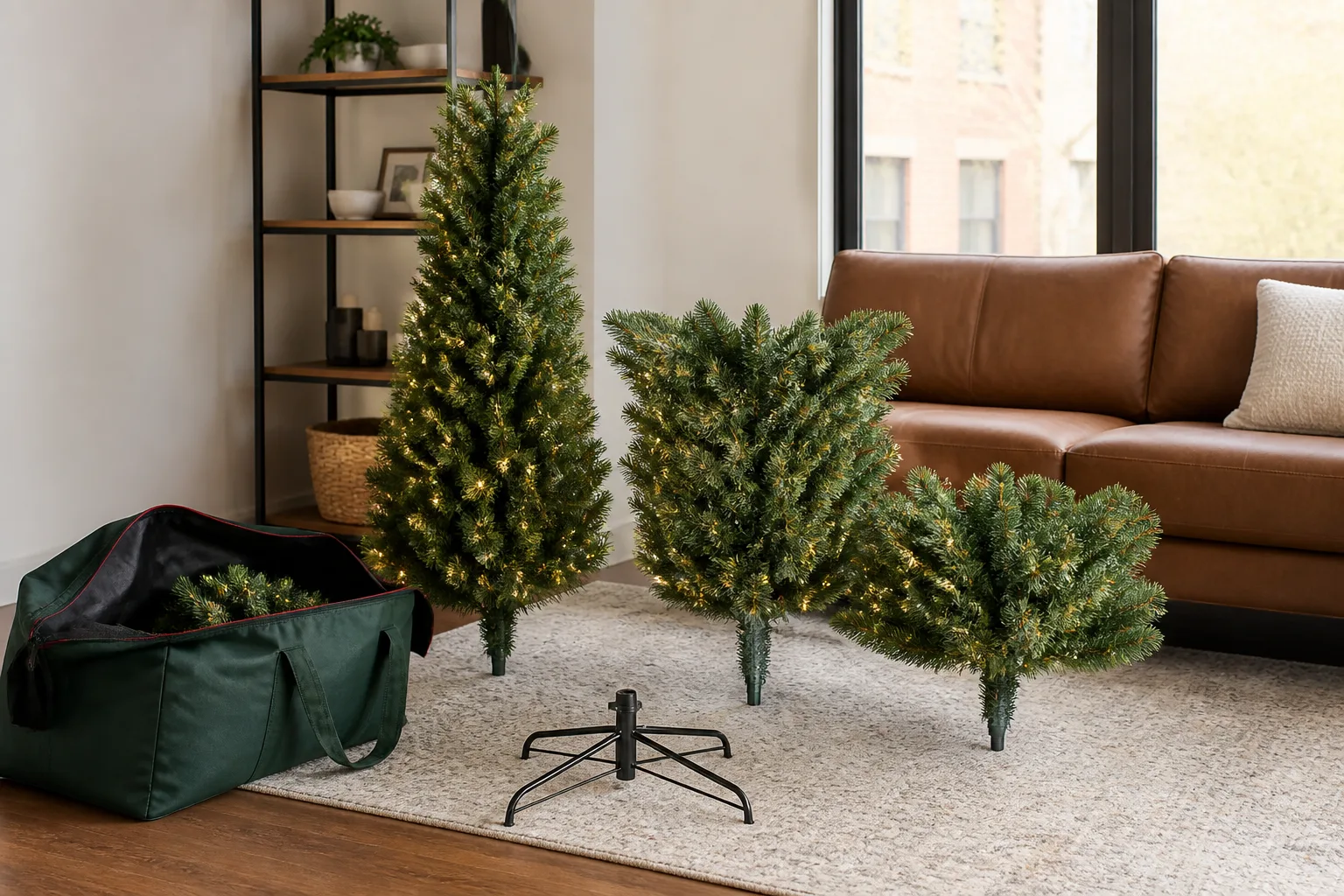
During setup, unfold sections on a drop cloth, wear gloves if branches are sharp or leave residue, and shape from the trunk outward. Do not drag a fully assembled tree across hardwood or a rug unless the base is designed for it. For flocked trees, expect some shed and vacuum after shaping.
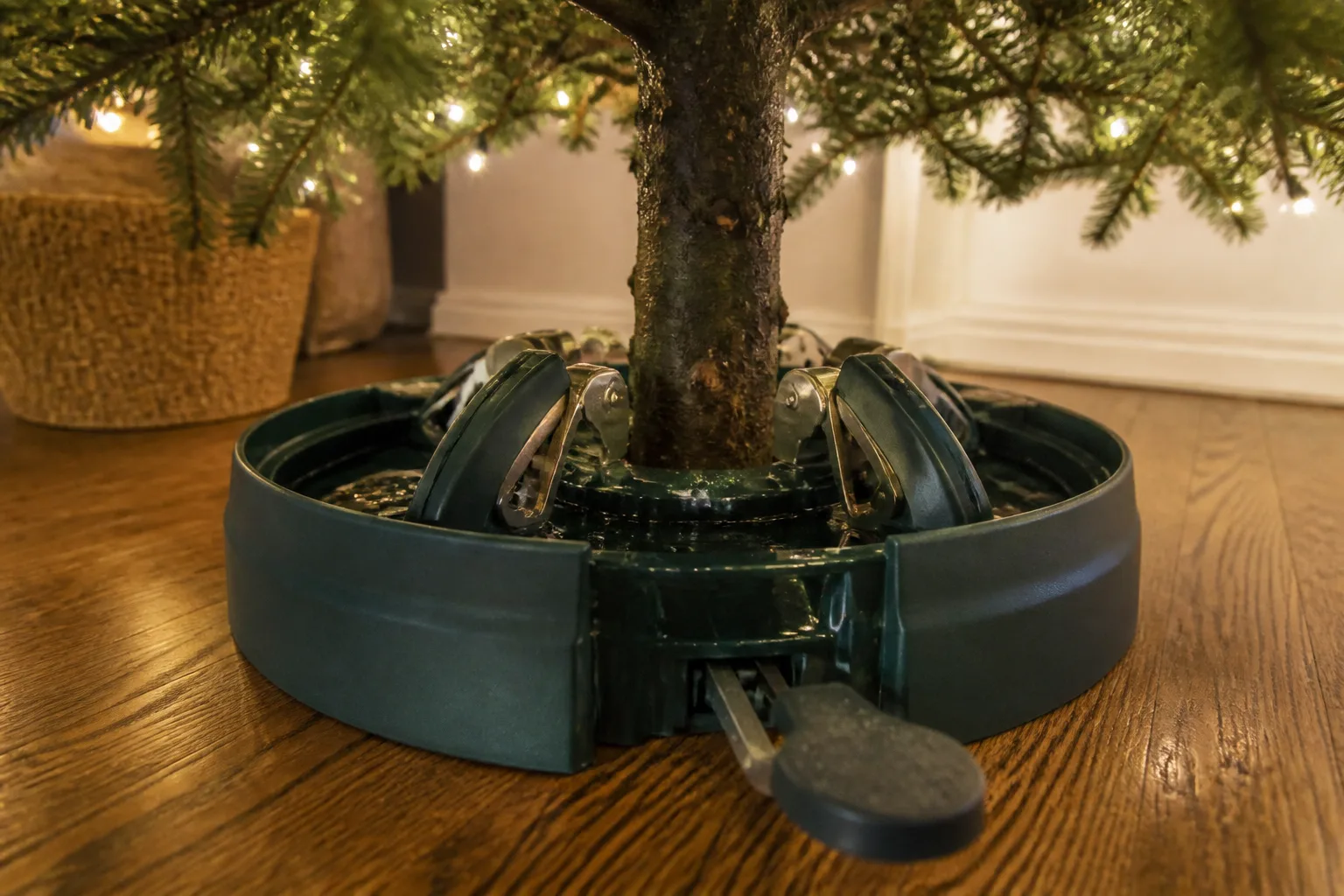
Storage determines whether an artificial tree lasts six seasons or much longer. Remove ornaments before compressing branches, label sections if needed, and use the supplied bag when it fits. Store it in a cool, dry place away from direct sun, moisture, pests, and heavy boxes that can deform the tips.
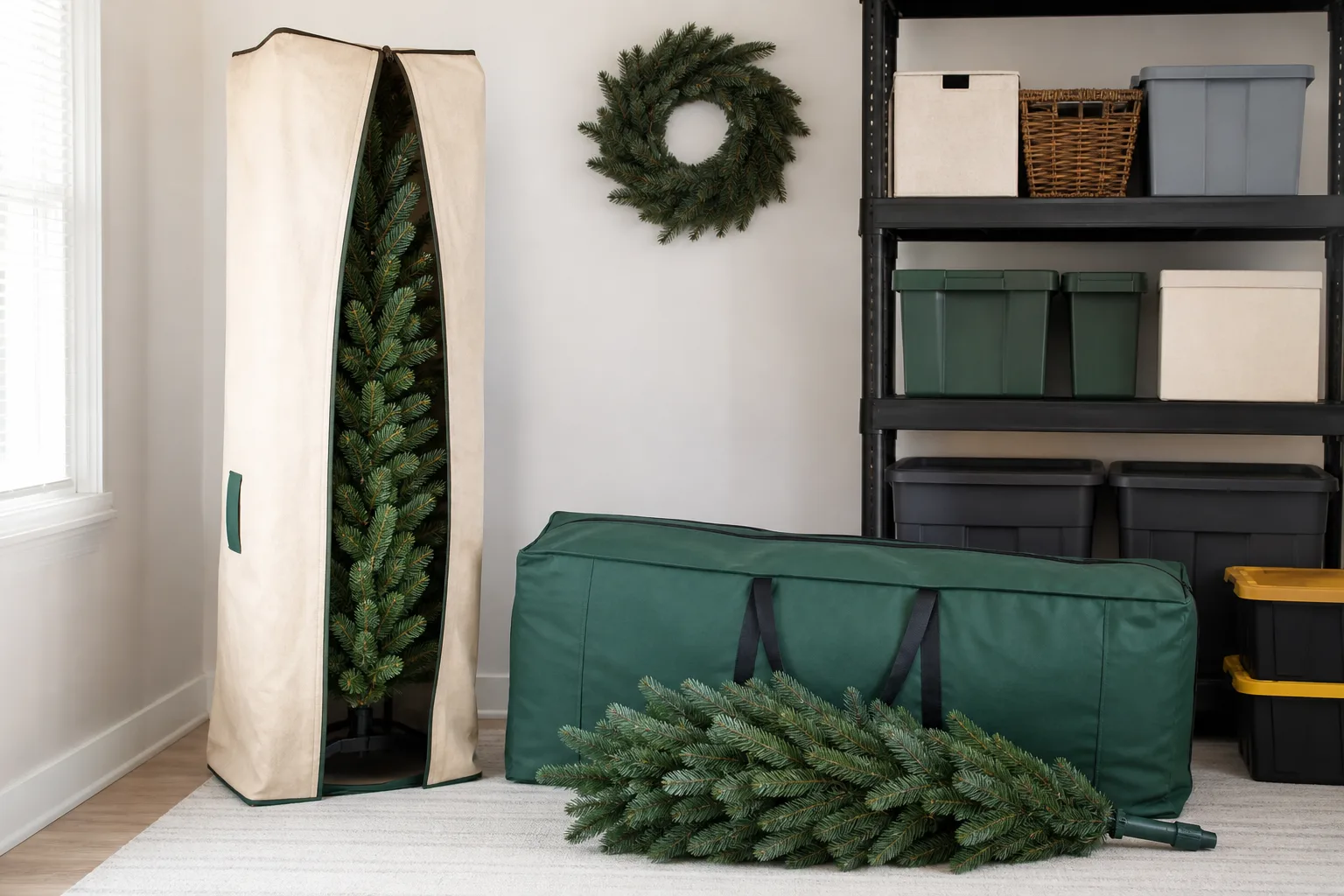
Do not assume a rolling base solves every storage problem. Measure the bag and the route to the closet or garage: a slim tree may still need a long horizontal bag, while a flip-up tree can be easy to roll in December and awkward to shelve in January.
Conclusion
For most homes, the Puleo International 7.5-foot Pre-Lit Teton Pine is the best artificial Christmas tree because it combines a full traditional shape, manageable assembly, soft branches, and straightforward lighting. Choose the Balsam Hill Vermont White Spruce when close-up realism justifies the extra size and cost, the Puleo Unlit Fraser Fir when lighting freedom matters, or the Grand Duchess when app control is part of the holiday experience.
The deciding step is still measurement. Confirm the exact tree’s height, widest diameter, light type, stand, weight, warranty, and storage plan before checkout. A well-fitted, safely placed tree that you can assemble and store without resentment will serve you better than the most realistic model that cannot live comfortably in your room.



