Are Sunflowers Annuals or Perennials? 5 Growing Tips
Are sunflowers annuals or perennials? Compare their roots, bloom timing, varieties, and five practical growing tips for reliable flowers.
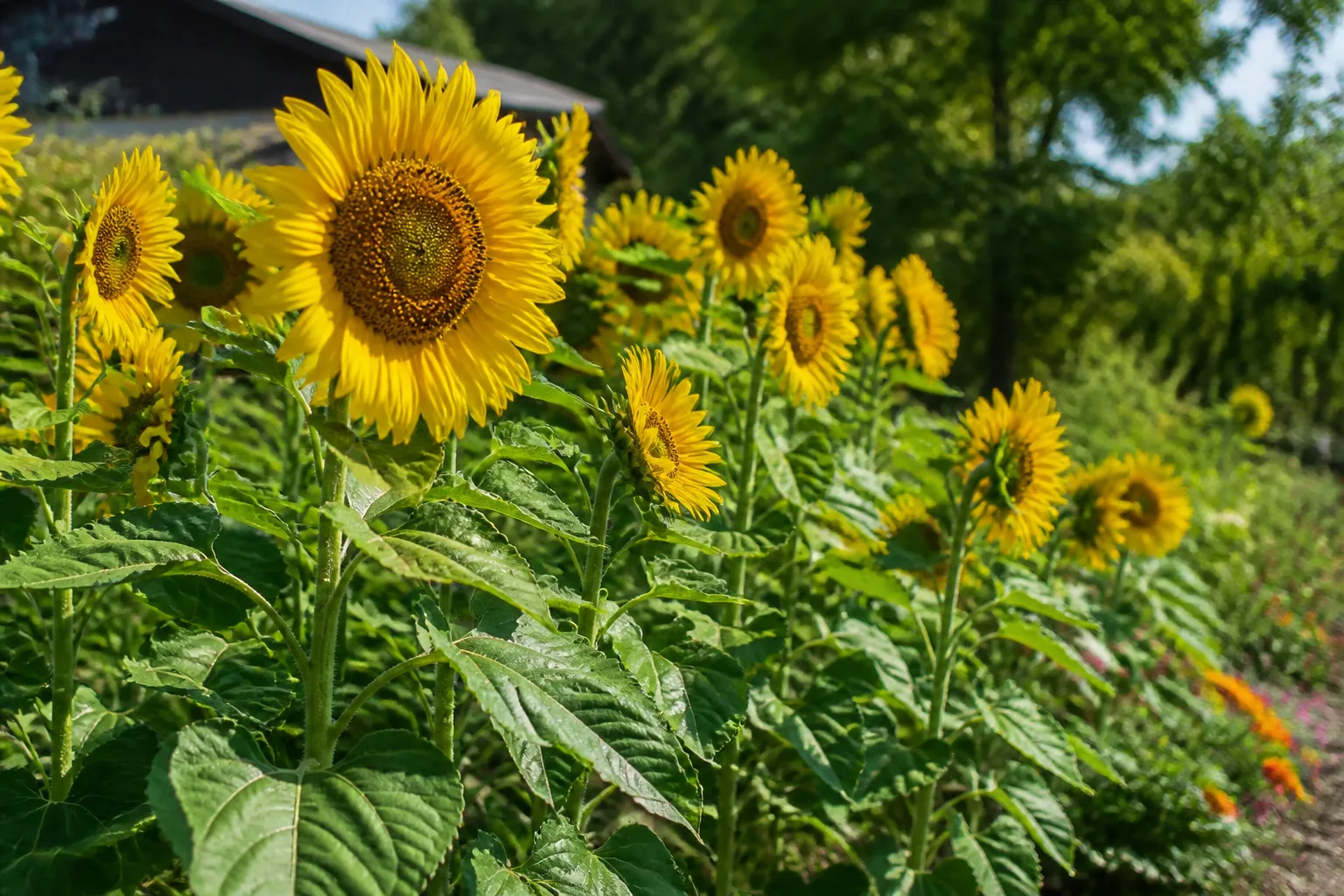
If a sunflower appears in the same place every summer, it is tempting to call it a perennial. Often, though, the original plant died after flowering and a fresh seedling took its place. The reliable answer is that sunflowers can be annuals or perennials, but the familiar giant sunflower in a seed packet is usually an annual.
The difference matters beyond vocabulary. Annuals give you a quick, dramatic display from seed but need a new sowing each year. Perennial Helianthus species return from a crown, rhizome, or tuber and can become a long-lived border plant, but they may spread, bloom later, and look more like a branching clump than a single giant flower.
The short answer: most garden sunflowers are annuals
The common sunflower, Helianthus annuus, completes its life cycle in one growing season: seed, seedling, flowering plant, seed head, and death. Frost usually finishes the plant, and the thick stem will not send up a new shoot from the same root crown the following spring.
That does not mean an annual sunflower can never be in the garden twice. If mature seed heads are left in place, birds, wind, and gravity can move seed into the surrounding soil. New volunteers may emerge the next year, creating a patch that looks perennial even though each plant is a separate generation. The NC State Extension Helianthus profile describes the genus as containing both annual and perennial species and notes that many self-seed easily.
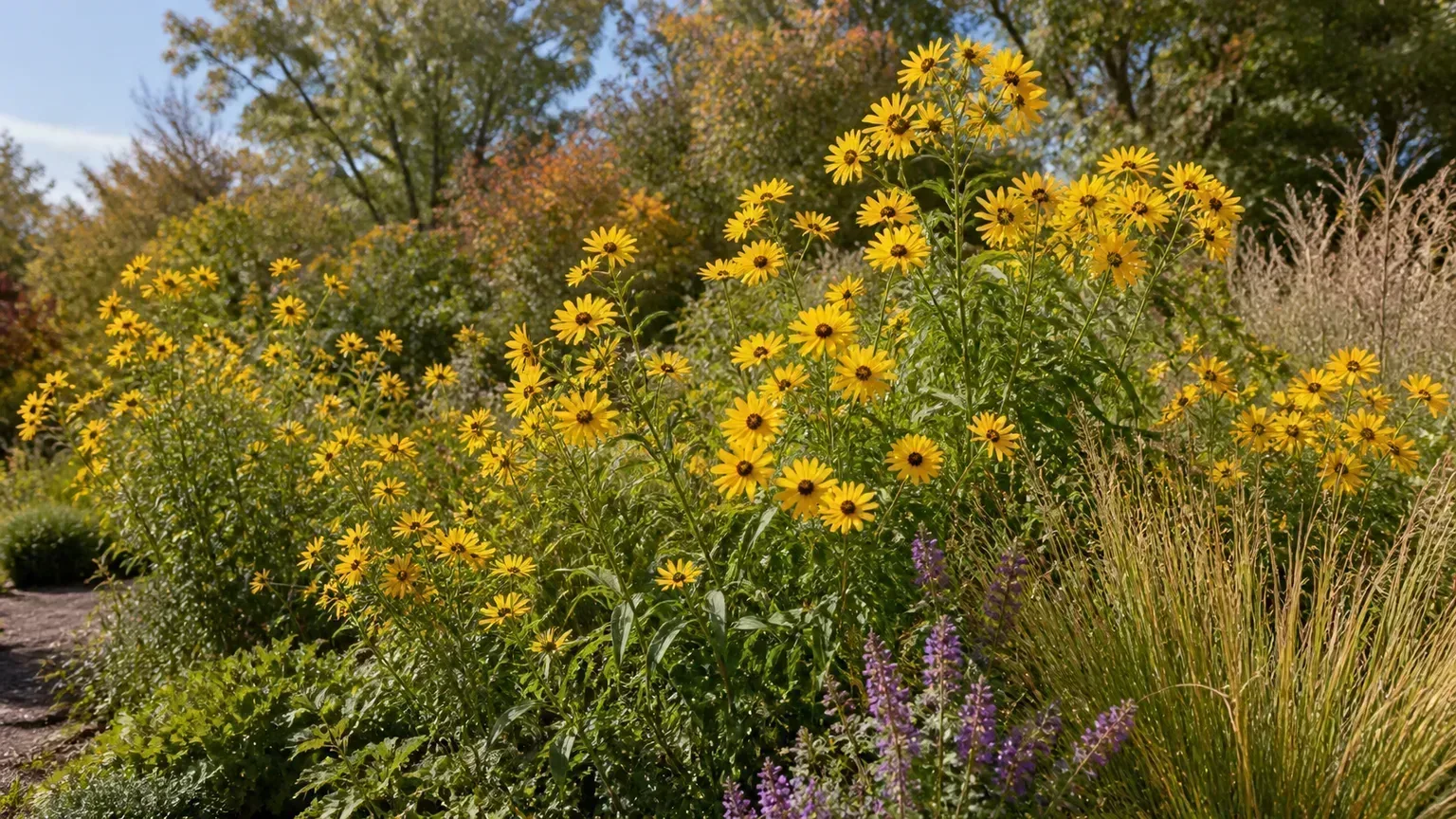
True perennial sunflowers behave differently. Their above-ground stems die back, but the underground crown or rhizome survives winter and pushes new shoots from the same plant in spring. The RHS sunflower growing guide describes these as clump-forming plants that return from the base, often flowering from midsummer into autumn.
So the useful question is not “Did I see a sunflower here last year?” Ask instead: Did the same root system survive, or did a new seed germinate? That single distinction explains most confusion.
Annual versus perennial: the root, seed, and bloom differences
The flowers can look similar, especially when a perennial sunflower is tall and yellow. Look at the plant’s timing, habit, and underground structure together rather than relying on flower color alone.
| Trait | Annual sunflower | Perennial sunflower |
|---|---|---|
| Typical example | Helianthus annuus | H. maximiliani, H. angustifolius, H. tuberosus and other species |
| Winter behavior | The plant dies; seed may overwinter | Crown, rhizomes, or tubers survive and resprout |
| First-year bloom from seed | Usually yes, often in one season | Often slower; many bloom better after establishment |
| Growth habit | One stem or a deliberately spaced branching plant | Several stems emerging in a clump |
| Seed heads | Often large and seed-heavy | Commonly smaller, though species and hybrids vary |
| Main maintenance | Resow, thin volunteers, support tall stems | Control spread, divide crowded clumps, cut back old stems |
| Best use | Fast color, cut flowers, edible seed, children’s gardens | Long-term borders, late-season color, wildlife habitat |
These are strong clues, not rigid laws. Modern breeding has produced annuals with many branches and perennial hybrids with showier flower heads, so the label and botanical name remain more dependable than appearance. Gardening Know How’s comparison also points to root type, seed size, germination speed, and clumping habit as useful differences.
What the seed packet and first season can tell you
Start with the packet before you start digging. If it says Helianthus annuus, “annual,” “single-stem,” “branching annual,” or gives a days-to-bloom estimate of roughly two to three months, you are almost certainly buying a one-season plant. “Mammoth,” “American Giant,” “Dwarf Sunspot,” “Teddy Bear,” and many cut-flower cultivars fit this annual category even though their heights vary widely.
Perennial packets and nursery labels usually name the species, such as Maximilian sunflower (H. maximiliani) or swamp sunflower (H. angustifolius), and describe the plant as a hardy perennial. A perennial sold as a young plant may also be labeled by cultivar, because divisions or rooted cuttings preserve a known form more reliably than seed.
The first season offers another clue. Annual seedlings are often quick and assertive: they germinate rapidly in warm soil, race upward, and may flower the same summer. A perennial started from seed may spend its first year building roots and a basal crown, with slower top growth and fewer flowers. That slower beginning is not automatically a care failure.
Do not use “giant” as a life-cycle label. Giant usually describes height or flower size, not whether the plant is perennial. The annual H. annuus can reach more than 10 feet under favorable conditions, while some perennial Helianthus species can also become tall, branching plants.
What an established plant reveals after winter
In early spring, inspect the base before pulling anything. A perennial sunflower sends several new shoots from one established crown or a short distance away along a rhizome. The shoots form a cluster, and the old plant’s location remains obvious even after the previous stems are removed.
An annual does not make new shoots from its old crown. You may see a neat row of separate seedlings, or a scattered patch of volunteers, but each seedling has its own stem and root system. Volunteers also tend to appear later than a perennial’s crown shoots because they must first germinate and establish in warming soil.
If you need certainty, gently expose the soil at the edge of the plant with your fingers. A perennial may show a thicker crown, connected underground stems, or tuber-like structures depending on the species. Stop if you meet a firm central crown; the goal is identification, not root damage. If the only evidence is a cluster of seedlings with no connected base, treat it as reseeding until the label proves otherwise.
Five growing tips that work for either type
The two groups share a love of sun, warmth, and room. Their biggest care differences appear at the beginning and end of the season: annuals are usually sown and removed, while perennials are planted for a future clump and managed over several years.
Tip 1: Match the sunflower to the space
Choose the mature height and spread before choosing a flower color. A dwarf annual may fit a patio pot or the front of a border, while a branching type needs enough lateral room for side shoots. A giant planted directly south of tomatoes, peppers, or low flowers can shade them for much of the afternoon as the sunflower grows.
For a narrow bed, use a single-stem annual along the back or north edge, leaving a path for watering and staking. In the Northern Hemisphere, placing tall plants on the north side reduces the shadow they cast across shorter neighbors. A perennial clump deserves even more planning because it may widen every season and be difficult to move once its crown is established.
Containers are possible, but they change the watering workload. Select a dwarf or compact branching annual, use a heavy container with drainage, and give the plant enough soil volume to keep it stable. A tall cultivar in a tiny pot may flower, but it is more likely to dry out, lean, or topple than the same plant in a bed. Savvy Gardening’s container guide recommends matching the pot to the mature plant and treating drainage and spacing as essential rather than optional.
Tip 2: Plant into warm soil and protect the young roots
Sunflower seeds germinate best after the soil has warmed. A practical starting point for annuals is after the last-frost risk has passed and soil at seed depth is about 55–60°F. The exact date changes by climate, elevation, bed exposure, and cultivar, so a soil thermometer and your packet’s days to maturity are more useful than a calendar month. Our guide to when to plant sunflowers covers the timing decision in more detail.
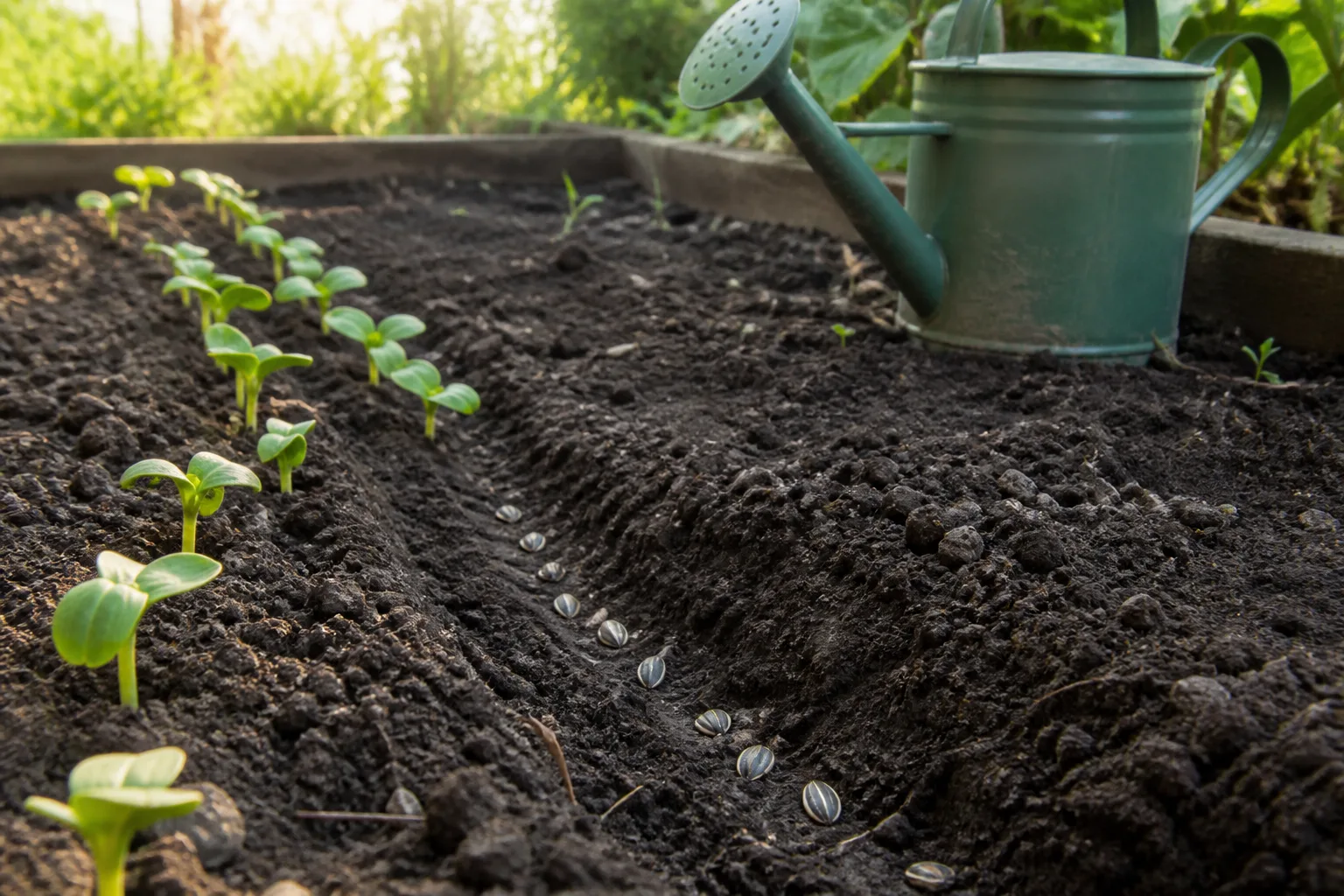
Direct sowing is usually the least stressful option for annuals. Their young roots develop quickly, and disturbing a taproot during transplanting can cause a pause just when the plant should be building height. Sow at the packet depth—often around 1 inch, with deeper sowing useful in loose, dry soil—then keep the seed zone evenly moist until emergence.
Start indoors only when the growing season is short or you need a planned early bloom. Use a deep biodegradable pot, do not keep the seedling root-bound, and harden it off before planting outdoors. Moving a large, flowering sunflower is a high-risk rescue operation; if the plant is already blooming, it is generally better to protect it in place and keep watering steady than to force a late transplant.
Perennial sunflowers are commonly planted as nursery-grown plants in spring or fall. Water the new plant thoroughly, mulch the soil surface without piling mulch against the stems, and keep it watered through the first growing season while its crown and roots establish.
Tip 3: Give plants light, room, and steady moisture
Aim for at least six hours of direct sun, with more light usually producing sturdier stems and more reliable flowering. Shade can leave annuals thin and top-heavy, while a perennial in too little light may stretch, flop, or flower sparsely. The RHS guidance also emphasizes full sun, rich soil, and enough moisture for strong growth.
Improve compact soil with organic matter, but do not turn a sunflower bed into a permanently wet basin. Most types appreciate moisture during establishment and active growth, yet roots still need air. A heavy clay site that remains saturated after rain calls for a better-drained planting position; a species adapted to moist soil may fit better than an annual giant forced into the same spot.
Water deeply when the upper inch or two begins to dry, adjusting for rainfall, heat, soil, and container size. Annuals are especially sensitive while forming tall stems and flower heads, and containers can need checks daily in hot weather. Frequent shallow splashes encourage a surface-rooted plant; a thorough soak that reaches the root zone is more useful, followed by enough time for excess water to drain.
Space plants according to the mature habit, not the size of the seedling. Dwarf and single-stem cut-flower types can often be planted closer than branching giants, but crowding still reduces airflow and encourages weak stems. A good compromise is to sow a little more densely than the final spacing, then thin the row once true leaves appear rather than leaving every seedling to compete.
Tip 4: Plan support before stems get top-heavy
Tall sunflowers often fail at the least convenient moment: after a storm, when a heavy head is filling, or when the soil is soft from rain. Put a sturdy stake, trellis tie, or other support in place while the plant is young so you do not drive it through established roots later.
Support is a site-and-cultivar decision, not a rule that every sunflower must be tied. A sheltered dwarf in a heavy pot may stand alone, while a six-foot branching plant in an exposed yard may need support. Giants are particularly vulnerable to wind because the flower head acts like a sail; the RHS growing guide recommends a sheltered position and strong support, and notes that very tall plants may be best grown where they can be secured to a wall.
Tie loosely with a soft material and allow room for the stem to thicken. Do not cinch the tie around the growing tip, and do not wait until a leaning stem has kinked. If one plant is already bent but not snapped, prop it gently and reduce additional wind exposure; a sharp break through the stem is unlikely to heal into a straight, productive giant.
Perennial sunflowers may need support too, especially in fertile soil where stems grow tall or in borders that receive summer storms. Some gardeners shear a perennial lightly early in the season to make it shorter and bushier, but this can delay flowering. Make that cut only when a shorter plant is more valuable than the earliest bloom.
Tip 5: Decide whether you want seed, flowers, or volunteers
The best fall cleanup depends on what you want the plant to do next. If your priority is a fresh annual display, leave a few mature heads to drop seed, but do not assume every volunteer will match the parent. Hybrid annuals may produce seedlings with different height, branching, or flower color, and some will land where you do not want a tall plant.
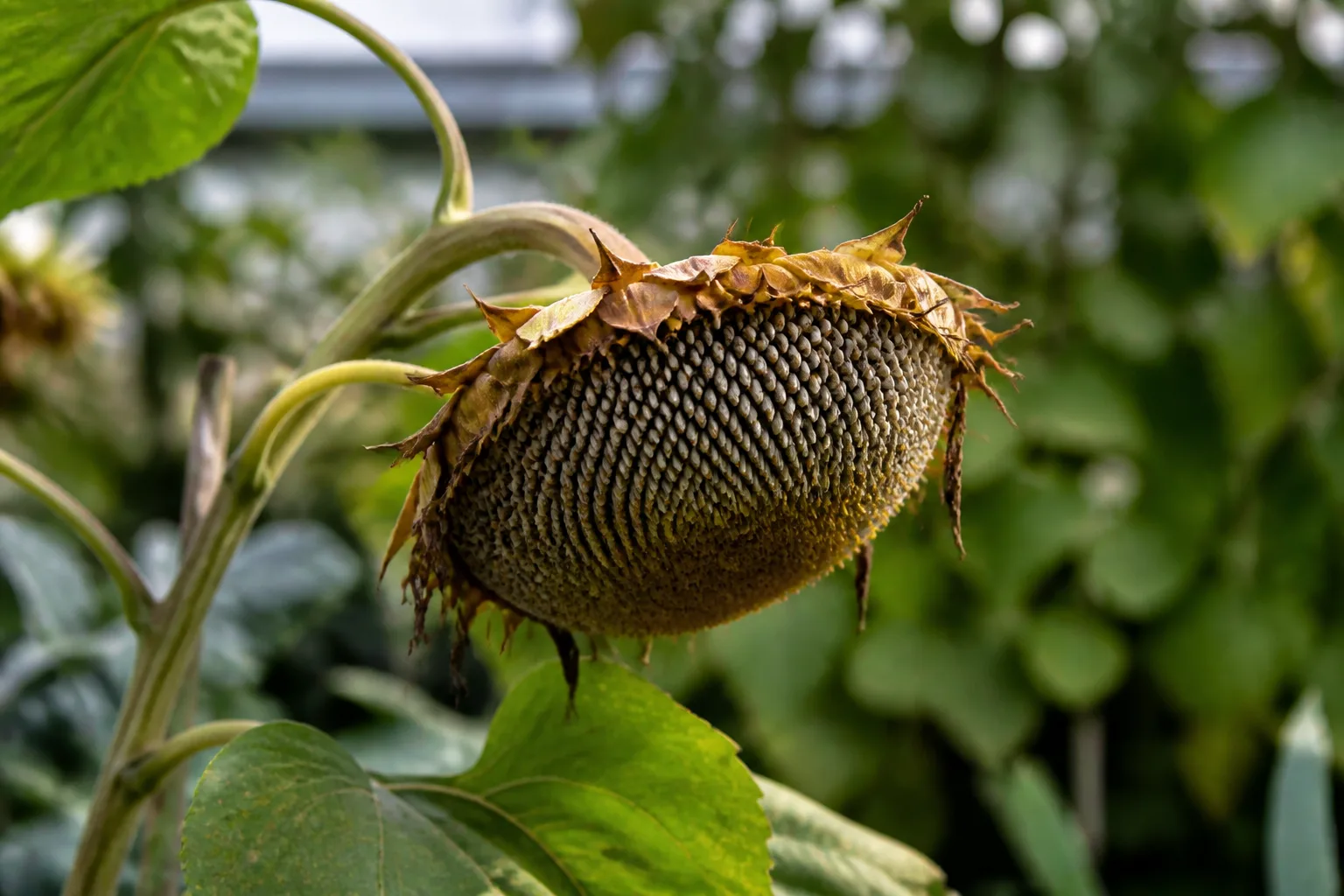
If you want to harvest edible seed, protect selected heads from birds as they mature and cut them when the back of the head turns yellow-brown and the seeds are plump. If you want wildlife, leave seed heads standing longer. Birds can use them through fall and winter, and dead stems can provide structure or nesting habitat.
Perennial sunflowers should be treated as living crowns, not disposable annual stalks. After flowering, you can remove weak or damaged stems, but leaving some standing material through winter benefits wildlife. NC State Extension recommends cutting dead stems to roughly 12–24 inches and leaving them in place so stem-nesting bees can use the hollow stalks as they break down.
Control is the other half of responsible reseeding. Pull annual volunteers while small if they shade a vegetable row, block a path, or appear in a spot that cannot support their mature height. Divide or edge a spreading perennial in the dormant season when the clump becomes crowded, and check the species before planting it in a narrow formal bed.
Annual varieties: the best choice for fast, one-season color
Annuals are the right choice when you want a predictable summer event from a packet of seed. They germinate quickly in warm soil, flower the first season, and offer the broadest range of heights, flower forms, colors, and uses.
Choose a giant type when the goal is a tall focal point or a large seed head, but reserve a wind-protected place and expect to stake it. Choose a dwarf type for a container, child’s garden, or front border where a 1- to 3-foot plant will not overwhelm everything behind it. Choose a branching type when you prefer several smaller flowers for bouquets or a longer sequence of blooms instead of one large head.
Single-stem annuals are useful for cut-flower rows because their energy goes into one main bloom. For a longer display, sow a second small row after the first has emerged, as long as the remaining frost-free season is long enough for that cultivar to flower. This succession approach often gives a more dependable run of flowers than planting every seed on one date.
Annual sunflowers also make sense when you are still learning a garden site. You can test the light, wind, drainage, and wildlife pressure without committing a permanent plant to the bed. If the site proves too windy or the soil too wet, change the variety or location next year.
Perennial varieties: the best choice for a returning clump
Perennial sunflowers are better for gardeners who want late-season height and flowers without resowing every spring. Common options include Maximilian sunflower, swamp sunflower, thin-leaved or willowleaf types, and Jerusalem artichoke, although their height, moisture tolerance, spread, and wildlife value differ.
Maximilian sunflower (H. maximiliani) is a tall prairie-type choice with many smaller flowers and a strong late-season presence. Swamp sunflower (H. angustifolius) suits a moist site better than a dry-border species, while Jerusalem artichoke (H. tuberosus) is grown for edible underground tubers as well as flowers and can spread vigorously from pieces left in the soil. The NC State profile notes that the genus includes plants for moist soil, wildlife gardens, cutting gardens, and naturalized areas, but it also warns that many can become weedy through self-seeding.
Check mature width as carefully as mature height. A perennial described as “compact” may still expand by rhizomes, and a plant that looks sparse in its first year can fill a border later. Give it a back-of-border position, an edge where spread is easy to edit, or a meadow-like setting where a loose patch is part of the design.
The early-spring regrowth test
Perennial regrowth usually starts as a cluster of shoots at or near the old crown. Mark the plant’s location before winter cleanup, then look for those shoots in early spring. Do not mistake the absence of a shoot in a cold week for death; soil warmth, winter severity, species, and planting age all affect emergence.
Annual volunteers tend to look more random. They may appear in cracks, beneath a feeder, or several feet from the original plant, and they will usually develop as individual seedlings rather than one connected crown. Thin them once you can identify their leaves and decide whether the location can support a mature plant.
If a perennial fails to return, check the boring explanations first: the crown was planted too shallowly, the site stayed waterlogged, a hard winter exceeded the plant’s tolerance, a vole or other animal damaged the roots, or the plant was actually an annual. A new plant label and a photo of the basal growth are often more useful than trying to diagnose a bare patch from memory.
What to do with sunflowers after frost
Frost is the natural endpoint for most annual sunflowers. Once the foliage and stems are clearly dead, decide whether the seed heads are for you, for birds, or for next year’s volunteers. Cut selected heads with a length of stem and finish drying them somewhere airy if rain or wildlife threatens the seed; leave the rest standing if winter food matters more than a tidy bed.
Perennial stems can be cut back after they die down, but there is no need to rush a perfectly healthy border into a bare state. Leaving some stems through winter gives birds access to seed and creates shelter for small insects. In late winter or early spring, cut or snap old stems near the base before fresh shoots become tall enough to be damaged.
Keep fallen leaves and mulch from smothering the crown. A light organic mulch can buffer temperature changes, but a wet, thick layer pressed against dormant stems can encourage rot. The best winter protection is usually the right species in the right site, good drainage, and restraint with cleanup.
Common problems that look like a perennial or annual failure
“It came back, so it must be perennial.” Not necessarily. A new seedling from a dropped seed is the most common explanation for a recurring annual patch. Compare the exact emergence point and basal structure, and inspect the plant’s habit before labeling it.
“My perennial did not bloom the first year.” That can be normal for a young plant or a seed-grown specimen. Give it adequate light, moisture during establishment, and time to build a crown, but also verify the label so you are not expecting a perennial schedule from an annual seedling that was simply planted late.
“The sunflower is tall but flopping.” Check light, crowding, wind, root space, and soil moisture before adding fertilizer. Shade and overfertilization can produce soft, overly vigorous growth, while a dry container or shallow root zone can prevent the stem from anchoring well. Stake early and correct the site or spacing for the next sowing.
“The young plants disappeared.” Slugs, snails, mice, squirrels, and birds can all remove a seedling or seed before it establishes. The RHS guide specifically flags slugs and snails as a problem for young annuals. Protect a small row physically, sow a few extra seeds, and wait to thin until the survivors are growing strongly rather than assuming the seed packet failed.
“The leaves are spotted or powdery.” Wet foliage, crowded plants, and poor airflow increase the chance of fungal disease in humid weather. Remove badly affected material, water the soil rather than spraying the leaves, give plants more room, and avoid saving seed from a plant with a serious, recurring disease problem. Do not apply a pesticide or fungicide without identifying the problem and following the product label for the crop and site.
“The perennial is taking over.” Some perennial Helianthus species spread by rhizomes or self-seed generously. Cut off unwanted seed heads before they mature, edge the patch when dormant, and divide the crown before it outgrows its allotted space. If a species is vigorous by nature, relocate it to a meadow edge or choose a more restrained cultivar instead of trying to keep a poor site match permanently contained.
Conclusion: choose the life cycle that fits your garden
Most classic seed-packet sunflowers are annuals: they bloom quickly, set seed, and die, although dropped seed can create new plants in the same spot. Perennial sunflowers are true returning plants that resprout from crowns, rhizomes, or tubers, usually as a clump with a later-season flowering habit.
Choose an annual for fast color, giant heads, cut flowers, or a low-commitment trial. Choose a perennial when you have room for a returning border plant and are prepared to manage its eventual spread. Whichever you grow, start with warm soil, full sun, steady moisture, mature-size spacing, and a support plan; then make your fall cleanup match your goal for seed, birds, and next year’s garden.