15 Best Evergreen Ground Cover Plants
Choose from 15 evergreen and semi-evergreen ground covers, with honest notes on zones, drainage, flowers, maintenance, and invasive spread.
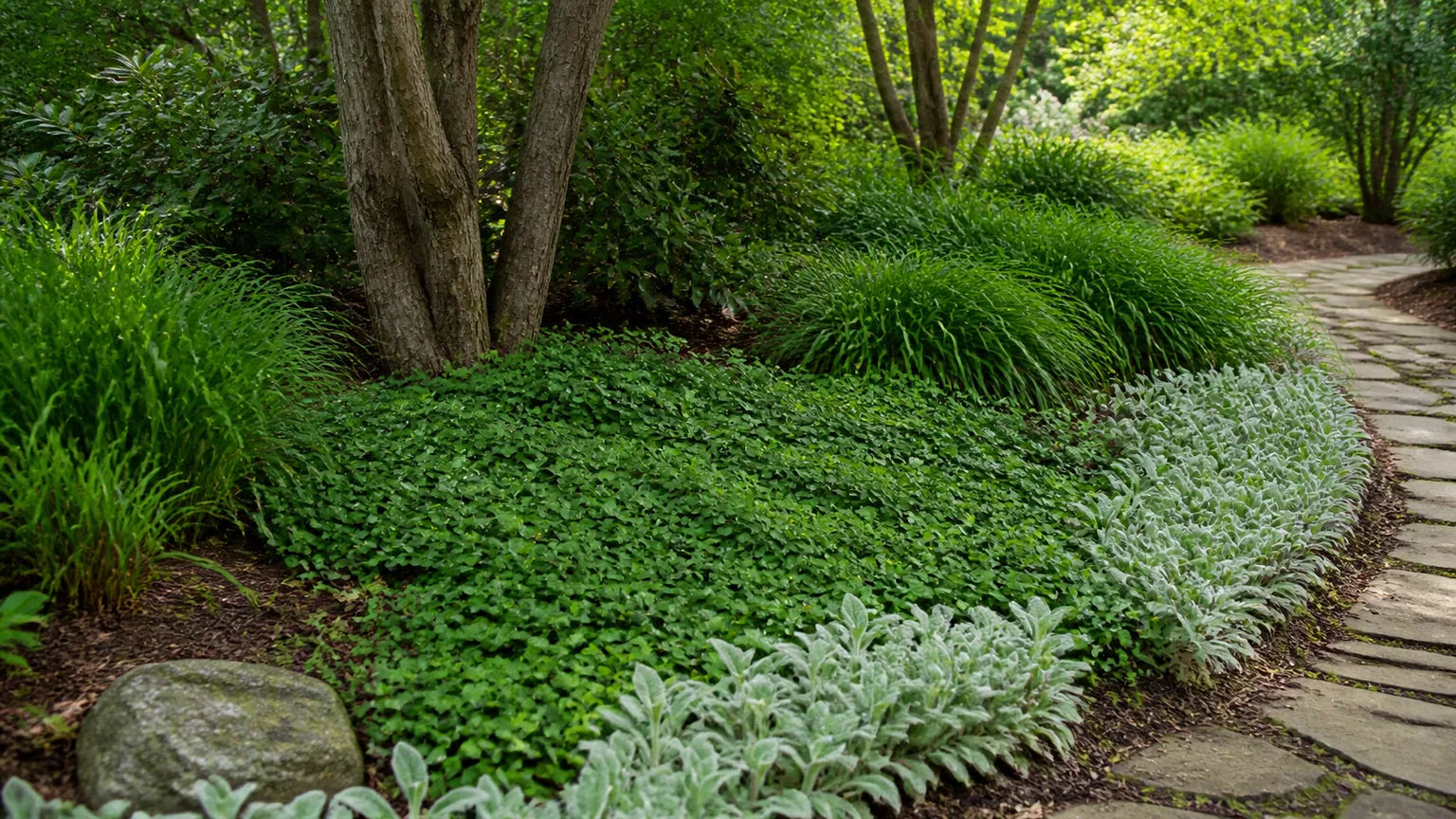
The best evergreen ground cover plants are not simply the ones that stay green in a nursery pot. They are the ones that keep useful foliage in your climate, match the site’s light and drainage, and spread at a speed you can manage. A low-growing juniper can stabilize a sunny slope, while a shade-loving spurge can knit beneath trees; putting them in each other’s conditions creates avoidable work.
This list includes true evergreens and a few semi-evergreens that are dependable in the right part of their hardiness range. Use the botanical name on the plant tag, especially for liriope, euonymus, ice plant, and sedum, because one common name can cover plants with very different habits. The spreaders are not automatically bad plants, but they need a boundary and an inspection routine. A ground cover is successful when it covers the ground without taking over every place you did not intend to plant.
What “evergreen” means in a ground cover
An evergreen ground cover keeps leaves or needles through winter in the conditions where it is hardy. That does not mean every leaf will look perfect after a freeze, snow load, drought, or winter wind. A semi-evergreen plant may hold foliage through a mild winter, then lose some or most of it after a severe cold snap. The difference is especially important at the cold edge of a plant’s range.
Foliage persistence is also separate from flowering. Creeping thyme may look tidy through winter but do most of its flowering earlier in the season. Lenten rose contributes dark foliage when many perennials are dormant and flowers in late winter or early spring. Lilyturf is useful for both its year-round clumps and its late-summer flower spikes. Decide whether you want winter structure, flowers, erosion control, or weed suppression before you choose from a color photograph.
Ground covers can shade the soil, slow evaporation, soften hard edges, and reduce exposed ground where weeds germinate. Fine Gardening also notes their roles in erosion control, pollinator support, and creating a finished transition between garden elements. Those benefits increase as plants establish; a new plug or nursery pot still needs the same careful watering as any other transplant.
Choose by sun, moisture, and spread
Start with the site rather than the plant list. Six or more hours of direct sun and sharply draining soil point toward creeping juniper, thyme, stonecrop, ice plant, or wall germander. Dappled or part shade opens the door to hellebores, Allegheny spurge, lilyturf, bugleweed, and spotted dead nettle. Deep shade can still be bright or dim, dry or damp. BBC Gardeners’ World emphasizes that the base of a wall or evergreen hedge may be dry because it sits in a rain shadow, while another shaded bed may stay damp.
Drainage is the dividing line that “drought tolerant” labels often hide. Sedum and thyme can tolerate dry soil once established but may rot in a wet winter bed. A moisture-loving plant can wilt in dry shade beneath a mature tree even if the soil looks mulched. If water remains in a planting hole after a storm, correct the grade or choose a plant for moisture-retentive conditions before you spend money on a mass planting.
Use this table as a first filter. The hardiness ranges are broad guides, not guarantees; a cultivar, sheltered wall, exposed slope, snow cover, or unusually wet winter can change the result.
| Ground cover | Best fit | Foliage and seasonal value | Broad zones; main caution |
|---|---|---|---|
| Creeping juniper | Full sun, dry slope, fast drainage | Blue-green needles and strong winter structure | 3–9; spreads several feet, no foot traffic |
| Creeping thyme | Full sun, lean soil, path edge | Fragrant mat and small flowers | 4–9; dislikes compaction and wet soil |
| Angelina stonecrop | Sun, rock garden, sandy bed | Gold-green to orange-tinted succulent foliage | 5–9; rots in standing moisture |
| Hardy ice plant | Full sun, gritty soil | Succulent foliage and bright flowers | About 6–10; species and hardiness vary |
| Candytuft | Sun to part shade, well-drained soil | Evergreen to semi-evergreen mound and white spring flowers | 3–9; can thin in wet soil |
| Wall germander | Full sun, dry border or edging | Low woody foliage and summer flowers | 5–9; needs sharp drainage |
| Blue Star juniper | Full sun, small bed or rock garden | Blue needles on a compact, taller mound | 4–8; slow and not a flat carpet |
| Moonshadow wintercreeper | Sun to part shade, adaptable bed | Green-and-yellow variegated leaves | 4–9; deer browse and spread may be a problem |
| Lenten rose | Part shade, rich, draining soil | Evergreen leaves and winter or spring flowers | 4–9; poisonous if eaten |
| Allegheny spurge | Moist, rich shade | Mottled evergreen or semi-evergreen leaves | About 5–9; slow in dry shade |
| Lilyturf | Sun to shade, average moisture | Evergreen clumps and purple late-summer spikes | 5–10; choose clumping L. muscari |
| Spotted dead nettle | Part shade, dryish soil | Silver foliage and spring flowers | 4–8; can spread beyond small beds |
| Bugleweed | Moist part shade, cool bed | Dense evergreen to semi-evergreen mat | 4–9; invasive in some regions |
| Creeping myrtle | Part shade, draining soil | Leathery evergreen mat and spring flowers | 4–9; invasive in many regions |
| English ivy | Shade, only with strict containment | Evergreen leaves and climbing habit | 4–9; invasive and toxic in some regions |
Planting, spacing, and containment
Prepare the bed before buying enough plants to fill it. Remove turf, perennial weeds, and woody runners rather than expecting a new ground cover to smother an established root system. Loosen compacted soil, correct low spots, and use only a modest amount of finished compost where the soil genuinely needs organic matter. Rich amendments and daily irrigation can make a dry-site plant grow soft and fail faster.
Set nursery pots on the ground in a staggered pattern before digging. Use the mature width on the tag to estimate spacing, then leave a little more room in a hot or drought-prone site and less room only when the plant is small, affordable, and easy to divide. Crowding is not a shortcut to instant coverage: it increases competition for water and can hide a declining crown. On a slope, stagger plants across the grade rather than lining them in channels that funnel runoff.
Plant at the same depth as the container. Keep crowns and woody stems above the soil, water slowly across the whole root zone, and inspect below the mulch before watering again. New plants may need checking daily during a hot week, but the schedule should follow soil moisture and the species’ needs, not a rigid timer. Drought tolerance is an established-plant trait, not permission to let a fresh transplant wilt.
Use a thin, loose mulch layer to slow weeds, keeping it off crowns and stems. Do not bury a running ground cover under landscape fabric when you want its stems to root into the soil. Install edging before a vigorous plant reaches the lawn or a neighboring bed. Walk the boundary at least monthly during the growing season, trim runners back to the intended line, and remove unwanted seed heads before they mature.
1. Creeping juniper (Juniperus horizontalis)
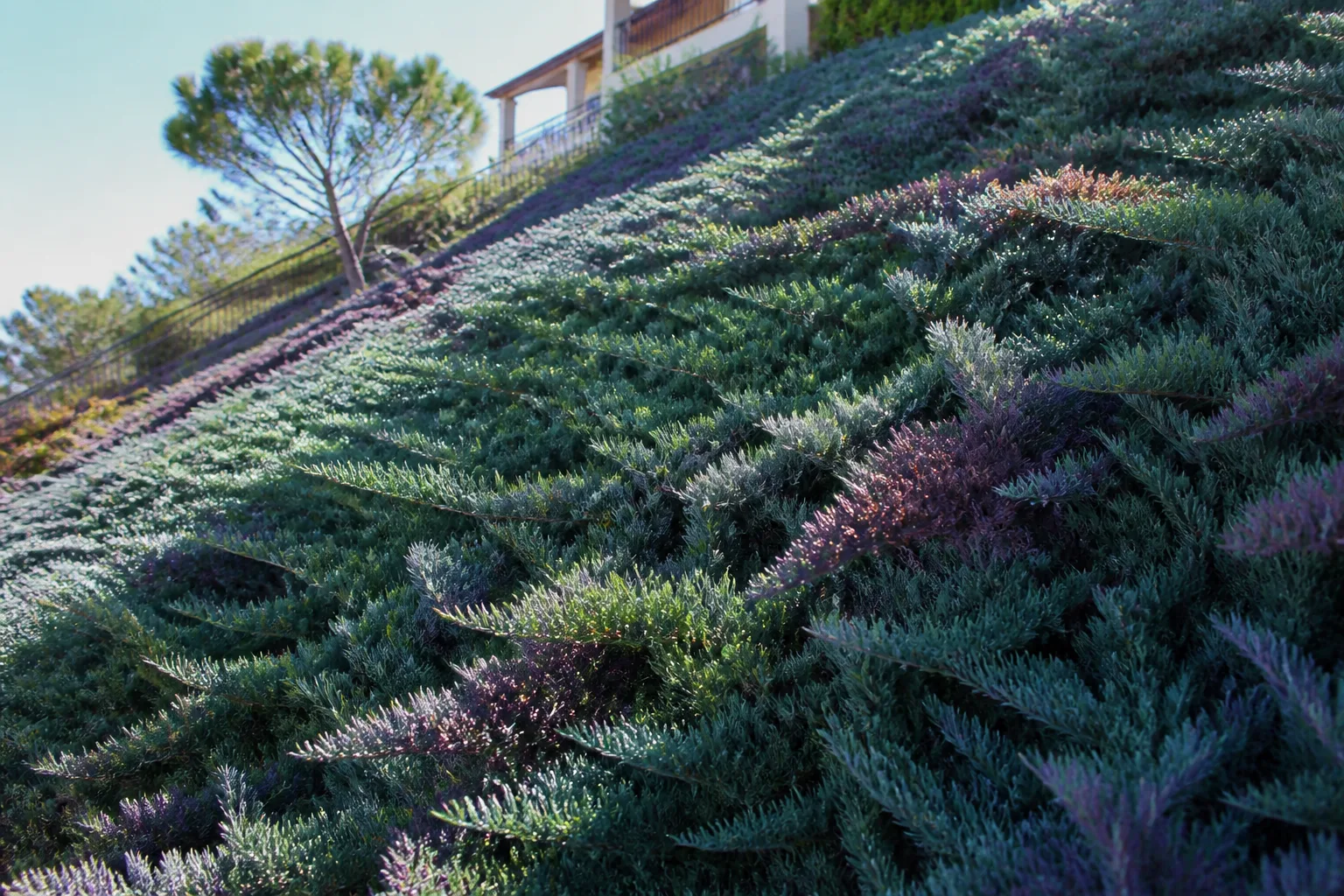
Creeping juniper is the workhorse for a sunny slope where water runs off quickly and a plant must hold the soil without asking for regular mowing. It forms a low, spreading mat of blue-green needles and can cover several feet of ground, depending on the cultivar. Fine Gardening describes it as an evergreen that handles heat and drought after establishment, with a mature spread useful for erosion control.
Give it full sun and excellent drainage. A bed that stays wet after rain is a poor match, even if the slope looks sunny. Digging a broad planting pocket and correcting the grade does more for long-term success than adding fertilizer. Space plants by their expected spread, not by the size of the nursery pot, and keep them away from the walking line because the woody stems do not tolerate repeated traffic.
2. Creeping thyme (Thymus spp.)
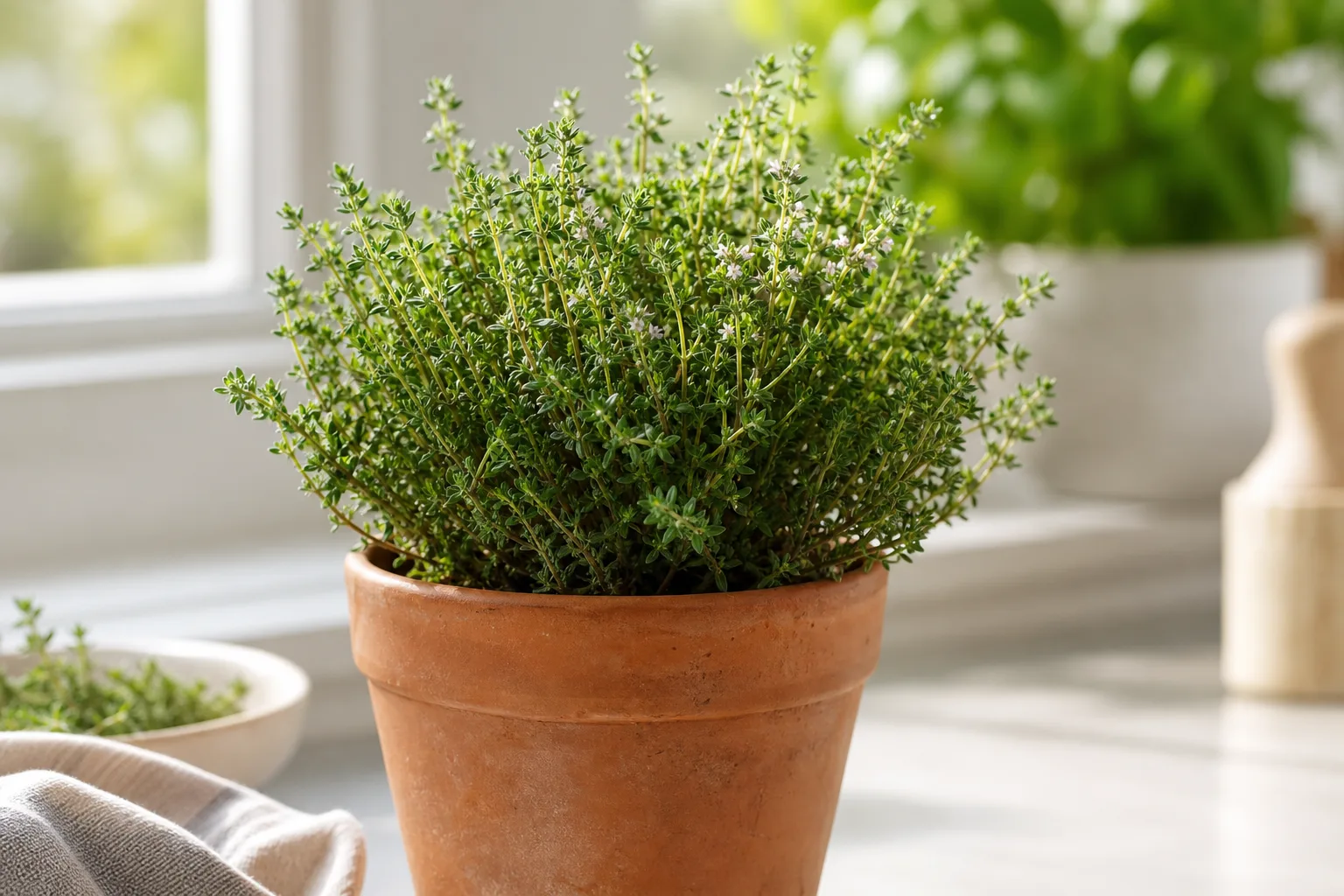
Creeping thyme earns its place along stepping stones, at the edge of a path, and in a rock garden where a fragrant, fine-textured mat is more useful than a tall flowering plant. Choose a cultivar sold specifically as creeping, woolly, or mother-of-thyme ground cover; culinary thyme can be too upright for the job. Most forms prefer full sun, lean soil, and quick drainage.
Treat thyme as an accent around a route, not as a promise of a walkable lawn. Occasional contact is fine once the mat is established, but repeated running, compacted soil, and standing water thin it. Plant the crown level with the surrounding soil and keep heavy mulch from covering the stems. Water new plants at the root zone until they root outward, then let the surface dry between deeper waterings.
Its strongest evergreen contribution is low foliage and fragrance. Bloom timing varies by species and weather, so buy it for the texture you want to see in winter rather than assuming an August installation will flower immediately.
3. Angelina stonecrop (Sedum rupestre ‘Angelina’)
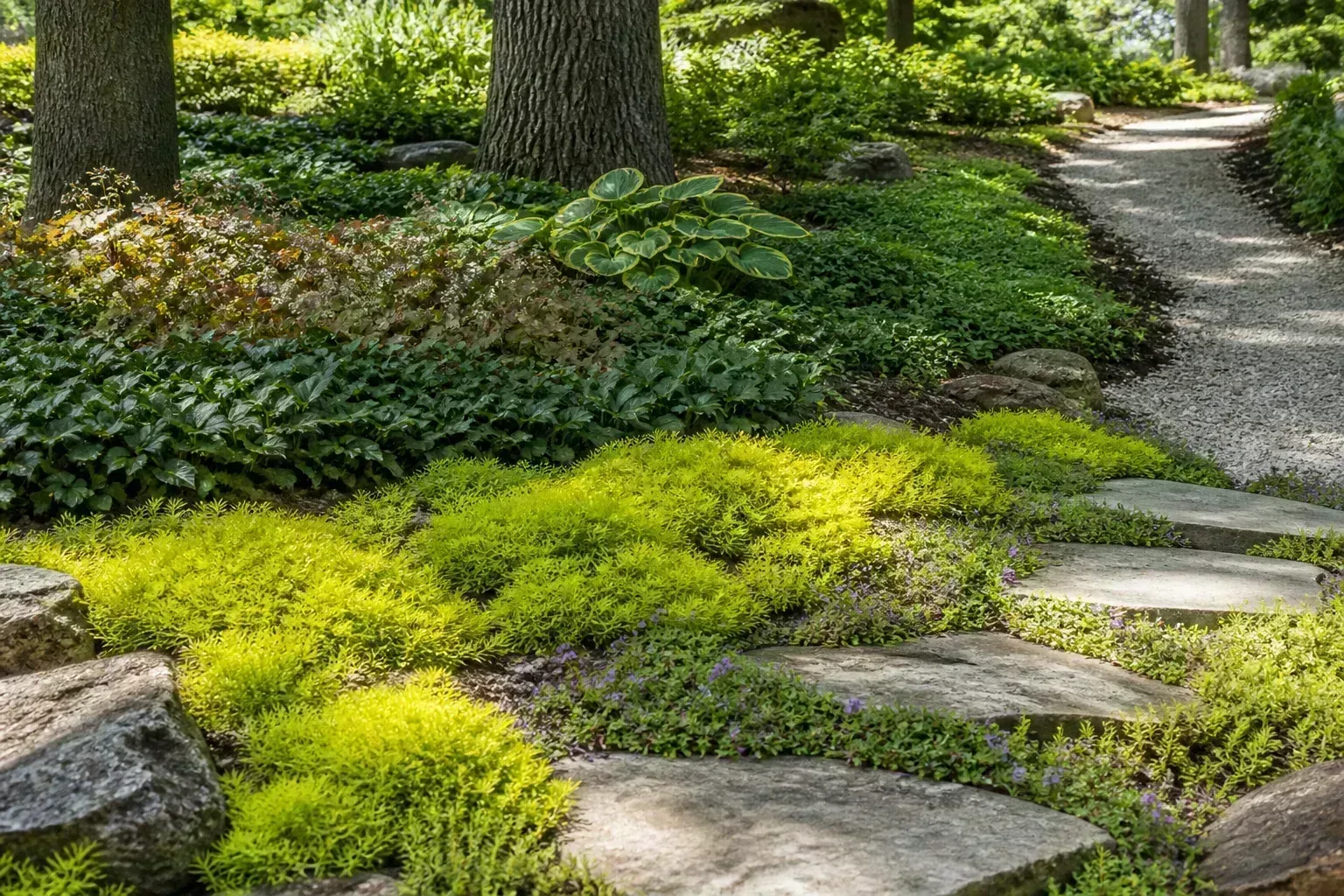
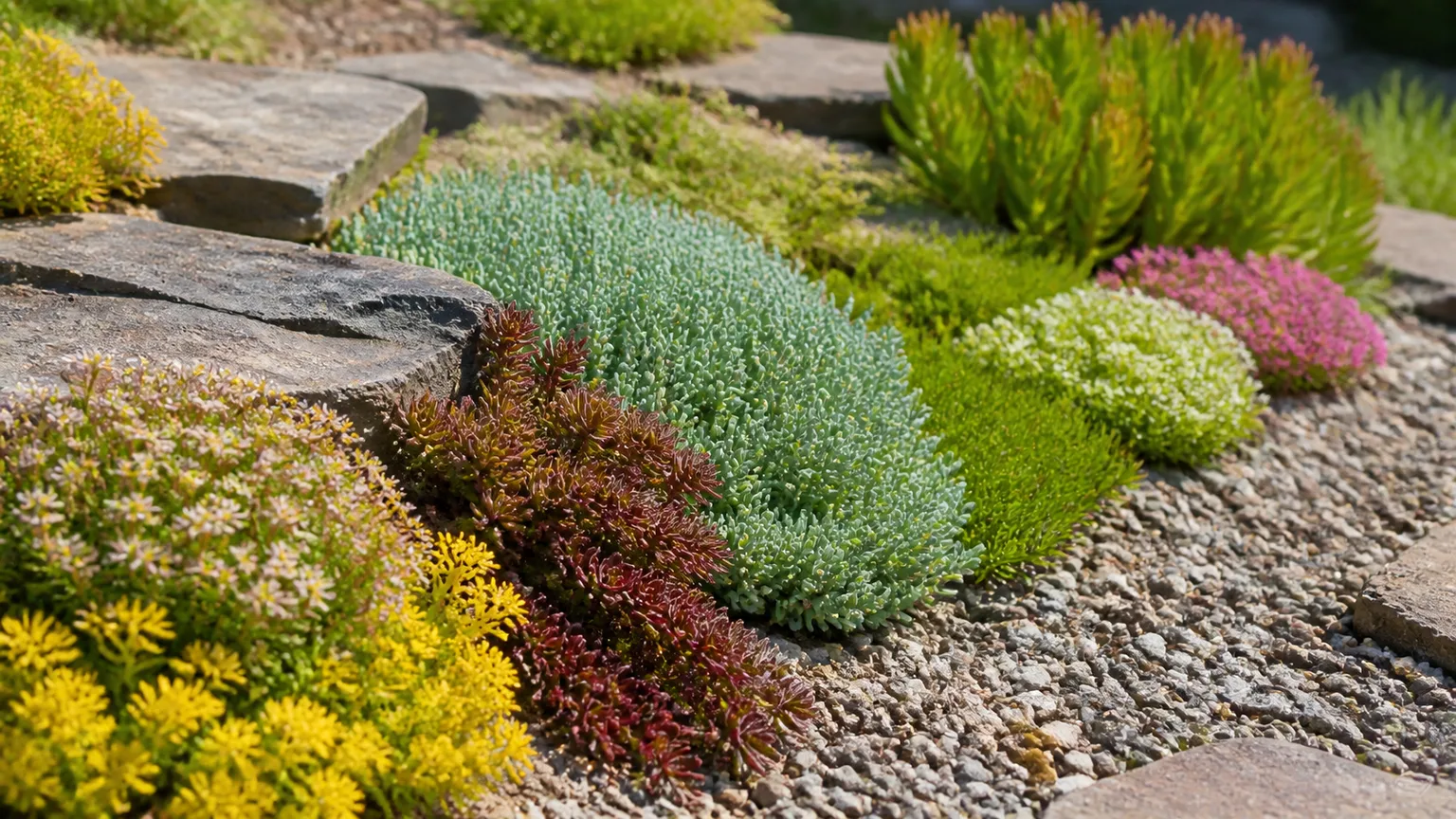
Angelina stonecrop is a compact succulent ground cover for full sun, rock gardens, gravel beds, and the dry shoulder of a retaining wall. Its needle-like leaves can read chartreuse or golden in brighter conditions and often take on orange or rust tones in cooler weather. The name “sedum” covers hundreds of plants, so check that you are buying a low, spreading form rather than a tall border stonecrop.
NC State Extension describes low-growing sedums as plants that root along stems and handle poor, rocky soil. The same profile warns that wet or poorly drained conditions are a problem. Water a fresh planting thoroughly, then allow the bed to drain and the surface to dry before watering again. Do not place it in a low pocket that stays saturated through winter.
Angelina is a foliage-first choice with small flowers as a bonus. It tolerates only light foot traffic, and its brittle leaves can fall when brushed, so use stones for the route through the bed. Once it fills in, it needs less attention than a thirsty mat.
4. Hardy ice plant (Delosperma spp.)
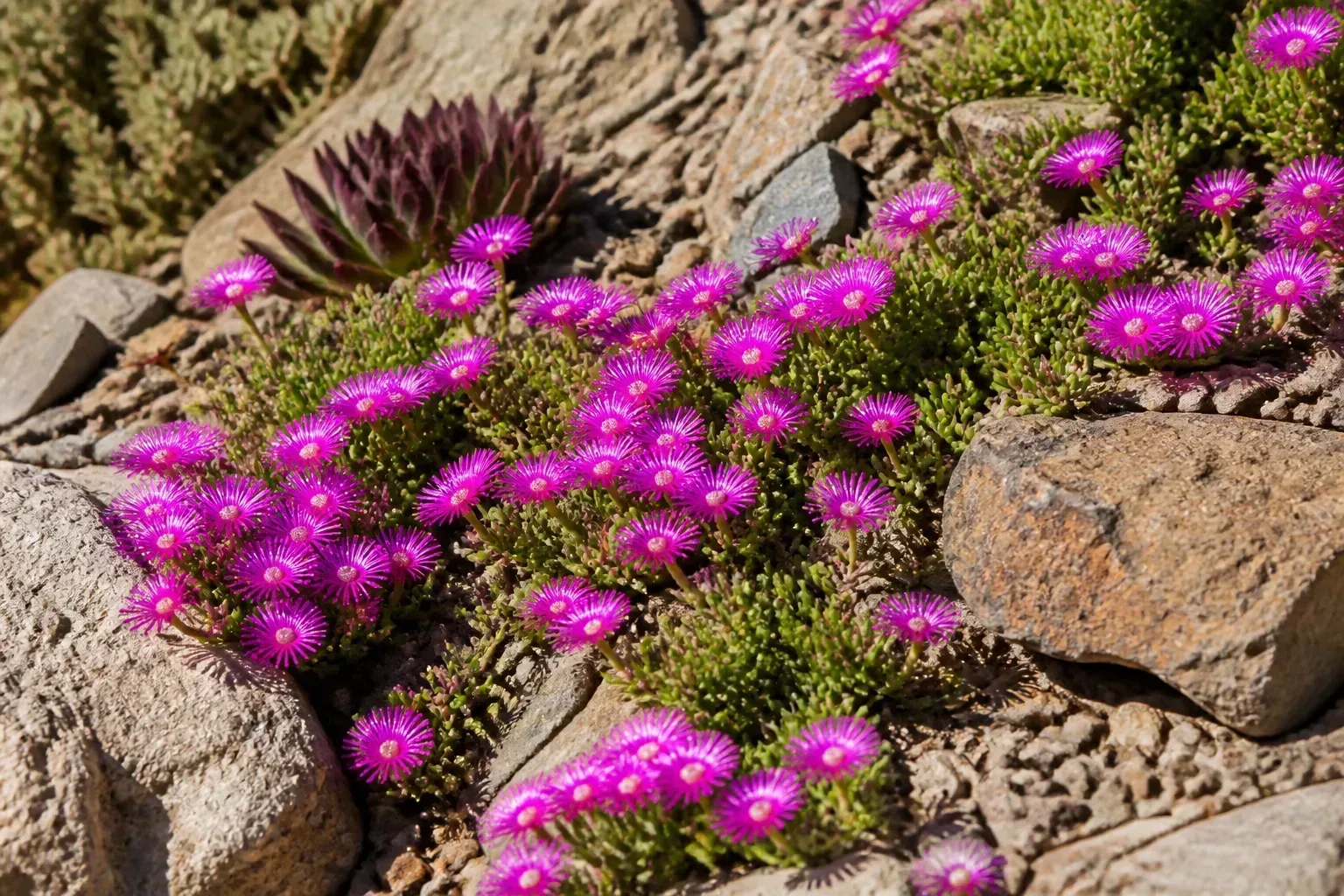
Hardy ice plant brings brilliant flowers to the hottest, driest part of a garden, but the word “hardy” must be tied to a botanical name and a climate. Compact Delosperma selections can stay low and spread across gritty soil, while other plants sold as ice plant may have very different cold tolerance or spreading behavior. Fine Gardening lists hardy ice plant among its hot, dry, full-sun choices and notes that it needs excellent drainage.
Plant it in a raised rock garden, sandy slope, or gravelly border rather than heavy clay. August heat is manageable for a healthy container plant only when you can water the root ball while it establishes. After that first phase, let the site dry between waterings. Winter wet is often a bigger threat than summer drought.
Check local invasive-plant guidance before buying a spreading ice plant, especially in mild coastal climates. Do not infer status from the common name or from a label that says “ground cover.” A compact, locally recommended selection is a better choice than a vigorous plant you cannot monitor.
5. Candytuft (Iberis sempervirens)
Candytuft is a low, mounding subshrub for a sunny border, rock garden, wall pocket, or path edge. Its narrow foliage can stay evergreen in mild climates and become semi-evergreen toward the colder edge of its range. White flower clusters arrive in spring, but the neat mound has value after the flowers fade.
Give it full sun to part shade and soil that drains freely. A crown that sits in soggy winter soil can thin or die, so fix drainage before installing a drift. Set plants at their original depth and avoid placing rich, wet mulch over the woody base. A light trim after flowering keeps the mound compact, but do not shear a heat-stressed transplant simply because the nursery bloom has finished.
6. Wall germander (Teucrium chamaedrys)
Wall germander is a drought-tolerant, low woody subshrub that works especially well as an edging plant in full sun. It forms compact mounds rather than racing through an entire bed, making it useful beside a walkway or around a dry garden where a clean outline matters. Its small leaves and summer flowers add texture without the broad scale of a shrub.
Use a sharply drained site with ordinary to lean soil. Mediterranean plants dislike a winter-wet root zone more than they dislike a dry summer, so do not plant wall germander in a flat pocket that collects irrigation. Let the surface dry between waterings after the plant establishes, and trim lightly to preserve a low edge rather than cutting into old woody stems.
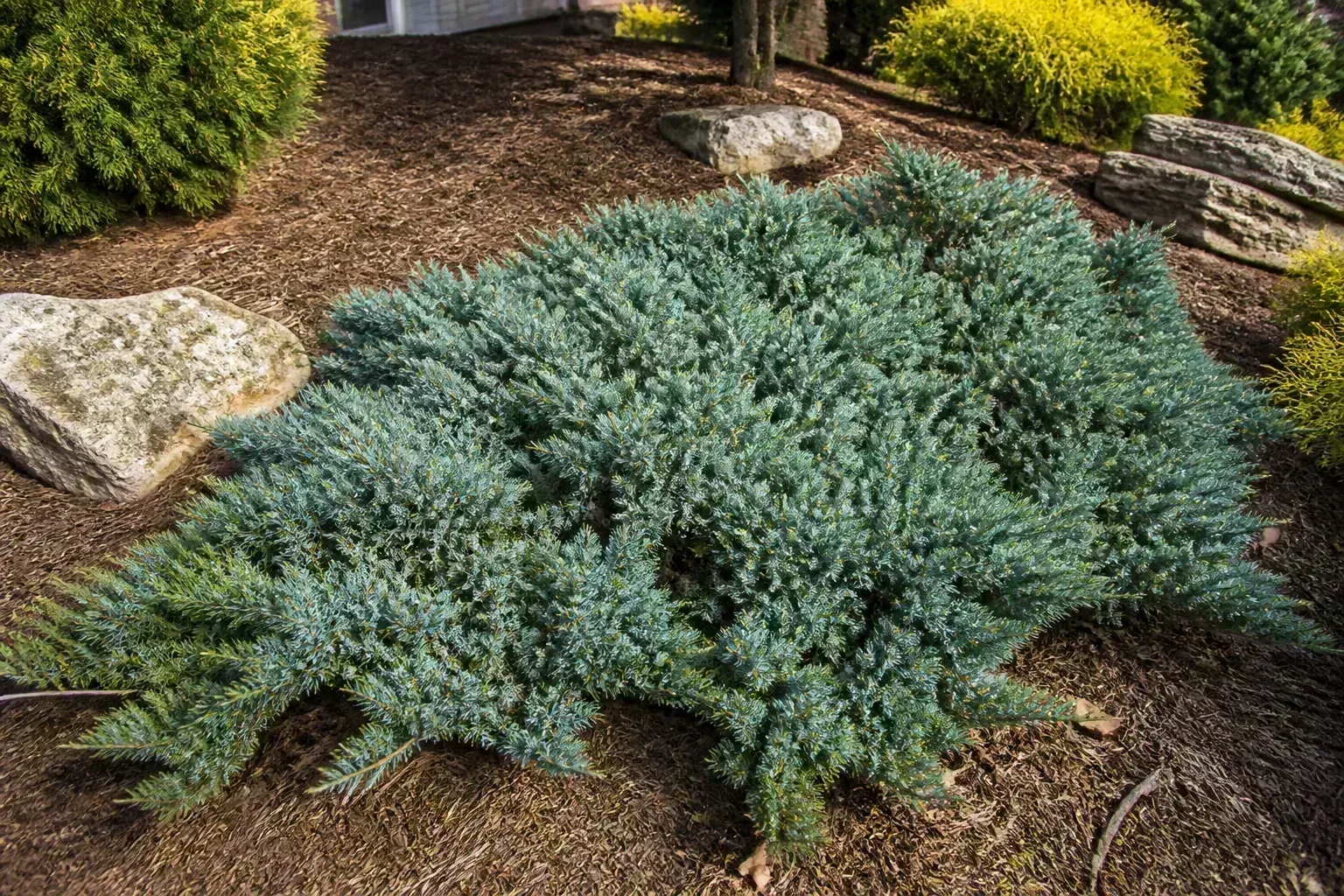
7. Blue Star juniper (Juniperus squamata ‘Blue Star’)
Blue Star juniper is a taller ground-cover option for gardeners who want a blue, needled mass without a plant that hugs the soil. It typically grows into a compact mound roughly 1 to 3 feet tall and wide, depending on site and age, and it grows slowly. That makes it suitable for a rock garden, front of a sunny shrub border, or repeated low mounds where you want winter color.
Give it full sun and well-drained soil. Slow growth is an advantage when you want fewer pruning chores, but it also means Blue Star will not hide a bare slope quickly. Plant it where the mature width can remain visible and do not bury the base in mulch. Water during establishment, then reduce supplemental irrigation as the roots move into surrounding soil.
8. Moonshadow wintercreeper (Euonymus fortunei ‘Moonshadow’)
Moonshadow wintercreeper offers bright green leaves with yellow centers and a low, spreading habit that can brighten a part-sun border. It is adaptable to a range of soil moisture conditions when drainage is adequate, and its variegation is usually stronger with more light. The trade-off is that wintercreeper selections can be browsed by deer and may spread beyond the place where they were planted.
Read the label for the exact cultivar and check your local invasive-plant resources before buying. The federal USGS register is useful background on introduced and invasive species, but local lists and extension guidance are the right tools for a planting decision because status varies by jurisdiction. Do not place a vigorous euonymus beside a woodland edge, stream corridor, or unmanaged property line if you cannot inspect it.
9. Lenten rose (Helleborus × hybridus)
Lenten rose is a shade-tolerant, clumping ground cover for a woodland border, under deciduous trees, or a protected bed where winter and early spring flowers matter. Its dark, leathery leaves remain present through much of the year, while nodding flowers appear late in winter or early spring. NC State Extension describes hellebores as evergreen but notes that harsh winters can scorch or tatter the foliage.
Plant it in light to moderate shade with organically rich, well-drained soil. A sheltered location protects leaves from drying winter wind, while a slightly raised or well-graded bed prevents crown problems. Old leaves can be removed before flowering if they look damaged, but wait until new growth is emerging so you do not strip the plant prematurely.
Hellebores are poisonous if eaten. Keep them away from children or pets that chew plants, do not use the leaves in food or remedies, and wear gloves if the sap irritates your skin. Their slow, clumping habit is a benefit in a managed bed: they create structure without behaving like a runner.
10. Allegheny spurge (Pachysandra procumbens)
Allegheny spurge is the strongest alternative here when you want a pachysandra-like ground cover for shade without defaulting to Japanese pachysandra. It is native to the southeastern United States and forms a dense mat beneath trees and shrubs. NC State Extension describes its leaves as evergreen to semi-evergreen in zones 7–8, with pale mottling and fragrant spring flower spikes.
Give it moist, rich, well-drained woodland soil and dappled to deep shade. Dry shade under a dense evergreen canopy can still be difficult; mulch conserves moisture, but it cannot replace watering while new roots establish. Set plants about 6 to 12 inches apart when using divisions or small nursery plants, then allow the mat to fill gradually rather than burying the crowns.
Allegheny spurge is slower and less aggressive than a fast runner, which is exactly why it is easier to keep in a defined bed. Use it beneath shrubs or along a shaded path, not in hot reflected sun or a waterlogged hollow.
11. Lilyturf (Liriope muscari)
Lilyturf is a clumping, grass-like perennial that works as an evergreen ground cover, edging, or repeated planting beneath shrubs. It forms dense basal clumps of arching leaves and sends up purple flower spikes in late summer and early fall. NC State Extension notes that Liriope muscari is less aggressive than spreading Liriope spicata, a distinction worth checking before you buy a plant labeled only “monkey grass” or “liriope.”
It grows in sun to partial shade and can tolerate almost full shade, although growth is slower and leaves may stretch. Provide regular moisture during the first year; established plants can need little supplemental irrigation. A February cutback before new growth begins helps remove tired foliage, but leave the crowns undisturbed and do not cover them with wet mulch.
Choose the clumping species for a tidy border or path. If you want a fast runner for a large bank, check local guidance first and install a hard edge before it reaches lawn or natural areas.
12. Spotted dead nettle (Lamium maculatum)
Spotted dead nettle is a useful foliage plant for part shade, dryish shade, and the front of a woodland border. Its silver-marked leaves brighten dark soil, and pink, purple, or white flowers appear in spring and sometimes repeat under favorable conditions. The foliage may be evergreen or semi-evergreen depending on winter severity and exposure.
Choose a site with drainage and some air movement. Dry shade beneath trees can be a good fit, but a bed that stays heavy and wet encourages crown problems. Water new plants until roots move outward, then let the upper soil dry slightly between applications. Do not bury the spreading stems beneath a thick mulch cap if you want them to root where they touch the ground.
13. Bugleweed (Ajuga reptans)
Bugleweed makes a dense mat in cool, moist sites where grass struggles, and cultivars range from green to bronze, purple, or variegated foliage. It is evergreen to semi-evergreen, deer resistant, and topped with short blue or purple flower spikes in spring. NC State Extension says it tolerates all light levels but performs best in moist areas, while also warning against wet, heavy soils and noting that its aggressive spread is invasive in parts of the country.
Use bugleweed where you can see the edges. It works on a managed slope, woodland garden, or shaded bed with enough air circulation, but it is a poor choice beside a lawn or delicate perennial border if you will not divide and thin it. Crown rot becomes more likely in humid, poorly drained soil.
Choose a slower-spreading cultivar when available, but do not treat a cultivar name as a universal guarantee of noninvasiveness. Check your regional list and plan the boundary before planting.
14. Creeping myrtle (Vinca minor)
Creeping myrtle, or periwinkle, is popular because its leathery evergreen leaves make a dense mat in part shade and its blue flowers appear in spring. It can tolerate heat and substantial shade, but its stems root at the nodes and allow it to move far beyond the original patch. NC State Extension calls out its aggressive growth, invasive classification in North Carolina, and ability to spread into lawns, gardens, and natural areas.
That makes it a conditional choice, not a default recommendation. Check your state, province, or county invasive-plant guidance. If it is allowed where you live, contain it with a hard edge, keep it away from woods and drainage corridors, inspect it several times during the growing season, and remove runners before they root. Do not plant it in a place where you cannot reach the far edge.
For a small shade bed, consider a locally native alternative such as golden star or Allegheny spurge when it fits your region. The slower alternative may take longer to cover bare soil, but it is often the lower-cost choice over the life of the garden.
15. English ivy (Hedera helix)
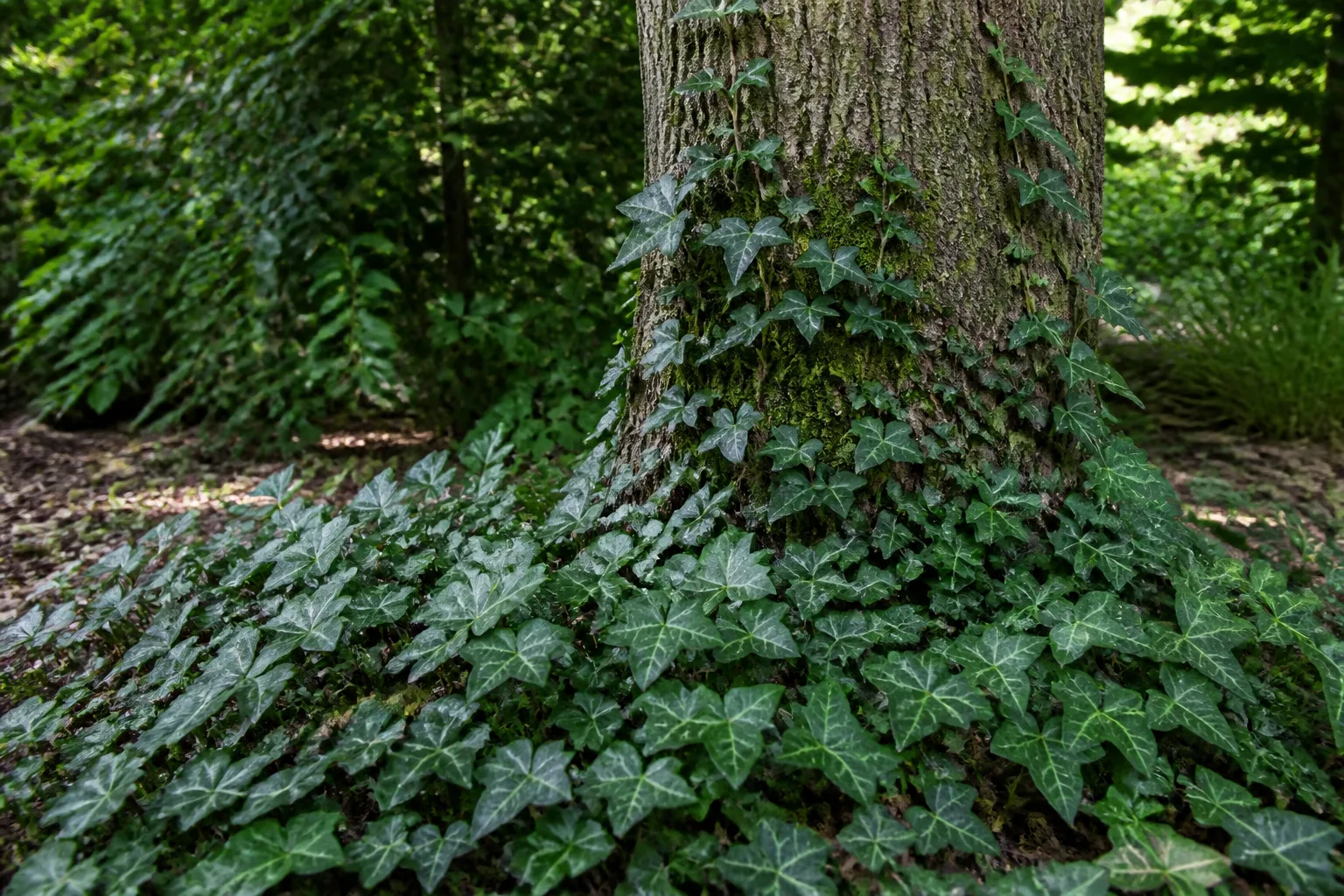
English ivy is the familiar evergreen ground cover for shade, but it belongs in the “use only with a strong reason and a containment plan” category. Its trailing stems cover soil and its aerial roots allow it to climb trees, walls, and fences. Once established, it can be difficult to remove, especially when runners have entered a woodland edge or climbed into mature trees.
The plant also has a toxicity concern if eaten. NC State Extension and local invasive-plant programs are better authorities than a generic plant tag for deciding whether it belongs in your landscape. If local guidance says to avoid it, do not substitute a different ivy sold under a similar common name without checking the botanical name.
If you already have English ivy, do not let it climb trees or cross property lines. Cut climbing stems at the base, pull small rooted patches only when the soil is workable, and dispose of unwanted material according to local guidance. For new planting, choose a clumping shade plant or native ground cover that stays within the bed.
Conclusion
For a sunny, dry slope, start with creeping juniper, creeping thyme, Angelina stonecrop, or a locally hardy ice plant. Candytuft and wall germander suit smaller, better-drained borders, while Blue Star juniper adds a taller blue-green mound. In shade, Lenten rose, Allegheny spurge, lilyturf, spotted dead nettle, and bugleweed offer different balances of winter foliage, flowers, moisture tolerance, and spread.
The popular runners—wintercreeper, bugleweed, periwinkle, and English ivy—need a regional status check and a real boundary. “Fast growing” is not the same as low maintenance. Match the plant to the soil and light, plant at the original depth, water the root zone while it establishes, mulch lightly, and inspect the edges. That is how an evergreen ground cover becomes lasting structure instead of the next garden problem.