Houseplant Fertilizer Burn: Causes, Flush, and Fixes
Diagnose houseplant fertilizer burn, flush soluble salts safely, and tell salt crust apart from hard water, lockout, and humidity tip burn.
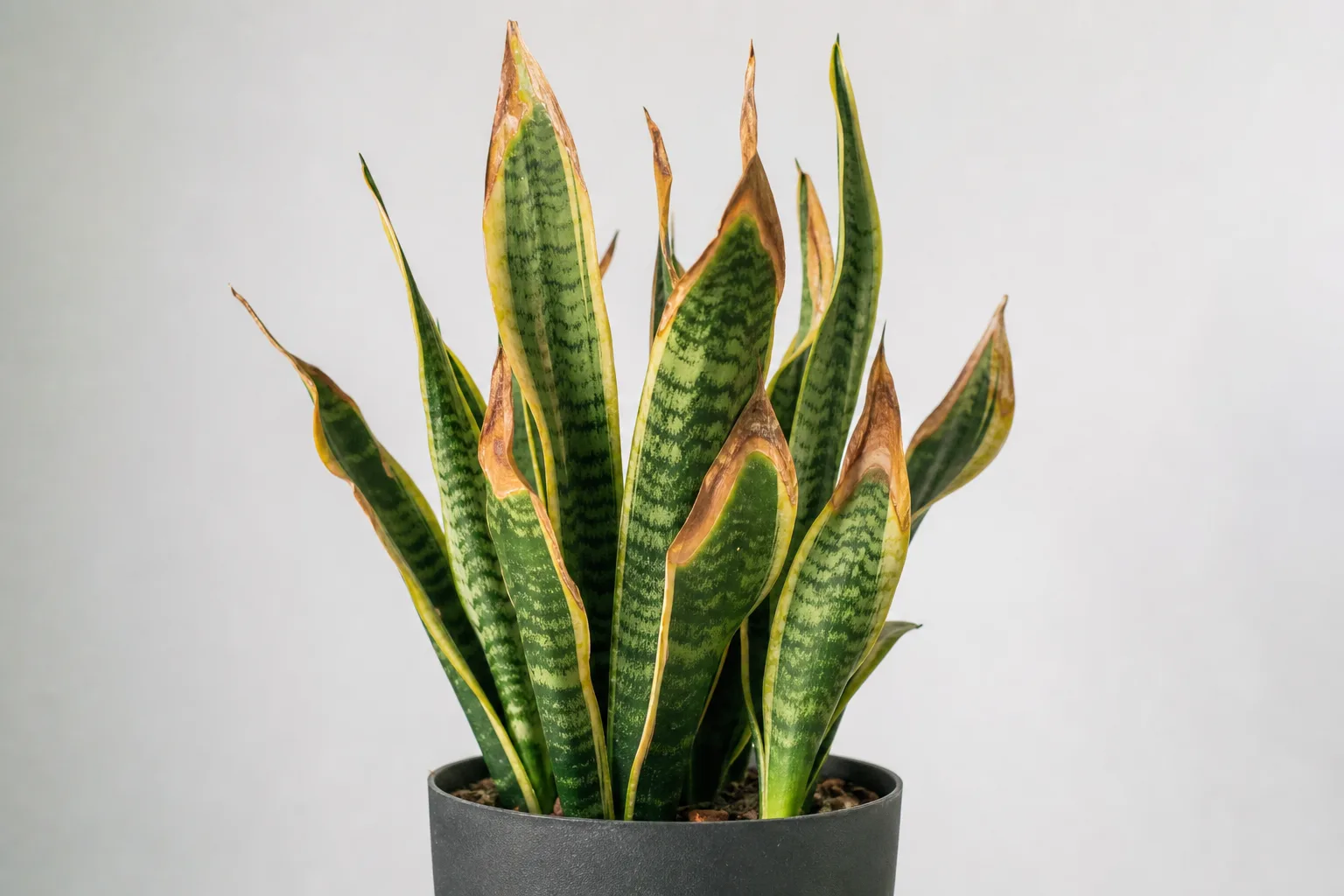
You fed your plant “to help it bounce back,” and a few days later the tips are crispy, the soil has a chalky rim, and the plant looks thirsty while the mix is still damp. That pattern is classic houseplant fertilizer burn — not a mysterious disease, and not proof you need more nutrients.
Three lookalike salt paths show up as tip burn: acute overfeeding, chronic soluble-salt crust, and hard-water minerals. Stop fertilizing first, then diagnose which path you are on before you flush, repot, or change water.
Written by Sai Ananth; horticulture review by Dr. Priya Menon (botanist and indoor plant specialist).
What Fertilizer Burn Actually Is (Salts and Osmosis)
Fertilizer is mostly salts by design. Those salts dissolve into ions plants can use — nitrate, ammonium, potassium, phosphate, and micronutrients. In low concentration they feed growth. In high concentration they create an osmotic problem: the soil solution becomes saltier than the water inside root cells, so water moves the wrong way or moves too slowly. Roots dehydrate even when the pot feels wet.
Washington State University’s Hortsense notes that high salt levels damage roots and reduce water uptake, and that salts can accumulate in leaf tissue and cause tip and margin necrosis. Container plants are especially vulnerable because pots are closed systems — salts leave only when you leach them out the drainage holes or when you replace the mix.
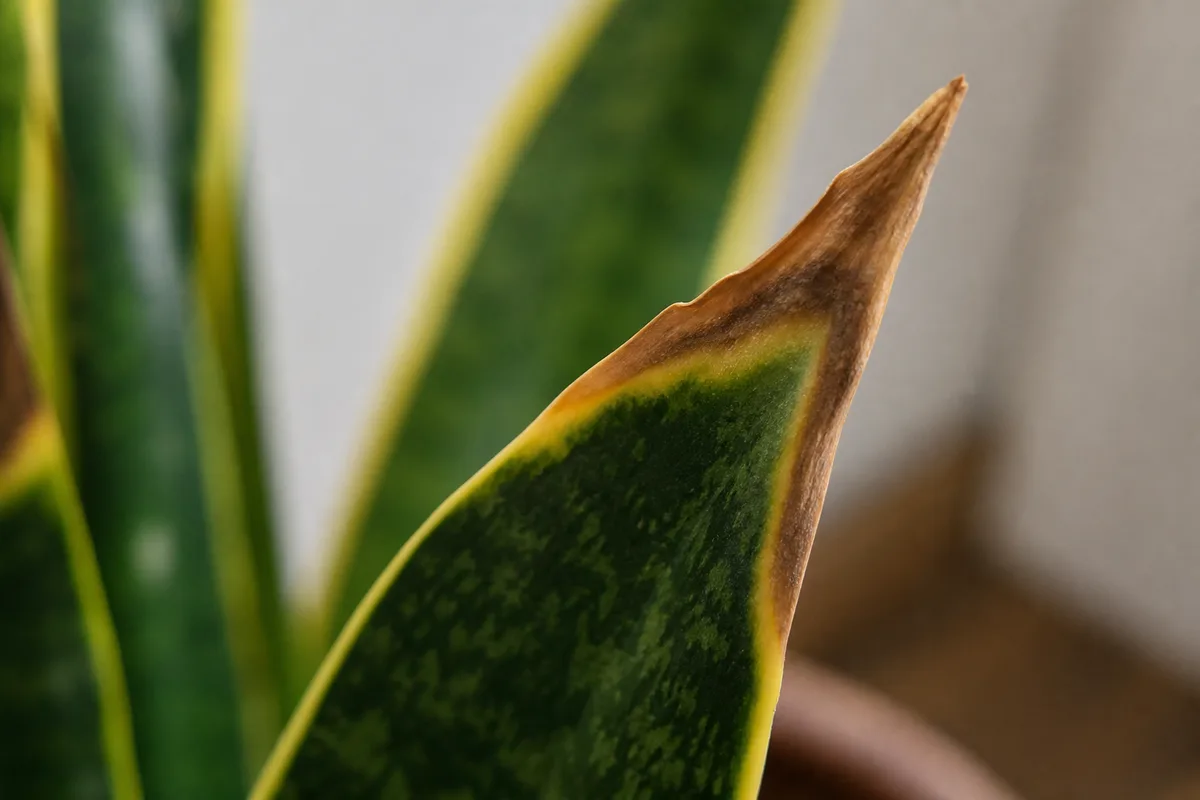
The same chemistry explains the look of the plant. Leaves may wilt, growth slows, tips turn brown, and tender shoots can die. Damage often looks evenly distributed across the canopy rather than clustered like a pest outbreak. A brownish or whitish crust on the mix surface or pot rim is a strong supporting clue for container plants.
Tip Burn vs Salt Buildup vs Hard Water
Brown tips are a symptom, not a diagnosis. Three overlapping salt-related pathways look similar at the leaf edge and get mislabeled as one problem.
| Pattern | Typical trigger | Soil / pot clues | Timing |
|---|---|---|---|
| Acute fertilizer burn | One strong feed, dry-soil feed, or foliar contact with dry granules | May or may not show crust yet | Hours to several days after feeding |
| Chronic soluble salt buildup | Repeated feeding + incomplete leaching | White/grey crust on mix or rim | Weeks to months |
| Hard-water mineral stress | High Ca/Mg (and often other dissolved solids) in tap water | Chalky film, kettle scale, crust even with light feeding | Gradual; worse with bottom watering |
Acute Fertilizer Burn After a Heavy Feed
Acute burn follows a discrete event: you used full-strength liquid when the plant was already stressed, stacked slow-release beads and liquid feed, applied fertilizer to bone-dry mix, or let dry product sit on wet foliage. WSU advises never fertilizing plants stressed by heat or drought, and warns that dry fertilizers contacting wet foliage can burn spots on leaves.
Expect tip scorch that appears quickly on both young and older leaves, sometimes with wilting that does not match a dry pot. If the plant looked fine the day before a heavy feed and tips crisped within a few days, start here — stop fertilizing immediately and plan a flush.
Chronic Soluble Salt Buildup
Chronic buildup is the slow version. Every watering that does not run freely out the bottom leaves a little more behind. Fertilizer salts stack on top of minerals already in the water. Clemson HGIC flags white film on the soil surface or white crust on the rim or drainage hole as a sign the plant may be overfertilized and/or overwatered, and notes salt buildup can cause reduced growth, brown tips, lower-leaf drop, and wilting.
UC Statewide IPM lists brown leaf tips or margins among problems commonly tied to overfertilization, salt buildup, or excessively dry or wet soil. Colorado State University PlantTalk adds an important indoor habit: subirrigation (bottom watering) can accumulate excess soluble salts at the soil surface, and high salt levels inhibit growth by reducing water uptake and burning foliage. If you bottom-water most of the time, periodic top watering to leach is not optional — it is the corrective step.
Hard Water Minerals That Mimic Burn
Hard water is dissolved calcium and magnesium, not “dirty” water. Those minerals are salts too. They leave chalky deposits on pot rims and mix surfaces even when you barely fertilize. Clemson notes fertilizer and minerals from hard water accumulate in soil and can cause root damage and wilting, and advises against softened water because sodium and chloride add more salt load.
Hard-water stress and fertilizer burn often coexist. If your kettle scales quickly and sensitive plants keep browning despite light feeding, treat water quality as a co-cause. Use the hard water houseplants guide for testing TDS versus hardness, softener pitfalls, and safer water options, then return here for the flush and feeding reset.
Burn vs Nutrient Lockout vs Humidity Tip Burn — Which Guide?
Use this page when the story is salts you added (or salts left behind after feeding) plus tip/margin necrosis, wet-but-thirsty wilt, or crust after fertilizer.
| If this is true… | Go here |
|---|---|
| Heavy feed or stacked products, then tip scorch within days; crust optional | Stay on this guide — flush or repot |
| Pale/yellow leaves after recent feeding, no clear “I overdosed” event, pH/uptake suspected | Nutrient lockout in houseplants |
| Chalky rim and tip burn with light feeding; kettle scales; hard tap or borewell | Hard water for houseplants |
| Brown tips with dry air, no crust, no recent feed spike | Brown tips on houseplants and humidity checks |
Lockout pages answer “why can’t roots use what’s already there?” This burn hub answers “did fertilizer salts injure tissue, and how do I leach or replace the mix?” Many pots need both a flush and a later dilute restart — but the first move after acute burn is still stop feeding and leach, not add more product.
How to Diagnose Fertilizer Burn Correctly
Work the problem in order. Confirm salts before you cut every brown tip, move the plant, and change three care habits at once.
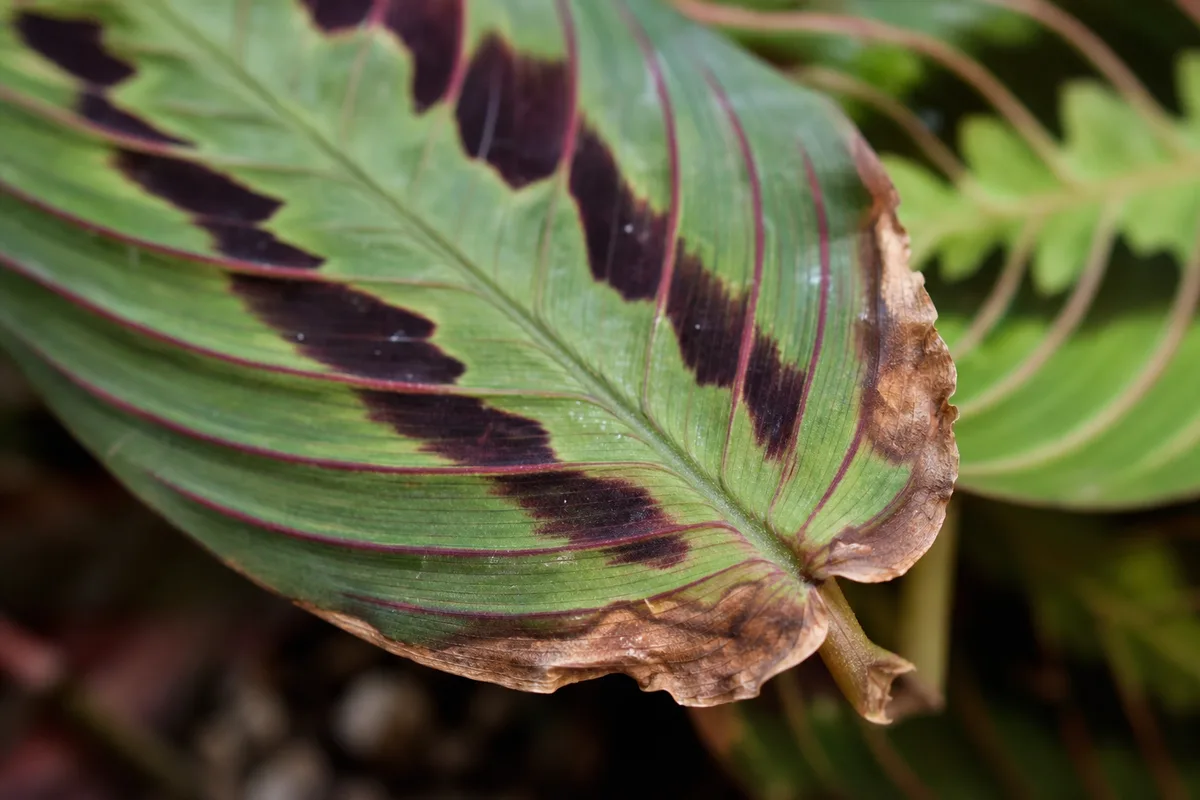
Look for a cluster of signals, not a single brown tip:
- Crispy brown tips or margins, often fairly even around the plant
- Wilting or a “thirsty” look while the mix is still moist
- Slowed growth after a period of heavy feeding
- White to grey crusty deposits on the soil surface or pot rim (Clemson warns not to confuse this with fuzzy saprophytic mold)
- Recent full-strength fertilizer, stacked products, or months of bottom-only watering
If several of those line up, fertilizer salts or irrigation salts are the leading explanation. For a broader tip-burn differential that also covers humidity and fluoride-sensitive species, cross-check brown tips on houseplants.
Optional confirmation: a pocket TDS/EC meter on runoff can show whether leachate is still very “salty” after a first flush. Treat meter readings as a relative before/after check for your water and mix, not a universal lab cutoff. Most home rescues succeed with crust + history + a proper flush without owning a meter.
Look-Alikes to Rule Out First
RHS guidance on leaf damage notes brown tips or margins may indicate over- or underwatering, a dry atmosphere, or poor ventilation — so moisture and humidity still belong on the checklist. Soft, yellow lower leaves with a heavy, sour-smelling pot point more toward overwatering and possible root rot than toward a one-time feed. Bone-dry mix that has pulled from the pot walls with crisp tips points toward underwatering.
Low winter humidity browns tips without any crust. Fluoride- and chlorine-sensitive plants (spider plant, many dracaenas, some calatheas and prayer plants) can tip-burn from tap chemistry even at modest fertilizer rates. Clemson suggests letting tap water stand 24 hours before use for some sensitivities — that helps free chlorine, not hardness minerals.
Rule of thumb: crust plus recent feeding favors salts; dry air plus no crust favors humidity; wet-heavy pot plus limp yellow leaves favors watering/roots. Fix the primary cause first.
Why Overfeeding Burns Roots and Tips Indoors
Indoors, light is usually the growth throttle. Clemson notes indoor plants in low light have reduced fertilizer needs, and that about 200 foot-candles for 12 hours daily are needed before foliage plants show real benefit from fertilization. Feeding a plant that is barely photosynthesizing is how salts accumulate with little growth payoff.
Overfeeding also creates soft, lush tissue that pests love. WSU notes aphids, mites, and other pests often thrive on the tender growth from heavy fertilization — so a salt-stressed plant can pick up a secondary pest problem while you are still diagnosing tips.
Common overfeeding mistakes:
- Using outdoor lawn or garden rates on houseplants
- Fertilizing through winter rest when growth has stalled
- Combining slow-release pellets with regular liquid feeds without accounting for both
- Feeding every watering at full label strength in low light
- Never leaching because saucers are emptied too late — or never emptied
Water-soluble fertilizers are often preferred indoors because dilute solutions reduce burn risk. When in doubt, underfeed and watch new growth rather than chasing greener leaves with more product.
The Flush Protocol That Actually Works
Flushing (leaching) means running a large volume of clean water through the pot so soluble salts leave through the drainage holes. Clemson’s fertilizing guidance says the most effective prevention is stopping salt buildup by watering thoroughly and emptying the catchment tray. Clemson’s watering guidance is explicit: water until it runs out the bottom — that washes excess salts and wets the lower root zone — then do not let the pot sit in the runoff. UC IPM salinity guidance likewise treats leaching with low-salt water as the primary remediation for saline root zones.
When a Flush Is Enough
Use a flush when the pot has drainage holes, the mix still drains freely, roots are not mostly rotten, and the plant is only moderately stressed.
- Move the pot to a sink, tub, or outdoors where runoff can go.
- Water slowly with room-temperature, non-softened water until water exits the drainage holes. Softener output fails this step — see the next section.
- Continue until you have applied roughly enough water to equal two to three times the pot’s volume across one session (pour, pause for absorption, pour again). That LeafyPixels practical range is about displacement: one pot volume alone often channels; two to three volumes give repeated exchange through the root ball.
- Let the pot drain fully. Empty any saucer. Do not leave the pot standing in leachate.
- If crust is thick on the surface, gently scrape away the top crust layer and replace with a thin layer of fresh mix after the flush drains (Clemson lists removing salt crusts and adding fresh soil as a supporting step).
- Hold all fertilizer. Resume only after you see stable new growth — often several weeks in active season, longer in winter.
Colorado State’s bottom-watering warning still applies after you flush: if you return to exclusive subirrigation, salts will climb again. Alternate or periodically top-water hard.
Softener Water and Flush Mistakes to Avoid
Missouri Botanical Garden landscape salt guidance reinforces a household rule that matters at flush step 2: never water plants with softened water — the sodium load is a plant problem even when soap lathers better. If your “flush” water is softener output, you are trading one salt for another.
Other flush mistakes that undo the work:
- One quick splash that runs down the pot wall without wetting the center of the root ball
- Leaving the pot sitting in the leachate “to soak more”
- Over-flushing cold-sensitive plants with icy water (use room temperature)
- Scraping crust without leaching, then fertilizing again the same week
- Expecting old necrotic tips to green up as proof the flush worked
When to Repot Instead of Flushing
Flushing fails or is the wrong first move when:
- The pot has no drainage hole and you cannot safely leach
- The mix is hydrophobic, compacted, or so crusted that water channels down the sides
- Roots are soft, black, and foul-smelling (address root rot alongside any salt issue)
- Slow-release fertilizer was heavily over-applied (see next section)
- The plant has collapsed after repeated “rescues” that never removed the salty media
Repot into fresh, well-draining mix in a clean pot with drainage. Gently rinse remaining roots with clean water during the process if they are coated with crusty media. Do not fertilize a freshly repotted, stressed plant. Give it time to re-establish before any dilute feed. For technique details, see repotting houseplants.
Slow-Release Prills and Why Leaching Fails
WSU notes leaching by heavy watering helps for quick-release or liquid fertilizers; it will not magically remove every slow-release prill still dissolving in the mix. If the pot is packed with controlled-release beads and symptoms are severe, treat that as a repot case.
How to spot the problem: look for round polymer-coated beads mixed through the media (often tan, yellow, or greenish). If you find a heavy layer after an acute burn, tip the plant out, remove as many beads as you can without shredding roots, and replace most of the mix. A rinse-only flush leaves a slow salt drip that recreates tip burn over the next weeks.
Aftercare: Watering, Feeding, and Recovery Timeline
Dead brown tip tissue will not turn green again. Trim only the necrotic edge with clean scissors, following the leaf’s natural shape, if the cosmetic damage bothers you. Leave green tissue alone — it still feeds the plant.
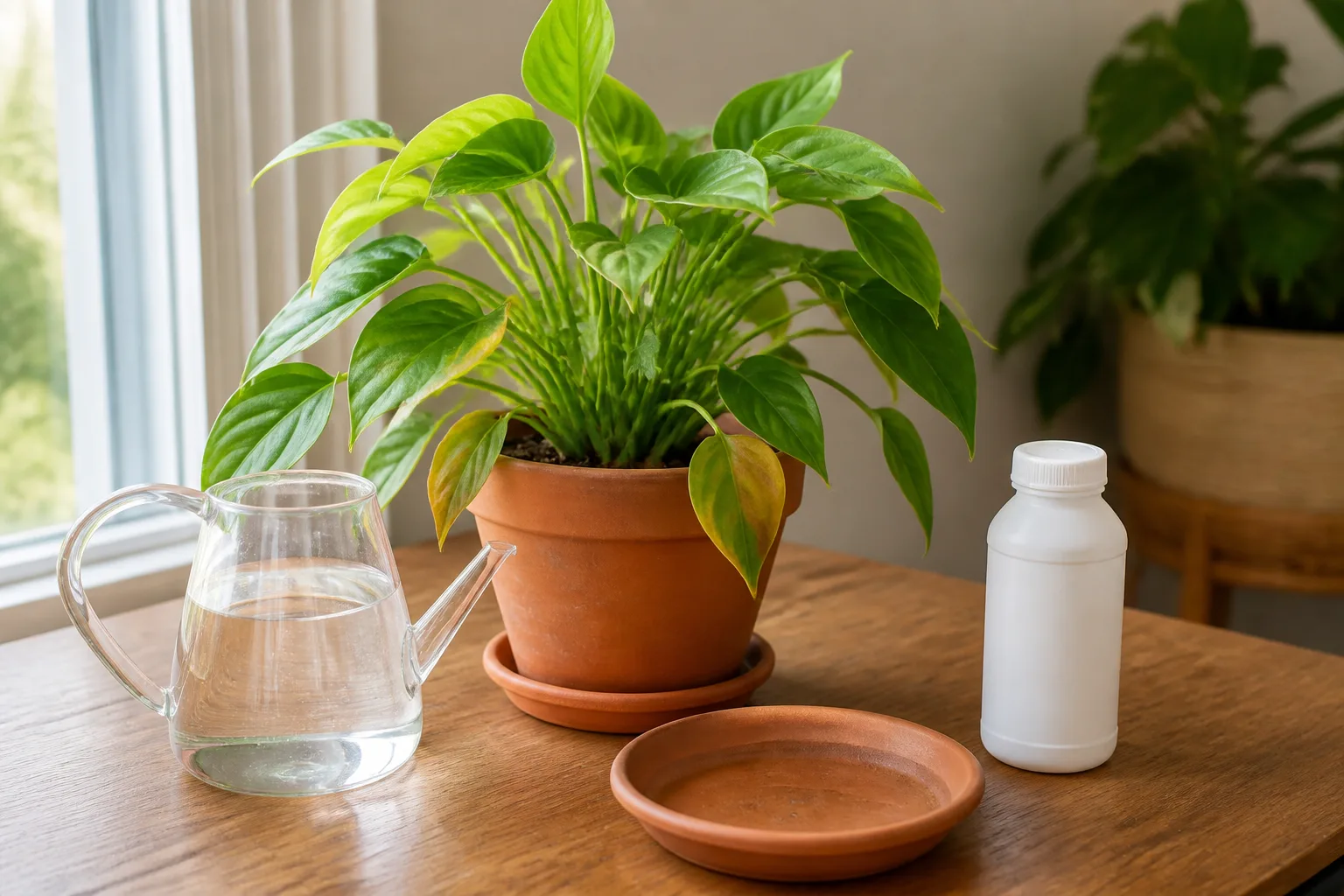
Expect a lag. Old damaged leaves stay marked. Success looks like new leaves opening with clean margins and a plant that no longer wilts oddly in moist mix. In active growth that feedback often appears within a few weeks; in short winter days it can take much longer because the plant is not pushing tissue.
Watering after a flush should return to a moisture-based schedule, not a calendar binge. Follow how to water indoor plants the right way: water thoroughly when the mix needs it, drain completely, and empty saucers. Thorough watering is both hydration and ongoing light leaching.
Feeding rules after burn:
- Skip fertilizer until recovery growth is clear
- Restart at one-quarter to one-half of the label rate for houseplants
- Prefer dilute liquid feeds during the growing season only
- Do not feed a plant in deep shade expecting fertilizer to replace light
If tips continue to brown after a proper flush and a feed pause, reopen the differential: humidity, hard water, fluoride-sensitive species, or root disease may be the remaining driver. Pale leaves after burn are often stressed roots — not a cue to fertilize harder. If the plant looks locked out rather than acutely scorched, switch to the nutrient lockout workflow after salts are down.
First-Hand Notes From Flushing Salt-Stressed Houseplants
These are single-setup editorial observations from LeafyPixels rescue pots — not lab trials or city averages.
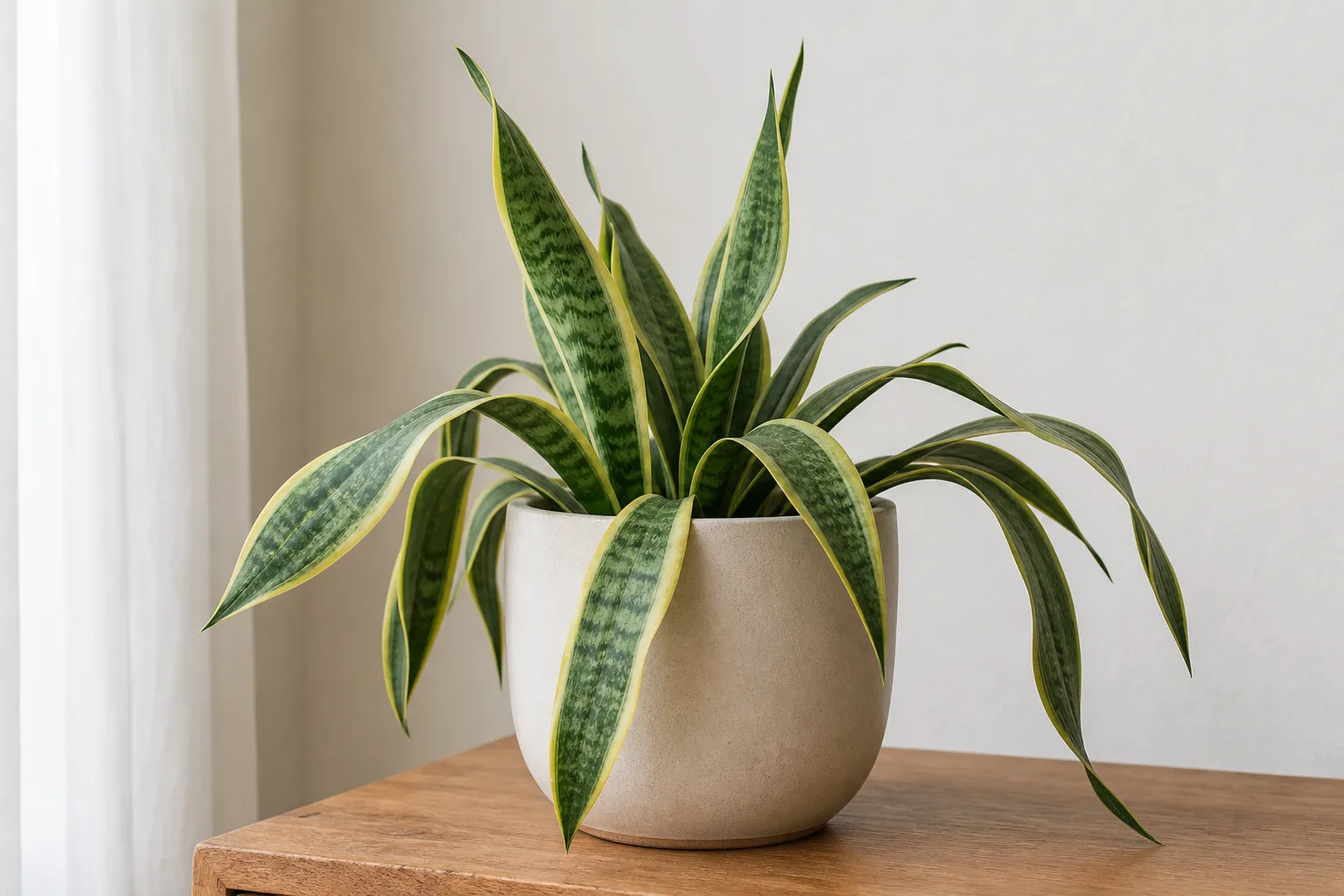
Case 1 — Dry-mix full-strength feed (June 2026): A 15 cm plastic pot of snake plant (Dracaena trifasciata) had been bone-dry for nearly two weeks. A full-label liquid houseplant feed went on “to catch up.” Within 48–72 hours, older leaf tips browned evenly; the mix was still moist and the plant looked oddly wilted. One top flush of about three pot volumes of room-temperature non-softened tap, saucer emptied, feed held. New mid-leaf growth over the next three weeks stayed clean; old tips remained brown. Lesson: never fertilize drought-stressed dry mix at full strength.
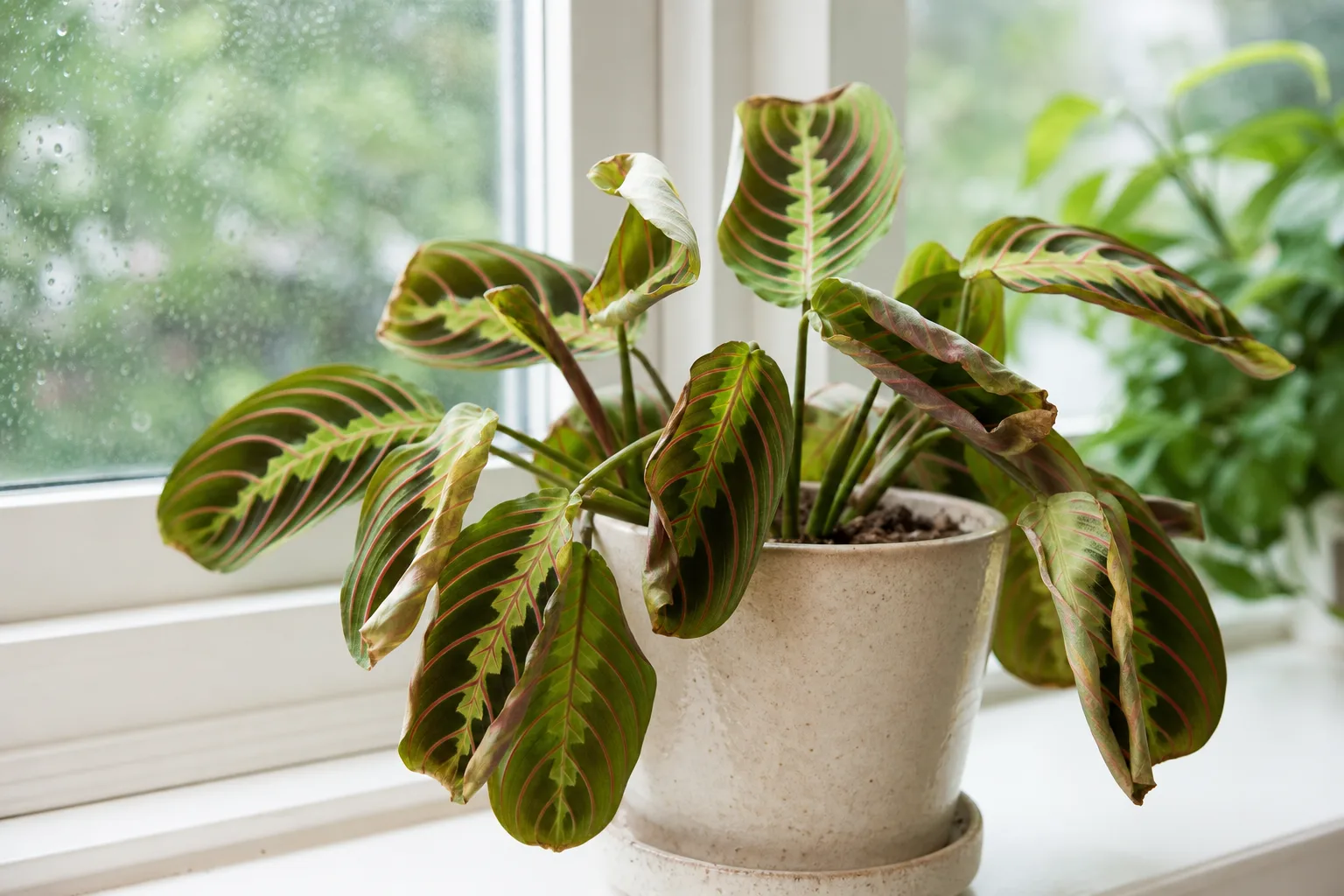
Case 2 — Bottom-water crust after fertilizer (April–May 2026): A 12 cm prayer plant (Maranta leuconeura) on a shared pebble tray was bottom-watered almost exclusively and given dilute liquid feed every other watering. White rim crust returned about four weeks after a surface scrape. After two calendar top flushes (roughly two to three pot volumes each) and alternating top/bottom watering, crust stayed minimal for eight weeks of active growth while new leaves opened with intact margins.
Case 3 — Slow-release over-application (March 2026): A nursery ZZ plant arrived with a dense band of controlled-release prills in the top third of the mix. Tip burn continued after two liquid-style flushes. Repotting into fresh mix and discarding the bead-heavy media stopped new margin burn within one flush of growth; leaching alone had failed, matching WSU’s limit on leaching slow-release products.
Shared-tray note: On one bathroom shelf, the maranta crisped while a neighboring pothos on the same hard-water tray looked fine. Salts and water quality hit the sensitive plant first — not a “maranta disease.” Separate the sensitive shelf’s water and leaching schedule even when pots share a tray.
Prevention: Feeding Schedules and Watering Methods
Prevention is boring on purpose. Salts accumulate when feeding exceeds growth and when water never exits the pot.
Clemson’s practical indoor options include fertilizing at label rate every two or three months in growth periods, diluting to about one-tenth strength for more frequent use, or feeding every seventh watering. Match the method to your attention span, but pick one and stick to it.
Season matters. During short, cool, low-light months many plants rest. If growth has stalled, stop or sharply reduce fertilizer. Resume when days lengthen and you see new leaves. For product choice and seasonal planning beyond burn recovery, see fertilize indoor plants.
Top-water until runoff, then empty the saucer. That single habit prevents a large share of soluble-salt injury. If you like bottom watering for convenience, schedule a periodic top leach — PlantTalk recommends exactly that when subirrigation is your default. The top watering vs bottom watering guide walks through when each method helps and when salts climb.
Avoid softened water. Prefer rainwater, distilled, or RO water for indoor plants blends for salt-sensitive shelves when tap hardness or sodium is high, and remember demineralized water still needs a modest nutrient plan over the long term.
Plants That Show Salt Stress First
Some houseplants advertise salt problems early. Calatheas, marantas, ferns, peace lilies, spider plants, and many dracaenas tip-burn quickly when salts, hard water, or dry air stack. Thin-leaved tropicals in plastic pots with bottom watering are frequent flyers because evaporation concentrates minerals at the surface while roots sit in a salty profile.
Succulents and thick-leaved plants can still burn from a concentrated feed, especially when fertilizer hits dry mix, but they often tolerate slightly higher dissolved solids than rainforest understory species. When one sensitive plant on a shared watering tray crisps while tougher neighbors look fine, check salts and water quality before assuming a species-specific disease.
Once you know the plant and salts are confirmed, species pages help with host-specific quirks: fertilizer burn on snake plant, fertilizer burn on ZZ plant, fertilizer burn on prayer plant, or fertilizer burn on maidenhair fern.
Related Guides and Plant Pages
Use these when the next question is clearer than “did fertilizer burn this plant?”:
- Tips brown, cause unclear → Brown tips on houseplants
- Hard tap, chalky rim, light feeding → Hard water for houseplants and RO water for indoor plants
- Pale after feeding, uptake/pH suspected → Nutrient lockout in houseplants
- Watering method driving salts → How to water indoor plants and top watering vs bottom watering
- Feeding plan after recovery → Fertilize indoor plants
- Roots soft or mix will not drain → Root rot in houseplants and repotting houseplants
Conclusion
Do this now:
- Stop fertilizing — including “just a little” liquid and any foliar feed.
- Check drainage, crust, and history — recent heavy feed vs months of incomplete leaching vs hard tap.
- Flush if the pot drains — two to three pot volumes of room-temperature, non-softened water; empty the saucer; do not sit in leachate.
- Repot instead if there is no drainage, hydrophobic mix, rotten roots, or heavy slow-release beads.
- Judge recovery by new growth — necrotic tips stay brown; clean new margins mean the root zone is safer.
- Prevent the sequel — thorough watering with runoff, periodic top leach if you bottom-water, dilute feeds only in active growth, and treat hard water as part of the same salt budget.
If crust returns fast after a good flush, open the hard water guide next. If leaves stay pale without fresh tip scorch, open nutrient lockout before you fertilize again.