Leaf Miners on Houseplants: ID, Treatment, Prevention
Spot serpentine leaf miner tunnels on houseplants, rule out mites and thrips, and treat with prune-first methods that reach larvae inside leaves.
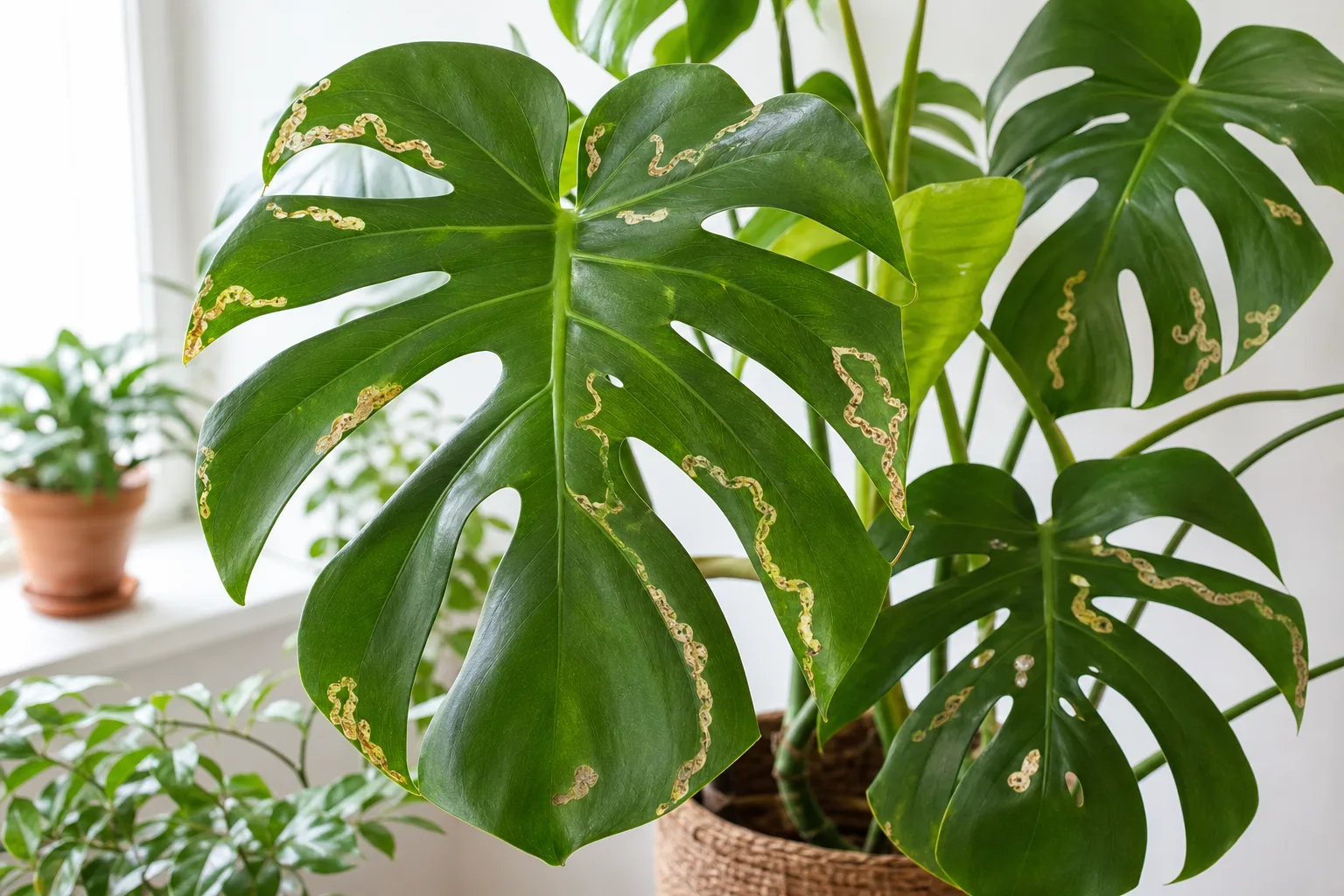
Winding pale trails inside a leaf look dramatic, so it is easy to assume your houseplant is under siege. Leaf miners are the larvae that create those tunnels — usually tiny fly maggots feeding between the upper and lower leaf surfaces — and the damage is real. It is also frequently misdiagnosed. Many indoor “leaf miner” scares turn out to be spider mites, thrips, mechanical scuffs, or old scarring that never formed a bordered internal mine.
Before you buy a specialty spray, hold one suspect leaf to a bright window. A true mine looks like a translucent tunnel with edges, often with a darker thread of frass inside. That single backlight check is the fastest way to stop a wasted soap cycle. This guide covers how to confirm serpentine mines on houseplants, why the pest is uncommon in sealed indoor collections, and which treatments actually reach larvae protected inside leaf tissue.
For plant-by-plant symptom routing, start at the leaf miners symptom hub. For collection-wide pest strategy, pair this with the indoor plant pest guide and integrated pest management indoors.
Written by Sai Ananth (B.Pharmacy / pharmacognosy background; lead indoor-gardening writer and pest-scouting editor at LeafyPixels) and reviewed by Dr. Ananya Rao (Ph.D. Horticulture; Plant Scientist on the LeafyPixels Editorial Review Board). Recommendations below translate university greenhouse and garden IPM into apartment-scale quarantine, pruning, and monitoring.
What Leaf Miners Are (and Why They Are Uncommon Indoors)
“Leaf miner” is a feeding habit, not a single species. Many insects mine leaves outdoors — flies, moths, beetles, and sawflies among them. On greenhouse ornamentals and houseplants that recently left commercial production, the usual culprits are small agromyzid flies in the genus Liriomyza, especially the American serpentine leafminer (Liriomyza trifolii) and related vegetable leafminers. Adults are tiny black-and-yellow flies. The stage that ruins foliage is the larva tunneling through the leaf mesophyll.
That biology matters indoors. The larva is sandwiched between intact epidermal layers, so surface films of soap or oil often never touch it. Adult females also puncture leaves to feed on sap before laying eggs, leaving pale speckles that can look like early mite damage until a mine appears. If you only treat the speckles and ignore expanding tunnels, you miss the generation already developing inside the blade.
The Insects Behind the Tunnels
UC IPM describes common vegetable and ornamental leafminers as Liriomyza larvae that feed between leaf surfaces and create a widening “mine,” with mature larvae leaving the leaf to pupate in soil or on the pot surface. In warm weather the full life cycle can be about two weeks, with multiple overlapping generations when host plants stay available. UF/IFAS notes that L. trifolii readily infests greenhouses and spreads with flower-crop trade — chrysanthemums, gerbera, and related ornamentals have historically moved the pest into new regions.
UConn Extension’s greenhouse fact sheet adds practical detail for growers: mines may be winding (serpentine) or blotch-like depending on species and host; females leave white egg-laying punctures on young leaves; and at high temperatures a generation can finish in roughly two weeks. For a living-room grower, you rarely need a species ID. You need to know whether the pale trail is an enclosed internal mine with a living larva — or something else that only looks similar from across the room.
Unusual blotch mines on a plant that never left a sealed apartment can still be a different mining guild. If the pattern does not match classic serpentine Liriomyza damage after backlight checks, photograph the leaf and ask a local extension office or master gardener program before assuming a retail leafminer product will help.
Why True Leaf Miners Are Uncommon Indoors
Honesty first: true leaf miners are uncommon on plants that live exclusively indoors compared with spider mites, mealybugs, fungus gnats, scale, aphids, and thrips. A closed apartment without nursery influxes or summer patio time seldom sustains a leaf-miner population the way a greenhouse bench does. Parasitoid wasps often suppress miners outdoors and in screened production houses; indoors you lose that ecological balance, but you also lose the constant adult fly pressure that greenhouses fight all season.
When leaf miners appear on a houseplant, the usual story is introduction, not spontaneous indoor breeding from nothing. Mines arrive already forming on a new purchase. A patio plant spends June outdoors near tomatoes or chrysanthemums, then comes inside with pupae in the potting mix. A flower gift carries adults or eggs. Once indoors, overlapping generations can continue if you leave mined leaves and pupae in place — warm rooms favor fast turnover — but the pest still starts as a hitchhiker far more often than as a “mystery houseplant plague.”
If your plant never left the shelf and you have not added new stock, double-check lookalikes before you buy specialty leaf-miner products. Mislabeling every pale squiggle as leaf miners leads to the wrong spray and delayed fixes for mites or thrips that actually are common indoors.
Extension garden advice → living-room translation: UC IPM’s home guidance leans on clip-and-remove plus natural enemies in outdoor gardens. Indoors, you usually do not have Diglyphus wasps on call, so the translation is stricter quarantine, bag-and-trash (not compost), yellow sticky cards for monitoring, and patience measured in clean new leaves — not a single weekend spray.
How to Identify Leaf Miner Damage
The signature symptom is a pale, winding trail inside the leaf blade with the leaf surfaces still mostly intact. The mine usually starts narrow and widens as the larva grows. Hold the leaf toward a window or bright lamp: a true mine looks like a translucent tunnel with edges, often with a darker thread of frass (larval waste) running through it. You may see a small yellowish maggot if you carefully open the widest part of an active mine.
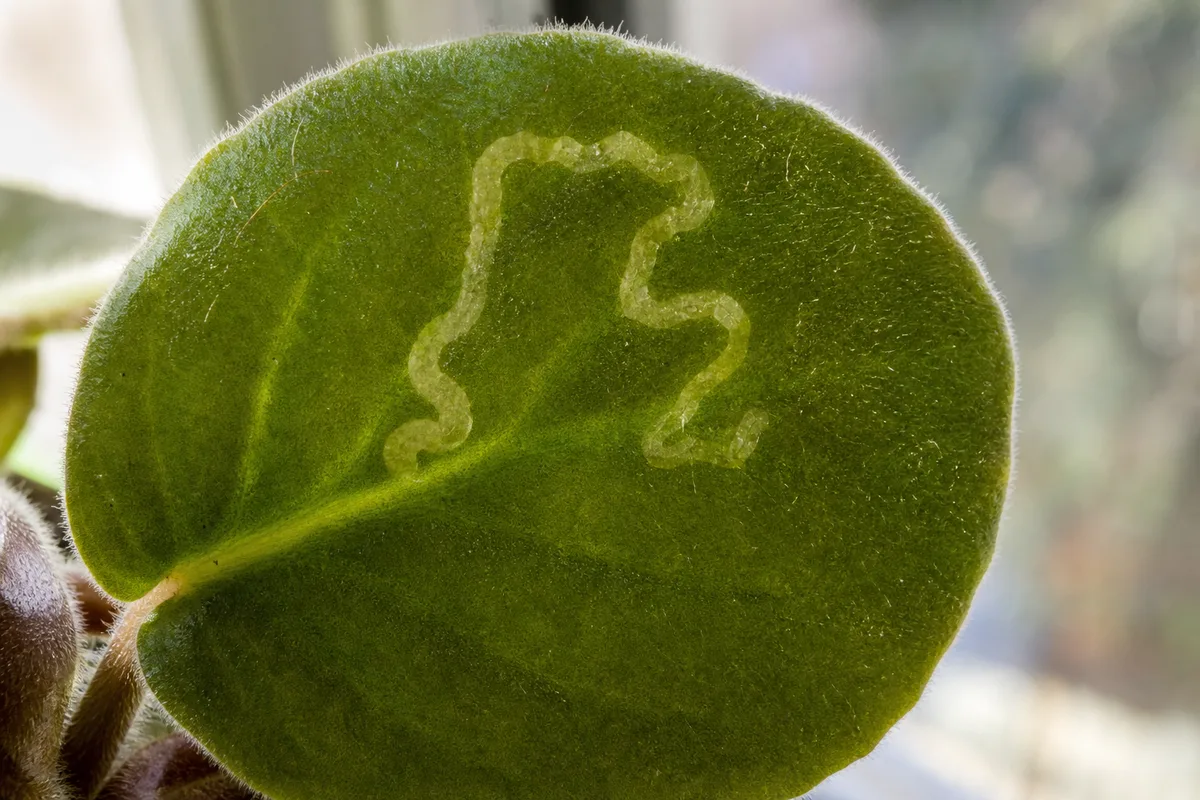
Adult feeding and egg punctures look different from mines. They appear as tiny white or pale dots — stippling — scattered on the leaf, especially near tips and margins on some hosts. Stippling alone is not proof of leaf miners; mites and thrips also stipple. Expanding bordered tunnels are the decisive cue. Premature yellowing or drop can follow heavy mining, but UC IPM notes that mining usually has little impact on growth of established plants and rarely kills them — the main cost is cosmetic, plus stress on seedlings and plugs.
Hold the Leaf to Light: Confirmation Test
- Choose a leaf with a suspect trail and backlight it.
- Look for a continuous internal channel with defined edges — not a surface scratch.
- Check for a dark frass thread inside the pale path.
- Note whether the trail is still lengthening on new growth this week.
- Gently open the widest section of one mine over a paper towel; a small yellow maggot confirms an active larva.
- Scan the soil surface and pot rim for brown, seedlike puparia if mines are older.
If backlight shows no tunnel, treat the symptom as a lookalike until proven otherwise. That single habit prevents most wasted spray cycles.
Serpentine vs Blotch Mines, Frass, and Exit Holes
Serpentine mines are the classic houseplant scare: a snaking, map-like trail that wanders across the blade. Blotch mines are broader patches where tissue between the surfaces collapses into a pale or brown blotch, sometimes after a serpentine start. Spinach leafminers outdoors often finish as blotches; ornamental Liriomyza damage on thin leaves can look more serpentine. Wisconsin Horticulture describes serpentine tunnels, blotchy mines, and the protected larval habit that makes chemical control difficult.
For diagnosis, do not obsess over the artistic shape. Ask: Is the damage between the leaf surfaces? Does the trail have a border? Is tissue missing all the way through the leaf (a hole), or is the epidermis still there as a thin window? Holes chewed clean through point to caterpillars, slugs, or mechanical damage — not leaf miners. Silver surface scarring without an internal channel points toward thrips. Fine yellow stippling with webbing points toward spider mites.
A dark frass line inside a pale tunnel is a strong leaf-miner clue. As the larva feeds, waste is left in the mine; near the end of development the frass may look more granular depending on species. When the larva finishes, it often cuts a small exit and drops to the soil or potting mix to form a seedlike brown puparium. Finding pupae on the soil surface or pot rim after mines appear supports the diagnosis and explains why removing leaves alone may not end the cycle if adults are already emerging.
Active vs Empty Mines
| Mine status | What you see | What to do |
|---|---|---|
| Active | Trail lengthens over 2–5 days; backlight may show a yellow maggot; fresh pale tissue | Prune that leaf; continue scouting new growth |
| Abandoned / empty | Browned scar that no longer expands; no maggot when opened; often older lower leaves | Cosmetic only — prune for looks or leave; focus effort on new mines |
| Pupating generation | Mines stopped expanding; brown puparia on soil/rim; sticky cards catch adults | Remove pupae if found; keep cards up; quarantine continues |
Judge urgency by whether new tunnels are still expanding on fresh leaves, not by how ugly an old trail looks on a leaf you are about to prune anyway. Mined tissue will not heal or turn green again.
Lookalikes: Mites, Thrips, Chewers, Edema, Scuffs
Indoor growers confuse leaf miners with several common problems because all of them leave pale marks on foliage. The differential below saves money and plant stress. When the pattern matches mites or thrips, jump to those guides instead of pruning half the canopy for a pest that is not there.
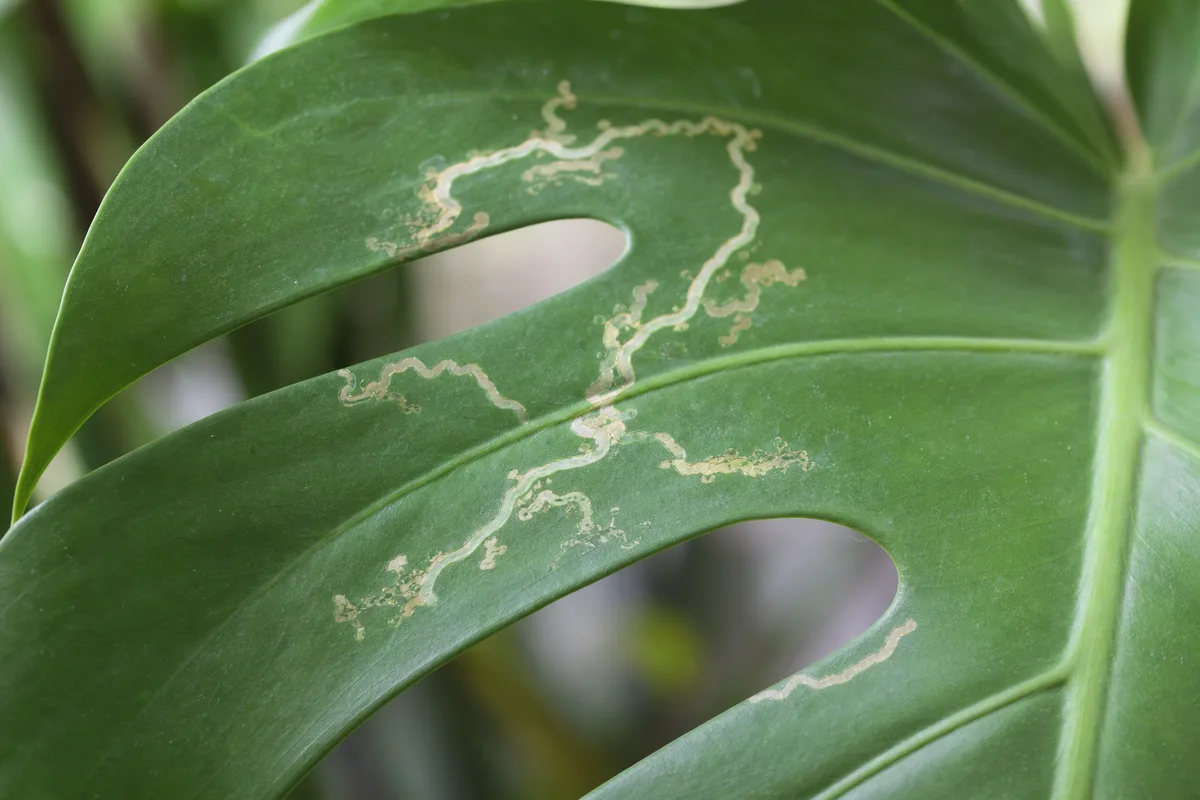
| What you see | Likely cause | How to tell it apart |
|---|---|---|
| Winding pale tunnel inside leaf, frass line | Leaf miner | Backlight shows bordered internal mine; surfaces intact |
| Fine yellow stippling + fine webbing | Spider mites | No enclosed tunnel; mites move on undersides in dry air |
| Silvery streaks, black frass specks on surface | Thrips | Surface scarring, not an internal serpentine channel |
| Ragged holes through the blade | Chewers (caterpillars, etc.) | Tissue removed; frass pellets outside the leaf |
| Brown tips/margins only | Humidity/salts/underwatering | Even edge burn without a mine map |
| Water-soaked blisters that cork over | Edema | Raised corky patches, not tunnels with frass |
Spider mites are far more common indoors than leaf miners. They leave stippling and often fine webbing on leaf undersides, especially in dry heated rooms. The leaf does not contain a hollow serpentine gallery. Thrips rasp surface cells and leave silvery or bronze streaks with tiny black frass dots sitting on the leaf, not inside a tunnel. Chewing pests remove chunks of tissue; leaf miners leave the “skin” of the leaf in place like a translucent window.
Edema creates water-soaked bumps that later cork into beige scabs — common on plants watered heavily in low light. Scuffs from brushing leaves against walls or stakes can leave pale lines that look mined until you backlight them and find no tunnel. Fungal or bacterial leaf spots usually form discrete lesions with halos or concentric rings, not a continuous feeding path with frass. When in doubt, wait 3–5 days: an active leaf-miner trail lengthens; a scar or edema patch does not crawl across the blade.
If backlight confirms an internal mine on an aroid, host pages such as Monstera leaf miners and Philodendron brasil leaf miners cover species-specific follow-up. If the pattern is silvering without tunnels, switch to thrips protocols instead. For holes that go clean through, use the holes in leaves guide.
Life Cycle Indoors and Why Timing Matters
Understanding the cycle explains why one spray rarely works and why pruning mined leaves mid-cycle still helps. Adult females puncture leaves, feed, and insert eggs under the epidermis. Eggs hatch into legless yellow maggots that mine for roughly one to two weeks in warm conditions. Mature larvae exit and pupate in the growing medium or on the pot. Adults emerge and restart the cycle.
UF/IFAS reports roughly 21–28 days per generation in warm Florida conditions for L. trifolii, with faster development near 25°C (77°F) and stress above about 30°C (86°F). UConn notes greenhouse generations can compress to about 14 days at high temperatures (around 86°F), with overlapping stages present at once. UC IPM floriculture guidance similarly notes L. trifolii can finish a generation in about a month at common greenhouse temperatures, or roughly 14 days near 95°F.
LeafyPixels apartment rule of thumb: In a typical heated living room around 68–75°F (20–24°C), plan monitoring and quarantine as if a full cycle takes about three to four weeks, closer to the UF/IFAS warm-environment range than a hot greenhouse bench. Cooler rooms slow the clock; a sunroom that regularly hits the mid-80s°F can compress toward the UConn two-week extreme. That is why scouting every few days during an active outbreak beats a single weekend panic clean. You are interrupting eggs, mines, and soil pupae on different schedules. Yellow sticky cards catch flying adults for monitoring; they do not remove larvae already inside leaves.
How Leaf Miners Enter a Collection
Trace the entry route so you fix the source, not only the symptoms:
- Nursery and big-box stock already carrying mines or pupae — the top indoor pathway.
- Greenhouse-grown gift plants (especially chrysanthemums, gerbera, and other composites historically associated with L. trifolii).
- Patio or balcony vacations where outdoor leafminer populations move onto ornamentals.
- Shared benches and touching leaves after one plant is introduced with adults present.
- Secondary outbreaks after broad-spectrum sprays that kill Diglyphus and other parasitoids, a pattern UC IPM flags in gardens and production settings.
Quarantine is not optional when you buy new foliage plants. Two weeks of isolation with weekly backlight checks on middle leaves catches mines before the plant joins a crowded shelf of philodendrons and monsteras. Inspect incoming plants for egg punctures and early mines before they join production or display areas — the same habit scales down cleanly for a home collection.
Secondary-outbreak caution for mixed shelves: If you recently sprayed hard for mites on the same bench and then serpentine mines exploded on a nearby mum or gerbera, consider parasitoid disruption before adding another broad-spectrum product. Prefer selective tools for the mite problem and cultural removal for the mines.
First-Hand Indoor Outbreak Notes from LeafyPixels
These are editorial observations from LeafyPixels indoor pest-scouting sessions, not controlled trials. Your room temperature, plant density, and entry route will change timing.
Case 1 — Nursery Monstera hitchhiker (desk shelf, ~72°F). A 6-inch Monstera deliciosa arrived from a big-box pallet with two middle leaves already showing pale serpentine tunnels. Day 0: isolated 8 feet from the aroid shelf; backlight confirmed bordered mines with a dark frass line; opened one tunnel over a paper towel and found a small yellow maggot. Day 0–1: pruned four mined leaves (including two with early tip mines), bagged for trash, and removed three brown puparia from the pot rim and mix surface. A yellow sticky card went in the quarantine corner. Days 3–10: card caught two tiny black-and-yellow flies; no new expanding mines after day 7. Day 21: new leaf unfurled without tunnels; card stayed clean for a full week. Returned to the shelf on day 28 after a final backlight pass. Recovery metric: clean new growth for 21 days after the last new mine, not perfect-looking old scars.
Case 2 — Patio returnee misread as mites (sunroom). A jade brought indoors after a balcony summer showed fine pale stippling on upper leaves. First pass looked like early spider mites. Backlight on day 2 revealed short bordered tunnels on two leaves — not webbing, not surface silvering. Corrected diagnosis, pruned three leaves, held fertilizer for two weeks (UConn notes over-fertilization increases attractiveness to egg-laying females), and kept the plant isolated. No translaminar product was needed; sticky card stayed at zero adults after pruning. Outcome: no new mines across 18 days of checks.
Case 3 — Empty scars vs panic pruning. An African violet on a north sill had one browned serpentine scar that had not lengthened in a week. Backlight showed no maggot; neighboring leaves were clean. We left the scarred leaf for photos, monitored for 10 days, and never saw expansion. Lesson: abandoned mines are cosmetic history, not an emergency canopy cut.
Treatment: Isolate, Prune, Monitor
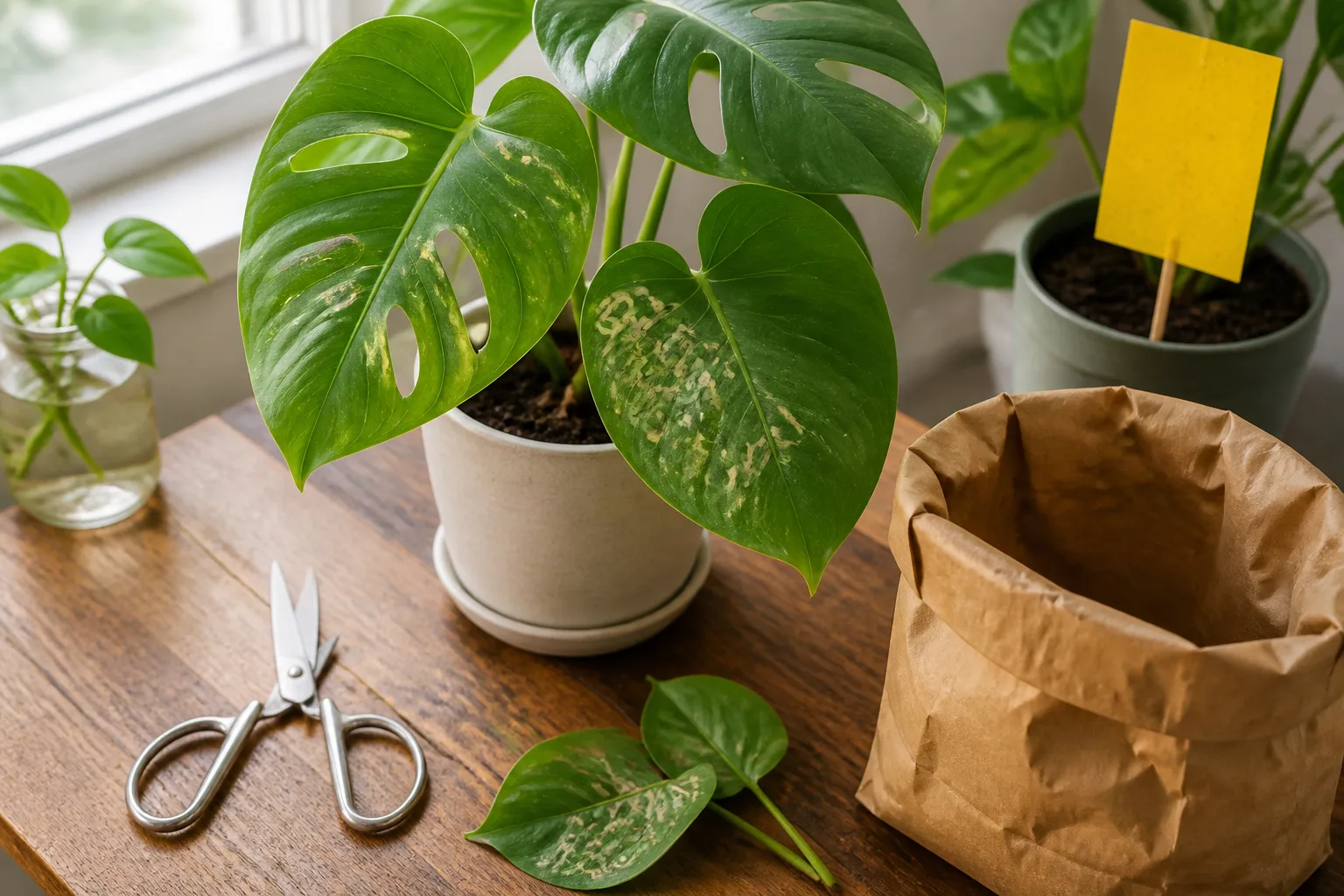
Lead with cultural control. UC IPM’s home guidance is blunt: leafminers rarely require pesticide treatment in gardens; clip off and remove infested leaves; keep plants vigorous; and remember that insecticides are not very effective for leafminer control in many home situations because larvae are protected inside tissue and parasitoids do the real suppression when left alone. That indoor translation is: prune first, monitor adults, escalate only if mines keep appearing on most new leaves after consistent sanitation.
| Situation | Best first move | Escalate? |
|---|---|---|
| Few cosmetic mines on a vigorous plant | Isolate, prune, trash, sticky card | No — watch 2–3 weeks |
| New mines weekly after pruning | Recheck pupae + neighbors; tighten quarantine | Consider labeled translaminar if still expanding |
| Most leaves mined on a small plant | Heavy prune or discard if not recovering | Yes only with indoor-ornamental labeling |
| Sticky cards catch adults after sanitation | Find hidden source plant; keep isolating | Product may help adults; larvae still need leaf removal |
Isolate, Prune, and Dispose
- Move the plant away from others immediately.
- Cut mined leaves at the petiole base with clean scissors; bag them for trash — do not compost.
- Wipe tool blades with alcohol between plants.
- Inspect the soil surface and pot rim; remove visible puparia if you find them.
- Check neighboring plants with the backlight test for early mines.
- Hold fertilizer briefly if you have been pushing soft, nitrogen-rich growth that attracts egg-laying females.
Cosmetic mines on a few older leaves of a vigorous plant often end with pruning and watchful waiting. Success means no new expanding mines on fresh growth for two to three weeks, not perfect-looking old leaves.
Sticky Cards and Scouting
Yellow sticky cards help you see whether adults are still flying. Place cards near susceptible plants, check weekly, and replace when fouled. Scouting should focus on young leaves and egg punctures as white spots on leaf tops, matching UConn’s greenhouse recommendations adapted to a home scale. Cards alone will not clear an infestation; they tell you if pruning removed the breeding population or if adults are still arriving from a hidden source plant.
Home-scale sticky-card reading: Zero adults for two consecutive weekly checks after pruning is a good sign the flying stage is interrupted. Occasional flies after a patio season or a new purchase mean keep quarantine up and recheck middle leaves. Do not treat card counts as a greenhouse action threshold — treat them as a yes/no adult presence signal.
Why Contact Soaps Fail — Translaminar Escalation Checklist
Insecticidal soap, neem oil, and horticultural oil can suppress soft-bodied surface pests, but larvae sealed inside a mine are shielded. Soap may hit some adults on contact if coverage is excellent, yet it will not reliably sanitize eggs and maggots in tissue.
Escalate only when:
- Most leaves on a small plant are mined and new growth is hit weekly.
- You confirmed active larvae and adults keep appearing despite sanitation.
- The plant is a high-value specimen and you accept label-rate translaminar products as a last resort.
UC IPM floriculture guidelines list options such as spinosad and azadirachtin among organically acceptable approaches in production settings. Home growers should choose retail products labeled for indoor ornamentals and leafminers (or the specific active), and they should expect repeat applications timed to the life cycle rather than a single miracle spray.
Label / PPE checklist before any spray:
- Confirm the product label lists indoor ornamentals (or houseplants) and leafminers / leaf miners / Liriomyza as allowed uses.
- Read PPE, re-entry, and pet/children language on the label — follow it exactly.
- Prefer products with translaminar activity (moves into leaf tissue) when the goal is larval kill inside mines; contact-only soaps are the wrong tool for sealed maggots.
- Plan repeat applications on the label interval through at least one full indoor generation window (~3–4 weeks in a warm room).
- Do not tank-mix “everything on the shelf” for unrelated pests on the same day — broad-spectrum disruption can worsen leafminer pressure by killing parasitoids when they are present.
- If mines look atypical (large blotches, woody hosts, no frass line), pause sprays and seek extension ID.
Avoid reflexive broad-spectrum spraying for unrelated pests on the same shelf. Killing parasitoids can make leafminer numbers worse — a well-documented secondary-outbreak pattern in UC IPM materials. If you only have a couple of cosmetic trails on an otherwise thriving plant, pruning plus quarantine is the proportional response.
Prevention and Quarantine Length
Prevention is mostly intake control:
- Quarantine every new plant for at least two weeks; backlight leaves on day 1 and day 10.
- After an active outbreak with confirmed mines, keep isolation until 14–21 days after the last new expanding mine and sticky cards stay clean — often about three to four weeks total from first prune in a warm room.
- Inspect chrysanthemums, gerbera, herbs, and patio returnees with extra care.
- Remove early mines before larvae drop to pupate.
- Avoid chronic overfeeding that forces overly soft flush growth.
- Keep weeds and spent outdoor plants away from open windows near your collection if you live where leafminers are active seasonally.
- Prefer selective treatments for other pests so beneficial insects — when present in screened rooms or on outdoor-indoor plants — are not wiped out.
- Maintain baseline care so plants outgrow cosmetic damage; stressed seedlings suffer more than established aroids.
University of Minnesota Extension’s indoor-insect guidance emphasizes isolation and careful inspection when bringing plants home — the same habit that stops leaf-miner hitchhikers before they share a shelf. (UMN Extension)
Which Houseplants See Mines Most Often
Leaf miners are polyphagous as a group. L. trifolii has a wide host list spanning vegetables and flower crops; UF/IFAS highlights chrysanthemum and celery among historically important hosts, with many other ornamentals and weeds supporting larvae. In home collections, you are most likely to see mines on:
- Recently purchased greenhouse ornamentals and flowering gifts
- Plants summered outdoors near vegetable gardens
- Thin-leaved herbs and flowering annuals grown indoors under lights
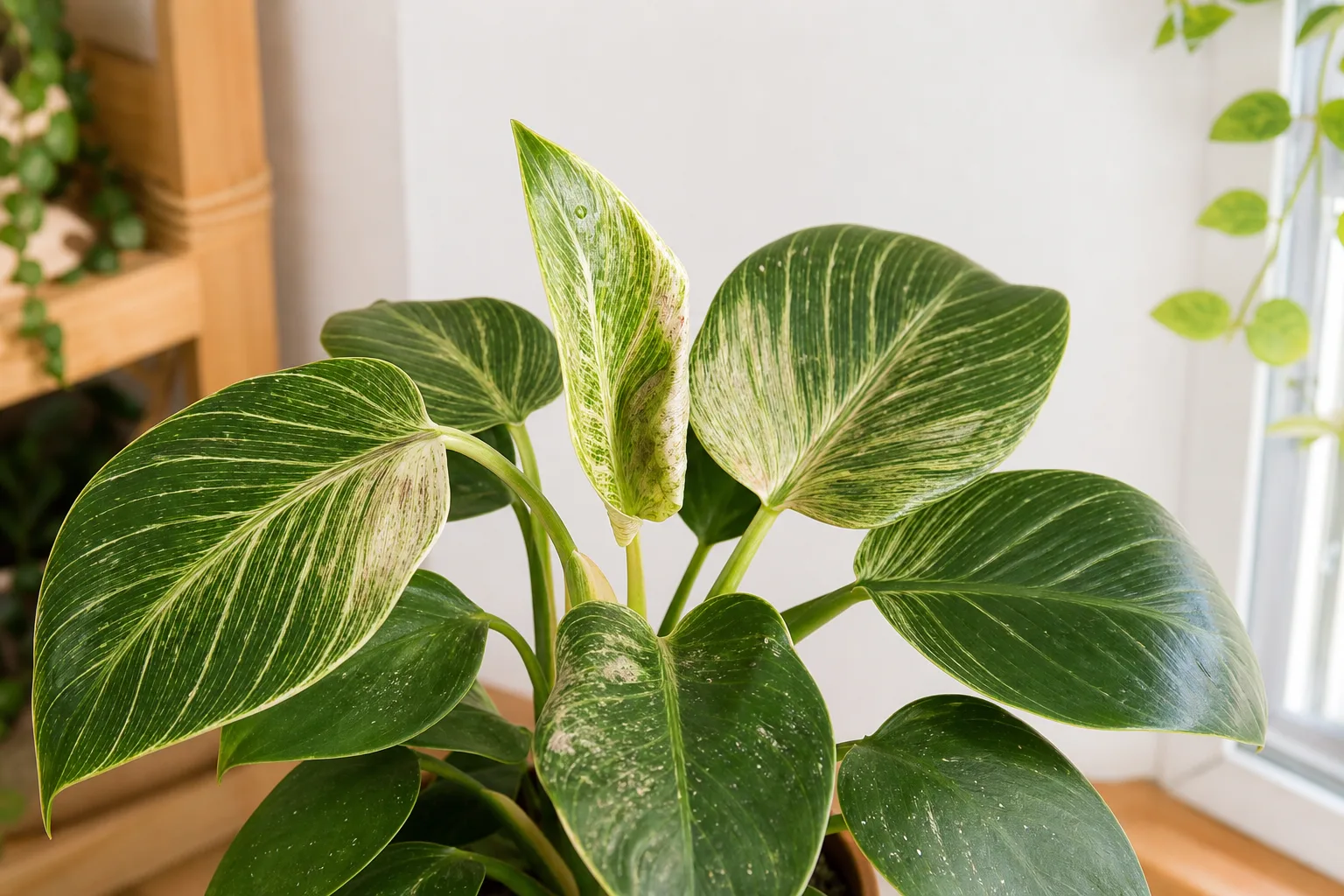
- Aroids and other foliage plants that shared a nursery bench with infested stock — including Monstera, Philodendron Birkin, and African violet
Established indoor-only plants that never received new neighbors can get leaf miners, but it is not the base-rate pest of winter windowsills. Prioritize quarantine and diagnosis over assuming every pale line needs a leaf-miner insecticide. For additional host pages, route through the leaf miners symptom hub rather than treating every plant slug as a separate reading list.
Related Guides
- Leaf miners symptom hub — plant-by-plant routes when tunnels match this pest
- How to tackle indoor plant pests — collection-wide identification and isolation habits
- Integrated pest management indoors — monitoring, thresholds, and selective treatments
- Holes in leaves — chewing damage vs internal mines
- Thrips on houseplants — silvery surface scarring that mimics pale leaf damage
- Spider mites on houseplants — stippling and webbing without enclosed tunnels
Conclusion
Leaf miners on houseplants leave a distinctive signature: a bordered serpentine or blotch mine inside the leaf, often with a frass line, sometimes preceded by pale adult punctures. Confirm with backlight before you treat. Remember that true miners are less common in sealed indoor collections than mites, thrips, and mealybugs, and that most cases arrive on new or outdoor-exposed plants. Prune and trash mined leaves, isolate the plant, monitor with sticky cards, and reserve translaminar products for persistent outbreaks — contact soaps alone rarely reach larvae in tissue.
Use one recovery metric from our desk-shelf Monstera case: no new expanding mines for about three weeks, plus clean sticky cards, before you call the outbreak closed. Old scars will not fade green again. Use the symptom hub when you need plant-by-plant routes, and keep your wider IPM habits consistent so the next hitchhiker never gets a second generation.