Why Palm Tree Leaves Turn Yellow: 8 Causes and Fixes
Why are your palm tree leaves turning yellow? Read the frond pattern, identify likely causes, and choose a safe next step for indoor or outdoor palms.
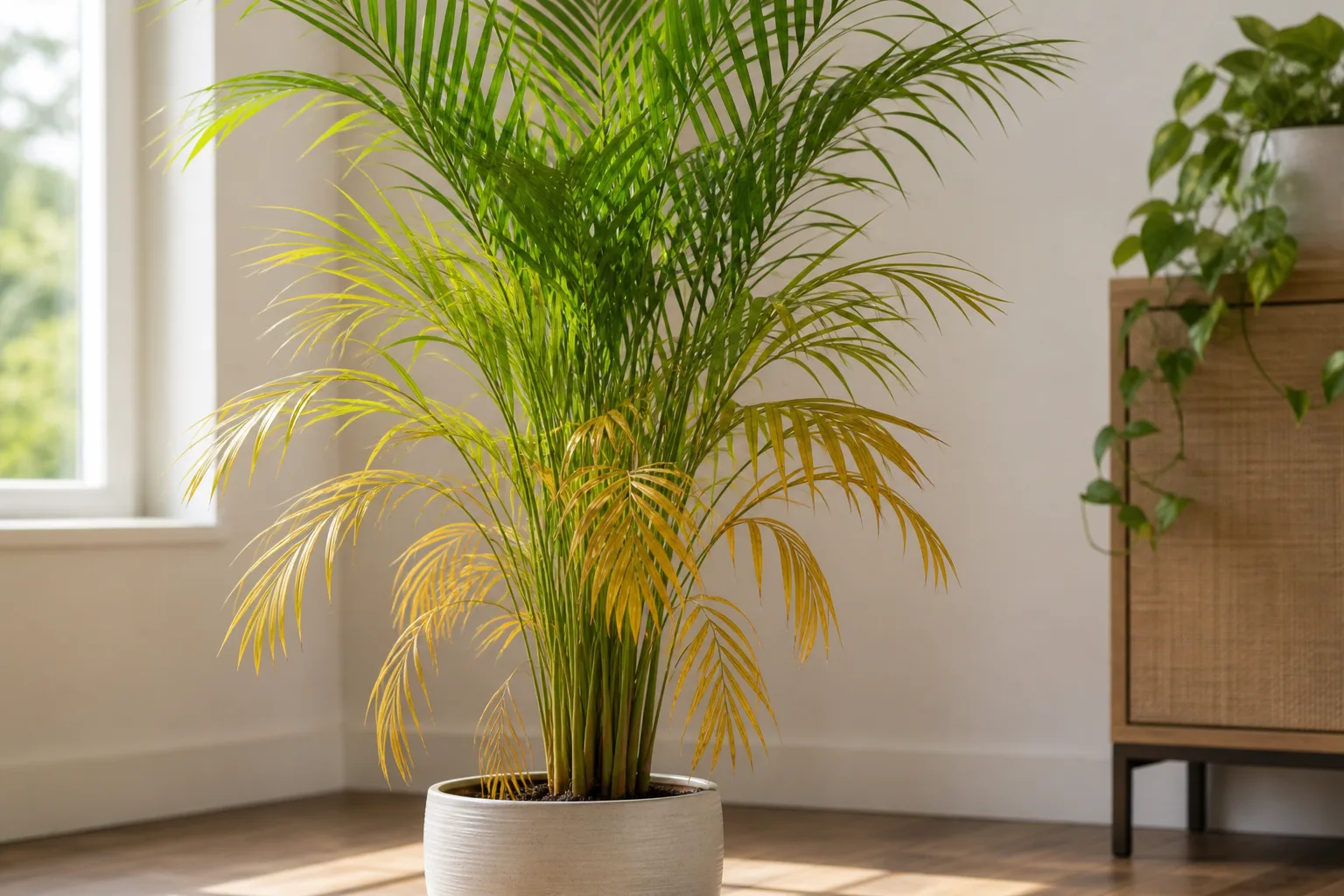
A yellow palm frond is a clue, not a diagnosis. The first question is which leaves are changing: one or two of the oldest fronds at the bottom, many leaves across the canopy, or the newest leaves emerging from the crown? That pattern, along with how quickly it is changing, is usually more useful than the shade of yellow.
Palms also differ widely. A parlor palm in a pot, an areca palm by a bright window, and a mature landscape coconut palm do not share the same light, water, cold tolerance, or disease risks. Before adding fertilizer or cutting anything, check the palm’s identity if you can, note whether it grows indoors or outside, and look at the soil and the newest growth. Those three observations can keep a fixable care issue from turning into a second problem.
Read the Frond Pattern Before You Change Care
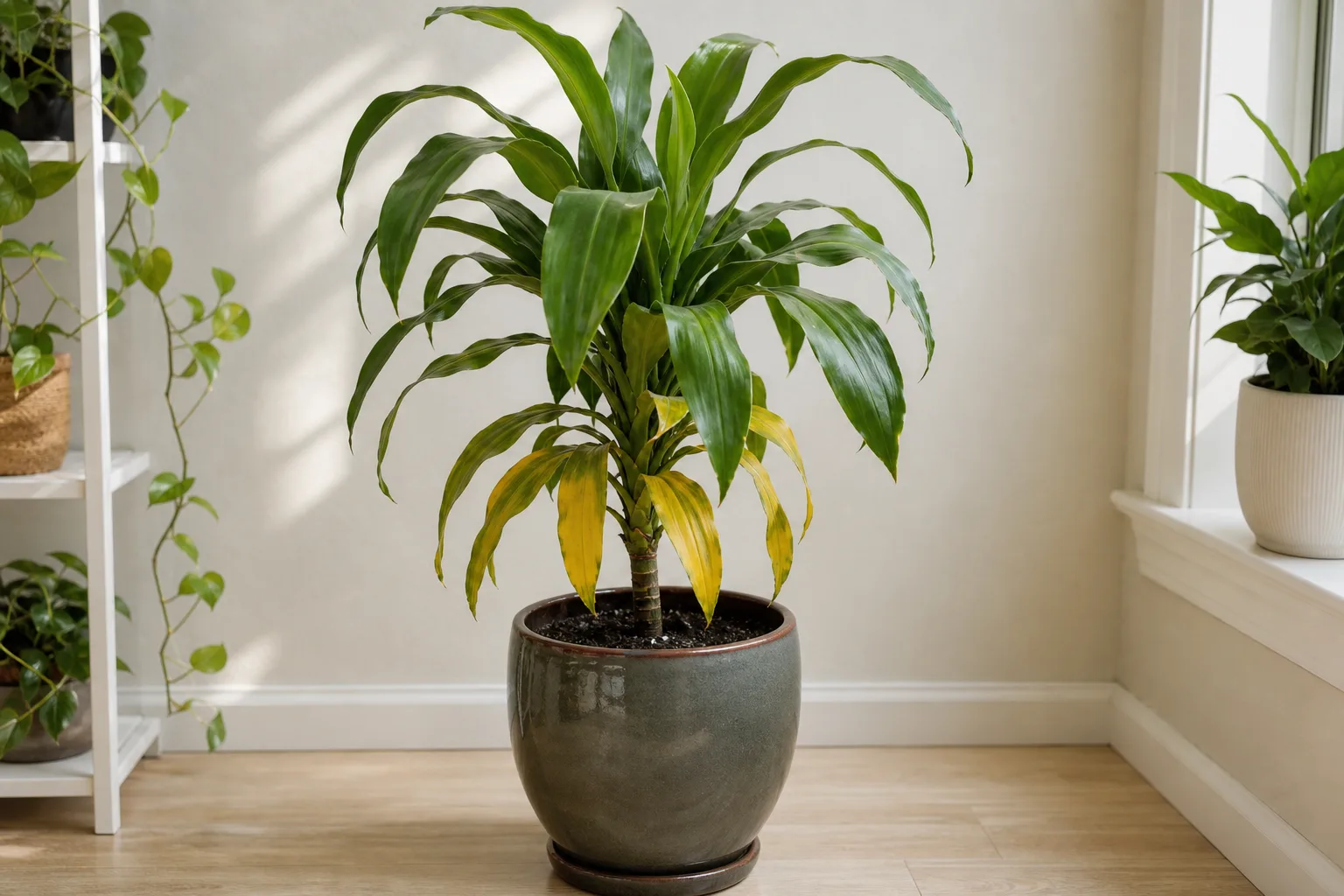
Palm leaves are called fronds. A palm produces new fronds from its growing point, or crown; the youngest leaves are near the center, while older leaves sit lower and farther out. One older frond yellowing as new growth stays healthy can be ordinary leaf turnover. Several older fronds changing together may point to a root-zone or nutrient problem, while streaked, stunted, or deformed new leaves deserve closer attention.
Stand back and trace the color change. Is it limited to the tips or edges? Does a broad yellow band run along an older frond while the center remains green? Are there tiny pale dots, webbing, or sticky patches? Is the spear—the tightly folded newest leaf—still upright and opening normally? Take a photo from the same angle every few days. A single image records severity; a sequence shows whether the problem is spreading.
The timing matters too. A palm moved from shade into direct afternoon sun can scorch even if it is a sun-tolerant species. A cold night, a week of rain, a dry spell, or a recent fertilizer application may explain a sudden change better than a chronic deficiency. Write down what changed and when. Avoid changing water, light, fertilizer, and pesticide all at once, because that makes both diagnosis and recovery harder to judge.
Eight Causes of Yellow Palm Leaves
1. Natural Aging of Older Fronds
If only the lowest, oldest frond is gradually turning yellow while the central leaves remain green and the palm continues to grow, normal aging is a reasonable first explanation. Palms replace old leaves from the center outward; aging foliage loses function before it dries and eventually falls or is removed. A healthy palm does not have to look perfectly green from top to bottom at every moment.
The pattern should remain limited. If several fronds yellow rapidly, the change climbs into the middle of the canopy, or new leaves emerge pale or distorted, do not dismiss it as routine shedding. Repeated yellowing of older leaves can also accompany water stress, nutrient shortages, or root damage. Compare the current frond with the palm’s normal growth and record how many leaves change over a couple of weeks.
Do not fertilize a palm just because one old leaf is yellow. Nor should you cut a partly green frond to make the plant look tidy: the remaining green tissue is still photosynthesizing, and the palm can withdraw some nutrients from an aging leaf. Wait until the frond is mostly brown or dry, unless it poses a safety issue.
2. Underwatering or Uneven Watering
A palm that stays dry too long may develop dull, limp, or yellowing fronds, often with dry brown tips or edges. Container palms are especially vulnerable when roots fill the pot, the mix has become difficult to rewet, or water runs down a gap along the pot wall without soaking the root ball. An outdoor palm can also suffer during a prolonged dry spell, particularly after planting or in shallow, sandy soil.
Check moisture several inches below the surface rather than judging by a dry crust. In a pot, lift it if manageable: a much lighter container suggests the mix has dried. Water slowly and evenly until water drains through the bottom, then empty the saucer or outer cachepot. If the mix has pulled away from the pot and repels water, apply water in several passes a few minutes apart so it has time to absorb instead of running straight through.
Do not respond by watering on a fixed daily schedule. How quickly a palm uses water depends on species, pot size, light, temperature, airflow, and season. Allow the upper layer to dry to the degree appropriate for the identified palm, but do not let the entire root ball repeatedly bake dry. A palm recovering from drought may stop producing new yellowing, but already yellow or brown tissue will not become green again.
3. Overwatering and Poor Drainage
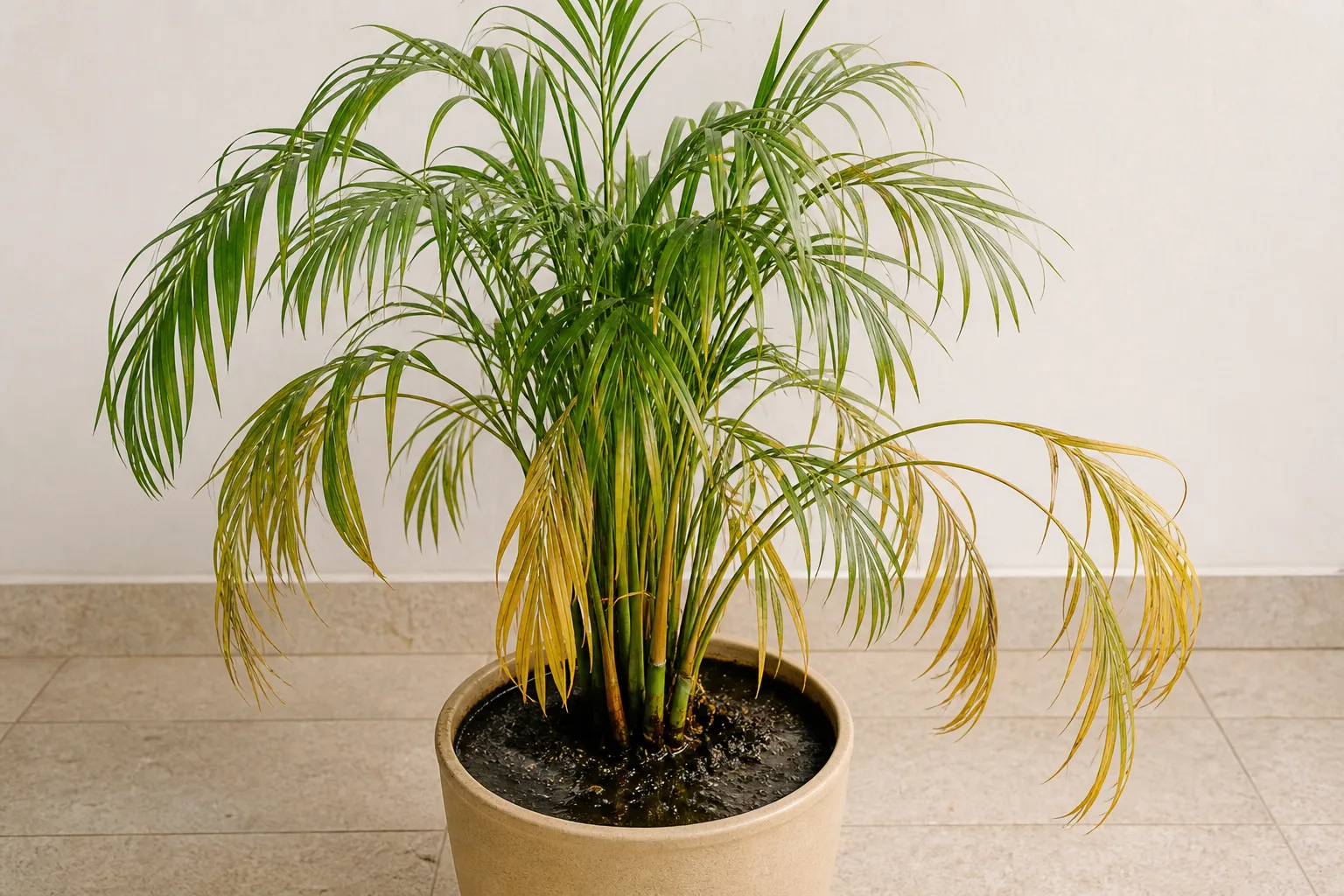
Too much water is not simply “watering often”; it is a root zone that stays wet long enough to deprive roots of air. Yellowing can appear with soft or drooping foliage, stalled growth, and a mix that remains soggy for days. A sour smell, blackened roots, or water standing in a decorative outer pot strengthens the case for a drainage problem, though no single symptom proves root rot.
For a container palm, confirm that the nursery pot has open drainage holes and that they are not blocked by compacted soil or roots. Remove standing water after irrigation and check whether the mix drains instead of forming a dense, muddy mass. A pot much larger than the root ball can hold wet soil for a long time, especially indoors under weak light. Do not jump straight to repotting a stressed palm; first determine whether drainage is actually poor and whether the roots are failing.
For an in-ground palm, check the area after rain and irrigation. A low spot, leaking sprinkler, or heavy soil can keep the root zone wet. Correct the source if possible, but do not trench or cut around a mature palm’s roots without knowledgeable help. The Epic Gardening overview of yellowing plants explains why both excess and inadequate moisture can produce similar leaf symptoms. The distinction comes from checking the soil and the roots, not guessing from leaf color alone.
4. Too Much Sun or Too Little Light
A sudden increase in direct sun can bleach or scorch fronds, often leaving pale patches that turn tan or brown on the exposed side. This is common when an indoor palm goes outside for summer without a gradual transition, or when a plant is moved beside a hot south- or west-facing window. The oldest leaves do not always show the most damage; look for a clear relationship between the affected tissue and the light-facing side.
At the other extreme, a palm kept far from a window may grow slowly, stretch toward light, and lose older foliage as it struggles to support itself. Low light also slows water use, so a watering routine that worked in a bright room can keep the pot too wet in a dim one. Increase light gradually where possible and reassess moisture after moving the plant. A palm advertised as “low light” may survive in a dim corner without thriving there.
For outdoor palms, compare the current site with the species’ mature light preference and the local climate. A palm that tolerates full sun once established may still scorch after transplanting or a rapid change in exposure. Provide temporary shade during acclimation if appropriate, and avoid placing a shade-adapted palm where reflective walls or paving intensify heat. Do not move a severely stressed indoor palm from deep shade directly into midday sun in an attempt to green it up.
5. Cold, Heat, or a Sudden Temperature Change
Cold injury can cause yellowing, bronzing, water-soaked patches, or browning, and damage may not be obvious until days after a cold event. Tropical palms are more vulnerable than cold-hardy landscape species, but even a suitable palm can be affected by an abrupt freeze, a cold draft, or roots chilled in a wet container. Indoors, keep tropical palms away from cold glass, exterior doors, and heating or air-conditioning vents that create sharp swings.
Heat stress can look similar. Hot, dry air and intense reflected sun increase water loss; a palm can wilt and yellow even if the pot was recently watered, especially when damaged roots cannot keep up. Check both the soil and the exposure. A wet root ball plus drooping leaves is not a signal to add more water automatically.
The useful response depends on the event and the palm. Protect cold-sensitive outdoor palms according to local extension guidance before a forecast freeze, and avoid heavy pruning immediately after cold damage. Wait until the extent of injury is clearer and new growth begins; cutting too soon can remove living tissue or obscure whether the crown survived. If the central spear loosens or pulls out easily after a freeze, seek local expert advice because crown injury can be serious.
6. Nutrient Deficiency or Fertilizer Salt Buildup
A nutrient problem is possible, but “yellow means fertilizer” is a poor rule. Palm deficiencies often follow recognizable patterns and may affect old or new fronds differently. UF/IFAS notes that manganese deficiency commonly appears on the newest leaves as yellowing, streaks, reduced leaflets, or a frizzled, necrotic appearance, especially where soil conditions limit manganese availability. Their manganese deficiency publication also cautions that symptoms can overlap with other problems, so appearance alone does not always identify the missing element. A practical overview of frizzle top on palms describes the same youngest-frond distortion; use that name as a clue to discuss with an extension specialist, not proof of a particular deficiency.
A magnesium problem may show as yellowing along the margins of older fronds while the central portion remains greener. Potassium problems can also affect older leaves, producing yellow or orange spotting and necrotic tips or margins. The UF/IFAS palm symptom reference illustrates why frond age and the location of discoloration matter. These visual patterns are clues, not a prescription: more than one deficiency can occur, and drought, root damage, pH, or disease can complicate the picture.
If a landscape palm has a recurring pattern, consult your local extension office about appropriate leaf sampling and soil conditions before applying a corrective nutrient. High soil pH can make certain nutrients less available even when they are present. For a potted palm, review the product label and your feeding history; concentrated fertilizer or repeated feeding in a small pot can leave soluble salts that injure roots and brown leaf tips. Do not apply Epsom salts, manganese, or a generic “palm food” as a diagnostic test. The wrong amendment will not repair a drainage or disease problem and may add salt stress.
When a soil test, leaf analysis, or local recommendation does indicate feeding, use a fertilizer formulated for palms and follow its label and regional guidance. Landscape palm nutrient programs differ by climate, soil, and species, so a rate meant for Florida sand should not automatically be copied for a potted palm or another region. Damaged leaves rarely regain their original color after a deficiency is corrected; judge success by healthy new growth and the absence of new symptoms.
7. Sap-Feeding Pests
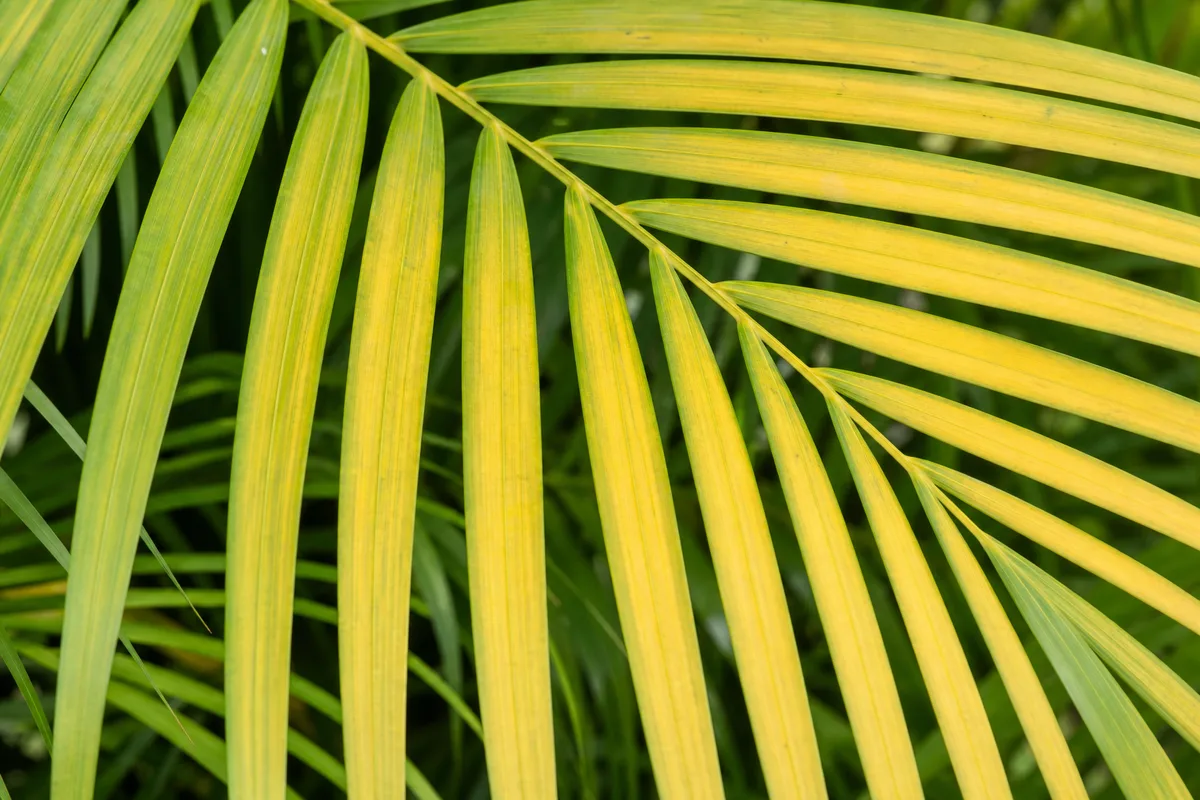
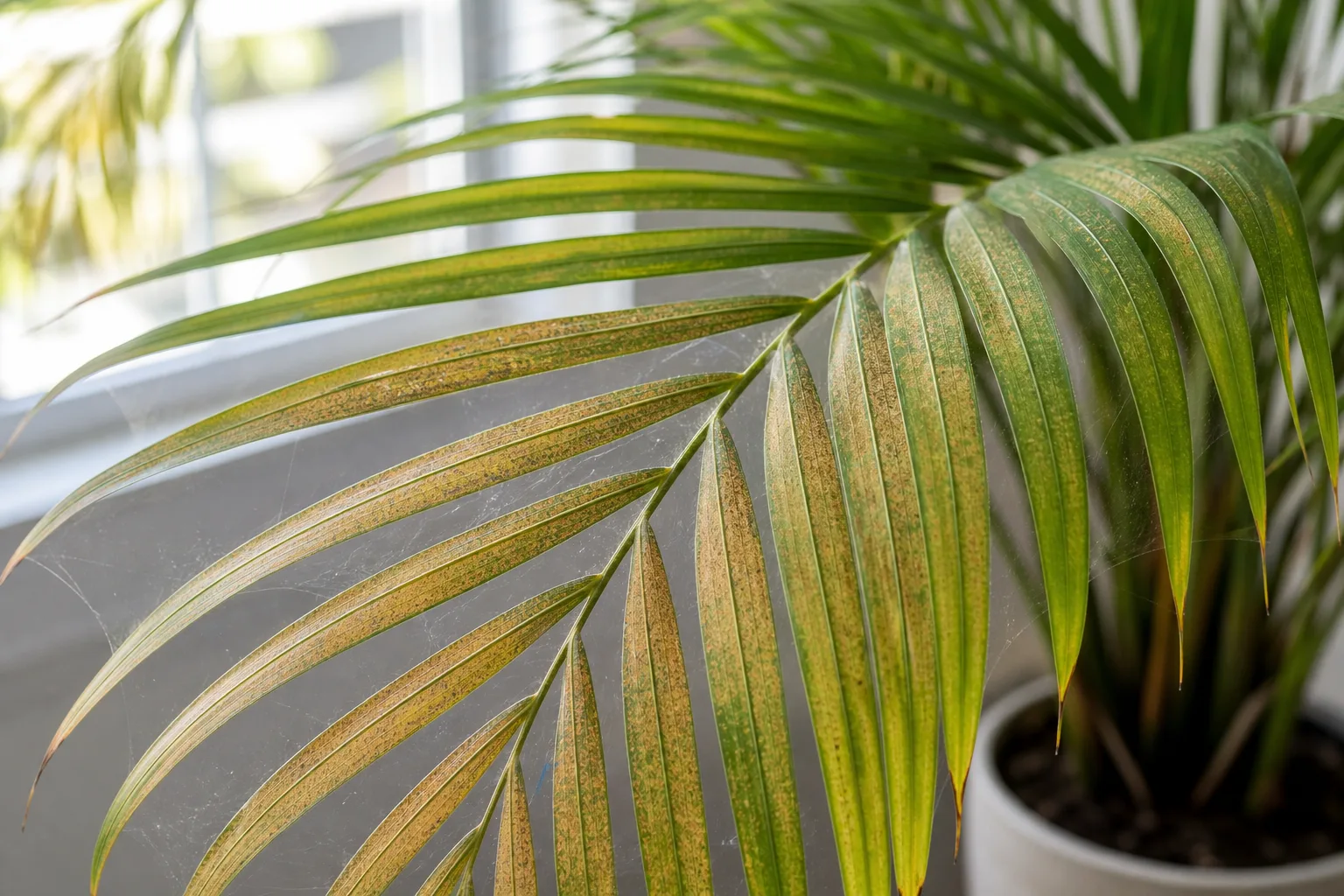
Spider mites, scale insects, and mealybugs can weaken palms and discolor foliage, particularly on stressed indoor plants. Mites cause fine pale stippling and may leave delicate webbing along leaflets or where the leaf meets the stem. Scale can look like fixed bumps on the underside of leaflets or stems; mealybugs appear as white, cottony clusters. A sticky coating can point to honeydew-producing scale or mealybugs, while mites do not make honeydew.
Inspect more than the top of the leaves. Use a bright light to check leaflet undersides, leaf bases, and the tight spaces where fronds emerge. Tap a suspect leaflet over white paper and watch for tiny moving specks; magnification helps because mites are difficult to see clearly. Repeat the inspection over several days. One clean glance does not rule out a small or newly developing population.
If you find pests, isolate an indoor palm from nearby plants and identify the insect before treating. Wipe or rinse sturdy foliage to remove some insects and dust, then use only a product labeled for the palm and pest, following the label exactly. Contact treatments must reach the pest, including leaf undersides, and may need repeating as directed. Test a small area first because some palms react poorly to sprays. Avoid routine broad-spectrum pesticide use when the pest is not confirmed; the treatment can stress foliage without addressing the actual cause.
8. Root, Trunk, or Phytoplasma Disease
Disease is less likely than a simple care mismatch for one older yellow leaf, but it moves higher on the list when decline is rapid, affects the crown, or comes with trunk or spear symptoms. A palm with damaged roots may yellow across several fronds and stop growing. Root problems can follow waterlogged soil, injury, or other stress; changing the watering routine will not reverse a severe infection or a compromised growing point.
Lethal yellowing is a phytoplasma disease spread by planthoppers, and its importance varies by region and palm species. In susceptible coconuts, UF/IFAS describes a progression that can include premature fruit drop, flower damage, then yellowing and death of fronds; other palm species may show different patterns. The UF/IFAS lethal yellowing publication emphasizes that symptoms vary, so a yellow frond by itself cannot confirm the disease. If a palm in a region where the disease occurs develops progressive canopy decline or unusual fruit and flower drop, contact the local extension service promptly rather than trying to diagnose it by color.
Ganoderma butt rot is a different and serious disease caused by a fungus that decays trunk wood. In addition to slow growth or off-color foliage, a palm may develop a shelf-like conk on the lower trunk; its appearance can change as it matures. UF/IFAS’s Ganoderma butt rot guidance says symptoms alone are not diagnostic and there is no effective treatment. Do not confuse this with ordinary wet potting mix or assume it is a root disease. A conk, soft trunk, leaning palm, or widespread decline warrants a qualified arborist because a weakened trunk can become a falling hazard.
A Safe Triage Plan for Indoor and Outdoor Palms
Start with a short record, then change the most plausible factor rather than attempting every fix. Note the palm species if known, the dates and positions of yellowing fronds, recent weather or moves, watering and feeding, and whether new growth is healthy. Photograph the canopy and the soil surface. This information is useful even if you later ask a nursery professional, extension agent, or arborist for help.
For Indoor Container Palms
Move the pot only if its current light or temperature is clearly unsuitable, and make the transition gradual. Check the root zone before the next watering, ensure the pot drains freely, and pour off collected water. Inspect leaf undersides and stems for pests, particularly if the yellowing includes stippling, webbing, bumps, cottony spots, or sticky residue. Keep a plant with confirmed pests separate while you address it.
If one old frond is changing and the center is healthy, observe before making a major intervention. If several fronds yellow while the mix stays wet, focus first on drainage and watering; if they yellow after a move into direct sun, reduce the abrupt exposure. Avoid repotting, fertilizing, pruning, and spraying all in one session. Each extra change can increase stress and makes it impossible to tell which one helped.
For Outdoor Landscape Palms
Look beyond the leaves to the whole site. Has irrigation changed? Is water collecting at the base? Did a freeze, storm, construction project, or fertilizer application precede the decline? Check whether the yellowing affects one old frond or the emerging crown, and whether fruit, flowers, or the trunk have changed. Do not dig around a mature palm or apply nutrient blends without confirming a likely need.
Local context matters for diseases and nutrient management. In areas where lethal yellowing occurs, rapid progression or reproductive symptoms should be reported to an extension office or qualified plant-health professional. A palm with a conk, trunk decay, a leaning crown, or a loose central spear after severe stress needs an on-site assessment. When there is a possible structural hazard, keep people away from the fall zone and arrange professional inspection rather than climbing or trimming the tree yourself.
Should You Cut Off Yellow Palm Fronds?
A yellow frond usually will not turn green again, but that does not mean it should be removed immediately. Leave it while a substantial portion is green, because the palm can still use that tissue. Once a frond is mostly brown or fully dry, it can be pruned if removal is safe and appropriate for the species. Use clean, sharp tools and avoid cutting into the trunk or pulling on a frond that resists.
Never remove green fronds just to make the canopy look tidy, and do not “hurricane cut” a palm by stripping it down to a few upright leaves. Severe pruning reduces the palm’s ability to make and store resources and can expose the crown. Some palm species retain dead leaves, while others shed them; do not assume a hanging brown frond means the palm needs aggressive grooming.
For a small indoor palm, carefully remove only dead material that you can reach without bending or damaging the stem. For a tall landscape palm, leave pruning to trained professionals with suitable equipment. A yellow frond is not worth a ladder fall, a chainsaw injury, or cutting into an unstable crown.
When a Palm Needs an Arborist or Extension Diagnosis
Get local help if the newest leaves are distorted or dying, multiple fronds yellow quickly, the palm fails to produce normal new growth, or decline continues after you have corrected an obvious watering or exposure issue. A county extension service can help interpret disease risk and may advise whether a leaf sample or diagnostic submission is useful. Bring clear photos of the whole palm, close-ups of the crown and affected leaves, and a timeline of changes.
Call a qualified, insured arborist for a tall palm with a conk, soft or splitting trunk, sudden lean, loose spear, or extensive canopy loss. These signs can signal a structural issue that cannot be safely evaluated from the ground by an owner. Do not climb the palm to inspect it, drill or cut into the trunk, or apply a fungicide based on a guess. A professional can determine whether the palm is stable, whether testing is warranted, and what removal or management options are safe.
Conclusion
Use the frond pattern to narrow the cause before you treat: one old lower leaf may be normal, while yellowing across several leaves, damage to the newest growth, or trunk symptoms calls for closer attention. Check moisture and drainage, recent light or temperature changes, pest signs, and the history of fertilizer use; then make one measured adjustment and watch the new growth.
Yellow tissue rarely becomes green again, so recovery shows up as healthy emerging fronds and no further spread. If a palm declines quickly, develops a distorted spear or trunk conk, or could pose a falling hazard, ask your local extension service or an arborist to assess it. That is safer and more useful than guessing at a disease or adding fertilizer blindly.