Dracaena Leaves Turning Yellow: Causes and Fixes
Dracaena leaves turning yellow? Read the leaf pattern, check soil and roots, and match the likely cause to a safe first fix—from watering to fluoride.
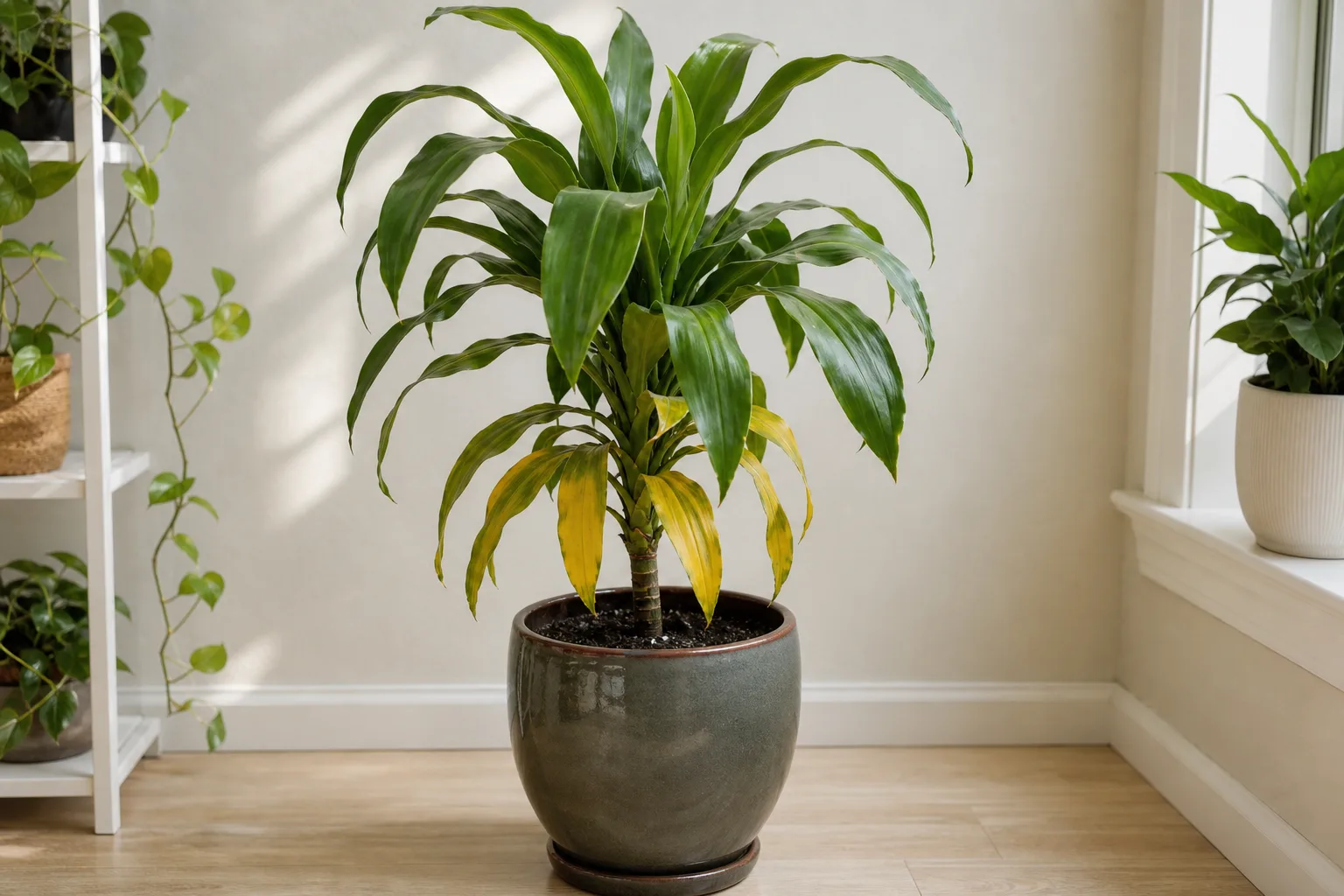
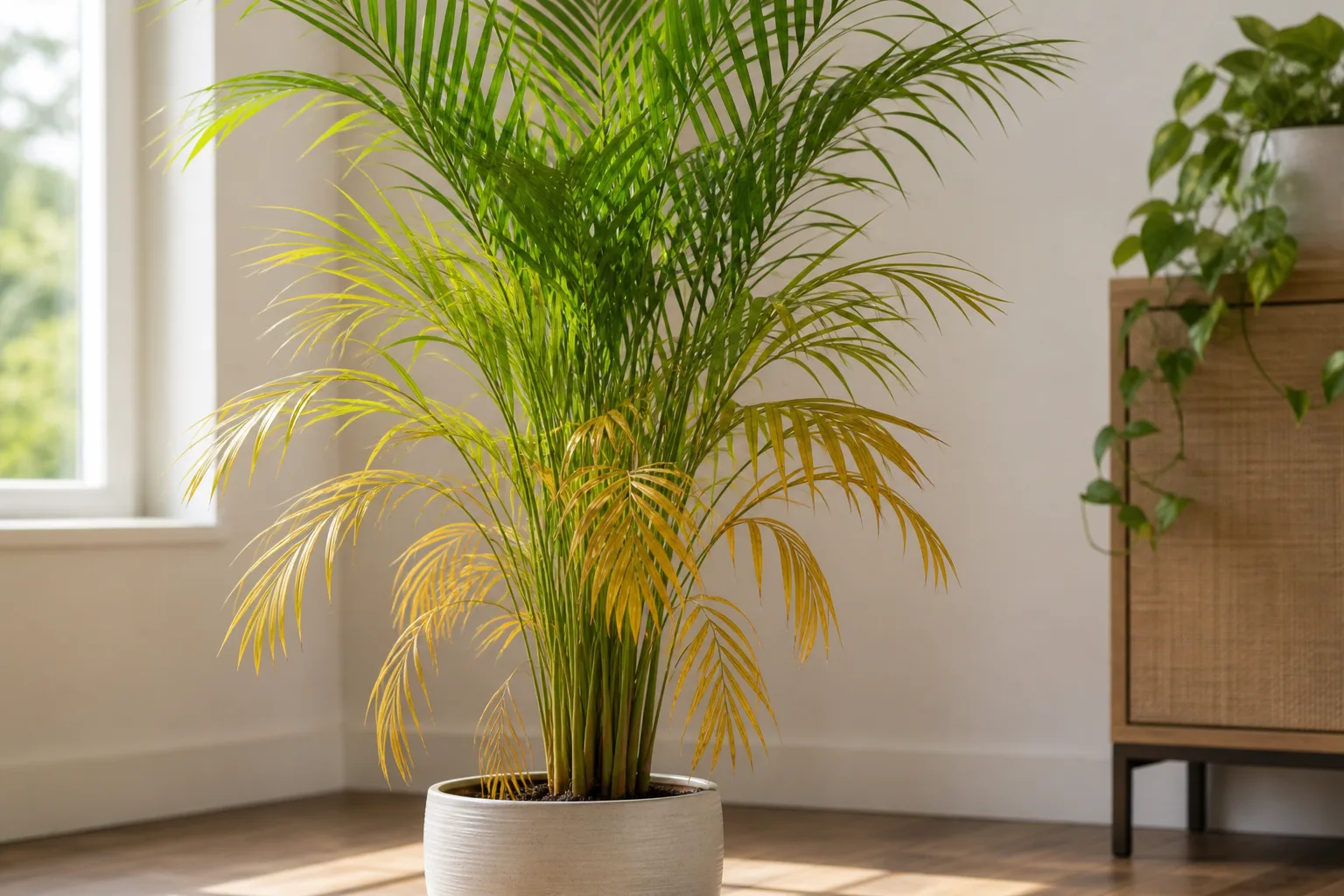
Yellowing on a dracaena is a symptom, not a diagnosis. One slowly fading bottom leaf can be normal; several leaves changing color while the pot stays wet points to a very different problem. Before watering, fertilizing, or repotting, check which leaves are affected and what the root zone feels like.
This guide focuses on common soil-grown dracaenas, including corn plants, Janet Craig, and dragon trees. The genus contains many species and cultivars, so a patterned cream or yellow stripe may be natural variegation rather than damage; plants grown in water, such as lucky bamboo, also need a different root-zone check. The diagnostic clues below help you choose a first fix without treating every yellow leaf the same way.
Read the yellowing pattern before changing care
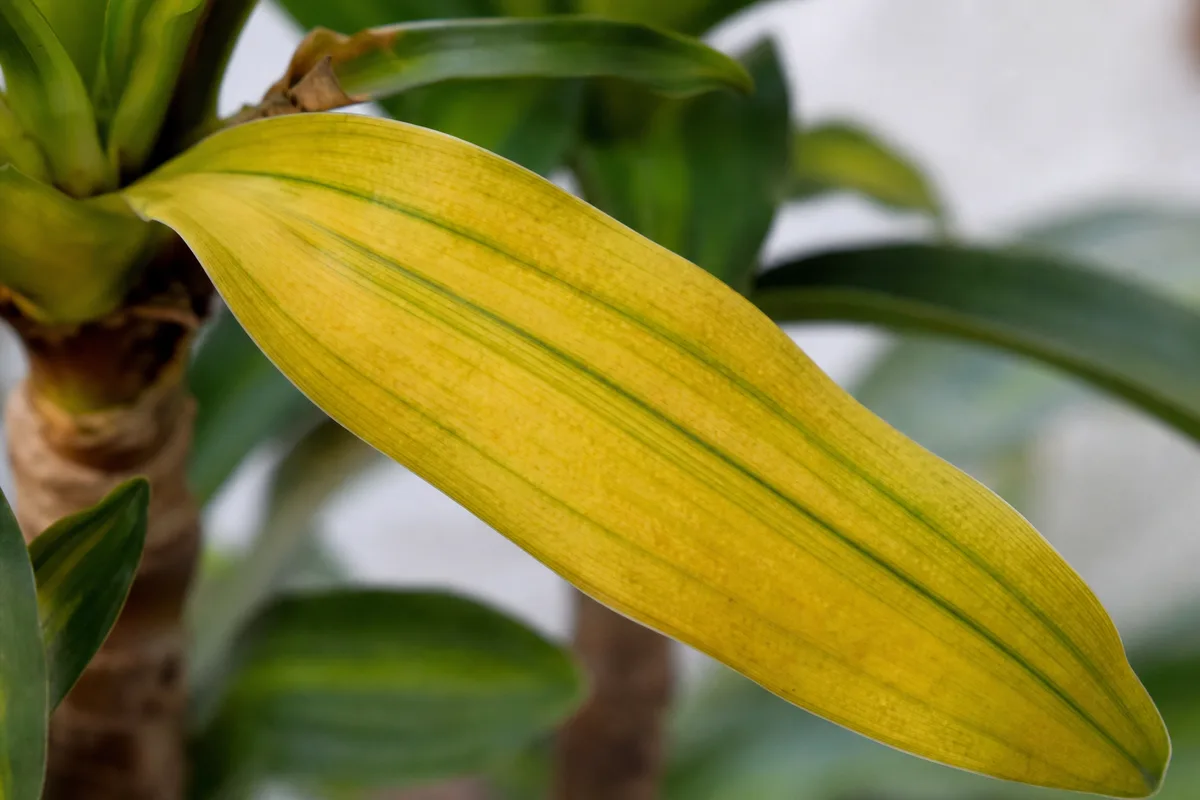
Start with four observations: whether the affected leaves are old or new, whether the yellowing is uniform or localized, whether the leaf feels soft or crisp, and whether the soil is wet or dry several inches below the surface. A single clue can mislead, but the combination often narrows the cause quickly.
| What you notice | What it raises on the list | Check next |
|---|---|---|
| One lower leaf fades while the crown stays green | Normal aging | Is this happening slowly to one older leaf at a time? |
| Several lower leaves yellow, the pot feels heavy, and the mix stays wet | Overwatering, poor drainage, or root damage | Drainage holes, standing runoff, smell, and root firmness if decline continues |
| Leaves droop or curl while the mix is dry and the pot feels light | Underwatering or a dry, water-repelling root ball | Whether water reaches and wets the whole root ball |
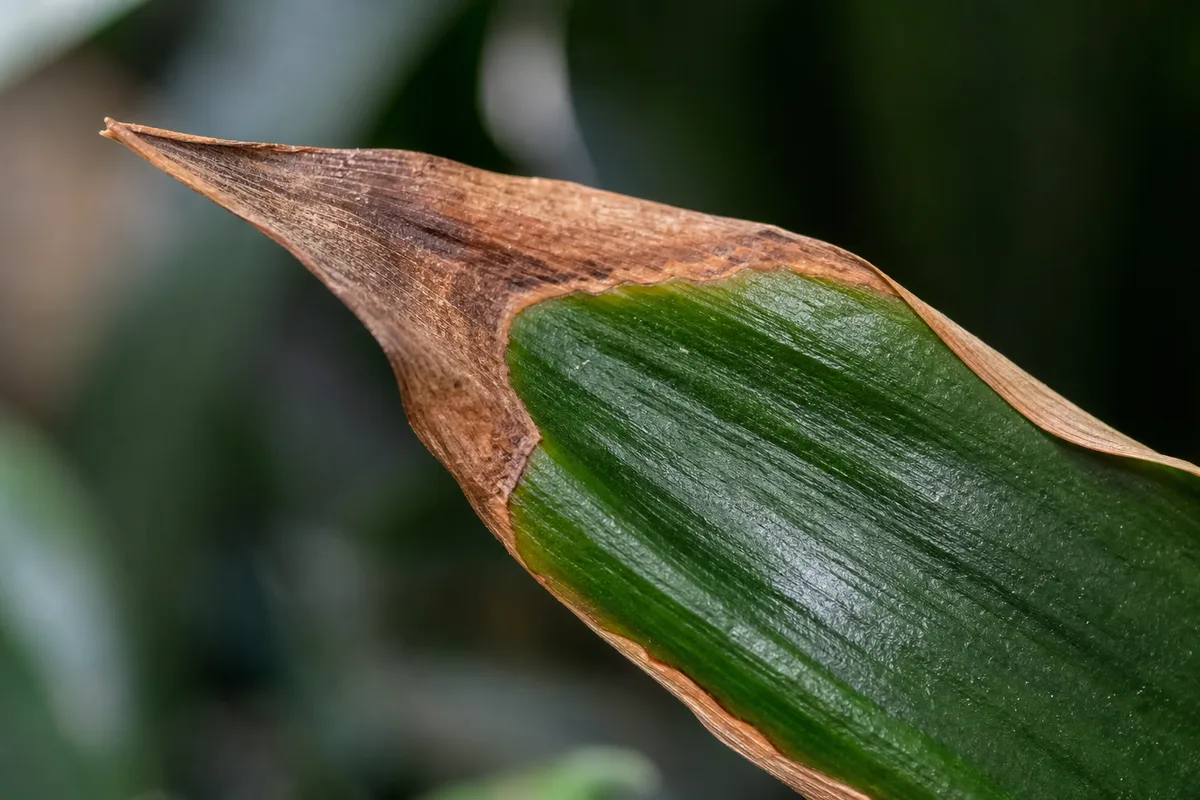
| Tips or narrow margins yellow and then brown while the center stays green | Fluoride, fertilizer salts, or dry air | Water source, fertilizer history, humidity, and salt crust |
| Discrete tan or reddish-brown spots have yellow halos | Possible leaf spot | Whether lesions are spreading and foliage stays wet |
| Damage is strongest on the window-facing side or after a cold night | Sun scorch or temperature shock | Recent moves, direct sun, draft, vent, or cold glass |
Treat the table as a triage guide, not a diagnosis by color alone. Dracaenas naturally vary in leaf shape and pattern, and NC State Extension notes that some species have yellow or cream markings; compare the pattern with unaffected leaves on the same plant before calling it chlorosis (NC State Extension’s Dracaena profile).
Check the soil, pot, and roots in five minutes
Push a finger or clean wooden stick about 2 inches into the mix, not just across the dry-looking surface. Lift the pot if you can: a heavy container with cool, wet soil suggests slow drying, while a very light pot and dry mix suggest that the plant may need water. Record when you last watered and whether runoff drained freely; that history is often more useful than a calendar reminder.
Check that the inner pot has open drainage holes and that the saucer or decorative outer pot is not holding water. A plant can sit in a pot with holes and still be waterlogged if runoff never gets emptied, the mix is dense, or the container is much larger than the root mass. The RHS dracaena growing guide recommends allowing the upper 5 cm (about 2 inches) of compost to dry before watering and warns that persistently wet compost can rot the roots.
Signs that point to root stress
Yellow leaves by themselves do not justify pulling the plant from its pot. Consider inspecting the roots when the mix remains wet for many days, the plant droops despite moist soil, the cane base softens, or the potting mix smells sour or swampy. These clues suggest the roots may be losing function, which can make a plant look thirsty even though its soil is wet.
If you do inspect, slide out the root ball gently and look for texture and odor rather than relying only on color. Healthy roots should feel firm; roots that are mushy, hollow, sloughing apart, or foul-smelling are damaged and need attention. If the roots are firm and the plant is otherwise stable, return it to the pot and avoid adding the stress of an unnecessary repot.
The most likely reasons dracaena leaves turn yellow
Several stresses can overlap. A low-light dracaena uses water more slowly than one beside a bright window, so a weekly watering routine can gradually become too frequent as days shorten; a draft or a recent move can add another stress at the same time. Change the factor best supported by the evidence first, then watch new growth rather than trying five remedies at once.
One older lower leaf may be normal aging
Dracaenas keep producing new leaves from their crowns and gradually shed some of the oldest foliage. If one bottom leaf yellows slowly while the upper leaves remain firm and green, the stem is solid, and new growth looks normal, the plant may simply be replacing old foliage. This is consistent with Better Homes & Gardens’ guide to yellow houseplant leaves, which distinguishes gradual lower-leaf aging from sudden, widespread yellowing. Removing that leaf can tidy the plant, but extra water, fertilizer, or a new pot will not stop normal aging.
Variegated cultivars add another possible source of confusion. Yellow or cream bands that repeat in the same pattern across healthy leaves are part of the cultivar; irregular yellow patches that appear suddenly, expand, or affect otherwise solid-green tissue deserve a closer check. If the yellowing is new and spreading, continue through the root and environment checks even if one old leaf could be aging normally.
Too much water keeps roots short of air
Overwatering is not just giving too much water in one pour. It is keeping the mix wet for too long through frequent watering, poor drainage, compacted soil, a pot that is too large, or a dim location where the root ball dries slowly. Roots need both water and air; when pore spaces stay saturated, root function declines and leaves can yellow, sag, or drop.
The combination that matters is wet soil plus a plant that is declining—not yellow color alone. Look for a heavy pot long after watering, water sitting in a cachepot, lower leaves turning yellow in a group, or a soft cane base. NC State Extension lists overly moist soil and root rot among common dracaena problems, and RHS likewise flags prolonged wet compost as a root-rot risk (NC State Extension; RHS).

If the mix is wet but the cane is still firm, stop watering and let the pot drain and dry toward the plant’s normal threshold. Empty any runoff and increase light only gradually if the plant has been in a very dim spot. Do not add fertilizer to “feed” yellow leaves or repeatedly unpot the plant; if wet soil and decline persist, inspect the roots and correct the drainage or mix rather than watering again.
Too little water can leave the root ball dry
Underwatering is more likely when the pot is unusually light, the mix is dry below the surface, leaves are limp or curling, and edges feel papery or crisp. Severe dryness can make older leaves yellow and fall, but the leaf color alone cannot distinguish thirst from root trouble. Check the pot and soil before giving water, especially if the plant has been declining in a wet cachepot.
Water slowly and thoroughly until excess flows through the drainage holes, then empty the saucer. If the mix has dried so much that water races down the sides without soaking it, apply water in two or three smaller passes a few minutes apart; a brief bottom soak can help rewet a compacted root ball, but lift the pot out and let it drain fully afterward. Avoid leaving it submerged or repeating a soak just because yellow leaves have not changed color.
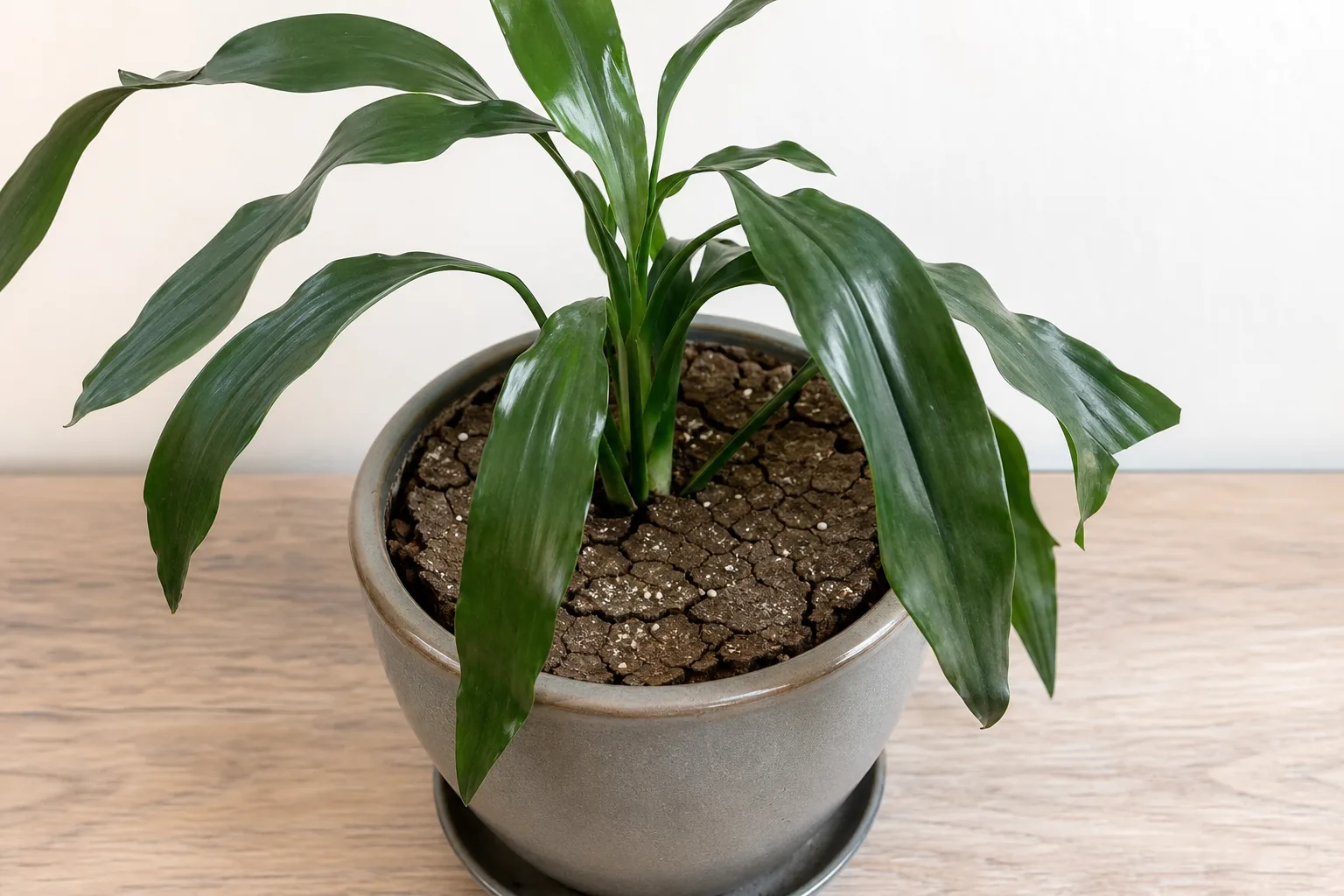
Going forward, use the soil as the trigger rather than “every Sunday” or “every two weeks.” Dracaena watering frequency changes with pot size, light, room temperature, season, and mix; let the upper 1–2 inches dry, water thoroughly, and make sure the container drains. If the plant grows in water rather than soil, check that the water is clean and the stem base is firm instead of applying the soil-drying rule.
Fluoride and fertilizer salts usually mark tips and edges
Dracaenas can be sensitive to fluoride in irrigation water. Fluoride moves with water through a plant and accumulates at leaf margins; the Pacific Northwest Plant Disease Management Handbooks’ fluorine-toxicity guidance describes tip and marginal necrosis that can spread inward and specifically lists dracaenas among sensitive foliage plants. That makes fluoride more plausible when the margins are dry or brown and the center remains greener; it is not the default explanation for a leaf that yellows evenly across its blade.
If that pattern fits and your tap water is fluoridated, try rainwater, distilled water, or water treated with a filter specifically rated to remove fluoride. Letting tap water stand overnight may reduce some chlorine, but it does not remove dissolved fluoride, so it is not a reliable fix for fluoride injury. The RHS also recommends rainwater or filtered water for dracaenas because fluoride can damage the foliage.
Fertilizer salts are a separate issue that can resemble mineral injury at the tips. A white crust on the soil or pot rim, recent heavy feeding, or fertilizer added to already-dry mix makes salt buildup more likely; pause feeding and avoid “correcting” yellow leaves with a stronger dose. Flush only when the pot drains freely and the roots are not already sitting in saturated mix; otherwise, improve drainage or replace degraded soil rather than adding more water.
Light and temperature changes stress foliage
Dracaenas do best in bright, indirect light, but a sudden move from a dim corner to direct afternoon sun can scorch leaves. Sun injury tends to form bleached, tan, or dry patches on the exposed side rather than evenly yellowing every leaf; in deep shade, growth can slow and soil may take much longer to dry. Move the plant gradually toward brighter indirect light, using a sheer curtain or a position out of the direct beam instead of placing it in harsh sun to “green it up.”
Cold drafts, an air-conditioning stream, cold window glass, or a sudden temperature swing can also injure leaves. Check what changed in the room around the time symptoms began, including a seasonal heating or cooling change or a new position beside an exterior door. The RHS advises year-round warmth and indirect light for dracaenas; stable conditions and distance from vents are safer than trying to compensate with extra water or fertilizer.
Dry air affects leaf margins more than whole leaves
Low humidity is a better fit when leaf tips and edges dry first while most of the blade remains green. It is less convincing as the only explanation for several entire leaves turning uniformly yellow, so check moisture and roots before buying a humidifier. Dry air can stack with fluoride or fertilizer salts, making the edges more vulnerable even when the plant is watered sensibly.
If the room is consistently dry, a small humidifier near the plant can raise humidity more reliably than occasional misting. Grouping plants can modestly change the local microclimate, but it will not correct wet soil or mineral-heavy water. The RHS notes that dry air can contribute to dracaena leaf damage, while Gardening Know How’s dracaena troubleshooting guide distinguishes dry tips and edges from the leaf loss and root problems associated with excess moisture.
Pests and leaf spot need visible clues
Pests move up the list when yellowing comes with fine stippling, sticky residue, webbing, or small fixed bumps on the stems and undersides of leaves. Inspect the newest growth and the leaf joints with a bright light; scale, mealybugs, and spider mites can be easy to miss on a tall cane plant. Isolate a visibly infested dracaena from nearby plants and identify the pest before choosing a treatment.
Leaf spot is more likely when there are distinct tan, brown, or reddish lesions with yellow halos, especially if spots are spreading across leaves that stay wet. Gardening Know How describes dracaena leaf spots and soft rot as disease concerns, but those patterns are not the same as uniform yellowing from water stress. Keep water off the foliage, remove badly affected leaves with clean shears, and avoid spraying a fungicide unless a disease is reasonably identified and the product label permits that use.
What to do today—and what to leave alone
Use this order to prevent a small symptom from becoming a chain of unnecessary interventions:
- Photograph the plant and note the pattern. Record whether one lower leaf or several leaves are affected, whether the damage is uniform or at the margins, and whether the plant recently moved or experienced a draft.
- Check soil moisture and drainage. Feel below the surface, lift the pot, check the holes, and empty any standing runoff. Do not water a wet root ball just because the leaves look limp.
- Choose one likely cause and make one primary change. Adjust the watering approach, water quality, light exposure, or room placement according to the evidence; changing everything at once makes it harder to learn what helped.
- Remove only fully yellow or damaged leaves if needed. Use clean scissors at the base of the leaf. A partly green leaf can still support the plant, and pruning does not cure the underlying stress.
- Recheck new growth and the root zone over the next few weeks. If symptoms continue to spread, revisit the diagnosis instead of repeating the same treatment.
Avoid fertilizing as a first response. Yellow leaves do not prove a nutrient deficiency, and extra fertilizer can add salts to the potting mix while roots are already stressed. Avoid fungicide for undiagnosed yellowing, and do not remove several green leaves to make the plant look tidy during recovery.
Repot only when the root-zone evidence calls for it
Repot when the current container has no usable drainage, the mix is compacted or degraded and stays wet, the roots are mushy, or the plant is severely rootbound and cannot take up water evenly. Choose a pot with drainage only modestly larger than the remaining root ball, and use a fresh, airy houseplant mix; an oversized pot can hold unused wet soil around the roots for too long. If rot is present, remove only roots that are clearly soft or collapsing with clean tools, then keep the fresh mix lightly moist rather than soaking it.
Do not repot a dracaena for one aging leaf if the soil drains normally and the roots are firm. Repotting itself disturbs roots and can add stress, so a stable plant is often better left in place while you correct water, light, or temperature. After any repot, wait until the top layer begins to dry before watering again; the exact interval depends on the new pot, mix, light, and how much healthy root remains.
Set up care that prevents another wave of yellow leaves
Place the plant where it receives bright, indirect light without a long stretch of direct midday sun, and keep it away from cold drafts, hot radiators, and air-conditioning vents. If you move it to a better-lit spot, do so over several days so foliage can adjust rather than exposing shade-grown leaves to a sudden bright window. Rotate the pot occasionally for even growth, but avoid repeatedly moving a plant that is already settling into stable conditions.
Water by checking the soil, not by following a fixed weekly schedule. Let the upper 1–2 inches dry, water thoroughly, and discard runoff; expect the pot to dry more slowly in winter, dim rooms, cool conditions, and oversized containers. Use rainwater or low-mineral water if fluoride-sensitive tip injury is likely, and feed only during active growth at the label rate rather than trying to force yellow leaves green with fertilizer.
Keep the foliage reasonably clean and inspect leaf undersides and joints when watering. Avoid routinely wetting the crown or leaving leaves damp in stagnant air, especially if spots have appeared before. A short note with the watering date, soil feel, and any new yellowing can reveal a pattern that is difficult to remember after several weeks.
How to judge recovery when old leaves stay yellow
Fully yellow tissue rarely turns green again, even after you correct the cause. That does not mean the plant has failed; recovery is better measured by a firm cane, no new wave of yellow leaves, and clean new growth. If the damaged leaf is still partly green, leaving it in place for a while allows the plant to use the healthy portion.
Do not expect a stressed dracaena to show a dramatic change overnight. First, the rate of new damage should slow; then new leaves should emerge without the same pattern if the cause was corrected. A yellowing lower leaf that drops while the crown stays healthy may simply complete its normal cycle, but ongoing yellowing across new leaves, persistent wet-soil wilt, or a soft cane means the original diagnosis needs another look.
If a plant continues declining despite stable moisture, drainage, light, and temperature, inspect closely for pests or spreading lesions and consider asking a local extension office or experienced plant clinic to identify a disease. For damage that has shifted mainly to brown, crispy tips, see our dracaena brown-leaf guide; tip browning often has a different pattern and water-quality explanation from whole-leaf yellowing.
Conclusion
When dracaena leaves turn yellow, start with where the color changed and what the soil is doing. One slow-fading bottom leaf may be ordinary aging; several yellow leaves over wet soil make drainage and roots more urgent; dry, light soil suggests thirst; tip-and-edge damage makes fluoride, salts, or dry air more plausible; and isolated lesions or pests call for a closer inspection.
Choose the fix that matches those clues, change one major condition at a time, and avoid defaulting to fertilizer, fungicide, or repotting. Yellow tissue may stay yellow, so judge your work by a stable cane and healthier leaves that emerge next—not by waiting for an old damaged leaf to reverse itself.