Dracaena Brown Leaves: 7 Causes and Fixes
Brown dracaena leaves usually trace to humidity, water quality, light, or temperature—not one mystery disease. Learn seven causes, how to read the damage pattern, and when to trim.
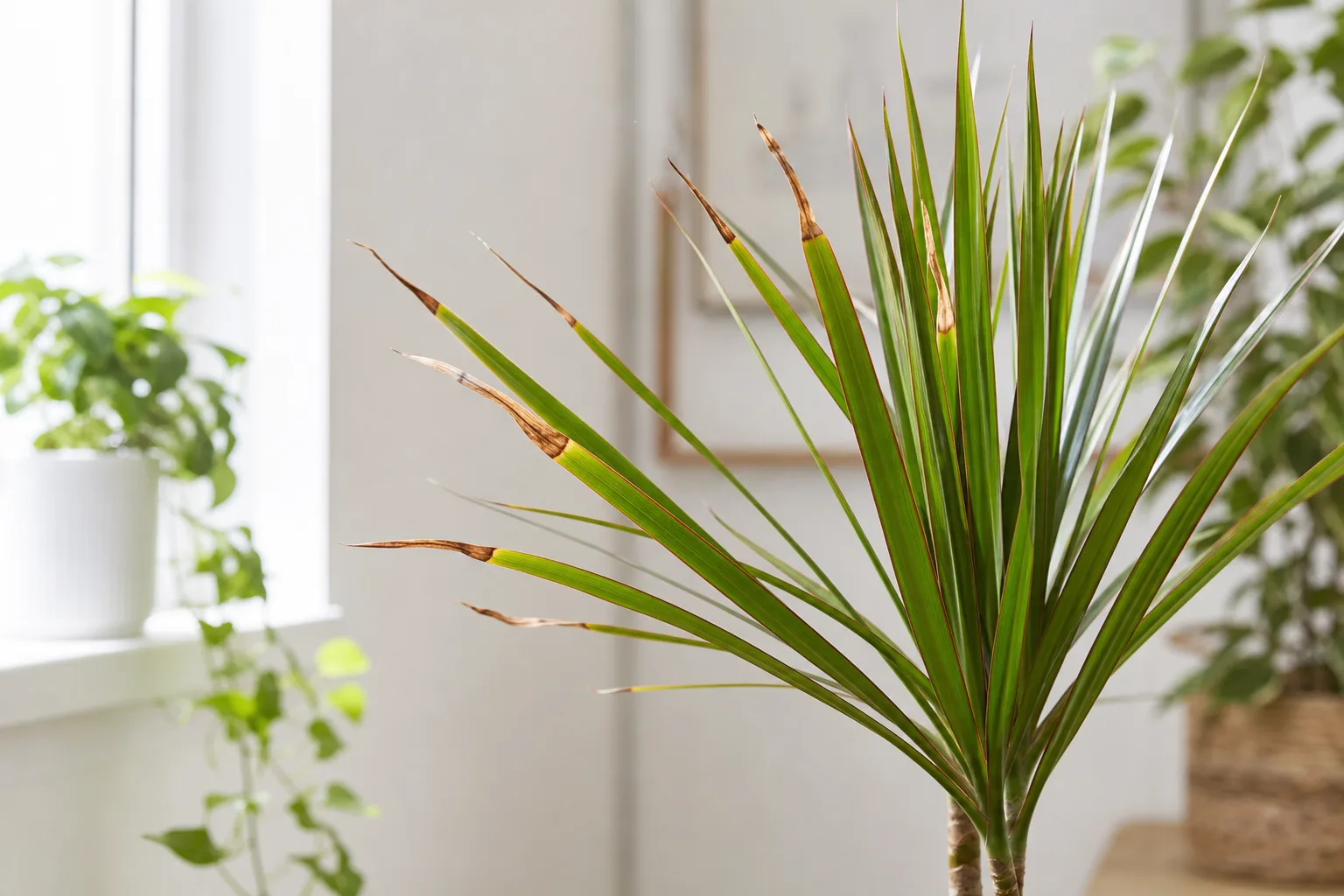
Brown leaves on a dracaena (Dracaena spp.) look alarming on an otherwise architectural plant, but the browning pattern usually tells you the story before you repot, fertilize, or strip half the canopy. Tips-only crisping, bleached patches on the window side, yellow halos around tan spots, and a single brown leaf on an otherwise green cane all point to different fixes. The job of this guide is to match where the leaf turned brown to why it happened—and to the first low-risk action that stops new damage.
Dracaenas share a few traits that make browning predictable once you know them. They prefer bright indirect light, warm stable temperatures, and ambient moisture higher than most heated homes provide in winter. NC State Extension on corn plant (Dracaena fragrans) notes they are sensitive to fluorides and built-up salts, and that leaf tips brown when indoor humidity is too low. The RHS dracaena growing guide adds that fluoride in tap water can damage plants, so filtered or rainwater is preferable. Those two facts alone explain a large share of the brown-tip emails plant owners send every January.
For species-specific watering rhythm, light placement, and deeper troubleshooting, use the Dracaena hub and the dedicated brown tips problem page after you identify your pattern below.
Start With a 60-Second Leaf and Soil Check
Before you cut anything, run a quick snapshot. Stick your finger into the mix to the first knuckle, note whether the pot feels light or heavy, and look at where browning started—tips only, one sun-facing patch, yellow halos, or several leaves crisping at once.
Wet soil plus wilt often means overwatering or poor drainage, not thirst. Bone-dry mix plus dramatic droop that perks up within hours after a soak points to underwatering. Brown tips alone, with firm green leaf centers and stable soil moisture, usually track humidity or water chemistry, not root rot.
Photograph one affected leaf and the soil surface. If the mix smells sour, stays wet three days after watering, or the plant wilts on wet soil, treat that as root stress and read Reason 4 and the serious-signals section before trimming more foliage.
Four Questions That Narrow the Cause Fast
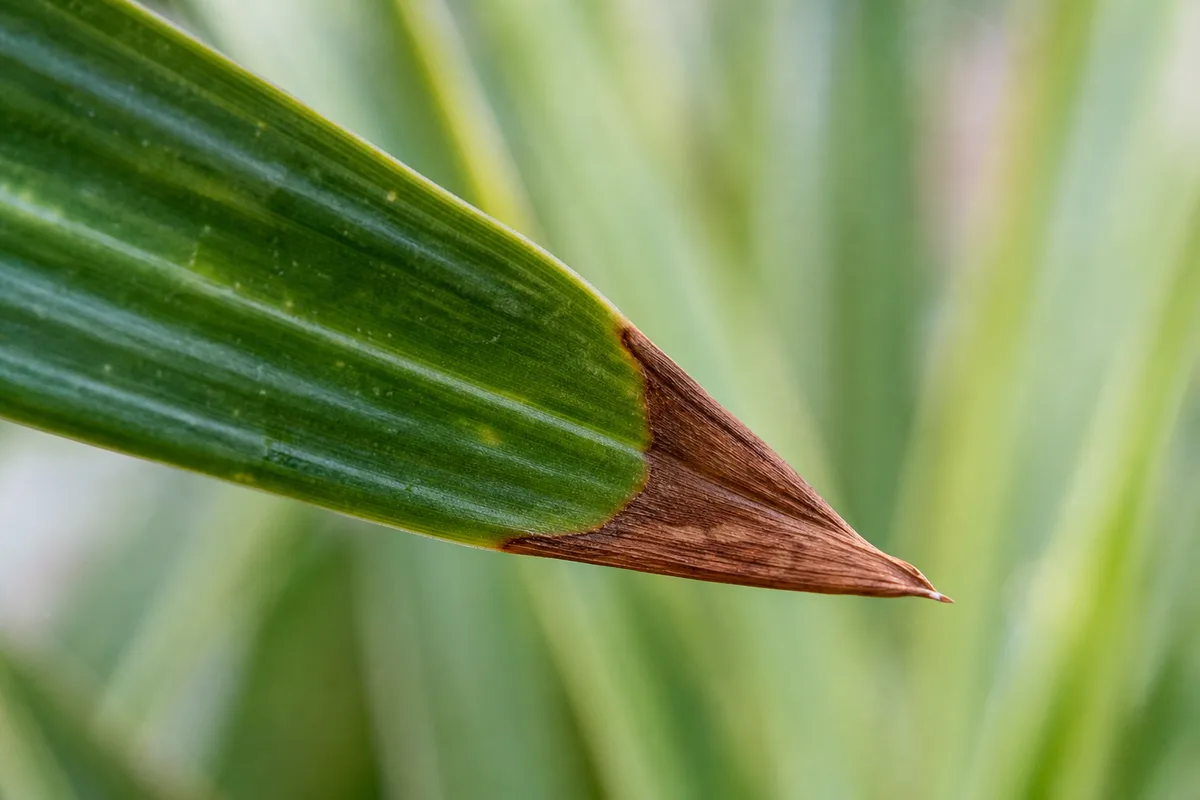
1. Is damage at tips only, or broad patches? Narrow crispy tips and margins usually track dry air, fluoride, or fertilizer salts. Bleached or tan patches on the window side suggest sun or heat scorch. Round tan spots with yellow halos suggest leaf spot disease.
2. Did browning start on new leaves or old lower leaves? Fresh leaves emerging with brown margins mean the current environment is still wrong. One or two brown leaves on the lowest cane while new growth stays clean often means normal aging.
3. Is the top inch of soil wet or dry right now? This separates underwatering from overwatering faster than looking at leaf color alone.
4. Did anything change in the last two weeks? A move to a south window, a heat vent switched on, a vacation without water, or switching to softened water can explain sudden browning without a mysterious disease.
Reason 1 — Low Indoor Humidity Dries Leaf Tips First
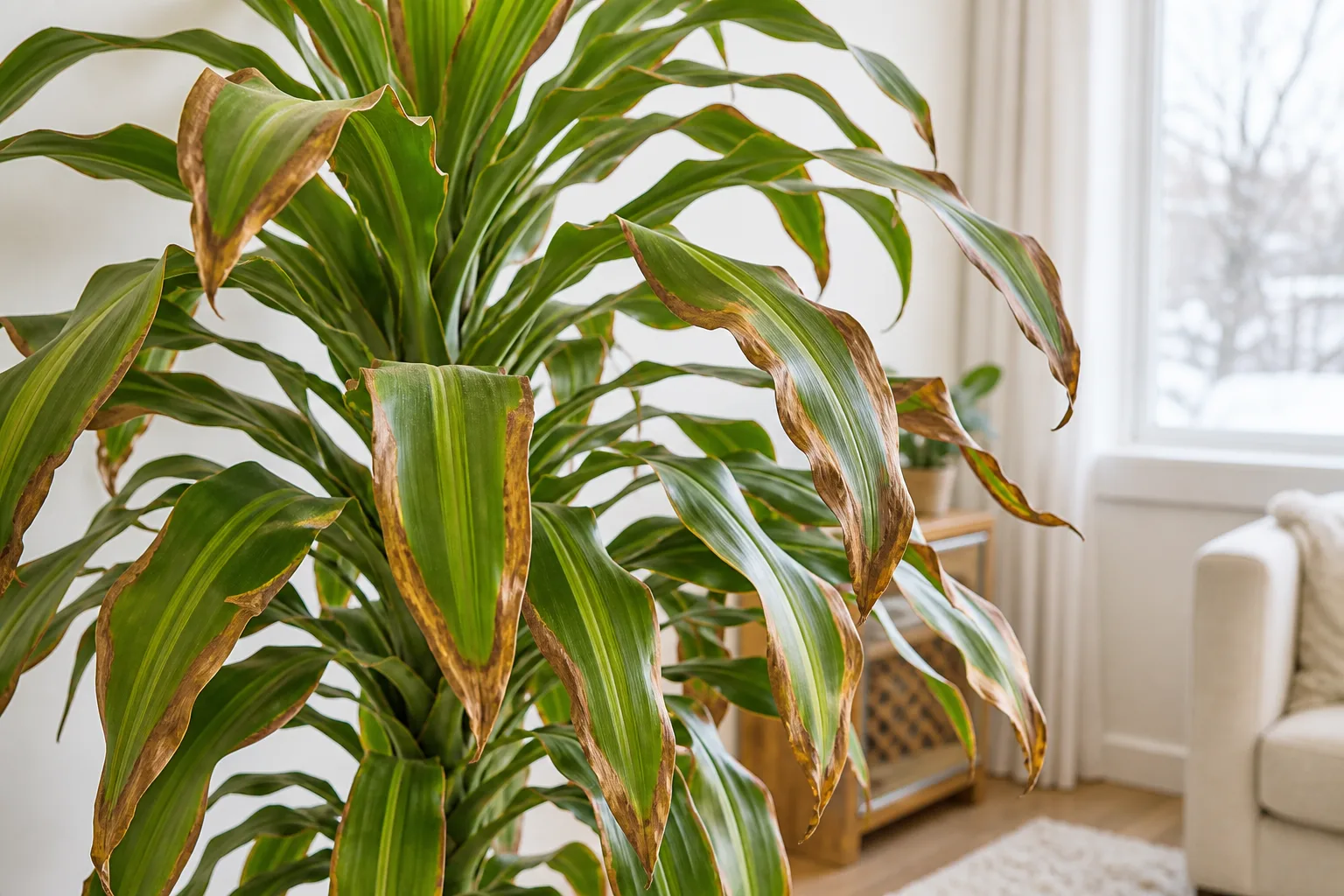
If only the tips and narrow leaf margins are brown while the rest of each leaf stays green and glossy, low humidity is a prime suspect—especially in winter when indoor relative humidity often drops to 20–30% while dracaenas prefer roughly 50–60%. NC State Extension lists low indoor humidity as a direct cause of tip browning and suggests a humidifier may help, particularly when the house is heated.
Dracaenas transpire through long strap-like leaves. When the air is dry, water exits faster at the thin leaf edges than the plant can replace from the roots, and those margins die first. This is cosmetic stress, not an infection—but it will repeat on every new leaf until humidity rises or you accept occasional tip trim.
First fix: Group humidity-loving plants together, run a small humidifier within a few feet of the canopy (not blasting directly onto leaves), or use a pebble tray with the pot sitting above the water line so roots never sit in standing water. Check humidity at leaf level, not across the room. For a deeper dive on humidity trays and winter air, see our brown tips on houseplants guide.
If tips keep returning after humidity improves: Layer in water-quality checks from Reason 5. Dry air and fluoride often stack in the same room.
Reason 2 — Too Much Direct Sun Scorches Foliage
Dracaenas grow best in bright, indirect light. NC State Extension warns that direct sun can burn foliage, while too little light narrows leaves over time. Sun damage looks different from tip burn: dry brown or bleached patches on the side facing the glass, often after a sudden move to a south window or after sheer curtains come down in spring.
You cannot reverse scorched tissue. Move the plant out of direct sun beams—a few feet back from a south or west window, or behind a sheer curtain—and remove only the damaged portions for appearance. New leaves should emerge without bleached patches within one to two months in active growth.
First fix: Relocate to bright indirect light. Rotate the pot weekly so one side does not keep taking the hit. If the only bright spot you have is direct sun, filter it. Dragon trees (Dracaena marginata) with thin leaves scorch faster than broad-leaf corn plants, but no dracaena species wants midday sun on the foliage.
Reason 3 — Cold Drafts and Temperature Shock
Dracaenas are tropical plants. NC State Extension recommends keeping temperatures above 50°F (10°C) when possible, with optimal growth around 70–80°F (21–27°C). Exposure to cold drafts from doors, single-pane winter windows, or air-conditioning vents can brown leaf tissue quickly—sometimes overnight.
Cold damage often shows as water-soaked-looking patches that turn brown, or widespread browning on leaves touching cold glass. Unlike tip burn, affected areas may not follow the leaf margin pattern. That tissue is dead; the fix is environmental, not chemical.
First fix: Pull the plant back from the window sill on cold nights, close vents that blow directly on the canopy, and avoid leaving plants in unheated rooms during cold snaps. Do not fertilize a cold-stressed plant until it sits in stable warmth for two weeks.
Reason 4 — Underwatering Makes Leaves Crispy and Wilted
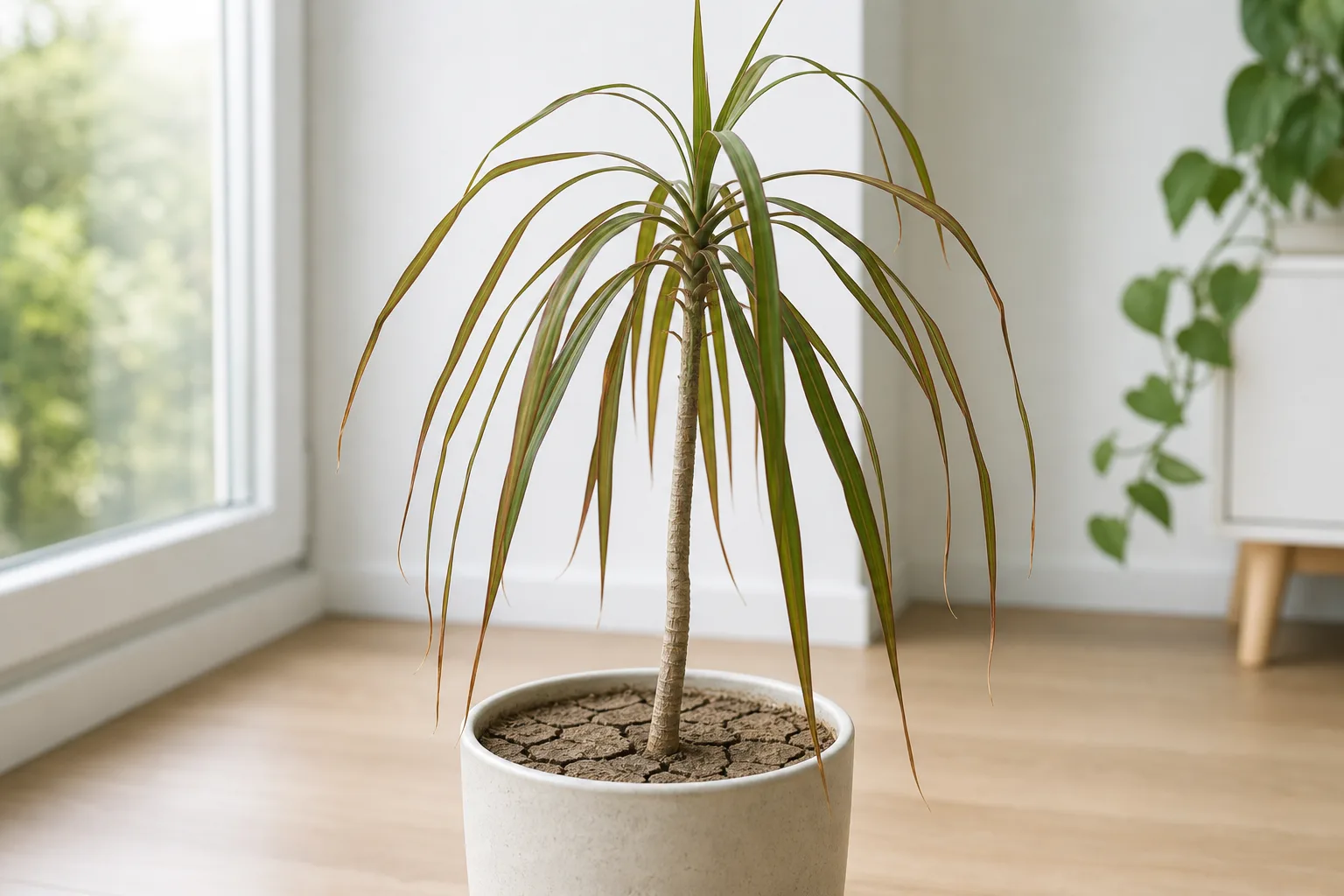
Dracaenas are not cacti. They prefer consistently moist soil during the growing season, with reduced watering in winter when growth slows. A long dry spell produces wilting, curling, and crispy brown edges that may spread beyond tips if drought is severe. The pot feels light, the top inch of mix is bone dry, and leaves may droop dramatically.
First fix: Water thoroughly until excess drains from the bottom holes, then discard the saucer water. For a very dry root ball that repels water, bottom water for twenty to thirty minutes so the mix rehydrates evenly. Going forward, check soil weekly and water when the top inch begins to dry—not on a rigid calendar.
Do not confuse underwatering with overwatering. An underwatered dracaena wilts on dry soil and recovers after a soak. An overwatered dracaena may wilt while soil stays wet, with yellowing lower leaves and soft stems. If your plant matches the wet-soil pattern, pause watering, check drainage holes, and read the overwatering problem page before adding more water.
Reason 5 — Fluoride and Salt Buildup From Tap Water and Fertilizer
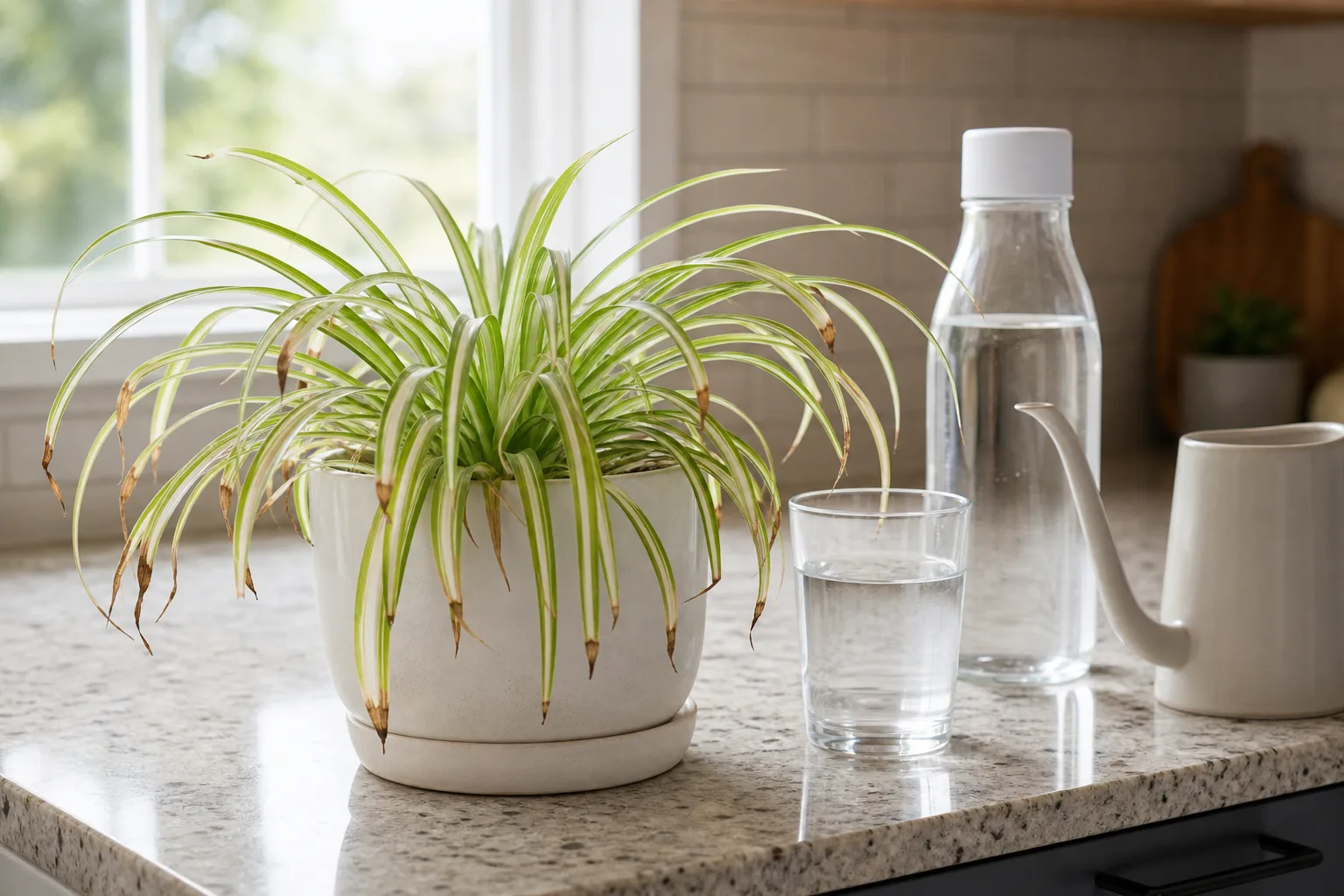
Among houseplants, dracaenas rank among the most fluoride-sensitive. Gardening Know How notes fluoride from municipal tap water accumulates in soil over time, causing yellowing at tips and margins that progresses to brown as toxicity builds. Fluoride can also come from perlite in potting mix and from fertilizers containing superphosphate. NC State Extension recommends non-fluoridated water and monthly flushing when leaves brown.
Separately, fertilizer salts leave white crust on pot rims and pull moisture from leaf margins. The pattern resembles fluoride burn—crispy tips on otherwise green leaves—but often follows heavy feeding or years in the same pot without leaching.
First fix: Switch to rainwater, distilled, or reverse-osmosis water for four to six weeks. Letting tap water sit overnight reduces chlorine but does not remove fluoride. Reduce fertilizer to half strength during active growth, or skip feeding until new leaves emerge clean. Avoid potting mixes heavy with perlite if fluoride is suspected; a bark-heavy, well-draining mix suits dracaenas well per RHS guidance.
How to Flush Salts Without Drowning Roots
Once a month—or immediately if you see salt crust—leach the pot:
- Place the pot in a sink or tub.
- Run low-mineral water slowly through the mix for several minutes.
- Use roughly three times the pot volume of water total so salts wash out the drainage holes.
- Let the pot drain fully before returning it to a saucer.
Do not flush into a pot without drainage holes. If the plant is root-bound and salt-crusted, plan a repot into fresh mix after flushing—see dracaena repotting for timing.
Reason 6 — Fusarium Leaf Spot and Wet Foliage
Fusarium leaf spot thrives where foliage stays wet and air is warm. Gardening Know How describes young dracaena leaves with brown to reddish-brown spots surrounded by yellow halos, with older leaves developing lesions—often concentrated toward the leaf base or crown where water collects.
This is not the same as crispy tips from dry air. Leaf spot patches are localized, sometimes circular, and often appear after overhead watering, misting the crown heavily, or keeping a plant in stagnant humid air without airflow.
First fix: Stop wetting the foliage. Water the soil directly and keep the crown dry. Remove badly affected leaves with sterilized pruners and bag them. Improve airflow around the plant. If spots spread to new leaves within a week, treat with a labeled fungicide for ornamental foliage diseases and isolate the plant from others until new growth stays clean.
Severe infections can progress to stem rot at the crown. If the stem feels soft or smells off at the base, propagation from a healthy cane section may be the salvage path—see dracaena propagation.
Reason 7 — Natural Leaf Aging on Lower Canes
Dracaenas shed older leaves as they grow taller. One or two fully brown leaves on the lowest part of the cane, while the top rosette stays green and new leaves look normal, is usually senescence, not a crisis. The plant is reallocating energy to newer foliage at the top of the stem.
First fix: Snip the brown leaf at the base of the petiole with clean pruners if you want a tidy look, or let it drop on its own. Do not increase watering or fertilizer for normal aging alone. If multiple leaves brown from the bottom up while the top also declines, return to the diagnostic questions— that pattern suggests root stress, cold, or chronic underwatering instead of simple aging.
Should You Cut Off Brown Dracaena Leaves?
Yes—for dead tissue. Brown leaf areas are not coming back green. Removing them lets the plant stop sending resources to tissue that cannot recover and keeps the plant looking cared-for. Trimming does not fix the underlying cause, though. If you cut tips but keep watering with fluoridated tap water in a dry room, brown will return on the next leaves.
Trim the whole leaf when most of the blade is brown, the leaf is fully dead, or disease lesions cover a large portion. Cut at the base of the petiole or flush with the cane, using sterilized pruners (wipe blades with rubbing alcohol between cuts if you suspect leaf spot).
Trim only the brown portion when most of the leaf is still green and functioning. There is no need to remove a long healthy blade because the last half inch is crispy.
Best timing: Light cosmetic trimming any time of year is fine. Heavy pruning—removing many leaves or shortening canes—works best in spring or summer when the plant is actively growing and can push new foliage faster.
How to Trim Tips vs Whole Leaves
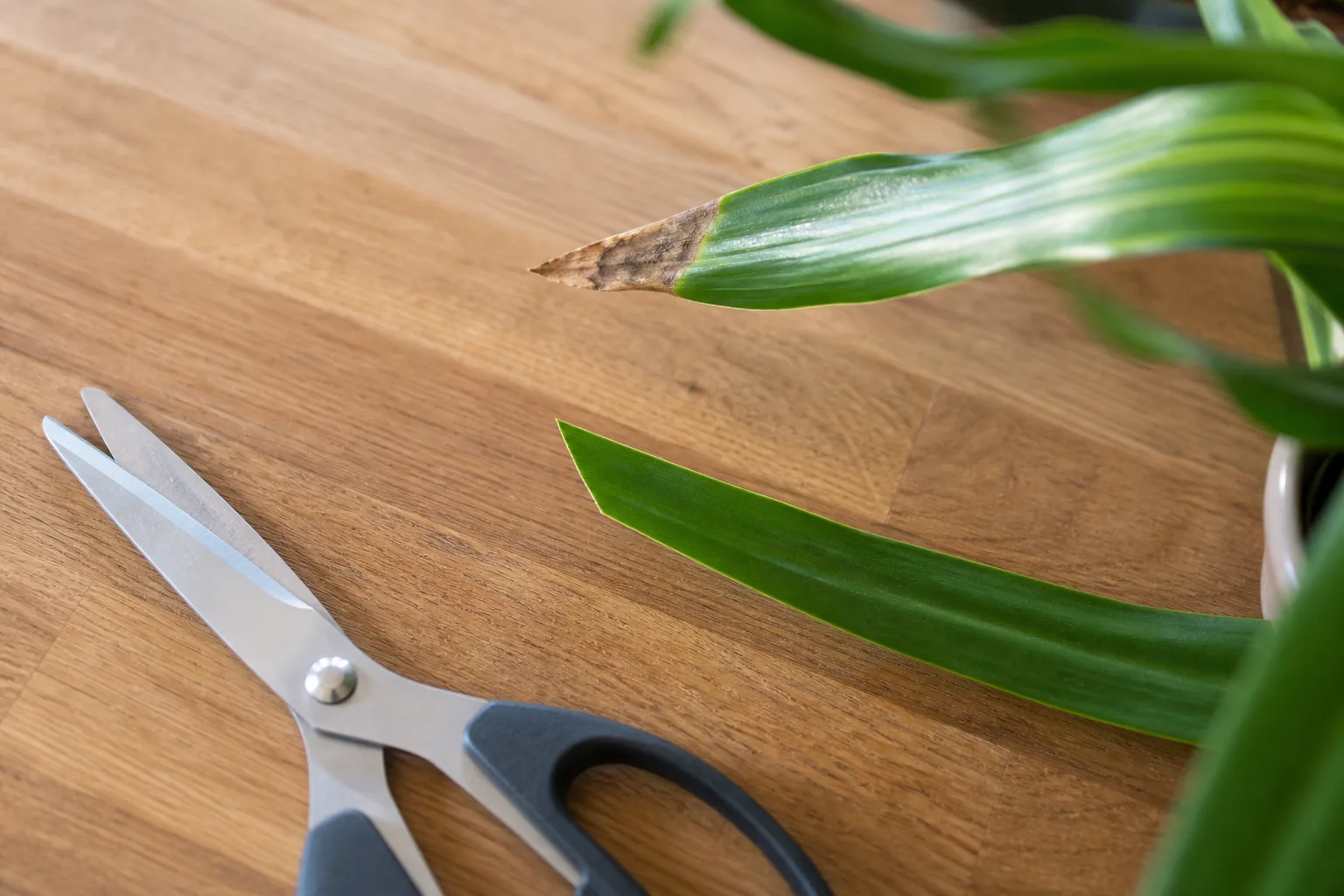
For tip-only browning, snip the dead tissue following the leaf’s natural shape. Many dracaena leaves look best with a shallow V cut at the tip rather than a straight chop across, which can look unnatural on strap-like foliage.
For margin browning along one side, trim just the dead edge, angling the cut slightly so water does not pool on a flat cut surface.
Never pull brown leaves by hand if they resist—tearing can damage the cane. Cut cleanly instead.
Judge success by new leaves, not old ones. Within two to four weeks after you fix humidity, water, or light, the next one or two leaves should emerge with clean tips. Existing trimmed edges stay as you left them.
Species Quick Notes — Corn Plant, Dragon Tree, and Lucky Bamboo
The genus holds many popular houseplants, and browning shows up slightly differently on each:
Corn plant (Dracaena fragrans) — Broad strap leaves on woody canes; very common fluoride and low-humidity tip burn. See the corn plant hub and corn plant brown tips for cultivar-specific notes.
Dragon tree (Dracaena marginata) — Thin, grass-like leaves scorch quickly in direct sun and show tip burn fast in dry air. The dragon tree hub covers cane pruning when plants get leggy after repeated leaf loss.
Lucky bamboo (Dracaena sanderiana) — Often grown in water or pebbles rather than soil; browning may trace to stagnant water, chlorine, or direct light rather than soil moisture. Rinse containers and switch to filtered water on a regular schedule.
If you are unsure which dracaena you have, match leaf shape and growth habit to photos on the Dracaena hub before applying species-specific watering advice.
A Two-Week Recovery Plan That Actually Works
Days 1–2 — Diagnose and stabilize. Run the sixty-second check. Move the plant off cold sills and out of direct sun. Note soil moisture and damage pattern. Photograph baseline damage.
Days 3–7 — Apply the primary fix. Raise humidity OR fix watering rhythm OR switch to low-mineral water OR stop wetting foliage—pick the fix that matches your pattern, not all fixes at once. Flush salts if crust or fluoride is suspected. Trim only dead tissue.
Days 8–14 — Watch new growth. New leaves should look cleaner than the previous cohort. If tips brown on fresh leaves, you missed a stacked stress (often humidity plus fluoride) or the plant is still in too much direct light.
After two weeks — Adjust or escalate. Persistent wet-soil wilt means inspect roots and consider repotting. Spreading leaf spots mean isolate and treat for fungus. If the top rosette is green and only the lowest leaf aged out, you are done.
When Brown Leaves Mean Something Serious
Most dracaena browning is environmental and reversible going forward. Escalate when you see:
- Multiple new leaves emerging brown or stunted
- Soft, mushy stem at the base or crown
- Sour-smelling soil and wilt on wet mix (possible root rot)
- Rapid spread of spotted lesions despite dry foliage
- Whole-canopy collapse after a cold event or repot
Those patterns need root inspection, possible repot into fresh mix, adjusted watering, and sometimes propagation from a healthy cane section—not repeated tip trimming alone. Dracaenas contain saponins toxic to dogs and cats per NC State Extension; keep trimmed leaves and pruners away from pets during recovery work.
Conclusion
Brown dracaena leaves look worse than the problem usually is. Tips alone most often mean dry air, fluoride, or salts. Patches on the sunny side mean light or heat. Yellow halos around spots mean wet foliage and possible fusarium. One brown lower leaf on an otherwise green plant often means normal aging. Match the pattern first, apply one primary fix, trim dead tissue cleanly, and judge recovery by the next leaves the plant produces—not by hoping old brown tissue turns green again.
For ongoing care after recovery, keep the plant in bright indirect light, use low-mineral water if your tap is fluoridated, maintain humidity near 50–60% in heated months, and water when the top inch of soil dries. The Dracaena hub links watering, light, fertilizer, and problem pages so you do not have to guess your way through the next season.