Should You Cut Your Lawn Short Before Winter?
Should you cut your lawn short before winter? Learn the right final height by grass type, when to stop mowing, and how to avoid frost, snow mold, and scalping.
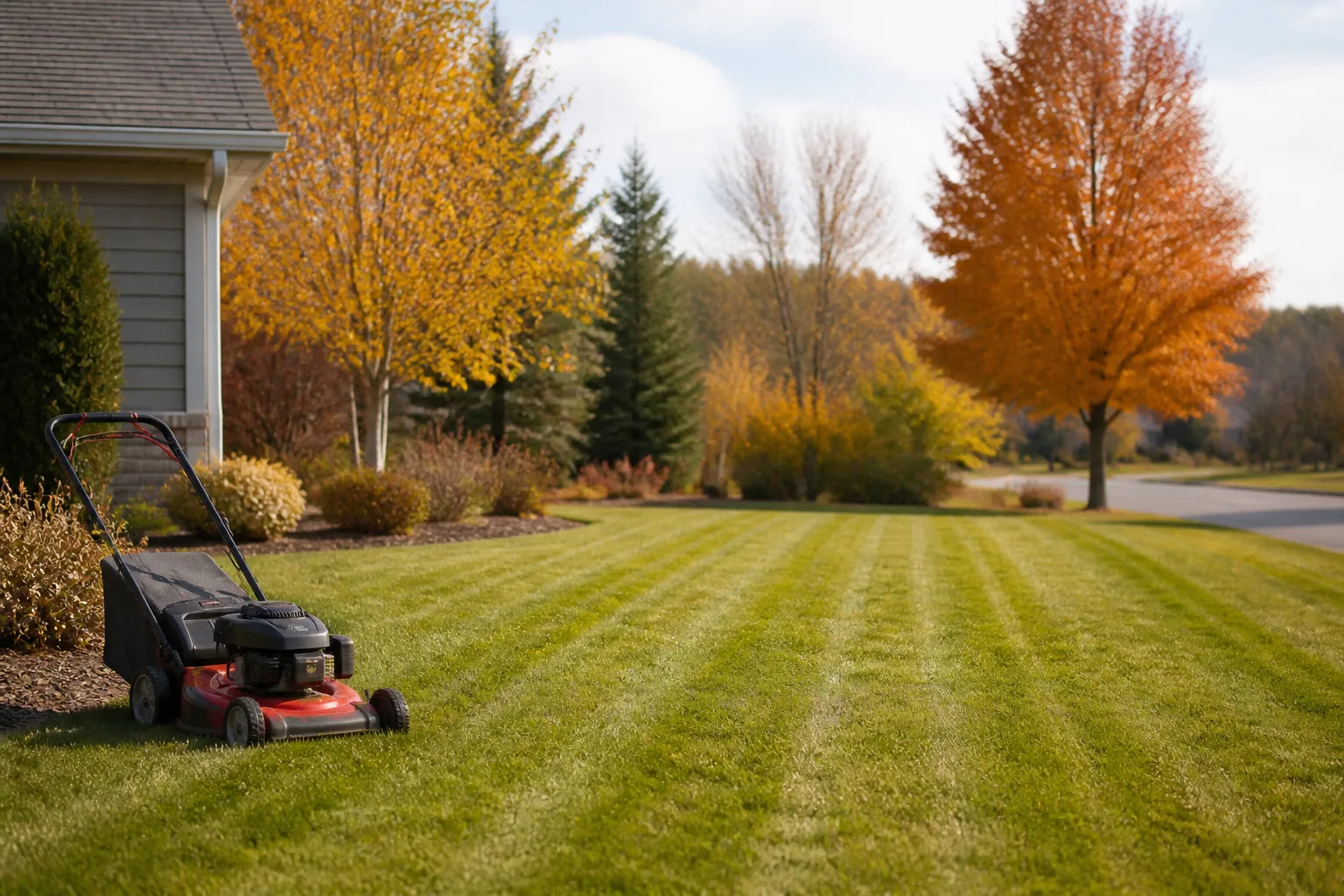
Yes—but “short” should mean neatly inside your grass’s healthy mowing range, not a buzz cut. Keep mowing while the lawn is actively growing, make the last cut modestly lower only when that makes sense for your grass and local winter conditions, and never scalp the turf to an arbitrary one-inch setting.
The best final height depends on whether you have cool-season or warm-season grass, whether the lawn is still growing, and whether winter brings prolonged snow, wet leaves, or repeated freeze-thaw cycles. A slightly shorter canopy can be less likely to mat, but leaving too little leaf tissue can reduce photosynthesis and expose the crowns and soil to cold, drought, and traffic. Extension guidance consistently favors a measured final cut over a dramatic one.
Think of the last mowing as a winter handoff. Your job is to leave enough green tissue for the plant to finish storing energy while removing enough excess height and leaf debris that the lawn can stand up and dry when winter weather arrives.
The short answer: mow slightly lower, never scalp
There is a useful middle ground between leaving a shaggy lawn and shaving it bare. Purdue Extension advises homeowners to keep mowing as long as grass continues to grow, while resisting the urge to drop the mower and scalp the yard. The same guidance warns that grass left too tall can be more susceptible to snow mold, so the goal is not “longer is always safer” either (Purdue Extension’s end-of-fall lawn guidance).
For many established cool-season lawns, the final pass will land somewhere around the normal seasonal height or a little below it—often roughly 2.5 to 3.5 inches, depending on the mix. That is a starting range, not a universal prescription. A tall-fescue lawn should not be treated like a low-cut Kentucky bluegrass lawn, and neither should be treated like bermudagrass or St. Augustinegrass. The practical case for leaving some height is also reflected in Epic Gardening’s fall mowing guidance, which recommends a moderate canopy rather than a severe late-season reduction.
Warm-season grass follows another pattern. Bermudagrass and zoysiagrass can be maintained much lower than tall fescue when the cultivar, mower, and site support it. St. Augustinegrass needs substantially more leaf area. When warm-season turf has gone fully dormant after a hard freeze, there is no benefit in continuing to mow simply because the brown lawn looks untidy.
What “short” should mean for your lawn
Use three tests instead of copying a neighbor’s mower setting. First, identify the dominant grass or check the seed, sod, or installation record. Second, look at the height you maintained successfully through the growing season. Third, ask whether the lawn is still producing new growth or has already entered dormancy.
The phrase “cut it short before winter” should therefore translate to remove the normal amount of leaf at the right time and leave a standing canopy that will not flop into a wet mat. It should not translate to “lower the deck as far as it goes.” Alabama Cooperative Extension makes the trade-off explicit: grass that is too long can mat and develop snow mold, while grass cut too short can suffer root and cold damage (Alabama Cooperative Extension’s winter lawn guidance).
Decide whether your grass is still growing
The final mow is controlled by growth, not by a date printed on a calendar. A lawn may need one more cut after the first cool spell, while another may already be dormant because it sits in a colder, shaded pocket or contains a warm-season species. Watch the blades and the weather trend together.
If the grass has visibly added height since the previous cut, the plant is still using its leaves. Continue mowing as needed, but allow the canopy to dry and the soil to firm before sending a heavy machine across it. If the lawn has stopped growing, brownness is caused by drought dormancy, or frost remains on the blades, mowing lower will not improve winter readiness.
Cool-season grass stays active later
Tall fescue, Kentucky bluegrass, fine fescue, and perennial ryegrass generally grow best in the cool conditions of spring and fall. Many cool-season lawns remain green through much of winter, although their growth may slow sharply. That means a cool-season lawn may need a late fall cut even after deciduous trees have lost most of their leaves.
Do not use “green” as the only sign of active growth. A lawn can retain color while barely growing. Compare the height of a few marked spots over several days, especially in shade. If it is not adding enough leaf to reach your mowing threshold, leave it alone rather than trimming just to create a shorter-looking surface. A UMass turf specialist interviewed by Country Living likewise emphasizes continuing at the recommended height until growth stops, rather than treating a calendar date as the end of mowing.
The right stopping point is the last dry, safe window before growth becomes negligible, persistent frost arrives, or the ground begins to freeze. In a mild climate, cool-season grass may need an occasional winter cut. In a snowy climate, the final cut may be the one that leaves the lawn at its normal fall height rather than a special low setting.
Warm-season grass has a different finish line
Bermudagrass, zoysiagrass, centipedegrass, and St. Augustinegrass prefer warm weather and typically slow down or enter dormancy in fall. NC State Extension describes warm-season grasses as turning brown and going dormant after the first heavy frost, while cool-season grasses generally remain active longer (NC State’s lawn-grass handbook).
For warm-season turf, make the final cut while the grass is still growing and the mower can make a clean pass. Do not wait until the blades are brittle and frozen, then attempt a cosmetic trim. A dormant warm-season lawn does not need to be forced into a green-season appearance; winter care is mostly about preventing traffic damage, leaf smothering, and standing water.
There is one important exception: if you overseed a warm-season lawn with a cool-season winter grass, the surface is no longer managed as a single dormant stand. Follow the seed label and local turf advice for the overseeded area instead of applying a warm-season rule to the whole lawn.
Choose final mowing height by grass type
Your mower deck does not know what grass it is cutting. It only knows how far the blade sits above the ground. Before the last mow, confirm the actual blade height on a level surface if you have never measured it; the lowest or highest notch on one mower is not equivalent to the same notch on another.
The ranges below summarize common home-lawn guidance from NC State Extension and show why a single “winter height” is misleading. Use them as orientation, then give priority to your local Cooperative Extension service, cultivar, seed or sod label, and the conditions in your yard.
| Grass type | Representative mowing range | Final-cut approach |
|---|---|---|
| Tall fescue | 2.5–3.5 inches | Stay in range; do not push below about 2.5 inches just to make a shorter winter lawn. |
| Kentucky bluegrass | 1.5–2.5 inches alone; 2.5 inches or higher in a fescue mix | Keep the mix’s taller component in mind; a blended lawn is managed by the grass that needs more leaf. |
| Fine fescue or perennial ryegrass mix | About 1.5–2.5 inches in suitable mixes | Make only a modest adjustment if the lawn is healthy and local winter conditions justify it. |
| Bermudagrass | About 1–2 inches with a rotary mower | Use the cultivar’s normal range and finish before dormancy; do not lower a rough or uneven lawn until it scalps. |
| Zoysiagrass | Roughly 0.75–2 inches, depending on cultivar and mower | Keep the blade sharp and avoid a severe late cut because zoysia can recover slowly from injury. |
| Centipedegrass | About 1–2 inches | Stay near the established range; this slow-growing turf is not a candidate for repeated aggressive passes. |
| St. Augustinegrass | About 2.5–4 inches | Retain more leaf area; a very low final cut can leave this cold-sensitive grass exposed. |
These numbers describe mowing ranges, not a command to change the deck on the last day. The table also explains why “cool-season grass should be 2 to 2.5 inches” is too broad for a tall-fescue lawn, and why “cut every grass to one inch” is poor advice. If your lawn contains a mixture, identify the grass that dominates the site or the one most vulnerable to scalping and manage conservatively.
Cool-season height ranges
Tall fescue is the clearest example of why a little extra leaf matters. NC State lists a preferred mowing height around 3.5 inches and says it should not be mowed shorter than 2.5 inches. A final pass near the lower end may be reasonable in a dense, level lawn with a long dry forecast, but dropping well below that range can remove the margin the grass needs to handle winter and spring recovery.
Kentucky bluegrass can tolerate a lower mowing range when it is planted alone, yet a Kentucky bluegrass–tall fescue blend should be maintained at the taller height needed by the fescue. Fine fescues and perennial ryegrass also vary by mixture and site. The more shade, wear, drought stress, or uneven ground the lawn has, the less sense a dramatic last cut makes. As a broader seasonal rule, BBC Gardeners’ World’s lawn-improvement guide recommends raising the mower’s cutting height in hot, dry weather—another reason not to chase a very low final setting when the lawn is stressed.
Warm-season height ranges
Bermudagrass is commonly cut low during active summer growth, but a low setting on a smooth, dense hybrid lawn is not automatically safe on a bumpy home yard. If wheels dip into low spots, the blade can shave crowns and soil even when the nominal deck height sounds correct. A slightly higher setting is often the better winter choice for uneven turf.
Zoysiagrass is dense and slow to rebound from damage, so sharp blades and a measured deck matter more than a race to the lowest cut. Centipedegrass is also slow-growing and should not be repeatedly hammered down after it has stopped actively growing. St. Augustinegrass needs the opposite instinct: keep a taller canopy because its broad blades and lower cold tolerance make a very short cut especially risky.
Warm-season grass that has turned uniformly brown after a hard freeze does not need a “final trim” to make dormancy work. Focus on removing heavy leaves, keeping traffic off the frozen lawn, and waiting for spring green-up before attempting corrective mowing.
Use the one-third rule to get there safely
The most dependable final-mow rule is simple: never remove more than one-third of the leaf blade in one mowing. If the grass is 4.5 inches tall and your target is 3 inches, removing 1.5 inches is the upper limit. If it has reached 6 inches, do not drop straight to 3 inches; make a high pass first and let the lawn recover before lowering the deck.
This rule is not just about appearance. Leaves are the plant’s energy-making surface. Removing too much at once reduces photosynthesis, exposes the lower canopy, and can leave the turf stressed just as cold, shade, and wet conditions reduce its ability to recover. Purdue Extension uses the same rule for routine mowing and warns against scalping in the fall; NC State recommends the rule as well (NC State’s established-lawn mowing guidance).
Set the deck based on the height in front of the mower, not the height you wish the lawn had. Make overlapping passes only when the first pass did not remove too much. If the mower is leaving a pale, scraped look or exposing soil on high spots, stop lowering the deck. Winter preparation is already complete enough; a perfectly uniform stripe is not worth crown damage.
If fall growth left the lawn too tall
An overgrown lawn after rain is a recovery job, not a license to scalp. Wait until both the leaf blades and soil are dry. Clear sticks and hidden debris, sharpen the blade, raise the deck, and remove no more than one-third of the current height. If heavy clippings collect in rows, collect or spread them rather than leaving a wet mat.
After one or two days, reassess the lawn. If it is still actively growing and the soil remains firm, make a second modest cut at a slightly lower setting. NC State specifically recommends this gradual approach after wet periods: raise the mowing height for the first cut, then return to the proper height through more frequent mowing at gradually lower settings (NC State’s overgrown-turf recovery advice).
If winter weather is already arriving, accept a somewhat taller final height rather than forcing one severe pass. A lawn that is a half-inch taller than planned is usually easier to correct in spring than turf that was scalped onto cold, compacted soil.
Pick the final mowing day
The right day combines active growth with a dry canopy, firm soil, safe footing, and a forecast that gives the cut time to settle. There is no universal “last Saturday in October” because elevation, shade, grass type, snow cover, and local frost timing move the window.
Check the lawn at ground level. Blades should not be sparkling with dew or bent under rain. Shoes should not sink or leave deep, dark impressions. If a mower wheel would make a rut, the lawn is not ready even if the weather app says the rain ended yesterday.
Frost, wet soil, and snow are stop signs
Do not mow frost-covered grass. Frozen blades are brittle, and the mower can crush them into brown tracks that remain visible until growth resumes. Purdue Extension also advises avoiding foot traffic on turf before frost has melted because pressure can damage the frozen leaf tissue (Purdue’s winter lawn-care notes).
Wet soil is a separate problem from wet blades. Even if the canopy has dried, saturated ground can compact under the mower and develop ruts. Wet foliage also gives a poor cut and can help move disease-causing organisms from infected areas to healthy ones. NC State recommends mowing when foliage is dry and explains that wet mowing can spread turf disease organisms (NC State’s mowing and disease guidance).
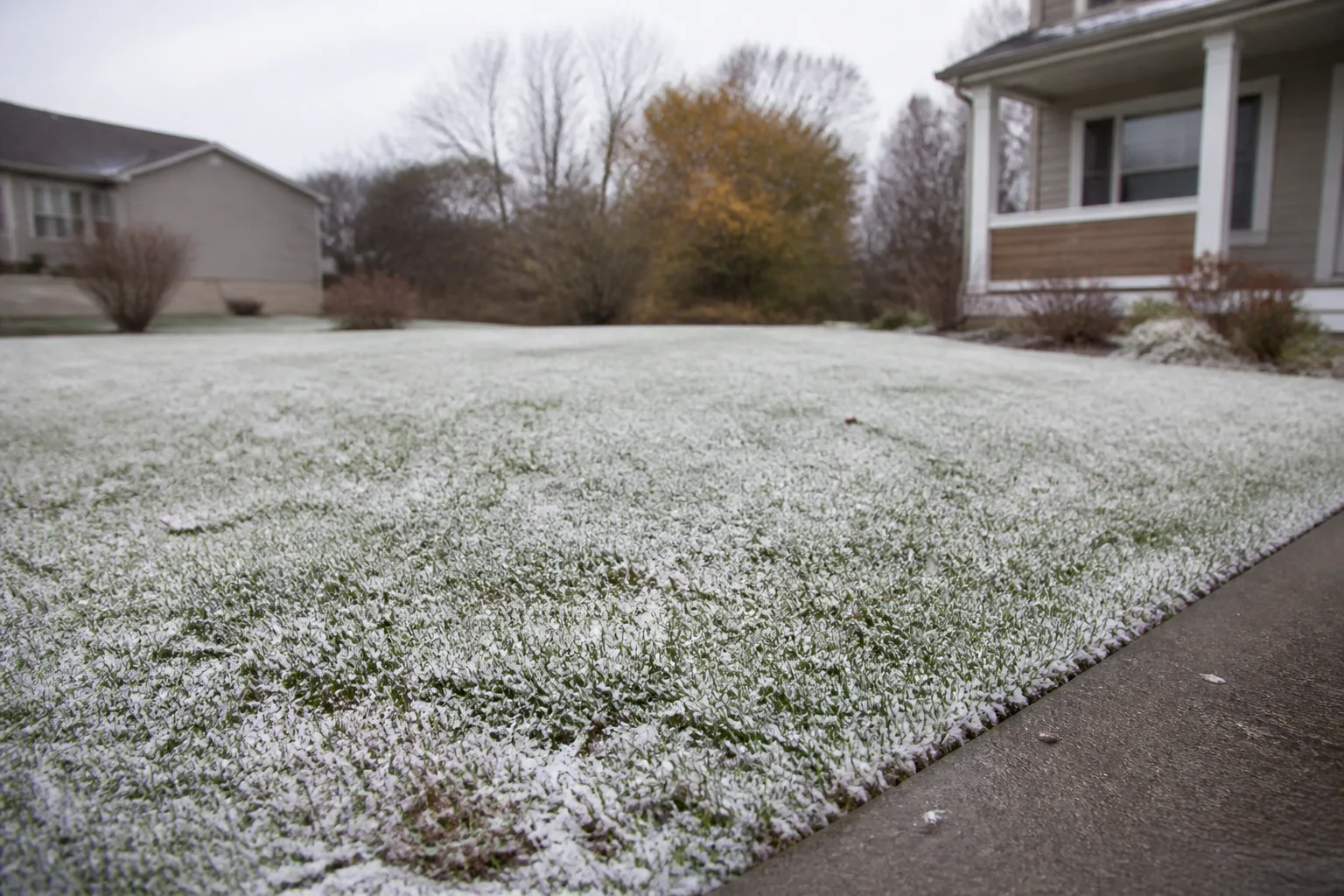
Snow itself is an obvious stop sign, but the more useful rule comes earlier: finish the last cut before persistent freezing conditions make the turf brittle or the soil unworkable. If the lawn is already covered, do not try to “clean it up” with a mower. Wait for a complete thaw and a new period of active growth.
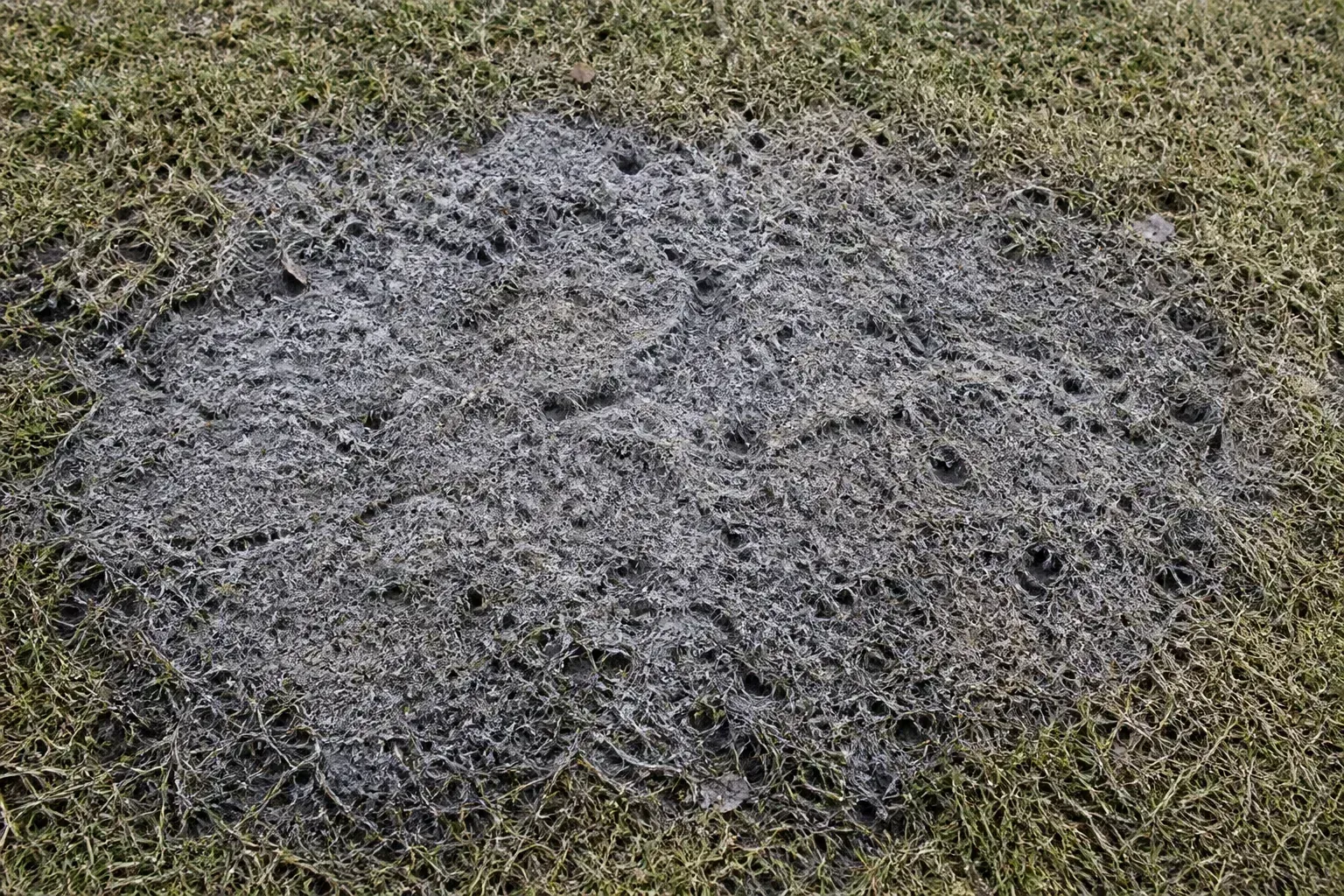
Snow mold is not caused by long grass alone. Prolonged snow cover, moisture, shade, dense foliage, and leaves pressed against the turf can all contribute. Keeping the canopy inside its healthy height range and removing smothering debris lowers the opportunity for a matted, damp surface, but it cannot guarantee a mold-free spring.
The best time of day for the last cut
Late morning is often the best fall mowing window because dew or light frost has had time to disappear and the cut has daylight to dry. On a sunny, well-drained lawn that may happen earlier; on a shaded, clay-heavy site it may happen much later. Use the surface and footprint tests rather than a rigid clock.
Avoid mowing at dawn when the grass is wet, and avoid pushing the job into dusk when humidity is rising and visibility is poor. If a warm afternoon follows a cold morning, wait until the blades are dry, then choose the coolest safe part of the remaining window. A short delay is better than a wet cut.
Do not mow if thunder is audible or lightning is nearby. The lawn can wait for the storm to pass; the operator should not be outdoors trying to finish the last strip of the season. The same safety judgment applies to slippery slopes, strong wind, falling branches, and heat that makes the operator unsafe.
Manage leaves and clippings before winter
Leaf management may matter as much as the final deck setting. A light layer of small, dry leaves can often be shredded with the mower until the pieces fall through the canopy. Those fine pieces decompose and return organic matter and nutrients. Purdue Extension says mowing leaves into turf is useful but warns that excessive leaf debris can block light and gas exchange and cause turf loss.
Use a simple three-way decision:
- Mulch a light layer: Make several passes until leaf pieces are small enough to disappear into the grass. Stop before the lawn looks carpeted with fragments.
- Collect a heavy layer: Bag or rake leaves when they form a blanket, stay wet, or bend the grass flat. Put them in compost or use them as mulch away from the turf.
- Remove diseased or suspicious debris: If leaves or clippings come from a visibly diseased patch, collect them and keep them out of finished compost unless your local guidance says the material can be safely processed.
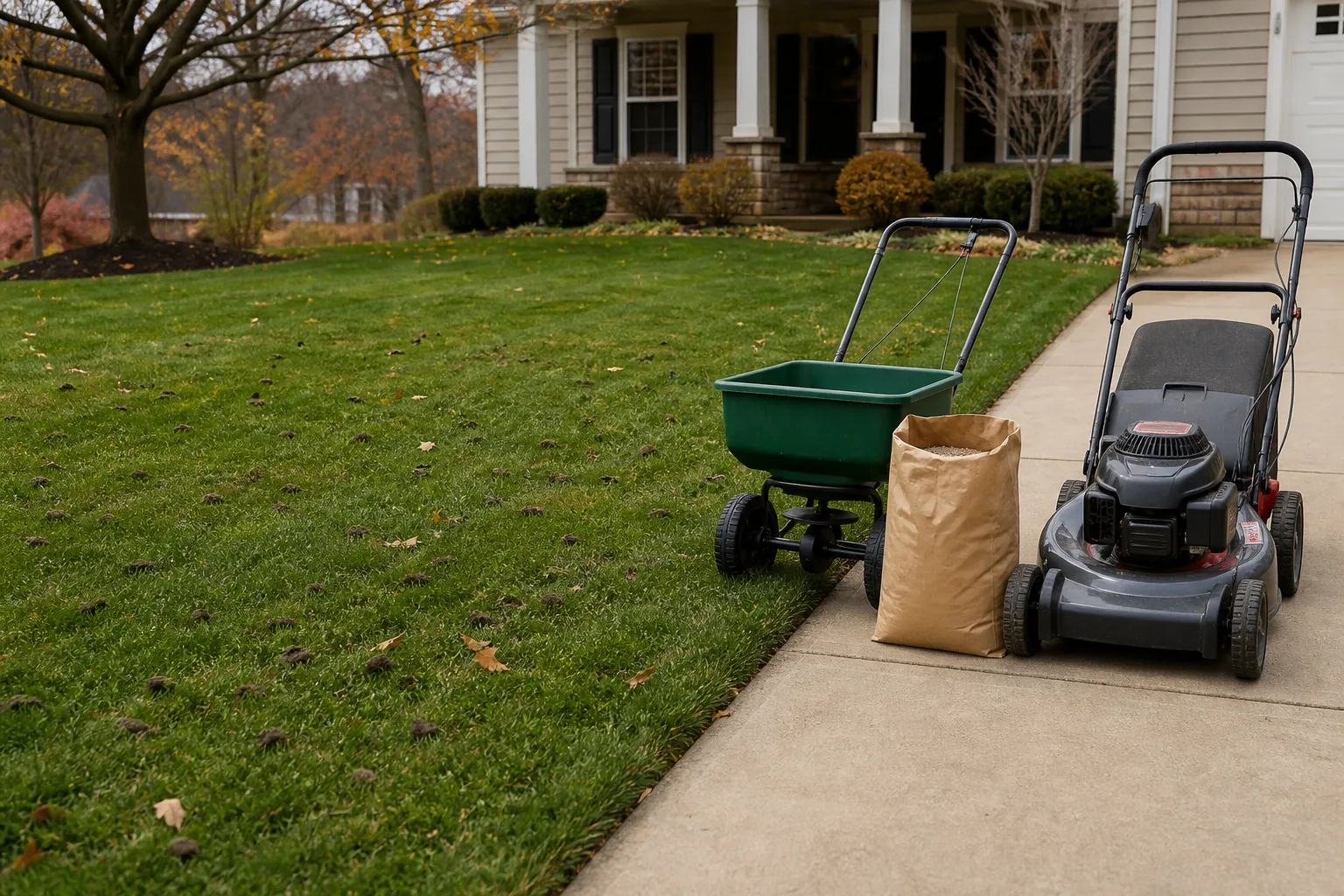
Grass clippings are not the same thing as thatch. Properly mowed, dry clippings break down quickly and contribute nutrients. The problem is a thick, wet pile that shades the crowns, especially after a late cut when cool weather slows drying. If the mower leaves windrows, rake them lightly once the lawn is dry or use the collection bag for that pass.
Plan leaf passes around the final mow instead of waiting for one giant cleanup. If leaves are still falling, the “last mow” may be a final grass cut followed by one or more short mulching sessions. Do not lower the deck every time you mulch leaves; keep the grass at its appropriate height and let the mower process a manageable amount of leaf material.
Avoid these final-mow mistakes
Scalping to one inch is the most common mistake. A low cut can reduce matting on some sites, but it is not a universal winter prescription. It can remove too much green tissue, expose crowns, reveal uneven soil, and leave the lawn with less reserve when cold or drought follows.
Mowing by calendar date causes the opposite mistake. If cool-season grass is still growing and the lawn is dry, stopping simply because November arrived can leave a tall canopy that folds under wet leaves or snow. If warm-season grass is fully dormant, continuing to mow just for color is equally misguided.
Cutting wet or frozen turf creates both plant and soil damage. Wet blades bend away from the mower, clippings clump, and saturated soil compacts. Frosted blades can be crushed under wheels. Wait for dry foliage and firm ground, even if that means the lawn looks shaggy for another day.
Trying to correct overgrowth in one pass violates the one-third rule. A high first cut, a short recovery interval, and a second pass protect more leaf area than a single aggressive drop. If the mower stalls, clogs, or leaves scalped high spots, stop and change the plan.
Leaving a leaf blanket because the grass is “done” can smother the crowns and hold moisture against the surface. Dormant does not mean indestructible. Keep heavy leaves off the lawn and use beds or compost for the material that should not stay on turf.
Applying late fertilizer as a substitute for correct mowing is another poor shortcut. Do not push high-nitrogen growth into a season when the grass cannot use it effectively; NC State cautions against high-nitrogen fertilizer on warm-season turf in fall and winter. Follow a local fertility schedule and the product label rather than adding a last-minute feed to compensate for a missed cut.
What to do after the last cut
Once mowing is finished, walk the lawn from the edges inward and look for clumps, leaf piles, exposed soil, ruts, and mower scalping. Remove anything that is lying thick enough to shade the crowns. Do not keep cutting to tidy a patch that is already short; let it recover.
Clean the mower deck, sharpen and balance the blade, and address the machine while the season is still fresh in your mind. Purdue Extension recommends preparing the mower for spring with maintenance such as an oil change and blade sharpening. A clean, sharp blade reduces ragged cuts when mowing resumes.
Keep traffic on the lawn to a minimum during frost and freeze-thaw periods. Use paths for salt, snow, firewood, and equipment rather than repeatedly crossing frozen turf. When the lawn thaws, check whether water is pooling or wheels have left ruts; those are drainage and compaction clues to address when the grass is actively growing.
Finally, do not confuse winter color with lawn death. Cool-season grass may stay green but grow slowly. Warm-season grass may turn amber or brown as part of normal dormancy. The spring plan should begin with a height check and a dry, active-growing window—not with the lowest deck setting.
Conclusion
You should mow your lawn before winter, but you usually should not mow it extremely short. Keep cutting while the grass is actively growing, use the one-third rule, and leave the final canopy within the healthy range for your species. A modestly lower final cut can help a cool-season lawn resist matting in snowy conditions, while a taller setting may be safer for tall fescue, St. Augustinegrass, uneven turf, drought-stressed grass, or a lawn facing cold without reliable snow cover.
Make the last pass only when the blades are dry and the soil is firm. Mulch light leaves into fine pieces, collect heavy or diseased debris, and park the mower when frost, frozen ground, dormancy, or unsafe weather takes over. That measured finish gives the lawn enough leaf to enter winter with energy and enough clearance to avoid spending spring under a wet, flattened blanket.



