Neem Oil vs Insecticidal Soap for Houseplants
Compare neem oil and insecticidal soap for aphids, mites, mealybugs, and whiteflies. Learn when each wins, when to sequence both, and when neither is enough.
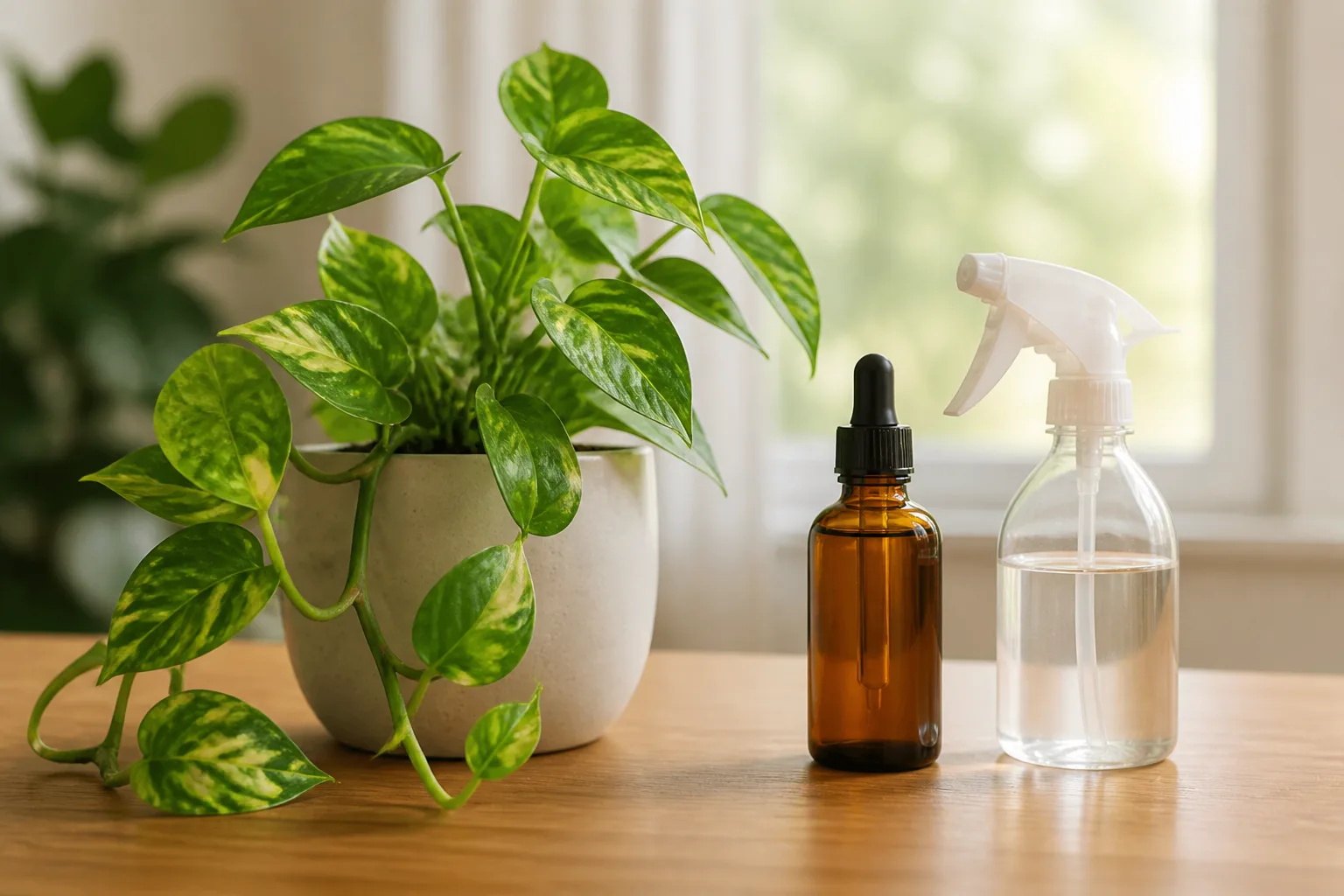
If you are staring at two bottles and an infested houseplant, the useful question is not which product is “natural” or “stronger.” It is which chemistry matches the pest you have, the plant you are treating, and the coverage you can actually achieve indoors. Insecticidal soap and neem oil both show up in university houseplant pest guidance, but they are not interchangeable.
Soap is a contact membrane disruptor that works while the spray is wet. Neem is an oil-based tool that can smother soft-bodied pests and, when azadirachtin is present, disrupt feeding and growth over days. One practical contrast shapes almost every indoor outcome: soap fails quietly when coverage is partial; neem fails loudly when you spray in heat, sun, or on drought-stressed leaves.
This guide is decision-first: when soap wins, when neem wins, when sequencing both helps, and when neither bottle is enough. For deeper neem mixing rates and plant-sensitivity detail, use the companion neem oil for indoor plants guide after you choose the chemistry.
Quick Decision: Which Bottle First?
Start with pest stage and reachability, not brand loyalty.
Choose insecticidal soap first when you can thoroughly wet exposed soft-bodied pests on leaf surfaces — especially light to moderate aphids, early mealybugs, whitefly nymphs on leaf undersides, and accessible spider mites before heavy webbing. Soap is usually the cleaner indoor pick when you want fast knockdown with little oily residue and a milder smell.
Choose neem oil first when you need an oil film that can help with mites, mixed soft-bodied pests, and some egg or crawler contact smothering, or when you specifically want azadirachtin’s slower growth and feeding disruption. Neem fits better when a labeled product is already formulated as a 3-in-1 oil for insects and mites and your plant tolerates oils.
Use soap, then neem (or alternate on a schedule) when coverage alone is not finishing the lifecycle — for example, aphids plus sticky honeydew cleanup with soap, followed by neem for oil-film coverage and any azadirachtin activity on survivors. Do not tank-mix unless both product labels allow it.
Reach for neither as your only plan when you have armored adult scale, deeply hidden mealybugs in tight crowns, severe mite webbing you cannot penetrate, or a plant already collapsing. Physical removal, isolation, pruning, and sometimes discarding the plant matter more than another spray pass. Pair either product with the broader playbook in how to tackle indoor plant pests at home and a weekly houseplant IPM calendar.
How Insecticidal Soap Works
Commercial insecticidal soaps are potassium salts of fatty acids. Colorado State University Extension explains that these soap salts kill by disrupting cell membranes, causing rapid dehydration, and may also strip protective waxes that help insects avoid drying out. That is a contact effect, not a systemic poison circulating inside the plant.
Soap’s strengths are selective action against small soft-bodied arthropods, low lingering residue, and relatively friendly indoor handling when you follow the label. Its hard limits are just as important: insects you do not wet survive, dried residues do not keep killing, and some plants are soap-sensitive. Extension programs consistently warn against substituting dishwashing liquids or household cleaners for labeled insecticidal soap — those products are designed to strip grease, often include detergents and additives that injure leaf cuticles, and are not registered as pesticides.
Contact Kill and Why Coverage Matters
Because soap works only while the target is coated, application technique decides the outcome. Spray leaf undersides, stem joints, and the inner canopy where aphids and whitefly nymphs hide. Clemson HGIC notes that soap sprays are usually mixed as about a 1–2% solution when concentrates are used, and that slow-drying conditions improve kill because the wet film stays on pests longer. Hard water can precipitate fatty acids as scum and reduce effectiveness, so distilled or soft water helps when your tap water fails a jar test: mix the planned rate in a clear jar, wait about 15 minutes, and switch water sources if a surface scum forms.
Repeat applications every four to seven days are common for mites and crawlers because soap has no meaningful residual. That same short residual is why over-spraying still risks cumulative leaf injury even though each pass feels “gentle.” UConn Extension stresses the same limit: once soap dries, insects walking on treated leaves later are not controlled.
How Neem Oil Works
Neem oil comes from seeds of the neem tree (Azadirachta indica). The National Pesticide Information Center describes neem oil as a mixture: azadirachtin is the most active component for reducing feeding and interfering with insect hormone systems that govern growth and egg laying, while other oil components hinder feeding and can physically coat pests.
Indoors, that means two overlapping jobs. The oil fraction can smother soft-bodied insects and mites on contact when coverage is complete. Azadirachtin, when present at useful levels, adds slower biological disruption — pests may keep looking alive for a few days while they stop feeding and fail to develop normally. That slower timeline is why people often declare neem a failure after one impatient inspection.
Colorado State University Extension groups clarified hydrophobic extracts of neem seed with plant-derived oils used similarly to horticultural oils, while separately noting neem insecticides that disrupt growth of developing insects such as whitefly nymphs. EPA frames botanicals like these within the broader biopesticide category of reduced-risk tools — which still means “follow the label,” not “harmless by default.”
Label Literacy: Clarified Hydrophobic Neem vs Azadirachtin
Labels matter more than the word “neem” on the front of the bottle.
If the active ingredient lists azadirachtin (often as a percentage), you bought a growth- and feeding-disruptor plus whatever oil carriers the formula uses. Expect slower visible kill and plan repeats on hatch timing.
If the active ingredient is “clarified hydrophobic extract of neem oil” (or similar wording), much of the azadirachtin fraction has been removed. You are mostly buying a smothering oil film — useful, but closer to other horticultural oils than to a hormone-disrupting insecticide.
If the soap label lists potassium salts of fatty acids, you have a true insecticidal soap. If the bottle is dish detergent, you have a cleaner with unknown fatty-acid profiles plus additives that can dissolve leaf waxes. K-State entomology is blunt: dishwashing liquids are not registered insecticides, results are inconsistent, and plant injury risk is higher.
Shop “oil” generically and you may also land on mineral or petroleum horticultural oils that are not neem at all. For houseplant mites and scale crawlers, those oils can be excellent — just do not assume every “oil” bottle delivers azadirachtin.
Side-by-Side Comparison
| Factor | Insecticidal soap | Neem oil |
|---|---|---|
| Active chemistry | Potassium salts of fatty acids | Seed oil ± azadirachtin |
| Primary action | Membrane disruption / dehydration on contact | Smothering oil film; azadirachtin disrupts feeding/growth |
| Residual | Essentially none after dry | Thin oil film may linger; biological effects unfold over days |
| Best pests | Exposed soft-bodied insects and mites | Soft-bodied pests; stronger oil option for mites when tolerated |
| Weak spots | Missed insects, eggs (limited), hard-bodied adults | Incomplete coverage; sensitive foliage; odor; slower visible kill |
| Indoor feel | Low residue, mild scent for most products | Oily sheen, garlic/sulfur odor on many concentrates |
| Main plant risk | Soap burn on sensitive species; hot/dry stress | Oil burn in sun/heat; stomatal coating if overapplied |
Neither column is a free pass. Soap’s quiet failure mode is a plant that still looks “treated” while missed aphids rebuild overnight. Neem’s loud failure mode is browned, water-soaked patches after a sunny-window spray on thirsty leaves.
When Insecticidal Soap Wins
Soap is the better first move in these common indoor situations.
You can see and wet the pests. Clusters of aphids on new growth, whitefly nymphs on undersides, and early mealybug crawlers respond when every body gets wet.
You want quick knockdown with less mess. Soap leaves less greasy film on furniture-facing foliage and usually smells less intrusive in a bedroom or office.
Honeydew and sooty mold cleanup matters. Clemson notes insecticidal soaps also work as a leaf wash for honeydew and debris — useful after aphids or soft scale honeydew.
Your plant is oil-sensitive but soap-tolerant. Some thin-leaved or farina-coated plants dislike oils more than dilute labeled soap. Always spot-test either product; Clemson’s houseplant pest guide lists soap-sensitive houseplants such as maidenhair fern, schefflera, jade plant, begonia, ornamental ivy, dieffenbachia, and certain palms among others. Oil-sensitive plants still need a soft hand with soap — “less oily” is not “zero risk.”
You are mid-IPM and need frequent, short-interval contact sprays. Because soap residues do not build the same way oils do, careful label-rate repeats fit a rinse-and-respray cadence after physical removal.
Soap is a weak solo answer for armored adult scale, pests sealed inside curled leaves you cannot open, and any infestation you refuse to isolate from clean plants.
When Neem Oil Wins
Neem earns the first slot when the job needs oil behavior, azadirachtin activity, or both.
Spider mites with spreading stipple. Colorado State University Extension rates horticultural oils among the more useful sprays for houseplant mites and describes insecticidal soaps as only marginally effective against twospotted spider mites. A thorough underside neem or horticultural-oil film often outperforms soap alone once mites are established — especially if you also raise humidity and rinse webbing. See the spider mites on houseplants guide for the full lifecycle plan. A practical threshold: when you see silver stipple and fine webbing, treat soap as a weak solo answer.
You need more than a wet-contact kill. Azadirachtin-containing products can reduce feeding and disrupt immature development after contact exposure and ingestion. That helps when a few survivors hide and you need the next molt or feeding bout to fail.
Mixed soft-bodied pressure. Labels for many neem oil extract products target aphids, mites, mealybugs, whiteflies, and scale crawlers in one bottle. If your plant tolerates oil and the infestation is mixed, one well-applied neem cycle can be simpler than juggling tools — provided you still repeat on hatch timing.
Outdoor summering plants returning indoors. Clemson’s houseplant pest guidance frequently lists neem oil extract among outdoor spray options for aphids, mites, mealybugs, whiteflies, and scale stages before plants come back inside.
Skip neem as the opener when foliage is already heat-stressed, when you cannot ventilate the room after spraying, or when the plant is a known oil-burn candidate. In those cases, start with rinse water and labeled soap, or escalate to mechanical removal.
Soft-Bodied Pests: Aphids, Mealybugs, Spider Mites, and Whiteflies
Soft-bodied does not mean easy. Each pest has a coverage problem, a lifecycle gap, or a wax/webbing defense that changes which bottle helps.
Aphids
Aphids are soft-bodied sap feeders that often cluster on tender tips. Both soap and neem can work when coverage is thorough. Soap usually wins for a first indoor pass because colonies are visible and easy to wet, and soap also helps strip honeydew. Neem with azadirachtin adds feeding disruption for survivors. Repeat every several days because aphid colonies rebound from missed individuals and incoming winged adults. Pair sprays with isolation and tip pruning.
Mealybugs
Mealybugs hide in leaf axils and wear a waxy coat that sheds sprays. Soap and neem both struggle against protected adults in deep crevices. Alcohol swabs plus soap on crawlers are often more honest than oiling the whole plant once. Clemson notes insecticidal soap for early infestations and neem oil extract among outdoor options for heavier pressure. For root mealybugs in the potting mix, foliar soap or neem is the wrong battlefield entirely — you need root inspection, media replacement, and sometimes discarding the plant.
Spider Mites
Spider mites are arachnids, not insects, and they explode in hot, dry rooms. Fine webbing blocks contact sprays. Soap can suppress light populations if undersides are soaked repeatedly, but established mite outbreaks often need oil-level smothering, mechanical rinsing, humidity correction, and relentless repeats. Neem or horticultural oil typically fits better once stippling and webbing are obvious — still only if you can wet the colony. If leaves are already silvered and webs are dense, prune hard or discard rather than polishing dead foliage with oil.
Whiteflies
Whitefly adults fly when you touch the plant; nymphs sit on undersides like pale scales. Soap is excellent when you can coat nymphs. Yellow sticky traps reduce flying adults but do not replace underside spraying. Colorado State University Extension notes that horticultural oils, neem insecticides, and insecticidal soaps may control nymphs, while adult knockdown often needs different chemistry. Azadirachtin-type neem products are specifically useful against developing whiteflies in some extension summaries. Expect multiple cycles; one spray never ends a greenhouse whitefly pipeline.
Using Soap and Neem in Sequence
Sequencing is useful when each product covers a gap the other leaves open. A practical indoor pattern looks like this:
- Isolate the plant and rinse or wipe what you can remove by hand.
- Apply labeled insecticidal soap for immediate contact kill on exposed soft bodies and to wash honeydew.
- Wait until foliage is fully dry and the plant shows no soap injury. LeafyPixels editorial caution: allow about 24–48 hours and a small spot-test mindset before switching chemistry — this wait is a plant-safety heuristic, not a sourced kill-interval from Clemson’s 4–7 day pest-repeat guidance.
- On the next treatment day in your 5–7 day cycle, apply labeled neem oil for oil-film coverage and any azadirachtin activity on survivors.
- Alternate or repeat based on what the label allows and what scouting shows — live pests, not calendar superstition.
Do not assume “natural + natural = safer mix.” Tank-mixing soap and oil can increase phytotoxicity. Some retail products already combine soap with other actives; read that label as its own product. Clemson notes that some insecticidal soap brands include additional ingredients such as neem oil, pyrethrin, sulfur, or spinosad — those are different risk profiles than plain soap.
Combo-product warning: a bottle marketed as “soap + …” is not interchangeable with plain potassium-soap concentrate. Pyrethrin, sulfur, or spinosad change odor, residue, beneficial-insect impact, and leaf-burn risk. Treat combo SKUs as their own chemistry.
If you are already inside a structured IPM calendar, treat soap and neem as two least-toxic tools inside that weekly inspect-isolate-treat loop, not as a substitute for quarantine and repeat scouting.
When Neither Product Is Enough
Soap and neem are least-toxic contact tools. They are not emergency medicine for every infestation.
Armored scale adults are protected by covers. Extension guidance often favors horticultural oils timed for crawlers more than soap alone; systemic options may be discussed for some pests but bring their own indoor tradeoffs.
Severe mealybug or mite takeovers that fill crowns, roots, or dense webs often need plant sacrifice to protect the rest of the collection. Colorado State University Extension notes that seriously infested plants may be best discarded when control would take extraordinary effort and risk spread.
Fungus gnats live in soil. Foliar soap or foliar neem does not solve larvae in wet media. Use cultural drying, traps, and labeled soil treatments such as BTI where appropriate — see fungus gnats on houseplants.
Pests you never wet — inside unopened flower buds, deep cane sheaths, or curled leaves — laugh at both bottles. Prune, unfurl, or accept incomplete control.
Plants that burn from both chemistries need mechanical control: shower rinses, alcohol swabs on large pests, sticky traps, and stricter isolation. Forcing a third spray “because it should be safe” is how people cook foliage.
Safety Indoors: Leaf Burn, Pets, Kids, and Dish Soap Myths
Soap and oil fail differently, and indoor rooms magnify those differences.
Leaf burn (phytotoxicity). Soap injury shows as spotting, tip burn, or scorch — worse on stressed plants, in heat above about 90°F, in direct midday sun, or with hard-water precipitates. Oil injury shows as water-soaked patches, browned tissue, or a dull coated look when stomata are blocked or oil cooks in sun. Spot-test, spray in evening or low light, and never “strengthen” the mix past the label.
Pets and kids (scannable rule). Keep children and pets away from plants until sprays are fully dry. Do not let animals lick wet foliage. Store concentrates locked away. NPIC notes neem oil can be slightly irritating to the eyes and skin, and azadirachtin can be very irritating; NPIC also reports adverse reactions when neem oil was used on cats for flea control in other countries — a reminder that “plant-based” is not the same as “pet-proof.” If a pet regularly chews leaves, prefer mechanical removal or relocate the plant during treatment.
Chemistry difference in plain language. Soap is a salt of fatty acids that disrupts insect cell membranes on contact and then is largely done. Neem is an oil mixture that coats surfaces and may deliver azadirachtin’s hormone and feeding effects. Soap does not leave a lasting insecticide film; neem’s oil film is exactly why it can smother mites and also why it can burn leaves or smell strong in a closed bedroom.
Legal and formulation caution. Homemade dish-soap recipes are popular online and discouraged by extension entomologists for consistency, plant safety, and pesticide-law reasons. Buy products labeled for ornamental or houseplant use and follow that label — concentration, PPE, and re-entry notes included.
How to Apply Either Product Without Damaging Plants
A clean application routine prevents most “the spray killed my plant” stories.
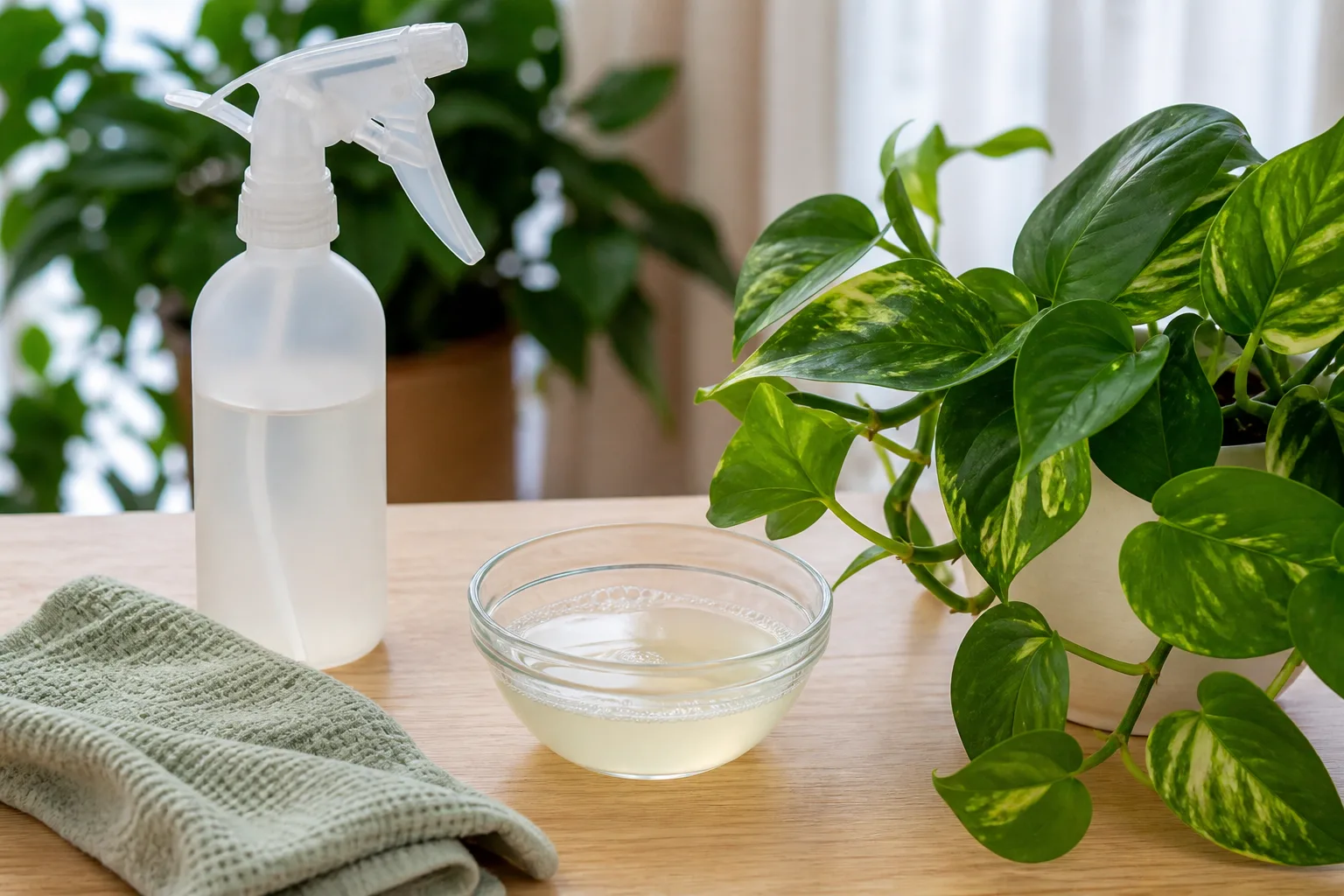
Water the plant the day before if the mix is dry — drought-stressed leaves burn more easily. Isolate the plant on a washable surface. Mix only what the label directs; for soap concentrates, Clemson’s typical 1–2% guidance is a reminder that more is not better. For neem concentrates, emulsify fully so oil does not separate into leaf-burning droplets.
Spray to wet pests, especially undersides, without creating a dripping flood into the crown of rot-prone plants. Prefer early morning or evening indoor light. Improve airflow after spraying so leaves dry on a normal schedule — soap needs wet contact time on pests, but chronically soggy crowns invite other problems. Repeat on a 4–7 day scout-driven interval until two consecutive inspections show no live pests, aligning with a normal indoor IPM cadence.
After the outbreak ends, stop prophylactic weekly oiling. Residue and stress accumulate faster than pests return when culture is sound.
First-Hand Notes From Comparing Soap and Neem Indoors
These are LeafyPixels practice notes from indoor treatments in 2025–2026 — attributed outcomes, not lab trials. Product classes only (no brand endorsement).
-
Aphids on pothos (Epipremnum aureum), potassium insecticidal soap RTU class. Colony on three vine tips. Thorough underside and tip wetting on day 0, then day 5 and day 10. Live aphids gone by the second scouting after day 10; honeydew wiped clean with the same soap passes. No leaf burn in bright east light. Outcome: soap-alone success when pests were fully reachable.
-
Twospotted spider mites on a schefflera under a dry south window, clarified hydrophobic neem oil concentrate mixed per label. Soap-only passes (two cycles) reduced crawling mites on exposed leaflets but left stipple expanding under webbing. Switched to neem oil film on undersides in evening light for three cycles at ~6-day intervals, plus a shower rinse before the first oil spray. Live mites dropped sharply after cycle two; one leaflet showed oil scorch where spray hit midday sun before we corrected timing. Outcome: neem outperformed soap once webbing blocked contact; heat timing mattered more than concentration.
-
Mealybugs in a compact peperomia crown, soap then azadirachtin-labeled neem in sequence. Soap knocked crawlers on outer leaves; adults deep in the crown survived. Alcohol swabs plus two soap cycles, then one neem pass on remaining exposed surfaces. Crown adults still required hand removal. Outcome: sequencing helped exposed stages, but neither bottle replaced mechanical work in tight foliage.
Conclusion: Decision Checklist and Stop Rules
Use this checklist instead of re-reading the whole comparison mid-outbreak:
- Identify and isolate — confirm soft-bodied pests vs armored scale vs soil pests; quarantine the plant.
- Judge reachability — if you cannot wet the bodies (webbing, crowns, curled leaves), plan pruning or hand removal before any bottle.
- Pick chemistry — exposed soft bodies and honeydew → soap first; mites with stipple/webbing or need for oil/azadirachtin → neem (or horticultural oil) first if the plant tolerates oil.
- Read the label literally — potassium soap vs dish detergent; azadirachtin listed vs clarified hydrophobic neem; skip improvised tank mixes and treat combo products as their own formulas.
- Apply for coverage, not courage — undersides, evening or low light, label rates only, then scout.
- Repeat on hatch timing — typically every 4–7 days until two clean inspections; do not raise concentration to “finish faster.”
- Stop spraying when — two consecutive inspections show no live pests; the plant shows accumulating burn; or the infestation is armored scale, root mealybugs, fungus gnats in media, or a collapsing plant better discarded than endlessly oiled.
Soap and neem are complementary least-toxic tools. Match the bottle to coverage and pest stage, sequence only when each product earns its slot, and abandon sprays when the biology says the plant — or the collection — needs a different plan.
Related pest and treatment guides
- Houseplant IPM schedule — weekly inspection timing around either bottle.
- How to tackle indoor plant pests — ID-first playbook when sprays are only one tool.
- Fungus gnats on houseplants — soil pests that foliar soap and neem will not solve.
- Scale on houseplants — armored adults that sit outside a soap/neem solo plan.
- Neem oil mixing and sensitivity — rates and burn risk after you choose neem.