Liquid vs Slow-Release Fertilizer for Houseplants
Decide liquid vs slow-release fertilizer for houseplants with a decision table, stacking rules, and why a flush won’t reset leftover pellets.
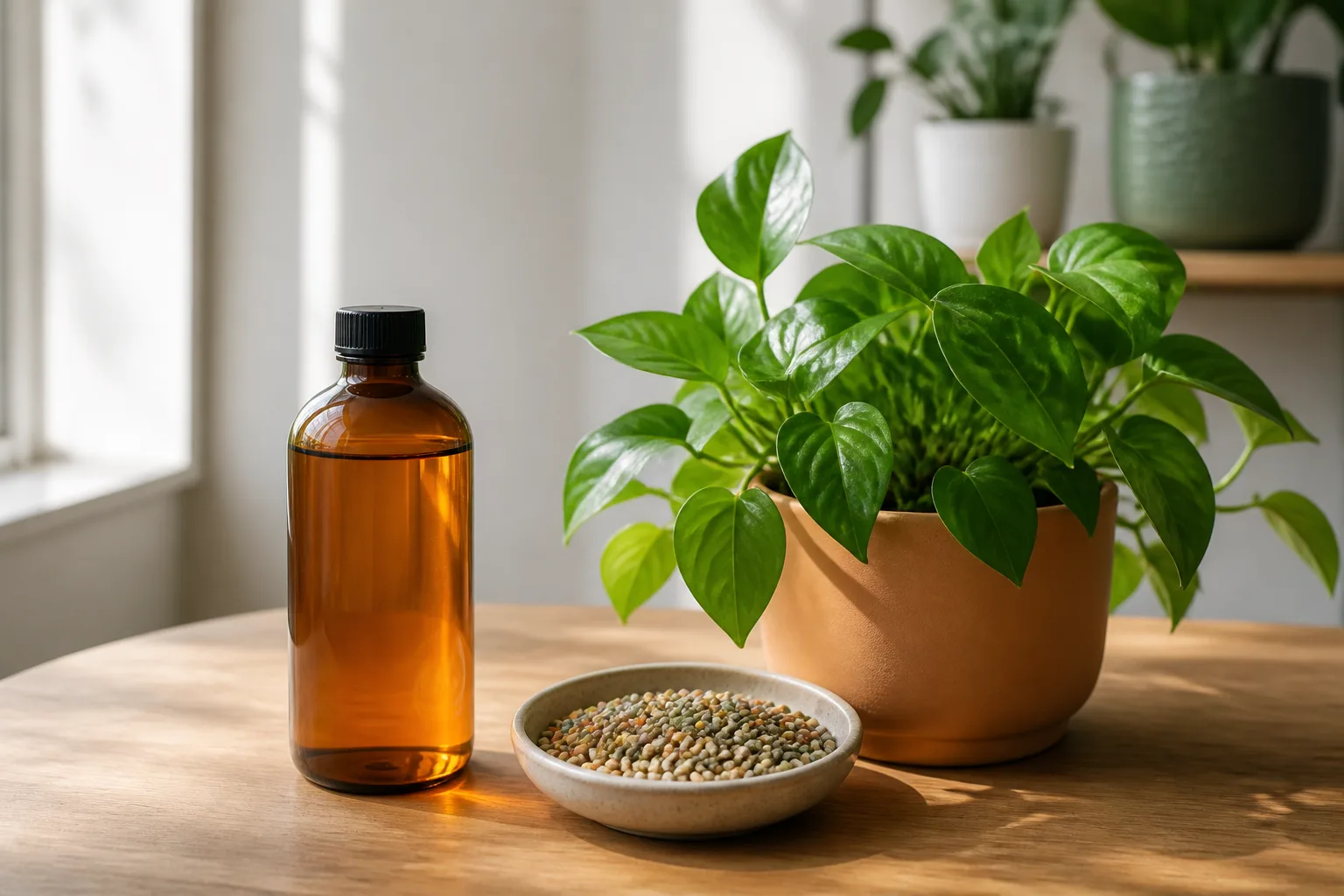
The useful question is not which fertilizer looks more “professional” on the shelf. It is which delivery system matches your watering habits, plant growth rate, and tolerance for salt mistakes. Liquid (including water-soluble powders you mix into the watering can) and slow-release (coated pellets, spikes, tablets) can both feed houseplants well. They fail in different ways.
Liquid wins when you want control: strength, timing, and the ability to stop feeding the week a plant stalls. Slow-release wins when you want a steady background feed without remembering a biweekly mix. The cost of getting either wrong is the same family of problems — tip burn, white crust, stalled growth — described by extension sources as soluble-salt injury. University of Georgia Extension notes that any fertilizer in liquid, powder, or tablet form dissolves into soil water as salts, and excess salts can pull water from roots.
This page is a form-decision guide. For product picks and NPK shopping, use best fertilizers for indoor plants. For a full feeding calendar, use the complete fertilizing care guide or the shorter how to fertilize indoor plants hub. If tips are already crispy, jump to fertilizer burn on houseplants or nutrient lockout after you finish the comparison below.
Written by Sai Ananth; horticulture review by Dr. Priya Menon (botanist and indoor plant specialist).
Quick Decision: Which Fertilizer Form Should You Buy?
Choose liquid or water-soluble fertilizer if you water on a flexible schedule, grow mixed species with different appetites, want to cut strength in low light, or need to pause feeding after stress, pests, or a recent repot. Clemson HGIC notes that water-soluble fertilizers are often preferred indoors because dilute solutions reduce fertilizer-burn risk.
Choose slow-release pellets or spikes if you reliably forget liquid feedings, keep a stable group of moderate feeders in bright enough light, and want one application that lasts months. UConn recommends time-release pellets or spikes when application intervals will stretch for months rather than weeks.
Default to liquid for beginners who overwater or underwater irregularly. Slow-release keeps dosing even when you are not thinking about fertilizer — which is a feature until the plant is dormant, root-bound, or sitting in a saucer of salty runoff.
Do not stack full-rate liquid on top of a fresh slow-release charge unless the labels and your plant’s growth clearly justify a light supplemental feed. The burn pattern we keep seeing in LeafyPixels collection notes is simple: active nursery prills already in the mix, then a generous watering-can dose on top.
Side-by-Side Decision Table
| Factor | Liquid / water-soluble | Slow-release (pellets, spikes, coated) |
|---|---|---|
| Control | High — change strength every watering | Low — dose set at application |
| Convenience | Lower — mix and remember | Higher — apply every few months |
| Typical indoor interval | Weekly to monthly at dilute rates, or every few waterings | About 2–9 months per UConn guidance; follow label |
| Salt / burn risk profile | Spikes if you use full strength or feed dry soil | Lower per dose if applied correctly; harder to “turn off” |
| Recovery after overfeed | Leaching often helps (WSU) | Leaching does not remove remaining prills (WSU) |
| Best for | Mixed collections, light changes, bloomers needing fine-tuning | Stable foliage collections, forgetful schedules |
| Weak fit | Gardeners who skip weeks, then “catch up” with double strength | Low-light plants, winter dormancy, salt-sensitive species |
| Cost pattern | Smaller recurring purchase | Higher upfront, fewer applications |
Print or screenshot this table before you buy. The unique decision rule to remember: a flush helps liquid salts more than leftover coated beads.
Which Form Fits Your Plants and Schedule
| Situation | Prefer | Why |
|---|---|---|
| Mixed shelf (pothos, fern, succulent) | Liquid | One product, many strengths |
| Bright Monstera / Ficus pushing leaves | Either; liquid if you watch growth | Heavy feeders need active-growth matching — see Monstera fertilizer |
| Snake plant / ZZ / low light | Liquid at quarter strength, or skip | Low demand; slow-release can oversupply — see snake plant fertilizer |
| African violet / frequent bloomers | Dilute liquid often | UConn notes dilute frequent feeds suit flowering houseplants |
| Office plants watered by someone else | Slow-release | Background feed when liquid schedule is unreliable |
| Fresh nursery plant | Wait 6–12 weeks, then liquid | UGA notes commercial fertilizer often lasts 2–3 months |
How Liquid Fertilizer Works Indoors
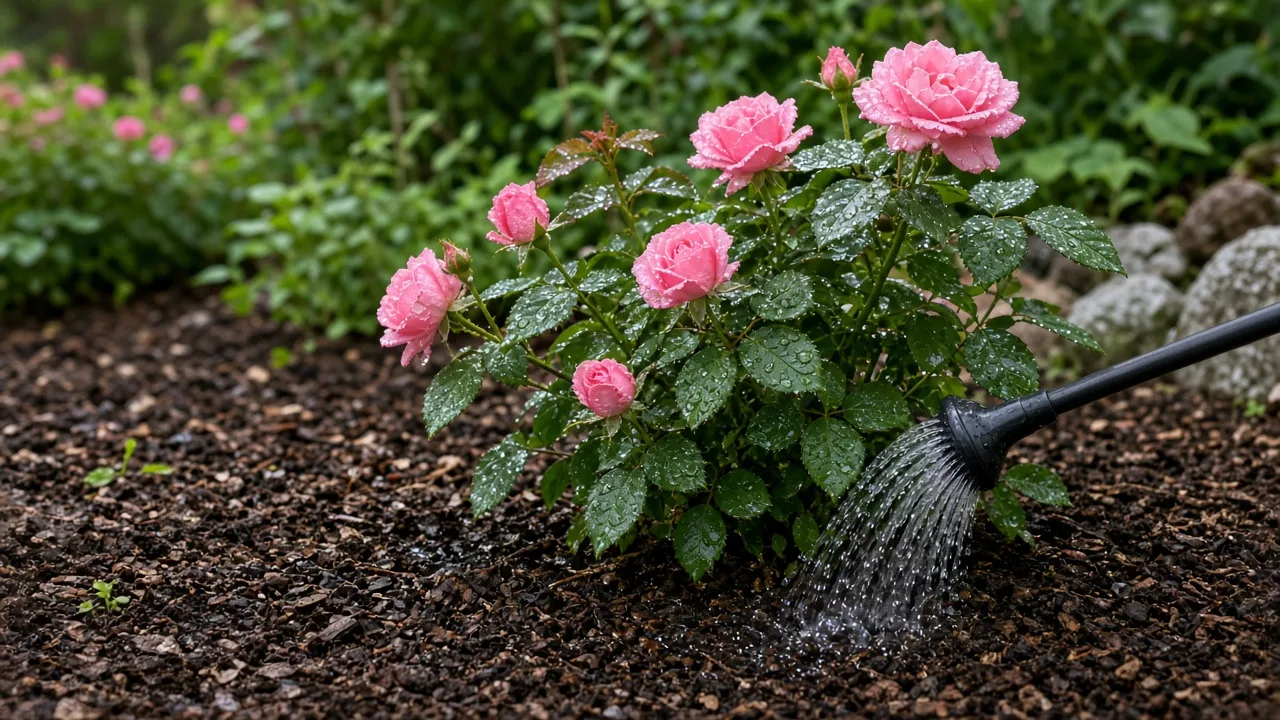
Liquid concentrates and water-soluble granules both end as nutrients dissolved in the water you pour through the pot. You decide concentration, volume, and timing. That is the entire advantage: the plant gets what you measured this week, not what a prill decided to release because the room got warmer.
UConn frames the choice clearly: buy a water-soluble powder or liquid concentrate if you plan to fertilize weekly, biweekly, or monthly. Nutrients in these forms leach from soilless mixes easily, which is why dilute, more frequent applications often outperform a monthly “full strength hit.” UNH Extension likewise ties indoor feeding to active growth and light, not to a fixed calendar alone.
Dilution Control and Skip Days
Most labels list a monthly rate. Indoors, many growers do better by splitting that rate. UConn’s example still holds: if the label says one teaspoon per quart monthly, you can use half that every two weeks or a quarter weekly for a steadier supply — especially for bloomers. Clemson offers a related pattern: fertilize at label rate every two or three months, dilute to about one-tenth and use with every watering in the growing season, or fertilize every seventh watering.
Skip days matter as much as dose days. If light drops, growth stops, roots look brown, or the plant just moved pots, liquid lets you stop. That flexibility is why liquid is the safer default for pothos fertilizer schedules and for peace lily fertilizer when bloom cycles and dry-downs vary.
Where Liquid Salt Risk Comes From
Liquid does not mean “gentle by default.” Full-strength doses, feeding dry mix, and leaving runoff in the saucer all concentrate salts in a closed pot. WSU Hortsense warns never to fertilize plants stressed by heat or drought, and to apply fertilizers to moist soils and water them in. UConn adds the same moist-soil rule: fertilize an already moist potting mix to avoid root damage.
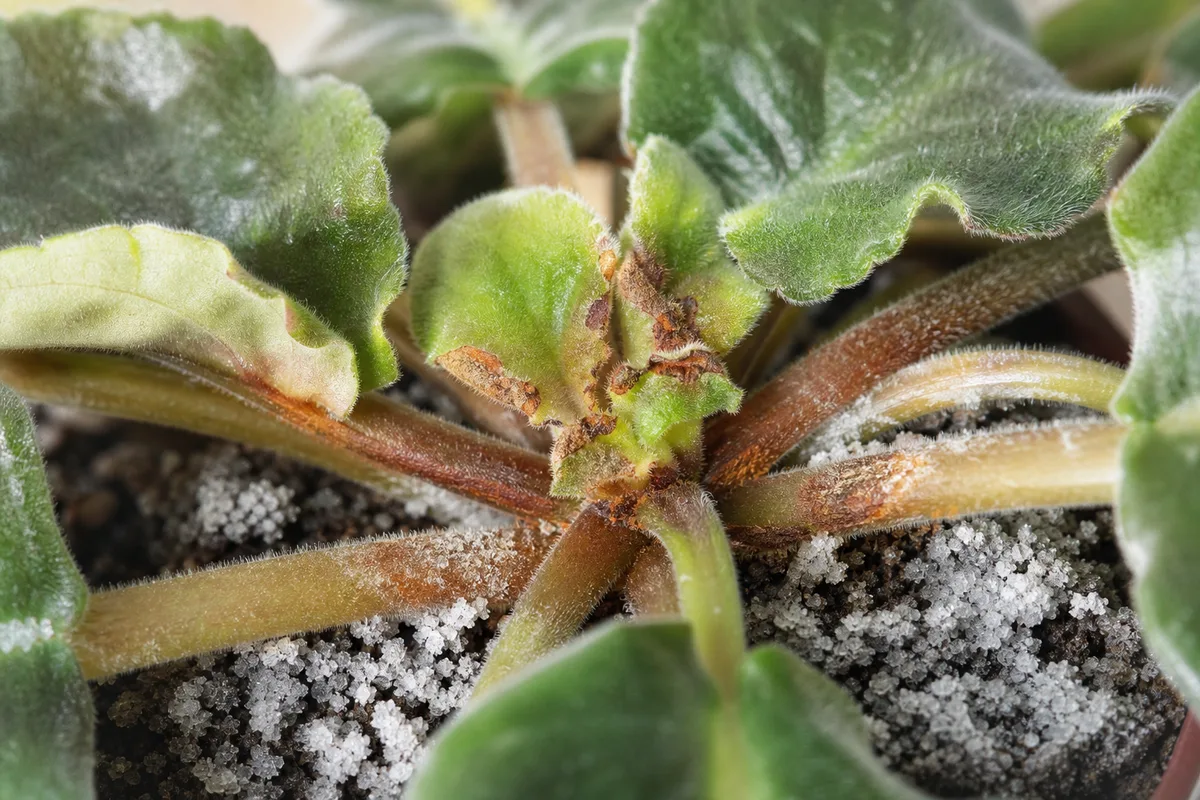
Clemson lists the classic salt signals: white film on the soil surface, white crust on the pot rim or drainage hole, reduced growth, brown tips, lower-leaf drop, and wilting. The prevention habit is boring and effective — water thoroughly until excess flows out, then empty the tray. UGA recommends periodic leaching volumes for containers specifically to move accumulated salts out of the root zone.
How Slow-Release Fertilizer Works Indoors
Slow-release and controlled-release products meter nutrients over weeks to months. Coatings, prill chemistry, and moisture/temperature govern how fast those nutrients enter the soil solution. You are not “feeding less”; you are front-loading a multi-month supply into the mix.
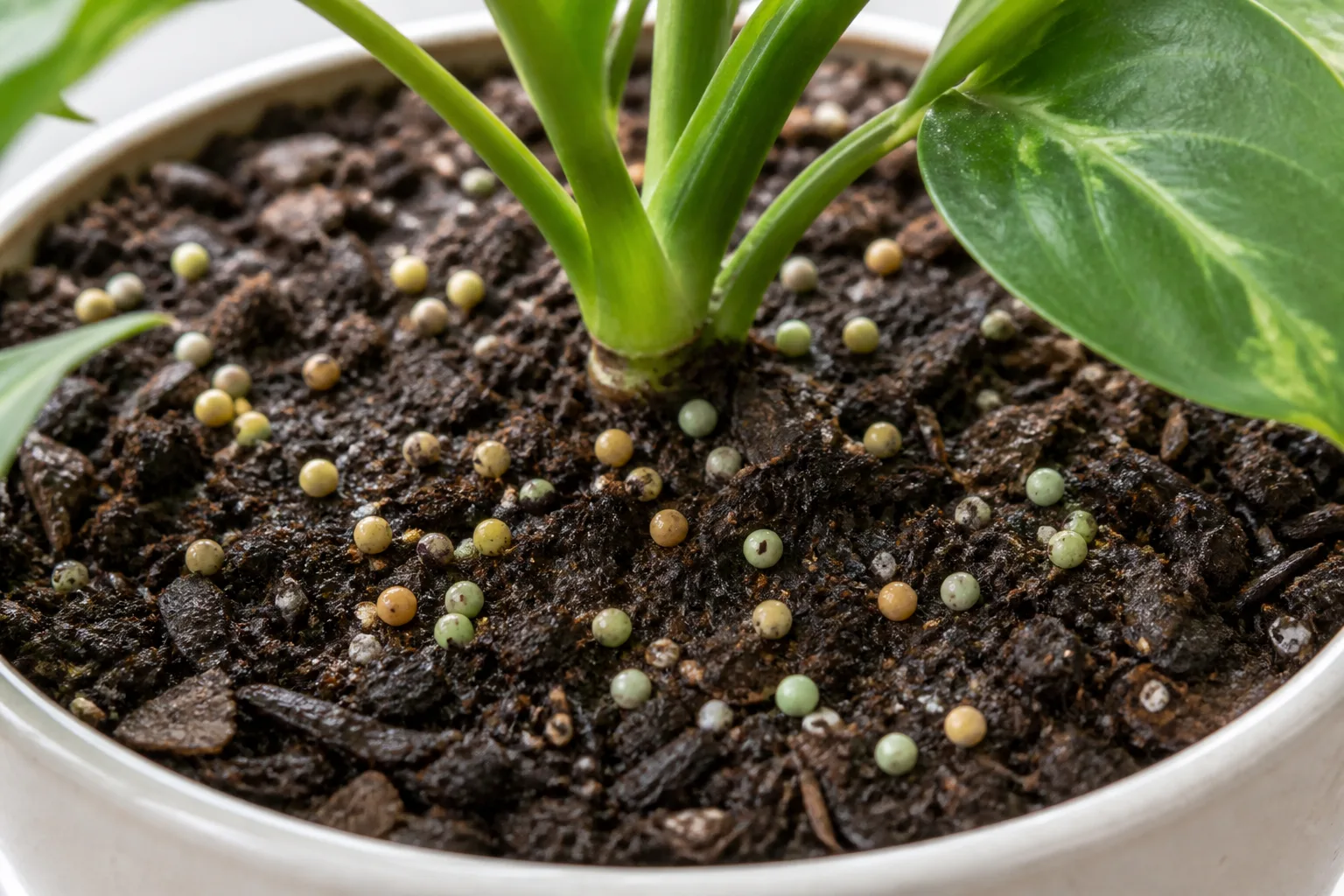
UConn describes time-release options as coated pellets or spikes that can feed for roughly two to nine months depending on the product. UGA mentions plastic-coated fertilizers as an option when building certain mixes. Warm rooms, frequent watering, and fine mixes can empty a charge faster; cool, dry, low-light corners release more slowly — sometimes while the plant barely grows enough to use what is released.
Pellets, Spikes, and Uneven Release
Pellets mixed into the top inch of media distribute more evenly than a single spike. Spikes are the same idea in a pressed stick: convenient for decorative pots you do not want to disturb, but release depends on moisture contact and can be uneven if the spike sits in a dry corner of the root ball. One side of the pot can get a richer salt pulse than the other.
Treat spikes as a convenience trade-off, not a gentler chemistry. If you already struggle with tip burn on one side of a plant, prefer mixed pellets at the low end of the label range — or switch to dilute liquid so you can stop when growth stalls.
Why a Flush Does Not Fully Reset Slow-Release
This is the decision point most blog posts skip. WSU states that leaching container salts by heavy watering helps for quick-release or liquid fertilizers, but it will not solve a slow-release overdose the same way. The prills still sitting in the mix continue to dissolve after you flush.
If you over-applied coated fertilizer, the real fixes are patience at reduced watering frequency, physical removal of accessible beads, and — when symptoms are severe — repotting into fresh mix without a new slow-release charge. Pair that with the recovery steps in the fertilizer burn guide. Colorado State PlantTalk still recommends thorough watering and discarding drainage to limit ordinary salt build-up from fertilizers and hard or softened water, but that maintenance habit is not a full antidote to too many prills.
When Liquid Fertilizer Wins
Liquid is the better primary tool when your collection is uneven. A bright Monstera and a low-light snake plant should not receive the same automatic monthly salt load. With liquid, the Monstera can get a dilute growing-season feed while the snake plant gets water only.
Liquid also wins when light is the limiter. Clemson notes that indoor plants in low light have reduced fertilizer needs, and that roughly 200 foot-candles for about 12 hours a day is the ballpark where foliage plants start to show benefit from fertilization. Below that, extra nutrients mostly become salt inventory. Liquid lets you match that reality week by week.
Choose liquid when you are correcting a problem. After pests, root stress, or a flush for salts, you may want weeks with no feed. After recovery, you may want quarter-strength only. Slow-release cannot offer that on/off switch. Liquid is also better for intentional bloom support on plants like African violets, where UConn-style dilute frequent feeding tracks flowering better than a coarse multi-month charge.
When Slow-Release Fertilizer Wins
Slow-release is the better primary tool when the failure mode is underfeeding from neglect, not overfeeding from enthusiasm. If your plants are in consistently bright spots, actively growing from spring through early fall, and your watering is thorough with runoff, a labeled indoor slow-release product can keep moderate feeders green without calendar anxiety.
It also wins for stable “set pieces”: floor plants that stay in one bright corner, office foliage that gets generic care, or a uniform shelf of pothos and philodendrons that all want similar nutrition. One measured application at repot time is often cleaner than hoping someone remembers the concentrate bottle.
Slow-release is weaker for succulents and other low feeders, for plants that rest hard in winter, and for anyone who already uses fertilizer-heavy tap water. If your tap leaves crust on pots even without feeding, adding a months-long salt source is usually the wrong convenience — see hard water for houseplants. In those homes, dilute liquid — or no fertilizer until growth resumes — is safer.
Can You Use Liquid and Slow-Release Together?
Yes, but treat stacking as an advanced move, not a default. The safe pattern is a light slow-release base for forgetful months, plus occasional half- or quarter-strength liquid only when growth and light clearly demand more. The unsafe pattern is full-rate liquid on a pot that still has active prills from the nursery or a spring application.
If you stack, watch for earlier salt signals: tip burn, surface crust, and wilting while the mix is still moist. Clemson’s houseplant disorders guidance pairs salt problems with periodic leaching and a hard stop on over-fertilizing. When pale leaves appear after feeding rather than before it, do not assume the plant is hungry — check the nutrient lockout workflow before you increase dose.
Never combine slow-release with “feed every watering at full strength” liquid schedules. If you want both convenience and control, use slow-release at the low end of the label range and keep liquid as a rare booster, not a parallel full program.
First-Hand Notes From Nursery Prills and Stacked Feeds
These are single-setup LeafyPixels collection notes — useful patterns, not lab thresholds.
Nursery Monstera + liquid stack (March 2026). A bright east-window Monstera deliciosa arrived in nursery mix with visible coated prills near the surface. Two weeks after unboxing — still within a typical residual-feed window — we added a half-strength liquid feed on moist mix. Within five days, newest leaf margins crisped and a chalky rim appeared on the pot. One thorough leach reduced surface salts, but beads remained after the flush; we stopped all feeding for six weeks and resumed only dilute liquid after new growth looked clean. Lesson: treat visible nursery prills as an active slow-release charge, not an empty pot.
Office pothos shelf, forgetful schedule (winter 2025–2026). A uniform shelf of pothos under bright office fluorescents got one labeled indoor slow-release application at repot and no liquid. Plants that stayed in active growth held color; the same product on a low-light corner plant produced tip burn by late winter. Convenience only works when light and growth still justify the salt load.
Snake plant winter pellet refresh (January 2026). A low-light snake plant received a “fresh” pellet charge because the calendar said six months were up, even though beads from the prior dose were still visible. Surface crust and dry tip margins followed. We scraped accessible beads, flushed, and left the plant unfed until spring growth. Calendar refreshes are a weak reason to add salts when demand is near zero.
Salts, Fertilizer Burn, and Nutrient Lockout Lookalikes
Both fertilizer forms raise soluble salts. The symptoms overlap: brown tips and margins, white crust, slowed growth, and wilt with moist soil. WSU describes high salt levels damaging roots and reducing water uptake, with tip and margin necrosis as salts accumulate in leaf tissue. Container plants are especially vulnerable because pots are closed systems.
| What you see | Likely path | Next guide |
|---|---|---|
| Crispy tips soon after a strong feed or visible crust | Fertilizer burn / salt injury | Fertilizer burn hub |
| Pale leaves after feeding, little scorch, poor uptake suspected | Lockout from salts/pH/roots | Nutrient lockout hub |
| Uniform hunger after months without feed, no crust | True need for fertilizer | Resume dilute liquid |
| Soft lush growth, then pests | Excess nitrogen luxury | Cut feed; inspect for mites/aphids (WSU notes pest pressure on overfed tissue) |
Leach with room-temperature, non-softened water when salts are the suspect. PlantTalk Colorado flags softened water as a salt source of its own. Empty saucers. If slow-release beads packed the mix and symptoms stay severe after a flush, repot.
Species pages help once the pattern is clear: fertilizer burn on snake plant, fertilizer burn on ZZ plant, and plant-specific feeding notes such as rubber plant fertilizer or ZZ plant fertilizer.
Organic Liquids, Synthetics, and Self-Watering Reservoirs
Organic vs synthetic rarely changes the control-vs-convenience choice. UConn notes that labels list chemical and/or organic sources, and that organically derived fertilizers often include micronutrients by nature, while many synthetic soilless-mix feeds should list micronutrients on the label. Organic liquids still become salts in the soil solution and still burn when over-applied. Choose organic liquid when you want control plus organic sourcing; choose coated slow-release when you want months between applications — not because one category is automatically safer.
Self-watering reservoirs complicate both forms. Continuous subirrigation can concentrate salts near the surface. If you dose fertilizer into a reservoir, expect faster crust and algae risk — then flush from above on a schedule. Prefer dilute liquid dosed occasionally into the top of the mix (not a perpetual full-strength reservoir fill), or skip fertilizer in the chamber entirely for low feeders. For reservoir fit and flush triggers, use the self-watering pots guide.
Store colorful prills and spikes out of reach of pets and kids. Curiosity chewing is a handling issue; this page is not a toxicity encyclopedia — check species toxicity pages when pets chew leaves.
What Brand-New Nursery Plants Need Before You Feed
Healthy nursery plants are often already fertilized. UGA advises waiting before you add more fertilizer to a newly purchased healthy plant — commercial producer fertilizer often supplies enough nutrients for about two to three months in the home. Dig gently at the surface if you are unsure; visible beads mean you are not starting from zero.
Default plan for a new arrival: water thoroughly with runoff, empty the saucer, wait through the residual window (commonly 6–12 weeks for many retail pots), then start dilute liquid only if light and growth justify it. Skip a fresh slow-release charge until you have confirmed beads are gone and the plant is actively pushing leaves.
Common Mistakes That Make Either Type Fail
Feeding dry soil is a classic liquid mistake. Roots already under drought stress take a salt hit harder; WSU’s moist-soil rule exists for a reason. The slow-release version of the same mistake is pouring a full pellet dose into a bone-dry hydrophobic peat mix, then flooding the pot so a pulse of nutrient-rich water sits around tender roots.
Winter full-rate feeding is the second common failure. Clemson and UConn both tie feeding to active growth, usually spring through early fall for many interiors. Short days and weak light drop demand. Liquid users can simply stop. Slow-release users should avoid refreshing pellets in November for plants that clearly paused.
Catch-up dosing is the third. Missing six liquid feedings does not mean the plant needs a double-strength session. Missed slow-release months do not mean you should add a second full charge on top of beads you can still see. Resume at a conservative rate and watch new growth, not old damage.
Finally, ignoring light makes both products look “broken.” A plant below Clemson’s rough fertilization-benefit light level will not metabolize a premium fertilizer into bigger leaves. Fix placement or add grow light before you escalate NPK.
One-Week Choosing Checklist
- Name the failure mode you fear most — forgetting to feed (favor slow-release) or overfeeding mixed plants (favor liquid).
- Check the nursery mix — dig the top inch for coated beads before buying or applying anything.
- Match form to the week’s light and growth — if the plant is stalled or in low light, prefer liquid you can skip, or skip entirely.
- Set the stacking rule — if beads are active, liquid only at quarter to half strength during strong growth, or none.
- Plan recovery before you need it — liquid overfeed → leach and pause; slow-release overdose → remove beads or repot, because flush alone will not reset prills.
- Pick the sibling guide for the next job — shopping on best fertilizer, calendar on complete fertilizing care, symptoms on fertilizer burn.
Conclusion
Pick liquid when you want control, mixed plant appetites, seasonal flexibility, and an easy off switch after stress. Pick slow-release when a stable, bright collection needs a months-long background feed and your real risk is forgetting to fertilize at all. Neither form is automatically gentler; both become salts in the root zone, and WSU is explicit that leaching helps liquids more than leftover slow-release prills.
If you want one default for a typical home collection, use dilute liquid during active growth, water to runoff, empty saucers, and skip winter feeding unless the plant is still clearly growing under strong light. Add slow-release only when convenience is the bottleneck and you can commit to not stacking full liquid programs on top. When tips burn or leaves pale after feeding, stop dosing and reopen the fertilizer-burn or nutrient-lockout workflows linked above before you buy a stronger bottle.