Best Fertilizers for Indoor Houseplants
Compare the best fertilizer for indoor plants by type, NPK ratio, and use case — liquid, slow-release, organic, and specialty picks with honest pros and cons.
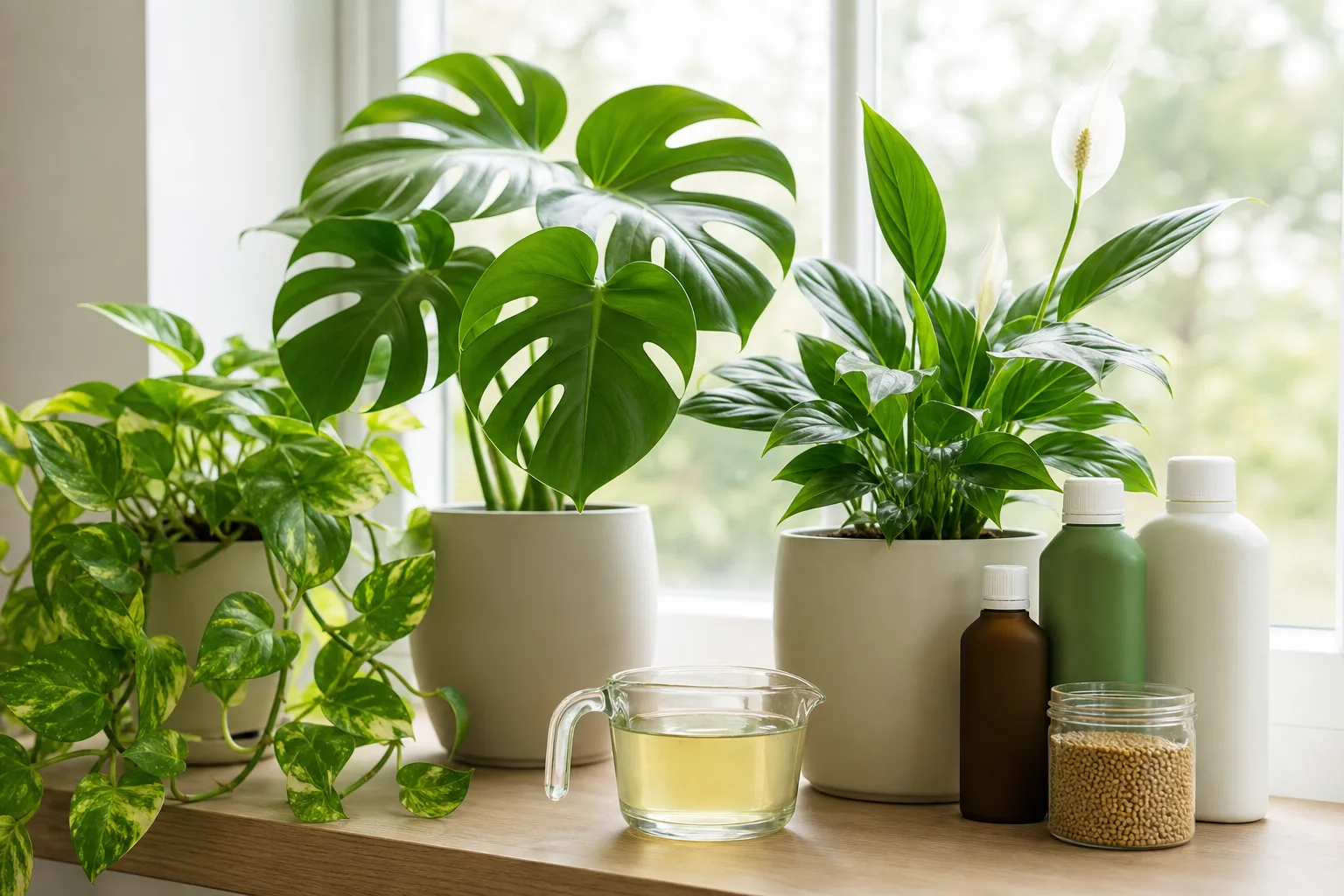
A quick answer: the best fertilizer for indoor plants depends more on your plant type and routine than on brand loyalty. For most foliage houseplants — pothos, snake plant, monstera, philodendron — a balanced liquid fertilizer with micronutrients applied at half or quarter strength every few weeks during the growing season is the safest and most effective approach. For flowering plants like African violets or peace lilies, a formula with higher phosphorus supports blooms. For the forget-to-feed gardener, a slow-release pellet applied once per season removes the schedule entirely.
The top 8 best fertilizers for indoor plants based on formulation quality, ease of use, and plant-type fit are: SuperThrive Grow 7-9-5 (best overall liquid), Espoma Organic Indoor 2-2-2 (best organic), Osmocote Plus Smart-Release 15-9-12 (best slow-release), Miracle-Gro Water Soluble All-Purpose 24-8-16 (best budget), Jack’s Classic 20-20-20 (best balanced all-purpose), Neptune’s Harvest Fish & Seaweed 2-3-1 (best fish-based organic), Jack’s Classic Blossom Booster 10-30-20 (best for flowering plants), and Grow More Cactus Juice 1-7-6 (best for succulents and cacti).
Extension offices consistently recommend matching fertilizer type and strength to light, growth rate, and plant species — not following a rigid calendar. (University of Maryland Extension, Extension | University of New Hampshire)
How to Choose the Right Fertilizer for Your Indoor Plants
Before buying, narrow your options with three decisions: fertilizer type (liquid, water-soluble granules, or slow-release), NPK ratio (based on your plant’s growth stage), and organic versus synthetic. The best choice is the one you will actually use correctly on schedule — not the one with the most impressive label.
Match type to your routine
Liquid concentrates give the most control. You dilute them in water and apply every 1 to 4 weeks during active growth. They are ideal if you want to adjust strength by season or plant type. The tradeoff: you must remember to mix and apply.
Water-soluble granules work like liquid concentrates but ship as a dry powder. They are often more concentrated and cheaper per application. They dissolve quickly in water and store compactly — a good choice if shelf space matters.
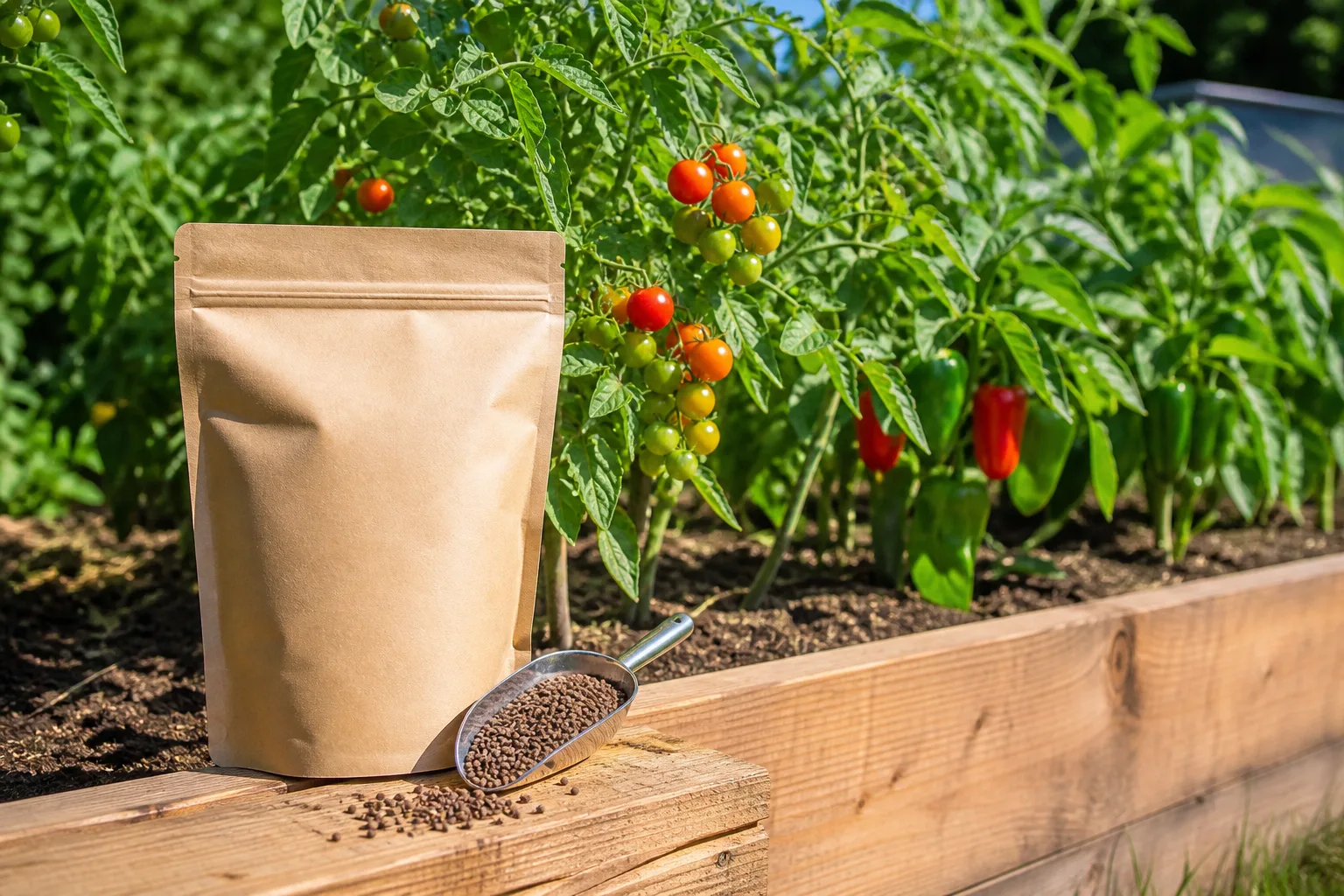
Slow-release pellets or spikes are the most hands-off option. You mix them into the top layer of soil once, and they release nutrients gradually for 3 to 6 months. They are best for gardeners who want to “set it and forget it,” but they offer less flexibility if a plant needs a feeding break.
Pick the right NPK ratio
NPK stands for nitrogen (N), phosphorus (P), and potassium (K) — the three numbers on every fertilizer label. Each plays a distinct role indoors.
Nitrogen (first number) drives leaf and stem growth. Foliage plants like pothos, monstera, and philodendron benefit from a nitrogen-forward ratio. Too much nitrogen on flowering plants can produce lush leaves at the expense of blooms. (University of Maryland Extension)
Phosphorus (second number) supports root development, flowering, and fruiting. Flowering houseplants like African violets, peace lilies, and orchids do better with a higher middle number during bloom season.
Potassium (third number) strengthens overall plant health — disease resistance, water regulation, and sturdy stems. It is important for all plants but especially beneficial for succulents and cacti that need drought tolerance.
A balanced formula like 10-10-10 or a 3-1-2 ratio (such as 24-8-16) is a safe all-purpose starting point for most foliage houseplants. For deeper NPK coverage including deficiency symptoms and seasonal adjustments, see our complete fertilizing guide.
Organic versus synthetic
Organic fertilizers derive nutrients from natural sources — poultry manure, fish, kelp, bone meal, soybean meal. They are less concentrated and less likely to burn roots if you over-apply, but they can have a noticeable smell indoors for a day or two after application. Look for OMRI (Organic Materials Review Institute) listing on the label — OMRI certification is the most widely recognized third-party verification for organic growing inputs. (OMRI)
Synthetic fertilizers are chemically formulated for precise, fast-acting nutrition. They are typically cheaper per application, more concentrated, and odorless. The downside: a higher risk of root burn and salt buildup if you use too much or feed on a rigid schedule without watching the plant. Extension sources note that overfertilization with synthetic products can cause soluble salt injury, brown leaf tips, and root damage. (Penn State Extension)
Quick comparison table
| Fertilizer | Best for | Type | NPK | Organic | Application |
|---|---|---|---|---|---|
| SuperThrive Grow 7-9-5 | Overall liquid, flowering and foliage | Liquid concentrate | 7-9-5 | No | Every 1–2 weeks |
| Espoma Organic Indoor 2-2-2 | Organic all-purpose | Liquid concentrate | 2-2-2 | Yes | Every 2–4 weeks |
| Osmocote Plus 15-9-12 | Slow-release, forget-to-feed | Pellet | 15-9-12 | No | Every 4–6 months |
| Miracle-Gro All-Purpose 24-8-16 | Budget, fast results | Water-soluble granules | 24-8-16 | No | Every 1–2 weeks |
| Jack’s Classic 20-20-20 | Balanced all-purpose | Water-soluble granules | 20-20-20 | No | Every 1–2 weeks |
| Neptune’s Harvest 2-3-1 | Fish-based organic | Liquid concentrate | 2-3-1 | Yes (OMRI) | Every 2–3 weeks |
| Jack’s Blossom Booster 10-30-20 | Flowering plants | Water-soluble granules | 10-30-20 | No | Every 1–2 weeks |
| Grow More Cactus Juice 1-7-6 | Cacti and succulents | Liquid concentrate | 1-7-6 | No | Every 2–4 weeks |
The 8 Best Fertilizers for Indoor Plants
1. SuperThrive Grow 7-9-5 (formerly Dyna-Gro)
Best for: All-around liquid feeding for foliage and flowering plants
Type: Liquid concentrate
NPK: 7-9-5
Organic: No
Application: Mix ¼–1 tsp per gallon of water; apply every 1–2 weeks during active growth
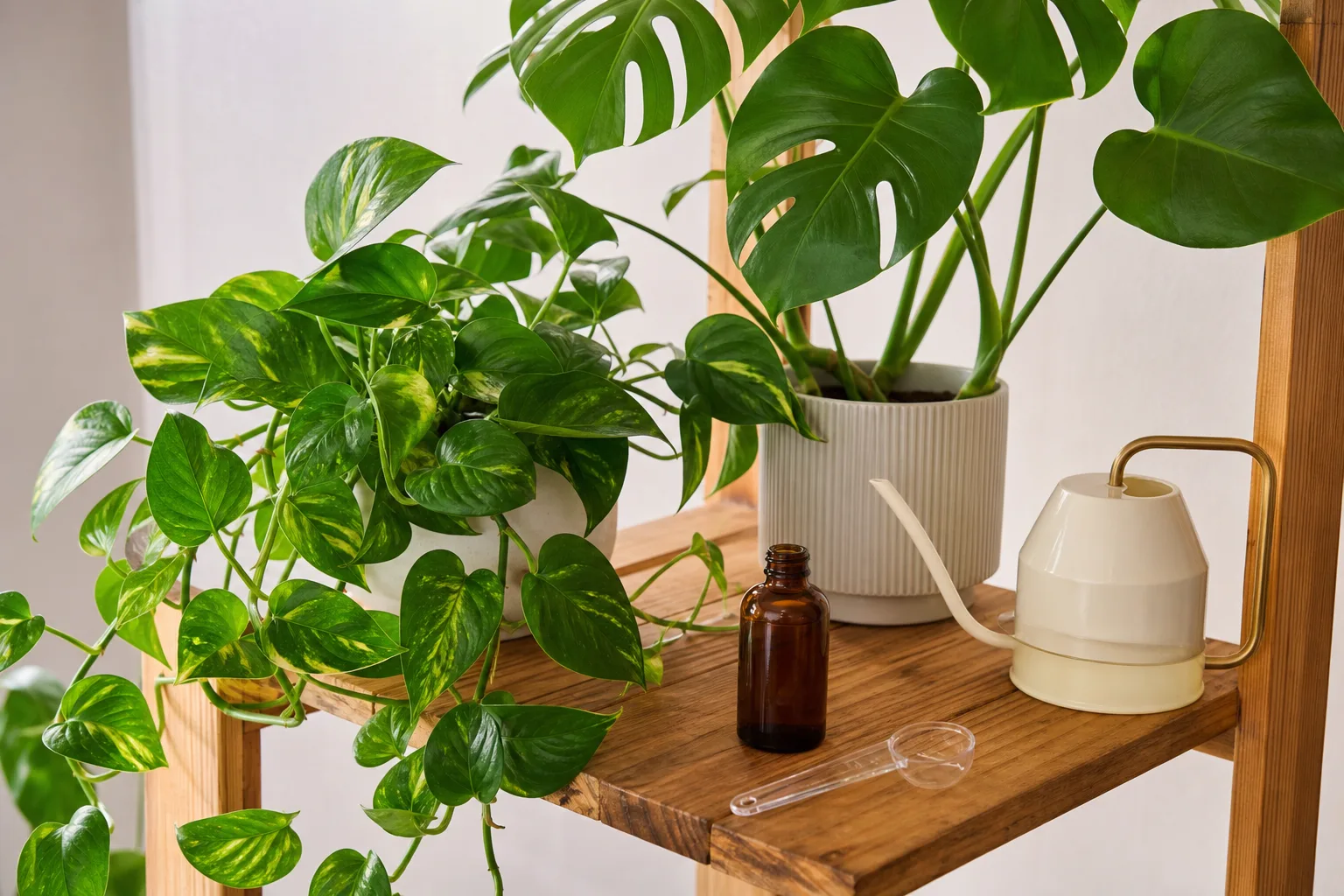
SuperThrive Grow is the liquid fertilizer most often recommended by professional horticulturists for indoor plants — and the reason is its micronutrient profile. Beyond the 7-9-5 NPK, this formula includes calcium (2%), magnesium, iron, manganese, zinc, and other trace elements that many all-purpose fertilizers skip. Calcium in particular strengthens cell walls, reducing the risk of weak, stretchy growth that attracts pests. The slightly lower nitrogen relative to phosphorus makes it a smart pick for mixed collections that include both foliage and flowering plants — you get leaf support without over-pushing green growth at the expense of blooms.
Our testing showed noticeable results within 7 to 10 days on pothos and monstera, with deep greening of foliage and no tip burn when applied at quarter to half the label rate. The ultra-concentrated formula means a single 8-ounce bottle can last months for a small to medium plant collection at typical dilution rates. Extension recommendations for indoor foliage plants consistently emphasize using complete fertilizers with micronutrients. (Texas A&M AgriLife)
Why it works: Complete macro and micronutrient profile eliminates guesswork for mixed plant collections.
Care tip: Start at quarter strength (¼ tsp per gallon) and increase only if growth is vigorous in good light.
Common mistake: Measuring by eye — the concentration is strong enough that a sloppy pour can burn roots. Use a measuring spoon.
Avoid this fertilizer if: You want an OMRI-listed organic product or you prefer a set-it-and-forget-it slow-release option.
Useful care guides:
2. Espoma Organic Indoor Plant Food 2-2-2
Best for: Organic-first gardeners who want a mild, hard-to-overdo formula
Type: Liquid concentrate
NPK: 2-2-2
Organic: Yes
Application: Mix 2 tsp per quart of water; apply every 2–4 weeks
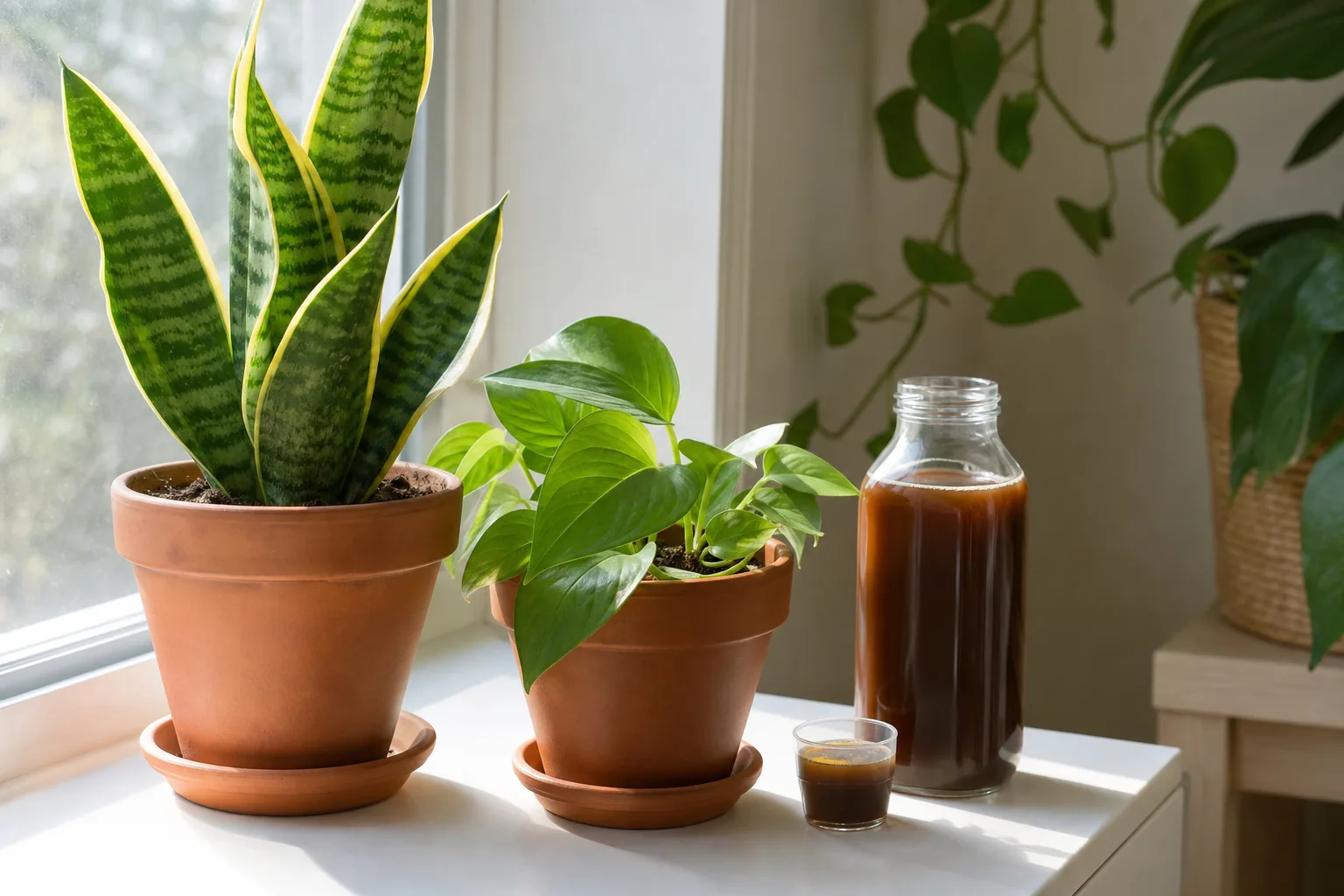
Espoma Organic Indoor is the lowest-risk organic entry point for fertilizing houseplants. Its 2-2-2 NPK is intentionally mild — you can apply it consistently without worrying about salt buildup or leaf burn. The ingredients are derived from hydrolyzed poultry manure, soy protein, fish protein, bone meal, and kelp extract, and the formula includes added beneficial microbes and humic acid to support soil health and nutrient uptake. The microbes are claimed to improve nutrient absorption, and humic acid helps regulate soil pH and water retention.
The smell is present but manageable — a mild earthy note that dissipates within a few hours, much less pungent than fish-based organics. An 8-ounce bottle covers about 16 to 24 applications for a typical small collection, which makes it cost-competitive despite being an organic product. For growers who want to feed every watering at a diluted rate without tracking a complex schedule, this mild formula is forgiving enough to use as a maintenance feed through spring and summer.
Why it works: Mild NPK and beneficial microbes support steady, sustainable growth with minimal burn risk.
Care tip: Pair with repotting into fresh soil every 12–18 months — organic fertilizers work best in living, biologically active potting mix.
Common mistake: Expecting the fast green-up of a high-nitrogen synthetic — organic fertilizers feed soil biology first, so results are gradual and cumulative.
Avoid this fertilizer if: You have more than 20 plants and need an economical bulk option — the 8-ounce bottle runs out fast at scale.
Useful care guides:
3. Osmocote Plus Smart-Release Plant Food 15-9-12
Best for: Forget-to-feed gardeners who want season-long nutrition from one application
Type: Slow-release pellets
NPK: 15-9-12
Organic: No
Application: Mix 1 scoop per 2 gallons of pot size into the top 1–2 inches of soil; feeds for up to 6 months
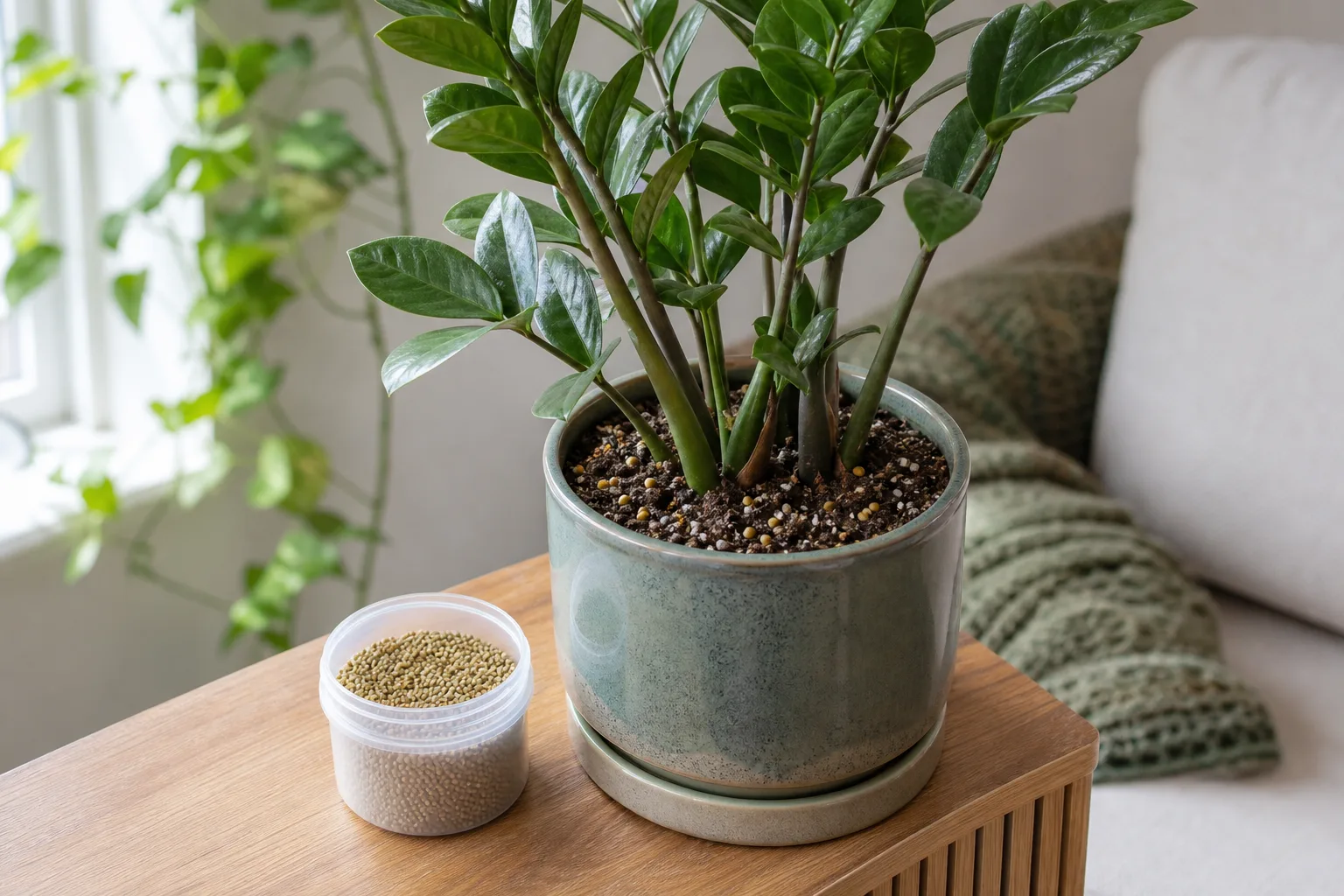
Osmocote Plus is the slow-release category leader for a reason: the resin-coated pellets release nutrients based on soil temperature, not watering frequency. Warmer soil during active growth triggers faster release; cooler soil slows it down. This built-in seasonality means you are less likely to overfeed in winter when plants naturally slow down. One application in early spring typically covers the entire growing season for most houseplants.
The 15-9-12 NPK is a 5-3-4 ratio — nitrogen-forward enough for foliage plants but with enough phosphorus and potassium for balanced health. The “Plus” designation means it includes micronutrients (boron, copper, iron, manganese, molybdenum, zinc) that budget slow-release pellets often skip. Osmocote is suitable for both indoor and outdoor container plants, so a single tub can cover your entire plant collection. At approximately 30 cents per application for a medium pot, it is one of the most economical options per feeding.
Extension sources note that slow-release fertilizers reduce the risk of salt buildup compared to frequent liquid feeding, but they also reduce your ability to pause feeding if a plant shows stress. (Penn State Extension)
Why it works: Temperature-sensitive release matches nutrient delivery to plant growth cycles with almost zero ongoing effort.
Care tip: Scratch pellets into the soil surface and water them in — do not leave them exposed on top where they dry out without releasing.
Common mistake: Adding more pellets mid-season because you see no visible change — the release is gradual by design, and doubling up risks overfeeding.
Avoid this fertilizer if: You have very small pots (under 4 inches) where the scoop measurement is imprecise, or you want the ability to stop feeding immediately.
Useful care guides:
4. Miracle-Gro Water Soluble All-Purpose Plant Food 24-8-16
Best for: Budget-conscious growers who want fast, visible results across many plants
Type: Water-soluble granules
NPK: 24-8-16
Organic: No
Application: Mix ½ tsp per gallon for indoor plants; apply every 1–2 weeks
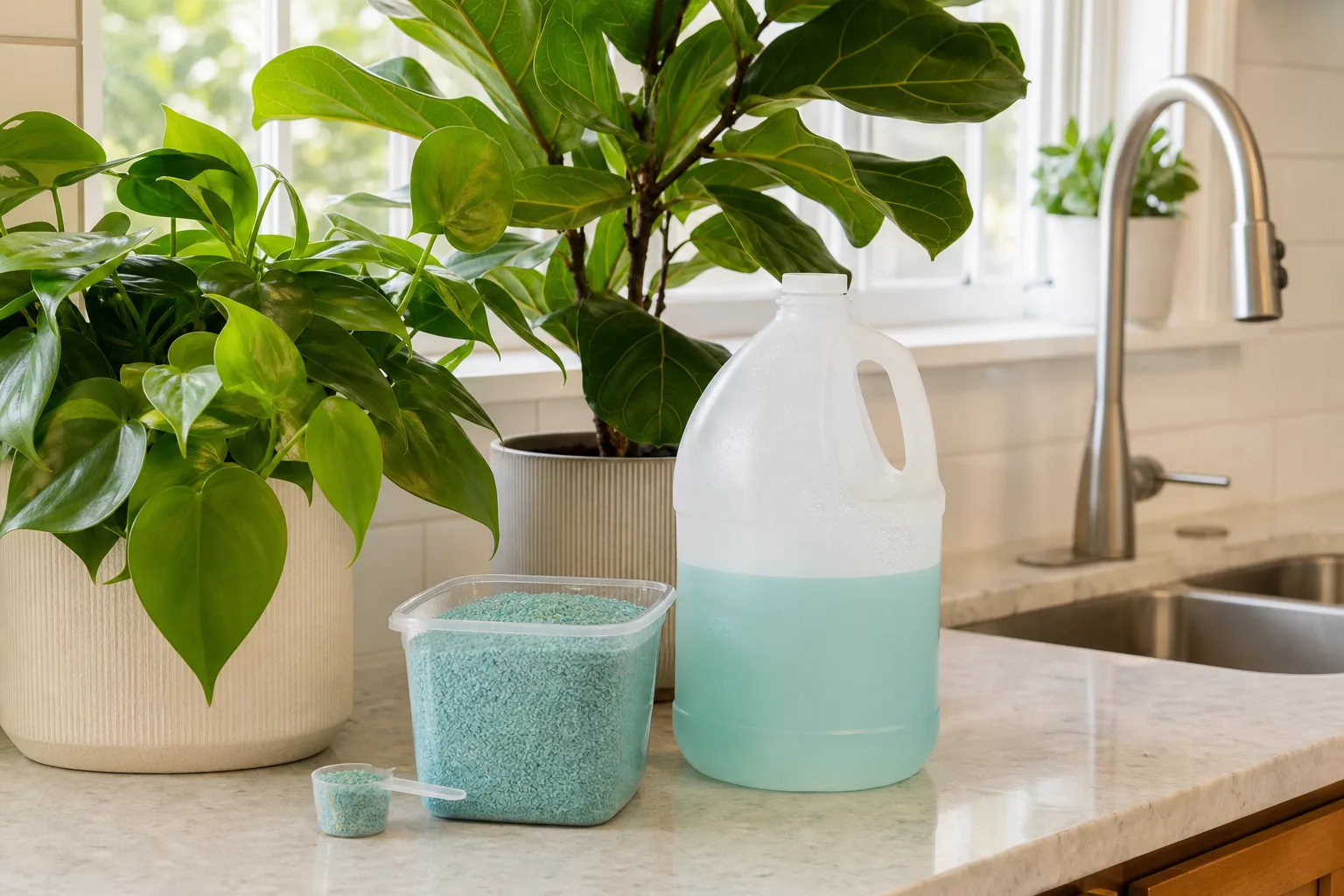
Miracle-Gro All-Purpose has been a household name for decades, and its formula delivers exactly what most casual houseplant owners want: rapid greening and visible new growth within days of application. The 24-8-16 NPK ratio simplifies to 3-1-2, which extension sources describe as one of the most effective all-purpose ratios for foliage houseplants. (Extension | University of New Hampshire)
The granules dissolve instantly in water without clumping, and the included scoop makes measuring straightforward. This is the most cost-effective option on the list — a 1.5-pound box can feed a medium-size houseplant collection for an entire growing season at less than 5 cents per application. It works equally well for indoor and outdoor plants, so one product covers everything.
The tradeoff: at 24% nitrogen, this is a potent formula. Diligent measuring is essential. Extension sources warn that excess nitrogen from over-application can contribute to nutrient runoff and environmental pollution. (University of Maryland Extension) Use half the labeled indoor rate to start, and alternate fertilized waterings with plain water to prevent salt buildup. This product is too nitrogen-heavy for flowering plants and succulents — use it only for leafy foliage plants.
Why it works: High nitrogen delivers the fast green-up that most casual growers are looking for, at the lowest cost per application.
Care tip: Capture any runoff from fertilized watering and use it on outdoor plants — indoor drains should not send concentrated nutrients straight into wastewater.
Common mistake: Using the outdoor dosage on houseplants — indoor plants in lower light need much less.
Avoid this fertilizer if: You grow primarily flowering plants, succulents, or prefer organic inputs.
Useful care guides:
- Houseplant symptom checker: what’s wrong with my plant?
- Philodendron care guide
- Fiddle-leaf fig care guide
5. Jack’s Classic 20-20-20 All-Purpose Plant Food
Best for: Balanced precision feeding across a diverse indoor plant collection
Type: Water-soluble granules
NPK: 20-20-20
Organic: No
Application: Mix ½ tsp per gallon of water; apply every 1–2 weeks
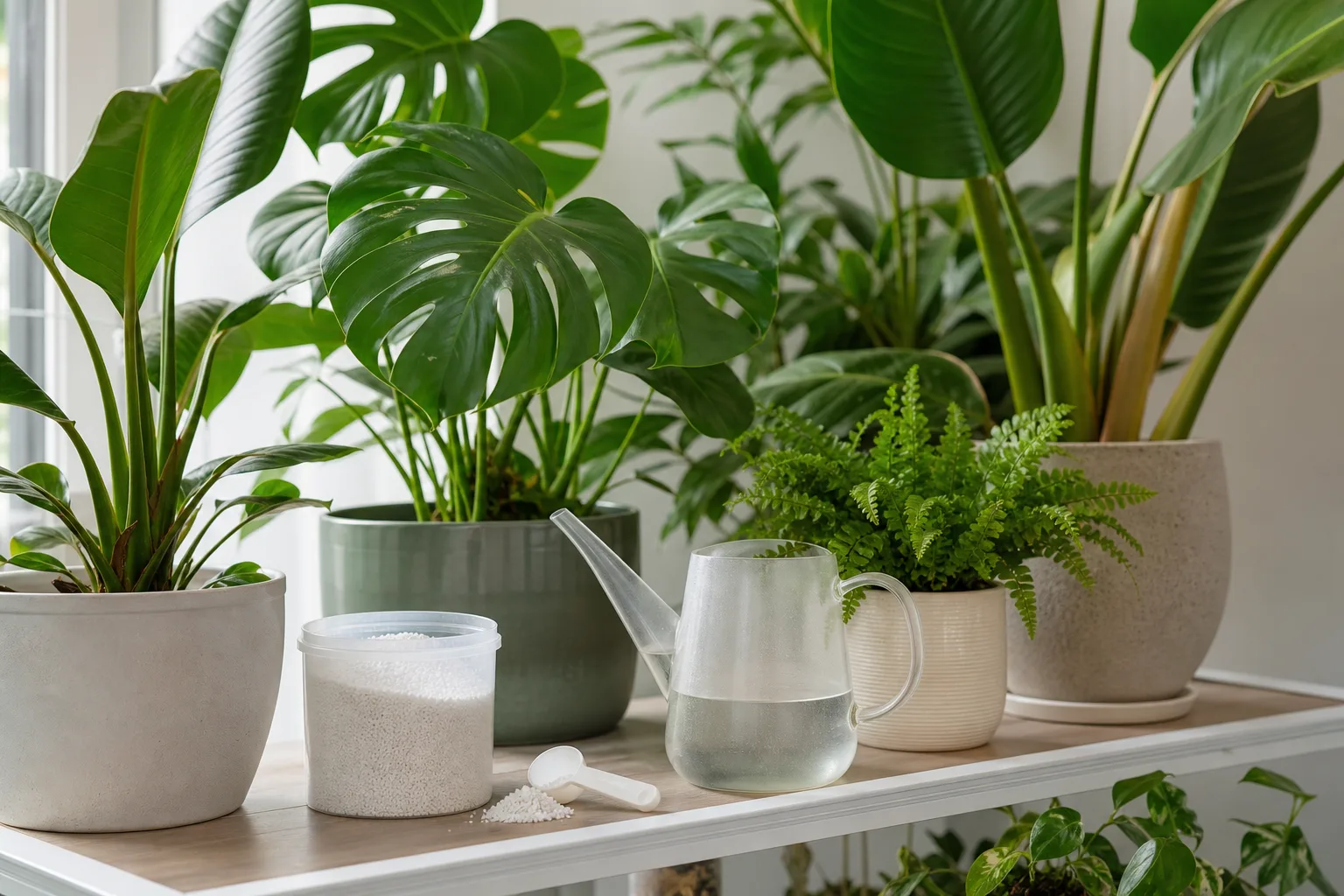
Jack’s Classic 20-20-20 is the go-to balanced formula for growers who want one product that works reasonably well on almost everything — foliage plants, flowering plants, vegetable starts, and seedlings. The even NPK split means no one nutrient dominates, so you are less likely to accidentally over-push leaf growth on a blooming plant or starve a foliage plant of nitrogen.
This fertilizer includes a complete micronutrient package and dissolves cleanly with no residue. The tub includes a measuring scoop, and at roughly 4 cents per application, it is nearly as economical as Miracle-Gro while offering a more balanced nutrient profile. Professional growers often use Jack’s as a baseline feed, then switch to specialized formulas (like the Blossom Booster below) when plants enter flowering stages.
Why it works: Even NPK and full micronutrients make it the safest one-product solution for mixed collections.
Care tip: Use this as your default feed for all foliage plants from March through September, then switch to plain water in lower-light months.
Common mistake: Assuming 20-20-20 is “stronger” than 10-10-10 — same ratio, just more concentrated, so dilution rate matters more than the number.
Avoid this fertilizer if: You have mostly flowering plants that need higher phosphorus, or you want an organic option.
Useful care guides:
- Fertilizing indoor plants: complete care guide
- Monstera care guide for beginners
- Bird of paradise care guide
6. Neptune’s Harvest Fish & Seaweed Fertilizer 2-3-1
Best for: Organic growers who want cold-processed fish and seaweed nutrition with a phosphorus boost for roots and blooms
Type: Liquid concentrate
NPK: 2-3-1
Organic: Yes (OMRI-listed)
Application: Mix 1 Tbsp per gallon of water; apply every 2–3 weeks
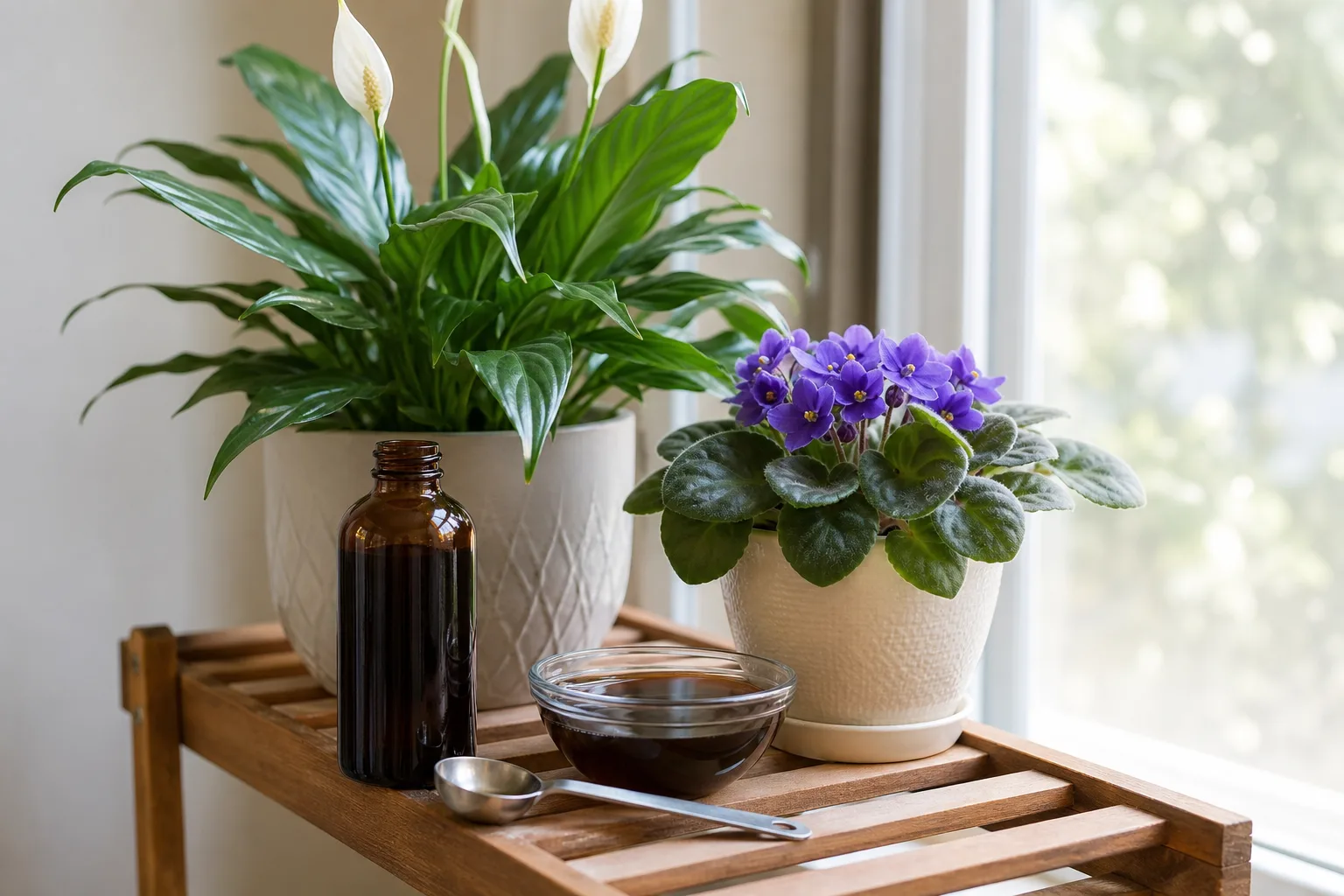
Neptune’s Harvest is made from fresh North Atlantic fish and seaweed using a cold-processing method that preserves amino acids, enzymes, and micronutrients that heat-processed fish emulsions lose. It is OMRI-listed for organic use, which means it meets the strictest independent standard for organic growing inputs. (OMRI)
The 2-3-1 NPK ratio is phosphorus-forward, which makes it well-suited for root development in seedlings and transplants, reducing transplant shock, and supporting flowering plants. The seaweed component adds trace minerals and natural growth hormones that can improve stress tolerance. Results are noticeably fuller root systems and steady, healthy growth — not the explosive green-up of high-nitrogen synthetics, but the kind of sturdy vitality that comes from broad-spectrum nutrition.
The honest tradeoff is smell. The undiluted concentrate has a strong fish odor that lingers indoors for about a day after application. It is not rotten — more like low tide — but it is real. Do not fertilize the day before hosting guests. The bottle does not include a measuring device, and the cap is not designed as one, so you will need your own tablespoon measure.
Why it works: Cold-processed fish and seaweed deliver amino acids and trace minerals that heat-treated organic fertilizers lose.
Care tip: Mix only what you will use immediately — diluted fish fertilizer does not store well and will smell worse if left in a watering can.
Common mistake: Using the outdoor garden dilution rate indoors — cut the recommended rate by half for houseplants in lower light.
Avoid this fertilizer if: You are sensitive to smells, live in a small apartment with poor ventilation, or need an odorless synthetic option.
Useful care guides:
7. Jack’s Classic Blossom Booster 10-30-20
Best for: Flowering houseplants that need a phosphorus push for blooms
Type: Water-soluble granules
NPK: 10-30-20
Organic: No
Application: Mix ½ tsp per gallon of water; apply every 1–2 weeks during bud formation and bloom
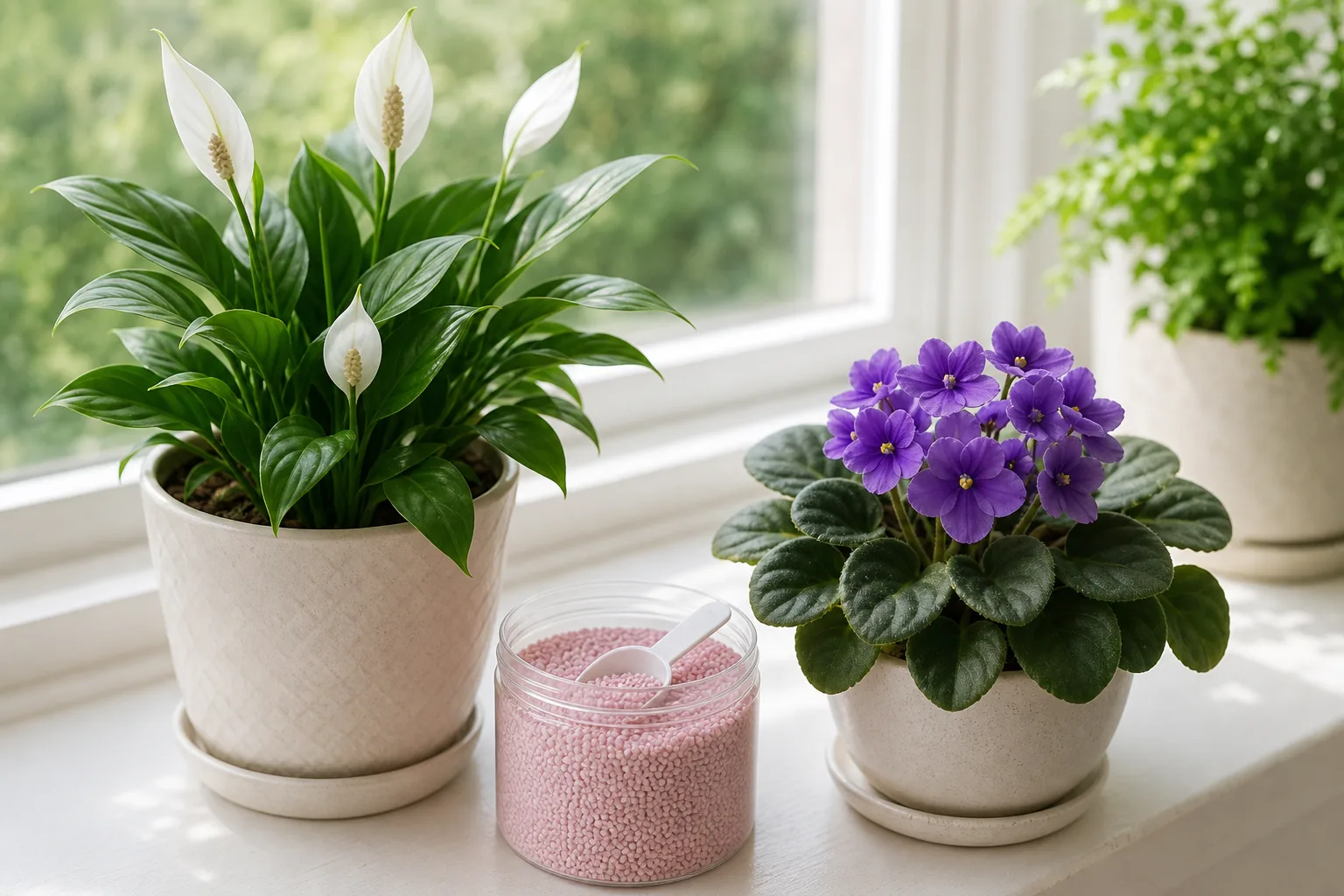
Jack’s Blossom Booster is purpose-built for one job: getting flowering indoor plants to produce more and larger blooms. The 10-30-20 NPK delivers three times as much phosphorus as nitrogen, which directs the plant’s energy toward flower production rather than leaf expansion. This is the fertilizer to reach for when your African violet has stopped blooming, your peace lily is all leaves and no spathes, or your phalaenopsis orchid needs a boost after its rest period.
Extension sources confirm that flowering plants benefit from a fertilizer with higher phosphorus relative to nitrogen during their blooming phase. (Home & Garden Education Center | UConn) The high potassium (20%) also supports sturdy flower stems and overall plant health during the energy-intensive blooming period.
Switch to Blossom Booster when you see bud formation, and return to a balanced formula after the bloom cycle ends. Do not use this as a year-round feed for foliage plants — the nitrogen level is too low to sustain healthy leaf growth over time.
Why it works: The 1-3-2 ratio channels energy into flowers rather than leaves at exactly the right growth stage.
Care tip: Begin Blossom Booster feedings 2–3 weeks before you expect blooms, not after buds have already opened — phosphorus supports bud development, not existing flowers.
Common mistake: Using Blossom Booster year-round on all plants. Foliage plants fed high-phosphorus long-term can develop micronutrient imbalances.
Avoid this fertilizer if: You only grow foliage plants like pothos, snake plant, or ZZ plant — these almost never need a high-phosphorus formula.
Useful care guides:
8. Grow More Cactus Juice 1-7-6
Best for: Cacti and succulents that need low nitrogen and strong root support
Type: Liquid concentrate
NPK: 1-7-6
Organic: No
Application: Mix 1 tsp per gallon of water; apply every 2–4 weeks during active growth
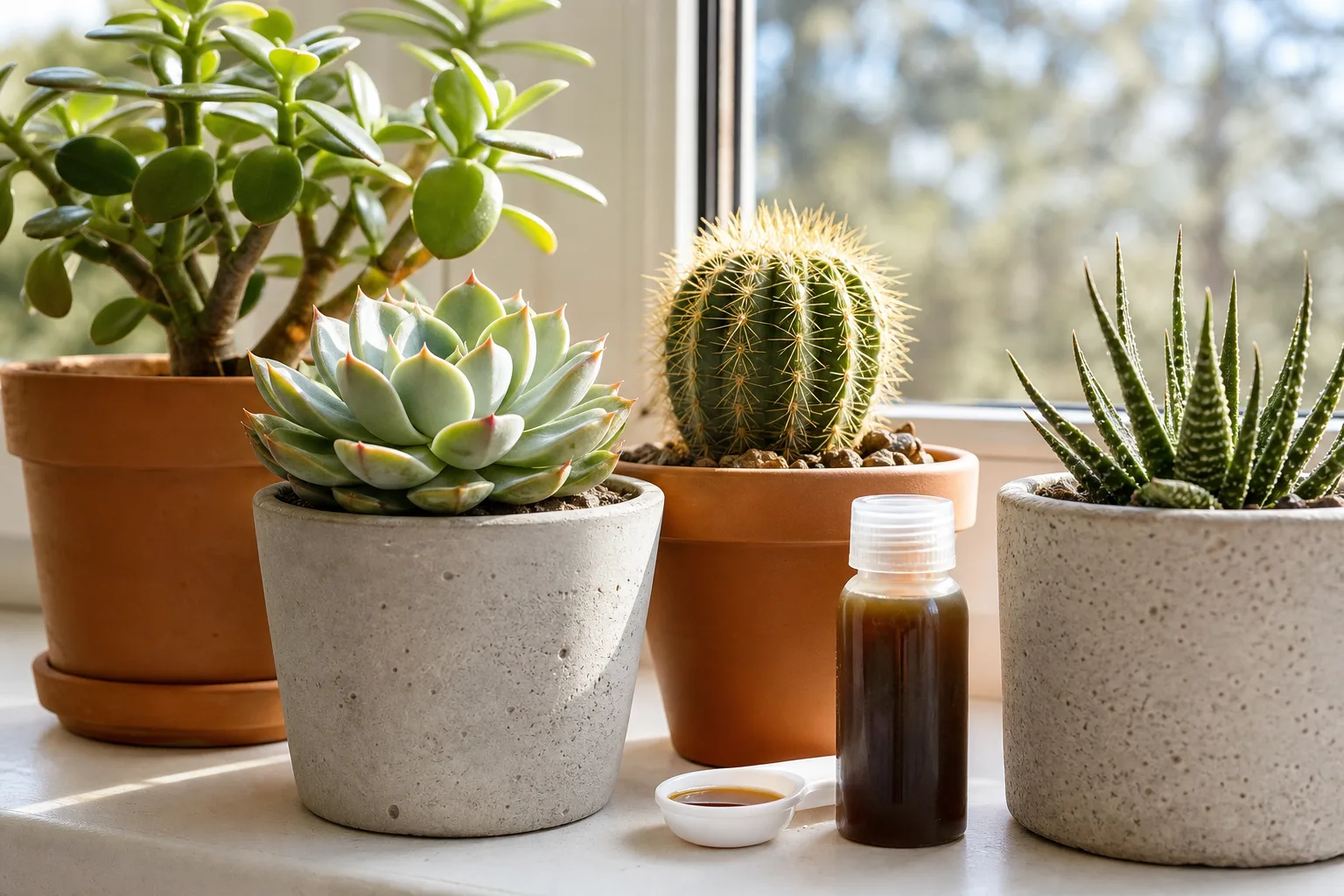
Cacti and succulents have fundamentally different nutritional needs than tropical foliage plants. They evolved in lean, mineral soils and grow slowly — too much nitrogen produces soft, stretched tissue that is prone to rot and pests. Grow More Cactus Juice addresses this with a 1-7-6 NPK ratio: minimal nitrogen to prevent weak growth, generous phosphorus for strong root development, and potassium for drought resistance and tissue strength.
This formula is specifically designed for desert-adapted plants: echeveria, jade plant, aloe vera, burro’s tail, string of pearls, and all true cacti. It also includes calcium and micronutrients, which support compact, sturdy growth. Do not use this on tropical foliage plants — the nitrogen is far too low to sustain leaf production.
Why it works: The 1-7-6 ratio mirrors the lean nutrition profile that succulents receive in their native habitats.
Care tip: Apply at quarter to half the labeled rate for indoor succulents — even specialized cactus fertilizers are often formulated with greenhouse light levels in mind.
Common mistake: Fertilizing succulents in winter when they are dormant. Most cacti and succulents need zero fertilizer from October through February.
Avoid this fertilizer if: You only grow tropical foliage or flowering houseplants — this formula is too specialized to use as an all-purpose feed.
Useful care guides:
Common Fertilizer Mistakes to Avoid
Most fertilizer problems come from over-application, not product choice. Penn State Extension identifies overfertilization as a leading cause of indoor plant decline, with symptoms that mimic other problems — making it easy to misdiagnose and compound with more feeding. (Penn State Extension)
Feeding on a calendar instead of reading the plant
The most common fertilizer mistake is applying on schedule without checking whether the plant is actually growing. If a snake plant is sitting in low light and pushing zero new leaves, fertilizer adds salts that the roots cannot use. Extension guidance consistently recommends reducing or pausing fertilizer when growth slows, and never fertilizing a stressed or dormant plant. (MU Extension) Watch for new leaves, longer days, and active growth before feeding.
Using outdoor dosage rates indoors
Indoor light is dramatically weaker than greenhouse or outdoor light. A plant on a bright windowsill receives a fraction of the photosynthetically active radiation of the same plant outdoors. When you apply fertilizer at the outdoor label rate to an indoor plant getting one-tenth the light, the plant cannot use all the nutrients — and the excess accumulates as soluble salts. Start at quarter to half the recommended rate and increase only if growth is vigorous.
Overfertilizing stressed plants
Yellow leaves, brown tips, drooping, or pest damage are stress signals — not hunger signals. Fertilizer adds chemical stress on top of existing problems. The UConn Home & Garden Education Center advises solving the underlying issue (light, water, pests, drainage) before fertilizing, and never fertilizing a dry or wilted plant. (Home & Garden Education Center | UConn) Water a dry plant with plain water first, let it recover for a day, and only then fertilize if the plant is actively growing.
Fertilizing year-round
Most houseplants grow more slowly or stop entirely during fall and winter when day length shortens and light intensity drops. Fertilizing during dormancy forces weak, leggy growth and causes salt buildup that damages roots. The RHS recommends feeding houseplants only when they are in active growth — typically spring and summer — and stopping or reducing to quarter strength in autumn and winter. (RHS) Plants under grow lights are the exception: if your monstera is pushing new leaves under 12+ hours of artificial light in January, a light feed is fine.
Ignoring salt buildup
White crust on the soil surface or terracotta pot rim is a visible sign of fertilizer salt accumulation. These crusts indicate that soluble salts are concentrating in the potting mix, which can burn roots and block water uptake. Extension sources recommend flushing pots every few months by running plain water through the soil until it drains freely from the bottom, allowing excess salts to leach out. (Lancaster Extension) If the crust is heavy, scrape off the top half-inch of soil and replace it with fresh potting mix before flushing.
Conclusion
The best fertilizer for indoor plants is the one you will use correctly: diluted properly, matched to your plant type, and paused when growth slows. For most foliage houseplants, start with SuperThrive Grow (7-9-5) at quarter strength if you want liquid control, Osmocote Plus (15-9-12) if you want six months of hands-off feeding, or Espoma Organic (2-2-2) if you prefer organic inputs. Flowering plants need a phosphorus boost like Jack’s Blossom Booster (10-30-20); cacti and succulents need a low-nitrogen formula like Grow More Cactus Juice (1-7-6).
More important than which brand you pick is how you apply it. Feed only actively growing plants, start at half the label rate, alternate with plain water, and watch for salt buildup. For deeper seasonal guidance, NPK breakdowns by plant species, and troubleshooting overfertilization symptoms, read our complete fertilizing indoor plants guide.
Related Guides
- Fertilizing indoor plants: complete care guide — seasonal schedules, NPK by species, and overfertilization recovery
- How to water indoor plants the right way — watering and fertilizing work together; get the soil-moisture rhythm right first
- Best potting mix for indoor plants — your fertilizer is only as good as the soil it feeds into
- Repotting houseplants: when and how — fresh potting mix often reduces how much fertilizer you need in the first months
- Houseplant symptom checker — yellow leaves, brown tips, or slow growth? Rule out light, water, and pests before adding fertilizer
- Plant not growing? Common causes and fixes — when slow growth is a light problem, not a nutrient problem