Fertilizing Plants in Hot Weather: When to Wait
Should you fertilize plants in hot weather? Use this practical guide to read stress signs, choose a safer fertilizer, and apply it only when conditions fit.
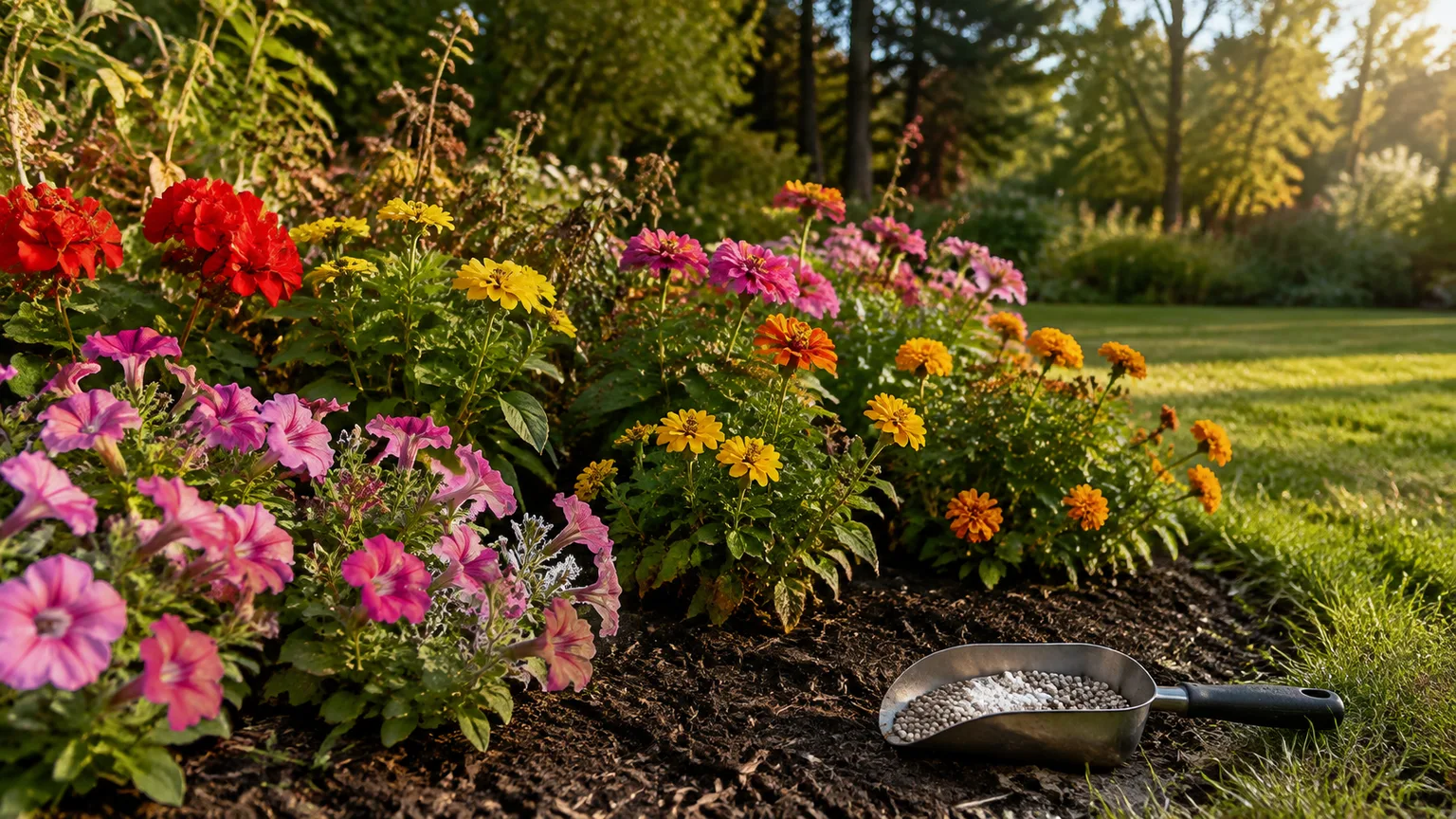
When a plant looks tired in summer, fertilizer is rarely the first thing it needs. Heat increases water loss, dry soil limits nutrient movement, and stressed roots are less able to handle a concentrated dose. That is why the safest default is to pause feeding when a plant is visibly wilted, drought-stressed, dormant, or sitting in dangerously hot, dry soil.
That does not mean every warm day is a fertilizer ban. A healthy tomato in a well-watered container, a flowering annual still making new buds, and a dormant lawn in a heat wave do not have the same needs. The better rule is to judge plant stress and active growth first, then use the fertilizer label, soil moisture, drainage, and weather forecast to decide whether feeding makes sense.
The short answer: pause fertilizer when heat is stressing the plant
Do not fertilize a plant that is wilting from heat or drought, has stopped growing, or has roots in dry, hot soil. Stabilize the root zone first: water deeply enough to wet the roots, improve shade or shelter if appropriate, and wait until the plant resumes normal growth. NC State Extension’s drought guidance is direct on this point: during drought, do not fertilize or otherwise encourage vulnerable new growth. (NC State Extension)
If the weather is simply warm and the plant is healthy, growing, and using water normally, a scheduled feeding may be reasonable. Use the product made for that plant, follow its label, and apply it when the soil is already moist. “Hot weather” is not a single number that means the same thing for a cactus, a cool-season lawn, a newly planted shrub, and a hanging basket.
The pause is especially important during a heat wave. A heat wave can push a plant beyond its normal rhythm even if it was thriving a week earlier. The goal during those days is to preserve roots, leaves, and moisture—not to force a burst of foliage that the plant may not be able to support.
Heat, drought, and fertilizer create a root-zone problem
Fertilizer only helps when the plant can take up the nutrients and use them. That depends on a functioning root system, enough water in the soil solution, oxygen around the roots, suitable temperatures, and enough light for the plant to turn nutrients into growth. Extreme heat can disrupt several of those conditions at once.
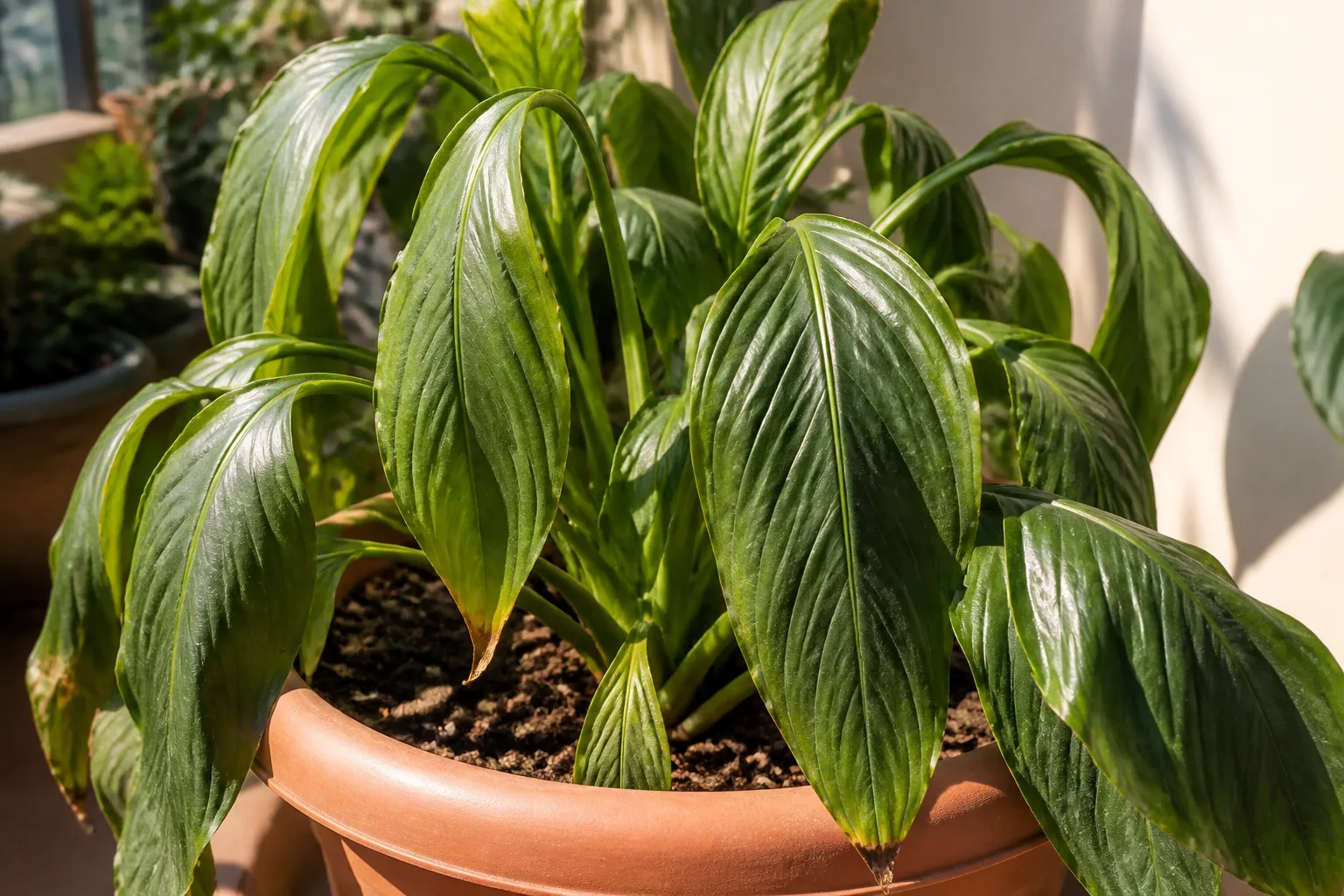
What heat changes inside the plant: Plants cool themselves through transpiration, the movement of water from roots through leaves and out through tiny openings called stomata. In hot, dry air, the plant can lose water faster than its roots can replace it. It may close those openings, curl or droop its leaves, slow photosynthesis, and reduce growth to conserve water.
Heat is not merely a leaf problem. A peer-reviewed review in International Journal of Molecular Sciences explains that heat stress can affect root mass, photosynthesis, water relations, and nutrient uptake; the review also notes that roots can be more sensitive to elevated temperatures than shoots. (NCBI review of heat stress and plant-nutrient relations) If the roots are already struggling, adding nutrients does not repair the cause.
This is why a high-nitrogen fertilizer can be poorly timed in a heat wave. Nitrogen supports leaves and stems, but the plant still needs water, functioning roots, and enough time to harden and support that new tissue. A sudden push toward growth can compete with the plant’s short-term need to conserve moisture.
Why dry soil makes fertilizer riskier: Most fertilizer nutrients must be dissolved in water before roots can take them up. That depends on a functioning root system, enough water in the soil solution, oxygen around the roots, suitable temperatures, and enough light for the plant to turn nutrients into growth.
Ohio State University Extension advises gardeners to avoid fertilizing plants under heat or drought stress, to water dry soil before feeding, and to water again immediately afterward. It also notes that nutrients are not accessible to plants in very dry soil. (Ohio State University Extension)
When fertilizer is placed into a dry root zone, several problems can follow. The material may remain concentrated around a small group of roots instead of dispersing through moist soil. A granular product can sit on the surface and then release a sharp dose when a short rain finally arrives. In a pot, limited soil volume leaves less room to dilute soluble salts.
That does not mean water makes any fertilizer safe in any weather. A thoroughly watered plant can still be damaged by too much product, an inappropriate formulation, poor drainage, or feeding a plant that is shutting down. Moist soil is a prerequisite for safer application, not a guarantee.
Signs the plant needs water or a fertilizer break
The first question is not “Which fertilizer should I use?” It is “Is this plant actively growing and able to use fertilizer today?” Look at the whole plant and the root zone rather than diagnosing from one yellow leaf.
Heat stress versus fertilizer burn
Heat stress often appears as midday wilt, curled leaves, drooping stems, leaf scorch, pale or gray-green foliage, blossom drop, and slowed growth. A plant that recovers by the next morning may be reacting to daytime water demand rather than suffering permanent drought injury. NC State Extension notes that plants can wilt in midday heat even when soil is wet; they are more likely to be drought-stressed when they do not recover by morning. (NC State Extension)
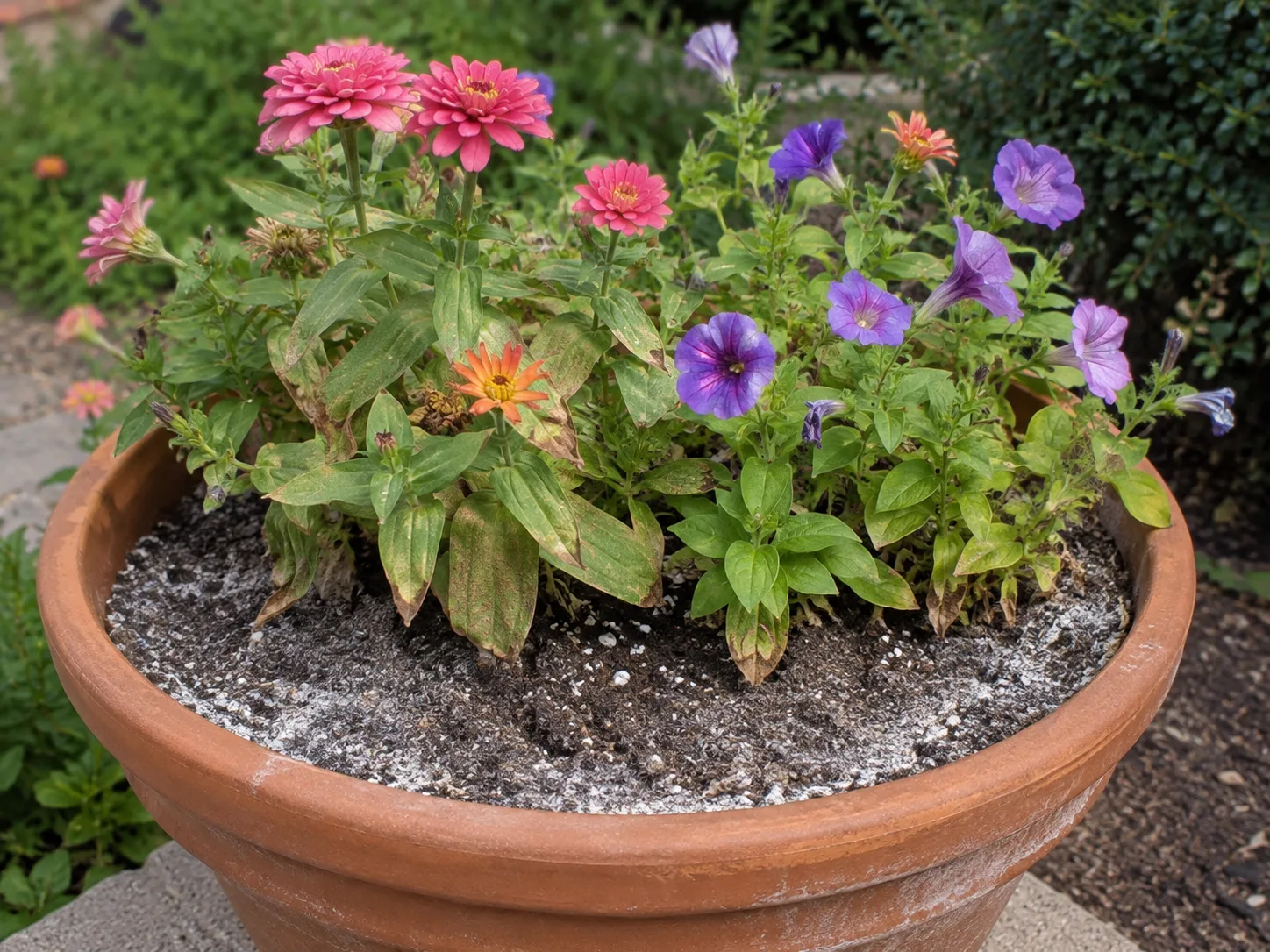
Fertilizer burn is caused by excessive soluble salts around roots or, in some cases, fertilizer contacting foliage. It can produce brown tips and margins, yellowing, wilt despite damp soil, stunting, root injury, and dieback. A white or gray crust on the soil surface or container rim makes salt buildup more plausible, but its absence does not rule it out.
The timing can help. If the plant declined within days of a strong application, the fertilizer was applied to dry soil, or granules collected against the stem, salt injury moves higher on the list. If the problem started after a sudden hot, windy day and improves overnight, heat stress may be the larger factor. Both can occur together, which is why adding more fertilizer to a wilting plant is a poor first response.
A useful diagnostic sequence is:
- Feel the soil several inches down, not just the surface.
- Check whether water is penetrating or running down the sides of the pot.
- Look for white crust, fertilizer pellets, pests, spots, or damaged roots.
- Compare older leaves with new growth and note whether the plant is still producing leaves, buds, or fruit.
- Review the last fertilizer application, including product, strength, amount, and weather.
Yellow leaves alone do not prove a nutrient deficiency. Saturated roots, drought, low light, pests, heat injury, and normal aging can all look similar. A nutrient solution applied to a plant with poor drainage or dead roots can make the diagnosis harder and the damage worse.
When the no-fertilizer rule is strongest
Some situations call for a clear pause even if the fertilizer label suggests that feeding is due. In these cases, protecting the root system and reducing water stress is more urgent than correcting a suspected nutrient shortage.
Heat waves and drought-stressed landscape plants
Do not fertilize a plant that is visibly drought-stressed, especially a tree or shrub that has not recovered by morning. Heat and drought together can reduce water uptake, leaf function, and growth while increasing vulnerability to pests and disease. Wisconsin Extension specifically advises against fertilizing drought-stressed trees and shrubs and warns that lawn fertilizer during hot, dry weather can add salt that further dehydrates roots. (University of Wisconsin–Madison Extension)
During a drought, water priority matters. Newly planted trees and shrubs, mature trees, valuable specimens, and fruiting crops may deserve water before a fading annual. Mulch can slow evaporation and moderate soil temperature, but it should not touch trunks or bury crowns. Fertilizer cannot compensate for a root zone that is too dry to support basic water movement.
Dormant lawns, established trees, and root-damaged plants: Cool-season lawns commonly slow or go dormant in hot, dry weather. Feeding dormant grass with a quick-release, high-nitrogen product encourages neither useful growth nor recovery; wait until moisture returns and the turf is actively growing. For a lawn, that may mean the next appropriate seasonal window rather than the next cool evening.
Established trees and shrubs generally do not need a summer rescue dose simply because their leaves look less lush in heat. Trees planted recently, trees with damaged roots, and plants that have been transplanted should also be given time to rebuild roots before feeding. Avoid using fertilizer to “wake up” a plant that is actually suffering from root loss, compacted soil, waterlogging, or transplant shock.
New growth is especially vulnerable. NC State Extension recommends not encouraging growth during drought because tender shoots can be damaged more easily than mature tissue. When the plant is under environmental stress, the most useful work is often water management, mulch, weed control, shade, and patience.
When summer feeding can still be reasonable
Summer feeding is not automatically wrong. It can be reasonable for a healthy plant that is actively producing leaves, stems, flowers, or fruit; has consistently moist but well-drained soil; and has a plant-specific schedule that calls for nutrients. The decision is more defensible when the forecast offers several moderate days rather than a heat dome.
Actively growing containers and heavy-feeding annuals
Containers have a smaller root zone and often receive more frequent watering, so nutrients can leach out faster than they do from a garden bed. A healthy petunia, tomato, pepper, basil, or other heavy feeder may continue to need modest support in summer if it is growing and fruiting vigorously. That is different from feeding a wilted container that is hot to the touch and dry inside.
Containers also swing quickly between drought and saturation. Check the mix, the drainage holes, the saucer, and the roots before applying anything. A plant that needs daily water because the pot is shallow may need a larger container or a better moisture-management plan, not a stronger fertilizer.
Some crops have special schedules. Ohio State Extension notes that container vegetables can need more frequent, diluted applications, while peppers and cucurbits can be sensitive to excess nitrogen late in the season. It also recommends using visible active growth as a cue for flowers, evergreens, trees, and shrubs rather than feeding on a calendar alone. (Ohio State University Extension)
The label, plant type, and weather window
A fertilizer label is not a suggestion to feed more often whenever growth looks impressive. It gives the product’s concentration, application rate, interval, and safety directions. Follow the label, and treat half-strength feeding as a cautious option only when the label permits dilution and the plant’s needs justify it.
Use these questions before a summer application:
- Is the plant still making healthy new growth, or is it merely surviving the heat?
- Is the root-zone soil moist but not waterlogged?
- Is the plant in a pot, raised bed, lawn, or open soil?
- Has the soil been tested, or am I guessing at a deficiency?
- Does the forecast provide a cool or moderate window after application?
- Will the plant have time to use the nutrients before dormancy, frost, or the end of its growing season?
If the answer to several questions is no, wait. A short delay is rarely more harmful than a fertilizer burn that damages roots during a heat wave.
Choose the least risky fertilizer format
Format changes how quickly nutrients become available and how easily you can control the dose, but no format overrides plant stress. Read the analysis and directions rather than assuming “organic” means risk-free or “liquid” means gentle.
Why high-nitrogen fast-release products are risky
Fast-release, high-nitrogen fertilizers can deliver a large amount of soluble nutrient at once. That may be useful for a specific deficiency or actively growing crop under suitable conditions, but it is a poor match for a dormant lawn or heat-stressed plant. Extra nitrogen can produce soft foliage when the plant is short on water, and unused salts can remain near roots.
Do not choose a high-nitrogen product simply because leaves look pale. A pale plant may have waterlogged roots, high soil pH, low light, disease, or a damaged root system. Soil testing and a close look at new growth are more reliable than treating every color change with nitrogen.
Phosphorus and potassium are not harmless substitutes. A “bloom booster” can still add soluble salts, and repeated phosphorus applications can build up when the soil already contains enough. The right nutrient is the one a plant actually lacks, in the amount and form the label or soil test supports.
Liquid, slow-release, compost, and worm castings
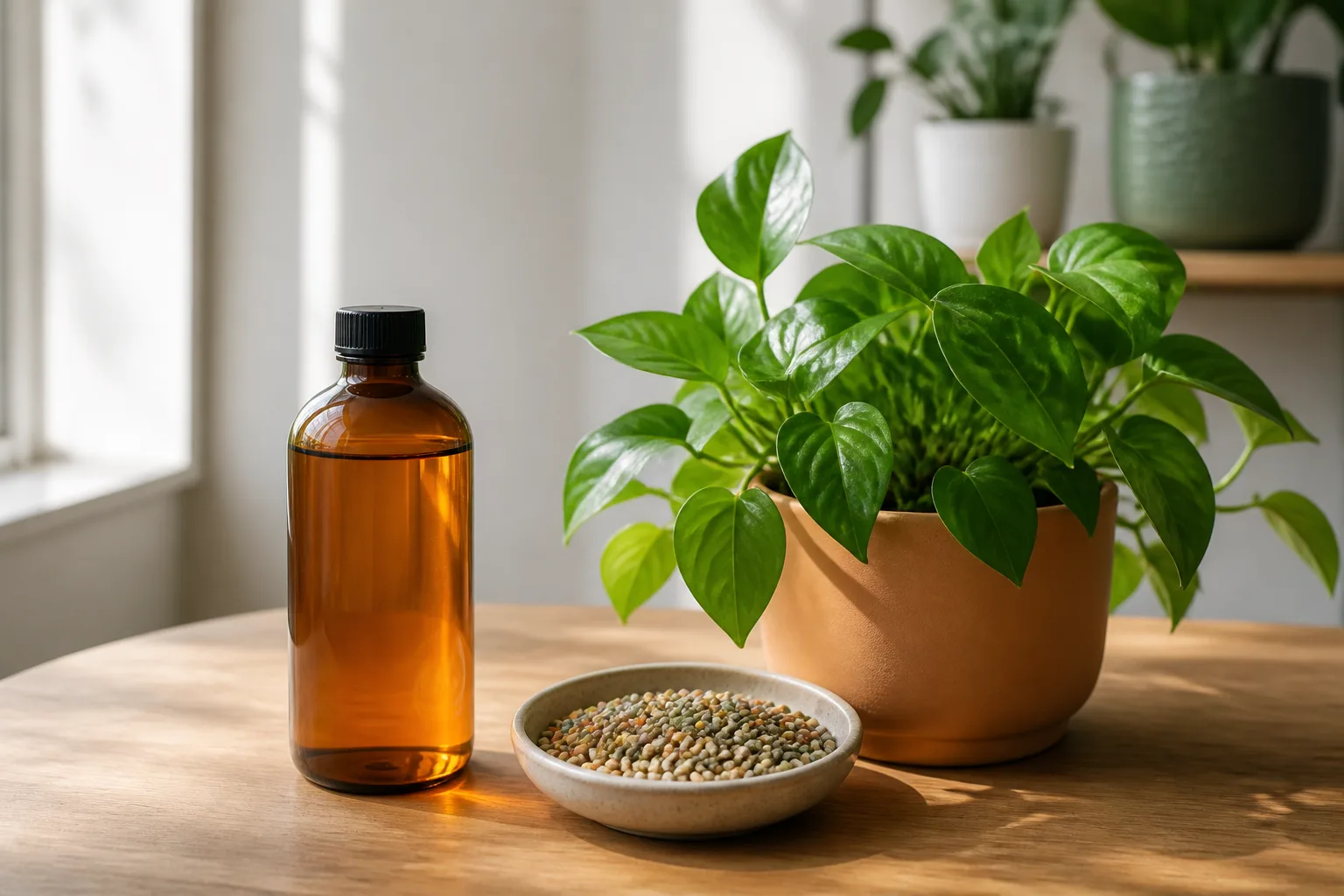
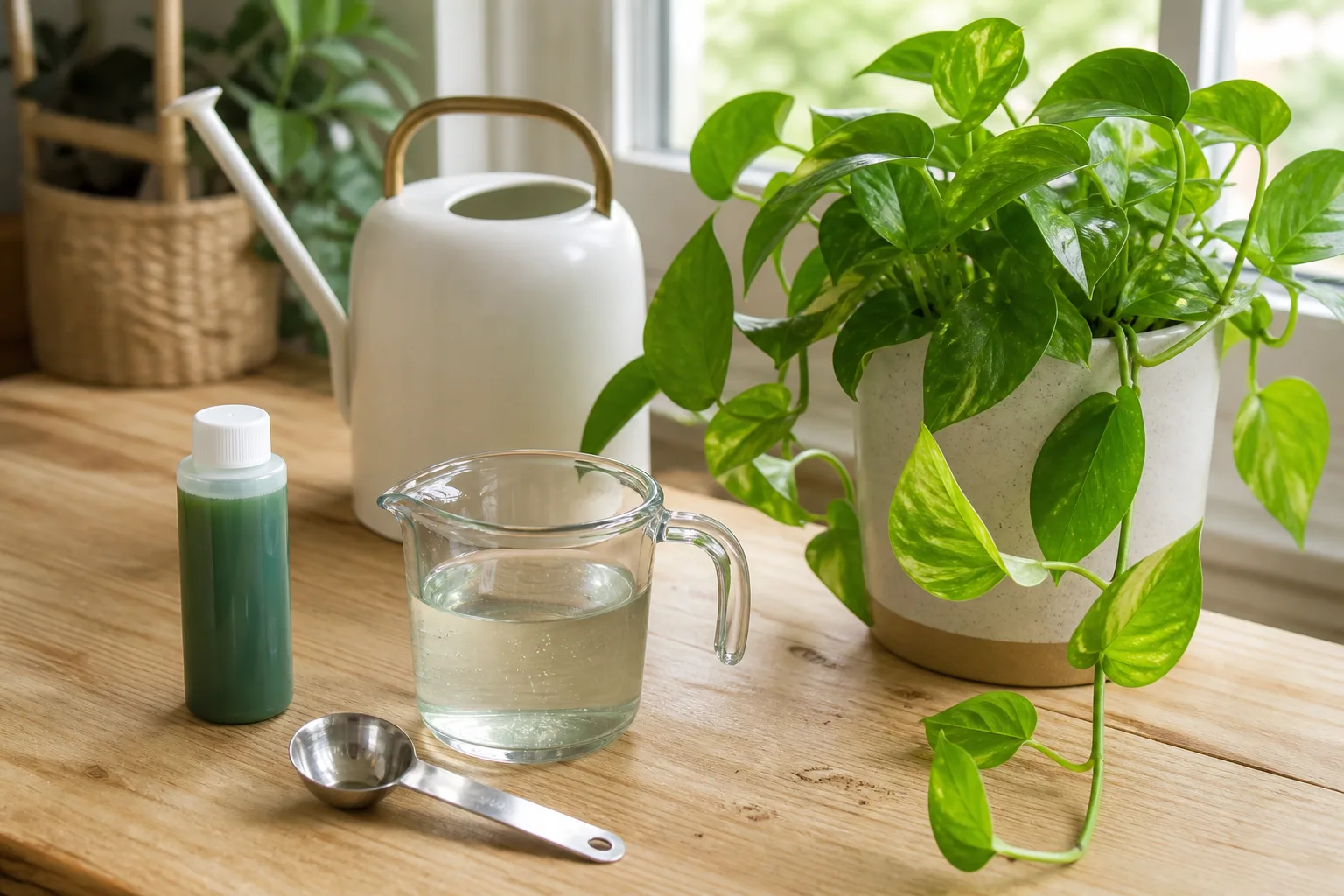
Liquid fertilizer is easier to measure as a single application and can be useful for a healthy container or a crop that needs nutrients during active growth. It must still be diluted and applied exactly as directed, and the soil should be watered first if it is dry. Never pour concentrate directly onto roots or use a stronger mix to compensate for a plant that is not growing.
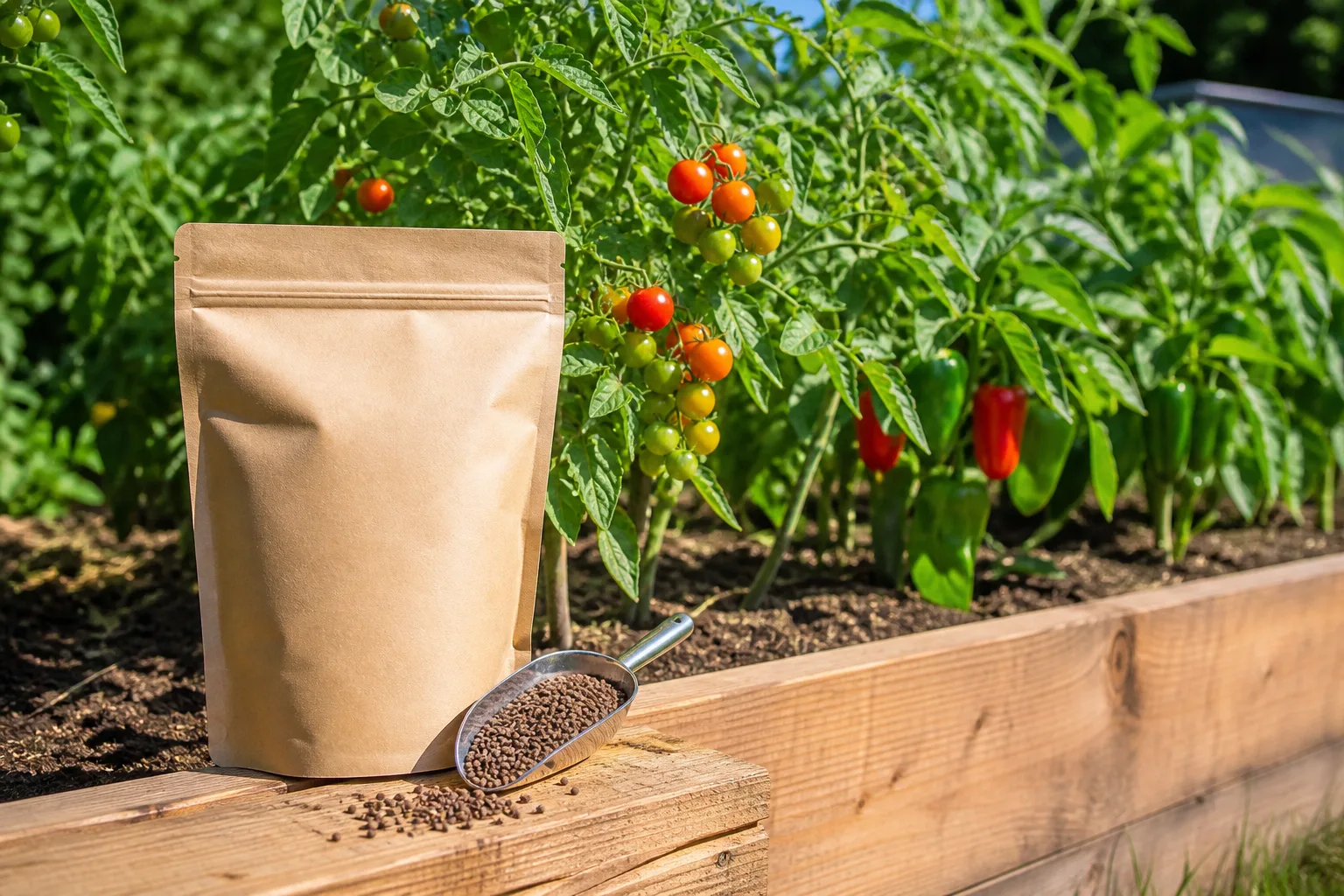
Slow-release or controlled-release products reduce the chance of a sudden nutrient spike, but they do not remove the need for correct timing. Release rates can change with temperature and moisture, so a hot pot may release nutrients differently than the same product in a cool bed. Do not layer new pellets over an existing product without checking the release period.
Compost and worm castings are gentler ways to improve organic matter and supply a smaller, slower nutrient contribution. They are not automatically appropriate for every container, and poorly finished compost or manure can create its own problems. A thin, well-finished top-dressing is generally a more conservative choice than a strong rescue dose when a healthy plant is slightly hungry but summer conditions remain challenging.
Epic Gardening’s practical guidance makes the same important distinction: heat-tolerant, actively growing plants may tolerate light feeding, while heat- or drought-stressed plants should not be pushed. It also recommends looking for new growth or continued fruiting before resuming fertilizer. (Epic Gardening)
How to fertilize safely if you cannot wait
Sometimes a plant is healthy, actively growing, and due for fertilizer even though the day is warm. Sometimes a container crop has a narrow harvest window or is showing a confirmed deficiency. If you decide to feed, reduce avoidable stress with this sequence:
- Confirm the need. Identify the plant, review its normal feeding schedule, and rule out drought, waterlogging, pests, poor light, and root damage. If you have not tested the soil and the plant is not clearly hungry, do not use fertilizer as a guess.
- Choose a mild, appropriate product. Prefer the product recommended for that plant and avoid a high-nitrogen rescue dose during extreme heat. Use slow-release or diluted liquid only as the label permits.
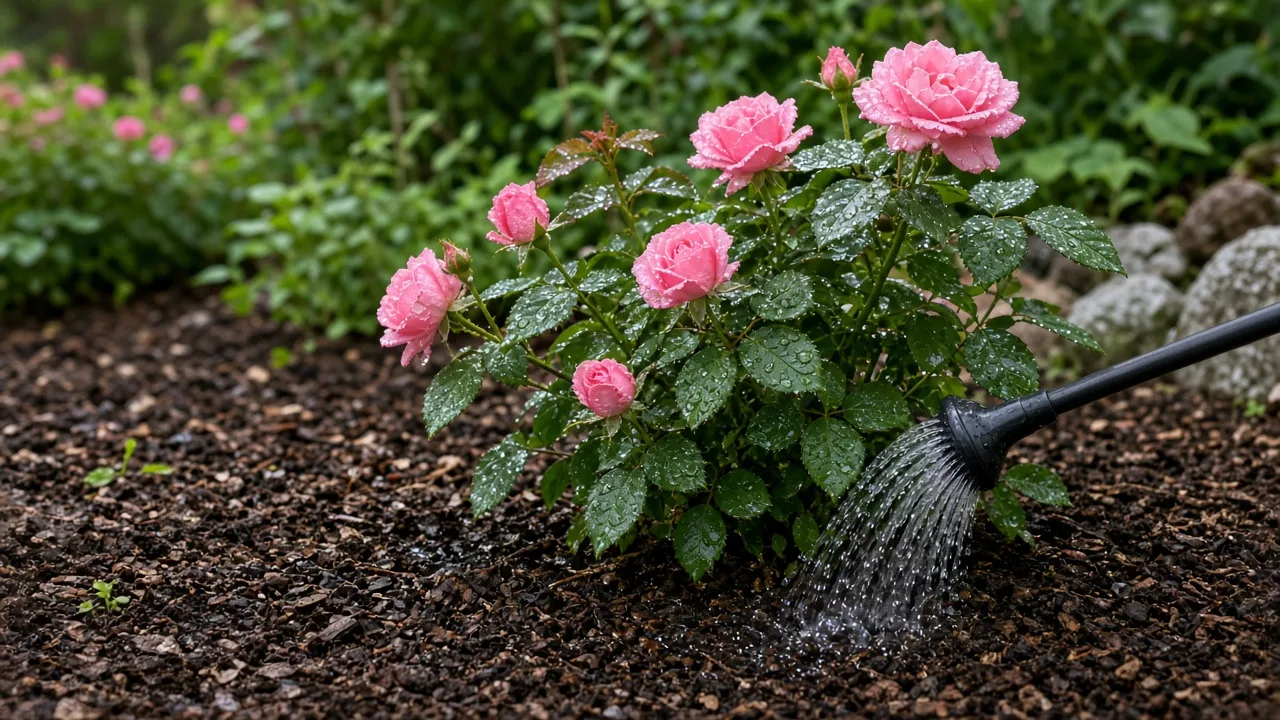
- Water the root zone first. Moisten dry soil thoroughly and allow excess water to drain. Do not fertilize a pot whose mix is hydrophobic, waterlogged, or too hot and dry to accept water evenly.
- Apply during a lower-stress window. Early morning is usually practical because the plant has time to take up water before the hottest part of the day. Evening can work when foliage will dry and the product label permits it, but avoid creating prolonged leaf wetness that favors disease.
- Keep fertilizer off stems and leaves. Place granular products where the label directs and keep them away from the crown or trunk. Direct liquid toward the soil rather than spraying a fertilizer solution onto hot foliage unless the label specifically calls for foliar use.
- Water again when directed. Some granular fertilizers must be watered in; others should not be drenched beyond the label. Water enough to move nutrients into the root zone without causing runoff or keeping the soil saturated.
- Stop and observe. Do not add another application because the plant does not look different the next day. Note new growth, leaf response, moisture, and weather over the next week.
Never mix fertilizer with another product unless both labels allow it. Wear the protective equipment listed on the label, keep products away from children and pets, and store them dry. Better Homes & Gardens also recommends following package directions, avoiding windy applications, and under-fertilizing rather than overdoing it when a container dose is uncertain. (Better Homes & Gardens)
What to do if fertilizer caused burn
If a plant shows new damage after fertilizing in hot weather, stop feeding immediately. Do not counteract a suspected overdose with another fertilizer, foliar spray, homemade tonic, or concentrated “root booster.” First separate fertilizer injury from drought, heat scorch, disease, and root rot.
Flush only a well-drained container
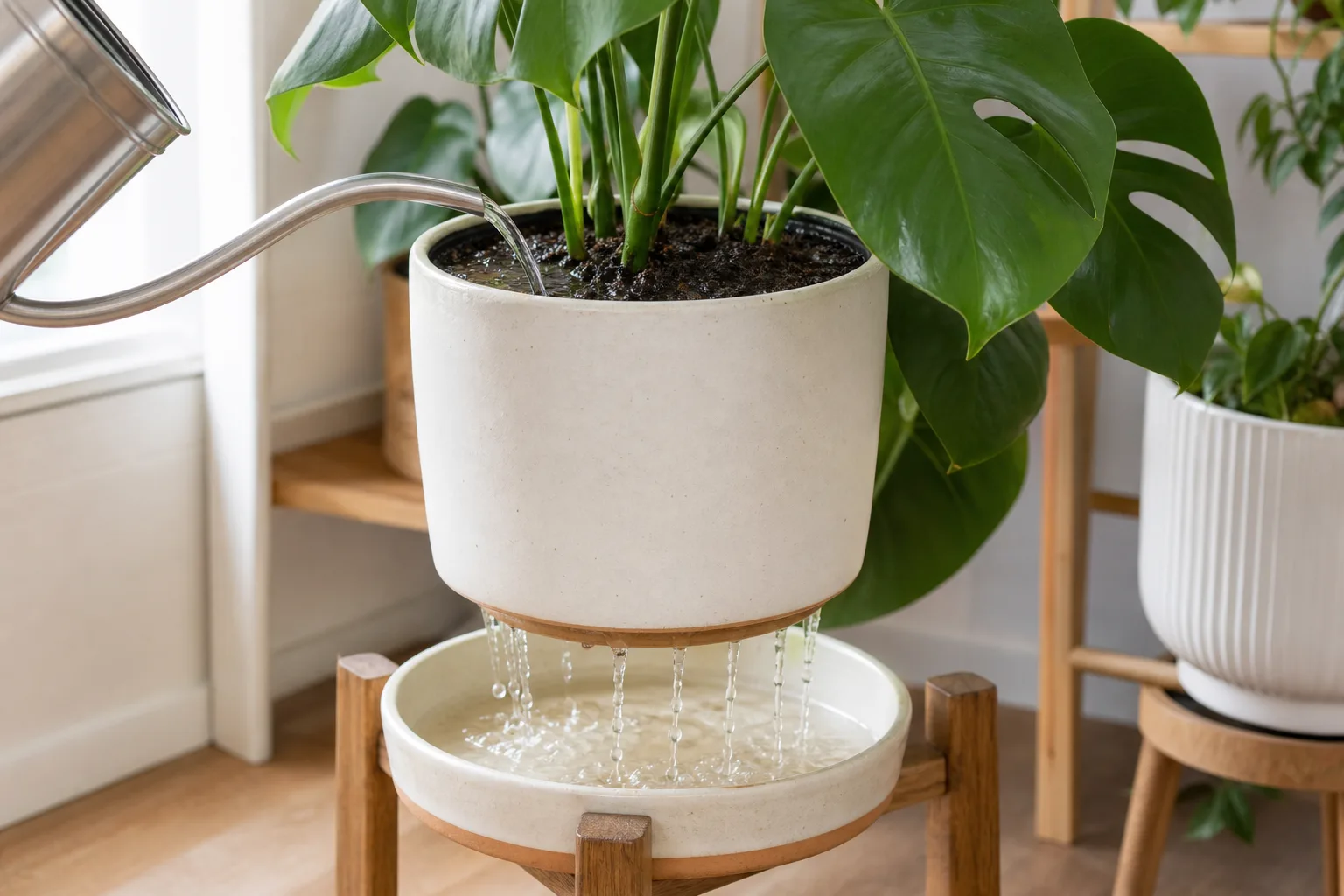
For a container with a clear drainage hole and a potting mix that accepts water evenly, run plain water slowly through the soil until it drains freely from the bottom. Empty the saucer so the pot does not sit in the runoff. If the product was applied recently and the plant is otherwise healthy, a second slow pass may help move soluble salts below the root zone.
Do not flush a pot with no drainage, a saucer that cannot be emptied, or a mix that stays saturated for days. Flooding a damaged root system can create oxygen deprivation and root rot, adding a second injury to the first. In that case, improve drainage or repot into a suitable mix rather than pouring in more water.
For garden beds, do not respond to salt injury by flooding the whole area. Remove accessible granules, water the affected root zone gradually if drainage is good, and prevent runoff into waterways. If a lawn was overfertilized, follow local extension guidance for irrigation and recovery instead of guessing at a large volume of water.
Let the plant recover before feeding again
Brown tissue will not turn green again. Remove only leaves or tips that are fully dead, keep the plant in an appropriate light level, and maintain steady moisture without leaving roots constantly wet. Heat-damaged plants may need shade during the hottest hours, while a low-light indoor plant may need a different placement rather than more water.
Watch for new growth. Healthy new leaves, firm stems, resumed flowering, or continued fruiting are better recovery signals than a temporary improvement in wilt. Wait until the root zone is stable and growth has clearly restarted before considering fertilizer, and then restart below the maximum label rate only if the product and plant schedule support it.
If symptoms continue after flushing, inspect roots and pests, test soil where appropriate, and consider whether the problem was actually disease, poor drainage, compaction, or extreme temperature. A soil test can prevent repeated applications that add nutrients the plant does not need.
A practical hot-weather decision checklist
Use this quick decision table before applying fertilizer:
| What you observe | Safer decision |
|---|---|
| Leaves wilt only at midday and recover by morning | Check soil and water needs; do not feed until the plant is growing normally |
| Leaves stay wilted overnight, soil is dry, or growth has stopped | Pause fertilizer; restore moisture and reduce heat stress |
| White crust, brown tips, wilt in damp soil, and recent overfeeding | Stop feeding; investigate salt injury and flush only if drainage is good |
| Healthy new leaves, active flowering or fruiting, moist soil, and a due label interval | A cautious, label-rate feeding may be reasonable |
| Dormant lawn during a hot, dry spell | Wait for moisture and active growth |
| Newly planted tree, damaged roots, or recent repotting | Prioritize root recovery; do not use fertilizer as a stimulant |
| Container crop watered frequently and still actively producing | Consider a diluted or slow-release product only if the plant schedule calls for it |
The most useful question is not “Is it summer?” It is “Can this plant safely use nutrients now?” If the answer is unclear, water and observe for a few days. Most healthy plants can wait; a stressed root system may not tolerate a dose made from guesswork.
How to resume feeding after the heat
Resume only after the plant has returned to active growth and the root zone is consistently moist but not saturated. Look for firm leaves outside the hottest part of the day, new leaves or stems, normal flowering or fruiting, and soil that accepts water without pooling. A forecast with several moderate days gives the plant a better chance to use nutrients without immediately entering another stress cycle.
Restart with the plant’s normal product and interval, not a catch-up dose. If fertilizer was paused for two weeks, do not apply two applications at once. If a slow-release product is already present, check the label duration before adding anything else.
For beds and trees, consider whether a soil test is more useful than routine fertilizer. For containers, inspect the potting mix, drainage, root crowding, and leaching history. For lawns, wait until the grass is actively growing and the seasonal timing is appropriate for the turf type. For vegetables and fruiting plants, follow the crop schedule rather than copying a general houseplant routine.
Conclusion
Fertilizing plants in hot weather is not automatically wrong, but feeding a heat- or drought-stressed plant is usually the wrong first move. High temperatures can slow growth, reduce root function, and increase water demand; dry soil and concentrated fertilizer salts can then make it harder for roots to take up water. The risk is highest with dormant lawns, parched landscape plants, damaged roots, and strong fast-release products.
Pause when the plant is stressed. Water and stabilize the root zone, check drainage, diagnose symptoms, and wait for healthy new growth. If a plant is actively growing in moist, well-drained soil and its label-based schedule calls for feeding, a carefully measured application can still make sense. That distinction protects plants from unnecessary salt injury without turning every warm summer day into a fertilizer ban.