Can You Use Tea Bags in Your Garden?
Can you use tea bags in your garden? Learn the safest way to compost or reuse spent leaves, spot plastic bags, protect soil, and avoid common mistakes.
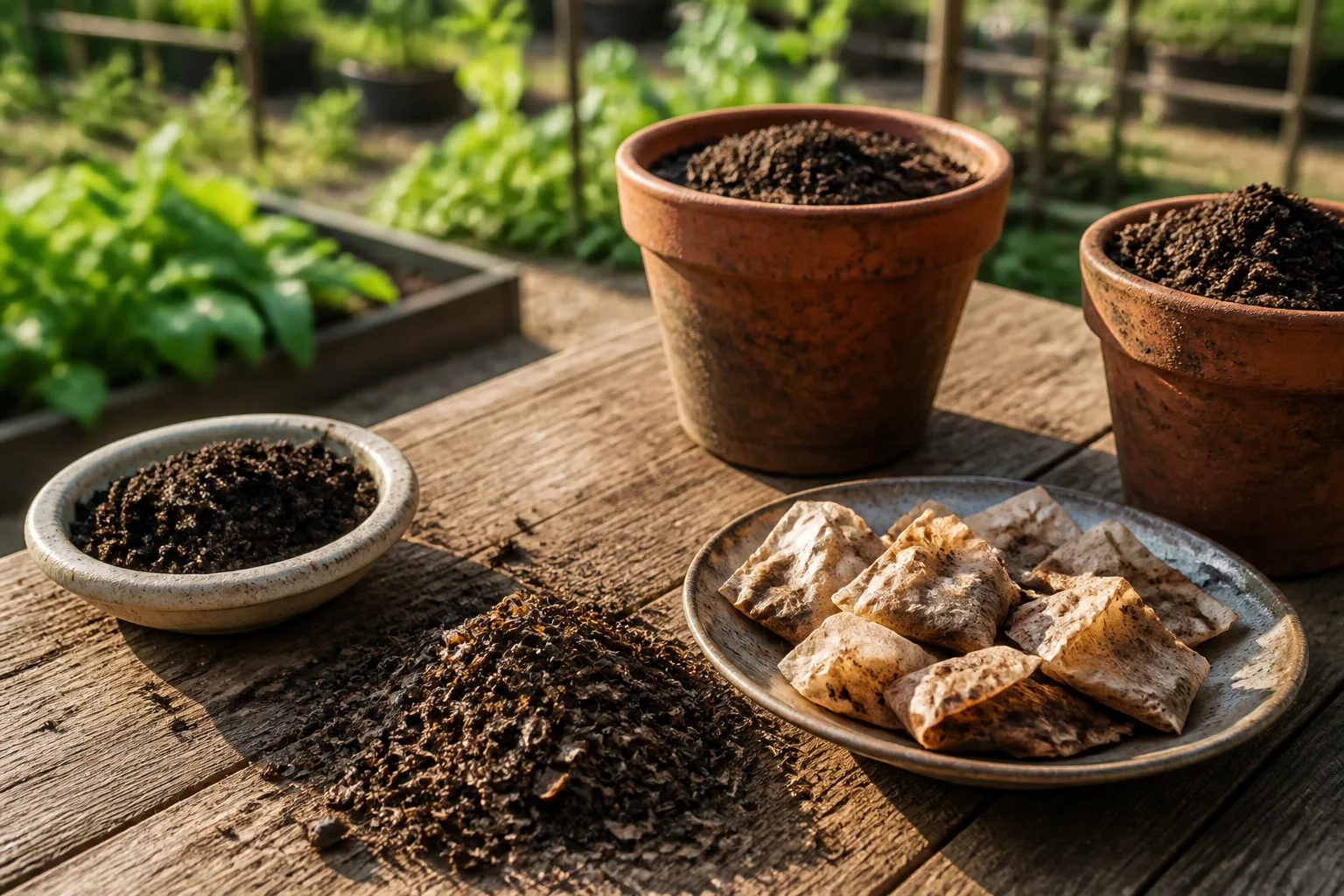
Yes—but the useful garden ingredient is usually the spent tea, not automatically the bag that held it. Loose leaves or leaves removed from a used bag can join compost and, in small amounts, can be mixed into soil. A whole bag belongs in the garden only when you have confirmed that every part of it is accepted by your composting system.
That distinction matters because tea bags can look like paper while containing a plastic mesh, a synthetic seal, a polymer fiber, or a plant-based material that needs hotter composting than a backyard pile can provide. The safest routine is simple: cool the bag, inspect it, remove anything questionable, and compost the leaves. Direct soil use is a secondary option, not a reason to bury an unknown sachet.
The Short Answer: Yes, but the Leaves Matter More Than the Bag
For most gardeners, the best answer is compost the spent leaves and treat the bag as packaging unless you can verify otherwise. Tea leaves are moist organic matter and can contribute a small amount of nitrogen and carbon-based material to a compost mix. They are not a complete fertilizer, a guaranteed soil acidifier, or a cure for pests and fungal disease.
Here is the practical choice by situation:
| Your situation | Best move | Why |
|---|---|---|
| You have a compost bin or worm bin | Open the bag and add the leaves | It gives the organic material a balanced, controlled place to decompose |
| The bag is clearly plastic-free and your system accepts it | Add the whole cooled bag after removing hardware | The paper or plant fiber may break down, but local rules still matter |
| You have no compost and an established outdoor bed | Mix a small amount of loose leaves into the top layer | It avoids a surface mat and lets soil organisms break the leaves down |
| You are caring for houseplants | Use composted leaves or a very weak, plain second brew sparingly | Wet raw leaves on potting mix can encourage mold and fungus gnats |
| The tea contained milk, cream, sugar, or syrup | Do not add it to soil or a standard home compost pile | Dairy and sweeteners create odor, pest, and decomposition problems |
Tea Leaves Versus the Tea Bag
Tea leaves and a tea bag behave differently once they leave the mug. The leaves are plant material that decomposes. The bag is a manufactured item whose outer appearance does not reliably tell you what it is made from.
Loose-leaf tea is therefore the simplest garden input. With bagged tea, cut or tear open the sachet and separate the contents from the string, tag, staple, and sealing material. A paper-looking bag may be compostable, but “compostable” can mean it needs a commercial facility or a hot composting process rather than a cool backyard heap.
The Royal Horticultural Society gives a useful real-world warning: some bags use PLA, a plant-based plastic that may not fully break down in an ordinary home compost bin. Its guidance recommends checking the material and separating the contents from the outer bag when the bag will not break down in your setup. Read the RHS guidance on composting teabags before assuming a labeled bag is suitable for your particular compost.
What Spent Tea Adds—and What It Cannot Do
Spent leaves are best understood as a small organic-matter contribution. Mixed into compost, they add moisture and a nitrogen-bearing “green” ingredient alongside dry leaves, shredded cardboard, or other browns. Once the finished compost is mature, the benefit comes from the broader compost—not from a concentrated dose of tea fertilizer.
That is why claims about tea bags making every plant grow faster are too broad. A few used bags cannot supply all the nutrients a fruiting tomato, flowering rose, or container plant needs throughout a season. Tea also cannot correct compacted soil, poor drainage, chronic overwatering, or a major nutrient deficiency.
Think of it as a kitchen-scrap habit that supports a good soil system. It is worthwhile when it replaces the trash bin and enters a functioning compost process, but it should not displace a soil test, finished compost, or a fertilizer selected for a plant’s actual needs.
Safety First: Inspect Every Bag Before It Goes Outside
Before you use tea in the garden, look at the entire item rather than just the leaves. The question is not “Does this tea come from a plant?” It is “Will every part of this used sachet safely break down in my compost or soil?”
Municipal composting guidance often accepts tea bags, but programs differ in what they can process. For example, Peterborough City Council lists tea bags, coffee grounds, and filter papers among materials residents can compost, while separately directing people to local collection rules and home-composting guidance. See the council’s composting list. Your local program may accept a wider or narrower set of bags, so a municipal “accepted items” page is more useful than a generic label on a box.
The Tear Test for Plastic, PLA, Staples, and String
If the package does not clearly state what the bag is made from, use a simple tear test on a dry, unused bag from the same box. A plain paper or plant-fiber bag generally tears like paper. A slick, stretchy, woven, or heat-sealed material deserves caution. Pyramid “silken” bags are especially likely to contain synthetic mesh, although shape alone is not proof.
For a used bag, follow this sequence:
- Let it cool completely and squeeze out excess water.
- Cut away the tag and string.
- Remove any staple, metal clip, or visible plastic thread.
- Open the bag over a bowl or the compost bin.
- Compost the leaves.
- Put the bag in the correct waste stream unless the manufacturer and your local system both confirm that it belongs in compost.
Do not bury a bag simply because the label says “biodegradable.” Biodegradable can describe a material that breaks down under particular conditions, not necessarily in your soil. Even a bag marketed as compostable may leave fragments in a cold pile if the temperature, moisture, oxygen, and time are not right.
Plain, Cooled Tea Is the Only Useful Starting Point
Only use leaves that were brewed in plain water. A splash of lemon is not the main concern; the bigger problems are milk, cream, sweetened condensed milk, honey, sugar, syrups, and oily flavorings. These additions can sour a small compost bin, attract flies or rodents, and create an unpleasant zone around plant roots.
Never put a hot bag on a seedbed or into a container. A single warm bag will not sterilize the soil, but it is still an unnecessary temperature shock for tender roots and seedlings. Let the leaves cool to room temperature. If the tea has been sitting with dairy or sugar, discard it rather than trying to rinse or dilute the residue.
The Best Default: Put Spent Leaves in Compost
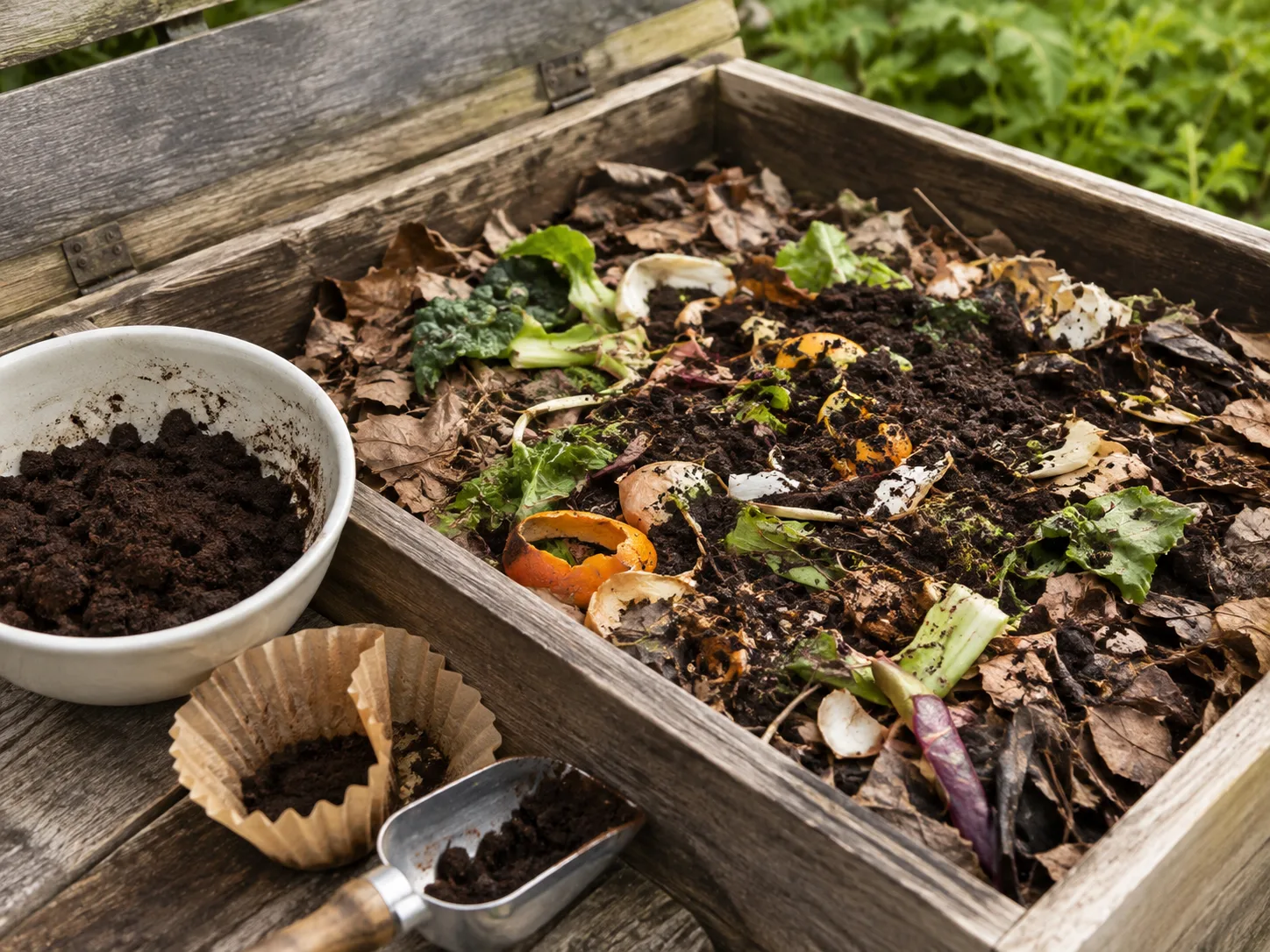
Compost is the most forgiving destination because it spreads a small input through a larger, active mix. It also lets you use tea with a broader range of plants later, after the leaves have decomposed into a stable soil improver.
Home composting works best when wet green material is balanced with dry brown material and the pile has enough air. BBC Gardeners’ World recommends roughly a 50:50 mix of green and brown materials and notes that a pile can become wet and smelly when it receives too much green waste. See its home-composting guidance. A used tea bag is a small addition, but the principle still applies.
A Simple Tea-Bag Composting Sequence
For a backyard compost pile, the process does not need to be elaborate:
- Cool the bag. Do not add it while it is hot.
- Inspect the construction. Open uncertain bags and remove hardware.
- Add the leaves to the moist green layer. Spread them rather than dropping one dense, wet clump.
- Cover with browns. Add shredded cardboard, dry leaves, or torn paper so the leaves are not exposed on the surface.
- Keep the pile aerated. Turn or mix the material as your normal compost routine requires.
- Wait for finished compost. Use it when it is dark, crumbly, and earthy-smelling rather than recognizable as the ingredients you added.
If your compost pile is small, a kitchen container can collect leaves for a day or two, but do not let wet tea sit sealed for weeks. Empty it regularly and rinse the container. A thin smear of mold on a collection cup is a cleaning issue; a sour, anaerobic bucket of food waste is a sign that the storage method needs to change.
The RHS also notes that tea bags can be fed to composting worms when chopped or prepared appropriately. In a worm bin, leaves are a minor part of a varied diet, not the entire feed. Add small amounts and watch the bin’s moisture; soggy tea can push a wormery toward the same wet conditions that cause odors and flies in a conventional pile.
How to Keep Wet Tea From Throwing Off the Pile
Tea leaves are wet when they leave the mug, so think of them as a moisture input as well as a nitrogen-bearing green. If your pile already looks glossy, slimy, or compacted, do not add a large bowl of tea on top. Mix in shredded cardboard or dry leaves first, then add tea gradually.
There is no useful garden benefit to stockpiling a week’s worth of saturated bags and dumping them in all at once. Small daily additions are easier for the pile to absorb. If you drink a lot of tea, remove the bags as soon as they cool and spread the leaves through different parts of the pile rather than creating one wet pocket.
Cold weather also changes expectations. The RHS explains that microorganisms, bacteria, and fungi work more slowly in colder conditions, so tea will not make a winter pile transform overnight. It is still acceptable as compost material; it simply needs the same patience and balance as the rest of the pile.
When Direct Soil Application Makes Sense
You can use loose, cooled tea leaves directly in an established outdoor bed, but use them as a light amendment rather than as mulch. Empty the leaves from the bag, let them drain, and mix a small amount into the top layer of soil. Do not press a wet mat against a plant crown or stem.
The right amount is household-scale: a pinch for a small container, a thin scatter around a mature outdoor plant, or a few handfuls worked through a larger bed. The leaves should disappear into the soil profile instead of forming a visible blanket. If you can see a thick dark layer after watering, you used too much.
This approach is most reasonable when you already have an established plant, healthy drainage, and soil that benefits from additional organic matter. It is less suitable for newly germinated seedlings, saturated beds, or containers with little room for decomposition. Microbes breaking down a concentrated pile of fresh organic material can temporarily compete for available nitrogen, and wet leaves at the surface can create a favorable environment for mold.
Outdoor use also has a practical advantage over indoor use: rain, soil organisms, and a larger volume of growing medium dilute the material. That does not make overuse harmless, but it makes a small household amount less likely to create a persistent problem than the same wet mass left on a six-inch houseplant pot.
Can You Water Plants With a Second Brew?
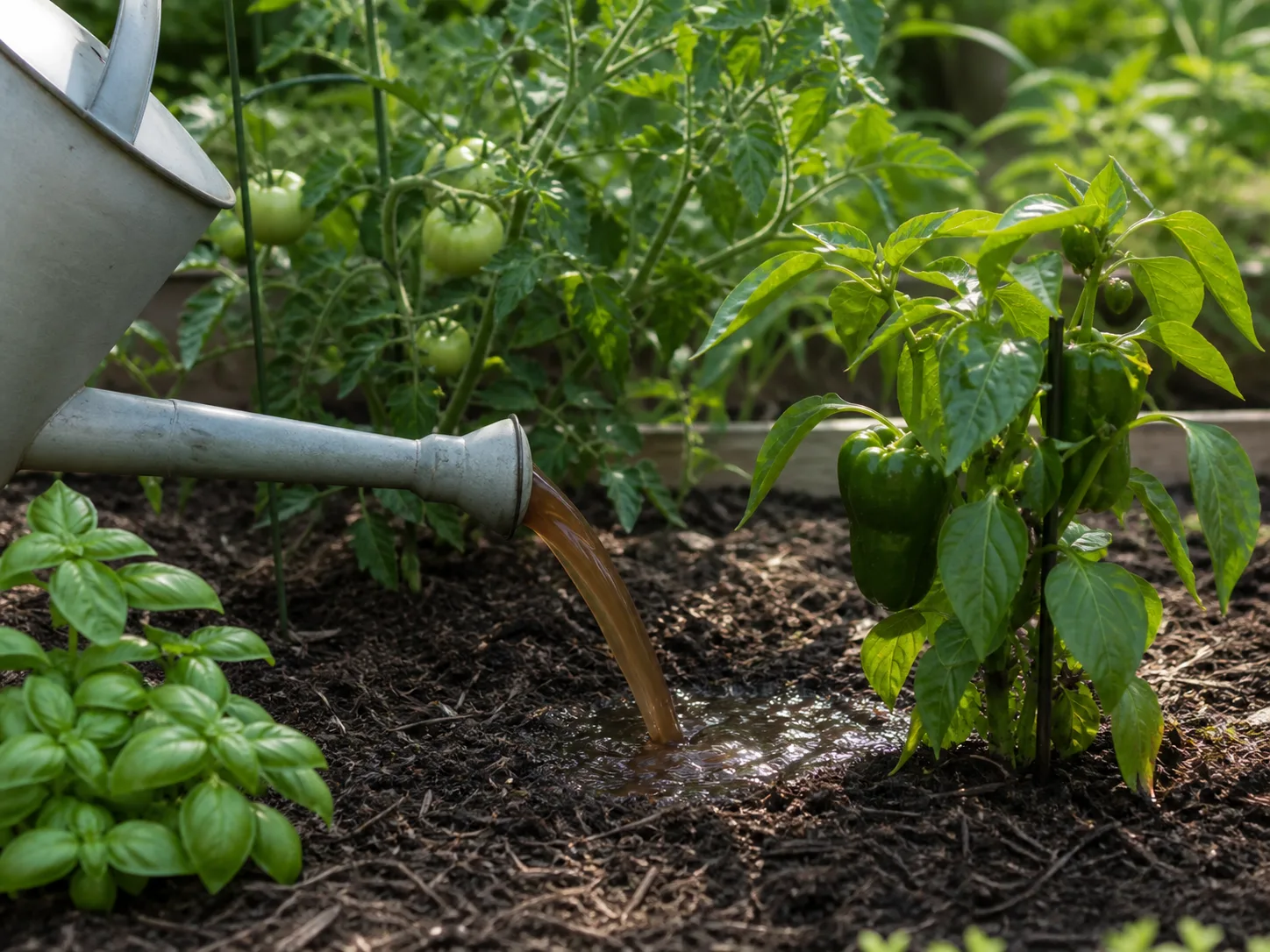
A second steep of plain, used tea leaves makes a weak brown liquid that some gardeners use on container plants. It is best treated as water with a little dissolved organic material, not as a measured fertilizer. You cannot know its nutrient concentration from its color, and stronger-looking tea is not automatically better for roots.
To try it, place one or two used bags—or a small spoonful of loose leaves—in a jar of clean water. Let the water cool and steep for a few hours, then remove the leaves and use the liquid at room temperature. Apply it to already-moist soil around an established plant, not to dry seedlings or a plant that is already stressed from overwatering.
Keep the experiment small. Use plain water for the next watering and watch for surface mold, a sour smell, fungus gnats, or a crust forming on the potting mix. If any of those appear, stop using the brew and let the soil dry to the plant’s normal watering depth. For most houseplants, finished compost or a properly labeled houseplant fertilizer is more predictable.
Do not confuse this second brew with compost tea. Compost tea is made by extracting material from finished compost, sometimes with aeration equipment and a deliberate process. A mug of re-steeped black tea is simply a weak kitchen infusion. Calling it fertilizer or a microbial treatment gives it more precision than it has.
Match Tea to the Plant, Not the Other Way Around
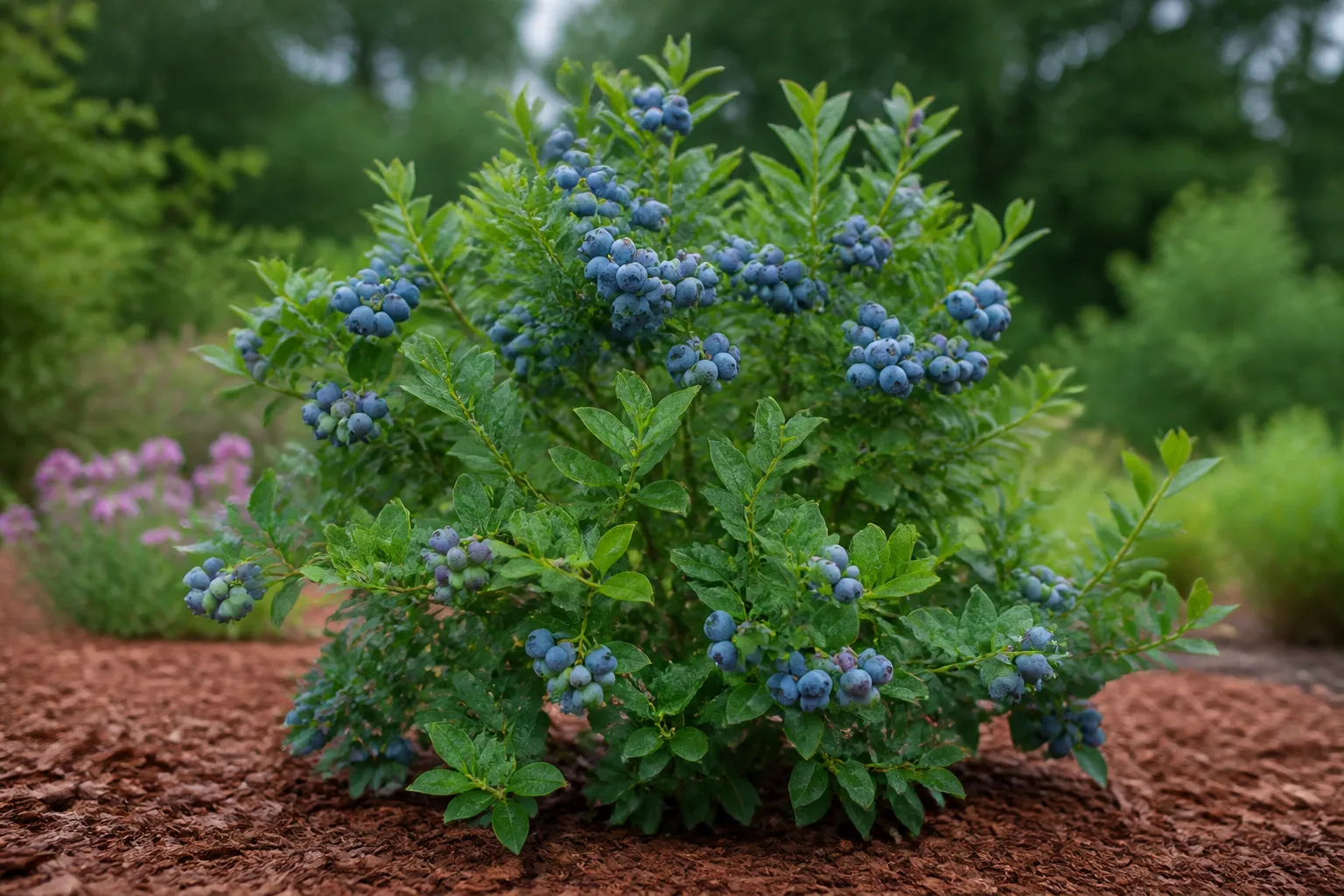
Tea is often recommended for “acid-loving” plants, but the sensible interpretation is limited: these plants can usually tolerate or benefit from organic matter in a suitable soil, while tea itself is not a dependable way to create that soil.
The RHS identifies blueberries, camellias, heathers, and rhododendrons as ericaceous plants that need acidic conditions, and it recommends checking soil pH before adding acidifying material. Read the RHS advice on acidifying soil. That distinction is important because a few used bags cannot reliably move a whole bed into the pH range a blueberry needs.
Acid-Tolerant Plants Still Need the Right Soil pH
Blueberries, azaleas, rhododendrons, camellias, and many ferns are reasonable candidates for finished compost that includes plain tea leaves. Roses and many leafy garden plants can also use compost containing tea as part of a broader organic-matter program. The benefit is the compost and improved growing environment, not a magical tea signal that tells the plant to grow.
If an acid-loving plant is yellowing, growing poorly, or failing to fruit, do not keep adding tea and hope the problem resolves. Test the soil in the relevant bed, check drainage and watering, and choose a documented acidifying amendment if the results call for one. The RHS soil-pH guide explains that pH affects nutrient availability and that testing is useful when growth is disappointing. See the RHS soil-testing guide.
The same rule applies to hydrangeas. Used tea will not reliably turn flowers blue, because flower color depends on cultivar, soil chemistry, and available aluminum as well as pH. Use tea as a compost ingredient if you like; do not use it as a flower-color control.
When to Skip Direct Tea Around Plants
Keep raw leaves out of the immediate root zone of seedlings, succulents, cacti, and plants growing in a very fast-draining mineral mix. Seedlings have small root systems and little margin for a wet, decomposing layer. Succulents and cacti are especially unforgiving of extra moisture and organic debris packed around their crowns.
Go easy around plants that prefer alkaline or low-fertility conditions, such as lavender and some Mediterranean herbs. The occasional leaf in finished compost is not the same as a thick raw layer, but there is no reason to use a potentially unsuitable amendment when a plant is already well matched to its soil.
What Tea Will Not Reliably Do
Used tea is surrounded by attractive claims. Some are plausible but small; others should be labeled as experiments rather than advice.
- It will not replace fertilizer. Tea leaves contain organic matter and some nutrients, but the dose from household cups is inconsistent and modest.
- It will not reliably acidify a garden bed. Soil texture, existing minerals, organic matter, irrigation water, and bed volume all affect pH. Use a soil test and an appropriate amendment when pH matters.
- It will not eliminate ants, spiders, slugs, or other pests. A mint scent may be unpleasant to some insects, but a few damp leaves are not a tested pesticide. Use barriers, hand removal, sanitation, or a labeled control when an infestation is established.
- It will not cure fungal disease. Chamomile tea is sometimes used as a gentle seed-starting experiment, but it cannot repair waterlogged soil or rescue seedlings already collapsing from damping-off.
- It will not improve drainage by itself. Organic matter can contribute to soil structure after decomposition, but a tea bag in the bottom of a pot cannot substitute for a drainage hole and an appropriate potting mix.
If you want to experiment with mint or chamomile, keep it to a small, nonessential area and describe the result honestly: “It did not seem to harm this plant” is not the same as “It controls pests.” Avoid spraying homemade brews on edible crops close to harvest, especially when you cannot control concentration or shelf life.
A Five-Minute Decision Rule for Every Used Tea Bag
Use this sequence each time you finish a cup:
- What was in the cup? Plain tea can be considered; milk, cream, sugar, and syrup mean discard.
- Is the bag known to be compostable in your system? If not, open it and separate the leaves.
- Are there staples, string, tags, or plastic threads? Remove them all.
- Where will the material be most stable? Compost is the default; direct soil use is optional; a weak second brew is a small container experiment.
- Does the plant actually need this input? If the soil is wet, the plant is a seedling, or the mix is already rich, skip it.
- Is a bigger problem being hidden? Yellow leaves, poor growth, and blue hydrangea color are reasons to inspect light, roots, watering, nutrients, and pH—not to keep adding tea.
This rule makes the habit easier because you do not need to memorize a list of “best tea plants.” You only need to prevent contamination, choose a stable destination, and keep the dose proportional to the plant and the container.
Common Mistakes That Turn a Good Recycling Habit Into a Garden Problem
Burying an unknown bag: The leaves may decompose while the bag remains as a fragment. Open it and use the contents instead.
Leaving a thick pile on the soil surface: Wet leaves can mat, smell, grow mold, and attract small flies. Mix a thin amount into soil or send it to compost.
Treating a “compostable” label as universal permission: A product may require industrial heat or a municipal program. Check the material and the destination.
Adding tea with dairy or sweeteners: These are not harmless plant food. They can feed unwanted microbes and attract pests. Discard them.
Using dark tea as a fertilizer measurement: Color is not a nutrient analysis. A concentrated homemade liquid can also be a poor choice for salt-sensitive or overwatered plants.
Trying to fix pH with kitchen scraps: A blueberry bed needs a measured soil plan, not an accumulating pile of tea bags. Test first.
Making pest or disease promises: Mint and chamomile may be low-stakes experiments, but they should never delay proven cultural controls or a labeled treatment when a problem is spreading.
Forgetting the indoor difference: Outdoor soil has more volume and biological activity. Houseplant pots are small, enclosed systems; compost tea leaves first or use a very small amount and monitor the surface.
Conclusion
You can use tea bags in your garden, but the safest answer is more precise than “toss them in.” Compost the spent leaves, inspect or discard the bag, remove every piece of hardware, and keep milk- or sugar-soaked tea out of the soil. If you skip the compost pile, apply only a small amount of cooled loose tea to established, well-drained soil or try a weak second brew on a container plant.
Tea is a useful organic input, not a miracle fertilizer or a reliable pH treatment. Match it to the plant and the growing medium, watch for mold and pests indoors, and use a soil test when acidity or nutrient availability is genuinely part of the problem. That approach lets a daily cup contribute to the garden without turning a simple recycling habit into a new source of garden trouble.