Does Vinegar Help Vegetables Grow? The Truth
Vinegar can kill young weeds, but it will not feed vegetables. See the risks to leaves, roots, soil, and edible crops—and better fixes for growth.
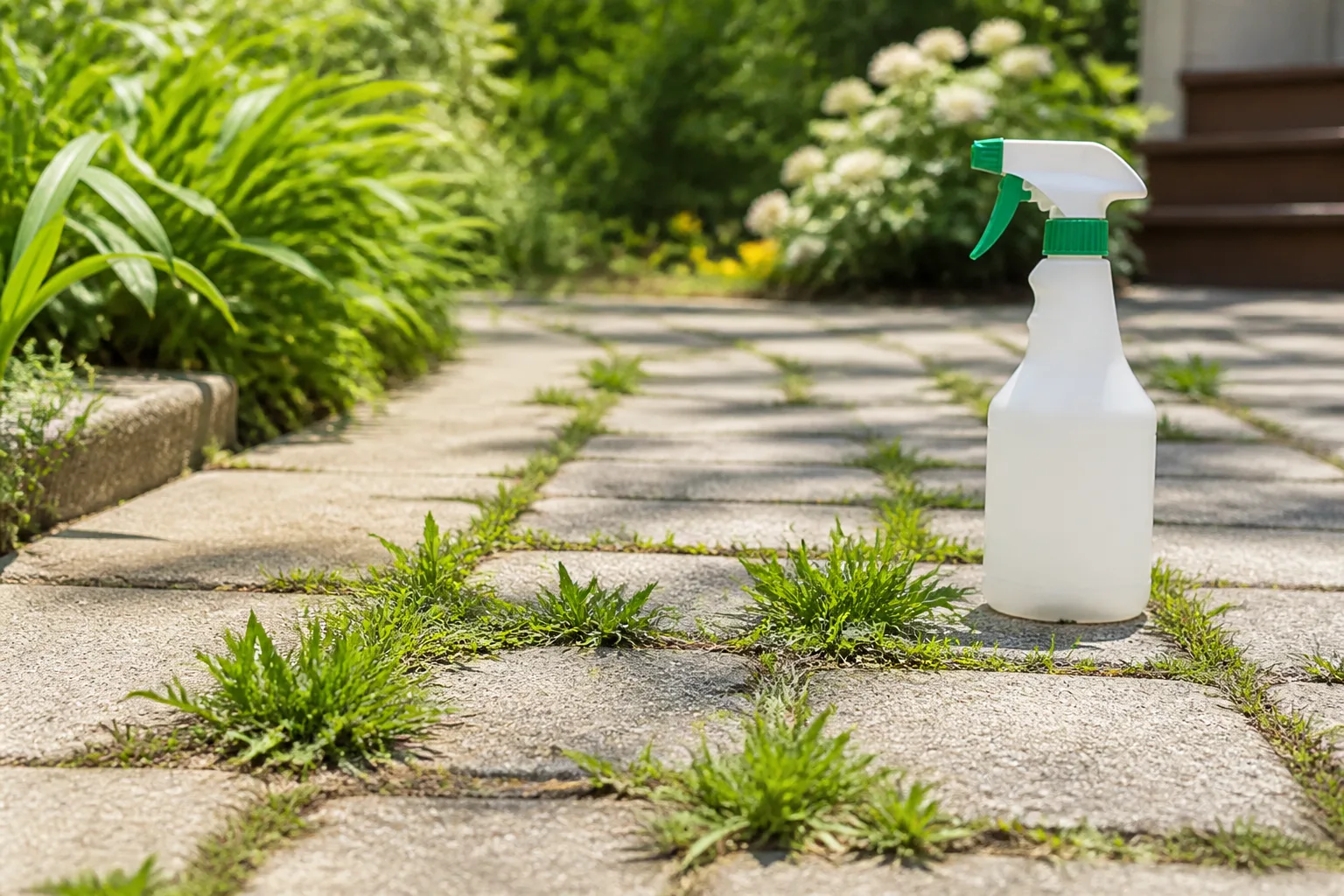
If you are hoping a splash of vinegar will make tomatoes, peppers, cucumbers, or other vegetables grow faster, the honest answer is no. Vinegar is not a fertilizer, it does not provide the nutrients that crops need to build leaves and fruit, and pouring it into a garden bed can create a new problem instead of solving the original one.
Vinegar can have a narrow use as a contact treatment for very young weeds in places where desirable plants are not growing. That is a weed-control decision, not a plant-growth treatment. The difference matters because the same acidity that browns a weed can also injure a vegetable leaf, seedling, flower, or root zone.
Quick answer: vinegar is not a vegetable fertilizer
Vinegar is mostly water and acetic acid. It contains carbon, hydrogen, and oxygen, but it does not supply a useful, balanced source of nitrogen, phosphorus, potassium, or the micronutrients a productive vegetable plant needs. Gardening Know How makes the same basic distinction: vinegar may be acidic, but it is not a fertilizing agent because it does not deliver the nutrient package that fertilizer is meant to provide. (Gardening Know How)
That explains why the popular “vinegar makes plants grow” idea can sound believable for a while. A stressed plant may perk up after any change in watering, temperature, or attention, and a weed-free patch may appear to support stronger growth. Neither observation shows that vinegar fed the crop. If a vegetable is pale, small, slow, or producing few flowers, the useful question is what is limiting it: light, water, roots, nutrients, temperature, pollination, or pests.
Vinegar also should not be confused with a soil amendment. A fertilizer adds nutrients; an amendment changes a soil property such as structure, organic matter, drainage, or pH. Vinegar can make a small amount of soil more acidic for a short time, but that is not the same as correcting a measured pH problem in a stable, predictable way.
What vinegar actually does when it hits a plant
The active ingredient is acetic acid, and its most dependable garden action is a rapid burn on plant tissue it contacts. It is not a gentle tonic that enters the plant and redirects energy toward roots or fruit. It is closer to a localized chemical injury, which is why its effects can be useful against a tiny weed and dangerous around a crop.
Acetic acid burns tissue on contact
Acetic acid is a nonselective contact herbicide when used in a weed-control product. “Contact” means it damages the leaf or stem surface that receives the spray; it does not move through the plant in the way a systemic herbicide does. UC Integrated Pest Management describes acetic acid as damaging contacted plant surfaces, drying them out, and generally working best on younger weeds, while also noting that it does not kill the roots. (UC Integrated Pest Management)
This mechanism gives you a practical test for any vinegar claim: if the advice involves putting the liquid on green leaves, ask whether the leaf is supposed to survive. A vegetable plant cannot photosynthesize through a badly scorched leaf, and a small seedling has fewer leaves and fewer stored reserves with which to recover. “Natural” describes the source of a substance, not its selectivity or its safety for crops.
Vinegar is also not a dependable fungicide or insecticide simply because it is acidic. Spraying a leaf until it burns does not cure a disease, and a strong odor around a plant is not the same as reliable pest management. For mildew, insects, or animal browsing, identify the problem first and choose a crop-appropriate, labeled response rather than escalating the acidity.
Household and horticultural vinegar are not interchangeable
Kitchen white vinegar is commonly about 5 percent acetic acid. Horticultural or herbicidal products may contain 20 or 30 percent acetic acid, several times the concentration of household vinegar. Those products are not simply “better vinegar.” They can injure plants more aggressively and create greater eye and skin hazards.
Montana State University Extension explains that concentration, weed growth stage, and species all change the result. Young weeds at roughly the two- to four-leaf stage are more vulnerable because the spray can cover the whole plant and the plant has less root reserve. Older weeds and perennial weeds are more likely to recover, even if their tops turn brown. (Montana State University Extension)
Do not use that concentration difference as an invitation to mix a stronger homemade spray. A product sold for herbicidal use has a label that defines the allowed site, protective equipment, application directions, and any restrictions around edible crops. Purdue Extension notes that concentrations above ordinary household vinegar can be hazardous and that solutions of 11 percent or more can cause skin burns and eye injury. (Purdue Extension)
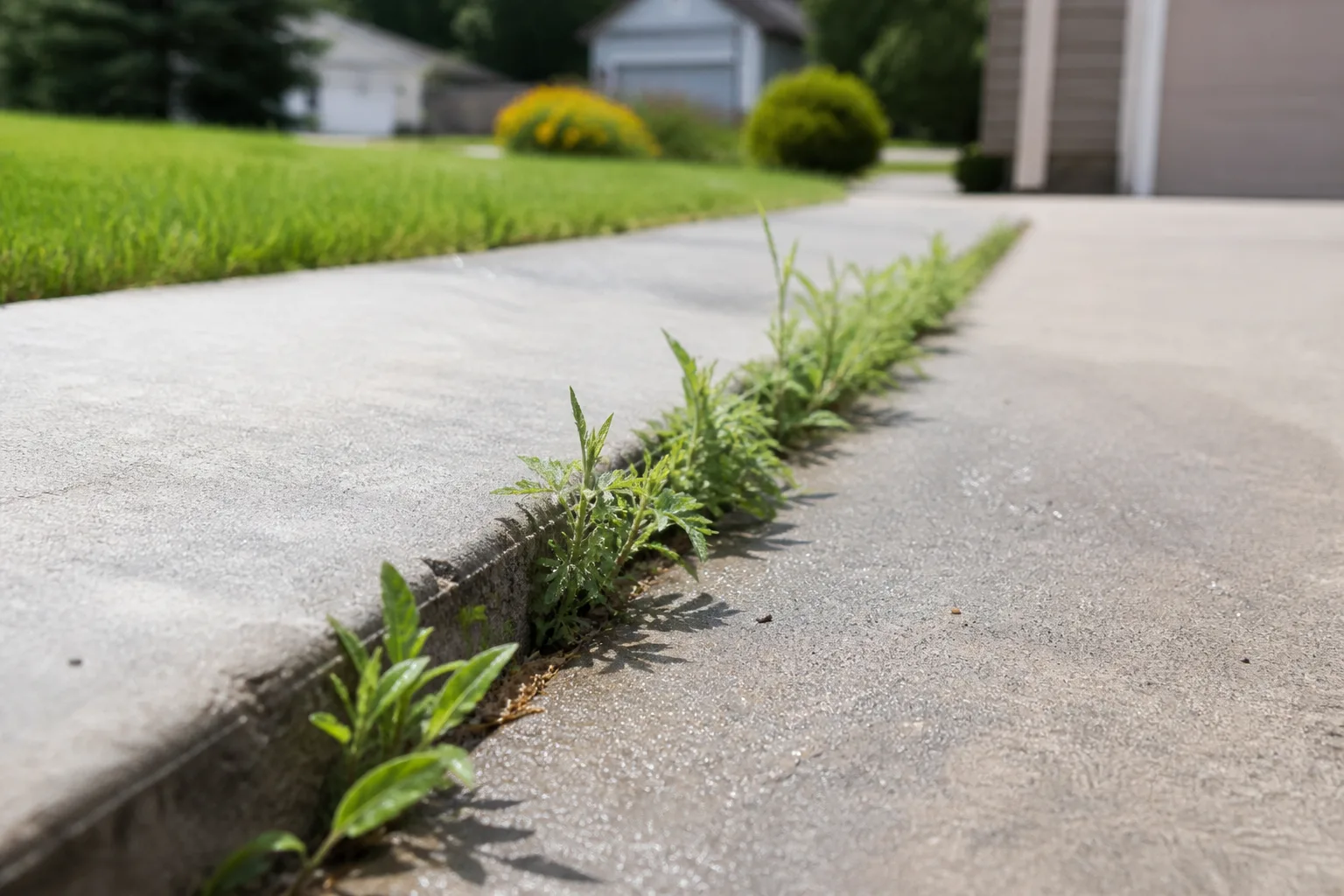
Vinegar’s defensible role is closer to targeted weed control in a non-crop area than to plant food. Keep any spray away from vegetable foliage, roots, and irrigation water.
Why acidic soil is not a growth shortcut
The word “acid” creates a second misunderstanding. Some plants prefer acidic soil, so it is tempting to assume that vinegar will help any crop that seems unhappy. But a preferred pH is a long-term root-zone condition, not a one-time splash of a strong kitchen acid.
A temporary pH dip is not soil improvement
Vinegar can lower the pH of the small volume of soil it reaches, but the size and duration of the change depend on the soil’s texture, organic matter, moisture, and buffering capacity. Clay and organic matter can resist a pH change more strongly than a small amount of sandy soil. Rain, irrigation, microbial activity, and the soil’s own chemistry can also reduce the effect quickly.
That is why a vinegar drench is a poor way to manage a vegetable bed. You do not know how far the acidity traveled, whether the roots received a damaging concentration, or whether the pH changed enough to affect nutrient availability at all. You may create a sharp, uneven pocket rather than a stable improvement that the plant can use.
Purdue’s extension guidance says vinegar breaks down quickly in soil and is not likely to accumulate enough from a limited use to affect soil pH for more than a few days. That observation is reassuring for an isolated non-crop spot, but it also undercuts the idea of using vinegar as a lasting soil conditioner. (Purdue Extension)
Repeated applications are a different risk. A single accidental splash may cause only local injury, while repeated dosing can disturb the chemistry around roots and the organisms that participate in decomposition and nutrient cycling. Fine Gardening’s practical weed-control experiment warns that vinegar is nonselective and can harm soil microorganisms, which is a strong reason to keep it out of living beds. (Fine Gardening)
Acid-loving plants still need a measured amendment
Blueberries, azaleas, and some other acid-loving plants do need an appropriately acidic root zone, but vinegar is still not the right default amendment. Their needs are met by choosing a suitable site, using the growing medium recommended for the crop, and correcting soil according to a test and a dependable horticultural recommendation.
For a vegetable garden, test before treating. If the report indicates that pH is too high, use the amendment and rate recommended for your soil rather than guessing with a liquid from the kitchen. If the soil is already acidic, adding more acid can make nutrient uptake less balanced and can compound a problem that was actually caused by poor drainage, compacted roots, cold soil, or inconsistent watering.
The important principle is measure first, amend second. Soil pH is not a scoreboard in which “lower” automatically means “better.” The right value is the one that matches the crop and allows nutrients to remain available in a healthy root environment.
The one garden job vinegar can do reasonably well
Vinegar has a legitimate, limited place in garden maintenance: spot-treating some young weeds in a location where a nonselective contact burn is acceptable. Think of a weed in a pavement crack, a gravel margin, or an empty strip that will not be planted soon—not a weed growing between lettuce seedlings.
Use it only for young weeds away from crops
If you choose an acetic-acid weed-control product, begin by identifying the site and reading the label. Keep the spray out of beds, planting holes, mulch that will be pulled around crops, and areas where runoff can reach roots. Use a controlled stream rather than a broad mist, avoid windy conditions, and do not spray when desirable foliage is downwind.
The best target is a small, actively growing annual weed with enough exposed leaf surface for thorough contact. Montana State University Extension notes that broadleaf weeds can be more susceptible than grasses, and that leaves with an upright shape and smooth surface may hold more solution than leaves that shed it. Even then, “susceptible” does not mean selective: a nearby basil plant is just as exposed as the weed.
Household vinegar may brown young weeds, but that result is not a promise of permanent control. If the only place you can spray is beside a living vegetable, hand-pull the weed or use a small weeding tool instead. The few seconds saved by spraying are not worth replacing a crop or creating an avoidable soil problem.
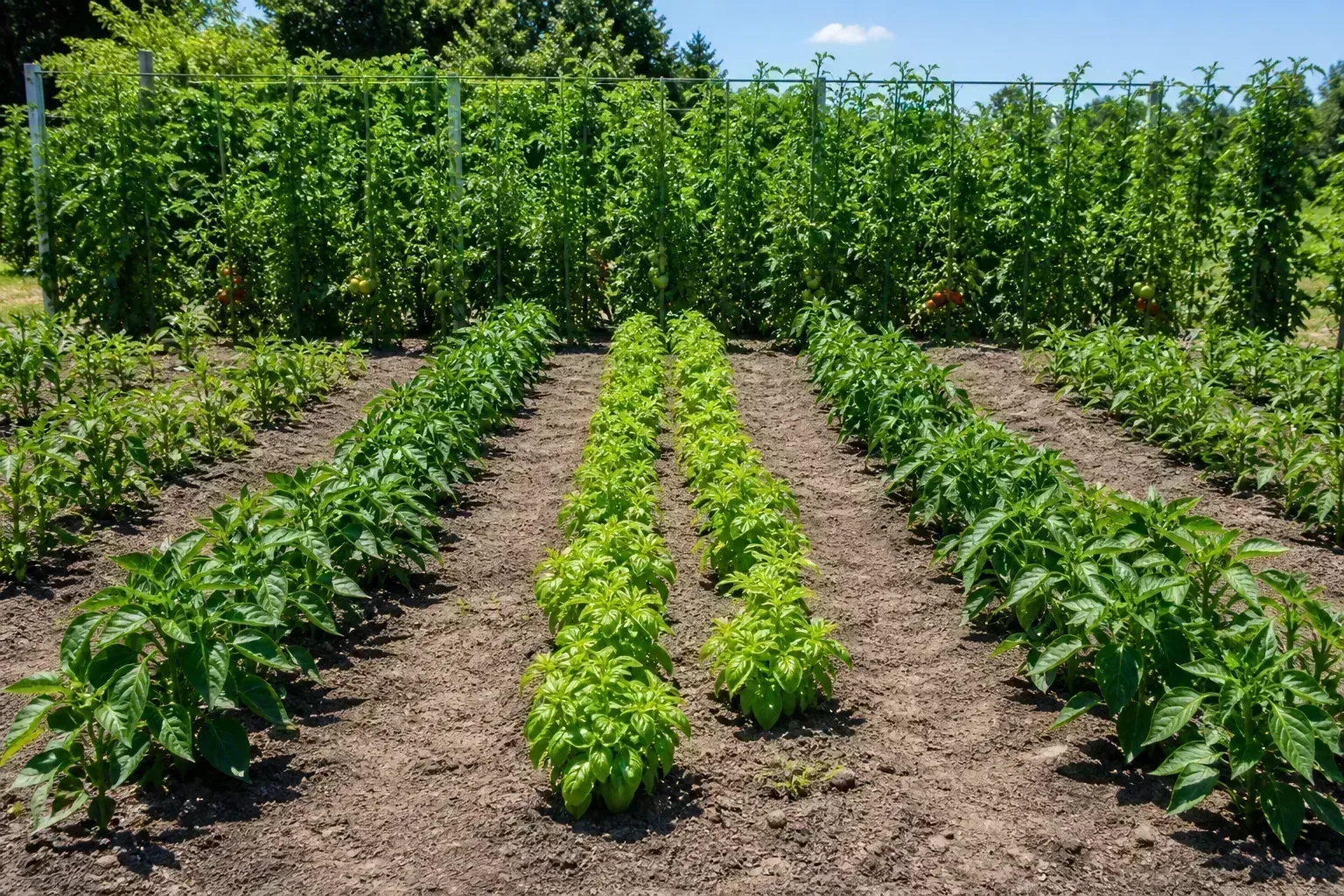
In a productive bed, keep weed control physically separate from the crop root zone. Clear paths and planting rows make hand weeding, hoeing, and mulching more precise.
Why perennial weeds come back
Acetic acid burns tops; it does not reliably remove a deep or spreading root system. Dandelion, bindweed, Canada thistle, and other perennial weeds can look defeated for a few days and then send up new leaves from stored energy below ground. Purdue Extension reports that even strong vinegar treatments may only knock back perennial weeds temporarily because the roots survive. (Purdue Extension)
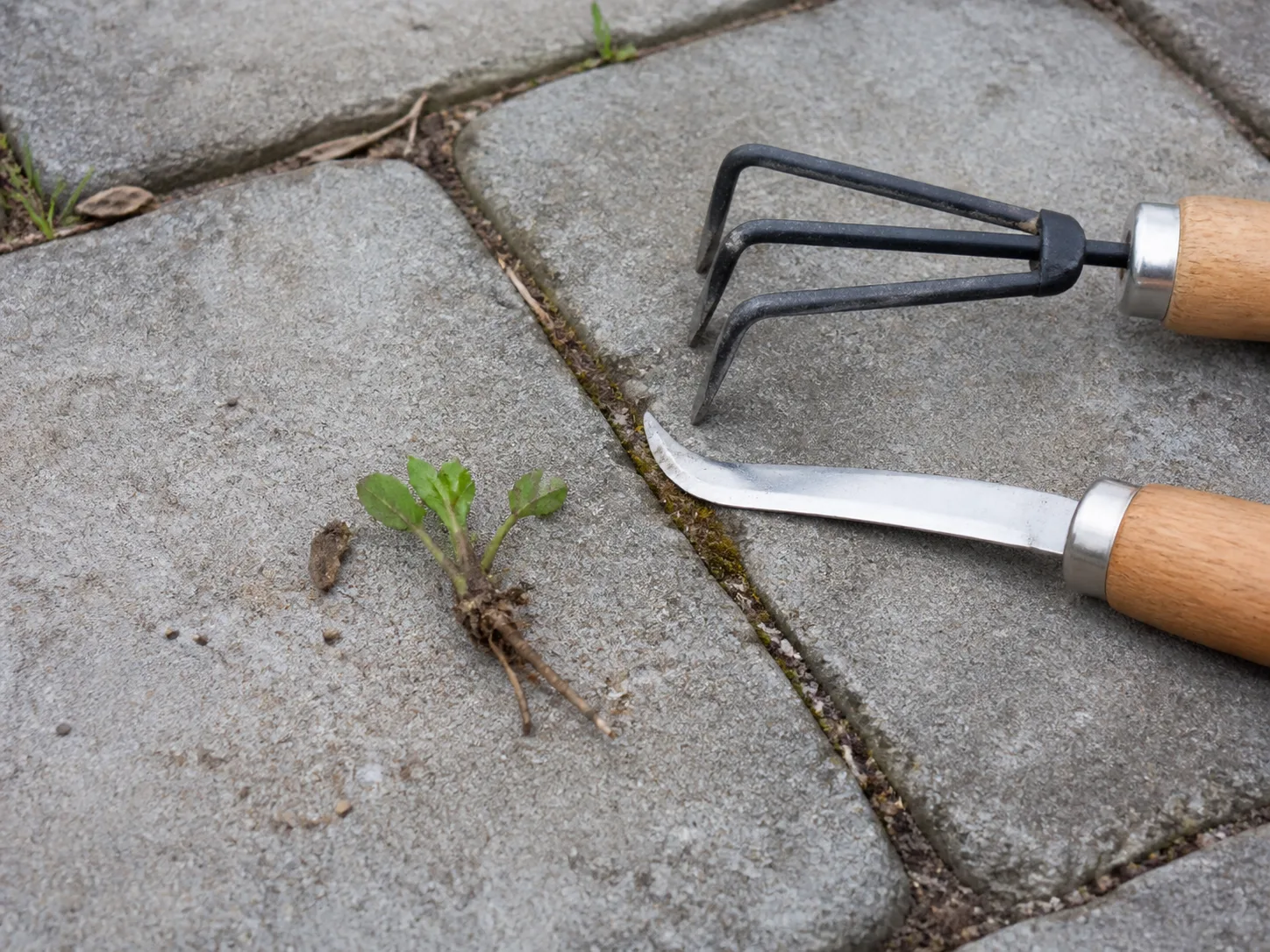
That distinction helps you choose a better tool. If the weed is an annual seedling in a crack, contact treatment may be reasonable. If it is a perennial in a bed, loosen the soil when it is workable, remove as much root as practical, mulch the open soil, and monitor for regrowth. A repeated vinegar cycle treats the symptom while leaving the reason for recurrence intact.
Timing matters, too. Vinegar does not prevent new weed seeds from germinating, and it does not create a weed-free season. A patch can look clean after a hot, dry application and fill again after the next rain. Prevention through mulch, dense crop spacing that still allows airflow, and frequent removal while weeds are tiny is usually more durable.
Why spraying vegetables with vinegar backfires
The shortest answer to “Can I spray vinegar on my vegetables?” is do not use it as a routine foliar spray. The crop may be damaged before any supposed benefit appears, and the fact that a plant survives one light contact does not make the practice repeatable across cultivars, weather, or growth stages.
Leaves, roots, soil organisms, and drift
Leaves are the first risk. Acid can produce brown spots, scorched margins, translucent patches, or complete collapse of contacted tissue. Tender seedlings, new leaves, and plants under heat or drought stress are especially poor candidates for an experiment because they have less capacity to replace damaged foliage.
Roots are a separate risk. A drench can create a concentrated acidic pocket around the root crown or shallow feeder roots, even if the plant’s leaves were never sprayed. The result may show up later as wilting, slowed growth, or nutrient symptoms that are difficult to distinguish from ordinary overwatering or root disease.
Drift is the practical failure that catches gardeners most often. A fine mist can land on the underside of a neighboring leaf, a young transplant, or a row of seedlings that looked safely out of reach. Because acetic acid is nonselective, the spray does not know which plant you intended to keep.
There is also a food-crop boundary. Household vinegar is not a blanket authorization to spray edible leaves, fruit, or soil around a crop. If a labeled product is used in an edible setting, follow that product’s exact directions and any harvest restrictions. If an unlabeled household mixture accidentally contacts a crop, stop treating, identify what was applied, and consult the label or a local extension service before deciding whether the produce is appropriate to harvest.
Skip salt, dish soap, and DIY “boosters”
Many homemade weed-killer recipes add salt because it can make a treated patch hostile to plants. That is precisely why salt does not belong in or near a vegetable bed: it can injure roots, disrupt soil structure, and remain a longer-term problem than the vinegar itself. A recipe that kills every plant in the target area is not safe for a garden simply because its ingredients are common.
Dish soap is also not automatically a plant-safe surfactant. It can help a spray wet a waxy leaf, but it can also damage the cuticle of desirable foliage, especially in heat or at a strong concentration. Fine Gardening’s experiment used soap to improve contact on weeds, while also emphasizing that vinegar and boiling water were nonselective and should be kept where other plants would not grow.
Do not add fertilizer, sugar, baking soda, oil, or other “boosters” to turn vinegar into a crop tonic. Each ingredient changes the mixture’s behavior, and none fixes the underlying problem of poor light, compacted soil, inadequate roots, or an incorrect watering pattern. More ingredients usually mean more ways to injure the plant and fewer ways to know what caused the result.
Better ways to grow more vegetables
If the real goal is more vigorous plants or a larger harvest, spend the effort on the root zone and the growing conditions. Those inputs are less exciting than a kitchen hack, but they are measurable, repeatable, and more closely tied to how vegetables actually grow.
Start with a soil test and crop-specific targets
A soil test is the cleanest first step when growth is poor across a bed or season after season. It can reveal pH, available nutrients, and sometimes organic matter or other indicators that help separate a fertility issue from a water or structure issue. Test the bed rather than guessing from a leaf color alone, and use a laboratory or local extension recommendation when possible.
Then match the correction to the report. If nitrogen is low, the answer is a suitable nitrogen source at an appropriate rate—not vinegar. If pH is outside the crop’s preferred range, use the amendment recommended for that soil. If nutrients are adequate, adding more can create imbalance or excessive leafy growth without improving fruiting.
Different vegetables also have different timelines. A cool-season crop may be slow because soil temperatures are low; a tomato may be leafy but unproductive because of heat, excess nitrogen, inadequate light, or poor pollination. Soil testing improves the starting diagnosis, but it does not replace looking at the plant and its environment.
Improve the root zone before chasing remedies
Vegetables need roots that can access both air and water. Work compost into the bed when it is appropriate for the soil, avoid walking on planting areas, and do not create a dense, wet pocket by filling each planting hole with a radically different mix from the surrounding soil. Raised beds and containers need drainage openings and a growing medium that holds moisture without staying saturated.
Water deeply enough to reach the active root zone, then allow the surface to begin drying according to the crop and weather. Frequent shallow watering can keep the surface damp while leaving deeper roots underdeveloped. On the other hand, a wilted plant in soggy soil may have damaged roots rather than a simple shortage of water.
Mulch is often a better “natural remedy” for a vegetable bed than vinegar. A suitable organic mulch reduces light at the soil surface, slows evaporation, moderates temperature, and makes young weeds easier to pull. Keep mulch slightly away from stems, and replenish it as it settles rather than piling a wet collar against the plant.
Match the fix to the real growth problem
Use the pattern of symptoms to narrow the next step instead of treating every problem with the same liquid. A plant that is pale throughout may need a soil and root-zone assessment; one with yellow lower leaves and wet soil may be overwatered; one with curled, stippled foliage may have pests; one with lots of leaves and no flowers may be receiving too much nitrogen or too little light.
Look at the newest and oldest leaves, the undersides of foliage, the soil moisture below the surface, the drainage after rain, and the amount of direct light. Check whether the plant is crowded, physically damaged, exposed to cold nights, or carrying fruit that is already drawing on its reserves.
This process is slower than spraying a remedy, but it prevents a common spiral: a gardener sees stress, applies vinegar, sees burn, adds fertilizer to compensate, waters more because the plant wilts, and ends up with damaged leaves and unhealthy roots. Diagnose one limiting factor at a time, make one measured change, and observe the new growth.
A safe decision guide for common garden situations
Use this as a quick boundary before reaching for vinegar:
| Situation | Use vinegar? | Better next move |
|---|---|---|
| Young weed in a pavement crack | Possibly, if the product is appropriate for the site and the label is followed | Target the weed precisely, or pull it before it seeds |
| Weed between vegetable seedlings | No | Hand-pull, hoe shallowly, or shield the crop while removing the weed |
| Deep-rooted perennial in a garden bed | Usually no | Dig out roots, mulch, monitor regrowth, and use a site-appropriate control plan |
| Pale or stunted vegetable | No | Inspect roots, water, light, spacing, and soil-test results |
| Acid-loving plant with high-pH soil | No kitchen-vinegar drench | Test the soil and use a measured crop-appropriate amendment |
| Powdery mildew or leaf spots | Do not improvise with vinegar | Confirm the diagnosis, improve airflow, and follow a crop-labeled treatment if needed |
| Ants or slugs near edible crops | Do not spray the crop as a repellent | Identify why the pest is present and use an integrated, crop-safe approach |
| Accidentally sprayed vegetable foliage | Stop and assess | Identify the product, follow its label, and ask local extension for harvest guidance if needed |
The table’s pattern is intentional: vinegar is most defensible where the target is unwanted vegetation and the surrounding area is not intended to grow plants. It is a poor fit when the goal is nutrition, long-term pH correction, disease treatment, pest management, or crop protection.
Conclusion
Vinegar will not make vegetables grow faster, produce more fruit, or replace fertilizer. It is an acidic contact substance that can burn plant tissue; in labeled weed-control use, it may knock down some young weeds, but it is nonselective and usually does not remove the roots of established perennial weeds.
Keep it out of active vegetable beds and do not use it as a soil drench, foliar feed, mildew cure, or general pest spray. If your crop is struggling, start with the root zone: check light, moisture, drainage, roots, spacing, and a soil test. If your problem is a weed, choose the least disruptive control that removes the weed without sacrificing the crop you planted the bed to grow.