Fertilizing Vegetables in Fall: What to Feed and When
Should you fertilize vegetables in fall? Use this crop-by-crop guide to soil tests, compost, fertilizer choice, frost timing, and common mistakes.
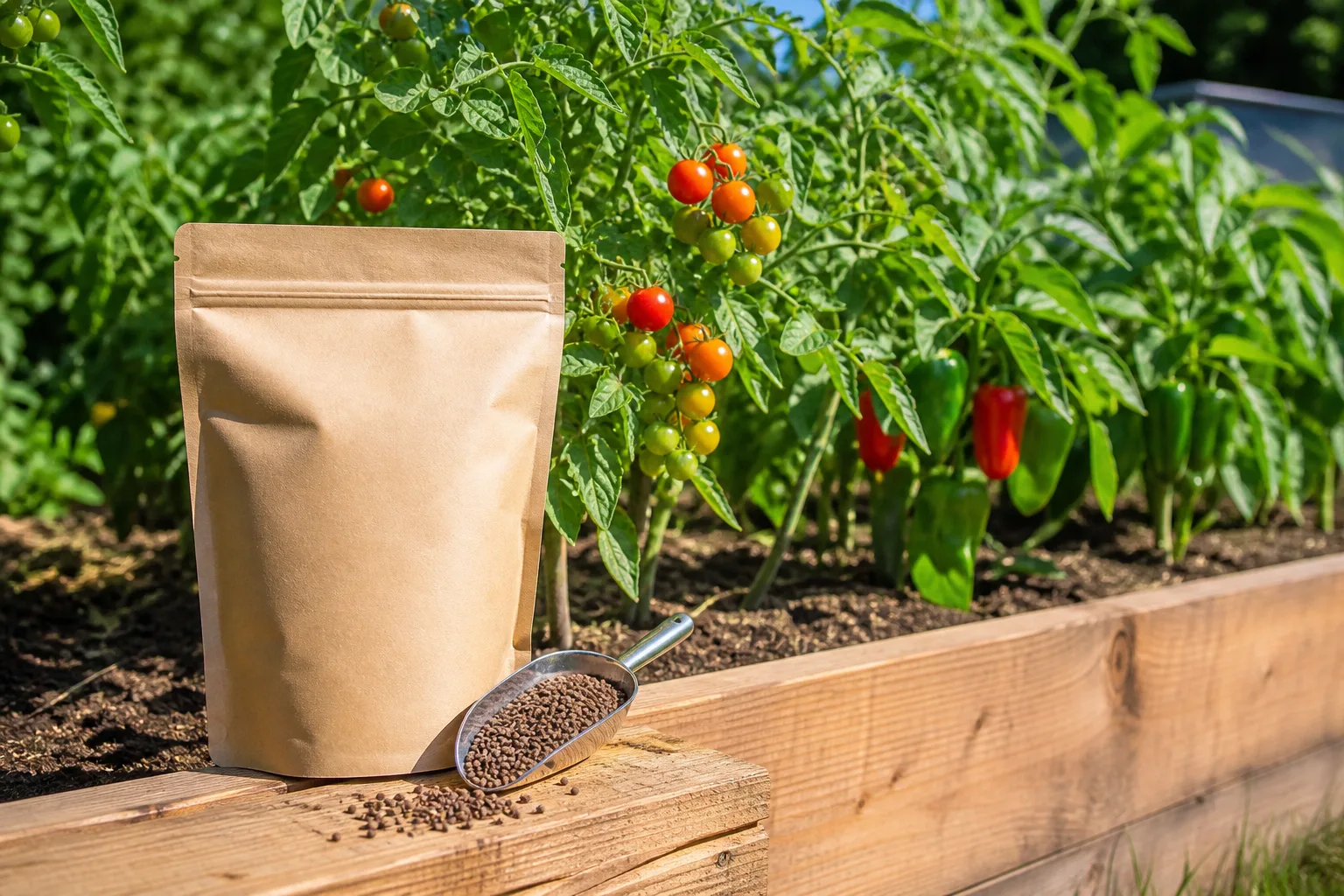
Fall fertilizer is not automatically helpful or harmful. The right answer depends on whether the plant is still actively growing, what crop it is, what your soil already contains, and how close you are to a damaging freeze.
The practical rule is simple: feed an actively growing fall vegetable only when the crop, soil, and remaining weather justify it. Add compost to improve the bed, but do not assume every tired-looking plant needs more NPK. A finished tomato, a young kale plant, and an overwintering garlic clove have different jobs in the same season.
The short answer: feed active crops, not a calendar
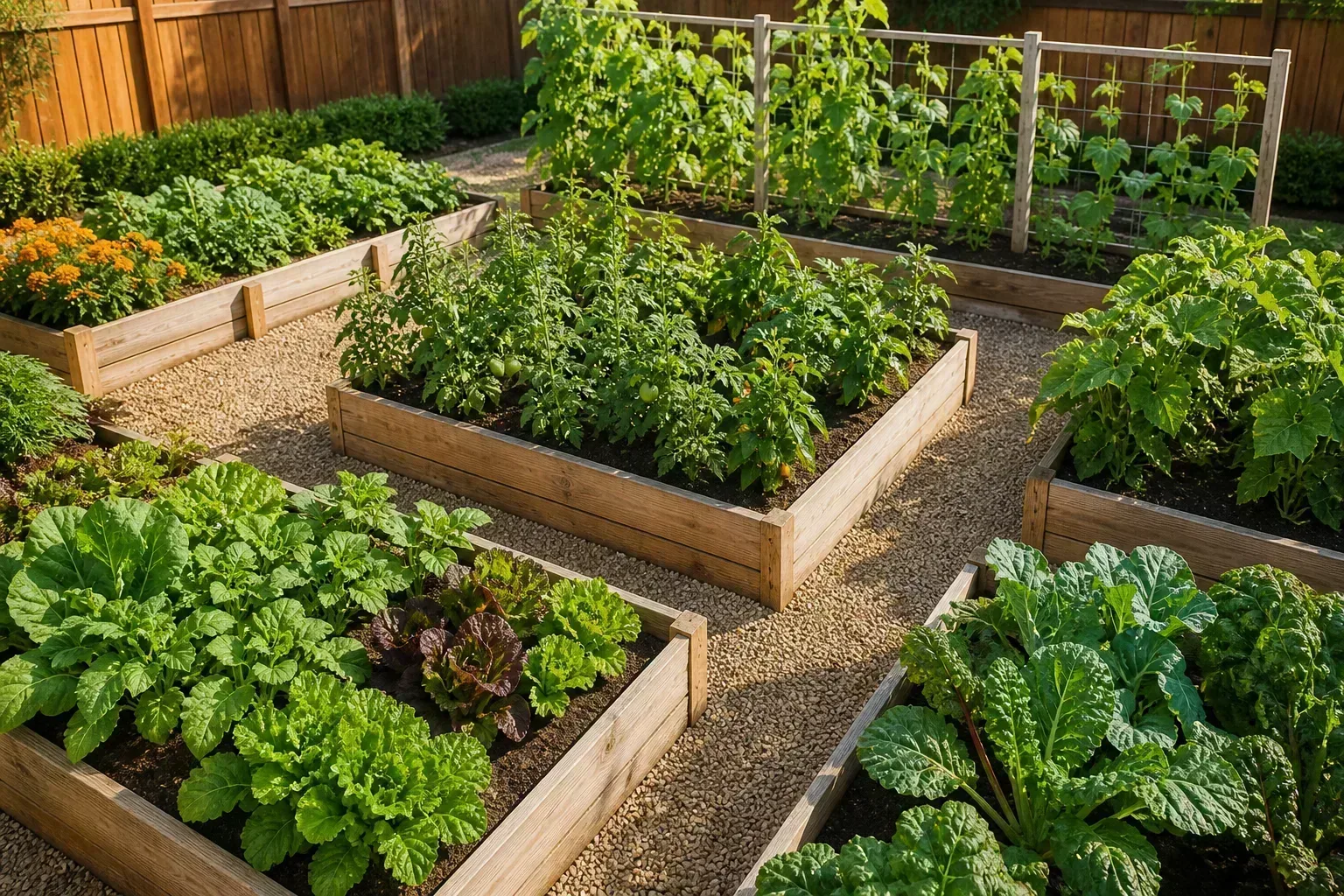
Yes, you can fertilize vegetables in fall when they are still producing or building harvestable roots, leaves, or heads. A fall planting of kale, broccoli, lettuce, spinach, cabbage, or other cool-season crops may keep making useful growth after summer vegetables have slowed, especially in a mild climate or a protected bed. The University of Maryland Extension’s fall vegetable gardening guidance treats fall as a real growing season, not merely the cleanup period after summer.
No, you should not spread a general-purpose fertilizer across every bed just because the calendar says autumn. If a soil test already shows adequate phosphorus and potassium, adding more can create an imbalance without helping the plant. The University of Minnesota Extension notes that phosphorus and potassium are relatively immobile in soil, while nitrogen is much more mobile and its fertilizer need depends on factors such as the crop, yield goal, organic matter, and previous crop. Read the soil-test guidance from UMN Extension before treating a guess as a diagnosis.
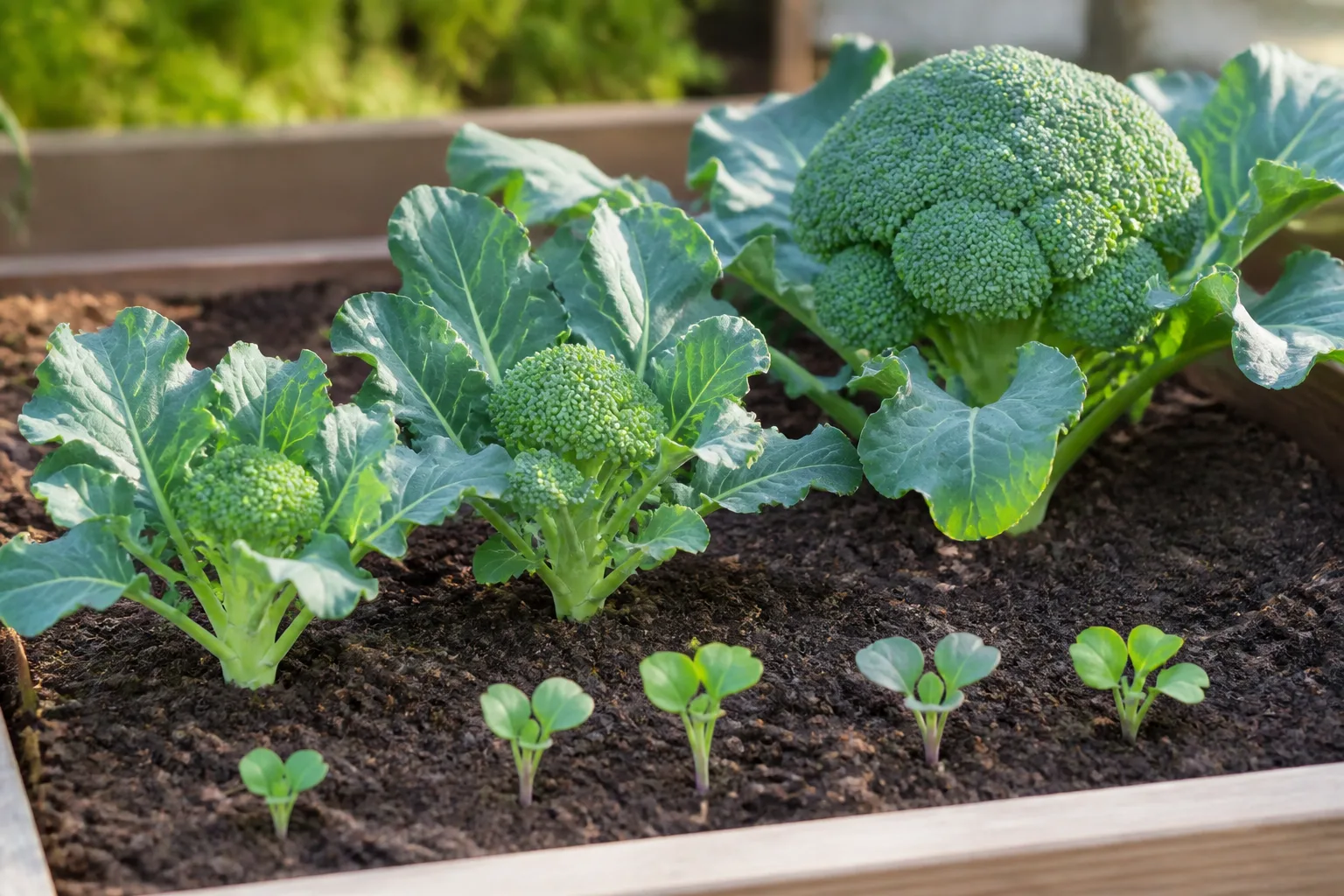
If you remember only one decision sequence, use this: identify the crop, estimate how much active growth remains, check the soil or recent feeding history, choose the least aggressive input that solves the problem, and stop before cold weather makes new growth pointless. That sequence is more reliable than “fertilize in spring” or “never fertilize in fall,” because both slogans fail in some gardens.
First identify what is still growing
The phrase “vegetable garden in fall” can describe a fading summer plot, a newly planted cool-season bed, a greenhouse, or a warm-climate garden that never really stops. Fertilizer timing changes with each one. Start by looking at the plant’s intended harvest, not just its color.
Warm-season crops nearing their finish
Tomatoes, peppers, eggplant, cucumbers, beans, and summer squash are usually warm-season crops. In a short-season garden, declining daylight and cool nights may be ending production even when the foliage is still green. A late application of high-nitrogen fertilizer cannot restore summer heat, light, or a plant that is already shutting down.
If a tomato or pepper plant still has healthy fruit and several weeks of warm weather, a modest, targeted feeding may support continued production when the soil or previous crop history suggests a shortage. If the plant has stopped flowering, has widespread disease, or sits within days of a hard frost, skip the fertilizer and concentrate on harvesting, removing diseased debris, and protecting or replacing the crop.
Avoid the common mistake of using nitrogen to force a final flush of soft leaves. Late tender growth is more vulnerable to cold, and extra leaves do not guarantee ripe fruit. Once a warm-season plant’s useful harvest is ending, fertilizer is usually a poor investment compared with frost protection or timely harvest.
Cool-season crops planted for fall
Broccoli, cabbage, kale, collards, Asian greens, lettuce, spinach, mustard, peas, radishes, beets, and many other cool-season crops can be actively growing in fall. Some are harvested for leaves, some for roots, and some for heads; they do not all use nutrients in the same way.
New transplants benefit most from a well-prepared bed and good root-zone moisture. Once they establish and begin making a rosette or a stronger canopy, leafy brassicas and greens may need supplemental nitrogen if the soil is low or the previous crop was demanding. A light side-dressing is more sensible than burying a large amount of fertilizer against the stem.
Fast crops such as radishes may finish before a slow organic fertilizer releases much nutrition. For these, soil preparation before sowing matters more than repeated late applications. Long-season fall crops such as kale, cabbage, or overwintering spinach have more time to use a measured feeding, particularly in a mild region.
Perennial vegetables and cover crops
Asparagus, rhubarb, artichokes, and other perennial food plants should not be treated like a newly seeded fall lettuce bed. When a perennial is entering dormancy, pushing lush new top growth can make the plant less prepared for cold and does not necessarily improve next year’s crop. Follow the crop’s own seasonal guidance, and do not use a blanket fall-fertilizing rule for established perennials.
Cover crops are another category. A legume cover crop is grown to protect and improve the soil, not to produce a harvest this month. It may need a soil correction for establishment, but adding nitrogen to a legume simply because it is green defeats the point of using a nitrogen-fixing partner. Plan amendments around the cover crop’s purpose and the next crop’s needs.
Soil-test before you reach for fertilizer
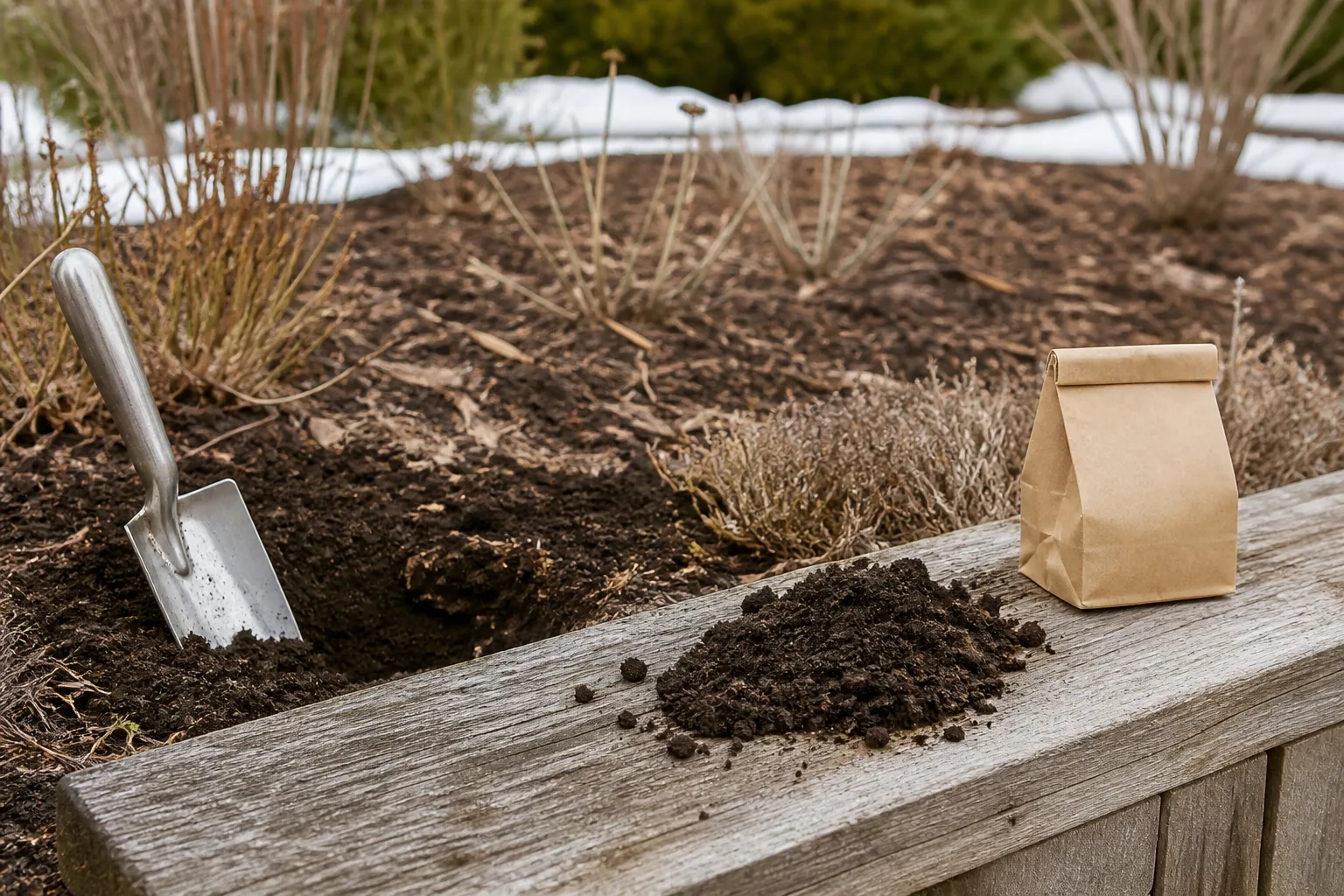
Fertilizer is a nutrient input, not a general tonic. A soil test can show pH, organic matter, phosphorus, potassium, and other properties that influence whether a nutrient is present and available. UMN Extension recommends testing basic properties such as organic matter and pH every few years when they are in a good range, with more frequent testing when you are correcting a problem or tracking low organic matter.
How to read the result before choosing a product
Treat the lab’s recommendation as the starting point. If phosphorus or potassium is already high, do not add a “bloom booster” or balanced fertilizer merely because it is labeled for vegetables. Excess phosphorus can contribute to surface-water quality problems, and extra potassium is not automatically converted into larger vegetables.
Nitrogen deserves a little more interpretation. It moves through soil more readily than phosphorus and potassium, especially in wet or sandy conditions. A soil test may be less useful for predicting nitrogen demand in some regions than a recommendation based on crop, soil organic matter, previous crop, and expected yield. That is why a yellow leaf is not enough evidence to calculate a dose.
Also check what was already applied. Compost, manure, a spring fertilizer, lawn runoff, and a previous heavy-feeding crop all change the starting point. If you cannot obtain a test immediately, the safest temporary choice is usually to avoid concentrated fertilizer, keep the soil evenly watered, and use a thin layer of finished compost only when the bed genuinely needs organic matter.
Choose the job: compost, granular fertilizer, or liquid feed
The best fall input depends on the job. Compost improves the soil environment and adds a variable, slow nutrient supply. Granular fertilizer delivers a measured nutrient analysis. Liquid fertilizer is useful for a quick, controlled supplement but can burn roots when concentrated. These are tools, not interchangeable versions of the same treatment.
Compost and aged organic matter
Finished compost is a strong fall choice when the bed needs organic matter, better moisture handling, or a gentle nutrient contribution for future crops. Oregon State University Extension describes compost as a way to return yard and garden material to the soil over time; its fall debris compost guidance is a useful reminder that soil building is a longer process than feeding a hungry plant today.
Spread finished compost as a surface layer around established crops, leaving a small gap around each stem. For a cleared bed, work it into the upper soil only as deeply as your garden practice requires; aggressive tilling can disturb soil structure and roots. Compost is not a precise substitute for a fertilizer recommendation, so do not keep adding it to a bed that already tests high in phosphorus or soluble salts.
Never use fresh manure directly around edible crops. It can be salty, high in readily available nitrogen, damaging to roots, and a food-safety risk. Use only a properly composted or aged product that is labeled and handled for garden use, and follow local guidance for application and harvest intervals.
Granular and liquid fertilizers
The three numbers on a fertilizer bag are the percentages by weight of nitrogen, phosphate, and potash, in that order—not a promise that the formula is right for every vegetable. A high first number favors leafy growth; a lower-nitrogen formula may make more sense for a fruiting crop that is still setting fruit, but only if the soil and crop actually need the nutrients. A high phosphorus number is not a universal fall solution.
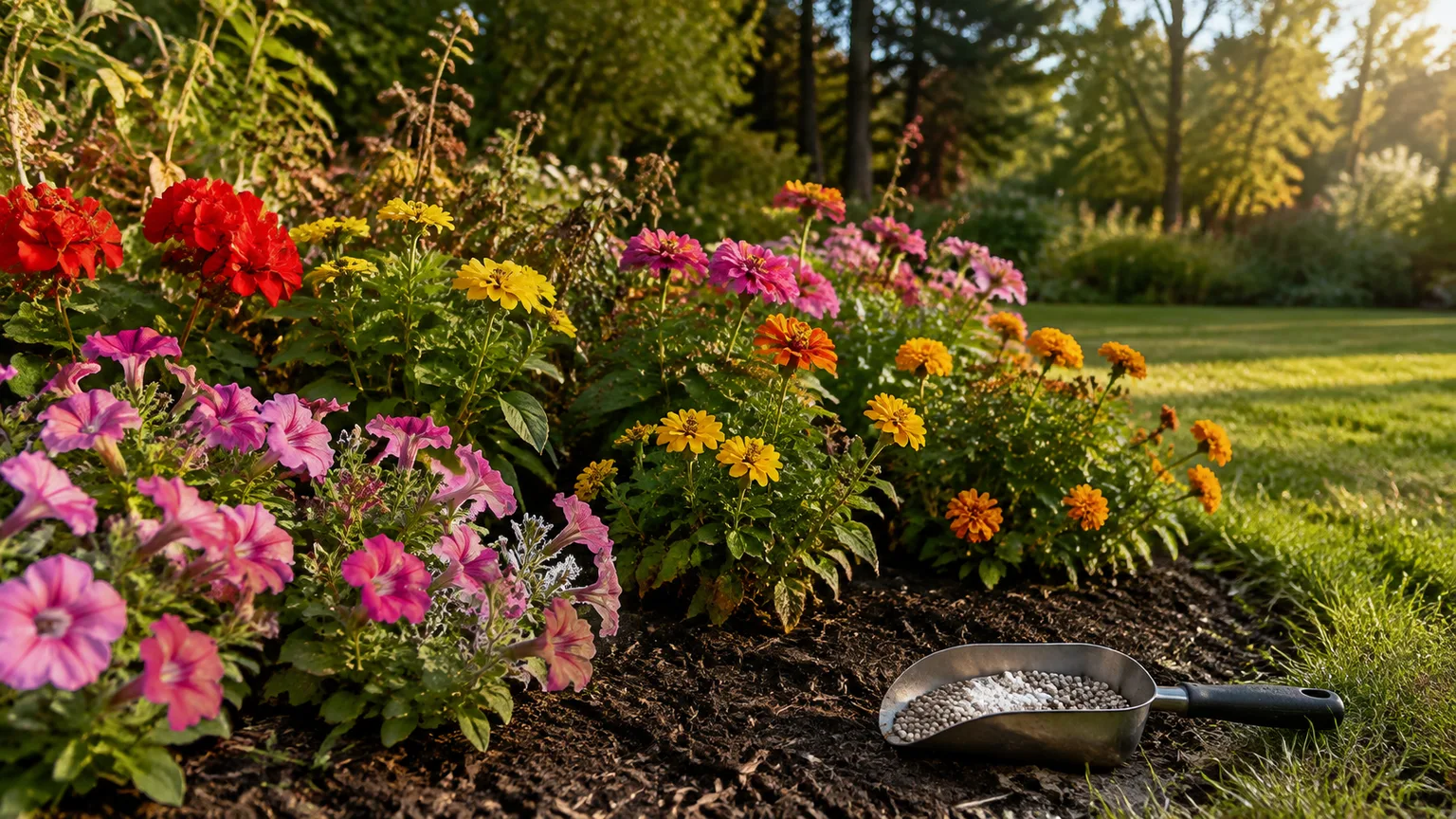
Granular products are easier to measure for a bed and often make sense as a pre-plant incorporation or careful side-dressing. Organic meals tend to release more slowly and may need time, warmth, and microbial activity before their nutrients become available. Soluble products act faster, so they are useful when a specific crop needs a quick correction, but they demand accurate dilution and even watering.
Use the product label as the rate authority. Do not copy a rate from a different brand, assume organic means harmless, or combine several products without totaling their nutrient contribution. The general vegetable-fertilizer overviews from Epic Gardening and Gardener’s Path are helpful for understanding crop differences, but neither replaces a local soil-test recommendation or the label for the product in your hand.
Match the nutrient to the crop
Think in crop groups, then adjust for the actual bed. A hungry crop in depleted soil may need more support than the same crop in a compost-rich raised bed. The table below is a decision aid, not a prescription.
| Crop group | What to watch in fall | Safer feeding direction |
|---|---|---|
| Leafy greens and brassicas | Pale new growth, slow establishment, weak canopy after testing or heavy prior harvest | Use a modest nitrogen-containing feed or finished compost when justified; avoid contact with leaves and stems |
| Fruiting crops | Production is slowing because of cold or low light, not necessarily because of nutrients | Feed only while plants are actively flowering or filling fruit and weather remains favorable; avoid forcing late leafy growth |
| Roots and tubers | Excess top growth with poor root development; fresh manure or high nitrogen nearby | Keep nitrogen restrained; correct phosphorus or potassium only when a test calls for it |
| Beans and peas | Legume roots can supply some nitrogen; lush foliage may already be enough | Avoid routine nitrogen; address a documented soil need and keep the bed evenly watered |
Leafy greens and brassicas
Kale, collards, lettuce, spinach, mustard, broccoli, cabbage, and related crops are the most likely fall vegetables to justify a light feeding while they are building leaves or heads. Their need is driven by growth stage: tiny seedlings need a stable root environment, while established plants with a real canopy can use more nutrients.
If a soil test or crop history points to low nitrogen, apply the label rate in a band beside the row rather than in the planting hole or against the crown. Water it into the soil, then watch the newest growth over the next week or two. More fertilizer is not the correct response to every pale leaf; cold roots, waterlogged soil, pests, disease, and low light can produce similar symptoms.
Fruiting crops, roots, and legumes
Tomatoes, peppers, and eggplant do not need a late-season nitrogen surge when the limiting factor is frost. If fruit is still developing in a warm climate, a soil-informed, low-nitrogen feeding may be reasonable, but harvest timing and frost protection often matter more than another application.
Carrots, radishes, beets, and similar root crops need enough nutrition to build leaves for photosynthesis, yet excess nitrogen can favor tops over roots and may contribute to poor root form. Correct a documented deficiency before planting or early in the crop’s development instead of dumping fertilizer beside mature roots.
Beans and peas are legumes that partner with rhizobia to obtain nitrogen. They still need adequate phosphorus, potassium, moisture, and a suitable pH, but routine nitrogen feeding is rarely the smart fall default. If a legume looks weak, check drainage, temperature, root nodules, pests, and the soil test before blaming a lack of nitrogen.
When to stop feeding before frost
Stop routine fertilizer when the plant has stopped making useful growth, when the remaining weather is too short for the input to release and be used, or when a hard freeze is close enough that tender new growth would be a liability. There is no universal number of days because “fall” arrives at different times and a light frost is not the same as a hard freeze.
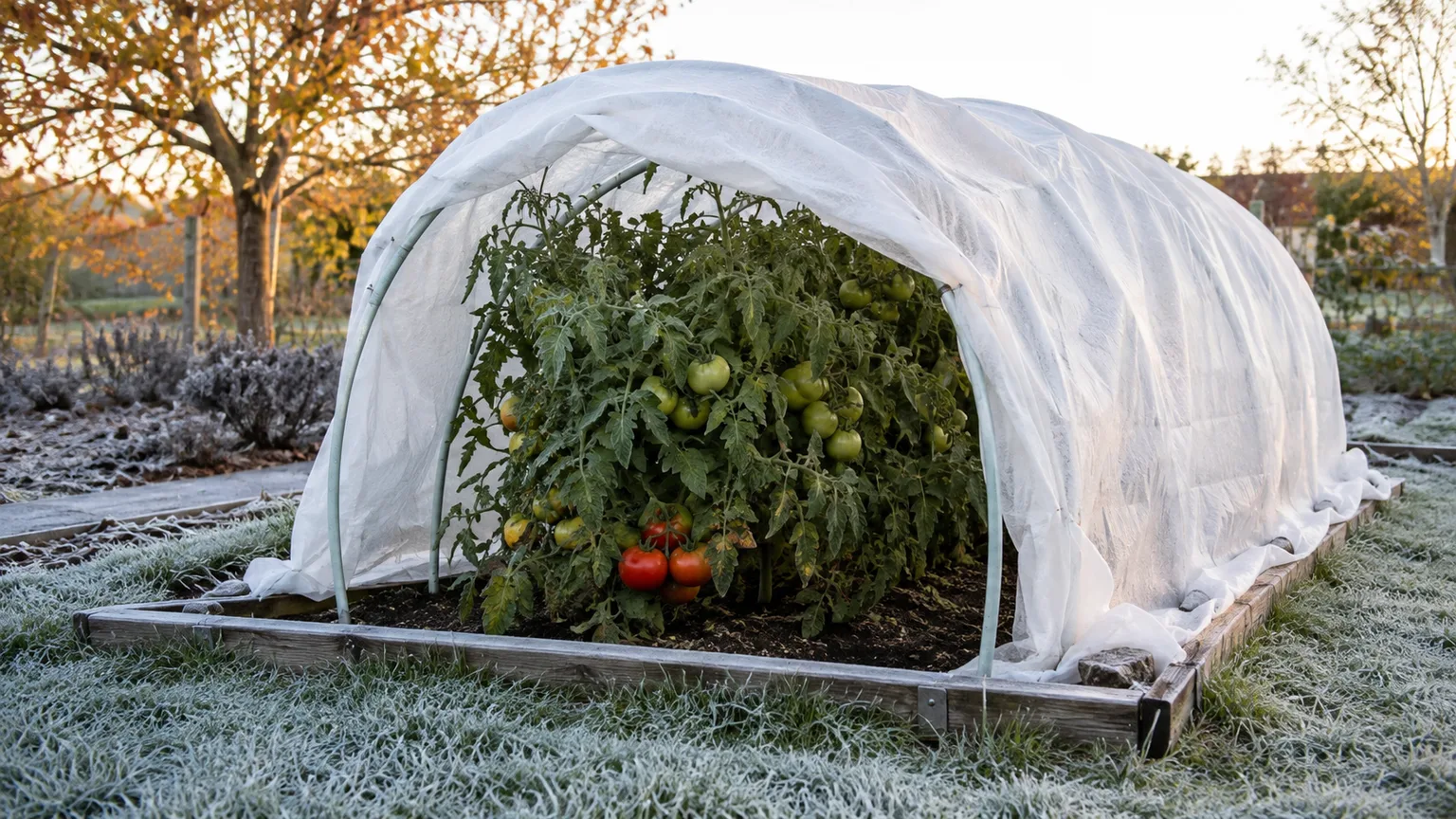
For warm-season crops, the final harvest, disease pressure, and forecast may give you a better stopping signal than the first frost date alone. A tomato plant under a temporary frost cover in a mild region may remain productive longer than an exposed plant in a cold area. In a high tunnel or greenhouse with adequate light and temperature, cool-season crops can continue feeding through winter, but the enclosed system also needs monitoring for salt buildup and overwatering.
Do not fertilize frozen, drought-stressed, or waterlogged soil. Roots cannot use the product normally under those conditions, and soluble nutrients may move away when heavy rain arrives. If the bed is only days from dormancy, save the fertilizer for the next crop and use mulch or a protective cover to manage the weather instead.
How to fertilize fall vegetables without burning them
Application technique matters as much as product choice. Concentrated fertilizer against a stem can injure tissue, while fertilizer scattered on dry soil may sit where roots cannot use it. A safe fall application is small, even, watered in, and followed by observation.
A safe side-dressing sequence
- Confirm the crop and the reason. Check the planting date, growth stage, harvest goal, recent applications, moisture, pests, and disease before feeding.
- Read the label and calculate the bed area. Use the product’s vegetable-garden directions; do not estimate by handful for a concentrated product.
- Choose a cool part of the day. Apply when the soil is moist but not saturated, and avoid placing dry granules on drought-stressed roots.
- Place fertilizer beside the row. Keep it away from stems, crowns, and directly exposed leaves. Do not disturb shallow roots with deep digging.
- Water according to the label. The goal is to move nutrients into the root zone, not wash them out of the bed or onto a hard surface.
- Pause before repeating. Give the plant time to respond and check new growth. Repeated applications made from impatience are a common path to salt buildup and burned roots.
For liquid fertilizer, dilute exactly as directed and apply to the soil unless the label specifically permits a foliar use on that crop. Avoid spraying edible leaves near harvest unless the product label addresses that use and the required interval. “Natural,” “organic,” and “fish-based” do not mean that an undiluted product is safe on roots or foliage.
Troubleshoot weak growth and avoid fall mistakes
The most expensive fall mistake is treating a symptom without identifying the constraint. A pale plant may need nitrogen, but it may also have cold roots, poor drainage, root damage, a pest, a disease, or a pH problem that prevents nutrient uptake. Fertilizer cannot repair all of those.
Watch for signs of overfeeding: scorched leaf edges, sudden wilt after application, a crust of salts on the soil surface, unusually lush foliage with poor fruiting, or roots that struggle to take up water. Stop feeding, water thoroughly only when drainage is good, and reassess the soil and the product rate. If runoff can reach a drain, pond, stream, or neighboring property, reduce the risk by keeping applications off hard surfaces and following local environmental guidance.
Avoid these common errors:
- Applying spring’s fertilizer schedule to a fall crop without considering shorter days and cooler soil.
- Adding phosphorus “for roots” when a soil test already shows it is abundant.
- Using high-nitrogen feed on tomatoes or peppers that are already entering frost shutdown.
- Putting fertilizer in direct contact with a stem or crown.
- Mixing fresh manure into an actively growing edible bed.
- Assuming yellow leaves prove a nutrient deficiency.
- Fertilizing a dry container or raised bed and skipping the label’s watering directions.
- Feeding a perennial vegetable, shrub, or tree with a rule meant for annual vegetables.
If a plant is weak but the soil test is adequate, look at light, temperature, water, roots, spacing, and disease before buying another bag. Correcting the growing condition often does more than increasing the nutrient concentration.
Use fall soil work to make spring easier
After the last harvest, remove diseased plant material and clear weeds before they set seed. Leave healthy roots in place when your soil-management system supports it, but do not leave obvious disease or pest habitat in the bed. Add a measured layer of finished compost when organic matter is the goal, and consider a cover crop where it fits your climate, space, and spring planting schedule.
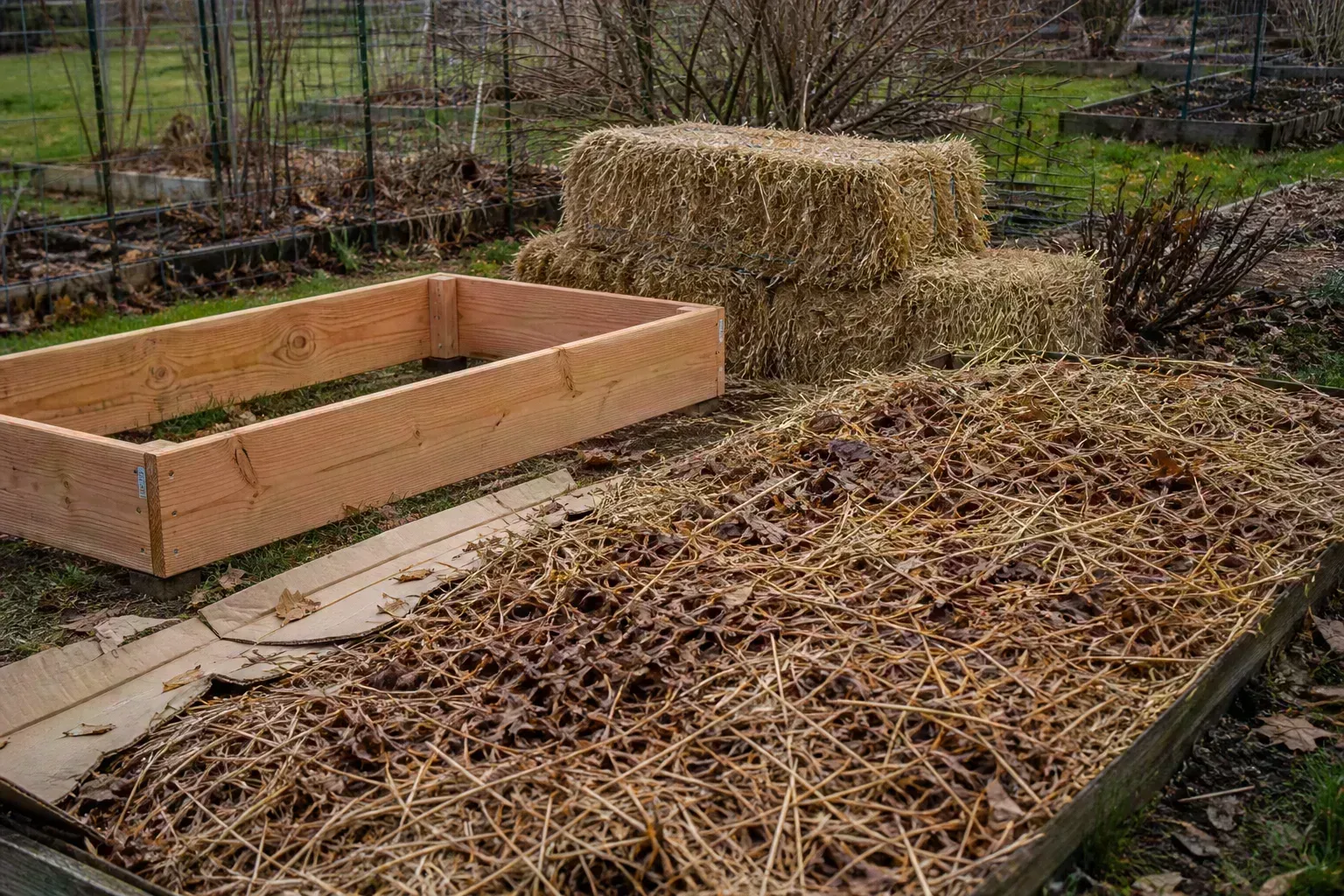
Fall is also a good time to take a soil sample if your local lab accepts it and you can use the results for the next planting. Record which bed held tomatoes, brassicas, roots, legumes, or a cover crop, plus every amendment and fertilizer you applied. That small record turns next spring’s fertilizer decision from a guess into a comparison.
Mulch protects the surface, moderates temperature swings, and reduces erosion, but it is not automatically a fertilizer. Keep woody or carbon-heavy material from being mixed into the root zone while it is still breaking down. Let the bed rest under a sensible cover rather than trying to make it produce fresh growth after the season has ended.
Conclusion
Fertilizing vegetables in fall can be the right move when a crop is actively growing, the soil or crop history suggests a real need, and enough favorable weather remains for the plant to use the nutrients. It is usually unnecessary when a warm-season crop is finished, a hard frost is imminent, or a soil test already shows adequate nutrients.
Start with the crop, not the fertilizer bag. Feed leafy fall crops cautiously when they need it, keep nitrogen restrained for roots and legumes, avoid forcing frost-bound tomatoes, choose finished compost for soil building, and follow the label for every concentrated product. Then use the rest of fall to test, record, mulch, and prepare the bed so next year’s first application is based on evidence rather than habit.