Ants on Houseplants: Honeydew Signal, Nest Check, Fixes
Ants on houseplants usually farm honeydew from aphids, soft scale, or mealybugs. Learn trail vs nest checks, bait basics, and how to stop return.
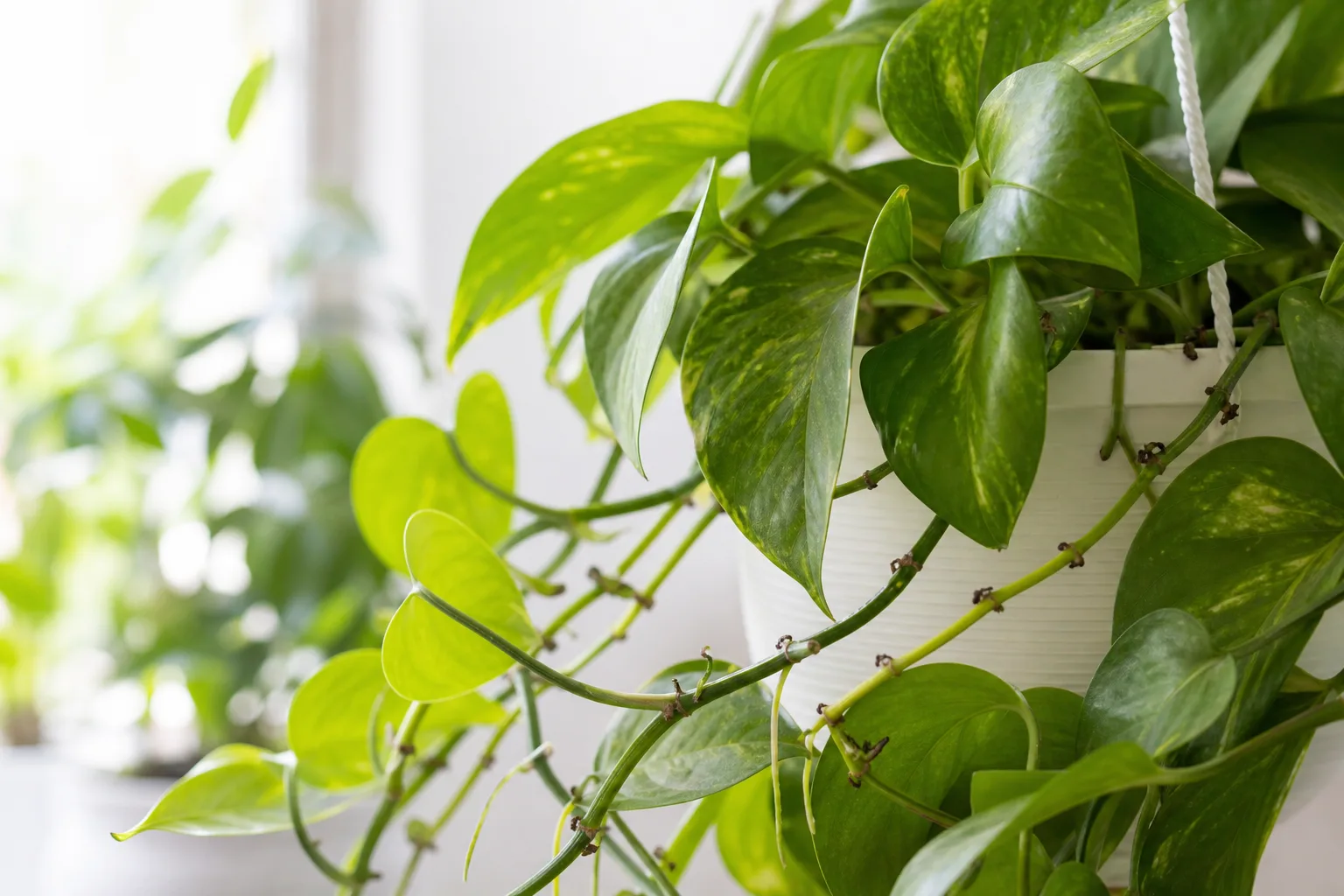
You notice a thin line of ants marching up a pot rim, across a saucer, or along a trailing stem. The plant still looks mostly fine, so it is tempting to wipe the ants away and move on. That is usually the wrong first move. On houseplants, ants are often a diagnostic signal, not the primary plant-eating pest.
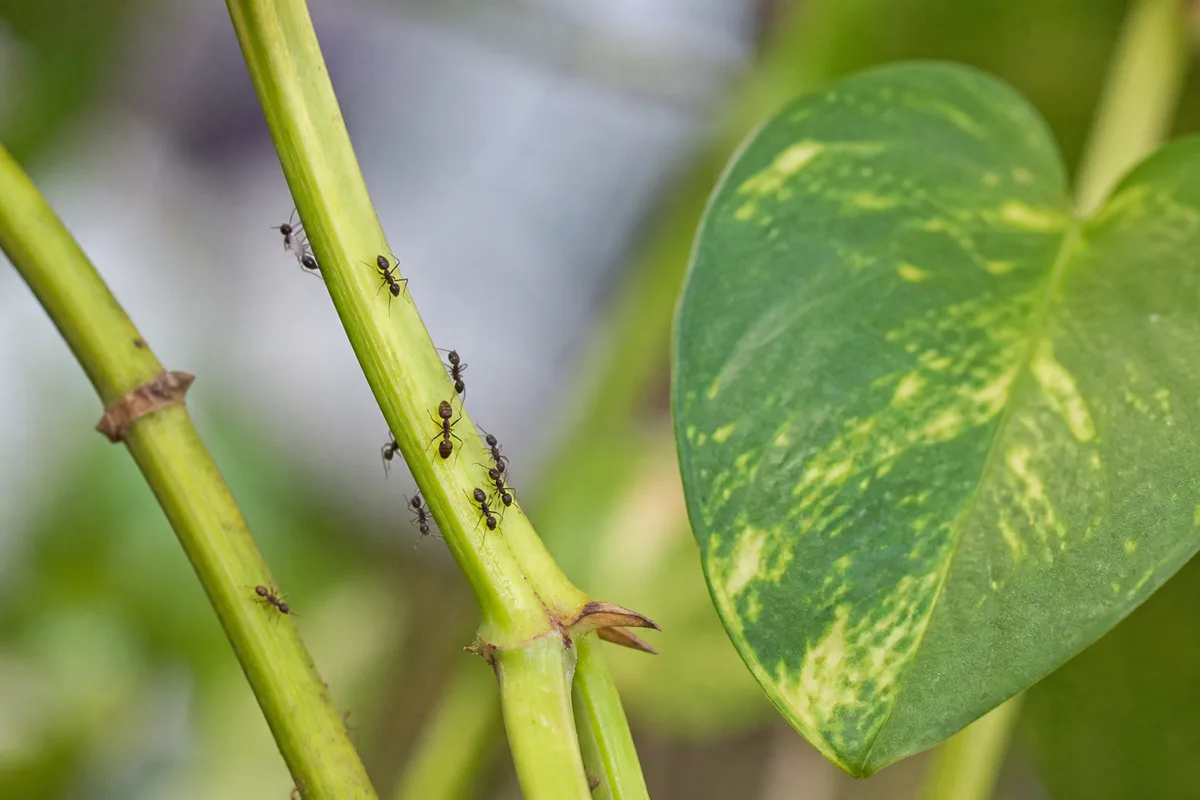
Most ants on indoor plants are not chewing leaves. They are collecting honeydew — the sugary waste excreted by sap-sucking insects such as aphids, soft scale, and mealybugs. UC Statewide IPM notes that ants protect and care for those honeydew producers, which can increase plant damage because ants shield the pests from natural enemies. Your job is to follow the trail, confirm the honeydew source, treat that pest, and then manage the ants so they stop farming the colony.
This guide covers what ants on houseplants usually mean, how to tell trail foraging from soil nesting, which common household ants you are likely dealing with, how sugar versus protein baits fit the plant problem, and how to keep them from returning.
Why Ants Show Up on Indoor Plants
Ants appear on houseplants for two overlapping reasons: a food reward on the plant, or a nest opportunity in or near the pot. The food reward is almost always honeydew, floral nectar on blooming indoor plants, or spilled sugary residue on saucers and cachepots. The nest opportunity shows up when plants spend time outdoors, sit on the ground, or stay chronically damp at the soil surface.
Colorado State University’s Agricultural Biology program links honeydew on and underneath plant structures to sooty mold growth and ant infestations. That framing matters indoors. Sticky leaves, shiny residue on furniture beneath a plant, or black sooty film are not separate mysteries — they are often the same honeydew system that brings ants.
Honeydew Farming vs Kitchen Trails
Honeydew is sugar-rich liquid waste from insects that feed on plant phloem sap. Aphids, soft scales, mealybugs, and whiteflies all produce it. Ants harvest that resource the way dairy farmers tend cows: they defend the colony and keep predators and parasites away when they can. RHS notes that ants may be found climbing plants with aphid colonies specifically to obtain honeydew as a reward.
Use a quick kitchen-versus-plant split. If ants stream from a baseboard to a single sticky plant and stop at leaf tips or axils, treat it as a plant-honeydew case first. If ants fan across counters, pet bowls, and several pots with dry, clean leaves, expand to household sanitation and outdoor baits — the plant may be only one stop on a wider route. Persistent traffic on one plant is still a prompt to inspect for sap feeders, not a cue to fog the whole room. If you kill only the ants and leave honeydew flowing, new foragers will return.
Soil Nests Versus Stem Trails
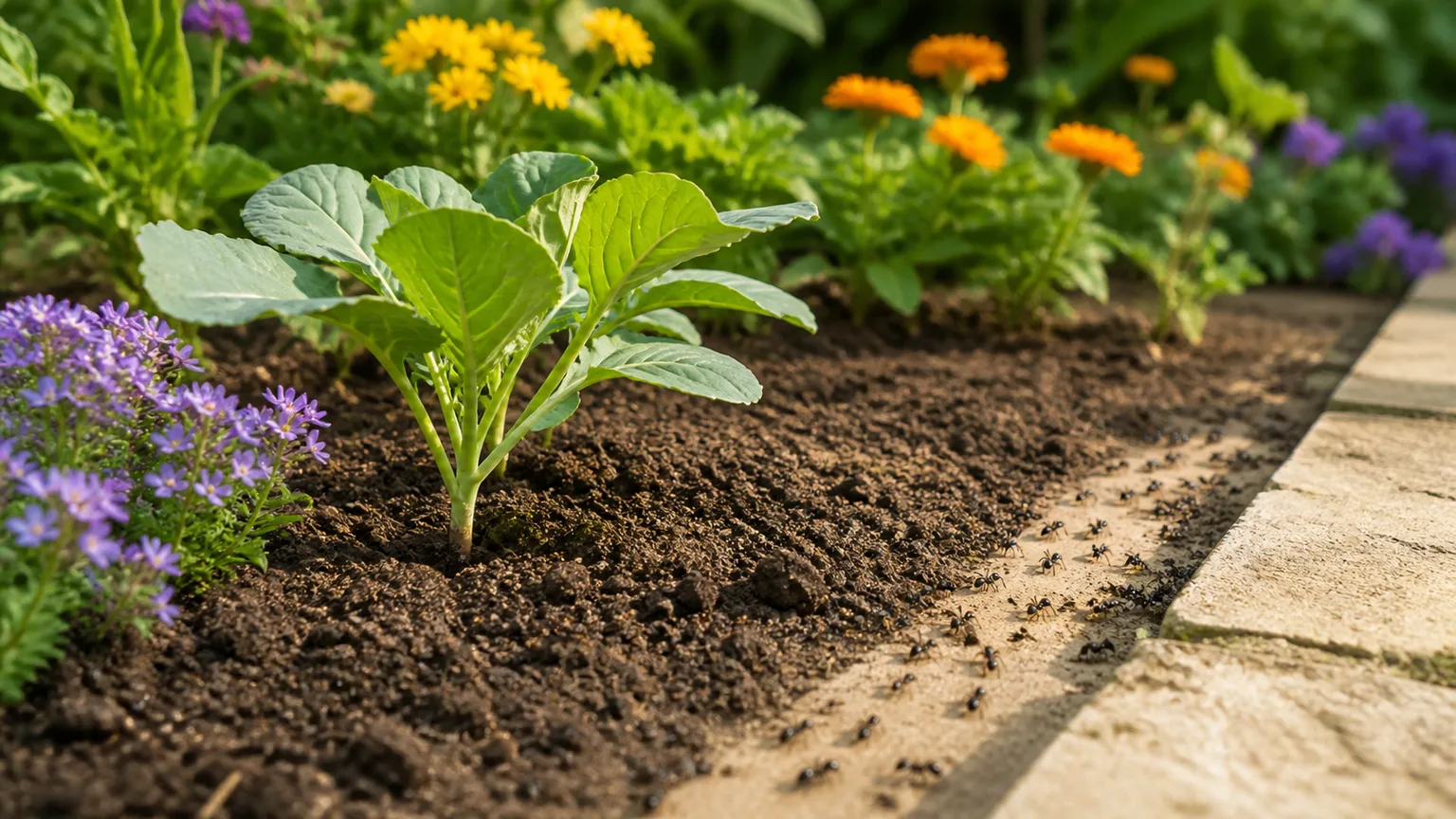
Not every ant on a houseplant is farming pests on the foliage. Clemson HGIC notes that ants may make nests within the potting soil of houseplants while plants sit outdoors, alongside other root-ball hitchhikers such as pillbugs and millipedes. UC IPM also lists potted plants as indoor nesting sites and recommends removing infested containers from the building before treating the mix.
| Pattern | What it usually means | First check | Next action |
|---|---|---|---|
| Ants climb stems and stop at tips, axils, or leaf undersides | Honeydew farming of aphids, soft scale, or mealybugs | Sticky residue + pest ID at the trail end | Isolate; treat sap feeders; then bait |
| Ants swarm the soil surface, drainage holes, or pot rim only | Nest or moisture/food around the pot | Unpot or inspect root-ball exterior | Outdoor soap bath or labeled drench |
| Occasional scouts with no sticky leaves | Random foraging for kitchen sweets or water | Clean saucers; seal nearby food sources | Watch 3–7 days; inspect once thoroughly |
A plant can have both: a soil nest plus a honeydew colony upstairs. Treat both layers or the problem resets.
What Ant Trails Usually Point To
When ants keep returning to the same houseplant, assume a honeydew producer until you prove otherwise. UC IPM’s houseplant diagnostic table pairs sticky substance, sooty mold, small objects on leaves or branch crotches, leaf drop or dieback, and ants with scale, mealybug, or aphid infestation. That is the core signal map for this guide.
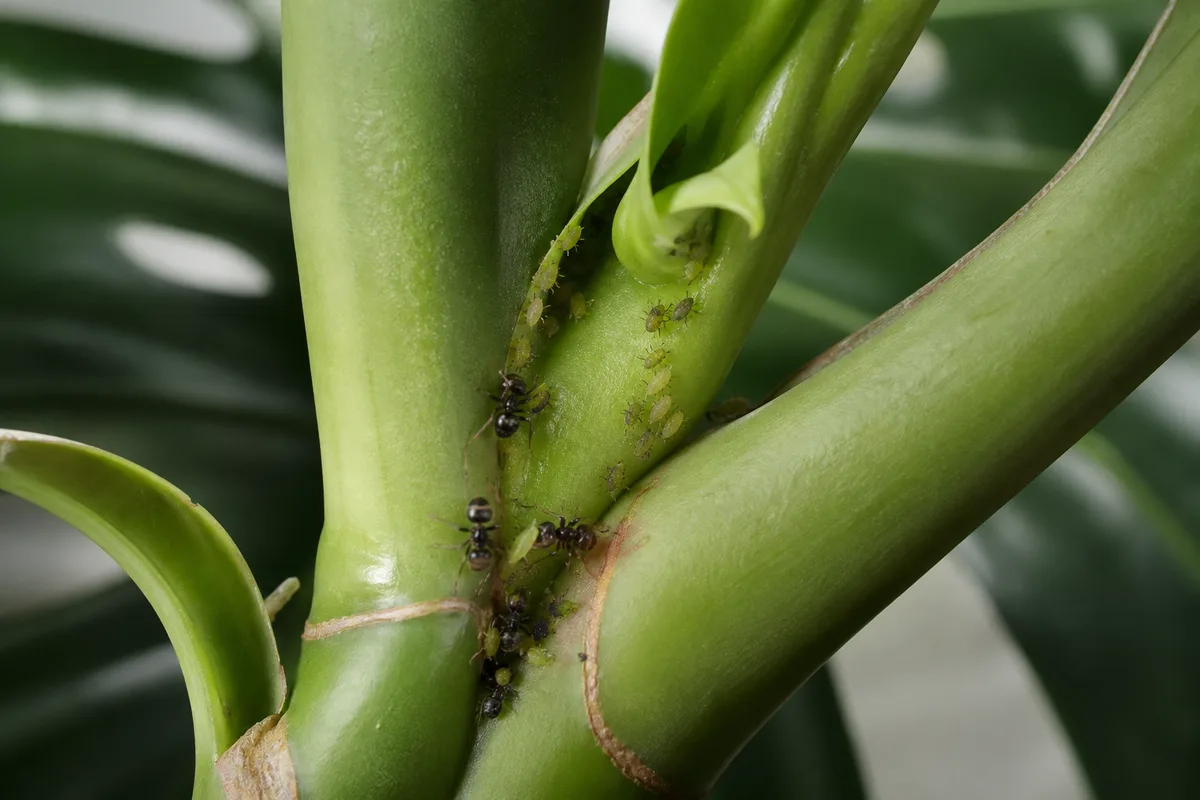
Ants alone do not prove a severe infestation. A few scouts may be exploring. Steady trails, recruitment of many workers, and sticky surfaces raise urgency because the underlying pest population is already producing enough honeydew to pay for the trip.
Aphids on Soft New Growth
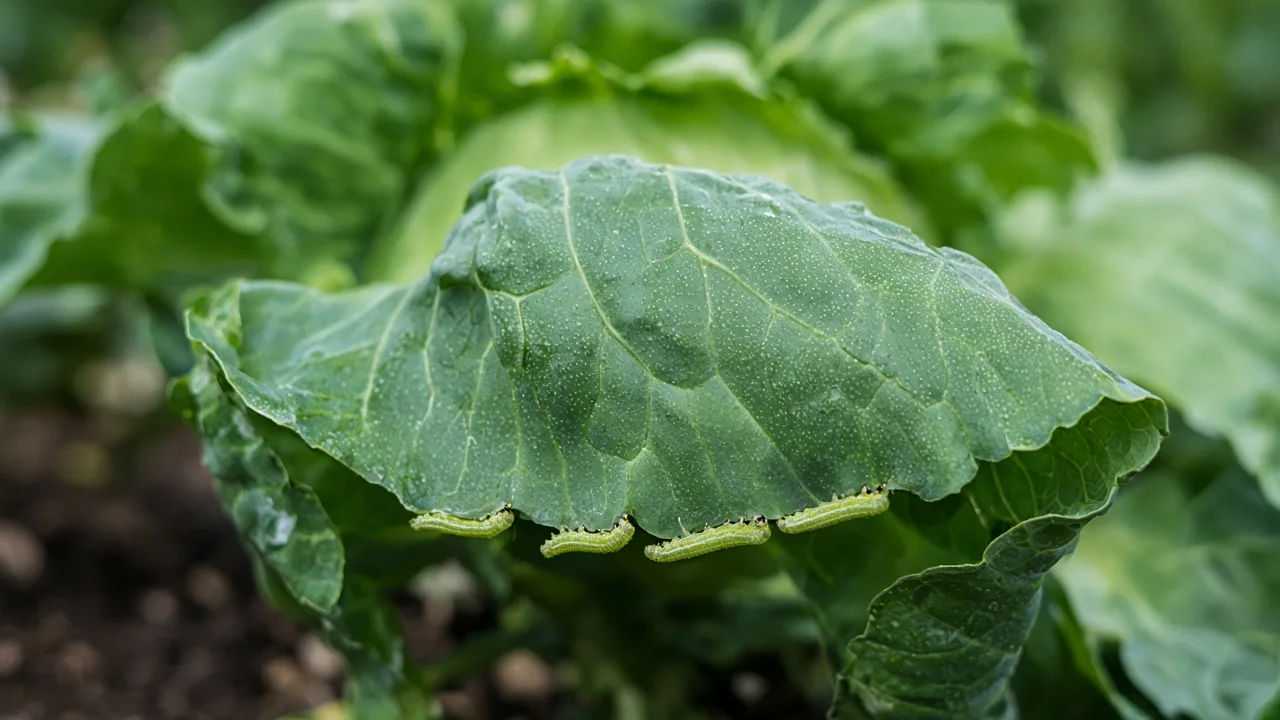
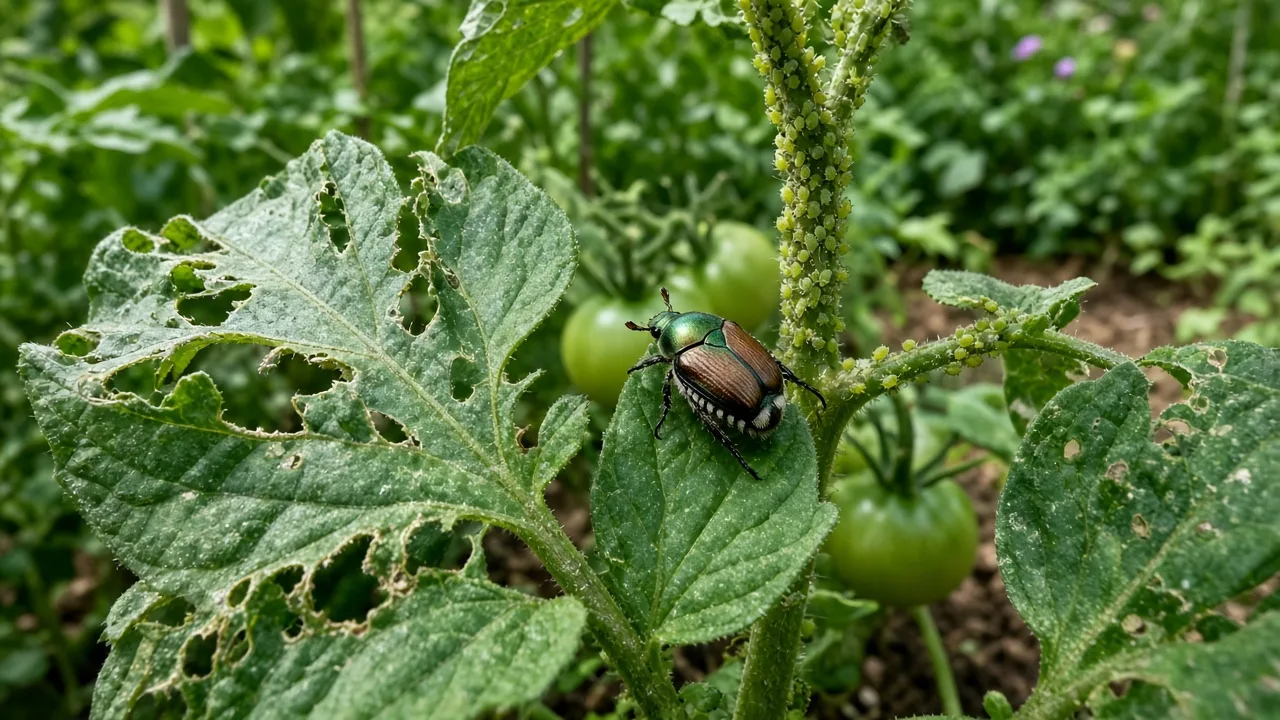
Aphids are small, soft-bodied, pear-shaped insects, often green but also pink, brown, black, or yellow. Clemson HGIC places them on new growth and leaf undersides, where they suck sap and leave shiny, sticky honeydew that can support sooty mold. Colorado State notes that all aphids secrete honeydew attractive to ants and wasps, and that heavy feeding curls leaves and distorts new growth.
Indoors, aphids can reproduce year-round on soft tips. Look for clusters on the newest leaves, cast white skins after molting, and ants climbing toward those tips. For species-specific treatment depth, open the aphids on houseplants guide and the aphids symptom hub.
Soft Scale, Mealybugs, Sticky Residue, and Sooty Mold
Soft scale and mealybugs are the other high-probability honeydew partners for ants. Soft scales look like immobile bumps on stems and leaf veins and excrete honeydew; armored scales generally do not, which is a useful split when ants are present with sticky residue. Mealybugs look cottony or waxy in leaf axils, along veins, and in tight crevices. UC IPM states that mealybugs, like aphids, excrete honeydew, attract ants, and respond to similar control strategies.
If ants lead you to white fluff in joints, open the mealybugs on houseplants guide and the mealybugs symptom hub. If they lead you to brown or tan bumps with sticky drip below, use the scale on houseplants guide and scale insects symptom hub. Soft scale is the ant magnet; armored scale is less likely to explain honeydew-driven ant trails.
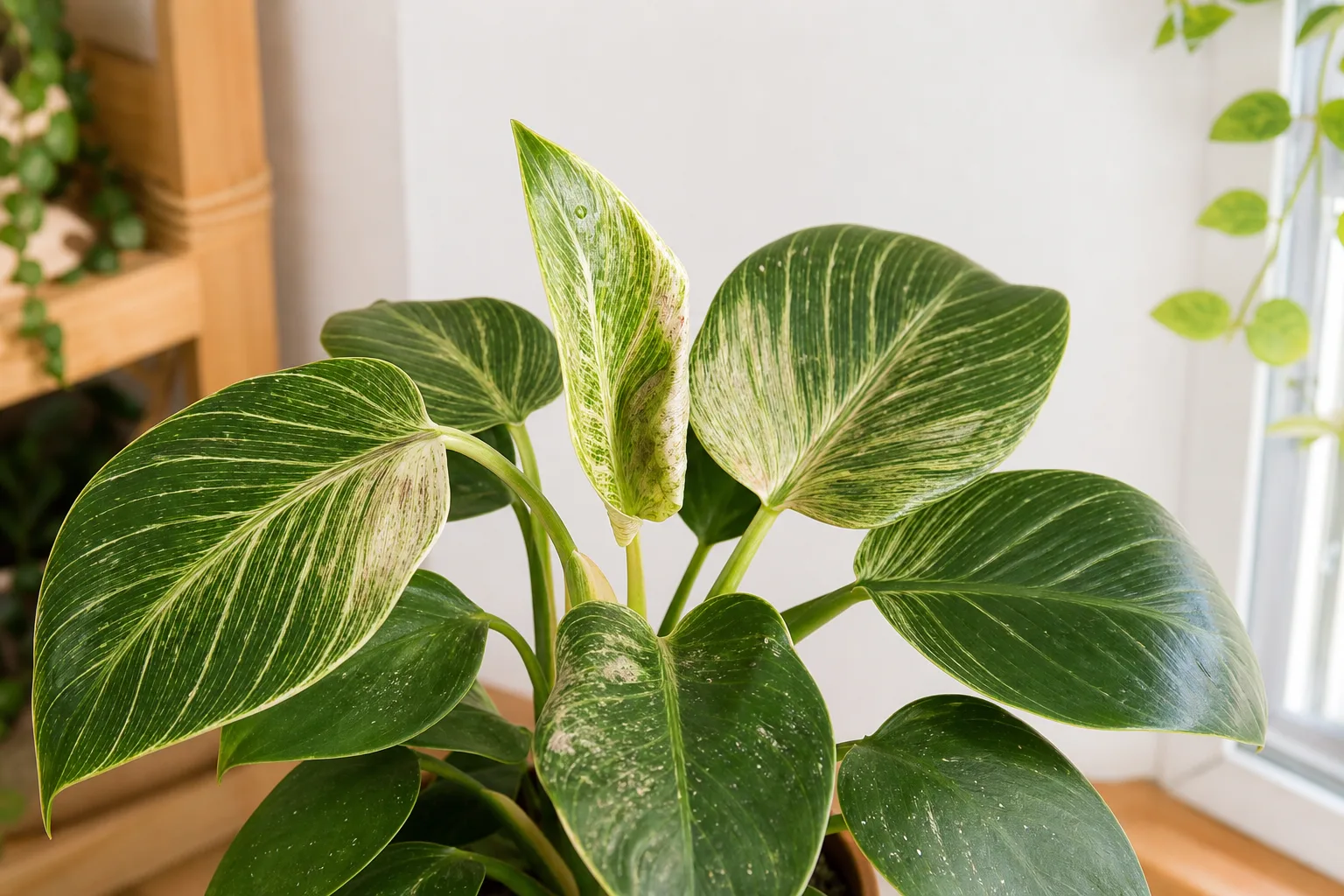
Sticky leaves are often noticed before the insects. Honeydew makes foliage glossy, attracts dust, and drips onto lower leaves, saucers, and floors. Sooty mold then grows on that film as a dark, soot-like coating. Sooty mold does not infect the leaf tissue the way a leaf-spot fungus does, but heavy cover can reduce light reaching the leaf surface. Cross-check the sticky leaves symptom hub when residue is the loudest symptom and insects are still hard to find.
Diagnose Ants on Houseplants Step by Step
Diagnosis before treatment saves weeks. Spraying ants while missing mealybugs in leaf axils is how the same plant becomes a monthly nuisance.
Follow the Trail and Rule Out Look-Alikes
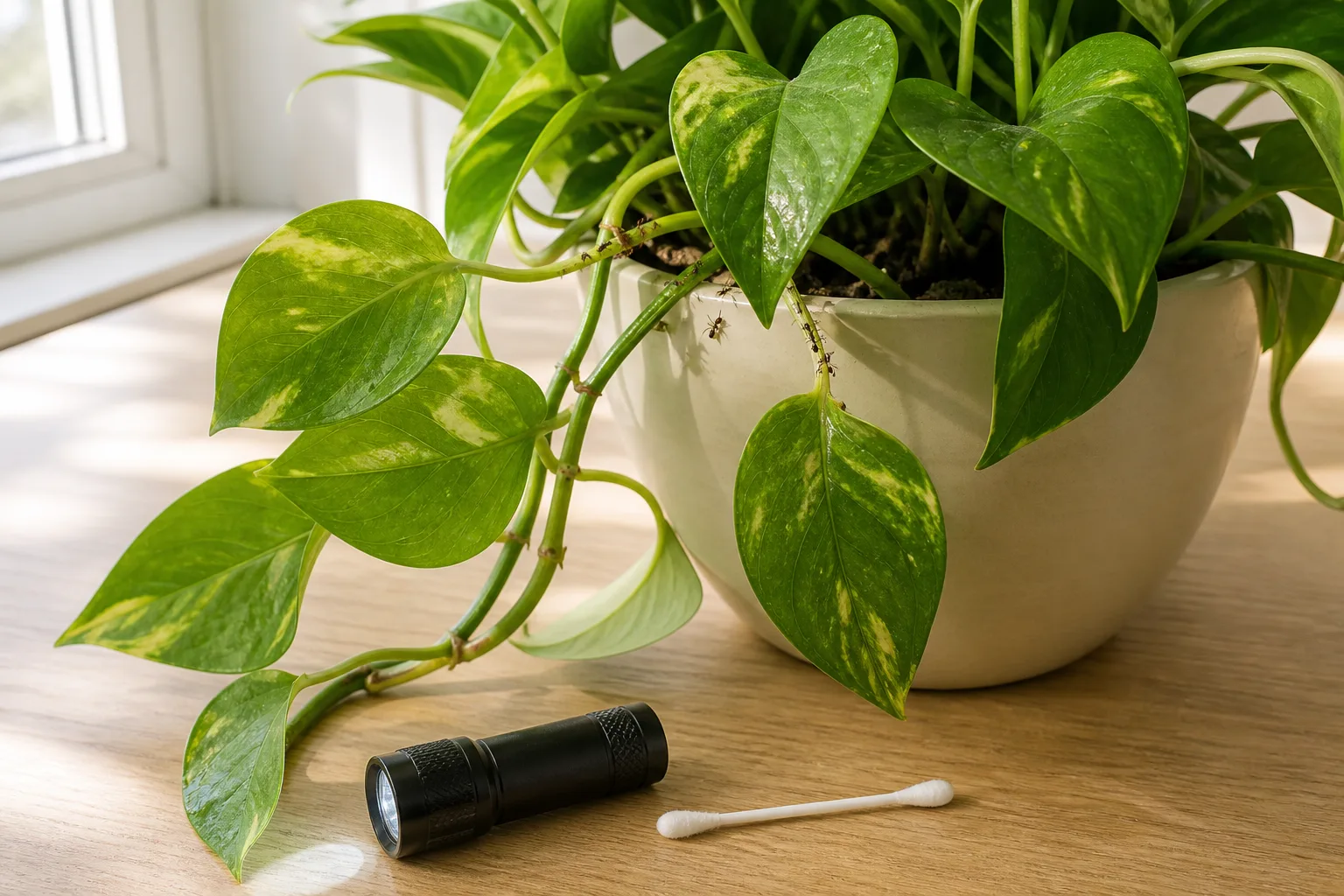
Start where the ants are densest and walk the trail to where it ends on the plant. That endpoint is your search zone. Use bright side light or a phone flashlight, and check newest growth tips, leaf undersides along midribs, leaf axils and stem nodes, overlapping vines in hanging baskets, sheaths and crown folds on orchids, palms, and dracaenas, and sticky drip zones on leaves below feeding sites.
Then confirm the pest type. Pear-shaped soft insects that move when disturbed point to aphids. Cottony wax points to mealybugs. Immobile bumps that scrape off point to scale. Tiny whiteflies that flutter when the plant is shaken also produce honeydew and can draw ants, though aphids, soft scale, and mealybugs remain the most common indoor partners. UC IPM recommends isolating any plant with insect problems immediately and washing hands after handling infested plants so you do not move crawlers or ants onto clean neighbors.
Ants do not mean every plant pest. Spider mites cause stippling, bronzing, and fine webbing; they do not produce honeydew and do not recruit ants the way aphids and soft scale do. If you see webbing without sticky residue, switch frameworks to the spider mites symptom hub and the spider mites houseplants guide instead of assuming a honeydew farm. Also separate ants from fungus gnats. Fungus gnats are delicate flies over wet soil, not marching workers on stems. Occasional ants on a dry saucer under a clean plant may be seeking water or kitchen crumbs rather than farming pests — still inspect once, because missing an early mealybug colony is more costly than a five-minute check.
Fix Order: Treat Sap Feeders, Then Manage Ants
The order of operations matters. Remove or reduce the honeydew source first, manage ants second, and only then decide whether the pot itself needs nest treatment. Killing visible ants while honeydew keeps flowing invites the next shift of foragers.
Isolate, Wipe Honeydew, and Treat the Pest
Move the plant away from the rest of the collection the same day you confirm trails or sticky leaves. Clemson HGIC and UC IPM both emphasize isolation until the pest is controlled, which can take several weeks of repeated work. Plan weekly inspections until the plant stays clean for at least three consecutive weeks with no new sticky residue, crawlers, or ant recruitment.
Wipe honeydew and sooty mold with a soft cloth and lukewarm water so you can see what remains. For sturdy plants, a gentle shower or sink rinse on upper and lower leaf surfaces knocks off aphids and some crawlers. Cover the soil with foil or plastic if you invert a small plant into a bucket of water, as Clemson suggests for smooth-leaved plants. Discard heavily damaged leaves that are coated in pests rather than trying to save every leaf.
Match treatment to the pest you found. For aphids, hand-wipe, rinse with water, and use insecticidal soap with thorough coverage of new growth and leaf undersides on a repeat schedule. For mealybugs, dab visible insects and egg masses with 70% isopropyl alcohol on a cotton swab, then follow with insecticidal soap or horticultural oil where the plant tolerates it. For soft scale, scrape what you can, spot-treat with alcohol, and use horticultural oil or insecticidal soap aimed at crawlers on a repeat schedule. Always test soap, oil, or alcohol on one leaf first and wait a day for burn on thin or fuzzy foliage. Prefer products labeled for indoor ornamental use. For oil-based follow-ups, the neem oil for indoor plants guide covers application timing and phytotoxicity cautions.
Baits, Barriers, and Pet Safety
Once honeydew is declining, manage the ant colony without broadcast indoor sprays. UC IPM is direct: spraying ants indoors does not prevent more ants from entering, and baits are the key insecticide tool in most situations because workers carry slow-acting toxicant back to the nest. Clean ant trails and remove competing sweets so baits become the best food source. Place bait stations near trails and entry points, preferably outdoors when the nest is outside. Expect 5 to 10 days before numbers drop when baits are working. Avoid spraying pyrethroid barriers that kill foragers before they share bait with the colony.
Keep bait stations out of reach of children and pets. Prefer enclosed stations over open gel drops near plant stands pets can lick. Do not pour boiling water into pots — it cooks roots and does not replace a measured soap bath or labeled outdoor drench. If ants are using plant hangers, stands, or moss poles as bridges, break those bridges temporarily while you treat. Do not smear sticky barrier products onto soft houseplant stems; keep sticky barriers on pots, stands, or protected trunk wraps outdoors where UC IPM describes banding.
When Ants Nest Inside the Pot
Soil-nesting ants need a different protocol than foliage farmers. Clemson HGIC says ant colonies in containers may be killed by labeled soil drenches used outdoors, with pots allowed to drain and dry before plants return indoors. UC IPM recommends removing the pot from the building and submerging it for 20 or more minutes in insecticidal soap solution at about 1 to 2 tablespoons of insecticidal soap per quart of water, with the soil surface just covered.
After nest treatment, inspect the root ball exterior for remaining insects, refresh the top layer of mix if it is debris-heavy, and do not bring an actively swarming pot back next to clean plants. If the plant spent summer on soil outdoors, assume hitchhikers are possible even when foliage looks clean — Clemson’s prevention list includes checking the exterior of the root ball before fall move-in. Nesting ants can exist without honeydew pests, but always confirm. A nest plus aphids is a compounded problem: the pot supplies housing and the foliage supplies sugar.
Common Indoor Ant Types and Bait Basics
You do not need a microscope to manage ants on a houseplant, but species clues change bait choice. UC IPM lists Argentine ants (Linepithema humile), odorous house ants (Tapinoma sessile), Pharaoh ants (Monomorium pharaonis), pavement ants (Tetramorium caespitum), and several fire-ant relatives among common indoor invaders. Argentine and odorous house ants often prefer sweets (honeydew fits them perfectly). Pharaoh ants and thief ants lean toward fats and proteins. Pavement ants accept sweets, proteins, and grease.
Ant baits combine an attractant with a slow-acting toxicant such as borate, fipronil, hydramethylnon, or avermectin. UC IPM notes that Argentine ants take sweet baits year-round and protein baits mainly in spring, while Pharaoh ants prefer protein or greasy baits more consistently. If ants ignore your station, switch bait type rather than spraying the trail. Offering a small sample of sugar-based and protein-based baits and watching which one workers choose is the practical indoor test. Liquid borate sugar baits in enclosed stations are a common starting point when trails clearly end in honeydew pests; switch if workers ignore the sugar and swarm greasy kitchen crumbs instead.
First-Hand Notes From Treating Ant Trails
These are LeafyPixels grow notes from plants we treated indoors — useful as timelines, not as guarantees for every home.
Hanging pothos, late spring 2025. A steady afternoon trail climbed the hanger cord and ended in leaf axils packed with cottony mealybugs, not on the soil. After isolation, alcohol swabbing every three days, and insecticidal soap coverage of undersides, sticky drip stopped by day 10. Ant traffic thinned by day 6 once honeydew declined; an outdoor sugar-borate bait station near the window sill finished recruitment by about day 12. The plant stayed isolated three more weeks with weekly axil checks before returning to the shelf.
Monstera deliciosa after patio summer, early fall 2025. Workers poured from drainage holes with almost no stem climbing. Unpotting showed a shallow soil nest against the root-ball edge. We moved the pot outdoors, submerged the mix surface in insecticidal soap solution (about 1.5 tbsp/quart) for 25 minutes, drained thoroughly, and refreshed the top inch of mix. Ants did not reappear in the pot; a separate kitchen trail continued until outdoor baits ran for about nine days, which confirmed the plant nest and the kitchen nest were related but not identical problems.
Jade on a bright sill with soft scale, winter 2025–2026. Ants stopped at tan bumps along stems with glossy honeydew on lower leaves. Scraping plus horticultural oil on a seven-day crawler schedule cleared new sticky film in roughly three weeks. Ants abandoned the plant within the first week after honeydew dropped, before the scale population was fully gone — a reminder that bait alone would have left the scale farm intact.
Mistakes That Reset the Problem
The most common failure is treating ants as the disease instead of the symptom. Wiping workers daily while ignoring sticky leaves keeps the farm profitable. The second failure is a single soap spray with no follow-up. Aphids, mealybugs, and scale have overlapping life stages; eggs and missed crawlers restart the cycle.
Other mistakes stack quickly. Returning an isolated plant too soon re-seeds the shelf. Using outdoor garden soil or unsterile mix invites nest hitchhikers. Leaving plants touching creates bridges for both ants and crawlers. Reaching for broad indoor sprays before baits and sanitation can scatter ants without collapsing the colony and may be inappropriate for the room or plant species. Do not assume every white fuzz is dust or every bump is corking. Verify with a swab or fingernail scrape. And do not confuse spider mite stippling with honeydew shine — the treatments differ, and ants will not reliably point you to mites.
Prevention and Quarantine After Outdoor Time
Prevention is mostly pest exclusion and sanitation. Clemson HGIC’s houseplant insect guidance is still the practical checklist: buy clean plants, isolate newcomers for weeks (about six weeks with weekly underside checks), use commercial potting mix rather than outdoor soil, wash foliage periodically, keep screens sound, and separate cut flowers from the collection.
Add ant-specific habits on top of that base. Quarantine any plant that lived outdoors before it rejoins the indoor group, and inspect the root-ball exterior for nest cavities. Empty saucers so sweet drip and standing water do not create a cafeteria. Scout sticky residue monthly on plants that historically host soft scale or mealybugs. Keep kitchen crumbs and pet food sealed so indoor ant pressure stays low. Treat early aphid tip clusters before ants recruit to them. Pair these habits with the integrated pest management indoors workflow so scouting stays consistent across the collection.
When to Discard or Expand Household Control
A handful of ants on an otherwise clean plant with dry leaves and no sticky film is lower urgency than a trail ending in a cottony mealybug mass. Still inspect once, clean the saucer, and watch for three to seven days. Escalate when you find honeydew, sooty mold, distorted new growth, or ants protecting dense pest clusters on multiple stems.
UC IPM and Clemson both support discarding plants that are heavily infested and not valuable enough to justify weeks of treatment, especially when the pest threatens a larger collection. Bag the plant and trash it — do not compost indoor pest material back into mixes you will reuse. Species-specific pages such as ants on pothos and ants on Monstera help when growth habit hides pests in trailing vines or overlapping leaves.
If ants are swarming walls and kitchens beyond a single pot, expand the problem frame to household ant management with baits and exclusion. The houseplant may be one feeding stop, not the only nest. For a shorter symptom overview after you finish this protocol, use the ants on plant symptom hub.
Related Guides
- Aphids on houseplants — tip clusters and honeydew cleanup
- Mealybugs on houseplants — axil cotton and alcohol swab schedules
- Scale on houseplants — soft vs armored scale and crawler timing
- How to tackle indoor plant pests at home — broader pest ID workflow
- Integrated pest management indoors — scouting cadence across a collection
- Fungus gnats on houseplants — soil flies that are not ant trails
- Neem oil for indoor plants — oil timing after mechanical cleanup
Conclusion
Use this as your first 24 hours, then keep going on the pest schedule:
- Follow the trail to the endpoint on the plant or soil.
- Isolate the pot the same day.
- Confirm sticky honeydew pests versus a soil nest (or both).
- Wipe honeydew; start the matching sap-feeder treatment.
- Place enclosed ant bait near the trail — outdoors when possible — and keep it away from pets and kids.
- If ants exit drainage holes in numbers, run the outdoor soap-bath nest protocol before the pot rejoins clean shelves.
Escalate to discard or whole-home baiting if the plant is coated in pests and sooty mold, treatment fails after several weeks, or trails continue across kitchens after the plant honeydew is gone. With trail-first diagnosis, repeat sap-feeder control, and bait instead of spray-only shortcuts, ants become an occasional scout problem instead of a standing farm on your shelves.