3 Easy DIY Ant Traps to Keep Ants Out of Your Home
Set up DIY ant traps that match sugar- or protein-seeking ants, protect children and pets, and target the entry route instead of only killing visible workers.
The most useful DIY ant trap is a protected bait station set where ants already forage—not an open saucer of sweet liquid on a kitchen counter. If you can follow the trail outside and safely place an outdoor-labeled station, start there; indoor bait can attract more foragers into a room. UC IPM recommends primarily outdoor baiting and reserves indoor bait for persistent infestations where the entry point cannot be found. The three setups below match the food ants accept: sweet liquid, protein or oil, or a ready-to-use enclosed station when mixing bait is not worth the risk.
“DIY” does not have to mean mixing pesticide from a pantry ingredient. University of California IPM guidance describes bait stations as the easiest residential format and recommends matching the attractant to the ants’ food preference. A homemade container can help protect a permitted refillable bait, but it cannot make an unregistered or improvised mixture automatically safe. If the product label says to use the bait only in its original station, keep it there.
What Ant Bait Can Do—and What It Cannot
A bait station combines food that attracts foraging ants with a slow-acting active ingredient. Workers feed, then carry some bait back to the nest where it can be shared with other workers and developing ants. This is why a properly chosen bait can affect more of a colony than a spray that kills only the workers visible on a counter. UC IPM explains that a bait must act slowly enough for the foragers to return to the nest before they die (UC IPM’s household ant guide).
A station is not an instant trap in the sticky-board sense. A glue card may catch a few ants and help confirm that a route is active, but it does not deliver bait to the nest. Vinegar, dish soap, or a scented spray can clean a trail or kill ants on contact; it does not substitute for a slow bait. Gardening advice sometimes groups contact or scent methods with ant remedies—Farmers’ Almanac, for example, discusses peppermint spray and diatomaceous earth—but those tools have a different job from a bait that workers carry home (Farmers’ Almanac’s ant-remedy article).
Expect a station to attract visible workers at first. That can look like the problem is worsening, but it may simply mean foragers located a food source. Do not move a station every few hours, spray the ants that are feeding, or expect a colony to disappear overnight. If activity does not fall after a reasonable period—or the ants appear in new rooms—recheck the bait, route, food competition, and species rather than adding more products at random.
Follow the Trail Before You Set a Trap
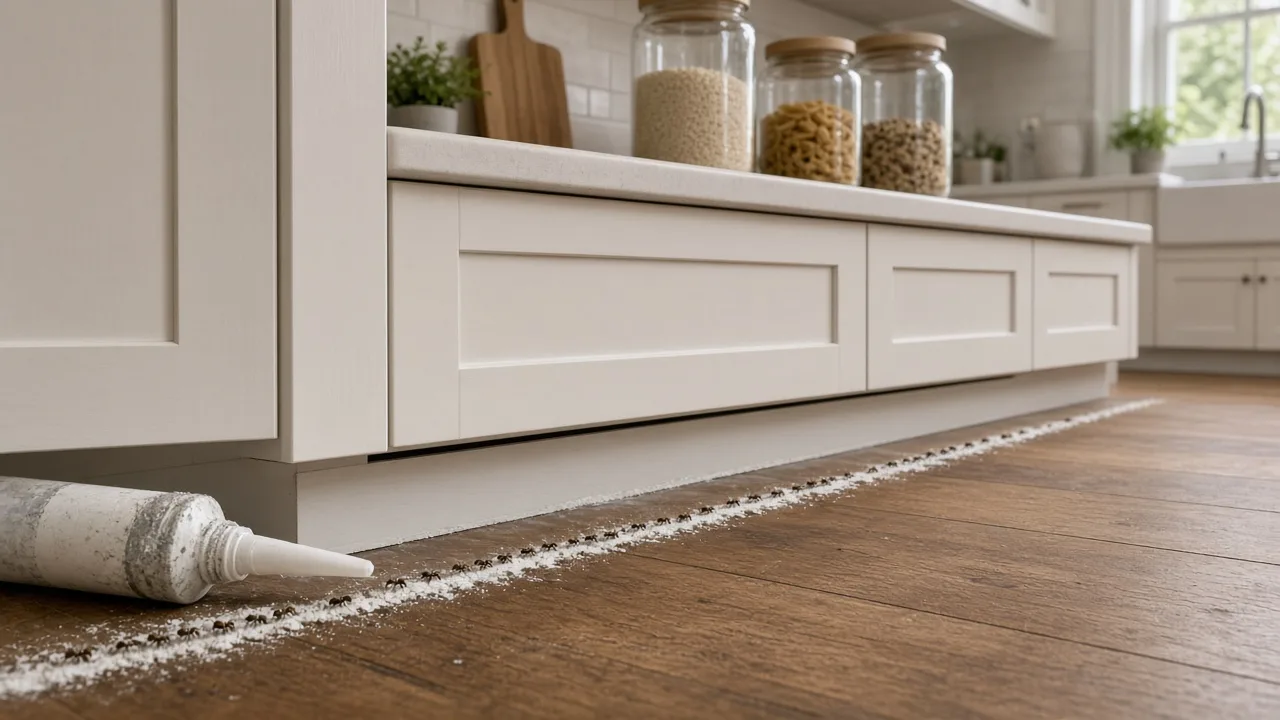
Before opening a bait package, watch the ants for several minutes. Follow the line to where it leaves the room or disappears under a baseboard, cabinet, pipe, window, or door. The best station location is close to that route while still being dry, stable, away from food-preparation surfaces, and inaccessible to children and pets. Setting bait in an unrelated cabinet can leave ants following their established route and never finding it.
Check for food, water, and an indoor nest
Look for the attraction that started the trip: a drop of juice under an appliance, grease near a range, an open sugar bag, pet food left out, a damp sponge, a leaking trap under the sink, or an overflowing bin. Remove competing food and water, but do not contaminate the path immediately beside bait with repellent cleaner. Wipe other surfaces and crumbs, rinse sticky containers, seal pantry goods, and repair leaks. UC IPM recommends sanitation and sealing entry cracks alongside baiting; it also notes that spraying indoor foragers does not prevent new ants from entering (UC IPM’s ant management advice).
If the trail runs to a houseplant, check both the soil and the foliage. Ants can be traveling through a pot, nesting in it, or visiting honeydew from aphids, mealybugs, or scale insects. Gardening Know How makes the same useful distinction: seeing ants on a houseplant does not prove that the plant is their food source or that the ants caused leaf damage (Gardening Know How’s houseplant ant guide). Inspect for the actual plant pest before treating the leaves or drowning the pot.
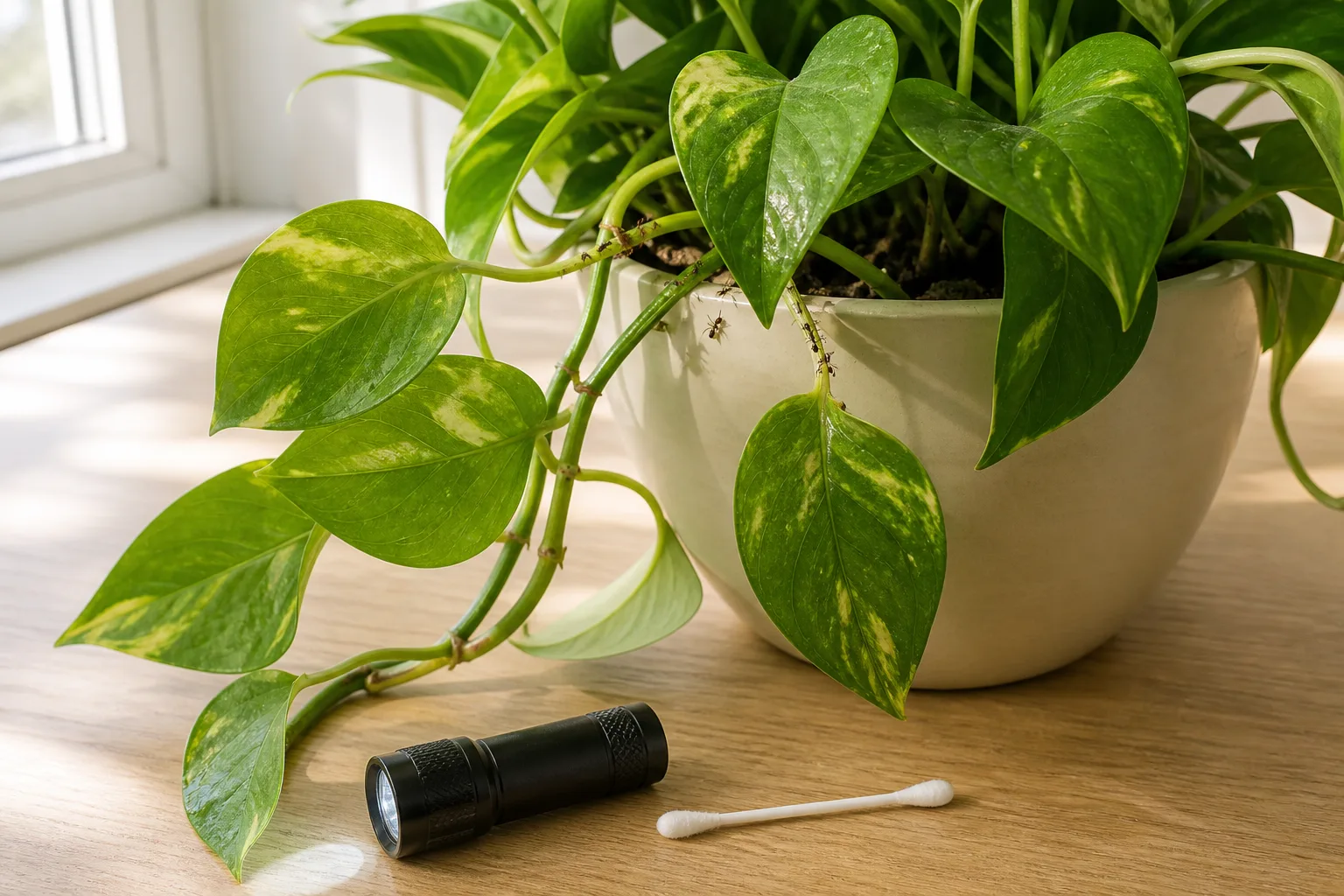
If you cannot watch the whole route at once, mark the spot where workers enter the room and check it again after you remove a competing food source. A new line from a different wall or pipe may mean there is a second entry, not that the original bait has failed. Keep a quick note of the time, room, station position, and whether ants are feeding; that simple record makes it easier to tell a shifted route from a bait the colony rejects.
Know when a trail needs professional identification
Small ants in a kitchen are often nuisance foragers, but a bait station is not the right first answer for every ant. Larger ants, recurring piles of coarse wood shavings, damp or softened framing, or ants repeatedly emerging from a wall can point to a carpenter-ant or moisture problem. Carpenter ants excavate nesting galleries in wood; they do not eat the wood as termites do, but the nest can still signal a leak or structural damage. If you see those signs, ask a licensed pest professional to identify the insect and inspect the moisture source rather than relying on a sugar trap (UC IPM’s household ant guide).
Treat stinging ants and large outdoor mounds as a separate problem. Do not put a homemade bait where a child, pet, or barefoot person could disturb a mound. If you cannot identify the ants, find the nest, or keep the bait inaccessible, an extension office or licensed professional can help choose a treatment that fits the species and site.
Choose the Setup That Matches the Ants
Ants do not all want the same food. Some readily take carbohydrates such as sugar or syrup; others show more interest in protein or oily foods. Preference can also change with species, colony needs, and season. UC IPM notes that Argentine ants often favor sweet liquid bait, while thief ants and Pharaoh ants may prefer protein or greasy bait. These patterns are clues, not a way to identify a species by sight.
Choose one station based on the trail and the product’s labeled attractant. If ants bypass it for crumbs or pet food, remove the competing source first. If they walk past a clean, accessible station for a day or two, try the other bait type at the same route. Do not mix sweet bait and grease together or add ingredients to a ready-made station; an improvised mixture can change how ants feed and can expose people or pets to pesticide.
Trap 1: Sweet Liquid Bait in a Refillable Station
A sweet liquid station is a sensible first choice when ants are already visiting sugar, jam, fruit juice, soda, or another sweet spill. Use a liquid ant bait formulated and labeled for the place you intend to treat. For a refillable station, use only a compatible, label-approved refill and assemble the station as directed. The container should keep liquid from tipping or pooling, and its openings should admit ants without giving children or pets access to the bait.
Some university guidance discusses low-concentration borate in sugar water for particular ant problems. UC IPM, for example, describes a 0.5–1 percent borate solution in a refillable outdoor station for severe Argentine-ant infestations. That is a species- and setup-specific extension recommendation, not a universal kitchen measurement. Do not estimate pesticide concentration with a teaspoon, substitute laundry borax, or pour an unknown mixture into a bottle cap. If you cannot follow the exact instructions for a product and station, use a ready-to-use labeled bait instead (UC IPM’s liquid-bait guidance).
Place it beside an active trail
Set an outdoor refillable station just beside, rather than directly on top of, an established route so workers can reach it without the device blocking their path. If you are dealing with a persistent indoor trail and cannot locate its entry point, place an indoor-labeled station only beside that active route, not in a room where ants have not appeared. Choose a stable, dry, protected spot away from food preparation and out of reach of children and pets. If the label limits a bait to cracks, crevices, or another exact site, honor that restriction; a DIY holder does not change the permitted use.
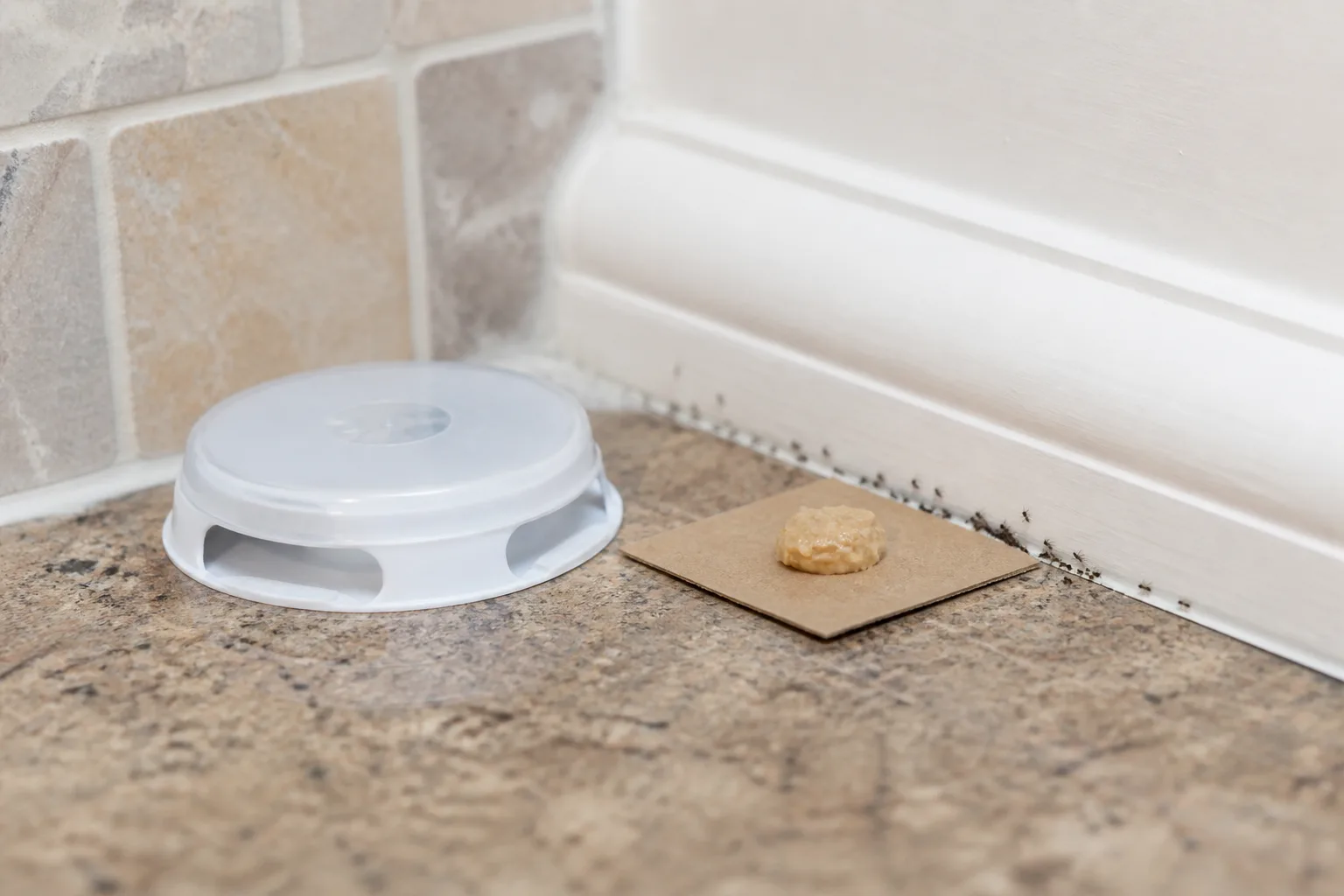
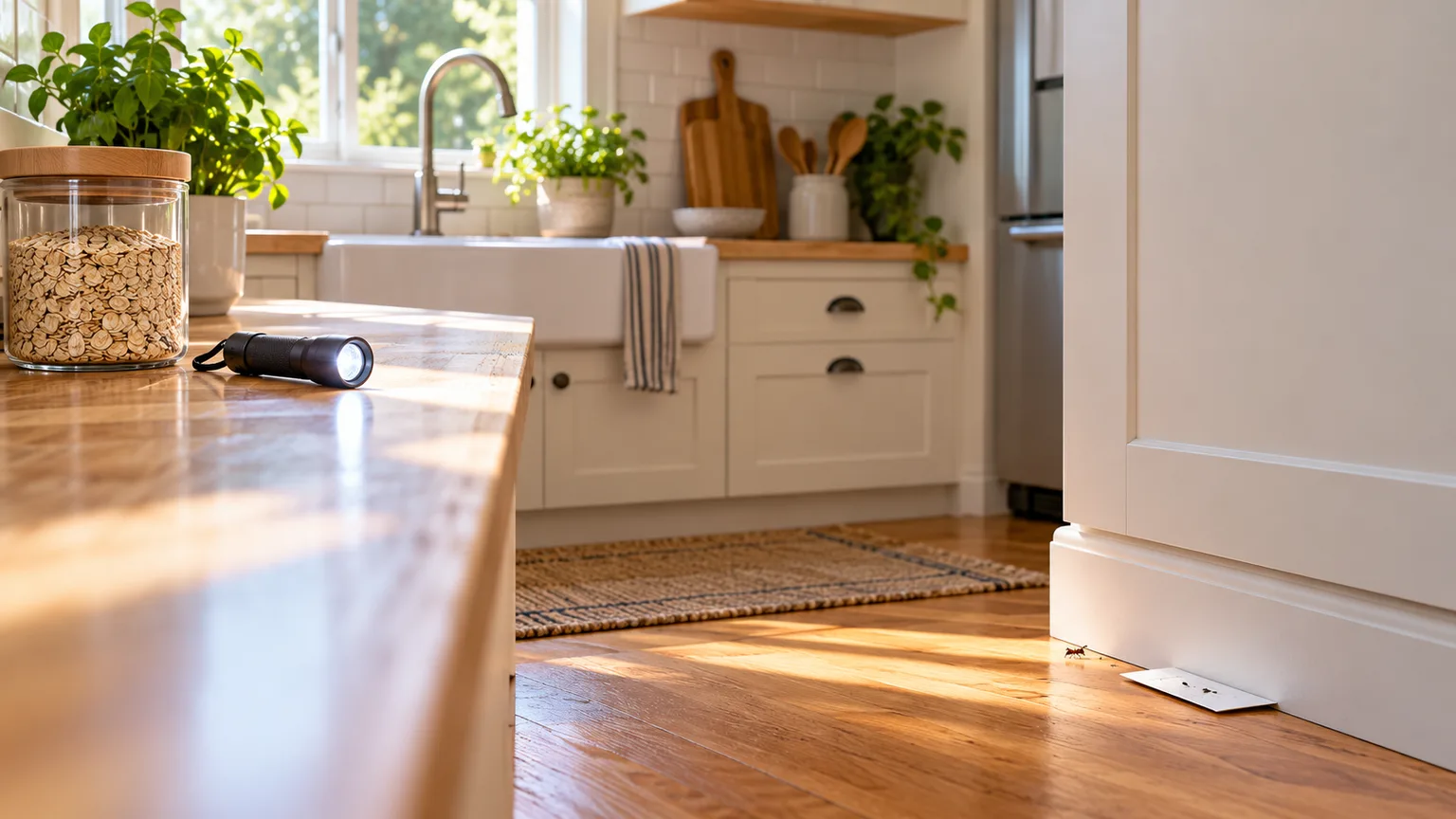
The exposed dab shown beside the station is not a safe substitute for a label-approved, secured bait setup.
Once ants are feeding, let them work. Replace or refill the bait only as its label or extension instructions direct. Liquid can dry or be consumed, and an empty station cannot continue to attract workers. If the ants ignore sweet bait but continue along the same line, switch the attractant rather than increasing the active ingredient.
Trap 2: Protein or Grease Bait for Ants Rejecting Sweets
If ants pass up a sweet station but repeatedly visit meat residue, oily pet food, or grease, try a labeled bait formulated around protein or oil. Some bait stations let you offer more than one formulation without putting two open foods on the floor. That can help you observe which one ants accept while keeping the bait enclosed. Choose the active ingredient and use site by the label, not by a “natural,” “strong,” or “fast” claim on the front of a package.
Avoid the common recipe of stirring borax into peanut butter, bacon fat, powdered sugar, or another food and leaving a spoonful on cardboard. The amount of active ingredient is hard to control in a kitchen mixture, and the exposed food can be reached by a child or pet. Oil or grease may also make a homemade mixture messy and difficult to contain. A commercial protein bait or a labeled refillable station gives you a known formulation and directions for placement; it is the practical DIY option when ants want savory food.
Switch attractants only after checking acceptance
Look at the station, not just the number of ants in the room. Are workers entering it and feeding? Is the bait dry, dirty, or covered by dust? Is a more attractive food source nearby? Is the station placed beside the route, or several feet away behind a cabinet door? Fix those problems before deciding the bait type failed.
UC IPM advises trying another bait material or repositioning a station when ants are not taking it. It also explains that preferences vary among species and across the year. So if the trail is still active and a properly placed sweet station remains untouched, replace it with an ant-labeled protein or oil formulation. Do not leave multiple uncontrolled food mixtures around the home to see what happens.
Trap 3: A Ready-to-Use Enclosed Bait Station
A sealed, ready-to-use station is the simplest choice if you do not want to measure or refill pesticide. Buy a product labeled for ants and for the site where you will use it. Check the active ingredient, bait type, placement directions, replacement interval, and child or pet precautions. “Indoor,” “outdoor,” and “tamper-resistant” are not interchangeable claims; read the directions for the specific package.
Put an outdoor-rated station on an established outdoor route or beside a nest opening only if its label permits that site; do not block ants from reaching the bait. UC IPM recommends placing bait chiefly outdoors because an indoor station can attract more foragers into the room. Reserve indoor stations for a serious, persistent trail when you cannot find where ants are entering, and use them only at an active route as labeled. If you use two different formulations, place them in separate approved stations so you can tell which one is accepted. A prefilled box is still a pesticide product even when it looks like a small piece of plastic, so store unused units in their original packaging and dispose of spent stations according to the label (UC IPM’s placement guidance).
Use indoor and outdoor stations only as labeled
For ants entering from outside, an outdoor-rated stake or weather-protected station may be a better fit than attracting more workers inside. Set it on a route or near a nest opening only if the label allows that location. Keep it away from storm drains, ponds, edible crops, children’s play areas, and places where pets sniff or dig. Never assume an outdoor bait can be placed anywhere around a foundation just because its package is small.
If the ants are already in a kitchen, do not automatically scatter multiple stations around the room. Put one where the trail is clear and where the device can be protected, then monitor it. More bait is not automatically better: the right bait, accessible to ants but not household members, is more useful than several poorly placed stations. University of Florida IFAS Extension also cautions that traps alone can be insufficient against persistent infestations, so pair baiting with sanitation and exclusion (UF/IFAS on DIY insect traps).
Keep Bait Away From Children, Pets, and Food
Boric acid and borate products are pesticides, even when they are sold in familiar forms. NPIC explains that risk depends on the product and the amount of exposure: ingestion can cause illness, while dust or some formulations can irritate eyes or skin. “Low toxicity” does not mean harmless, and a bait dish that a pet can lick or a toddler can pick up is not a safe station. Read the product label, use the required station or application method, and keep bait out of reach and away from dishes, utensils, and food (NPIC’s boric-acid fact sheet).
Do not make an open tray safer by hiding it behind a toaster where you may forget it. Prefer a secured location you can inspect, such as a protected space behind an appliance that children and pets cannot access, or a tamper-resistant product used according to its label. If you cannot reliably prevent access, skip pesticide bait and ask an extension service or pest professional about safer control in your household. Keep bait away from plant roots and outdoor runoff; boron can also injure plants when present at excessive levels.
If a person may have swallowed bait, follow the label’s first-aid directions and contact the local poison-control center promptly. In the United States, Poison Control is available at 1-800-222-1222; outside the U.S., contact your local poison center or emergency service. If a pet may have eaten bait, call a veterinarian or animal poison service with the product label in hand. Do not induce vomiting unless a medical professional tells you to.
A 10-Day Follow-Up: Signs the Trap Is Working
During the first day or two, note whether ants discover the station and feed. Seeing more workers gathered there can be an expected part of baiting; they are recruiting to a food source, not necessarily appearing because the bait created a new nest. Keep people and pets away, leave the station in place, and avoid spraying the active trail. Clean up unrelated food spills so the bait remains a competitive option.
Check that the bait is still present and not dried out, flooded, or contaminated. UC IPM says it can take about 5 to 10 days to see fewer ants after baiting, and complete control may take longer. Judge progress by whether the line thins and stops returning to the same entry point, not by whether every ant vanishes the hour you set a station. Continue only for the period and in the manner the label allows; replace empty bait with the same product or a compatible refill.
Troubleshoot bait that ants ignore
If ants never feed, make one change at a time. First move the station directly beside the route. Next remove competing food and moisture. If they still bypass a fresh, correctly placed station, try a different labeled attractant—sweet versus protein or oil. If they feed for several days and then activity rebounds, check whether the station ran dry, whether a second entry route appeared, or whether outdoor food sources are still drawing workers toward the house.
Do not solve rejection by mixing bait types or adding more pesticide. Avoid placing peppermint, vinegar, soapy water, or a repellent dust where ants need to walk to the bait. Those may be useful for cleaning a separate trail after the bait is removed, but interrupting the route at the station can prevent workers from collecting it. If an ant bait attracts no ants after you correct placement and food competition, the right next step is identification or professional advice—not an internet recipe with a stronger dose.
Close the Door on the Next Ant Trail
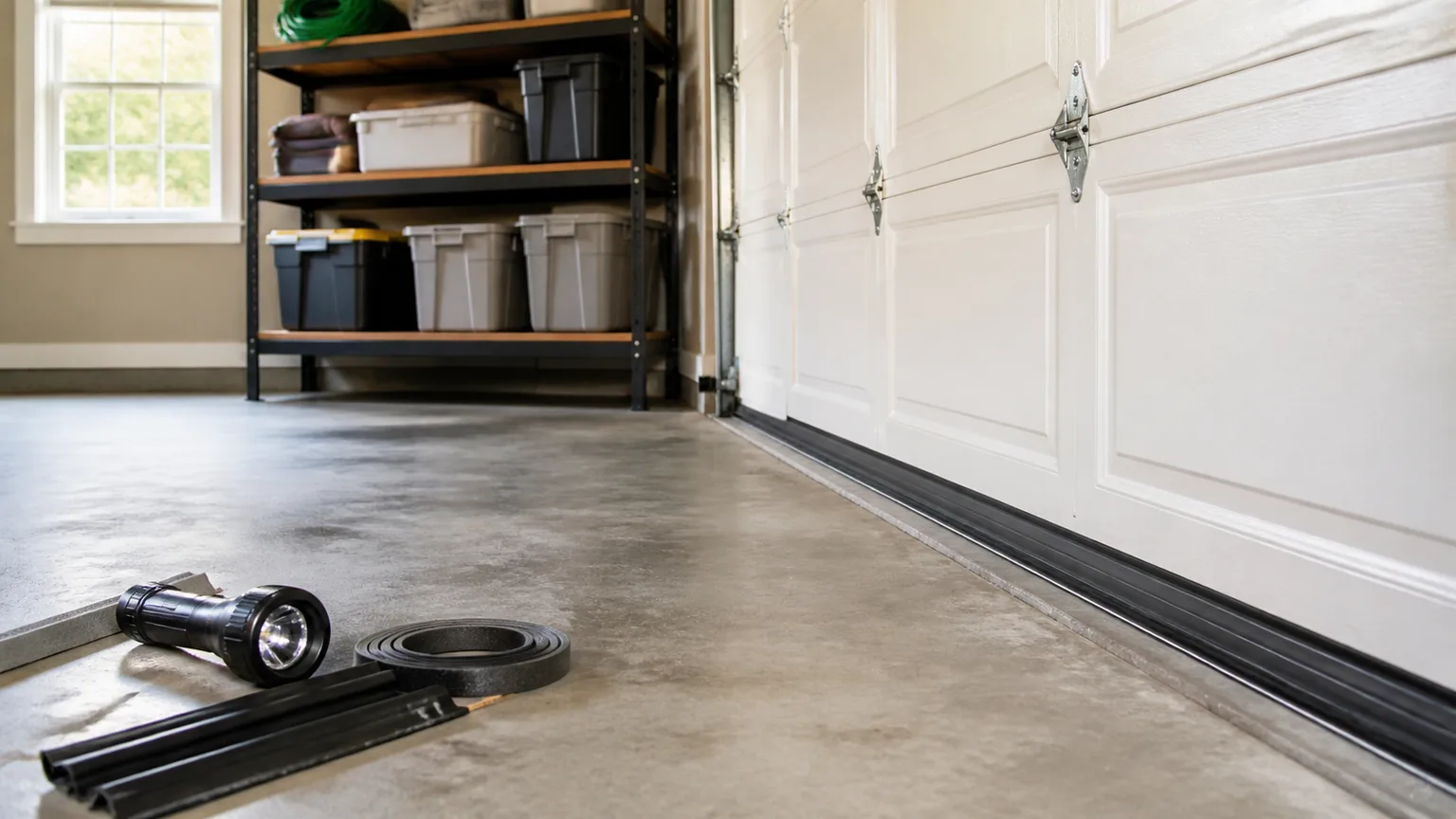
After activity has declined, remove the station as directed and clean the route. Seal the crack, gap, or pipe opening the workers used, and replace worn door sweeps or window seals if those are the entry points. Keep dry goods and pet food in sealed containers; rinse sticky bottles before storing them; wipe crumbs and grease promptly; and take kitchen waste out regularly. These steps remove the reasons a new group of foragers would follow the same route.
Outside, trim branches that touch the house and keep dense mulch or plant debris from bridging to siding and foundation cracks. Fix dripping taps, leaking outdoor spigots, or irrigation that keeps the foundation wet. If ants are concentrated around plants, inspect for aphids, soft scales, mealybugs, or whiteflies producing honeydew. Gardening Know How notes that those sap-feeding pests can attract ants to indoor plants, so treating the source may matter more than trying to repel the ants from the pot. Avoid spraying broad insecticides around the foundation as a routine; UC IPM recommends exclusion, sanitation, and targeted baiting rather than relying on indoor sprays that kill only the workers you can see.
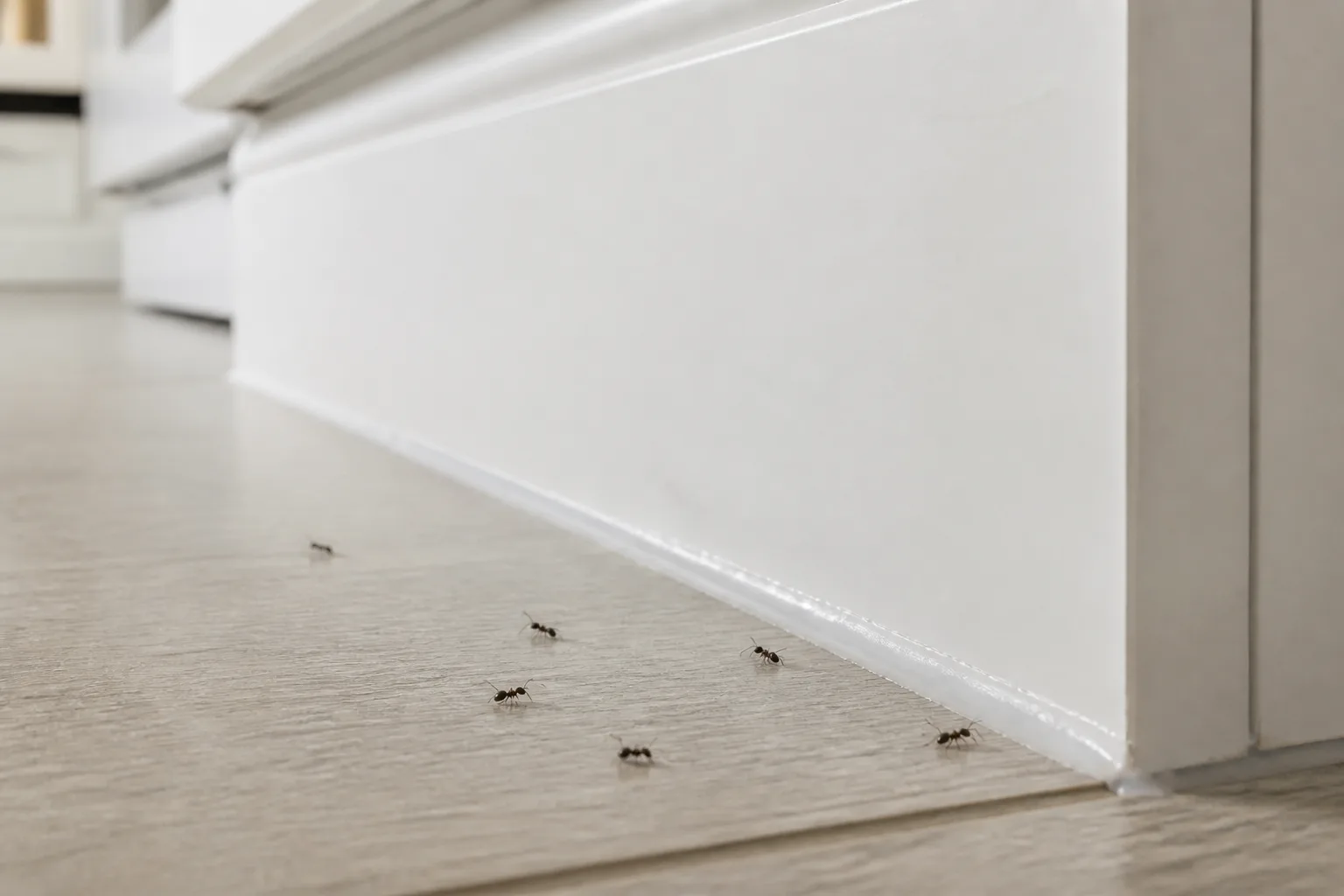
A trap is one part of a small integrated plan: remove the food or water, place the right bait where ants already travel, give slow bait time to move through the colony, then close the entry route. That sequence is more dependable than making a stronger open mixture or shifting stations every day. If ants keep returning from walls, damage wood, sting, or spread despite careful baiting and sanitation, get help identifying the species and the nest.
Conclusion
For sugar-seeking ants, use a protected liquid bait station; for ants that reject sweets, try a labeled protein or oil-based bait; and when you want the least mixing and mess, choose a ready-to-use enclosed station. Place any bait beside an active trail, keep it inaccessible to children and pets, and follow the product directions exactly. The station may draw more visible workers at first, and a decline can take a week or longer, so leave feeding ants alone while the bait is active.
The trap is only the middle step. Remove food and moisture competitors, seal the entry once activity has stopped, and get professional identification when you suspect carpenter ants, stinging species, or a nest inside the building. That combination gives the bait a chance to work and makes the same trail less attractive next time.