16 DIY Cucumber Trellis Ideas That Are Easy to Build
Compare 16 DIY cucumber trellis ideas—from cattle-panel arches to twine grids—then choose a support that fits your space, budget, and vining cucumber variety.
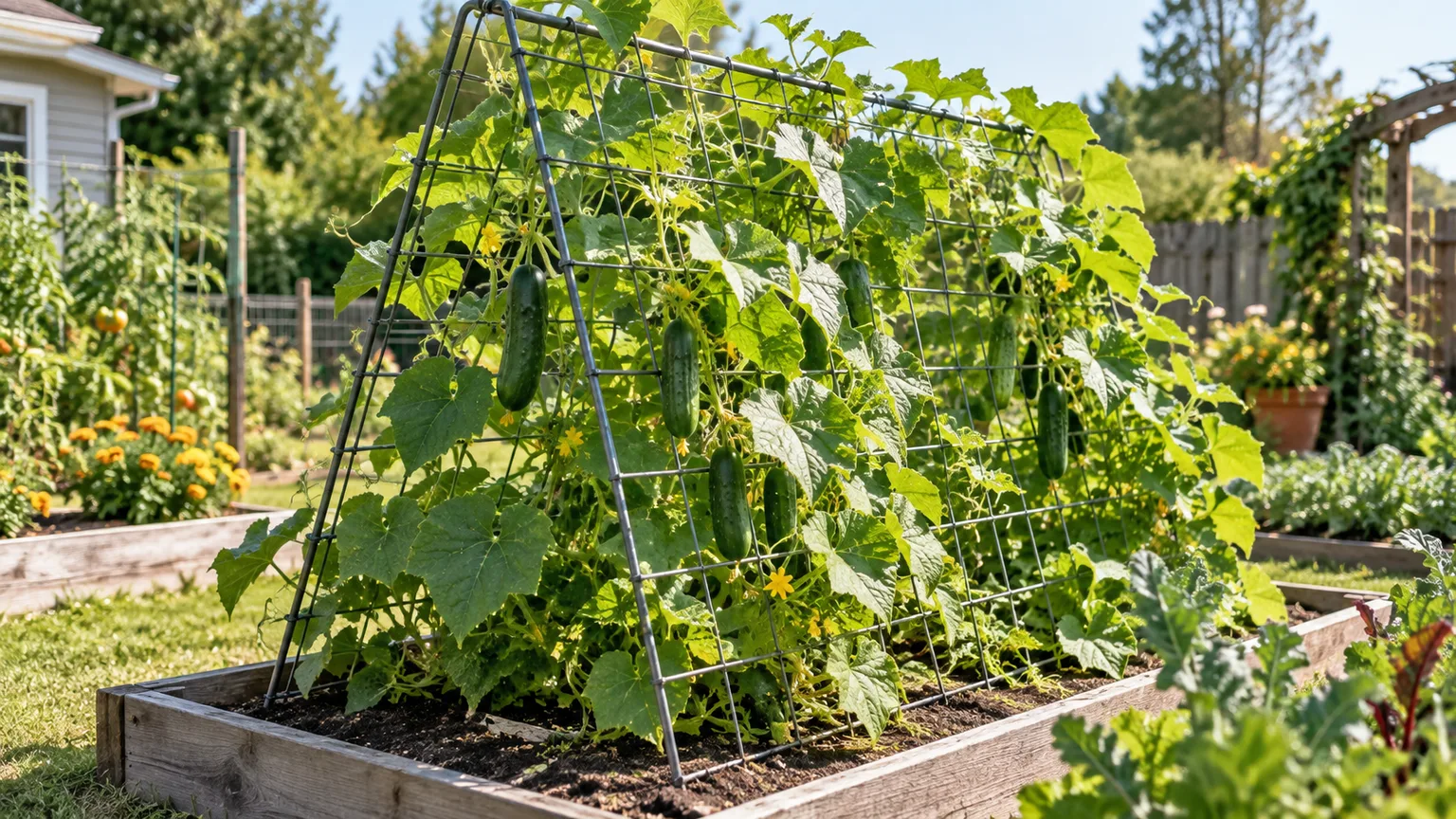
A cucumber trellis can be as simple as twine between two posts or as generous as a walk-through wire arch. The right DIY cucumber trellis is the one that supports the variety you’re growing, stays upright in your weather, and lets you reach the fruit without wrestling a curtain of leaves.
Before choosing a shape, check the seed packet for growth habit. Vining cucumbers use tendrils to climb and benefit most from a frame; compact bush varieties stay shorter and may need only a low cage or no trellis. Trellising can make fruit easier to find and can improve airflow around foliage, but it does not guarantee a larger harvest or prevent disease by itself. NC State Extension notes that cucumbers can grow vertically on a trellis or wire fence, with increased air circulation and straighter fruit. A Cornell plant-science expert also recommends vertical growing when space, airflow, and harvest access are priorities.
Match the Trellis to Your Cucumbers and Garden
Start with the crop, then the site. For a vigorous vining cucumber in a sunny bed, choose a rigid grid, wire panel, or braced frame with openings large enough for you to reach through and for fruit to pass. A bush or patio variety may be better with a shorter, lighter support. The vine is not the only load: wet foliage, attached fruit, wind, and the leverage of a tall panel all pull on joints and stakes.
Think about access before you build. An A-frame gives you two planting edges and lets fruit hang under the sloping sides; a vertical panel saves ground space but needs a clear path on at least one side. An arch is attractive over a walkway, though its legs need secure anchoring and enough room between beds. If a support sits against a fence, prevent vines and fruit from slipping into an unreachable gap. Epic Gardening suggests a home cucumber trellis around five feet tall, while greenhouse systems described by University of Alaska Fairbanks Cooperative Extension use overhead wires six to eight feet above ground; treat greenhouse dimensions as a different setup, not a universal backyard rule. Pick a reachable height for your variety and your own harvesting reach.
Plan for how the structure will meet the ground. Drive posts before sowing or transplanting so you do not disturb roots later. Attach every panel at multiple points, brace frames that can rack sideways, and anchor lightweight structures more deeply or to a stable bed. If you cannot push or pull the empty trellis without it shifting, it is unlikely to feel secure once vines fill it. Wear gloves while handling wire and rebar, cover exposed cut ends, and skip lumber or hardware with sharp edges, splinters, or an unknown chemical spill history.
The simplest dependable materials are sturdy posts, exterior-suitable fasteners, and a climbing surface. Twine is inexpensive and easy to replace but can sag or snap when it gets wet or carries a heavy vine; Savvy Gardening recommends using stronger string or jute rather than flimsy dollar-store twine. Mesh and cattle panels last longer, but their openings must be usable for harvesting. Savvy Gardening’s cucumber trellis guide advises leaving enough room to fit a hand through mesh so fruit does not become trapped. Install the support before planting, as Get Busy Gardening recommends, then guide young tendrils gently instead of forcing a brittle stem.
16 DIY Cucumber Trellis Ideas
These builds range from quick reuse projects to longer-lasting garden fixtures. Match the structure to your bed width and the number of vines; a tall, oversized frame is not automatically better if you cannot reach the top or secure the base.
1. Cattle-Panel A-Frame
Two rigid livestock panels joined along their top edges make a sturdy A-frame with planting space on both sides. Set the panels where they will live, tilt them together, and connect them at several points with galvanized wire or outdoor-rated ties. Add a lower crosspiece or stakes if the feet can slide apart, and position the legs on stable soil rather than loose mulch. The panel’s open grid gives tendrils plenty of places to catch and lets you reach through to pick fruit.
This is a good choice for a medium-size bed that needs more climbing surface than one flat panel provides. It is also heavy and awkward to carry, so ask another adult to help lift and position it; do not try to bend or move a full-size panel alone. Check the panel’s cut edges and cover any sharp ends that face a walkway. If the frame flexes when pushed, add a brace before planting rather than relying on the vines to stabilize it.
2. Cattle-Panel Garden Arch
A long cattle panel can be bent over a path between two beds to create a walk-through arch. Set sturdy posts at the feet first, then have a helper control the panel while you guide it into a curve and attach it at several points on each side. Savvy Gardening’s cattle-panel guide uses posts about five feet apart for its arch and emphasizes anchoring the panel to the posts; your spacing depends on panel stiffness, available length, and the opening you want.
The arch adds growing area without taking up a bed’s center, and cucumbers are easy to see from either side. It is a poor fit for a narrow walkway, an exposed windy corner with weak stakes, or a garden where you cannot reach the top. Do not treat the arch as a climbing frame or swing. Before plants fill it, inspect the ties and posts, and keep the highest fruit within a comfortable reach.
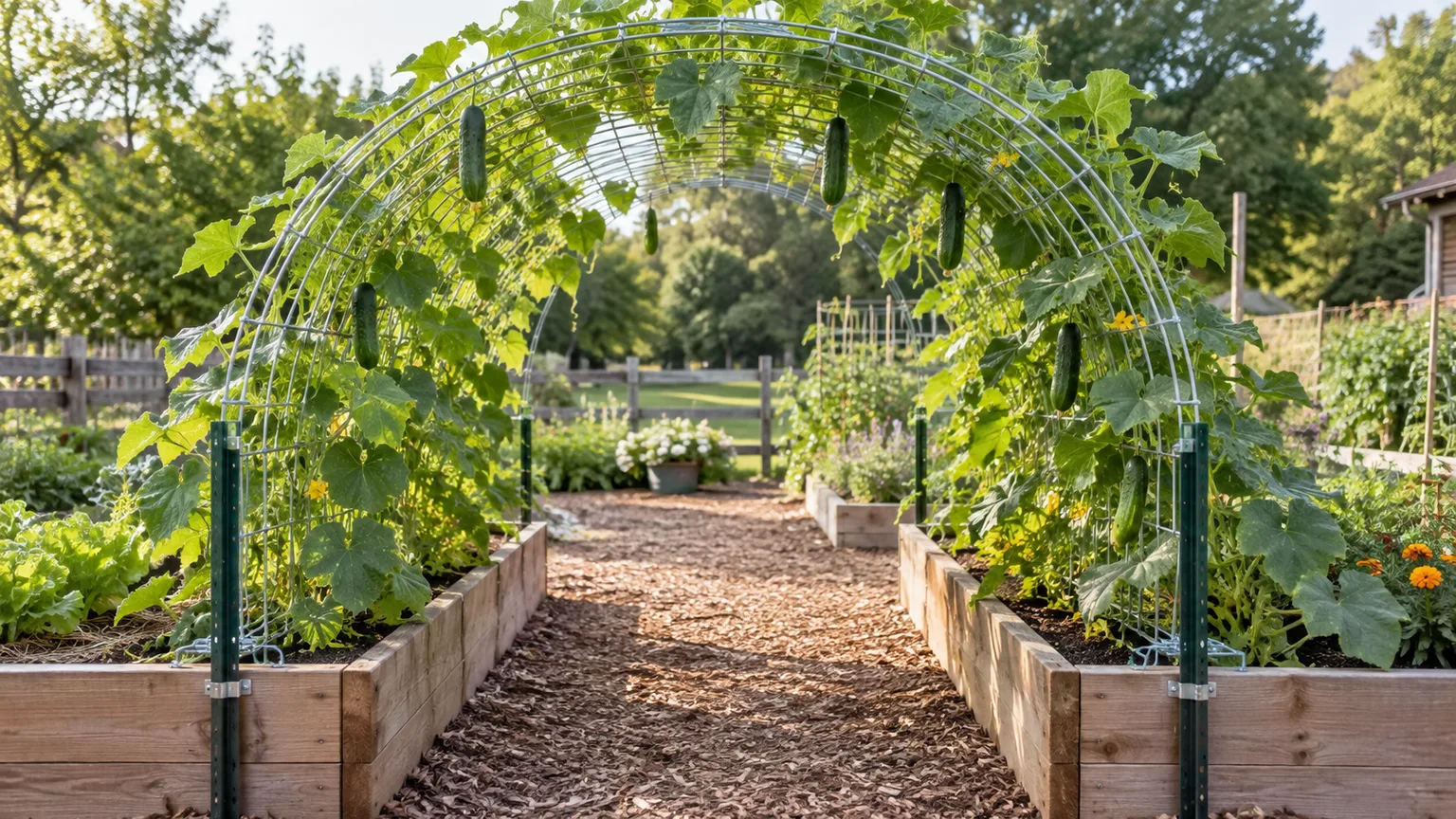
Use a cattle-panel arch only where both feet can be anchored and the walkway stays clear.
3. Single Cattle Panel on a Raised Bed
For a simpler version of the arch, stand one rigid panel vertically along the back edge of a raised bed. Fasten it to two or more posts driven into the ground outside the bed, or to structural bed supports designed to take the load. The extra post support matters because a panel clipped only to thin bed boards can pull them out of square as the vines get heavier.
This layout preserves the bed’s center and gives vining cucumbers a large, continuous surface. Put the panel on the side of the bed that will not shade shorter crops, and leave enough space to walk behind it if you need to inspect or harvest from both sides. A panel set against a fence can trap fruit in the gap; either close off that gap so vines stay in front or provide access behind it. Use a stable panel with rounded or protected cut ends, and recheck its fasteners after wind or heavy rain.
4. Raised-Bed Wood-and-Twine Grid
Set two sturdy upright posts outside opposite ends of a raised bed and connect them with a top rail. Tie garden twine from the soil line to the rail at intervals along the length, or weave horizontal rows between the posts to create a broad grid. The key improvement over twine draped across a bed is anchoring the posts below the frame, where the bed’s soil cannot loosen them.
This is one of the easiest and least expensive builds for a small bed. It is also the easiest to repair: replace an individual strand each season instead of rebuilding the whole support. Use twine with enough strength to carry a leafy vine after rain, keep knots tight, and space strands so fruit can hang without wedging. If you prefer a vertical line for each plant, add a bottom anchor at soil level and guide tendrils around it. Do not use fine fishing line or wire where it can cut growing stems or snag your hand.
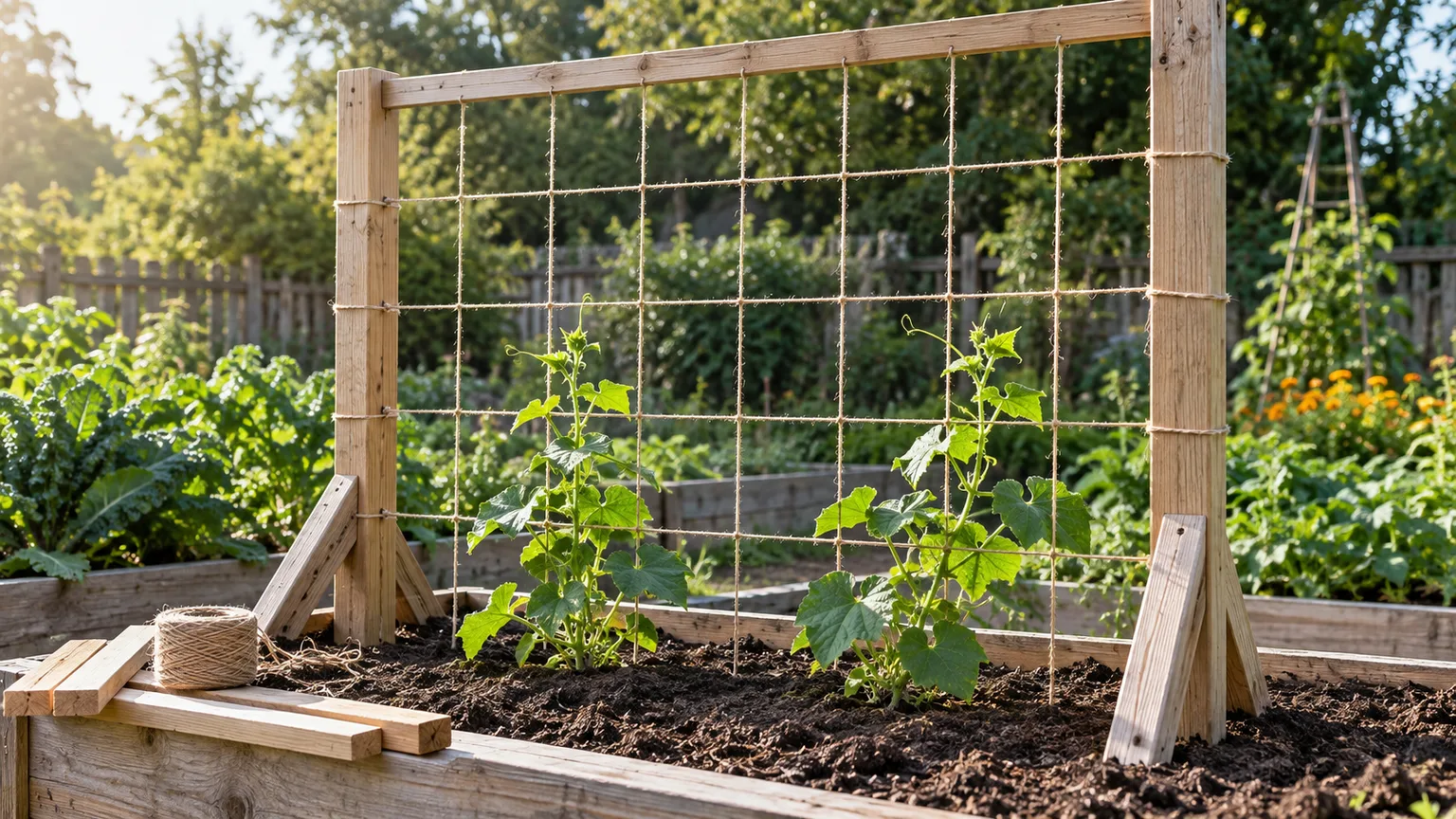
A braced wood frame keeps a twine grid taut and gives young tendrils several places to catch.
5. Freestanding String-Grid Frame
Make a freestanding rectangle from two upright posts and a top beam, then add diagonal braces at the back corners to stop it from swaying. Stretch horizontal twine or netting across the frame and fasten it along all four sides. This design works beside an in-ground row where there is no raised-bed board to screw into, and it can be built from leftover lumber if the pieces are straight and sound.
The wide grid is more forgiving than a single string because tendrils can catch at several points. Choose netting with openings large enough to reach through and remove ripe fruit without tugging the vine. Savvy Gardening notes that fruit can get stuck in net openings that are too small, so test one opening with your hand before hanging the entire sheet. Leave access on the picking side, and add stakes or a ground-level crossbar if the posts shift when the net is pulled taut.
6. Reused Wooden Ladder
An old wooden ladder can become a quick cucumber support if its rungs and side rails are sound. Open a stepladder fully and lock its spreaders, or lean a straight ladder against a firmly anchored support so it cannot slide. Add garden twine vertically between the rungs if the gaps are too wide for young tendrils to catch. Plant one or two vines near the feet, depending on the ladder’s width and the variety’s vigor.
Ladders are useful when you want a narrow footprint and can reach the top safely. Do not use a damaged ladder as a garden structure, and never climb it to reach cucumbers while vines obscure the rungs. The plant load can hide loose joints, and leaning the ladder in soft soil makes it easier to tip. If the wood was painted or treated with products of unknown history, choose another material for an edible garden. A small, stable ladder is a better match for a compact planting than for several vigorous vines.
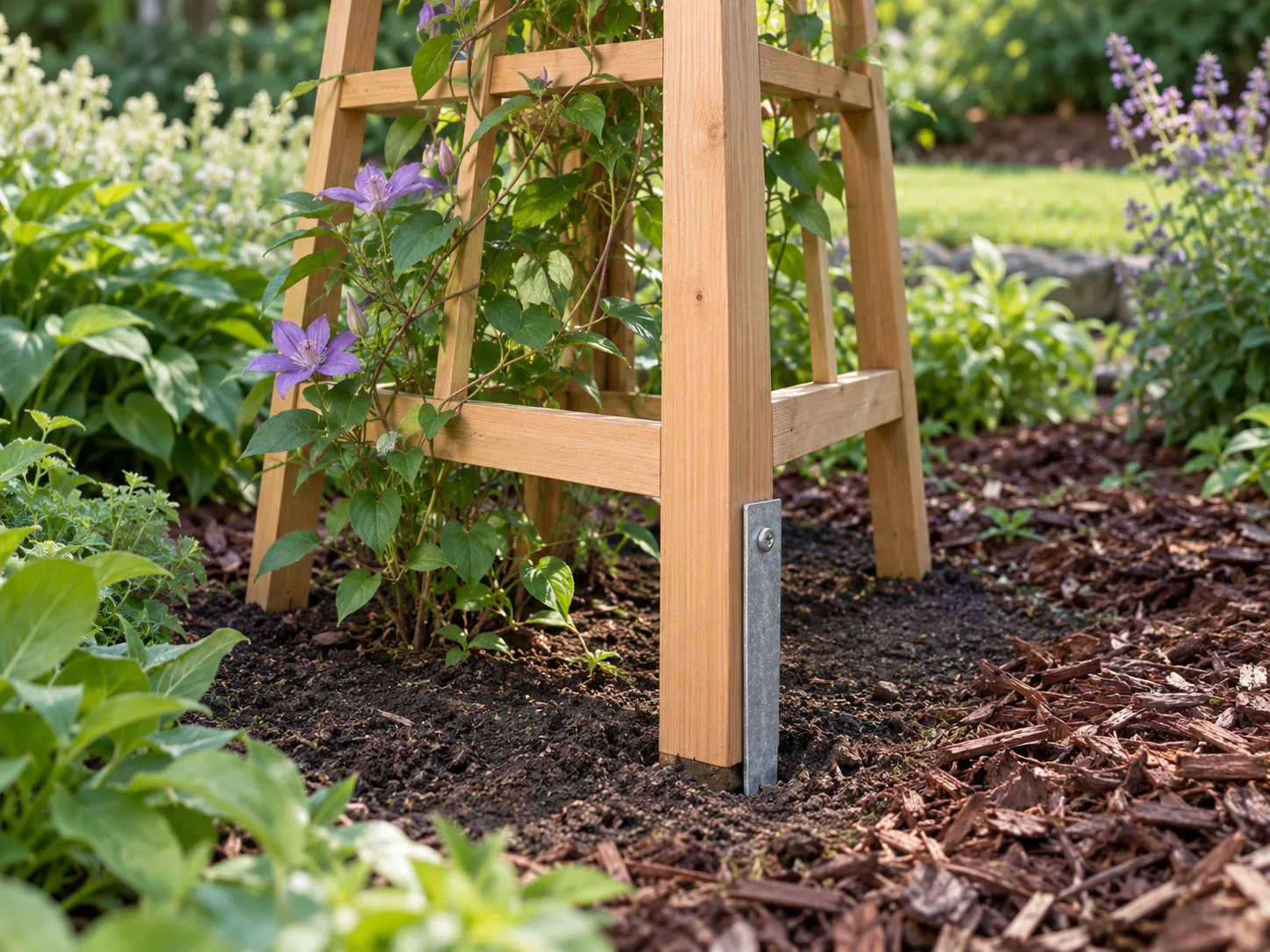
7. Scrap-Wood Pyramid or Obelisk
Four long slats joined at the top create a pyramid or obelisk that fits into a square bed or large planter. Spread the feet evenly, add one or two horizontal crosspieces on each face, and secure the joints with outdoor-rated screws. A few additional slats or twine lines give tendrils smaller places to catch; a bare pyramid of widely spaced poles may need that extra climbing surface.
This shape works well as a focal point in a kitchen garden and makes it possible to plant around the base. Keep the base wide enough that it cannot rock, and attach it to a stake or planter frame if children, pets, or strong gusts could bump it. Use untreated, clean scrap wood or material with a known history and smooth the edges where vines and hands will pass. If you build the point tall, leave it low enough that you can harvest from the ground without pulling on the vine.
8. PVC Garden Hut
PVC pipe can form a light, hut-shaped support for one or two vines. Cut equal lengths for the legs, join them at the top with compatible fittings or a securely lashed cap, and add horizontal crosspieces or taut garden netting between the legs. Push the feet into soil or secure them to a bed frame. The hut shape is easier to stabilize than four loose poles because the top connection keeps the sides working together.
Use this for a temporary or lightweight setup, not as a substitute for a heavy-duty panel in a very windy garden. Pipe diameter and fittings affect stiffness; if the top bows or the legs spread when you press on them, add cross-bracing or shorten the span. Avoid placing bare PVC where a sharp cut edge can rub a stem. PVC gives tendrils little grip by itself, so include twine or mesh. Keep the opening broad enough to reach inside for harvesting instead of building a decorative hut that becomes hard to use once it is covered in leaves.
9. Branch-and-Twine A-Frame
Use two pairs of sturdy, straight branches to make opposing sides, lash the tops together, and add a crossbar near the top to prevent the frame from folding. Stretch twine between the sides or run a few vertical strings from the top to ground anchors. Select branches that are thick enough to resist bending under a mature vine; brittle, rotten, or freshly cut green wood can fail as it dries.
This is a good no-purchase option if you already have clean prunings of suitable size. Trim side nubs that could snag foliage, but leave a few small rough spots for tendrils to grab. Secure each foot so it cannot kick outward, and avoid placing sharp branch ends near a path. Natural materials vary, so check the structure after storms and replace any branch that cracks or loosens. The rustic frame is best for one or two plants, not a long row of heavy fruit.
10. Rebar-and-Wire Garden Arch
For an arch with a smaller footprint than a cattle panel, set two pairs of metal stakes on opposite sides of a bed or path and attach a broad wire-grid panel over them. The stakes hold the panel’s sides while the grid gives the vines a climbing surface. If the panel needs a curve, bend it slowly and evenly with another person controlling the opposite edge; forcing it against a single post can kink or spring back.
This project suits gardeners who already have suitable fencing wire and metal stakes. Rebar is not a finished handrail: its ribbed surface, exposed ends, and stiff spring force can injure you, so wear gloves and eye protection, cap exposed ends, and keep the work area clear. Do not cut thick rebar with improvised tools. Use stakes long enough for firm anchoring and inspect all connections before the vines cover them. If the panel springs or the arch shifts under light hand pressure, choose a simpler vertical grid instead.
11. Bamboo Teepee
Arrange three or four sturdy bamboo canes in a circle, cross their tops, and lash the joint with several tight wraps of durable twine. Then wind twine around the legs in rising rings, or add vertical strings from the top to the soil. Place each cane deep enough to stay put and plant a vining cucumber beside a leg so it can find the support.
The teepee is inexpensive, easy to move, and useful in a small bed or container. Its narrow footprint works best for a single plant; several crowded vines can shade the center and make fruit hard to reach. Use canes of similar length and thickness, and retie the crown if it loosens during the season. A low horizontal twine grid helps early tendrils catch before they reach the top. Avoid an overly tall teepee with a tiny base because wind can turn it into a sail once leaves cover the frame.
12. T-Post and Branch Crossbar Trellis
Drive two metal T-posts into the ground and fasten sturdy branches or straight poles horizontally between them. Add more crossbars as a ladder-like grid, then attach twine between the bars if you want closer climbing lines. This converts readily available branches into a trellis without asking the branches to carry the full load; the posts take most of the weight.
Choose a span the crossbars can bridge without bowing, and secure them at each post with appropriate ties. Smooth or cap any ends that extend into a path. T-posts have exposed knobs and can be difficult to remove, so position them where you will not brush against them and check that the tops are protected. This build is easy to repair one crossbar at a time, but it needs a post driver or another safe way to set the supports. It is not a good project if you cannot drive the posts securely or if buried utilities are in the planned line.
13. Fence-Mounted Trellis with Access Space
Attach a rigid garden panel or wood lattice to a sound fence, shed, or wall using suitable stand-offs and fasteners. The support should not depend on a loose fence board or a single screw. Leave enough room to see and pick fruit from behind, or keep the back closed so the vines cannot grow through and hide cucumbers in an inaccessible slot. Epic Gardening flags the behind-the-grid gap as a common access problem when a trellis leans on a fence.
This vertical format is useful in a narrow garden where a freestanding frame would block the path. It can also reduce how much floor space the vines occupy. Confirm the wall or fence can bear the load and that the location still gets ample sun; a shady side wall is not a good trade for a slim footprint. Keep the bottom of the panel clear of soil so the base does not rot or corrode, and plan for watering at the root zone. If you cannot reach both faces safely, choose a single-front growing design.
14. Container Hoop Trellis
For a large planter, fit two or three sturdy hoops across the container and connect them with garden twine to make a low dome or tunnel. Flexible quilter’s hoops can work for a compact plant, while stronger metal hoops are better for a vigorous vining variety. Secure the ends in the potting mix near the rim, then connect the hoop crowns with twine so the frame cannot tip independently.
The container itself must be wide and heavy enough to keep the support upright. A tall frame in a light plastic pot can topple when foliage catches the wind, even if the hoops look sturdy at planting time. Choose a compact variety or keep the support modest, and leave room around the rim for watering. Tendrils may need a soft tie until they find the hoop. If the plant grows beyond the structure, add a taller outside support anchored to the patio or railing rather than forcing a flimsy hoop to carry a mature vine.
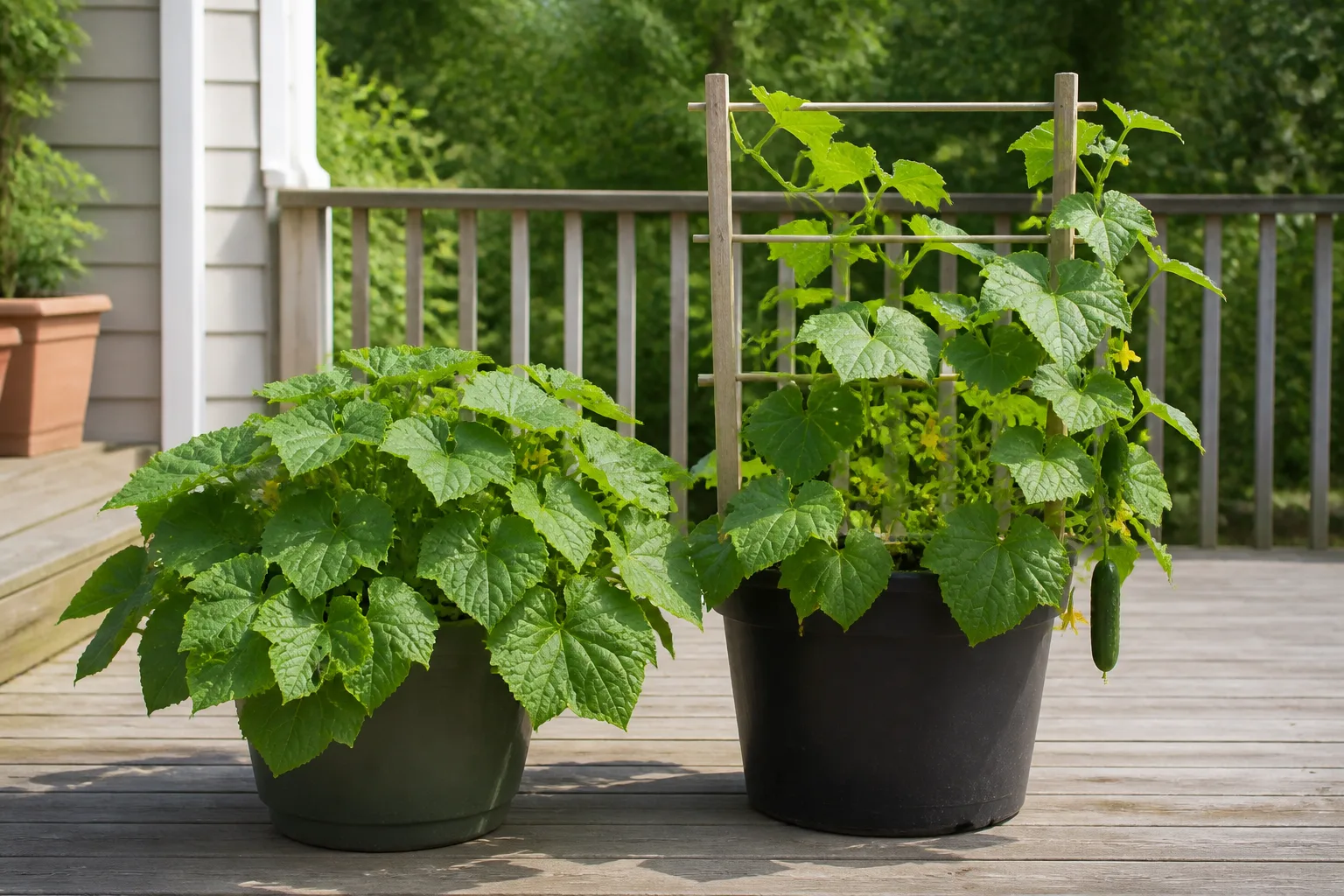
A container trellis needs a stable pot base as well as a climbing surface.
15. Wooden Tomato-Cage Trellis
Build a broad cage from four corner stakes connected by two or three square rails, leaving one side open or wide enough to reach inside. Add vertical slats or twine between rails for tendrils. A tapered version has a wider base than top, but a straight-sided cage is easier to build from lumber scraps and simpler to reinforce.
Unlike a small tomato cage, this structure should give a cucumber vine room to climb and leave space for fruit to hang outside the frame. Set the feet firmly in the bed before sowing and brace one face diagonally if the cage wobbles. Use screws rather than relying on a few nails in wet, moving wood. A wood cage can be attractive and long-lived, but avoid heavy decorative trim that adds weight without strengthening joints. Keep the openings large enough to reach fruit from outside instead of trapping the harvest inside a leafy box.
16. Clean Pallet A-Frame
Two clean, sound pallets can be leaned together to create an instant A-frame, with the slats acting as climbing rails. Join the tops with screws or sturdy ties, add a crosspiece to keep the bases from spreading, and anchor the feet. A single pallet can also lean against a horizontal support, but the two-sided frame is more stable when its feet are secured.
Only reuse a pallet when you know it is clean and in good condition. Skip wood with stains, chemical odors, broken slats, protruding nails, or a history you cannot verify; a pallet’s appearance alone does not tell you how it was used. Sand splinters and remove hardware that could cut your hands or snag fruit. The slat spacing may be too wide for young tendrils, so weave twine through the gaps. This is a fast, low-cost option, but it is not a reason to put an unstable or contaminated object beside edible plants.
Conclusion
The easiest trellis is the one you can anchor, reach, and maintain with the materials you have. For a small raised bed, start with a wood-and-twine grid; for a sturdy two-sided support, use a braced A-frame; for a pathway between beds, consider a cattle-panel arch only if you can secure its feet and lift the panel safely.
Build the support before planting, choose it for the cucumber’s growth habit, and test it before leaves hide the joints. If it shifts, sags, traps fruit, or puts the harvest out of reach, adjust the structure early. A practical trellis is less about a perfect shape than a stable climbing surface that makes watering, checking, and picking easier.