Why Are My Indoor Plant Leaves Turning Brown? Causes and Fixes
Diagnose brown leaves on indoor plants caused by watering, humidity, light, fertilizer, pests or disease. Step-by-step checklist and fixes.
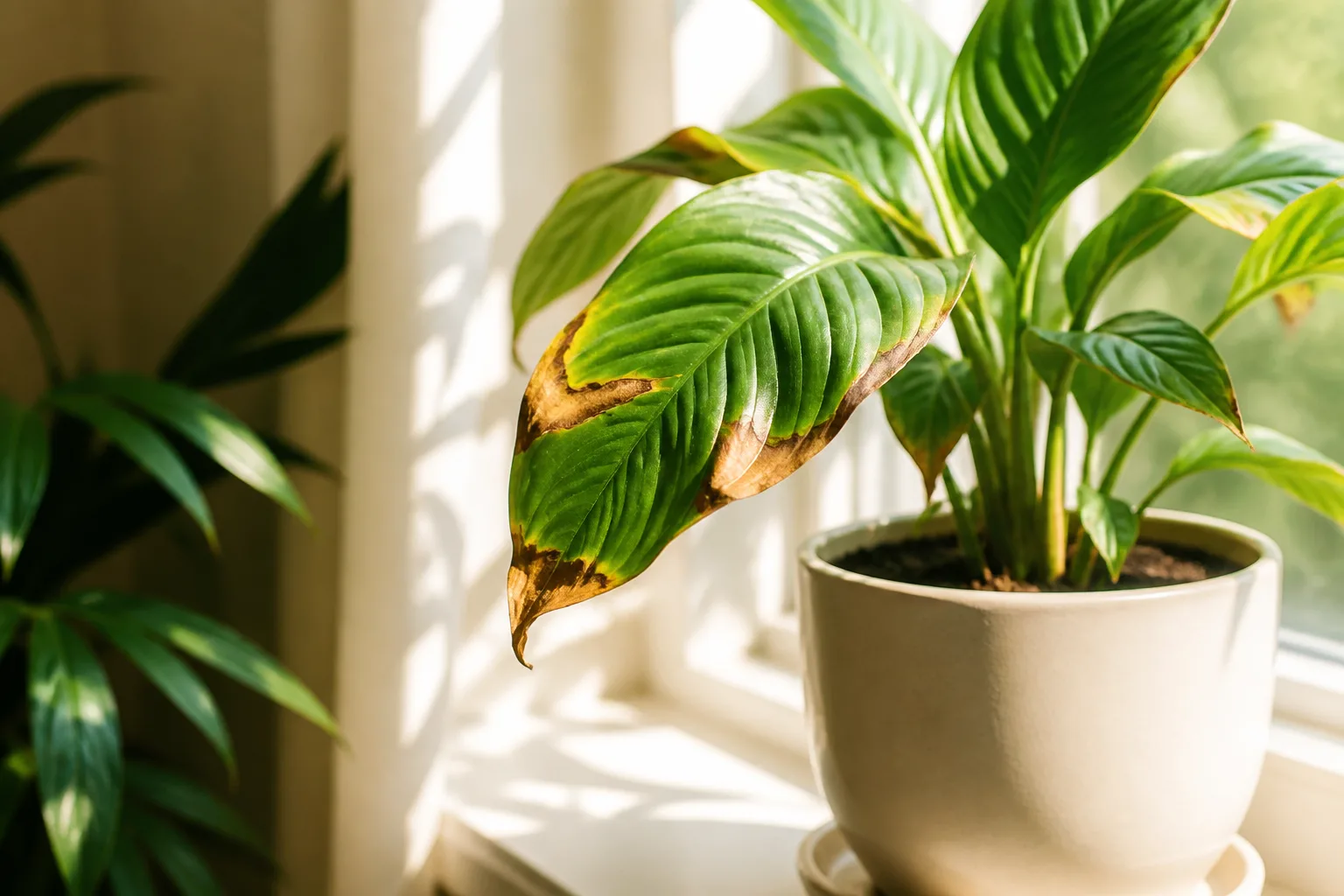
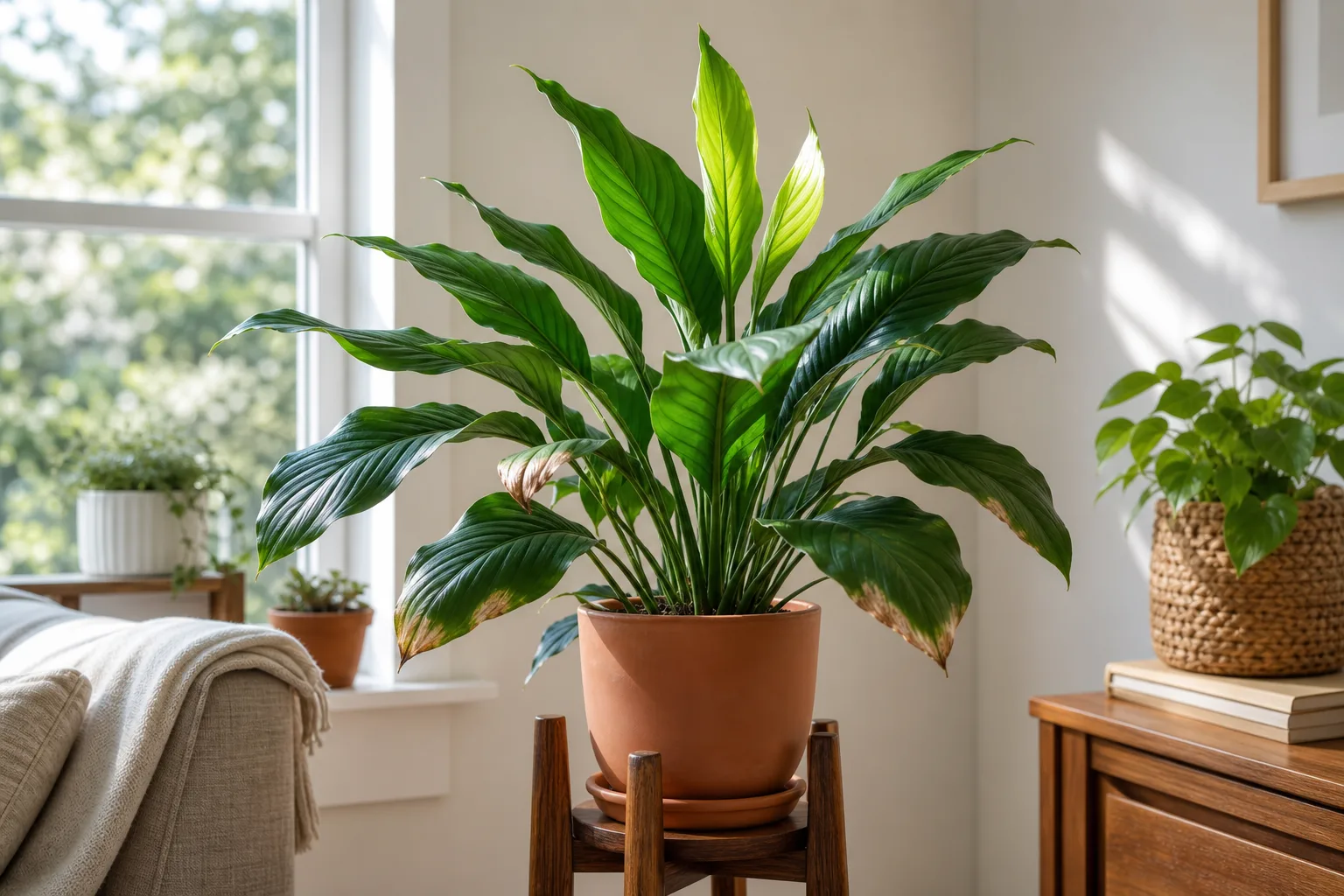
Brown leaves on an indoor plant are a stress signal, not a diagnosis. The leaf is showing you dead tissue, but it cannot tell you whether the roots are drowning, the air is too dry, the light is too harsh, or salts are building up in the soil. Most brown-leaf problems are fixable if you identify the real cause before reacting.
Common triggers include inconsistent watering, low humidity, direct sun scorch, fertilizer salt buildup, tap-water sensitivity, pest feeding, root rot, temperature stress, and sometimes just normal old-leaf shedding. Clemson Extension lists hot dry air, improper watering, insect feeding, and salt accumulation among the causes of brown leaf tips and margins. (Clemson HGIC) Iowa State Extension adds that inconsistent watering — particularly allowing plants to dry out too long between waterings — will cause brown leaf tips or edges, and that trimming improves appearance but new browning continues if the root cause is not addressed. (Iowa State Extension - brown leaf tips causes)
Your 5-minute diagnostic checklist:
- Probe the soil with a finger or chopstick 2–4 inches deep. Dry? Wet? Soggy?
- Lift the pot. Heavy usually means wet; feather-light usually means dry.
- Check where the browning is. Tips, edges, patches, whole leaf, or just the oldest bottom leaves?
- Feel the brown tissue. Crispy and dry, or soft and mushy?
- Scan the environment. Near a heater, AC vent, cold window, or direct afternoon sun?
Read the Damage Pattern First
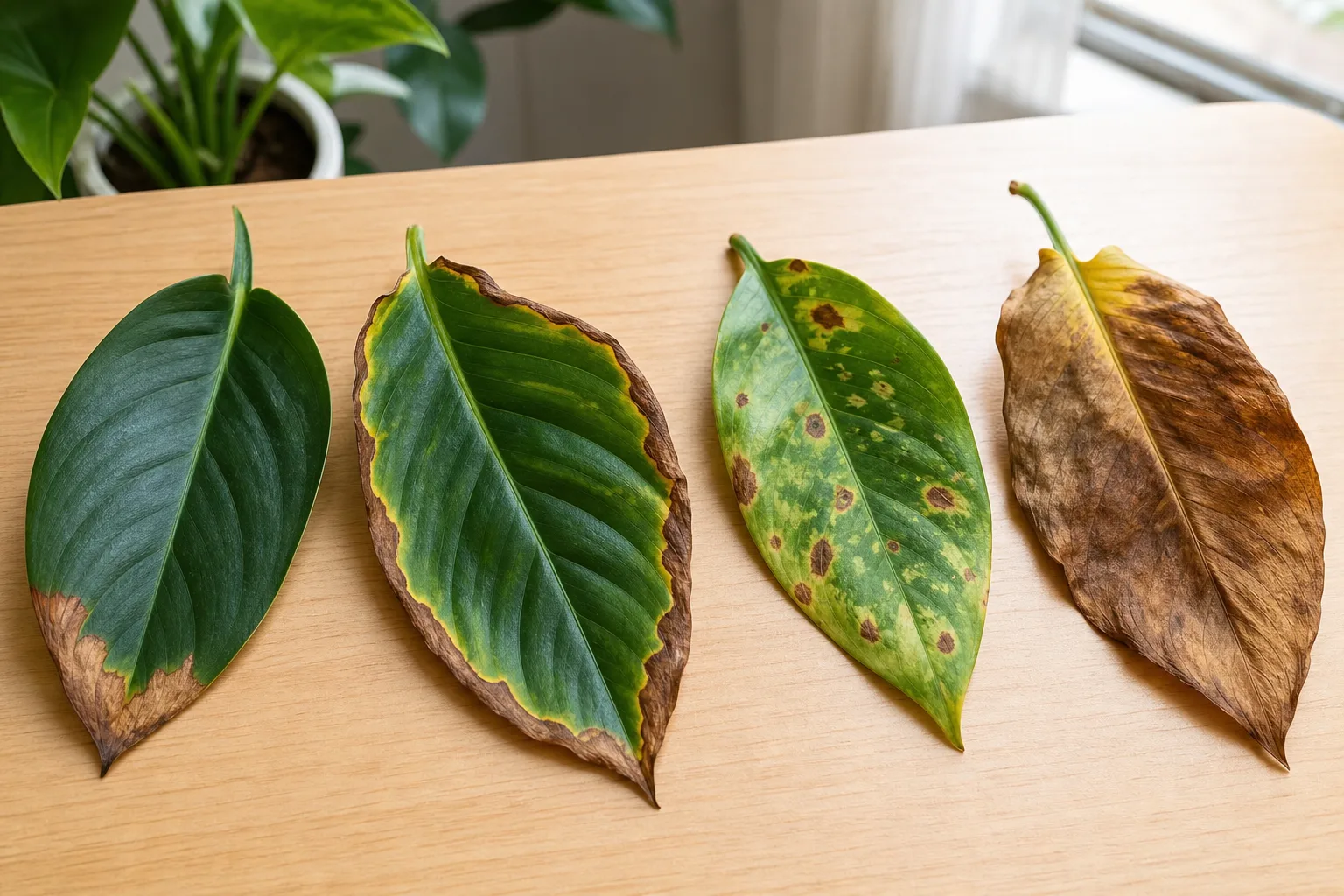
Brown leaves come in several patterns, and each one points in a different direction. Before you water, fertilize, or move the plant, take 60 seconds to categorize what you are seeing.
Brown tips only
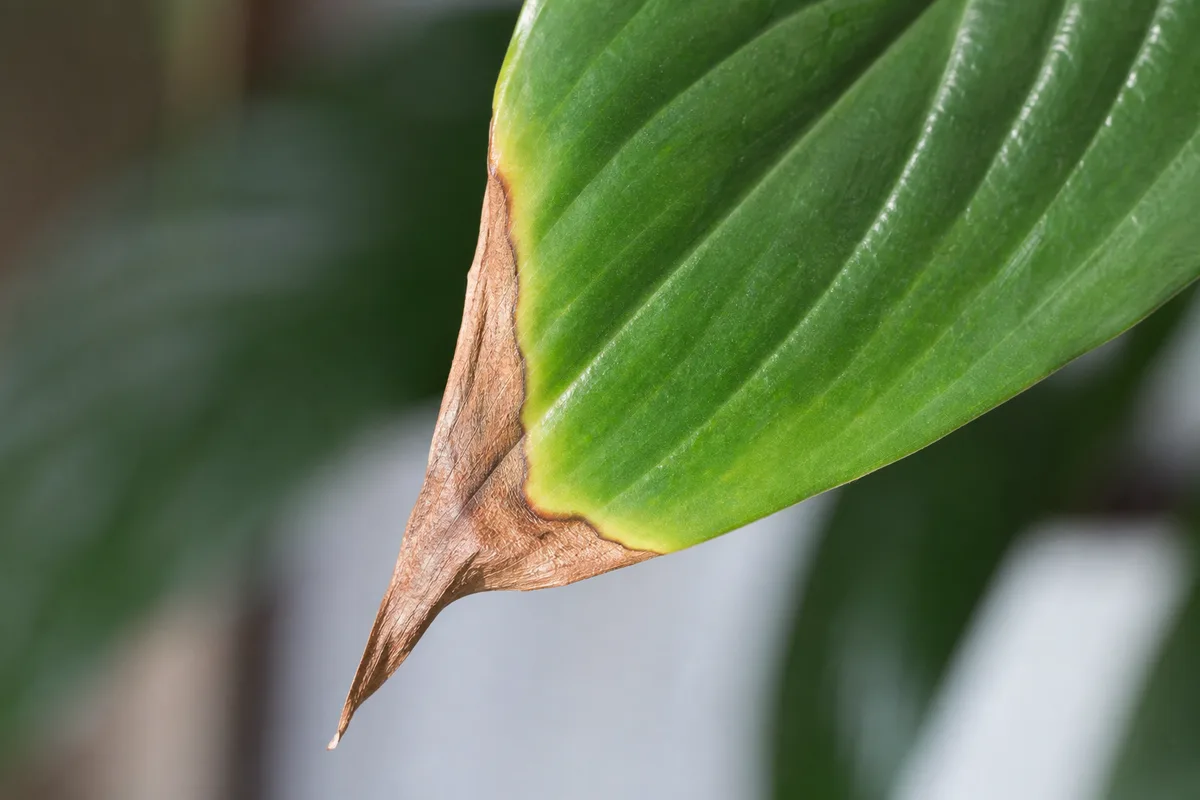
Brown tips — where just the very end of the leaf turns dry and papery — are one of the most common complaints. They usually point toward low humidity, inconsistent watering, or salt buildup rather than a root emergency. Iowa State Extension identifies low humidity as the most likely cause, followed by inconsistent watering, excess fertilizer salts, and water-quality issues. (Iowa State Extension - diagnosing houseplant problems) The damage is often cosmetic, not fatal, but recurring brown tips on new leaves mean the stress is still active.
Brown edges or margins
When browning runs along the outer edge of the leaf rather than staying at the tip, the pattern often involves a combination of dry air, salt accumulation, or scorch. Clemson Extension notes that brown leaf tips and margins can be caused by hot dry air, improper watering, insect feeding, and salt accumulation, and that a white-to-gray crusty deposit on the soil surface or pot rim is a sign of salt buildup. (Clemson HGIC) Edge burn that appears shortly after fertilizing strongly suggests fertilizer salts, especially if the plant was already dry when fed.
Brown spots or patches
Isolated brown spots, especially with yellow halos, crusty centers, or concentric rings, suggest a fungal or bacterial leaf spot rather than a watering or humidity problem. Spots that start small and enlarge, or that appear wet and water-soaked, need different treatment than crisp brown tips. These lesions may spread between leaves, especially in crowded conditions with poor airflow and wet foliage. Isolate the plant and avoid misting until you identify the cause.
Whole leaves turning brown
When entire leaves brown from the base outward or collapse quickly, the problem is usually more serious than a humidity issue. This often points to severe underwatering where the leaf was sacrificed, root rot where damaged roots cannot supply water, cold damage from a drafty window, or sun scorch from a sudden move into harsh light. If whole leaves are browning while the soil is wet, inspect the roots immediately.
Browning on the oldest lower leaves only
One or two oldest lower leaves slowly yellowing and then browning can be normal senescence — the plant recycling nutrients from aging leaves. University of Maryland Extension notes that leaf yellowing is often one of the first signs of plant stress but that an occasional older leaf yellowing and dropping is normal. (University of Maryland Extension - yellowing leaves) If the rest of the plant looks healthy and new growth is green and firm, a single aging leaf is low urgency. If multiple lower leaves brown at once, investigate watering and root health.
Diagnostic table: pattern, evidence, first action
| What you see | Strongest supporting evidence | First action |
|---|---|---|
| Dry crisp tips on several leaves | Hygrometer below 40%; heater or AC nearby | Raise humidity and move away from forced air |
| Brown tips plus white crust on soil | Recent fertilizer use; tap water with high minerals | Stop feeding and leach the soil or switch water source |
| Crisp brown edges; pot very light | Soil dry deep into the pot; pot feels weightless | Rehydrate thoroughly and adjust watering frequency |
| Brown edges; pot heavy and wet for days | Yellowing lower leaves; damp soil smell | Pause watering; check drainage and roots |
| Bleached tan or brown patches on window side | Direct midday or afternoon sun reaches the leaf | Filter light or move farther from the glass |
| Soft dark spots with yellow halos | Spots enlarge; sticky ooze or fungal fuzz present | Isolate; remove affected leaves; identify the pathogen |
| Brown stippling or speckling | Fine webbing; tiny moving dots on leaf undersides | Inspect for spider mites; isolate and treat |
| Single oldest leaf browning slowly | New growth looks healthy; soil moisture normal | Monitor; likely normal senescence |
Use the table to pick a starting point, not to declare a final diagnosis from one symptom. UC IPM lists overwatering, excessive dryness, fertilizer or soluble salts, low humidity, chilling, and excess light as overlapping explanations for scorched tips or leaf damage. (UC IPM) More than one factor can be active, but one usually deserves attention first.
The Six Cause Buckets, Tested in Order
Start with the factors you can measure without disturbing the plant: moisture, pot weight, humidity, and placement. Root inspection comes later unless the pot smells sour, stays saturated for many days, or the plant is collapsing. Unnecessary repotting adds stress while potentially leaving the real problem untouched.
1. Watering problems: the most common cause
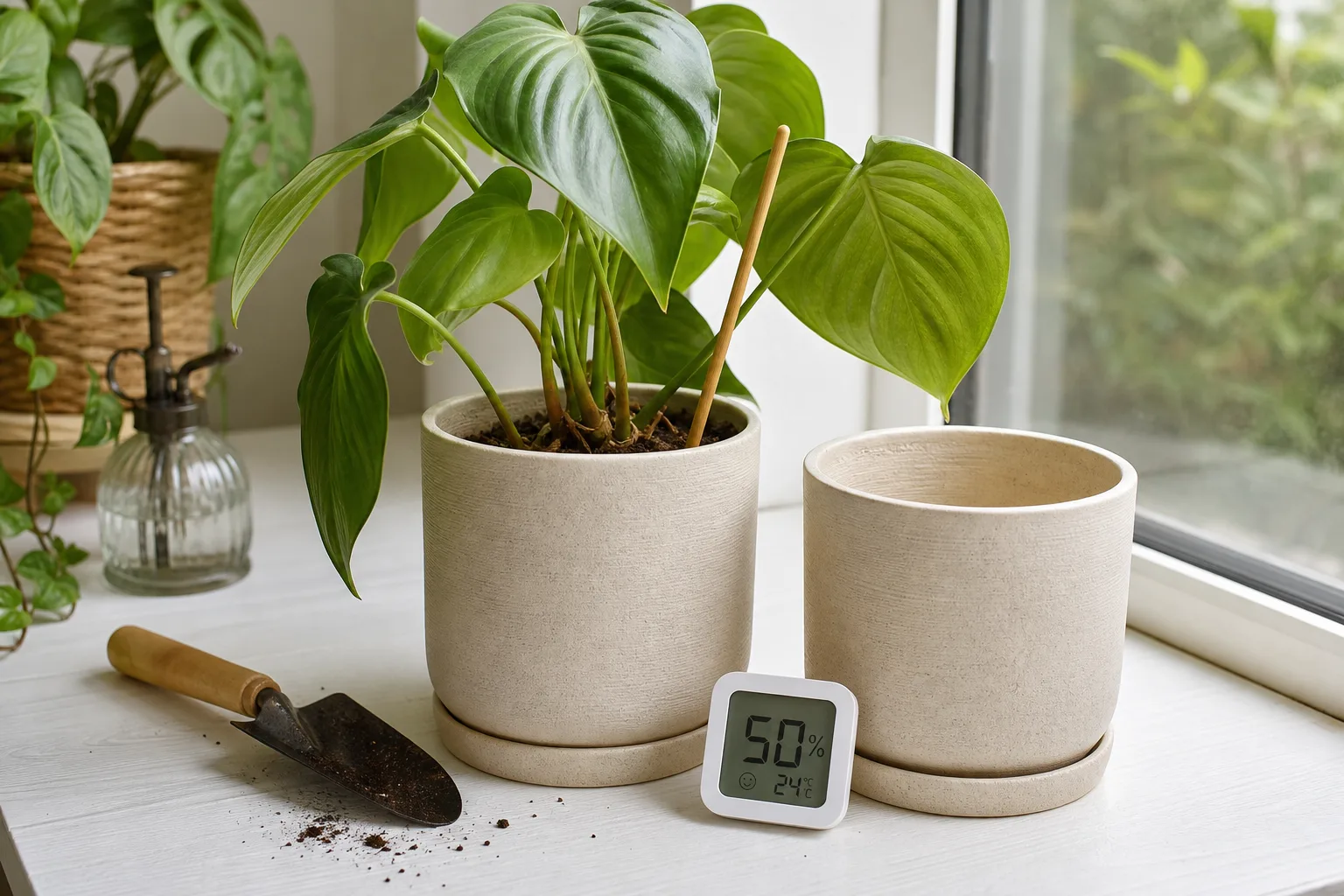
Watering issues — both too much and too little — are the most frequent reason indoor plant leaves turn brown. University of Maryland Extension states that overwatering is the number one reason indoor plants fail, and that excess water reduces oxygen in the soil, damages fine roots, and renders the plant unable to take up water. (University of Maryland Extension - overwatered indoor plants) The trap is that overwatered and underwatered plants can look similar: both droop, both brown, and both lose leaves.
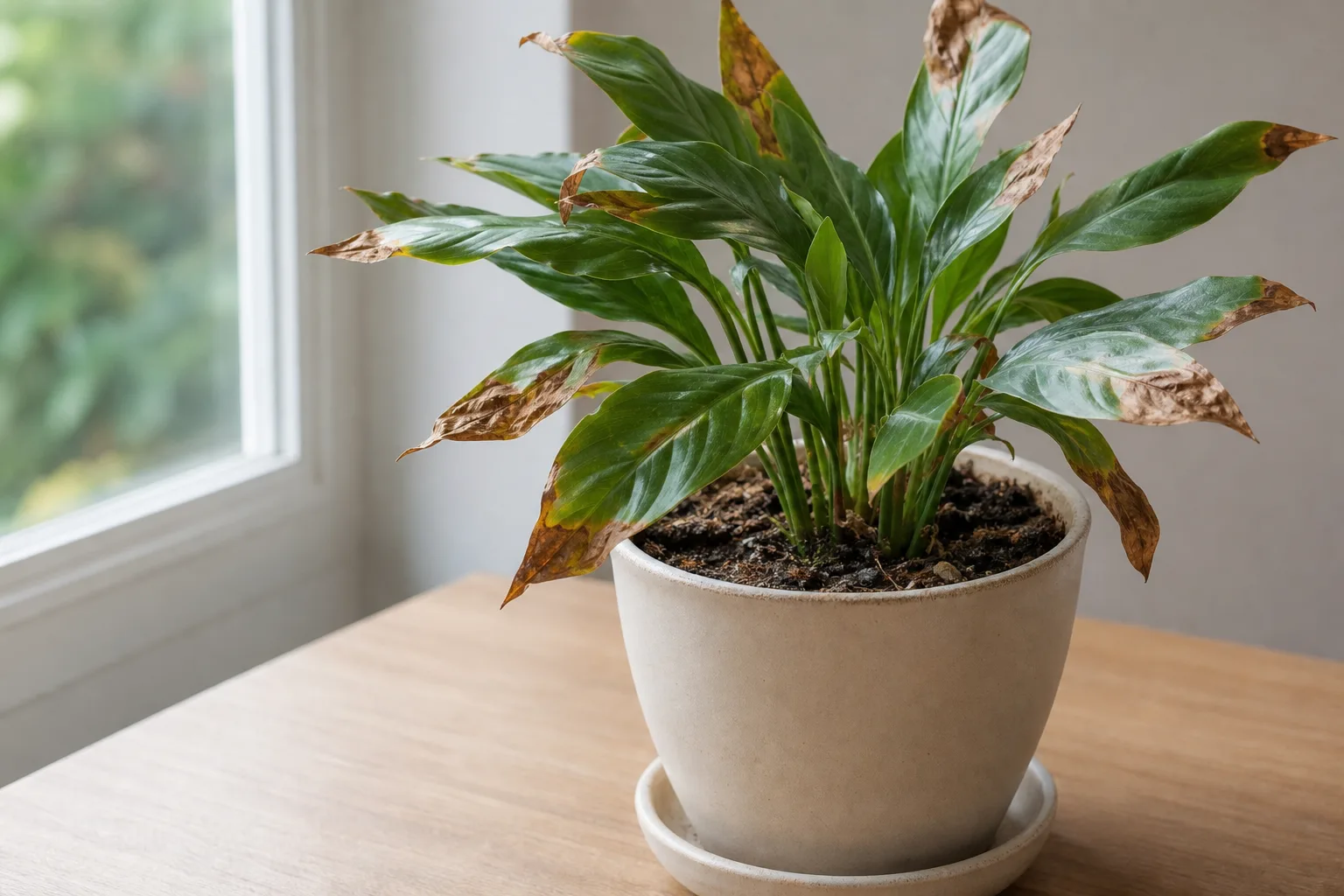
Overwatering typically shows as soft yellowing on lower leaves that progresses to brown, a heavy pot, soil that stays wet for many days, a sour or musty smell, and mushy or dark roots if inspected. The plant is wilting not because it lacks water but because damaged roots cannot absorb it. Stop watering, improve light and airflow to speed drying, and inspect roots if the decline continues.
Underwatering typically shows as crisp brown tips and edges, leaves that curl or feel thin, soil pulling away from the pot sides, and a pot that feels unusually light. Water may run straight through a shrunken root ball without wetting it. Rehydrate by watering slowly across the entire surface until water exits the drainage holes, or bottom-soak for 20–45 minutes for a severely dry root ball, then drain completely.
Inconsistent watering — alternating between too dry and too wet — is especially damaging because the plant never stabilizes. Iowa State Extension identifies this pattern as a direct cause of brown leaf tips and edges. (Iowa State Extension - brown leaf tips causes) Pick a moisture-based trigger: check the soil with a finger or chopstick before every watering rather than following a calendar.
For a complete watering workflow, see how to water indoor plants the right way and indoor plant watering basics.
2. Low humidity: a stress multiplier
Indoor air, especially in heated or air-conditioned homes, is often far drier than most tropical houseplants prefer. Low humidity is the most common cause of brown leaf tips according to Iowa State Extension. (Iowa State Extension - diagnosing houseplant problems)
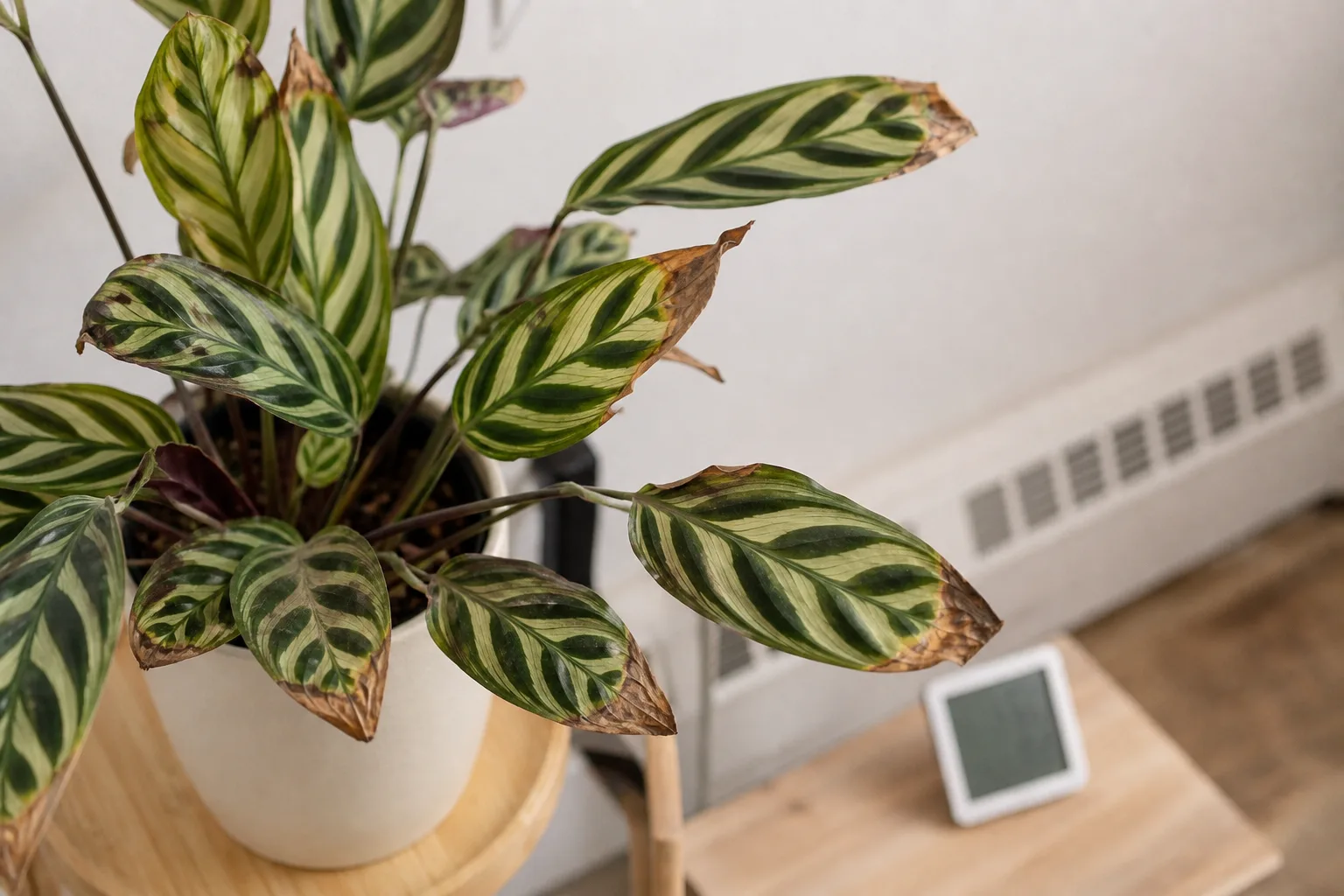
Humidity damage usually shows as crisp brown tips, especially on thin-leaved plants like calatheas, ferns, marantas, and some anthuriums. It is often worse in winter when heating systems run. Measure humidity beside the affected leaves with a basic digital hygrometer — not across the room and not next to a humidifier. Readings consistently below 40–45% make dry air a credible contributor.
Low humidity rarely acts alone. A plant with steady roots may tolerate an average room. The same room becomes damaging when the root ball is also repeatedly dry or salty. Solutions in order of effectiveness: a humidifier near the plants, grouping plants together to raise local humidity through collective transpiration, and moving plants away from heater vents and AC airflow. Misting raises humidity for minutes, not hours, and is not a reliable fix. For a deeper dive, see signs your houseplants need more humidity.
3. Light problems: too harsh or changed too fast
Light-related browning comes in two forms, and they look different.
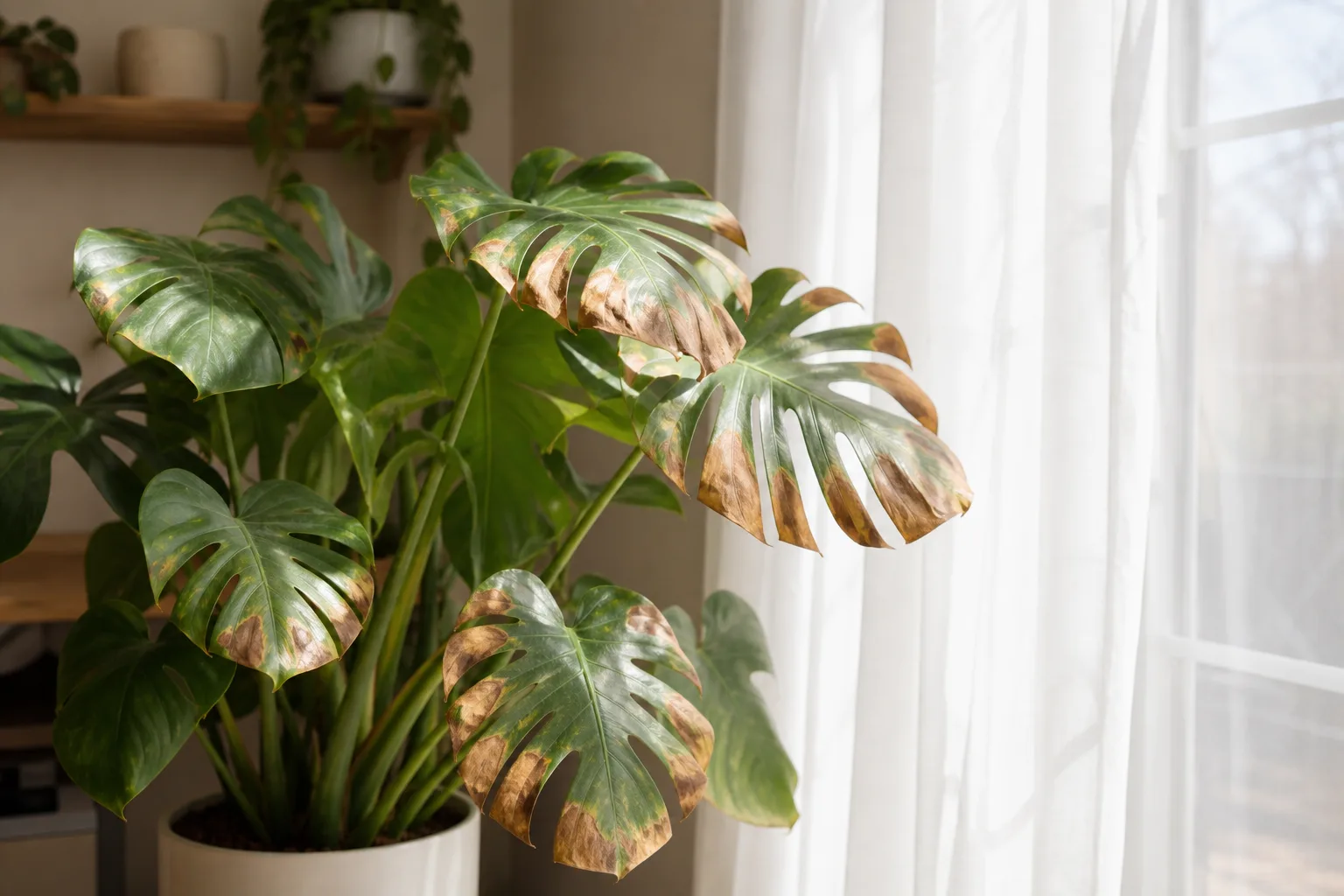
Sun scorch produces bleached tan, brown, or crisp patches, usually on the side facing a window. It often happens after a plant is moved suddenly from low light to direct sun, or when seasonal sun angles shift and expose previously shaded leaves. RHS notes that direct summer sun can scorch foliage on houseplants adapted to lower light conditions. (RHS) Filter harsh light with a sheer curtain, move the plant farther from the glass, or transition it to brighter conditions gradually over several weeks.
Too little light does not directly brown leaves but makes everything else worse. A plant in dim conditions uses water slowly, keeping soil wet longer and increasing the risk of root rot. It may also drop older leaves and grow pale, stretched new growth. Improving light often fixes a watering problem without changing the watering routine. See the grow lights complete guide when natural light is insufficient.
4. Fertilizer and salt buildup
Soluble salts from fertilizer, tap water, and softened water accumulate in potting mix over time as water evaporates. These salts can draw moisture out of roots and leaf tissue, producing brown tips and edges. Clemson Extension advises using rainwater when possible, drenching plants periodically to leach salts, emptying saucers after watering, and not over-fertilizing. (Clemson HGIC)
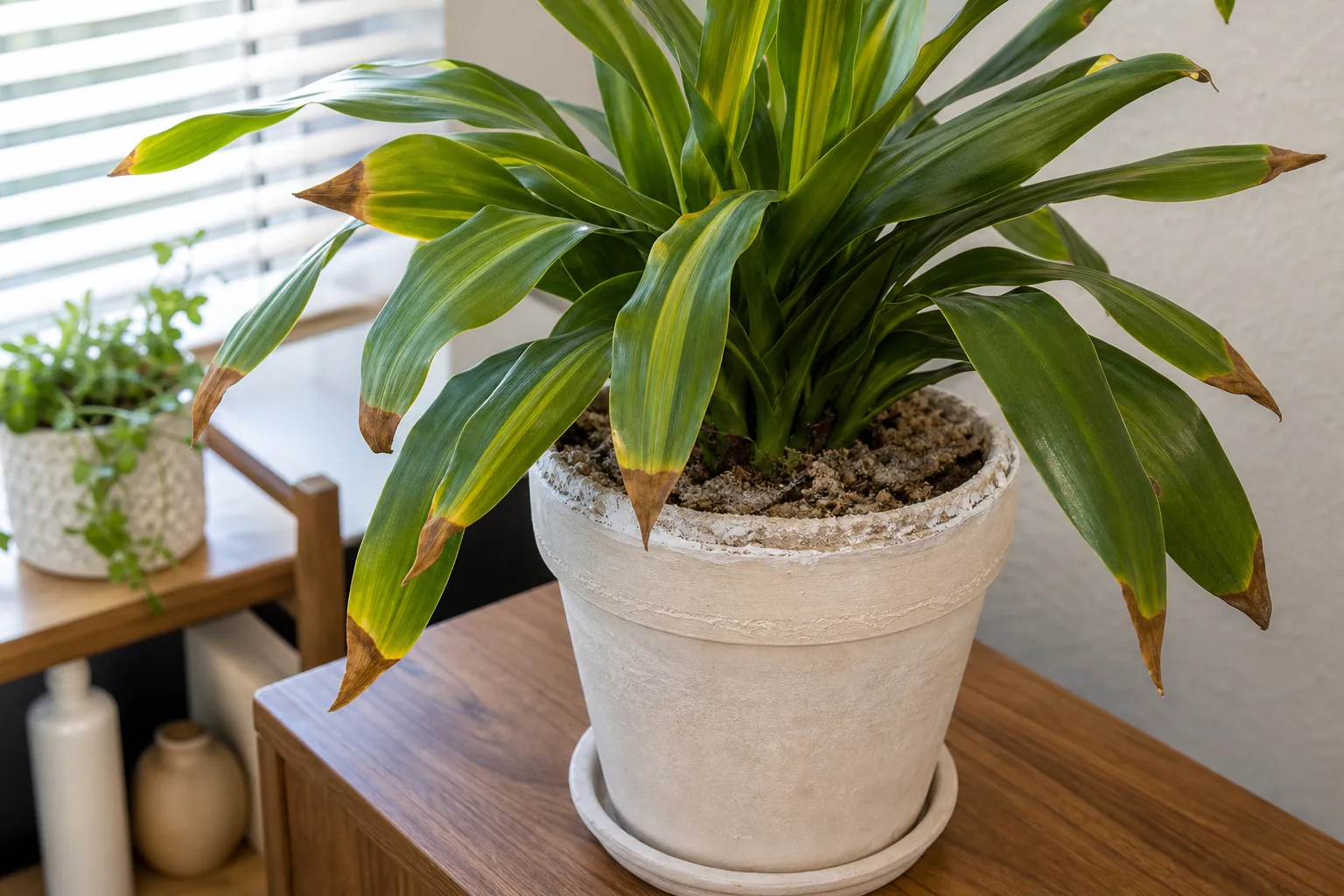
Signs of salt buildup include a white or gray crust on the soil surface or pot rim, brown leaf tips or edges that appear or worsen shortly after fertilizing, and a pattern where damage continues even when watering seems correct. The fix is to stop fertilizing, remove visible surface crust, and slowly run about two to three pot volumes of room-temperature water through the soil to flush excess salts. Let it drain completely. Resume fertilizer at half-strength only after new growth appears healthy.
Water quality matters too. Iowa State Extension notes that chlorine, fluoride, and other chemicals in tap water can cause brown leaf tips on sensitive species like spider plant, ti plant, dracaena, prayer plant, and calathea, especially over an extended period. (Iowa State Extension - brown leaf tips causes) If local water is hard or heavily treated and sensitive plants show persistent brown tips, try rainwater, distilled water, or tap water left out overnight.
5. Pests that cause brown damage
Several common indoor plant pests create brown marks that look like environmental stress.
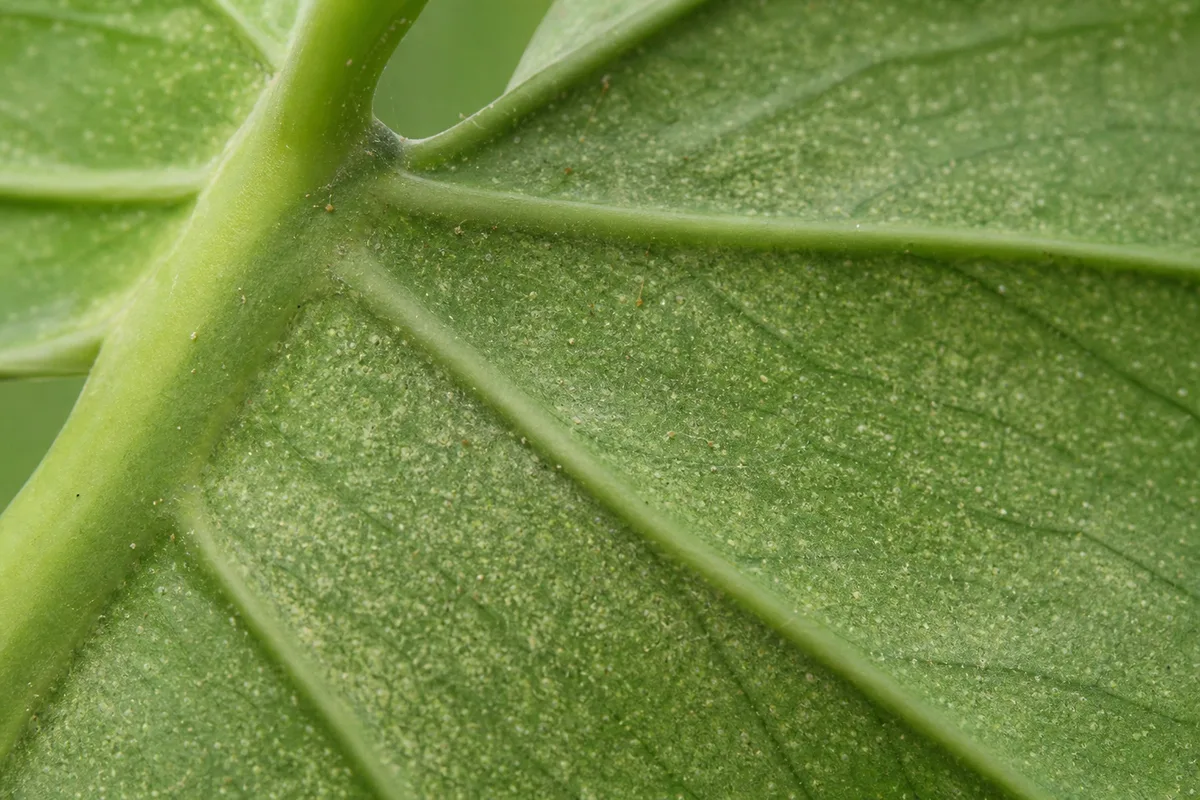
Spider mites produce tiny yellow or white stippling that can merge into a bronze or brown cast. Check leaf undersides with a magnifying glass or phone camera for fine webbing and moving specks. They thrive in warm, dry conditions — the same conditions that cause humidity-related brown tips.
Thrips scrape leaf surfaces, leaving silvery or brown streaking, scarring, and distorted new growth. Black specks of frass are often visible.
Scale insects attach to stems and leaf veins as brown or tan bumps. Heavy infestations cause yellowing, browning, and leaf drop.
Mealybugs cluster as white cottony masses in leaf joints. Their feeding weakens leaves, which may yellow and brown.
Isolate the infested plant immediately. Wipe or rinse leaves to physically remove pests, then apply a treatment matched to the pest — insecticidal soap for soft-bodied pests, horticultural oil for scale, or a labeled miticide for spider mites. One casual spray rarely solves the problem; repeat treatment at the correct interval and monitor new growth for signs of recovery. Go deeper with the indoor plant pest guide and integrated pest management indoors.
6. Temperature, drafts, and environmental shock
Indoor plants are mostly tropical species that dislike cold drafts, hot dry air from vents, and sudden temperature swings. Iowa State Extension recommends avoiding drafts from doors, heat vents, or windows, and warns against trapping plants between a window and curtain where temperatures fluctuate significantly from day to night. (Iowa State Extension - diagnosing houseplant problems)
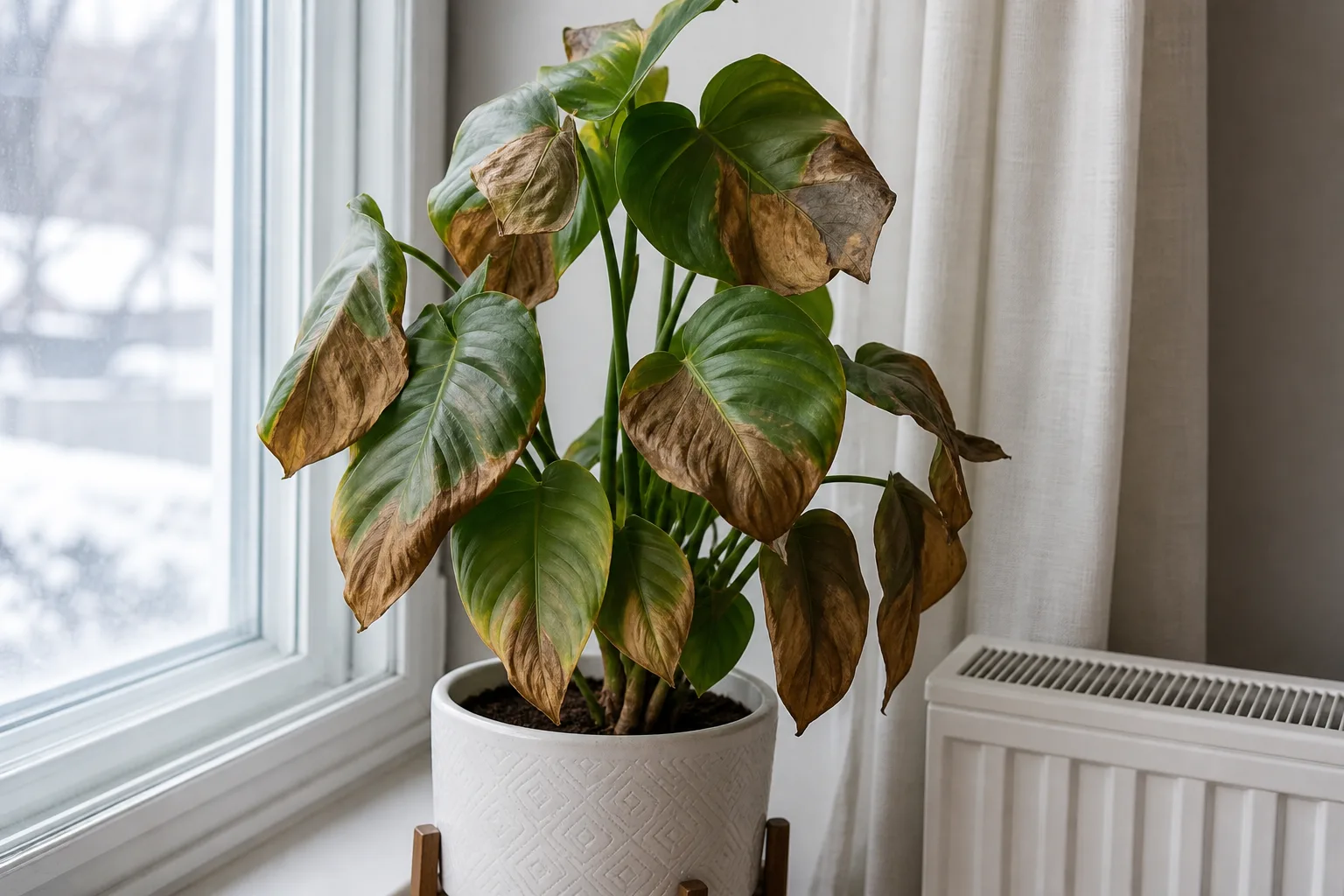
Cold damage from a drafty winter window or an icy car ride can show up as brown patches or whole leaves turning dark and limp within a day or two. Hot dry air from a heating vent can mimic low humidity symptoms but concentrated on one side of the plant. A plant moved from a nursery or a bright room to a darker, cooler, or draftier spot may drop or brown leaves from shock.
The fix is usually stable placement. Keep plants away from drafty windows in winter, out of direct air-conditioner and heater airflow, and in consistent temperatures. If you bring a plant home from a nursery, expect some leaf loss while it adjusts and do not compound the stress with repotting, fertilizing, or frequent relocation. For seasonal adjustments, see why houseplants struggle in winter.
Recovery Plan: Stop the Browning, Then Support New Growth
Once you identify the likely cause, use this sequence. Stop when the evidence matches a fix — do not stack corrections.
-
Record the baseline. Note humidity at leaf level, soil moisture 2–4 inches down, pot weight, light exposure, and recent fertilizer use. Write the readings down rather than relying on memory.
-
Correct an obvious water error. Rehydrate a genuinely dry root ball by watering slowly and thoroughly, or withhold water and improve drainage when the pot is heavy and the soil is wet. Do not do both at the same time.
-
Move away from forced air or harsh sun. Make one placement change rather than relocating the plant repeatedly. Filter direct sun with a sheer curtain or increase distance from the glass.
-
Flush salts only when drainage and roots are sound. Pause fertilizer afterward and monitor new growth.
-
Inspect roots when warning signs justify disturbance. Sour odor, persistent saturation, spreading yellowing with browning, or mushy stems are stronger reasons than cosmetic tip burn alone. Healthy roots are firm and pale to tan; rotten roots are brown, black, mushy, or hollow.
-
Treat pests with the right product for the identified pest. Isolate first, then clean and treat. Repeat as directed on the label.
-
Judge new growth, not old damage. Existing brown tissue will not turn green. Clean new leaves with smooth margins show the correction worked. If new leaves continue to brown, revisit the diagnosis.
What not to do: Do not fertilize a stressed plant as your first move. Fertilizer is not medicine — it supports growth when the plant is already healthy but cannot fix rotten roots, poor light, low humidity, or pest damage. Do not repot unless the roots, drainage, or soil are part of the problem. Do not cut off every leaf with brown tips — partly green leaves still produce energy. Do not mist obsessively; a humidifier is more effective and less likely to spread leaf pathogens.
Species-Specific Next Steps
Some plants have well-known sensitivities. Route to the right species page when the broad diagnosis narrows to a specific plant:
| If your plant is… | Known sensitivities | Next read |
|---|---|---|
| Monstera | Brown tips from low humidity, salt buildup, or inconsistent watering | Monstera brown tips guide |
| Pothos | Brown tips or edges from underwatering or root rot | Pothos watering guide |
| Peace lily | Brown tips from dry air or fluoride sensitivity; brown patches from sun scorch | Peace lily brown tips |
| Snake plant | Brown tips from overwatering; mushy brown patches from rot | Snake plant root rot |
| Spider plant | Brown tips from fluoride, dry air, or salt buildup | Spider plant brown tips |
| Calathea / Prayer plant | Brown edges from low humidity and tap-water minerals | Calathea humidity guide |
| Dracaena | Brown tips from fluoride and dry air | Dracaena brown tips |
| Fiddle leaf fig | Brown spots from inconsistent watering or root rot | Fiddle leaf fig brown spots |
Related Guides
- How to save a dying houseplant — when browning is part of a larger plant-wide decline.
- Indoor plant watering basics — moisture checks that prevent most brown-leaf problems.
- How to water indoor plants the right way — drainage, pot weight, and seasonal adjustment.
- Signs your houseplants need more humidity — when dry air is the primary driver.
- How to tackle indoor plant pests at home — pest ID and repeat-treatment workflow.
- Houseplant diseases identification and treatment — when brown spots may be infectious.
- Why houseplants struggle in winter — seasonal brown-leaf triggers and fixes.
- Repotting houseplants — when a pot change helps versus adds stress.
Conclusion
Brown leaves are evidence, not a verdict. Start with the pattern — tips, edges, spots, or whole leaves — then check soil moisture, pot weight, humidity, light exposure, and recent care changes. In most cases, the fix is adjusting one or two variables, not overhauling everything at once. Crisp tips usually point to dry air or inconsistent watering. Soft brown tissue with wet soil points to root trouble. Bleached patches on the window side point to sun scorch. White crust plus brown tips points to salt buildup.
Brown tissue is permanent. The real measure of success is not old leaves healing — they will not — but new leaves emerging clean, green, and firm. Once you identify and fix the cause, give the plant stable conditions and time. A plant that stops browning and starts growing again has recovered, even if the old damage is still visible.