Underwatered Plant: Signs, Fixes, and How to Rehydrate
Spot an underwatered plant fast — crispy leaves, dry soil, wilting — then rehydrate safely with step-by-step methods and avoid root shock.
Quick Answer: How to Save an Underwatered Plant
If your plant has dry, brittle leaves and the potting mix has pulled away from the pot edges, rehydrate it slowly and thoroughly. Do not drown it in a panic pour. The safest method for a severely underwatered plant is bottom watering: place the pot in a few inches of room-temperature water and let the dry soil absorb moisture upward through the drainage holes for 15 to 30 minutes. Remove the pot, let it drain completely, and empty any saucer.
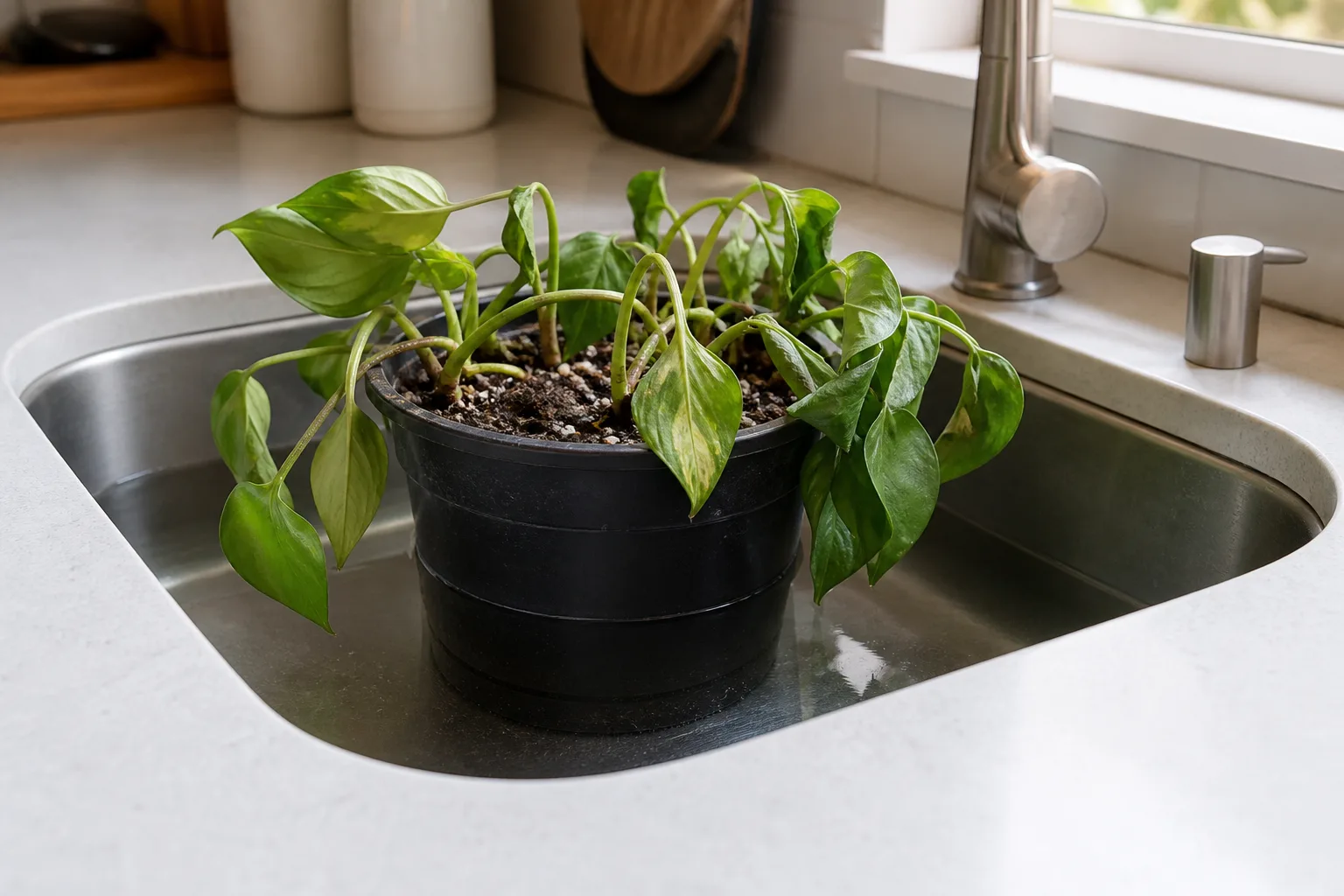
Virginia Cooperative Extension confirms that bottom watering works best for fully rehydrating dry potting soil, and that underwatered plants need the entire root ball moistened — not just the surface. (Virginia Cooperative Extension)
The recovery loop for an underwatered plant has three steps: rehydrate the root zone evenly, drain fully, then monitor. Most underwatered plants perk up within hours or a day. Crispy leaves will not heal, but firm stems and new growth in the following weeks tell you the roots survived. If the plant continues to decline despite moist soil, the roots may have died during the dry period and can no longer take up water.
Before you water, always confirm the problem is actually underwatering. Wilting and yellowing can mean the opposite — overwatering — and adding more water to an already-wet pot makes things worse. The section below tells you how to tell the difference.
Signs of an Underwatered Plant
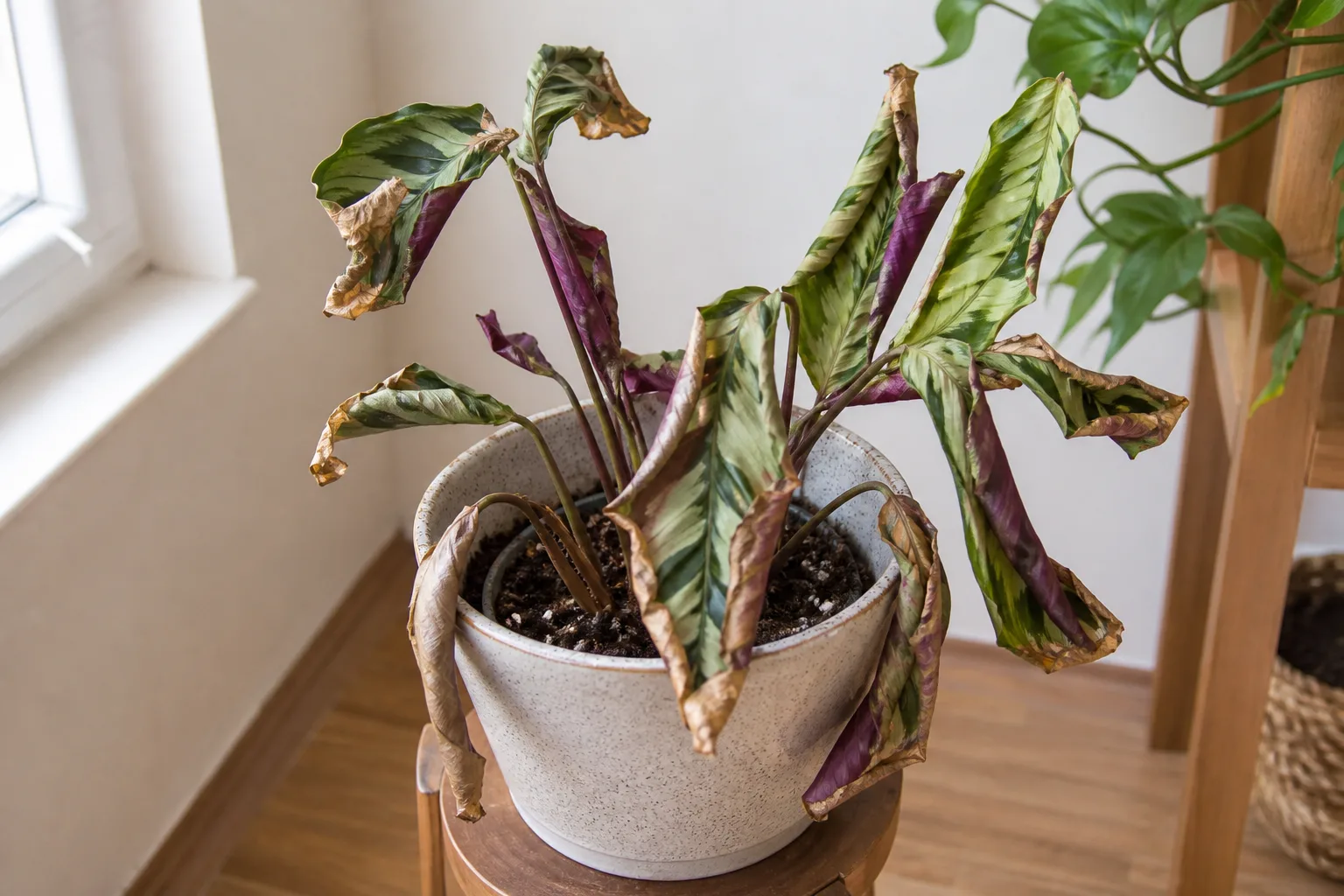
Underwatered plants show symptoms in their leaves, stems, soil, and overall weight. Learning to read these signs together — rather than reacting to a single drooping leaf — prevents misdiagnosis. Virginia Cooperative Extension lists the key underwatered symptoms: wilting foliage, dry or brittle leaves, brown tips or edges, leaves curling upward or downward, leaf drop, reduced growth, potting soil pulling away from the container sides, and a container that feels very light when lifted. (Virginia Cooperative Extension)
Leaf Symptoms
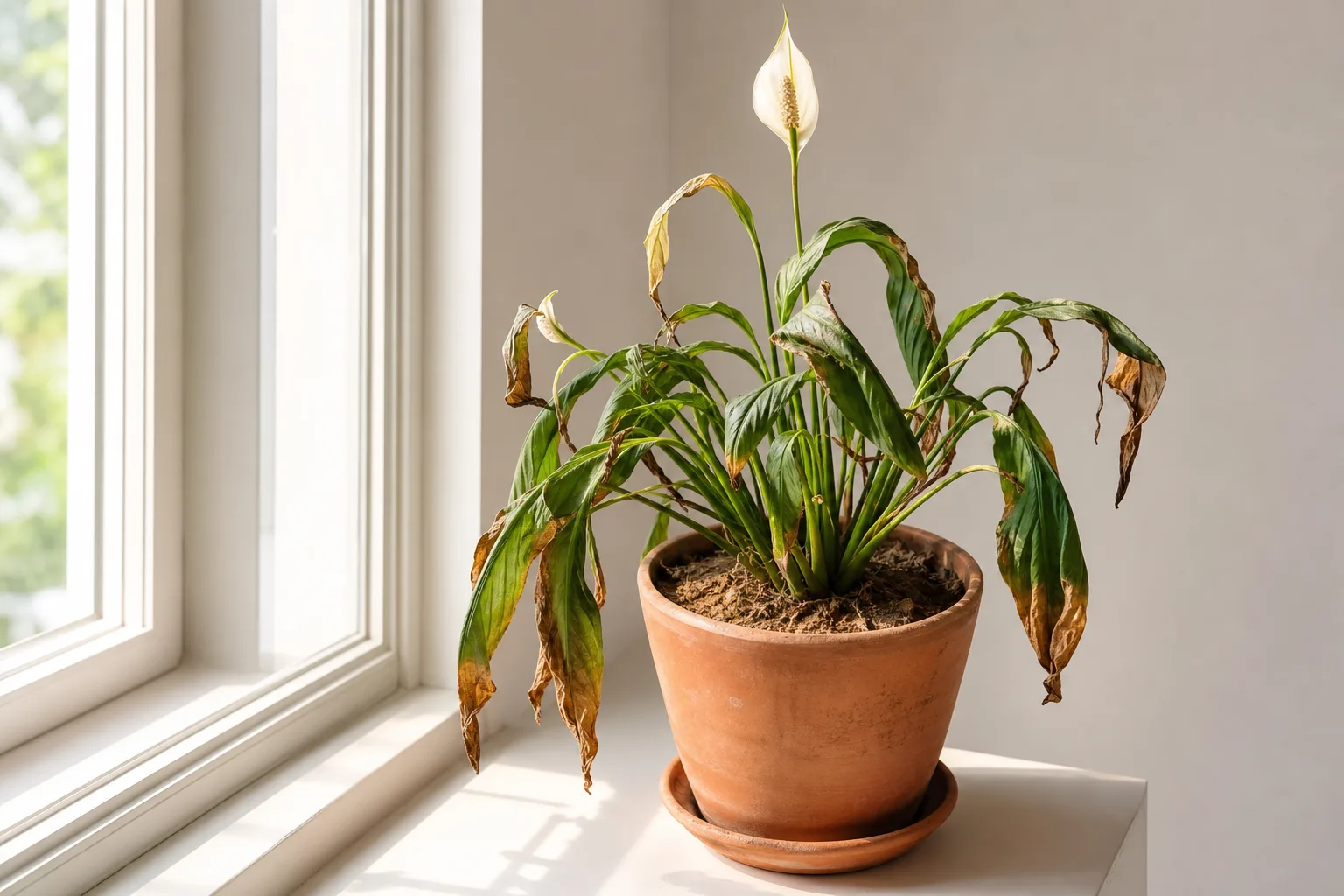
Leaves on an underwatered plant typically become dry, crisp, and brittle. They may curl inward, develop brown tips or crispy edges, and feel papery rather than soft. Some plants, like peace lilies, wilt dramatically. Others, like snake plants, show subtle wrinkling or inward folding. Thin-leaved plants — calatheas, ferns, prayer plants — often show damage faster than thick-leaved succulents.
Yellowing can occur with underwatering, but it usually starts at the edges and tips rather than spreading across the whole leaf. The yellow is often accompanied by crispness, not mushiness. This is a key distinction from overwatering, where yellow leaves tend to be soft, limp, and spread from older leaves first.
Soil and Pot Signs
The most reliable sign of underwatering is dry potting mix that has shrunk away from the sides of the pot. When peaty mixes dry out completely, the soil mass contracts and leaves a visible gap between the mix and the container wall. Water poured onto the surface may run straight down that gap and out the drainage holes without wetting the root ball — a condition called hydrophobic soil.
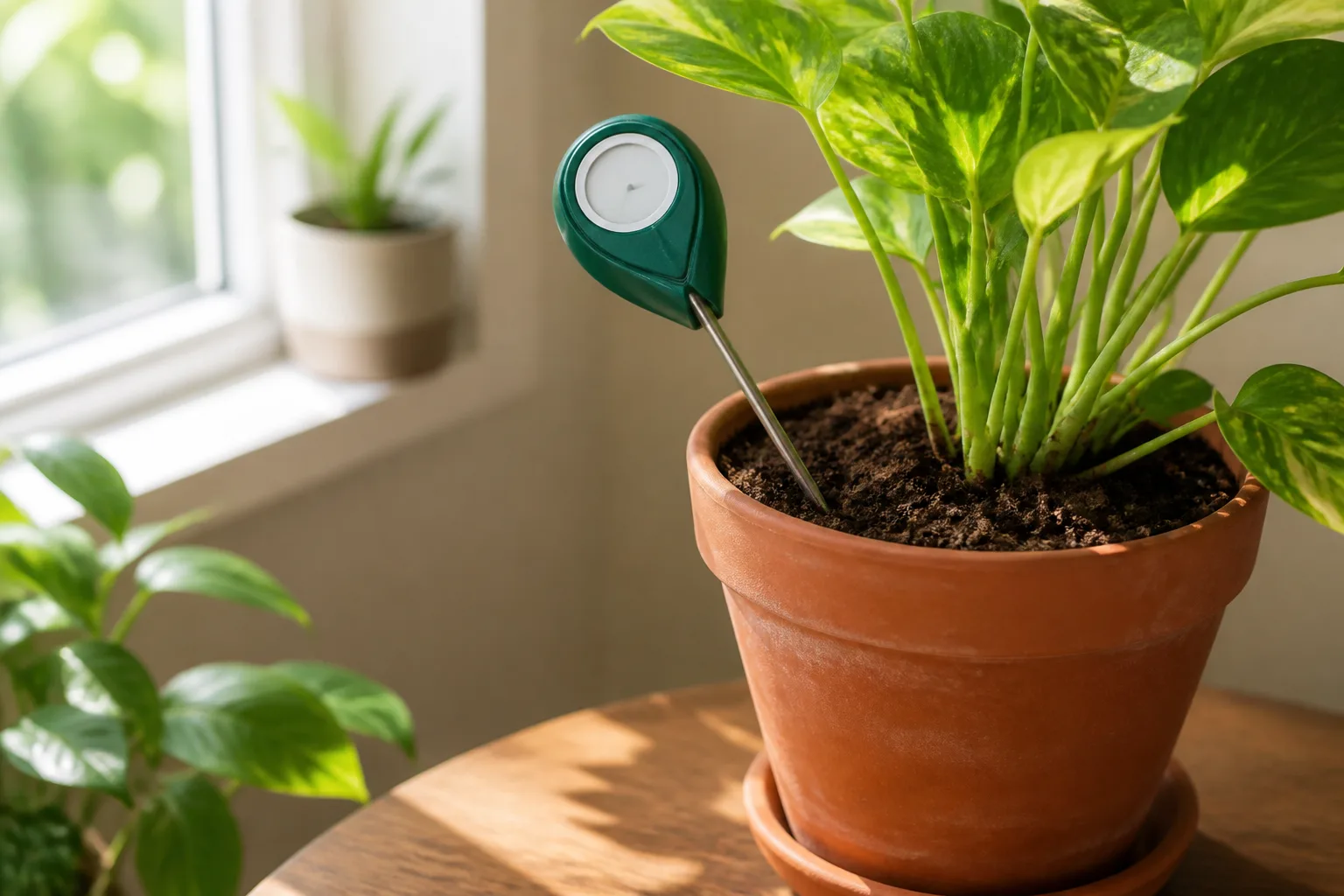
A pot that feels unusually light is another strong indicator. After a few watering cycles, you learn the heft of a hydrated pot. A noticeably light pot combined with dry surface soil almost always means the root zone has dried significantly. University of Maryland Extension recommends testing potting mix with your finger to about two inches; if it feels dry at that depth, the plant probably needs water. (University of Maryland Extension)
Growth and Overall Plant Signals
Chronically underwatered plants may show stunted growth, smaller new leaves, and premature leaf drop. The plant conserves resources by slowing growth and shedding leaves it cannot support. Flower buds may abort before opening. If you notice the same plant repeatedly drying out faster than others, it may be rootbound — too many roots and not enough soil to hold moisture — and need repotting rather than just more frequent watering.
Underwatered vs Overwatered: How to Tell the Difference
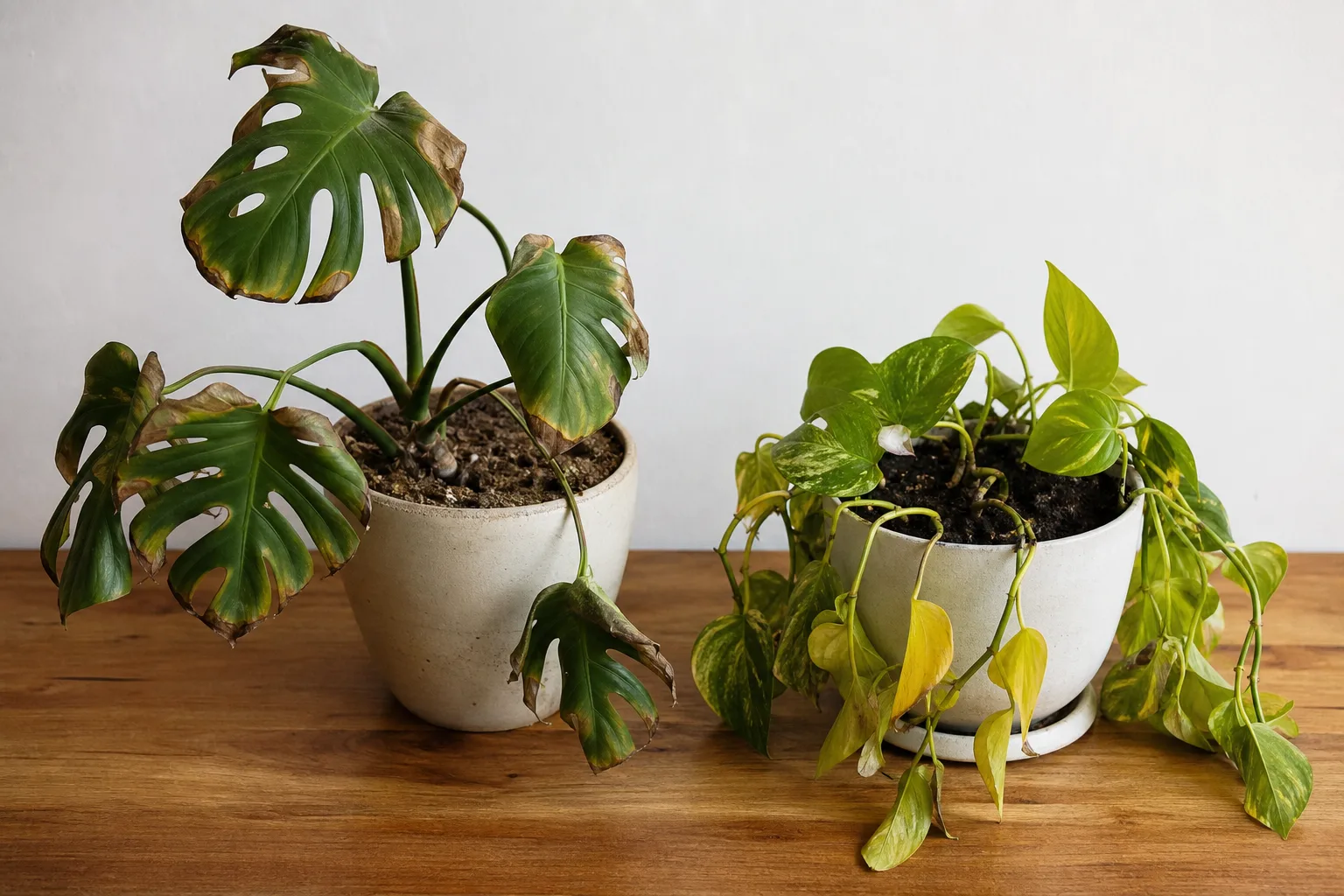
This is where most plant problems get misdiagnosed. Both underwatered and overwatered plants can wilt, droop, and drop leaves. The soil tells the real story.
| Sign | Underwatered | Overwatered |
|---|---|---|
| Soil | Dry, light, pulls away from pot | Wet for days, heavy, may smell sour |
| Leaf texture | Crisp, brittle, papery | Soft, limp, mushy |
| Leaf color | Brown tips/edges, pale or dull | Yellow all over, often starting with older leaves |
| Leaf drop | Dry leaves fall | Soft or yellow leaves fall |
| Stems | Firm, may be wrinkled | Soft, mushy, may blacken at base |
| Pot weight | Noticeably light | Heavy, waterlogged |
| Recovery after watering | Perks up within hours to a day | Does not improve; may worsen |
Virginia Cooperative Extension emphasizes that underwatered plant symptoms can often resemble overwatered symptoms — wilting is the first sign of both — but dry, brittle leaves and shrinking soil point to underwatering, while soft yellowing leaves and wet soil point to overwatering. (Virginia Cooperative Extension)
The decision shortcut: If the soil is dry and the pot is light, the plant is thirsty. If the soil is wet and the plant looks sick, stop watering and check for root rot before giving any more water.
What Underwatering Does to Roots
When potting mix dries out completely, it does more than deprive the plant of water. Fine root hairs — the microscopic structures that actually absorb moisture — die back first. These are the most active part of the root system, and when they desiccate, the plant loses its primary water-uptake mechanism. This is why a plant may stay wilted even after you finally water it: the roots that should be drinking are dead or damaged.
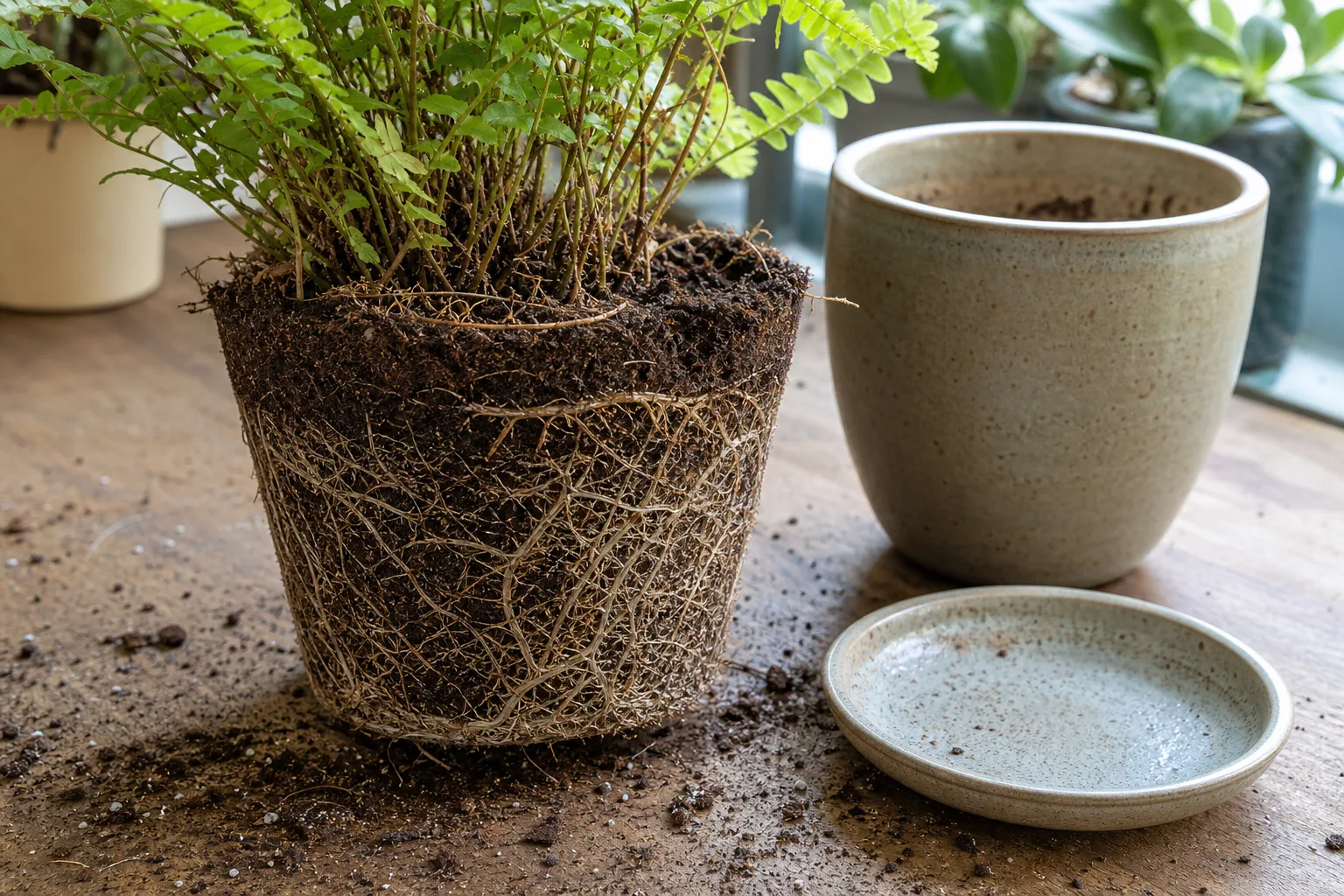
Root damage also explains why you should not fertilize a recovering underwatered plant. Fertilizer salts can burn already-compromised roots and add stress the plant cannot handle. Let the roots re-establish before feeding.
In severe or repeated underwatering, larger roots can also die. When that happens, the plant cannot recover even when the soil is rewetted because there is no functioning root system left to take up water. That is why early intervention matters — rehydrating before roots die gives the plant the best chance of full recovery.
Hydrophobic soil makes things worse. When peat-based potting mix dries to the point of repelling water, any water you add may run off instead of absorbing. This creates a cycle where the surface looks wet but the root ball stays bone dry, and the plant continues to decline despite your efforts. UC Master Gardeners of Santa Clara County describe several techniques for rehydrating hydrophobic soil, including submerging the whole pot in water — a method that is “drastic but fast” and often necessary when the root ball has become so dry it floats. (UC Master Gardeners of Santa Clara County)
How to Rehydrate an Underwatered Plant
Rehydrating an underwatered plant is not about dumping water and hoping. It is about getting moisture into the root ball evenly without shocking stressed roots. The method depends on how dry the plant is.
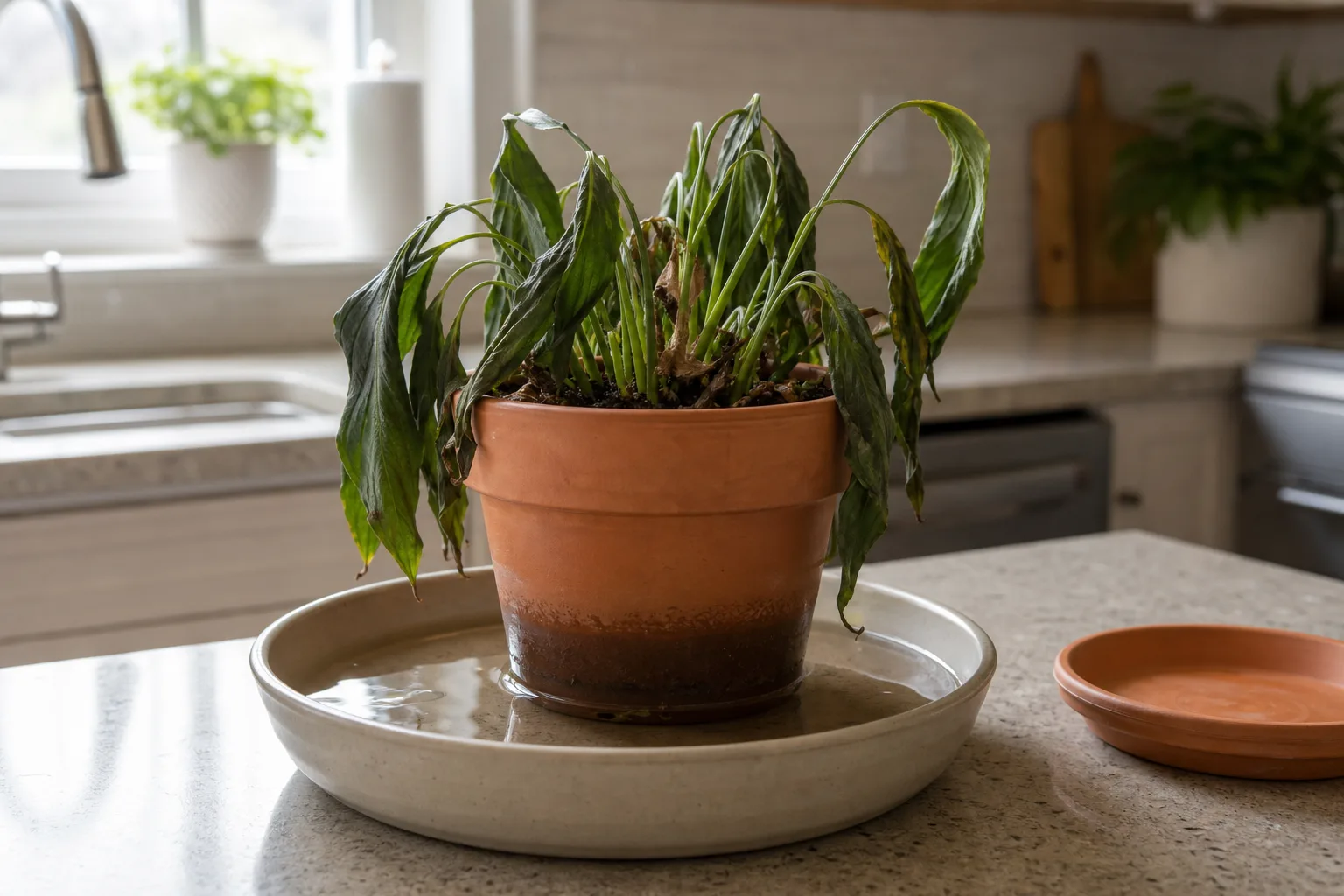
Mildly Dry Plants: Top Watering May Be Enough
If the soil is dry to the touch 1 to 2 inches down but has not pulled away from the pot edges, top watering is usually sufficient:
- Move the plant to a sink, bathtub, or tray where drainage is safe.
- Water slowly and evenly around the soil surface — not in one spot.
- Pour until water runs from the drainage holes.
- Let the pot drain fully for several minutes.
- Empty the saucer or decorative outer pot completely.
After watering, check back in a few hours. A mildly underwatered plant often perks up noticeably within the same day.
Severely Dry Plants: Bottom Watering Is the Better Option
When the soil has pulled away from the pot sides, water runs straight through, or the plant has been dry long enough to wilt severely, bottom watering gives the root ball a more even rehydration. Virginia Cooperative Extension recommends bottom watering as the best approach for fully rehydrating dry potting soil. (Virginia Cooperative Extension)
- Fill a basin, sink, or bucket with 2 to 3 inches of room-temperature water.
- Place the pot in the water. The water level should reach roughly halfway up the pot sides for small to medium pots.
- Let the pot soak. Dry mix draws water upward by capillary action. This typically takes 15 to 30 minutes for small to medium pots; larger or extremely dry pots may need longer.
- Check the soil surface. When the top of the mix feels moist to the touch, the root ball is hydrated.
- Lift the pot out and let it drain completely.
- Empty any saucer or cachepot — do not leave the plant sitting in water.
Virginia Cooperative Extension warns not to leave container houseplants in basins for more than about 60 minutes, as extended submersion increases root rot risk. (Virginia Cooperative Extension)
If the plant was severely wilted before watering, you should see improvement within several hours to a day. Crispy, brown leaves will not turn green again — they are permanently damaged — but firm stems and turgid leaves are good signs. For pruning guidance after recovery, see our pruning indoor plants guide.
When the Soil Has Become Hydrophobic
If water pools on the surface or races down the sides after bottom watering, the mix may be severely hydrophobic. UC Master Gardeners recommend submerging the entire pot in a bucket of water — the root ball may be so dry it floats at first, but it will eventually absorb water and sink. (UC Master Gardeners of Santa Clara County)
If submersion is not practical for a large pot, try these alternatives:
- Water in several slow rounds, giving the mix time to absorb between pours.
- Gently poke the surface with a chopstick or skewer to break the water-repellent crust.
- Bottom water with a deeper basin and refill as the soil draws water in.
If the mix repeatedly becomes hydrophobic, the potting mix itself may need replacement. See our repotting houseplants guide when the soil is the root cause.
Why Slow Rehydration Matters
The instinct to flood a bone-dry plant with water is understandable, but it can backfire. Martha Stewart’s plant expert Lisa Eldred Steinkopf explains that underwatering can compromise roots, and if roots are not working, watering will not help the plant recover. (Martha Stewart) The same source recommends reintroducing water slowly and checking soil often rather than drenching.
Dry roots are fragile. Flooding them with cold water can cause additional shock. Room-temperature water and a gradual soak give roots the best chance to rehydrate without further damage.
After Rehydration: What to Expect and What to Watch For
Most underwatered plants show improvement within a few hours to 24 hours. Leaves should regain turgor, stems should firm up, and the overall plant should look more upright. Here is what to expect and what to monitor:
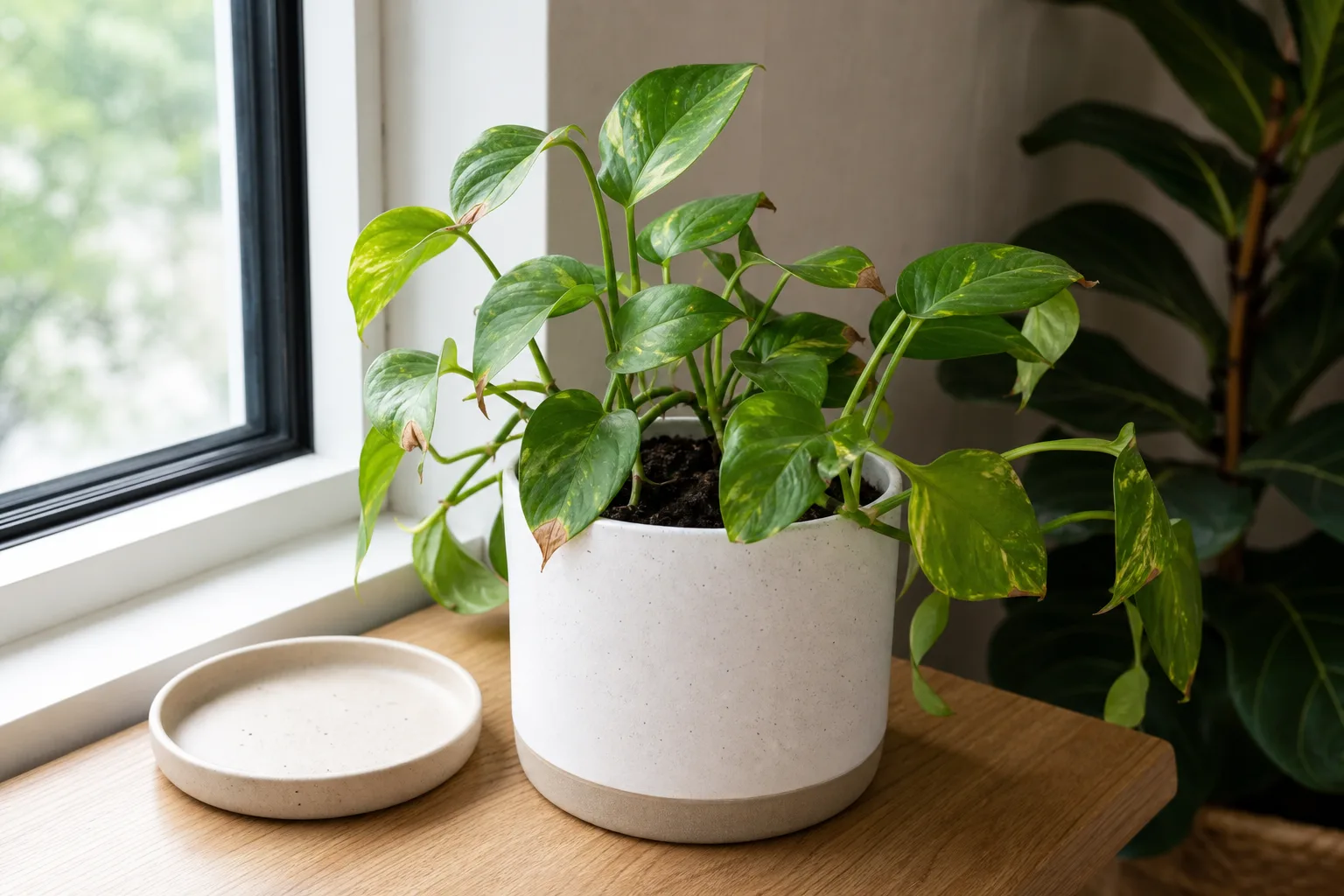
Leaves that will not recover: Brown tips, crispy edges, and fully dry leaves are permanently damaged. Trim them off with clean scissors once the plant has stabilized. Partially damaged leaves can stay if they still have green tissue — the plant needs every bit of photosynthesis while it recovers.
Leaves that may drop: A stressed plant may shed some foliage in the days after rehydration. This is normal as long as the stems remain firm and new growth eventually appears. Do not panic and water again if the soil is still moist.
Do not fertilize: Damaged roots cannot process fertilizer, and fertilizer salts can burn them further. Wait until the plant shows healthy new growth — typically a few weeks — before feeding.
Do not repot immediately: Repotting is stressful even for healthy plants. Let the plant stabilize first. If the soil is the problem (compacted, hydrophobic, or spent), repot after the plant has recovered for a few weeks and is showing signs of new growth.
Monitor for pests: Stressed plants attract pests. Keep an eye out for spider mites, which thrive in dry conditions, and for fungus gnats if the rehydrated soil stays wet too long. Our integrated pest management guide has the full triage protocol.
Plant-Specific Recovery Notes
Different plants respond to underwatering differently. Some bounce back quickly; others may never fully recover from a severe dry spell.
Plants that recover well: Pothos, philodendrons, monsteras, snake plants, ZZ plants, rubber plants, and most succulents are tough. They may lose a few leaves, but healthy stems and roots usually push out new growth within a few weeks.
Plants that struggle: According to Martha Stewart’s Steinkopf, many ferns do not come back well from being completely dried out. Calatheas and prayer plants also dislike it. African violets often do not recover from severe underwatering. (Martha Stewart) For these sensitive plants, bottom water gently, keep conditions stable, and give them extra time before deciding they are lost.
Succulents and cacti: These plants are built for drought, but even they have limits. A severely underwatered succulent may show wrinkled, deflated leaves. Rehydrate with a thorough bottom soak, let it drain completely, and do not water again until the mix is fully dry. The plant should plump back up within days. Wrinkled leaves that stay wrinkled after watering may indicate root death rather than thirst. See our indoor succulent care guide for drought-recovery specifics.
Ferns and calatheas: These moisture-loving plants need gentler handling. Bottom water to avoid shocking roots, trim fully dead fronds, and increase humidity while the plant recovers. Grouping plants together or running a humidifier nearby helps. Do not overcompensate by keeping the soil soggy — moist but not wet is the target. For humidity support, see our houseplant humidity guide.
Peace lilies: Peace lilies are dramatic wilters but often recover well. Bottom water thoroughly, let them drain, and they usually perk up within hours. Repeated severe wilting, however, takes a toll. Do not use wilting as your regular watering signal. For consistent care, see our peace lily care guide.
Common Mistakes When Rehydrating
Panic-pouring cold water. Dumping cold water onto stressed, dry roots shocks the plant. Use room-temperature water and apply it slowly.
Leaving the pot submerged too long. Bottom watering is a timed soak — 15 to 30 minutes for most pots, and no more than about 60 minutes. Extended submersion can suffocate roots that are already under stress.
Watering again too soon. After rehydrating, the soil should stay moist for several days. Do not water again until the top layer has dried appropriately. Check with your finger — not the calendar.
Fertilizing a recovering plant. Fertilizer is not medicine. Burned or damaged roots cannot process nutrients, and fertilizer salts add more stress.
Misting instead of watering roots. Misting may feel helpful, but it does not rehydrate the root ball. The roots need water in the potting mix. Misting is a humidity supplement, not a watering method.
Assuming all wilt is underwatering. If the soil is wet and the plant is wilted, the problem is likely overwatering or root rot. Adding more water to that situation accelerates decline.
Preventing Underwatering
The best fix for underwatering is to catch it early — before roots die and leaves crisp irreversibly.
Check soil regularly, not on a schedule. Check moisture with your finger 1 to 2 inches deep for most tropical plants. Lift the pot to gauge weight. A weekly check day is a good habit — water only the plants that need it.
Learn each plant’s rhythm. A pothos near a bright window may need water every 5 to 7 days. The same pothos in a dim hallway may go 2 weeks. Pot size, pot material, season, and light all change the timing. Our indoor plant watering basics cheat sheet has moisture-check tables you can use at the sink.
Watch for early signals. Slight drooping, dull leaves, and a lighter pot are easier to fix than a fully wilted plant with hydrophobic soil. React to early signs, not catastrophic ones.
Group plants with similar needs. Keep drought-tolerant plants on one mental track and moisture-loving plants on another. You can check everything on the same day — just do not water everything on the same day.
Set reminders if you tend to forget. Calendar reminders are not a substitute for soil checks, but they can prompt you to check. A weekly or biweekly reminder to inspect all plants is better than forgetting for a month.
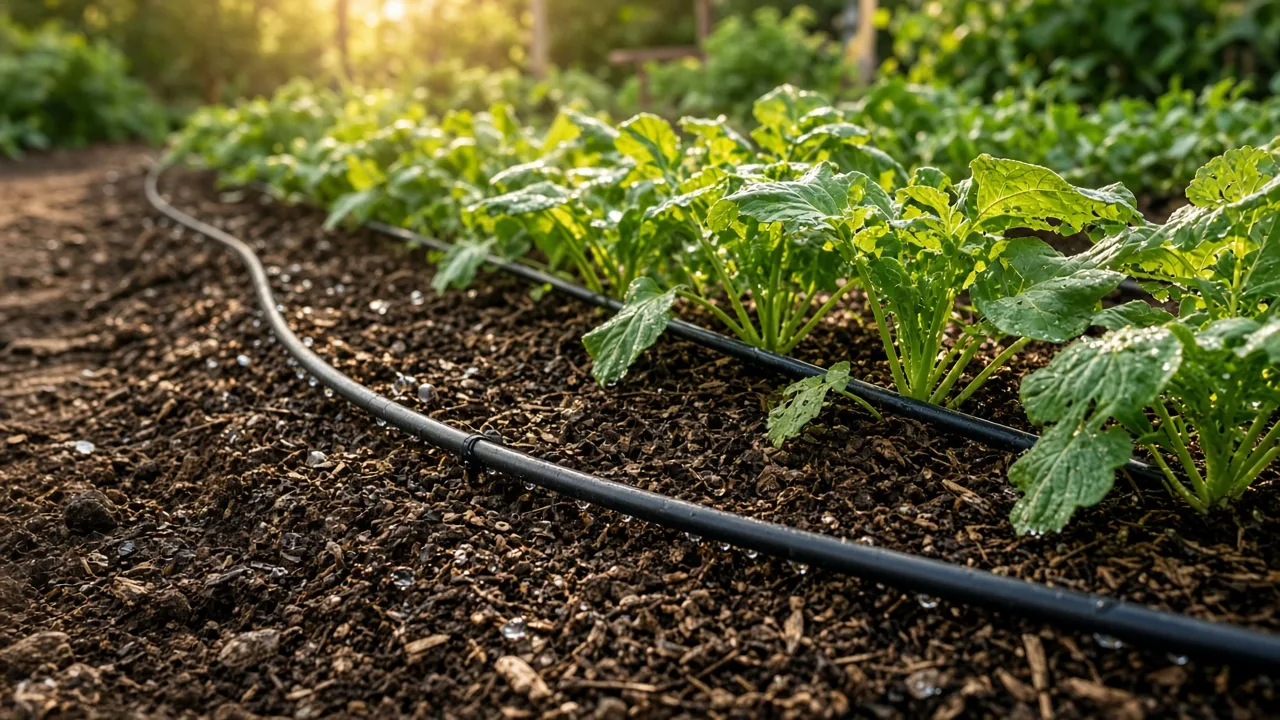
Consider self-watering tools for moisture-loving plants. Wick systems, self-watering pots, or terracotta watering spikes can buffer moisture for plants that suffer from even brief dry spells. See our DIY self-watering systems guide for options that actually work.
When Underwatering Becomes Chronic
A plant that keeps drying out faster than expected may have an underlying problem beyond just forgetting to water.
Rootbound plants: When roots fill the pot and circle the bottom, there is not enough potting mix left to hold moisture. Water runs through almost immediately. If you see roots poking out of drainage holes, the pot is packed with roots, or water barely pauses in the pot before draining, repot into a container one size larger with fresh mix. See repotting houseplants for the full method.
Pot too small: Even if the plant is not severely rootbound, a small pot dries fast. Small pots have less soil volume to buffer moisture, especially in warm, bright rooms. Consider sizing up.
Terracotta in dry conditions: Terracotta wicks moisture through its walls. In a dry, heated room, a terracotta pot may dry out in half the time of a plastic pot. Either check more often or switch to a glazed or plastic container.
Poor-quality or degraded potting mix: Old, compacted, or dust-like potting mix does not hold water well. If the mix looks crumbly, sinks in the pot, or repels water repeatedly, it is time for fresh soil.
Environmental factors: Hot, dry air from heaters, air conditioning, or direct sunlight hitting a dark pot can accelerate drying. A plant in a south-facing window in summer may need water twice as often as it does in winter.
Related Guides
- How to Water Indoor Plants the Right Way — comprehensive watering methods, plant types, and recovery protocol.
- Indoor Plant Watering Basics — one-screen cheat sheet with moisture-check tables and over/under signs.
- How to Bottom Water Houseplants — step-by-step bottom watering for rehydration and sensitive plants.
- How to Save a Dying Houseplant — full diagnosis workflow for a plant in serious trouble.
- Repotting Houseplants — when the pot or mix is the real problem.
- Pruning Indoor Plants — trimming damaged leaves after recovery.
- Houseplant Humidity Guide — when crispy tips are an air-moisture problem, not thirst.
- DIY Self-Watering System: What Actually Works? — vacation buffers and moisture-stable setups.
- Indoor Succulent Care Guide — drought-recovery specifics for succulents and cacti.
- Integrated Pest Management Indoors — pests that follow plant stress.
Conclusion
An underwatered plant is usually fixable — and faster to recover than an overwatered one. The key is to rehydrate the root ball evenly, drain fully, and wait for the plant to respond before taking further action. Bottom watering is the safest method for severely dry plants because it hydrates from the bottom up and avoids the runoff-and-dry-center trap. Check for early signs — drooping, light pot, dry soil — before leaves crisp irreversibly. And above all, let the soil, not the calendar, tell you when to water.