22 Best Fast-Growing Privacy Shrubs
Twenty-two fast-growing privacy shrubs with zones, growth rates, spacing, and evergreen vs flowering picks—plus invasive-plant warnings so your hedge fills in fast without future regret.
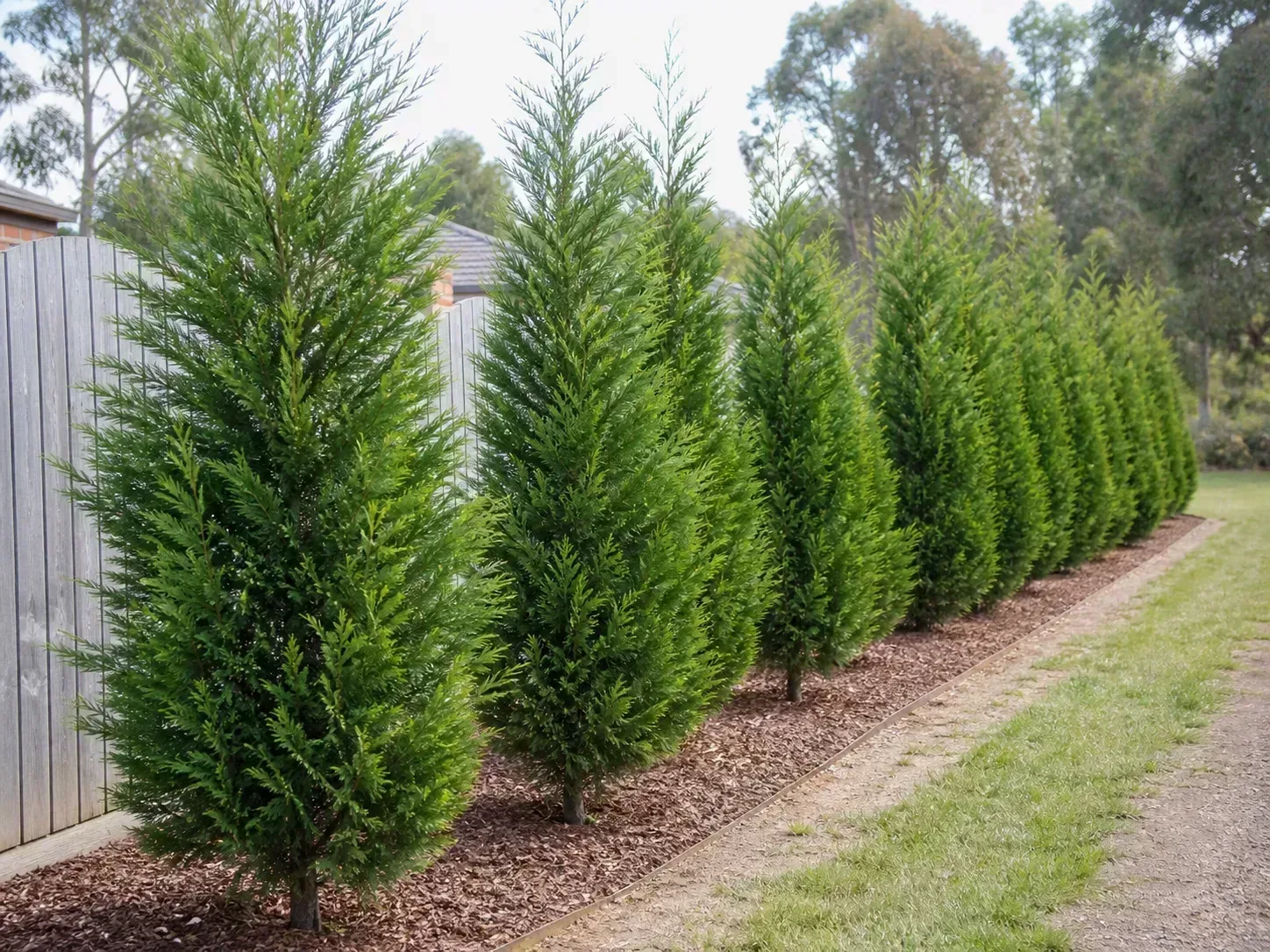
A six-foot hedge changes how a yard feels in a single afternoon walk-through—but only if you chose shrubs that grow quickly enough to matter and stop at a size your property can absorb. Fast is not one number. It is feet per year after establishment, whether leaves stay on in January, and how much pruning you will owe once the plants hit their genetic height.
The twenty-two shrubs below are the ones landscapers and extension educators reach for when homeowners want privacy on a two- to five-year clock, not a decade-long wait. Each profile includes realistic zones, mature dimensions, growth rate, and the maintenance invoice that speed often hides. Read the decision sections first, then shortlist plants that fit your sun, soil, and tolerance for shearing.
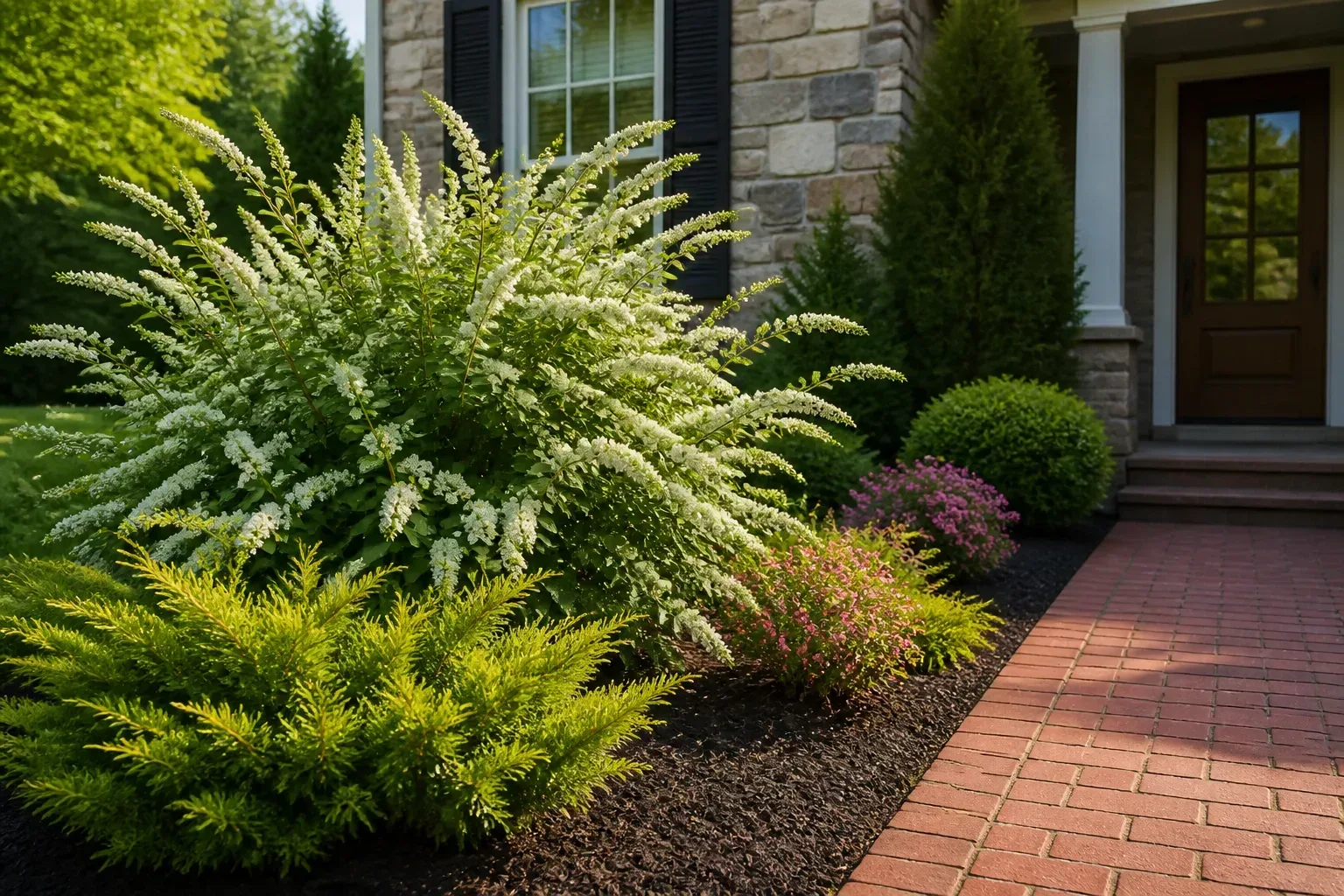
What “Fast” Actually Means for a Privacy Hedge
Fast-growing, in shrub talk, usually means 18 inches to 4 feet of new height per year once roots are established—typically after one full growing season of consistent watering. Seedling trees and dwarf boxwood are not in that conversation even if a nursery tag says “quick.”
Privacy adds a second filter: screen density. A loose row of limbed-up trees blocks sight lines at eye level only if foliage starts low. Hedge shrubs with branches to the ground close gaps faster. That is why this list mixes true hedge candidates (privet, boxwood, arborvitae) with faster woody plants you shear into a screen (ninebark, forsythia) and tall specimens you plant in groups (Green Giant arborvitae).
Three growth-speed tiers to plan around
Tier 1 — sprint growers (3+ feet per year in good conditions): Leyland cypress, pussy willow, and Green Giant arborvitae at the top of their range. These deliver visible height fast—and can overshoot utility lines or lot lines just as quickly.
Tier 2 — steady fast (about 2 feet per year): Forsythia, privet, mock orange, common lilac, red twig dogwood, loropetalum, burning bush, many hydrangeas, and several hollies and junipers. This is the sweet spot for most suburban hedges.
Tier 3 — moderate but reliable (12–18 inches per year): Yew, many boxwood cultivars except selected fast types, and Canadian hemlock in cooler climates. Slower than Tier 2, but easier to keep at a fixed height without weekly rescue pruning.
Match tier to your patience and your ceiling. A Tier 1 conifer on a 40-foot lot is a future removal bill.
How to Match a Shrub to Your Yard Before You Buy
Walk the planting line at 10 a.m. and 3 p.m. Note where sun lasts six hours or more, where soil stays wet two days after rain, and whether you need year-round opacity or only summer screening. Measure the available depth: a Green Giant arborvitae that matures 15 feet wide cannot live in a 4-foot strip between driveway and sidewalk.
Evergreen vs deciduous screening
Evergreens (arborvitae, holly, juniper, cherry laurel, yew, boxwood, loropetalum in warm zones) hold foliage through winter—critical if your privacy goal is blocking a neighbor’s second-story window or a busy road year-round.
Deciduous shrubs (forsythia, lilac, mock orange, hydrangea, red twig dogwood, beautyberry, ninebark) drop leaves and expose the fence line from November to March. They still earn a place when you want spring fragrance, summer flowers, or winter stem color and can accept a seasonal screen. Many gardeners plant a deciduous flowering row in front of a slower evergreen back row to get blooms now and winter cover later.
Spacing for mature width—not pot size
Crowding speeds the illusion of a solid hedge in year one and guarantees airflow problems by year five. Space on mature spread, then accept a slightly open look early.
| Shrub group | Typical on-center spacing | Notes |
|---|---|---|
| Tall evergreen conifers (Green Giant, Leyland) | 6–10 ft | Wider spacing for specimens; tighter only if you commit to regular shearing |
| Broadleaf evergreens (cherry laurel, holly) | 5–8 ft | Schip laurel can go 5–6 ft for a formal screen |
| Medium flowering deciduous (lilac, mock orange) | 6–8 ft | Airflow reduces mildew on lilac |
| Fast-spreading deciduous (forsythia, ninebark) | 5–7 ft | Renewal pruning keeps density |
| Low formal hedges (boxwood) | 1.5–3 ft | Depends on cultivar height target |
Stake the line with hoses or flour before you dig. Adjust for gates, utilities, and mature eave lines.
Best Evergreen Shrubs for Quick Privacy Screens
Evergreens are the default answer when “privacy” means January too. These species are the ones that close a sight line fastest without waiting for bare twigs to leaf out.
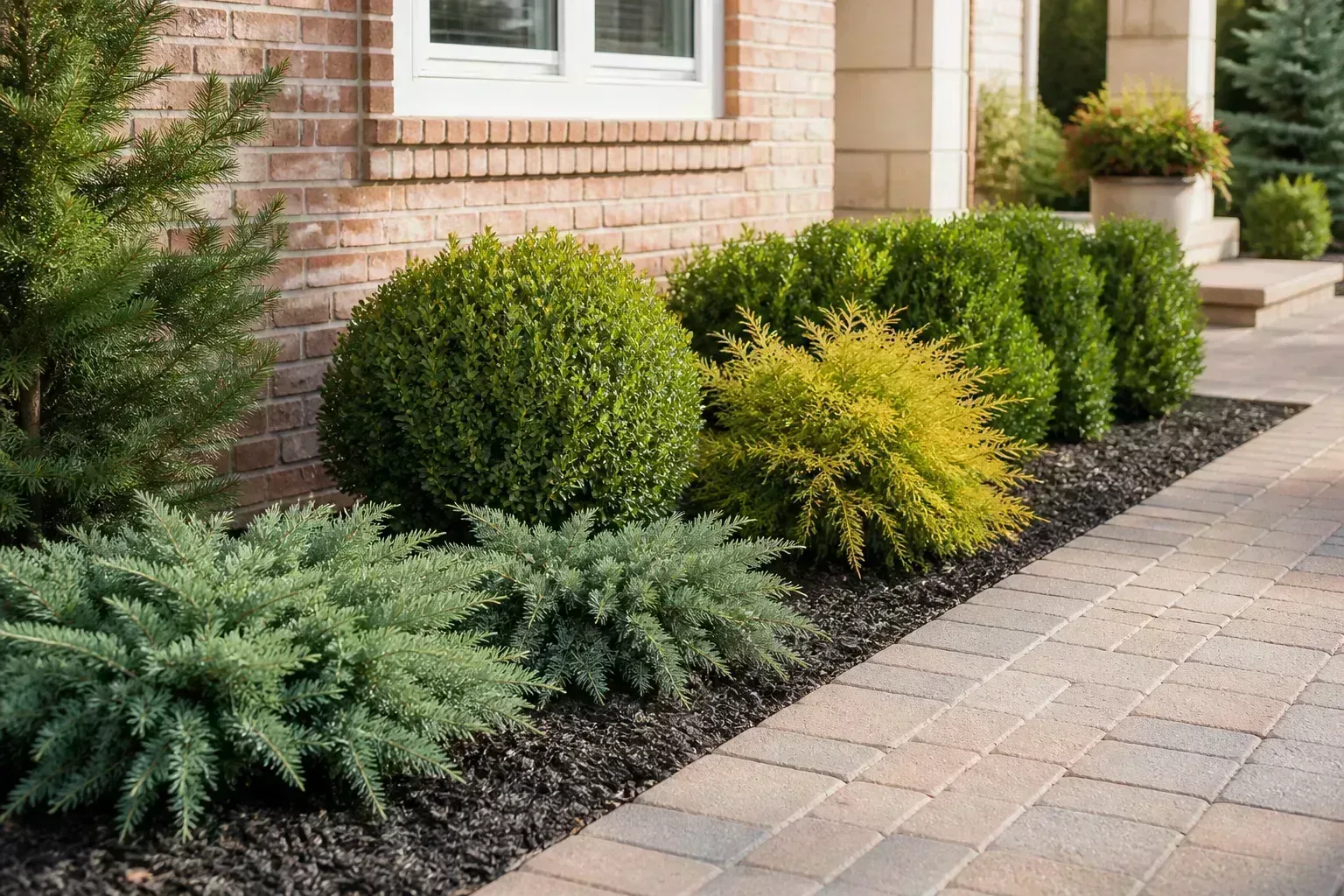
Arborvitae, Leyland cypress, and cherry laurel
Arborvitae (Thuja) is the workhorse evergreen screen in zones 5–8. Cultivars matter enormously. ‘Green Giant’ is the large-scale choice: NC State Extension notes it can add 3–4 feet per year in favorable conditions, reaching 40–60 feet tall and 12–18 feet wide—a tree-scale plant masquerading as a shrub. Use it along property lines with room to spare, not tight to the house. ‘Emerald Green’ (T. occidentalis ‘Smaragd’) grows slower but stays in the 12–14 foot range, better for suburban lots that need a defined hedge without a skyline silhouette.
Leyland cypress (x Hesperotropsis leylandii) is the speed champion many catalogs lead with: 3–5 feet per year until it hits 50–70 feet. It also carries a long list of disease problems—canker, bagworm, root rot in wet soil—and shallow roots that fail in wind when topped repeatedly. NC State lists it as a fast screen but recommends Green Giant as a safer alternative in the Southeast. If you plant Leyland, give full sun, excellent drainage, and a pruning plan before it touches power lines.
Cherry laurel (Prunus laurocerasus), sometimes sold as English laurel, is a glossy broadleaf evergreen for zones 6–9. In mild climates it can add up to 3 feet per year, topping out around 10–20 feet. Schip laurel (‘Schipkaensis’) forms a dense goblet shape 10–15 feet tall—excellent for a formal evergreen wall where arborvitae looks too coniferous. Deer resistance is a plus; verify your cultivar’s hardiness at the northern edge of zone 6.
Holly, juniper, boxwood, yew, hemlock, and loropetalum
American holly and hybrids like Nellie R. Stevens (Ilex ‘Nellie R. Stevens’) add 1–2 feet per year, with spiny evergreen leaves and red berries when a male pollinator is nearby. They tolerate clay better than many conifers and suit zones 6–9. Needlepoint holly (I. cornuta ‘Needlepoint’) is another fast cultivar for warm regions.
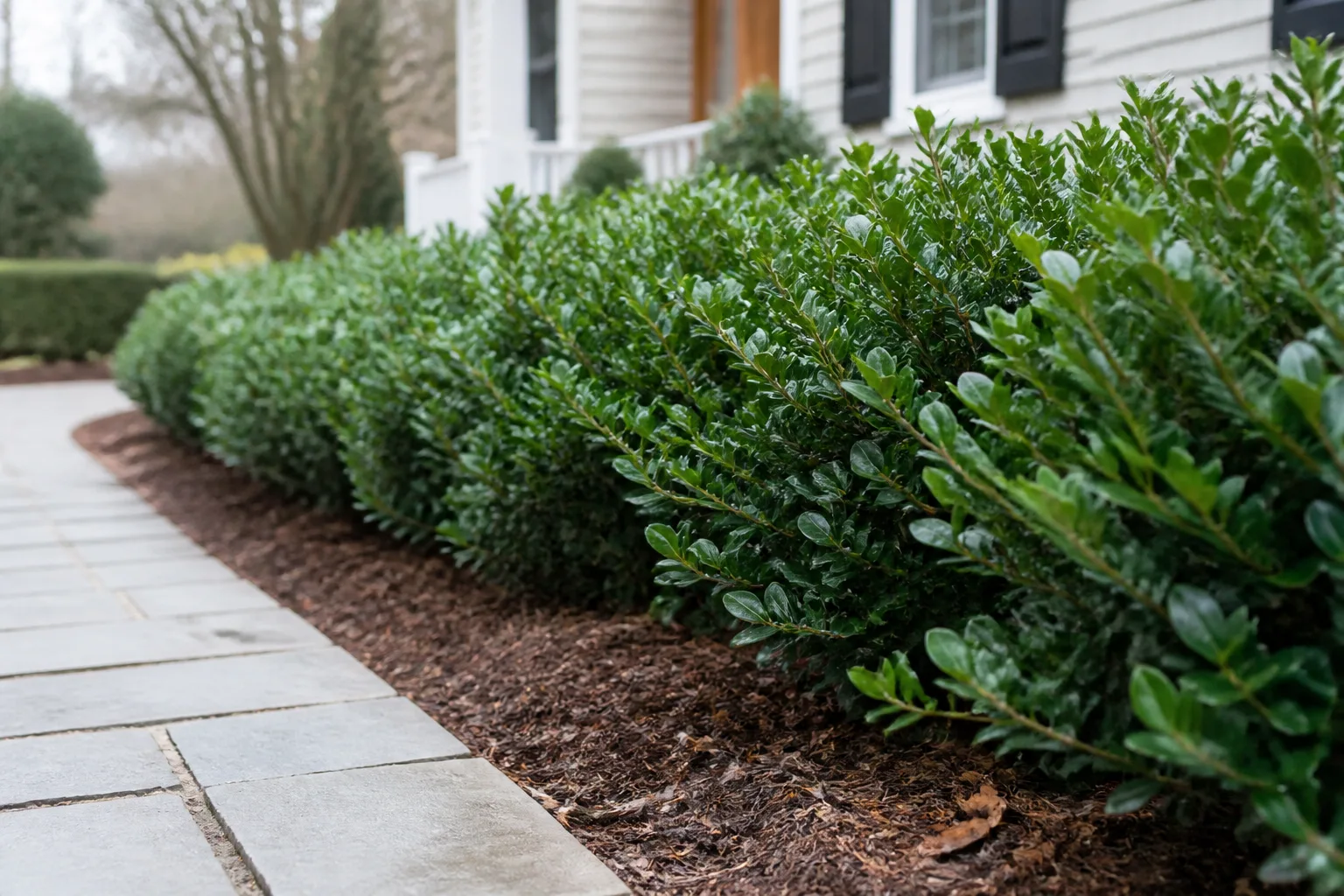
Juniper (Juniperus) spans ground covers to 20-foot columns. For privacy, look at eastern red cedar (J. virginiana) and upright J. communis cultivars in full sun and well-drained soil. Junipers are drought-tough once established and deer-resistant in many areas—check mature width carefully because a spreading juniper will not become a narrow screen.
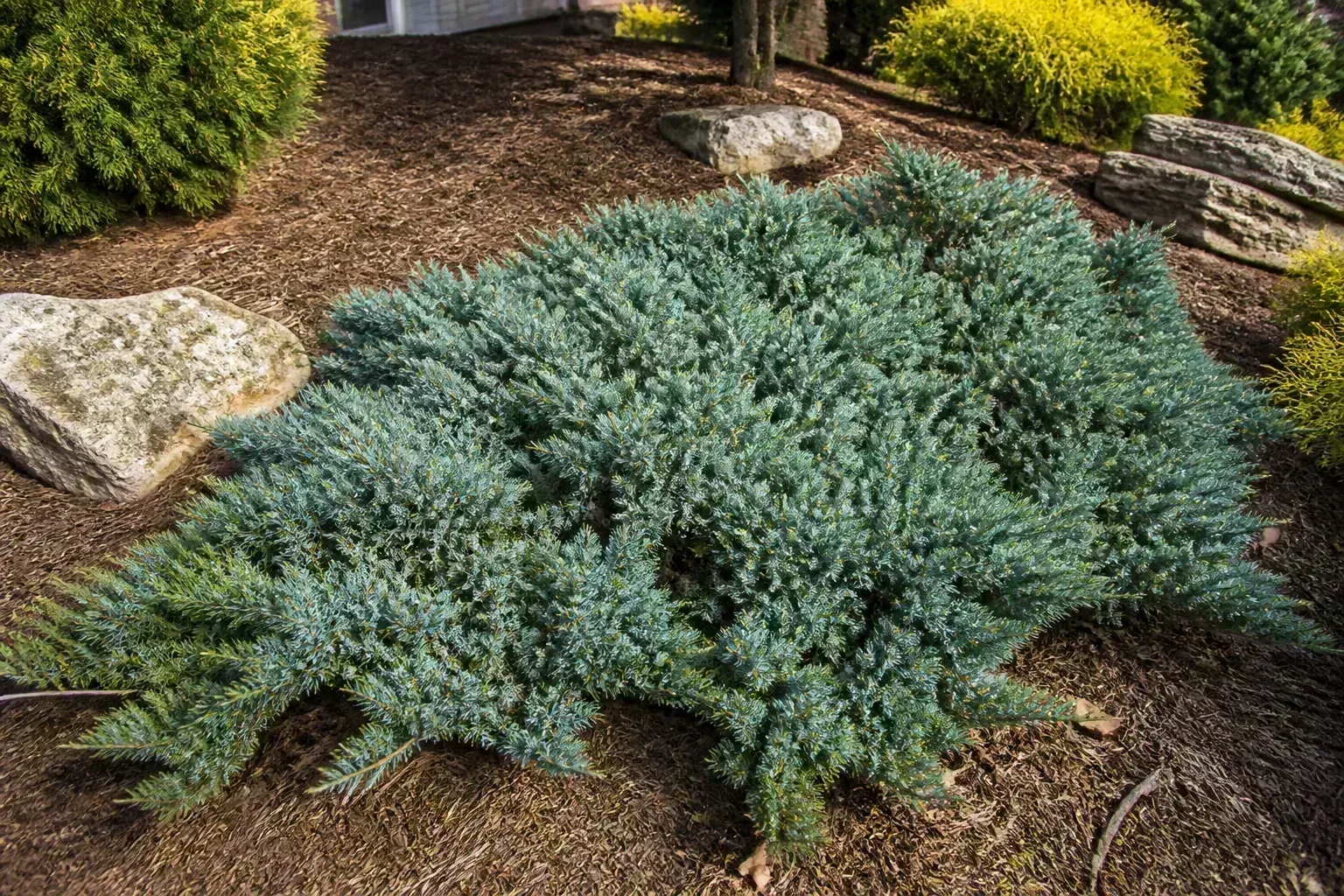
Boxwood (Buxus) is usually slow, but ‘Sprinter’ (B. microphylla ‘Bulthouse’) was bred for faster fill while keeping the fine-textured evergreen leaf. Expect 2–3 feet of growth per year early on, settling into a 4–5 foot hedge with annual shearing. ASPCA lists boxwood as toxic to dogs, cats, and horses if ingested.
Yew (Taxus) tolerates shade better than most evergreens on this list—a real advantage on north-facing foundations. Growth is modest at about 12 inches per year, but yew takes hard pruning and can be kept at a precise height for decades. All parts are toxic to humans and pets; skip it along dog runs and play areas.
Canadian hemlock (Tsuga canadensis) builds a soft, feathery screen in zones 3–7 with roughly 2 feet per year in partial shade. It wants moist, acidic soil and struggles in hot, dry winds of the lower Midwest. Woolly adelgid is a serious pest in parts of the Northeast—check local extension alerts before planting a long hedge.
Loropetalum (Loropetalum chinense), or Chinese fringe flower, is a zones 7b–9 broadleaf evergreen with pink or white strap-like blooms and about 2 feet of growth per year. Plant in acidic, well-drained soil; it is an excellent fast screen where cherry laurel feels too formal and conifers look too stiff.
Fast Deciduous and Flowering Privacy Hedges
If you can live with a see-through winter, deciduous shrubs reward you with fragrance, color, and pollinator value while still adding 2 feet of woody bulk every summer.
Forsythia, lilac, and mock orange
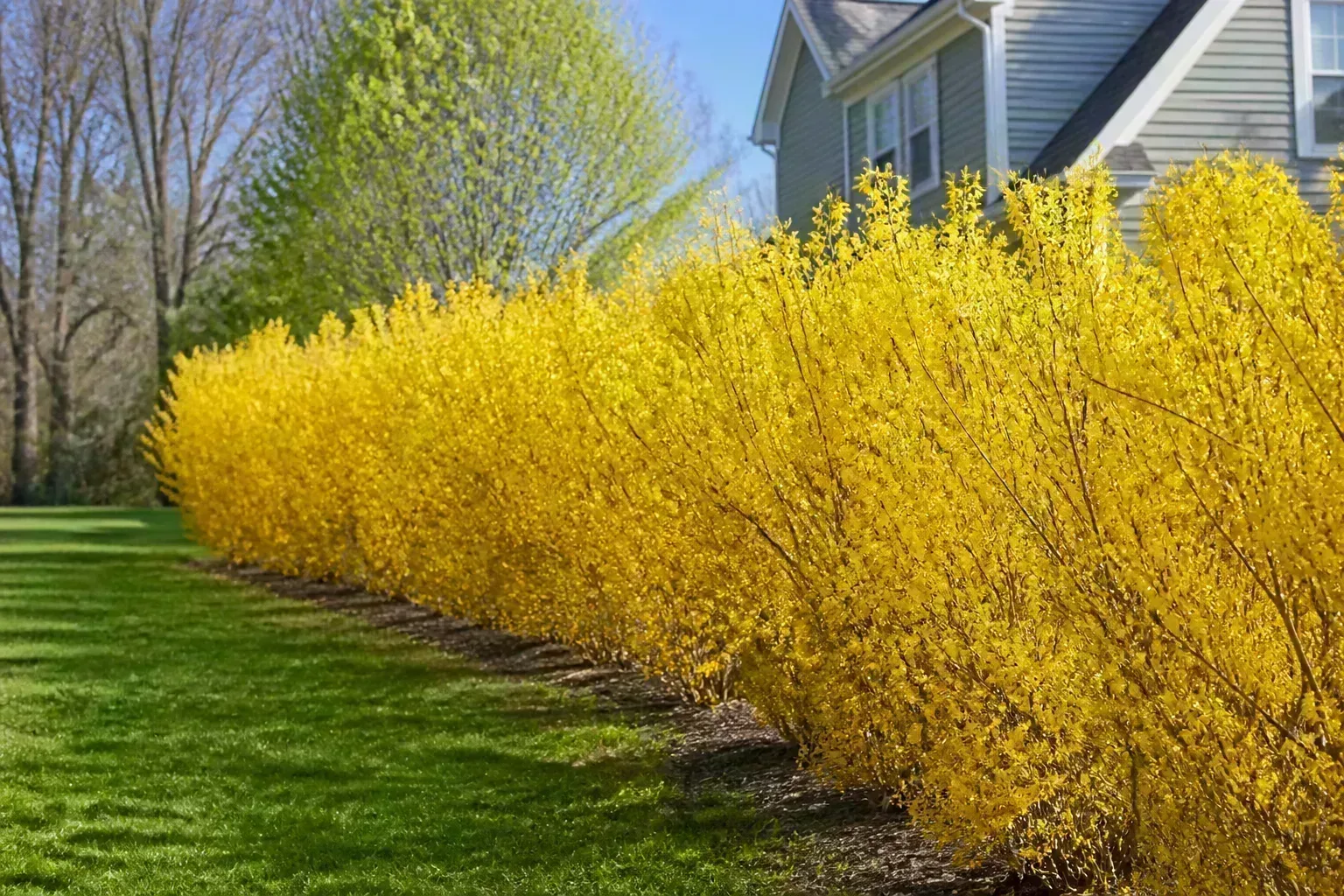
Forsythia (Forsythia spp.) is the yellow wall of early spring, often putting on 2 feet per year in full sun. The Old Farmer’s Almanac notes it is hardy in zones 5–8 and tolerates poor soil—useful on new construction lots. Arching branches root where they touch soil, so plan for spread or prune after bloom to keep a tidy hedge.
Common lilac (Syringa vulgaris) combines fast growth (about 2 feet per year) with intoxicating May flowers in zones 3–7. It is not deer-proof everywhere, and powdery mildew is cosmetic but common in humid summers. Lilac suckers from the base; great for an informal border, frustrating if you need a crisp property line without mowing sprouts.
Mock orange (Philadelphus coronarius) fills the same niche with citrus-sweet white blooms in late spring and similar height (10–12 feet) and speed. It tolerates drought once established and fits informal screens where fragrance matters more than winter cover.
Hydrangea and Limelight panicle hydrangea
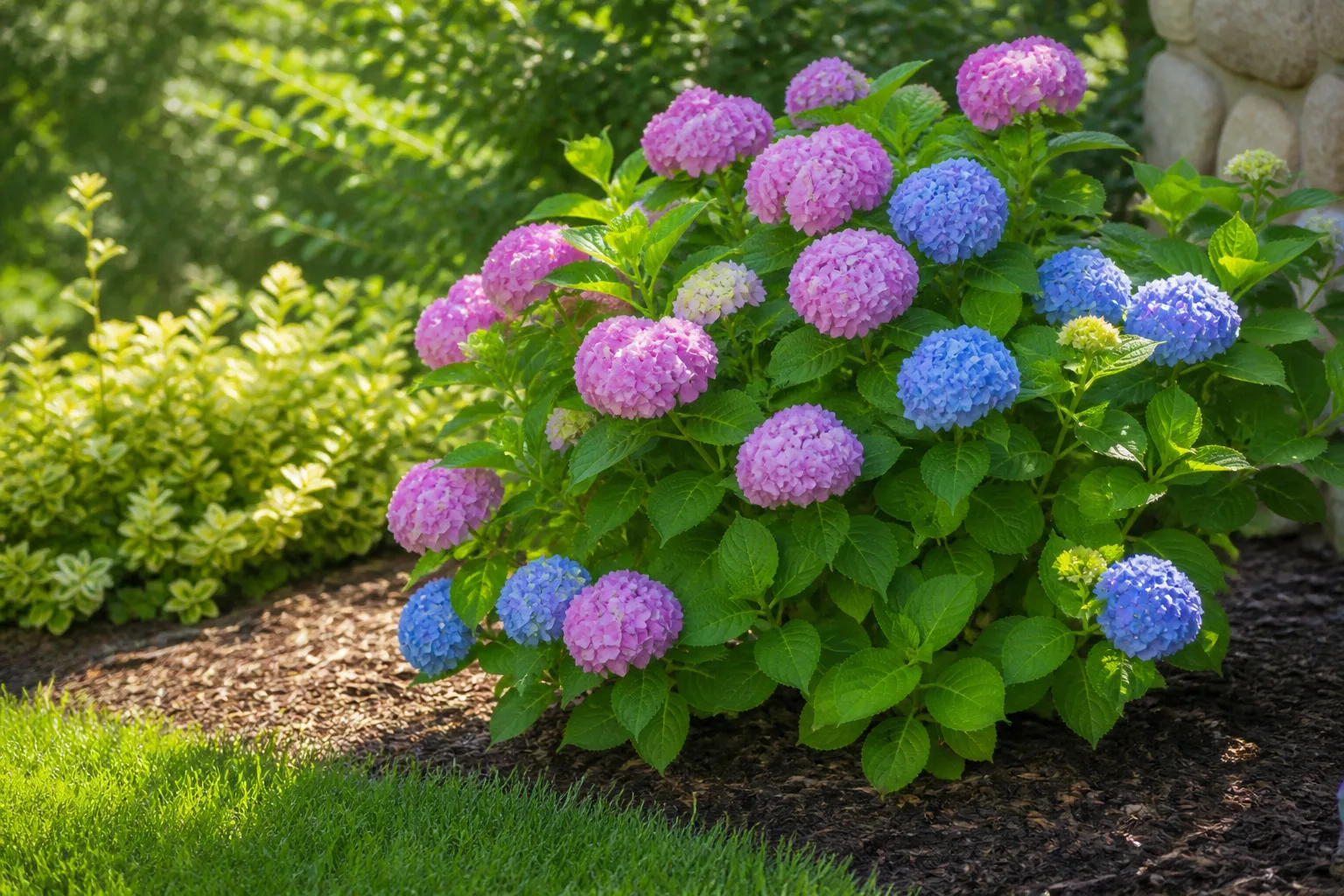
Bigleaf and panicle hydrangeas (Hydrangea spp.) are not traditional tight hedges, but they grow quickly—often 2 feet or more per year with steady moisture—and block eye-level views from summer through fall bloom. ASPCA lists hydrangea as toxic to dogs, cats, and horses.
‘Limelight’ panicle hydrangea (H. paniculata ‘Limelight’) is the cultivar to know for privacy plus flowers: lime-green panicles aging to pink, 6–8 feet tall and wide, blooming on new wood so you can cut back hard in late winter without sacrificing the season’s show. Plant in part to full sun with rich, well-drained soil. It fills faster than mophead types in colder zones (3a–9a) and handles pruning better than bigleaf hydrangeas that bloom on old wood.
Shrubs That Add Color, Bark, and Berries
These deciduous shrubs grow quickly and earn their keep with seasonal display even when they will not give you a solid winter wall.
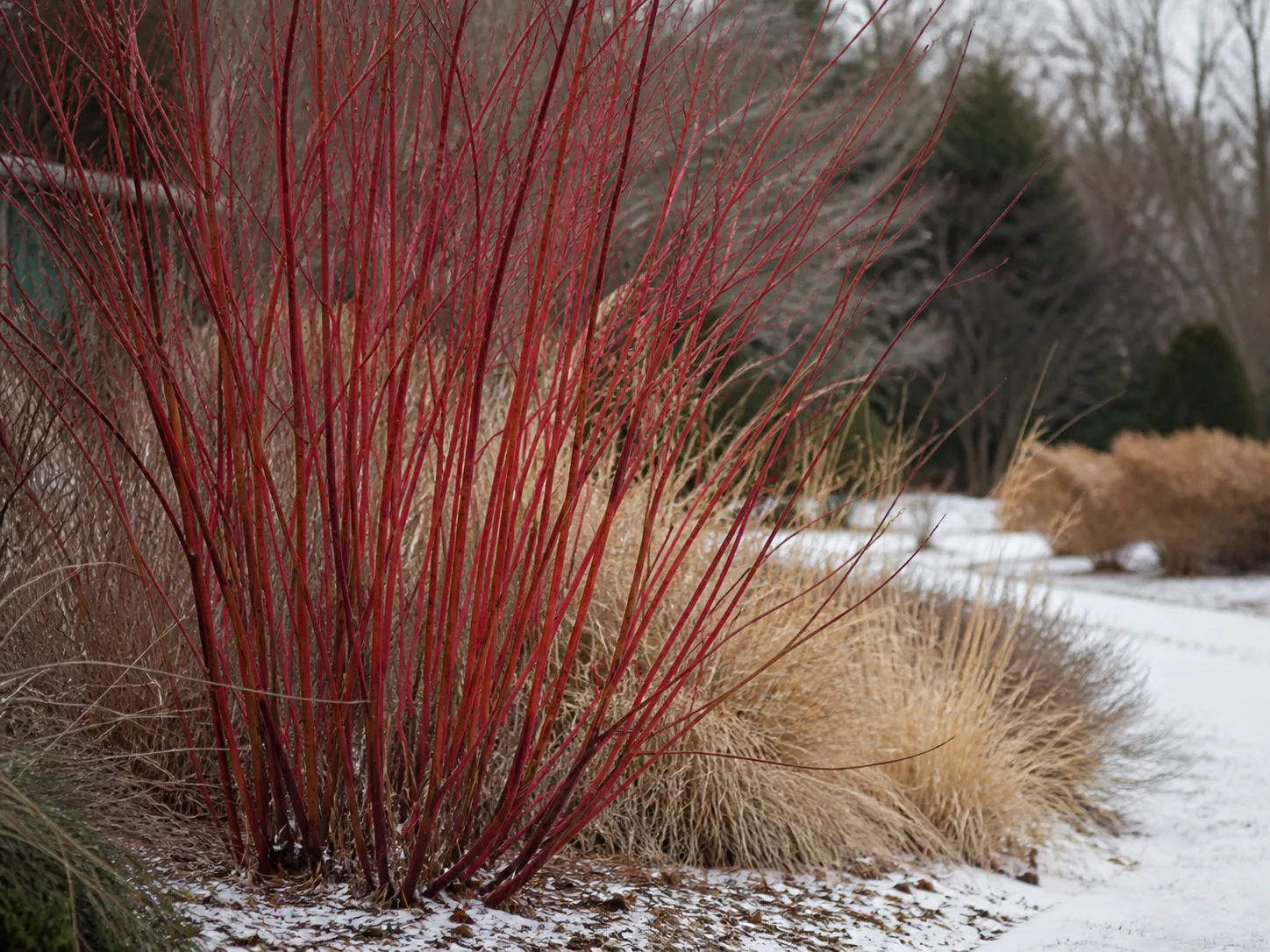
Red twig dogwood (Cornus sericea) adds about 2 feet per year and steals the winter scene with fire-red stems after leaf drop—best in zones 2–7 with moist soil. Renewal-prune the oldest stems to the ground every few years to keep bark color vivid.
Common ninebark (Physocarpus opulifolius) is so fast some cultivars approach mature height in one season in good soil. ‘Diablo’ and similar purple-leaf forms hit 5–10 feet with exfoliating bark and white summer flowers. It tolerates wet clay and drought once established—excellent for informal zones 2–8 screens.
American beautyberry (Callicarpa americana) rockets at 2 feet per year in zones 6–10, then covers itself in violet berries by fall. Hard prune to 12 inches in early spring if you want a dense, waist-high berry hedge rather than a loose fountain shape.
Cotoneaster (Cotoneaster spp., often C. lucidus for hedges) builds stiff, herringbone-branching walls 6–10 feet tall at about 2 feet per year. Berries feed birds; fruit is toxic to humans and pets if eaten in quantity. Evergreen or semi-evergreen depending on cultivar and zone (5–7 typical).
Maximum-Speed Growers—and Shrubs to Think Twice About
Pussy willow (Salix discolor) is among the fastest woody plants you can grow—4–6 feet per year in moist soil—reaching 15–20 feet quickly. It demands constant moisture, drops leaves in winter, and roots aggressively. Plant only where you have space and a water source; pair with slower evergreens behind if you need winter cover.
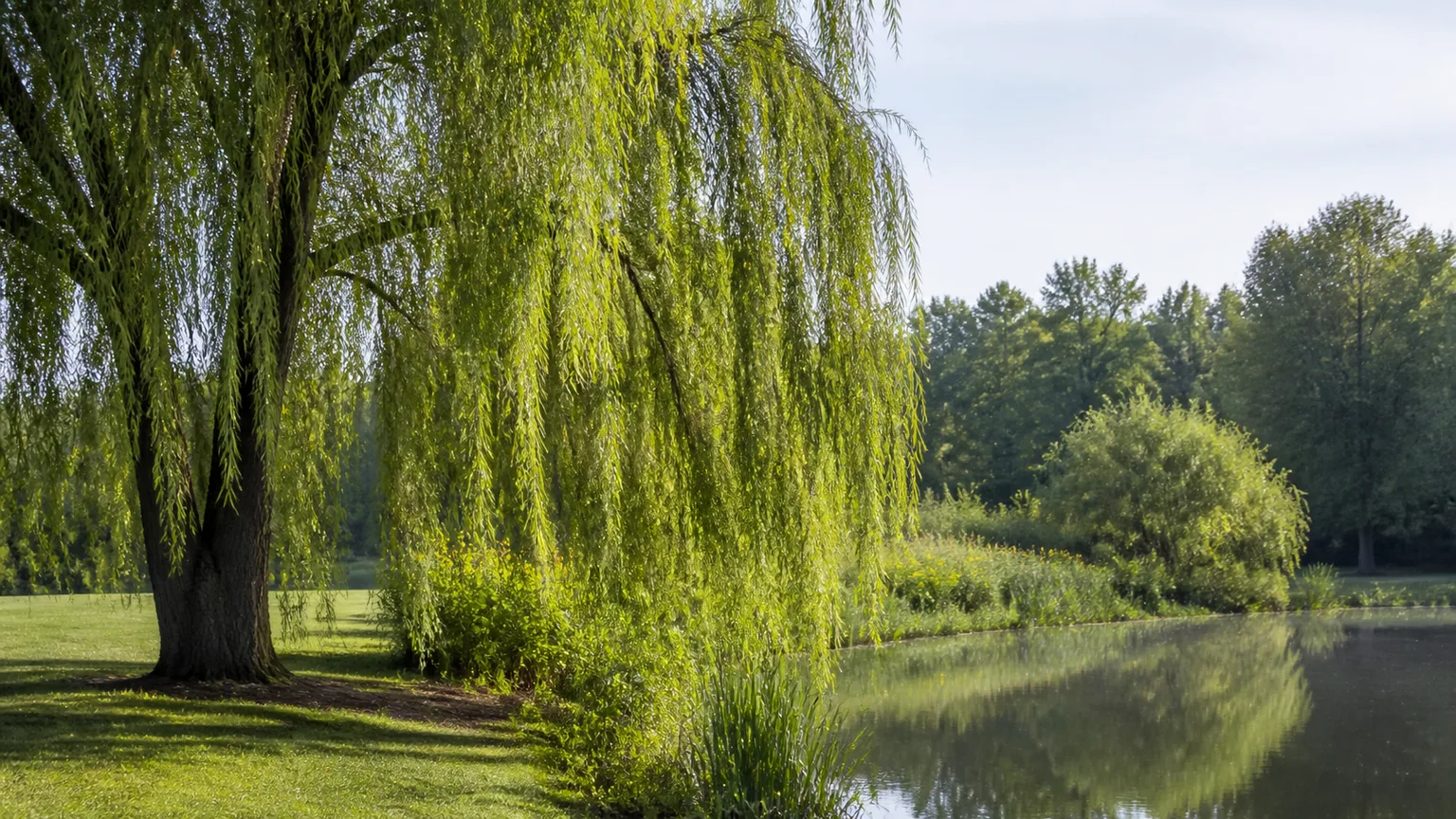
Pussy willow, privet, burning bush, and butterfly bush
Privet (Ligustrum spp.) is the classic sheared evergreen hedge in zones 4–10 (species-dependent), adding about 2 feet per year and taking tight clipping. Japanese privet (L. japonicum) is the ornamental standard. ASPCA lists common privet as toxic to dogs, cats, and horses. Some Ligustrum species are invasive in the Southeast and Pacific Northwest—check your state noxious-weed list before planting a long row.
Burning bush (Euonymus alatus) grows fast with brilliant red fall foliage but is invasive or banned in many northeastern and midwestern states because birds spread seeds into natural areas. Many land-grant universities now recommend native alternatives like highbush blueberry or dwarf fothergilla for fall color. If it is legal in your area and you still want it, plant only where seedlings cannot escape to woodland edges.
Butterfly bush (Buddleja spp.) is not a twenty-two-shrub privacy list staple anymore. Older seeding types are invasive across much of the U.S.; even sterile cultivars attract adult butterflies without feeding caterpillars. For fast height and pollinator value with lower risk, use agastache, native viburnum, or a sterile dwarf series—and verify your county invasive list. Many older nursery lists still push it for speed; modern screens should prioritize ecological fit.
Planting, Pruning, and Maintaining a Fast-Growing Hedge
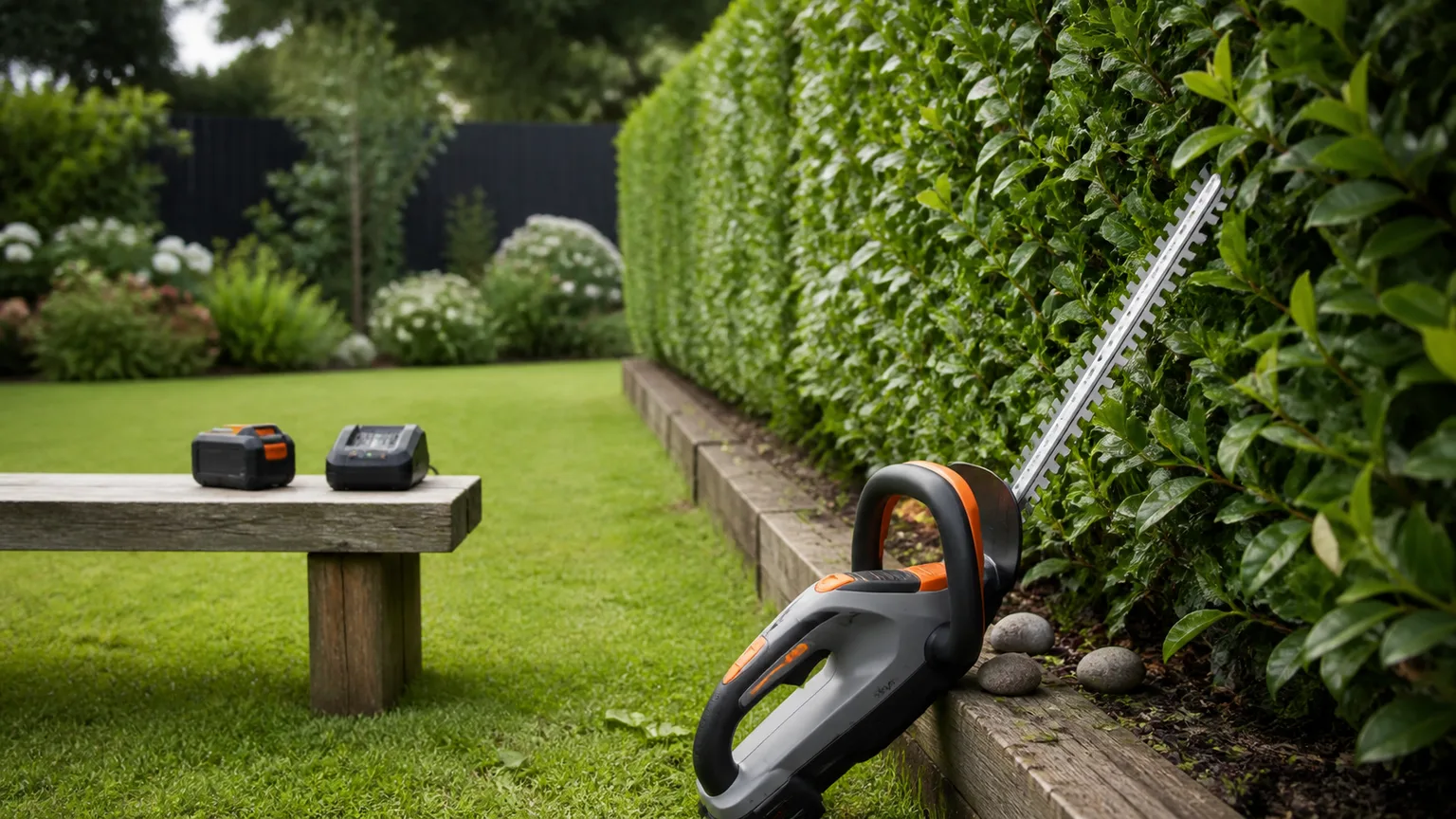
Year one is never low-maintenance. Dig a trench or individual holes twice the root ball width, plant at the same depth as the container, backfill with native soil, and water deeply twice weekly through the first growing season—more in heat or sand. Mulch 2–3 inches, keeping material off trunks. Skip heavy fertilizer until roots establish; top growth without roots is how fast hedges blow over.
Pruning rhythm: Shear formal evergreens (privet, boxwood, cherry laurel) two to three times per year during the growing season, stopping six weeks before your average first frost. Informal flowering hedges (lilac, forsythia, mock orange) get renewal pruning right after bloom—remove oldest stems at the base, shorten stragglers. Conifers like arborvitae and Leyland need height control early; never cut back into bare wood on arborvitae—it will not resprout.
Timeline expectations: A well-spaced Green Giant or cherry laurel row often reads as a useful visual screen in two to three years. Deciduous flowering hedges may take three to five years to look continuous but deliver blooms sooner. No shrub skips establishment.
Hedge vs fence: A shrub screen costs more labor up front—digging, watering, pruning—but living screens soften noise, host wildlife, and outlast many wooden fences when sited correctly. Manufactured fences win on instant height and zero watering; hedges win on aesthetics, longevity, and property value when you have the patience for year one.
Conclusion
Fast privacy is a matching problem, not a single “best” plant. For year-round cover in a large lot, Green Giant arborvitae or cherry laurel close gaps on a two- to three-year clock if you space for mature width and water through establishment. For fragrance and spring color with summer screening, lilac, mock orange, and Limelight hydrangea grow quickly without pretending to be winter walls. Yew and Canadian hemlock solve shade where conifers fail.
Before you buy twenty identical pots, cross-check mature height against utility lines, invasive status against your state list, and toxicity against pets and kids. The fastest shrub you regret is the one you have to chainsaw at year ten. Measure your line, pick a tier that fits your ceiling, and plant fewer shrubs at the correct spacing—you will get a private yard sooner than a crowded row ever will.