Houseplant Bud Drop: Causes, Diagnosis and Fixes
Flower buds falling off your houseplant? Diagnose move shock, dry air, watering swings, thrips, and ethylene—then stabilize before the next cycle.
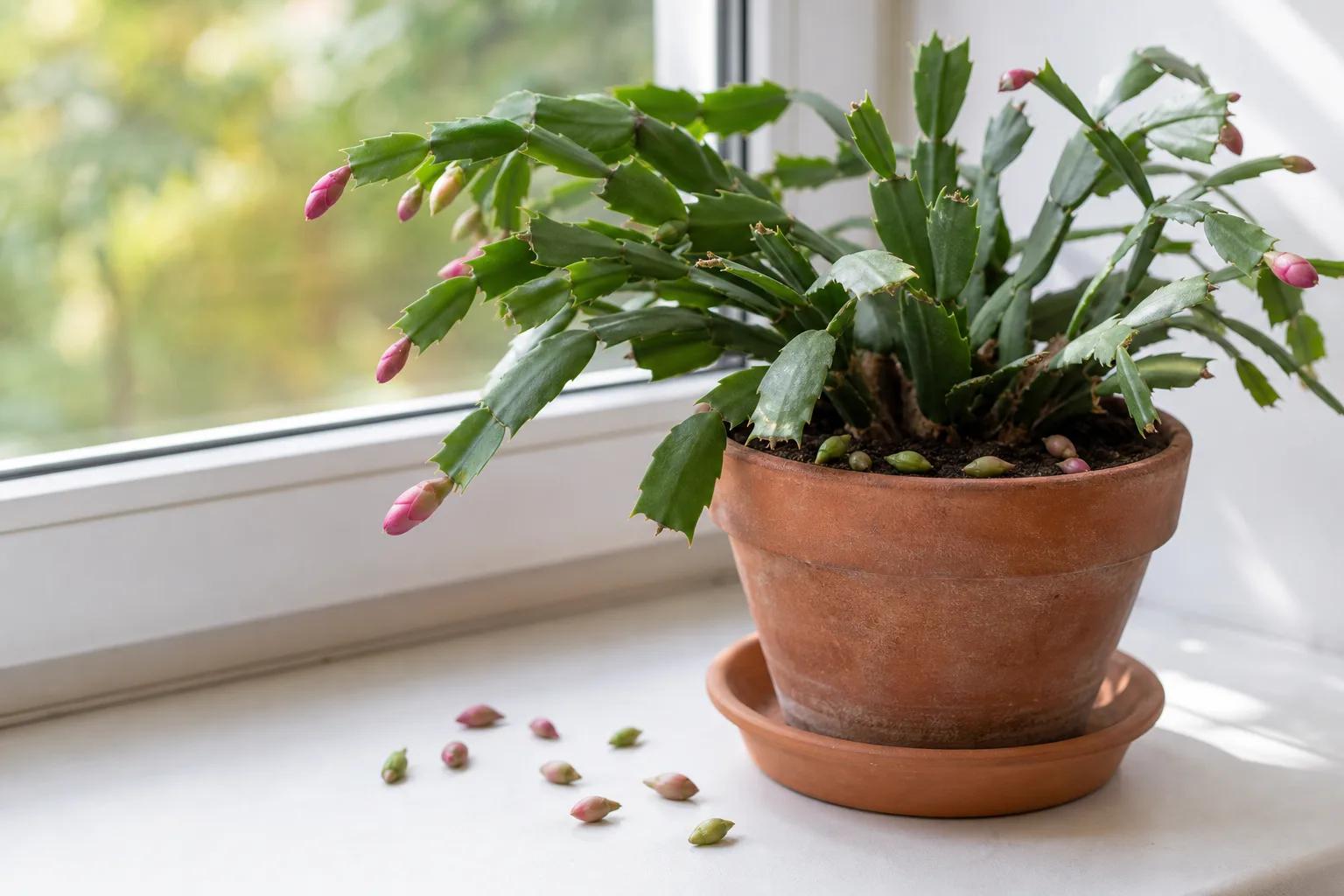
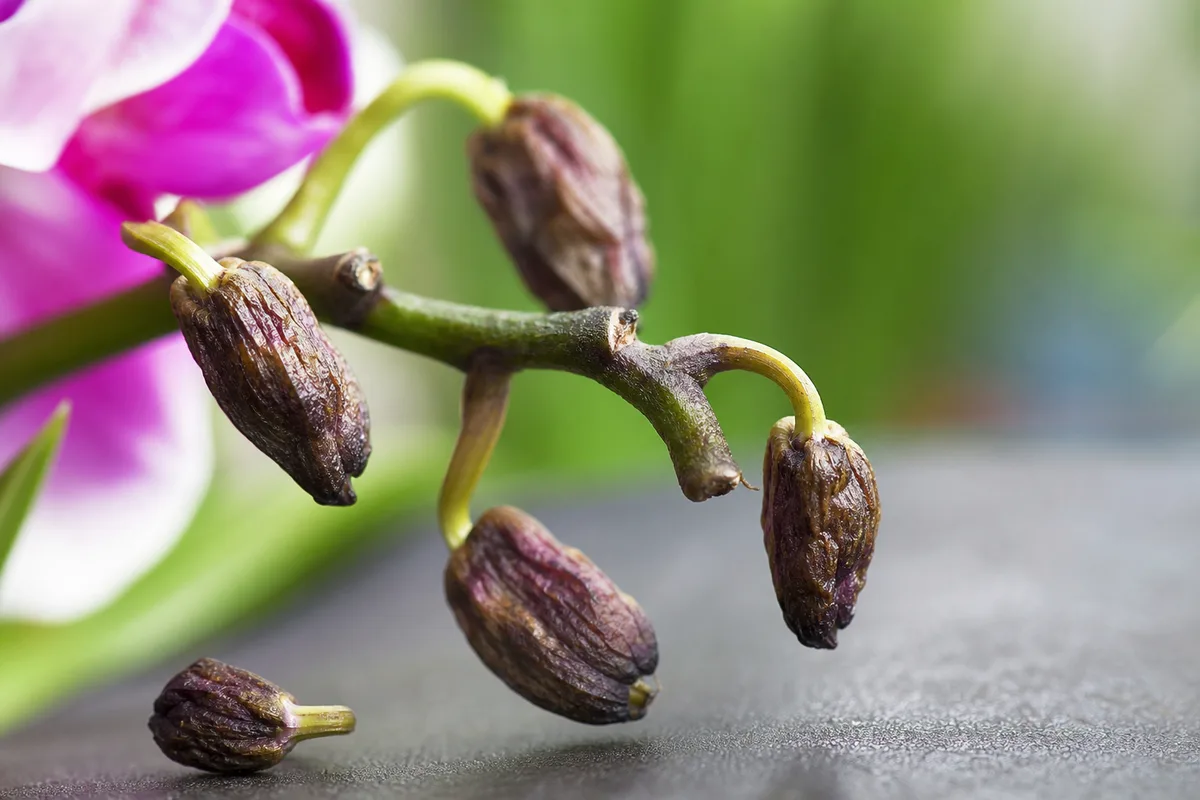
You finally got buds—then they yellow, shrivel, or detach before a single flower opens. That pattern is houseplant bud drop (orchids often call it bud blast): the plant formed reproductive tissue, then aborted it. Buds are the most stress-sensitive part of many indoor bloomers, so a change you barely notice can empty a spike or tip overnight.
Timeline the last seven days before you repot, fertilize, or chase a new “bloom booster.” Most indoor abortions trace to move shock, drafts, moisture extremes, pests, ethylene, or feeding mistakes—not a mysterious disease. This page is the multi-species diagnosis hub: how to separate bud drop from no flowers, how each cause looks in practice, and what to do this week versus the next bloom cycle. For the short symptom overview, see the bud drop symptom hub.
Written by Sai Ananth, who grows indoor bloomers (holiday cacti, Phalaenopsis, African violets, tropical hibiscus) under typical apartment light and winter heating. Horticultural review by Dr. Ananya Rao (plant scientist and horticulture reviewer).
Bud Drop vs No Flowers vs Faded Blooms
Mislabeling the problem wastes weeks. Bud drop means buds existed and failed before opening. No flowers means the plant did not initiate or hold a bloom structure at all—wrong light, wrong photoperiod, immaturity, or chronic low energy. Faded flowers means blooms opened, then lost color or collapsed early.
Use this quick split. If your Christmas cactus set pea-sized buds and then emptied after you moved it to the dining table, stay on bud drop. If the same plant never formed buds after a bright-room winter with night lights interrupting darkness, use the plant’s no flowers page. If open blooms wilted while unopened buds still look firm, treat flower aging or ethylene on open blooms separately from bud abortion.
The same logic applies to Phalaenopsis orchids, African violets, hibiscus, anthurium, and jasmine. Species pages help when triggers differ—ethylene near moth orchids, short-day interruption for holiday cacti—but the diagnostic order below still starts the same way.
Quick Diagnosis Checklist and Cause Priority Order
Change one major variable at a time. Dropped buds will not reopen, so the goal is to stop further abortion and set up the next cycle.
How we order causes indoors (apartment default):
| Priority | If you see… | First action | Link out when… |
|---|---|---|---|
| 1 | Pests, frass, silvery scarring | Isolate; confirm on white paper | Confirmed thrips/aphids → pest guide |
| 2 | Heavy/sour pot, limp canopy | Pause water/fertilizer; check roots | Mushy roots → root-rot path |
| 3 | Move, rotate, or room change in last 7 days | Stabilize placement; stop rotating | Recurring after every display move |
| 4 | Vent, door, or icy-glass blast on buds | Shift a few feet off the draft path | Buds still abort after draft fix |
| 5 | Fruit bowl, smoke, gas/exhaust near plant | Remove ethylene sources | Open flowers also shatter fast |
| 6 | Bone-dry or swampy mix during swell | Normalize species moisture | Hydrophobic mix or chronic waterlogging |
| 7 | Months unfed or recent hard nitrogen dump | Stabilize first; feed lightly later | Pale growth with healthy roots only |
- Timeline the last seven days. Note moves, rotations, room changes, heater or AC starts, guests, paint fumes, new lamps, and fruit on the same surface.
- Check placement drafts. Feel for cold window glass, door gusts, and HVAC vents aimed at foliage or spikes.
- Assess moisture at root depth. Finger-test several centimeters down—not just the surface crust.
- Inspect buds and new growth for pests. Look for silvery scarring, distorted petals, and tiny black frass; shake buds over white paper.
- Scan for ethylene sources. Ripening fruit, cigarette smoke, gas appliances, and vehicle exhaust near an entry can all matter.
- Review recent fertilizer. Note skipped feeding for months versus a strong nitrogen dose right before buds swelled.
- Leave the pot where it is unless the current spot is clearly lethal (freezing sill, direct heater blast). Stability beats a second shock.
If pests are confirmed, isolate immediately and follow the thrips on houseplants guide. If soil is wet and the plant is limp, pause fertilizer and review overwatering before you chase humidity myths.
Move Shock and Sudden Environment Changes
Relocation is one of the most common indoor bud-drop triggers because shipping, retail display, and home placement stack shocks. Holiday cacti and orchids are famous for it, but any budding plant can abort after a sudden change in light direction, temperature, or humidity. Clemson HGIC notes that Thanksgiving and Christmas cacti commonly drop unopened buds after sudden changes in temperature, light, or moisture, including drying of the growing medium (Clemson HGIC).
Move shock also includes “helpful” habits: rotating the pot daily for even growth, bringing a budded plant outdoors for a sunny afternoon, or shifting it to a brighter window the week buds appear. Those changes can be good long-term and still abort the current set. Retail-budded plants often arrive already stressed from transit—expect some lag abortions even after you settle them.
Why Relocating a Budding Plant Triggers Abscission
Developing buds demand a steady water and carbohydrate supply. When light intensity, day-length cues, or root-zone temperature jump, the plant can seal off buds through abscission rather than finish expensive flowers. American Orchid Society guidance on bud blast lists rapid temperature changes from windows, vents, cars, and outdoor-to-indoor transitions as frequent causes (American Orchid Society).
Transfer limit: AOS lists are written for orchids (especially Cattleya, Phalaenopsis, and Dendrobium). The same stress pathways show up on holiday cacti, African violets, and tropical hibiscus, but temperature thresholds and moisture habits are species-specific—do not treat every houseplant like a Phalaenopsis.
Treat a plant with visible buds like a guest who hates surprises. Pick its bloom-season spot before buds swell, then leave orientation alone until flowers open. If you must display it for a party, wait until blooms begin and return it to the same place afterward.
Dry Air, Drafts, and Humidity Swings
Dry winter air and intermittent drafts dry delicate bud tissue faster than mature leaves. UConn’s ailing-houseplants guidance lists lack of humidity—especially in winter—as a frequent cause of leaf and bud drop, and notes drafts near doors and loose windows as another trigger (UConn Home & Garden Education Center). Orchid buds, in particular, need higher and more stable humidity; large swings can abort them (American Orchid Society).
Do not rely on misting as your humidity strategy. Penn State Extension explains that misting raises humidity only until droplets evaporate—often minutes—so it does not create a lasting microclimate (Penn State Extension). Group plants, use a room humidifier where practical, and keep budding plants off heat registers. For deeper humidity options and limits, use the houseplant humidity guide.
Drafts are a separate problem from average RH. A plant can sit in a “humid enough” room and still abort buds if cold air pulses hit a spike each time a door opens. Move a few feet away from the draft path before you buy more gear.
Watering Stress During Bud Set
Inconsistent moisture during bud formation is a classic abortion trigger. Roots need oxygen and water together; both drought and waterlogging can leave buds undersupplied. Clemson’s indoor watering guidance stresses that overwatering and underwatering produce overlapping decline symptoms because both damage root function (Clemson HGIC).
For plants already in bud, aim for species-appropriate evenness rather than dramatic wet–dry swings. Holiday cacti illustrate the point: after fall bud set, the medium should stay evenly moist to prevent flower-bud abscission (Clemson HGIC).
Underwatering That Starves Developing Buds
When mix goes bone-dry, some plants withdraw moisture from buds as a survival move. The American Orchid Society describes underwatering as a common bud-blast cause for that reason (American Orchid Society). RHS troubleshooting similarly links underwatering to flowers that fade or fall quickly (RHS).
If the pot is unusually light and the top inches are dusty, water thoroughly until runoff, then empty the saucer. Rewet hydrophobic peat or bark with a second pass or a short bottom-water soak rather than daily teaspoons that never hydrate the core. Full method detail lives in how to water indoor plants the right way and underwatering.
Overwatering and Root Damage That Looks Like Drought
Soggy media destroy roots, so the plant cannot deliver water to buds even though the pot feels heavy. Orchid growers see the same end state as drought: buds abort because the canopy is effectively short on water (American Orchid Society). Pair bud loss with soft stems, yellowing lower leaves, and a sour smell, and inspect roots before you add more water.
If roots are mushy and dark, treat as root decline first—see root rot on houseplants and overwatered plant. Do not fertilize a waterlogged, root-damaged plant while buds are failing.
Thrips and Other Bud-Feeding Pests
Not every bud drop is abiotic. Thrips and aphids feed in buds and flowers, sucking cell contents so buds fail to develop, drop, or open already scarred. The American Orchid Society lists aphids and thrips among bud-blast causes (American Orchid Society). UC IPM notes that pest thrips often feed hidden in buds and shoot tips, so you may see damage before you see the insect (UC IPM).
Colorado State University Extension describes thrips damage as light, irregular silvery areas with tiny dark excrement spots, and notes flower scarring as a key clue (Colorado State University Extension). Shake suspect buds over white paper, check sticky traps, and isolate the plant if you find slender, fast-moving insects.
Treatment belongs to an IPM loop—not one spray. Rinse or wipe reachable tissue, prune heavily ruined buds, and use a product labeled for thrips on ornamentals, repeating on the schedule the label requires. Spinosad is often stronger than soap or oil alone for thrips, but always follow label directions and never escalate products just because buds are falling. Full indoor protocol: thrips on houseplants and the broader indoor plant pest guide.
Underfeeding, Nitrogen Excess, and Chemical Blast
Buds need energy. A plant that sat unfed through a long active-growth season can set a few buds, then abort them when reserves run short—especially in small pots. UConn notes pale leaves and slow growth as signs that more frequent fertilization may be needed during active growth, while also warning that high-nitrogen fertilizers push leafy growth at the expense of flowering (UConn Home & Garden Education Center).
The fix is not dumping bloom booster onto a stressed plant mid-drop. Stabilize water, light, and placement first. When healthy growth resumes, feed at quarter to half strength on a regular active-growth schedule rather than rare full-strength hits. For blooming houseplants, prefer a balanced or phosphorus-aware product over constant high nitrogen—details in fertilizing indoor plants and best fertilizer for indoor plants.
Overdoing fertilizer, fungicide, or pesticide can also blast buds chemically. AOS warns that rates above plant tolerance can force bud drop (American Orchid Society). Never fertilize a bone-dry root ball; water first, then feed lightly the next day if the plant is actively growing.
Ethylene, Temperature Extremes, and Indoor Air
Ethylene is a plant hormone gas that triggers flower and leaf abscission. Indoors it can come from ripening fruit, cigarette smoke, incomplete combustion, and vehicle exhaust. Cornell greenhouse horticulture documents flower abscission and premature flower senescence from ethylene exposure, with some crops responding at very low concentrations (Cornell University Greenhouse Horticulture). AOS specifically flags ethylene from ripening fruit and combustion sources as orchid bud-blast triggers (American Orchid Society).
Temperature swings act like a separate shock. Drafts from AC or heat vents, hot ovens, freezing windowpanes, and car-to-house transitions all appear in orchid bud-blast lists (American Orchid Society). Holiday cacti add a heat ceiling: continuous temperatures above about 90°F after bud set can cause buds to drop, and nights near 50°F can also promote drop even though cool nights help initiation (Clemson HGIC). Those holiday-cactus numbers are not universal indoor rules—use them for Schlumbergera-type plants, then apply the steadiness principle to other bloomers.
Practical rule: keep budding plants away from the fruit bowl, stove exhaust, and HVAC blasts. Hold room temperatures as steady as your home allows during the swell-to-open window.
Species Patterns: Orchids, Holiday Cacti, African Violets, and Other Bloomers
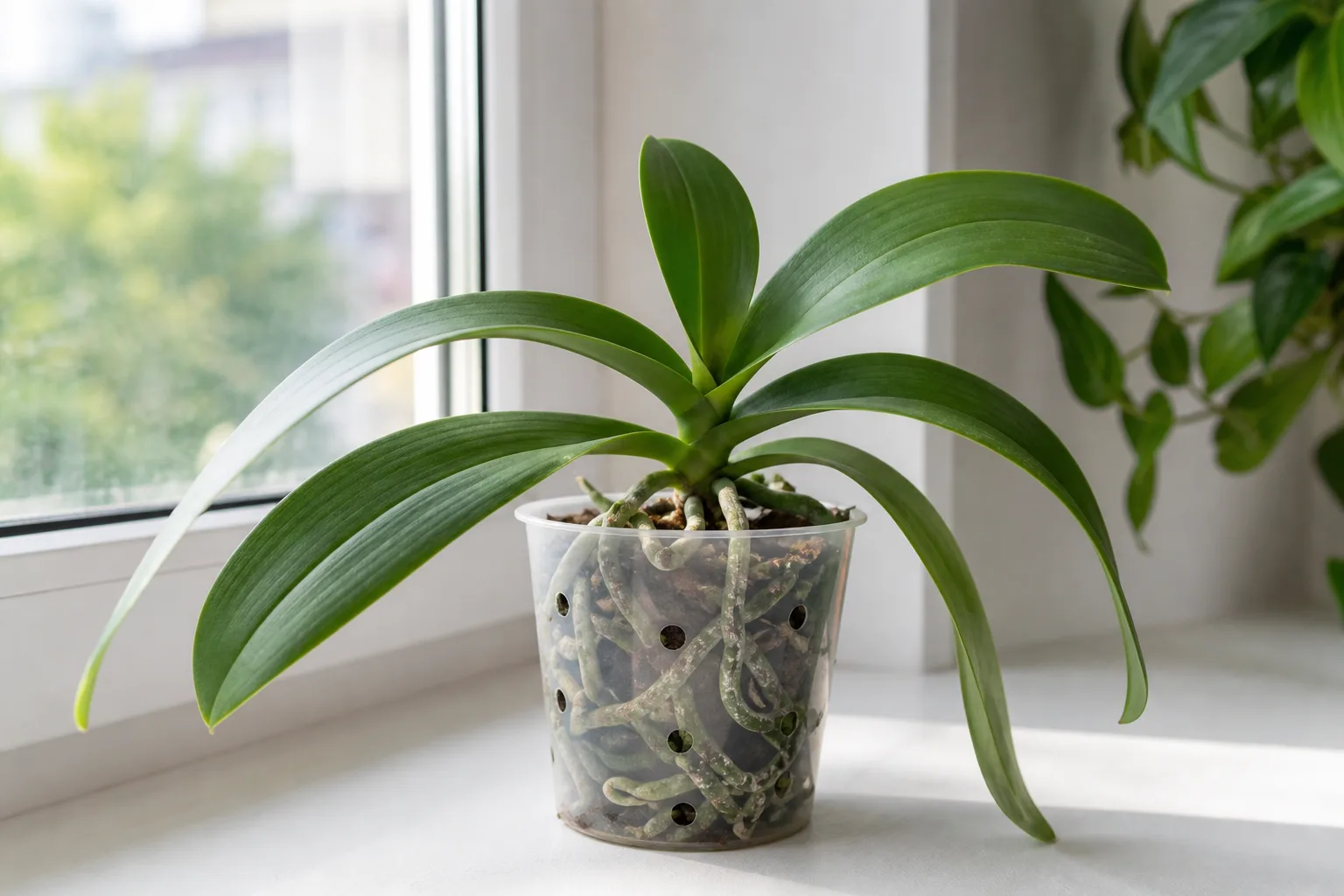
Phalaenopsis and related orchids often show classic bud blast: buds yellow and fall while leaves stay firm. Prioritize ethylene, drafts, repot timing, and moisture extremes. Plant-specific detail: Phalaenopsis bud drop.
Christmas and Thanksgiving cacti abort after moves, watering swings after bud set, heat spikes, and earlier photoperiod mistakes that affect initiation. Leave the pot put once buds appear; see Christmas cactus bud drop.
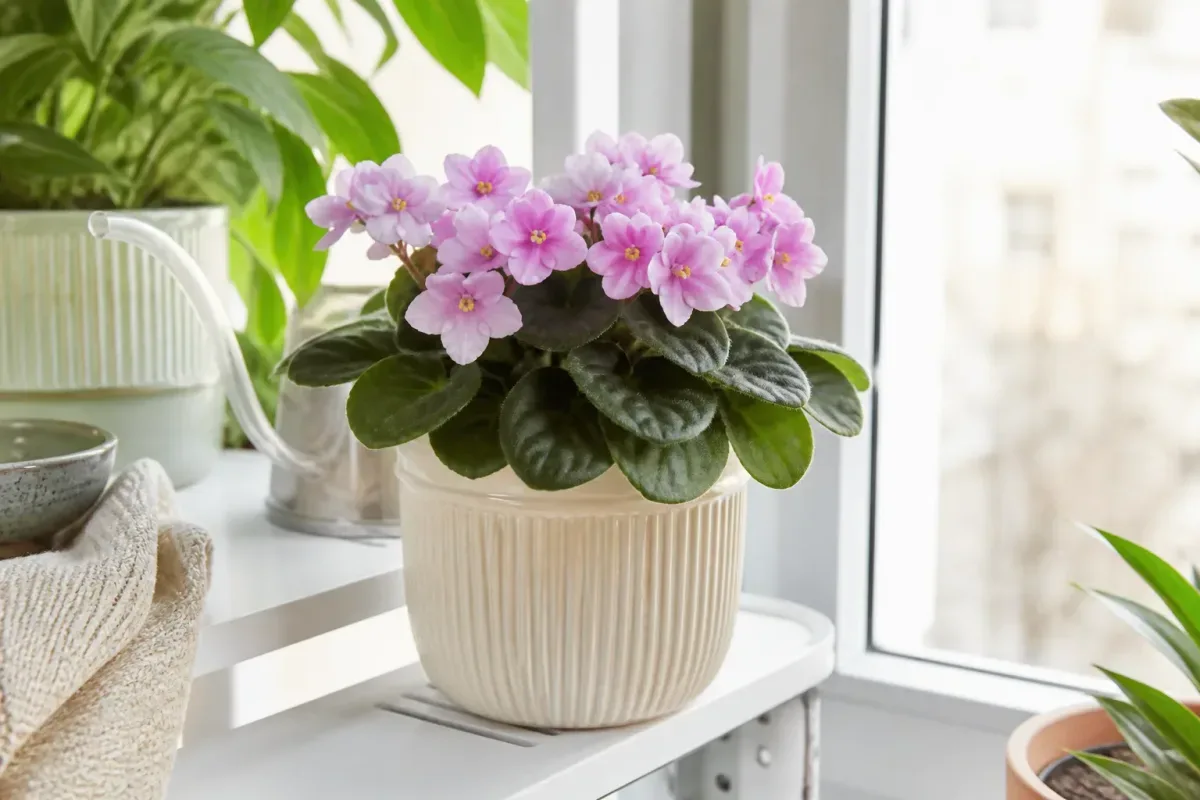
African violets are sensitive to cold water on the crown and to cool drafts on developing flower stalks. Keep water temperature closer to room temperature, avoid wetting the crown, and do not park a budded plant in a chilly window blast. When buds never appear at all, switch to light and maturity checks rather than abortion fixes—see African violet bud drop.
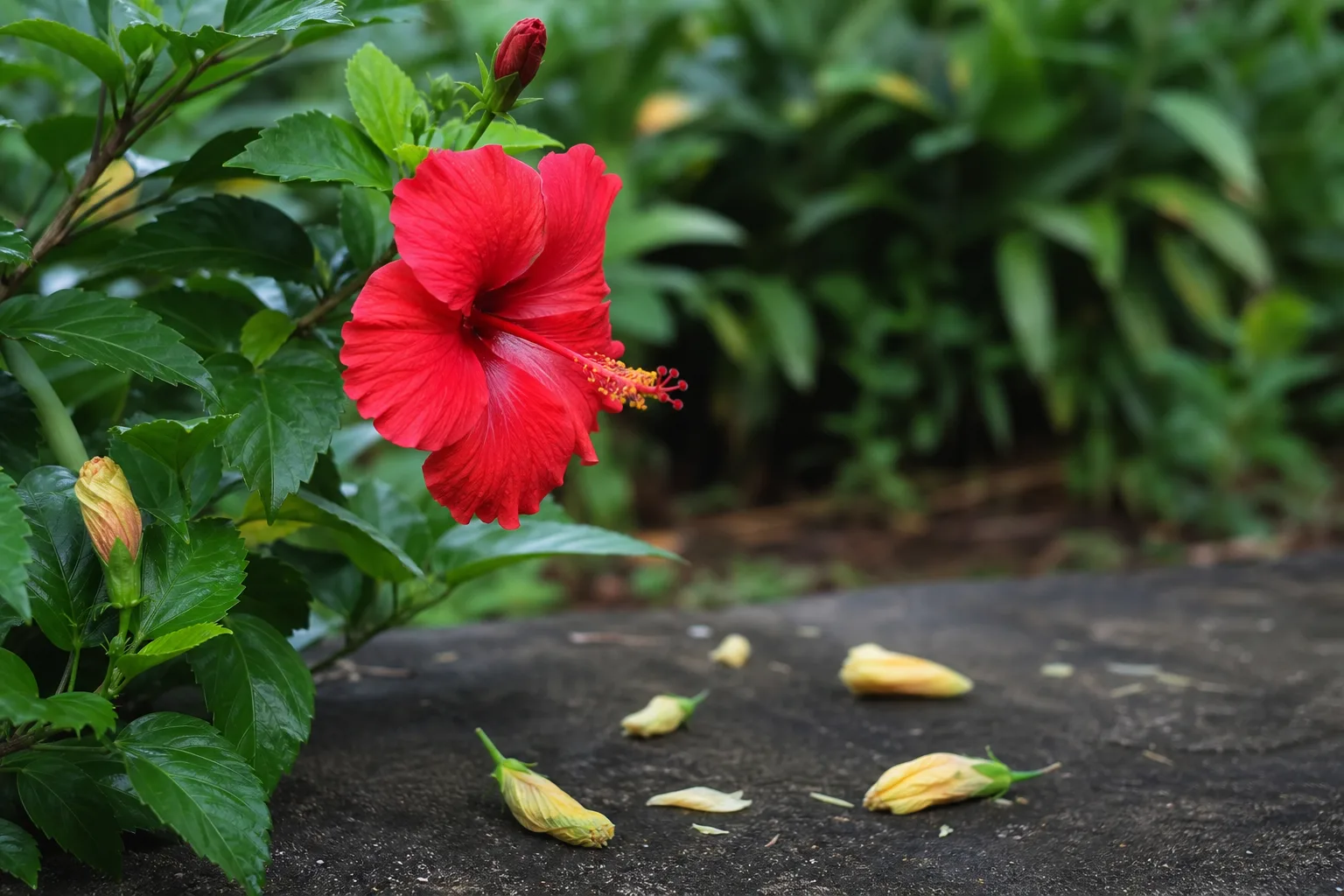
Tropical hibiscus often aborts when moisture swings hard in bright, warm rooms, or when a plant is moved outdoors then back in without a buffer. Keep the mix consistently moist (not swampy) during bud swell and avoid sudden light jumps; species page: hibiscus bud drop.
Anthurium spathes can stall or brown when the root zone stays wet and cool, or when air is very dry around expanding spathes. Check drainage and RH before assuming a fertilizer shortage—see anthurium bud drop.
Jasmine buds often fail when nights are too warm, soil dries between sparse waterings, or a plant is moved mid-set. Cooler nights and even moisture matter more than misting; see jasmine bud drop.
If your plant is a foliage-first aroid that rarely blooms indoors, occasional aborted attempts are less surprising than on a dedicated bloomer. Energy usually goes to leaves unless light and maturity are unusually strong.
Real Cases: What We Observed Indoors
These are LeafyPixels editorial observations from apartment-scale rooms—not greenhouse trials. Your light, pot size, and climate will differ; use them as pattern recognition, not guarantees.
Move shock — Christmas cactus, December 2024. A heavily budded Schlumbergera sat for three weeks on a stable east sill (nights ~62–65°F). We moved it to a dining table for guests (brighter overhead LEDs, more foot traffic, warmer evenings). Within 48 hours, most pea-sized buds yellowed and detached; three buds that were already showing color held and opened. Outcome: returned the pot to the original sill the same day, stopped rotation, kept the mix evenly moist. Remaining buds finished; the next flush (following year) stayed put because we planned the display location before bud set.
Ethylene / draft — Phalaenopsis, February 2025. A spike with eight closed buds sat on a kitchen counter beside a fruit bowl (bananas and apples) and about three feet from a frequently opened balcony door. Over five days, four buds blasted from the tip downward while leaves stayed firm. We removed the fruit, shifted the plant six feet inland off the door path, and held watering steady. Two more buds fell over the next three days (already signaled), then abortions stopped; the last two opened normally about ten days later.
Thrips confirmation — African violet, March 2025. Buds aborted with silvery scarring on nearby leaves and tiny black flecks. Shaking a spent bud over white paper produced fast-moving slender insects and dark frass spots. We isolated the plant, removed ruined buds, and followed a repeated, label-directed thrips treatment on a seven-to-ten-day cadence rather than a single spray. New flower stalks that formed after the second treatment cycle opened clean; untreated neighbors had been at risk of the same hitchhikers.
How to Stop Bud Drop Right Now
- Stop moving and rotating the plant. Same window, same face forward.
- Remove ethylene sources within a few feet—fruit bowls especially.
- Kill draft exposure from vents, doors, and icy glass; shift a short distance if needed.
- Normalize moisture for that species: no bone-dry swings for budded tropicals and holiday cacti; no saucer swamp for orchids and other rot-prone plants.
- Inspect for thrips and aphids. Isolate and treat if found.
- Pause hard interventions. No repot, no hard prune of healthy foliage, no full-strength fertilizer during active abortion. Do not strip every remaining bud “just in case.”
- Accept lost buds. Focus on remaining buds and the next cycle’s setup.
Expect a lag. Even after you stabilize conditions, buds already signaled for abscission may still fall for several days. Judge success by whether new abortions slow and later buds continue to swell.
Prevention for the Next Bloom Cycle
Prevention starts before buds exist. Give bloomers the light they need for initiation, keep winter humidity from crashing, and plan the display location early. For short-day plants like holiday cacti, protect the long-night period during initiation, then keep conditions steady after buds are visible (Clemson HGIC).
Feed during active growth so the plant enters bloom season with reserves, then ease off if your species prefers a late-summer rest for bud set. Keep a simple log: last water, last feed, last move, and first bud sighting. That log makes the next drop diagnosable in minutes instead of guesswork.
Winter heating season deserves extra planning. Penn State notes indoor RH often falls below 30% with heating, below the comfort band many tropicals prefer (Penn State Extension). Pair humidity work with the winter houseplant care guide so you do not overwater in low light while chasing dry-air symptoms.
Common Mistakes That Make Bud Drop Worse
Repotting the moment buds appear “to give more energy” usually adds root shock when the plant least tolerates it. Moving a budded plant to a “better” window every few days creates repeated light and temperature resets. Misting daily while ignoring drafts and heater placement treats a symptom that evaporates in minutes (Penn State Extension).
Another frequent error is fertilizing harder because buds fell. If roots are compromised or the plant is already stressed, salts increase damage. AOS also warns that pesticide and fertilizer misuse can blast buds directly (American Orchid Society). Finally, ignoring pests because “it must be humidity” lets thrips finish the remaining buds.
When Bud Drop Is Normal Thinning
Plants sometimes set more buds than they can finish. Clemson notes holiday cacti may drop unopened buds when the bud load is excessive, not only when care fails (Clemson HGIC). A few aborted buds on an otherwise strong plant, with no draft, drought, pest, or move event, can be self-thinning.
Context still matters. Total loss after a move is not “normal thinning.” Scattered losses on a heavily budded, stable plant with firm leaves often are—think a handful of losses on a plant carrying dozens of buds, not an emptied tip overnight. Keep conditions steady and evaluate the next flush before overhauling care.
Related Guides and Species Deep-Dives
Use this guide when buds formed and then failed. Use the bud drop symptom hub for the short diagnostic summary, and no flowers when blooms never start. For environment levers, see houseplant humidity, watering indoor plants, and fertilizing indoor plants. For collection-wide pest strategy beyond thrips, see integrated pest management indoors.
Most common bloomers first: Christmas cactus bud drop and Phalaenopsis bud drop. When your plant matches, also open African violet, hibiscus, anthurium, or jasmine.
Conclusion
Houseplant bud drop is usually a stress story, not a mysterious disease. In the apartments we see most often, the sequence is move or draft shock first, then moisture extremes, then pests or ethylene, with feeding mistakes further down the list. Dropped buds will not reopen, but a stable environment protects remaining buds and rebuilds the next cycle.
Diagnose with a one-week timeline, a moisture check, a pest inspection, and an ethylene/draft scan before you repot or fertilize. When buds never appeared at all, switch to the no-flowers symptom path instead of forcing bloom products onto a plant that has not initiated. Steady placement and even care beat clever tricks once buds are on the plant.