Winter Houseplant Mistakes: 6 Habits to Stop Now
Overwatering, dry heat, and dim corners kill houseplants in winter. Stop these six habits and learn what to do instead before spring.
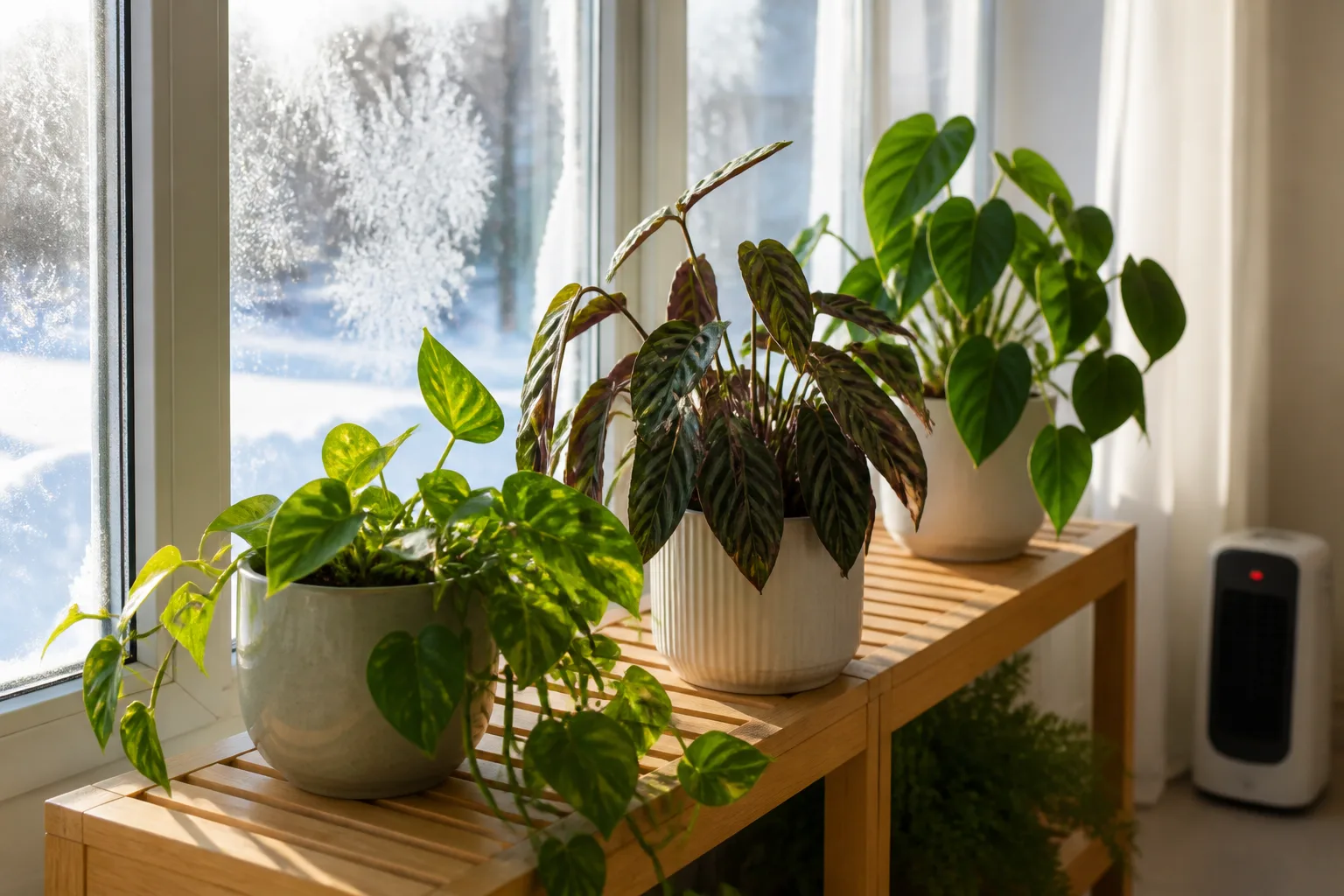
Your pothos did not suddenly forget how to be a plant. The philodendron that thrived on a Tuesday watering in July is sitting in cold, soggy soil in January because winter changes the math — less light, slower growth, drier air, and sharper temperature swings. The habits that kept your collection healthy in summer can become the six things quietly killing houseplants in winter if you do not adjust.
This guide names those habits, explains why they fail when days shorten, and gives you a practical replacement for each one. For the full seasonal picture — dormancy, repotting timing, and room-by-room setup — see our winter houseplant care guide. If watering is your main worry, pair this page with winter houseplant watering mistakes and how to water indoor plants the right way.
Why Winter Punishes the Same Habits That Worked in Summer
Houseplants respond to environment, not calendars. When photoperiod shortens and light intensity drops near windows — sometimes by 40 to 50 percent compared with summer (BioAdvanced) — photosynthesis slows. The plant pulls less water through its roots and loses less through its leaves. Soil that dried in four days in August can stay damp for two weeks in December. Feed that would fuel spring growth instead sits in the mix as salt. Dry furnace air pulls moisture from leaf edges faster than roots can replace it.
What Changes Inside Your Home Between October and February
Three shifts drive most winter losses. Water demand falls while many owners water on the old schedule — the top reason extension offices see indoor decline in cold months (N.C. Cooperative Extension). Relative humidity crashes as heating runs; indoor air can sit below 20 percent RH when many tropicals prefer 40 to 50 percent. Microclimates sharpen: a bright east window that was perfect in June may be too dim in January, while the same sill can chill roots at night against single-pane glass. Plants do not need a completely new care philosophy in winter. They need you to stop six specific habits and swap in seasonal checks.
Habit 1: Watering on a Summer Schedule
Overwatering is the number one winter houseplant killer. Growth and root uptake slow as light drops (N.C. Cooperative Extension). Continuing the same pour cycle keeps soil saturated in a cooler root zone where oxygen is already scarce. Roots suffocate, fungi colonize weakened tissue, and the plant wilts — which tricks many owners into watering again.
The RHS winter advice is blunt: with lower light and temperatures, plants grow less and need less water — and pots sitting in saucers of excess are a common failure point (RHS). About 95 percent of common foliage houseplants want the root zone to dry substantially between drinks; exceptions like ferns and potted citrus prefer more consistent moisture and should be researched individually (BioAdvanced).
How to Check Soil Moisture Before You Reach for the Can
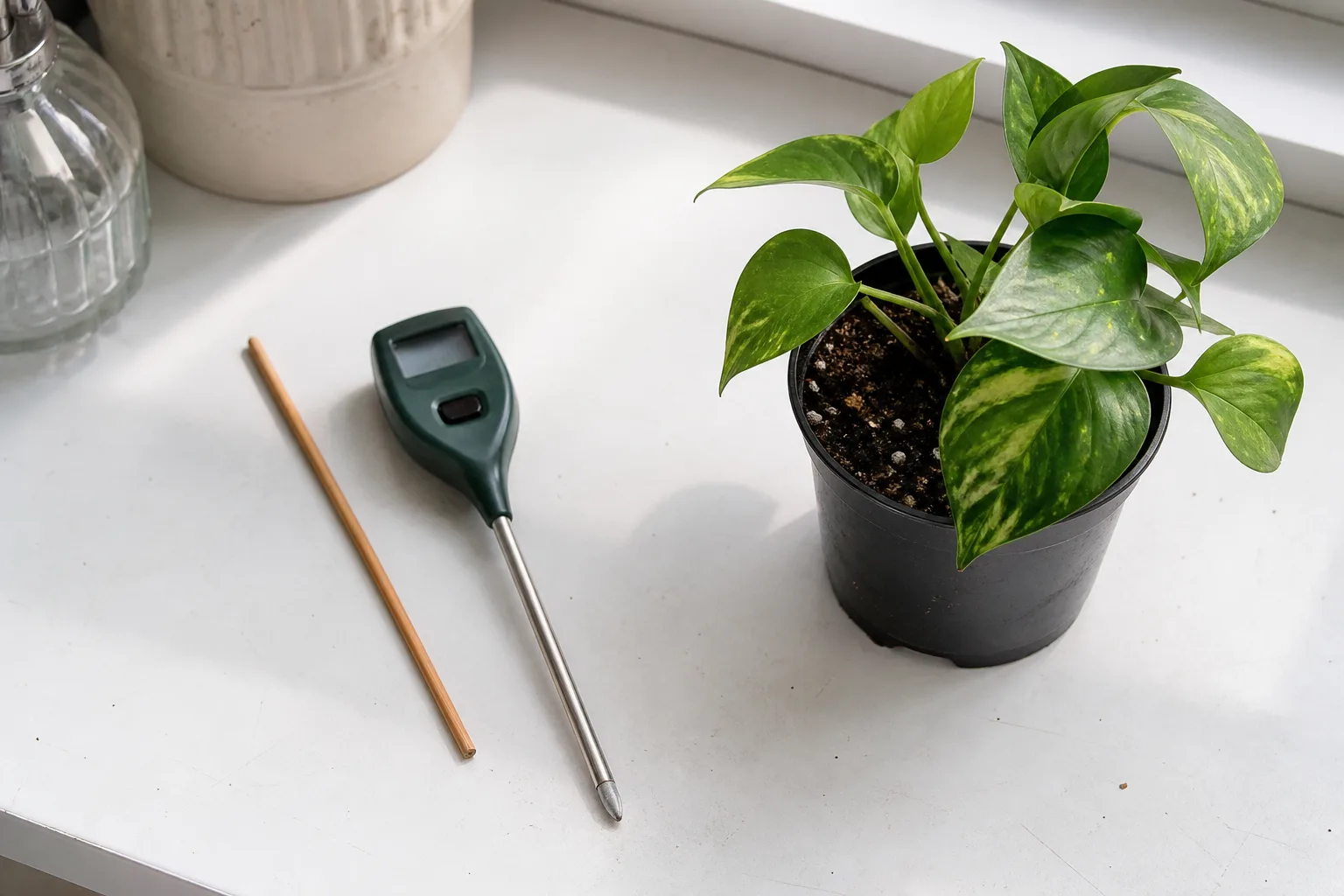
Do not water because it is Sunday. Water because the root zone is dry. Use at least one of these checks every time:
Finger test: Push into the top 1 to 2 inches of potting mix. If it clings to your skin, wait.
Skewer test: Insert a wooden skewer to the bottom of the pot and pull it out. Moisture line on the stick shows how deep dryness goes — extension agent Kinsey Watkins recommends this as the most reliable home method (N.C. Cooperative Extension).
Pot weight: Lift the container right after a thorough watering to learn the heavy feel. A noticeably light pot usually means it is time.
Lift-and-look: If the pot has drainage holes, peek underneath. Standing water in the saucer means the soil below is not ready for more.
When you do water, use room-temperature water — cold tap water can shock roots in an already cool pot (BWH Plant Co). Water until a little runs from the drainage holes, then empty the saucer after 10 minutes so the plant is not re-absorbing stagnant water overnight (RHS).
When Wilting Means Stop, Not Pour
Wilting with wet soil is a red flag for root damage, not thirst. Damaged roots cannot move water to leaves even when the pot is full. Watering again worsens rot. If lower leaves yellow, stems feel soft at the soil line, or fungus gnats hover constantly, assume overwatering until proven otherwise and let the mix dry to the appropriate depth for that species. For rescue steps, see our root rot in houseplants guide. Conversely, a genuinely dry plant may wilt — but confirm with a soil check before you pour.
Habit 2: Feeding Plants That Are Barely Growing
Fertilizer is not plant food in the sense of calories; it is mineral salts the roots absorb when actively growing. In winter, most houseplants are in slow growth or semi-dormancy. Unused fertilizer accumulates in the soil and can burn leaf margins or damage fine roots. N.C. Cooperative Extension recommends holding off on fertilization through winter and resuming in March or April as conditions improve (N.C. Cooperative Extension). The RHS winter guidance matches: occasional water, little to no feeding through the darker months (RHS).
Stop this habit: Monthly or biweekly liquid feed on every plant because “it is still green.” Start this habit: Pause all fertilizer unless a specific plant is under grow lights and pushing visible new leaves — then use half-strength feed at most.
If You Already Fertilized Through December
Flush the soil once: water slowly and deeply until water runs freely from drainage holes for several minutes, letting it carry excess salts out. Do not fertilize again until you see sustained new growth in late winter or spring. If leaf tips turned crispy and soil surface looks whitish, salt buildup is likely — flushing helps, but pairing it with reduced watering matters more than another product.
Habit 3: Leaving Plants in Last Season’s Dark Corner
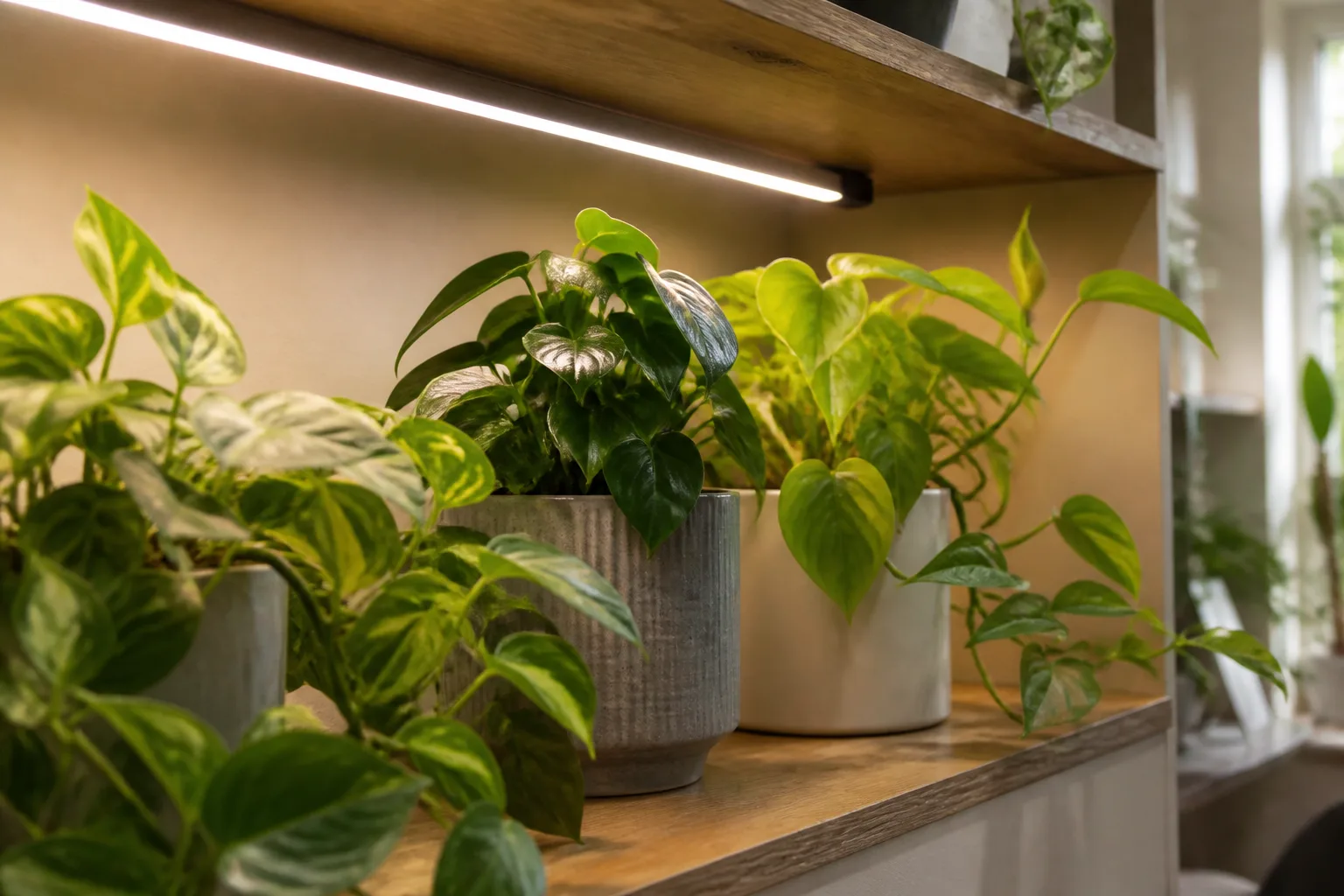
Light is often the greatest limiting factor in winter (N.C. Cooperative Extension). A plant that tolerated a north-facing spot in summer may etiolate — stretch toward the window with smaller, paler leaves — by February. South- and west-facing exposures that needed sheer curtains in July may become the brightest real estate in January (BioAdvanced).
Stop this habit: Assuming last year’s position still works. Start this habit: Walk the room at noon in midwinter and notice which sills actually receive direct or bright indirect light. Move light-hungry plants — herbs, succulents under glass, fiddle-leaf figs, most flowering houseplants — closer to those windows. Rotate pots every two weeks so all sides get exposure. Wipe dust from leaves; grime blocks the limited photons that do arrive (BWH Plant Co).
When to Add Grow Lights and How Long to Run Them
If the brightest spot in your home is still dim — basement office, north apartment, heavy overcast climate — supplement with a full-spectrum LED grow light 4 to 12 inches above the canopy (BioAdvanced). Run lights 10 to 12 hours daily on a timer so plants get a consistent day length (BWH Plant Co). You do not need expensive horticultural rigs for foliage maintenance; a quality full-spectrum fixture beats a dark corner. For fixture comparisons, see our full-spectrum vs red-blue grow lights guide.
Habit 4: Ignoring Drafts, Vents, and Cold Glass
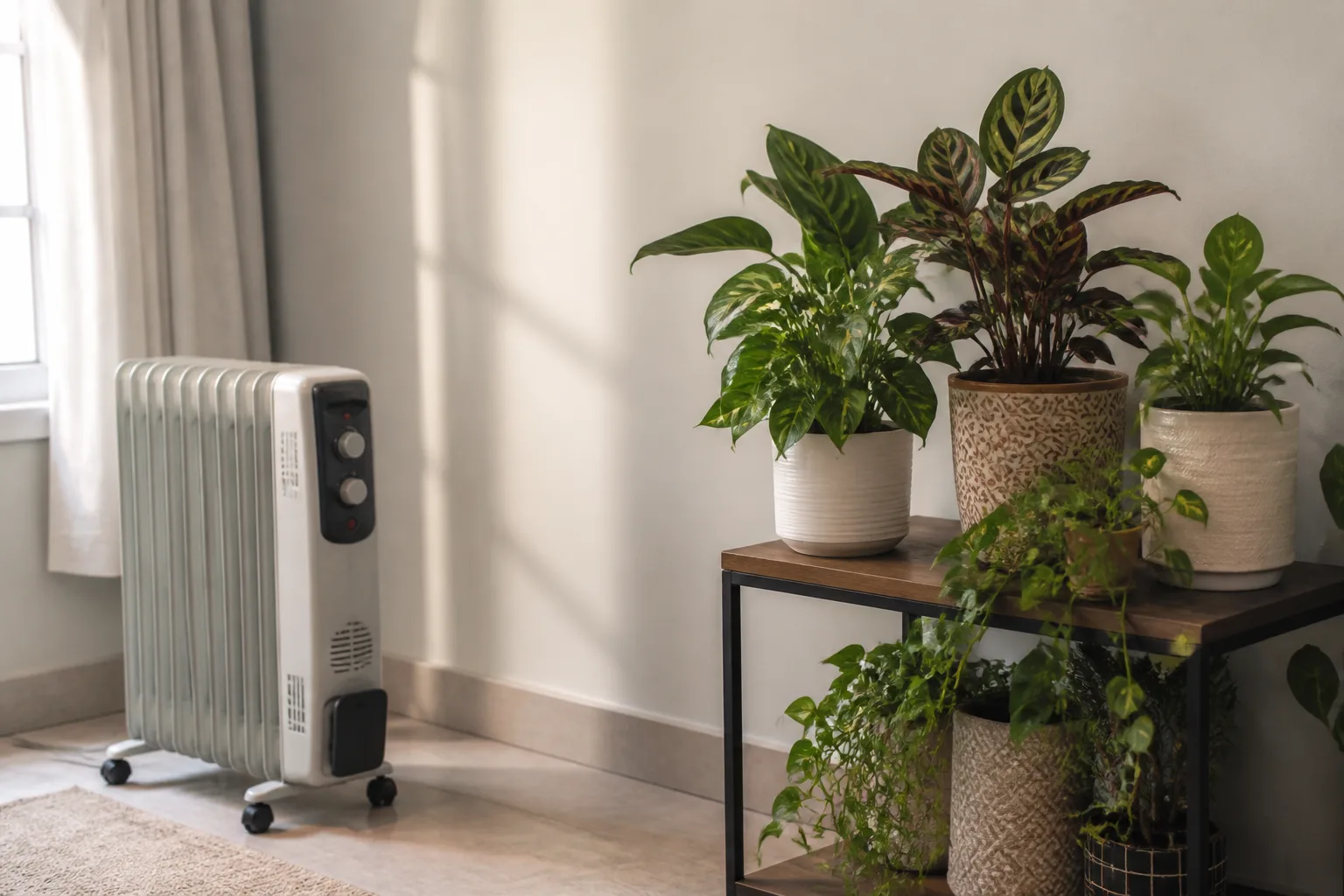
Winter introduces temperature whiplash. By day the thermostat reads 70°F; at night a plant on a windowsill may sit in the 50s against cold glass. Meanwhile forced-air vents blast 90°F dry air across leaves that transpire faster than roots can hydrate. The RHS warns that radiators, fires, and cold windowsills — especially for orchids — cause bud drop and leaf damage, and that drafts matter as much as average room temperature (RHS).
Most tropical foliage prefers 65 to 75°F by day with roughly a 10°F drop at night, and suffers below 50°F (BioAdvanced; N.C. Cooperative Extension). Brown tips on the side facing a heat vent, or limp leaves on a plant tucked behind winter curtains, are placement problems — not always a watering problem.
Stop this habit: Leaving plants on the windowsill touching glass or directly in the heat plume. Start this habit: Pull pots 6 to 12 inches back from single-pane glass at night, close curtains over the room side (not between plant and glass), and keep at least three feet between foliage and space heaters or open registers. For heater-specific damage signs, read is your heater killing your houseplants.
Quick Temperature Audit You Can Do in 10 Minutes
Place a cheap digital thermometer at plant height. Check the reading at morning, midday, and before bed for three days. Note the coldest sill and the hottest vent-adjacent spot. Move any plant showing stress symptoms out of zones that swing more than 15°F in 24 hours. Stability beats perfection — a consistent 62°F often outperforms a room that hits 75°F by day and 55°F at the glass.
Habit 5: Treating Dry Winter Air Like Summer Humidity
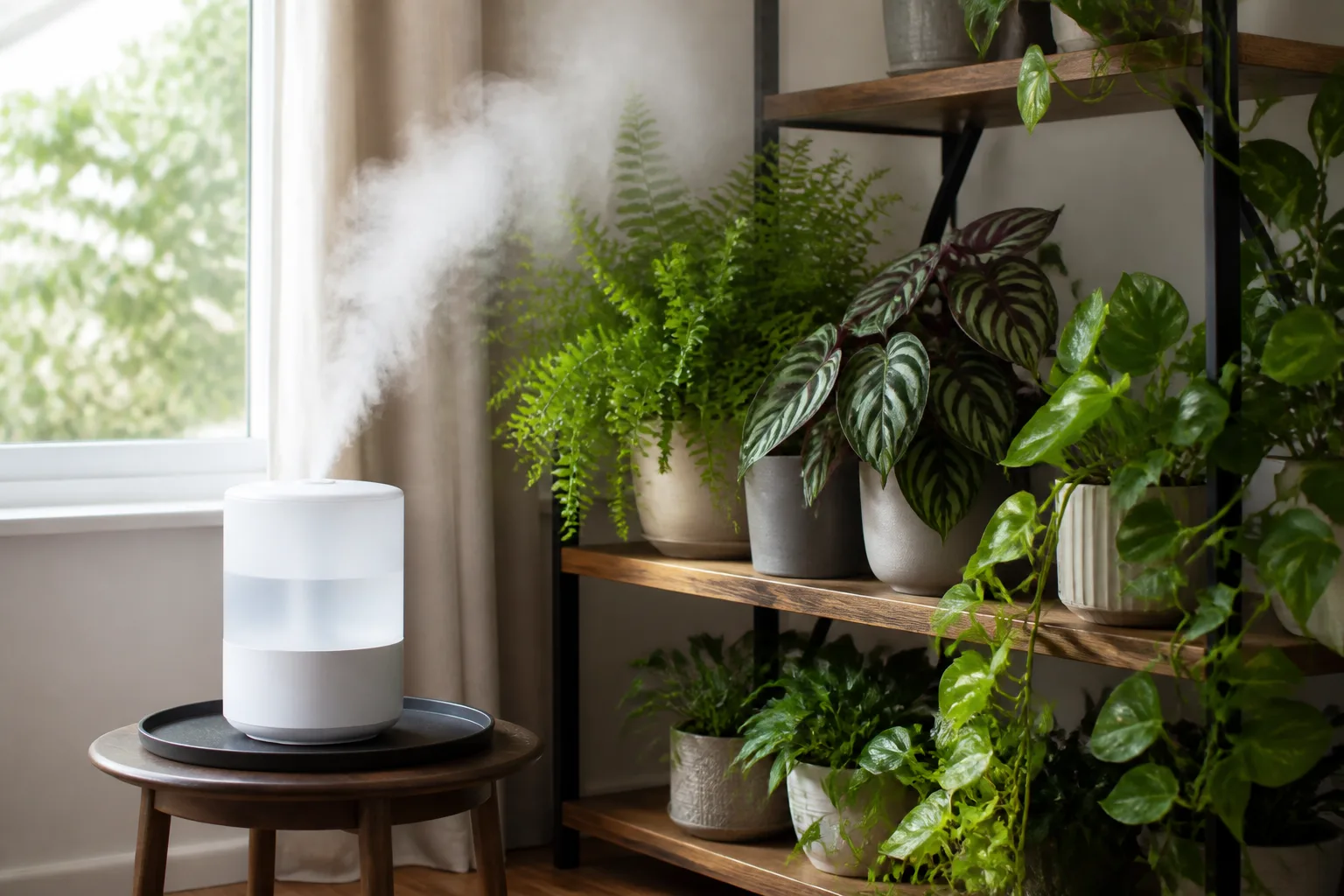
Central heating can drop indoor relative humidity to 5 to 10 percent — far below the 40 to 50 percent many tropicals prefer (BioAdvanced; N.C. Cooperative Extension). Calatheas, ferns, alocasias, and thin-leaved begonias show stress first: crispy brown leaf edges, leaf curl, and stalled new growth. Owners see brown tips and water more — which fixes neither problem and invites root rot.
Stop this habit: Misting leaves as your main humidity strategy. Extension guidance is clear: misting offers minor, short-lived benefit — minutes, not hours — and can encourage foliar fungal issues if leaves stay wet (N.C. Cooperative Extension; BWH Plant Co). Start this habit: Raise humidity at the room or cluster level.
What Actually Raises Humidity (and What Doesn’t)
Ranked from most to least effective for a typical living room:
Humidifier: A small unit near the plant collection can hold 40 to 60 percent RH in one room — the most reliable fix for finicky species. Aim output away from walls to avoid mold; clean the tank weekly.
Plant grouping: Cluster pots so transpiration from many leaves shares a microclimate. The RHS recommends grouping for shared humidity (RHS).
Pebble trays: Wide saucers of stones with water below the pot base add modest humidity immediately around a single plant. The pot must sit above the waterline — never submerged.
Bathroom or kitchen placement: Only if light is adequate; humidity without photons still fails.
If brown tips persist after humidity improves, revisit watering — dry air and overwatering often coexist in heated homes. Our humidifier placement for houseplants guide covers safe setup distances.
Habit 6: Skipping Pest Checks Until Leaves Are Damaged
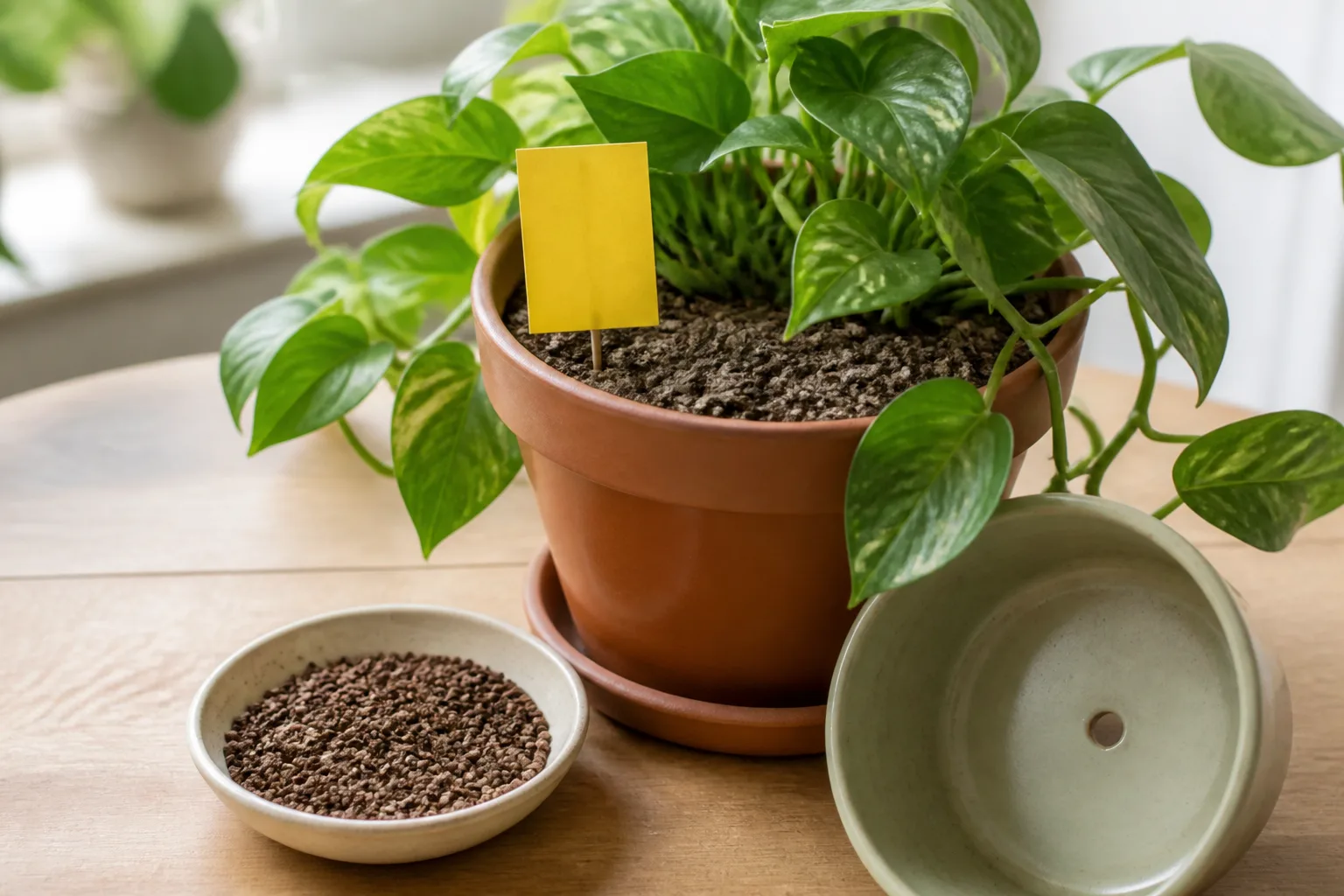
Warm, dry indoor air favors spider mites and fungus gnats — pests that explode when plants are already stressed (BioAdvanced; BWH Plant Co). Gnats are not just annoying; larvae live in moist potting mix, tying pest pressure directly to overwatering. Mites thrive on dusty, dehydrated foliage. A plant weakened by soggy roots and dry air becomes an easy host.
Stop this habit: Ignoring plants until leaves stipple, web, or yellow in clusters. Start this habit: A monthly leaf-and-soil inspection — top and underside of leaves, stem joints, and soil surface.
Dusting and Inspection as Prevention, Not Chore
Dust blocks light and gives mites footholds. N.C. Cooperative Extension recommends wiping leaves with a damp cloth and very mild soap solution, or giving plants a lukewarm shower — avoiding scalding water on roots and foliage (N.C. Cooperative Extension). When you dust, you are also scouting: fine webbing under leaves (mites), tiny flies rising when you water (gnats), cottony clusters in crevices (mealybugs).
If gnats appear, let the top third of soil dry before the next watering and consider yellow sticky traps for adults. Chronic gnats plus yellowing lower leaves should trigger a root inspection. For mites on dry calatheas or alocasias, rinse foliage and improve humidity before reaching for sprays. See spider mites on houseplants and fungus gnats in houseplants for treatment order when populations spike.
Your 20-Minute Winter Houseplant Reset
Run this once in December and again in February:
Watering: Touch-test every pot. Mark any still wet from last week — those skip the next scheduled pour.
Feed: Confirm no fertilizer is queued in your calendar until March unless a lit plant is actively growing.
Light: Re-seat plants at the brightest safe windows; dust leaves; set grow-light timers if needed.
Temperature: Move anything on cold glass or in vent blast zones.
Humidity: Group tropicals, fill pebble trays, or start a humidifier in the plant room.
Pests: Wipe or rinse foliage; check undersides; set traps if gnats are present.
Twenty minutes of observation prevents most winter losses. The goal is not perfection — it is catching the six habits before they compound.
Conclusion
Houseplants rarely die in winter because you stopped caring. They die because summer care meets winter conditions — too much water in slow-growth months, fertilizer the roots cannot use, light that no longer reaches last year’s spot, heat and cold that stress leaves, air too dry for tropical foliage, and pests that exploit the damage. Stop watering on autopilot, pause feed, chase winter light, stabilize temperature, raise humidity with tools that work, and inspect leaves before problems spread. When days lengthen and new growth appears, resume fertilizer at half strength and gradually return to a more active watering rhythm. Your collection does not need a rescue in spring if you quit these six habits now.