How to Get Rid of Fungus Gnats Naturally
Learn how to get rid of fungus gnats naturally with drying cycles, sticky traps, BTI drenches, and honest limits on vinegar and cinnamon fixes.
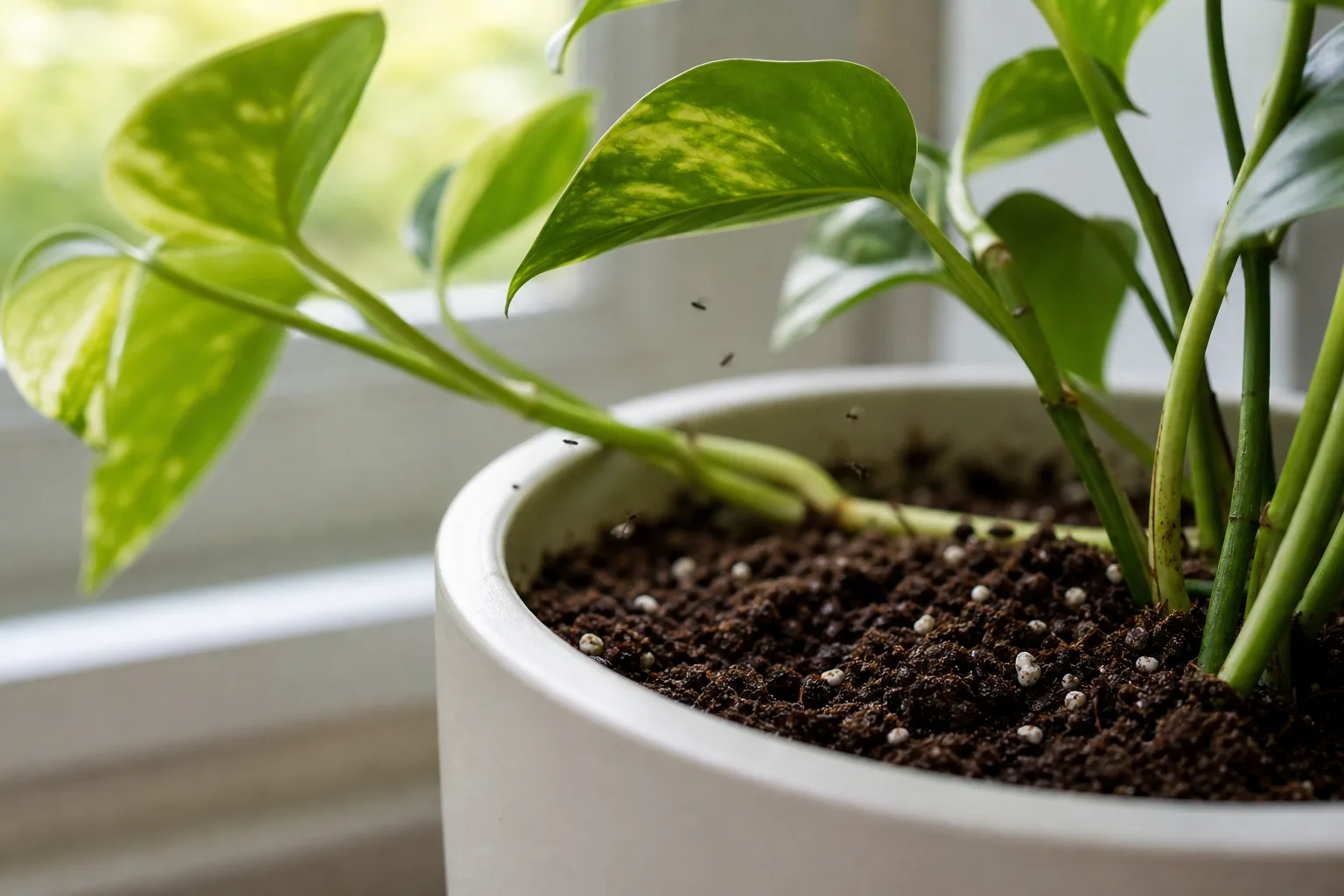
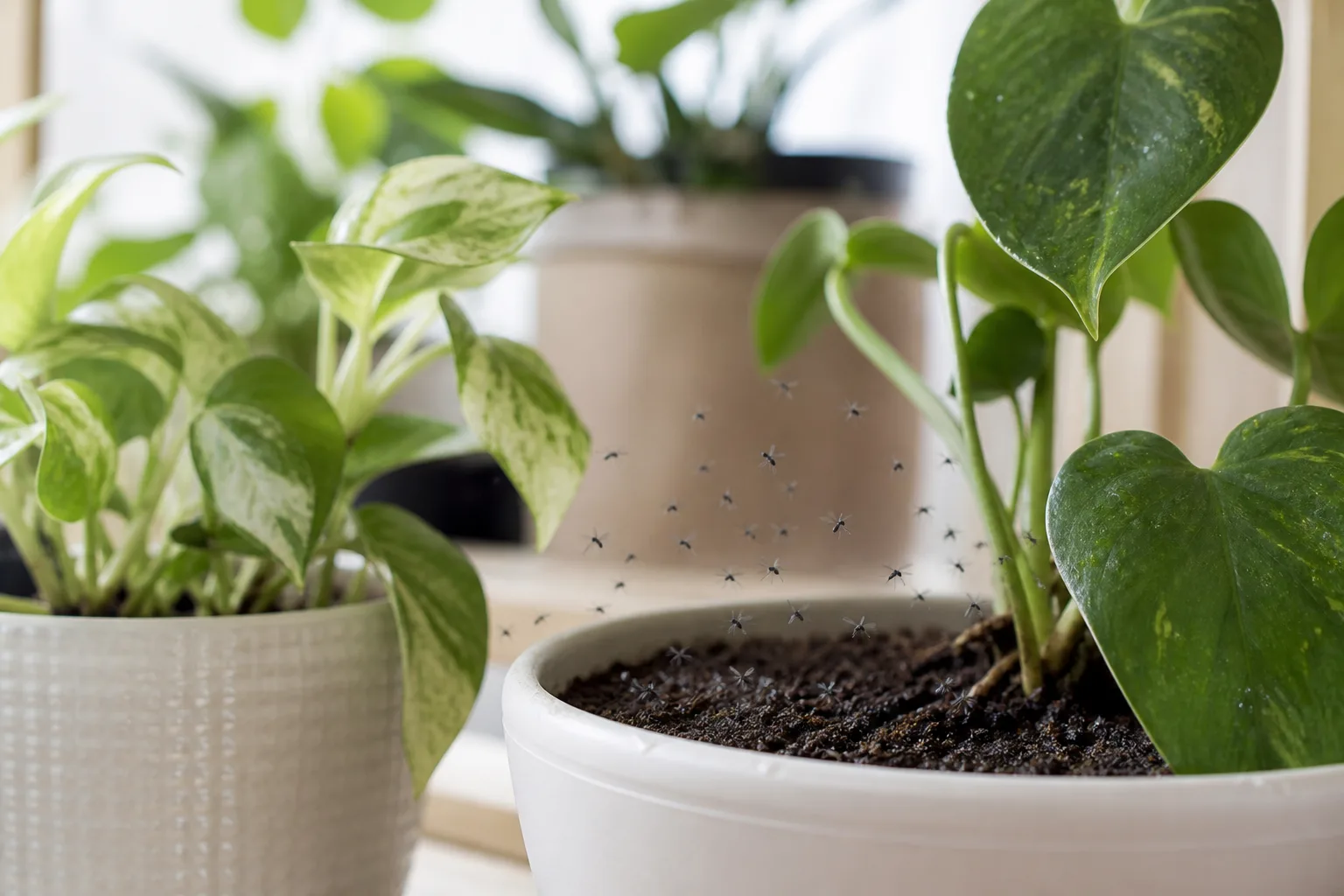
You water a pothos and a dozen tiny dark flies lift off the soil, zigzag toward the window, then settle back on the rim the moment you walk away. That burst is almost always fungus gnats — soil-breeding flies whose larvae live in damp potting mix, not fruit flies from the kitchen or drain flies from the sink. The natural fix is not a single spray. It is a sequence: dry the habitat adults want, trap the flyers, kill larvae in the top few inches of mix, then change the watering habits that invited them.
This guide ranks natural fungus gnat control methods by what actually works indoors, what only helps a little, and what wastes a week while larvae keep hatching underground. For full species ID, larval biology, and a treatment matrix, see our houseplant fungus gnat guide. For a real-world timeline of what failed and what cleared an infestation, read how I finally got rid of fungus gnats.
Your First-Week Natural Action Plan
If you want a natural answer tonight, run these four steps in order — not as a menu you cherry-pick from.
Day 1: Move affected pots away from clean plants. Slide a yellow sticky trap into each pot so the card sits just above the soil line. Empty saucers and cachepots so no standing water remains.
Days 2–7: Let the top 1–2 inches of potting mix dry before the next drink on each affected plant, staying within what that species tolerates. Water from below or along the pot edge if you must hydrate deeper roots without rewetting the surface constantly.
Day 3 onward: Apply a larvicidal drench — either BTI (Bacillus thuringiensis israelensis) from Mosquito Bits or a 1:4 hydrogen peroxide-to-water soak — so the liquid saturates the top few inches and runs from drainage holes. Repeat BTI every five to seven days for at least three rounds; repeat peroxide weekly until potato tests stay clean.
Ongoing: Press a raw potato chunk cut-side down into the soil for 48 hours every week. Larvae on the cut surface mean the population is still active underground even when sticky cards look quieter.
Expect three to four weeks of overlap before you can call the infestation done. Generations hatch in waves; natural control wins by starving, trapping, and poisoning larvae faster than adults lay the next batch.
What Fungus Gnats Are (and What They Are Not)
Fungus gnats are small flies in the family Sciaridae, often called dark-winged fungus gnats. Common indoor genera include Bradysia and Orfelia. Adults are delicate, mosquito-like insects about 1/16 to 1/8 inch long, with long legs and antennae longer than the head. Many Bradysia species show a Y-shaped vein in the forewing (UC IPM).
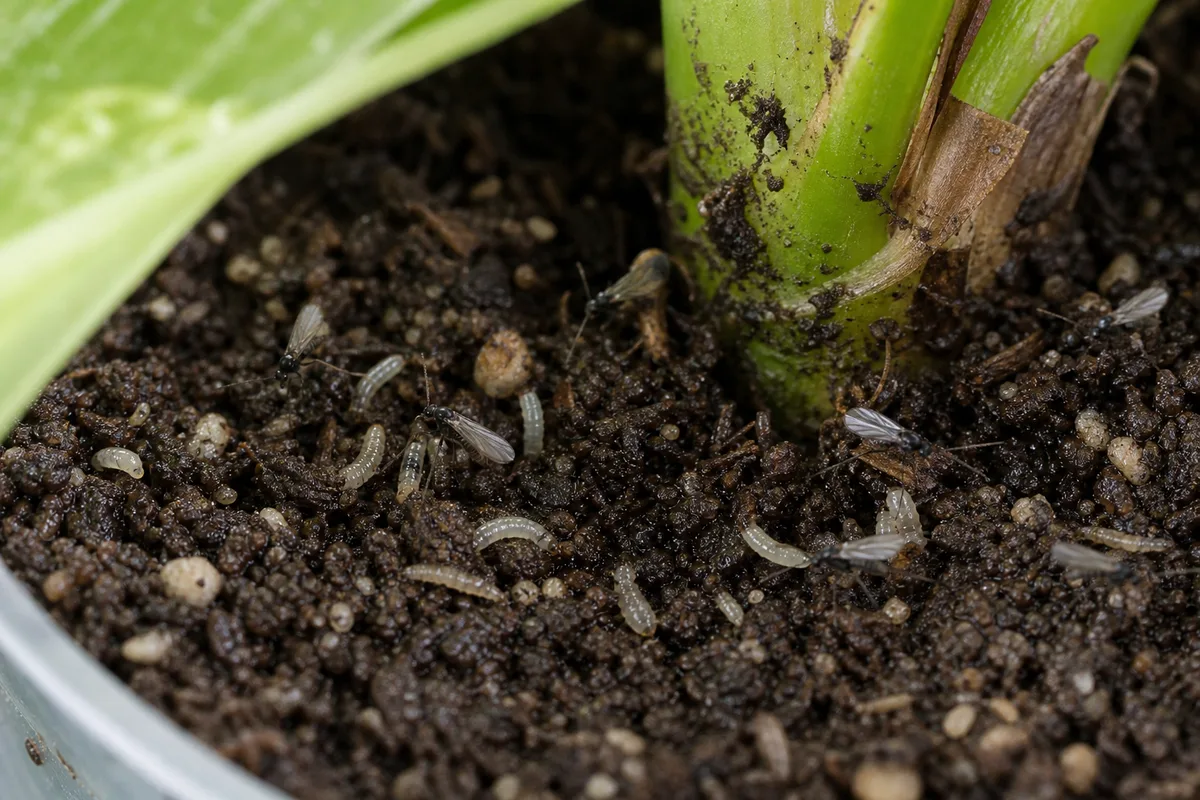
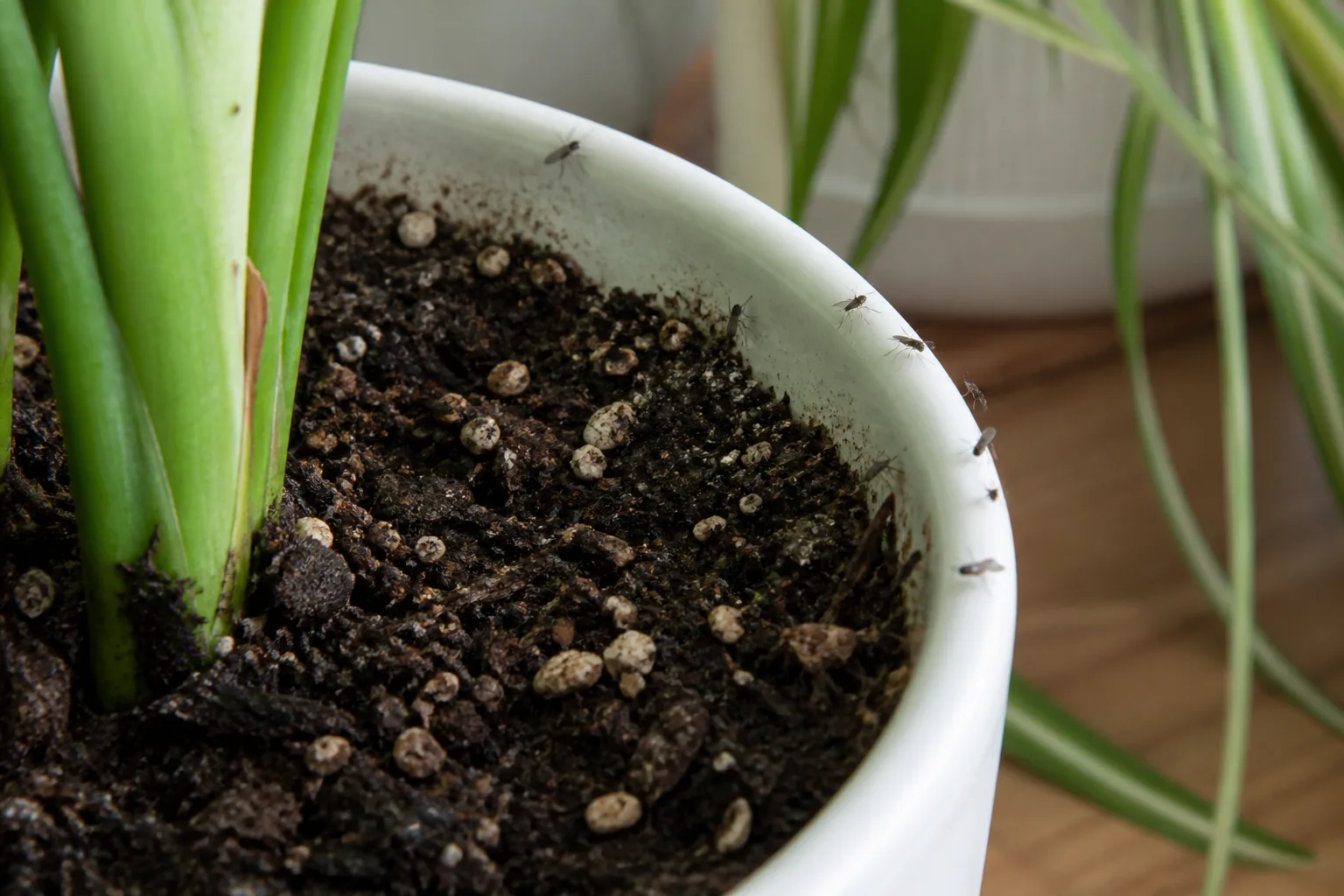
They are weak fliers. You see them resting on soil, pot rims, and nearby glass — not patrolling the whole apartment for hours. Adults do not bite people or pets and are not known to carry human disease (Colorado State Extension). The plant risk is larval: translucent white or gray worms with shiny black heads chew fungi, algae, organic debris, and fine root hairs in moist media. Seedlings, cuttings, and constantly wet pots suffer first.
Fungus Gnats vs Fruit Flies and Drain Flies
Fruit flies are smoother, often tan-bodied, and orbit fermenting produce, trash, and recycling — not potting mix. Drain flies are fuzzy and moth-like; they breed in sink biofilm. If flies rise when you disturb soil, you are in fungus gnat territory. If they hover over a fruit bowl, start with kitchen cleanup and our homemade gnat trap guide instead of drenching houseplants.
The Life Cycle You’re Actually Fighting
At typical room temperatures (65–75°F), the full cycle from egg to adult completes in about three to four weeks, with continuous reproduction year-round on indoor plants (Colorado State Extension). Females lay up to 200 eggs in cracks and crevices of moist growing media during a seven- to ten-day adult lifespan. Eggs hatch in a few days; larvae feed in the top 2–3 inches for roughly two weeks before pupating in the mix.
That speed is why a single vinegar bowl feels pointless by Friday. You are not fighting today’s flies — you are fighting overlapping generations already developing underground. Natural control has to hit eggs and larvae in soil, not just adults in the air.
Signs Your Houseplants Have Fungus Gnats
Any potted plant can host fungus gnats, but African violets, geraniums, carnations, cyclamens, and poinsettias are frequent targets because they are often grown in peat-rich, consistently moist media. Watch for these patterns:
- Tiny dark flies that scatter upward when you water or poke the soil surface
- Flies resting on soil, saucers, and lower leaves — rarely far from pots
- Translucent larvae or shiny slime trails on the soil surface in heavy infestations
- Sudden wilting, yellowing, or stalled growth on seedlings despite wet-looking topsoil
- A positive potato slice test: larvae clustered on the cut surface after 48 hours
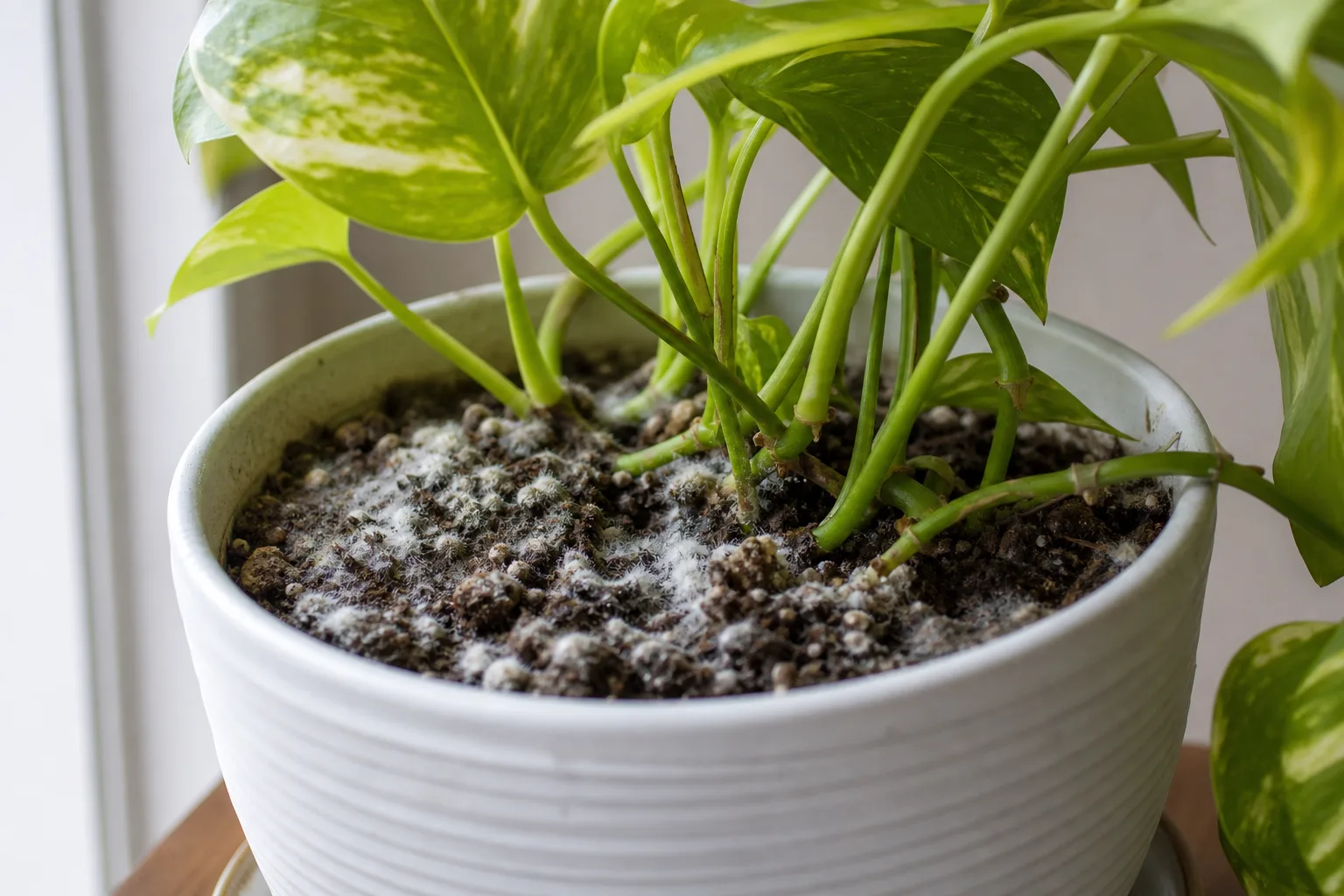
Wilting with soggy soil is not always underwatering. Larval root damage plus chronic overwatering can produce the same sad posture. If you also see fuzzy mold on the surface, read our mold on houseplant soil guide — mold and gnats often share the same too-wet conditions.
What Causes Fungus Gnats Indoors
Fungus gnats follow moist organic matter. They are not a random housefly problem that wandered in from outdoors.
Overwatering and Soggy Potting Mix
The number one cause is potting mix that stays wet too long. Peat- and coir-heavy blends hold moisture at the surface where females prefer to lay eggs (Colorado State Extension). Saucers full of runoff, pots without drainage, and watering on a calendar instead of by touch all extend the window larvae need. Gnats eat fungi and decaying organic matter in that wet layer — so surface mold and fungus gnats are companion problems, not coincidences.
Contaminated Soil and Unquarantined New Plants
Infestations often start with bagged potting mix that already held eggs or larvae, nursery seedlings grown in damp greenhouse benches, or plants moved indoors from a patio without inspection. One new fern can seed gnats across a shelf in a month. Treat every new acquisition as suspect until it clears a 17- to 21-day quarantine with a sticky trap at soil level and no adult activity — long enough to cover one full generation indoors (Colorado State Extension).
Step 1: Dry the Top Layer — The Strongest Natural Fix
If you do only one cultural change, make it this: let the upper 1–2 inches of mix dry between waterings on affected plants. Eggs and young larvae in that zone die when the habitat dries (RHS). Remove standing water from saucers. Repot plants sitting in degraded, water-logged mix that no longer drains freely.
Do not desert-dry the entire root ball on ferns, calatheas, or other moisture lovers. The goal is a dry surface with acceptable moisture deeper down — the same fix described for overwatered plants without threatening the plant to starve larvae. Bottom watering can help keep the surface drier while roots still drink, but it does not kill larvae already established below; pair drying with a larvicide.
Drying alone can break a light infestation in two weeks. Heavy populations need drying plus traps and a soil treatment because pupae and larvae deeper in the pot survive a single dry cycle.
Step 2: Yellow Sticky Traps for Adult Gnats
Yellow sticky traps are the most reliable natural tool against adult fungus gnats indoors. Adults are attracted to yellow and stick to adhesive cards placed at or just above the soil line (Colorado State Extension). Stake-style traps that insert into the mix work better than room-level ribbons because gnats stay near their food source.
Replace cards when they are coated with flies or dust. Use traps as monitors, not proof of victory: a full card means adults are dying; it does not mean larvae stopped developing underground. Traps reduce egg laying and show whether your soil treatments are working week over week.
For fruit flies in the kitchen, vinegar bowls work. For soil-breeding gnats, sticky yellow at the pot beats cider vinegar in a cup almost every time — vinegar catches strays but rarely drains a pot-bound population (NC State Extension).
Natural Larvicides That Kill Gnats in the Soil
Adults are annoying; larvae are the infestation. Natural larvicides target the top few inches where feeding happens.
BTI (Mosquito Bits) Soil Drenches
Bacillus thuringiensis israelensis (BTI) is a naturally occurring bacterium registered for mosquito and fungus gnat larval control. It kills larvae when ingested and poses low risk to people, pets, and most beneficial insects when used as labeled (EPA). Retail products include Mosquito Bits, Mosquito Dunks, and greenhouse formulations such as Gnatrol.
Soak bits in water per label directions until the liquid is tinted, then drench the potting mix until it runs from drainage holes. Repeat every five to seven days for at least three applications — BTI does not persist long indoors and does not kill adults or pupae already in the soil (UC IPM). Confirm the product contains Bti, not caterpillar Bt (kurstaki), which will not work on fly larvae.
BTI is the strongest natural larvicide most home growers can buy at a garden center. It is more predictable than cinnamon and more forgiving than live nematodes.
Hydrogen Peroxide Solution — Uses and Limits
A 1:4 dilution of standard 3% hydrogen peroxide to water applied as a soil drench kills fungus gnat larvae on contact and adds a burst of oxygen to the root zone (Epic Gardening). Water until excess runs out. Reapply weekly until potato monitoring stays clean.
Peroxide is useful when you cannot find BTI immediately or want a pantry-first knockdown on a mild case. Limits matter: repeated drenches can stress roots on sensitive plants, and peroxide kills beneficial nematodes if you apply both in the same week. See our hydrogen peroxide in the garden guide for broader dilution context — houseplant gnat drenches are more concentrated than many foliar uses.
Beneficial Nematodes (Steinernema feltiae)
Steinernema feltiae are microscopic roundworms that enter fungus gnat larvae and release bacteria that digest them from inside. Larvae die within a few days (Colorado State Extension). Nematodes are a legitimate biological control option — not a greenhouse-only fantasy — but they are live products with constraints.
Apply as a soil drench to moist mix in the 60–90°F range; dry soil and hot radiators kill them before they hunt. Mail-order tubes must be used promptly. Nematodes pair poorly with peroxide in the same treatment week. Many home growers find BTI easier for a first infestation; nematodes shine in collections where you want ongoing biological pressure and can store and apply them correctly (RHS).
Natural Monitoring: Potato Slices and Vinegar Traps
Potato slices are a monitoring tool, not a cure. Insert ¼-inch raw potato pieces cut-side down into the soil. Check after two days; larvae feeding on the cut surface confirm active larvae (Colorado State Extension). Replace pieces before they dry out or rot. Use this test to decide whether you need another BTI round — not to trap the whole population.
Apple cider vinegar with a drop of dish soap catches adult gnats that wander into the bowl. It can supplement sticky cards but rarely solves a soil-heavy infestation because most breeding stays at the pots. If vinegar traps stay empty while soil traps fill, you may be treating the wrong fly — revisit the ID section above.
Cinnamon, Chamomile, and Other Natural Fungicides
Ground cinnamon and chamomile tea are sometimes sprinkled on soil as natural fungicides because larvae feed on fungi in the mix. Cinnamon may suppress surface fungal growth and is generally safe in light doses on established plants (Epic Gardening). Our cinnamon for plants guide covers broader antifungal uses.
Treat cinnamon and chamomile as supporting tactics, not primary control. They do not kill established larvae at depth and will not outrun a three-week life cycle by themselves. Pair them with drying and BTI if you use them at all.
Insecticidal soap sprays kill soft-bodied insects on contact but barely reach larvae underground. A foliar soap mist might knock down resting adults; it will not replace a soil drench. Neem oil soil soaks have anecdotal support but less consistent extension backing than BTI for fungus gnats — if you try neem, use labeled horticultural oil rates and expect repeats.
Natural Methods That Disappoint on Their Own
Knowing what to skip saves weeks.
- Sticky traps only — Adults die; larvae keep hatching. Always pair traps with soil treatment.
- Vinegar bowls only — Fine for fruit flies; weak for pot-bound gnats.
- Cinnamon dust only — May slow surface fungi; will not clear larvae in a wet root ball.
- Sand or gravel top dressing only — Sometimes blocks egg laying briefly; larvae already inside still develop. A decorative layer is not a larvicide.
- Spraying adults in the air — Misses the soil entirely.
- Waiting for flies to die of old age — New adults emerge daily from pupae while conditions stay moist.
A reader who already tried “natural” tips and still has gnats usually skipped larvicidal drenches or stopped after one peroxide application before generations overlapped out.
Preventing Fungus Gnats Without Chemicals
Prevention is cultural, not mystical.
Quarantine new plants for at least three weeks with a sticky trap at soil level before merging them into a collection. Use fresh, pasteurized potting mix stored sealed — not old open bags that stayed damp in the garage. Avoid unfinished compost in indoor pots. Water by touch: let the top inch dry on most tropicals before the next drink; see how to prevent overwatering for seasonal rhythm.
Leave a sticky card in every high-risk pot as an early-warning system — one fly caught in January is cheaper than BTI for twelve pots in March. When you spot the first adult after a clean month, run one preventive BTI drench and tighten drying for two weeks rather than waiting for clouds at watering time.
Discard heavily infested seedling trays that are more larvae than roots. Saving a $4 flat of starts is not worth reseeding gnats through a windowsill collection.
Conclusion
Getting rid of fungus gnats naturally is a soil job. Dry the top layer so eggs and surface larvae lose their habitat. Place yellow sticky traps at the pot to knock down adults and track progress. Kill larvae with BTI drenches or, in a pinch, hydrogen peroxide — repeated until potato tests come back clean. Treat cinnamon, vinegar, and soap as helpers, not heroes.
Most honest timelines run three to four weeks because generations overlap. If you want deeper ID photos, biocontrol nuance, and a full comparison table, continue with our fungus gnats on houseplants guide and the symptom hub for fungus gnats. Natural does not mean passive — it means choosing the biological and cultural tools that actually reach the larvae hiding where the flies begin.



